PART FIRST. SPIRITUALISM. (continued 3)
Reading edition
Every one interested in psychic phenomena who makes a pilgrimage to the Capital of the Nation visits the house of Dr. Theodore Hansmann. For ten years Dr. Hansmann has been an ardent student of Spiritualism, and has had sittings with many celebrated mediums. The walls of his office are literally covered with spirit pictures of famous people of history, executed by spirits under supposed test conditions. There are drawings in color by Raphael, Michel Angelo, and others. In one corner of the room is a book-case filled with slates, upon the surfaces of which are messages from the famous dead, attested by their signatures.
In the fall of 1895, a correspondent of the New York Herald interviewed Doctor Hansmann on the subject of spirit photographs, and subsequently visited the United States Bureau of Ethnology, where an interview was had with Mr. Dinwiddie, an expert photographer. Here is the substance of this second interview, published in the Herald, Nov. 9, 1895.
“Dr. Hansmann’s collection of ‘spirit’ photographs is most interesting. There is one with the face of the Empress Josephine, and on the same plate is the head of Professor Darius Lyman, for a long time Chief of the Bureau of Navigation. The head of the Empress Josephine has a diadem around it, and the lights and shadows remind one of the well known portrait of her. On another plate are Grant and Lincoln, Among his other photographs Dr. Hansmann brought out one of a man who was described to me as an Indian agent. Around his head were eleven smaller ‘spirit’ heads of Indians. In looking at the blue print closely it seemed to me as if I had seen those identical heads—the same as to light, shade and posing—somewhere before.
“I was aided at the Bureau of Ethnology of the Smithsonian Institution by Mr. F. Webb Hodge, the acting director, who on looking at the blue print named the Indians directly; several of the pictures were of Indians still alive. This, of course, immediately disposed of the idea of the blue print Indians being spirits.
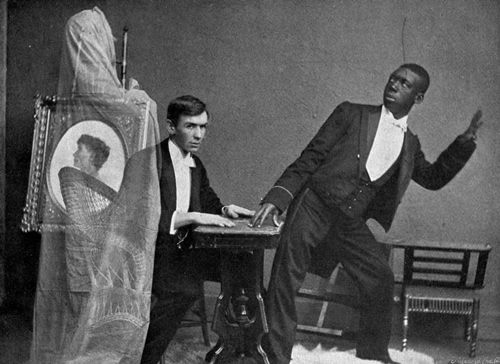
FIG. 29—SPIRIT PHOTOGRAPH. [Taken by the Author.]
“Moreover, Mr. Dinwiddie produced the negatives containing the identical portraits of these Indians and made me several proofs, which on a comparison, feature by feature, light for light, and shade for shade, show unquestionably that the faces on the blue print are copies of the portraits made by the photographer of the Bureau of Ethnology.
“Mr. Dinwiddie asked me to sit down for awhile, and offered to make me some spirit photographs. This he did, and the results obtained may be considered as far better examples of the art of ‘spirit’ photography than those of the medium, Keeler.
“The matter was very simply done. Mr. Dinwiddie asked one of the ladies from the office to come in, and, she consented to pose as a spirit. She was placed before the camera at a distance of about six feet, a red background was given her, so that it might photograph dark, and she was asked to put on a saintly expression. This she did, and Mr. Dinwiddie gave the plate a half-second exposure. Another head was taken on the other side of the plate in much the same manner. After this was done the other or central photograph was taken with an exposure of four seconds, the plate being rather sensitive.
“The plate was then taken to the dark room and developed. The negative came out very well at first, and the halo was put on afterward, when the plate had been dried. The halo was made by rubbing vignetting paste on the back, thus shutting out the light and leaving the paper its original hue. The white shadowy heads which are frequently shown in black coats, and which the mediums claim cannot be explained, are also done in this manner with vignetting paste, the picture being afterward centred over these places, which will be white, the final result showing soft and indefinite, and giving the required spiritual look.
“Mr. Dinwiddie did not attempt to produce the hazy effect, but this is very easily accomplished in the photograph by taking the spirit heads a trifle out of focus. He claims that all of these apparent spiritual manifestations are but tricks of photography, and ones which might be accomplished by the veriest tyro, if he were to study the matter, and give his time to the experiment. It is only a wonder that the mediums do not do more of it.
“The photograph mediums have always claimed that they were set upon by photographers for business reasons, but Mr. Dinwiddie is employed by the government and has no interests whatever in such a dispute.”
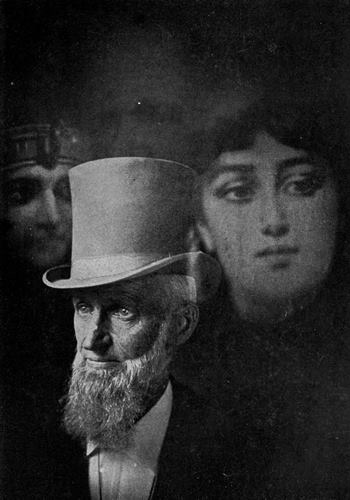
FIG. 30—SPIRIT PHOTOGRAPH BY PRETENDED MEDIUM.
The eminent authority on photography, Mr. Walter E. Woodbury, gives many interesting exposes of mediumistic photographs in his work, “Photographic Amusements,” which the student of the subject would do well to consult. Fig. 30, taken from “Photographic Amusements” is a reproduction of a “spirit” photograph made by a photographer claiming to be a medium. Says Mr. Woodbury: “Fortunately, however, we were in this case able to expose the fraud. Mr. W. M. Murray, a prominent member of the Society of Amateur Photographers of New York, called our attention to the similarity between one of the ‘spirit’ images and a portrait painting by Sichel, the artist. A reproduction of the picture (Fig 31) is given herewith, and it will be seen at once that the ‘spirit’ image is copied from it.”
5. Thought Photography.
During the year 1896 considerable stir was created by the investigation of Dr. Hippolyte Baraduc, of Paris, in the line of “Thought Photography,” which is of interest to psychic investigators generally. Dr. Baraduc claimed to have gotten photographic impressions of his thoughts, “made without sunlight or electricity or contact of any material kind.” These impressions he declared to be subjective, being his own personal vibrations, the result of a force emanating from the human personality, supra-mechanical, or spiritual. The experiments were carried on in a dark room, and according to his statement were highly successful. In a communication to an American correspondent, printed in the New York Herald, January 3, 1897, he writes: “I have discovered a human, invisible light, differing altogether from the cathode rays discovered by Prof. Roentgen.” Dr. Baraduc advanced the theory that our souls must be considered as centers of luminous forces, owing their existence partly to the attraction and partly to the repulsion of special and potent forces bred of the invisible cosmos.
A number of French scientific journals took up the matter, and discussed “Thought Photography” at length, publishing numerous reproductions of the physician’s photographs; but the more conservative journals of England, Germany and America remained silent on the subject, as it seemed to be on the borderland between science and charlatanry. On January 11, 1897, the American newspapers contained an item to the effect that Drs. S. Millington Miller and Carleton Simon, of New York City, the former a specialist in brain physiology, and the latter an expert hypnotist, had succeeded in obtaining successful thought photographs on dry plates from two hypnotized subjects. When the subjects were not hypnotized, the physicians reported no results.
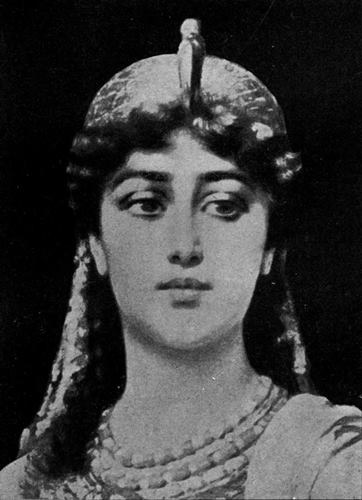
FIG. 31—SIGEL’S ORIGINAL PICTURE OF FIG 30.
As “Thought Photography” is without the pale of known physical laws, stronger evidence is needed to support the claims made for it than that which has been adduced by the French and American investigators. “Thought Photography” once established as a scientific fact, we shall have, perhaps, an explanation of genuine spirit photographs, if such there be.
6. Apparitions of the Dead.
In my chapter on subjective phenomena, I have not recorded any cases of phantasms of the dead, though several interesting examples of such have come under my notice. I have thought it better to refer the reader to the voluminous reports of the Society for Psychical Research (England). In regard to these cases, the Society has reached the following conclusion: Between deaths and apparitions of dying persons a connection exists which is not due to chance alone. This we hold as a proved fact.
The “Literary Digest,” January 12, 1895, in reviewing this report, says: “Inquiries were instituted in 17,000 cases of alleged apparitions. These inquiries elicited 1,249 replies from persons [in England and Wales] who affirmed that they themselves had seen the apparitions. Then the Society by further inquiries and cross-examinations sifted out all but eighty of these as discredited in some way, by error of memory or illusions of identity, or for some other reason, or which could be accounted for by common psychical laws. Of these eighty, fifty more were thrown out, to be on the safe side, and the remaining thirty are used as a basis for scientific consideration. All these consisted of apparitions of dead persons appearing to others within twelve hours after death, and many of them appearing at the very hour and even the very minute of death. The full account of the investigation is published in the tenth volume of the Society’s Reports, under the title, ‘A Census of Hallucinations,’ and Prof. J. H. Hyslop, of Columbia College, wrote an article giving the gist of the report and his comments in the ‘Independent,’ (December 27, 1895), from which I cull these few notable paragraphs:
“‘The committee which conducted the research reasons as follows: Since the death rate of England is 19.15 out of every thousand, the chances of any person’s dying on any particular day are one in 19,000 (the ratio of 19.15 to 365 times 1,000). Out of 19,000 death apparitions, therefore, one can be explained as a simple coincidence. But thirty apparitions out of 1,300 cases is in the proportion of 440 out of 19,000, so that to refer these thirty well-authenticated apparitions to coincidence is deemed impossible.’
“And further on:
“‘This is remarkable language for the signatures of Prof. and Mrs. Sidgwick, than whom few harder-headed skeptics could be found. It is more than borne out, however, by a consideration which the committee does not mention, but which the facts entirely justify, and it is that since many of the apparitions occurred not merely on the day, but at the very hour or minute of death, the improbability of their explanation by chance is really much greater than the figures here given. That the apparition should occur within the hour of death the chance should be 1 to 356,000, or at the minute of death 1 to 21,360,000. To get 30 cases, therefore, brought down to these limits we should have to collect thirty times these numbers of apparitions. Either these statistics are of no value in a study of this kind, or the Society’s claim is made out that there is either a telepathic communication between the dying and those who see their apparitions, or some causal connection not yet defined or determined by science. That this connection may be due to favorable conditions in the subject of the hallucination is admitted by the committee, if the person having the apparition is suffering from grief or anxiety about the person concerned. But it has two replies to such a criticism. The first is the query how and why under the circumstances does this effect coincide generally with the death of the person concerned, when anxiety is extended over a considerable period. The second is a still more triumphant reply, and it is that a large number of the cases show that the subject of the apparition has no knowledge of the dying person’s sickness, place, or condition. In that case there is no alternative to searching elsewhere for the cause. If telepathy or thought transference will not explain the connection, resort must be had to some most extraordinary hypothesis. Most persons will probably accept telepathy as the easiest way out of the difficulty, though I am not sure that we are limited to this, the easiest explanation.’
“Professor Hyslop then proceeds to consider the effect of the committee’s conclusion upon existing theories and speculations regarding the relations between mind and matter, and foresees with gratification as well as apprehension the revolt likely to be initiated against materialism and which may go so far as to discredit science and carry us far back to the credulous conditions of the Middle Ages. He says:
“‘The point which the investigations of the Society for Psychical Research have already reached creates a question of transcendent interest, no matter what the solution of it may be, and will stimulate in the near future an amount of psychological and theological speculation of the most hasty and crude sort, which it will require the profoundest knowledge of mental phenomena, normal and abnormal, and the best methods of science to counteract, and to keep within the limits of sober reason. The hardly won conquests of intellectual freedom and self-control can easily be overthrown by a reaction that will know no bounds and which it will be impossible to regulate. Though there may be some moral gain from the change of beliefs, as will no doubt be the case in the long run, we have too recently escaped the intellectual, religious, and political tyranny of the Middle Ages to contemplate the immediate consequences of the reaction with any complacency. But no one can calculate the enormous effect upon intellectual, social, and political conditions which would ensure upon the reconciliation of science and religion by the proof of immortality.”
IV. CONCLUSIONS.
In my investigations of the physical phenomena of modern spiritualism, I have come to the following conclusion: While the majority of mediumistic manifestations are due to conjuring, there is a class of cases not ascribable to trickery, namely, those coming within the domain of psychic force—as exemplified by the experiments of Gasparin, Crookes, Lodge, Asakoff and Coues. In regard to the subjective phenomena, I am convinced that the recently annunciated law of telepathy will account for them. I discredit the theory of spirit intervention. If this be a correct conclusion, is there anything in mediumistic phenomena that will contribute to the solution of the problem of the immortality of the soul? I think there is. The existence of a subjective or subliminal consciousness in man, as illustrated in the phenomena mentioned, seems to indicate that the human personality is really a spiritual entity, possessed of unknown resources, and capable of preserving its identity despite the shock of time and the grave. Hudson says: “It is clear that the power of telepathy has nothing in common with objective methods of communications between mind and mind; and that it is not the product of muscle or nerve or any physiological combination whatever, but rather sets these at naught, with their implications of space and time.... When disease seizes the physical frame and the body grows feeble, the objective mind invariably grows correspondingly weak.... In the meantime, as the objective mind ceases to perform its functions, the subjective mind is most active and powerful. The individual may never before have exhibited any psychic power, and may never have consciously produced any psychic phenomena; yet at the supreme moment his soul is in active communication with loved ones at a distance, and the death message is often, when psychic conditions are favorable, consciously received. The records of telepathy demonstrate this proposition. Nay, more; they may be cited to show that in the hour of death the soul is capable of projecting a phantasm of such strength and objectivity that it may be an object of personal experience to those for whom it is intended. Moreover, it has happened that telepathic messages have been sent by the dying, at the moment of dissolution, giving all the particulars of the tragedy, when the death was caused by an unexpected blow which crushed the skull of the victim. It is obvious that in such cases it is impossible that the objective mind could have participated in the transaction. The evidence is indeed overwhelming, that, no matter what form death may assume, whether caused by lingering disease, old age, or violence, the subjective mind is never weakened by its approach or its presence. On the other hand, that the objective mind weakens with the body and perishes with the brain, is a fact confirmed by every-day observation and universal experience.”
This hypothesis of the objective and subjective minds has been criticised by many psychologists on the ground of its extreme dualism. No such dualism exists, they contend. However, Hudson’s theory is only a working hypothesis at best, to explain certain extraordinary facts in human experience. Future investigators may be able to throw more light on the subject. But this one thing may be enunciated: Telepathy is an incontrovertible fact, account for it as you may, a physical force or a spiritual energy. If physical, then it does not follow any of the known operations of physical laws as established by modern science, especially in the case of transmission of thought at a distance.
It is true, that all evidence in support of telepathic communications is more or less ex parte in character, and does not possess that validity which orthodox science requires of investigators. Any student of the physical laws of matter can make investigations for himself, and at any time, provided he has the proper apparatus. Explain to a person that water is composed of two gases, oxygen and hydrogen, and he can easily verify the fact for himself by combining the gases, in the combination of H2O, and afterwards liberate them by a current of electricity. But experiments in telepathy and clairvoyance cannot be made at will; they are isolated in character, and consequently are regarded with suspicion by orthodox science. Besides this, they transcend the materialistic theories of science as regards the universe, and one is almost compelled to use the old metaphysical terms of mind and matter, body and soul, in describing the phenomena.
It is an undoubted fact that science has broken away from the old theory regarding the distinction between mind and matter. Says Prof. Wm. Romaine Newbold, “In the scientific world it has fallen into such disfavor that in many circles it is almost as disgraceful to avow belief in it as in witchcraft or ghosts.” We have to-day a school of “physiological-psychology,” calling itself “psychology without a soul.” This school is devoted to the laboratory method of studying mind. “The laboratory method,” says Roark, in his “Psychology in Education,” “is concerned mostly with physiological psychology, which is, after all, only physiology, even though it be the physiology of the nervous system and the special organs of sense—the material tools of the mind. And after physiological psychology has had its rather prolix say, causal connection of the physical organs with psychic action is as obscure and impossible of explanation as ever. But the laboratory method can be of excellent service in determining the material conditions of mental action, in detecting special deficiencies and weaknesses, and in accumulating valuable statistics along these lines.
“It has been asserted that no science can claim to be exact until it can be reduced to formulas of weights and measures. The assertion begs the question for the materialists. We shall probably never be able to weigh an idea or measure the cubic contents of the memory; but the rapidity with which ideas are formed or reproduced by memory has been measured in many particular instances, and the circumstances that retard or accelerate their formation or reproduction have been positively ascertained and classified.”
That it is possible to explain all mental phenomena in terms of physics is by no means the unanimous verdict of scientific men. A small group of students of late years have detached themselves from the purely materialistic school and broken ground in the region of the supernormal. Says Professor Newbold (Popular Science Monthly, January, 1897): “In the supernormal field, the facts already reported, should they be substantiated by further inquiry, would go far towards showing that consciousness is an entity governed by laws and possessed of powers incapable of expression in material conceptions.
“I do not myself regard the theory of independence [of mind and body] as proved, but I think we have enough evidence for it to destroy in any candid mind that considers it that absolute credulity as to its possibility which at present characterizes the average man of science.”