Front matter (continued 2)
Reading edition
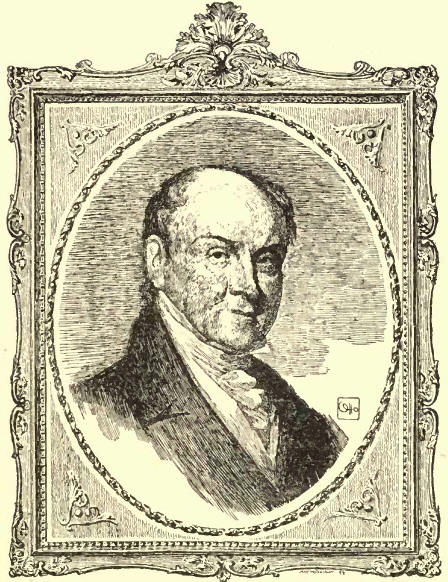
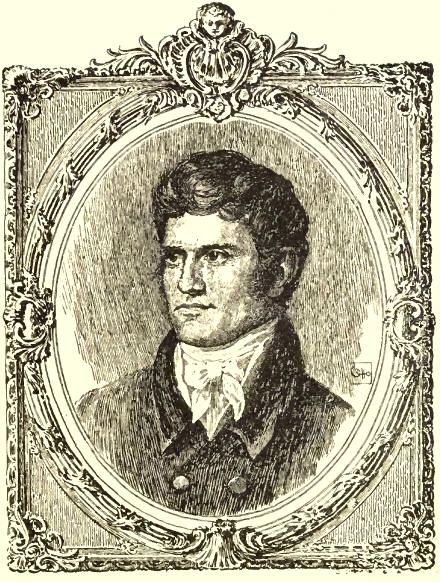
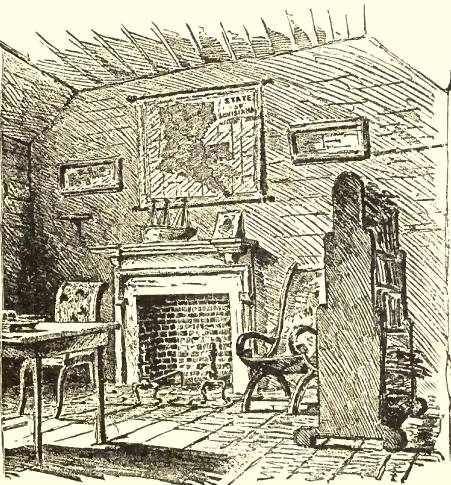
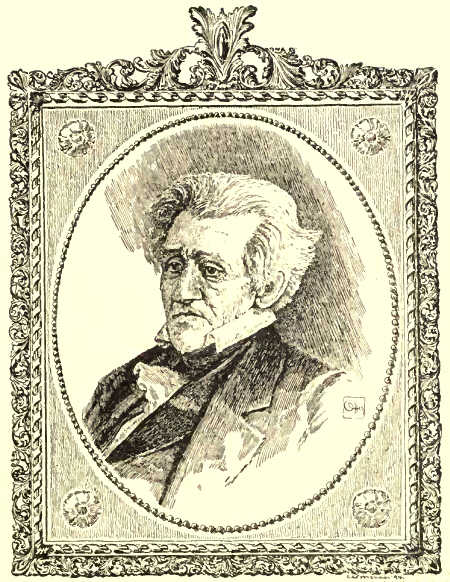
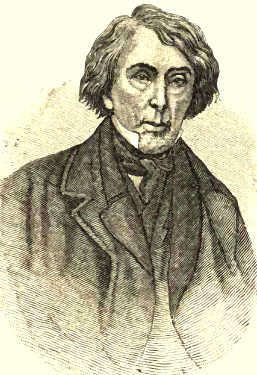
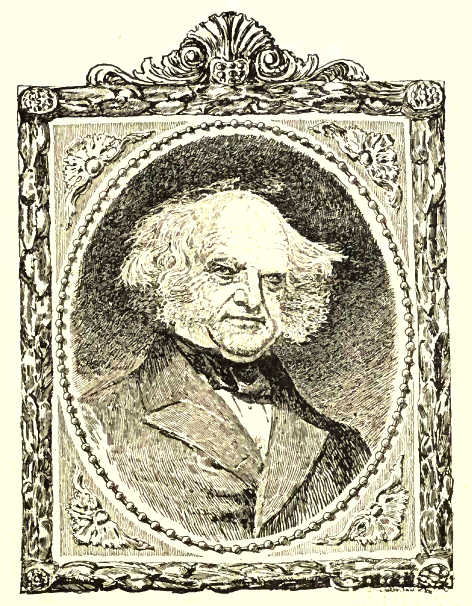
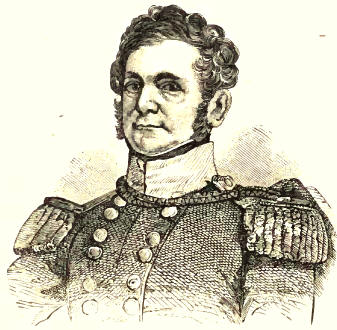
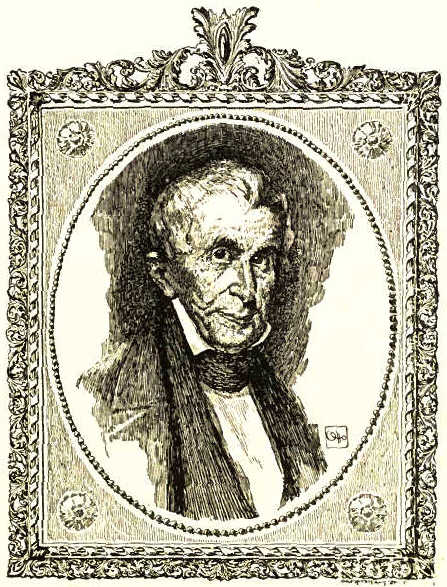
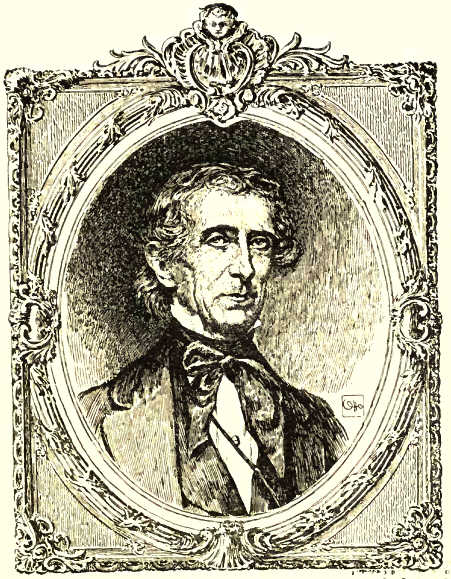
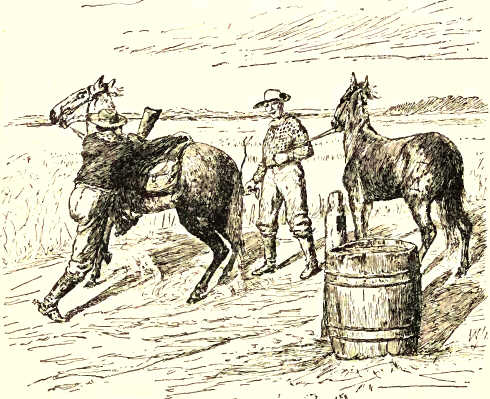
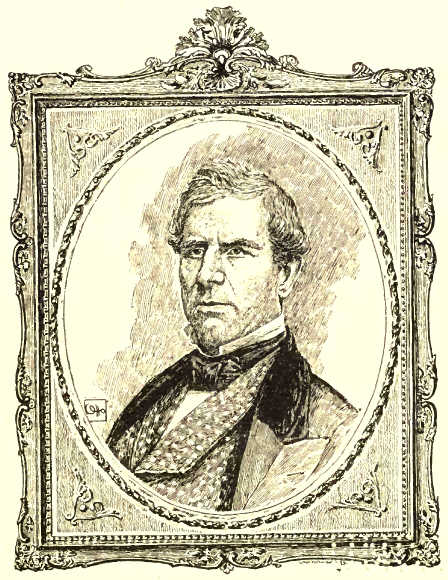
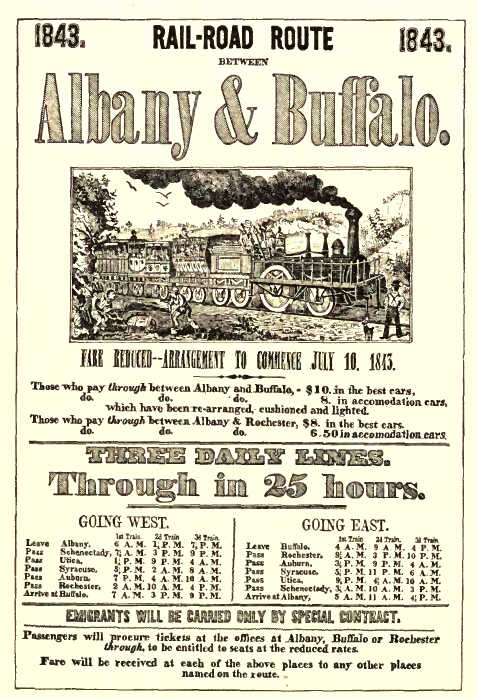
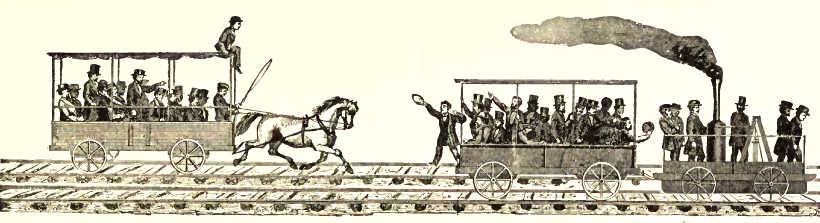
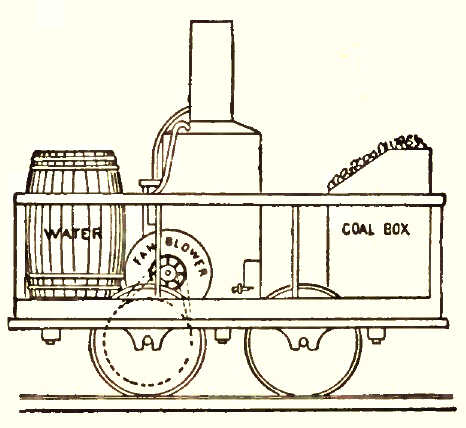
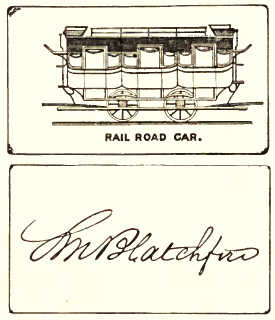
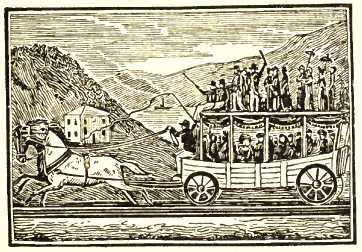
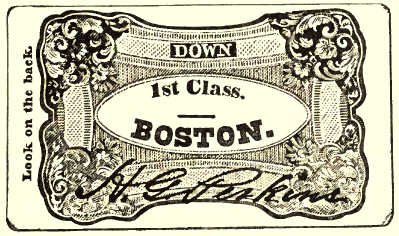
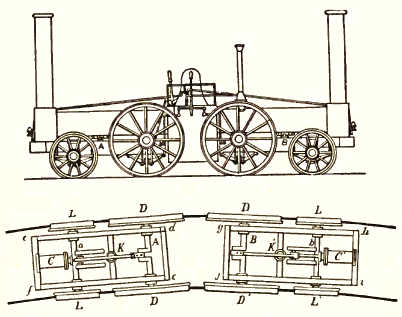
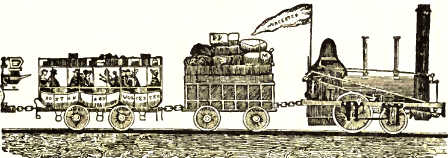
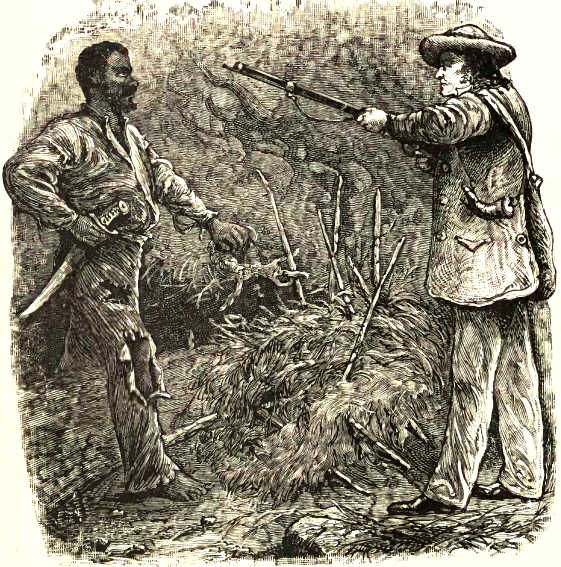
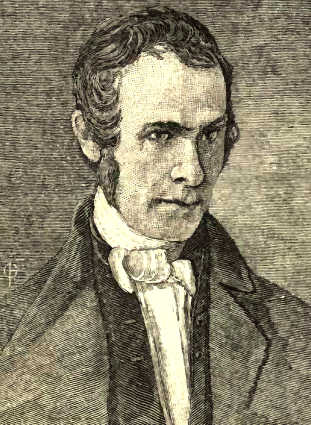
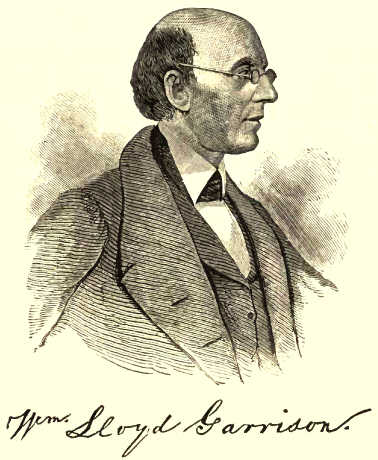
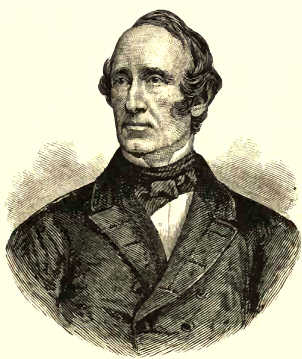
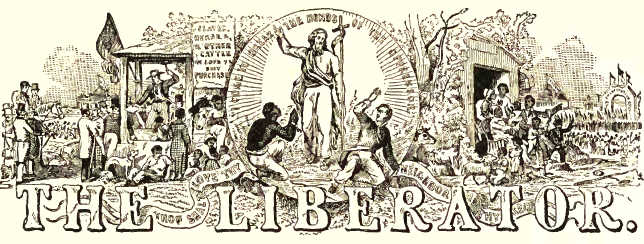
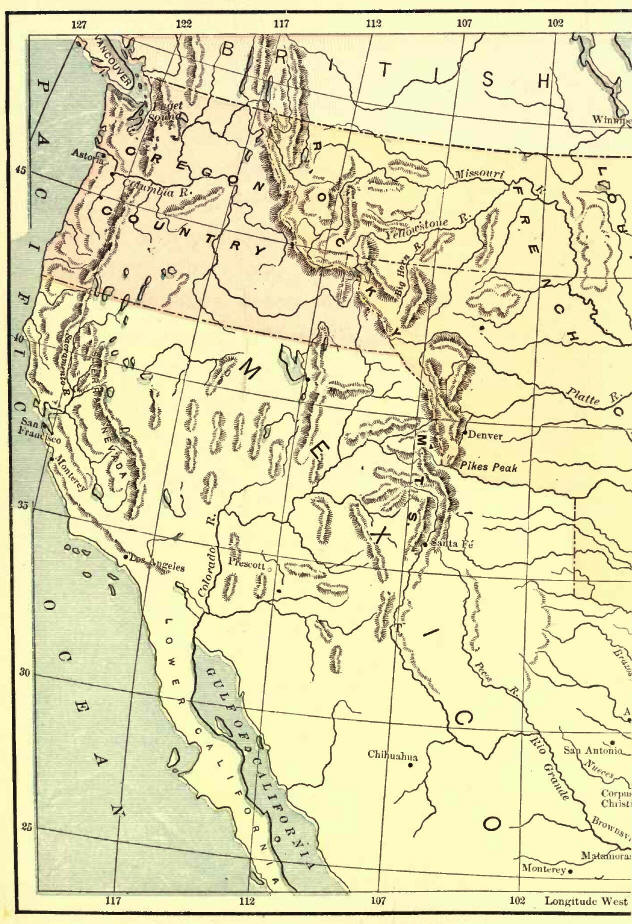
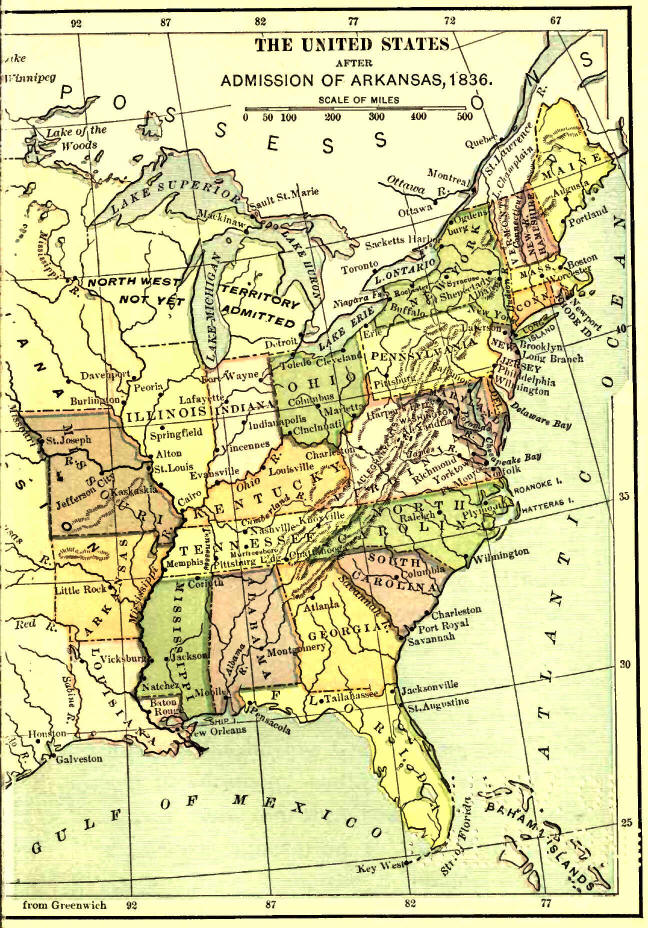
CHAPTER III. THE MEXICAN WAR [1836] Attracted by fertility of soil and advantages for cattle-raising, large numbers of Americans had long been emigrating to Texas. By 1830 they probably comprised a majority of its inhabitants. March 2, 1836, Texas declared its independence of Mexico, and on April 10th of that year fought in defence of the same the decisive battle of San Jacinto. Here Houston gained a complete victory over Santa Anna, the Mexican President, captured him, and extorted his signature to a treaty acknowledging Texan independence. This, however, as having been forced, the Mexican Government would not ratify. [1845] Not only did the Texans almost to a man wish annexation to our Union, but, as we have seen, the dominant wing of the democratic party in the Union itself was bent upon the same, forcing a demand for this into their national platform in 1840. Van Buren did not favor it, which was the sole reason why he forfeited to Polk the democratic nomination in 1844. Polk was elected by free-soil votes cast for Birney, which, had Clay received them, would have carried New York and Michigan for him and thus elected him; but the result was hailed as indorsing annexation. Calhoun, Tyler's Secretary of State, more influential than any other one man in bringing it about, therefore now advocated it more zealously than ever. Calhoun's purpose in this was to balance the immense growth of the North by adding to southern territory Texas, which would of course become a slave State, and perhaps in time make several States. As the war progressed he grew moderate, out of fear that the South's show of territorial greed would give the North just excuse for sectional measures. General Sam. Houston. Henry Clay, with nearly the entire Whig Party, from the first opposed the Tyler-Calhoun programme. Clay's own reason for this, as his memorable Lexington speech in 1847 disclosed, was that the United States would be looked upon "as actuated by a spirit of rapacity and an inordinate desire for territorial aggrandizement." His party as a whole dreaded more the increment which would come to the slave power. After much discussion in Congress, Texas was annexed to the Union on January 25, 1845, just previous to Polk's accession. June 18th, the Texan Congress unanimously assented, its act being ratified July 4th by a popular convention. Thus were added to the United States 376,133 square miles of territory. General Santa Anna. The all-absorbing question now was where Texas ended: at the Nueces, as Mexico declared, or at the Rio Grande, as Texas itself had maintained, insisting upon that stream as of old the bourne between Spanish America and the French Louisiana. Mexico, proud, had recognized neither the independence of Texas nor its annexation by the United States, yet would probably have agreed to both as preferable to war, had the alternative been allowed. To be sure, she was dilatory in settling admitted claims for certain depredations upon our commerce, threatened to take the annexation as a casus belli, withdrew her envoy and declined to accept Slidell as ours, and precipitated the first actual bloodshed. Yet war might have been averted, and our Government, not Mexico's, was to blame for the contrary result. Slidell played the bully, the navy threatened the coast, our wholly deficient title, through Texas, to the Nueces-Rio-Grande tract was assumed without the slightest ado to be good, and when General Arista, having crossed the river in Taylor's vicinity, repelled the latter's attack upon him, the President, followed by Congress, falsely alleged war to exist "by act of the Republic of Mexico." [1846] During most of 1845, General Zachary Taylor was at Corpus Christi on the west bank of the Nueces, in command of 3,600 men. The first aggressive movement occurred in March of the following year, when Taylor, invading the disputed territory by command from Washington, advanced to the Rio Grande, opposite Matamoras. April 26th, a Mexican force crossed the river and captured a party of American dragoons which attacked them. Taylor drew back to establish communication with Point Isabel, and on advancing again toward the Rio Grande, May 8th, found before him a Mexican force of nearly twice his numbers, commanded by Arista. The battle of Palo Alto ensued, and next day that of Resaca de la Palma, Taylor completely victorious in both. May 13th, before knowledge of these actions had reached Washington, warranted merely by news of the cavalry skirmish on April 26th, Congress declared war, and the President immediately called for 50,000 volunteers. In July Taylor was re-enforced by Worth, and proceeded to organize a campaign against Monterey, a strongly fortified town some ninety miles toward the City of Mexico. This place was reached September 19th, and captured on the 22d, after hard fighting and severe losses on both sides. An armistice of eight weeks followed. James K. Polk, after a photograph by Brady. PLAN OF THE BATTLE OF BUENA VISTA MORNING 23 OF FEB 1847. [1847] Meantime a revolution had occurred in Mexico. The banished Santa Anna was recalled, and as President of the Republic assumed command of the Mexican armies. On February 23, 1847, occurred one of the most sanguinary but brilliant battles of the war, that of Buena Vista. Taylor, learning that a Mexican force was advancing under Santa Anna, at least double the 5,200 left him after the requisition upon him which General Scott had just made, drew back to the strong position of Buena Vista, south of Saltillo. Here Santa Anna, having through an intercepted despatch learned of Taylor's weakness, ferociously fell upon him with a force 12,000 strong. On right and centre, by dint of good tactics and bull-dog fighting, Taylor held his own and more, but the foe succeeded at first in partly turning and pushing back his left. The Mexican commander bade Taylor surrender, but was refused, whence the saying that "Old Rough and Ready," as they called Taylor, "was whipped but didn't know it." To check the flanking movement he sent forward two regiments of infantry, well supported by dragoons and artillery, who charged the advancing mass, broke the Mexicans' column, and sent them fleeing in confusion. This saved the day. The American loss was 746, including several officers, among them Lieutenant-Colonel Clay, son of the Kentucky statesman. Colonel Jefferson Davis, one day to be President of the Southern Confederacy, caused during this conflict great havoc in the enemy's ranks with his Mississippi riflemen. Santa Anna's loss was 2,000. General Winfield Scott. General Winfield Scott had meantime been ordered to Mexico as chief in command. Taylor was a Whig, and the Whigs whispered that his martial deeds were making the democratic cabinet dread him as a presidential candidate. But Scott was a Whig, too, and if there was anything in the surmise, his victorious march must have given Polk's political household additional food for reflection. Scott's plan was to reduce Vera Cruz, and thence march to the Mexican capital, two hundred miles away, by the quickest route. Vera Cruz capitulated March 27, 1847. Scott straightway struck out for the interior. He was bloodily opposed at Cerro Gordo, April 18th, and at Jalapa, but he made quick work of the enemy at both these places. In the latter city, after his victory, he awaited promised re-enforcements. When the last of these had arrived, August 6th, under General Franklin Pierce, so that he could muster about 14,000 men, he advanced again. August 10th the Americans were in sight of the City of Mexico. This was a natural stronghold, and art had added to its strength in every possible way. Except on the south and west it was nearly inaccessible if defended with any spirit. Scott of course directed his attack toward the west and south sides of the city. The first battle in the environs of the capital was fiercely fought near the village of Contreras, and proved an overwhelming defeat for the Mexicans. Two thousand were killed or wounded, while nearly 1,000, including four generals, were captured, together with a large quantity of stores and ammunition. The American loss was only 60 killed and wounded. The survivors fled to Churubusco, farther toward the city, where, with every advantage of position, Santa Anna had united his forces for a final stand. An old stone convent, which our artillery could not reach till late in the action, was utilized as a barricade, and from this the Mexicans poured a most deadly fire upon their assailants. The Americans were victorious, as usual, but their loss was fearful, 1,000 being killed or wounded, including 76 officers. A truce to last a fortnight was now agreed upon, but Scott, seeing that the Mexicans were taking advantage of it to strengthen their fortifications, did not wait so long. He now had about 8,500 men fit for duty, and sixty-eight guns. Hostilities were renewed September 7th, by the storm and capture, costing nearly 800 men, of Molino del Rey, or "King's Mill," a mile and a half from the city. Possession of the Molino opened the way to Chapultepec, the Gibraltar of Mexico, 1,100 yards nearer the goal. As it was built upon a rock 150 feet high, impregnable on the north and well-nigh so on the eastern and most of the southern face, only the western and part of the southern sides could be scaled. But the stronghold was the key to the city, and after surveying the situation, a council of war decided that it must be taken. Two picked American detachments, one from the west, one from the south, pushed up the rugged steeps in face of a withering fire. The rock-walls to the base of the castle had to be mounted by ladders. This was successfully accomplished; the enemy were driven from the building back into the city, and the castle and grounds occupied by our troops. A large number of fugitives were cut off by a force sent around to the north. The Plaza of the City of Mexico. [1848] To pierce the city was even now by no means easy. The approach was by two roads, one entering the Belen gate, the other the San Cosme. General Quitman advanced toward the Belen, but at the entrance was stopped by a destructive cannonade from the citadel itself. Those fighting their way toward the San Cosme succeeded in entering the city, Lieutenant U. S. Grant making his mark in the gallant work of this day. The city was evacuated that night, and on the 15th of September, 1847, was fully in the hands of Scott. The treaty of Guadalupe Hidalgo was signed on February 2, 1848. It established the Rio Grande as the boundary between the two countries, and New Mexico, of course including what is now Arizona and also California, was ceded to the United States for $15,000,000. The United States also assumed, to the sum of $3,250,000, the claims of American citizens upon Mexico. For Gadsden's Purchase, in 1853, between the Gila River and the Mexican State of Chihuahua, we paid $10,000,000 more. Our territory thus received in all, as a consequence of the Mexican War, an increment of 591,398 square miles. Inseparable from the politics of the Mexican War is the Oregon question, since Oregon's re-occupation and "fifty-four forty or fight" had been democratic cries for securing to Polk west-northern votes in 1844. We had, however, no valid claim so far north, except against Russia--by the treaty of 1824. The Louisiana purchase, indeed, had vested us with whatever--very dubious--rights France had upon the Pacific, and the Florida treaty of 1819 gave us the far better title of Spain to the coast north of 42 degrees. This treaty, with Gray's discovery of the Columbia in 1792, Lewis and Clarke's official explorations of the Columbia valley in 1804-05-06, England's retrocession, in 1818, of Astoria, captured during the War of 1812, and extensive actual settlements upon the river by American citizens from 1832 on, made our claim perfect up to 49 degrees at least. This parallel the convention with Great Britain in 1818 had already fixed as our northern line from the Lake of Woods to the Rocky Mountains. Between this and 54 degrees 40 minutes, England's title, from exploration and settlement, was superior to ours, which was based upon alleged old Spanish discovery. The same convention of 1818, renewed in 1827, opened the Oregon country to occupation by settlers from both nations. Increase of immigration rendering a fixing of jurisdictions imperative, England pressed for the line of the Columbia below its intersection of the forty-ninth parallel. We had twice offered to settle upon 49 degrees, which limit the rapid growth of our population in the region induced England in 1836 to accept. Whether Polk's blustering demand for "all Oregon," which came near bringing on war with England, and his much condemned recession later, were mere opportunist acts, is still a question. Many consider them pieces of a deep-laid policy by Polk to tole Mexico to war in hope of England's aid, then, suddenly pacifying England, to devour Mexico at his leisure. CHAPTER IV. CALIFORNIA AND THE COMPROMISE OF 1850 [1846] One of the campaigns at the beginning of the Mexican War was that of General Stephen W. Kearney, from Fort Leavenworth, against New Mexico. It was opened in May, 1846. He invaded the country without much opposition, arrived at Santa Fe August 18th, having marched 873 miles, declared the inhabitants free from all allegiance to Mexico, and formed a territorial government over them as United States subjects. Captain John C. Fremont had previously, but in the same year, 1846, been sent to California at the head of an exploring expedition, and in May he was notified to remain in the country in anticipation of hostilities. On June 15th he captured Samona. Meanwhile, Commodore Sloat was erecting our flag over the towns on the coast. In July Sloat was superseded by Commodore Stockton, who routed the Mexican commander, De Castro, at Los Angeles, joined Fremont, and on August 13th seized Monterey, the then capital. The two commanders now placed themselves at the head of a provisional government for California. Zachary Taylor. After a photograph by Brady. The Site of San Francisco in 1848. [1848-1849] In 1848, on the same day and almost at the same hour when the peace of Guadalupe Hidalgo was concluded, gold was discovered in California. It was on the land of one Sutter, a Swiss settler in the Sacramento Valley, as some workmen were opening a flume for a mill. In three months over 4,000 persons were there, digging for gold with great success. By July, 1849, it is thought, 15,000 had arrived. Nearly all were forced to live in booths, tents, log huts, and under the open sky. The sparse population previously on the ground left off farming and grazing and opened mines. People became insane for gold. Immigrants soon came in immense hordes. In 1846, aside from roving Indians, California had numbered not much over 15,000 inhabitants. By 1850, it seems certain that the territory contained no fewer than 92,597. The new-comers were from almost every land and clime--Mexico, South America, the Sandwich Islands, China--though, of course, most were Americans. The bulk of these hailed from the Northwest and the Northeast. To this land of promise the sturdy pioneers from the Mississippi Valley found their way on foot, on horseback, or in wagons, over the Rocky Mountains and the Sierras, following trails previously untrodden by civilized man. Those from the East made long detours around Cape Horn or across the Isthmus of Panama. Sutter's Mill, California, where Gold was First Discovered. The yield of gold from the virgin placers was enormous, a laborer's average the first season being perhaps an ounce a day, though many made much more. During the first two years about $40,000,000 worth of gold was extracted. According to careful estimates the gold yield of the United States, mostly from California, which had been only $890,000 in 1847, increased to $10,000,000 in 1848, to $40,000,000 in 1849, to $50,000,000 in 1850, to $55,000,000 in 1851, to $60,000,000 in 1852, and in 1853 to $65,000,000. Most interesting were the spontaneous governmental and legal institutions which arose in these motley communities, some of them finding their originals in the English mining districts, others in Mexico and Spain, and still others recalling the mining customs of medieval Germany. For a time many camps had each its independent government, disconnected from all human authority around or above. Some of these were modelled after the Mexican Alcaldeship, others after the New England town. Over those who rushed to the vicinity of Sutter's mill that gentleman became virtual Alcalde, though he was not recognized by all. The men first opening a placer would seek to pre-empt all the adjoining land, giving up only when others came in numbers too strong for them. Officers were elected and new customs sanctioned as they were needed. Partnerships were sacredly maintained, yet by no other law than that of the camp. Crimes against property and life seem to have been infrequent at first, but the unparalleled wealth toled in and developed a criminal class, which the rudimentary government could not control. San Francisco formed in 1851 a vigilance committee of citizens, by which crimes could be more summarily and surely punished. The pioneer banking house in California began business at San Francisco in January, 1849. The same month saw the first frame house on the Sacramento, near Sutter's Fort. The vast acquisition of territory by the Mexican War seemed destined to be a great victory for slavery, because nearly all of it lay south of 36 degrees 30 minutes and hence by the Missouri Compromise could become slave soil. But there was the complication that under Mexico all this wide realm had been free. To exist there legally slavery must therefore be established by Congress, making the case very different from the cases of Louisiana, Florida, and Texas, which came under United States authority already burdened. This predisposed many who were not in general opposed to slavery, against extending the institution hither. Early in the war a bill had passed the House, failing almost by accident in the Senate, which contained the famous Wilmot Proviso, so named from its mover in the House, that, except for crime, neither slavery nor involuntary servitude should ever exist in any of the territories to be annexed. Wilmot was a Democrat, and at this time a decided majority of his party favored the proviso. But the pro-slavery wing rallied, while the Whigs, disbelieving in the war and in annexation both, offered the proviso Democrats no hearty aid. In consequence it was defeated both then and after the annexation. The election of 1848 went for the Whigs, and the next March 4th, General Taylor became President. Though a southerner and a slave-holder, he was moderate and a true patriot. So rapid had been the influx into California that the Territory needed a stable government. Accordingly, one of Taylor's first acts as President was to urge California to apply for admission to statehood. General Riley, military governor, at once called a convention, which, sitting from September 1st to October 13th, framed a constitution and made request that California be taken into the Union. This constitution prohibited slavery, and thus a new firebrand was tossed into the combustible material with which the political situation abounded. By this time nearly all the friends of freedom were for the proviso, but its enemies as well had greatly increased. The immense growth, actual and prospective, of northern population, greatly inspired one side and angered the other. [1850] Resort was now had again to the old, illusive device of compromise, Clay being the leader as usual. He brought forward his "Omnibus Bill," so called because it threw a sop to everybody. It failed to pass as a single measure, but was broken up and enacted piecemeal. Stubborn was the fight. Radicals of the one part would consent to nothing short of extending the Missouri Compromise line to the Pacific; those of the other stood solidly for the unmodified proviso. In this crisis occurred President Taylor's death, July 9, 1850, which was most unfortunate. He was known not to favor the pro-slavery aggression which, in spite of Clay's personal leaning in the opposite direction, the omnibus bill embodied. Mr. Fillmore, as also Webster, whom he made his Secretary of State, nervous with fear of an anti-slavery reputation, went fully Clay's length. The debate on this compromise of 1850 was the occasion when Webster deserted the free-soil principles which were now dominant in New England. His celebrated speech of March. 7th marked the crisis of his life. He argued that the proviso was not needed to prevent slavery in the newly gotten district, while its passage would be a wanton provocation to the South From this moment Massachusetts dropped him. When she next elected a senator for a full term, it was Charles Sumner, candidate of the united Democrats and Free-soilers, who went to Congress pledged to fight slavery to the death. But the omnibus compromises were passed. California was, indeed, admitted free, September 9, 1850--the thirty-first State in order--and slave-trade in the District of Columbia slightly alleviated. On the other hand, Texas was stretched to include a huge piece of New Mexico that was free before, and paid $10,000,000 to relinquish further claims. This was virtually a bonus to holders of her scrip, which from seventeen cents the dollar instantly rose to par. New Mexico and Utah were to be organized as Territories without the proviso, and were made powerless to legislate on slavery till they should become States. Least sufferable, a fugitive slave law was passed, so Draconian that that of 1793, hitherto in force, was benign in comparison. It placed the entire power of the general Government at the slave-hunter's disposal, and ordered rendition without trial or grant of habeas corpus, on a certificate to be had by simple affidavit. Bystanders, if bidden, were obliged to help marshals, and tremendous penalties imposed for aid to fugitives. This act facilitated the recovery of fugitives at first, but not permanently. Many who had labored for its passage soon saw that it was a mistake. It powerfully fanned the abolition flame all over the North. New personal liberty laws were enacted. A daily increasing number adopted the view that the new act was unconstitutional, on the ground that the Constitution places the rendition of slaves as of criminals in the hands of States, and guarantees jury trial, even upon title to property, if over twenty dollars in value. After the act had been justified in the courts, multitudes of moderate northern men urged to a dangerous degree the doctrine of state rights in defence of the liberty laws. Others adopted the cry of the "higher law," and without joining Garrison in denouncing the Government, did not hesitate to oppose in every possible way the operation of this drastic legislation for slave-catching. Millard Fillmore. From a painting by Carpenter in 1853, at the City Hall, New York. The country's growth made escape from bondage continually easier and easier. Once across the border a runaway was sure to find many friends and few enemies. Openly, or, if this was required, by stealth, he was passed quickly along to the Canada line. Between 1830 and 1860 over 30,000 slaves are estimated to have taken refuge in Canada. By 1850, probably no less than 20,000 had found homes in the free States. The new law moved many of these across into the British dominions. It was hence increasingly difficult for the slave-owner to recover stray property. All possible legal obstructions were placed in his way, and when these failed he was likely still to be opposed by a mob which might prove too powerful for the marshal and any posse which he could gather. The Rendition of Anthony Burns in Boston. In Boston, when a slave named Shadrach was arrested, his friends made a sudden dash, rescued him from the officers and freed him. With Simms the same was attempted, but in vain. The removal of Anthony Burns from that city in 1855 was possible only by escorting him down State Street to the revenue cutter in waiting, inside a dense hollow square of United States artillerymen and marines, with the whole city's militia under arms and at hand. Business houses as well as residences were closed and draped in mourning. It was an indignity which Massachusetts never forgot. At Alton, Ill., slave-hunters seized a respectable colored woman, long resident there, who fully believed herself free. She was surrounded by an infuriated company of citizens, and would have been wrenched from her captors' clutch had not they, in their terror, offered to sell her back into freedom. The needed $1,200 was raised in a few minutes, and the agonized creature restored to her family. Judge Davis, whom the evidence had compelled to deliver the woman, on rendering the sentence resigned his commission, declaring: "The law gives you your victim. Thank it and not me, and may God have mercy on your sinful souls." CHAPTER V. THE FIGHT FOR KANSAS [1850-1854] The measures of 1850 proved anything but the "finality" upon slavery discussion which both parties, the Whigs as loudly as the Democrats, promised and insisted that they should be. Elated by its victory in 1850, and also by that of 1852, when the anti-slavery sentiment of northern Whigs drove so many of their old southern allies to vote for Pierce, giving him his triumphant election, the slavocracy in 1854 proceeded in its work of suicide to undo the sacred Missouri Compromise of 1820. Douglas, the ablest northern Democrat, led in this, succeeding, as official pacificator between North and South, somewhat to the office of Clay, who had died June 29, 1852. The aim of most who were with him was to make Kansas-Nebraska slave soil, but we may believe that Douglas himself cherished the hope and conviction that freedom was its destiny. This rich country west and northwest of Missouri, consecrated to freedom by the Missouri Compromise, had been slowly filling with civilized men. It did not promise to be a profitable field for slavery, nor would economic considerations ever have originated a slavery question concerning it. But politically its character as slave or free was of the utmost consequence to the South, where the resolution gradually arose either to secure it for the peculiar institution or else prevent its organization even as a Territory. A motion for such organization had been unsuccessfully made about 1843, and it was repeated, equally without effect, each session for ten years. None of these motions had contained any hint that slavery could possibly find place in the proposed Territory. The bill of December 15, 1853, like its predecessors, had as first drawn no reference whatever to slavery, but when it returned from the committee on Territories, of which Douglas was chairman, the report, not explicitly, indeed, made the assumption, unheard of before, that Kansas-Nebraska stood in the same relation to slavery in which Utah and New Mexico had stood in 1850; and that the compromise of that year, in leaving the question of slavery to the States to be formed from these Territories, had already set aside the agreement of 1820. These assumptions were totally false. The act of 1850 gave Utah and New Mexico no power as Territories over the debatable institution, and contained not the slightest suggestion of any rule in the matter for territories in general. But the hint was taken, and on January 16th notice given of intention to move an out-and-out abrogation of the Missouri Compromise. Such abrogation was at once incorporated in the Kansas-Nebraska bill reported by Douglas, January 23, 1854. This separated Kansas from Nebraska, and the subsequent struggle raged in reference to Kansas alone. The bill erroneously declared it established by the acts of 1850 that "all questions as to slavery in the Territories," no less than in the States which should grow out of them, were to be left to the residents, subject to appeal to the United States courts. It passed both houses by good majorities and was signed by President Pierce May 30th. Its animus appeared from the loss in the Senate of an amendment, moved by S. P. Chase, of Ohio, allowing the Territory to prohibit slavery. Franklin Pierce. From a painting by Healy, in 1852, at the Corcoran Art Gallery. Thus was first voiced by a public authority Judge Douglas's new and taking heresy of "squatter sovereignty," that Congress, though possessing by Article IV., Section iii., Clause 2 of the Constitution, general authority over the Territories, is not permitted to touch slavery there, but must leave it for each territorial populace "to vote up or vote down." At the South this doctrine of Douglas's was dubbed "nonintervention," and its real aim to secure Kansas a pro-slavery character avowed. It was consequently popular there as useful toward the repeal, although repudiated the instant its working bade fair to render Kansas free. Stephen A. Douglas. [1855] This was soon the prospect. Organizations had been formed to aid anti-slavery emigrants from the northern States to Kansas. The first was the Kansas Aid Society, another a Massachusetts corporation entitled the New England Emigrant Aid Society. There were others still. Kansas began to fill up with settlers of strong northern sympathies. They were in real minority at the congressional election of November, 1854, and in apparent minority at the territorial election the next March. The vote against them on the last occasion, however, was largely deposited by Missourians who came across the border on election day, voted, and returned. This was demonstrated by the fact that there were but 2,905 legal voters in the Territory at the time, while 5,427 votes were cast for the pro-slavery candidates alone. These early successes gave the pro-slavery party and government in Kansas great vantage in the subsequent congressional contest. The first Legislature convened at Pawnee, July 2, 1855, enacted the slave laws of Missouri, and ordered that for two years all state officers should be appointed by legislative authority, and no man vote in the Territory who would not swear to support the fugitive slave law. The free-state settlers, now a majority, ignored this Legislature and its acts, and at once set to work to secure Kansas admission to the Union as a State without slavery. The Topeka convention, October 23, 1855, formed the Topeka constitution, which was adopted December 14th, only forty-six votes being polled against it. This showed that pro-slavery men abstained from voting. January 15, 1856, an election was held under this constitution for state officers, a state legislature, and a representative in Congress. The House agreed, July 3d, by one majority, to admit Kansas with the Topeka constitution, but the Senate refused. The Topeka Legislature assembled July 4th, but was dispersed by United States troops. [1856-1857] This was done under command from Washington. President Pierce, backed by the Senate with its steady pro-slavery majority, was resolved at all hazards to recognize the pro-slavery authorities of Kansas and no other, and, as it seemed, to force it to become a slave State; but fortunately the House had an anti-slavery majority which prevented this. The friends of freedom in Kansas had also on their side the history that was all this time making in Kansas itself. During the summer of 1856 that Territory was a theatre of constant war. Men were murdered, towns sacked. Both sides were guilty of violence, but the free-state party confessedly much the less so, having far the better cause. Nearly all admitted that this party was in the majority. Even the governors, all Democrats, appointed by Pierce, acknowledged this, some of them, to all appearance, being removed as a punishment for the admission. Governor Geary, in office from September, 1856, to March, 1857, and Governor Walker, in office from May, 1857, were just and able men, and their decisions, in most things favorable to the free-state cause, had much weight with the country. Walker's influence in the Territory led the free-state men to take part in the territorial election of October, 1857, where they were entirely triumphant. But the old, pro-slavery Legislature had called a constitutional convention, which met at Lecompton, September, 1857, and passed the Lecompton constitution. This constitution sanctioned slavery and provided against its own submission to popular vote. It ordained that only its provision in favor of slavery should be so submitted. This pro-slavery clause was adopted, but only because the free-state men would not vote. The Topeka Legislature submitted the whole constitution to popular vote, when it was overwhelmingly rejected. The President and Senate, however, urged statehood under the Lecompton constitution, although popular votes in Kansas twice more, April, 1858, and March, 1859, had adopted constitutions prohibiting slavery, the latter being that of Wyandotte. But the House still stood firm. Kansas was not admitted to the Union till January 29, 1861, when her chief foes in the United States Senate had seceded from the Union. She came in with the Wyandotte constitution and hence as a free State. It was during the debate upon Kansas affairs in 1856 that Preston S. Brooks, a member of the House from South Carolina, made his cowardly attack upon Charles Sumner. Sumner had delivered a powerful speech upon the crime against Kansas, worded and delivered, naturally but unfortunately, with some asperity. In this speech he animadverted severely upon South Carolina and upon Senator Butler from that State. This gave offence to Brooks, a relative of Butler, and coming into the Senate Chamber while Sumner was busy writing at his desk, he fell upon him with a heavy cane, inflicting injuries from which Sumner never recovered, and which for four years unfitted him for his senatorial duties. Sumner's colleague, Henry Wilson, in an address to the Senate, characterized the assault as it deserved. He was challenged by Brooks, but refused to fight on the ground that duelling was part of the barbarism which Brooks had shown in caning Sumner. Anson Burlingame, representative from Massachusetts, who had publicly denounced the caning, was challenged by Brooks and accepted the challenge, but, as he named Canada for the place of meeting, Brooks declined to fight him for the ostensible reason that the state of feeling in the North would endanger his life upon the journey. A vote to expel Brooks had a majority in the House, though not the necessary two-thirds. He resigned, but was at once re-elected by his South Carolina constituency. Charles Sumner. While the fierce Kansas controversy had been raging, the South had grown cold toward the Douglas doctrine of popular sovereignty, and had gradually adopted another view based upon Calhoun's teachings. This was to the effect that Congress, not under Article IV., section iii., clause 2, but merely as the agent of national sovereignty, rightfully legislates for the Territories in all things, yet, in order to carry out the constitutional equality of the States in the Territories, is obliged to treat slaves found there precisely like any other property. If one citizen wishes to hold slaves, all the rest opposing, the general Government must support him. It is obvious how antagonistic this thought was to that of Douglas, since, according to the latter, a majority of the inhabitants in a Territory could elect to exclude slavery as well as to establish it. The new southern or Calhoun theory assumed startling significance for the Nation when, in 1857, it was proclaimed in the Dred Scott decision of the United States Supreme Court as part of the innermost life of our Constitution. Dred Scott was a slave of an army officer, who had taken him from Missouri first into Illinois, a free State, then into Wisconsin, covered by the Missouri Compromise, then back into Missouri. Here the slave learned that by decisions of the Missouri courts his life outside of Missouri constituted him free, and in 1848, having been whipped by his master, he prosecuted him for assault. The decision was in his favor, but was reversed when appeal was taken to the Missouri Supreme Court. Dred Scott was now sold to one Sandford, of New York. Him also he prosecuted for assault, but as he and Sandford belonged to different States this suit went to the United States Circuit Court. Sandford pleaded that this lacked jurisdiction, as the plaintiff was not a citizen of Missouri but a slave. It was this last issue which made the case immortal. The Circuit Court having decided in the defendant's favor, the plaintiff took an appeal to the Supreme Court. Here the verdict was against the citizenship of the negro, and therefore against the jurisdiction of the court below. The upper court did not stop with this simple dictum, hard and dubious as it was, but proceeded to lay down as law an astounding course of pro-slavery reasoning. In this it confined the ordinance of 1787 to the old northwestern territory, declared the Missouri Compromise and all other legislation against slavery in Territories unconstitutional, and the slave character portable not only into all the Territories but into all the States as well, slavery having everywhere all presupposition in its favor and freedom being on the defensive. The denial of Scott's citizenship was based solely upon his African descent, the inevitable implication being that no man of African blood could be an American citizen. This decision rendered jubilant all friends of slavery, as also the ultra Abolitionists, but correspondingly disheartened the sober friends of human liberty. How, it was asked, is the cause of freedom to be advanced when the supreme law of the land, as interpreted by the highest tribunal existing for that purpose, virtually establishes slavery in New England itself, provided any slave-master wishes to come there with his troop? But anti-slavery men did not despair. Patriots had of course to obey the court till its opinion should be reversed, yet its opinion was at once repudiated as bad law. Men like Sumner, Wilson, Chase, Giddings, Seward, and Lincoln, appealing to both the history and the letter of the Constitution, and to the course of legislation and of judicial decisions on slavery even in the slave States, had been elaborating and demonstrating the counter theory, under which our fundamental law appeared as anything but a "covenant with hell." The pith of this counter theory was that slaves were property not by moral, natural, or common law, but only by state law, that hence freedom, not slavery, was the heart and universal presupposition of our government, and that slavery, not freedom, was bound to show reasons for its existence anywhere. This being so, while Calhoun and Taney were right as against Douglas in ascribing to Congress all power over the Territories, it was as impossible to find slaves in any United States Territory as to find a king there. Slaves taken into Territories therefore became free. Slaves taken into any free State became free. Slaves carried from a slave State on to the high seas became free. Even the fugitive slave clause of the Constitution must be applied in the way least favorable to slavery. On the other hand Douglas was right in his view that citizens and not States were the partners in the Territories. As to the assertion of incompatibility between citizenship and African blood, it would not stand historical examination a moment. If it was true that the framers of the Constitution did not consciously include colored persons in the "ourselves and our posterity" for whom they purposed the "Blessings of Liberty," neither did they consciously exclude, as is clear from the fact that nearly everyone of them expected blacks some time to be free. CHAPTER VI. SLAVERY AND THE OLD PARTIES [1841] The Democratic Party was predominantly southern, the Whig northern. Both sought to be of national breadth, but the democratic with much the better success. Democracy would not give up its northern vote nor the Whigs their southern; but a better party fealty, due to a longer and prouder party history, rendered the Democrats far the more independent and bold in the treatment of their out-lying wing. The consequence was that while its rank and file at the North never loved slavery, they tolerated it and became its apologists in a way to make the party as a whole not only in appearance but in effect the pliant organ of the slavocracy. This status became more pronounced with the progress of the controversy and of the South's self-assertion. It was real under Jackson, rigid under Van Buren, manifest and almost avowed under Polk, Pierce, and Buchanan. Whig temper toward slavery was throughout the North much better, but whig party action was little better. Fear of losing southern supporters permanently forbade all frank enlistment by the Whig Party for freedom. The mighty leaders, Adams, Webster, even Clay, were well inclined, and the party, as such, was at the South persistently accused of alliance with the Abolitionists. This was untrue. Abolitionists, Liberal Party men, and Free-soilers oftener voted with Democrats than with Whigs. Clay complained once that Abolitionists denounced him as a slave-holder, slave-holders as an Abolitionist, while both voted for Van Buren. Compromise was the bane of this party as of the other; and each of the resplendent chieftains named at one time or another seemed so reverent to Belial that the record is painful reading. When in 1841 the ship Creole sailed from Richmond with one hundred and thirty-five slaves on board bound for the southern market, and one Madison Washington, a recovered runaway on board, headed a dash upon captain and crew, got possession of the vessel and took her into New Providence, Clay was as loud as Calhoun or any southern senator in demanding of the English Government the return of these slaves to bondage or, at least, that of "the mutineers," as they were called. Webster, Secretary of State at the time, instructed Edward Everett, our English minister, to insist upon this, his arguments being sound and his tone emphatic enough to please Mr. Calhoun. This was the time when Giddings, of Ohio, brought into the House his resolutions to the effect that slavery was a state institution only, and that hence any slave carried on to the open ocean or to any other locality where only national law prevailed, was free. He was censured in the House by a large majority and resigned, but his Ohio constituency immediately re-elected him. [1836-1844] Up to this time Giddings and Adams were the only pronounced anti-slavery men in that body. Adams had acquiesced in the Missouri Compromise, but all his subsequent career, especially his course in the House of Representatives after 1830, is not only creditable to him so far as the slavery question is concerned, but registers him as one of the most influential opponents of slavery in our history. Refusing to be classed with the Abolitionists, he was, in effect, the most efficient Abolitionist of them all. Previous to 1835, though petitions against slavery reached Congress in great numbers and nettled many members, they had been received and referred in the usual manner. But in February, 1836, the House created a special committee to consider these petitions. It reported a resolution, which passed under the previous question, that thereafter all papers of the kind should be tabled without printing or reference. Adams declared to the House: "I hold the resolution to be a direct violation of the Constitution of the United States, the rules of this House, and the rights of my constituents." In this rencounter Adams advanced the view on which the Emancipation Proclamation by and by proceeded, that slavery, even in States, was not beyond reach of the national arm, but would be at the mercy of Congress the instant slave-masters should rebel. This, the first of the gag laws, was, however, enacted. The second, or Patton gag, was passed on December 21, 1837, and the third, or Atherton gag, a year later. The principle of these, practically cutting off all petitions to Congress respecting slavery, was taken up in the twenty-first rule of the House in 1840. Mr. Adams was from the first the resolute and uncompromising foe of the gag policy. Wagon-loads of petitions came to him to offer, among them one for his own expulsion from the House and one to dissolve the Union, and he presented all. February 6, 1837, he inquired of Mr. Speaker whether or not it would be appropriate to offer a petition in his hand from slaves, whereupon the pro-slavery members flew at him like vampires. After much uproar, in which Adams gave as good as was sent him, he sarcastically reminded his already infuriated assailants that the petition was in favor of slavery, not against, and that he had emphatically not offered it, but only made an innocent inquiry of the Speaker about doing so, the proper answer to which was so far from obvious that the Speaker himself had signified his intention to take the sense of the House upon it. Regularly, year after year, Adams moved the abolition of the gag rule, was beaten as regularly, long as a matter of course, sometimes after heated debate in which he was always victor. But little by little the majority vote against him lessened. In 1842 the gag passed by but four votes, in 1843 it had a majority of three only, in 1844 his motion to strike it out was carried by a vote of one hundred and eight to eighty. Adams wrote that day in his diary: "Blessed, forever blessed be the name of God." [1850] But a plenitude of Whigs, not all southern, voted for each of these gags. The worst one of all was moved by a Whig. The XXVIIth Congress, strongly whig, voted to retain the gag, which it was left for the XXVIIIth, strongly democratic, finally to repeal. At the South, slavery more and more overbore party feeling. Said Dixon, a Kentucky Whig, in 1854, "Upon the question of slavery I know no Whiggery, no Democracy--I am a pro-slavery man." It should be added, however, that as the conflict progressed, pro-slavery Whigs became few save in the South, and that these nearly all soon turned Democrats. Most humiliating was the vassalage to the slave power displayed by northern congressmen of both parties, though forming a majority in the House during all the great days of the slavery battle. The gag history is one example. Resolutions against unquestionably unconstitutional laws imprisoning northern seamen at southern ports simply because they were colored, were tabled in the House by a large majority. Slavery in the District of Columbia, where Congress had the right of "exclusive legislation in all cases whatsoever," so that the entire nation was responsible, defied every effort to abolish it till 1862, after the Civil War began. Nor was the trade there in aught alleviated till 1850, when some modification of it was possible as an element of the compromise described in the preceding chapter. An enlargement of Missouri, adding to the northwest corner of that State, as slave territory, a vast tract which the Missouri Compromise had forever devoted to freedom, being in truth a preliminary repeal of that pact, was carried without opposition. The brutal and murderous lawlessness practised against Abolitionists was praised by northern congressmen often as slavery came up in debate. Even Senator Silas Wright, of New York, subsequently famous as a foe of slavery, in remarks upon the reference of anti-slavery petitions, boasted of the atrocities at Utica in 1835 and of others similar, as proof that "resistance to these dangerous and wicked agitators in the North had reached a point beyond law and above law." A bill, in 1836, for closing the mails to abolitionist literature, another defiance of the Constitution, Amendment I., secured engrossment in the Senate by the casting vote of Vice-President Van Buren; Wright, Tallmadge, and Buchanan also favoring; but failed to pass, nineteen to twenty-five, because Benton, Clay, and Crittenden had the patriotism to vote nay. Discussion hereon laid bare the vital contradiction in our governmental system. Calhoun showed that the Constitution permits each State for itself to define, in order to inhibit, incendiary literature. Characteristically, he would have forced mail agents to obey state laws upon this matter. Yet for Congress to have so directed would plainly have been abridging freedom of the press. Thomas H. Benton. Had the Whig Party, while in power from 1849 to 1853, been brave enough boldly to assume a rational anti-slavery attitude, though it might have been defeated, as it was in 1852, it would have had a future. The chance passed unimproved. The temporizing attitude of the party's then leaders and the known pro-slavery feeling of most of its southern members--twelve Whigs voting in the House for the repeal of the Missouri Compromise--proved deadly to the organization, its faithful old battalions going over in the South to the Democrats, in the North to the Republicans. Many Whigs took the latter course by a circuitous route. Ever since the alien and sedition laws, cry had been raised at intervals against the too easy attainment of citizenship by the unnumbered immigrants thronging to our shores, and agitation raised, more or less successful, to thrust forward "Nativism" or Americanism, with opposition to the Roman Catholic Church, as an issue in our politics. To such movements Whigs, as legatees of Federalism, were always more friendly than Democrats, which was partly a cause and partly a consequence of the affinity that naturalized citizens all along showed for the Democratic Party. Americanism had its greatest run after 1850, when the Whigs saw their organization going to pieces, and, mistakenly in part, attributed democratic success to the immigrant vote. A secret fraternity arose, called the "Know-nothings," from "I don't know," the ever-repeated reply of its members to inquiry about its nature and doings. "America for Americans" was their cry, and they proposed to "put none but Americans on guard." At first pursuing their aims through silent manipulation of the old parties, by 1854 the Know-nothings swung out as a third party. From this date they lustily competed with the Republicans for the hosts of whig and democratic stragglers jostled from their old ranks by the omnibus bill legislation, the Kansas-Nebraska act, and the "Crime against Kansas" committed by Pierce and his slavocratic Senate. In 1855 this party assumed national proportions, and worried seasoned politicians not a little; but having crystallized around no living issue, like that which nerved Republicanism, it fell like a rocket-stick, its sparks going over to make redder still republican fires. Henry Wilson became a Republican from the status of a Know-nothing; so did Banks, Colfax, and a score of others subsequently eminent among their new associates. Some had of old been Democrats, though most had been Whigs. Notwithstanding many appearances to the contrary, the Democracy had begun to lose its hold upon the North from the moment of Polk's nomination in 1844. In that act it showed preference, on the score of availability, for a small man as presidential candidate. Harrison's election and Van Buren's defeat in 1840 doubtless had something to do with this. The same disposition was revealed in 1852, when Pierce was made candidate. What harmed the party still more was swerving from strict construction in declaring for the annexation of Texas, which in this case did not imply enlargement of view in reading the Constitution, but simply subserviency to the slave power. In this way Van Buren was alienated and the vote of New York lost in 1848, insuring defeat that year. [1856-1860] This particular breach was pretty well healed, but the evil survived. Then came the compromise repeal, wherein the Democracy stood by the South in casting to the winds, the moment it promised to be of service to the North, a solemn bargain which had yielded the South Florida, Arkansas, and Missouri as slave States. Northern Democrats, especially in the rural parts, unwilling longer to serve slavery, drew off from the party in increasing numbers. Northern States one by one passed to the opposition. The whole of New England had gone over in 1856, also New York, Ohio, Michigan, Wisconsin, and Iowa--Buchanan having six votes outside those of Pennsylvania, where he won, as many believed, by unfair means. In 1860, New Jersey, Pennsylvania, California, Illinois, Indiana, Minnesota, and Oregon crossed to the same side. CHAPTER VII. THE CRISIS [1850] The repeal of the Missouri Compromise was politically a remarkable epoch. It not only consolidated old anti-slavery men, but cooled, to say the least, many "silvergray," or conservative Whigs, as well as many "hards" and "hunkers" among the Democrats. But the slavocrats were blind to the risk they were running, and grew bolder than ever. There were now propositions for renewing the foreign slave-trade. Worse black laws were enacted. There was increased ferocity toward all who did not pronounce slavery a blessing, prouder domineering in politics, especially in Congress, and perpetual threat of secession in case the slave power should fail to have its way. Abraham Lincoln. After a rare photograph in the possession of Noah Brooks. (Only five copies of this photograph were printed.) There were also plans for foreign conquest in slavery's behalf, which received countenance from public and even from national authorities. The idea seemed to be that the victory and territorial enlargement consequent upon the Mexican War might be repeated in Central America and Cuba. The efforts of Lopez in 1850 and 1851 to conquer Cuba with aid from the United States had indeed been brought to an end through this adventurer's execution in the latter year by the Cuban authorities. Pierce put forth a proclamation in 1854, warning American citizens against like attempts in future. Defying this, the next year William Walker headed a filibustering expedition to the Pacific coast of Nicaragua, conquering the capital of that state and setting up a government which proceeded to re-establish slavery and invite immigration from the United States. Driven out by a coalition of other Central American states against him, Walker at once organized a new raid, and landed at Punta Arenas, Nicaragua, November 25, 1857; but he was seized by Commodore Paulding of our navy and brought to New York. He made a similar effort the next year, and another in 1860, when he captured Truxillo in Honduras, only to be soon overwhelmed, tried and shot. [1852] If the Government at Washington was not openly implicated in any of these movements, no more, surely, did it heartily deprecate them. Fillmore's administration had in 1852 declined to enter into an alliance with Great Britain and France disclaiming intention to secure Cuba. In 1854, inspired by Pierce, our ministers at London, Paris, and Madrid, met at Ostend and put forth the "Ostend Manifesto." The tenor of this was that Spain would be better off without Cuba and we with it, and further, that, if Spain refused to sell, the United States ought as a means of self-preservation to take that island by force, lest it should become a second San Domingo. This proposition, like everything else relating to the great Repeal, was under umbrage in 1856; but in 1858 the southern Democrats in Congress brought in a bill to purchase Cuba for $30,000,000, and the democratic platform of 1860 spoke for the acquisition thereof at the earliest practicable moment, by all "honorable and just means." [1854] Thus an institution, barbarous, anti-democratic, sectional, an unmitigated curse even to its section, not so much as named in the Constitution, beginning with apology from all, by the zeal and unscrupulousness of advocates, the consolidation of political power at the South, and apathy, sycophancy, divided counsels, and commercial greed in the North, gradually amassed might, till, at the middle of Mr. Buchanan's term, every branch of the national Government was its tool, the Supreme Court included, enabling it authoritatively to mis-read the Constitution, declare the Union a pro-slavery compact, and act accordingly. But justice would not be mocked, and, though advancing upon halting foot, dealt the death-blow like lightning at last. We have seen the feeble efforts of the old Liberty Party to make head against slavery, Birney and Earle being its candidates in 1840, Birney and Morris in 1844. In 1848 these "conscience Free-soilers" were re-enforced by what have been called the "political Free-soilers" of the State of New York, led by ex-President Van Buren. This astute organizer, aware that his defeat in the democratic convention of 1844 had resulted from southern and pro-slavery influences, led a bolt in the New York Democracy. His partisans in this were known as the "Barn-burners," while the administration Democrats were called the "Hunkers." In the democratic convention of 1848 at Baltimore appeared representatives of both factions, and both sets were admitted, each with half the state vote. This satisfied neither side. The Barn-burners called a convention at Utica in June, and put Van Buren in nomination for the presidency. The Liberty Party men had the preceding year nominated Hale for this office, but now, seeing their opportunity, they called a new convention at Buffalo for August 9, 1848, to which all Free-soilers were invited; and this convention made Van Buren and Charles Francis Adams its candidates for President and Vice-President. The platform declared against any further extension of slavery. The party was henceforth known as the "Free-soilers," the name coming from its insistence that the territory conquered from Mexico should forever remain free. Its platform denounced slavery as a sin against God and a crime against man, and repudiated the compromise of 1850. It also laid special emphasis upon the wickedness of the new fugitive slave law, of which it demanded the repeal. By 1852 the regular Democracy in New York had won back a large proportion of the Barn-burners or free-soil revolters, so that the free-soil prospect in this year was not encouraging. Only 146,149 free-soil votes were polled in all the northern states. [1856] What quickened this drooping movement into new and triumphant life was the revocation of the Missouri Compromise. This rallied to the free-soil standard nearly all the northern Whigs, many old Barn-burners who since 1848 had returned to the democratic fold, and vast numbers of other anti-Lecompton Democrats. Most of the Know-nothings throughout the North also joined it, while of course it had in all its anti-slavery measures the hearty co-operation, directly political or other, of the Abolitionists. The first national convention of this new party, fortunately styling itself "Republican," was in 1856. Whig doctrine early appeared in the party by the demand for protection, internal improvements, and a national banking system; in fact, Republicanism may be said to have received nearly entire the whig mantle, as the Whigs did that of Federalism. But the living soul and integrating idea of the party was new, the rigid confinement of slavery and the slave power to their narrowest constitutional limits. It denounced the repeal of the Missouri Compromise. In the election of this year, 1856, eleven States chose Republican electors, viz.: all New England, also New York, Ohio, Michigan, Iowa, and Wisconsin. Evidently the Democracy had at last found a foe at which it were best not to sneer. The Dred Scott decision immensely aided the growth of this new political power, as it was now quite generally believed in the North that the whole policy of the South was a greedy, selfish grasping for the extension of slavery. [1858] Out of this conviction, apparently, grew the John Brown raid into Virginia in 1858. John Brown was an enthusiast, whom sufferings from the Border Ruffians in Kansas, where one of his sons had been atrociously murdered and another driven to insanity by cruel treatment as a prisoner, had frenzied in his opposition to slavery. He had dedicated himself to its extirpation. The intrepid old man formed the purpose of invading Virginia, and of placing himself with a few white allies at the head of a slave insurrection that should sweep the State. Friends in the North had contributed money for the purchase of arms, and on October 16th, Brown, with fourteen white men and four negroes, seized the United States Armory at Harper's Ferry. He stopped the railway trains, freed some slaves, and assumed to rule the town. United States troops were at once despatched to the scene, when the misguided hero, with his devoted band, fortified themselves in the engine house, surrendering only after thirteen of them, including two of Brown's sons, were killed or mortally wounded. Brown and the other survivors were soon tried, convicted, and hung. This insane attempt was deprecated by nearly all of all parties; but the fate of Brown, with his resolute bravery, begot him large sympathy, and the false assumption of the South that he really represented northern feeling made his deed helpful to the anti-slavery movement, of which the Republican Party was now the centre. John Brown. [1860] Notwithstanding all this the Democracy might still have elected a president in 1860 had it been united. But it was now desperately at feud with itself, the cause of this, beautifully enough, lying back in that very device of Repeal which was intended to make Kansas a slave State and so to perpetuate the democratic sway. Judge Douglas, and most of the northern Democrats with him, had insisted so long and earnestly upon the doctrine of squatter sovereignty that they could not now possibly recede from it even had they desired to do so. The great majority of them did not so desire, but sincerely believed in that doctrine as part and parcel of the true democratic faith. But it was now obvious that the working out of the Douglas theory was absolutely sure to make free all the western States henceforth to be formed. This would, of course, remove the Senate from the domination of slavery. Hence the South was irrevocably opposed to it, and insisted with all its might upon the Calhoun-Taney contention that the national Government must protect slavery in all the Territories to which it pleased to go. In a passage at arms with Douglas as they were stumping Illinois for the senatorship in 1858, Lincoln keenly forced upon him the question whether under the Dred Scott decision any Territory could possibly be kept free from slavery. "If," said he, "Douglas answers yes, he can never be President; if no, Illinois will not again elect him senator." Douglas replied in the affirmative, and, as his antagonist prophesied, became in the South a doomed man. The schism was fully apparent when, on April 23d, the democratic convention of 1860 began its session in Charleston. A majority of the delegates were for Douglas, voting down the Calhoun-Taney view, though willing that the party should bind itself to obey the Dred Scott decision. When the Douglas platform was adopted the delegations from Alabama, Mississippi, Florida, and Texas, with parts of those from Louisiana, North and South Carolina, Arkansas, and Delaware, seceded. Douglas had a majority vote as presidential candidate, but not two-thirds. The convention adjourned to meet at Baltimore June 18th, and when it met there Douglas was nominated by the requisite two-thirds vote. The seceders met at Richmond, June 11th, where, imitating some new seceders at Baltimore they nominated Breckenridge and Lane. The so-called Constitutional Union Party also had in the field its ticket, Bell and Everett, which secured votes from a few persistent Whigs and Know-nothings still foolish enough to suppose that further clash between the powers of slavery and freedom could somehow be averted. The Republicans nominated Abraham Lincoln, of Illinois, and Hannibal Hamlin, of Maine. Lincoln was already a marked man in his party, especially in the West, his brilliant joint debate with Judge Douglas during some months in 1858 having brought out his matchless good sense and good nature, his rare knowledge of our history and law, and his high quality as thinker and speaker. Born in Kentucky in 1809, removing to Indiana in 1816, to Illinois in 1830, reared in extreme poverty and wholly self-educated, this man had risen by his wits, his sturdy perseverance and industry, his extraordinary ability, and his proverbial honesty, to be the acknowledged peer of the "Little Giant" himself. He began political life a Whig and ably represented that party in the national Congress from 1847 to 1849, making his voice heard against the high-handed procedure of the Administration in the Mexican War. But as with Seward, Greeley, Fessenden, Thaddeus Stevens, Sherman, Dayton, Corwin, and Collamer, subsequent events had intensified his anti-slavery feeling, convincing him, as he avowed, that the Union could not "permanently continue half slave and half free." He was thus drawn to unite his fortunes with the Republicans. His nomination was received coolly in the East, where Seward had been preferred; but as men studied Lincoln's record they were convinced of the wisdom which had made him the party's leader. He swept New England, New York, New Jersey, Pennsylvania, Ohio, Indiana, Illinois, Michigan, Iowa, Wisconsin, California, Minnesota, and Oregon, having 180 electoral votes to Breckenridge's 72, Bell's 39, and Douglas's 12. William H. Seward. From a photograph by Brady. CHAPTER VIII. MATERIAL PROGRESS [1860] The population of the United States in 1860 was 31,443,321. In spite of the threatening political complications between 1840 and 1860, these years were characterized by astonishing economic prosperity. The decade after 1848 was, indeed, in point of advance in material weal, the golden age of our history. Between 1850 and 1860, the wealth of the nation swelled 120 per cent., the value of its farms 103 per cent., its total manufacturing product 87 per cent., its manufactured export 171 per cent., its railroad mileage 220 per cent. Making all due allowance for the rise of prices during the period, this is still a remarkable exhibit. The great West continued to come under the hand of civilization. Between 1850 and 1860 our centre of population made a longer stride westward than during any other decade--from east of the meridian of Parkersburg, W. Va., to the meridian of Chillicothe, O. Florida and Texas having been admitted to statehood in 1845, Iowa followed next year, Wisconsin in 1848, California in 1850, Minnesota, which had been an organized Territory since 1849, in 1858, and Oregon in 1859. Kansas, Nebraska, Utah, and Washington Territories were organized before 1860. By this date there were settlements far up the Rio Grande. The Pacific coast was sought for lands and homes as well as for gold. Fremont's expeditions in 1842, 1844, and 1848 had done much to show people the way thither. In 1853 the Government sent out four different parties to survey suitable routes for a Pacific railway, a work followed up by three other parties the next summer. The settlements in Oregon had, by 1845, in places become dense. Elias Howe. Immigration hither was unfortunately checked a little later by Indian hostilities, the gravest attacks being in 1847 and 1855. In the latter year Major Haller, leading an exploring party, was surrounded by the savages and cut off from food and water, only making his escape by a fight of two days against overwhelming odds. He and his party at last hewed their desperate way through, losing their entire outfit, besides one-fifth of their number. The whole territory was harassed by Indians on the war path, and General Wool had to be sent up from San Francisco to restore peace. This done, immigration was renewed. A thousand new inhabitants came to Oregon in 1852, and its northern half was organized as Washington Territory the following year. The Pacific Mail Steamship Company had been chartered in 1848, and four years earlier a newspaper started, the first in English on that coast. Its seat was Oregon City, its name the Flumgudgeon Gazette. The Vandalia. The Pioneer Propeller On the Lakes. Old Stone Towers of the Niagara Suspension Bridge. The old West prospered, notwithstanding the drain which it, in common with the East, experienced in favor of parts farther toward the setting sun. The first lake propeller was launched at Cleveland in 1847. The same year the Tribune was started in Chicago. In 1850 the city had its theatre and its board of trade. The Chicago streets began this year to be lighted with gas. The first bridge across the Mississippi was built in 1855 at Minneapolis; that at Rock Island, 1,582 feet long, in 1856. The Niagara suspension bridge was finished in 1855. The increase of railways did not at once end the opening of canals. The Miami Canal, between Cincinnati and Toledo, 215 miles, begun in 1825, was finished in 1843, and the Wabash and Erie, between Evansville and Toledo, opened in 1851; but the Middlesex Canal in Massachusetts was, in 1853, abandoned and filled up from the loss of its business to railroads. In 1857 the Pennsylvania Railroad Company purchased from the State the canal and railway line from Philadelphia to Pittsburgh, and soon after extended the railway portion to cover the whole. A traveller from Boston to the West could get to Rochester by rail in 1841. Next year he could go on to Buffalo by the same means. In 1842, Augusta, Ga., was connected by rail with Atlanta, Savannah with Macon, and the Boston & Maine Railway finished to Berwick. The New Iron Towers of the Niagara Bridge. The first railway out of Chicago--it was the first in Illinois--was built in 1850, to Elgin. Chicago had no railway connection with the East till two years later, when the Michigan Southern was opened. The Michigan Central was finished soon after the Southern, and the Rock Island before the end of the year. The Michigan Central had direct connection east across Canada to Niagara Falls by 1854. In 1856 the Burlington route reached the Mississippi and the Rock Island went on to Iowa City. This year witnessed the opening of the first railroad in California--from Sacramento to Folsom. In 1857 Chicago and St. Louis were joined by rails, as also the latter city with Baltimore, over the Parkersburg branch of the Baltimore & Ohio. Birthplace of S. F. B. Morse, at Charlestown, Mass. Built 1775. S. F. B. Morse. We now come to an improvement of which the preceding period knew nothing, the magnetic telegraph, introduced by Professor Morse in 1844. In this year Morse secured a congressional appropriation of $30,000 for a line from Washington to Baltimore. The wires were at first encased in tubes underground. In spite of the success of the project, further governmental patronage was refused, the Postmaster-General advising against it under the conviction that the invention could not become practically valuable. Morse appealed for aid from private capitalists. Ezra Cornell, of New York, soon opened a short line in Boston for exhibition, following this with a similar enterprise in New York City. The admission fee was twelve and a half cents. Few cared to pay even this trifle, so that the undertaking was hardly a success in either city. Amos Kendall then engaged as Morse's agent, and by dint of great effort secured subscriptions for a line from New York to Philadelphia, being obliged to sell the shares for one-half their face value. Incorporation was secured from the Maryland Legislature, under the first American charter, for the telegraph business. The line was completed in 1845 to the Hudson opposite the upper end of Manhattan Island, and an effort made to insulate the wire and connect with the city along the bottom of the river. This failed, and for some time messages had to be taken over in boats. In 1846 the wire was carried on to Baltimore. In the same year Philadelphia and Pittsburgh were connected by telegraph, New York and Albany, New York and Boston, Boston and Buffalo. The first line in California was erected in 1853. The First Telegraphic Instrument, as exhibited in 1837 by Morse. In 1850 Hiram Sibley embarked in the telegraph business. He bought the House patent, and next year organized the New York and Mississippi Valley Telegraph Company. By 1853 or 1854, some twenty companies had started, with a capital of $7,000,000--too many for good management or high profits. Accordingly, Sibley and Cornell united in buying them up, and thus formed, in 1856, the Western Union, which Sibley's energy extended all over the country east of the Rocky Mountains. In 1860 he went to Washington with a scheme for a transcontinental telegraph line, and secured from Congress a subsidy of $40,000 for ten years. Just then the Overland Telegraph Company was started in San Francisco. It and Sibley united, breaking ground July 1, 1861, and proceeding at the rate of nearly ten miles of wire per day. On October 25th, telegraph wire stretched all the way between the two oceans. In 1864 this line was amalgamated with the Western Union. Calenders heated internally by Steam, for spreading India Rubber into Sheets or upon Cloth, called the "Chaffee Machine." Still more wonderful, ocean telegraphy was broached and made successful during these years. Tentative efforts to operate the current under water were made between Governor's Island and New York City so early as 1842. A copper wire was used, insulated with hemp string coated with India rubber and pitch. In 1846 a similar arrangement was encased in lead pipe. This device failed, and sub-aqueous telegraphy seems to have been for the time given up. In 1854 Mr. Cyrus W. Field, of New York, with Peter Cooper and other capitalists of that city, organized the New York, Newfoundland, and London Telegraph Company, stock a million and a half dollars, and began plans to connect New York with St. Johns, Newfoundland, by a cable under the Gulf of St. Lawrence. Little progress was made, however, till 1857, when it was attempted to lay a cable across the Atlantic from Newfoundland. The paying out was begun at Queenstown and proceeded successfully until three hundred and thirty-five miles had been laid, when the cable parted. Nothing more was done till the next year in June. Then, in 1858, after several more unsuccessful efforts, the two continents were successfully joined. The two ships containing the cable met in mid-ocean, where it was spliced and the paying out begun in each direction. The one reached Newfoundland the same day, August 5th, on which the other reached Valencia, Ireland. No break had occurred, and after the necessary arrangements had been effected, the first message was transmitted on August 16th. It was from the Queen of Great Britain to the President of the United States, and read, "Glory to God in the highest, peace on earth and good will to men." A monster celebration of the event was had in New York next day. The Great Eastern Laying the Atlantic Cable. Although inter-continental communication had been actually opened, the cable did not work, nor did ocean cabling become a successful and regular business till 1866, when a new cable was laid. This event attracted the more attention from the fact that the largest ship ever built was used in paying out the cable. It was the Great Eastern, 680 feet long and 83 broad, with 25,000 tons displacement. Sounding Machine used by a Cable Expedition. Street railways became common in our largest cities before 1860, the first in New England, that between Boston and Cambridge, dating from 1856. Sleeping-cars began to be used in 1858. The express business went on developing, being opened westward from Buffalo first in 1845. A steam fire-engine was tried in New York in 1841, but the invention was successful only in 1853. Baltimore used one in 1858. Goodyear triumphantly vulcanized rubber in 1844, making serviceable a gum which had been used in various forms already but without ability to stand heat. Elias Howe took out his first patent for a sewing machine in 1846, being kept in vigorous fight against infringements for the next eight years. The anaesthetic power of ether was discovered in 1844. Gutta-percha was first imported hither in 1847. The first application of the Bessemer steel process in this country was made in New Jersey in 1856, the manufacture of watches by machinery begun in 1857, photo-lithography in 1859. New York had a clearing house in 1853, Boston in 1855. The petroleum business may with propriety be dated from 1860, although the existence of oil in Northwestern Pennsylvania had been long known, and some use made of it since 1826. For several years experiments had been making in refining the oil. The excellence of the light from it now drew attention to the value of the product, wells began to be bored and oil land sold for fabulous prices. Cyrus W. Field. Paying out Cable Gear. From Chart House. We close this chapter with a word about the painful financial crisis that swept over the country in the autumn of 1857. Its causes are somewhat occult, but two appear to have been the chief, viz., the over-rapid building of railroads and the speculation induced by the prosperity and the rise of prices incident to the new output of gold. Interest on the best securities rose to three, four, and five per cent. a month. On ordinary securities no money at all could be had. Commercial houses of the highest repute went down. The climax was in September and October. The three leading banks in Philadelphia suspended specie payments, at once followed in this by all the banks of the Middle States, and upon the 13th of the next month by the New York banks. Manufacturing was very largely abandoned for the time, at least thirty thousand operatives being thrown out of work in New York City alone. Prices even of agricultural produce fell enormously. Tramps were to be met on every road. Easier times fortunately returned by spring, when business resumed pretty nearly its former prosperous march. Shore End of Cable-exact size. [About 3.5 inches in diameter.] Barnacles on Cable. PERIOD IV. CIVIL WAR AND RECONSTRUCTION 1860-1868 CHAPTER I. CAUSES OF THE WAR [1861] It were a mistake to refer the great Rebellion, for ultimate source, to ambiguity in the Constitution or to the wickedness of politicians or of the people. It was simply the last resort in an "irrepressible conflict" of principle--in the struggle for and against the genius of the world's advance. Economic, social, and moral evolution, resulting in two radically different civilizations, had enforced upon each section unfaithfulness to the spirit and even to the letter of its constitutional covenant. The South was not to blame that slavery was at first profitable; and if it deemed it so too long and even thought of it as a good morally, these convictions, however big with ill consequences to the nation, were but errors of view, not strange considering the then status of slavery in the world. The South's pride, holding it to the course once chosen, was also no indictable offence. Nor could the North on its part be taxed with crime for its "higher law fanaticism," which was simply the spirit of the age; or for seeing early what all believe now, that slavery was a blight upon the land. Much as was "nominated in the bond" of the Constitution, neither law nor equity forbade free States to increase the more rapidly in numbers, wealth, and other elements of prosperity; and northern congressmen must have been other than human, if, seeing this increase and being in the majority, they had gone on punctiliously heeding formal obligation against manifest national weal. And when, in 1854, the great sacred compact of 1820 was set aside by the authority of the South itself, the North felt free even from formal fetters. All talk of extra-legal negotiations and understandings touching slavery was now at an end. The northern majority was at last united to legislate upon slavery as it would, subject only to the Constitution. The South too late saw this, and fearing that the peculiar institution, shut up to its old home, would die, sought separation, with such chance of expansion as this might yield. The South had come to love slavery too well, the Constitution too little. Upon conserving slavery all parties there, however dissident as to modes, however hostile in other matters, were unconditionally bent. The chief argument even of those opposing disunion was that it endangered slavery. Our new government, said Alexander H. Stephens, soon to be vice-president of the Southern Confederacy, is founded, its cornerstone rests, upon the great physical, philosophical, and moral truth, to which Jefferson and the men of his day were blind, that the negro, by nature or the curse of Canaan, is not equal to the white man; that slavery, subordination to the superior race, is, by ordination of Providence, whose wisdom it is not for us to inquire into or question, his natural and normal condition. As the apostle of such a principle the South could not but abjure the old establishment, whose genius and working were inevitably in the contrary direction. Many confessed it to be the essential nature of our Government, and not unfair treatment under it, against which they rebelled. Slavery had also bred hatred of the Union indirectly, by fostering anti-democratic habits of thought, feeling, and action. "The form of liberty existed, the press seemed to be free, the deliberations of legislative bodies were tumultuous, and every man boasted of his independence. But the spirit of true liberty, tolerance of the minority and respect for individual opinion, had departed, and those deceitful appearances concealed the despotism of an inexorable master, slavery, before whom the most powerful of slave-holders was himself but a slave, as abject as the meanest." Over wide sections, untitled manorial lords, "more intelligent than educated, brave but irascible, proud but overbearing," controlled all voting and office-holding. Congressional districts were their pocket-boroughs, and they ignored the common man save to use him. The system grew, instead of statesmen, sectionalists, whom love for the "peculiar institution" rendered callous to national interests. The vigorous secession movements in the South at once after Lincoln's election, raised a question of the first magnitude, which few people at the North had reflected upon since 1833, viz., whether or not non-revolutionary secession was possible. Almost unanimously the North denied such possibility, the South affirmed it. This was at bottom manifestly nothing but the old question of state sovereignty over again. The South held the Union to be a state compact, which the northern parties thereto had broken. To prove the compact theory no new proof was now adduced. Rather did the southern people take the assertion of it as an axiom, with a simplicity which spoke volumes for the influence of Calhoun and for the indoctrination which the South had received in 1832. Not alone Calhoun but nearly every other southerner of great influence, at least from the day of the Missouri Compromise, had been inculcating the supreme authority of the State as compared with the Union. The southern States were all large, and, as travelling in or between them was difficult and little common, they retained far more than those at the North each its original separateness and peculiarities. Southern population was more fixed than northern; southern state traditions were held in far the deeper reverence. In a word, the colonial condition of things to a great extent persisted in the South down to the very days of the war. There was every reason why Alabama or North Carolina should, more than Connecticut, feel like a separate nation. This intense state consciousness might gradually have subsided but for the deep prejudices and passions begotten of slavery and of the opposition it encountered from the North. Their resolution, against emancipation led Southerners to cherish a view which made it seem possible for them as a last resort to sever their alliance with the North. It was this conjunction of influences, linking the slave-holder's jealousy and pride to a false but natural conception of state sovereignty, which created in southern men that love of State, intense and sincere as real patriotism, causing them to look upon northern men, with their different theory, as foes and foreigners. A very imposing historical argument could of course have been built up for the Calhoun theory of the Union. The Union emerged from the preceding Confederacy without a shock. Most who voted for it were unaware how radical a change it embodied. The Constitution, one may even admit, could not have been adopted had it then been understood to preclude the possibility of secession. Doubtless, too, the gradual change of view concerning it all over the North, sprung from the multiplication of social and economic ties between sections and States, rather than from study of constitutional law. We believe that the untruth of the central-sovereignty theory in no wise follows from these admissions, and that its correctness might be made apparent from a plenitude of considerations. Champions of the northern side deemed it the less necessary to expatiate upon this question, since, admitting the South's basal contention, the right in question depended upon sufficiency of grievance. As, in the South's view, the case was one of sovereigns one party of whom, without referee, was about to break a compact without the other's consent, the adequacy of the grievance should, to excuse the step, have been absolutely beyond question. On the contrary it was subject to the gravest question. The South's only significant indictment against the North was the one concerning the personal liberty laws. Moderates like Stephens, indeed, stoutly condemned this plea for secession as insufficient; but, believing in the State as sovereign, they had perforce to yield, and they became as enthusiastic as any when once this "paramount authority" had spoken. "Fire-eaters," at first a small minority, saw this advantage and worked it to the utmost. On its complaint touching the personal liberty legislation the South's case utterly broke down, theorizing the Union into a rope of sand, not "more perfect" but far less so than the old, which itself was to be "perpetual." According to the Calhoun contention States were the parties to a pact, and it was a good way from clear that any northern State as such, even by personal liberty legislation, had broken the alleged pact. The liberty laws were innocent at least in form, and at worst had never been endorsed in any state convention. Buchanan himself testified that the fugitive slave law had been faithfully executed, and its operation is well known never to have been resisted by any public authority. It was suspicious that no State ventured upon secession alone. It was equally remarkable that the Gulf States were the readiest to go, and made most of the personal liberty laws as their pretext, accounting this cry, as was ingenuously confessed, a necessary means for holding the border States solidly to the southern cause. Weak enough, indeed, was the complaint of "consolidationist" aggression, of which certainly no party to the so-called pact was or could have been guilty. But the deeps of folly were sounded when northern "persecution" of the South was mentioned, or Lincoln's election as threat of such. This was simply the election as President, in a perfectly constitutional way, of a citizen, honest and unambitious, who was pledged against touching slavery in States. Having become President, he was unable to procure minister, law, treaty, or even adequate guard for his own person save by the consent of the party hitherto in power. Lincoln had failed of a popular majority by a million. Both Houses of Congress were against him at the time of his election, and, but for the absence of southern members, they would, it is likely, have continued so through his entire term. It was the South's bad logic on these points which gave the war Democrats their excellent plea for drawing sword on the northern side. But even supposing secession technically justifiable, how strange that it should have been judged rational, prudent, or in the long run best for the South itself. Could aught but frenzy have so drowned in Americans the memories of our great past; or launched them upon a course that must have ended by Mexicanizing this nation, wresting from it the lead in freedom's march, and crushing out, in the breast of struggling patriotism the world over, all hope of government by and for the people! The South ought at least to have spared itself. Either its alleged horror at the advance of central-sovereignty sentiment at the North was sheer pretence, or it should have been certain that this section would not hesitate, as Buchanan so illogically did, to coerce "rebellious" state-bodies. If the North believed the totality of the nation to be the "paramount authority," Lincoln would surely imitate Jackson instead of Buchanan, and in doing so he would not seek military support in vain. James Buchanan. From a photograph by Brady. Quite as sure, too, must the final result have appeared from the census of 1850, had people been calm enough to read this. By that census the free States had a population fifty per cent. above the population of the slave states, slaves included, and the disparity was rapidly increasing. Their wealth was even more preponderant, being, slaves apart, nearly one hundred per cent. the larger. Their merchant tonnage was five times the greater--even young inland Ohio out-doing old South Carolina in this, and the one district of New York City the whole South. The North had three or four times the South's miles of railway, all the sinews of war without importation, and mechanics unnumbered and of every sort. And while champions of the Union would fight with all the prestige of law, national history and the status quo on their side, Europe's aid to the South, or even that of the border slave States, was more than problematical, as was a successful career for the Confederacy in case its independence should chance to be won. Events proved that the very defence of slavery had best prospect in the Union, and it seems as if this might have been foreseen by all, as it actually was by some. CHAPTER II. SECESSION [1861] Secession was no new thought at the South. It lurked darkly behind the Kentucky and Virginia resolutions of 1798-99. It was brought out into broad daylight by South Carolina in the nullification troubles of 1832. "Texas or disunion!" was the cry at the South in 1843-44. In 1850 South Carolina declared herself ready to secede in the event of legislation hostile to slavery. Two years later the same State solemnly affirmed that it had a right to secede, but that, out of deference to the wishes of the other slave States, it forbore to exercise such right. It must be admitted that in early years the North had helped to make the thought of secession familiar. In 1803, in view of the great increase of southern territory by the Louisiana Purchase, and again in 1813, when New England opposition to the war with England culminated in the Hartford Convention, there had been talk of a separate northern confederacy. But from that time on the thought of disunion died out at the North, while the South dallied with it more and more boldly. During the presidential campaign of 1856, threats were made that if Fremont, the republican candidate, should be elected, the South would leave the Union. In October of that year a secret convention of southern governors was held at Raleigh, N. C., supposed to have been for the purpose of considering such a contingency. Governor Wise, of Virginia, who called the convention, afterward proclaimed that had Fremont been chosen he would have marched to Washington at the head of 20,000 troops, seized the Capitol, and prevented the inauguration. This threatening attitude in 1856 may have been chiefly an electioneering device; but during the next four years the gulf between North and South widened rapidly, and the southern leaders turned more and more resolutely toward secession as the remedy for their alleged wrongs. No sooner had the presidential campaign of 1860 begun than deep mutterings foretold the coming storm. "Elect Lincoln, and the South will secede!" cried the campaign orators of the South, while the halls of Congress rang with threats similar in tenor. As the campaign went on and republican success became probable, the southern leaders began to nerve up their hosts for the conflict. In October the governor and congressmen of South Carolina, with other prominent politicians, met and unanimously resolved that if Lincoln should win, the Palmetto State ought to renounce the Union. Similar meetings were held in Georgia, Alabama, Mississippi, and Florida. Governor Gist sent a confidential circular to the governors of all the cotton States declaring that South Carolina would secede with any other State, or would make the plunge alone if others would promise to follow. The governors of Florida, Alabama, and Mississippi replied that their States would certainly do this. Georgia proposed to wait for some overt act by the National Government. North Carolina and Louisiana, it was learned, would probably not go out at all. But the enthusiasts in South Carolina had got all the encouragement they wanted, and bided their time. Their time was at hand. The presidential election fell on November 6th. Next day the tidings flashed over the land that Abraham Lincoln had been elected President by the vote of a solid North against a solid South. The wires had scarcely ceased to thrill with this message of death to slavery-extension, when South Carolina sounded a trumpet-call to the South. Her Legislature ordered a secession state convention to meet in December, issued a call for 10,000 volunteers, and voted money for the purchase of arms. Federal office-holders resigned. Judge Magrath, of the United States District Court, laid aside his robes, declaring, "So far as I am concerned, the temple of Justice raised under the Constitution of the United States is now closed." Militia organized throughout the State. The streets of Charleston echoed nightly with the tramp of drilling minute-men. Secession orators harangued enthusiastic crowds. Hardly a coat but bore a secession cockade. November 17th, the Palmetto flag was unfurled in Charleston. It was a gala day. Cannon roared, bands played the Marseillaise, and processions paraded the streets bearing such mottoes as "Let's Bury the Union's Dead Carcass!" "Death to All Abolitionists!" The whole South was beside itself with excitement. One State after another assembled its convention to decide the question of secession. Even the Georgia Legislature, within a week after the election of Lincoln, voted $1,000,000 to arm the State. The South Carolina convention met at Charleston, and on December 20th unanimously adopted an ordinance declaring: "The union now subsisting between South Carolina and other States, under the name of the United States of America, is hereby dissolved." This action was hailed with wildest enthusiasm. Huge placards--"The Union is Dissolved!"--were posted throughout the city, while the clang of bells and the boom of cannon notified the country round. The sidewalks were thronged with ladies wearing secession bonnets made of cotton with palmetto decorations. A party of gentlemen visited the tomb of Calhoun, and there registered their vows to defend the southern cause with their fortunes and lives. In the evening the convention marched to the hall in procession, and formally signed the revolutionary ordinance. The chairman then solemnly proclaimed South Carolina an "independent commonwealth." The little State, whose white population was less than 300,000, began to play at being a nation. The governor was authorized to appoint a cabinet and receive foreign ambassadors, and the papers put information from other parts of the country under the head of "foreign news." Street Banner in Charleston. "One voice and millions of strong arms to uphold the honor of South Carolina 1776-1860" The secession of South Carolina was greeted with joy in most of the other slave States. Montgomery and Mobile, Ala., each fired one hundred guns. At Richmond, Va., a palmetto banner was unfurled, while bells, bonfires, and processions celebrated the event all over the South. The other cotton States, spurred on by the bold deed of South Carolina, rapidly followed her lead. Mississippi seceded January 9th, Florida the 10th, Alabama the 11th, Georgia the 19th, Louisiana the 26th, Texas February 1st. It is probable that only in South Carolina, Mississippi, and Florida were the majority of whites in favor of secession. The South was after all full of Union sentiment. The ordinance of secession proceeded in each State from a convention, and the election of delegates to this witnessed the earnest work. The noble efforts of those Union men in their fierce struggle have never yet been appreciated. But they fought against great odds, and were inevitably overborne. The opposition was organized, ably led, and white-hot with zeal. The political power and the wealth of the South lay in the hands of the secessionists. The clergy threw their weight on that side, preaching that slavery, God's ordinance, was in danger. Union proclivities were crushed out by force. Vigilance committees were everywhere on the alert. In the rougher States of the Southwest abolitionists were tarred and feathered. Some were shot. In all the States Union men were warned to keep quiet or leave the South. One of the most powerful agents of intimidation was the Knights of the Golden Circle, a vast secret society which extended throughout the southern States. Yet, in spite of all, the vote was close even in several of the cotton States. The Georgia people wanted new safeguards for slavery, but did not at first desire secession. Alexander H. Stephens, who headed the anti-secession movement, declared that Georgia was won over to take the fatal step at last only by the cry, "Better terms can be made out of the Union than in it." Even then the first vote for secession stood only 165 to 130. In Louisiana the popular vote for convention delegates was 20,000 for secession and 17,000 against. The border States held aloof. Kentucky and Tennessee refused to call conventions. So, for long, did North Carolina. The convention of Virginia and of Missouri each had a majority of Union delegates. When the Confederate Government was organized in February, only seven of the fifteen slave States had seceded. Their white population was about 2,600,000, or less than half that of the entire slave region. But Arkansas and North Carolina were soon swept along by the current, and seceded in May. Virginia and Tennessee were finally carried (the former in May, the latter in June) by the aid of troops, who swarmed in from the seceded States, and turned the elections into a farce. Unionists in the Virginia Convention were given the choice to vote secession, leave, or be hanged. Missouri, Kentucky, Delaware, and Maryland resisted all attempts to drag them into the Confederacy, though the first two, after the United States began to apply force, appeared neutral rather than loyal. The seizure of United States property went hand in hand with secession. Most of the government works were feebly garrisoned, and made no resistance. By January 15th the secessionists had possession of arsenals at Augusta, Ga., Mount Vernon, Ala., Fayetteville, N. C, Chattahoochee, Fla., and Baton Rouge, La., of forts in Alabama and Georgia, of a navy-yard at Pensacola, Fla., and of Forts Jackson and St. Philip, commanding the mouth of the Mississippi. At one arsenal they found 150,000 pounds of powder, at another 22,000 muskets and rifles, besides ammunition and cannon, at another 50,000 small arms and 20 heavy guns. The whole South had been well supplied with military stores by the enterprising foresight of J. B. Floyd, of Virginia, Buchanan's Secretary of War, who had sent thither 115,000 muskets from the Springfield arsenal alone. Major Robert Anderson. Fort Moultrie, in Charleston harbor, was held by Major Robert Anderson, of Kentucky, with a garrison of some seventy men. On December 27th the whole country was thrilled, and the South enraged, by the news that on the previous night Anderson had secretly transferred his whole force to Fort Sumter, a new and stronger work in the centre of the harbor, leaving spiked cannon and burning gun-carriages behind him at Moultrie. The South Carolina militia at once occupied the deserted fortress with the other harbor fortifications, and began to put them into a state of defence. At Pensacola, Fla., Lieutenant Slemmer, by a movement similar to Anderson's, held Fort Pickens. Major Anderson removing his Forces from Fort Moultrie to Fort Sumter, December 26, 1861. The seizure of government property went on through January and February. In Louisiana all the commissary stores were confiscated, and the revenue cutter McClelland surrendered. The mint at New Orleans, containing over half a million in gold and silver, was seized. More than half of the regular army were stationed in Texas, under General Twiggs. In February, at the demand of a secessionist committee of public safety, he surrendered his entire force, together with eighteen military posts. The troops were sent to a Gulf port and there detained. This wholesale seizure of government property, worth some $20,000,000, has brought down upon the South much scathing rebuke. The conduct of Floyd, stabbing his country under the cloak of a cabinet office, cannot be too strongly condemned; but with the seceding States the case was different. Having (so they thought) established themselves as independent republics, they could not allow the military works within their borders to remain in the hands of a foreign power. As to the Government's property right, they recognized it, and proposed to pay damages. The provisional constitution of the Confederacy, adopted in February, provided for negotiations to settle the claim of the United States. The southern leaders were not more anxious to get the slave States out of the Union than to get them into a grand Southern Confederacy. Early in January a caucus of secession congressmen was held at Washington, and arrangements made for a constitutional convention. February 4, 1861, delegates from the States which had left the Union met at Montgomery, Ala., and formed themselves into a provisional Congress. A temporary government, styled "The Confederate States of America," was soon organized. Jefferson Davis, of Mississippi, was chosen President by the Congress, and Alexander H. Stephens, of Georgia, Vice-President. Davis was born in Kentucky in 1808. He graduated at West Point, fought as colonel in the Mexican war, served three terms as congressman from Mississippi, the last two in the Senate, and was Secretary of War under Pierce. After Calhoun's death, in 1850, he became the most prominent of the ultra southern leaders. The new President was brought from Jackson, Miss., to Montgomery by a special train, his progress a continual ovation. Cheering crowds gathered at every station to see and hear him. February 18th Davis was inaugurated. In his address, which was calm and moderate in tone, he declared that reunion was now "neither practicable nor desirable;" he hoped for peace, but said that if the North refused this, the South must appeal to arms, secure in the blessing of God on a just cause. Jefferson Davis. The Confederate President was intrusted with very large powers, including supreme control of military affairs. He was authorized to muster into the service of the central government the regiments which had been forming in the various States. A call was issued for 100,000 volunteers, and provision made for organizing a regular army. President Davis appointed a cabinet, with state, treasury, war, navy, and post-office departments. Robert Toombs, of Georgia, a rabid secessionist, became Secretary of State. March 11th the Confederate Congress adopted a permanent constitution. It reproduced that of the United States, with some important changes. State sovereignty was recognized in the preamble, which read, "We, the people of the Confederate States, each State acting in its sovereign and independent character," etc. Slavery was called by name, and elaborate safeguards fixed for it in the States and Territories. Slave-trade from beyond the sea, or with states not in the Confederacy, was, however, prohibited. Protective tariffs were absolutely forbidden. The president and vice-president were to serve six years, and the former could not be re-elected. Some valuable features were inserted. Members of the cabinet might discuss matters pertaining to their departments in either house of congress. The president could veto one part of an appropriation bill without killing the whole, and was required to lay before the senate his reasons for the removal of any officers from the civil service. Alexander H. Stephens. By the last of April all the seceded States had ratified this constitution. The other slave States were taken in as fast as they withdrew from the Union. The Southern Confederacy, now fairly launched, set sail over strange seas upon its short but eventful voyage. At the start the hopes of those it bore rose high. Few believed that the North would dare draw sword. Even if it should, the southern heart, proud and brave, felt sure of victory. King Cotton would win Europe to their side. Peace would come soon. Visions of a glorious future dazzled the imaginative mind of the South. A vast slave empire, founded on the "great physical, philosophical, and moral truth" that slavery is the "natural condition," of the inferior black race, would spread encircling arms around the Great Gulf, swallowing up the feeble states of Mexico, and rise to a wealth and glory unparalleled in the history of nations. CHAPTER III. THE NORTH IN THE WINTER OF 1860-61 [1860-1861] At the beginning of the secession movement the North slumbered and slept. Even South Carolina's withdrawal from the Union caused little alarm. "She will be glad enough to come back before long," prophesied many. As the revolution progressed there was a gradual awakening, but division of opinion paralyzed action. Ultra Abolitionists, with a few others, urged that the South be let go in peace. Most Republicans favored the preservation of the Union by force of arms if necessary; but nearly all Democrats, with many Republicans, wished for compromise. Of the latter class a few prayed the prodigals to return on their own terms. More proposed a rigid enforcement of the fugitive slave law, the repeal of personal liberty legislation, and acquiescence in the Dred Scott decision, with all future like decrees of the Supreme Court. This may be called the northern-democratic position. The most pronounced Republicans, as Seward and Stanton, would gladly have voted to re-enforce the Constitution's guarantee to slavery in the slave States. Throughout the North the feeling was strong against all efforts at coercion. Most democratic papers and many republican ones insisted loudly that use of arms was not to be mentioned, and that the South must be conciliated. A democratic convention met at Albany in January, to protest against forcible measures. The sentiment that if force were to be used it should be "inaugurated at home," here evoked hearty response. There were signs of even a deeper disaffection. An ex-governor of New Jersey declared that his State would join the Confederacy. Mayor Wood, of New York, proposed that if the Union were broken up, his city should announce herself an independent republic. At Washington matters were still worse. President Buchanan, loyal but weak, feared to lift a finger. In his December message to Congress, he insisted that a State had no right to secede, but that the United States had no power to coerce a State which should secede. A majority of his cabinet were southern men, three of them zealous secessionists. His most intimate friends in Congress were southerners. These surrounded the vacillating Chief Magistrate, and paralyzed what little energy was in him, meanwhile taking advantage of his inaction to launch the Confederacy. Now and then, spurred on by loyal old General Scott and by the Union members of his cabinet, the President tried to break away from the toils which the conspirators had spun around him. The Star of the West was secretly sent with supplies and recruits to re-enforce Fort Sumter. But Secretary Thompson warned South Carolina, and when the vessel arrived off Charleston, January 9th, hostile batteries fired upon her and forced her out to sea again. Another plan to relieve the fort was half formed, but came to nothing. Buchanan's term was on the point of expiring, and he sat supinely looking on while the disruption of the Union proceeded apace. The northern side in Congress showed little wisdom or spirit. Most northern congressmen truckled to the South or wasted their energies in fruitless attempts at compromise. Both houses, each by more than a two-thirds majority, recommended a constitutional amendment depriving Congress forever of the power to touch slavery in any State without the consent of all the States. In December the venerable Crittenden, of Kentucky, laid before the Senate his famous Suggestions for Compromise. These, besides embodying the above amendment, restored the Missouri Compromise, let each new State decide for itself whether it would be slave or free, and forbade Congress to abolish slavery in the District of Columbia or interfere with the inter-state transportation of slaves. The United States was to pay for all fugitives whose capture should be successfully prevented, and slaves as slaves could be carried through free States. This measure, before Congress all winter, was finally lost only for lack of southern votes. A peace congress, called by Virginia, met at Washington in February. Most of the northern States were represented and all the southern which had not seceded. It sat for three weeks, and adopted resolutions identical in substance with the Crittenden Compromise. These dangerously large offers of concession, mainly well meant, happily proved useless. The South had gone too far. She did not want compromise, but was bent upon setting up a slave empire. Mr. Lincoln arrived safely in Washington on February 23d, having eluded a rumored plot to assassinate him in Baltimore. He accomplished this by assuming a slight disguise and taking an earlier train than the one in which he had been announced to go. He was duly inaugurated on March 4th. In his inaugural he disclaimed all purpose to interfere with slavery in the slave States, yet denied the right of secession, and proposed to regain and hold the property and places belonging to the United States in all parts thereof. There would be no bloodshed, he said, unless it were forced upon the Government. "In your hands, my dissatisfied fellow-countrymen," so ran his memorable words, "in your hands, not in mine, is the momentous issue of civil war. You can have no conflict without being yourselves the aggressors. We are not enemies, but friends." This message, held out as an olive branch, the South denounced as a menace. Some northern papers condemned it as the "knell and requiem of the Union." But the general feeling it evoked at the North was one of rejoicing. People believed that a hand both moderate and firm had at length seized the helm. The new President stood faced by an herculean task. Congress was not yet fully purged of traitors, while Washington still swarmed with their friends and agents. Floyd's treachery had tied Lincoln's hands. All the best munitions of war had been sent south. Of the rifled cannon belonging to the United States not one was left. Only a handful of regular troops were within call, and the resignations of their officers came in daily. The plight of the navy and treasury was no better. Amazing coolness and the absurd prejudice against coercing States largely possessed even the loyal masses. The attack on Sumter was thus a god-send. April 8th, Governor Pickens received notice from President Lincoln that an attempt would be made to provision that fort. Thereupon General Beauregard, who had left the United States army to take charge of the fortifications at Charleston, was ordered by President Davis to demand its evacuation. Major Anderson replied that they should be starved out by the 15th, and would leave the fort then unless his Government sent supplies. This answer was held unsatisfactory, and at 3.20 on the morning of April 12th Beauregard notified Anderson that his batteries would open fire in one hour. Fort Sumter stood on an artificial island at the entrance of the harbor. It was pentagonal in shape, the walls of brick, eight feet thick and forty feet high. The parapet was pierced for 140 guns, but only 48 were in condition for use. The garrison, including some 40 workmen and a band, numbered 128. Surrounding the fort on all sides except toward the sea, and distant from 1,300 to 2,500 yards, 19 Confederate batteries were in position, mounting 47 cannon and mortars, and manned by 3,000 or 4,000 volunteers. These works were provided with bomb-proofs made of railroad iron or of palmetto logs and sand. The wharves, roofs, and steeples of Charleston were black with expectant crowds, straining their eyes down the harbor where the silent castle loomed up through the dim morning light. Boom! From a mortar battery to the south a bombshell rises high into the air, describes its graceful trajectory and falls within Sumter's enclosure. It is the signal gun. One battery after another responds, until in less than an hour the stronghold is girt by an almost continuous circle of flashing artillery. Shells scream through the air and explode above the doomed work, and great cannon-balls bury themselves in the brick walls. Still Sumter speaks not. Anderson is waiting for daylight. About six o'clock he breakfasts his garrison on pork and water, the only provisions left. An hour later the embrasures are opened, the black guns run out, and Sumter hurls back her answer to the voice of rebellion. The bombs making it unsafe to use the barbette cannons of the open rampart, Anderson was confined to his twenty-one casemate pieces, mostly of light calibre. The fire was kept up briskly all the morning. Sumter stood it well, but did little damage to the opposing batteries. At sunset the guns of both sides became silent, but the mortars maintained a slow fire through the night. Early next morning the cannonade opened afresh, and in the course of the forenoon hot shot set fire to Sumter's wooden barracks. The flames soon got beyond control; the powder magazine had to be closed; and the heat and smoke became so stifling that the garrison was forced, in order to avoid suffocation, to lie face downward upon the floor, each man with a wet cloth at his mouth. Powder was at last exhausted. About one o'clock the flag was shot away. It was immediately raised again upon a low jury-mast, but could not be seen for the smoke, and Beauregard sent to ask if Anderson had surrendered. The latter offered to evacuate upon the terms named before the bombardment, to which Beauregard agreed, and all firing ceased. The next day at noon, after a salute of fifty guns to their flag, Major Anderson and his men evacuated the scene of their heroism, and soon after took passage for New York. The disunion leaders had rightly calculated that an open blow would bring the border slave States into the Confederacy; but they had not anticipated the effect of such a deed beyond Mason and Dixon's line. When it was known that the old flag had been fired upon, a thrill of passionate rage electrified the North from Maine to Oregon. Then was witnessed an uprising unparalleled in our history if not in that of mankind. From every city, town, and hamlet, loud and earnest came the call, "The Union must be preserved! Away with compromise! Away with further attempts to conciliate traitors! To arms!" Slavery might do all else, so little did most northerners yet feel its evil, but it could not rend the Union. Pulpit, platform, and press echoed with patriotic cries. Everywhere were Union meetings, speeches, and parades. Union badges decked everyone's clothing, and the Stars and Stripes were kept unfurled as only on national holidays before. In New York City a mass-meeting of two hundred thousand declared for war. The New York Herald changed its sneer to a war-blast. Party lines were thrown down. Democrats like Butler, Cass, and Dickinson were in the Union van. Senator Douglas, lately Lincoln's antagonist, and at first strongly opposed to coercion, went through the West arousing the people by his patriotic eloquence. "There can be no neutrals now," were his words, "only patriots and traitors." Route of the Sixth Massachusetts Troops through Baltimore.] April 15th, President Lincoln issued a call for seventy-five thousand volunteers, and each free State responded with twice its quota. Enlisting offices were opened in every town and hamlet, and the roll of the drum and the tramp of armed men with faces set southward were heard all over the North. First to march was the Sixth Massachusetts Regiment. Forming on Boston Common it took cars for Washington on April 17th, reaching Baltimore on the morning of the 19th. Maryland was trembling in the balance between Union and disunion. A determined disunionist minority was working with might and main to drag the State into secession. Baltimore was white-hot with southern zeal, determined that the Bay State troops should never reach Washington through that metropolis. Eight of the cars containing the soldiers were drawn safely across the city. The next was assailed by a hooting mob, and the windows smashed in by bricks and paving stones. Some of the soldiers were wounded by pistol shots, and a scattering fire was returned. Sand, stones, anchors, and other obstructions were heaped upon the track. The remaining four companies therefore left the cars and started to march. They soon met the mob, flying a secession flag. A melee ensued. The troops moved double-quick toward the Washington depot, surrounded by a seething mass of infuriated secessionists filling the air with their brick-bats and stones, while bullets whizzed from sidewalks and windows. The troops returned the fire, and several in the crowd fell. The chief of police with fifty officers appeared on the scene, who, by presenting cocked revolvers, held the rioters in check for a while, till the distressed troops could join their comrades. Baltimore was in the hands of this secessionist band for the rest of the day. The bridges north of that city were also burned, so that no more troops could reach Washington by this route. Scene of the First Bloodshed, at Baltimore. Meanwhile the capital city was in great peril, devotees of the South being each moment expected to make an attack upon it. Only fifteen companies of local militia and six of regulars were present at inauguration time, stationed by General Scott at critical points in the city. Pickets were posted continually on roads and bridges outside. Four hundred Pennsylvania troops happily arrived on April 18th, and the next day came the Sixth Massachusetts. But the city was not yet secure. There were reports that large bodies of men were gathering in Maryland and Virginia for a descent upon it. Washington was put in a state of siege, the public buildings barricaded and provided with sentinels. The Government seized the Potomac steamers and also all the flour within reach. Business ceased. Alarmed by rumors of a military impressment, hundreds of government clerks, besides officers in the army and navy, came out in their true colors and fled south. Enemies at Baltimore had cut off telegraphic communication between Washington and the North. Reports came that re-enforcements were on the way, but day followed day without witnessing their arrival. The President and all Unionists were in an agony of suspense. The Routes of Approach to Washington. Russell & Struthers, Eng's, N. York. On April 22d the Eighth Massachusetts, under General B. F. Butler, and the famous Seventh Regiment from New York City, met at Annapolis. Here they were delayed several days. Governor Hicks had warned them not to land on Maryland soil. The railroad to Washington had been torn up for many miles and the engines damaged. Among his troops Butler found the very machinists who had made the engines. Repairs were promptly effected, the track re-laid, and about noon of the 25th the gallant New Yorkers landed in Washington amid the joyful shouts of the loyal populace. Up Pennsylvania Avenue swept the solid ranks, bands playing and colors flying, to gladden the heart of the careworn President as he welcomed them at the White House. A sudden change came over the city. Secessionists slunk away, the faces of the loyal beamed with joy. The national capital was safe.