NIMS' SECOND MASSACHUSETTS BATTERY (continued 2)
Reading edition
A copy of the program of an evening's entertainment at the Cooper Institute (an old cooper's shop fitted up) will doubtless recall pleasant memories of camp life the winter of '63-'64.
COOPER'S INSTITUTE
Franklin, La.
A Grand Entertainment wilt be given at the above place on Friday, March 4, 1864, by the members of Nims' Battery, under the direction of the following committee: A. B. Burwell, President; J. F. Robertson, Secretary; C. B. Maxwell, Manager.
Committee
W. Kane, L. W. Swan, A. N. Norcross, C. Dubois, W. D. Butts, D. Murray, J. S. Knowlton, H. T. Bates and W. G. Hidden.
The committee take great pleasure in announcing to their friends, that the following distinguished Artists have generously volunteered their services. A sufficient number of Special Police will be in attendance to enforce good order.
Music by Knowlton and Co.'s Military Band.
Doors open at 6: commence at 7: terminate at 10.
Carriages ordered at half-past 9.
Program
Grand Introductory Overture Band
Jig Dance J. Comfort
Sabre Exercise Dubois and DeFlanders
Sparring Flemming and Ferrari
Song, The Sword of Bunker Hill Mr. Wren
Dramatic Readings McGrath
Feet Sparring Dubois and DeFlanders
Song, What a Row de dow T. Kenny
Sparring Mortimer and Baker
A Little Spouting Wilkinson and Ward
Cane Exercise Dubois and DeFlanders
Song, Virginia Rosebud J. S. Knowlton
Sparring Ellis and Comfort
Magic Rings C. B. Maxwell
Song, How are you, Jeff Davis? T. Kenny
Originality Mr. Ward
Sabre Exercise Dubois and DeFlanders
Jig Dance Mr. Brady
Dramatic Readings McGrath
Sparring Connors and Baker
Song, Faded Flowers J. S. Knowlton
Feet Sparring Dubois and LeClair
Jig Dance Mr. Connor
Song By the Band
Bayonet Exercise C. Dubois
Sparring Sullivan and Raymond
Song, I Dream of Home J. S. Knowlton
Fancy Dance C. Dubois
Sparring McGrath and Baker
Grand Walk Around Comfort, Kenny and Connors
Song, The Cove what Sprouts B. Connors
Sparring Mortimer and Connors
Similar entertainments followed and were always given to crowded houses.
On February 7 Lieutenant Russell received appointment as first lieutenant in the 6th Massachusetts Battery where he later received promotion to the rank of captain. During the same month about seventy recruits arrived from Massachusetts, so that drilling appears again as the order of the day. Nor was this time wasted, for it was evident that an army movement was soon to take place.
Early in March preparations were made for the Red River campaign, the object of which was the capture of Shreveport on the Red River, the dispersion of the Confederates in that region and ultimately the recovery of Texas by the line of the Red River. There were serious objections to this route and certain precautionary measures were necessary if the end were to be accomplished, but these were not carried into execution.
As the battery was not brigaded we find it first in one division then another, wherever there was difficult service and danger to be encountered.
The general plan was that Banks with all the forces at his command should march his troops over-land to Alexandria, there to be joined by Gen. A. J. Smith with a force of about 10,000 men, detached from Sherman's army, who were to be transported up the river in company with Admiral Porter's fleet. At the same time it was expected that General Steele would coöperate in the movement with a force of about 15,000 men. As General Banks was obliged to be in New Orleans at this time the arrangements for his part of the movement were entrusted to General Franklin.
General Franklin's forces consisted of the entire 19th Army Corps and the 3d and 4th divisions of the 13th Army Corps, in command of General Ransom, the whole force numbering some 16,000, all under Major General Franklin. The cavalry division of the 19th Army Corps was commanded by Gen. A. L. Lee, and to this division Nims' Battery, equipped as horse artillery, had been assigned.
The troops were supposed to start from Franklin on the 7th of March and arrive at Alexandria the 13th, but owing to some delay they were unable to leave until the 13th. On that day General Lee moved with his command in advance of the regular army. His force consisted of the 1st, 3d, 4th and 5th brigades of the cavalry division, Nims' Battery of 6 guns—Rawles' Battery of 4 guns—and a battery of mountain howitzers manned by a company of 6th Missouri Cavalry, all equipped as horse artillery, a total of about 3300. There was a halt the next morning at five for an hour's rest and then on again. Long trying marches followed, 23 miles one day, 30 the next, 20 the next, 30 the next until the 19th of March, when 33 miles were made in 12 hours. Although one section of the battery reached Alexandria the 19th and another the 21st, the whole column did not arrive before the 25th. Here General Banks again assumed command and three days were spent in resting, refitting, and issuing supplies.
It had been intended to carry supplies the whole distance in the attack on Shreveport by water, but the river was so low that not many of the transports could pass and it was found necessary to establish a supply station at Alexandria, and a wagon train to take supplies from the vessels below to vessels above the rapids. To protect this, called for a force of about 3000 men. General Grover was placed in charge of this post and his division left for its defense. The troops on the transport were also unable to pass the rapids and were accordingly recalled to the Mississippi. Consequently, General Banks found himself ready to move out from Alexandria with a force of only about 20,000 men, while he could not expect any coöperation from General Steele. Even at the beginning of April experts foretold the failure of the expedition. The march into the enemy's country began on the 28th of March, and from that time the command was in active service. The Confederates constantly retreated, frequently stopping to skirmish, but offering no serious resistance.
Natchitoches was reached on April 3, the cavalry division camping just outside the town where a halt of a day or two was made. On the 6th the march toward Shreveport was begun at daylight, the battery marching in the center of the division as reserve artillery. In addition to the troops there was a train of 200 wagons carrying ten days' rations for the men, three days' forage, ammunition, and camp equipage. General Lee's orders from General Franklin were "to attack the enemy wherever he could be found but not to bring on a general engagement." No enemy was seen that day. The next morning the march was renewed until on reaching Wilson's Farm, three miles from Pleasant Hill, a considerable Confederate force was found posted in the woods on a hill. An engagement ensued between the enemy and the third brigade with two sections of the Missouri and Illinois batteries. The resistance was so strong that the 1st Brigade was advanced as support, and with this, two sections of Nims' Battery. Owing to the dense woods the battery, although at the front, could not go into action and was ordered into position with the 4th Brigade, Colonel Dudley, in line of battle in the rear. With the aid of the reinforcements the enemy was forced to retreat slowly and Colonel Lee and his forces bivouacked five miles beyond the battlefield.
The next day came the terrible experience of Sabine Cross Roads or Mansfield as it is sometimes called, where the battery met with disaster for the first time.
On that day, April 8, the battery started in the advance—with the 1st Brigade, under Colonel Lucas, and a Brigade of the 4th division of the 13th Army Corps, Colonel Landram commanding, which had been sent forward during the night. Following this came the 4th Brigade Cavalry, Colonel Dudley in command, and then the 5th Brigade, under Colonel Robinson, in charge of the long wagon train and the artillery which was not in the front. By noon an advance had been made of about ten miles, the enemy contesting every foot of the way. The woods on each side of the road were very dense, which made it difficult to move in line and the marching was tedious and tiring to the men. Almost no water was to be found. At this time General Ransom arrived with the 2d Brigade of the 13th Army Corps to relieve the 1st Brigade of its duty.
About four miles from Mansfield the road ran through a clearing in front of a hill of considerable height where the timber was not quite so thick as it had been elsewhere. This point was chosen as the scene of the engagement. A description of the arrangement of troops may be taken from Colonel Lee's report:[14]
"Two regiments of the 4th Brigade Cavalry, Colonel Dudley, were placed on the flank, deployed in the woods. The Second Illinois Cavalry formed a half mile in rear of the first line. Nims' Battery was placed in position at the crest of the hill, in and to the right and left of the road. A section of the Sixth Missouri Howitzer was placed at its left. A brigade of infantry was placed in the front, one regiment to the left of Nims' Battery, the others to the right. A second brigade was placed on our right flank, facing the enemy who appeared in that direction. The First Brigade Cavalry, Col. T. J. Lucas commanding, was placed on the extreme right of the line and fought dismounted. With this brigade was a section of the 6th Missouri Howitzer Battery and a section of Rawles' Battery. The Third Brigade was in the rear escorting the train which was halted a mile and a half from our front."
About 1 P. M. General Banks and his staff arrived and General Lee reported to him the arrangements of his troops and the apparent position and strength of the enemy and his opinion that the army must either fall back or be reinforced by infantry. General Banks gave orders that the position should be maintained and at the same time sent to General Franklin to hurry forward the infantry.
About 4.30 the enemy, made a general attack in front and right flank, driving infantry and cavalry back to the line where the battery was stationed. The guns of the battery were being fired as rapidly as possible with double charges of canister, and although many of the men were recruits, having had no experience under fire, every one of them stood up to his work as bravely as the veterans.
When, however, the infantry support failed (except for the 23d Wisconsin and 19th Kentucky), orders were given to retire in order that the guns might not fall into the hands of the enemy. Three of the guns had to be left on the field as the horses had been killed. At the foot of the hill a stand was made, but the rout had become so general that the battery could not maintain its position and was almost surrounded by the enemy. Orders were therefore given to retreat.
About a mile from the battlefield was the wagon train of the cavalry division, which had become blocked in the ruts and mud and entirely obstructed the narrow road.
The road was so obstructed at this point and the rush of retreating forces so great that it became necessary to abandon the remaining three guns, together with caissons, baggage-wagons, battery wagon and forges.
To account for the position of the cavalry train we quote from the report[15] of Col. John G. Chandler, acting chief quarter-master.
"Both General Franklin and General Lee wanted the cavalry train to move in the rear of the infantry force, but they disagreed as to the precedence of position when the trains should be joined. General Lee desired that his train should precede General Franklin's infantry train, and the latter insisted that the infantry trains should move in the rear of the infantry force. Because of this disagreement no change was made on the day of the engagement."
We give here an account of the engagement as taken from the records of C. B. Maxwell and J. S. Knowlton:
"At 6 A. M. we started for the advance, marched three miles and came upon a large force of the enemy under Dick Taylor. Two brigades of the 13th Army Corps were sent to us as reinforcements and formed a line of battle, acting as skirmishers. The enemy commenced slowly falling back but closely contending every inch of ground, and in this way we drove them ten miles. At Sabine Cross Roads the enemy made a stand in the woods before which was a clearing of some 75 acres where our cavalry manoeuvred. The enemy was very strongly reinforced at this point. At the extreme front was a hill 50 yards in diameter upon which our six guns were placed. The 4th Brigade of cavalry was on our left with two of the 6th Missouri Howitzers.
"About three o'clock General Banks and his staff arrived. General Lee, on seeing General Banks dismount, saluted and said: 'I am confident, General, that we have a powerful force in front and if we make the attack I am confident we shall be repulsed.' General Banks made no reply, but it was noticed he looked serious. All the staff officers with those of General Lee were sent hurriedly to right, left and rear. About 4 P. M. General Banks' chief of staff rode along our left to where the third piece stood and said to me (Maxwell), 'Call your men, load your gun and point it down the road. If you see anyone crossing where the road enters the wood, open fire. Don't wait for further orders.' In less than fifteen minutes the enemy were sneaking across the road and the third detachment obeyed orders. The battle was on. We soon discovered men coming out of the woods much nearer than those down the road, so we fired to the front and right until they came to point-blank range and then we fed it to them with double-shotted canister. Although the battle was very severe, we received no reinforcements except the 3d division of the 13th Corps. Owing to the superior force of the enemy, our cavalry and infantry were driven back, leaving the hill on which our six guns were planted with out support of 23d Wisconsin and 19th Kentucky to fight nearly alone.
"Our guns belched forth double-shotted canister and the enemy in front, eight deep in line, suffered terribly at each discharge. Wide gaps were opened in their ranks but were immediately filled up again. Finally, all the horses on three of our guns were killed, making it impossible to remove the guns from the field. The remaining three guns being out of ammunition retired to the foot of the hill where our caisson lay, filled up with ammunition and went into position. By this time infantry and cavalry had become completely routed and were fleeing to the rear. Our officers tried to rally them but in vain. Finding it impossible to save the guns, our officers ordered us to slip our traces and save our lives if possible, which the men did reluctantly. Our wagon train had been pushed forward before the engagement, completely blocking the road, making a retreat impossible. During the night we fell back to Pleasant Hill, a distance of 13 miles, and in the morning our company assembled under Lieutenant Greenleaf. We had lost our guns and everything we possessed except the clothes we had on."
The loss of the battery in this battle was very severe. Lieutenant Snow was shot through the left lung and left on the field. Private Reardon was killed. Lieutenant Slack was wounded, 18 men were wounded, of whom five were taken prisoners, together with seven unwounded men. Besides the loss of guns and caissons, 82 of the battery's horses were either killed or wounded. In spite of the terrible defeat and loss, the battery won great praise for its indomitable courage and for the way it handled its guns, for we read in the report of Col. J. W. Landrum,[16] "It is proper to say that Captain Nims' Battery displayed throughout the whole of the fight an example of coolness and true courage unsurpassed in the annals of history. They are entitled to highest commendation, and although they lost their guns it is due to them to say that they could not have prevented it, and that the damage they inflicted on the enemy was such as to entitle them to the thanks of the whole army."
Another quotation is from the Lacon, Ill., Gazette,[17] "Nims' Battery worked manfully—the veteran battery, hero of seventeen engagements, all successful, but doomed this time to defeat. They double charged their guns with canister and adding a bag of bullets mowed the enemy down only to have their places filled by the advancing hordes." Again, "Nims' splendid battery with its honorable record on every field from Baton Rouge to Port Hudson was taken by Walker's men." Irwin.
Brig. Gen. W. H. Emery, commanding First Division of the 19th Army Corps, had been notified of the state of affairs and had been ordered to advance as rapidly as possible and form a line of battle in order to support the retreating troops and check the advance of the enemy. He took his position at Pleasant Grove about three miles from Sabine Cross Roads, the First Brigade, General Dwight, being placed across the road upon which the enemy was advancing. Waiting until the enemy was within close range they poured a tremendous volley along the whole front, causing it to fall back. The action lasted for an hour and a half, then darkness coming on there was a cessation of hostilities. During the night the entire army retired to Pleasant Hill, where a battle was fought the next day, but in which the battery naturally took no part. The struggle, however, was desperate and sanguinary. The defeat of the enemy was complete and their loss in officers and men more than double that sustained by the Union forces.
It was a sorry looking company of men that gathered at Pleasant Hill the next morning—the remnant of "the finest battery in the army." Guns, caissons, wagon and supplies lost—nothing left but the clothes the men wore. As for blankets, one rubber and one woolen blanket had to do for five men, while half rations only made one all the more hungry.
The next day the remaining men were assigned to guard the ammunition train on the retreat to Grand Ecore, which was reached on the 10th. Here the Union army gathered its scattered battalions.
As the members of the battery were without equipment, they were ordered to New Orleans, and on the 19th went on board the little steamer Meteor, arriving at New Orleans on the 22d, where they remained until the 10th of May. During their stay in New Orleans occurred an event which showed the pleasant relation existing between the members of the battery and its commander. The following quotation is taken from the New Orleans Era of April 26, 1864.
Presentation of a Sword to Captain Ormand F. Nims, 2d Massachusetts Light Horse Artillery
Yesterday afternoon was the occasion of quite a little surprise party at the quarters of the 2d Massachusetts Light Horse Battery. Captain Nims was presented with a magnificent sword, sash and belt, by the non-commissioned officers and men who still represent the original members of this fine command, and who have long wished for an opportunity of expressing in some such manner their appreciation of the constant care and watchfulness for their welfare exhibited at all times and under all circumstances by Captain Nims, as well as to present a lasting memento of their respect and affection for their beloved commander. It was but a well-merited tribute to sterling worth. This splendid sword was manufactured by Tiffany & Co., of New York, and is one of the finest ever got up by that firm. The presentation speech, made by Joshua F. Robertson, was as follows:
"Captain, I have been requested by the members of this command to say a few words on presenting you this token of our high esteem. It is now nearly three years since you took command of this battery, and I am confident, sir, that I express the sentiments of us all when I say that we have never had cause to regret, but much rather to rejoice, that you have commanded the 2d Massachusetts Battery. Your example as a soldier and a gentleman, your example on the battlefield and in camp, your forbearance and leniency towards us, your kind attention to many of us during the long and tedious hours of sickness, have endeared you to us by ties of friendship which we trust may never be forgotten. Those members of the battery who, in the first campaign in this Department, fell victims to disease contracted in the swamps opposite Vicksburg, and who now sleep beside the honored dead at Baton Rouge and in the cemeteries of this city—methinks that if our shrill morning reveille could but awake them, they would reiterate what I now say, that you, by your constant watchfulness, kindness and attention, did all that lay in human power to alleviate their sufferings. In asking you to accept this sword, we know that it will never be drawn but in the cause of freedom, in which we are all battling, and never will be sheathed in disgrace. In after years, when this wicked rebellion shall have been crushed, and should it be our good fortune to return with you to our fair New England homes, we hope this memento we now present you will at least serve to remind you of the pleasant associations and the many trying scenes through which we have passed. In conclusion, let me say, sir, that you will ever bear with you the best wishes of every man under your command, and we hope that hereafter, in what position soever you may be placed—whether in command of the 2d Massachusetts Battery or in a higher station—the same good feeling may exist between you and those under your command that has ever existed between yourself and the members of this battery."
Reply
"Fellow Soldiers of the 2d Massachusetts Battery—I cannot express to you the feelings of surprise and astonishment with which the present occasion had filled me. I need not remind you that I am no speech maker, for you are well aware that I am a man of but few words. I fear, however, that you have overrated the little it has laid in my power to do for your comfort, welfare and efficiency. But of one thing, I feel conscious, gentlemen, and that is, that I have endeavored to do my duty by you, by my country, and by myself. Rest assured that I shall ever look upon the present as one of the happiest moments of my life, and that your highly prized gift shall never be drawn but in the cause of freedom and of our common country. Accept, gentlemen, my sincere and heartfelt thanks."
The boys dispersed to their quarters with six rousing cheers for Captain Nims, who, truth to say, was almost overpowered by his feelings, so completely was he taken by surprise.
We also quote the Special Order No. 1 issued April 28, as still further indicating the honor given to the battery by commander and other officers.
Special Order No. 1
"The commandant takes this method of congratulating his command upon the part which they took in the engagement at Sabine Cross Roads, La., on the 8th inst., and of thanking them not only for himself, but also in behalf of the general commanding the division, and the general commanding in the field, for the gallantry, courage, and efficiency with which you conducted yourselves in the trying position in which you were placed. Although it has been your misfortune to lose your guns, it is gratifying to know that it was through no dereliction or shortcoming on your part; having done all that lay in your power as brave men to do. We must submit to the misfortune with the best grace we may. Your commandant would also express his satisfaction at the sorrow exhibited on all hands at your misfortune, by officers of every grade in the service as well as by civilians, which tends to show in a clearer light the golden opinions you have won on all hands. Your commandant is proud not only at the battle of Sabine Cross Roads but in every other battle in which you have been engaged. He gives the credit all to you, and hopes you will continue to deserve the high encomiums so universally bestowed upon you and to maintain in all places, whether in camp or in the field, your good name untarnished."
Per Order,
Captain Nims.
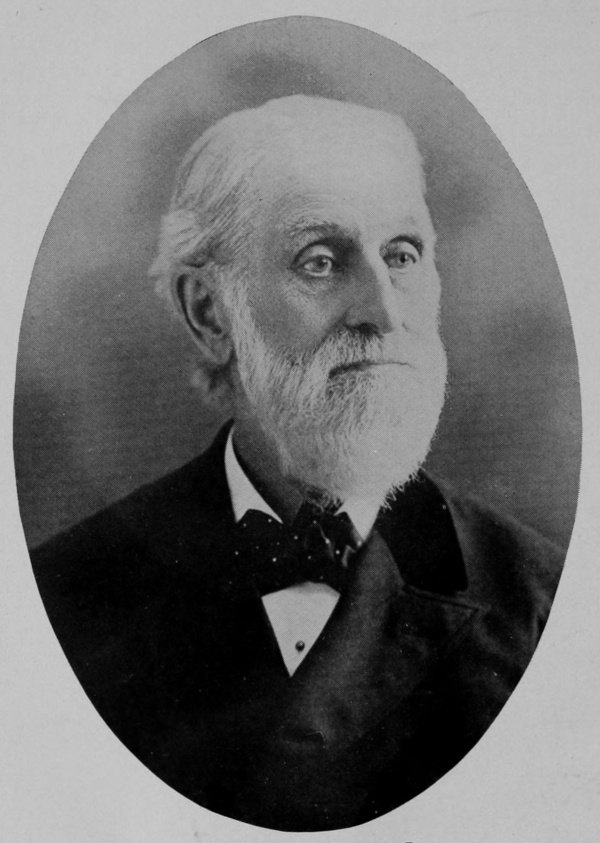
Ormand F. Nims
While in New Orleans still another presentation took place. This time a handsome pistol and equipments were presented to Captain Nims by members of the battery who were not included in the first presentation. A few words may be quoted from a paper giving an account of this event: "It is quite refreshing to observe the almost fatherly care and affection for his men exhibited by Captain Nims and the respect,—we had almost said adoration—combined with the most perfect discipline on the part of his men for their beloved commander."
On the 10th of May the battery was transported to Carrollton, where an outfit of light guns and horses was furnished them to be used in defense of New Orleans. All troops quartered in New Orleans were ordered to Carrollton because of the smallpox which was raging in the city. Private Marsh of the 2d Battery died of this disease at the United States Hospital on May 13. On the 18th of June, Lieutenant Snow and the other members of the battery taken at Sabine Cross Roads arrived at New Orleans, having been lately paroled. Two, however, had died of their wounds, Privates Maxwell and Howarth.
During the stay a handsome guidon was presented to the members of the battery by Massachusetts friends then residing in New Orleans. This guidon was presented by Captain Nims to Governor Draper on June 9, 1910, and may be seen at the State House in the Hall of Flags. It is of a golden bronze color, and on it are the crossed cannon of the battery, the words Second Massachusetts over the state shield and the names of twelve battles in which the battery took part: Vicksburg, Baton Rouge, Irish Bend, Vermillion Bayou, Port Hudson, Clinton, Carrion Crow Bayou, Grand Coteau, Vermillionville, Indian Bend, Wilson's Farm, Sabine Cross Roads.
As the time of enlistment of the original members was about to expire and as new recruits were coming in, the battery was divided into two divisions known as the Old and the New Companies. The veterans were relieved from nearly all military service while the recruits with new guns and equipments spent much of their time in drill.
While the men were waiting for transportation North, Captain Nims was ordered to Boston on recruiting service, and on July 27 he started North leaving Lieutenant Greenleaf in command of the original battery.
On July 31 they went aboard the United States Mail Steamer Matanza and started down the river, the whole company singing "Home Sweet Home." All along the homeward route the men were greeted with public demonstrations of esteem and appreciation. They arrived in Boston August 9, the company consisting of 78 men and two officers, Second Lieut. J. W. Greenleaf being the only officer present, save Captain Nims. They were met at the station by Captain Nims and Captain Cummings of the Boston Light Artillery, with a detachment of the company, and were taken to the United States Hotel, where a handsome breakfast was served. They were then escorted through the principal streets, arriving at the Armory about one o'clock. Here a grand dinner was had, after which Mayor Lincoln welcomed the veterans home in a few brief and cordial words. Captain Nims responded in an appropriate manner and the men were then furloughed until the 16th.
On that day they met at the Armory, delivered the flags to Captain Nims to be put in the State House, and were mustered out of the United States service August 16, 1864.
While this marks the end of the history of the original Nims' Battery, as 23 of the original number had reënlisted and recruits had been received from time to time, the organization of the 2d Massachusetts was continued. Transportation was taken on the 2d of September for Morganza, where the battery encamped for the winter. The monotony of this encampment was varied by scouting expeditions in which the various sections took part.
Meanwhile, Captain Nims had opened recruiting head-quarters in the North and soon secured enlistments enough to fill existing vacancies, and in December was on his way back to the seat of action. Lieutenant Snow, who had been weakened by his wounds and captivity, was discharged November 30, and on the 7th of January, 1865, Captain Nims resigned his commission. Lieutenant Marland was promoted to fill the vacancy, the other lieutenants were advanced, and the second lieutenancies were filled by the promotion of First Sergeant Louis W. Swan and Sergeant Jacob M. Ellis, both of Boston.
The battery was next ordered to report to General Steele for active service, and accordingly arrived at New Orleans on March 7, where it took transport for Barrancas, Fla., arriving there on the 10th. After waiting about a week it began its march through the woods and swamps of Florida toward Mobile. Rain fell most of the time and the mud was unfathomable. Fighting its way from point to point wherever troops could fight, the battery finally reached Fort Blakely on April 2. It was necessary to take this point before proceeding to Mobile, and after waiting a few days the place was finally taken by assault on April 9, 1865. After the fall of Fort Blakely the battery started with a column of infantry and cavalry toward Claiborne, Ala. Its last serious conflict was at Daniel's Landing on the 11th.
For the next seven weeks the battery was almost constantly on the march until men, horses, and mules were completely worn out. Late in May, Columbus, Miss., was reached. The men were sent to Mobile and then on to Vicksburg, which they reached on June 4. Since landing in Florida they had traveled over 1600 miles.
The company encamped at Vicksburg till July 22, when it turned its equipment over to the United States authorities and set out for home.
Boston was reached on the 4th of August, the men encamping on Galloupes Island till the 11th, when they were paid and discharged.
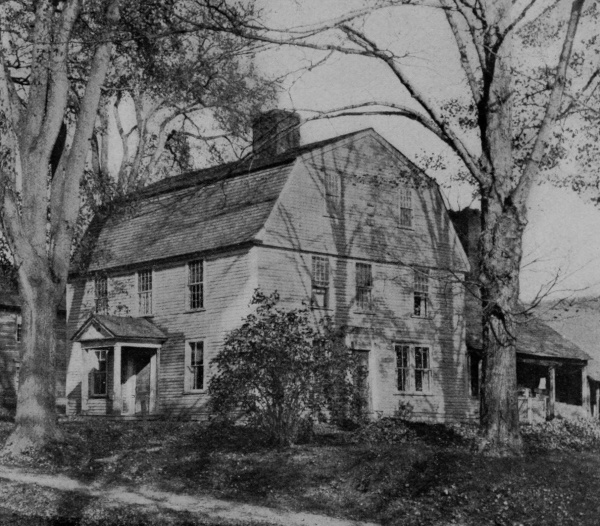
Old Nims Homestead at Deerfield, Mass.