Part 7 — CHAPTER XLII.
Reading edition
LITERATURE: HEBREW AND ENGLISH. PERIODICALS.
Curiosities of early American Jewish literature which belong to the domain of bibliography—Rabbinical works: Responses, commentaries and Homiletics—Hebrew works of a modern character—Ehrlich’s Mikra Ki-Peshuto and Eisenstein’s Ozar Israel—Neo-Hebrew Poets and literati—Jewish writers in the vernacular—“Ghetto Stories”—Writers on non-Jewish subjects—Scientific works—Writers on Jewish subjects and contributors to the “Jewish Encyclopedia”—A. S. Freidus—Non-Jewish writers about Jews—Daly—Frederic, Davitt and Hapgood—Journalists, editors and publishers—The Ochs brothers; the Rosewaters—Pulitzer and de Young of Jewish descent—The Jewish denominational press in English—The “Sanatorium.”
Jewish literature in the New World, as in almost all countries of the Old World, begins with Hebrew works of a religious nature, and branches out on one side into the special dialect which is spoken by the Jews among themselves, and on the other—into the vernacular. The strictly religious work is not the only one written in Hebrew for any length of time, for there is always a movement towards secular knowledge, which usually begins with a tendency to study Hebrew for its scientific value rather than for its sacredness. In modern times this process of development can be traced clearly in Germany, Holland, Poland and Russia, as well as in America, although here we are yet at the very beginning of our literary activity, and what has been accomplished until the present time may in the future be of more interest to the bibliographer than to the historian of literature. All that was written here by Jews for Jews in Hebrew, Judeo-Spanish and English until about the middle of the nineteenth century, including the works and periodicals that have been mentioned in the preceding chapters, while the authors or editors were under consideration, mostly belongs to the domain of curiosities.62 It was only in the second half of the last century, when the number of Orthodox Jews and of those able to read modern Hebrew was fast increasing, that a serious attempt to write books for them was made in this country.
The strictly rabbinical works, like “responses” on disputed points of religious law or practice, commentaries on parts of the Talmud, and homiletic works, represent the continuation of the most ancient form of Jewish literature, and deserve to be treated first. According to Mr. Eisenstein, the honor of being the author of the first book of American “responsa” belongs to Rabbi Joseph Moses Aronson (d. in New York, 1874), author of Matai Moshe, a work which, like numerous others by orthodox rabbis of this country, was printed in Jerusalem. Other rabbinical works, of which there were written in this country a larger number than is generally supposed, include Heker Halakah (New York, 1886), by Rabbi Aaron Spivak, formerly of Omsk, Russia; Sefer Har-El on tractate Bikkurim of the Jerusalem Talmud by Rabbi Abraham Eliezer Alperstein (Chicago, 1886); Shoel Ke-Inyan (Jerusalem, 1895), by Rabbi Shalom Elhanan Joffe (b. in Russia, 1845); ha-poteah, we-hahotem, by Rabbi Benjamin Gitelson of Cleveland (New York, 1898); Torat Meir on Rashi’s Talmudical commentary, by Meir Freiman (New York, 1904); Yegiot Mordecai on the Talmud by Mordecai Garfil (Piotrkow, 1907); Bet Abraham, by Rabbi Abraham Eber Hirshowitz (Jerusalem, 1908). The venerable Rabbi A. J. G. Lesser is the author of Bet ha-Midrash (Chicago, 1897), which contains homiletics and halaka, and Rabbi Moses Simon Sivitz of Pittsburg (b. 1855) is the author of four books on various rabbinical subjects, all printed in Jerusalem. The number of works on “derush” or homiletics is still larger, and includes ha-Emet ha-Ibriah (Chicago, 1877) and Or Haye Lebabot (New York, 1885), by Jehiel Judah Levinsohn (d. in New York, 1895); Ateret Zebi, by Rabbi Zebi Lass (New York, 1902); Nehmad le-Mare, by Zeeb Dob Wittenstein (Cleveland, 1903); Shebil ha-Zohab, by Rabbi Baruch Kohen (New York, 1903); Maaseh Hosheb, by Rabbi H. S. Brodsky of Newark (New York, 1907). Teome Zebiah (Chicago, 1891), by Baruch Ettelson (1815–91), on some difficult passages in Agadah, and Shaare Deah (New York, 1899), by Rabbi Shabbetai Sofer, belong to the same class, though of a somewhat different nature.
The first substantial Hebrew book printed in America, Abne Joshua (New York, 1860), by Joshua Falk ben Mordecai ha-Kohen, though nominally a rabbinical book, actually belongs to the more secular class of literature, which borders on Haskalah. The same can also be said of Holzman’s Emek Rephaim (New York, 1865), and perhaps also of Tub Taam in defense of the Jewish method of slaughtering cattle for Kosher food, by Aaron Zebi Friedman of Stavisk (1822–66), which is said to have been translated into English, German and French.63 Ha-Mahnaim (New York, 1888), by Mayer Rabinowitz, and Wolf Schur’s Nezah Israel come nearer to the spirit of modernity or “enlightenment,” while works like ha-Dat we-ha-Torah (New York, 1887) and Meziat ha-Shem we-ha-Olam (ibid, 1893), by Shalom Joseph Silberstein (b. in Kovno, 1846; a. 1881), go far in the direction of free thinking. Valuable contributions to the Science of Judaism were made by Nehemiah Samuel Libowitz (b. in Kalna, 1862; a. 1881), author of a biography of Leon Modena (New York, 1901) and other works; by Benzion Eisenstadt, author of Hakme Israel be-America (ibid, 1903); by Arnold B. Ehrlich (b. in Wlodowka, Russia, 1848), author of a remarkable commentary on the Bible which he calls Mikra Ki-Peshuto (Berlin); by Abraham H. Rosenberg (b. in Pinsk, 1838; a. 1891), of whose Ozar he-Shemot, a Cyclopedia of Biblical literature, four volumes were issued in New York; and by Judah David Eisenstein, a prolific writer in Hebrew and English, who is now editing the Ozar Israel, a Hebrew Encyclopedia, of which seven volumes have appeared, and to which the editor is himself the principal contributor of articles. Rabbi Mordecai Zeeb (Max) Raisin (b. 1879) is the author of a short “History of the Jews in America” in Hebrew, which appeared in Warsaw, Poland, in 1902.
Of literature in the restricted sense, or fiction, hardly anything worth mentioning was written in Hebrew in America. But the study and writing of neo-Hebrew cannot be thought of without the production of poetry, and some collection of Hebrew songs possessing considerable merit were published in this country, mostly by authors who acquired their reputation abroad before arriving in this country. The poetical works of Naphtali Hirz Imber, Menahem Mendel Dolitzki and Isaac Rabinowitz (“Ish Kovno,” d. in New York, 1900, aged 54) belong to that class, and the same can be said of the quasi-scientific works of Joseph Loeb Sossnitz (1837–1910) and Ephraim Deinard (b. 1846), who has recently compiled a list containing about six hundred names of works in Hebrew and Yiddish which appeared in the United States. There were also some earlier writers of Hebrew poetry in America, notably Moses Aaron Schreiber, who composed the Centennial poem Minhat Yehudah in 1876, and the hazzan Hayyim Weinshel (1834–1900), author of Nitei Naamonim (New York, 1891). Gerson Rosenzweig, the epigramatist and author of the excellent Talmudical parody, Maseket America, who has also translated the American national songs into Hebrew, came here a young man, and his talent is more distinctively American.
The Hebrew periodical literature, which begins with Hirsch Bernstein’s ha-Zofah be-Erez ha-Hadashah (1870–76), which was mentioned in a former chapter, was never securely established in this country up to the present time. Most of the Hebrew Journals or magazines, like Deinard’s weekly ha-Leomi and Rosenzweig’s monthly Kadimah, existed for less than a year. The Hekal ha-Ibriyah, edited by N. B. Ettelson and S. L. Marcus in Chicago, appeared from 1877 to 1879 as a supplement to their Judeo-German Israelitische Presse. Michael Levi Rodkinson (Frumkin, d. in New York, 1904, aged 59), who later prepared a translation of parts of the Babylonian Talmud into English, edited his weekly ha-Kol in New York for about two years (1889–90). Wolf Schur’s he-Pisgah, which was later called ha-Tehiyah, appeared irregularly in New York, later in Baltimore, and still later in Chicago, during the last decade of the nineteenth century. The monthly Ner ha-Maarabi, edited by Abraham H. Rosenberg and later by Samuel Schwarzberg, existed less than three years (1895–97), and another monthly, ha-Modia la-Hadashim, edited by Herman Rosenthal and Abraham H. Rosenberg (1900–1), had a still shorter life. The weekly ha-Ibri, which was founded by K. H. Sarasohn and edited by Gerson Rosenzweig, appeared regularly from 1892 to 1898. Moses Goldman (b. 1863; a. 1890) began the publication of his ha-Leom as a monthly in 1901; it later appeared for several years as a weekly and afterwards for a short time as a daily. Since its suspension America had no other Hebrew periodical until the neo-Hebrew litterateur, Reuben Brainin, began to publish in New York (1911) his weekly ha-Deror, of which fifteen numbers appeared. Rosenzweig’s monthly ha-Deborah and Rabbi T. Isaacson’s ha-Rabbani, also a monthly, are now the Hebrew periodicals appearing in the United States.
The contribution of Jews to American literature consists mostly of descriptions of Jewish life, and of what has lately became known as “ghetto stories.” Emma Lazarus, whose work was described in a preceding chapter, did not confine herself to Jewish themes, and was followed in this respect by other Jewish writers of her sex, like Mary Moss, the critic; Martha Morton, the playwright, and Emily Gerson Goldsmith, the author of Juvenile stories. Annie Nathan Meyer, the founder of Barnard College (Columbia University, New York), also belongs to this class of writers; while Martha Wolfenstein (1869–1906) of Cleveland, O., belongs to the front rank of the other class of writers who attempted to depict Jewish life in this country or abroad. To the latter class belong Herman Bernstein (b. 1876; a. 1893), who writes on Russian as well as on Jewish subjects; Rudolph Block (b. in New York, 1870), the journalist, who writes of Jewish life under the pen-name “Bruno Lessing”; Ezra S. Brudno (b. 1877); Abraham Cahan, the labor leader and Yiddish journalist; Isaac K. Friedman (b. in Chicago, 1870), and James Oppenheim (b. in St. Paul, Minn., 1882), who has also written on other than Jewish subjects. To the same class may be added Rabbi Henry Iliowizi (b. in Russia, 1850; d. in London, Eng., 1911), who has lived in the United States more than twenty years and has written poetical and prose works, mostly on Jewish and Oriental subjects. Bret Harte, the poet and novelist, was of Jewish descent, but he cannot be considered a Jewish author.
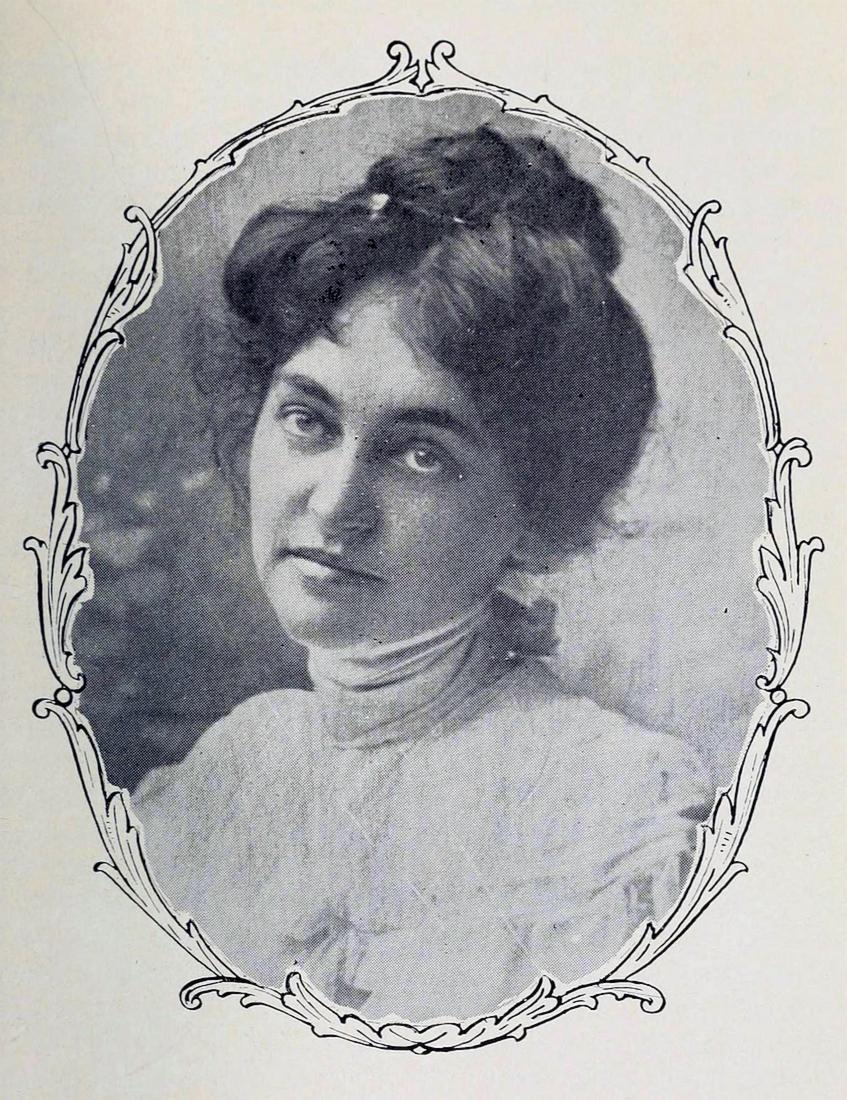
Martha Wolfenstein.
Photo by Elton, Cleveland, O.
The works written on scientific subjects by Jews who have attained eminence in various branches of knowledge, some of whom were mentioned in the preceding chapter, are of a comparatively high standard of value. To these may be added the works of the art critic, Bernhard Berenson (b. in Wilna, Russia, 1865), who now resides in Italy; of the anthropologist, Franz Boas (b. in Germany, 1858), of Columbia University, and of the statistician, Isaac A. Hourwich (b. in Wilna, 1860; a. 1891), who is also an occasional contributor to the Jewish press. Morris Hillquit (b. in Riga, Russia, 1869; a. 1886), the Socialist leader and historian of Socialism in the United States, has likewise often written for various radical periodicals. Arnold W. Brunner (b. in New York, 1857), the architect, has written works on “Cottages” and on “Interior Decorations.”
A considerable number of works on a variety of Jewish subjects were written by American-Jewish scholars. David Werner Amram (b. in Philadelphia, 1866) wrote The Jewish Law of Divorce (1896); Maurice Fishberg (b. in Russia, 1872; a. 1890) is the author of The Jews: a study of Race and Environment (1911); Julius H. Greenstone (b. in Russia, 1873) wrote on The Messiah Idea in Jewish History (1906); while Max J. Kohler, Geo. A. Kohut, Henry S. Morais and numerous others wrote on American-Jewish history in separate works, in the “Publications” and in the Jewish Encyclopedia. Isaac Markens (b. in New York, 1846) is the author of The Hebrews in America (1888), whose valuable material, like that contained in the works of the others mentioned here and in the notes, was utilized in the preparation of the present work. Abraham Solomon Freidus (b. in Riga, Russia, 1867; a. 1889), the eminent Jewish bibliographer at the head of the Jewish department in the New York Public Library, which contains one of the most valuable collections of Hebraica and Judaica in the world (donated by Mr. Jacob H. Schiff), is the author of bibliographical lists of Jewish subjects and of “A Scheme of Classification for Jewish Literature,” which is of great value to Jewish bibliophiles and librarians. Alois Kaiser (1840–1908) and William Sparger are authors of A Collection of the Principal Melodies of the Synagogue (Chicago, 1893), and Platon G. Brounoff (b. in Russia, 1863), the composer, has published, among other works, a volume of Jewish folk-songs.
The most notable of the books on Jewish subjects written by Gentiles in the United States is The Settlement of the Jews in North America, by Charles P. Daly (1816–99), which was one of the sources of the present work. Dr. Madison C. Peters has written several popular and sympathetic works about the Jews; while Harold Frederic’s The New Exodus (New York, 1892) gives a vivid description of the conditions in Russia at the time of the renewed expulsions from Moscow and other places in 1891. Hutchins Hapgood, author of The Spirit of the Ghetto, and Myra Kelly (Mrs. Allan Macnaughton; d. 1910) are among those who attempted to describe the Jewish immigrant in his new surroundings in the thickly settled quarters in the first period after his arrival, when he was in many respects unintelligible to himself, as well as to others.
As journalists, editors and publishers of newspapers, a number of Jews have occupied, and still occupy, prominent positions. Mordecai Manuel Noah was one of the influential newspaper men of New York in his time (see above p. 162). Edwin de Leon, who has also been mentioned in a former chapter, was the editor of the Southern Press of Washington, which was at that time considered the representative organ of the southern people at the national capital. Barnet Phillips (b. in Philadelphia, 1828; d. 1905) was for more than thirty years connected with the New York Times, which is now published by Adolph S. Ochs (b. in Cincinnati, 1858), who married a daughter of Rabbi Isaac M. Wise. A younger brother, George Washington Ochs (b. in Cincinnati, 1861), is now at the head of the Public Ledger of Philadelphia, and still another brother, Milton Barlow Ochs (b. in Cincinnati, 1864) was managing editor of the Chattanooga Times and is now the publisher of the Nashville American. Morris Phillips (1834–1904) was the chief editor and proprietor of The New York Home Journal for a generation. Edward Rosewater (b. in Bohemia, 1841; a. 1854; died in Omaha, Neb., 1906) was for many years the editor of the Omaha Bee, which became under him one of the great newspapers of the Middle West, and is now edited by his son, Victor Rosewater (b. in Omaha, 1871), who was a member of the Republican National Committee for the State of Nebraska. Philip Rapoport (b. in Germany, 1845) was for nearly twenty years editor of the Indianapolis Tribune. Samuel Strauss, of Des Moines, Ia., owned the Register and Leader there, and was later publisher of the New York Globe. Joseph Pulitzer (b. in Hungary, 1847; a. 1864; d. 1911) of the New York World was of Jewish descent, and so is Michael Harry de Young (b. in St. Louis, 1848), who owns and edits the San Francisco Chronicle. Solomon Solis Carvalho (b. in Baltimore, 1856), the son of the artist, Solomon N. Carvalho, is the general manager of W. R. Hearst’s newspapers. A large number of Jews hold various positions on the staffs of newspapers and magazines all over the country, from editors, literary, dramatic and musical critics down to reporters. Many are also engaged in the business parts of the work, as publishers, advertising managers, etc.
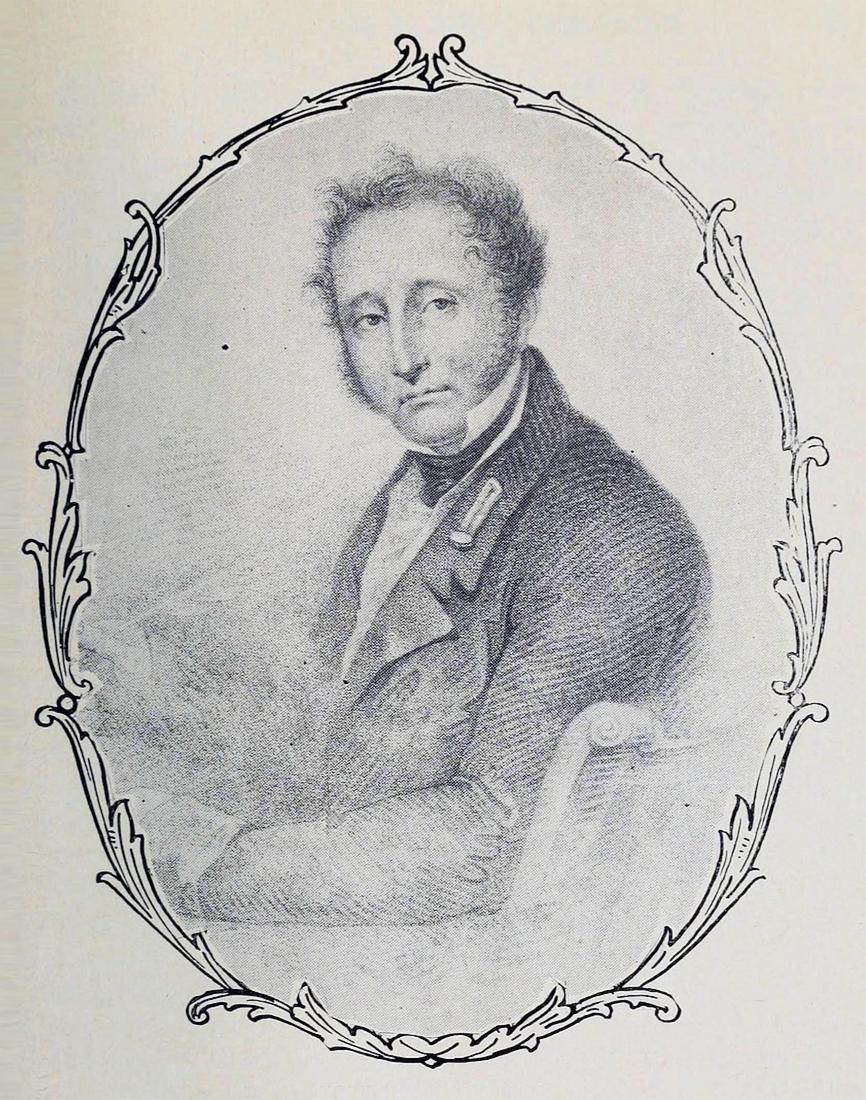
Mordecai Manuel Noah.
The most important of the older Jewish periodicals in the vernacular were mentioned in former chapters. The Menorah Monthly, which was for many years edited by Moritz Ellinger (b. in Bavaria, 1830; d. in New York, 1907), was the best Jewish magazine in America, as well as the one which existed for the longest time. The New Era Illustrated Magazine, which was published for several years by Isidor Lewi (b. in Albany, N. Y., 1850), of the editorial staff of the New York Tribune, was an other valuable periodical. The Zionist Maccabean is now the only Jewish monthly magazine published in America. There is one semi-monthly, the B’nai B’rith Messenger, of Los Angeles, Cal. (established 1897), and over twenty weeklies, most of which are of only local interest. The more important are: The American Hebrew of New York, established 1879, by Philip Cowen (b. in New York, 1853); the American Israelite and its Chicago edition, founded by Isaac M. Wise in 1854; The Emanuel of San Francisco, Cal., which was founded in 1895 by Rabbi Jacob Voorsanger (b. in Amsterdam Holland, 1852; d. 1908); The Hebrew Standard of New York, established 1883 by Jacob P. Solomon (b. in Manchester, Eng., 1838; d. in New York, 1909); The Jewish Comment of Baltimore, established 1895, of which Louis H. Levin (b. in Baltimore, 1866) is the editor; The Jewish Exponent of Philadelphia, established 1886; The Jewish Voice of St. Louis, established, in 1884, and still edited by Rabbi Moritz Spitz (b. in Hungary, 1848); the Reform Advocate of Chicago, established, in 1891, and still edited by Dr. Emil G. Hirsch. One bi-monthly which deserves to be mentioned is the Sanatorium, edited since 1907 by Dr. C. D. Spivak (b. in Kremenchug, Russia, 1861) and published as the organ of the Jewish Consumptives’ Relief Society of Denver, Colorado.