HISTORICAL RECORD (continued 2)
Reading edition
The royal authority was afterwards given for the regiment to bear the word "Martinique" on its colours, to commemorate its distinguished gallantry on this occasion. Lieut.-Colonel Riall received a medal for commanding a brigade, and Major Andrew Davidson for commanding the regiment.
Three French sail of the line and two frigates, from L'Orient, having taken shelter in the Saints, in the vicinity of Guadaloupe, they were blockaded by Rear-Admiral Sir Alexander Cochrane; and three thousand men, of which force the Fifteenth formed part, were detached, under Major-General Maitland, for the reduction of the islands. This expedition sailed from Port Royal on the 12th of April; a landing was effected in Ance Bois Joly, and the difficult heights of Mount Russel, eight hundred feet high, were stormed and captured, and a battery soon forced the French shipping to put to sea. The reduction of the islands was accomplished in a few days, and the enemy's garrison was made prisoners of war. During the action on the 15th of April, Lieut.-Colonel Phineas Riall volunteered to storm Fort Morelli, with the Fifteenth regiment; but Major-General Maitland would not allow the corps to engage in so dangerous an enterprise.
Towards the end of April, the regiment returned to Grenada, where it was stationed about nine months.
1810
Three hundred men of the regiment, including the flank companies, embarked from Grenada, early in January, 1810, under Lieut.-Colonel Riall, for Barbadoes, to join the expedition against Guadaloupe, under Lieut.-General Sir George Beckwith, and were formed in brigade with a battalion of light infantry, and the third West India regiment, under Brigadier-General Harcourt; this officer being afterwards appointed to the command of a division, the brigade was commanded by Lieut.-Colonel Riall, of the Fifteenth.
The expedition rendezvoused at Prince Rupert's, Dominica, and the Fifteenth accompanied the second division, which sailed on the 26th of January, and anchored at the Saints until the 29th, when it proceeded towards Guadaloupe, and menaced the enemy's defences at the Three Rivers. During the night the regiment landed in the bay near the village of Les Vieux Habitans without opposition, and afterwards advanced, the enemy's posts falling back skirmishing. The French appearing in force on some high open ground, the Fifteenth turned their right flank, the Royal West India Rangers the left, and the thirteenth light infantry advanced against the front, when the enemy was speedily forced from his ground.
The regiment afterwards took part in completing the conquest of the island, an achievement which reflected credit on the troops employed in the enterprise. The conduct of Lieut.-Colonel Riall was commended in the public despatch of the Commander of the Forces.
The following statement appeared in general orders, dated 6th February:—'The Commander of the Forces returns his thanks to the officers of all ranks, for their meritorious exertions, and to the non-commissioned officers and soldiers, for the cheerfulness with which they have undergone the fatigues of a march, difficult in its nature, through the strongest country in the world, and the spirit they have manifested on all occasions to close with the enemy.'
The loss of the regiment was limited to a few private soldiers killed and wounded, and Captain William Grierson wounded.
To commemorate the distinguished gallantry of the regiment on this occasion, the royal authority was afterwards given for the word "Guadaloupe" to be displayed on its colours. Lieut.-Colonel Riall received a medal for commanding a brigade.
In March, that portion of the regiment which had been left at Grenada, joined at Guadaloupe; also a draft of ninety men from the second battalion. Another draft of one hundred men joined from the second battalion in July, under Lieut.-Colonel Barry, who assumed the command of the regiment,—Lieut.-Colonel Riall proceeding to Europe on leave of absence.
The health of the men soon afterwards suffered severely from the effects of the climate of Guadaloupe, and two hundred and seventy-six non-commissioned officers and soldiers died. The survivors were moved to the Champ de Mars, and afterwards occupied the convalescent posts of Matuba, Dolce, Vermont, and Vieux Fort.
1811 1812
The regiment remained at Guadaloupe during the year 1811; in May, 1812, it was removed to St. Christopher's and stationed on Brimstone-hill, under Lieut.-Colonel Davidson.
On the 21st of September, Lieut.-Colonel Renny joined with a detachment of two serjeants, and one hundred and forty-six rank and file, from the second battalion.
1813
Several detachments also joined from the second battalion in 1813.
1814
After commanding the regiment twenty years, General Powell died in the summer of 1814, and was succeeded in the colonelcy by Lieut.-General Moore Disney, from major in the first foot guards.
The victories of the British troops, in the Peninsula and the south of France, having accomplished the reduction of the power of Napoleon Buonaparte, and the restoration of the house of Bourbon to the throne of France, a general peace was proclaimed, the army was reduced, and the second battalion of the Fifteenth was disbanded in October, 1814, on the island of Jersey, whither it had proceeded in June, 1811: its services had been limited to Great Britain and Jersey.
1815
Early in 1815, the men of the late second battalion embarked to join the regiment at the island of St. Christopher; but the transports encountered much severe weather, and were forced into Falmouth harbour, and the soldiers landed. At this period, Buonaparte had violated the treaty of 1814, and regained the throne of France. War immediately followed; and His Royal Highness the Prince Regent directed the second battalion of the Fifteenth regiment to be re-formed; this took place accordingly, and the men who had landed at Falmouth proceeded to Guernsey, where they were joined by the depôt.
The French troops on the islands of Martinique and Guadaloupe evinced a disposition to renounce their allegiance to Louis XVIII., and proclaim Buonaparte, and the former island was taken possession of by British troops in June; at Guadaloupe, the Emperor Napoleon was proclaimed on the 18th of June, a day fatal to his power on the field of Waterloo; and the first battalion of the Fifteenth regiment proceeded from St. Christopher to Barbadoes, from whence it sailed with the expedition against Guadaloupe, under Lieut.-General Sir James Leith. A landing was effected on the island on the 8th of August, and the French troops were speedily forced to surrender prisoners of war.
The regiment proceeded to the Champ de Mars, where it was stationed until the end of September, when it embarked for Barbadoes.
1816
Peace having been restored, and Buonaparte sent in exile to St. Helena, the second battalion of the regiment was disbanded in the island of Guernsey, on the 25th of January, 1816; the men fit for service embarking to join the first battalion at Barbadoes.
On the 15th of April, the regiment marched from garrison at St. Anne's, to quell an insurrection among the negroes in the interior of the island of Barbadoes, where strong detachments remained until June, when the regiment was removed to Martinique.
In August, the French eighty-eighth regiment, or Martinique Legion, arrived to garrison the island, and the Fifteenth, being relieved, proceeded to Grenada, where they landed on the 5th of September, and marched into garrison at Richmond-hill.
1817 1818
From Grenada the regiment embarked, in the spring of 1817, in two divisions, under Lieut.-Colonel Davidson and Major Maxwell, for Halifax in Nova Scotia, where it was stationed two years.
1819
The right wing, under Major Maxwell, embarked for Bermuda in June, 1819, and relieved the left wing of the sixty-second regiment at Fort George barracks, where the Fifteenth lost between sixty and seventy men of the yellow fever, in August and September.
1820 1821
During the year 1820, the regiment was stationed at Bermuda and Nova Scotia. In the summer of 1821, it was relieved at the former station by a wing of the second battalion of the sixtieth, and at the latter by the eighty-first regiment; and embarking for England, landed at Portsmouth in July and August, and was stationed at Fort Cumberland until November, when it embarked for Plymouth.
1822
In the summer of 1822, the regiment was removed to Hull; in October it embarked at Liverpool for Ireland, and landing at Dublin, occupied Richmond barracks a few weeks, and afterwards proceeded to Naas.
1823 1824
The regiment was removed in the summer of 1823 to Waterford, and in the autumn to Cork, with a detachment at Spike Island; and it occupied this station during the year 1824.
1825
Leaving Cork in July, 1825, the regiment proceeded to Buttevant, with detachments to the towns in the neighbourhood.
1826
A division of the regiment marched to Templemore in February, 1826, and sent out numerous detachments. One party stationed at Thurles, under Captain Temple, evinced great patience and forbearance, united with a proper degree of firmness, in suppressing a riot at that place, when several persons had been killed by the police. Captain Temple received an address of thanks and approbation from the magistrates and principal inhabitants of the town, for his cool and judicious conduct on this occasion. In the autumn the regiment marched to Galway, sending out eleven detachments.
1827
In April, 1827, the regiment was divided into six service and four reserve companies, and marched to Fermoy, where it was inspected by Major-General Sir George Bingham, who expressed his unqualified approbation of its appearance, discipline, and interior economy. In May, the service companies embarked from the Cove of Cork, under Lieut.-Colonel Macintosh, for Canada, and arrived at Quebec on the 29th of June and 6th of July; they immediately proceeded up the river St. Lawrence, to Kingston in Upper Canada, where they remained ten months.
1828
Retiring down the River St. Lawrence, in boats, in May and June, 1828, the service companies proceeded to Montreal, from whence the first division continued its journey, in a steam vessel, to Quebec, and was followed by the second division in August.
1830
The regiment was stationed at Quebec during the years 1829 and 1830; in October of the latter year, a strong detachment proceeded to the Isle aux Noix, on Lake Champlain.
The regiment continued in garrison at Quebec, detaching 100 rank and file to the Isle aux Noix and St. John's, with a proportion of officers and non-commissioned officers.
1831
The regiment moved to Montreal on the 3rd of May of this year, continuing its detachments.
1832
On the 21st of May, 1832, Lieut.-Colonel Macintosh, commanding the regiment, and Commandant of the Garrison of Montreal, was called upon by the magistrates of that place to be prepared to assist the civil power in the event of a riot occurring at a contested election for the west ward of the city, which was to terminate on that day. Captain Temple was the captain of the piquet on the occasion, but when it was turned out, Lieut.-Colonel Macintosh took command of it in person. At the close of the poll, several acts of violence were perpetrated both on persons and property, when it became necessary to require the co-operation of the piquet in restoring order. The Riot Act having been read, the Lieut.-Colonel was authorised by the Magistrates to take such steps as might appear to him necessary. The piquet was immediately marched in the direction of the rioters, who assailed the party with stones and other missiles, when the order to "fire" was given, not, however, until every effort had been exerted to cause them to disperse. The front rank alone, consisting of about sixteen men, discharged their pieces in quick succession, the consequences of which proved fatal on the spot to three of the rioters; several others were severely wounded, but the disturbance was effectually checked. The regiment remained under arms in different parts of the town during the night.
A company of the Royal Artillery stationed at the Island of St. Helen's, under the command of Captain W. C. Anderson, brought over two nine-pounders in the short space of twelve minutes from the time the signal was given for their services, and remained on duty with the regiment until the next day. This was remarkable, as the river is nearly a mile broad, with a very rapid current, and the guns had to be shipped in bateaux after the signal was made, and re-limbered on landing at the Montreal side.
The conduct of the troops, particularly that portion under the immediate orders of Lieut.-Colonel Macintosh, was marked by great steadiness and forbearance, notwithstanding that they had been harassed by continual alarms for some days previous to the riot. On the day of the 21st the rain fell in torrents, whilst the men were exposed to it for hours before the riot commenced.
The following documents are deemed worthy of a place in these Records; the conduct and discipline of the corps, on the occasion referred to, being highly estimated by the civil and military authorities.
Presentment of Grand Jury.
'The grand jury humbly represent to the court, that, in the investigation of the occurrence upon which were founded the bills for murder against William Robertson and Pierre Lukin, esquires, Colonel Macintosh and Captain Temple, they have fully and impartially examined into all the circumstances of the case, and the result of their proceedings is the conviction, that no ground exists for any criminal charge against those individuals. In such an instance as the present, where violent agitation has convulsed society, the grand jury are compelled by a sense of duty, beyond the mere rejection of the bills, to endeavour at allaying excitement, by an expression of the knowledge at which they have arrived after a severe inquiry into the transaction.
'However much the grand jury may deplore the fatal consequences which flowed from the introduction of an armed force on that occasion, they feel persuaded that it was fully justified by the conjuncture; and its timely interposition, in their belief, averted the calamities which must have ensued if the rioters had been suffered to pursue their impetuous and destructive course.
'With this view of the case, the grand jury cannot withhold the public declaration of their opinion, that the conduct observed, as well by the magistrates as by the military authorities, during those events, is worthy of commendation at the hands of those who love peace and respect the laws; while the inhabitants of the city of Montreal, in particular, are deeply indebted to the firm discharge by those gentlemen of their respective duties, for restoration to a state of security and for the protection of their lives and property.'
GENERAL ORDER.
'Head Quarters, 'Quebec, 2nd September, 1832.
'On the 21st of May last, a detachment of the Fifteenth regiment, commanded by Lieut.-Colonel Macintosh, having under his orders Captain Temple of the same regiment, was called out by the magistrates of Montreal, for the purpose of aiding the civil power in the suppression of a riot in that city, by which the lives and property of the inhabitants were endangered; and the magistrates having failed in their efforts to restore order by other means, the troops were required to make use of their arms, on which occasion three individuals were unfortunately killed, and others wounded.
'The loss of life caused by the fire of the troops is an event deeply to be deplored, and the Commander of the Forces is persuaded that throughout the colony there are not to be found any individuals who more sincerely and more sensibly lament that event than Lieut.-Colonel Macintosh, Captain Temple, and those very soldiers whose painful duty it was to make use of their arms on the 21st of May. It is, however, consoling to reflect that the riot was suppressed without a further sacrifice of human life, which there was every reason to apprehend; and perhaps very many of the peaceable inhabitants of the city of Montreal are at this moment indebted for the preservation of their lives and property, to the timely interference of the troops acting under the direction of the magistrates.
'Although the Commander of the Forces was disposed to place the greatest reliance on the discretion and judgment of Lieut.-Colonel Macintosh, and upon the steadiness and discipline of the regiment under his command, his Lordship, nevertheless, considered it to be incumbent upon him to suspend the judgment in regard to the events of the 21st of May, until the whole of the circumstances connected with those events should have undergone the fullest investigation before the proper tribunals of the country, whose duty it is to take cognizance of criminal offences.
'This duty has now been performed, and Lieut.-Colonel Macintosh, Captain Temple, and the troops under their command, in suppressing the riot at Montreal on the 21st of May last, having been absolved from all blame, the Commander of the Forces hastens to embrace the opportunity thus afforded him, to convey to Lieut.-Colonel Macintosh, Captain Temple, and the non-commissioned officers and soldiers of the Fifteenth regiment, employed in the suppression of a riot at Montreal on the 21st of May last, his approbation of the judgment, steadiness, and discipline, displayed by them in their respective stations on that occasion.'
An address was likewise presented to Lieut.-Colonel Macintosh and Captain Temple, by the citizens of Montreal, from which the following extracts are made:—
'Gentlemen—We, the subscribers, citizens of Montreal, feel it a duty that we owe to you, to express our thanks for your conduct and that of the troops under your command, on the occasion of your being called upon to restore and preserve the public peace, so unhappily broken, at the close of the poll for the election of a member for the west ward of this city on the 21st of May last.
'So strong was our conviction of the importance of the services rendered by you and the magistrates on that occasion, that our desire was to have expressed our testimony of them immediately upon their occurrence; but considerations arising from the interposition of judicial authority prompted us to defer it.
'These considerations having now been removed in a manner the most satisfactory to you and to ourselves, we beg most respectfully to convey to you this expression of the obligation we feel we are under to you for the safety, that we then, and have since, enjoyed in our persons and property through your means; for that it is to the military, and to the magistrates, that we owe our preservation, has been manifestly brought to light before the grand jury, by their finding and presentments lately returned into the Court of King's Bench.
'We have only further to express a regret that the performance of a necessary but painful duty, should have subjected any one of you to unpleasant and unmerited restraint.'
The following letter from the Military Secretary of the General Commanding in Chief, addressed to Lieut.-General Lord Aylmer, K.C.B., Commander of the Forces in Canada, was published in the General Orders of the Colony:—
'Horse Guards, Oct. 23rd, 1832.
'My Lord,
'I have had the honor to receive and submit to the General Commanding in Chief, your Lordship's despatches of the 30th July and 7th September last, conveying, for Lord Hill's information, reports of what had taken place in consequence of a detachment of the Fifteenth Regiment of Foot, under the command of Lieut.-Colonel Macintosh and Captain Temple, called out in aid of the civil power at Montreal on the 21st of May last, having been compelled to resort to the use of their arms, by which, unfortunately, three persons were killed, and several wounded. The General Commanding in Chief, equally with your Lordship, laments the loss of life upon the occasion adverted to; but, in justice to Lieut.-Colonel Macintosh and Captain Temple, feels bound to say, after an attentive perusal of all the papers bearing upon the case, that he knows no instance in which troops have been employed in the suppression of riots, where greater judgment, discretion, or humanity, has been displayed; and if these officers have since been annoyed by accusations of murder, and by every proceeding which could tend to keep alive anxiety, they have at least the consolation of feeling that they have discharged a painful but imperative duty, with temper and moderation, and that by so doing they put an end to disorders, which would probably have led to consequences most disastrous to the city of Montreal.
(Signed) 'Fitzroy Somerset.'
In the month of June of this year, the colony was visited by that afflicting scourge, the Asiatic cholera. One of the very first individuals attacked was a sentry on the regimental guard; he was relieved from his post, complaining of the usual symptoms, and despite the most prompt attention, he expired in a few hours. From this time the utmost consternation prevailed in the city, the disease making rapid progress: the deaths were one in ten of the whole population, without distinction of age or rank. Several men were hourly admitted into hospital, where death very shortly ended their sufferings. The hospital serjeant and all the orderlies (several of whom had volunteered to assist their unfortunate comrades) fell sacrifices to their zeal, when the disease was on the decline. One man only, who was in the worst stage of the disease, finally survived. It is worthy of remark that none of the officers were in the least affected, although their duties exposed them constantly, by day and night, to an infected atmosphere.
In order to give increased ventilation in the barracks, as well as to relieve the attention of the soldiers, a large detachment, chiefly of married men, was sent to La Prairie to occupy an old cavalry barrack there; but this step proved fatal to many of them. It was shortly after determined to remove the whole regiment to the Island of St. Helen's, opposite to the city, where the men were encamped. Thirty-seven men died of this scourge between the 12th and 24th of June, 1832, but not a single case occurred after the regiment was placed under canvass. Lieut.-Colonel Macintosh proceeded to England, and did not again rejoin the regiment, having exchanged to half-pay with Lieut.-Colonel G. W. Horton.
1833
The regiment was moved to Kingston, Upper Canada, in the spring of this year, where it had been stationed on first arriving in the colony, detaching one company to Brockville in aid of the civil power, and a company to Cornwall, where some public works were in course of construction.
1834
The Fifteenth moved this year to Toronto, the seat of Government in Upper Canada, detaching one company to Fort George and another to Amherstburg, frontier posts; and a subaltern's party proceeded to Penetanquishene, the most advanced military post on Lake Huron. The Canadas were again visited this year by the Asiatic cholera; the regiment, however, did not suffer in the least.
1835
Lieut.-Colonel G. W. Horton, from the half-pay, vice Macintosh, assumed the command of the regiment.
1836
During the year 1836 the detachments at Fort George and Amherstburg, were relieved by companies from head quarters.
1837
In the year 1837 all the detachments were withdrawn, and the regiment moved to Quebec, in expectation of returning to England: the unsettled state of the Canadas, however, called for an increased force, and the regiment remained in that garrison during the autumn and winter of 1837.
The importance of the citadel at a time when a rebellion had actually broken out, and the population of the place hostile to the government, caused the duty of the garrison to bear heavily upon the regiment, which, with two companies of the sixty-sixth regiment, two companies of artillery, and a battalion of volunteer militia, raised on the emergency, formed the whole force for the protection of this important place.
1838
On the 9th May, several ships of war were announced by telegraph; and they shortly after anchored opposite the citadel, having on board the Governor-General, the Earl of Durham, and suite, and a brigade of guards, consisting of upwards of 1600 men, under Major-General Sir James Macdonnell.
The regiment immediately vacated its quarters and proceeded to Chambly, on the river Richelieu, an important post, as being situated in the centre of a populous and disaffected country.
Two drafts consisting of 226 men joined from the depôt companies, nearly 100 of them volunteers from the nineteenth regiment. New accoutrements were supplied, and all unserviceable arms were likewise replaced.
Lieut.-Colonel Horton resigned the command of the regiment, and proceeded to England in the month of June, at which time two troops of the seventh hussars were added to the garrison of Chambly.
Lieut.-Colonel Lord Charles Wellesley, who exchanged from half-pay with Lieut.-Colonel Horton, arrived in Canada, and assumed the command of the regiment in October, 1838.
On the 18th of October the head-quarter division of the first (or King's) dragoon guards, under the command of Lieut.-Colonel the Honorable George Cathcart, replaced the squadron of the seventh hussars. About midnight, a fire was discovered in the centre of the officers' quarters, which consisted of a long range of buildings of one story only, but being very old, and entirely of wood, they were consumed in less than half an hour. The regiment had to deplore the loss of the two senior Ensigns (Walter Carey and William Dering Adair Roe), the fire having originated in the particular porch in which their quarters were situated. Ensign Carey had got clear of all danger, but incautiously attempted to secure a favourite object of value, when he sank in the midst of the burning mass. Ensign Roe was rescued from the flames, apparently not much burnt; he walked nearly half a mile to the hospital without assistance, but died in the course of the day, mortification having rapidly taken place: the unfortunate sufferers were committed to the same tomb, and a tablet was erected to their memory in the parish church, by their brother officers, as a mark of their regard, and of deep regret at their untimely fate. The cause of the fire could not be ascertained.
Although the revolt of 1837 had been put down, another attempt to wrest the colony from the control of the Supreme Government was known to be in agitation; and, as the line of the Richelieu was the most disaffected, several parties of the military forces were employed in searching for arms, and apprehending suspected persons. About mid-day of the 8th November, an unexpected order was received to move the chief part of the regiment to St. John's, (where a detachment of 100 men had been stationed for some time,) and although the weather was most inclement, the regiment reached its destination shortly after dark.
His Excellency Lieut.-General Sir John Colborne, now Lord Seaton, Commander of the Forces and Governor-in-Chief, was there in person, with the whole of his staff. The seventy-third regiment had also been brought from Montreal.
A large body of insurgents having taken possession of a village near the frontier, their sympathizing friends in the United States endeavoured to open a communication with them and join them; that, being united, they might act with more effect against the isolated positions occupied by the troops: in this object they were, however, frustrated by the timely approach of the Commander of the Forces in person.
As the troops advanced, the country was deserted by the misguided inhabitants, who did not anticipate the immediate consequences of their disaffection, and on arriving near the village of Napierville, where the rebels were said to be in force, it was discovered that they had dispersed; nor could they afterwards be brought to face the troops in any single instance. A small party, however, of volunteers, signalized themselves by attacking a superior force of the disaffected, who in their turn became the aggressors, but they were repulsed, and dispersed with great loss.
The troops were cantoned for a few days in the immediate neighbourhood of Napierville, during which the misguided habitans sheltered themselves in the woods, submitting their property to the pillage of the soldiery, who were living at free quarters during the time.
An irruption being threatened by the sympathizers, at a place called Hemingford, a short distance from the frontier, but on the opposite side of the Richelieu, the Commander of the Forces moved there, accompanied by a division of the Fifteenth and seventy-third regiments, some artillery, and two troops of the first (or King's) dragoon guards.
The loyal portion of the inhabitants were speedily formed, and prepared to assist the troops in acting as circumstances might require. But the activity of the Commander of the Forces checked the ardour of the marauders, who never fairly made their appearance.
During the remainder of the month of November, the regiment was employed in searching for arms, throughout the counties bordering on the Richelieu, and succeeded in securing large quantities of them, after which service the corps returned to Chambly.
1839
The head-quarters were again moved in December to St. John's, and from thence to the Isle aux Noix, sending two companies to take post at Napierville, thus occupying the frontier line. But one occasion offered for proving the alacrity and discipline of the regiment. An order was received about eleven o'clock, A.M., on the 5th January, to move two hundred and fifty to Henryville, a small hamlet to the east of the Richelieu, with all possible despatch; and the division, in complete marching order, arrived at its destination before sunset; although the distance was only seven miles, the march had to be performed through uncleared woods, and over roads in many places breast-deep in snow, where the men were obliged to file in single rank. The sixty-sixth regiment, and some companies of the grenadier guards, together with a half battery of artillery, were already concentrated there, under the command of Major-General Sir James Macdonnell. The promptness of this forward movement, however, deterred the marauders from effecting their nefarious designs; and the troops shortly returned to their several stations.
The regiment moved to Montreal, and took up quarters at the island of St. Helen's, withdrawing the companies at Napierville, but detaching two companies to William Henry, and one to Three Rivers.
During the summer, the regiment suffered severely from ophthalmia, and although situated most favourably (the rapid and clear stream of the St. Lawrence perpetually flowing round the island), and unremittingly watched by the staff and regimental surgeons, the disease was not eradicated.
1840
The service companies returned to England on the 25th June of this year, on board the "Athol" troopship, and disembarked at Portsmouth, where the depôt companies awaited their arrival.
1841
The regiment was quartered at the Haslar and Fort Monckton barracks, until January, 1841, when it marched to Winchester. From thence it was moved to Woolwich in June, detaching three companies to Deptford.
1842
The Fifteenth moved to Windsor early in the month of April, where the regiment remained until November. On being relieved by a battalion of the grenadier guards, the regiment proceeded to Manchester, the head-quarters moving shortly after to Chester Castle.
Whilst stationed at Windsor, the regiment was highly honored by the personal inspection of Her Most Gracious Majesty the Queen, and her August Consort, the Prince Albert.
Her Majesty, on another occasion, reviewed the regiment in the Home Park, attended by H.R.H. the Prince Albert, and the Hereditary Grand Duke of Saxe Coburg Gotha.
Her Majesty was, on both occasions, most graciously pleased to express her approbation of the appearance of the men, and the precision of their movements.
The half-yearly inspection of the regiment, by Lieut.-General Sir John Macdonald, G.C.B., Adjutant-General to the Forces, took place in the Home Park at Windsor, on the 22nd of July. He was pleased to approve highly of the interior discipline and appearance of the regiment.
At this period, upwards of five hundred men had been recruited for the regiment since its return from Canada, and fifty-eight volunteers were furnished to the following corps this year, namely, to the forty-second royal Highland regiment, the ninety-seventh regiment, and the St. Helena regiment.
1843
On the 31st October and 1st November, the Fifteenth proceeded from Windsor to the northern district, and were stationed at Chester, where the regiment remained until June 1843, when it marched to Manchester, and in the following month embarked for Ireland, and was stationed at Templemore.
1844 1845
In March, 1844, the regiment proceeded from Templemore to Limerick; and in July, 1845, it was formed into six service and four depôt companies. The former marched to Cork, and embarked on the 8th and 17th September, in the "Maria Somes" and "Mariner" transports, for Ceylon; the head-quarter division under the command of Lieut.-Colonel Thomas A. Drought, and the second division under Major R. A. Cuthbert. The depôt companies proceeded from Limerick to Waterford in August, 1845, and were quartered there during the following year.
1846 1847
The service companies arrived at Ceylon on the 15th and 26th January, 1846, and were stationed at Colombo until the 26th November, when the head-quarters were removed to Kandy, remaining there during the year 1847. The depôt companies marched from Waterford to Clonmel, in July, 1847; and on the 21st October embarked at Dublin for Liverpool, and proceeded to Chester.
1848
In June, 1848, the period of the conclusion of this Record, the service companies of the Fifteenth regiment remained at Kandy; the depôt companies removed in the month of May, from Chester Castle to South Wales, the head-quarters being stationed at Brecon, with detachments at Dowlais and Swansea.
1848.
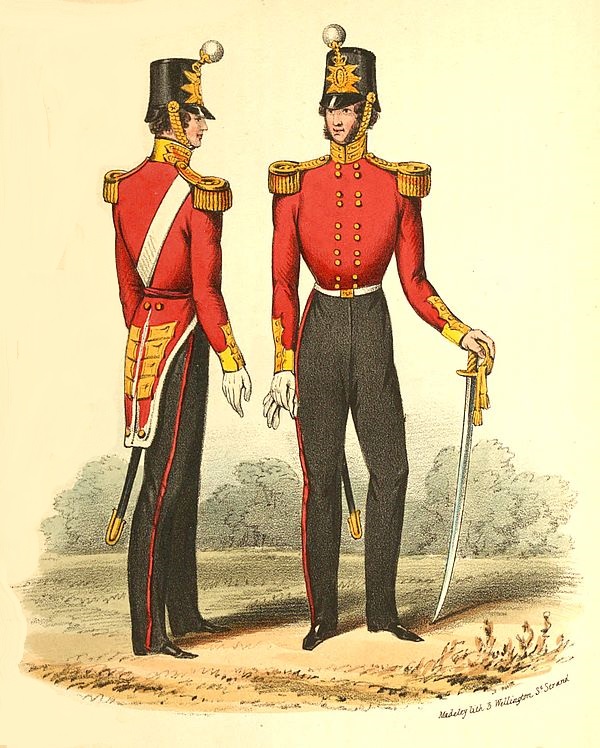
FIFTEENTH REGIMENT OF FOOT FOR CANNONS MILITARY RECORDS.