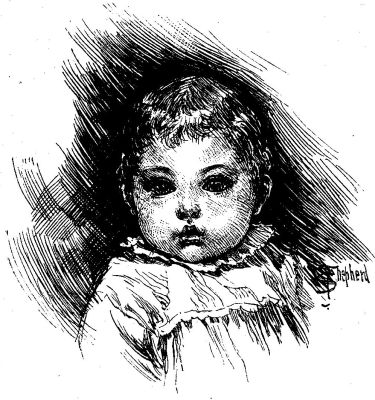
OUR POST-OFFICE BOX.
Reading edition
We are sure our young friends will feel satisfied with this beautiful Easter number, so crowded with good things. Do not let the rest of the paper make anybody forgetful of Our Post-office Box. You seldom see a more entertaining letter than this from our correspondent Georgie:
Galeyville, Arizona Territory.
This mining camp is ten miles from the New Mexico line, and forty from Mexico. There are mountains all about, covered to the tops with luxuriant grass, and juniper, pine, fir, cedar, and live-oak trees. In the cañons, near the creeks, are sycamore, black-walnut, white oak, madrone, and other varieties; also the lovely manganita, and other shrubs. Many fruits and flowers are native here. Of the former there are cherries, grapes, raspberries, strawberries, etc.; among the latter, the geranium, morning-glory (all colors), poppy, portulaca, and many more favorites that we used to cultivate in the East. Potatoes also grow wild, and though very small, are good; they are called "spuds" here.
Last summer we were encamped for two months in a cañon, six miles from town, where are ever so many caves. We all went part of the way through the largest—Coral Cave—one day. The entrance is on the mountain-side, and so small that one person has to crawl or "back" down at a time, looking out for bruises from projecting rocks, and also he must have a care for his footing, for this passage is very steep and winding; all at once it grows broad, and very high. At this point all light their candles, as there are other passages branching from the main one; and that we may not get lost, we watch for the little "monuments" which have been built to guide visitors to the main cavern.
It is a hard scramble of about 500 feet, past awful chasms, down dizzy natural stairways, etc., then up a few steps, and—oh, it is just like fairy-land, I am sure! The frost-like drapery and festoons, sparkling and flashing at every movement of our lights, the thousands of icicles and straight white columns, under our feet the "snow," twinkling with innumerable diamonds, made me think we were in Jack Frost's home beyond a doubt. But it was not snow nor ice at all, but limestone formation; it was stalagmite on the floors of all the chambers, and the crystals cut our boots dreadfully.
As an offset to the pleasures of our happy camping ground in the cañon, with its grand scenery, its woods, flowers, towering rocks, rushing mountain stream, and springs of clear cold water, we had scorpions, tarantulas, rattlesnakes, and loathsome centipeds. There is also a very poisonous bug, called by a Spanish name which I have forgotten; it means "babe of the wood." It is about two inches long, of a rusty black color, and has claws something like a lobster, as has the centiped, which is of a greenish color when young, turning to yellow-brown when full grown. They (the centipeds) are in sections or joints, each joint having one pair of legs, which end in needlepoints, jet black, and charged with poison. We killed lots. Many were ten inches in length; they can run very fast. We never saw any of these creatures in our sleeping-apartment; but about the rocks, in the small cave where we cooked and took our meals, they, with lizards, chameleons, and cunning little striped squirrels, were as much at home as we. Out in the woods were wild animals to keep away from. Papa shot a big brown bear one day, and a miner killed a very large panther. It is a grand place to hunt in, as game is plentiful. We are interested in "The Talking Leaves," here in the Apache country. I wish there were no Apaches in the world! Sometimes the soldiers come through here, and prospectors see squads of Indians in the mountains, and we get scared. Last September papa sent mamma, brother, and me to California to stay until the fright was over. We spent three months at a bathing-place on the Pacific coast called Santa Monica, and had fine times bathing, fishing, and playing on the beach. My mamma gives us a "treat" Saturday afternoons by reading to us from back numbers of Young People. All the children in camp who are old enough to be interested are asked to come at three o'clock every Saturday. We are now half through with "Toby Tyler." It is as good as ever, and the boys all think it and Young People splendid.
Georgie B. C.
We shall think of the group gathered to listen to mamma as she reads their favorite stories aloud on Saturday afternoons, and whenever there shall happen to be anything in the paper which we enjoy very much, we will say to ourselves, "Now, Georgie and his friends will be sure to like this too." The Postmistress says she never could summon up courage enough to scramble into Coral Cave; and as for the centipeds, she threw both hands out in the most horrified manner when she came to that part of the letter which mentioned them.
Philadelphia, Pennsylvania.
I am a little boy seven years old. My mamma gave me Harper's Young People for my birthday present in December. I can not read yet, but mamma reads the whole paper to me, except "Talking Leaves"—we have not the first chapters of that. I hope I soon will be able to read; I am learning to spell now.
I have a little sister named Bertie, and a cat named Topsy. My sister is three years old. She talks all the time. Mamma kept her out of the room when I was sick.
I am always glad when Tuesday comes. I wish we could have a Harper's every day.
Mamma is writing this for me. When I learn to write, I will write again.
Eddie H. B.
P.S.—I almost forgot. Won't you please tell me what C. Y. P. R. U. means?
Chautauqua Young People's Reading Union.
Wa Kerney, Kansas.
I think that "The Little Dolls' Dressmaker" was very nice; but little brother Roy likes to hear "Talking Leaves" first. I want to tell you about my pets. I have two dolls. My china doll was nine years old last Christmas; her name is Frankie. And then I have a wax doll, and her name is Lulu. She has real hair, and bright blue eyes. On her third birthday her grandma (that's my mamma) gave her a real cute little watch and chain. I have two birds. The canary's name is Major, and he is quite a little actor. George is my linnet, and is a very fine singer. I have a nice little kitty, and her name is Dot. I think if Miss Augusta C. could only see her, she would say that she was very nice. I have a picture of the Princess of Wales holding a large snow-white kitten in her arms. My little brother has a white dog; his name is Prince. He has many cunning tricks. We have taught him to chase the hawks, so they will not catch our chickens. I want to tell you how we amuse ourselves some of the time in winter. My papa bought us a box of paints, and we get two of the florist's catalogues and paint the flowers. I send you one or two that I have painted; don't you think they are nice? I am a little girl eleven years old. I have not any sisters, and only one little brother, seven years old.
Jennie May M.
Yes, Jennie, the flowers you sent were very nicely colored indeed, and your picture of your home and pets is very charmingly painted too.
Weldon, North Carolina.
We have three nice cats; their names are Judy, Jonah, and Salamander. When we were real little boys we used to run under the bed and hide when we heard papa coming in from the store. He would pretend to be surprised, and say, "Why, where are my boys?" and then Judy would run to the bed and look under at us, and then at papa, as if to say, "Here they are." Then he would pull us out, and what a frolic we would have climbing up into his arms! And Judy seemed just as happy as we were. Jonah is very large—weighs fifteen pounds. Salamander is our baby cat. She climbs up to mother's bedroom window every morning, and when she comes in she goes to mother first, and then to our room, and purrs and rubs around us, and puts up her little mouth to kiss just as sweet as anything. We are always glad when Wednesday comes, for then we get Harper's Young People. We like Jimmy Brown's stories ever so much, and think he must be related to Georgie Hacket, the bad boy, whose Diary we have read.
John and Bernard S.
Oswego, Oregon.
I have not taken Young People very long, but I like it very much. I have a nice horse and saddle that my grandmother gave me for my birthday present when I was eight years old. My horse is as white as snow, and his name is Mazeppa. I take a ride almost every day. My cousins Edgar and Frank have a horse, and we ride out very often together, and have nice times.
Last summer I tamed two wild robins; they were very interesting pets. They were fledglings when I took them from the nest. I had to feed them by hand for four or five weeks. I did not keep them in a cage in the daytime, but let them have their liberty in the yard. I clipped their wings so that they could not fly away. When they were hungry they would come to the house and cry, "Tiptop, Tiptop." I named them Tiptop and Rob, and whenever I wanted to feed them, or know where they were, I would call them by their names, and they would always answer, and come to me. Then I would put out my hand, and they would hop upon it, and let me carry them about in that way. I would place a basin of water in the shade of a cherry-tree for them to bathe in, and it was fun to see them bathe. We had several cats, but they did not molest them. When the robins were about two months old, Tiptop got into the well and was drowned. As Rob grew older, and could find his own food, he would stay out all day, but would come home at night, and if the doors were open, he would fly straight to the room where his cage was. But one evening he did not return, and I could neither see nor hear him anywhere. Oh, how sorry I felt! I think that a strange cat caught him, for one came to the house the next morning!
I am afraid you will think that my letter is very long, but I must tell you about the pretty little cherry-birds that we have here. We call them cherry-birds because they are so fond of cherries. They are about the size of a canary. There are several kinds of them, and some are prettier than any canary-bird I ever saw, and some sing very sweetly. They come in large flocks in summer.
I am eleven and a half years old, and have never been a day at school. I live on Tualamette Island. We call our place Irona Hill. We can see three snow-covered mountains the year round from our door—Mount Hood, Mount St. Helens, and Mount Adams. They are a beautiful sight on a clear day.
Elva D.
You showed great patience in training your pretty pet robins, and it seems a great pity that one should have been drowned, and the other devoured by a cat. But it may be that Rob at last grew tired of his cage, and found a little mate, and helped her build a pretty nest in some greenwood tree. At least we will try to think so, as it is pleasanter than to suppose that he was eaten by Puss. You write very well indeed for a little girl who has never been at school. Does your mother teach you herself?
Stuttgart, Germany.
I have never yet seen a letter from Stuttgart in the Post-office Box, so I thought I might write and tell how much a little German girl enjoys Young People. My papa is a German officer, but my mamma is an American; so I can speak and read English as well as German, though I can not write it as well. My grandmamma has taken your paper for me ever since I could read English. I do not go to school, but have private lessons at home. I learn German, French, English, and music. I have a dear little sister, whose name is Roberta. She is two years old, and can speak English, French, and a little German. I have a canary-bird and two dogs. I have one very pretty dolly, whose name is Lili. There was a good deal of skating this winter. I skated every day. I like very much to read the Post-office Box, and hope my letter is not too long to be printed. I send you one dollar for Young People's Cot. I am in my tenth year.
Carla E. D.
The dollar was forwarded to Miss Fanshawe, treasurer of the fund for Young People's Cot. We like to receive letters from our distant readers as well as from those whose homes are in America. Carla's letter was very beautifully written, and we shall be glad to hear from her again.
Greenleaf, Kentucky.
We are three brothers, all under nine years of age. Greenleaf is the name of our home down in Southern Kentucky—a long way from where dear Young People is published. We have a very lovely country home, six acres in our front yard, with great oak-trees, in which the little squirrels play as though they were tame. A little girl was here, and saw them running about the yard, and up the trees, and said, "Look at the pretty kittens up in the trees!" I wish Birdie and Jennie could see our half-wild, half-tame squirrels. We throw bread-crumbs under the cedars in the winter, and the partridges get them. We never disturb them. They live in our orchard that joins the yard. We watch them running through the yard. The mocking-birds and thrushes build in the honeysuckles and cedars. They have not left us this winter.
Last Saturday we went fishing, and caught twenty fish by ourselves in a large pond. We wish so much that Horace P. F. could have some of our fun.
Edward W., Phillip W., and Frederick W., by Mother W.
The picture of your home which we have in our mind is charming. We are glad you are so good to the little friends who live in your trees, frolicking in the branches, or giving you sweet concerts mornings and evenings. The three boys may give mother a kiss and a hug for sending us so pleasant a letter.
Worcester, Massachusetts.
I read Young People carefully every week. My teachers at school and also my Sunday-school teachers think it just the best paper ever published for children. Seven other little girls about my age are going to take it, and we all live in West Street. Worcester is a busy city. We have lots of factories and machine shops. We also have good schools, and pretty streets, and a large number of fine residences. Almost everybody is prosperous here, at least I think so, because everybody has plenty to do, and no one needs be idle. There is work for all who wish to work. We are going to have a fair at our church to assist the people in the Southwest who have suffered by the terrible floods, and I hope it will be successful.
The letters from the children which you are so kind as to publish always please me very much. There was one from Florida, not long ago, which was very interesting, and I hope there will be another one from the same writer. There was a nice letter from Cohasset, Massachusetts, about three months since, signed "Harry," which told your readers about Minot's Ledge Light-house and the ocean, which all my friends thought very nice and pleasant. My friends who read that letter about the beach, and the bathing, and the ships, and other things which Harry told us about, hope he will send another letter.
Mary S. A.
Fred L. C.—Send your wiggles, exchanges, answers to puzzles, etc., to the Editor of Harper's Young People, Franklin Square, New York.
Willie A.—We can not insert an exchange in the number succeeding the week in which we receive it. It is placed on file for publication, and follows others which have been received before it. As the number sent us is very large, you must try to be patient until your turn comes.
C. Y. P. R. U.
Young Pedestrian.—Your Picnic Club is a capital idea. Of course the excursions will be principally on foot, although, as New York is such a large city, you will often want to travel out of it either by rail or boat. The elevated railroad will take you as far as the Harlem River, and there you can change cars and go by the New York City and Northern as far as Tarrytown. A pleasant excursion, and an easy one, is by train to One-hundred-and-fifty-fifth Street and Eighth Avenue, thence on foot to High Bridge, and thence to King's Bridge, about two and a half miles further on, returning by Washington Heights, which overhang the Hudson, and afford magnificent views. The road running along by the private houses is not private. At Fort Washington you will be almost opposite Fort Lee, which is on the Jersey shore, and which is reached by boat from foot of Canal Street. The country all along and back from the river is delightful, and the woods are rich in ferns and wild flowers. A little higher up the river the Palisades begin, and their steep sides need some climbing. Only pathways, however, should be attempted, as all the members of the club may not be expert mountaineers.
A delightful mountain and woodland walk for a long day is from Montclair, New Jersey, along the Orange Mountain to South Orange, or beyond, as far as Millburn. From Eagle Rock, which overhangs Orange and Montclair, you will have a magnificent view in almost every direction. By following the ridge of the mountain you will come to South Orange, whence you can take train to New York. Millburn is three miles beyond. When walking through wooded country it is well for the party to keep together; otherwise some may lose their way, and cause delay and anxiety to the rest. Railroad fares for this trip will be about seventy cents each. Staten Island and Long Island (with Bay Ridge and Bath to the south, and Whitestone, Garden City, and Roslyn to the east) are within easy reach.
It will be best to make the nearest excursions first, as on every trip you will gain experience in travelling, and so be enabled to save time and expense. Before starting study out the proposed trip with the aid of a map and a railway guide, and if you are going to take the train back at the same place where you leave it, be sure to buy excursion tickets. The more you know about the place you are visiting, the more you will enjoy it. If, therefore, you can consult a guide to the suburbs of New York, and "post" yourselves thereby, you will not be likely to overlook any object of interest. If the walking and the scenery are your only objects, and not flower-collecting, etc., it will not do for you to miss whatever there is to be seen.
Be sure that your shoes are stout and yet comfortable, and your clothes warm enough—at least in this spring weather; in midsummer you need have no fear about "the cool of the evening." A good lunch is important, and this you should take with you, as suburban hotels are either very poor, or, if good, very expensive; and then walking is hungry work, and not pleasant work on a very empty stomach. As regards a name for your club, some of you or your friends ought to be able to think of a good one, and if you have a badge, it might represent the name. Such names as the "Grasshoppers," "Butterflies," "Woodchucks," etc., would do. Whatever your name, and wherever you go, the Postmistress envies you the good times you will have.
We would call the attention of the C. Y. P. R. U. this week to the article entitled "Easter in Jerusalem." Of all the joyous weeks of the year this should be the brightest and most radiant. Two days ago we celebrated an event more important than that which gives us the happiness of Christmas. The Christ-child, who came to us then all lovely in his helpless infancy, comes now from his open grave with his work accomplished. Death has been conquered; the promise is fulfilled; He is the Saviour of the World. While you are spending the bright hours of Easter-week in gladness and rejoicing, you will like to read how the same great festival is being celebrated by the little folks whose home is in the Holy City where our Lord himself once dwelt. From this article we would like to have you turn to Mrs. Sangster's sketch of "The Cobbler who kept School in a Workshop," learning from it, if you will, the sweet and noble lesson that such a life ought to teach each one of us. Then, boys and girls, for an imaginary ride on "Jumbo," and the biggest kind of a kite! The boys must whittle the sticks, while the girls mix paste and tie on tail. Then no quarrelling as to who shall hold the string when she's well up!
PUZZLES FROM YOUNG CONTRIBUTORS.
No. 1.
RHOMBOID.
Across.—1. Way of life. 2. Kingly. 3. Pickled meat. 4. A city in Asia. 5. A station.
Down.—1. A letter. 2. A conjunction. 3. A boy's name. 4. A Hindoo servant. 5. Fastened. 6. Learning. 7. A siesta. 8. A preposition. 9. A letter.
Lodestar.
No. 2.
TWO WORD SQUARES.
1.—1. An opaque body. 2. An adjective. 3. A musical term. 4. A verb. 5. Musical instruments.
2.—1. To change. 2. To depart. 3. To be received. 4. An episode. 5. Schisms.
G. Q. C.
No. 3.
DOUBLE ACROSTIC.
1. Exaggerated pictures. 2. A musical term. 3. Part of a door. 4. Hot. 5. A range of mountains. 6. Anger. 7. Opposite of distant. Primals—A commander. Finals—One who obeys orders.
E. D. H.
No. 4.
HOUR-GLASS PUZZLE.
Centrals—A small flag. Across—1. Musicians. 2. Wide awake. 3. An insect. 4. In nest. 5. A human being. 6. A seat. 7. A floor covering.
E. D. H.
ANSWERS TO PUZZLES IN No. 125.
No. 1.
C
TIM
TAMES
CIMETER
METTA
SEA
R
No. 2.
POEFIRLAW
OREIREAGE
EELREDWED
No. 3.
Anger begins with folly, and ends with repentance.
Natatores. Pelican. Whippoorwill. Rhinoceros. Giraffe. Hedgehog. Panther. Radiates. Lobster. Honey-bee. Antennæ.
No. 4.
DEFEAT
EDILE
FILM
ELM
AE
T
No. 5.
CRAMP
RATIO
ATONE
MINIM
POEMS
Answer to Enigma on page 352—A flag.
Correct answers to puzzles have been received from M. F. S., Wroton Kenney, Willie T. Blew, "Olivette," R. Lloyd, Nellie B. Hannah, Lulu, Kirtland, John S. Price, "Lodestar," Harry D. Loehman, G. Q. C., Palmer Harrison, Harold S. Chambers, "Icicle," Jesse S. Godine, "Don Quixote," Eva Dayton, Fannie Darling, Elma Stoddard, Harry Draper.
[For Exchanges, see 2d and 3d pages of cover.]