25
Reading edition
Varieties U. S. Adhesive Stamps sent on receipt of ten cents.
CALEDONIA STAMP CO., Northampton, Mass.
FINE APPROVAL SHEETS. Agents wanted at 50% com. P. S. Chapman, Box 151, Bridgeport, Ct.
STAMPS! 100 all dif. Barbados, etc. Only 10c. Ag'ts w't'd at 50% com. List free. L. DOVER & CO., 1469 Hodiamont, St. Louis, Mo.
10 RARE STAMPS FREE.
Send 2c. stamp.
F. E. THORP, Norwich, N. Y.
This Department is conducted in the interest of Girls and Young Women, and the Editor will be pleased to answer any question on the subject so far as possible. Correspondents should address Editor.
I am so pleased, Katharine and Eleanor, to hear that you are going away on a week's visit—one to the city, and one to the country—and that you are both anticipating a very pleasant time. The date, I understand, is not yet absolutely fixed, but the visit is to be made before long, and you would like to know what to take with you in the way of clothes, and to have all the hints I can give about making such a visit successfully.
Well, we will begin at the beginning. When the note of invitation from your friend arrives, the first thing to do is to answer it, setting the day and the train when she may expect you. She probably mentioned the first in her invitation, and inclosed a time-table so that you might select your train. Having decided on this, keep your engagement. Do not allow a slight inconvenience, or an invitation elsewhere, or a caprice, to let you change your plan. Go when you are expected, and stay as long as you are asked to stay. An invitation usually mentions whether your friend would like you to come for a week, or ten days, or a fortnight, or it may read thus: "Please give us the great pleasure of a visit from you. Come on Friday afternoon and stay until Tuesday," or on "Monday, and help us celebrate Louise's birthday, which occurs on Tuesday; we will hope to keep you with us until Friday." It is very much pleasanter to know for how long you are invited than to have it left uncertain; but when no time is mentioned, one takes it for granted that a week will cover the period of the visit.
By all means, when you can do this easily, take a small trunk for your wardrobe for a week. If not a trunk, then take a large dress-suit case, or one of those handy bags called telescopes, which may be stretched out or compressed as occasion demands. You must not forget that in some places expressage is difficult, though this is probably not the case in any town or village near a railroad. There are localities in our country where luggage is difficult of transportation, and trunks have to wait on the chance of a neighborly lift, but this is understood by those who travel there, and they arrange accordingly. A small trunk gives a girl a chance to carry several pretty waists and skirts, and to dress with greater variety while at her friend's house. But one may pack a great many things in her brother's suit-case.
A girl will find her pretty travelling dress, which at this season is of rough cloth, dark brown or blue by preference, with a thick jacket and a neat little hat, suitable for walking, driving, and sight-seeing while away from home. She must be sure that her boots and gloves are in dainty order, without missing buttons, and, if she chooses, a fur collar or boa and a muff may complete her out-door costume. For use in company, afternoon teas, evenings, little gatherings of friends at dinner, or any fête to which she is invited, a pretty waist of silk or chiffon and a skirt of silk or fine wool will be appropriate. In packing waists use plenty of soft white tissue-paper, so that they will come out uninjured at the journey's end. Your mother will provide you with a simple evening gown, if she thinks it needful, and a girl never looks sweeter than in simple white muslin or in a white gown of some sort. With the white gown must be white shoes, and house gowns of all kinds need dainty foot-gear.
Now, pray forgive me, but when going on a visit never omit your night-gowns, changes of underclothing, stockings and handkerchiefs in abundance. A lady is never unprovided with enough of these essentials. Take your own comb and brush, your tooth-powder, tooth-brush, cold cream, and all the little toilet accessories which you like to have at home. Supply yourself with pins, the common kind and the sheath kind, and have your needle and thread in case of a rent to be mended. Also carry note-paper, stamps, and envelopes, so that you may write to the home people often.
An Appeal for a School-house.
Come, dear readers of the Table—Ladies, Knights, Patrons, and their friends—let us make possible the laying of the corner-stone of Good Will School next spring. The task is not a difficult one. It can be accomplished in this way:
Get one subscriber to Harper's Round Table. Remit the $2 for it for one year. Attach the accompanying Coupon. Say in your letter that you wish the 50 cents turned into the Fund. And the thing is done. The Fund is complete. The corner-stone will be laid. The boys will have an industrial school-house. The Order will have performed a grand, a chivalrous deed.
At this holiday-time every person who reads these lines has it within his or her power to build this school-house. Because, if you get the one subscriber, the house will be built. If you do not, it will not—not now. All depends on you.
Go out and ask your friends about it. Ask them to help you get the subscriber. Your parents and teachers will help you. Ask them to do so. Set your heart on getting this one subscriber. Go to a Sunday-school or church committee, a day school, some well-to-do man or woman who has young persons in the household. Ask the well-to-do neighbor. Relate the merits of the paper, and show a sample copy and Prospectus. We furnish them free. Ask us to do so.
But do more than this. Relate the story of Good Will. Tell the person whom you are asking to subscribe why you want the subscription, and why you want it now. Tell him or her that Good Will Farm, while in Maine, takes boys from any part of the country, and is therefore not a local, but a national enterprise. Say that it is a house for an industrial school that the Order is to build. The Farm is in good hands, and the school itself will be well conducted. Our task is only to put up the building, not to conduct the school. Say that during the last few years—two or three—more than 700 poor boys have applied for admission to Good Will, and had to be refused it for lack of room. These boys were deserving. Say further that if you get the subscription the school will be built, and, by turning a house now used for the school into a dwelling, more boys can be taken—boys of five, six, and seven years of age, who are now homeless, may be given homes, school advantages, and a chance to become useful Christian men.
During the next two weeks will you get this subscription? Talk it up—and get it. The appeal is not made to the Order. It is made to you. If you do not wish to cut out the coupon, make a pen one nearly like it, ask us for duplicates, or send on the subscription without a coupon, simply saying that you got it to help the school, and that you want 50 cents of the $2 given to the Fund. Be sure to give the subscription address, and your own name for the Honor Roll.
Come on, dear friends, let us build this school-house.
THIS COUPON
Will be received by the publishers of Harper's Round Table as

when accompanied by an order for a NEW subscription to Harper's Round Table and One Dollar and Fifty Cents. The intent of this Coupon is to pay you for inducing another person, not now a subscriber, to subscribe for Harper's Round Table for one year. This Coupon has nothing whatever to do with your own subscription; that is, with the copy you expect to read next year, it matters not in whose name it be ordered, and will not be accepted as payment for any part of it. It is good for its face in the hands of any person who performs the work indicated, whether said person is a subscriber or not. HARPER & BROTHERS.
More about Garter-snakes.
Some weeks ago I noticed an inquiry by Vincent V. M. Beede whether or not there is a distinct variety of garter-snake living near or in the water. In reply to this I will say that I think there is. Last spring when trying to catch some tadpoles in a small pond, I saw a large snake swim towards me. Like Sir Vincent, I at first took it to be a water-adder, but on looking at it a second time I saw that it was a large, dull-colored garter-snake. A few days after I was at another pool in the woods and saw at the edge of the water a similar snake, which was wriggling about in a peculiar way. I watched it closely, and saw that it was catching and swallowing tadpoles.
From these observations I am inclined to think that there is a separate variety of garter-snake. Both snakes were very large and less brilliantly striped than any I had seen before. Can any one tell me more on the subject? I should like to see and talk with Sir Vincent. Does he attend the E. O. High-school? I would like some correspondents.
Evelyn G. Mitchell, R.T.F. East Orange.
Sir Vincent, who is one of our most popular Table contributors, attends the Centenary Institute at Hackettstown.
A Pretty Experiment.
The natural colors of a leaf may be easily transferred to paper. Take a leaf of a tree or shrub, place over it a small piece of white linen soaked in spirits of nitre, and insert between the leaves of a heavy book with a sheet of paper to receive the impression. Lay the book aside for a few days. The leaf will be found devoid of color, which will have been transferred to the paper in all the original beauty of tint and outline of leaf.
Wilbur E. Clayberger, R.T.K.
Another Virgil Version.
In the Round Table for October 29th Sir Knight Alfred G. Baker asked about a line from Virgil, "The Poles Resound." The ancients believed that the earth was flat, and that the sky revolved round it. On one side of the sky was the north star, and on the other another star. Therefore the line is translated by, "The sky," not the earth, "resounds with heavy thunders."
C. F. Wheeler.
This Department is conducted in the interest of stamp and coin collectors, and the Editor will be pleased to answer any question on these subjects so far as possible. Correspondents should address Editor Stamp Department.
So many inquiries come to me regarding value of coins, that I shall give lists of the prices asked by dealers for U. S. coins. These lists will not be reprinted. Collectors will therefore preserve the Numbers containing the same. The prices as quoted are for coins in "fair" condition. For coins in "good," "very good," "fine," and "very fine" condition much larger prices are asked. To begin with the lowest.
Half-Cents.—1796, $12; 1797, lettered edge 1802, $2.50 each; 1793, 1795 lettered edge, $1.50 each; all the others from 10c. to 50c. each.
Cents.—1787, two varieties, 20c., 50c.; 1793, six varieties, $3.50, $5, $8, and upward; 1794, 50c.; 1795, two varieties, 50c., $1; 1796, three varieties, 50c., 75c., $2; 1797, four varieties, 25c., 50c., 75c., $1; 1799 over 98, $7.50; 1799, perfect date, $10; 1801, United, $1; 1804, $4; 1809, $1; 1839 over 36, $3; 1851 over 81, $2; the balance from 5c. to 75c. each, mostly 5c.
Small Cents.—1856, flying eagle, $4. All the others, 5c. or 10c. each.
Two Cents.—1873, $1.75. All the others 10c. each.
Three Cents (Nickel).—1877, proofs only, $2.50. All the others 10c. or 15c.
Five Cents (Nickel).—1877, proofs only, $2.50. All the others 10c. or 15c.
Three Cents (Silver)—From 1863 to 1873 inclusive, 75c. to $1 each. All the others 10c. each.
Five Cents (Silver).—1802, $250; 1805, $7.50; 1860, no arrow, $5; 1794, 1801, 1846, $2.50 each; 1795, 1796, 1797, 1800, 1803, $1 to $2 each. The others from 10c. to 30c. each.
Dimes.—1804, $25; 1796 to 1803, inclusive, and 1822, from $2 to $3 each; 1809, 1846, $1 each. The others from 15c. to 50c. each.
Twenty Cents.—1875, 40c.; 1876, 50c.; 1877, 1878, $3 each.
M. R. Gause.—The four coins are common, and worth face value only. You failed to give your address.
M. Hale.—The 1839 cent struck over 1836 is sold by dealers at $3. The regular 1839 has no premium. The other coins are sold at 10c. each.
Mrs. A. M. R.—I cannot give addresses of dealers in this column. Ordinary current stamps have little value. Ten million of the present 2c. red are used every day.
Corporal P. Conn.—Dealers ask from 15c. to 40c. according to condition.
A. L. Churchman.—Dealers ask 5c.
R. Hitchens.—Dealers do not pay premiums at present on any Columbians except the dollar values.
Z. C. Frick.—Dealers ask 5c. each for the coins mentioned.
Dubuque, Iowa.—(No name signed to inquiry).—The 1795 dollar, lettered edge, is worth $3.50. The other coins about twice face value. Confederate paper money, as a rule, has no value. U.S. fractional currency in good fresh condition is worth twice face. If dirty or crumpled it has no premium value.
J. Hall.—Yes. Stamps catalogued at $2 each, or over, are disposed of to best advantage by auction. Common stamps catalogued from 1c. to 50c. each, do not as a rule bring anything like their value at auction.
L. Richardson.—Dealers charge $50 for the 1852 dollar. If yours is in good condition, a dealer might buy it for $25 or $30. If the date is not clear, or the coin is badly worn, it is not worth so much.
Philatus.
Copyright, 1885, by The Procter & Gamble Co., Cin'ti.
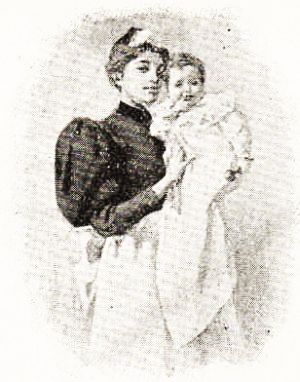
Every lot of Ivory Soap is carefully analyzed, and comparisons are made with analyses of the popular castile and toilet soaps. Ivory Soap contains less of impurities, less of free alkali and more real soap than any of them; that is why it can be used without injury to the rose leaf skin of the baby, to the sheerest of linens or to the daintiest of laces.