CONTENTS.
Reading edition
Page.
History and adaptations 4
Varieties 5
Use in the rotation 6
Seeding in intertilled crops 6
Seeding after an early-maturing crop 7
Requirements for obtaining a stand 8
Soils 9
Preparation of the seed bed 10
Fertilizers 11
Lime 12
Inoculation 13
Seeding 13
Time of seeding 13
Rate of seeding 14
Methods of seeding 14
Choice of seed 16
Unhulled seed 16
Use of a nurse crop 17
Seed mixtures 18
Treatment of the stand 20
Maladies 20
C
Crimson clover is an annual or winter annual true clover, resembling common red clover in size and general appearance, the most noticeable difference being the flower heads, which are long, narrow, and pointed instead of short, spherical, and compact (fig. 1). The individual flowers of this clover are commonly of a rich scarlet color, and as the heads are borne mostly on the ends of the stems, a field of crimson clover in full bloom presents a strikingly brilliant appearance. Because of the color of the flowers, crimson clover is often termed "scarlet clover," although it is also known, less commonly, as "French clover," "Italian clover," "German clover," "incarnate clover," and "annual clover." It is the only annual true clover that is of more than incidental agricultural importance in the eastern United States.
Probably the most important characteristic of crimson clover is its ability to grow and make its crop during the fall and early spring, when the land is not occupied by the ordinary summer-grown crops. In sections where it succeeds, it can be sown following a grain crop or in an intertilled crop in late summer and is ready to harvest for hay, to pasture, or to turn under as green manure in time to plow the land for spring-seeded crops, such as corn or cotton. South of central Delaware it may even be cut for seed and the stubble plowed under in time for seeding a quick-maturing strain of corn. Because it can be grown during the offseason of the year, crimson clover is one of the most economical legumes for green manuring, and it has been largely used for that purpose in the regions to which it is adapted. The many uses to which this crop may be put merit a careful study of the best methods of establishing a stand of this clover on the farm.
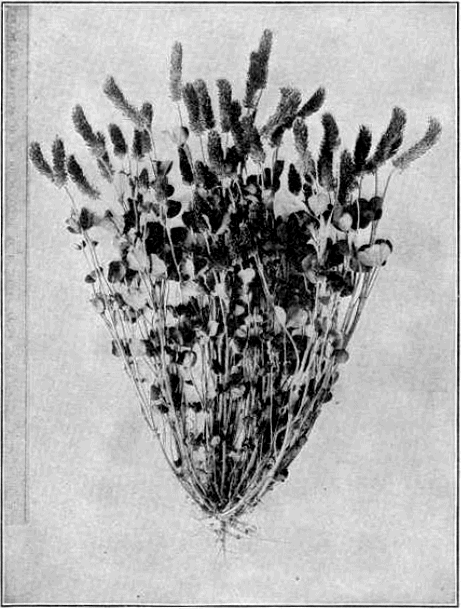
Fig. 1.—A single plant of crimson clover.