BALLADS OF THE CAMPAIGN IN MEXICO. NO. II.
Reading edition
———
BY HENRY KIRBY BENNER, U. S. A.
———
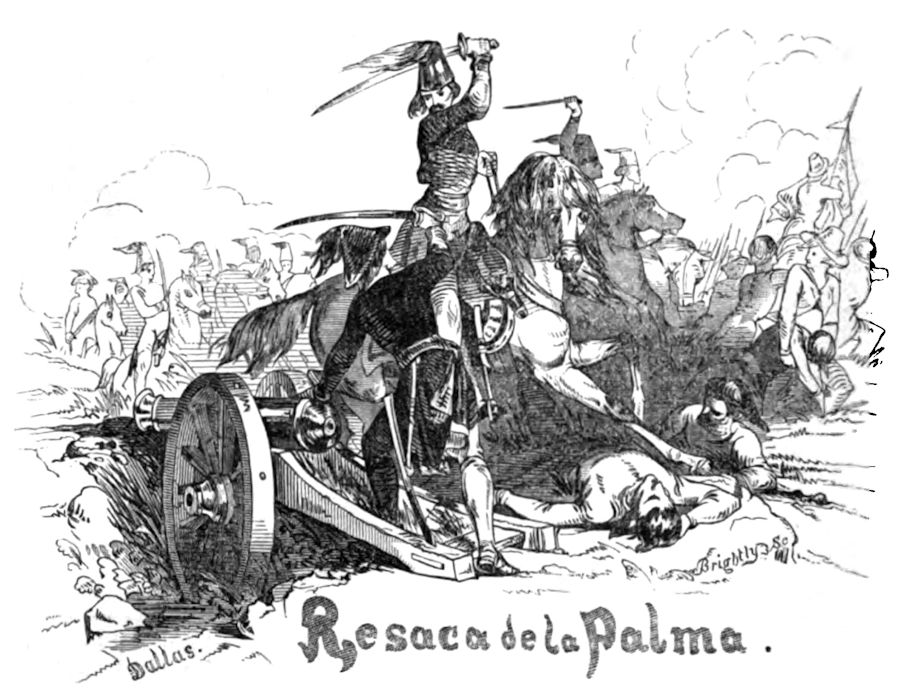
Resaca de la Palma.
Once again was daylight dawning, when the shrill, awakening fife
Called our soldiers from their slumbers to the toils of martial life:
We were weary: some among us through the long and dreary night
Had traversed, like silent ghosts, the scene of Palo Alto’s fight —
For our wounded lay around us, who had struggled at our side,
Stemming with their human bodies Battle’s hurricane-like tide.
All were anxious, for we knew that, though our foes had flown the field,
They were still in force before us, vowing never more to yield.
One by one our scouts came in—some with faces of dismay —
Others smiling at the promise of another glorious fray;
But the tidings that they brought only fired us, and we stood,
Like the old Norweyan Vikings, anxious for the feast of blood.
When our wounded were in motion, for our general, like a man
And a father, sent them back before the onward march began —
When we saw the laden wagons, with the sad, disheartened train,
Toward Point Isabel in silence slowly roll along the plain —
We advanced and took our places, drawing a determined breath,
While our wide-expanding nostrils drank the distant scent of death.
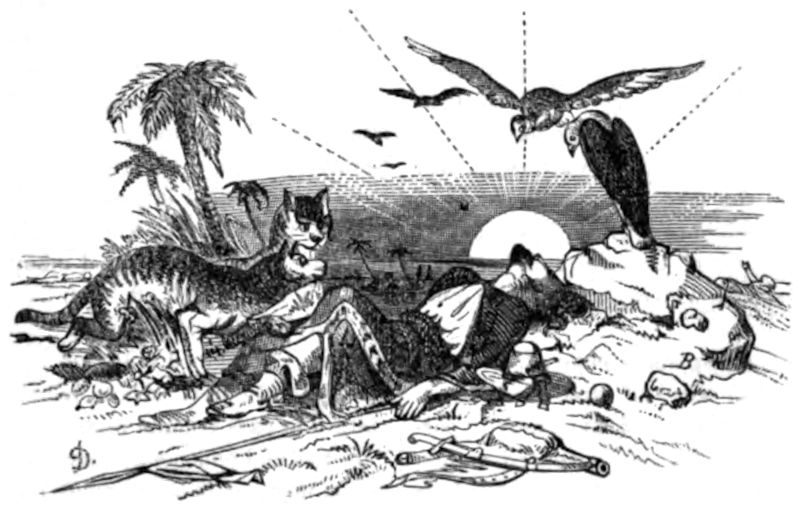
As we marched along the prairie, creeping, cat-like, from the day,
We could see the spotted jaguar, stealing from his human prey,
While in flocks the huge, majestic condor with his mighty wings
Flapped from his unusual feast, and swept above the plain in rings,
Shrieking, as he clove the air, some desperate necromantic charm
Over the pale, enchanted bodies that had lost the power of harm.
Here and there, as we proceeded, lying wounded in our way
We would meet some pallid victim, perishing in the face of day;
He was, yesterday, a foeman—now, a helpless, suffering man,
And a brother, praying sadly for some good Samaritan:
So we bound his wounds and fed him—each one from his little store
Taking what his pitying heart would fain have made a great deal more.
Hour by hour we marched in silence, throwing out in our advance
Daring souls with dauntless hearts, who laughed at lasso, ball and lance,
And, as, riding like the wind, one dashed along our serried files,
Twice a thousand lips breathed welcome, twice a thousand eyes looked smiles;
But at last the tidings reached us that our foes had made a stand
Between us and our gallant friends, near the yellow Rio Grande.
On we went with bounding hearts till the prairie lay behind.
While the tall, swan-like palmetto waved a welcome in the wind;
But when we reached the Swamp of Palms,[1] the bristling chapparal,
With our foes in solid thousands, rose before us, like a wall;
And the dense woods frowned upon us, clothed with centuries of green,
Precipitously plunging down the dark and deep ravine.
The army paused. A moment, and we passed along the plain,
With rapid steps and loud huzzas, defiling by the train,
And spreading right and left, marched on, when, ere we fired a shot,
Cannon and grape and musket-ball swept through us thick and hot;
But we never faltered—never; no; we took their fire, and then,
Acknowledging their courtesy, we gave it back like men.
But our men, though doing wonders, began to disappear,
When Ridgely thundered with his guns up from the distant rear,
And we heard his balls go crashing through the thick palmetto trees,
And the shrieks of wounded Mexicans come ringing up the breeze;
And we hurried on like maniacs, scarcely stopping to take breath,
While every where around us rushed the messengers of death!
By this time our brave infantry had reached the chapparal: —
Here and there we heard our comrades answering one another’s call;
And the sharp crack of their muskets, and the death-cries of their foes,
With the constant boom of cannon—Battle’s diapason rose!
All was chaos; while, like lightning, sword and lance and bayonet
Flashed around, as desperate men in the deadly mêlée met.
Hand to hand, and foot to foot, through the ascending clouds of smoke,
On the enemy, through them, over them, gallantly our soldiers broke,
Dealing death at every stroke: then we heard the shout of May,
And beheld his brave dragoons for an instant line the way:
Ridgely’s voice—the roar of cannon—clashing sabres—dying cries —
Rose distinct, yet intermingled as a chorus, toward the skies,
As the vapor separated, dashing down the rough ravine,
May and Inge, with all their men, for an instant filled the scene —
Rushing like an autumn tempest through the chapparal, down the glen,
May, half-hidden by streaming hair, with gallant Inge led on the men,
Loud hurraing: but a crash! and Inge clutched wildly at his rein —
And twice a score of neighing steeds swept riderless along the plain.
All in vain: another instant! May was riding o’er the wall,
Waving on his fiery followers through the tangled chapparal;
Wheeling in a moment, backward, with the same resistless force
Came the hero, like a giant, on his gaunt and sinewy horse; —
As our infantry came up, battling boldly by his gun,
General La Vega yielded, and the battery was won.
But the brave Tampicoäns still refused to fly or yield,
And maintained the unequal fight until the last one kissed the field;
When their flag went down a cry of anguish rent the Mexic ranks,
And our foemen broke and fled despairing toward the river’s banks.
All was over: we pursued them, and the now-descending sun,
Saw Resaca de la Palma’s bloody battle lost and won!