Chapter II
Reading edition
Ah! poor youth! in pitiful truth,
Thy pride must feel a fall, poor youth!
What thou shalt be well have I seen—
Thou shalt be only what others have been.
. . . . . . . . .
. . . . . . . . .
The commonest drudge of men and things,
Instead of your—conquering heroes and kings!
Martin Tupper.
Arthur Harrington continued very much at the “Institute” what he had been at the grammar school, a show boy, with now an incipient dash of the dandy. From thence he was transferred to college, which he did not enter as high as he and his mother expected. She took it for granted that he must enter the Junior year, as Frank Ashhurst had done, though most boys of his age commence with the Freshman. And here again, but for the crying injustice that always followed Arthur, when he found himself not rated higher than others, he would have taken the first honors. But, somehow, though Arthur was universally reckoned a “promising youth,” he never achieved any decided distinction when put to the test. At the debating societies he was ready and fluent, though often incorrect as to his facts, (but that made little impression on his auditors, who did not expect exact information from so young an orator,) and there he was quite conspicuous. He was a scribbler, too; wrote for magazines and papers, and now and then had the triumph of having an article inserted in one of the graver reviews. Altogether he had quite a reputation with parents, though the boys did not rate him as much.
“He’s a conceited chap,” they would say, and their elders and betters thought they were jealous. But give me a boy’s reputation with boys, and I’ll give you the future man’s among men. However, let that pass. Arthur graduated, and this time with an honor. It was not the highest, but he did not care much for that. It gave him an opportunity of delivering an oration; and fluent and easy, sparkling with well-turned phrases and showy antithetical sentences, though containing little thought, and no originality, it drew down frequent applause, and, in short, made quite a hit. The graceful manner and handsome person of the youthful orator went a great way—three-fourths certainly—for Francis Ashhurst, who took the valedictory, really delivered an oration that showed the germ (and that is all that can be looked for on such occasions) of real power. But then the manner was so bad that few listened to the matter, and he hurried through as fast as he could, and retired, much to his own relief and that of the audience.
On quitting college, Mr. Harrington would have been glad to have had his son enter the counting-house. But “Harrington & Son” did not shine as proudly in the mother’s eyes as in her husband’s. And Arthur thought it was the “old man’s” business to make money, not his, and negatived the proposition decidedly, not to say haughtily. He was destined to be a great man—the head of the bar—the leader of the Senate, possibly an author, certainly an orator, perhaps an ambassador—the path was not clearly defined—in fact, it was crossed with too many bright lights to be very distinct—but it was to be something distinguished—that point had been settled by his mother when he was in his cradle—and he himself had entertained the same views ever since he had been out of petticoats.
The bar, of course, was the only stepping-stone to these future honors, and it chanced that he and Francis Ashhurst entered the same office.
Francis had gone on quietly but steadily, the same boy and lad that he now entered life as man, and set himself in earnest to his profession.
Arthur talked earnestly, nay enthusiastically of his profession, and delighted in attending court when any great cause was being argued. But for the reading Blackstone, Coke and Littleton he found heavy work, and the dull routine of office business quite disgusting. He was fond of general reading, and skimmed the surface of things with great rapidity. He was quite a brilliant talker, too, for one so young, though more remarkable for his fluency than facts, and always made an impression, particularly on a first acquaintance. He had a decided reputation for talents in general circles, though in the office Mr. Osgood never turned to him when he wanted any thing of consequence done. He had soon found that Ashhurst was the man for real work, and being a man of keen perceptions, and but few words, he said nothing, but placed every thing that required attention in his hands.
Arthur was unpopular with the young men of the office. They called him “shallow and conceited.” The fact was, he assumed a superiority they were unwilling to accord to him. He prided himself not only on his talents, but his position, and thought they entitled him to a consideration that he never dreamt of according to others.
He did not mean to give offence, nor was even aware of his haughty tone of superiority, for it never occurred to him that his fellow-students could put themselves on a footing of equality with himself. They did not mix in the same circles—had neither fashion, nor wealth, nor consequence of any kind. What claims had they to his civility? He looked upon them merely as Mr. Osgood’s “clerks,” who did the underwork of the office; and from a boy Arthur had only associated with lads as delicately brought up as himself, and he now shrunk from the association of others as an annoyance. He would rather they had not come between the “wind and his nobility;” but since it was a “necessary evil,” he endured it. Ashhurst was the only one of them with whom he was on any terms of fellowship, and that was rather from early habit than from real feeling. Besides Ashhurst’s family belonged to the same clique as his own, and therefore was entitled to some respect, though Ashhurst himself seldom frequented the gay circles of which Arthur formed quite a prominent member. Mrs. Harrington delighted to see him conspicuous in society, and looked anxiously around to select from the youthful belles of the day the most distinguished for his wife. But Arthur showed no disposition to lay his heart as yet on the shrine of any fair one. In fact he was too much wrapped up in himself to find interest in others, and thereupon grew fastidious, and gave himself airs. Perhaps this somewhat enhanced his fashion, as he had the reputation of talent, and was decidedly good looking; beside which, as the only son of a rich man, he was called a “good match.” Ah! that bon parti—how much does it help and cover in “good society.”
Much, therefore, was excused him that might not have been so kindly received had circumstances been different. And so, what with reading a little law, and a good deal of light literature, mixing much in society, and doing none of the drudgery of the office, the three years of Arthur’s preparatory studies glided by pleasantly enough, at the end of which time he passed his examination, and supposed himself fairly started for his future career. But there’s nothing brilliant in the life of a young lawyer, let his talents and application be what they may. It’s hard work for the present with compensation in the future. Now Arthur had never done work—real work—in his life. His quick abilities had enabled him to skim the surface of subjects, and make a show with whatever knowledge he had. But the law is not to be skated over so rapidly; and Arthur had neither the taste, and, indeed, scarcely the power now of the close application the dry study required; and not being urged by necessity, he scorned the small business that might have fallen in his way, and taught him something. He longed for a great cause—which he could not have tried if he had got it; and being tired now of society, panted for distinction, and became impatient and dissatisfied with a profession which required labor, and brought in no immediate returns of reputation. There was such a crowd, too, of young lawyers that it was quite disgusting; and so he neglected his office rather more, perhaps, than he had ever done Mr. Osgood’s, and began to turn his weary, impatient spirit to politics, as the “only arena, after all, worthy of a man of talent;” and “the lawyer rarely makes a great statesman—the study contracts the mind; the most distinguished of them seldom rises above a special pleader, when called upon in the more elevated sphere of public business.”
Mr. Harrington died suddenly about this time—fell in the traces, exhausted with the labors and anxieties of his arduous life; and it was found to the surprise of most people, that his fortune was not the half of what it had been estimated. No doubt it had been greater at different times, but the variations of commercial affairs are known to all, and Mr. Harrington had had his ups and downs as well as others. It happened to be at one of these times of depression that he died, and the estate he left was scarcely more than a comfortable provision for his wife and son. Arthur was no longer looked upon as a young man of fortune; but then he had what he had at command, and that satisfied him for the present quite as well, and perhaps better, than fortune in perspective. It enabled him to do as he chose just then, and gave him the immediate consideration he wanted with a certain class of politicians. He attended public meetings, and spoke frequently, and took sides hotly and denounced men and measures that did not meet his views fiercely; and as he threw himself with ardor in the opposition party, and spent liberally, he was received with open arms and cheered heartily.
This was the excitement he had longed for. He now felt that he had gained the open space he wanted, and his mother, flattered and delighted, spoke of him as one of the leaders of the party. There’s no telling the visions with which his brain now teemed; but as most dreamers, whether waking or sleeping, are the principal figures in their visions, so he himself always occupied the foreground in all his mental pictures. Meantime his nights were passed chiefly in clubs, and halls, and committee-rooms, where he condescended, in the hot conflict of political feeling, to companionship he would once have stood aloof from as from something quite contaminating. He made himself conspicuous at the next election, expecting to be taken up after that as one of the prominent men himself. But when the second term came round, Arthur saw his means well nigh exhausted, and he no nearer the goal than when he first started. His mortification and disappointment were extreme, when he found he had no chance for any nomination whatever, either for general, state, or even City Councils; for he would have been glad to run for any thing rather than not run at all. But they would not even take him up. In fact they found he was neither a useful nor a popular man. Talents and information of a commanding order may dispense with the minor morals of good manners; but Harrington’s conceit was not atoned for by any such qualifications; and arrogance that is not backed by decided talent and sound information meets with small favor from the community at large.
And so he had had a few years of excitement, and spent his little patrimony, and was now just where he had started—if that can be said of any man, when years have passed over his head bringing neither added reputation nor knowledge. He had lost time and gained nothing; and, moreover, as we have said, had spent the little independence left him by his father.
It was now necessary for him to do something, for though his mother could give him a home, her fortune was not sufficient for them both. There was his profession, which he hated. He could not go back and drudge for dollars and cents. Beside it was too late—others that had started with him had got before him. Those who had kept to the beaten well-worn path, while he had been hunting for a short-cut, had reached the goal before him. As for Ashhurst, he was not only doing a good business, but beginning to be known. His name was mentioned with respect, and he was often associated as junior counsel with the leaders of the bar.
There, too, was his pen. But sketchy articles and slight productions, which are kindly received as the efforts of a boy, elicit no applause when coming from a man of mature years. And Harrington had not risen with the public; he had been called a “youth of promise” when a lad, but his manhood had not kept pace with the promise. He had made no friends and some enemies in his state of political effervescence, when he had dealt round accusations and epithets that scarcely even electioneering excitement will excuse. So now what to do he knew not. He paused and looked around, discomfited and mortified. He complained loudly, of course, of the treatment that he had met with—for injustice, as we have seen, had pursued Arthur from a boy, and now he was growing bitter—a keen sense of ill-usage is sometimes a great comfort—and his mother listened to his out-pourings with the deepest sympathy; for Arthur’s ambition and conceit had been of her cultivation. She had planted the seed, and now the tree over-shadowed her. She was deeply chagrined by his failure in all he had undertaken, or rather, we should say, commenced; for, like him, she did not comprehend that there is no rail-road to fame. But still she did not give up. Matrimony, woman’s great resource, was left him. She had always wanted him to marry; and now an heiress seemed the readiest means of mending his broken fortunes. Harrington himself saw no other; and so he entered society again with other views beside amusement.
A new set of beaux and belles were occupying the places of those who had been prominent when he first came forward; those who had been the gayest of the dancers then, were now wives and mothers, and most of them withdrawn from such assemblies. The men looked to him like boys, and the “boys” returned the compliment, and called him an “old fellow.” The beauties were most of them penniless; and it so happened that the few girls of fortune in society just at that time, were any thing but beauties; and Harrington wanted to suit his taste as well as his necessities, and he hated to do any thing he did not like; and he detested an ugly woman. He had always been very dainty of his feelings, and he could now neither work nor marry, if it was not in exact accordance with his taste. And, altogether, society did not seem to him the same as it once had been. Somehow it had lost its zest and freshness. He did not know where the change was, but he felt there was a change that robbed it of all its charm.
The secret was, that he was no longer a person of consequence, and excited no sensation among the young belles he saw around him. His first glow of youth and beauty was gone; and he had acquired no reputation to stand him in its stead in youthful eyes. He had no fortune either, and mammas and daughters don’t court and flatter a ci-devant jeune homme, who is no match. Nor was he called agreeable. He was bitter, and cynical, and egotistical; and girls don’t want to talk to men who talk always of themselves, particularly when there is nothing in their attentions to flatter their vanity. Women expect either to be amused, or to have their feelings interested, or their pride gratified. Now Arthur Harrington did none of these things, and consequently he thought society a “bore,” and society was beginning to return the compliment.
There was but one person who at all interested him, not that he thought of her—for she had no fortune, and would not do—but still he admired her. Sybil Effingham he could not look at nor listen to, without partly forgetting himself. She was in truth a bright, spirited, beautiful creature, high-toned, with a look of sensibility and disinterestedness—a something to touch the imagination—altogether a being that made him sigh as he thought of his altered fortunes; and though he meant nothing, he could not help visiting at her father’s more frequently than he thought quite prudent. To his surprise he occasionally met Ashhurst there; and what surprised him more was the consideration with which he was received when he did come. But Ashhurst was now a marked man, distinguished for his age, and women always yield a ready homage to talent, and delight in honoring those whom the world honors. And, moreover, Ashhurst was a man to please, though Harrington could not comprehend it; and, indeed, few men understand the female taste in that respect. What is called a “lady’s man,” is not, as men suppose, the most agreeable to women. Those are not the men who excite enthusiastic and romantic attachments. A woman’s imagination must be roused before her heart is deeply touched; and it is only a man of superior mind and character that does that.
And Ashhurst’s was an earnest, vigorous spirit, and the beautiful Sybil felt her soul awaken in his presence, and she listened to his words of power and truth as she listened to no other man. But if Harrington was surprised and vexed to see the reputation and ascendancy Ashhurst was gaining, his feelings were as nothing to his mother’s on the subject. It was really amusing to see the tenacity with which she clung to early impressions, (and Mrs. Harrington was a woman who had great faith in her own “impressions.”) She had pronounced him then a “heavy boy,” and altogether thought him a very coarse piece of clay, compared to her son of delicate porcelain; and how he had stood the fire and heat, and come out so much truer tempered through the rough usage of the world, was a matter she did not comprehend or patiently acquiesce in.
But to return to Arthur. He found it would not do to spend his time dangling after Sybil Effingham; and, perhaps, the coolness with which she received his attentions helped to awaken him to their folly; and about this time, too, a really pretty, high-bred heiress made her appearance on the horizon of fashion, and set all the gay world in a commotion, and among the first and most assiduous of her admirers was Arthur Harrington. But the young lady, like most heiresses and beauties, knew her own claims quite as well as anybody, and expected as much for her money as Arthur could for his name and talents; and so, to his great wrath and amazement, he was coolly rejected.
Her fashion and beauty were now his misfortunes, as in making her prominent in society, they also made her suitors conspicuous, and consequently, Arthur’s rejection was immediately as well known to the public as if it had been published in the papers; and he who one heiress wont have, another is very apt to refuse, because he has already been rejected—and one or two offers settles him as a fortune-hunter, and then his business is done.
And so it was with our hero. And this mortification he and his mother felt more keenly, perhaps, than all the rest—for there could be no injustice or foul play in these cases; and angry though he might be, he could not complain. He anathematized the whole sex in his heart, and said to his mother,
“I’ve supported politics—let politics now support me.” The meaning of which grand sentiment was, that he would turn office-seeker—a party politician for private purposes—the meanest of all professions.
Meanwhile Ashhurst had won the beautiful Sybil; and not only that, but was deemed a great match for her, for he had made an independence and a name, and might justly look forward to the highest honors that are open to genius and industry.
“That Harrington is a disagreeable man,” was one day remarked by some one, “he abuses every body—only no one cares for his abuse.”
“He’s a disappointed man,” was the reply.
“Disappointed!” rejoined the first speaker, “I like that! And what right has he to be disappointed? What are his claims to any thing more than he has?”
“Well, I hardly know,” replied the other, smiling, “now that you bring me to the point. But, somehow, we all expected Harrington to make a figure in the world; and why he has not done so I don’t know.”
“Then I’ll tell you,” said the first speaker; “because he’s a poor creature—there’s no stamina in him. He has neither vigor of mind or character. He’s been cursed with ambition without industry. He has not the energy to act out his own dreams. He was just one of those promising youths who never come to any thing.”
“Pity ’tis true; but there’s no reputation without labor; and he who expects it, will turn out like Arthur Harrington, bitter and cynical. He may give himself the airs of a disappointed man, but that does not alter the fact of his being only a ‘poor creature.’ ”
And so Arthur Harrington sunk to a place-hunter; and, poor devil! “To dig he was unable, and beg he was ashamed.”
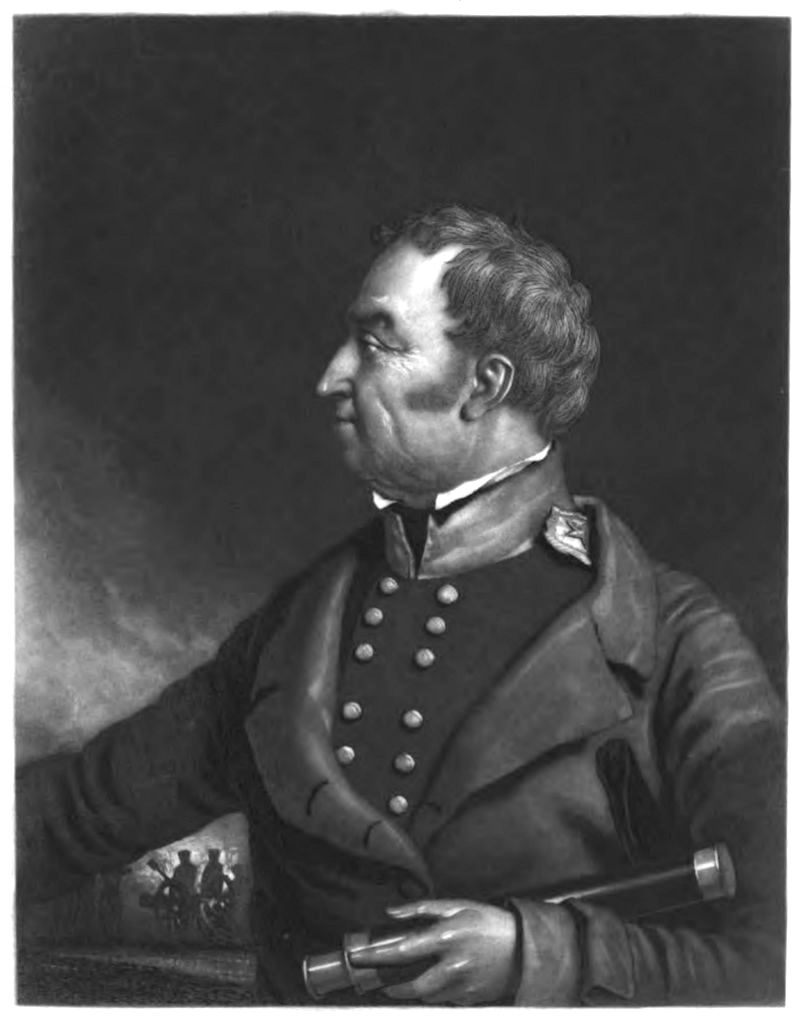
ENGRAVED BY J. SARTAIN FOR GRAHAM’S MAGAZINE
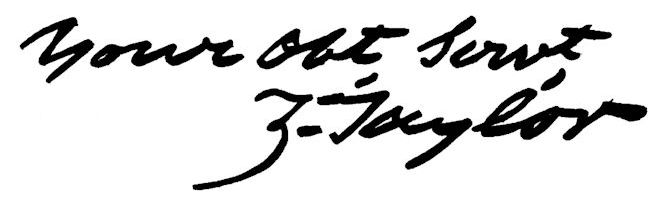
Your obt Servt Z. Taylor
FROM A SKETCH BY CAPT. EATON, AID DE CAMP CAMARGO, MEXICO, AUGUST 15
TH
1845
Entered according to Act of Congress in the year 1847 by Geo. R. Graham in the Clerks’ office of the District Court for the Eastern District of Pennsylvania.