NOTES.
Reading edition
(1) “And named thee Genesee,” &c.
The word Genesee is of Seneca origin, signifying “Pleasant Valley,” or “Valley of Pleasant Waters.”
(2) “Since Phelps, the Cecrops of thy realm.”
It may seem strange to many of the millions who are now reveling in the comforts and prosperity which the last half century has diffused through western New York, that the course of Oliver Phelps and his associates should have been then considered so hazardous, that the whole neighborhood of Granville, Mass., their native town, assembled to bid them adieu—a final adieu, as many thought; for it seemed a desperate chance that any of that intrepid band should ever return from their enterprise through a region to which the Indian title had not been extinguished. The wilderness was penetrated as far as Canandaigua Lake, and I am indebted to an old number of the New York American for the description that follows, of a treaty held on its banks with the Senecas by Phelps and his companions.
“Two days had passed away in negotiation for a cession of their land. The contract was supposed to be nearly completed, when Red Jacket arose. With the grace and dignity of a Roman senator, he drew his blanket around him, and with a piercing eye surveyed the multitude. All was hushed. Nothing interfered to break the silence, save the rustling of the tree-tops under whose shade they were gathered.
“Rising gradually with his subject, he depicted the primitive simplicity and happiness of his nation, and the wrongs they had sustained from the usurpations of the white man, with such a bold but faithful pencil, that his Indian auditors were soon roused to vengeance, or melted into tears. Appalled and terrified, the white men cast a cheerless gaze upon the hordes around them. A nod from the chiefs might be the onset of destruction. At that portentous moment Houneyawus, known among the whites as Farmer’s Brother, interposed.”
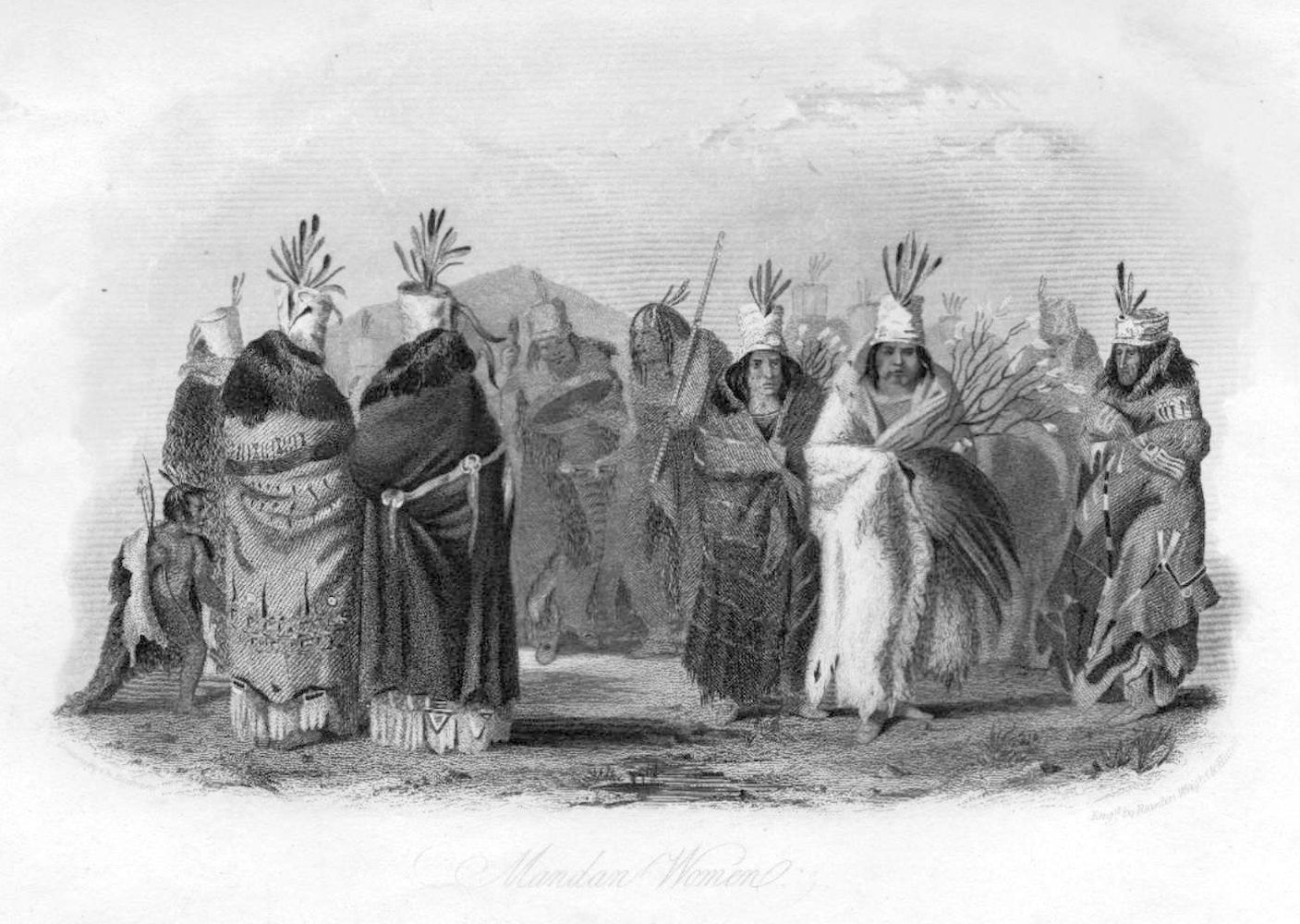
Drawn by Ch. Bodmer Engd by Rawdon, Wright & Hatch
Mandan Women
Engraved Expressly for Graham’s Magazine