Chapter V
Reading edition
Flowers that come up Every Year by Themselves (Perennials)
No, the heart that has truly lov'd never forgets, But as truly loves on to the close; As the sunflower turns on her god when he sets The same look which she turn'd when he rose. —Moore.
That big word ARISTOCRACY simply means "those who rise above the rest of the community in any important respect,"—and rightly, indeed, are the perennials called "the aristocrats of the garden." They are strong and sturdy (good points in both people and flowers), and can be depended on to appear about a certain time, make us a nice visit with all their loveliest clothes, and show their appreciation of our attention and care by returning every season with increased beauty and grace.
A few of the perennials, such as the peony and the iris, grow so slowly that generally people haven't the patience to wait for them to flower from seed, and instead try to get some roots from their more fortunate friends, or buy from a florist. But I will tell you more about this class in connection with the bulb and tuber families.
THE SEED BED
While a small number of these beauties will bloom the first year if started early in the spring, most of them make their début in garden society the second summer. Before that they have to be watched, or they might meet with accident. A good way, therefore, is to have a little bed (preferably a cold frame) for a seed nursery off to one side, in a safe place, where the baby plants can be cared for, protected from cold, and tended like the infants they are, until grown up and old enough to enter the society of bed or border. In such a place the seeds should be planted in fine, rich soil, preferably from the middle of May to the 1st of July, and all carefully marked. Sow thinly, and then cover the seed by sifting over with fine soil from 1/8 to ¼ inch deep. Sprinkle very lightly by means of a whisk broom dipped in water, so as not to wash out the seed, and if you possibly can, cover with a piece of glass. Keep in the shade at first, and never let dry out. Some of this seed will germinate in less than a week, while some may take so long that you will think it is not going to grow at all! But don't give up; and maybe some day when you have forgotten all about it, you will discover a lot of new babies in your nursery.
TRANSPLANTING PERENNIALS
As soon as your seedlings are big and strong enough to be handled, they must be carefully lifted and set in another part of the nursery, not less than 3 inches apart, protected from the hot sun, and left until they become strong, sturdy children. Then early in the fall, before the middle of September, you can take them up very gently, without disturbing their tiny rootlets, and put them with their friends and relatives in the garden, wherever you wish them to bloom the following summer.
Of course you couldn't,—and you wouldn't want to grow everything you ever saw or heard about! Just think of the fun, however, of picking out a small number that will be sure to give you flowers, one after another, from earliest spring until cold weather! Yet the following list, suggested by one authority, is easy to get and little trouble to care for:
PERENNIALS FOR A WHOLE SEASON'S BLOOM
Creeping Phlox (Phlox subulata); white, rose, lavender; bloom April and May.
Lily-of-the-Valley (Convallaria majalis); white; May, June.
Bleeding Heart (Dicentra spectabilis); rose pink; April through June.
Iris (Fleur-de-lis); white, purple, yellow; April to July.
Peony (Pæonia officinalis); white, rose to crimson; May, June.
Larkspur (Delphinium); blues; June, July, September.
Balloon Flower (Platycodon); blue, purple, white; July to October.
Phlox, Hardy (Phlox paniculata); no blue nor real yellow; June through September.
Golden Glow (Rudbeckia laciniata); yellow; August.
Blanket Flower (Gaillardia aristata); yellow, red; July to October.
Boltonia (Boltonia latisquama); lilac; August to October.
Sunflower (Helianthus); yellow; July to October.
KIM AND COLUMBINE
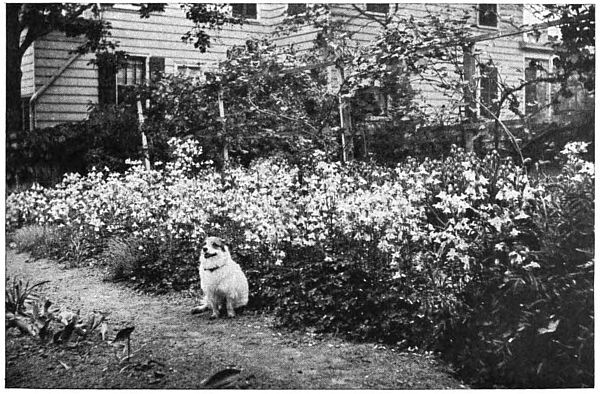
The fault that I would find with the gentleman's list is that he has omitted chrysanthemums, which could be substituted for sunflowers to most people's satisfaction,—and which also would bloom as late as November. Also I should prefer columbine to his bleeding hearts,—and the golden-spurred variety will bloom from early May to early August! Above all, instead of boltonia, I would use the adorable snapdragons, which, although considered a "tender perennial," will survive cold weather if well protected.
But then, as I once heard, "A man's garden is like his wife, whom he never would think of comparing with anybody else's." So you don't have to follow any one's choice. Just make a list of the flowers that you like, find out when they bloom, and then choose as few or as many as you have room for, remembering to plan for something lovely every month of the blooming season.
One note of warning, however. After you have made your list, consult some friend that is a successful gardener, and make sure that what you have chosen will thrive in your particular locality. If you find it does not, strike it off, and put in something that will.
FLOWERS THAT COME UP EVERY YEAR BY THEMSELVES
A GUIDE TO THE COMMON PERENNIALS
Note.—A few of these will blossom the first summer, if started early. Also, some varieties of the same plant will flower in the spring, others in the fall. Make sure which kind you get.
NameColorHeightSow IndoorsSow OutdoorsGood forPlaceBlooming Season
Alyssum (Alyssum saxatile)Rich yellow1 ft. May JuneRockery EdgingHalf shade or sunApril, May
Anemone, Japanese (Anemone Japonica)Rose White2 to 4 ft. May JuneBorder BedHalf shade or sunSept., Oct.
Aster, Hardy (Aster Novæ-Angliæ)White Pink Lavender Purple2 to 5 ft. May JuneAnywhereShade or sunAug. to Oct.
Baby's Breath (Gypsophila paniculata)White2 to 3 ft. May JuneRockery BorderSunJune, July
Balloon Flower (Platycodon)White Blue1 to 3 ft. May JuneBorderSunJuly to Oct.
Begonia, Hardy (Begonia Evansiana)White Pink Rose1 to 2 ft. May JuneBorderSunJune to Aug.
Bellflower (Campanula)White Blue1 to 3 ft. May JuneBorderSunJune, July
[E]Blanket Flower (Gaillardia aristata)Red Yellow3 to 5 ft. May JuneBorder BedSunJuly to Oct.
Bleeding Heart (Dicentra spectabilis)Pink2 ft. May JuneBorder BedLikes half shadeMay, June
Boltonia (Boltonia latisquama)Lilac2 to 6 ft. May JuneBorder BedSunAug. to Oct.
Candytuft, Hardy (Iberis sempervirens)White6 to 12 in. May JuneBorder EdgingSunApril, May
Chrystmas Rose (Helleborus niger)White12 to 15 in. May JuneBorderHalf ShadeDec. to March, outdoors
Chrysanthemum, HardyNo blue2 to 3 ft. May JuneBorder BedSunSept. to Nov.
Columbine (Aguilegia)All shades2 to 4 ft. May JuneRockery BedSunMay to Aug.
Coreopsis (Coreopsis lanceolata)Yellow1 to 2 ft. May JuneBorder BedSunJune to Oct.
Daisy, English (Bellis perennis)Pink White3 to 6 in. May uneBedSunApril to June
Delphinium (Delphinium to formosum, D. Belladonna, D. Chinense)Blue to white2 to 6 ft.MarchMay JuneBorder BedSunJune, July, Sep. Oct. Cut down after each flowering
Flag, see Iris
[F]Forget-me-not, Perennial (Myosotis palustris)Blue6 to 18 in. May JuneBorderShade or sunMay to fall
[G]Foxglove (usually biennial) (Digitalis)White Purple Rose Yellow3 to 5 ft. May JuneBorder BedHalf shadeJune, July
Fraxinella, see Gas Plant
Gaillardia, see Blanket Flower
Gas Plant (Dictamnus albus)Rose White2½ ft.Long livedMay JuneBorder BedSunJune, July
Golden Glow (Rudbeckia laciniata)Yellow6 to 8 ft. May JuneBack of borderSunJuly to Sept.
[F]Hollyhock (Althæa rosea)All shades4 to 6 ft. May JuneBack of border or bedSunJuly, August
IrisWhite Purple Yellow Maroon1 to 3 ft. May JuneBorder Bed ClumpSunMay to July
Larkspur, see Delphinium
Lupin (Lupinus)White Blue Pink Yellow2 to 5 ft. May JuneBorder Bed ClumpSun or half shadeMay, June
Madwort, see Alyssum
[E]Mallow, Musk (Malva moschata)White Rose1 to 2 ft. May JuneBorderSun or shadeJuly to Sept.
Michaelmas Daisy, see Aster
Monk's-hood (Aconitum napellus)Blue to white3 to 5 ft.Slow to startMay JunePoisonousSun or shadeJuly to Sept.
Moss Pink, see Phlox subulata
Mullein Pink (Lychnis coronaria)White Red1 to 3 ft. May JuneBorder BedSunJune, July
Myosotis, see Forget-me-not
Myrtle, see Periwinkle
Pansy (Viola tricolor)White Blue Yellow Purple6 to 8 in.MarchApril MayBorder BedSun or half shadeAll summer, with care
Peony (Pæonia officinalis)White Rose Crimson3 ft.Slow growerMay JuneBorder ClumpsSun or half shadeMay, June
Periwinkle (Vinca minor)Blue White6 to 10 in.MarchMay JuneTrailing vineShaded bare spotsAll summer
Phlox, Perennial (Phlox paniculata)No blue or yellow2 to 3 ft.SlowMay JuneBorder BedSunAug., Sept.
(Phlox subulata)White Pink Lavender2 in. May JuneCarpeting BorderSunApril, May
Pink, Grass (Dianthus plumaris)White Vari-colored1 ft. May JuneRockery BorderSunMay, June
Platycodon, see Bellflower
[E]Poppy, Iceland (Papaver nudicaule)White Red Yellow1 ft. April MayBorder BedSunJune to Oct.
Poppy, Oriental (Papaver orientale)Scarlet Orange to pink3 ft. March AprilBorder BedSunJune, July
Pyrethrum (Chrysanthemum coccineum)Whit Rose Crimson3 ft. May JuneBorderSunJune, July
[E]Rocket, Sweet (Hesperis)White to purple2 to 3 ft. May JuneBorder ClumpSunJune to Aug.
Rockmadwort, see Alyssum
Rose Campion, see Mullein Pink
Rudbeckia, see Golden Glow
Sage, see Salvia
Salvia (perennial)White Blue2 to 4 ft. May JuneBorder BedSunMay to Sept.
[F]Snapdragon (Antirrhinum)No blues1 to 3 ft.MarchMay 1stBorder BedSunJun to Oct.
Sunflower (Helianthus)Yellow2 to 8 ft. May JuneBack of borderSunSept. to Nov.
[E]Sweet William (Dianthus barbatus)White Pink Maroon1 ft. May JuneBorder BedSunJune to Aug.
Tickseed, see Coreopsis
[G]Wallflower(Cheiranthus cheiri)Yellows to browns and purple1 to 2½ ft. May JuneRock garden or borderPart shadeMay
Windflower, Snowdrop (Anemone sylvestris)White1 to 1½ ft. May JuneClump BorderPart shade or sunApril to July