← Table of contents
Field book of common rocks and minerals

INDEX

Reading edition

A B C D E F G H I J K L M N O P Q R S T U V W X Y Z

A

Actinolite, 120

Adobe, 210

Agate, 107

Agate, moss, 73, 108

Alabaster, 152

Albertite, 229

Albite, 110, 113, 115

Almandine, 97

Almandite, 122, 123

Aluminum bronze, 74

Aluminum group, 73

Amazon stone, 114

Amber, 223

Amethyst, 104

Amethyst, Oriental, 75

Amianthus, 120

Amphibole group, 119

Amygdoloid, 194

Amygdoloidal, 176

Analcite, 141

Andesite, 113, 187

Andradite, 122, 124

Anglesite, 62

Anhydrite, 149

Anorthite, 110, 113

Anorthosite, 183

Anthracite, 218, 222

Antimony, 81

Antimony, gray, 81

Apatite, 160

Aquamarine, 125

Aragonite, 147

Argentite, 35

Argillite, 242

Arkose, 206

Arsenic group, 78

Arsenopyrite, 79

Asbestos, 120, 140

Augite, 118

Aventurine, 104

Azurite, 46

B

Barite, 154

Barium group, 154

Basalt, 188

Batholith, 174

Bauxite, 77

Beryl, 125

Beryl, golden, 125

Beryllium, 125

Bibliography, 270

Biotite, 129, 130

Bitumen, 228

Black jack, 65

Bloodstone, 106

Bog lime, 213

Bombs, 191

Boracite, 164

Borax, 165

Bornite, 41

Brass, 64

Breccia, 191, 198

Brittania metal, 81

Bronze, 38

Bronze Age, 38

Bronzite, 118

Bytownite, 113

C

Calamine, 68

Calaverite, 30

Calcite, 144

Calcium, 143

Carbon, 156

Carbonite, 222

Carbuncle, 124

Carnelian, 106

Carnotite, 90

Cassiterite, 93

Cat’s eye, 104

Celestite, 153

Cerargyrite, 37

Cerrusite, 61

Ceylonite, 97

274

Chalcedony, 104, 106

Chalcocite, 42

Chalcopyrite, 40

Chalcotrichite, 45

Chalk, 213

Chert, 107

Chlorite, 140

Chlorospinel, 98

Chromite, 87

Chromium, 86

Chrysocola, 47

Chrysolite, 134, 140

Chrysoprase, 106

Cinnabar, 91

Cinnamon stone, 123

Citrine, 103

Clay, 207

Clay, ball, 208

Clay, brick, 209

Clay, china, 208

Clay, fire, 208

Clay, paving brick, 209

Clay, sewer-pipe, 209

Clay, slip, 209

Clay, stoneware, 209

Clay stones, 250

Cleavage, 21

Cleavage, slaty, 234

Coal, 217

Coal, bituminous, 212, 220

Coal, cannel, 221

Coal, hard, 222

Coal, soft, 220

Cobalt, 84

Cobalt bloom, 85

Cobalt glance, 85

Cobalt gray ore, 85

Cobaltite, 83

Coke, 220

Colemanite, 165

Collecting, 5, 7

Color, 23

Concretions, 248

Concretions, flint, 253

Concretions, lime, 251

Concretions, other, 255

Concretions, sandstone, 253

Conglomerate, 202

Copper, 37, 39

Copper, blushing, 42

Copper, glance, 42

Copper, grey, 43

Copper, peacock, 42

Copper, plush, 45

Copper, purple, 41

Copper, red, 44

Copper, variegated, 42

Copper, yellow, 40

Coquina, 213

Coral, 146

Coral rock, 214

Corundum, 75

Crude oil, 227

Cryolite, 78

Crystal balls, 101

Crystal formation, 14

Crystal rock, 103

Crystal structure, 11

Crystal systems, 13-18

Cuprite, 44

Cyanite, 128

D

Dacite, 187

Dense, 176

Diamond, 157

Diamonds, Matura, 127

Diamonds, slave’s, 133

Diatoms, 231

Dikes, 174

Diorite, 182

Dog-tooth spar, 145

Dolomite, 99

Dry bone, 68

E

Earth, diatomaceous, 23

Elements, listed, 267

Emerald, 125

Emerald, Oriental, 75

Emery, 76

Enstatite, 117

Epidote, 134

Equipment, 7

Erubescite, 42

Extrusive, 173

F

Feldspar, 110

Feldspar, alkalic, 111

Felsite, 186

Felsitic, 176

Ferromanganese, 70

Flagstone, 207

Flint, 106

275

Fluorine, 162

Fluorite, 162

Fossils, 266

Fragmental, 176

Franklinite, 69

Freestone, 207

G

Gabbro, 183

Galena, 60

Garnet group, 121

Garnet, Sirian, 123

Geodes, 255

German silver, 82

Gilsonite, 229

Glassy, 176

Glucinum, 125

Gneiss, 237

Goethite, 51, 52

Gold, 31

Gold foil, 64

Gold group, 29

Gossan, 50

Granite, 178

Granite, graphic, 179

Granitoid, 176

Graphite, 156, 219

Gravel, 201

Graywacke, 206

Grit, 206

Grossularite, 122, 123

Guano, 230

Gumbo, 210

Gypsum, 150

H

Halite, 163

Hardness, 20

Hardpan, 216

Heavy spar, 154

Heliotrope, 106

Hematite, 53

Hemihedral forms, 19

Hercynite, 98

Hexagonal system, 18

Hornblende, 121

Hornstone, 107

Hyacinth, 127

Hypersthene, 118

I

Ice, 167

Iceland spar, 145

Ice stone, 78

Ilmenite, 94

Intrusive, 174

Iron, 47

Iron, bog, 50

Iron, chromic, 87

Iron, magnetic, 54

Iron pyrites, 56

Iron, spathic, 55

Iron, specular, 53

Isometric system, 13

J

Jacinth, 127

Jargons, 127

Jargoons, 127

Jasper, 106

Jet, 222

K

Kaolin, 137, 208

Kaolinite, 137

L

Labels, 5

Labradorite, 113, 116

Laccolith, 174

Lapilli, 191

Lava, 173

Lead, 59

Lead glance, 60

Lead, green ore, 63

Lead, white ore, 61

Lepidolite, 129, 130

Lignite, 218, 219

Limestone, 212

Limestone, encrinal, 214

Limestone, hydraulic, 214

Limestone, lithographic, 214

Limonite, 49, 51

Loess, 210

Luster, 23

M

Magma, 173

Magnesite, 98

Magnesium group, 96

Magnetite, 54

Malachite, 45

Malanite, 124

Malta, 229

Manganese group, 70

Manganite, 72

Marble, 243

Marble, Suisun, 146

276

Marcasite, 57

Marl, 211

Mercury, 90

Meteorites, 262

Mica group, 128

Microcline, 113, 114

Millerite, 83

Mineral tables, 25

Minerals, defined, 10

Molybdenite, 81

Molybdenum, 80

Monoclinic system, 17

Monzonite, 181

Morion, 103

Mother-of-pearl, 148

Muscovite, 129

N

Natrolite, 142

Natural gas, 227

Needle iron stone, 52

Niccolite, 83

Nickel, copper, 83

Nickel group, 82

O

Obsidian, 191

Ochre red, 54

Ochre yellow, 49

Oligoclase, 113, 115

Olivine, 134

Olivine-gabbro, 183

Onyx, 108

Onyx, Californian, 146

Onyx marble, 215

Onyx, Mexican, 146

Oolites, 254

Opal, 108

Opal-agate, 109

Opal, common, 109

Opal, fire, 109

Opal, precious, 109

Ophicalcite, 246

Ophiolite, 246

Orpiment, 80

Orthoclase, 110, 113

Orthorhombic system, 16

P

Paste, 103

Pearls, 148

Pearlstone, 193

Peat, 218, 219

Pebbles, 256

Pegmatite, 179

Peridot, 134

Peridotite, 184

Perlite, 193

Petroleum series, 224, 227

Pewter, 60

Phenocrysts, 189

Phlogopite, 129, 131

Phosphate, 160, 230

Phosphorus, 159

Phyllite, 242

Picotite, 97

Pisolite, 255

Pitchstone, 193

Plagioclase, 111

Plasma, 106

Platinum, 95

Plumbago, 156

Porous, 176

Porphyritic, 176

Porphyry, 189

Prase, 104

Prousite, 36

Psilomelane, 72

Pumice, 193

Pyrargyrite, 35

Pyrite, 56

Pyrite, capillary, 83

Pyrite, magnetic, 58

Pyrite, white, 57

Pyritohedron, 56, 318

Pyrolusite, 71

Pyromorphite, 63

Pyrope, 122, 123

Pyroxene group, 116

Pyroxenite, 185

Pyrrhotite, 58

Q

Quartz, 100

Quartz-diorite, 181

Quartz, milky, 103

Quartz, rose, 104

Quartz, smoky, 103

Quartzite, 239

Quicksands, 204

Quicksilver, 90

R

Radium, 89

Realgar, 80

Rhinestones, 101

Rhodochrosite, 73

277

Rhyolite 185

Rock, phosphate, 230

Rocks, 170

Rocks, defined, 10

Rocks, igneous, 172

Rocks, igneous, classified, 177

Rocks, metamorphic, 232

Rocks, metamorphic, classified, 236

Rocks, sedimentary, 194

Rocks, sedimentary, classified, 196

Rubicelle, 97

Ruby, 75

Ruby, Balas, 97

Ruby mica, 52

Rutile, 94

S

Salt, 163

Sand, 202

Sandstone, 205

Sapphire, 75

Sapphire, Oriental white, 75

Sardonyx, 108

Satin spar, 146

Schist, 240

Schistosity, 234

Scoria, 192, 193

Septeria, 252

Sericite, 130

Serpentine, 139, 245

Shale, 210

Shale, oil-bearing, 225

Sheet, 173

Siderite, 55

Silica, 99

Silicates, 99

Silicon, 99

Sill, 174

Sillimanite, 128

Silver, 34

Silver, dark red, 35

Silver, German, 65

Silver glance, 35

Silver group, 32

Silver, horn, 37

Silver, light red, 36

Silver, ruby, 35

Sinter, 110

Slate, 241

Smalt, 84

Smaltite, 85

Smithsonite, 68

Soapstone, 244

Sodalite, 126

Soil, 198

Solder, 60

Specific gravity, 22

Speigeleisen, 70

Spelter, 64

Spessartite, 122, 123

Sphalerite, 65

Spinel, 97

Spinel-ruby, 97

Stalactites, 146

Stalagmites, 146

Staurolite, 133

Steatite, 244

Stellite, 84, 88

Stibnite, 81

Stilbite, 143

Stock, 174

Streak, 23

Strontianite, 152

Strontium group, 152

Sulphur, 166

Syenite, 180

Sylvanite, 30

T

Talc, 138

Talus, 197

Tetragonal system, 15

Tetrahedrite, 43

Tile ore, 45

Till, 215

Tillite, 217

Time chart, 268

Tin, 92

Tin stone, 93

Titanium, 93

Tonalite, 181

Topaz, 131

Topaz, false, 103

Topaz, Oriental, 75

Topaz, Saxon, 132

Topaz, Scotch, 132

Topaz, smoky, 132

Topaz, Spanish, 132

Tourmaline, 135

Trachite, 186

Trap, 188

Travertine, 146, 215

278

Tremolite, 120

Triclinic system, 18

Tripolite, 110

Tufa, calcareous, 147

Tuff, 190

Tungsten, 87

Turgite, 51

Turquois, 161

Twinning, 19

Type metal, 60

U

Uintaite, 229

Uranium, 89

Uvarovite, 122, 123

V

Vanadium, 89

Verde antique, 247

Volcanic ash, 190

Volcanic blocks, 191

W

Water, 167

White metal, 64

Willemite, 67

Witherite, 153

Wolframite, 88

Wood, agatized, 108

Wood, opalized, 109

Wood, silicified, 108

X

Xanthosiderite, 51

Z

Zeolites, 141

Zinc, 63

Zinc blende, 65

Zinc red ore, 66

Zinc, ruby, 65

Zincite, 66

Zircon, 127

279

Plate Frontispiece
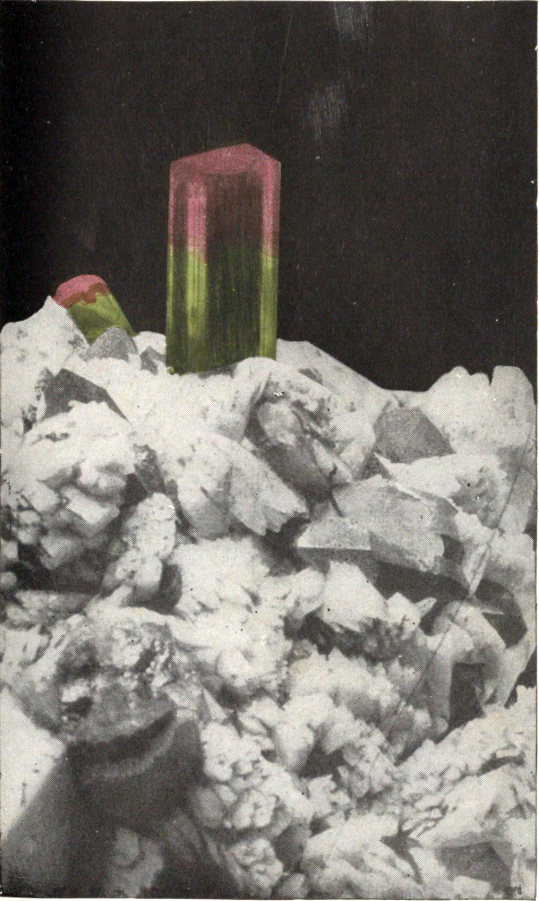
Illustration from Field book of common rocks and minerals: for identifying the rocks and minerals of the United States and interpreting their origins and meanings

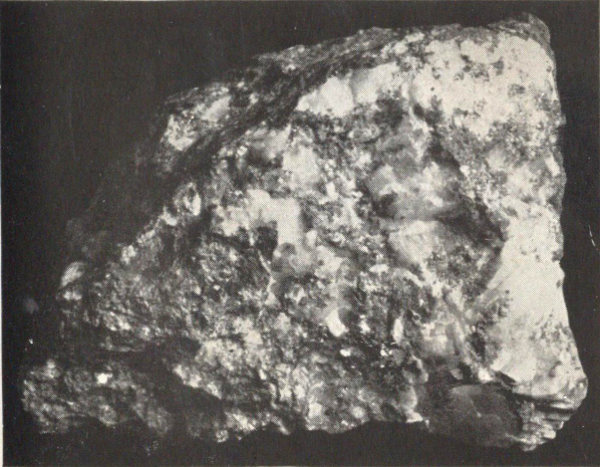
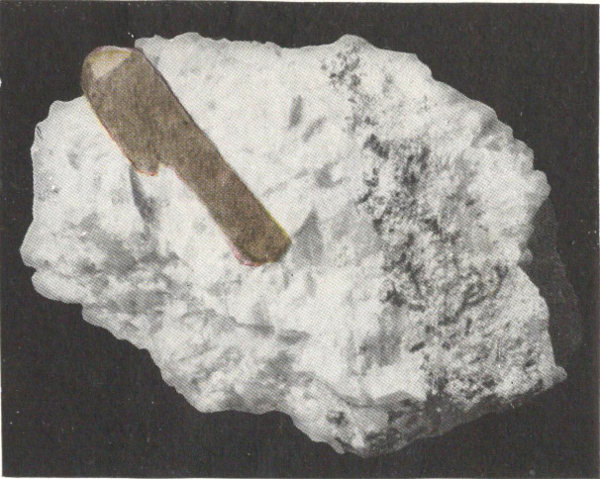
Tourmaline crystals, growing amid feldspar crystals in a cavity in granite, from Paris, Me.

280

Plate 5
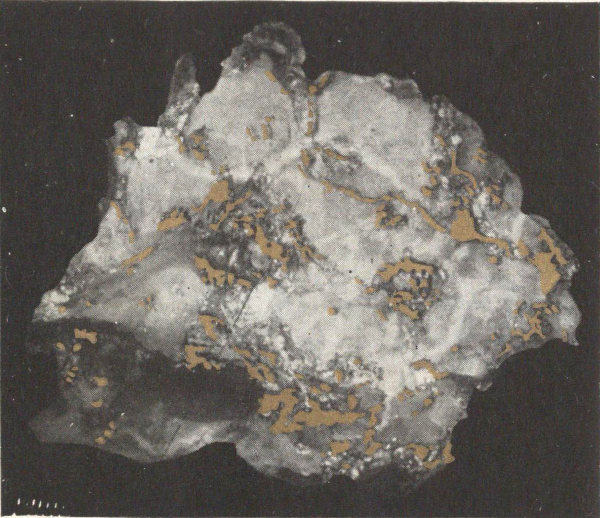
Illustration from Field book of common rocks and minerals: for identifying the rocks and minerals of the United States and interpreting their origins and meanings

Gold in quartz, from California

281

Plate 6
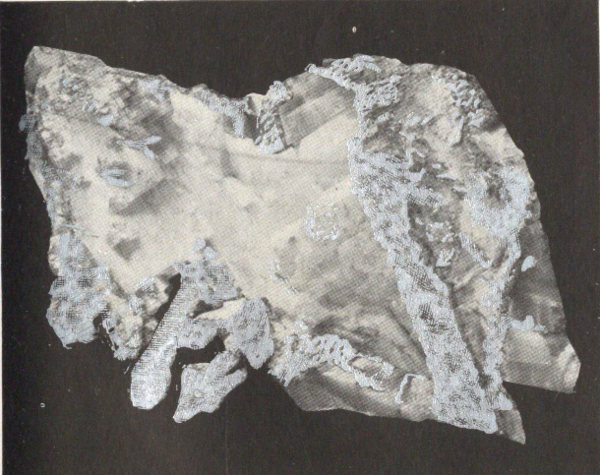
Illustration from Field book of common rocks and minerals: for identifying the rocks and minerals of the United States and interpreting their origins and meanings

Native silver in calcite

Illustration from Field book of common rocks and minerals: for identifying the rocks and minerals of the United States and interpreting their origins and meanings

Argentite, the black masses throughout the white quartz

282

Plate 7
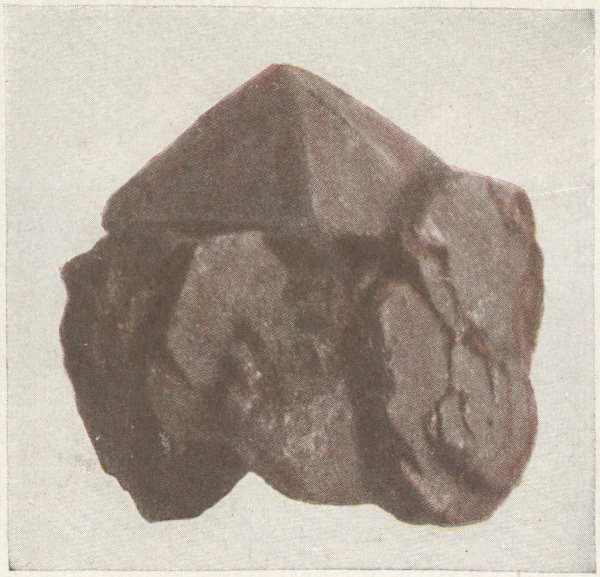
Illustration from Field book of common rocks and minerals: for identifying the rocks and minerals of the United States and interpreting their origins and meanings

Pyrargyrite as it appears after moderate exposure to the light.
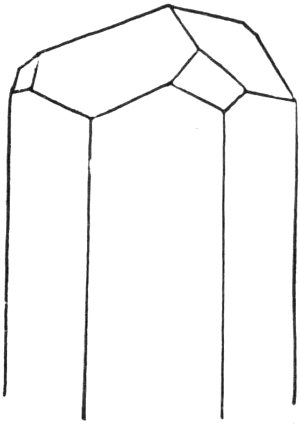
Illustration from Field book of common rocks and minerals: for identifying the rocks and minerals of the United States and interpreting their origins and meanings

Crystal form of Pyrargyrite

Illustration from Field book of common rocks and minerals: for identifying the rocks and minerals of the United States and interpreting their origins and meanings

Prousite as it appears after moderate exposure to the light

283

Plate 8
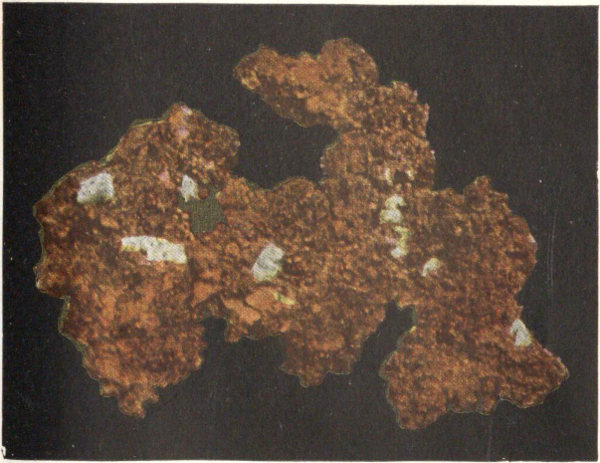
Illustration from Field book of common rocks and minerals: for identifying the rocks and minerals of the United States and interpreting their origins and meanings

Native copper from Michigan

Illustration from Field book of common rocks and minerals: for identifying the rocks and minerals of the United States and interpreting their origins and meanings

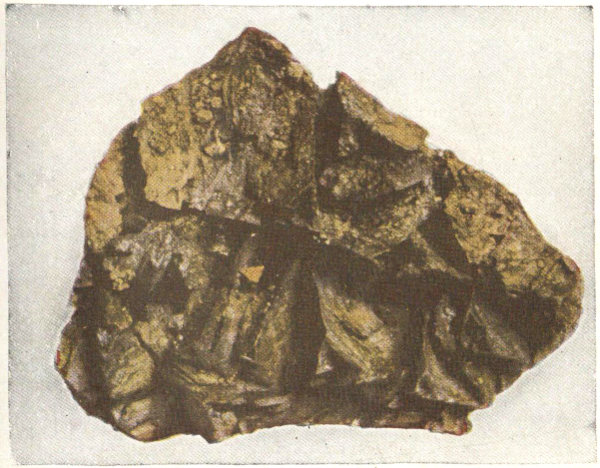
Chalcopyrite in tetrahedrons and an occasional octahedron.

284

Plate 9
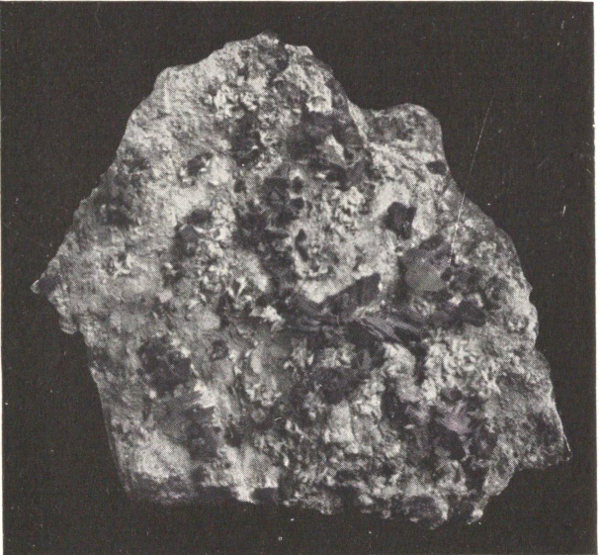
Illustration from Field book of common rocks and minerals: for identifying the rocks and minerals of the United States and interpreting their origins and meanings

Chalcocite crystals with the bluish tarnish
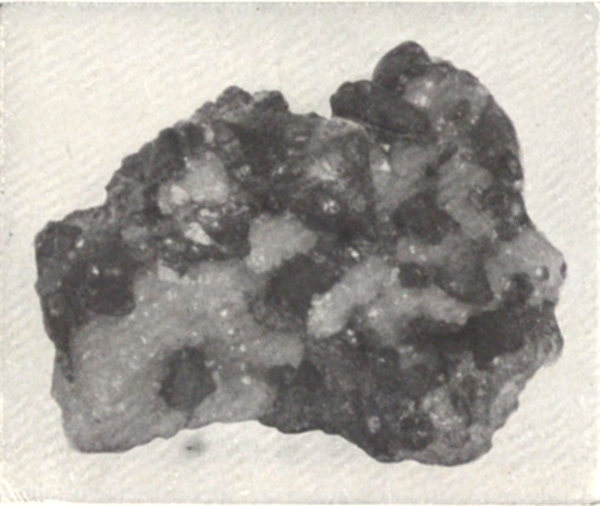
Illustration from Field book of common rocks and minerals: for identifying the rocks and minerals of the United States and interpreting their origins and meanings

Tetrahedrite crystals

285

Plate 11

Illustration from Field book of common rocks and minerals: for identifying the rocks and minerals of the United States and interpreting their origins and meanings

Cuprite, the red crystals showing characteristic color, other showing the green tarnish of malachite
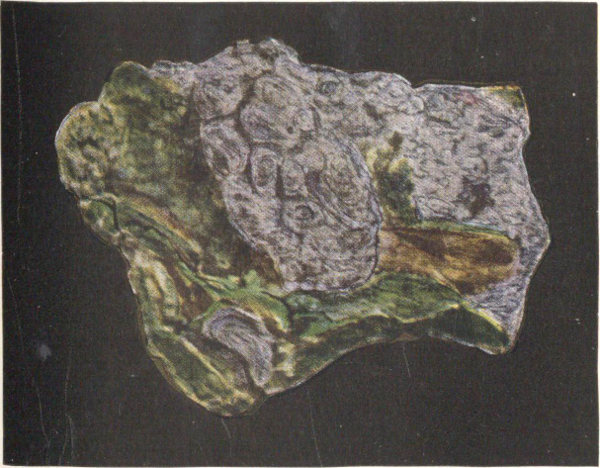
Illustration from Field book of common rocks and minerals: for identifying the rocks and minerals of the United States and interpreting their origins and meanings

Malachite (green) and azurite (blue), the two minerals shown together as they very commonly occur

286

Plate 12
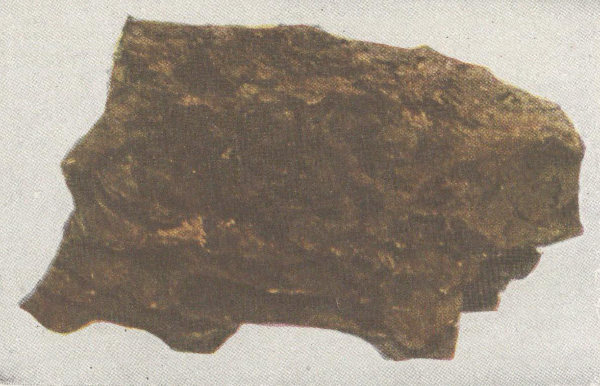
Illustration from Field book of common rocks and minerals: for identifying the rocks and minerals of the United States and interpreting their origins and meanings

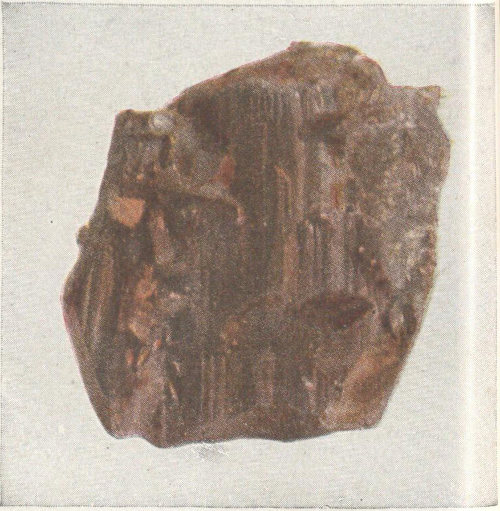
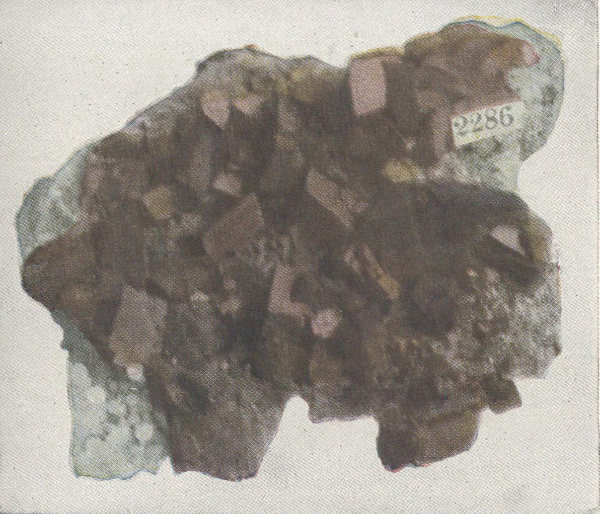
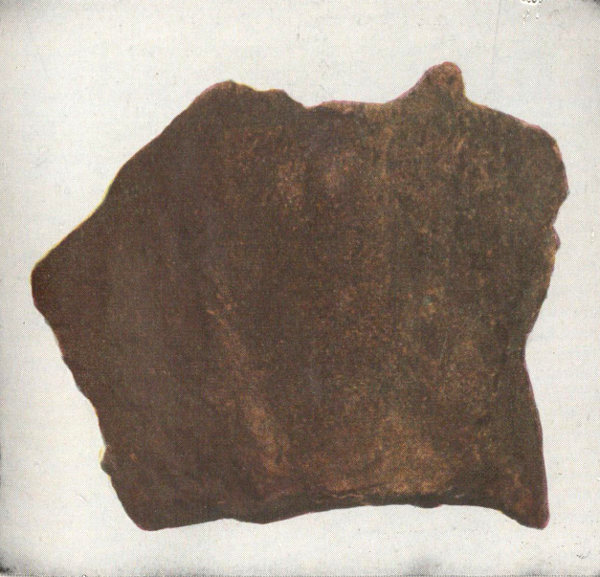
Limonite

Illustration from Field book of common rocks and minerals: for identifying the rocks and minerals of the United States and interpreting their origins and meanings

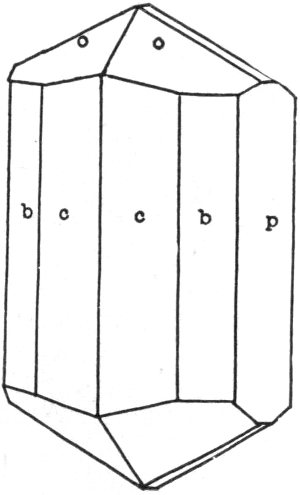
The crystal form in which goethite is found, p is the prism faces, b and c are faces formed by beveling the edges of the prism, o is the pyramidal face characteristic of the ends

287

Plate 13
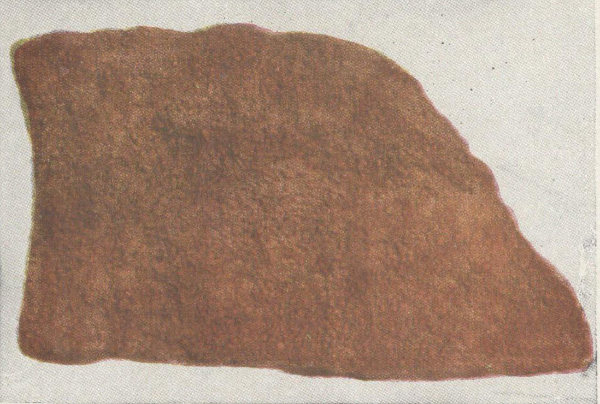
Illustration from Field book of common rocks and minerals: for identifying the rocks and minerals of the United States and interpreting their origins and meanings

Hematite, Clinton iron ore, oolitic

Illustration from Field book of common rocks and minerals: for identifying the rocks and minerals of the United States and interpreting their origins and meanings

Siderite crystals

288

Plate 15

Illustration from Field book of common rocks and minerals: for identifying the rocks and minerals of the United States and interpreting their origins and meanings

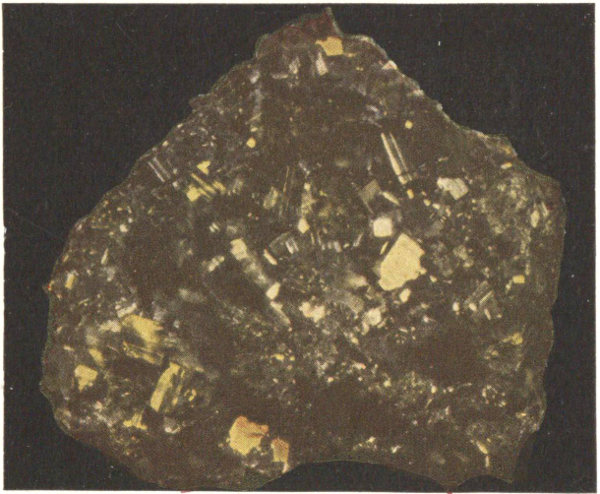
Pyrite crystals

Illustration from Field book of common rocks and minerals: for identifying the rocks and minerals of the United States and interpreting their origins and meanings

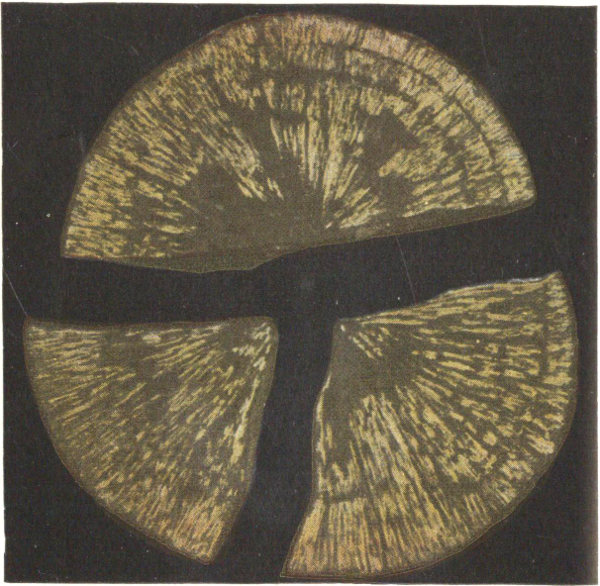
Marcasite in concretionary form with radiate structure

289

Plate 17
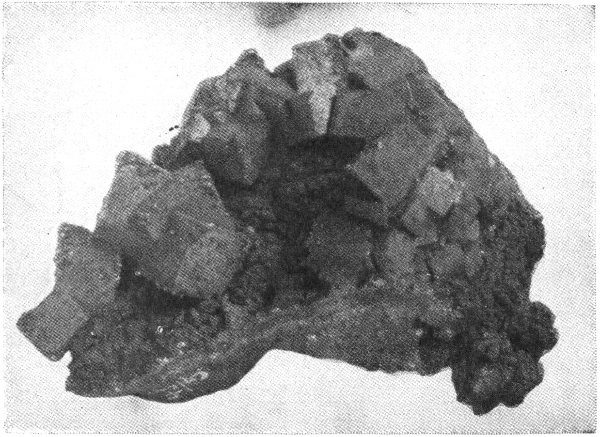
Illustration from Field book of common rocks and minerals: for identifying the rocks and minerals of the United States and interpreting their origins and meanings

Galena in crystals

Illustration from Field book of common rocks and minerals: for identifying the rocks and minerals of the United States and interpreting their origins and meanings

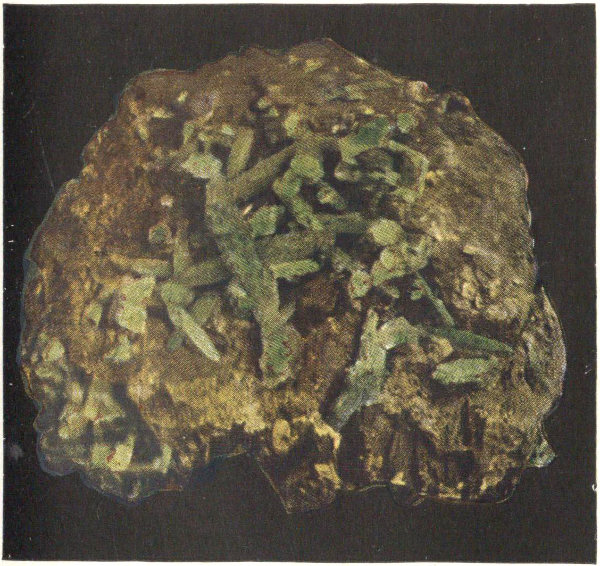
Pyromorphite crystals (green)

290

Plate 19
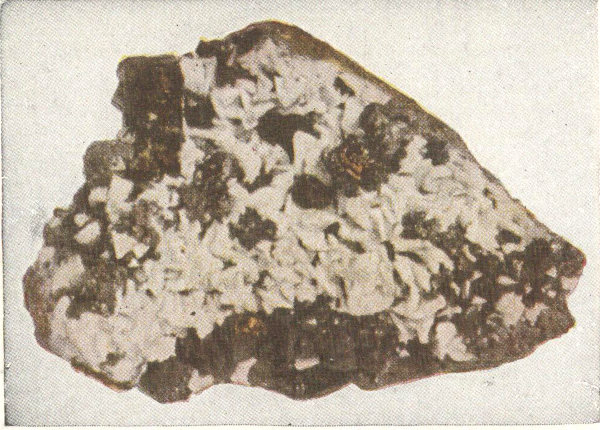
Illustration from Field book of common rocks and minerals: for identifying the rocks and minerals of the United States and interpreting their origins and meanings

Sphalerite, some the normal yellow and some crystals with the reddish tinge. (White is dolomite)
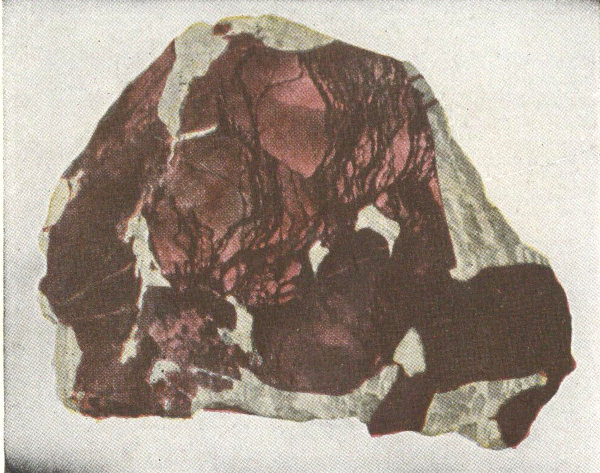
Illustration from Field book of common rocks and minerals: for identifying the rocks and minerals of the United States and interpreting their origins and meanings

Zincite

291

Plate 21

Illustration from Field book of common rocks and minerals: for identifying the rocks and minerals of the United States and interpreting their origins and meanings

Smithsonite in yellow crystals

Illustration from Field book of common rocks and minerals: for identifying the rocks and minerals of the United States and interpreting their origins and meanings

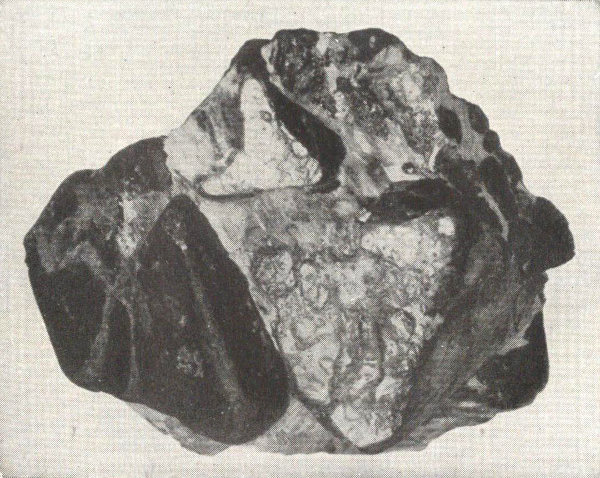
Franklinite in octahedral crystals

292

Plate 24
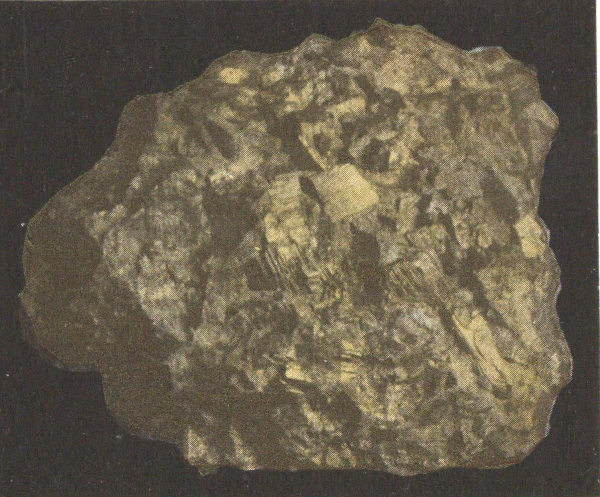
Illustration from Field book of common rocks and minerals: for identifying the rocks and minerals of the United States and interpreting their origins and meanings

Arsenopyrite, showing crystals massed so as to be incompletely developed
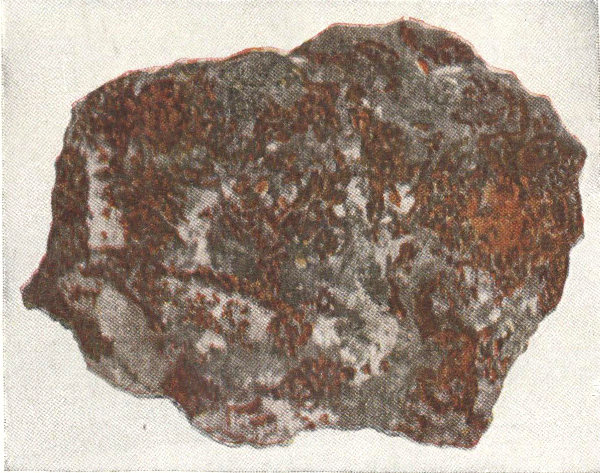
Illustration from Field book of common rocks and minerals: for identifying the rocks and minerals of the United States and interpreting their origins and meanings

Realgar as it usually occurs in powdery incrustations

293

Plate 25
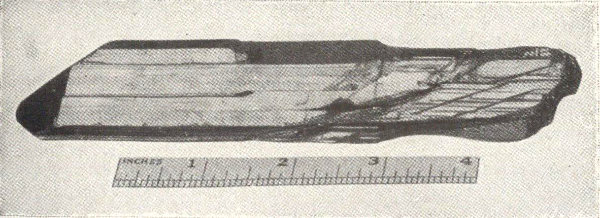
Illustration from Field book of common rocks and minerals: for identifying the rocks and minerals of the United States and interpreting their origins and meanings

Large crystal of stibnite, the light colored face is the one parallel to which cleavage occurs
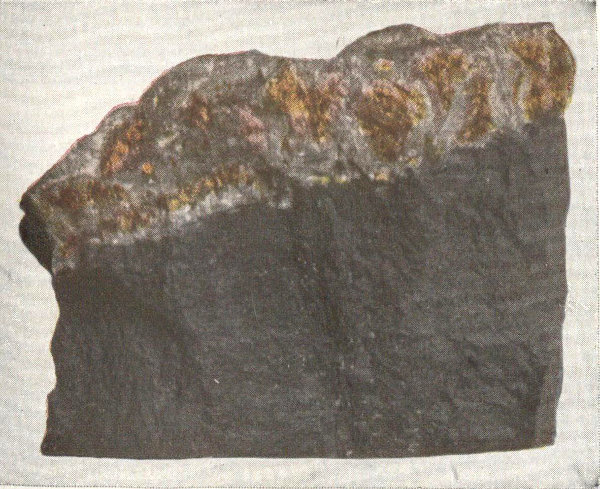
Illustration from Field book of common rocks and minerals: for identifying the rocks and minerals of the United States and interpreting their origins and meanings

Niccolite as a vein in slate

294

Plate 26
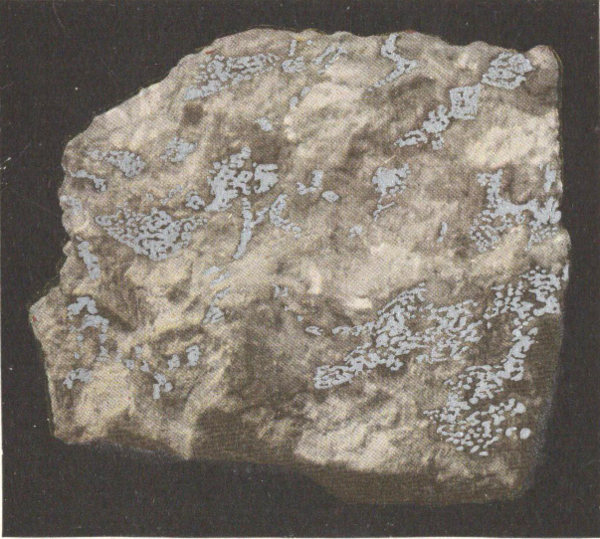
Illustration from Field book of common rocks and minerals: for identifying the rocks and minerals of the United States and interpreting their origins and meanings

Cobaltite, silver color, with pink tinge
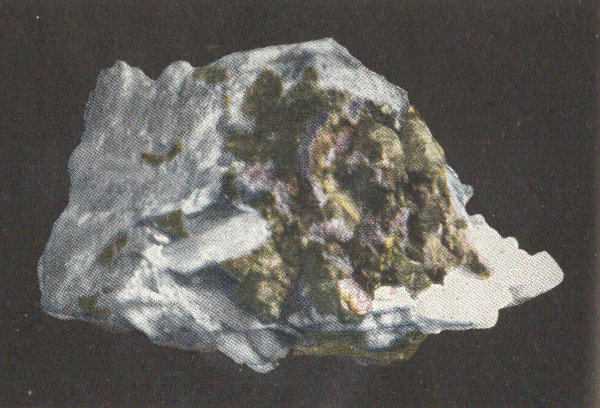
Illustration from Field book of common rocks and minerals: for identifying the rocks and minerals of the United States and interpreting their origins and meanings

Smaltite, pink is cobalt bloom

295

Plate 27
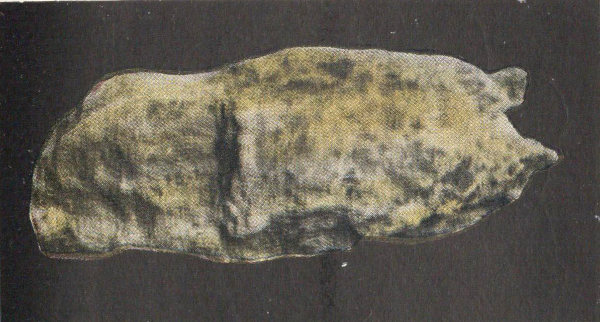
Illustration from Field book of common rocks and minerals: for identifying the rocks and minerals of the United States and interpreting their origins and meanings

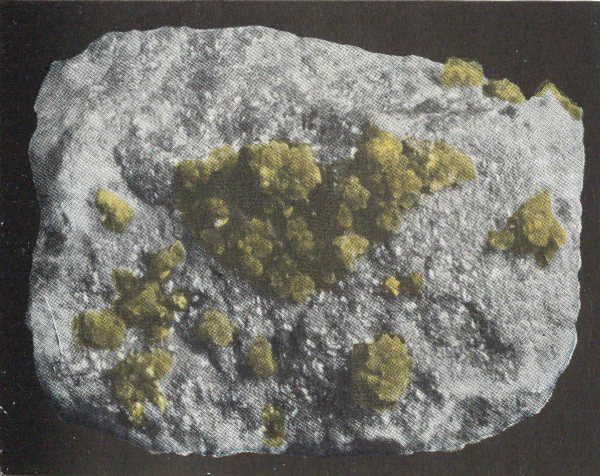
Carnotite from southwest Colorado

Illustration from Field book of common rocks and minerals: for identifying the rocks and minerals of the United States and interpreting their origins and meanings

Cinnabar

296

Plate 31

Illustration from Field book of common rocks and minerals: for identifying the rocks and minerals of the United States and interpreting their origins and meanings

Amethyst, not however deep enough colored for gems
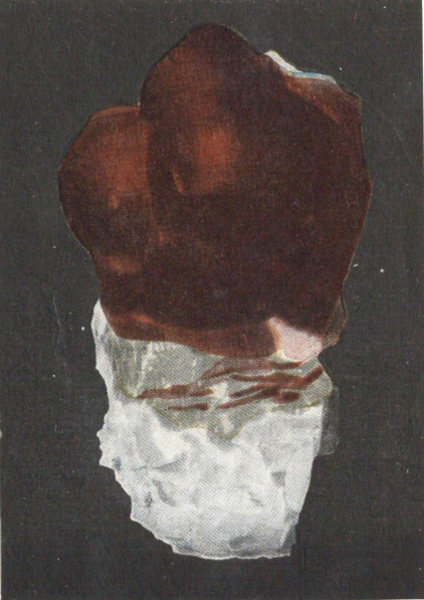
Illustration from Field book of common rocks and minerals: for identifying the rocks and minerals of the United States and interpreting their origins and meanings

Jasper, with botryoidal surface

297

Plate 32
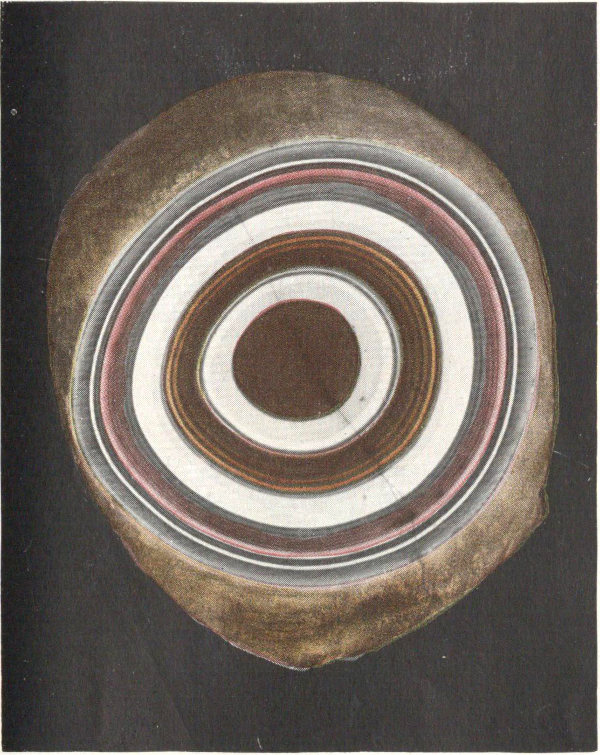
Illustration from Field book of common rocks and minerals: for identifying the rocks and minerals of the United States and interpreting their origins and meanings

Banded Agate from Brazil

298

Plate 33
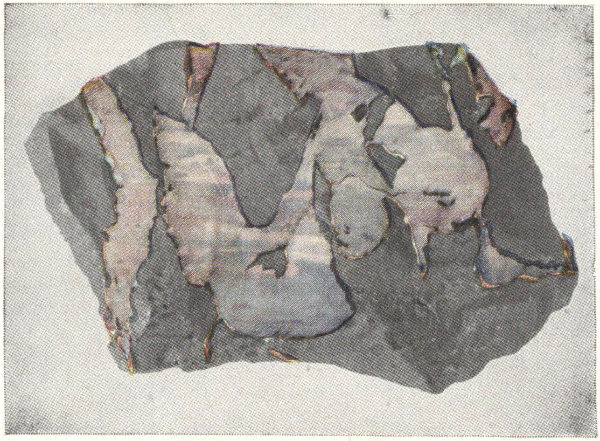
Illustration from Field book of common rocks and minerals: for identifying the rocks and minerals of the United States and interpreting their origins and meanings

Common Opal from Arizona

Illustration from Field book of common rocks and minerals: for identifying the rocks and minerals of the United States and interpreting their origins and meanings

Siliceous sinter or Geyserite from The Yellowstone Park

299

Plate 35
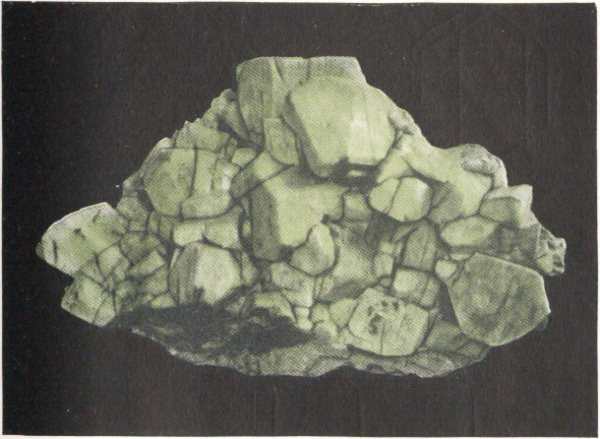
Illustration from Field book of common rocks and minerals: for identifying the rocks and minerals of the United States and interpreting their origins and meanings

A group of Microcline crystals from Pike’s Peak, Colo.
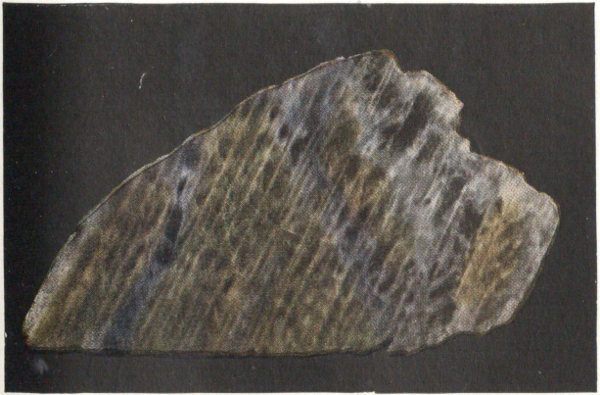
Illustration from Field book of common rocks and minerals: for identifying the rocks and minerals of the United States and interpreting their origins and meanings

Labradorite, showing multiple twinning (the striation), and the iridescent play of colors

300

Plate 36
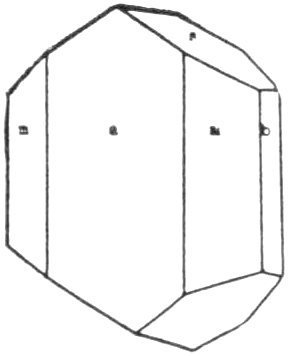
Illustration from Field book of common rocks and minerals: for identifying the rocks and minerals of the United States and interpreting their origins and meanings

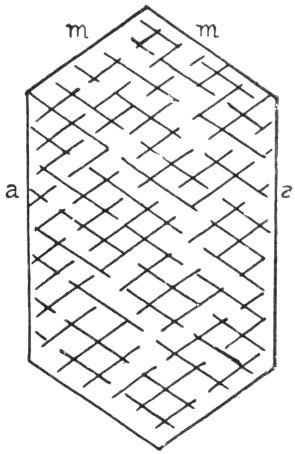
Crystal form of a pyroxene; a and b prism faces, m the beveled edge between two prism faces
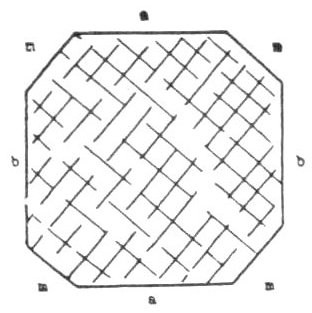
Illustration from Field book of common rocks and minerals: for identifying the rocks and minerals of the United States and interpreting their origins and meanings

Cross section of a pyroxene crystal showing the lines of intersection of the two cleavage planes
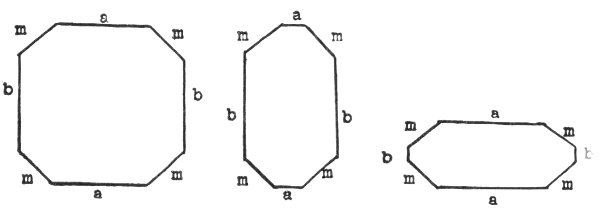
Illustration from Field book of common rocks and minerals: for identifying the rocks and minerals of the United States and interpreting their origins and meanings

Cross sections of pyroxenes, showing typical forms taken by crystals
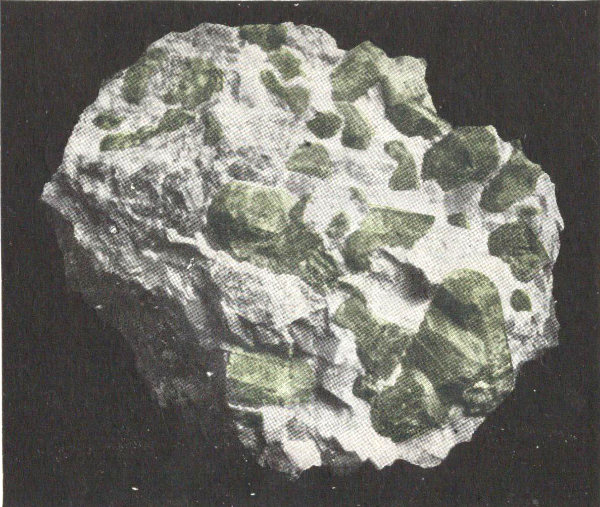
Illustration from Field book of common rocks and minerals: for identifying the rocks and minerals of the United States and interpreting their origins and meanings

Augite crystals, in crystalline limestone

301

Plate 38
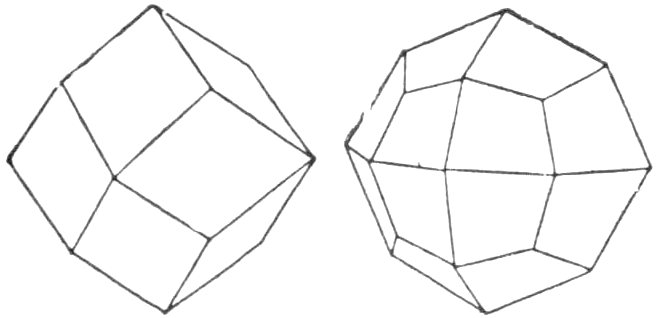
Illustration from Field book of common rocks and minerals: for identifying the rocks and minerals of the United States and interpreting their origins and meanings

The dodecahedron and the 24-sided figure characteristic of garnets
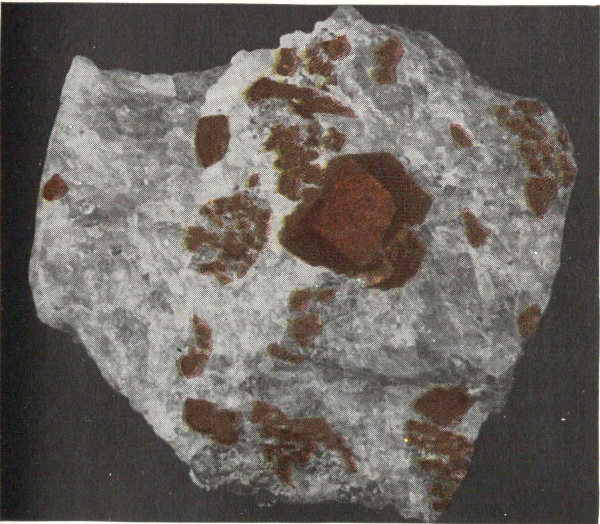
Illustration from Field book of common rocks and minerals: for identifying the rocks and minerals of the United States and interpreting their origins and meanings

The garnet, grossularite

Illustration from Field book of common rocks and minerals: for identifying the rocks and minerals of the United States and interpreting their origins and meanings

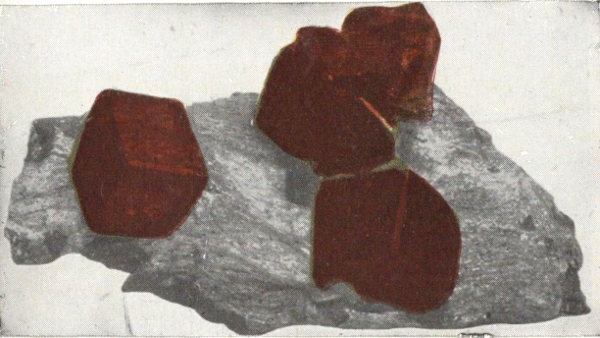
The garnet alamandite

302

Plate 39

Illustration from Field book of common rocks and minerals: for identifying the rocks and minerals of the United States and interpreting their origins and meanings

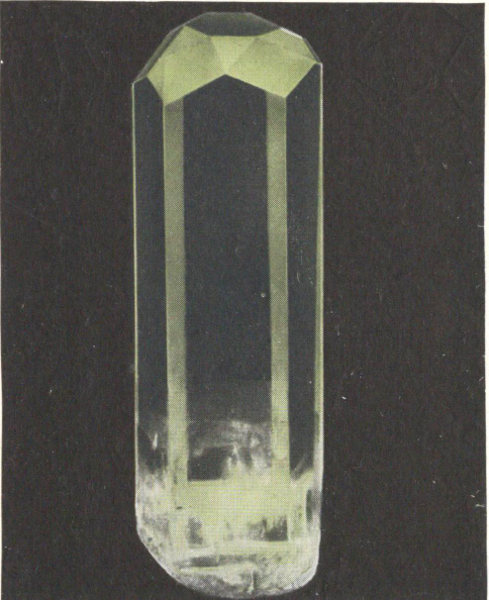
Beryl of gem quality

Illustration from Field book of common rocks and minerals: for identifying the rocks and minerals of the United States and interpreting their origins and meanings

Zircon in syenite

303

Plate 40

Illustration from Field book of common rocks and minerals: for identifying the rocks and minerals of the United States and interpreting their origins and meanings

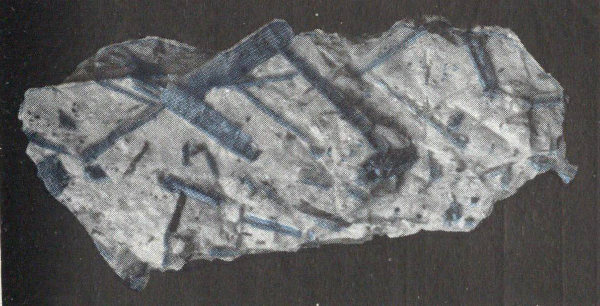
Cyanite crystals in schist

Illustration from Field book of common rocks and minerals: for identifying the rocks and minerals of the United States and interpreting their origins and meanings

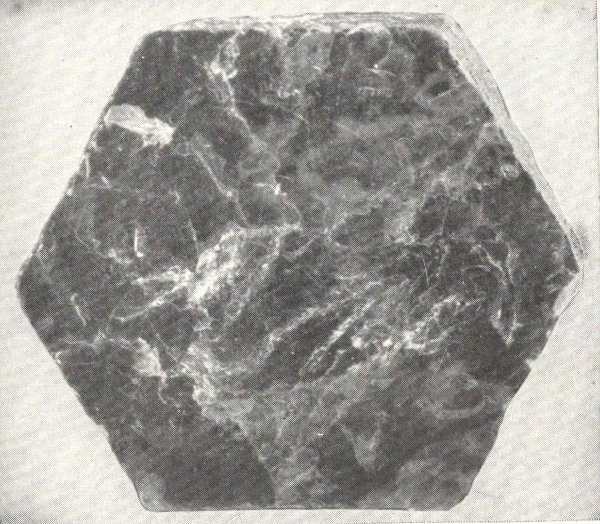
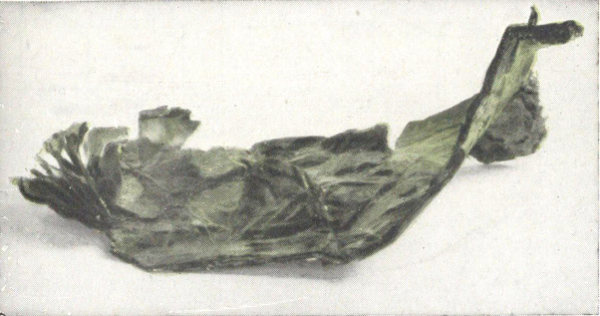
A crystal of mica, showing basal cleavage

304

Plate 41
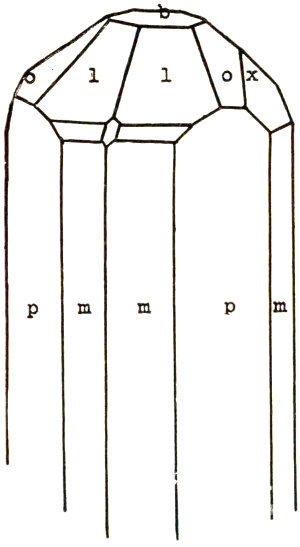
Illustration from Field book of common rocks and minerals: for identifying the rocks and minerals of the United States and interpreting their origins and meanings

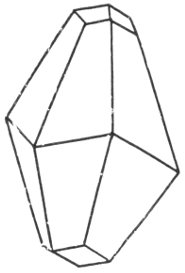
Crystal form typical of topaz

Illustration from Field book of common rocks and minerals: for identifying the rocks and minerals of the United States and interpreting their origins and meanings

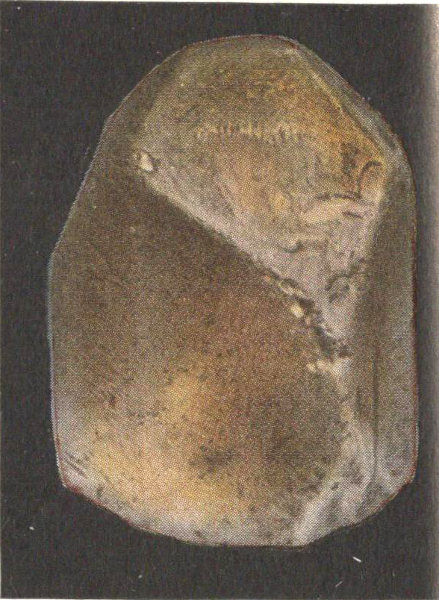
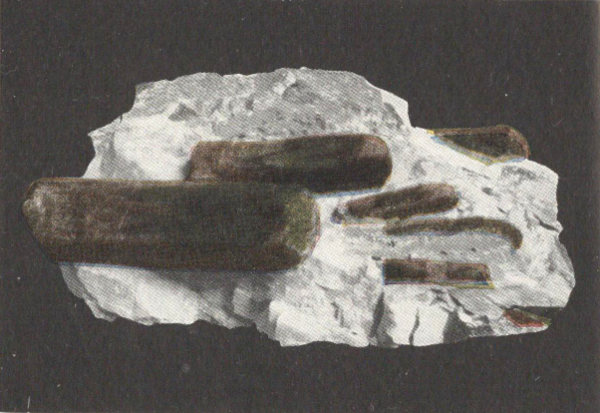
A topaz crystal from Brazil

Illustration from Field book of common rocks and minerals: for identifying the rocks and minerals of the United States and interpreting their origins and meanings

Crystal form typical of staurolite when simple
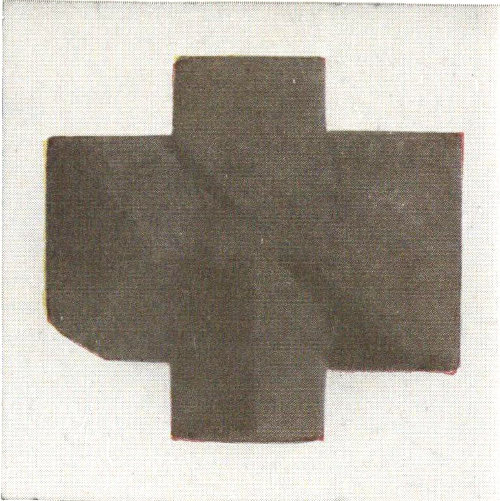
Illustration from Field book of common rocks and minerals: for identifying the rocks and minerals of the United States and interpreting their origins and meanings

A typical twin of staurolite

305

Plate 43
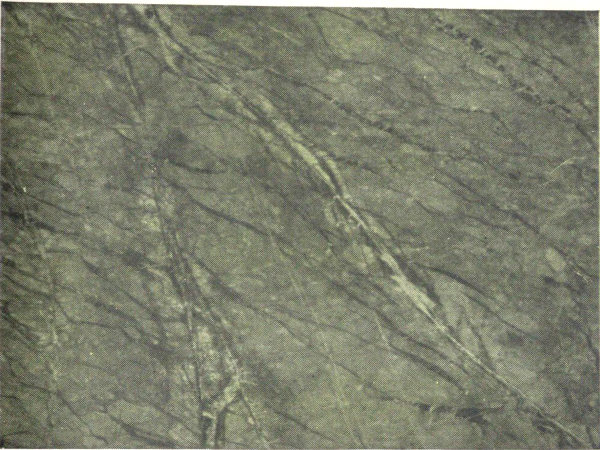
Illustration from Field book of common rocks and minerals: for identifying the rocks and minerals of the United States and interpreting their origins and meanings

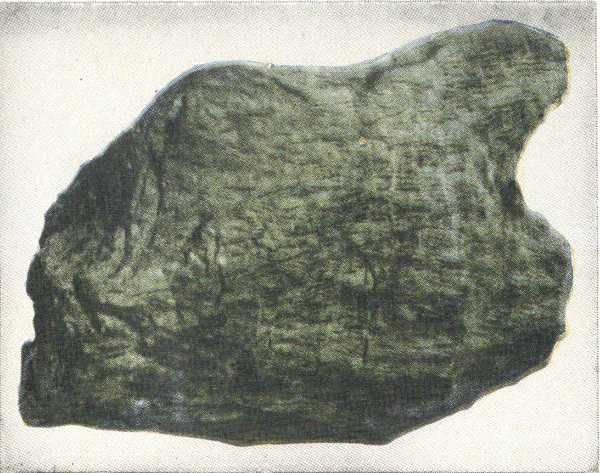
Serpentine

Illustration from Field book of common rocks and minerals: for identifying the rocks and minerals of the United States and interpreting their origins and meanings

Chlorite

306

Plate 49

Illustration from Field book of common rocks and minerals: for identifying the rocks and minerals of the United States and interpreting their origins and meanings

Apatite crystals in crystalline calcite
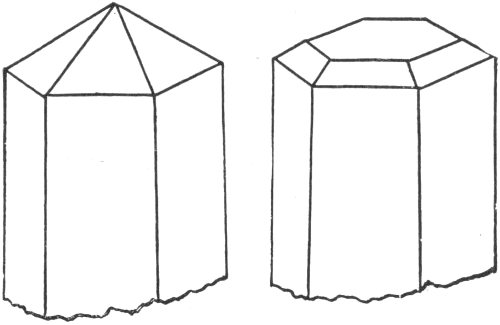
Illustration from Field book of common rocks and minerals: for identifying the rocks and minerals of the United States and interpreting their origins and meanings

The ends of apatite crystals showing common modes of termination

307

Plate 50
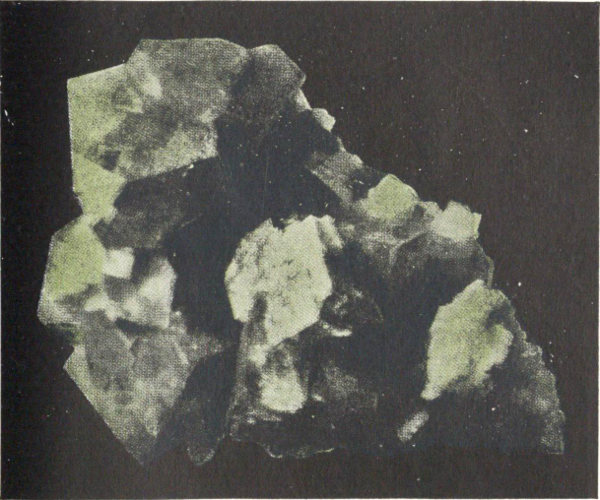
Illustration from Field book of common rocks and minerals: for identifying the rocks and minerals of the United States and interpreting their origins and meanings

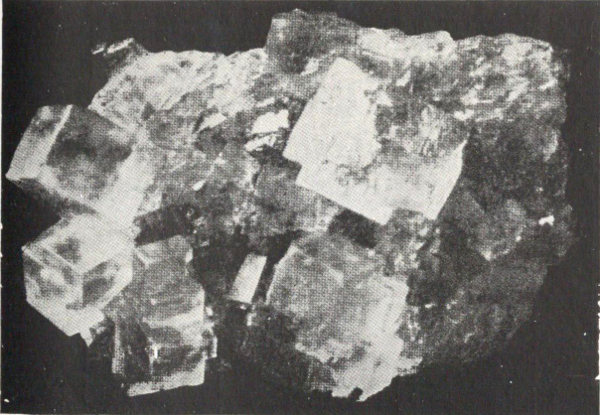
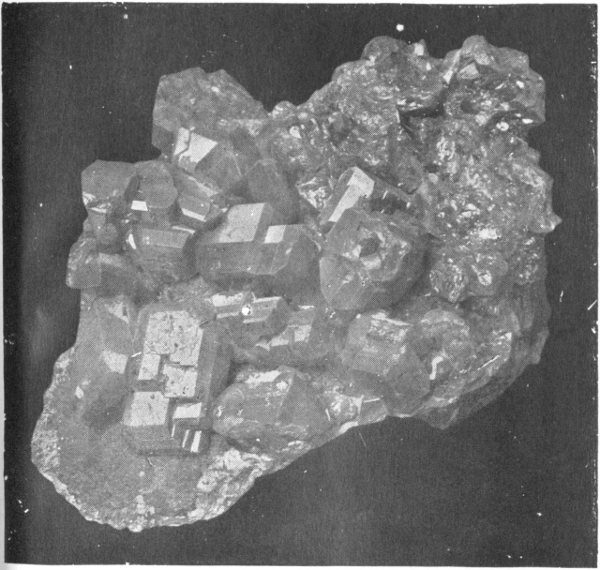
A group of fluorite crystals

Illustration from Field book of common rocks and minerals: for identifying the rocks and minerals of the United States and interpreting their origins and meanings

A group of halite crystals

308

Plate 61
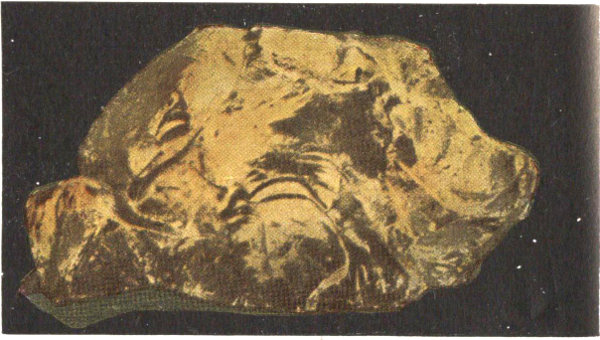
Illustration from Field book of common rocks and minerals: for identifying the rocks and minerals of the United States and interpreting their origins and meanings

Amber

Illustration from Field book of common rocks and minerals: for identifying the rocks and minerals of the United States and interpreting their origins and meanings

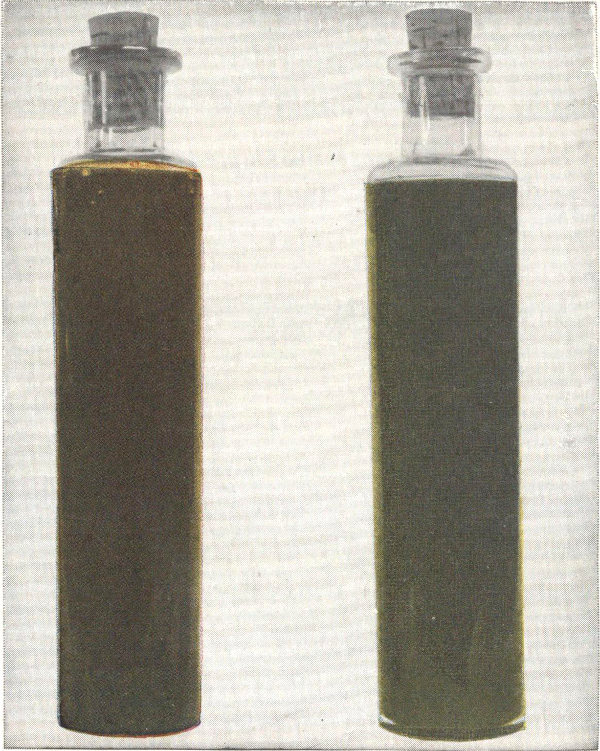
Two bottles of petroleum, the left hand one with a paraffin base, the right hand one with an asphalt base

309

Plate 65
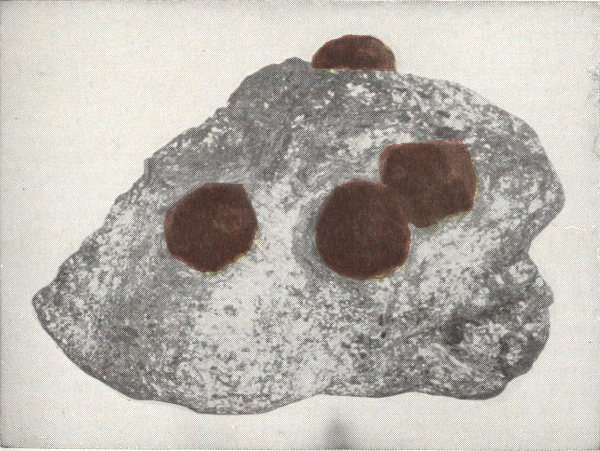
Illustration from Field book of common rocks and minerals: for identifying the rocks and minerals of the United States and interpreting their origins and meanings

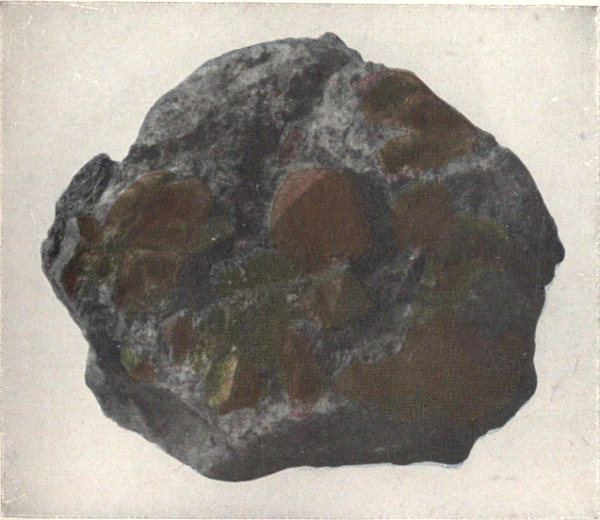
Mica schist, with garnets

Illustration from Field book of common rocks and minerals: for identifying the rocks and minerals of the United States and interpreting their origins and meanings

Chlorite schist

310

Plate 67

Illustration from Field book of common rocks and minerals: for identifying the rocks and minerals of the United States and interpreting their origins and meanings

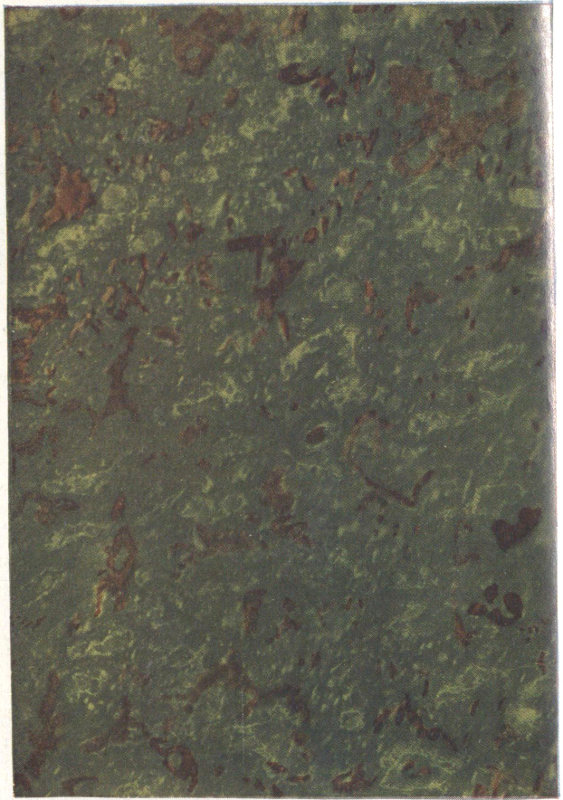
Serpentine, composed of serpentine, hematite, and some calcite

311

Plate 1

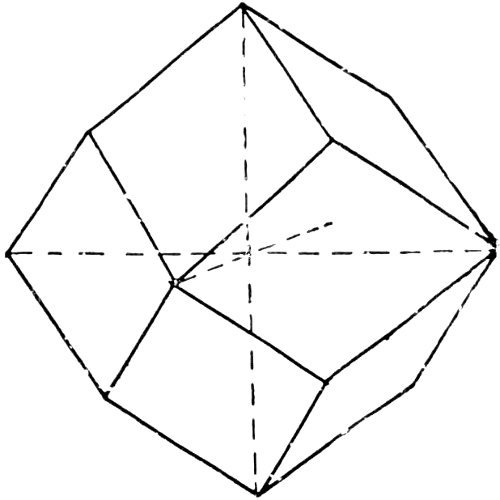
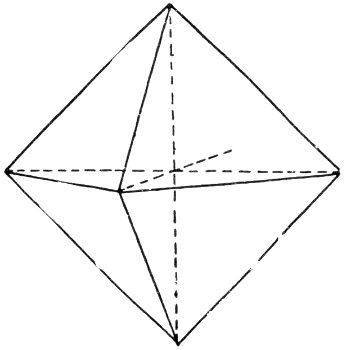
Basal forms of the isometric system
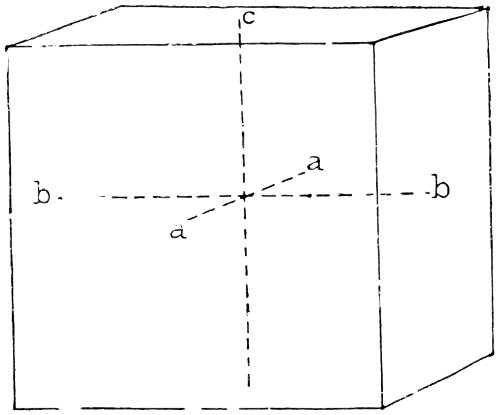
Illustration from Field book of common rocks and minerals: for identifying the rocks and minerals of the United States and interpreting their origins and meanings

Cube

Illustration from Field book of common rocks and minerals: for identifying the rocks and minerals of the United States and interpreting their origins and meanings

Octahedron

Illustration from Field book of common rocks and minerals: for identifying the rocks and minerals of the United States and interpreting their origins and meanings

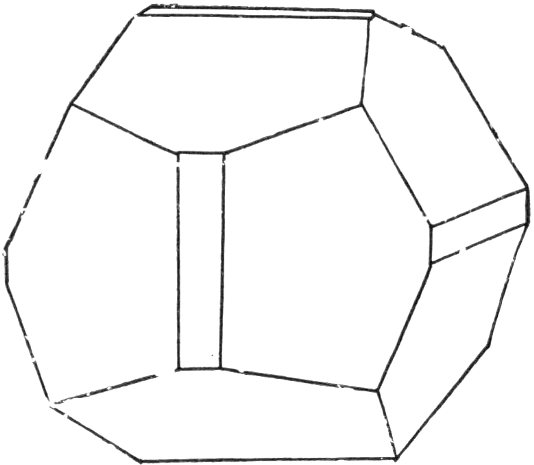
Dodecahedron

312

Plate 2

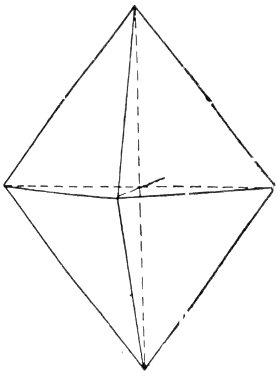
Basal forms of the tetragonal system
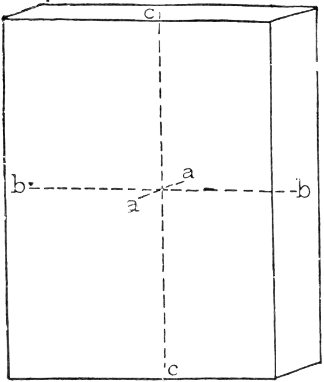
Illustration from Field book of common rocks and minerals: for identifying the rocks and minerals of the United States and interpreting their origins and meanings

A square prism

Illustration from Field book of common rocks and minerals: for identifying the rocks and minerals of the United States and interpreting their origins and meanings

Octahedron

Basal forms of the orthorhombic system
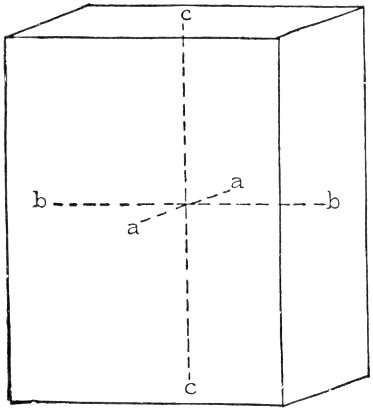
Illustration from Field book of common rocks and minerals: for identifying the rocks and minerals of the United States and interpreting their origins and meanings

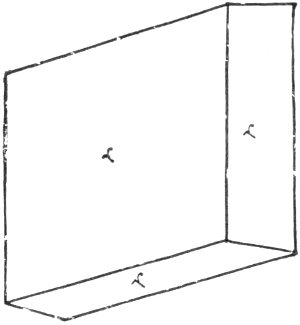
A Rectangular prism

Illustration from Field book of common rocks and minerals: for identifying the rocks and minerals of the United States and interpreting their origins and meanings

Octahedron

313

Plate 3

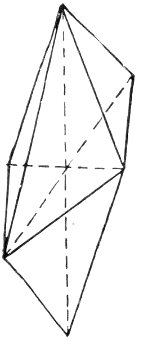
Basal forms of the monoclinic system
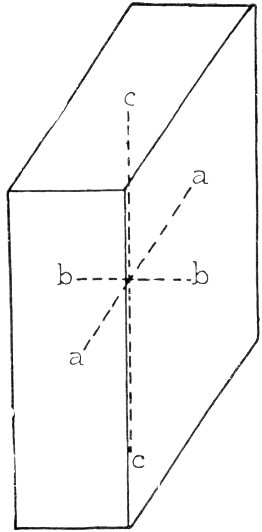
Illustration from Field book of common rocks and minerals: for identifying the rocks and minerals of the United States and interpreting their origins and meanings

The rectangular prism askew

Illustration from Field book of common rocks and minerals: for identifying the rocks and minerals of the United States and interpreting their origins and meanings

The octahedron

Illustration from Field book of common rocks and minerals: for identifying the rocks and minerals of the United States and interpreting their origins and meanings

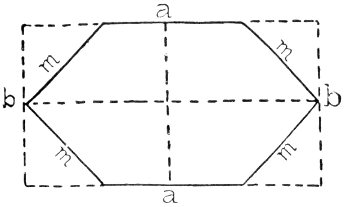
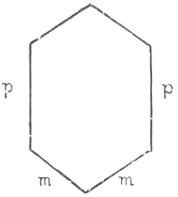
A cross section of the prism with its edges beveled so that the b faces are obliterated by the m faces, and a six-sided prism is formed (pseudo-hexagonal)
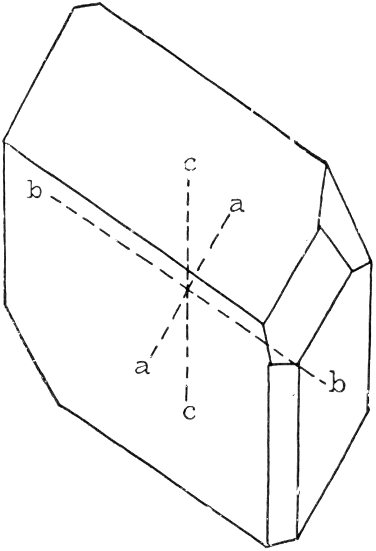
Illustration from Field book of common rocks and minerals: for identifying the rocks and minerals of the United States and interpreting their origins and meanings

Basal form of the triclinic system

314

Plate 4

Basal forms of the hexagonal system
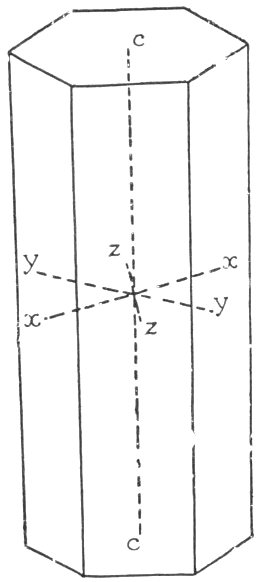
Illustration from Field book of common rocks and minerals: for identifying the rocks and minerals of the United States and interpreting their origins and meanings

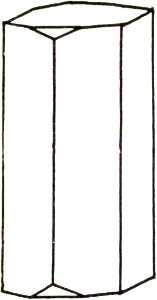
The six-sided prism

Illustration from Field book of common rocks and minerals: for identifying the rocks and minerals of the United States and interpreting their origins and meanings

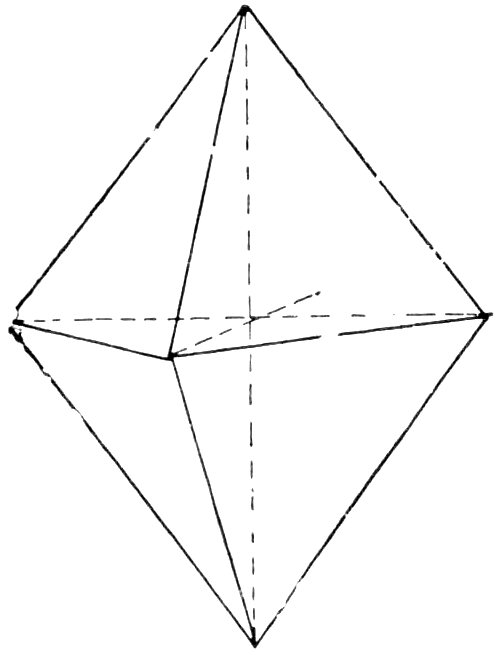
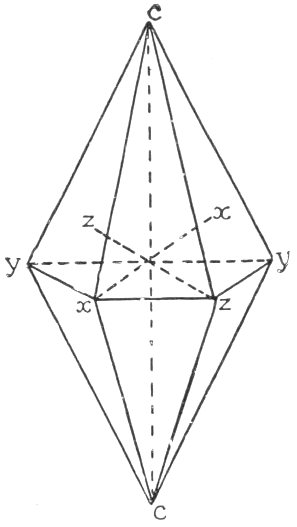
The double pyramid

Illustration from Field book of common rocks and minerals: for identifying the rocks and minerals of the United States and interpreting their origins and meanings

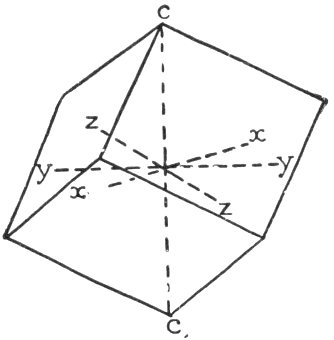
The rhombohedron

315

Plate 10

Illustration from Field book of common rocks and minerals: for identifying the rocks and minerals of the United States and interpreting their origins and meanings

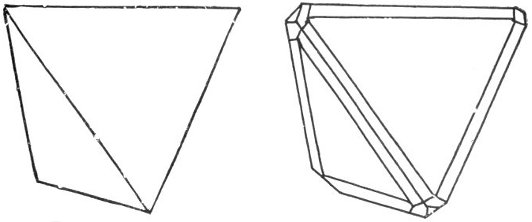
Tetrahedrons showing characteristic manner in which tetrahedrite occurs
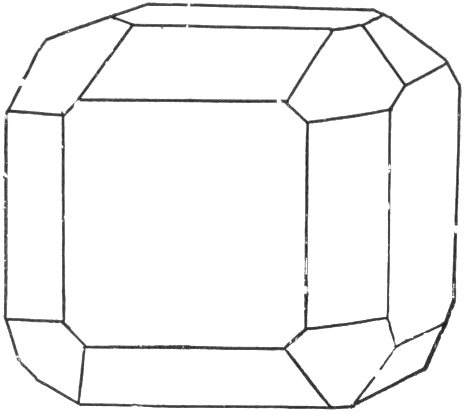
Illustration from Field book of common rocks and minerals: for identifying the rocks and minerals of the United States and interpreting their origins and meanings

A cube with the edges beveled and the corners cut in a form characteristic of cuprite

316

Plate 30
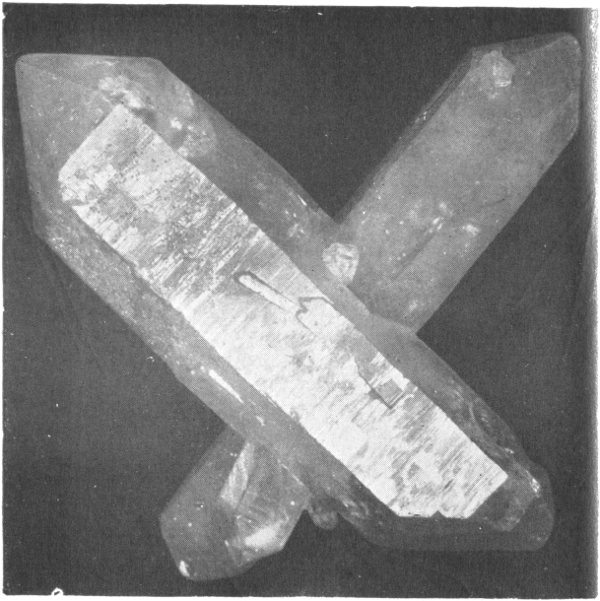
Illustration from Field book of common rocks and minerals: for identifying the rocks and minerals of the United States and interpreting their origins and meanings

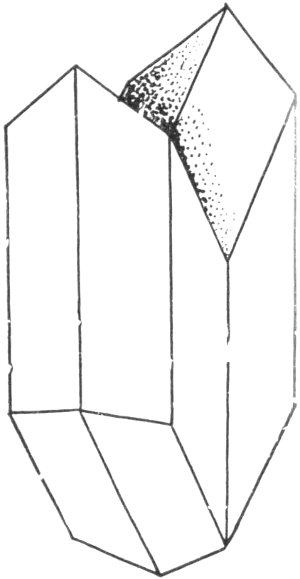
Two intergrowing or twinned quartz crystals
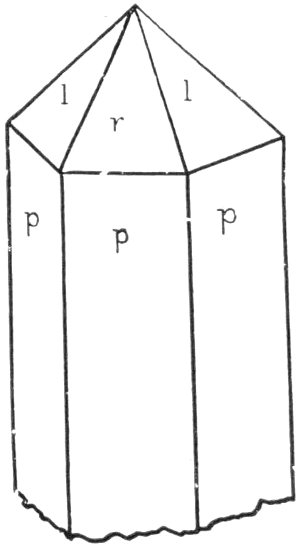
Illustration from Field book of common rocks and minerals: for identifying the rocks and minerals of the United States and interpreting their origins and meanings

Diagram of the typical quartz crystal, p prism faces, l left hand rhombohedron, r right hand rhombohedron
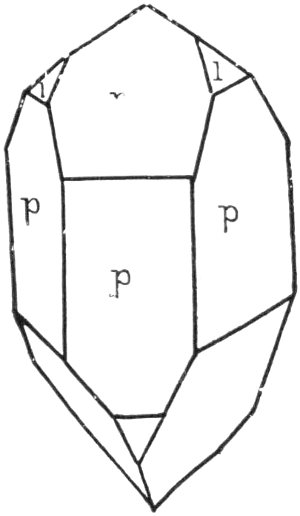
Illustration from Field book of common rocks and minerals: for identifying the rocks and minerals of the United States and interpreting their origins and meanings

A quartz crystal on which the left hand rhombohedron is represented by small faces while the right hand rhombohedron has large faces

317

Plate 14
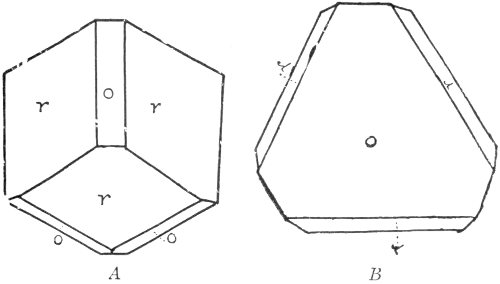
Illustration from Field book of common rocks and minerals: for identifying the rocks and minerals of the United States and interpreting their origins and meanings

Crystal forms of hematite, A the rhombohedron with the edges beveled; B the tabular form, resulting from the excessive development of the two o faces opposite each other
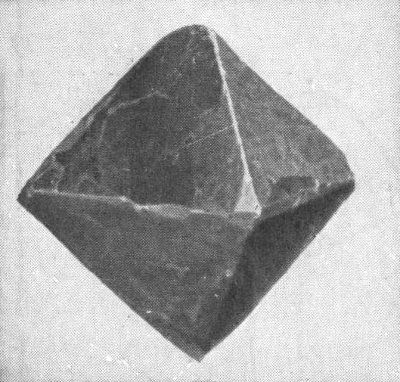
Illustration from Field book of common rocks and minerals: for identifying the rocks and minerals of the United States and interpreting their origins and meanings

A typical crystal of magnetite

Illustration from Field book of common rocks and minerals: for identifying the rocks and minerals of the United States and interpreting their origins and meanings

The rhombohedron typical of siderite

318

Plate 16
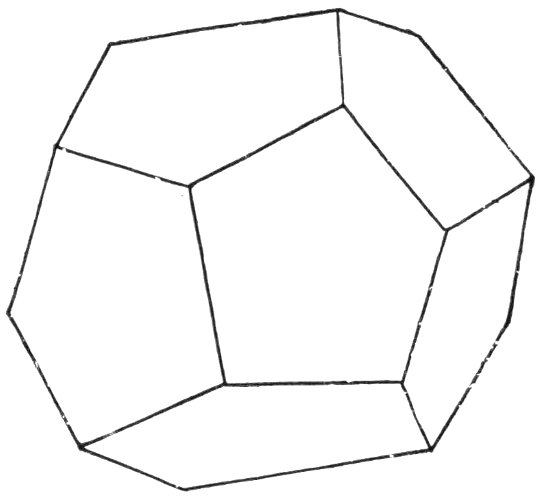
Illustration from Field book of common rocks and minerals: for identifying the rocks and minerals of the United States and interpreting their origins and meanings

The pyritohedron

Illustration from Field book of common rocks and minerals: for identifying the rocks and minerals of the United States and interpreting their origins and meanings

The pyritohedron with certain of its edges beveled by the cube faces, to show the relationship of these two forms

319

Plate 18

Typical forms for cerrusite
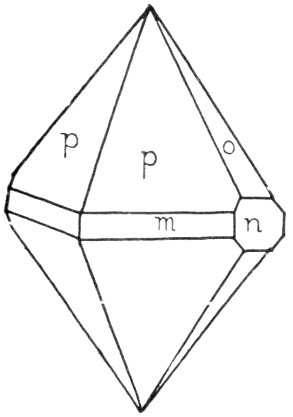
Illustration from Field book of common rocks and minerals: for identifying the rocks and minerals of the United States and interpreting their origins and meanings

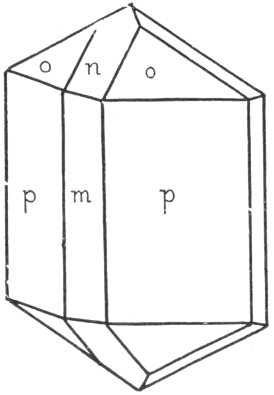
The pyramid, n the prism face, m the beveled prism, p the octahedral face, and o the edge of the octahedral faces beveled
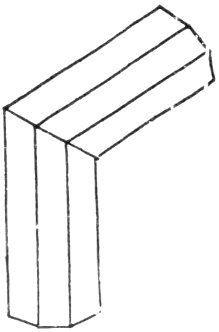
Illustration from Field book of common rocks and minerals: for identifying the rocks and minerals of the United States and interpreting their origins and meanings

The simple type of twinning

Illustration from Field book of common rocks and minerals: for identifying the rocks and minerals of the United States and interpreting their origins and meanings

A multiple twin where three crystals grow through each other
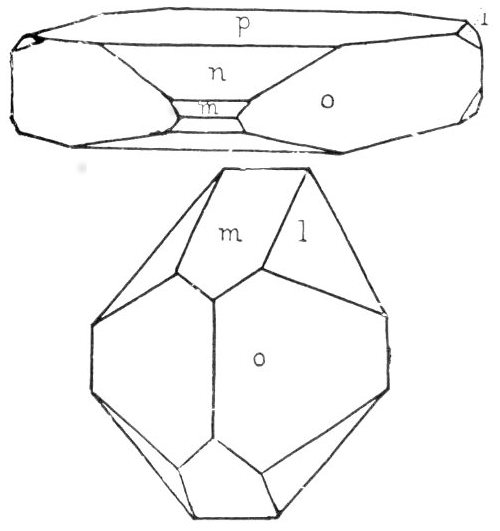
Illustration from Field book of common rocks and minerals: for identifying the rocks and minerals of the United States and interpreting their origins and meanings

Forms in which anglesite occurs: l the pyramid face, p the prism face, o the vertical edge of the prism beveled, m the horizontal edge of the prism beveled, n a further beveling of the horizontal edge of the prism. D the tabular, E the prismatic form

320

Plate 20
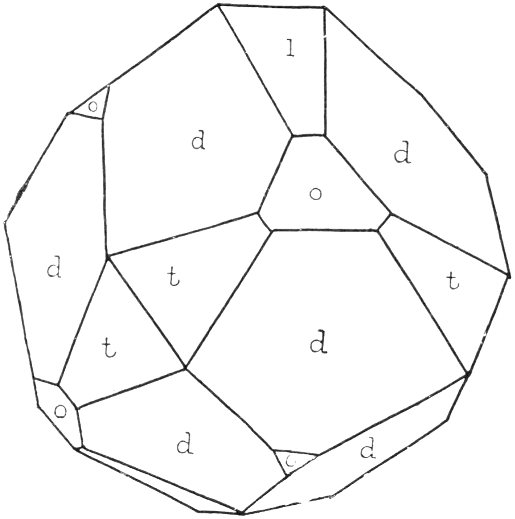
Illustration from Field book of common rocks and minerals: for identifying the rocks and minerals of the United States and interpreting their origins and meanings

A characteristic form in which sphalerite may occur; being the combination of, d the dodecahedron, o the octahedron, and t, a 24-sided figure
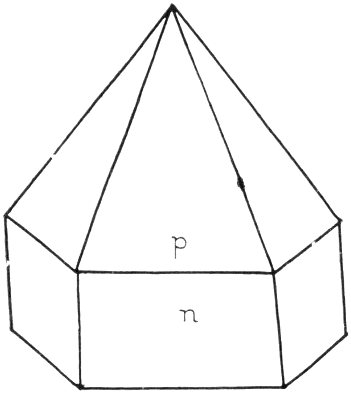
Illustration from Field book of common rocks and minerals: for identifying the rocks and minerals of the United States and interpreting their origins and meanings

Characteristic form for zincite crystals, n the hexagonal prism, and p pyramidal faces on it
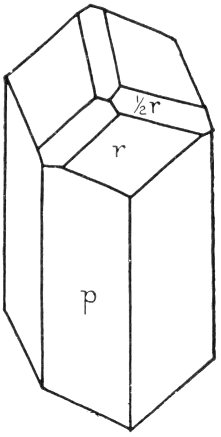
Illustration from Field book of common rocks and minerals: for identifying the rocks and minerals of the United States and interpreting their origins and meanings

Typical form of crystal of willemite: p the prism, r rhombohedron faces on end, ½ r a second lower rhombohedron

321

Plate 22
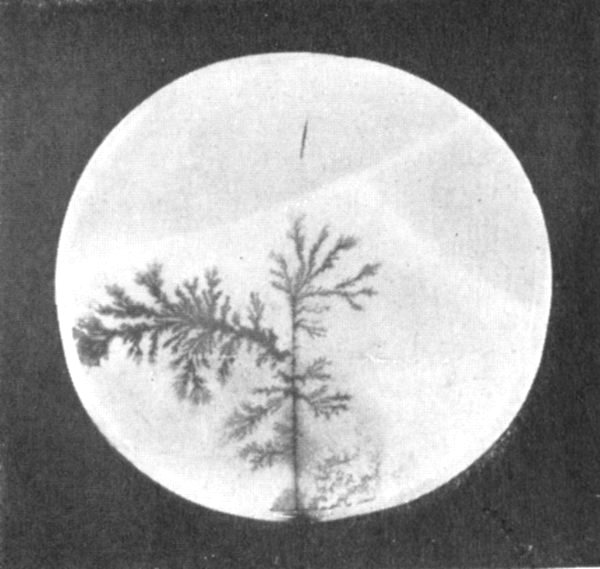
Illustration from Field book of common rocks and minerals: for identifying the rocks and minerals of the United States and interpreting their origins and meanings

Moss agates, showing the dendritic growth of manganitic minerals, like manganite or pyrolusite
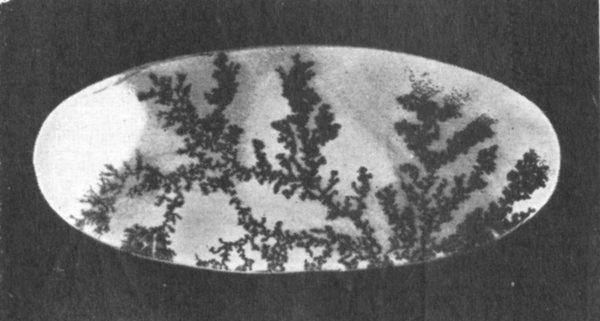
Moss agates
Moss agates
Illustration from Field book of common rocks and minerals: for identifying the rocks and minerals of the United States and interpreting their origins and meanings

Crystal form of manganite

322

Plate 23
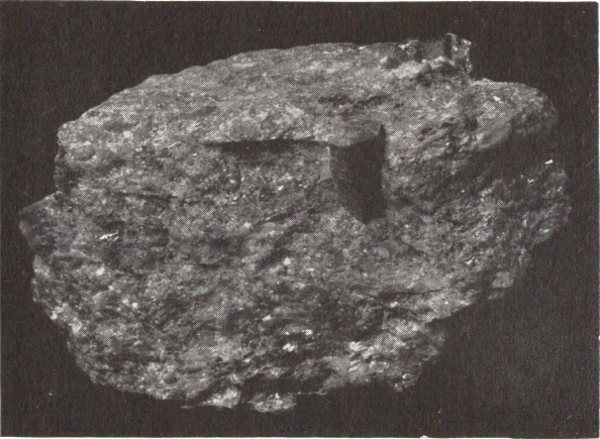
Illustration from Field book of common rocks and minerals: for identifying the rocks and minerals of the United States and interpreting their origins and meanings

Crystals of green corundum in syenite, from Montana
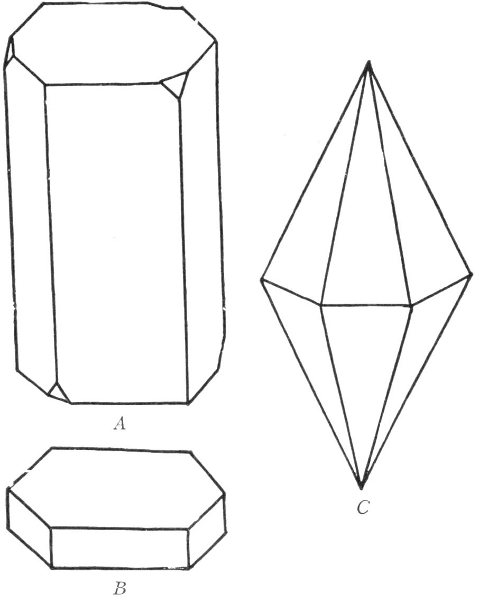
Illustration from Field book of common rocks and minerals: for identifying the rocks and minerals of the United States and interpreting their origins and meanings

Typical crystal forms of corundum: A the elongated prism with the alternate corners cut by rhombohedral faces, B the tabular prism, C the double pyramid

323

Plate 28
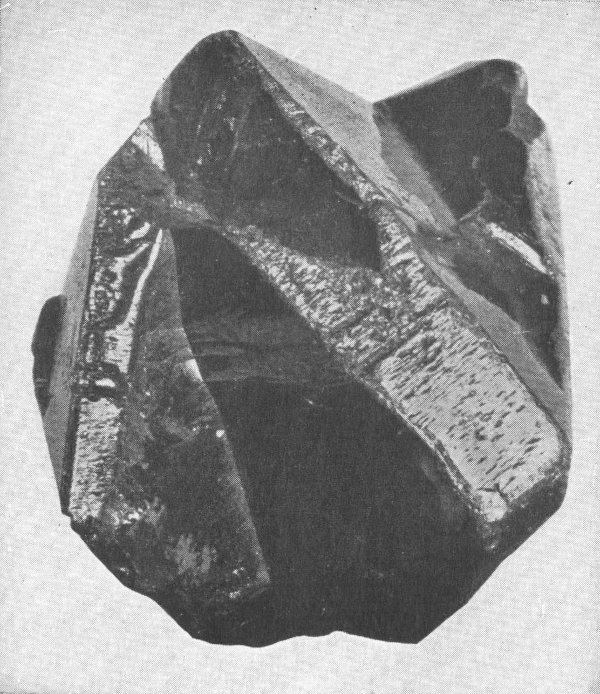
Illustration from Field book of common rocks and minerals: for identifying the rocks and minerals of the United States and interpreting their origins and meanings

Cassiterite, twinned crystals

Illustration from Field book of common rocks and minerals: for identifying the rocks and minerals of the United States and interpreting their origins and meanings

The crystal form in which both cassiterite and rutile occur when in simple crystals, p prism faces, m beveling of the prism, o octahedral face, n beveling of the edge between octahedral faces
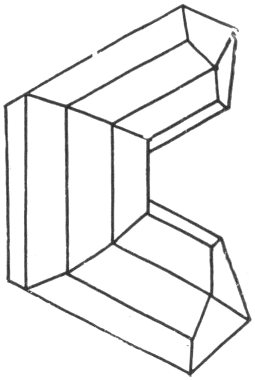
Illustration from Field book of common rocks and minerals: for identifying the rocks and minerals of the United States and interpreting their origins and meanings

Multiple twinning characteristic of rutile

324

Plate 29
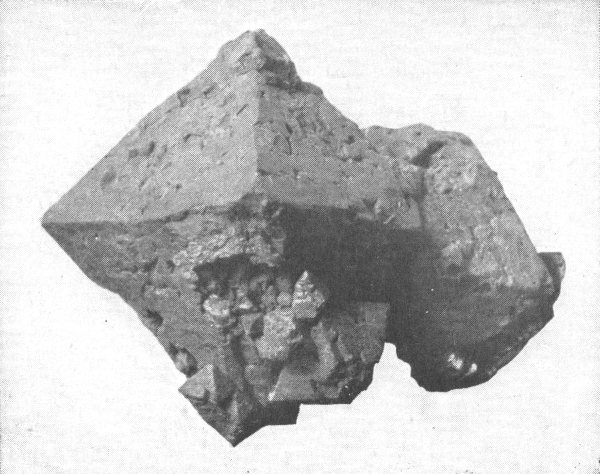
Illustration from Field book of common rocks and minerals: for identifying the rocks and minerals of the United States and interpreting their origins and meanings

Crystal of Spinel

Crystal forms in which dolomite occurs
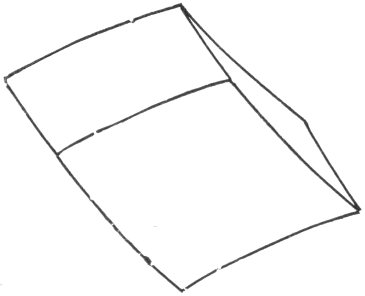
Illustration from Field book of common rocks and minerals: for identifying the rocks and minerals of the United States and interpreting their origins and meanings

A the cleavage form, rhombohedron with the faces curved
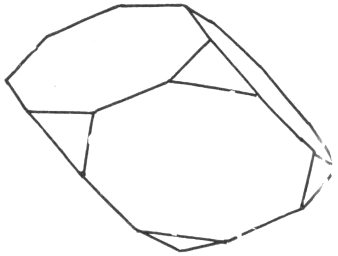
Illustration from Field book of common rocks and minerals: for identifying the rocks and minerals of the United States and interpreting their origins and meanings

B the rhombohedron with the corners cut, as it often occurs
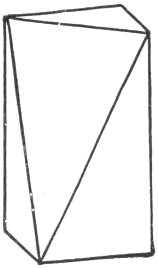
Illustration from Field book of common rocks and minerals: for identifying the rocks and minerals of the United States and interpreting their origins and meanings

C the form found in gypsum or anhydrite

325

Plate 34
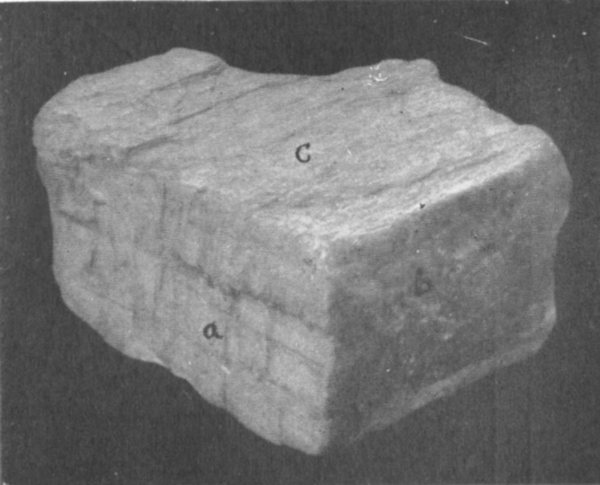
Illustration from Field book of common rocks and minerals: for identifying the rocks and minerals of the United States and interpreting their origins and meanings

Orthoclase, a cleavage piece, a and b the perfect cleavage planes, and c the imperfect cleavage plane

Crystal forms of orthoclase
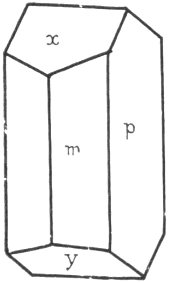
Illustration from Field book of common rocks and minerals: for identifying the rocks and minerals of the United States and interpreting their origins and meanings

A the simple crystal

Illustration from Field book of common rocks and minerals: for identifying the rocks and minerals of the United States and interpreting their origins and meanings

B the twinned form

Illustration from Field book of common rocks and minerals: for identifying the rocks and minerals of the United States and interpreting their origins and meanings

C the twinned form in which the crystals are intergrowing
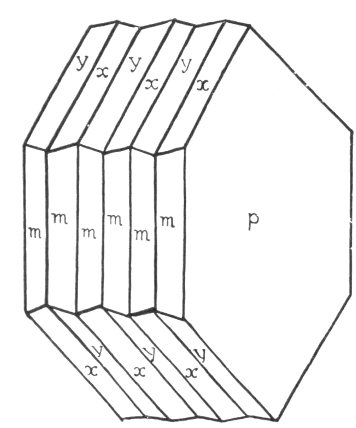
Illustration from Field book of common rocks and minerals: for identifying the rocks and minerals of the United States and interpreting their origins and meanings

Diagram of a multiple twin of a plagioclase feldspar

326

Plate 37

Diagrams of amphibole crystals
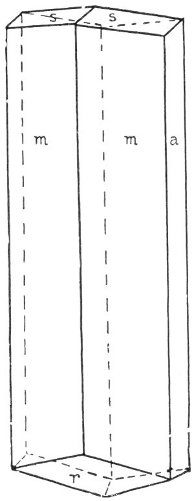
Illustration from Field book of common rocks and minerals: for identifying the rocks and minerals of the United States and interpreting their origins and meanings

A a typical crystal

Illustration from Field book of common rocks and minerals: for identifying the rocks and minerals of the United States and interpreting their origins and meanings

B cross section showing the intersection of cleavage planes
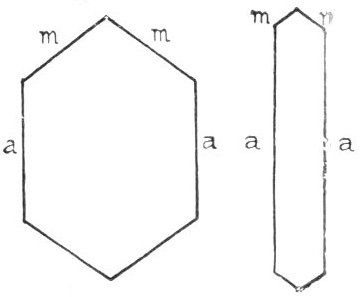
Illustration from Field book of common rocks and minerals: for identifying the rocks and minerals of the United States and interpreting their origins and meanings

C and D cross sections to show variations in outline
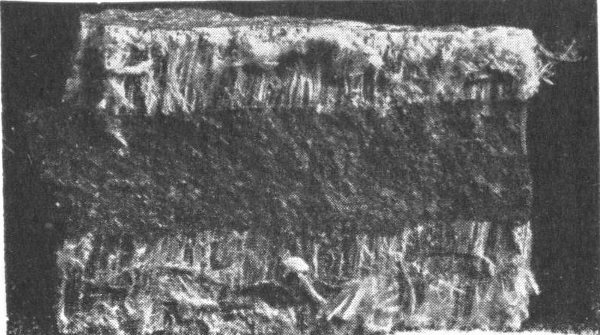
Illustration from Field book of common rocks and minerals: for identifying the rocks and minerals of the United States and interpreting their origins and meanings

Tremolite in silky fibrous crystals. Asbestos
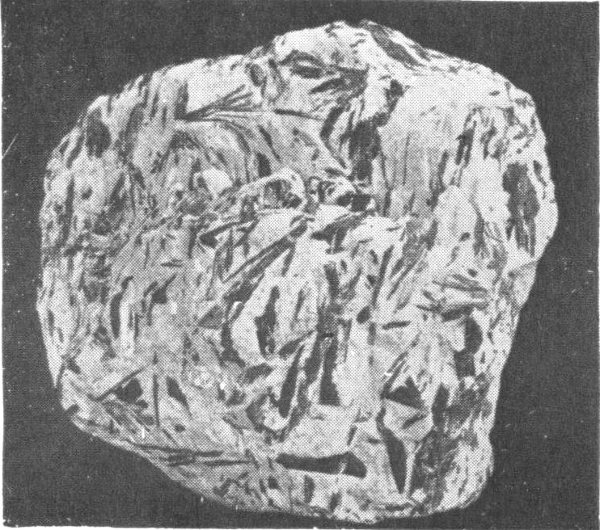
Illustration from Field book of common rocks and minerals: for identifying the rocks and minerals of the United States and interpreting their origins and meanings

Hornblende crystals in quartzite

327

Plate 42
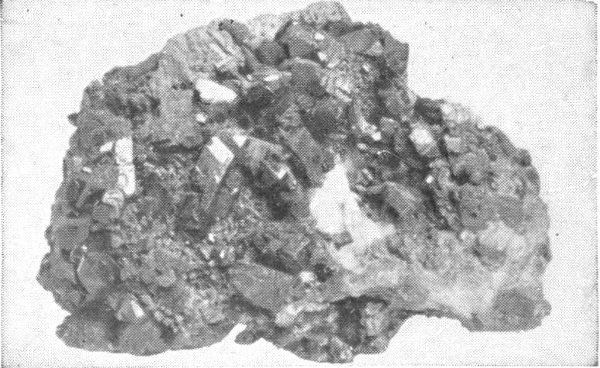
Illustration from Field book of common rocks and minerals: for identifying the rocks and minerals of the United States and interpreting their origins and meanings

Epidote crystals

Illustration from Field book of common rocks and minerals: for identifying the rocks and minerals of the United States and interpreting their origins and meanings

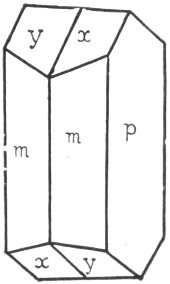
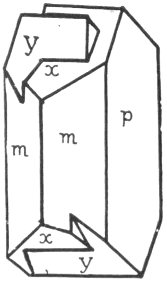
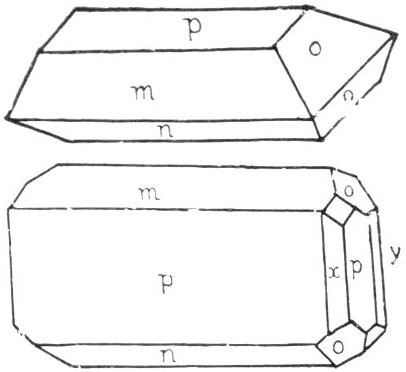
Typical forms of epidote crystals; p prism faces, m, n, x, and y beveled edges of the prism, o octahedral faces

Typical forms of tourmaline
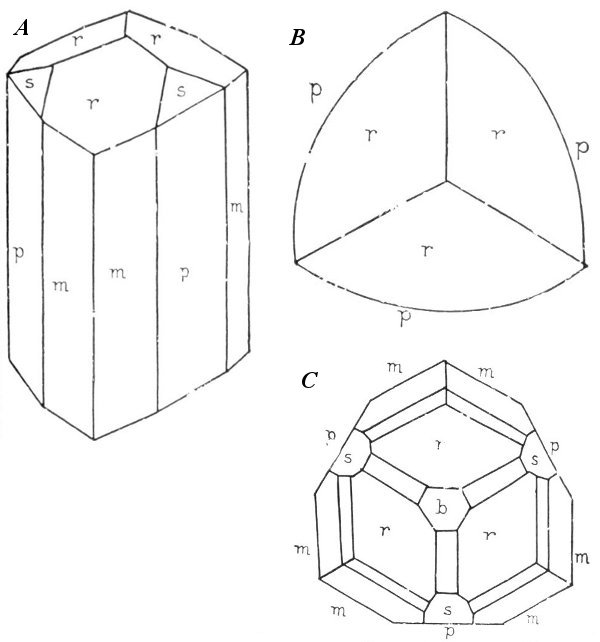
Illustration from Field book of common rocks and minerals: for identifying the rocks and minerals of the United States and interpreting their origins and meanings

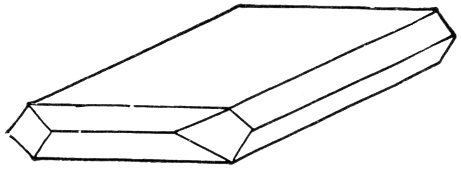
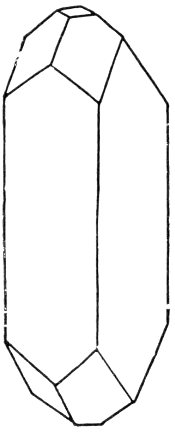
A side view; B and C ends to show terminations; p prism faces, m beveling of prism edges, r a low rhombohedron on the end, s the opposite rhombohedron, b basal face, and the other faces represent bevelings

328

Plate 48
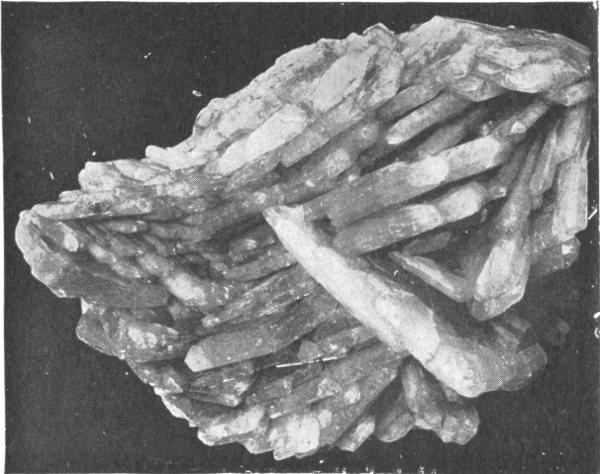
Illustration from Field book of common rocks and minerals: for identifying the rocks and minerals of the United States and interpreting their origins and meanings

A group of barite crystals

Illustration from Field book of common rocks and minerals: for identifying the rocks and minerals of the United States and interpreting their origins and meanings

Outline of the typical tabular barite crystal
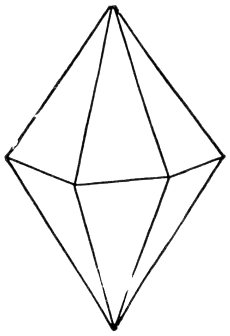
Illustration from Field book of common rocks and minerals: for identifying the rocks and minerals of the United States and interpreting their origins and meanings

The six-sided double pyramid, composed of three interpenetrating crystals, typical of witherite and strontianite

329

Plate 44
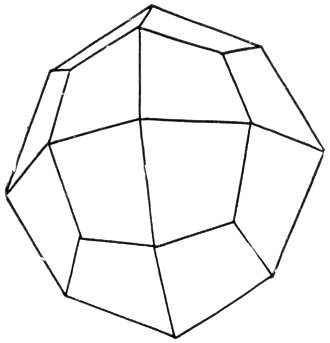
Illustration from Field book of common rocks and minerals: for identifying the rocks and minerals of the United States and interpreting their origins and meanings

The typical form of analcite

Illustration from Field book of common rocks and minerals: for identifying the rocks and minerals of the United States and interpreting their origins and meanings

A typical natrolite crystal

Illustration from Field book of common rocks and minerals: for identifying the rocks and minerals of the United States and interpreting their origins and meanings

The typical crystal form of stilbite

Illustration from Field book of common rocks and minerals: for identifying the rocks and minerals of the United States and interpreting their origins and meanings

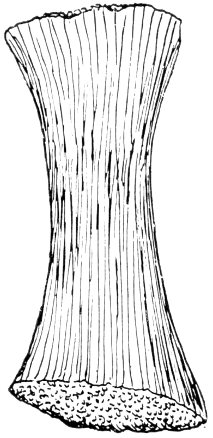
A sheaf-like bundle of fibrous crystals, typical of stilbite

330

Plate 45
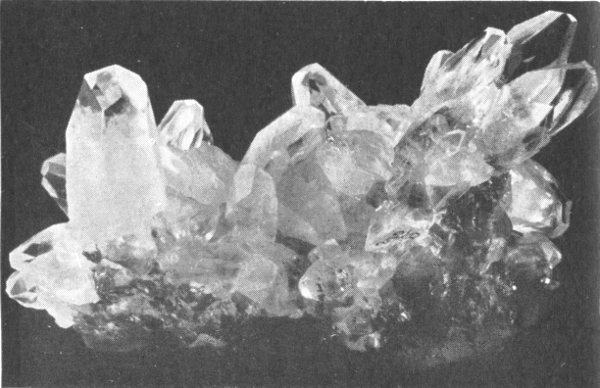
Illustration from Field book of common rocks and minerals: for identifying the rocks and minerals of the United States and interpreting their origins and meanings

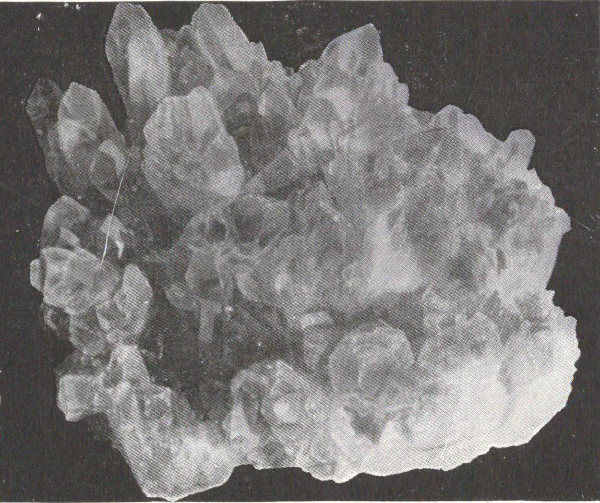
A group of calcite crystals

Typical forms of calcite
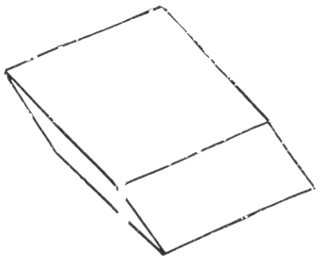
Illustration from Field book of common rocks and minerals: for identifying the rocks and minerals of the United States and interpreting their origins and meanings

A the rhombohedron formed by cleavage
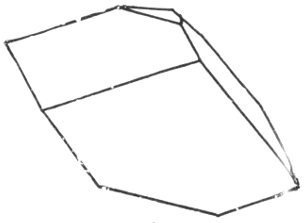
Illustration from Field book of common rocks and minerals: for identifying the rocks and minerals of the United States and interpreting their origins and meanings

B a rhombohedral crystal truncated by the basal plane
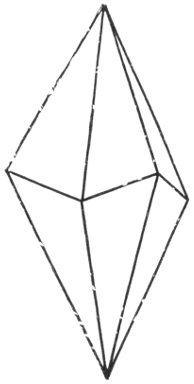
Illustration from Field book of common rocks and minerals: for identifying the rocks and minerals of the United States and interpreting their origins and meanings

C the scalenohedron

Illustration from Field book of common rocks and minerals: for identifying the rocks and minerals of the United States and interpreting their origins and meanings

D the scalenohedron truncated by the rhombohedron
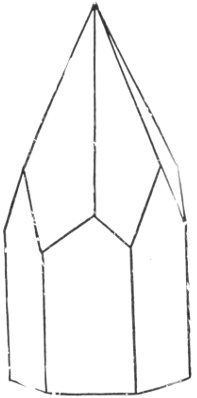
Illustration from Field book of common rocks and minerals: for identifying the rocks and minerals of the United States and interpreting their origins and meanings

E the scalenohedron on a prism

331

Plate 46

Typical forms of aragonite
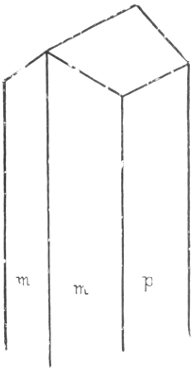
Illustration from Field book of common rocks and minerals: for identifying the rocks and minerals of the United States and interpreting their origins and meanings

A the simple crystal

Illustration from Field book of common rocks and minerals: for identifying the rocks and minerals of the United States and interpreting their origins and meanings

B a needle-like form, twinned

Illustration from Field book of common rocks and minerals: for identifying the rocks and minerals of the United States and interpreting their origins and meanings

C cross section to show how the form may appear six-sided
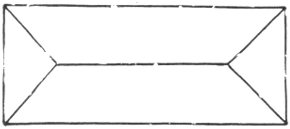
Illustration from Field book of common rocks and minerals: for identifying the rocks and minerals of the United States and interpreting their origins and meanings

Typical form of the anhydrite crystal

332

Plate 47
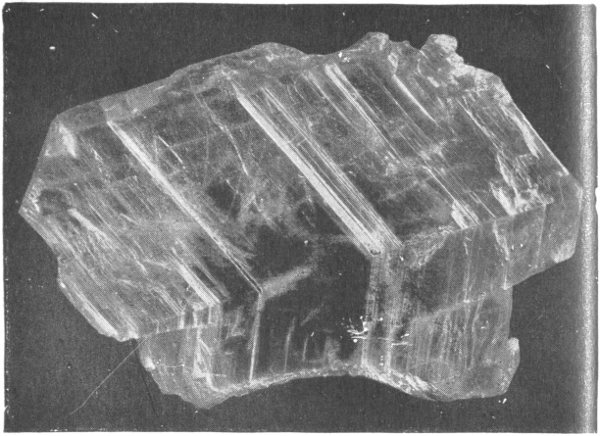
Illustration from Field book of common rocks and minerals: for identifying the rocks and minerals of the United States and interpreting their origins and meanings

A piece of gypsum looking on the surface of the perfect cleavage, and showing the two other cleavages as lines, intersecting at 66°. Twinning is also shown
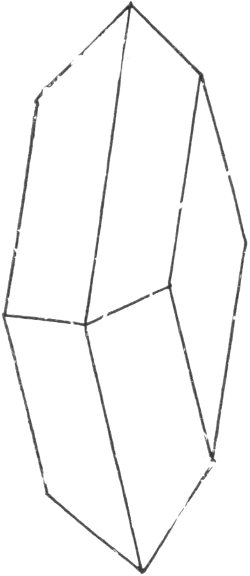
Illustration from Field book of common rocks and minerals: for identifying the rocks and minerals of the United States and interpreting their origins and meanings

A simple crystal of gypsum

Illustration from Field book of common rocks and minerals: for identifying the rocks and minerals of the United States and interpreting their origins and meanings

Twin crystals of gypsum

333

Plate 51

Illustration from Field book of common rocks and minerals: for identifying the rocks and minerals of the United States and interpreting their origins and meanings

Sulphur crystals

Illustration from Field book of common rocks and minerals: for identifying the rocks and minerals of the United States and interpreting their origins and meanings

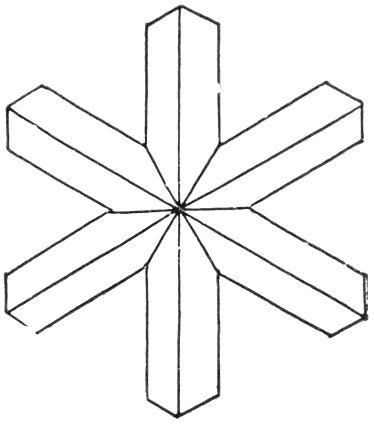
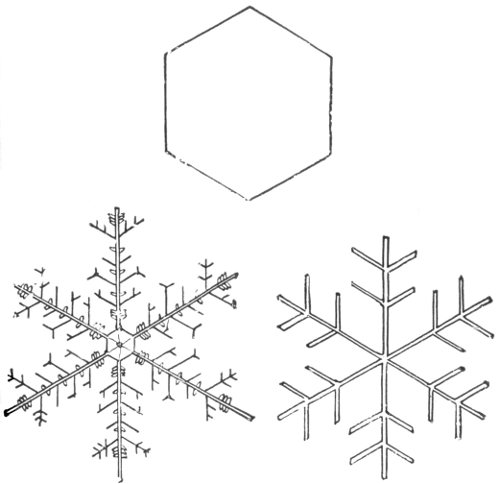
Ice crystals, the top one, the end of a hexagonal prism; the two lower figures multiple twins as in snow flakes

334

Plate 52
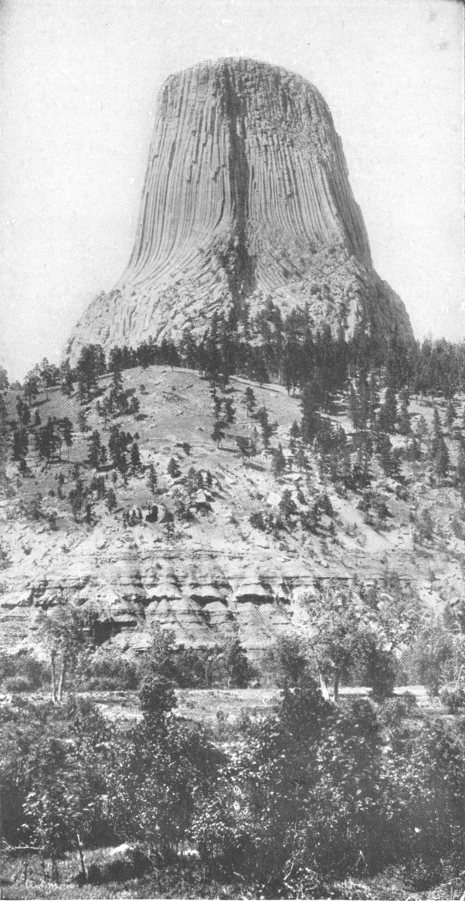
Illustration from Field book of common rocks and minerals: for identifying the rocks and minerals of the United States and interpreting their origins and meanings

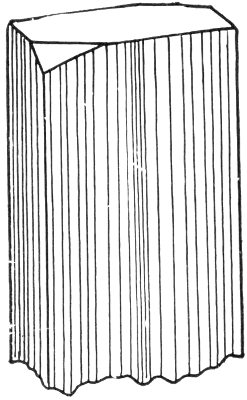
The Devil’s Tower, Wyoming, an example of igneous rock with columnar structure, and resting on sedimentary rocks. Courtesy of the U. S. Geological Survey

335

Plate 53
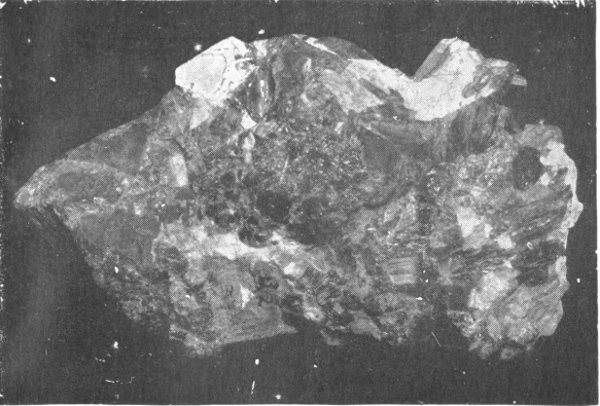
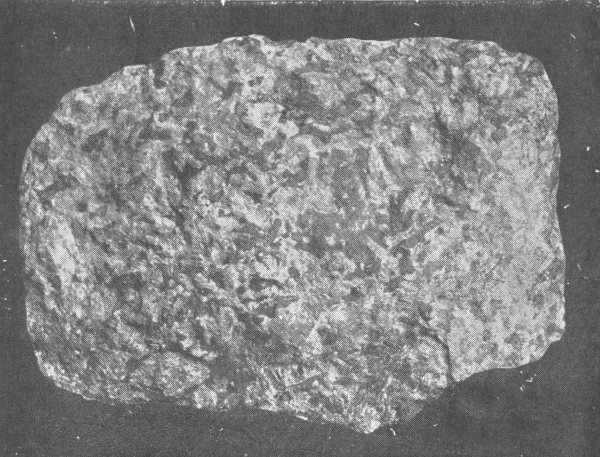
Illustration from Field book of common rocks and minerals: for identifying the rocks and minerals of the United States and interpreting their origins and meanings

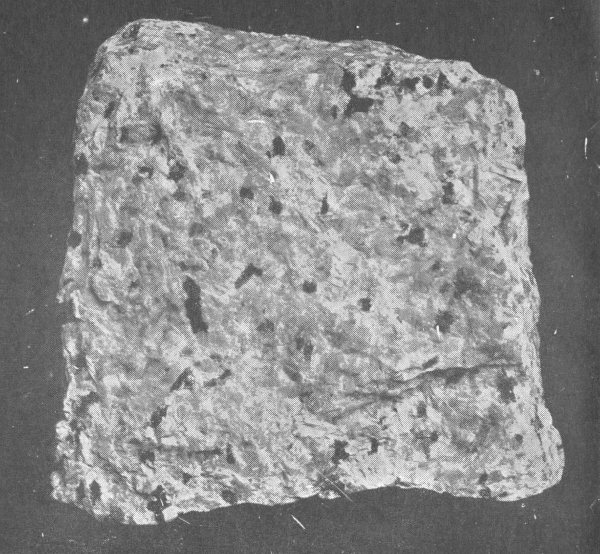
A coarse granite

Illustration from Field book of common rocks and minerals: for identifying the rocks and minerals of the United States and interpreting their origins and meanings

Graphic granite

336

Plate 54

Illustration from Field book of common rocks and minerals: for identifying the rocks and minerals of the United States and interpreting their origins and meanings

Syenite

Illustration from Field book of common rocks and minerals: for identifying the rocks and minerals of the United States and interpreting their origins and meanings

Gabbro

337

Plate 55

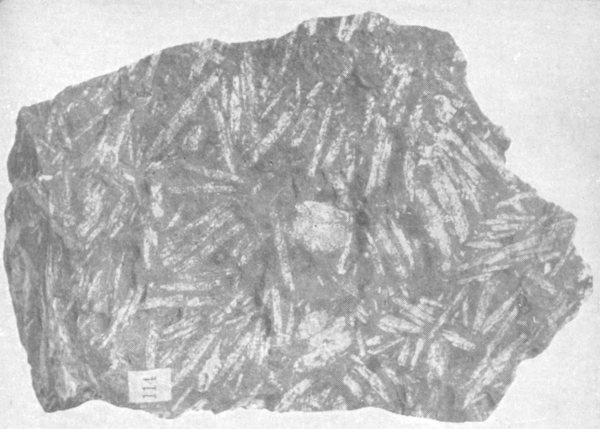
Illustration from Field book of common rocks and minerals: for identifying the rocks and minerals of the United States and interpreting their origins and meanings

Basalt-porphyry. The large white crystals are phenocrysts of plagioclase feldspar
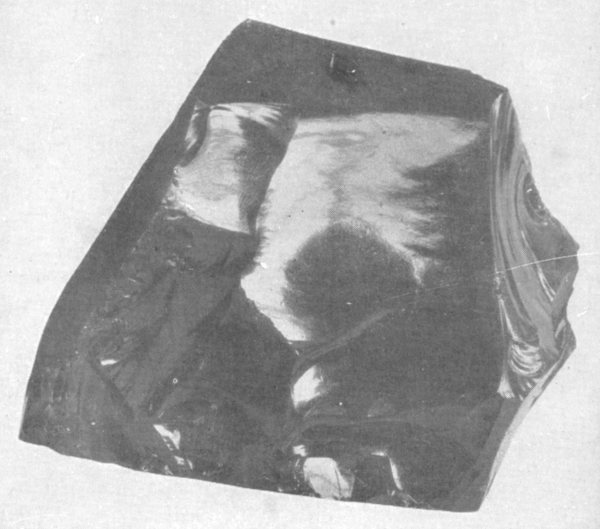
Illustration from Field book of common rocks and minerals: for identifying the rocks and minerals of the United States and interpreting their origins and meanings

Basalt-obsidian

338

Plate 56

Illustration from Field book of common rocks and minerals: for identifying the rocks and minerals of the United States and interpreting their origins and meanings

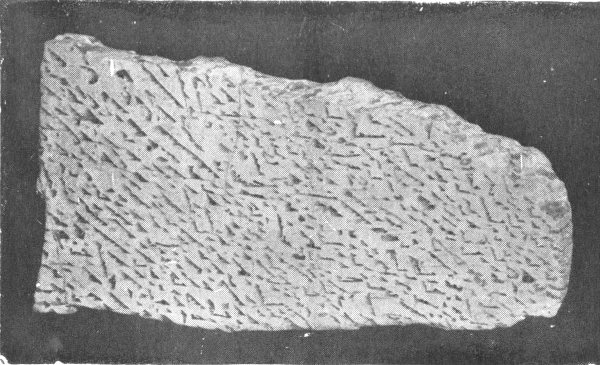
Amgydoloid

339

Plate 57

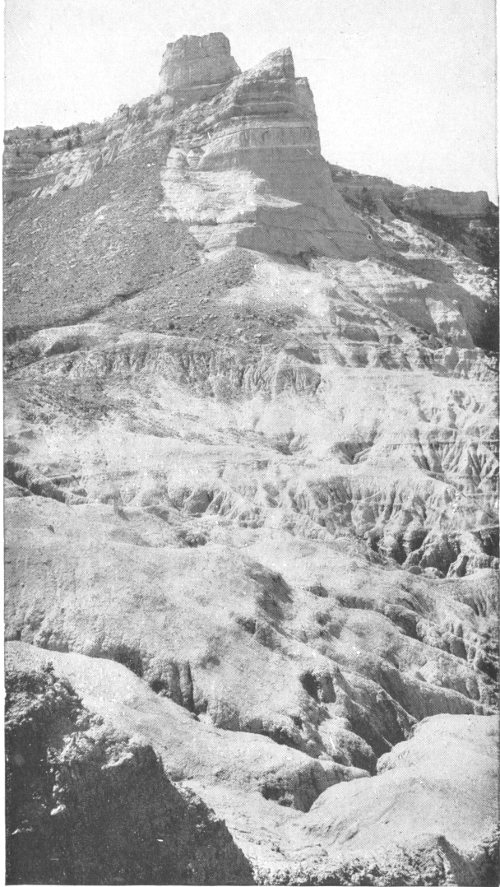
Illustration from Field book of common rocks and minerals: for identifying the rocks and minerals of the United States and interpreting their origins and meanings

The north face of Scott’s Bluff, Neb., showing sedimentary sandstones above and clays below. The type of erosion is characteristic of arid regions. Courtesy of the U. S. Geological Survey

340

Plate 58
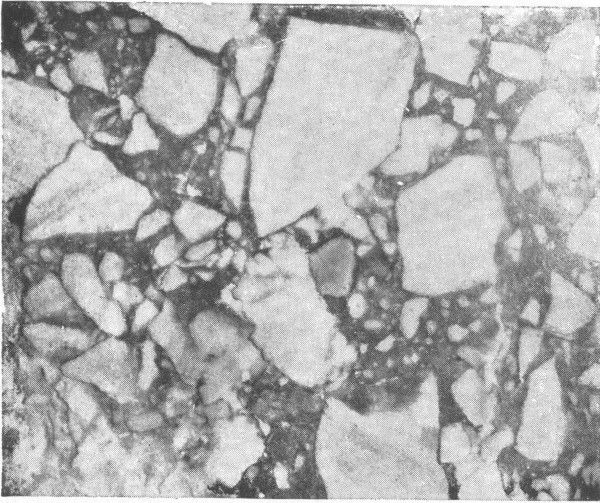
Illustration from Field book of common rocks and minerals: for identifying the rocks and minerals of the United States and interpreting their origins and meanings

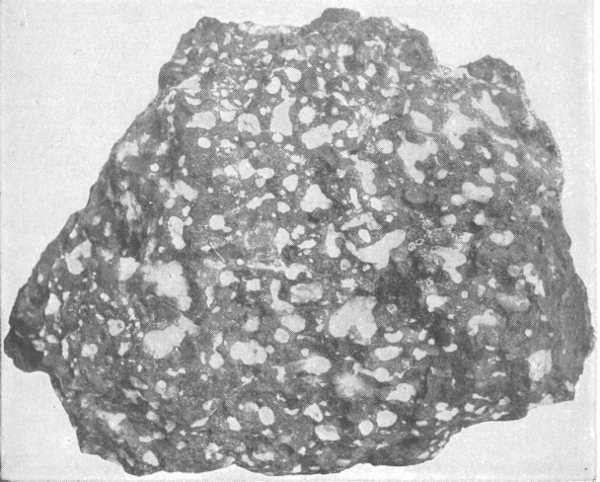
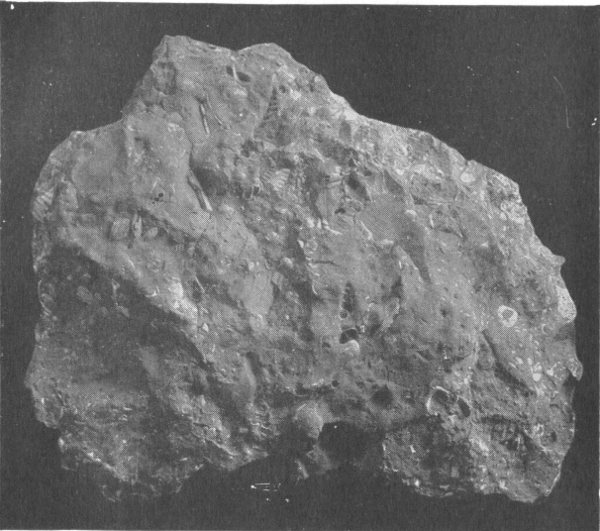
Breccia

Illustration from Field book of common rocks and minerals: for identifying the rocks and minerals of the United States and interpreting their origins and meanings

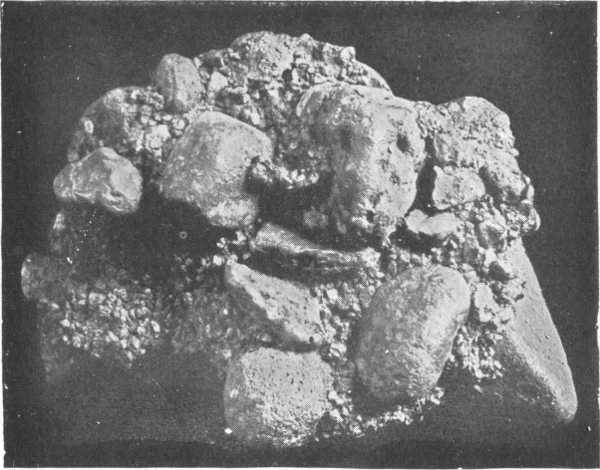
Conglomerate

341

Plate 59

Illustration from Field book of common rocks and minerals: for identifying the rocks and minerals of the United States and interpreting their origins and meanings

Calcareous shale

Illustration from Field book of common rocks and minerals: for identifying the rocks and minerals of the United States and interpreting their origins and meanings

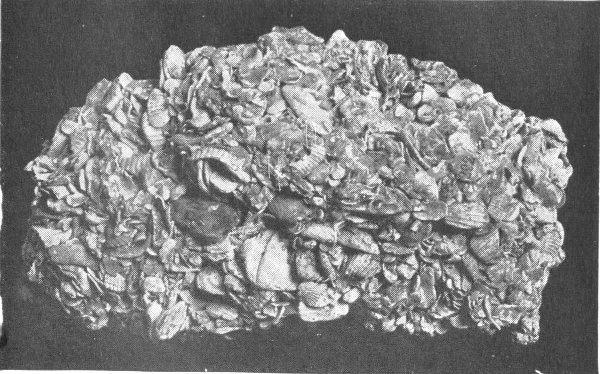
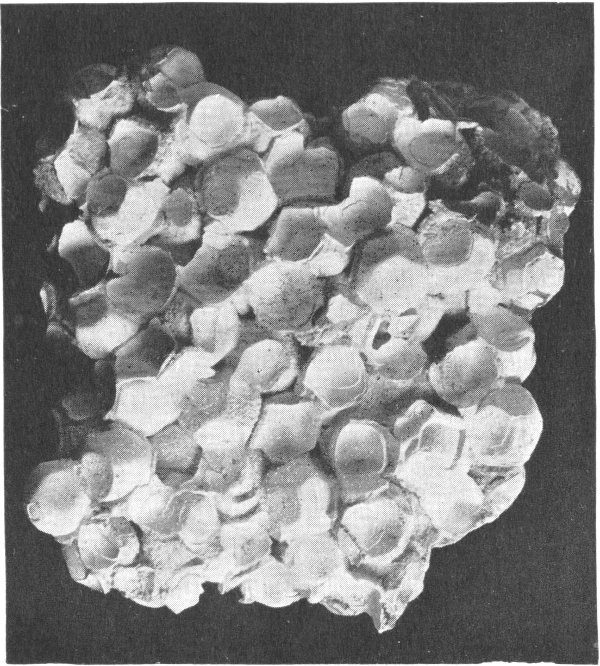
Coquina

342

Plate 60

Illustration from Field book of common rocks and minerals: for identifying the rocks and minerals of the United States and interpreting their origins and meanings

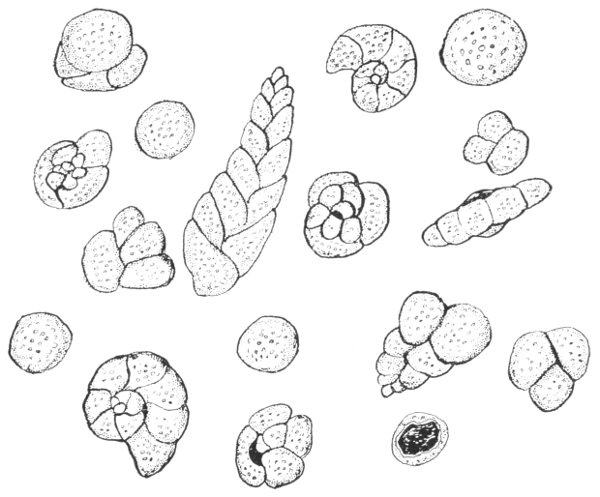
Foramenifera from Chalk; enlarged about 25 diameters
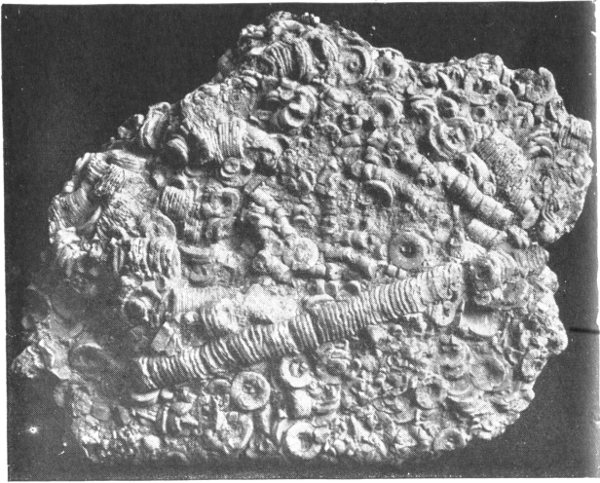
Illustration from Field book of common rocks and minerals: for identifying the rocks and minerals of the United States and interpreting their origins and meanings

Encrinal Limestone; fragments of the stems, arms and body of Crinoids

343

Plate 62
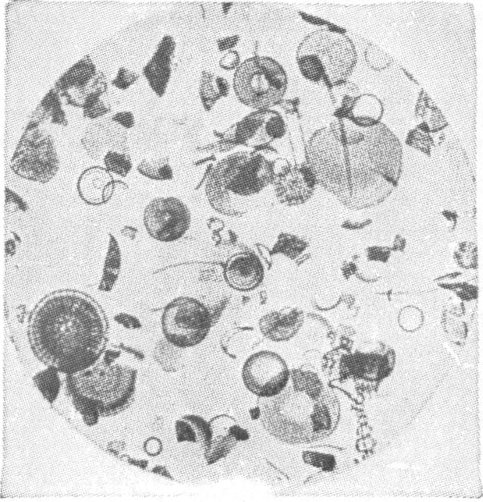
Illustration from Field book of common rocks and minerals: for identifying the rocks and minerals of the United States and interpreting their origins and meanings

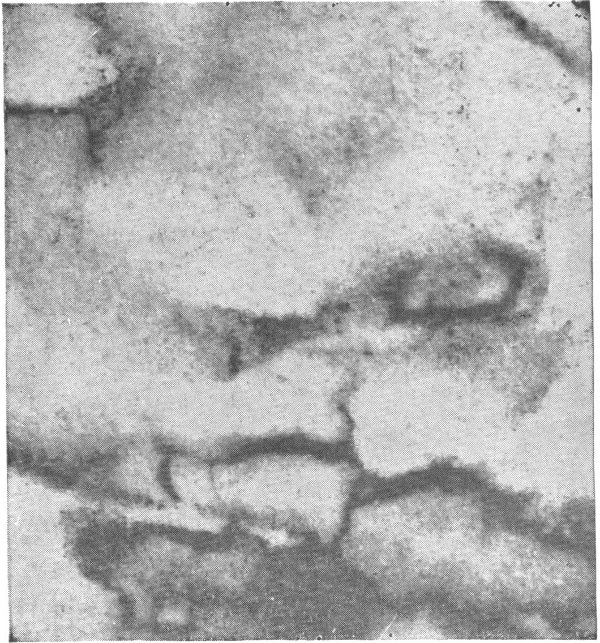
A diatomaceous earth magnified 50 times
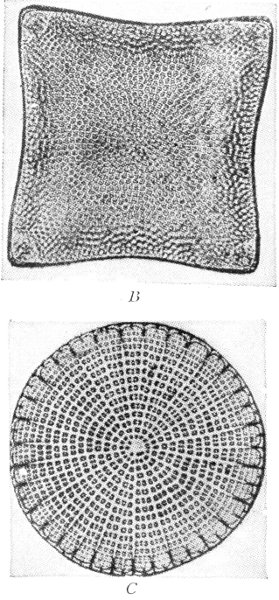
Illustration from Field book of common rocks and minerals: for identifying the rocks and minerals of the United States and interpreting their origins and meanings

B and C two diatoms from the above enlarged 250 times. After Gravelle, by the courtesy of Natural History

344

Plate 63
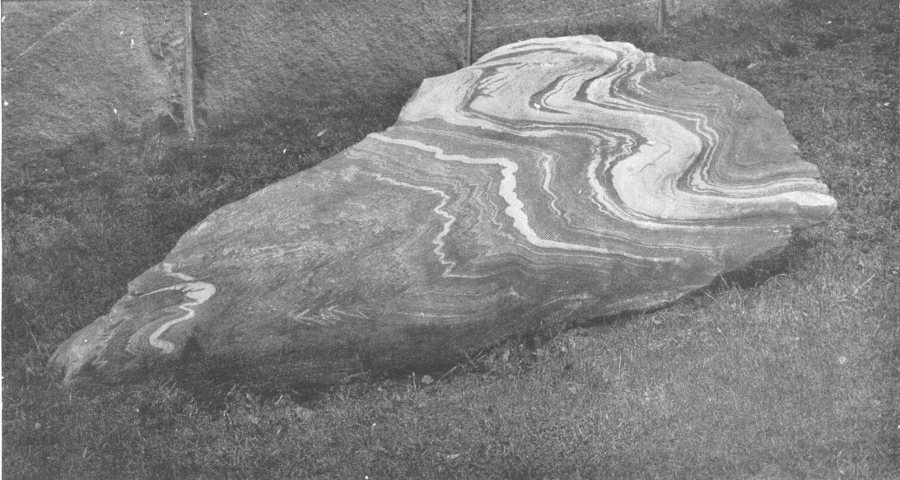
Illustration from Field book of common rocks and minerals: for identifying the rocks and minerals of the United States and interpreting their origins and meanings

A metamorphic rock, showing the contortion of layers due to expansion under heat

345

Plate 64
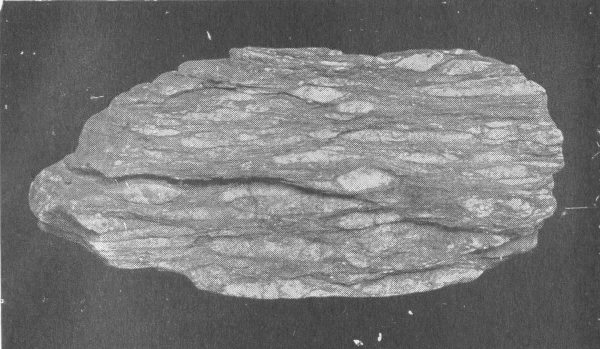
Illustration from Field book of common rocks and minerals: for identifying the rocks and minerals of the United States and interpreting their origins and meanings

A conglomerate partly metamorphosed to a gneiss. Note the flattened pebbles and the alternation of the intermediate material to mica scales, etc.
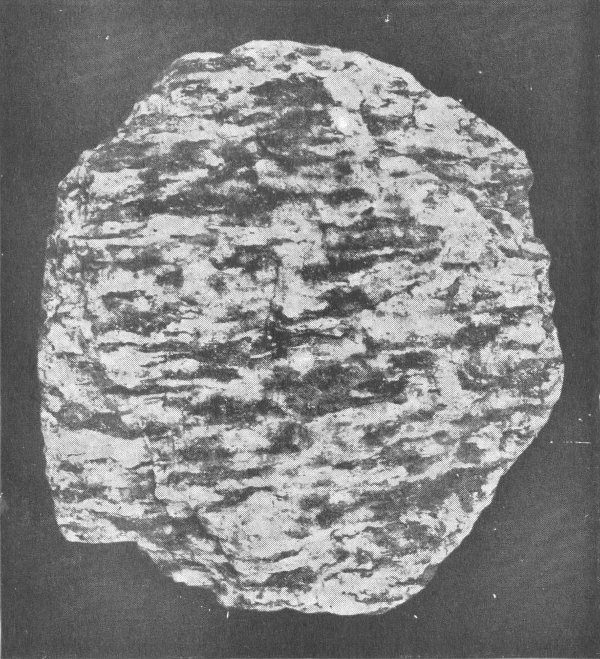
Illustration from Field book of common rocks and minerals: for identifying the rocks and minerals of the United States and interpreting their origins and meanings

A typical gneiss

346

Plate 66

Illustration from Field book of common rocks and minerals: for identifying the rocks and minerals of the United States and interpreting their origins and meanings

Phyllite

Illustration from Field book of common rocks and minerals: for identifying the rocks and minerals of the United States and interpreting their origins and meanings

A white marble, with black streaks due to graphite

347

Plate 68
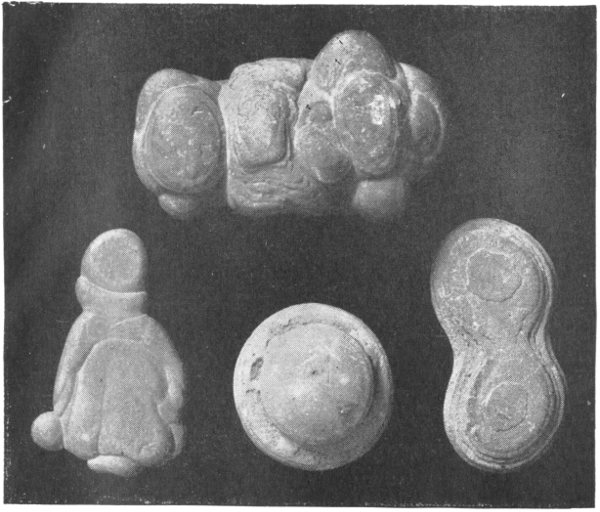
Illustration from Field book of common rocks and minerals: for identifying the rocks and minerals of the United States and interpreting their origins and meanings

Claystones, simple and compound

Illustration from Field book of common rocks and minerals: for identifying the rocks and minerals of the United States and interpreting their origins and meanings

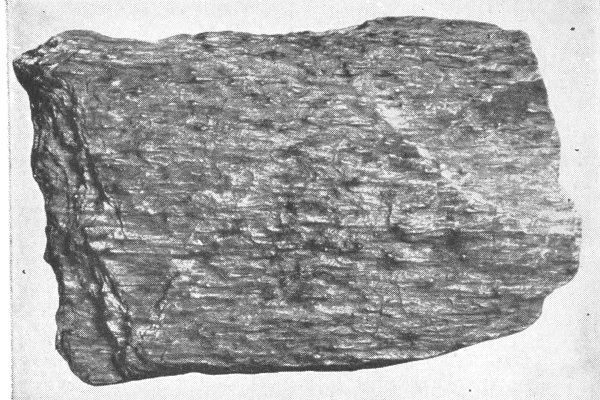
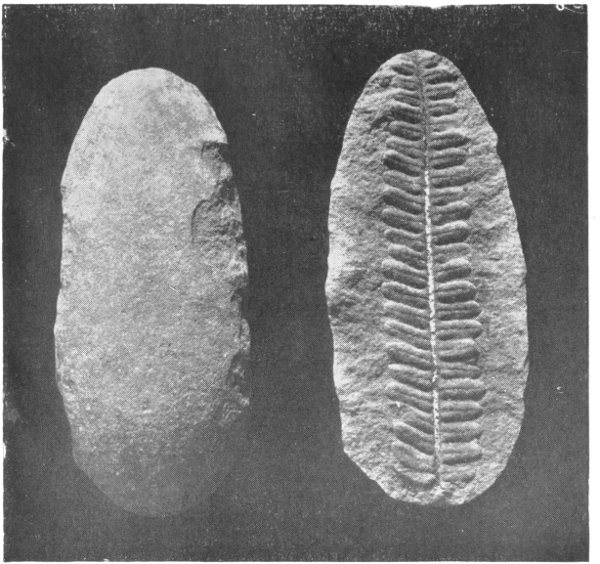
A line concretion, which on splitting disclosed a fern leaf of the age of the coal measures

348

Plate 69
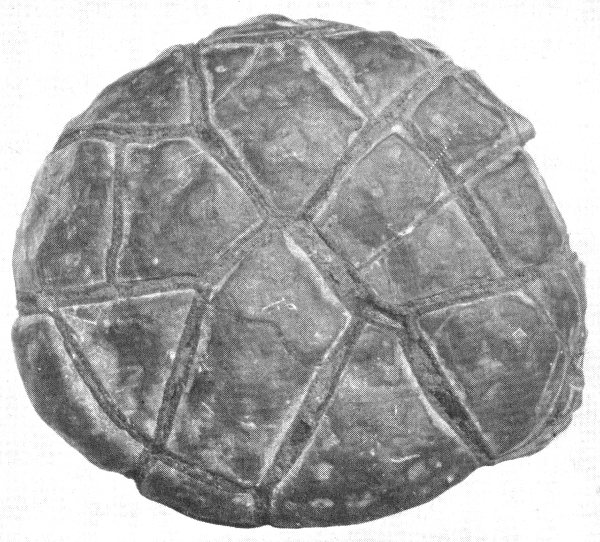
Illustration from Field book of common rocks and minerals: for identifying the rocks and minerals of the United States and interpreting their origins and meanings

A septeria from Seneca Lake, N. Y.

Illustration from Field book of common rocks and minerals: for identifying the rocks and minerals of the United States and interpreting their origins and meanings

Pisolite

349

Plate 70

Illustration from Field book of common rocks and minerals: for identifying the rocks and minerals of the United States and interpreting their origins and meanings

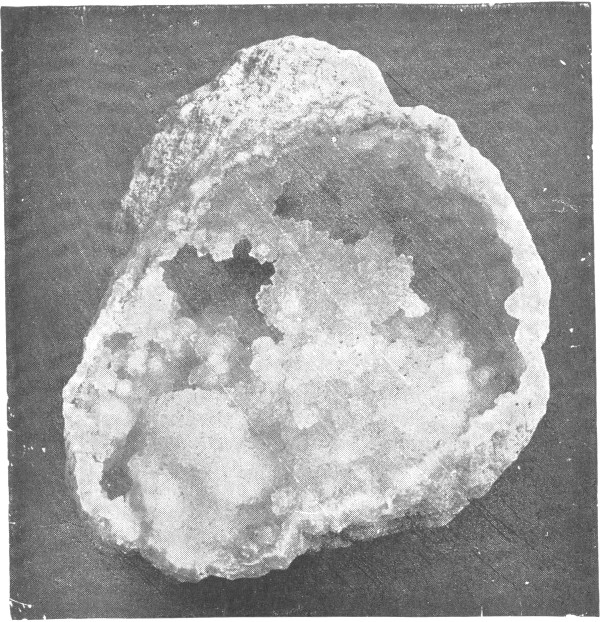
A geode filled with quartz crystals

350

Plate 71
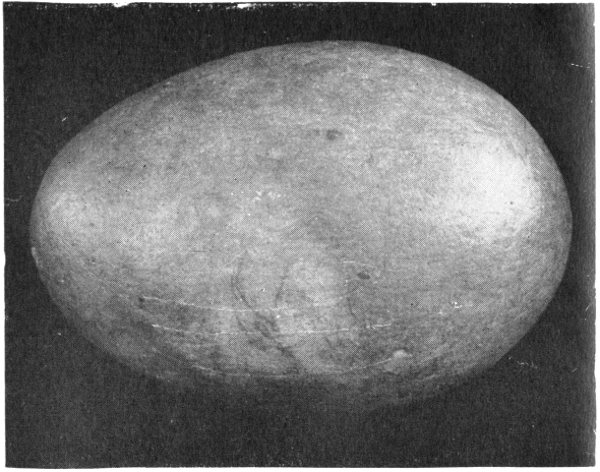
Illustration from Field book of common rocks and minerals: for identifying the rocks and minerals of the United States and interpreting their origins and meanings

A quartz pebble from the bed of a New England brook
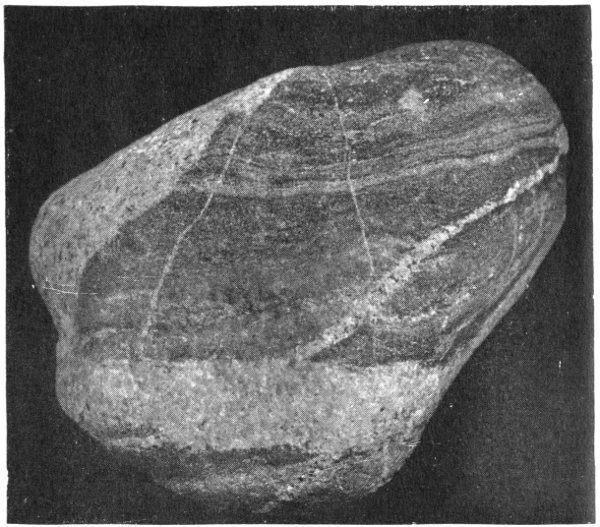
Illustration from Field book of common rocks and minerals: for identifying the rocks and minerals of the United States and interpreting their origins and meanings

A pebble of schist and granite from the foot of Mt. Toby, Mass.

351

Plate 72
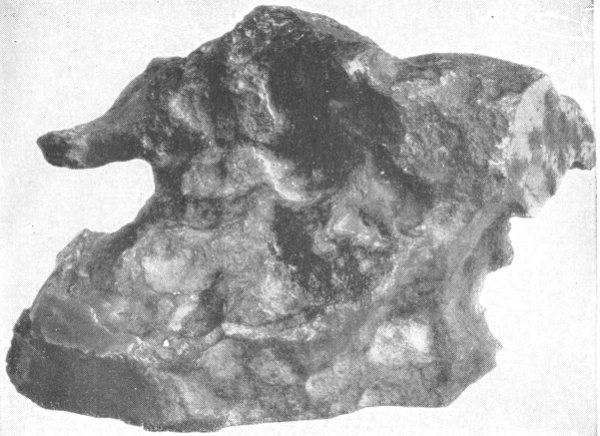
Illustration from Field book of common rocks and minerals: for identifying the rocks and minerals of the United States and interpreting their origins and meanings

An iron-nickel meteorite, of 23 lbs. which fell in Claiborne Co., Tenn.
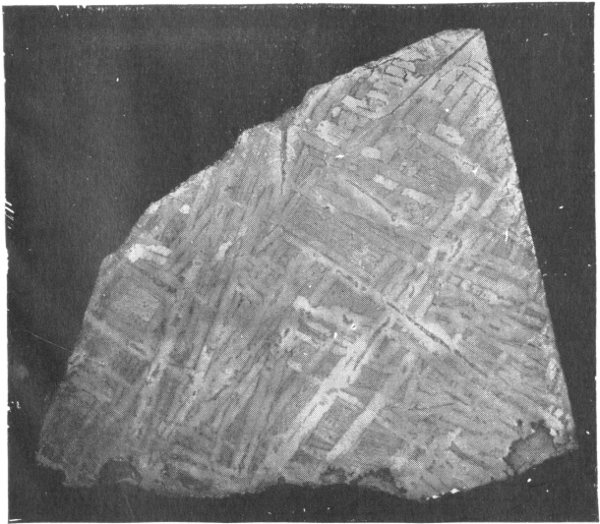
Illustration from Field book of common rocks and minerals: for identifying the rocks and minerals of the United States and interpreting their origins and meanings

An etched slice of an iron meteorite which fell in Reed City, Osceola Co., Mich.

352

Plate 73
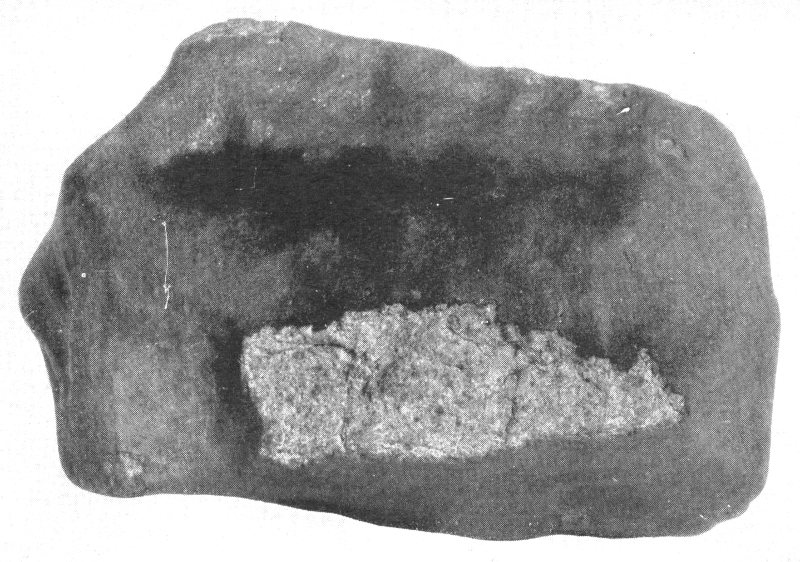
Illustration from Field book of common rocks and minerals: for identifying the rocks and minerals of the United States and interpreting their origins and meanings

A stony meteorite, about natural size, which fell in 1875, in Iowa Co., Iowa

PUTNAM’S NATURE FIELD BOOKS Companion books to this one

Mathews American Wild Flowers

American Trees and Shrubs

Wild Birds and Their Music

Durand Wild Flowers in Homes and Gardens

My Wild Flower Garden

Common Ferns

Lutz Insects

Loomis Rocks and Minerals

Eliot Birds of the Pacific Coast

Armstrong Western Wild Flowers

Alexander Birds of the Ocean

Anthony North American Mammals

Thomas Common Mushrooms

Sturgis Birds of the Panama Canal Zone

Miner Seashore Life

Breder Marine Fishes of the Atlantic Coast

Morgan Ponds and Streams

Longyear Rocky Mountain Trees and Shrubs

Olcott Putnam Field Book of the Skies

Beebe Tee-Van The Shore Fishes of Bermuda

Schrenkeisen Fresh-Water Fishes of North America North of Mexico

Explore with AITake your curiosity a little further.

Reading settings