Chapter IX
Reading edition
CONTRALTOS AND BASSOS.
The contralto in an opera company has a somewhat thankless task. Her fate is to be either a boy, or else a nurse, duenna, or some character which implies age. She frequently is obliged to stand mute while the prima donna warbles and trills and receives the applause of the house, and yet the musical demands upon the contralto are equal to those made upon the soprano.
A contralto who was deservedly popular for many years during the middle of this century was Adelaide Phillips. She was born in Stratford-on-Avon in 1833, and in 1840 went with her family to Canada, afterwards settling in Boston, where, in 1843, she appeared as an infant prodigy at the Boston{297} Museum. In 1850, her voice having attracted attention, she was introduced to Jenny Lind, who advised her to study music. A subscription soon raised the necessary funds, and she was sent to Manuel Garcia in London, after which another fund was raised to enable her to go to Italy, where she made her début in 1854 at Milan. She sang with success in many cities of both hemispheres, and her repertoire consisted of all the contralto parts in the operas that held their places on the Italian stage during the twenty-five years that she was known as an opera singer. In 1879, when the Boston Ideal Opera Company was formed, Adelaide Phillips was the chief contralto. She made her last appearance, in Cincinnati, in December, 1881.
In 1882 the state of her health was such that she was obliged to go to Carlsbad, and she died there on October 3d of the same year.{298}
In private life Miss Phillips was highly esteemed, for she was not only an artist of sterling abilities, but a woman of grand character and a most devoted friend. She was buried at Marshfield, Mass., where the family had lived for some years on an estate which her success had enabled her to buy. Her life was one of hard and unceasing labor, but she had the satisfaction of being able to care for the necessities of her family, who were thrown upon her in early life.
A mezzo-soprano who took the public by storm in the early sixties was Zelia Trebelli, or, as she was more widely known, after her marriage, Madame Trebelli-Bettini. No member of Merelli's Italian troupe was gifted with so brilliant a voice and so much executive power. Her appearances in the opera houses in Germany were a series of triumphs, public and critics alike being carried away by her voice, with its brilliancy and flexibility, and her control over it.{299}
Her early triumph was the result of long preparation, for her musical education began when she was six years old, and her vocal training ten years later. It was not until after five years of close application to study that she made her début in Madrid, playing Rosina in "Il Barbiere," with Mario as Count Almaviva.
For many years Trebelli-Bettini remained one of the best of the galaxy of opera singers which the operatic stage has displayed during the last half of the century. In 1884 she made a tour in the United States with Mr. Abbey's troupe. She was born in Paris in 1838, and died in 1892. Her proper name was Zelia Gilbert, which expanded and Frenchified into Gillebert and reversed gives Trebelli(g), the Italian name which has for some years appeared to be necessary for all those who wish to succeed in opera.
When Gounod's "Faust" received its first performance in England, in 1863, the cast{300} included Tietiens, as Marguerite; Trebelli, as Siebel; Giuglini, as Faust; Gassier, as Mephistopheles; and Charles Santley, as Valentine.
Since the days of Alboni there has been no contralto singer to whom the adjective "great" could be so fitly applied as to Sofia Scalchi. She was born in Turin, and her parents were both singers. She made her début in 1866 at Mantua, in the part of Ulrica (Un Ballo in Maschera), when she was only sixteen years of age. Her first appearance in London took place two years later, and from that time she remained a favorite in England, where she sang in the memorable season of "Cenerentola," and every season afterwards for more than twenty-five years. Madame Scalchi is well known in America, where she first appeared under Mapleson's management in 1882. She had been singing in Rio Janeiro, and reached New York after a stormy voyage of twenty{301} two days, which left her in such an exhausted condition that she was incapacitated for a month, and her illness played havoc with Mapleson's managements.
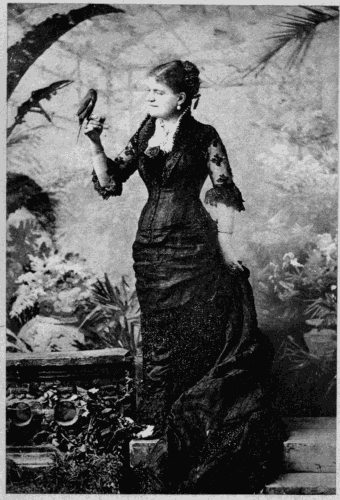
Scalchi was the possessor of a voice of delicious quality and unusual range, every note in its compass of two and a half octaves being of a wonderfully soft yet penetrating tone, and of great power. Her popularity was such that Patti and other prima donnas feared her as a rival, and regarded with jealousy the applause which attended her performances. Scalchi was imbued with the prima donna temperament, and had the regulation parrots and other pets during her travels. Concerning this portion of her equipage, Mapleson tells an anecdote to the effect that Scalchi's parrot died the night before the company reached Salt Lake City, in 1884, a bereavement which caused that lady to go into hysterics and take to a bed of sickness. Notwithstanding every art of{302} persuasion and such threats as could be used, Scalchi refused to appear, and her part had to be taken by a substitute.
In 1876 Signora Scalchi married Count Luigi Alberto Lolli, and her home is at the Villa Sofia, Turin, Italy.
Marianne Brandt is one of those singers who have made their reputation as exponents of Wagner opera. She is the daughter of a gentleman of Vienna, named Bischoff, and it is related that she assumed the name of Brandt upon beginning her stage career on account of her parents, who strongly objected to her going upon the stage, and threw in her way every possible obstacle. Marianne, however, was determined to persevere, and she went through a period of patient, hard work, in order to gain her education. It is said that at one time she supported herself, and paid for her lessons by sewing.
Her first teacher was Frau Marschner, at{303} the Conservatorium in Vienna, but later on she took lessons of Madame Pauline Viardot-Garcia.
In 1867 she received an engagement at Gratz, where she made her début as Rachel, in "La Juive." Her parents had expected failure, hence their unwillingness to allow the use of the family name.
In 1868 she sang at Hamburg, when she played Fides with such success that she was immediately offered a permanent engagement, which was accepted, and lasted for many years. During her leaves of absence she appeared in London as Fidelio, but did not make a remarkable success, though ten years later, when she sang in "Tristan and Isolde," her artistic efforts were heartily appreciated.
Fraulein Brandt sang the part of Kundry at the second representation of "Parsifal" at Bayreuth, and it is said that she generously gave her services on that occasion. She has visited the United States several{304} times, taking part in some of the earlier representations of Wagner opera in New York and other cities.
The next contralto singer to appear in opera was Annie Louise Cary, a native of the State of Maine, where she was born in 1846, at Wayne. Her family were all musical, and she was the youngest of six musical children. By the time she was sixteen her voice had developed wonderful qualities, and she was able to sing from C in the bass clef to F in alt, a range of three octaves and a half. At the age of eighteen she went to Boston, and secured a position in a church choir, while she studied music. Her career in Boston was much the same as that of many young aspirants for artistic honors,—"church choir and chores," it has been facetiously called. By this it may be understood that she earned her board by assisting in the household duties, while her church choir position enabled her to pay for{305} her vocal lessons. Her splendid voice and musical intelligence soon enabled her to obtain concert engagements, and before she went abroad she sang in many festivals and at the Handel and Haydn Society concerts, on one of which occasions she was associated with Parepa-Rosa.
Being possessed of much ambition, and with the energy which characterizes the natives of the State of Maine, Miss Cary organized and gave a concert in Music Hall, which brought her enough funds for a year's study abroad. Her Puritan training forbade the idea of opera, and it was her intention to study for concert and oratorio. At the end of her year she was discouraged, and declared that she sang no better than when she arrived. To this her teacher, Giovanni Conti, made no dissent, for his one idea of singing was opera. Miss Cary flung down her music, and left the room in disgust. And now came a curious mental revolution:{306} having refused to consider the possibility of singing in opera, and having on that account left her teacher, she shortly afterwards met an impresario named Lorini, for whom she sang. He offered her an engagement to sing in Italian opera, and she accepted it. For two years she was in Lorini's company, taking all kinds of parts. In 1869 she went to Paris for further study, and while there met Maurice Strakosch, who was at that time forming the Nilsson concert company, for a tour in America. Miss Cary accepted the engagement which he offered her. The company consisted of Miss Nilsson, soprano; Miss Cary, contralto; Brignoli, tenor; Verger, baritone, and Vieuxtemps, violinist. This tour lasted two years, and in 1873 Miss Cary again appeared in opera, creating the part of Amneris, with Italo Campanini as Rhadames, when "Aida" was produced at the Academy of Music in New York. The{307} following year Miss Cary sang Ortrud in "Lohengrin."
In 1879 and 1880 Miss Cary was a member of the Kellogg Concert Company. During the last years of her career, 1879 to 1881, she sang again in opera, adding to her repertoire the contralto part in "Favorita." Campanini and Gerster were the tenor and soprano. In 1881 she made her last appearance in opera in Philadelphia, and in 1882 she sang for the last time at the Cincinnati festival, having taken part in each one given from 1873. So well was she known at these festivals that when, in 1884, she attended as a member of the audience, she was at once recognized and received an ovation on taking her seat. On retiring from the stage in 1882, Miss Cary married Dr. C. H. Raymond, putting an end to her public career when she was at the height of her popularity. All young singers may take her early career as a model, for it should give{308} hope and courage to the many who are to-day making a similar struggle.
One of the members of Mapleson's company which visited the United States in 1884, and which included Patti and Gerster, was Anna de Belocca, a contralto of much merit. Her first appearance in this country, however, was made under the auspices of Maurice Strakosch, in 1876, when she was a new star on the operatic horizon. Mlle. de Belocca was unusually attractive in person, with brown hair, large black eyes, dead-white complexion, and symmetrical form. She was the daughter of M. de Bellokh, a scholar of St. Petersburg and acting Imperial Councillor of State. Mlle. de Belocca spoke five languages, and because of her aristocratic birth was sought after by the highest circles of society.
Mapleson seems to have been well aware of her ideas on social matters, for on one occasion he made use of his knowledge to help himself out of a dilemma. His company{309} was in Dublin, and the one suite of rooms at the hotel was claimed by both Mlle. Salla, the prima donna, and Mlle. Belocca, the contralto. Neither would give way until a happy thought struck Mapleson, and, after taking the landlord aside for a short conference, he asked whether there were actually no other rooms in the house equal to the disputed ones. "There is a suite above this," was the reply, "but they are reserved specially for Lady Spencer (wife of the Lord Lieutenant of Ireland at that time), and it would be impossible for me to let any one else use them." "Well, can't we look at them?" suggested Mapleson. The landlord assented, and showed Mapleson up, Mlle. Belocca following. As soon as she entered the rooms she declared that they were delightful, and she should insist on remaining there. Of course the landlord and Mapleson gave a reluctant but delighted consent, and Lady Spencer made no requisition.{310}
The principal contralto at the festival at Cincinnati in 1896 was Marie Brema, who is to-day considered one of the greatest interpreters of Wagner. Miss Brema was born in Scotland, and made her first appearance in concert at St. James's Hall, London. She was introduced to Frau Wagner, who was so well pleased with her that she offered her an engagement to sing the part of Ortrud in "Lohengrin" and gave her personal instruction.
In 1888 a London theatrical manager saw her play in some amateur theatricals, and was so struck by her talent that he wanted to star her as an actress. She declined his proposition, feeling that the operatic stage was better suited to her capabilities. When she appeared at the Bayreuth festival, in 1894, as Kundry and Ortrud, she made an immense triumph. She sang with no apparent effort, naturally and gracefully, as all true singers do. Her voice was full, round, and well placed, and her coloring perfect.{311}
Since that time she has fully maintained her reputation, and has been heard in America with the Damrosch company, in 1894-5-9, and with Abbey and Grau the following year. During the opera season in London in 1898 her work elicited the highest praise of the critics. Miss Brema is still young, and is likely to hold a high rank among singers for many years to come.
The singer in an opera company who shares with the contralto the hard work, but seldom reaps much of the glory, is the bass, while the tenor is always an object of adoration, or should be, if he is a good singer, and the baritone has many good parts. The basso not only has thankless parts allotted to him, but, from precedent, one generally expects him to be wobbly and to sing frequently out of tune. Some bassos have broken through the law of precedent, and then they have been delightful. An operatic king or duke, who is usually a bass, is very seldom heard to sing in tune,{312} nor is the heavy villain of the opera, who is always a bass, able to keep within half a note of the path laid down for him by the composer. Two bassos who made their appearance at about the same time were Signor Foli (1862) and Signor Agnesi (1864), and for many years they were associated with Italian opera and oratorio throughout Europe. Signor Foli was an Irishman whose real name was Allan James Foley. He was born at Cahir, Tipperary, and went to America when very young. His voice was a rich, powerful bass of more than two octaves, from E below the line to F, and he had a repertoire of over sixty operas.
Of late years several singers of English and American origin have achieved distinction without the necessity of Italianizing their name,—Bispham, for instance, being a striking example. There are various reasons assigned for the necessity of a change. One is that the name must be possible of pronunciation{313} by the Italians, in whose country the opera singer germinates, and the other is that Americans and English have not yet learned to appreciate a singer by his merits, but rather by his name. One of the most ridiculous instances of Italianizing was in the case of Mr. John Clarke, of Brooklyn, who became Signor Giovanni Chiari di Broccolini. On the other hand, Santley never found it necessary to become Italian, nor did Sims Reeves. Myron Whitney is a name needing no Italianization. Emma Eames has found her name no bar to renown, and a score of singers who are now climbing the ladder of fame are not ashamed of their Anglo-Saxon origin. Louis Ferdinand Leopold Agnesi (Agniez) was a native of Namur, Belgium, and in his early days essayed to be a composer. He brought out an opera, "Harold le Normand," which met with indifferent success, and then he became a singer, receiving instruction from Duprez. His career was{314} not long, for he died in 1875, but he was a most popular singer.
Emil Fischer, who for many years has been associated with Wagner opera, was the son of musicians, his father having been a well-known basso and his mother also a singer of renown. He first appeared at Gratz at the age of seventeen. In 1862 he took the management of the theatre at Dantzig and held it for eight years. In 1882 he became a member of the Royal Opera at Dresden, and remained there until, in 1885, he went to New York and joined the German opera. Since that time he has become well known in America, having appeared in most of the representations of Wagner's operas.
Emil Scaria was for many years known as a versatile singer and actor, more particularly in German opera. He made his début in 1862 at Dessau, after having studied in the conservatoire at Vienna and with Garcia in London. From 1865 to 1872 he was at{315} Dresden, and then at Vienna for several years. Later on he visited America, and was one of the celebrated Wagner trio, consisting of Materna, Winkelmann, and Scaria, who in 1884 sang in the Wagner festivals. Scaria was born in 1838 at Gratz. He created the part of Gurnemanz in "Parsifal," at Bayreuth. In 1885 he became a victim to insanity, and died the following year.
In 1876 Edouard de Reszke made his début at Paris in "Aida," and entered on a career of renown. He is the younger brother of Jean de Reszke, the tenor, and it was at the instigation of Jean that he abandoned his proposed occupation and took to the stage. Edouard had undergone a course of study at the Agricultural College at Prikao, with a view to developing the resources of the great estates in Poland belonging to the De Reszke family. He accordingly proceeded to Milan, and studied with Stella and Alba, and later on with Coletti. At the end{316} of four years he went to Paris for further study, and to make his début.
His voice is a full, rich, resonant bass, capable of sending forth notes of immense volume, or those of the most tender quality. His appearance is that of a great, tall, broad-shouldered giant, with fair skin and blue eyes, and his stage presence is imposing.
Four years after his début in Paris he created the part of Il Re, in Catalani's "Elda," and Massenet entrusted to him the creation of "Le Roi de Lahore" when it was produced at La Scala in Milan. He has also created the parts of Carlo V., in Marchetti's "Don Giovanni d'Austria," and Don Diegue, in "Le Cid." He was engaged in London during the seasons from 1880-84, and became immensely popular. He has many friends in England, for he has a weakness for everything connected with sport, in the best sense.
Notwithstanding the many parts in which{317} he has made the greatest success, his assumption of the rôle of Mephistopheles, in "Faust," more than any other, established his reputation as a great lyric artist, and he is generally conceded to be one of the greatest bassos of the century.
Of late years a French basso has arisen to share the popularity of Edouard de Reszke,—Pol Plançon, who for more than a decade has been one of the permanent stars of the Paris Opera House. M. Plançon was intended for a mercantile career, but having been an enthusiastic singer from the age of four, he rebelled against the decision of his parents. He was nevertheless sent to Paris, and entered a large and fashionable store to learn the business. One day Theodore Ritter, the pianist, heard him sing, for he sang upon every possible occasion, and was so pleased with his voice that he advised him to turn his attention to music. Through the influence of Ritter he was admitted to{318} the École Duprez, and thereby incurred the severe displeasure of his family.
M. Plançon made his first appearance at Lyons as St. Bris, in "Les Huguenots," and remained there for two seasons. In 1883 he returned to Paris, and made his Parisian début at the Grand Opera House as Mephisto, in "Faust," a part in which he excels. Since that time he has sung all the chief bass rôles at the Grand Opera House, and has created the parts of François I., in Saint-Saëns's "Ascanio," Don Gomez, in Massenet's "Le Cid," and Pittacus, in Gounod's "Sapho," when that work was revived in 1893.
M. Plançon was born in the Ardennes, but since his position as a singer was assured he has resided in Paris, where also his parents, whose objections were disarmed by his success, have joined him.
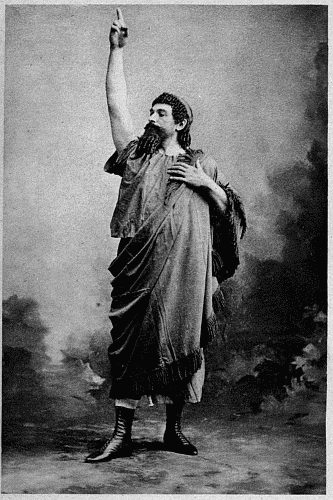

Before closing this chapter of bassos a few words should be said concerning three eminent singers whose reputation was made{319} in oratorio and concert singing,—Stockhausen, Henschel, and Myron W. Whitney.
Julius Stockhausen was one of the most remarkable singers of the century. He was born at Paris in 1826. His early career was of a varied nature, for he took part in concerts as singer, violinist, accompanist, and even drummer. He did not finally decide on music as a profession until 1848, when he took the part of Elijah in a performance of that oratorio at Basle, and his success decided his future career.
Stockhausen's singing in his best days must have been wonderful. Even to those who heard him only after he had passed his prime, it was something never to be forgotten. His delivery of opera and oratorio music was superb in taste, feeling, and execution, but it was the Lieder of Schubert and Schumann that most peculiarly suited him, and these he delivered in a truly remarkable way. The rich beauty of the{320} voice, the nobility of style, the perfect phrasing, the intimate sympathy, and the intelligible way in which the words were given, all combined to make his singing wonderful. His highest achievement is said to have been his delivery of the part of Doctor Marianus, in the third part of Schumann's "Faust."
For many years Stockhausen has been one of the chief vocal teachers of Germany, and has recently celebrated his golden wedding to the musical profession, which he formally entered in 1848.
Although not an opera singer, but rather a broad musician, the name of Georg Henschel will be remembered from the fact that for a few years he was considered one of the most excellent oratorio and concert singers before the public. He was born at Breslau in 1850, and at the age of eleven commenced his studies under Doctor Schaeffer. A year later he made his début as a pianist at{321} Berlin, where he played Weber's Concerto. He had already composed a good deal of music and shown much talent in that direction. In 1867 he entered the conservatory at Leipzig, and studied under Moscheles, Richter, Reinecke, and Goetze. After spending some time in Weimar, he settled in Berlin. One of his most marked successes was in 1874, at the Cologne festival. In 1877 he went to London, where he soon acquired a great reputation as a bass singer, and in 1879 he produced the Triumphal Hymn of Brahms.
In 1880 he visited America on a concert tour, and while in Boston became the conductor of the Boston Symphony Orchestra, which was organized and established during the three years of his conductorship. In 1881 he married Miss Lillian Bailey, a Boston lady, who was a concert singer of marked ability. In 1884 he returned to London, where he has since organized the London{322} Symphony concerts, and won an enviable position in the musical world.
Myron W. Whitney, who was born in 1836 at Ashbury, Mass., decided at an early age on following a musical career. For ten years he sang in concerts, and then went to Italy, where he studied under Vannucini, and later in London under Randegger. He now made a tour of Great Britain, and at the Birmingham festival sang the rôle of Elijah in such a manner as to make an immediate reputation for himself. He has a superb bass voice, which under long and careful training became flexible and even, and which extended for nearly three octaves. After achieving a reputation in England he returned to America, and from 1876 he has sung only in his native land, where his reputation is unexcelled.
For many years Mr. Whitney sang in light opera, but he also gave an interpretation of the King in "Lohengrin," under{323} the baton of Theodore Thomas, when the American Opera Company was floated, which is said to have been finer than any heard in this country. Of late years Mr. Whitney has retired from the stage and settled in Boston, where he teaches singing.
To give an account of all the singers who have appeared in grand opera would require several volumes. Of American singers alone there are many more who have achieved fame than can be placed in this little book. Alwina Valleria, of Baltimore, was well known, and is now married and settled in England. Emma Juch, Helene Hastreiter, Marie Litta, Emma Abbott, Louise Dotti are all of American origin and became well known. Margaret Reed, Suzanne Adams, Susan Strong are singers whose stars are in the ascendent.
As time passes on, the number of singers whose names are handed down as "famous" is very small in proportion to the number of{324} singers who come before the public, and it is possible that even some of those mentioned in this book may become dim in the distance of years.{325}
CHRONOLOGICAL TABLE OF FAMOUS SINGERS.
The dates in italic are not authenticated.
Name Birth Début Retired Death
Ferri, Baldassare16101621 1680
Abell, John16601682 1716
Nicolini, Nicolo Grimaldi167316941726 ?
Leveridge, Richard1670169517301758
Tofts, Mrs. Katharine ? 170317091740
Epine, Francesca Margherita ? 17041718 ?
Valentini, Valentino Urbani ? 17071714 ?
Boschi, Giuseppe ? 17111728 ?
Bernacchi, Antonio1690171217301756
Galeratti, Catherina ? 17141721 ?
Robinson, Anastasia ? 171517221750
Bordoni, Faustina (Hasse)1700171617561783
Cuzzoni, Francesca (Sandoni)1700171917501770
Senesino, Francesco Bernardi1680171917351750
Tesi, Tramentini Vittoria169017191749 1775
Durastanti, Margherita169517201734 ?
Carestini, Giovanni1705172117581758
Farinelli (Carlo Broschi)170517221762 1782
Borosini, Francesco16951723 ? ?
Caffarelli, Gaetano Majorano1703172417501783
Fenton, Lavinia (Duchess of Bolton) ? 172617311760
Fabri, Annibale16971729 ? 1760
Gizziello, Gioacchino Conti1714172917531761
Monticelli, Angelo Maria17101730 ? 1764{326}
Beard, John1717173617671791
Raff, Anton171417381779 1797
Amorevoli, Angelo17161741 ? 1798
Guarducci, Tommasso Toscano172017451771 ?
Guadagni, Gaetano1725174717841797
Gabrielli, Caterina1730174717801796
Mingotti, Regina1728174817871807
Ciprandi, Ercole1738175417631790
Arnould, Madeleine Sophie1744175717781803
Calori, Angiola1732175817831790
Tenducci, Giusto Fernandino1736175817911800
Catley, Anne1745176217841789
Amici, Anna Lucia de174017631789 ?
Manzuoli, Giovanni172517641771 ?
Ranzzini, Venanzio17471765 1810
Pacchierotti, Gasparo1744176917961821
Ansani, Giovanni1750177018001815
Allegranti, Madalena ? 17711799 ?
Rubinelli, Giovanni Battista1753177118001829
Mara, Gertrude Elizabeth1749177118001833
Lebrun, Francesca1756177117901791
Davies, Cecilia1752177317911836
Marchesi, Luigi1755177418061829
Cavalieri, Katharina1761177517931801
Saint Huberty, Antoinette Cécile1756177717891812
Solié, Jean Pierre17551778 1812
Kelly, Michael1764177918261826
Banti, Brigitta Giorgi17591779 ? 1806
Adamberger, Valentin17431780 ? 1804
Babbini, Matteo1754178018021816
Crouch, Mrs. Anna Maria1763178018001805
Garat, Pierre Jean1764 ? 18141823
Storace, Ann Selina1766178018081817
Sestini, Giovanna ? 17831791 ?
Crescentini, Girolamo1766178318121846
Incledon, Charles Benjamin1763178418261826
Bassi, Luigi1766178418151825
Vogl, Johann Michael1768 ? ?1840{327}
Schröder-Devrient, Wilhelmine1804182118471860
Billington, Mrs. Elizabeth (née Weichsel)1768178418091818
Saint Aubin, Jeanne Charlotte Schroeder1764178618181850
Dickons, Mrs. (née Poole)1770178718221833
Braham, John1774178718521856
Bertinotti, Teresa1776178818231854
Lazzarini, Gustavo176517891802 ?
Crivelli, Gaetano1774179318291836
Grassini, Josephine1773179418171850
Pellegrini, Felice1774179518291832
Catalani, Angelica1779179518281849
Campenhout, François van1780179718271848
Siboni, Giuseppe1780179718181839
Velluti, Giovanni Battista1781180018291861
Tacchinardi, Niccolo1776180418311850
Galli, Filippo178318041830 1853
Colbran (Rossini), Isabella Angela1785180618241845
Forti, Anton17901807 ? 1859
Rubini, Giovanni Battista1795180718441854
Garcia, Manuel del Popolo Vicente1775180818281832
Davide, Giovanni1789181018411851
Fodor-Mainvielle, Josephine179318101833 ?
Pisaroni, Benedetta Rosamunda1793181118291872
Stephens, Catherine1794181218351882
Lablache, Luigi1794181218561856
Begnis, Giuseppe de17931813 ? 1849
Begnis, Signora Claudine Ronzi de18001819 ? 1853
Brighenti, Mme. Maria179218141836 ?
Camporese, Violanti17851816 1829 ?
Pasta, Giuditta1798181618501865
Donzelli, Domenico1790181618411873
Boccabadati, Luigia ? 1817 ? 1850
Tamburini, Antonio1800181818591876
Damoreau, Laure Cinthie Montalant1801181918461863
Sontag, Henriette (Countess Rossi)1805182018541854
Curioni, Alberico17901815 ? ?
Nourrit, Adolphe1802182118391839{328}
Schröder-Devrient, Wilhelmine1804182118471860
Frischer-Achten, Frau1805182118561896
Unger, Caroline1805182118401877
Caradori-Allan, Maria Caterina Rosalbina1800182218461865
Paton, Mary Anne1802182218441863
Duprez, Gilbert1806 18251842 1896
Gras, Mme. Julie Aimèe Dorus1807182518511896
Malibran, Maria Felicita1808182518361836
Badiale, Cesare1800182718651865
Brambilla, Marietta18071827 ? ?
Templeton, John180218281852
Staudigl, Joseph1807182718561861
Grisi, Giulia1812182918611869
Albertazzi, Emma1814183018461847
Seguin, Arthur Edward Shelden18091831 ? 1852
Ronconi, Giorgio1810183118741890
Bishop, Mme. Anna18141831 ? 1884
Persiani, Fanny1812183218581867
Stoltz, Rosina181518321849 ?
Loewe, Johanna Sophie1815183218481866
Frege, Mme. (Livia Gerhard)18181832 ? 1847
Moriani, Napoleone1806183318471878
Novello, Clara Anastasia181818331860
Shaw, Mary (Mrs. Alfred Shaw)1814183418431876
Poole, Elizabeth182018341870
Pischek, Johann Baptist1814183518631873
Nau, Maria Dolores Benedicta Josephina181818361856
Sequin, Mrs. (Ann Childe)18181836 1889
Castellan, Jeanne Anaïs181918361859
Tichatschek, Joseph Alois1807183718701885
Fraschini, Gaetano1815 18371870
Viardot-Garcia, Pauline182118371870
Mario, Chevaliere di Candia1812183818671883
Belletti, Giovanni181318381863
Roger, Gustave Hyppolite1815183818591879
Frezzolini, Erminia1818183818531884{329}
Thillon, Anna181918381856
Lind-Goldschimidt, Jenny1820183818701887
Harrison, William18131839 ? 1868
Reeves, John Sims1822 18391891
Gardoni, Enrico1821184018741882
Rudersdorff, Mme. Herminie1822184018721882
Tamberlik, Enrico1820184118771889
Saiuton-Dolby, Charlotte Helen1821184118701885
Formes, Karl18101842 ? 1889
Weiss, Willoughby Hunter18201842 1867
Alboni, Marietta1823184318711894
Reichardt, Alexander182518431857
Wagner, Johanna1828184418611894
Ander, Aloys1821184518641864
Gassier, Edouard18221845 1871
Hayes, Catharine1825184518571861
Formes, Theodora1826 18461864
Borghi, Adelaide1829 18461870
Bosio, Angiolina1830184618591859
Cruvelli, Jeanne Sophie Charlotte182618471855
Burde-Ney, Jenny18261847 1886
Pyne, Louisa Fanny183218471868 ?
Cabel, Marie Josephe (née Dreulette)1827184918771885
Carvalho, Mme. Marie Caroline Félix1827184918821895
Niemann, Albert183118491887
Tietiens, Therese Caroline Johanna1831184918771877
Nantier-Didier, Constance Betsy Rosabelle18311850 1867
Stockhausen, Julius182618481870
Faure, Jean Baptiste18301852
Piccolomini, Maria183618521863
Parepa-Rosa, Euphrosine de Boyesku1836185218731874
Bettini, Alessandro18301853
Wachtel, Theodor18231854 1893
Sedie, Enrico Delle1826 18541870 {330}
Phillips, Adelaide1833185418811882
Wilt, Marie1834185718781891
Nicolini, Ernest Nicolas1834185518781898
Betz, Franz18351856
Rokitansky, Victor F. von183618561871
Peschka-Leutner, Mme. Minna18391856 1890
Giuglini, Antonio1826185718621865
Fancelli, Giuseppe1836 ? ? 1889
Santley, Charles18341857
Marimon, Marie183918571884
Artôt, Mme. Marguerite Josephine D. M.183518571887
Naudin, Emilio1823 18581880
Whitney, Myron W.183618581897
Galli-Marié, Mme. Celestine18401859
Lucca, Pauline184118591884
Patti-Nicolini, Mme. Adelina18431859
Trebelli-Bettini, Mme. Zelia18381859 1892
Sherrington, Mme. Lemmens18341860
Scaria, Emil1838186018841886
Krauss, Marie Gabrielle18421860 ?
Foli, Allan James (Foley)18411861
Agnesi, Louis Ferdinand Leopold18331861 1871
Capoul, Joseph Victor Amédée1839 18611895
Patti, Carlotta184018611880 1889
Kellogg, Clara Louise184218611882
Murska, Ilma di1836186218781889
Kraus, Dr. Emil1840 1889
Henschel, Georg18501862
Nilsson, Christine184318641888
Materna, Amalie (Frau Friedrich)184718641894
Patey, Janet Monach18421865 1894
Vogl, Heinrich18451865
Vogl, Theresa Thoma18461865
Roze, Marie18461865
Nachbaur, Franz18351865
Lloyd, Edward18451866
Adams, Charles R.184818661879{331}
Scalchi, Sophia18501866
Brandt, Marianne18421867 1893
Cary, Annie Louise184618671882
Lehmann, Lilli18481868
Hauck, Minnie185218681886
Vaucorbeil, Anna Sternberg1845186918731898
Heilbron, Marie1849 1869 1886
Karl, Thomas1847 18701890
Maurel, Victor18451869
Gayarre, Giuliano18481873 1890
Del Puente, Parquale?1870
Schott, Anton18461870
Sucher, Rose (Hasselbeck)18501870
Albani, Marie L. C. E. Lajeunnesse(Mrs. Ernest Gye)18501870
Sterling, Antoinette18511871
Campanini, Italo1846187118901896
Valleria, Alwina Lohmann18481871
Pappenheim, Mme. Eugenie ? 1872
Abbott, Emma (Mrs. Wetherell)18501872 1891
Malten, Thérèse18551873
McGuckin, Barton18521874
Belocca, Anna di18541874
Reicher, Hedwig18531874 1883
Shakespeare, William18491875
Thursby, Emma18571875
Gaylord, Mrs. Julia18521875 1894
Reszke, Josephine de185518751884 1890
Litta, Marie1856187618831883
De Reszke, Jean18521874
De Reszke, Edouard18551876
Klafsky, Katharina1855 1896
Gerster, Etelka185618761887
Fursch-Madi, Mme ? 1876 1894
Sembrich, Marcella18581877
Van Zandt, Marie186118791898
Bispham, David Scull18571880
Nordica, Giglia (Lillian Norton)18561880 {332}
L'Allemand, Pauline18621880
Nevada, Emma (Wixom)18621880
Plançon, Pol18601881
Juch, Emma18631881
Calvé, Emma (Roquer)18661882
Russell, Ella18621882
Van Dyk, Ernest Marie Hubert18611883
Engel, Marie ? 1887
Melba, Nellie (Mitchell)18641887
Ternina, Milka ? 1888
Eames, Emma18671888
Sanderson, Sybil18651889
Davies, Ffrançon ? 1890
Delna, Marie18751892
Brema, Marie ? 1892
{333}
INDEX.
Abbott, Emma, 195-199, 323.
Adams, Charles R., 271.
Adams, Suzanne, 323.
Adler-Dévriès, Madame, 289.
Agnesi, 312, 313.
Agniez. See Agnesi.
Albani, Marie, 141, 187-195, 213, 225.
Alboni, Marietta, 89-94, 129, 144, 300.
Alvary, Max, 280.
Arnoldson, Sigrid, 252-253.
Arnould, Sophie, 20-22, 23.
Artôt, Madame, 113-114.
Bailey, Lillian, 321.
Belocca, Anna de, 308-309.
Berthald, Barron, 228.
Betz, 122.
Billington, Mrs. Elizabeth, 27, 29-33, 34, 38, 59.
Bispham, David, 293-295, 312.
Bordogni, 43.
Bordoni, Faustina, 14-16.
Boschi, Giuseppe, 14.
Bosio, Angiolina, 88-89.
Braham, John, 35-37, 95, 96.
Brandt, Marianne, 272, 302-304.
Brema, Marie, 272, 310-311.
Brignoli, 165-167, 260, 261, 306.
Broccolini, Giovanni Chiari di, 313.
Broschi. See Farinelli.
Calvé, Emma, 115, 128, 226, 227, 236-243, 257-258.
Campanini, Italo, 263, 267-270, 306, 307.
Camporese, Violante, 41.
Capoul, Joseph Victor Amédée, 262-263, 268.
Carvalho, Marie Caroline Félix Miolan, 106-107.
Cary, Annie Louise, 145, 186, 254, 263, 268, 271, 304-308.
Catalani, Angelica, 37-40, 116, 131.
Celli, Filippo, 59.
Clarke, John. See Broccolini, Giovanni Chiari di.
Colbran, Isabella Angela, 44.{334}
Crescentini, Girolamo, 28-29, 33, 36, 44.
Cuzzoni, Francesca, 14-15, 116.
Damoreau, Laure, 41.
Davies, Ffrançon, 291-293.
Devrient, 78.
Devrient, Madame Schröder. See Schröder-Devrient, Madame.
Dotti, Louise, 323.
Duprez, Gilbert, 58, 106-107, 313.
Durastanti, Margherita, 13.
Eames, Emma, 226, 254-258, 313.
Engle, Marie, 251-252, 254.
Fancelli, 261-262.
Farinelli, 16-17, 131.
Faure, Jean Baptiste, 99, 106, 110, 285-287.
Fenton, Lavinia, 16.
Fischer, Emil, 314.
Fodor, Josephine, 41.
Foli, 312.
Formes, Karl, 100-103.
Gabrielli, Caterina, 18-20, 116.
Galassi, 291.
Galli-Marié, Madame, 114-115, 175, 240.
Garcia, Madame, 50.
Garcia, Manuel, 43, 49-51, 54, 57, 83, 144, 284, 297, 314.
Garcia, Pauline. See Viardot-Garcia, Madame.
Gardoni, Italo, 89.
Gassier, 300.
Gayarré, Madame, 235, 289.
Gerster, Etelka, 174, 187, 201-209, 213, 291, 307, 308.
Gilbert, Zelia. See Trebelli-Bettini, Madame.
Ginglini, Antonio, 267, 300.
Grassini, Giuseppa, 33-35, 59.
Grisi, Madame Giulietta, 58-63, 70, 74-75, 77, 79, 81, 88, 89, 104, 107, 116, 143, 144, 273.
Guglielmi, Giacomo, 59.
Hastreiter, Helen, 323.
Hauk, Minnie, 128, 145, 181-185, 186, 240, 254, 260.
Henschel, Georg, 319-321.
Ibos, Henry Guillaume, 283.
Incledon, Charles Benjamin, 35-36, 144.
Juch, Emma, 323.
Kalisch, Paul, 180-181.
Kellogg, Clara Louise, 145, 147-150, 186, 198, 254, 271.
Krauss, Marie Gabrielle, 146.
Lablache, Luigi, 60, 65, 67-70, 104.
Laborde, 238.
Lajeunesse, Marie Louise Cecelia Emma. See Albani, Madame.
La Maupin, Madame, 16.{335}
Lassalle, 226.
Lazzarini, Gustavo, 33.
Lehmann, Lilli, 178-181, 272.
L'Epine, Margarita de, 12.
Le Rochois, Marthe, 16.
Levasseur, 43.
Lind, Jenny, 47, 81-88, 93, 116, 124, 131, 143, 167, 174, 211, 253, 273, 297.
L'Isle, Mécène Marié de, 114-115.
Litta, Marie, 254, 271, 323.
Lloyd, Edward, 282-283.
Lohse-Klafsky, Katharina, 200-201.
Lucca, Pauline, 116-127, 140, 144, 150, 263.
Lussan, Zelie de, 258-259.
Malibran, Maria Felicien, 43, 46-47, 49-53, 54, 55, 61, 77, 81, 107, 131, 143, 273.
Malten, Thérèse, 199-200.
Mara, Gertrude Elizabeth, 25-28, 38, 59.
Marchesi, Luigi, 28, 33.
Marchesi, Madame, 202, 231, 238.
Marimon, Madame, 289.
Mario,——, 17-18.
Mario, Cavaliere di Candia, 60, 61, 62, 63, 70-76, 104, 266, 267, 299.
Masini, 261-262.
Materna, Amalie, 168-175, 180, 200, 272, 280, 315.
Maurel, Victor, 263, 268, 287-290.
Melba, Madame, 226, 227, 243-248, 258, 275.
Mingotti, Caterina, 16.
Mitchell, Nellie. See Melba, Madame.
Murska, Ilma di, 150-157, 213, 263.
Nantier-Didier, Madame, 110.
Nevada, Emma, 219, 230-236, 254, 261, 289.
Nicolini, Ernest, 110, 139, 260-261.
Nicolini, Nicolino Grimaldi, 17-18.
Niemann, Albert, 264-265, 272.
Nilsson, Christine, 99, 140, 144, 150, 157-168, 174, 184, 193, 211, 253, 263, 268, 306.
Nordica, Lillian, 220-230, 254, 258, 272, 275.
Nourrit, Adolf, 57-58.
Pacchierotti, Gasparo, 22-23.
Padilla-y-Ramos, 114.
Parepa-Rosa, Euphrosine, 111-113, 174, 197, 305.
Pasta, Giuditta, 39, 41-44, 61, 77, 107, 116, 203.
Patti, Adelina, 116, 120, 124, 126, 127-142, 144, 145, 150, 152, 157, 161, 164-165, 174, 187, 204-205, 213, 218, 220, 240, 243, 245, 248, 260, 261, 276, 301, 308.
Patti, Carlotta, 146-147.
Persiani, Fanny, 79-80, 88.
Peschka-Leutner, Madame, 113.{336}
Phillips, Adelaide, 145, 186, 254, 296-298.
Piccolomini, Maria, 111.
Pisaroni, Benedetta Rosamunda, 41.
Plançon, Pol, 226, 317-318.
Puente, Giuseppe del, 263, 291.
Puget, 238.
Ravelli, 260, 291.
Reed, Margaret, 323.
Reeves, John Sims, 95-97, 98, 283, 294, 313.
Reszke, Edouard de, 226, 272, 281, 289, 315-317.
Reszke, Jean de, 98, 226, 227, 228, 272, 273-277, 281, 289, 315.
Reszke, Josephine de, 281.
Robinson, Anastasia, 13-14.
Roger, Gustave Hyppolite, 94-95.
Ronconi, Georgio, 89, 104-105.
Roquer, Emma. See Calvé, Emma.
Rotoli, Angusto, 75.
Roze, Marie, 175-178.
Rubinelli, Giovanni Battista, 22-23.
Rubini, Giambattista, 60, 63-65, 73, 131.
Russell, Ella, 251.
Salla, Mlle., 309.
Sanderson, Sybil, 248-251, 254.
Santley, Charles, 112, 284-285, 300, 313.
Santley, Edith, 285.
Sarti, 28.
Scalchi, Sofia, 226, 228, 291, 300-302.
Scaria, Emil, 173, 280, 314-315.
Schott, Anton, 279.
Schröder-Devrient, Madame, 77-78.
Seguin, Elizabeth, 111.
Sembrich, Marcella, 140-141, 212-214.
Senesino, 14.
Sontag, Henriette, 39, 45-47, 77, 80, 88, 144.
Staudigl, Joseph, 48-49, 101.
St. Huberty, Antoinette Cécile Clavel, 24-25.
Stockhausen, Julius, 110, 319-320.
Strong, Susan, 323.
Tacchinardi, 79.
Tamagno, Francisco, 131, 280-282.
Tamberlik, Enrico, 97-100, 267.
Tamburini, Antonio, 60, 65-67.
Tenduccini, 30.
Thoma, Theresa. See Vogl, Theresa.
Tichatschek, Joseph Alois, 104.
Tietiens, Theresa Carolin Johanna, 106-109, 300.
Todi, 28.
Tofts, Katharine, 13.
Trebelli-Bettini, Madame, 298-300.{337}
Valleria, Alwina, 254, 291, 323.
Van Dyck, Ernest Marie Hubert, 250, 277-279.
Van Rooy, 283.
Van Zandt, Marie, 215-219, 254.
Verger, 306.
Viardot-Garcia, Madame, 43, 49, 53-57, 79, 95, 107, 114, 303.
Vogl, Theresa, 266.{342}
Vogl, Heinrich, 265-266, 272.
Wachtel, Theodore, 110, 112, 122, 263-264.
Weichsel. See Billington.
Whitney, Myron W., 313, 319, 322-323.
Winkelmann, Hermann, 173, 272, 279-280, 315.
Wixom, Emma. See Nevada, Emma.
The following typographical errors have been corrected by the ebook transcriber:
Euphrosyne=>Euphrosine {2}
Sidney (unchanged)
Astrofiammente=>Astrofiammante
Pisaroni, Benadetta Rosamunda=>Pisaroni, Benedetta Rosamunda
Gabrielli, Catterina=>Gabrielli, Caterina
Crescentini, Girolano=>Crescentini, Girolamo
Puente, Guiseppe del=>Puente, Giuseppe del
Sontag, Henrietta=>Sontag, Henriette
Klafsky, Katarina =>Klafsky, Katharina
Malten, Therese=>Malten, Thérèse
St. Huberty, Antoinette Cecile Clavel=>St. Huberty, Antoinette Cécile Clavel
Carvalho, Mme. Marie Caroline Felix =>Carvalho, Mme. Marie Caroline Félix
Plancon=>Plançon {2}
Tannhauser=>Tannhäuser {3}
Galli-Marie, Mme. Celestine=>Galli-Marié, Mme. Celestine
Lohne-Klafsky=>Lohse-Klafsky
Billington, Mrs. Elizabeth (née Weichsell)=>Billington, Mrs. Elizabeth (née Weichsel)
Capoul, Joseph Victor Amedée=>Capoul, Joseph Victor Amédée
Calvè, Emma=>Calvé, Emma