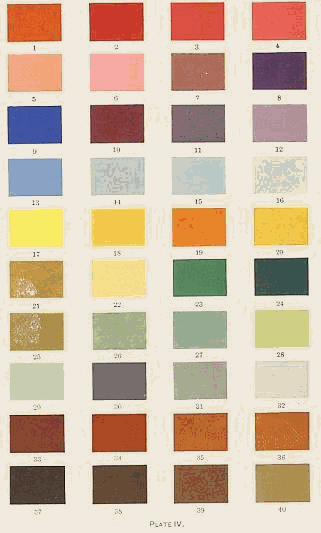
Front matter (continued 4)
Reading edition
Sapphyrinus: sapphire blue [French blue].
Sarcolemma: the elastic covering of the striated muscular fibres.
Sarothrum: the basal joint of posterior tarsus in pollen gatherers: see metatarsus.
Saturate: deeply or strongly marked; in a color, means intense.
Saxicolous: species that frequent rocky or stony areas.
Saws: the ovipositors of the saw flies or Tenthredinidae.
Scaber: uneven, rough.
Scabriculous: regularly and finely wrinkled.
Scabrose -ous: rough like a file, with small raised points.
Scalariform: ladder-like; applied to venation when the veinlets between two longitudinal veins are regularly arranged like the rungs of a ladder.
Scale: a general term to distinguish Coccidae: specifically the puparium of a Diaspid, comprising exuviae and excreted matter: the waxy covering of a male Lecaniid: in Diptera = alula: q.v.
Scales: broad flattened hairs, forming the wing vestiture of Lepidoptera, and present in various other insects.
Scalloped: an edge marked by segments of circles without intervening angles.
Scalpellus: a lancet-like piercing structure, as in some Diptera.
Scalpriform: chisel-shaped.
Scansorial: said of feet, when formed for climbing on hair.
Scape: the long basal joint of a geniculate antenna in Coleoptera; usually applied to the three basal joints, as in Hymenoptera.
Scaphiform: boat-shaped.
Scaphium: a ventral process of the 10th abdominal segment in male Lepidoptera below the uncus.
Scapula: in Lepidoptera the shoulder tippets, patagia or axillae; q.v.: in Hymenoptera, the side pieces of the mesonotum; also, a trochanter of the fore-leg; in Proctotrupidae the lateral lobes on each side of the parapsidal furrow.
Scapulae: in Hemiptera, the inferior lateral face of mesonotum.
Scapular: the episternum; q.v.: applied to the scapula.
Scapular area: in a wing, is that portion nearest the shoulder: in Orthoptera, = radial area.
Scapularia: a meso-episternum: see scapula.
Scapular vein: in Orthoptera, = radius.
Scapus: = scape.
Scarabidoid: applied to that stage of a meloid larva in which it resembles a white grub or Scarabid larva.
Scarified: a surface with irregular depressions, as if clawed or scratched.
Scariose -ous: dry and scaly.
Scatophagous: feeding upon dung or excrement:= merdivorous.
Scent glands, or organs: glandular structures; sometimes eversible, sometimes in the form of hair tufts or pencils for diffusing odors that may be repellant or attractive; most frequently found in males as a secondary sexual character.
Scent pores: = ostioles; q.v.
Sclerite: any piece of the body wall bounded by sutures.
Scopa: a brush: a covering of short, stiff hair of equal length: in Hymenoptera, the thick hair covering the posterior tibia of pollen- gathering forms.
Scopate: furnished with a scopa.
Scopula: a small, dense tuft of hair: the bristles or stiff hairs covering the inner side of basal joint on the tarsi of pollen-gathering Hymenoptera.
Scopulipedes: bees which have pollen gathering structures on the feet.
Scraper: the hardened portion of the inner margin of the tegmina in crickets used in producing the song.
Scriptus: lettered or marked with characters resembling letters.
Scrobes: grooves formed for the reception or concealment of an appendage specifically, in Rhynchophora, grooves at the sides of the rostrum to receive the scape of antenna 2: also applied to grooves on the sides of mandibles: in Hymenoptera, the usually circular impressions upon the frons, in which the scapes revolve: in Orthoptera, the pits in which the antenna; are situate.
Scrobiculated: having the surface covered with deep round pits.
Scrotal membrane: the envelope covering the testes in some insects.
Scrotiform: purse-shaped.
Scrotum: = scrotal membrane; q, v.
Sculpture: the markings or pattern of impression or elevation on an elytra or other body surface.
Sculptured: a surface, when marked with elevations or depressions or both, arranged in some definite manner.
Scutate-iform: shield or buckler-shaped.
Scutcheon: = scutellum; q.v.: also used by some authors (Walker) for the pronotum in Homoptera.
Scutel: = scutellum: q.v.
Scutellar angle: of elytra is next to the scutel when wing is expanded.
Scutellar bridge: in Diptera, a small ridge on either side of the scutellum, connecting it with the mesonotum.
Scutellar space: in Mantids, an area between antennae and clypeus.
Scutellate: dish- or platter-shaped.
Scutellum: the third dorsal sclerite of the meso- and meta-thorax: in Coleoptera, the triangular piece between the elytra at base and universally referred to as the scutellum: in Heteroptera, a similar sclerite between base of hemelytra: in Diptera, a sub-hemispherical. body posteriorly cut off by an impressed line from the dorsum of the meso-thorax.
Scutes: the chitinous shields or plates on the segments of larvae.
Scutiform: = scutate; q.v.
Scutum: the second dorsal sclerite of the meso- and meta-thorax.
Seal-brown: a brilliant deep red-brown: almost like, but darker than castaneous [between dragon's blood and Indian red].
Sebaceous: fatty or oily; applied to glands secreting such substances.
Sebific: oily; sebaceous; somewhat sticky.
Sebific duct: carries the excretions of the colleterial gland to the bursa copulatrix.
Second antennal segment: the third or tritocerebral segment of head.
Secondaries: the hind wings; always attached to the meta-thorax.
Secondary sexual characters: features possessed by one sex but not the other, other than the differences of the reproductive organs themselves; e.g. color, size, shape, etc.
Second clypeus: see anteclypeus.
Second costal cell: in Hymenoptera (Pack.); is the stigma.
Second inner apical: in Hymenoptera (Nort.), = media 3 (Comst), to the junction of medial cross-vein; also called sub-marginal nervure in part.
Second lateral thoracic suture: in Odonata, extends front base of secondaries to the rear of the third coxa.
Second longitudinal vein: in Diptera:= radius 2 + 3 (Comst). Second maxilla: the labium: q.v.
Second maxillary segment: the seventh or labial segment of head.
Second median area: see median area; areola.
Second submarginal nervure: Hymenoptera (Nort.), = radius 5 (Comst.).
Secretion: any matter produced by a gland: in Coccidae, specifically, the waxy, fibrous, cottony or silky substances forming the "scales."
Secretionary supplement: that part of a Diaspid scale extending beyond or around the pellicles.
Secretory: concerned in the process of secretion.
Sectores coronis: the tearing or cutting structures used by the Lepidoptera in working out of a cocoon.
Sectors: longitudinal veins in Odonata, which strike the principal veins at an angle, and usually reach the apex or hind margin: they are radial, subnodal, principal, nodal, median, short, and upper and lower of triangle: all of which see.
Secund: pointing one way: unilateral.
Securiform: triangular-compressed; like the blade of a hatchet.
Sedentary: not active: settled or remaining in one place.
Segment: a ring or division bounded by incisions or sutures: a segment of an insect or of any articulate is a transverse portion reaching entirely across the body, originally separated on the exterior by incisions or sutures from the preceding and the succeeding segments, having attached to it not more than one pair of ventral appendages, containing internally not more than one pair of nerve ganglia which supply nerves to the pair of appendages; = somite, arthromere: fusion of segments frequently obscures, as in the head: externally the walls of one segment may be composed of a number of sclerites separated from each other by secondary sutures.
Segmentate: made up of rings or segments.
Segmentation of egg: the division of the originally single celled egg into a number of coherent cells or blastomeres; = cleavage.
Segregated: detached or scattered into groups.
Segregation: a separation or placing apart.
Sejunctus: separated.
Sellate: saddle-shaped.
Sematophore: a seminal packet, composed of the seminal fluid mixed with the excretions of the accessory glands.
Sembling: = assembling; q.v.
Semen: the fluid secreted in the testes, containing the spermatozoa.
Semi-: half.
Semicircular: like the half of a circle.
Semi-complete: in metamorphosis, = incomplete; q.v.
Semicordate: half or partly heart-shaped.
Semicoronate: partly surrounded by a margin of spines, hooks or the like.
Semicoronet: a margin of spines or hooks partly surrounding a structure or process.
Semi-cylindrical: like a groove or half a cylinder.
Semi-hyaline: hyaline in part only: not altogether transparent.
Semi-looper: a caterpillar in which one or two pairs only of the abdominal legs are wanting and where in progression, only small loops are formed: see looper.
Semi-lunar: in the form of half a crescent.
Semi-lunar valve: guards the auriculo-ventricular opening of the heart.
Seminal ducts: = vasa deferentia; q.v.
Seminal vesicles: enlarged tube or pouch-like structures which serve to store the seminal fluid of the male, and in which the later stages of its development may take place.
Seminiferous: semen-secreting.
Semipupa: that stage of the larva just preceding pupation: more specifically the interpolated stage between the active larva and the true pupa, in hyper-metamorphosis.
Semi-saggitate: like the longitudinal half of an arrow head.
Semitropical or Gulf strip: is the southern part of the Austro-riparian area extends from Texas to Southern Florida, covers a narrow strip in So. Georgia and probably follows the coastal lowlands into South Carolina.
Sensim: gradually.
Sensoria: the circular openings covered by membrane, on the antenna or legs of plant lice.
Sensory: relating to or having a sense function.
Sensory pittings: deep pits or punctures through the surface, which may or may not bear pegs, bristles or seta, and may be open or covered by a membrane; serving as organs of perception for sounds or smells.
Septa, Septula: in Odonata, the triangular area of the mesonotum before the insertion of the primaries: = calli axillary.
Septum: an internal division of a body cavity.
Sequence: the order in which things follow; e.g. species or genera.
Seriatim: placed in longitudinal rows.
Sericeous: silky: clothed with very dense minute hair which gives a silky lustre.
Sericterium -ies: the silk producing gland or glands in caterpillars: the spinning structures.
Series: a group of species, genera or families, arranged to show agreement in a common character which is not of sufficient importance to warrant the next higher division.
Serific glands: are these which produce a thick, mucous-like secretion which, on hardening, forms silk.
Serosa: the outer membrane that envelops the forming embryo, the amnion and the remainder of the egg.
Serpentinous: a dirty, dark green [Hooker's green].
Serra: a saw or saw-like part.
Serrate: saw-toothed, the teeth set toward one end.
Serrato-dentate: toothed, the edges themselves saw-toothed.
Serratulate: with little teeth or serrations.
Serricornia: that series of Coleoptera in which the antenna are serrate or saw-toothed.
Serriferous: possessing a saw-like ovipositor in the female; the saw- flies.
Serrulate: with numerous little saw teeth.
Serum: the fluid in which the blood corpuscles float or are suspended.
Sesquialter or Sesquiocellus: a large ocellus including a smaller one.
Sesquitertial: occupying a fourth part.
Sessile: closely seated: the abdomen, when it is closely attached for nearly or quite its full width to the thorax.
Sessiliventres: Hymenoptera in which the abdomen is sessile.
Seta -ae: a pointed bristle or long stiff hair: slender, hair-like appendages.
Setaceous: bristle-shaped: slender, gradually tapering to a tip.
Setarious aristate: the dipterous antenna when the arista is simple.
Setiferous: = setigercus; q.v.
Setiform: in the form of a bristle or seta: when a slender short bristle arises from a thicker basal joint.
Setigenous: the hypodermal cells that give rise to setae.
Setigerous: bearing setae or bristles; e.g. punctures.
Setiparous: producing hair or sets.
Setireme: the hairy, oar-like legs of aquatic insects.
Setose -ous: bristly or set with bristles.
Setula: a small stiff bristle or seta: in Diptera, the small thorn at the end of the subcosta.
Setulose: clothed with fine seta or setulae.
Sex: as a number, six: the physical difference between male and female: usually indicated by the sign of Mars (?) for male, and Venus (?) for female; workers or undeveloped females have the sign of Venus without the cross line, or a combination of the two others.
Sexuparae: that generation of plant lice which produces the true sexes.
Shade: a cloudy, ill-defined streak or band.
Shagreened: a surface roughened with minute tooth-like projections.
Shank: = tibia; q.v.
Shard: a chitinous sheath or elytron.
Sharp: with a pointed tip or thin edge; opposed to blunt.
Sheath of penis: in Odonata, a median, hood-like piece between the hamules, under which the penis is folded when not in use.
Shin: = tibia; q.v.
Short sector: in Odonata, = media 4 (Comst.).
Shoulder: loosely applied to an obtuse angulation; more generally to the humeral angle of fore wings or elytra: the anterior angles of thorax in Lepidoptera; the angles of prothorax in Heteroptera: the lateral angles of metazona of pronotum in Orthoptera.
Sialisterium: a salivary gland.
Side: the lateral margin of the body.
Side piece: in genitalia of male Culicids the main lateral part of the clasping organ or basal segment of clasp.
Sides of thorax: in Odonata, includes the pleura of meso- and meta- thorax, less the meso-episterna.
Sienna: a brownish orange [brown ochre].
Sigmoid: shaped like the Greek letter sigma, or English S.
Signate -us: = with marks or spots; see notate.
Signature: a colored blotch of any size or shape.
Silaceous: = ochraceous.
Silk: the hardened salivary secretion of certain larvae, mainly of Lepidoptera. similar material is produced by anal glands of some larva in Neuroptera.
Silk-glands: a pair of modified salivary glands in certain larva, mostly of Lepidoptera that secrete a viscid fluid which, on contact with the air, hardens into a silken fibre.
Silvicolous: living in moist, shady woods.
Simple, Simplex: without process, armature, or appendage of any kind.
Simple eyes: = ocelli; q.v.
Sinciput: in Coleoptera; that part of the vertex between the eyes.
Sinistrad: toward the left.
Sinistral: extending to or at the left from the median line.
Sinistro-caudad: extending obliquely from the left toward the tail.
Sinistro-cephalad: extending obliquely from the left toward the head.
Sinuate: cut into sinuses; applied to lines and margins with an in and out curve.
Sinuated: winding: with the edge scooped into sinuses.
Sinuato-convex: sinuate and convex.
Sinuato-lobate: sinuate and lobed.
Sinuato-truncate: truncated, with the margin sinuate.
Sinuous: undulating; curved in and out.
Sinus: a curvilinear indentation more or less profound: an excavation as if scooped out: a curved break in an otherwise straight margin.
Siphon: a tube-like mouth organ in certain insects: the breathing tube of a Culicid larva: any tubular external process or structure.
Siphonaptera: an ordinal name for insects which are wingless: mouth formed for piercing and sucking; saltatorial; transformations complete: the fleas = Aphaniptera; q.v.
Siphonata: = Homoptera or, more specifically, plant lice and leaf hoppers.
Siphonets: see honey tubes.
Siphonophora: = Coccinellidae; the term is preoccupied in the Coelenterates.
Siphunculata: the sucking lice.
Siphunculus: the suctorial organ of a louse, contained within the tubule: in plant lice =honey tubes; q.v.
Situ (in): in its natural place or position.
Sixth longitudinal vein: in Diptera; = 1st anal vein (Comst.).
Skeleton: the hard chitinous parts which externally (exoskeleton) or internally (endoskeleton) form a protective covering, or serve as points of attachment, to muscles and other soft organs.
Skippers: a popular term for Hesperid butterflies: the dipterous larva sometimes found in cheese and other provisions.
Slaty: very dark blackish gray with a reddish tinge [neutral with a little Indian red].
Slug: in general, any larva that has a slimy viscid appearance, and the body closely applied to the food plant: more specifically, the larvae of certain saw-flies and of some Coleoptera.
S. M. interspace: sub-median interspace in the primaries of Lepidoptera, includes the space between the median and sub-median veins; (cubitus and 1st anal, Comst.).
Smaltinus: a dull grayish blue.
Smaragdinus: emerald green [pale green].
Smooth: a surface without elevations or indentations.
Snout: the prolongation of the head in Rhynchophora at the end of which the mouth parts are situated: see rostrum.
Social: living in communities: more especially those species in which undeveloped or worker forms occur and where the colony has a single female head.
Soldiers: in termites; forms sexually undeveloped, in which the mandibles are pincer-like and the head is much enlarged: worker majors in certain ants.
Solid: applied to an organ usually jointed, when these joints form into one mass; e.g. the capitulum of certain clavate antennae.
Solitary-arius: occurring singly or in pairs; not in colonies.
Somatic: relating to the body, or abdomen.
Somatotheca: that part of pupa covering abdominal rings:= gasterotheca.
Somite: = arthromere.
Sonifaction: the production of sound: = stridulation; q.v.
Sonoran faunal areas: see upper and lower Sonoran.
Sonorific: sound producing: applied to stridulating organs.
Sordid: dirty; dull.
Spadiceous: bay brown [dragon's blood + brown ochre].
Spado: the worker or neuter in bees and ants.
Sparse: scattered: single hairs, scales or sculptures set well apart.
Spatha: a median piece in male genitalia of aculeate Hymenoptera, covering the bases of the sagitte.
Spatula: the breast bone (q.v.) of cecidomyid larvae.
Spatulate: rounded and broad at top, attenuate at base.
Specialization: the adaptation of an organ to a definite purpose, or of an organism to fit a determinate environment.
Species: an aggregation of individuals alike in appearance and structure, mating freely and producing young that themselves mate freely and bear fertile offspring resembling each other and their parents: a species includes all its varieties and races.
Specific character: a feature common to all individuals of a species, by means of which they may be distinguished from all other individuals of other species: = essential character.
Specular: mirror-like: transparent.
Specular membrane: in male Cicada, the inner or posterior mirror-like membrane of the sound-organ: = mirror.
Speculum: a transparent area or spot on wings of some Lepidoptera; the glassy areas at base of tegmina in male Orthoptera that serve as sounding boards: a spot on the neck of some caterpillars.
Sperm: the seminal fluid: in plural form is sometimes used as = spermatozoa; q.v.
Spermatheca: = spermatotheca; q.v.
Spermatid: the final cells which are converted without further division into spermatozoa: they arise by division of the second spermatocytes (Wilson).
Spermatocytes: the cells arising from the spermatogonia. The primary spermatocyte arises by growth of one of the last generation of spermatogonia. By its division are formed two secondary spermatocytes, each of which give rise to two spermatids (Wilson).
Spermatogenesis: the development of spermatozoa.
Spermatogonia: the descendants of the primordial germ cells in the male. Each ultimate spermatogonium typically gives rise to four spermatozoa.
Spermatophora: a sac or case containing spermatozoa.
Spermatotheca: the sac or reservoir in the female, that receives the sperm during coition: = spermatheca and receptaculum seminis.
Spermatozoön-zoa: the male cell or cells which, by uniting with the ova, fertilize them.
Spherical: in the form of a sphere: a body in which all diameters are equal.
Spherule: a minute sphere or globule.
Spicula: a slender needle-like process: e.g. the sting in bees: also employed as = ovipositor: q.v.
Spiculiform: like a slender, needle-like process.
Spiculum: a small spicule or thin, pointed process.
Spinate: produced into an acuminate spine.
Spindle-shaped: cylindrical, elongate, thicker in the middle, tapering to each end: fusiform.
Spine: a sharp process: in Coccidae there are two, one each side of each segment of the pygidium.
Spiniferous: bearing, or clothed with spines.
Spiniform: in the form or shape of a spine.
Spinneret: the ligula in bombycid and some other larvae, modified for silk spinning: any organ consisting of an internal tube, terminating in a pore, spine or process, producing a silky or waxy fibre: in the plural, the organs concerned in the emission of the silky or cottony filaments of which the scales or sacs of Coccidae are produced: = fusulus.
Spinose -ous -ed: set with acute processes or spines.
Spinous-radiate: beset with spines in a circle, either concatenate, united at their bases, or setaceous, like bristles.
Spinulae: spinous processes at the apex of the tibia: also called spines, spurs or heels.
Spinulate -ose: set with little spines or spinules.
Spinules: little spines.
Spira: the coiled ovipositor of Cynipidae.
Spiracle -cula: a breathing pore: q.v.: in the plural the lateral openings on the segments of the insect body through which air enters the tracheae:= stigmata.
Spiracular area: the anterior of the three areas between lateral and pleural carinae on the metanotum of some Hymenoptera: =first pleural area.
Spiracular line: in caterpillars is that which includes the spiracles: = stigmatal.
Spiracular sulcus: on the metanotum of Hymenoptera, is a grooved linear channel extending from spiracle to apical margin.
Spiral: rolled up like a watch spring, or twisted like a cork-screw. {Scanner's comment: Nowadays it is more correct to regard the corkscrew as helical and the watch spring as spiral.}
Spiral fibre: the spiral thickening or folding of the chitinous lining of a trachea, which gives to the latter its characteristic microscopic appearance as well as its support and elasticity:= ctenidium.
Spirignath: = spiritrompe.
Spiritrompe: the spiral tongue in Lepidoptera.
Splanchnic: applied to the outer embryonic layer of the rudiment of the mid-intestine: or the inner layer of the mesoderm which, becoming applied to the walls of the alimentary canal, develops into the muscle fibres thereof.
Splendens -ent: shining: with a metallic glitter.
Splitter: one who splits or describes species or genera upon minute characters which the "Lumper" (q.v.) deems insufficient to authorize them.
Spongioplasm: the net-like structure of protoplasm in a cell.
Spongiose: a soft, elastic tissue resembling a sponge.
Spoon: = bouton; q.v.
Spring: in Collembola. = furcula: q.v.
Spur: a short, stiff, generally blunt process and usually not articulated at its base: in the plural refers to paired spiniform processes at or near the end of tibia:.
Spur formula: a numerical expression of their arrangement; as 2-3-4; two spurs on fore tibia, 3 on middle, and 4 on posterior; in Trichoptera.
Spurius: false: applied to aborted anterior legs in some diurnal Lepidoptera. Spurious cell: in Diptera (Pack.), = 3d anal (Comst.).
Spurious veins: certain folds or thickenings in the wing surface which resemble a vein so nearly as to be readily mistaken and sufficiently constant to be useful in classification.
Squama: in Odonata, the sclerite that bears the palpus of both maxilla and labium: the scale-like first abdominal segment of some ants: a scale-like appendage covering the base of primaries in Lepidoptera, and so = patagium; q.v.: a small scale above the halteres in Diptera: in this order Packard uses squama for the lobed scale and restricts alula to the lobe-like appendage: Osten-Sacken uses squama for the posterior scale alone and antisquama for the anterior.
Squames: the flattened, fimbriated or spine-like marginal processes of the pygidium in Diaspinae, other than the lobes and true spines: = "plates," of Comst.; or "scaly hairs" of Maskell.
Squamiform: having a scale-like form.
Squamose -ous: scaly or covered with scales.
Squamula: a small corneous scale covering the base of primaries in some insects: = tegula, q.v.: in Diptera, = alula.
Squarrous: scurfy: clothed with rough scales differing in direction, standing upright, or not parallel to the surface.
Stadium -ia: the interval between the molts of larvae:= instar q.v.: any one period in the development of an insect.
Stage: refers to the period of development; e.g. larval, pupal, etc.
Stalked bodies: = gyri cerebrales; q.v.
Stellate: star-shaped; with four or five radiating lines.
Stelocyttares: social wasps in which the comb layers of the nest are supported by pillars and not connected with the envelope: see poecilocyttares and phragmocyttares.
Stemapoda: the modified filamentous anal legs of Cerura and other Notodontid larvae.
Stemmata: simple eyes or ocelli; q.v.
Stem-mother: in plant lice; that form hatching from the winter egg, which starts a series of agamic summer generations.
Stenocephalous: with a narrow, elongate head.
Stenorhynchan: narrow beaked or snouted.
Stenothorax: a supposed ring between pro- and meso-thorax.
Stercoral: relating or pertaining to excrement.
Sterile: not capable of reproducing its kind.
Sternal orifice: in Perlids; a peculiar slit on each side of the sternum, extending inward and ending blindly := furcal orifice.
Sternal spatula: = breast-bone; q.v.
Sternauli: the short and often obsolete furrows on either side of the mesosternum in Hymenoptera.
Sternellum: the second sclerite of the ventral part of each thoracic segment frequently divided into longitudinal parts which may be widely separated.
Sternite: the ventral piece in a ring or segment.
Sternopleura: in Diptera, the lower part of the pleura, below the sternopleural suture and above the front coxa.
Sternopleural bristles: in Diptera, are situated on the sternopleura below the sternopleural suture.
Sternopleural suture: in Diptera, is below and nearly parallel with dorso-pleural suture, separating the mesopleura from the sternopleura.
Sterno-rhabdite: a sternal rhabdite.
Sternorhynchi: that series of Homoptera in which the beak or rostrum apparently arises from the sternum between the anterior coxae; e.g. plant lice, etc.
Sternum -a: the breast: the middle portion of the under surface of thorax, between the coxal cavities.
Stethidium: the trunk: the entire thorax with all its appendages.
Stigma: a spiracle or breathing pore: a dense, often discolored portion of the costal margin of a wing, usually at the end of the radius; see anastomosis: in Diptera, a colored wing spot near the tip of the auxiliary vein: in Lepidoptera, the specialized patch of black scales on the primaries of Hesperidae.
Stigmata: the spiracles: also applied to the two spots, orbicular and reniform, in the cell of the primaries of certain moths.
Stigmatal line: in caterpillars, = spiracular; q.v.
Stigmatiferous: applied to processes or structures bearing spiracles or stigmata.
Stimuli: the small acute spines on some larva, especially wood-borers
Sting: the modified ovipositor in aculeate Hymenoptera.
Stipes: the foot-stalk of the maxilla; articulated partly to the head, partly to the cardo, and bearing the movable parts: modified into a piercing structure in some Diptera and into a lever for flexing the proboscis in others.
Stipitate: supported on a stalk or pedicle.
Stipites: the outer pair of forceps in male genitalia of aculeate Hymenoptera see sagittae.
S. T. line: sub-terminal line; crosses the primaries of many moths just before the outer margin.
S. T. space: the area between the t.p. line and s. t. line in moths.
Stirps: a stock or stem: a division of classification similar to super-family: not used at present.
Stoma -ata: a breathing pore or pores:= stigma; q.v.
Stomach: that portion of the alimentary canal, immediately following the gizzard and preceding the ileum, into which most of the digestive juices are poured = chylific ventricle.
Stomatodaeum: that invagination of the ectoderm that forms the mouth, pharynx, oesophagus, crop and gizzard.
Stomatogastric: that system of nerves and ganglia, lying along the dorsal and lateral surfaces of gullet and crop.
Stomatotheca: that part of the pupa covering the mouth structures.
Stramineous -eus: straw yellow [pale clay yellow].
Strangulate: constricted, as if by bands or cords.
Stratified: arranged or made up in layers.
Strepsiptera: twisted-wing: an ordinal term proposed for the parasitic Stylopidae, now ranged as a family of Coleoptera = Rhipiptera.
Stria: in Coleoptera, a longitudinal depressed line or furrow, frequently punctured, extending from base to apex of elytra: in Lepidoptera, a fine transverse line: in general, any longitudinal impressed line.
Striate -ed: marked with parallel, fine, impressed lines; or, in Lepidoptera, with numerous fine transverse lines.
Stridulate: to make a creaking noise by rubbing together two ridged or roughened surfaces.
Stridulation: a creaking sound produced by rubbing together two striated or otherwise roughened surfaces: the act of stridulating or the noise produced by it.
Striga: a narrow, transverse line or slender streak, either surface or impressed. {Scanner's note: the proper plural is strigae}
Strigate: having striga: applied to a surface on which the striga are impressed as in the elytra of some beetles, or to an ornamentation composed of fine, short lines. {Scanner's note: sic; the proper plural is strigae}
Strigile -is: maculation that consists of parallel longitudinal lines: a deep sinus near base of first joint of anterior tarsus.
Strigillate -ation: = stridulate -anon; q.v.
Strigose: clothed with rigid bristles that are thickest at base: rough, with sharp bristles: = hispid.
Strigula: a fine short transverse mark or line.
Strigulated: with numerous strigulae.
Striolate -us: with finely impressed parallel lines.
Stripe: a longitudinal streak of color different from the ground.
Style: in Aphids, the slender tubular process at the end of the abdomen: in Coccids, a long spine-like appendage at the end of the abdomen of the male; = genital spike: in Diptera, the ovipositor (Loew); the single immovable organ immediately below the forceps in male Tipulidae (O-S.) a thickened jointed arista at or near the tip of the third antennal joint in the plural form applied to small, usually pointed, exarticulate appendages, most frequently found on the terminal segments of abdomen.
Stylet: a small style or stiff process: one of the piercing mouth structures in Diptera and Hemiptera.
Styliform: in the shape of a stylus: terminating in a long slender point, like the antenna in some Diptera.
Stylopized: infested by a member of the Stylopidae.
Stylotrachealis: with a long tube bearing a stigma, from the head case; as the pupa of some Diptera.
Stylus: a small, pointed, non-articulated process.
Sub-: as a prefix, means that the main term is not entirely applicable, but must be understood as modified in some way; e.g. sub-ovate, may be either more or less than ovate and may be irregular in outline.
Sub-aduncate: somewhat hooked or curved.
Sub-anal plate: Orthoptera; = sub-genital lamina; q.v.
Sub-apical lobe: of male genitalia in Culicids is the inner sub-apical lobe of the side piece.
Sub-apterous: almost wingless; with rudimentary wings only.
Sub-clavate: somewhat thickened toward tip; but not quite club- shaped.
Sub-coriaceous: somewhat leathery.
Sub-cortical: beneath the bark; as in larval borings, etc.
Subcosta: (Comst.); that longitudinal vein extending parallel to the costa and reaching the outer margin before the apex; not branched as a rule of Packard, in Hymenoptera, = radius (Comst.).
Subcostal cell: in Diptera (Schiner), = marginal cell (Loew), = radial 1 (Comst.) in the plural (Comst.), all those cells anteriorly margined by the subcosta first s.c. cell in Hymenoptera (Pack.), = radial and first radial 1 (Comst.).
Subcostal crossveins: in Odonata, are between subcosta and media on the basal side of the first antecubital.
Subcostal fold or furrow: lies between costa and radius.
Subcostal nervule: Lepidoptera, on secondaries:= media 1 (Comst.): s.c. 1 = radius 1 (Comst.); s.c. 2:= radius 2 (Comst.) s.c. 3 = radius 3 (Comst) s.c. 4 = radius 4 (Comst.) s.c. 5 = radius 5 (Comst.).
Subcostal vein: in Diptera (Schiner), = 1st longitudinal vein (Meigen) radius 1 (Comst.): in Lepidoptera, runs from base, parallel to costa, to or beyond the middle, giving rise to branches which extend to the outer margin and thus = radius (Comst.).
Sub-cristate: with a moderately elevated ridge or keel on pronotum, in Orthoptera.
Subcutaneous: under the skin: applied to larvae that feed under the skin of animals or within the substance of a leaf.
Sub-dorsal: the space between the dorsum and the stigmata.
Sub-dorsal line: in caterpillars is to the side of the dorsal and between it and the lateral or, if there is an addorsal line, between that and the lateral.
Sub-dorsal ridge: in slug caterpillars, extends longitudinally along the sub-dorsal row of abdominal tubercles.
Sub-equal: similar, but not quite equal in size, form or other characters.
Sub-eroded: wing margins when somewhat, but irregularly, indented.
Sub-falcate: when a wing is only a little excavated below the apex.
Subfamily: a division of classification containing a group of closely allied genera; different from other allied groups, yet not so as to make a family series: opinionative, and ending in -inae.
Sub-fossorial: legs used in digging: yet not greatly modified.
Sub-frontal: close to the front; immediately behind the front margin.
Sub-fulcrum: a sclerite between mentum and palpiger: rarely present.
Sub-fusiform: somewhat spindle-shaped.
Subgalea: a maxillary sclerite or segment, attached to the stipes, and bearing the galea or outer lobe.
Sub-geniculate: applied to antennae that are articulated from a short, thick scope.
Subgenital lamina or plates: plates underlying the genital organs in Orthoptera.
Subgenus: a division within a genus, based upon a character not sufficient for generic separation; opinionative.
Subglossa: in Odonata; a sclerite between the two halves of the mentum (Graber): is really the true mentum.
Sub-imago: sometimes applied as = nymph: that stage in Ephemerida just after emergence from the pupa and before the final molt during flight: that stage in the development of insects with free pupa when the insect is fully colored but yet retains its pupal position.
Sub-labrum: =epipharynx; q.v.
Sublingual: beneath the tongue; applied to a pair of salivary glands in bees.
Submargin -al: an imaginary portion of a surface outside of the disk and within the margin: a line is submarginal when it is well within the margin but close to it.
Submarginal area: of secondaries, lies between the costal margin and the 1st strong vein.
Submarginal cells: in Hymenoptera (Norton) = radial cells (Comst.): in Diptera (Will.); = radial 3 (Comst.).
Submarginal nervure: in Hymenoptera (Nort.); the irregular line of veins extending on the whole parallel with the outer margin; composed in part of media 1, 2, 3 and 4, the medial cross vein and cubitus 1 (Comst.).
Submedian cells: in Hymenoptera (Pack.); 1st = cubital + cubital 1 (Comst.) 2d = medial 3 (Comst.); 3d = 2d medial 2 (Comst.).
Submedian vein: in Odonata, =cubitus (Comst.); in Lepidoptera, = 1st anal (Comst.), runs from base of primaries to the hind angle, close to the inner margin and is v. 1 of the numerical series.
Submental: pertaining to the submentum.
Submental peduncle: in Coleoptera, the prolonged portion of the gula supporting the mentum.
Submentum: the basal sclerite of the labium, by means of which it is attached to the head.
Subnodal sector: in Odonata, = radial sector (Comst.).
Sub-nymph: applied to the resting or pupal stage of female Coccidae; also to a supernumerary stage before the formation of the pupa, and thus = pseudo-pupa.
Sub-ocellate: an ocellate spot that is blind or without a pupil.
Sub-ocular: beneath or below the eyes.
Sub-oesophageal ganglion: situated in the head below the oesophagus, formed by a union of the posterior three primitive head ganglia.
Suborder: a division of an order higher than a family, based on a character common to a large series of species; e.g. the Homoptera and Heteroptera in the order of Hemiptera.
Sub-pedunculate: in Coleoptera, when the constriction between pro- and meso-thorax is so great as to give the appearance of a narrow waist.
Subreniform: a rounded spot or outline, below and sometimes attached to the reniform spot in Catocala and some allied Noctuids.
Sub-parallel: nearly parallel.
Sub-primary sub-ventral tubercle: on the thoracic and abdominal segments of caterpillars; sub-ventral, posterior, not present in the primitive first stage; it is VI of the abdomen, V of the thorax: constant.
Sub-sellate: nearly like or approaching the form of a saddle.
Sub-servate: denticulate.
Subspecies: a well-marked form of a species differing from the type in some character of color or maculation which is recognizable but does not prevent a fertile union: an indefinite and opinionative division.
Subspiracular line: in caterpillars, margins the spiracles inferiorly.
Substigmatal: that portion of the marginal cell below the stigma, in bees: = 1st radial 1 (Comst.): applied to a line in caterpillars = subspiracular.
Sub-teres: nearly but not quite cylindrical.
Subtile -is: slightly; feebly; small; pretty; graceful.
Subtriangular space: = internal triangle: see triangle.
Subtus: beneath; at the under surface.
Subulate: awl-shaped: linear at base, attenuate at tip.
Subulicornia: with awl-shaped antennae; applied to a combination of Odonata and Ephemerida.
Subuliform: formed like an awl: = subulate.
Sub-ventral line: in caterpillars, extends along the sides just above the base of the feet at lie edge between lateral and ventral.
Sub-ventral ridge: in slug caterpillars extends longitudinally along the sub-ventral series of abdominal tubercles.
Sub-ventral space: in slug caterpillars is the area on each side, between the lateral ridge and the lower edge of the body, and contains the spiracles.
Succincti: those chrysalids of butterflies which are held in place by a silken cord passing around the body: see suspensi.
Succineous: resembling amber in color or appearance.
Sucking pump: in sucking insects, a thick-walled muscular enlargement of the oesophagus that serves to draw up the liquid food = pharyngeal pump.
Sucking spears: the mandibles and maxillae of Hemerobiid larvae, used for puncturing prey and sucking its juices.
Sucking stomach: a thin-walled muscular pouch connected with the end of the oesophagus; serves as a food reservoir and is not commonly present except in some Lepidoptera.
Suctoria: an ordinal term proposed for fleas.
Suctorial: adapted for sucking: see haustellate.
Suctorial vesicles: bladder-like structures connected with the oesophagus in mosquitoes supposed to assist in blood-sucking; but this is disputed.
Suffused: clouded or obscured by a darker color.
Suffusion: a clouding, or a spreading of one shade over another.
Sulca: grooves, furrows or channels: plural of sulcus.
Sulcated: grooved; furrowed with broad, concave, parallel impressed lines.
Sulciform: resembling a sulcus.
Sulcus: a furrow or groove: a groove-like excavation.
Sulphureous -eus: bright, sulphur yellow [chrome lemon].
Superans: exceeding in size and length.
Superciliary: placed above the eyes.
Supercilium: an arched line over an ocellate spot.
Super-family: a division of classification less than an order, including a series of family groups more closely related to each other than to similar groups within the order: opinionative and ending in oidea: sometimes hardly different from suborder; but lower than suborder when both terms are employed.
Superficies: the upper surface.
Supericornia: those Heteroptera having the antenna inserted on the upper parts of the sides of the head; e.g. Coreidae: see infericornia.
Superior wings: the primaries; q.v.
Superlinguae: the lateral pair of organs of hypo-pharynx in Thysanura.
Superlingual segment: the fifth segment of head.
Superne: denotes all those parts belonging to the upper surface.
Supernumerary: additional or added cells, veins or other structures.
Supernumerary segment: in Cecidomyidae, between the head and first thoracic segment.
Super-order: a group of allied orders, like the Linnaean Neuroptera.
Superposed: placed one above the other, as the frontal tufts in some moths.
Supplementary sectors: interposed sectors; q.v.
Suppression: the non-development of a part normally present.
Supra-: over; above.
Supra-alar bristles: in Diptera, are situated, one on the post-alar callus, one on the alar frenum, the third on the edge of the supra-alar depression.
Supra-alar cavity: = supra-alar groove.
Supra-alar depression: in Diptera = supra-alar groove.
Supra-alar groove: in Hymenoptera, a groove or depression just above the base of wings: in Diptera, a groove on the meso-thorax just above the root of the wings.
Supra-anal: situated above the anus.
Supra-anal hook: in male of most Lepidoptera, a curved hook attached to the plate covering the genital cavity: = uncus.
Supra-anal plate: a triangular sclerite covering the anal cavity above; present in many insects, sometimes in one sex only, often in both: see anal operculum.
Supra-cerebral: applied to that pair of salivary glands situated above the brain in bees.
Supra-clypeal mark: in bees; a patch of light color above the clypeus.
Supra-clypeus: = post-clypeus; q.v.: = nasus.
Supra-Oesophageal: situated above the oesophagus: applied to two large ovoid ganglia so situated, and connected by a short, thick commissure; - the brain.
Supra-orbital: situated above the eye.
Supra-spinal: above the spine or nerve cord: applied to a cord or band of connective tissue lying above the central nervous system in adult Lepidoptera also to a sinus or vessel acting as a ventral heart.
Supra-spiracular line: in caterpillars, margins the spiracles superiorly.
Supra-stigmatal line: = supra-spiracular lines.
Supra-triangular cross-veins: in Odonata, cross the supra-triangular space.
Supra-triangular space: in Anisoptera, an area just above the triangle, occupying nearly the same position as the quadrilateral of Zygoptera: hyper-trigonal space.
Suranal: = supra-anal.
Suranal plate: the middle dorsal plate attached to the l0th abdominal segment of the male grasshoppers, above the anal opening: a supra- anal tergite of a caterpillar.
Sursum: directed upwardly.
Suspensi: the chrysalids of butterflies that are suspended by the tail only: see succincti.
Suspensoria: are those muscles or ligaments that hold the viscera and other internal structures in place.
Sustentors: the two posterior projections of a butterfly chrysalis.
Suture: a seam or impressed line indicating the division of distinct parts of body wall: the line of junction of elytra in Coleoptera.
Suturiform: an articulation soldered together so that only a slight impressed line is visible.
Swarming: the concerted departure from a hive of a large number of worker bees, accompanied by a queen; this forming the nucleus of a new colony.
Swimmerets: gill or plate-like structures in the aquatic larvae of some Neuroptera, serving as oars or organs of locomotion.
Swimming paddles: terminal appendages of mosquito pupae.
Swoked: smoky, suffused with gray or blackish.
Sylvan: species inhabiting forests or woodland areas.
Symbiogenesis: the method of origin of social symbiotic relation among ants and other insects.
Symbiosis: a life relationship existing between different kinds of animals or plants, or between animals and plants: true symbiosis is where both parties to the relation benefit: see also parasitism, commensalism. Among the ants social symbiosis exists in its most highly developed form and distinctive terms have been proposed for the various types of relations:
Calobiosis, is that association in which one species, often only the female, lives in the nest of and at the expense of another species, either for a time, = temporary - or altogether, = permanent calacobiosis. {Scanner's note: sic}
Cleptobiosis, is where one species of ant lives in or near the nest of another, preying upon its larvae or pupae or stealing the food supply.
Dulosis, is that mingling of colonies which owes its origin to the enslavement of one species by another.
Hamabiosis, is that relation where two species of any insects, one of which may be an ant, live side by side without obvious motive or known advantage to one or both.
Lestobiosis, is where the workers of one ant colony "hold up" those of another species and rob them of the food they are carrying to the nest.
Parabiosis, is where different species of ants form colonies with inosculating galleries, and have their households strangely intermingled, but not blended.
Phylacobiosis, is the relation existing between ants and Termites, the ants living in the doorways of the Termites and functioning as guards.
Synclerobiosis, is an association of two species of ants that usually inhabit independent colonies, for purposes that are not clearly understood.
Trophibiosis, is the relationship between ants on the one hand and aphids, coccids and the like on the other; these species being sought and attended by the ants for their own benefit: see myrmecophily.
Xenobiosis, is where one species of ant lives as a guest in the nest of another, maintaining its own household, and mingling freely with the host species, the two living on terms of mutual toleration.
Symbiotic: species that live together in a state of symbiosis.
Symmetrical: evenly developed on both sides.
Symmetry: that regular arrangement of organs or parts which is capable of division into similar halves or similar radii.
Sympathetic nervous system: applied to the nerves and ganglia of the alimentary canal and sonic other viscera which they innervate; = vagus; visceral nervous system.
Symphily: the relation borne to ants by the true guests which inhabit their nests and are fed and tended: rendering in return some substance or service desired by the ants: see metochy and synechtry.
Symphyla: a group name for apterous species resembling myriapods in appearance, with functional abdominal legs and the genital openings on the last abdominal segment: regarded by some as connecting forms between insects and myriapods, e.g. Scolopendrella.
Symphysis: where two sclerites are joined together by a soft membrane, permitting a slight motion.
Synaptera: originally wingless insects without metamorphosis; the Thysanura.
Synarthrosis: an articulation without motion.
Syncerebrum: the compound brain of insects.
Synchronous: happening at the same time.
Synciput: that portion of the vertex lying between the eyes.
Syncitium: masses of protoplasm with nuclei, found in ovarian tubes; giving rise to ova, nutritive cells or both.
Syndesis: that method of articulation where two parts are connected by a membrane which permits of considerable motion between them.
Synechtry: the relation borne to ants by insects inhabiting their nests in spite of the efforts of the ants to destroy them: see symphily and metochy.
Synista or Synistata: those Neuropterous insects in which the mouth structures are undeveloped, forming an imperfect tubular structure: see elinguata.
Synoecy: the relation that exists between ants and those guests that are indifferent to and tolerated by them:= metochy, and see symphily and synecthry.
Synonym: a name applied to a species or genus that has been previously named and described.
Synonymous: words of different derivation applied to the same conception.
Synthlipsis: the basal constriction of the notocephalon in Notonectids.
Syntype: = co-type; q.v.
Syringe: in Hemiptera, a chamber into which the salivary ducts open and by means of which the secretion is forced forward between the seta or lancets.
System: an order of arrangement.
Systematic: in definite order, or arranged according to a system.
Systole: that regular contraction of the heart that sends the blood outward: see diastole.
T
T. A. line: transverse anterior line; crosses the primaries of certain moths one-third or less from the base: = antemedial line.
Tactile: used for touching; an organ that has the sense of touch.
Taenia: a broad longitudinal stripe.
Taeniate -us: with broad longitudinal markings.
Taenidium -ia: the band or chitinized fibre forming a part of the spiral thread in the trachea of insects.
Tail: an elongated terminal segment of the abdomen: the cauda in plant lice: elongated processes on the secondaries, in some Lepidoptera and Neuroptera.
Tangential: set in or meeting at a tangent; applied to ornamentation and processes.
Tarsal: relating to the tarsi, or feet.
Tarsal lobes: membranous appendages arising from the underside of the tarsal joints in some Coleoptera.
Tarsus -i: the foot; the jointed appendage attached at the apex of tibia. bearing the claws and pulvilli.
Taste cups: specialized pits or cups, with or without a peg or hair, connected with ganglionated nerve cells: occur on the mouth structure and evidence the sense of taste.
Tawny: a brownish yellow, like the color of a tanned hide [pale cadmium yellow + Indian red].
Taxonomical: systematic: relating to classification.
Testate: covered; concealed: also used as = tectiform.
Tectiform: roof-like, sloping from a median ridge, like the primaries of Cicada.
Tegmen: a covering: sometimes used for the anterior wings in Orthoptera and Neuroptera.
Tegmina: the thickened primaries serving as wing covers in Orthoptera.
Tegulae: small, more or less cup-like scales at the base of primaries in many insects; specifically in Hymenoptera: in Lepidoptera, = the patagia or shoulder tippets; but the homology is disputed; also applied to the lappet-like pieces forming the collar: in Diptera, the alulae, q.v.: the latter use is unfortunate and should be abandoned; the first definition should limit the use of the term: see aileron.
Tegument: a covering surface or skin.
Teleodont: applied to those forms of male Lucanids bearing the largest mandibles: see mesodont, amphiodont, priodont.
Telescopic: arranged so that one portion of an organ or process may be drawn into another, like the joints of a telescope.
Telson: a terminal tubercle bearing the anal opening: the anal segment of the insect embryo.
Telum: a spear, or spear-shaped process.
Temple: the posterior part of the gena; behind, before or beneath the eye.
Tempora: the temples.
Temporal margins: in Mallophaga, the lateral margins of the hind head.
Tenaculum: in Collembola, a small organ which holds the furcula in position when at rest: = catch.
Tenant hair: see tenent hair.
Tendo: the anal area of secondaries when it forms a groove for the abdomen: has also been called frenum and frenulum: in Trichoptera, a small elliptical space at base of hind wings near base of anal veins and behind the trochlea.
Tendon: the slender, chitinous plates, bands, strap- or cup-shaped pieces, to which muscles are attached for moving appendages: see apodeme.
Tenent hair: specialized hair adapted for clinging or clasping.
Teneral: that state of the imago just after its exclusion from pupa or nymph, in which neither coloring nor clothing is fully developed.
Tensor: a muscle which stretches a membrane.
Tentacle: a flexible sensory or tactile process; in some cases retractile: usually prefixed by a descriptive term indicating the structure to which it is attached.
Tentacular -um: retractile processes on the larvae of Lepidoptera.
Tentaculate: a margin when fringed with soft tactile processes.
Tentiform: shaped like a tent: see mines.
Tentoria: Diptera; two hollow, cylindrical struts which pass from the ventral border of the occipital foramen to the cheeks.
Tentorium: a chitinous frame-work within the head, upon which the brain rests.
Tenuis: thin, slender; long drawn out.
Terebra: a borer or piercer: an ovipositor fitted for boring or cutting as in saw-flies: a mandibular sclerite articulated to the basalis; forms the point of the structure and = the galea of the maxilla.
Terebrant: with an ovipositor fitted for piercing or boring.
Terebrantia: Hymenoptera with sessile abdomen and valved ovipositors: Thripids in which the ovipositor of female is borer-like.
Teres, Terete: cylindric or nearly so.
Tergal: belonging to the primitively upper surface: see dorsal.
Tergal suture: the Y shaped dorsal suture on the head of many insect larvae.
Tergite: the primitively dorsal part of a segment, especially when that part consists of a single sclerite; usually applied to the abdomen.
Tergo-pleural: the upper and lateral portion of a segment.
Tergo-rhabdites: the lower pair of corneous appendages forming the ovipositor in grasshoppers: plates on the inner dorsal surface of the abdominal wall.
Tergum: the primitively upperor dorsal surface whether it consists of one or more than one sclerite and specifically of the abdomen: in Odonata and Orthoptera, applies to thorax as well.
Termen: the outer margin of a wing, between apex and hind or anal angle.
Terminal: situated at the tip or extremity; opposed to basal.
Terminal line: in Lepidoptera, runs along the outer margin of the wings.
Terminal space: the area between the s. t. line and terminal line in certain Lepidoptera.
Terminology: the technical nomenclature of any science.
Termitarium: a nest, natural or artificial, or a colony of Termites.
Terrestrial: living on or in the land; opposed to aquatic.
Tessellated: checkered; more or less like a chess-board. {Scanner's comment: More correctly, it means "tiled", covered with possibly regularly shaped areas or pieces. They may or may not be square or otherwise regular.}
Test: the secretionary covering of Coccidae, and especially such as are waxy, horny or glassy.
Testaceous: dull yellow brown; tile colored [pale cadmium yellow+burnt sienna].
Testes: the tubular structures in the male, in which the production of spermatogonia, and often also of later stages in the development of the sperm takes place.
Testicular follicles: in the larva, are those structures which in the adult form the tubes composing the testes; in the adult applied also to the tubes forming the testes.
Testudinate -us: resembling the shell of a tortoise.
Tetra-: four: a combining form.
Tetrachaetae: applied to those Diptera in which the mouth structures consist of four longitudinal blades or piercing structures.
Tetradactyle: with four fingers or finger-like processes.
Tetragonal: having four sides or angles: quadrangular.
Tetramera: applied to Coleoptera with four-jointed tarsi.
Tetramerous: having four-jointed tarsi.
Tetrapoda: applied to those butterflies in which the anterior legs are atrophied in whole or in part.
Tetraptera: a term proposed for all insects with four naked, membranous reticulated wings.
Thamnophilous: applied to species living in thickets or dense shrubbery.
Theca: a case or covering: specifically applied to the fleshy covering of the fly-mouth; to the cases of the Trichopterous larvae; to the lower piece of the male genitalia in Homoptera; and to the outer covering of the pupa.
Thelyotoky: parthenogenetic reproduction when the progeny are all females see Arrhenotoly and Deuterotoky.
Thigh: see femur.
Thigmotactic: contact-loving: applied to species that tend to live close together or in touch, one with the other.
Third longitudinal vein: in Diptera (Will.):= radius 5 (Comst.).
Third posterior cell: in Diptera, = 2d medial 2 (Comst.).
Third submarginal cross-nervure: in Hymenoptera (North.):= radius 4 (Comst.).
Thoracic: belonging or attached to the thorax.
Thoracic dorsal bristles: in Diptera, the specialized bristles on the dorsum of the thorax.
Thoracic feet: the jointed legs on the thoracic segments of larvae, as distinguished from abdominal or pro-legs.
Thoracico-abdominal: the first segment of the abdomen when united with the thorax so as to form part of it: =propodeum.
Thoracic pleural bristles: in Diptera, the specialized bristles situated on the pleural region of the thorax.
Thoracotheca: = cytotheca: q.v.
Thorax: the second or intermediate region of the insect body, bearing the true legs and wings: made up of three rings, named in order, pro-, meso-, and meta-thorax: when the pro-thorax is free as in Coleoptera, Orthoptera, and Hemiptera, the term thorax is commonly used in descriptive work for that segment only: in Odonata, where the prothorax is small and not fused with the larger and united meso- and meta-thorax, the term thorax is commonly used for these latter two united, excluding the prothorax.
Thread-plate: an epithelial plate of the embryo from which the terminal threads of the ovarian tubes originate.
Thyridial cell: in Trichoptera: the cell formed by the first fork of median vein; the cell behind Thyridium.
Thyridiate: applied to a wing vein that at one point seems broken so as to permit of a folding or bending; either to pack into a small compass or to enfold the body.
Thyridium -ii: small, whitish or almost transparent spots near the anastomosis of the disc of the wings in some Neuroptera, or in the recurrent veins in the cubital cellule in some Hymenoptera; also the apical margin of the gastrocoeli, often alone visible: in Trichoptera, specifically, a hyaline spot on second fork of median vein.
Thyrsus: a cluster.
Thysanoptera: fringe-winged: an ordinal term, applied to species with four narrow, similar wings, lengthily fringed; mouth parts fitted for puncturing and scraping; metamorphosis incomplete: the Thripids.
Thysanura: fringe-tails; wingless, mandibulate insects without metamorphosis; with anal appendages; body covered with scales; thoracic segments similar.
Tiarate -us: turban or tiara-like.
Tibia -ae: the shank: that part of the leg articulated to the femur basally and which bears the tarsus at the distal end.
Tibial epiphysis: a movable process attached near the base of the inner side of the anterior tibia in many Lepidoptera.
Tibial membrane: in male Cicada, the drum-like vibratory membrane that produces the sound.
Tip: the extremity; the part furthest removed from the base.
Titillator: a small process just below the penis in some Orthoptera.
Tomentose: covered with fine hair, so matted together that particular hairs cannot be separated.
Tomentum: a form of pubescence composed of matted, woolly hair: in Diptera applied to a covering of short, flattened, more or less recumbent, scale-like hair which merges gradually into dust or pollen.
Tongue: an indefinite term, applied usually to the coiled mouth structure of Lepidoptera; the lapping organ of flies; the ligula of bees and wasps and, sometimes also to the hypopharynx of other insects.
Tooth: an acute angulation: a short pointed process from an appendage or margin.
Topomorph -ic: a geographic form, variety or subspecies of a widely distributed species: developed by local environment.
Topotype: is a specimen collected in the exact locality whence the original type was obtained.
Tornal: relating to or concerning the tornus.
Tornus: in Lepidoptera, the junction of the termen and dorsum of wing: = hind or anal angle; q.v.
Torose: swelling into knots or protuberances.
Torpid: lying motionless by reason of cold or other natural conditions that unfavorably affect the organism.
Torqueate: with a ring or collar.
Torquillus: = rotula.
Tortilis: twisted.
Tortulose-us: hump-backed; a surface with a few large elevations: beaded; moniliform.
Tortuose -us: irregularly curved and bent; snake-like.
Tortuous: = Tortuose.
Torulus: the basal socket joint of the antenna upon which the organ is articulated for movement in all directions.
Totidem: in all parts; entirely.
T.P. line: transverse posterior line; crossing the primaries of certain Lepidoptera, two-thirds or more from base: = post medial line.
Trabecula: rounded, lobular masses of the procerebrum, from which arise the stalks bearing the mushroom bodies: a paired movable appendage in front of the antennae in certain bird-lice.
Trachea -ae: the spirally ringed breathing tube or tubes of insects.
Tracheal gills: the flattened or hair-like processes in aquatic larvae through which oxygen is absorbed from the water.
Tracheary: relating to or composed of tracheae.
Tracheate: supplied with trachea: a general term applied to all articulates that breathe by means of spiracular openings into a system of tubular structures that extend to all parts of the body.
Tracheation: the arrangement or system of distribution of trachea.
Tracheoles: the capillary trachea of the adult as they develop in masses in the larva: very small, slender tracheae.
Transection: a cut across, at right angles to the body: transverse section.
Transition zone: is the transcontinental belt in which the austral and boreal elements overlap: it is divided into a humid or Alleghanian area; a western arid area; and a Pacific Coast humid area: all of which see.
Transitory: lasting for a short time only.
Translucent: semi-transparent; admitting the passage of light but not of vision.
Translucid: clear: transparent enough to be seen through.
Transparent: so clear as not to obstruct vision.
Transverse: when the longest diameter is across the body.
Transverse incision: = transverse sulci.
Transverse sulci: the transverse grooves of pronotum in many Orthoptera.
Transverse suture: in Diptera, a transverse groove extending inward from the root of wing and obsolete in the middle of dorsum.
Trapeziform: in the form or shape of a trapezium.
Trapezium: a four-sided figure in which no two sides are parallel. {Scanner's comment: sic This is presumably an error in editing the original text. A trapezium has two sides parallel. Compare next item.}
Trapezoid -al: a four-sided plane of which two sides are parallel and two are not.
Tri-: three; a combining form.
Triangle: in Odonata: a small, triangular cell at the junction of cubitus with cubitus 1: a similar cell adjoining it basally is the internal triangle discoidal triangle: cardinal cell; q.v.
Tri-articulate: composed of three joints or articles.
Tribe: a term of classification less than a subfamily: opinionative and ending in ini: but this is not universally adhered to.
Tri-carinate: with three keels or carinae.
Trichogen: a hair-forming hypodermal cell in caterpillars, etc.
Trichoptera: hairy-winged: insects with hairy primaries with many longitudinal veins and cells, covering the broader secondaries which are usually folded lengthwise; mouth mandibulate but rudimentary: head free; thorax agglutinate: metamorphosis complete.
Trichostical bristles: in Diptera, a fan-like row, situated on the meta- pleura: conspicuous in some families.
Trichotomous: divided by threes.
Trichroism: the condition when any given part exhibits three different colors in different individuals of the same species: e.g. in Lepidoptera, the hind wings of certain Heliconids.
Tricuspidate: ending in three points: with three cusps or teeth.
Tridactyle -ous: having three toes or claws.
Trifid: cleft into three parts or ends.
Trigonal: triangular: an area bounded by a triangle.
Trigonate: three-cornered; approximately triangular.
Trigoneutism: where three broods occur in one season.
Trigonulum: in Odonata, = triangle.
Trimera: that series of Coleoptera, in which there are only three tarsal joints present.
Trimerous: species which have the tarsi three-jointed.
Trinomial: that method of nomenclature in which a varietal or subspecific name follows the specific term without an intervening mark or indications of its rank.
Tripectinate: when an antenna has three branches or processes to each joint.
Triquetral: = triquetrous.
Triquetrous: with three flat sides.
Tri-regional: divided into three distinct parts or regions.
Trito-cerebral segment: see second antennal segment.
Trito-cerebrum: the posterior portion of the brain, formed by the ganglion of the third primary segment; also termed labro-frontal lobe.
Tri-undulate: with three waves or undulations.
Triungulin: the first larval stage of a meloid beetle.
Trivial: applied to a name, means specific as opposed to generic, or popular as opposed to technical.
Trivittate: with three stripes or vitta.
Trochalopoda: Heteroptera in which the posterior coxae are nearly globose and the articulation is a ball and socket joint: see pagiopoda.
Trochanter: a sclerite, sometimes divided, between the coxa and femur sometimes fused with the femur.
Trochanterellus: see apophysis.
Trochantine: the basal part of the trochanter when it is two-jointed: in Coleoptera, a piece often present on the outer side of and sometimes movable on the coxa; also the small sclerite connecting the coxa with the sternum in Dytiscidae: in Neuroptera and Trichoptera the posterior separated part of the coxa: in Orthoptera, a narrow longitudinal sclerite between mandible and gena.
Trochiformis: cylindro-conic.
Trochlea: the thickened base of the hind wings in Cicada: in Trichoptera a small elliptical space at base of hind wing behind origin of median vein.
Trochlearis: pulley-shaped; like a cylinder contracted medially.
Trochus: that part of an articulated body inserted between the joints.
Trophi: the mouth parts collectively, including the labrum: see buccal appendages.
Trophobiosis: see Symbiosis.
Tropical: is that faunal region which covers the southern part of the peninsula of Florida, the greater part of Central America, the lowlands of southern Mexico south of the table land, and a narrow strip on each side of Mexico which follows the coast northward into the United States.
Tropico-politan: occurring in all tropical regions.
Trumpets: breathing tubes of mosquito pupae.
Truncate: cut off squarely at tip.
Truncature: the truncation or point squarely cut off.
Truncus: the trunk or thorax.
Trunk: the thorax as a whole: the body.
Tryptic: acting like tripsin, the proteolytic ferment of the pancreatic fluid.
Tube: a slender, hollow, cylindrical body: specifically applied to the anal siphon or respiratory tube of mosquito larvae.
Tubercle: a little solid pimple or small chitinous button: really a ring, which may or may not give rise to a seta.
Tubercles: on the thoracic and abdominal segments of caterpillars are anterior trapezoidal; posterior trapezoidal; lateral; posterior stigmatal; anterior stigmatal; sub-primary subventral; pedal and adventral: all of which see.
Tubercula: an elevated triangular process at the anterior angle of the thorax specifically in Hymenoptera.
Tuberculate -ose: formed like a tubercle: a surface covered with tubercles.
Tubercule -ulum: a small tubercle.
Tuberculiform: shaped like a pimple or tubercle.
Tuberculose -ous: covered or set with tubercles.
Tubulifera: Hymenoptera, in which the terminal segments of abdomen are retracted, but may be extended, tube-like: Thysanoptera in which there is no ovipositor and the terminal segments of abdomen are tubular.
Tubulous -ose: formed like a tube: fistulous.
Tubulus: the slender, flexible abdominal segments forming the ovipositor in Diptera.
Tubus: a term used to designate the corneous base of a ligula: the sheath of the tongue.
Tumescence: a swelling or tumid enlargement: a puffed up area.
Tumescent: a little swollen or puffed up.
Tumid: swollen; enlarged; puffed up.
Tunica intima: the inner layer of the silk glands: an inner lining or membrane.
Tunica propria: a layer of epithelial cells and connective tissue lining the interior of the hind gut: the outer layer of the silk glands: a covering or investing membrane.
Tunicate: composed of concentric layers, enveloping one another: said of antennae when each successive joint is buried in the preceding funnel-shaped one.
Turbinate: top-shaped; nearly conical: differs from pyriform in being shorter and more suddenly attenuated at base: applied to an eye = pillared eye; q.v.
Turgid: swollen.
Turritus: towering: a surface rising cone-like.
Tylo: = tylus; q.v.
Tylus: the anterior central lobe of the head in Hemiptera.
Tympana: the ears in Orthoptera.
Tympanal: applied to organs covered with a tympanum or stretched membrane supposed to function as ears.
Tympanic spiracle: in Diptera, the thoracic spiracle at base of wing.
Tympanules: small openings covered by a membrane, having otoliths and serving as ears.
Tympanum: any membrane stretched like the head of a drum: specifically applied to the membrane covering the auditory organs in Orthoptera.
Type: a unique or single specimen selected from a series and labelled by the describer to represent his name and description: if male or female be added to the label, the specimen typifies that sex, and in case of an erroneous association the male type stands for the species unless the author has specifically designated the other example as representing the name: see also co-type; homotype; meta-type; paratype; topotype.
Typical: the normal or usual form of a species; agreeing with the type form.
U
Uliginous: muddy, or pertaining to mud.
Ulnar: in Homoptera, a wing vein between the radial vein and claval suture; = cubitus: in Orthoptera, = cubitus; q.v.
Ulnar area: in Orthoptera, = median area; q.v.
Ulona: the thick, fleshy mouth parts of Orthoptera.
Ulonata: a Fabrician. term for Orthoptera, based on the character of the mouth structures.
Ultimate: last or final: that larval stage just before pupation.
Ultramarine: an intense deep blue [cobalt blue].
Ultra-nodal sector: in Odonata, runs parallel with and between media 1 and 2, or principal and nodal sectors: = postnodal sector.
Umbilicate: navel-shaped, or resembling a navel.
Umbilicus: a navel, or navel-like depression.
Umbonate: bossed; with an elevated knob in the centre.
Umbone: an embossed, elevated knob situated on humeral angle of elytra.
Umbones: two movable spines on the sides of prothorax in some Coleoptera.
Umbrosa: shaded or clouded: a cloud or shade.
Unarmed: without spurs, spines or armature of any kind.
Unarticulate: not jointed nor segmented.
Unci: thick, hooked processes, forming the borders of the anal opening.
Uncinnate: hooked at the end.
Uncus: in Lepidoptera, Diptera, and elsewhere, the curved book directed downward from a triangular dorsal plate in the male and shielding the penis: the genital hamule.
Undate: wavy or waved.
Undulated: obtusely waved in segments of circles.
Unequal: unlike in size, form, development or other characters.
Ungues: the tarsal claws.
Unguiculate: armed with a hook, nail or claw.
Unguiculus: a small terminal claw or nail-like process.
Unguis: one of the claws at the end of the tarsus: also applied to a short process on the 6th antennal joint in some Aphids.
Ungula: a hoof, claw or talon.
Ungulate: shaped like a hoof.
Uni-: one, a combining form.
Unicolorous: of one color throughout.
Unidentate: with one tooth only.
Uniplicate: with a single fold or line of folding.
Unique: one only: unlike any other.
Unisexual: of one sex only: applied to Aphids and Cynipids where only parthenogenic females are known.
Upper austral zone: is divided into an eastern humid or Carolinian area, and a western arid or upper Sonoran area, which pass insensibly into each other near the 100th meridian: see Carolinian and upper Sonoran.
Upper field: in tegmina, = anal field; q.v.
Upper margin: of tegmina (Thomas), corresponds to the posterior or anal margin of most authors.
Upper median area: see areola.
Upper radial: in Lepidoptera, = media 1 (Comst.), and is vein 5, or the independent, of the numerical series.
Upper sector of triangle: in Odonata, = cubitus 1 (Comst.).
Upper Sonoran faunal area: that arid part of upper austral west of 100th meridian; covers most of plains in eastern Montana and Wyoming, s. w. South Dakota, west. Nebraska, Kansas, Oklahoma and Texas, and east. Colorado and New Mexico; covers plains of Columbia, Malheur and Harney in Oregon and Washington. In California encircles Sacramento and San Joaquin Valleys and forms a narrow belt around Colorado and Mohave deserts. In Utah covers Salt Lake and Sevier deserts. In Idaho the Snake plains. In Nevada and Arizona irregular areas of suitable elevation.
Uranidin: a yellow coloring matter in some Coleoptera and Lepidoptera.
Urceolate: pitcher-shaped; swelling in the middle.
Ureter: the stalk connecting the malpighian tubules, when they form large tufts, with the intestine.
Uric acid: the characteristic nitrogenous excretion of the malpighian or urinary tubules: composition, C5H4N4O3 (von Furth).
Urinary vessels: = malpighian tubules; q.v.: has also been applied by older authors, to anal glands.
Urite: an abdominal segment and, specifically, its ventral portion.
Uromere: any of the abdominal segments of an arthropod.
Uropoda: any of the abdominal feet of arthropods.
Uropygium: the ovipositor when it is a mere extension of the abdominal segments.
Urosome: the abdomen.
Urosternite: the sternal or under piece of the uromeres.
Urticating: nettling; applied to specialized hairs or processes on the bodies of certain caterpillars, which cause a stinging or burning sensation on the skin.
Ustulatus: scorched: applied to a maculation that has the appearance of having been burned in.
Uterus: the vaginal portion of oviduct: the sometimes enlarged portion of the vagina at junction of the oviducts: = calyx, q.v.
Uterus masculinus: a pouch or sac into which the ductus ejaculatorius opens in the Symphyla.
Utriculi breviores: small vesicular sacs connected with the seminal vesicles in crickets and some other insects.
Utriculi majores: large vesicular sacs or tubular structures connected with the seminal vesicles in crickets and some other insects.
Utriculus: a little bag or hollow vesicle.
V
Vacuolate: with vacuoles or small cavities, empty or filled with a watery fluid.
Vagina: the tubular structure formed by the union of the oviducts in the female, opening externally to admit the passage of the egg to the ovipositor: receives the penis of the male in copulation and is sometimes called oviduct: "every part, the office of which is to cover, protect or defend the tongue": "the bivalve coriaceous sheath or cover of the spicula": generally, a sheath.
Vaginata: sheathed: an obsolete ordinal term for Coleoptera.
Vaginate: inclosed in a bivalved sheath.
Vagus: sympathetic nervous system; q.v.
Valgate: enlarged at bottom: club-footed.
Valve or Valvulae: the expanded plate-like galea of the maxilla in many Hymenoptera.
Valve: a small, transverse or triangular piece behind the last full ventral segment, at base of plates in male Jassidae and allies.
Valves: in Orthoptera, the corneous pieces of the ovipositor:= corniculi in Lepidoptera, sometimes used to = harpes; q.v.
Valvula = vagina in its application to Dipterous mouth parts.
Valvulae: in Hymenoptera, branches of the genital forceps of male.
Valvular: when two parts join so as to form a valve between them.
Valvular process: in Odonata, a slender, unjointed process at the apex of each genital valve.
Valvule: any small, valve-like process.
Variation: a departure in color or form, from the normal: the sum of the departures from a mean type of any species: it is continuous when there is no break between the extremes; discontinuous when there are gaps without intermediate forms.
Variety: any departure from the normal type of a species which, while retaining the specific characters, is yet recognizably different because of climatic, seasonal or other influences; may occur with the type form or as a geographical race.
Variola: a deep, rounded impression with defined edges.
Variolate -ose: with large, rounded impressions like pock-marks.
Vas deferens: = vasa deferentia, q.v.
Vasa deferentia: tubes from the seminal vesicles or testes of each side, which usually unite into a single ductus ejaculatorius; q.v.
Vasa varicosa: the malpighian tubules.
Vascular: relating to the blood-vessels or circulatory system.
Vasiform orifice: in Aleurodidae, an ovate, triangular or semicircular opening on the dorsum of the last abdominal segment.
Veinlets: in Orthoptera, are the minute transverse ribs or ridges between the longitudinal veins.
Veins: the chitinous, rod-like structures supporting the wings, and especially those extending longitudinally from base to the outer margin nerves nervures; nervules.
Velum: a membranous appendage of the spurs at the apex of anterior tibia in bees a broad process at inner end of fore tibia.
Velum penis: the thin membranous covering of the male intromittent organ also applied to ether covering or shield-like structures of the penis.
Velutinous: velvety: clothed with dense, soft, short hair, like velvet.
Vena: a vein.
Vena dividens: that longitudinal vein of secondaries that marks the beginning of the anal area: = anal 1 (Comst.).
Vena plicata: on the wings of Dermaptera, the vein around which the folding occurs.
Vena spuria: = spurious vein: q.v.
Venation: the system of chitinous frame-work supporting the wings: in Lepidoptera, the veins are usually referred to by numbers which are as follows: on primaries: 1 = anal; 2 = cubitus 2; 3 = cubitus 1: 4 = media 3; 5 = media 2; 6 = media 1; 7 = radius 5; 8 = radius 4; 9 = radius 3; 10 = radius 2; 11 = radius 1; 12 = subcosta: on secondaries: 1, 1a, 1b = anal; 2 = Cubitus; 3 = cubitus 1; 4 = media 3: 5 = media 2; 6 = media 1; 7 = radius 1; 8 = subcosta. See plate III for typical venations of all orders.
Venter: the belly: under surface of abdomen as a whole and of each ring.
Ventose: inflated; puffed out.
Ventrad: extending or directed toward the under side.
Ventral: pertaining to the under surface of abdomen: in Diptera, that face of the leg which is inferior when laterally extended.
Ventral chain: refers to the series of ganglia of the nervous system.
Ventral comb: in Trichoptera, a transverse row of fine teeth on venter.
Ventral diaphragm: is a fine membrane covering the central nerve cords and ganglia: also called ventral heart.
Ventral heart: = ventral diaphragm, q.v.
Ventral plate: a thickening of the blastoderm of an egg from which the embryo, but not the amnion or serosa is formed.
Ventral scale: in Diaspinae, the under part of the puparium, interposed between the insect and the plant.
Ventral tube: in Collembola, a tube or tubercle proceeding from the ventral side of the first abdominal segment.
Ventricose: with a big belly: distended; inflated.
Ventriculus: the true stomach, = chylific ventricle; q.v.
Ventri-meson: the middle line of the ventral surface of the body.
Ventro-cephalad: toward the lower side and anteriorly.
Ventro-dorsad: extending from belly to back.
Venules: the branches of the main veins.
Vermian: worm-like.
Vermicular: worm-like, tortuous: resembling the tracks of a worm.
Vermiculate: worm-like in form: a marking with wormlike tracings.
Vermiform: worm-shaped.
Vernal: appearing in spring.
Vernantia: the molting or shedding of the skin.
Verriculate: with thick-set tufts of parallel hairs.
Verricule: a dense tuft of upright hairs.
Verrucose: having little hard lumps or wart-like elevations.
Versatile: moving freely in every direction.
Versicolored: with several colors, indeterminately restricted.
Vertex: the top of the head between the eyes, front and occiput: in bees, that part of the head adjacent to and occupied by the ocelli: in Notonectids, "the imaginary anterior margin of the notocephalon."
Vertexal: occurring on or near the vertex, or directed toward it.
Vertical cephalic bristles: in Diptera, are two pairs, inner and outer, inserted more or less behind the upper and inner corner of the eye; erect, or the inner pair convergent, the outer pair divergent.
Vertical margin: in Diptera, the limit between front and occiput.
Vertical triangle: in male Diptera, the small triangle upon which the ocelli are situated; limited behind by vertex, in front by eyes.
Verticil: one of the whorls of long fine sensitive hair arranged symmetrically on the joints of the antennae in certain Diptera.
Verticillate: placed in whorls: antennae in which the joints have a circle of long, fine hair as in Cecidomyiids.
Vesicant: blistering: able to produce a blister.
Vesicle of penis: in Odonata, a sac with chitinous walls, attached to the sternum behind the penis.
Vesicles: little sacs, bladders or cysts: applied to extensible organs producing odors or secretions, as in some beetles and caterpillars.
Vesicular: bladder-like; beset with spherical prominences.
Vesicula seminalis: see seminal vesicles.
Vestibule: the space around the ovipositor formed by the projecting margins of the surrounding segments: the space between the occluding structure of the spiracle and the valve opening into the trachea itself.
Vestigial: small or degenerate: only a trace or remnant of a previously functional organ.
Vestiture: the surface clothing, whether of a hairy or scaly character.
Vexhillum: in Hymenoptera, an expansion on the tip of tarsi of certain fossorial groups.
Vibrant: having a rapid motion to and fro.
Vibratile: formed for vibratory motion: used to express the almost continual movement of the antennae of some Hymenoptera, and the wings of some Diptera.
Vibrissae: curved bristles or hairs in some Diptera, situated between the mystax and the antenna: whiskers.
Villi: soft hairs or papillate processes: plural of villus, q.v.
Villose -ous: soft-haired or clothed with soft, short hair.
Villus: a short, hair-like or papillate process on the surface of certain absorbent and sensory organs.
Vinous: wine-color: a deep, transparent red-brown. like claret [purple madder].
Violaceous: violet colored: a mixture of blue and red [violet carmine].
Virescent or Viridescent: greenish or becoming green.
Viridis: green, like verdigris [French blue + chrome yellow + white].
Viscera: the internal organs of the body.
Visceral: relating or attached to the viscera.
Viscid: sticky: covered with a shiny, resinous or greasy matter.
Viscous: thick, sticky or semi-fluid.
Vis formatrix: the creative or formative force.
Vitelligenous: producing the vitellus or yolk: said of certain cells in the ovaries, believed to have that function.
Vitelline -us: yellow, with a slight tinge of red, like yolk of an egg.
Vitelline membrane: the delicate tissue surrounding the yolk of an egg.
Vitreous: glassy; transparent.
Vitta: a longitudinal, colored line.
Vitta frontalis: = frontal stripe: q.v.
Vittate: striped.
Viviparous: applied to insects which bear living young.
Vocal cords: specialized organs on the thoracic spiracles of Diptera, by means of which they produce a humming or singing sound.
Volant: flying or capable of flight.
Vulgar: common; not conspicuous: obscure in appearance and abundant in number.
Vultus: face: that part of head below front and between the eyes.
Vulva: the orifice of the vagina in the female.
Vulvar lamina: in Odonata, the posterior margin of sternum of segment 8.
Vulvar scale: = v. lamina.
W
Wart: a spongy excrescence, more or less cylindric, with a nearly truncated tip: the enlarged, common base of a group of seta: in Trichoptera, a pitted elevation.
Wax: a ductile substance excreted by bees and other insects from glandular structures in various parts of the body, used in building cells or in forming a protective covering.
Wax-cutter: the pincer-like structure formed by the hind tibia and metatarsus in social bees.
Wax-glands: any glands in any part of the body which secrete a waxy product in either a scale, string or powder: in Coccidae, the circumgenital and parastigmatic glands; q.v.
Wax-pincer: = wax cutter.
Wax-scale: one of the scales secreted in the wax pocket or gland of a worker bee.
Whitlows: = paronychia; q.v.
Whorl: a ring of long hair arranged around a centre, like the spokes around the hub of a wheel.
Wing, Wings: membranous reticulated organs of flight; one pair, the primaries, attached to the meso-thorax; the other, the secondaries, attached to the meta-thorax.
Wing covers: those parts of the chitinous cuticle of larvae, nymphs or pupae which cover the rudiments of the wings of the imago: the forewings of an imago when they are thicker than the hind wings and cover them when at rest: see elytra; tegmina.
Wings of the heart: the series of diagonal and other muscular fibres above the diaphragm in the pericardial cavity: see pericardial diaphragm.
Wing cells: areas inclosed by veins: reference should be had to the figures illustrating venation and to the special terms applied to the cells.
Winglets: small, concavo-convex scales, generally fringed at tip, under the base of the elytra in Dytiscidae.
Wing-pads: undeveloped wings of pupa or nymph.
Wing-scale: in Hymenoptera, = tegula; q.v.
Workers: the undeveloped females in the social Hymenoptera; also those sexually undeveloped Termites that are not soldiers.
X
Xanthophyll: the yellow of autumn leaves; one of the substances found in the blood of insects.
Xenobiosis: see symbiosis.
Xerophilous: applied to species living in dry places.
Xylophaga: wood-eaters: applied in several orders.
Xylophagous: feeding in or upon woody tissue.
Xyphus: a spinous or triangular process of the meso-sternum in many Hemiptera, and some other insects.
Y
Yellow: used without modification is sulphur or lemon yellow.
Yolk: the nutritive matter of an egg as distinguished from the living, formative material; = deutoplasm.
Z
Zona: a belt or zone; as of distribution.
Zonite: = arthromere or somite; q.v.
Zoönite or Zoönule: = zonite.
Zygoptera: those Odonata, having the fore and hind wings subequal in width, venation comprising a quadrilateral, not a triangle; nymphs with caudal tracheal gills.
ADDENDA.
Calacobiosis: see symbiosis.
Cleptobiosis: see symbiosis.
Dulosis: see symbiosis.
Coxal file: in some aquatic Coleoptera a series of striations just above the hind coxa of male and, perhaps, a stridulating organ.
Coxal plates: plate-like expansions or dilations of the coxa: specifically in aquatic Coleoptera on the posterior pair.
Ecto-parasite: one that is attached to the external surface of the host.
Ento-parasite: one that feeds within the body of the host.
Embioptera: an ordinal term proposed for the Neuropterous family Embidae.
Hamabiosis: see symbiosis.
Heliophobic: loving darkness: applied to species that shun the light, like, e.g. Termites.
Heliotactic: light loving: applied to species that live in the open and in daylight.
Lestobiosis: see symbiosis.
Meron: in Neuroptera, a sclerite posterior to the coxa and below the epimeron: corresponds to the trochantine in Lepidoptera.
Metasternal wing: in some aquatic Coleoptera a leaf-like expansion above the coxal plates.
Myrmecophily: is the relation existing between ants and those guests that seek their company primarily for their own individual advantage.
Phylacobiosis: see symbiosis.
Prosternal process: in aquatic Coleoptera a modification of the prosternum used in the differentiation of species.
Sub-clypeal pump: in some Diptera, the enlarged, more or less bulb- like structure at the anterior entrance of the oesophagus.
Sub-clypeal tube: in Diptera: see pharynx.
EXPLANATION OF PLATES.
PLATE 1. Structures of the External Body Wall.
1. Harpalus caliginosas showing the underside, and the head from above, to show the regions and the position of the sclerites.
2. Thorax of a Dipteron to show location of bristles.
3. Lateral view of a denuded Lepidopteron to show arrangement of sclerites.
4. Abdominal segment of a caterpillar to show the position of the tubercles.
5. Lateral view of a dragon fly to show the body sclerites.
All the abbreviations used in this plate are readily understood.
PLATE II. Structures of Head, Mouth, Thorax & Genitalia
1. Head of wasp from front.
2. Head of honey bee with mouth parts extended.
3. Head of Locustid from front, to show regions.
4. Head of a Lepidopteron from front.
5. Head of a cricket from front.
6. Labium of a cricket showing all usual parts.
7. Maxilla of Harpalus caliginosus, with all sclerites marked.
8. Mandible of Copris carolina with all sclerites defined.
9. Thorax of a Hymenopteron from above.
10. Genitalia of a male mosquito with all parts named.
11. Genitalia of a male Noctuid from below : the parts separated out.
PLATE III. Venation According to the Comstock System.
1. Wing venation of a Noctuid.
2. Wing venation of a Hepialid.
3. Wing venation of a Locustid.
4. Wing venation of a Hymenopteron.
5. Wing venation of a Dipteron.
6. Wing venation of an Odonat.
7. Wing venation of a Cicada.
Abbreviations are as follows:
C. Costa, except in figure 1, where on the outer margin C occurs instead of Cu. In the cells it means Costal.
Sc. Subcosta, when it refers to a vein and subcostal in a cell.
R. Radius, when it refers to a vein and radial when in a cell.
M. Media, when it refers to a vein and median in a cell.
Cu. Cubitus, when it refers to a vein and cubital in a cell.
A. Anal veins or cells.
c-v. cross-vein.
m-cu. medio-cubital cross-vein.
r-m. radio-medial cross-vein.
m. median cross-vein.
h. humeral cross-vein.
st. stigma.
ar. arculus.
br. bridge.
n. nodus.
o. oblique vein.
t. triangle.
i. internal triangle.
al. anal loop.
Antn-c-sp. Antenodal costal spaces.
Ptn-c-sp. Postnodal costal spaces.
Ptn-r-sp. Postnodal radial spaces.
All cells are named after the vein that bounds them anteriorly and are numbered, if more than one, from base outwardly, as 2M3 = second median 3, etc.
In Plate 3, figure 1, M, in the outer margin between C1 and M2, should be M3: the 3 was accidentally cut out by the engraver.
Plate 1
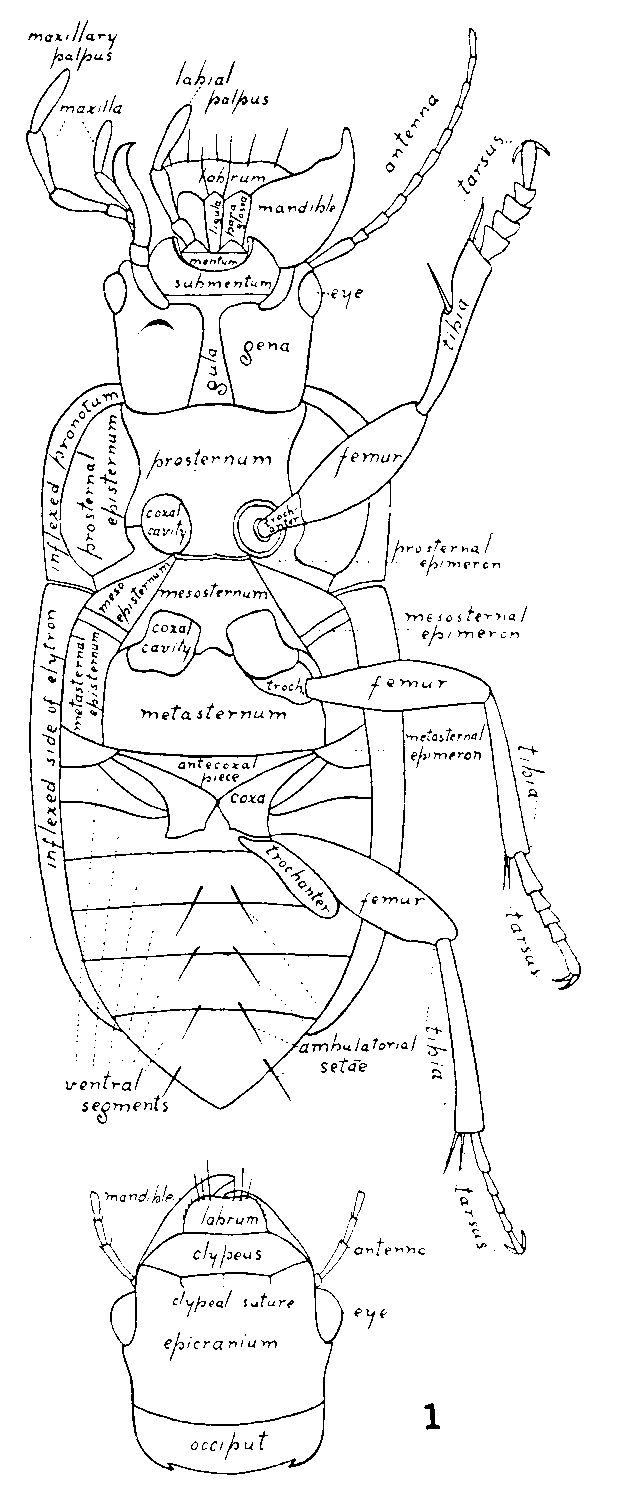
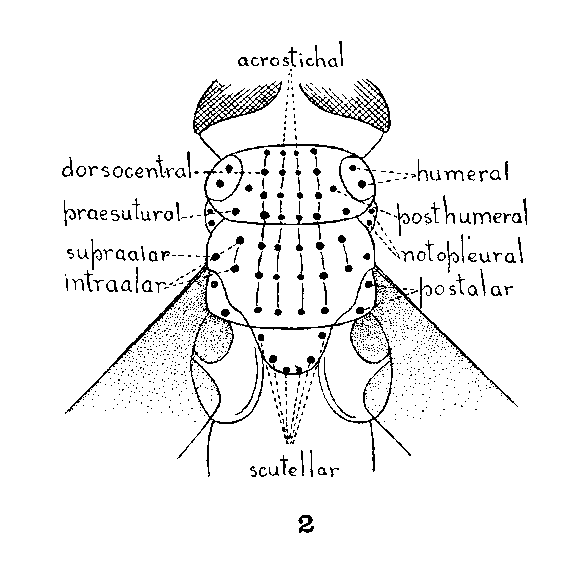
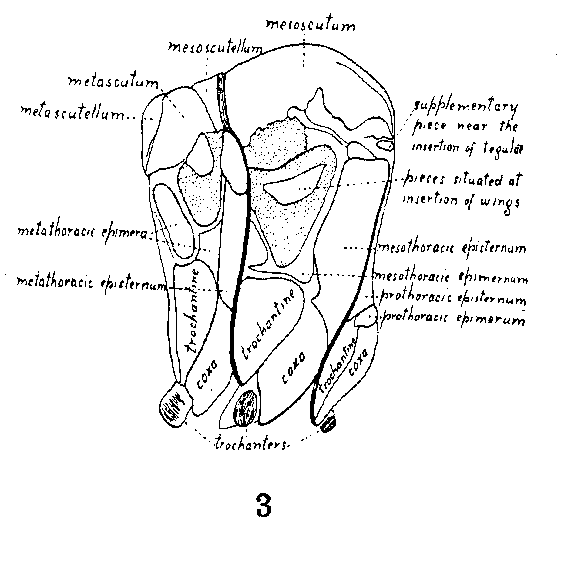
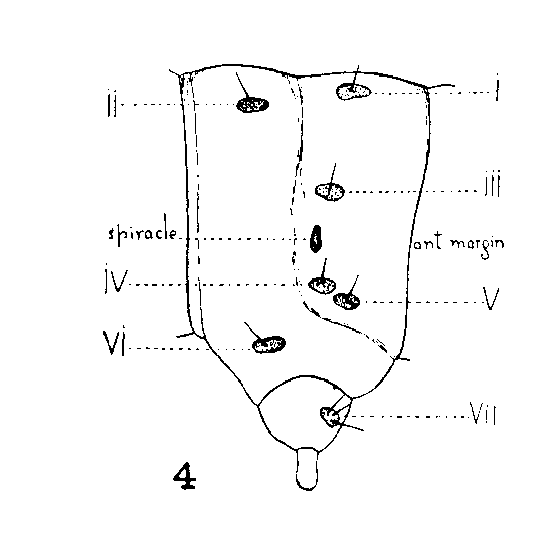
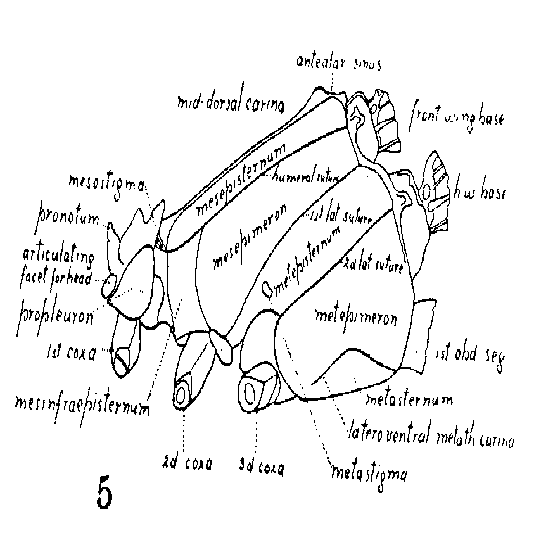
Plate 2
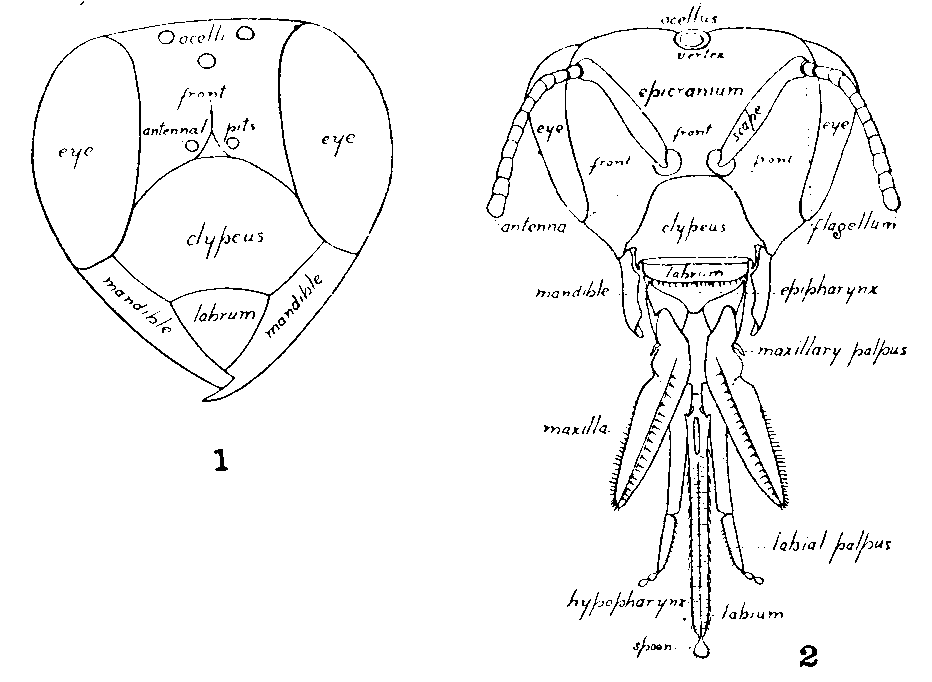
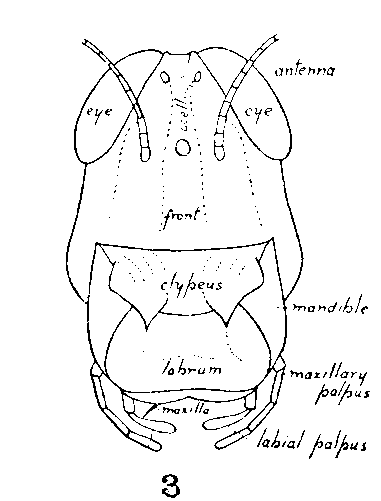
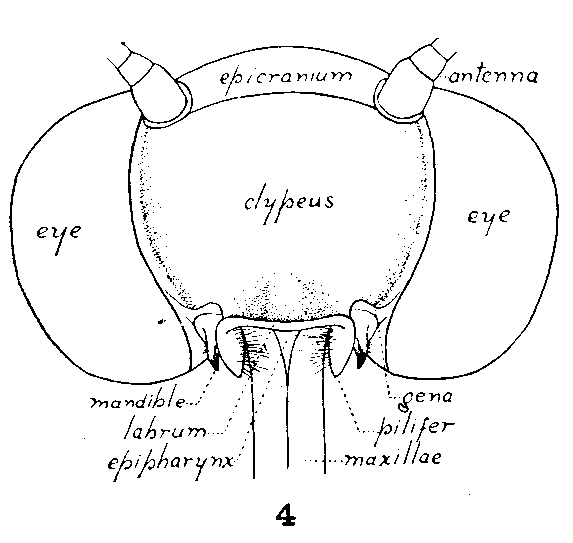
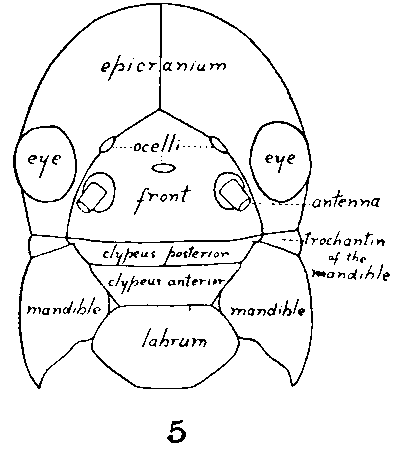
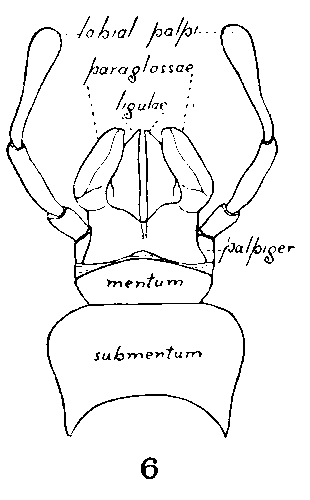
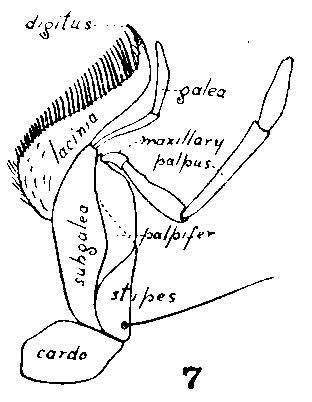
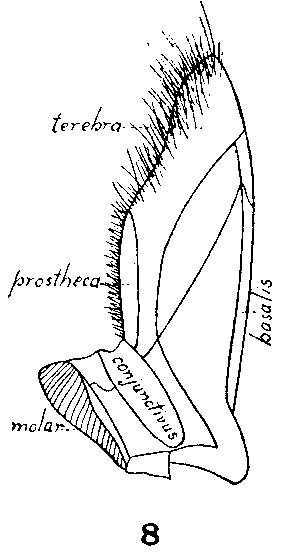
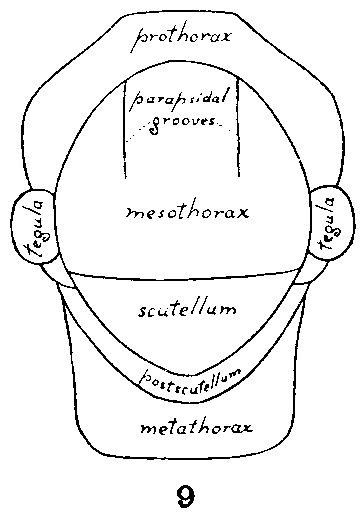
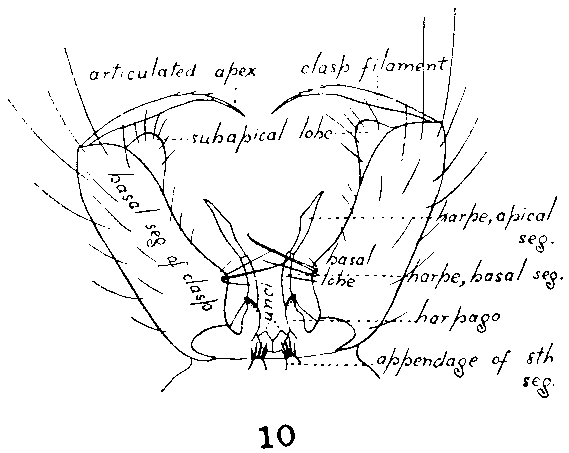
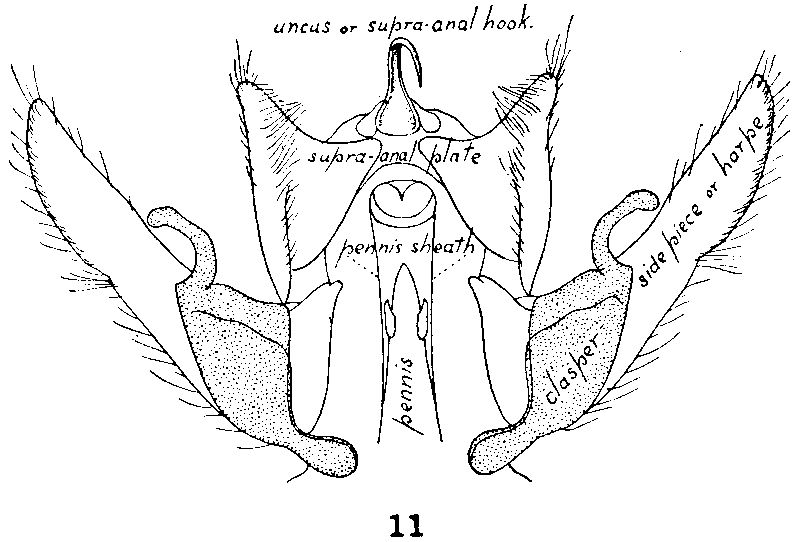
Plate 3
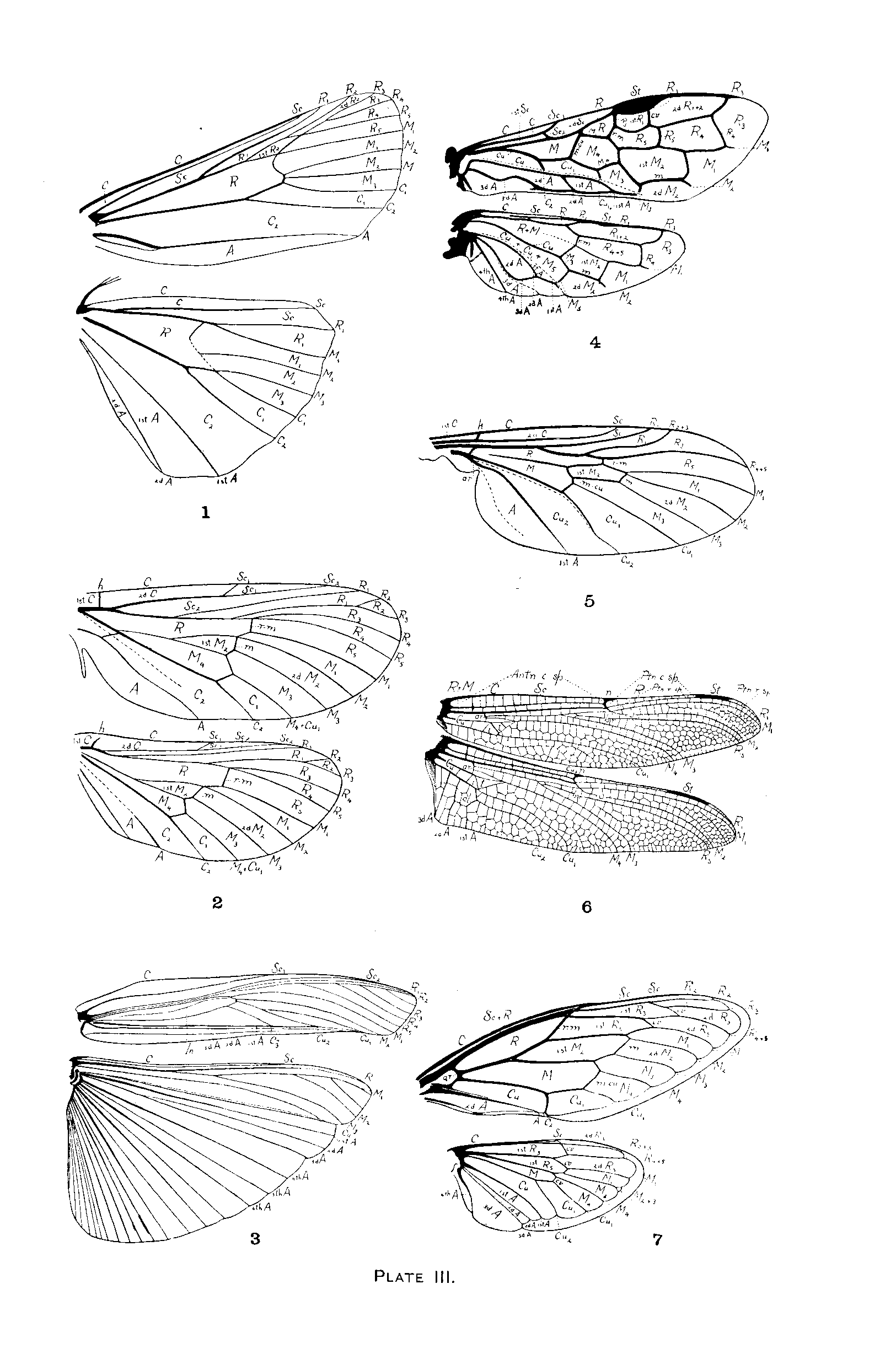
COLOR PLATE.
Nomenclature of Windsor and Newton's Water Colors.
1. Vermilion. 2. Carmine. 3. Crimson lake. 4. Alizar crimson.
5. Salmon. 6. Rose. 7. Purple madder. 8. Mauve.
9. French blue. 10. Purple lake. 11. Violet carmine. 12. Lilac.
13. Cobalt blue. 14. Lavender. 15. Blue gray. 16. Greenish gray.
17. Chrome lemon. 18. Gamboge. 19. Chrome orange. 20. Pale cadmium yellow.
21. Brown pink. 22. Pale clay yellow. 23. Hooker's green. 24. Prussian green.
25. Olive green. 26. Apple green. 27. Nile green. 28. Pale green.
20. Blue green. 30. Neutral. 31. Gray. 32. Ultra ash gray.
33. Indian red. 34. Dragon's blood. 35. Burnt sienna. 36. Brown ochre.
37. Cologne earth. 38. Roman sepia. 39. Van Dyke brown. 40. Pale brown.