XII
Reading edition
Sam gave Lucia an Orthophonic Phonograph for a birthday present. Gershwin’s “Rhapsody in Blue” was almost the only record we ever played on it. We turned that on, about once an hour when we were at home.
“The tune matches New York,” Lucia said. “The New York we know. It has gaiety and colour and irrelevancy and futility and glamour as beautifully blended as the ingredients in Crêpes Suzette.”
I said, “It makes me think of skyscrapers and Harlem and liners sailing and newsboys calling extras.”
“It makes me think I’m twenty years old and on the way to owning the city,” Lucia said. “Start it over again, will you?”
Seven in the morning.
Lucia was calling from downstairs. “Pat, did you have a good time last night? I brought some food in; come down and have grapefruit and eggs with me; I have something exciting to tell you.”
“All right, but it’s so very early, Lucia.”
I got up. My mouth tasted of too many cigarettes the night before. But after a few minutes (and the calisthenics and a shower) I felt all silkily smooth and fresh. There was a gay February sunrise outside.
I put on a dull green jersey dress and beige stockings and brown alligator shoes; and put my money and make-up and a green handkerchief, in my alligator purse; and fitted a beige hat down over my right eye and up over my left. I tied a beige and green scarf around my throat, and got out fresh chamois gloves, and carried them downstairs with my green coat and my purse.
Lucia was looking very beautiful in the same sort of clothes. “Your grapefruit is over on the mantelpiece,” she said. “There wasn’t room for it on the coffee table. Eat it while I finish the eggs.”
“Why did you get me up an hour early, darling?” I said.
“I woke up early and felt conversational.”
“That isn’t why,” I yawned.
“All right, look at this,” she said. She had on a gorgeous new emerald ring.
“Oh, Lord,” I said. “You are going to marry Sam!”
We both laughed. “And I was expecting felicitations, Pat.”
I felt somewhat apologetic, and said that Sam was a grand person.
“You mean,” said Lucia, “that he is forty-five and not svelte by fifty pounds. I’m glad of both those facts. I’ll be the Last Woman in his life, with any luck at all. If I were a prize fighter, I’d want to have a chance at the main bout of the evening, sometime—not spend my whole career getting knocked around in the preliminaries. Besides, did you ever hear of the fifteen gold pieces? It’s a philosophy.”
“Tell me.”
“Every attractive woman has fifteen gold pieces to spend, one for each year between the time she is twenty and the time she is thirty-five. She may squander the first ten or twelve if she likes, but she damn well should invest the rest of them in something safe for her middle age.”
“Who told you about the gold pieces?”
“The woman who washes my hair. She used to be a model for magazine covers.”
“You could marry plenty of younger and gayer people than Sam,” I said.
“I don’t want to. I tell you I want to be the Last Woman in someone’s life.”
“Do you like listening to discourses on the new trade markets of the world, and how much oil they expect to find in China in the next ten years?”
Lucia beamed. “I love it. I am thirty years old, and I have spent five years listening to discourses on new books and new plays and new clothes . . . and wisecracks . . . I never want to hear another wisecrack until I die. I adore hearing about the glamorous future of South America, and how the rate of foreign exchange affects . . . I am not sure what it affects, yet, but I shall find out. . . .”
“Good Lord, Lucia, you expect to be happy.”
“Of course, happy and settled and as protected as my grandmother. I plan to make Sam happy, too. I would marry him if he were relatively poor.”
“How do you feel about sleeping with him?”
“I’d rather sleep with him the rest of my life, for the sake of having his kindness and good humour and honesty around; than put up with the selfishness and vanity and casual, heartbreaking infidelities of any ‘attractive’ man I know, for the sake of occasional golden moments in bed.”
“Do you want to have children, Lucia?”
“I’ll have them if he wants them. Some women who’ve been self-supporting do seem to acquire a permanent feeling that we should earn our way. Have some more coffee, Pat.”
“Oh, dear,” I said, “I shall miss you like hell, and I do feel you should marry someone you are crazy about.”
“You can come visit me on Long Island every week-end, darling . . . and I did marry someone I was crazy about, once. . . . I’ll find you a nice banker, younger and thinner than Sam, if you like.”
“I don’t like . . . I don’t want to marry again.”
“You’ll feel differently, after your divorce goes through next month,” said Lucia. “Run along to work. I have an appointment outside the office and I don’t have to start yet.”
I put on my coat. “Lucia, is Sam really what you want?”
“Not much like what I used to want. And much more than I ever expected to have, now.”
Half-past eight.
My cab was held up in traffic. I lighted a cigarette. Everyone kept saying to me, nowadays, “You’ll feel differently after your divorce,” or “You’ll feel better after your divorce.” Just as they say, “You’ll feel better after you have your tonsils out,” or “after the baby is born,” or “after you eat.”
I wondered if doctors said to the very old, “You’ll feel better after you’re dead.”
Committed to divorcing Peter, with the suit filed, and the lawyer’s retaining fee paid, I knew no more whether I wanted to divorce Peter, than I know what sort of coat I should want for the Springtime of 1940.
If I had held on, for six months more, or six years, would Peter have come back, ultimately? And would I have wanted him, or not?
The traffic signals changed. I told the driver to hurry.
Eleven o’clock.
The ambitious young copy-writer, who would probably have my job some day, knocked on my office door.
“Things are quiet today, aren’t they,” she said.
“Yes, thank God.”
“I wanted to ask you to luncheon,” she said shyly. “You see—you are older than I, and married, and a successful business woman; and I wanted some advice.”
Well, I was twenty-five, she was probably twenty-one. I myself had thought twenty-five a fairly advanced age, four years before I reached it.
“I am sorry I can’t lunch with you. I have an appointment with the misses’ dress buyer. But why don’t you sit down now and tell me about it.”
She stumbled about for a beginning.
“Your work is going very well these days. I have been meaning to tell you so,” I said.
“It isn’t that. Thanks awfully, though . . . I want to get married.”
“How very nice. I can arrange for you to get a leave of absence whenever you want it,” I said.
“No. The thing is—the man I’m thinking of marrying insists that I give up my job. He doesn’t want his wife to work. He hasn’t very much money, but he will make more all the time . . .” She stopped.
“Same old marriage versus career problem?”
“Yes.”
“How old is this man?”
“Six months older than I. He’s twenty-two.”
“Do you care very much about him?”
Tears filled her large innocent blue eyes. “I love him terribly,” she said.
I was surprised by my own enthusiasm. “My dear child, marry him—and if you have to get a job some day you’ll get one. If there’s anything I can do to help—I mean I can give you notes to people who will sell you your furniture wholesale—do tell me about it. . . . Tell me some more about your fiancé.”
She talked and talked. She said she would be leaving in two weeks.
She had not needed my advice—she would have married him anyway, probably. She would have done well, in advertising.
Instead, she would eat canned beans the night before her husband’s pay day, or something of the sort, I supposed. And I would have to teach someone her job.
I wondered if I meant the rhapsodies in which I finally told her that she must not let love go by, or words to that effect . . . and decided that I meant them, in some moods.
Five o’clock—telephone ringing.
“Pat, it’s Nathaniel—I’m celebrating—have you a dinner date?”
“Yes, I have a dinner date, but I should like to celebrate, briefly.”
“I’ll meet you at the side door at five-thirty.”
End of the day. Hands-and-neck bathed. Face cold creamed, lipsticked, rouged, powdered.
Nat waiting at the side door.
“Hello, small girl. You’re looking lovely. My aged father up and gave me a raise. He made two hundred thousand in the market last week, so he raised my salary from fifty to sixty dollars. Let’s have cocktails.”
Giacomo’s bar. Clover Clubs cold as ice cream, and pink as fingernail salve.
“Nat, where have you been all these two days?”
“I forgot to tell you—so excited about my raise—I’ve been on a trip—longest trip I’ve taken since my brother died sudden—I’ve been to Philadelphia—papa’s building a bank there.”
He looked worn, and dismal.
“It’s grand about the raise, Nat. . . . And some day, some day you’ll go places . . . and see all the lovely pictures in the world.”
“Yeah—some day when I’m fifty and my eyesight is so bad I can’t see anything smaller than a twelve by twenty foot mural.”
I felt sorry for him. He had spent seven years paying the cheque for the brother who had died gaily via the alcohol-chorine route. But everyone paid the cheque for everyone else, after all. And some day his father would leave him money to go places and see things.
“Darling . . . if you want me to cut my dinner date, I’ll try to, and we can go riding about until you feel better.”
“No, Pat. You are a dear, though. You’re always cheerful. Did you have a hard day?”
“No. Advised a young woman to choose love before the advertising business—and marry a man who makes fifty dollars a week.”
“You are a reckless girl. You should be married yourself, but not to anyone making less than fifty an hour. Your taste in clothes is too subtle.”
“How percipient you grow, Nathaniel.”
“Well, I like to look at pictures, and so I notice you.”
Nathaniel’s efforts at compliments always embarrassed me. They were so solemn.
I told him the story about the farmer’s daughter who had a grandmother, and I told him that Lucia was really going to marry Sam, and I told him that he (Nathaniel) was an ever-so-bright hour in any young woman’s day—and then I said I must go home to dress carefully, because I was dining with Horace.
Nathaniel was impressed. “America’s greatest portrait painter.—Pat, will he do a picture of you? I’ll borrow money from the doctor to pay for an option on it.”
“I doubt if he paints me—he’s not definitely through with his Spanish girl.” And then I wished I had not had four Clover Clubs so fast, because Nathaniel hated to hear things like that about people whose work he admired.
“His sense of colour is marvellous, Patricia.”
I talked to him about colour—of paintings, of skies, of buildings—and had him happily stirred about the possibility of making New York the most colourful city in the world by the time I left him to go home to a sombre silent dinner with his father.
I met Lucia coming downstairs as I was going up. She was wearing a white and gold dress, and a wrap with a white fox scarf. “Lucia you look heavenly. Is all this in honour of your affianced?”
“Yes, darling, in honour of him and his brother from Chicago, and dinner at the Ritz.”
“I never knew Sam had a brother from Chicago.”
“The brother has four children dear, and a healthy wife. No good to you, in the soon-approaching days of your freedom.”
“Not having any, I told you.”
“We’ll see about that, Pat. Speaking of men you are not going to marry, has Kenneth got keys to your apartment?”
“Yes, I forgot to tell you. I gave him keys some time ago; so that he could sit about and wait to take me to Harlem, if he turned up late.”
“Well, he’s been poking his once beautiful head in and out of my door for an hour, demanding you. He is very drunk. Poor Ken, he looks like the wandering Jew gone Nordic. He left some time ago, though. I heard him falling downstairs. Were you dining with him?”
“No, dining with Horace.”
“What are you doing, trying out all the self-advertised Great Lovers in New York, one after the other . . . or do you want a sketch of yourself? He never makes them until afterward. Says it’s not anatomically possible . . . I suppose it’s all right for you to amuse yourself though—and you have been cutting down on adventures recently, haven’t you?”
She sat herself in the niche by the landing, where once, I suppose, before the house got remodelled, a saint or a bust of a statesman or perhaps even a virgin had sat.
“Pat I have a minute to talk. Are you very unhappy about divorcing Peter?”
“I don’t think about it. I have cut down on what you call adventures—they are no good to me. At first, I thought I could take them as easiest way to forgetting Peter, but that doesn’t happen. I’m not designed for a just-for-the-fun-of-it woman, perhaps.”
“Never mind—I couldn’t make that grade, either. I’ll find you a husband. I’ll have lots of spare time after I’m married. Meanwhile have fun with the Great Lovers.”
“Horace is no Great Lover so far as I know—and he’s ages old, Lucia.”
But Lucia stood up, and started downstairs. Her voice floated back with her perfume. “Great Lovers—men who’ve ‘known a hundred women,’ and boast of it—they remind me of the man who wanted to be a musician and so took one lesson on each instrument in the orchestra.”
I called downstairs.
“What happened to him, Lucia?”
She put her face against the balustrade below. “He couldn’t play a tune on any of them in the end, Pat.”
Eight in the evening.
Horace was almost as broad as he was long, physically. I met him at his studio, as he had asked. I had wanted to see the things he was working on; because they would be worth seeing, and because Nathaniel would love hearing about them.
Horace had half a shaker full of Martinis before I turned up. He kissed my hand, poured me a Martini in a tumbler, and began to talk. He admired my frock—I had worn my sapphire-blue taffeta, because it was a “picture” dress, and, while I did not plan to go to any great lengths to get Horace to paint me, still one never knew.
If he wanted to, the picture would hang in some gallery where Pete could go to see it, when he was old, and it would help him to remember how I had looked. (I could not “sell” myself that pretty idea, with any conviction. I was sure that Pete would remember me, if at all, as just one among the errors of his youth.)
Horace was entertaining. He had kissed and painted his way from Soho to Manila, and his reminiscences of the pictures and ladies he had made in his day were almost as good as the pictures, and probably much better than the ladies.
He told me a story about a woman who had sent for him (from St. Louis to Honolulu) to be the father of her son. The child turned out to be a daughter, though—and besides the date of its birth was only six months after Horace reached Honolulu. The rest of the story was romantic though.
When he went from that to a monologue about the amount of savoir faire young women could gain from association with older men-of-the-world, I sighed and recognized that he thought of me as a bedroom, not gallery, adornment. Pete would have to get along with a photograph, if he had kept one.
My retreat, for the moment, was easy. It always is, with men who are really beauty-mad; if a woman will be humble enough to realize that they rate her as somewhat less exciting than a sunset, and nothing really to be compared with a good piece of pottery.
Horace had, in his studio, the most exquisite maple lowboy I had ever seen. Its proportions were heavenly, and its patina was that cross between velvet softness and satin sheen that is never actually achieved in fabric.
I began to admire the lowboy. I was as intelligent about it as possible. Soon, Horace was regarding it with love and absorption, and patting its surface with the regard he had bestowed ten minutes earlier upon my shoulders.
When his concentration upon the lowboy was complete, I said that I was painfully hungry. The man had good manners. He took me to eat, stopping to swear at the unfinished portrait of his Spanish girl as we went out.
One in the morning.
I had had a lovely time so far. Horace was a genius, and I had met so few of them among the semi-celebrities. He had talked five hours straight, with time out for consuming a Gargantuan dinner, and endless drinks—about painting and women, and art and women, and life and women designed for the solace of men.
I was trying to remember everything he had said about painting, for Nat, but I could scarcely keep my head up. He was thirty years older than I, but had four times as much energy.
Nevertheless, I felt that just a little more to eat should certainly put him to sleep for the night, so I dragged him to Childs, on the way home, saying that I ached for some of Childs’ coffee. If Horace reached my apartment still able to manage himself, I could not depend on Lucia for assistance. She might not turn up until dawn. So I tried ordering an omelet and buttercakes and pumpkin pie for him. He enclosed them all, with no apparent difficulty.
Ten people bowed to me, but not one came over to join us. And Horace had discovered that I was utterly voluptuous. (No one else had ever said that, and I doubted his judgment. I weighed only a hundred and five pounds now, and that is not voluptuous by most standards.)
I looked about, but there was no maple lowboy in Childs for Horace to examine instead of examining me. So I let him call a cab, suggested a taxi-ride, discovered within five minutes that I might as well let him take me home, and said, “Let’s go home.”
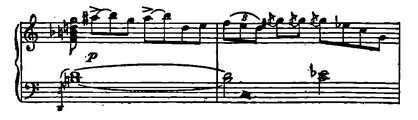
Two in the morning.
As I waited, while Horace paid the cab, the night air blew clean and cold and fresh against my face, and a winter moon that looked very remote and detached, shone down on the tall dark buildings, and the quiet grey street, and on Horace and the taxi-man and me. And I had, for an instant, that feeling that New York was an altogether beautiful place to live, no matter what happened to me living in it—a comforting feeling that had come to me sometimes, of late, when I stopped looking to people for comfort.
Horace trotted energetically up the stairs behind me. I felt worse, every step I climbed. I did not want him to stay, could not think of any good reason I should ask him to go, and unlocked my door.
I sat in a small chair, so that Horace would have to sit on the couch, opposite; lighted a cigarette, and wished I could go somewhere to sleep for a month.
Horace sat down heavily.
I waited for him to begin whatever he planned to begin.
“Young woman,” he said. (Probably he was near enough drunk now so that he did not remember my name.) “When I met you, I thought you were intelligent, because your head is the right shape.”
I grinned. He was going to be original—well I might have trusted him for that.
“You are not intelligent, though, else you would set higher value than you seem to set on the admiration of a man like myself, who is a connoisseur of women. Perhaps you prefer callow and pretty boys—”
(Oh, he minded being old, did he? Now I could not send him home. He would feel so—done. It was not fair for an assistant advertising manager to make a great painter feel—finished.)
“I’m extremely flattered that you should have devoted an evening to me, Horace.”
“Don’t say words that mean nothing, young woman. Listen to me, please. I have something to say that may interest you.”
He was a bit arbitrary, but if he felt like it, I did not mind. I was too tired. His huge head was framed against the whiteness of the panelled door behind the couch. I wondered if he had ever done a portrait of himself—that grizzled head was marvellous. I wished that door led somewhere I could go, instead of leading just to the bath. I could not spend the night in the tub.
“Young woman,” (I thought that if he called me that again I would fling a cushion at him. There was no reason why I should let people sit in my own apartment and say “young woman” to me, whether they could paint beautiful portraits or not.)
He went on. “You have a body that is delightful, whatever you may lack in intelligence. And since you seem to set no value on me, personally, I will give you the maple lowboy you had taste enough to admire, if you will let me stay here tonight.”
That means the Spanish girl is not coming back to have her picture finished, and the man is offering me the successorship. He can stay, unless I think of a method of getting him out that is more subtle than saying, “You are rather a disgusting old man; please go.” Because he is not disgusting, he is just candid. Wants what he wants and will pay a price for it.
Oh, I suppose I shall have to let him stay, but he can keep his maple lowboy. The only thing I have left to cherish is my amateur standing. (Did that door behind him move? I’m so tired I am seeing things. Of course it did not.)
Horace had not finished talking, quite. “Permit me to light another cigarette for you, and take five minutes to consider the lowboy. There is not another like it in America.”
He lighted my cigarette. Then he took out his watch.
“It is twenty minutes past two. I shall ask for your answer at twenty-five past.” He stood staring at the watch.
I laughed. He ignored me. I looked at my own watch. I knew I should say something to stop this absurdity, but I could not talk, I could only laugh.
“It is two twenty-five,” he said. “Do you want five minutes more to make up your mind?”
There was a sound of glass smashing, in the bathroom. Horace turned. The bathroom door opened a little. A voice said, “For God’s sake, Pat, take him or leave him, now, I can’t live five more minutes without a drink.”
“Kenneth!” I said. The bathroom door opened wide. Kenneth staggered out and leant against it. His opera hat was on one side of his head—his tail coat was crumpled. He stood, tall and golden-haired and dreadfully thin, grinning down at us both, looking like a cartoon of a Young-Man-About-Town.
Behind him, I could see a bottle smashed in pieces on the floor.
Horace had got his breath back. He roared—at me. “Who the hell is this?” He lost his breath again, after the roar.
Kenneth answered.
“Sir,” he said in the more severe of his Harvard voices, “If you are inquiring about me—I am the young woman’s—manager. I agree with you that she is charming, but she has the annoying habit of going out to get business for herself occasionally, in spite of our arrangements. Now—if you will discuss things with me. . . . You were saying something about a lowboy. We don’t usually take furniture—but if it is accessible for evaluation—”
Horace got his breath back, permanently, as far as I was ever to know. He got his breath and his hat and coat and gloves and stick. He began roaring.
He roared all the short Anglo-Saxon words I had ever heard, and a few others whose meaning I gathered by his tone. He walked out. His roars could be heard receding, as he stamped downstairs.
I wiggled about in my chair. “Kenneth, you idiot,” I said. “Did you ever hear so many synonyms for slut as that man used?”
But Kenneth did not think it was funny.
“Damn you, Patricia,” he said, “You would have let him stay—that horrible old man. ‘Let me stay and I’ll give you a lowboy.’ Christ—let me stay and I’ll give you—”
“Kenneth, stop please—I’ve had a damnable hour and I can’t stand any more. You had better go away.”
And then that tragic young man, whose gaiety was perennial as the blueness of his eyes, began to sob, and sob, and sob. He sat on the floor, and took a ruffle of my blue frock in his hands, and shook with sobs.
I patted his hair a little. I could not think of anything else to do for him. I said, “Please stop, Kenneth, dear. I am not important enough for anyone to cry about.”
He grew steady, after a little while, but he still kept twisting the blue ruffle in his hands.
“Patricia,” he said very softly, “so little and so nice—too nice to get mauled by all the fools in New York.”
“Please don’t, Kenneth,” I said.
“You stir me too,” he said, “didn’t you know? I am no different than the others.”
“No, I didn’t know.”
“Damn them,” he said, “and I can’t ever touch you.”
“Kenneth, my dear, my dear.”
“Patricia, if I never touched you, would you marry me and go away somewhere? I have enough money left so that you could live a year. I shan’t live a year. We could go to California, and you could swim in the Pacific.”
It sounded pleasant.
“But what’s the use Kenneth? Isn’t your favourite aphorism that there’s no sense in going other places if you have to take yourself along? Thank you, though.”
We sat quiet for a little while.
He looked up and smiled, and I knew he was all right again.
“Car’s around the corner, Pat,” he said. “Want to put on something warm and go for a drive in the fresh air?”
“Let’s,” I said.
“Bring a volume of Swinburne along, like a nice girl,” he said. “I’ll make you read aloud to me at breakfast, if we stay out that long.”
Kenneth liked me to read poetry to him—quite old-fashioned, romantic things. Perhaps they were things that had pleased him when he was in school, or perhaps his Hungarian dancer had liked them. I never asked.
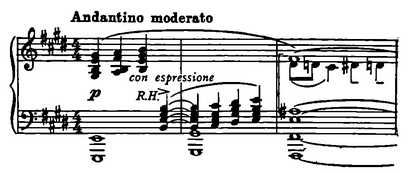
Seven in the morning.
The sun was rising over the East river. We sat, Kenneth in his crumpled evening clothes, and I in my blue frock that just would not ever look fresh again, under an old fur coat, in his car at the foot of Beekman Place, by the river. We were quite warm and happy and sleepy. I was reading aloud to him from “The Garden of Proserpine.”
From too much love of living—
From hope and fear set free
We thank with brief thanksgiving
Whatever Gods there be
That no life lives for ever—