APPENDIX TO THE ESSAY ON CLASSIFICATION. (continued 2)
Reading edition
No. 25.—Admitted 1803.—Aged 28.
Nothing satisfactory on record. I have been informed by his family and friends, that he was a proud, passionate, spoiled child, and that the immediate exciting causes of his derangement were these. Through the interest of an elder brother, he expected to obtain a most lucrative and respectable situation in the East Indies, but it was discovered on his examination that he did not possess the requisite qualifications, consequently, he was not merely disappointed, but his pride was doubly mortified by being reduced to the necessity of undertaking the management of a common farm; there, with several other causes, these things operating on a spirit ill prepared for any adverse wind or the common storms of life, soured his temper; and at last produced so exasperated and violent a state of mind, that his mother, sisters, and friends, were compelled on account of various outrageous acts of passion to confine him.
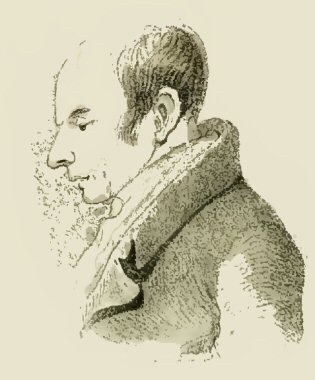
It is said that he was so violent after this, that it was deemed necessary to punish him, by chaining him for years, at times, to another patient; and yet, notwithstanding this treatment, it is evident from the remark of an old journal he then wrote, that he possessed a considerable proportion of mind; there are many excellent reflections on general subjects, joined, it is true, with what must appear to others, trivial observations, on the conduct of the attendants in the house. About two years ago he was subject to maniacal fits of outrageous passion, when his manner was proud and stalking, his voice loud and blustering, and his language contemptuous and imperative; calling the house his own; commanding every one of us as his servants, in grand style. The mention of a single fact, out of an immense number, will be sufficient to characterise his spirit and manners. Often have I seen him look at the patients with ineffable arrogance and contempt, and say, in a style which no acting could imitate, “Take this dog out of my sight.”
This violence and noise was so exciting to others, and unhappy for himself, that after various attempts by methods of kindness and argumentation, he was, without any previous threat, taken to the medical swing, where I told him that I was sorry to be obliged to apply so severe a medicine, but that I was certain from his conduct lately he must be very unwell, and that this would cure him, and more to the same purpose. Since this time, I have never heard any noise, or seen any violence about him. The name of the swing, after this, was enough to check him; but now even this was not necessary, and his seasons of excitement have from self restraint disappeared; and he is now, though an old incurable case, much more social than he was. In fact, he appears affable to me, and in some measure, even is so to the patients around him. He is fond of whist, and has very much improved in the game; and when I add to this, that reading the newspapers, walking, taking large quantities of snuff, and laying leaning on his arm, fill up his time, and that he is a dark, cadaverous, sulky, proud, gaunt looking man, all the house will know him. [192]
No. 26.—Admitted 1806—Aged 45.
There was nothing on record; nor have I been able to obtain any information about her previous history, except that she was a charwoman. Her appearance was rather respectable, her manners and conversation were distinguished by sort of bravado air of pride, very often extremely wild and extravagant; she was particularly fond of boasting of and displaying herself as being or doing something great and wonderful,—a general, lord mayor, king, &c.—always a male, and had a full beard on the upper lip, and her voice was more like that of a man than a woman. When addressed as a female, she immediately said she was a man, or a woman turned into one. She was very fond of decorating herself in a fantastic style. When provoked, she swore and talked most brutishly and strangely. She was removed May 15th, 1822—much in the same state, except that latterly she was worse, and not so useful in the laundry as she had heretofore been.
No. 27.—Admitted 1806.—Aged 36.
Nothing on record about her, but report says, that others in the family are insane; and that the exciting cause, in her case, was the loss of some money she had saved in service as a cook.
She is at present in a state of imbecility of mind, and she looks a quiet, timid, silent, motionless, stupid creature, sitting continually in the same posture, like one almost shivering with cold. Although extremely peaceable and timid, yet her mind is irritable, wanting, however, courage for retaliation, so that when provoked, she looks angry, but walks away: she never speaks unless spoken to, and then her answers are short, but mostly correct, though it is evidently all force work. This has been for years her state, or rather debility, with scarcely any perceptible changes, except that her mind appears gradually sinking. She was formerly more conversable, and would have done something at her needle, but at present she is always idle, and has latterly, from inaction, become less cleanly in her person.
OBSERVATION XIV.
Her habits of saving (if the report be true) prove her love of money, the loss of which would of course, be felt in proportion as she valued it; and, with her exceedingly susceptible and delicate mind, it must have been overpowering; hence, as in all hereditary cases, there was something discoverable in the natural disposition which rendered the exciting cause more efficient, and we find benevolence, caution, and consciousness large, and self-esteem and combativeness defective.
No. 28.—Admitted 1806.—Aged 23.
There is nothing on record, but I have been informed that the cause was religious controversy, resulting from association with the followers of Johanna Southcote. [195] He was the son of a respectable country wright and joiner, and had a decent ordinary education.
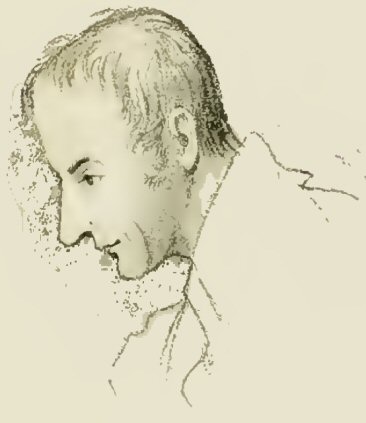
His present state of mind presents a strange mass of confusion from which nothing can be drawn or collected, except that from his fondness for drawing houses, and different things connected with building, and from his muttering to himself (for he declines all conversation with others) something about measurement, the square being so much, &c. some traces of his former habits of life, may be remarked and determined: the strange and absurd material views of the coming new order of things, betray the view which did (and I am told, still,) belong to that sectarian delusion. He is chiefly distinguished by his unsocial habits, and by the singular practice of always cramming a part of his meat, and sometimes other things, into his ears, shoes, breeches, and different parts of his dress.
No. 29.—Admitted 1808.—Aged 47.
Once for all, I must say of these old cases, since there is no book or documents concerning them, that the origin, nature, and progress of the disease cannot now be known except from enquiries directly made, either by writing, or of such friends as may occasionally visit them; and with many of these lower class of patients, it cannot of course surprise us that they should not have any friends to visit them after such a lapse of time. This is more likely to be the fact when the character of the case is of a more revolting nature—as is very singularly so of the one I am about to describe. Yet she has had visitors, from whom, however, I was not able to gather any information upon which I could depend; her insanity was said to be hereditary, she having a sister who is insane.
She is one of those old cases which, in former times in this institution, were kept naked in loose straw and not allowed seats; and hence she now, from this deprivation, sits huddled up, resting on her calves, when worn out by her violence, curled up like an urchin in a corner in a sort of dog sleep, the slightest noise instantly rousing her, when she starts into her strangely agitated state,—shaking her head and gnashing her teeth, and uttering horrible curses with a sort of barking, hoarse, and hideous gutteral sound, apparently against some object present to her imagination; in this violence she formerly continued, sometimes for weeks, latterly only for days, with the most part only for hours, with scarcely any intermission. In fact, she was in appearance and manner the most brutal and blasphemous demon—no imagination can picture any thing at all equal to the awful reality; and yet it is a remarkable fact, that, some years since, her intellect was restored by a very decided physical cause, the breaking of her leg; when, during the process of the bone uniting, her reason returned: her manners were mild, grateful, and affable, and the tone of her voice was soft and sweet; and again, when her leg was healed, she relapsed into the same violent state. It has continued, excepting a short convalescence during an attack of dysentery: and this is now more than seven years ago; and after which, an artificial drain was kept open, but with no apparent benefit; the dysenteric attack was also imitated, but with no further benefit or effect than its mere physical depressing influence at the time. It is worthy of notice, that when taken to the swing [198] a second time, she talked more sensibly, refrained from swearing, promised to behave better, and in a sweet tone begged not to be swung: since this time, she has been less violent, has shaken her head and sworn less than before; indeed she has a more good-natured manner, and very often expends her excitement in mirthful dancing and singing, and generally seizes my hand, that I may dance with her.
OBSERVATION XVIII.
Though the doctrine of Demons, or being possessed, has been discarded; yet, in my opinion, it deserves a more serious consideration than medical men imagine:—it involves the true theory of mind and matter, their connection with each other, and the principles on which this connection depends, and by which it is regulated. I shall leave this question for the present, with the intention of returning to it at some future opportunity. However, one thing this case serves to prove and illustrate, which is, that whatever mysterious link the mind may constitute in the order of being, it is certain that this is according to or dependant on the physical condition of the material organs through which this connection operates, so that the physical reasoning on disordered and diseased organization remains precisely the same, whether we admit or deny that the visible, and invisible world subsist together and are in indissoluble connection.
No. 30.—Admitted 1808.—Aged 47.
I have not been able to obtain a very accurate or full history of this old and incurable case. He was a clergyman of the Church of England. He had been a hard reader and distinguished student at Cambridge, and he now gives proof of his having been an excellent classic. It is said, that after he had obtained a small vicarage, although not an immoral man, he was gay and expensive in his habits. After the age of thirty, he hastily married an exceedingly beautiful girl of about sixteen years of age, but who was uneducated and from a low station of life. Afterwards discovering her deficiencies as a companion, his love cooled into indifference, and his naturally proud, impatient, and uncontrollable temper was made worse; he treated her harshly, their quarrels became habitual, and they lived in hatred, misery, and distraction together.
In this state of his disappointed affections he was seduced into various intrigues. Shame, conscience, and loss of character, quarrels with his parishioners, aggravated at the same time by a fall from his horse on his head, increased his natural irratibility of temper, and so mortified his pride, that he became desperate and attempted suicide. After this he had a regular paroxysm of maniacal violence, which subsided, although it has returned with considerable increasing intervals up to this time.
During his lucid intervals, he will talk of the harshness with which he was used, when it was first considered necessary to remove him from home; and there is no doubt there is some truth in his statements: at the same time it seems right to observe that, if in any instance it can be excusable to allow our natural feelings for a moment to overcome us, this was one of such cases. The proud, malignant, and contemptuous manner displayed in his violence, was irritating in the extreme.
About eight years ago, he continued for some time in a perfect state of convalescence, and when the paroxysm returned, its violence and duration appeared in proportion to the length of intermission. These paroxysms and intervals of convalescence have since preserved the same ratio to each other. It is remarkable that the last interval of convalescence, commencing about five years ago, continued for more than three years, which I attribute to the absence of causes of irritation, more delicate and attentive treatment, and constant resources of various amusements. During the whole of this time, he could not be persuaded to leave the place; he said “It would not do;” that he “should soon be worse than ever.” The name of home and his wife seemed to make him shudder; and when asked if he should not like to go, he shook his head, turned away, and said nothing; but he evidently painfully felt the association of old exciting causes.
It ought, however, to be mentioned that during the whole of this time he would frequently exhibit signs of great uneasiness and irritability, would pace the gallery or airing court, in quick and hurried steps, and afterwards call his attendants to play a game at whist or backgammon: at these times he was in the habit of chewing orange-peel, which he constantly carried in his pocket for that purpose, and afterwards he would say his troubles were overcome. He has since had a return of his insanity, from which he never perfectly recovered; I have since understood that he is dead.
OBSERVATION XIX.
The most obvious remark suggested by this case is, that, like many old cases, when once an irritable habit is established in any part of the mind, how easily the mere association of old existing causes will overturn the balance and introduce a relapse into the same state: no exciting causes can have more power to do this, than the constant painful state of mind which ill-assorted and unhappy marriages produce; and therefore, the next most obvious remark suggested by this case, is the evil which arises from the whole mind being ultimately disagreeably affected by the contraction of hasty, mistaken, and ill-assorted matrimonial connexions. As the sublime principle of rightly-constituted and spiritual or mental marriage is involved in the consideration of such cases; and as, from the want of a proper understanding of this principle being duly impressed upon mankind, the evils and miseries which the parties bring upon themselves and entail upon their offspring in the world, are so numerous and so frightful, and so frequently the cause of the most terrible forms of insanity, I shall, in an after part of this work, endeavour to embody in an essay expressly on this subject, all the arguments which I can bring forth, for the purpose of enforcing this first, this inmost, this greatest, grandest principle involving the happiness and well-being of the world.
No. 31.—Admitted 1808.—Aged 30.
He is a surgeon, and was formerly in great repute as a successful practitioner, as well as a lecturer on anatomy, surgery, and the practice of physic.
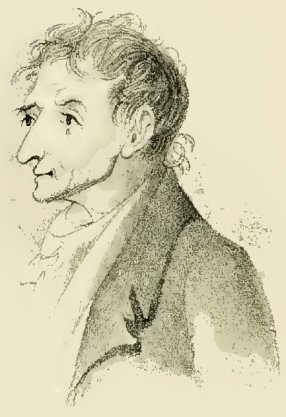
He was very studious, and chiefly during the night, though his sleep was already sufficiently broken by his professional labour. As a young student he was ambitious to excel, as he would often say, “I employed my time well, that it might serve me in after life; and it did so.”
His mind is naturally one of much greater activity than power, hence his harassing day and night practice and preparation for lecturing induced a morbid state of mind, in which condition a fever in his family occurred. Rapidly and unexpectedly, four male children, a niece, and a maid-servant, were the victims, and this completed the wreck of his overworked, active, and feeling mind.
His present state is most interesting and singular, and very difficult to describe. His activity of mind, prodigious command of words, and most animated and graceful manner, excite the greatest surprise; and even in his present deranged and deluded condition, with his varied stores of information, these exhibitions are mistaken for the remnants of versatility of genius; yet, as I have already said, it is most true that his mind was not naturally one of so much power as it was of amazing ambition and activity.
He will suddenly rush into some of his anatomical, surgical, and medical lectures, going through different parts of the human body, operations, and practice. His lectures on the circulation of the blood, seem to have been most strongly impressed upon his memory. At other times, his eloquence is displayed in imitations of various celebrated characters. If they are ancients, and he be asked, how can this be? since they lived two thousand years ago, he says: “Yes, but I died and rose again in the world.” And thus, he imagines himself every character he personifies, and that at that time he was alive, and afterwards died, again reappearing in such another character. In this way having passed through numberless transmigrations, he was Adam, Abel, or Melchisadeck, Abraham, Isaac, and Jacob, Moses, Joshua, Samson, Goliah, David, and Solomon. Solomon had great attractions: frequently describing, with great animation, his state of grandeur and enjoyment. In the same way he was Aristotle, Pythagoras, Confucius, Plato, Zoroaster, Pliny, Ptolemy, Cicero, Demosthenes, and particularly Homer, Mahomet, and even our Saviour, &c. All these he will still personate, and make speeches differing in manner and matter, and suitable in some measure to each of them.
In medicine, all the list of celebrated men are claimed as the same transmigration of his soul. He lifted up the serpent. He was Hypocrates, Celsus, Galen, Paracelsus, Stahl, Van Helmont, Boerhave, Cullen. In anatomy, surgery, chemistry, and natural philosophy, it was the same. The whole list of celebrated medical men is monopolized by this mania of transmigration.
He always addressed strangers as contemporaries, saying, “Good God! you were alive at such a time: I knew you well; you were with me when I conquered at the plains of Marathon! or, you met me at such a place when I was singing the Iliad, as old Homer,” and so on. All this with such a fascination of look, manner, and address, that he arrests and amuses every one, especially strangers. He frequently talks with imaginary, and especially angelic beings, which he does with a manner and expression that prove he believes he beholds their actual presence.
He had a peculiarly bright and glistening eye, indicative of the secret and destructive habit so dreadfully fatal to the insane.
It appeared to me, since amidst all this strange confusion and delusion, his intellectual powers were still in existence, that if his understanding could be constantly occupied, this confused condition might in time be corrected, and his mind restored to a right state: for this purpose I undertook to make him translate a French work, while I wrote from his dictation, at the same time checking and controlling his wild starts into all these vagaries. In this manner we nearly finished an important medical work together, and he was evidently much improved by the exercise; the task was however so amazingly arduous, that in the midst of my other duties I was obliged to discontinue it, and he then relapsed into his former state.
The effect, however, was sufficiently decided to prove a fact of very great importance, and many such facts having since occurred, which further tend to confirm that many cases which are generally given over as incurable, may be cured by a well-directed exercise of the understanding, by which it is at once strengthened, and the mind drawn and excluded from the exercise of its insane feelings and hallucinations. In some cases I have made them translate a work on the nature and effects of their secret vice, and it has silently checked this habit, and at last restored them.
Here I close my description of these old cases, conceiving I have given a sufficient number for the purpose I had in view, that of exhibiting a fair average picture of the state and character of the old insane. After one general abstract observation on the whole essay, I shall afterwards, and following this last case, make my next essay on the origin and nature of disease in general, and of insanity in particular: and which I shall do as preliminary to the more intimate and direct investigation of the causes and nature of insanity; and especially the direct consideration of the cause to which I have alluded in this case, because it is one of the most general and most fatal causes of insanity, and a cause, which if not removed, inevitably renders them incurable. Such was the habit of the person whose case obliged me very reluctantly to assume a defensive attitude, and refute falsehood by a statement of the truth, or otherwise I should have continued silently to proceed in the path of duty, without obtruding our own secret exertions on the notice of the public, as it may appear that I have done in this essay, as well as in those which are to follow, written, as they will be, in some measure on the same principle, for the truth should not suffer from diffidence, any more than it ought to be brought into disrepute by vain ostentation; still, I am quite certain, that I am actuated by no feelings incompatible with charity and justice.
CONCLUDING OBSERVATIONS.
The concluding general observations on this Essay and its Appendix, are, that the one principal object I have had constantly in view, has been the removal of the erroneous impressions and prejudices which exist almost universally against the insane, as if they alone were all furious wild beasts or infernal demons, and which have hitherto excited and still continue to excite a spirit and conduct toward them, productive of a baneful and injurious influence.
So long as these prejudices exist in the mind, even the soothing treatment which is now so much the boast of the age, assumes a spirit and manner, perhaps as galling and injurious to the afflicted as was, undoubtedly, the heartless tyranny of former times.
I deprecate that altered tone of voice and manner which implies in every word and action, that they are considered either as children, or as beings wholly bereft of rationality.
In the system (which I have in some degree stated and explained) of receiving and treating them as visitors, even as though they were still rational, and of course observing towards them the same polite and delicate attentions as are practised in well-bred society, the same irresistible effects which precept and example always produce in every sphere, in proportion as they are exercised in sincerity and truth, will be found to be produced also on them; and hence we may easily perceive how it comes to pass that we have so much greater dependence on their attachment, good conduct, fidelity, and honour, than is generally imagined to be possible, and why, consequently, the greater liberty which is given them is seldom or never abused; and, as cause and effect increase each other, it is evident that this system, by exciting and exercising the higher feelings and moral principles of the mind, produces, (as will be seen from the tables I shall hereafter introduce) a much greater proportion of cures than has hitherto been the case. It is much more conducive to cure than the system of perfect separation and exclusion from any association. This truth is another important reason for being anxious, from the best of motives, to remove these baneful prejudices which have hitherto made a marked moral line of distinction between diseases of the brain, and other parts of the system, exclusively and absurdly making the former a proof of some shameful criminality. And though this greater degree of well-judged liberty (not indiscriminate) appears alarming to those who retain the usual worldly prejudices against the insane, it is in reality attended with much less of danger or of any thing to excite the fears of others, than most assuredly is a contrary system.
I am now enabled, from nearly twenty years’ experience, to say this with confidence; and I am the more anxious to impress this on the world, in order that I may not be obliged, from too great a deference to its fears and prejudices, to abridge the exercise of this influence, so far as to lessen the happy effects of a system which theory and feeling have suggested and compelled me to pursue, and which increased knowledge and experience have confirmed and justified.
Our fears and prejudices create and realize that which would otherwise have no existence. We often blame effects of which we ourselves are the cause. This is one principal, if not the only, source of all our complaints and all our troubles. Servants, children, families, sects, parties, nations, and even the insane, are more or less good or bad in their conduct and character, in proportion as our principles and conduct towards them are under the influence of a wrong spirit or a right one.
Such are our views, and I trust it will be seen (the experimental part at least,—the theory will be explained in due course) that we have endeavoured, however imperfectly, to reduce them to practice.
Wherever natural and spiritual good exist, there we shall behold those best fruits of charity, of which the vine and fig-tree are beautifully appropriate emblems.
I trust that what I have advanced will be considered less as a personal boast than as an explanatory statement, suggested by recognised evils, and enhanced by candour and conviction. Although past conduct is the best guarantee for the future, yet it is by no means an infallible security; and it altogether ceases to be the test of any security, the moment boasting, pride, or self-confidence exclude a higher and better dependence.
THE END.
DEAN AND MUNDAY, PRINTERS, THREADNEEDLE-STREET.