VOLUME VII SLICE III Convention to Copyright (continued 2)
Reading edition
Pneumatic Grain Elevators have been employed with good effect in loading and unloading grain from ships. This method of conveying grain falls under three systems: (1) the blast system; (2) the suction system; and (3) the combined blast and suction system.
In the first system a barge, known as a machinery barge, is fitted with a steam boiler, a set of air compressing engines, and a length of flexible piping long enough to reach from any part of the barge to the farthest corner of the ship to be loaded. A small pipe, known as the nozzle, is inserted at the inlet end of the piping, where the grain is taken in, and communicates with the air compressor at the other end. Compressed air can be admitted to the nozzle or shut off by a valve. The inlet end of the flexible pipe is pushed into the grain in the barge, while the other end is led over the hatches of the vessel to be loaded. As the compressor is set to work and the valve of the compressed air supply pipe opened, the air naturally rushes up the pipe and escapes at the other end which is lying over the ship’s hatchway. If the inlet nozzle be immersed in the grain to the depth of 12 to 18 in. the induced atmospheric air will follow the lead of the compressed air, and drawing the grain around into the inlet nozzle will carry it up the pipe and deliver it into the hold of the vessel loading.
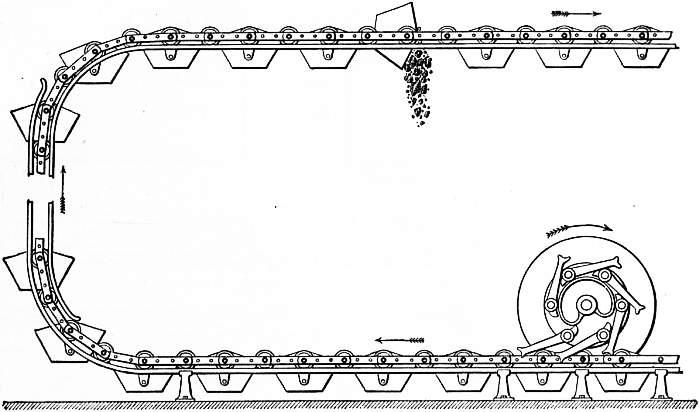
Fig. 10.—Travelling Bucket Elevator.
In the suction system, which is identified with the name of F. E. Duckham, the process is somewhat different. An air-tight tank or receiver, 8 to 10 ft. in diameter and 10 to 20 ft. high, is fitted with a hopper bottom, and is erected, if floating, on a barge, at a sufficient height to allow grain falling from the hopper bottom, and passing through an air lock, to be delivered by gravity through a shoot into the vessel being loaded. A pipe connects the vacuum tank with the exhaust pumps. Several flexible pipes of sufficient length to reach any corner of the ship to be unloaded, may be connected with the vacuum tank. As the air pumps are set working a partial vacuum is formed within the tank, and as the nozzle end of the pipe is immersed into the grain to the depth of a few inches, the air and grain are drawn in at the mouth of the nozzle and carried along the pipe to the vacuum tank. The natural expansion of the air then lets the grain drop to the hopper bottom, whence it issues from an air-lock valve, while the air is drawn away by a pipe communicating with the pumps and is thence discharged into the open.
In the third system, or blast and suction combined, the grain is sucked into a vacuum tank, as just described, and drops from this through valves into a second receptacle, whence it is conveyed to any desired point by flexible pipes. This second tank is divided into two sections and provided with valves so that the two sections will alternately be under the influence of blast or suction. Alternatively the grain is discharged by an automatic valve from the vacuum tank into the second air-tight chamber which communicates with the compressed air chamber. From this section the grain is discharged by an outlet pipe by the agency of compressed air. A similar system was introduced by Messrs Haviland & Farmer, who have, however, since abandoned it on account of difficulties connected with the application of the blast, which was found to abrade the grain rather severely, especially at the bends in the pipes. An even greater objection was the delivery of dust with the grain, which made it impossible for trimmers to remain in the hold while the elevator was at work. Messrs Haviland and Farmer now work on the suction system, in which they claim to have introduced several improvements, notably in regard to the purification of the air between the vacuum chamber and the exhaustors, and in devising a new automatic air trap.
The first pneumatic suction elevator in Great Britain was erected at the Millwall docks (London) under the Duckham patents. At Sulina, on the Lower Danube, a pneumatic elevator erected on the Haviland-Farmer system, which has undergone one or two reconstructions, has been proved capable of elevating 160 tons of grain per hour with 375 i.h.p.
The only objection to pneumatic elevators appears to be that of expense. The cost of installation is relatively heavy, and the power required for working is large. But in dealing with vessels carrying heavy cargoes of grain the saving of labour and demurrage is sufficient to justify the large outlay of capital required in ports where there is sufficient grain traffic.
Hot Coke Conveyors.—Hot coke is admittedly one of the most difficult materials to handle by mechanical means, and though it might be too much to say that all difficulties have been surmounted by the engineer, it has, since the end of the 19th century, been more or less satisfactorily handled by machinery. Even in a dry state coke is a troublesome material to handle by machinery. It is of a gritty and rasping nature, and is at the same time very friable. Unless it is gently handled, breakage is bound to occur and to result in the making of a certain proportion of fine dust known as “breeze.” Apart from the depreciation in the value of the coke, this breeze is a sharp, cutting material, calculated to do considerable injury to the working parts of the conveyor, such as chains, and to the bearings, if it can get inside. Of course the conveying of the coke in an incandescent condition is another serious difficulty, as this glowing material must be quenched by water, a sufficiently delicate operation in itself. The chief use for hot coke conveyors has been found in connexion with gas works, but attempts have also been made to provide efficient machinery for the service of coke ovens of great capacity.
The justification of any kind of machinery must rest on its relative efficiency and economy. As compared with some other materials the mechanical handling of hot coke does not realize such a striking economy; a hot coke conveyor is expensive to build—on account of the great wear and tear it must be very solidly constructed—and it is costly in upkeep. Still in large gas works the use of machinery for treating glowing coke is economically advisable. Exact calculations are not very easy to make, because while the cost of hand labour in this department of a gas works is accurately known, the efficiency of different hot coke conveyors varies. G. E. Stephenson, of the Gathorn gas works, estimated that a saving of 4¾d. per ton had been realized on each ton of coke conveyed to the yard from the retort house, as against the same material wheeled in barrows. This saving represented the difference between the cost of twelve men, who formerly handled the hot coke with shovels and barrows, and the cost of one conveyor with the wages of one man to look after it. In an ordinary way one man would rake out the coke from the retort mouthpiece into a barrow placed underneath, while a second man quenched the glowing coke with buckets of water, or better still with a hose. Then the barrow would be wheeled out into the yard. Obviously this is a slow and relatively expensive method, apart from the deleterious fumes arising from the quenching of the coke. Some improvement was effected by the substitution for the old hand-barrows of cage-like tipping trucks; these are run on narrow gauge rails out of the retort house and the red-hot coke they contain is quenched by a copious spray, the truck being placed the while over a grating through which the surplus water is drained away, under an inverted funnel with an uptake to carry away the fumes and vapours. These trucks have been hauled, in lieu of human arms, by endless ropes or even small locomotives.
The earlier hot coke conveyors were of the pushplate type. The trough, some 27 in. wide, consisted of cast iron sections, while the pushplates, formed of malleable castings, were attached at a pitch of 24 in. to a central chain and were pulled along on a wrought iron bar, which could be renewed when necessary. These conveyors with a speed of 48 ft. per minute, had a capacity of some 20 tons per hour. A conveyor constructed on these lines was installed at the Gathorn works in 1903. The wear and tear was very great; moreover the chain, being central, suffered severely from the hot coke, to the action of which it was directly exposed.
The New Conveyor Company’s conveyor consists of a water-tight trough through which pass closely-fitting tray plates, attached to a single chain. These plates are joggled down at one end to receive the flat front part of the succeeding plate, with the aim of excluding the breeze from the under part of the carrying plate. The chain is made entirely of steel with side rollers attached to every third plate, the plates, ¼ in. thick, are dished in the shape of a tray, which is less liable to distortion (from heat) than a flat plate. The speed of travel is about 45 ft. per minute, while the capacity when handling coke from 20 ft. retorts is some 30 tons per hour.
A conveyor made by Messrs Graham, Morton & Co., consists of a travelling tray, the sections of which are joined together by steel spindles provided with a roller at each end, the latter running on suitable rails. These sections consist of steel castings with a number of lateral slots; thus the tray has the appearance of a travelling grating. To receive the quenching water that escapes through the grating a trough is placed beneath, and a scraper is used to free the trough of the dust escaping through the grating.
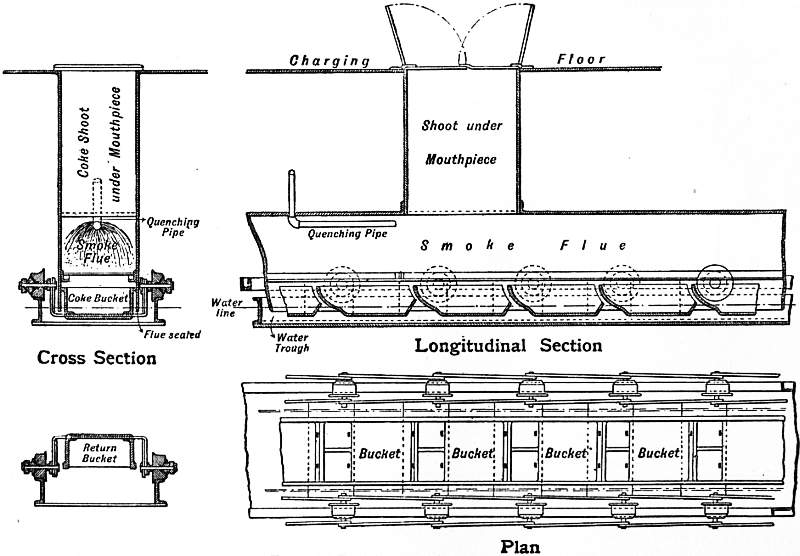
Fig. 11.—Bronder Hot Coke Conveyor.
An interesting conveyor is that of G. A. Bronder, of New York (fig. 11), which has some affinity with the gravity bucket conveyor. It runs in a water-tight trough which is filled up to a certain height, the water being slowly circulated by mechanism which resembles a water wheel. The chain of buckets runs in the trough, the sides forming the rails for the supporting rollers. The conveyor is covered in along its whole length, and forms a sort of flue which is connected at each bench with a number of shoots through which the coke drops into the conveyor buckets. A pipe of large diameter is connected with an exhaust fan, which draws away the fumes created by the quenching process, and sends them into a chimney discharging into the open. The chain and buckets, being carried on rollers which run on the outer edge of the trough, cannot come in contact either with the hot coke or with gritty particles. The chain of buckets is connected by horseshoe-shaped brackets extending upwards beyond the sides of the buckets and connected with the links of the driving chains. When the conveyor is at work the covers of the mouth-pieces are opened and the coke is fed into the buckets; simultaneously the water valves are opened and the glowing coke is quenched. Any breeze which may have fallen between the buckets is collected by a scraper and delivered into a tank at one end, while the propeller wheel draws the water from this tank and drives it back to the other end of the trough. The top strand is the working strand and delivers its load at the terminal. One important difference between an ordinary gravity bucket conveyor and this apparatus is that the buckets are here rigidly connected to the supporting wheels.
The West hot coke conveyor consists of a strongly-built trough in which a single wide chain partly carries and partly drags the coke. In the trough is a false bottom, the plates of which are loosely fixed and kept in position by angle irons on which the chain drags. By two arm-like extensions the links of the chain are widened right across the trough. The pitch of the chain is 12 in., so that all the large pieces of coke are more carried than dragged. The speed of travel is about 40 ft. per minute.
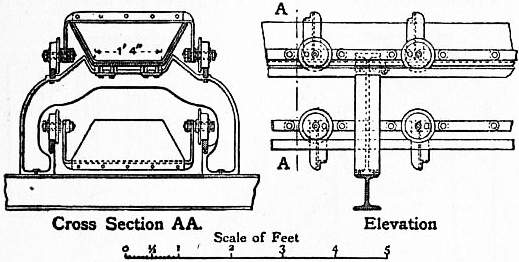
Fig. 12.—Wild Coke Conveyor.
The Wild conveyor (fig. 12) consists of a cast iron or steel trough 24 to 30 in. wide by 9 in. deep, supported by cast iron brackets to which the rails that support the strands of the chain are secured. Both chains run outside the trough, and are secured on either side to the pushplates, so that only the scraper comes in contact with the hot coke. Every second link of the 12 in. pitch chain carries a push or scraper-plate, as shown in illustration.
The De Brouwer hot coke conveyor, which is much used in gas works both in Great Britain and on the continent of Europe, was invented by a Belgian engineer. Its construction has undergone many modifications which experience has shown to be desirable. It consists of a trough of cast or wrought iron, or mild steel, 20 to 36 in. wide and 3 to 6 in. deep. Double endless chains run in the corners of the trough, the two chains being connected together by round cross bars set 30 in. apart, so as to form a sort of ladder. The hot coke is carried or dragged along by these bars. One end of the trough is closed and the other is bent upwards with a view to retaining the quenching water. As the hot coke is dragged along it is subjected to the action of jets of water. The conveyor bars, which act as scrapers, sweep the water and the coke along the trough till the point is reached where the latter curves upwards. Then the water flows back like a small cascade on the half-quenched coke, which is thus thoroughly extinguished. Considerable inclines can be negotiated with this conveyor; in some installations on the continent of Europe angles of 30° to the horizontal have been surmounted. In a modification of the De Brouwer conveyor, installed at the Cassel gas works, the bars which form the rungs of the conveyor were replaced by cast iron rakes. In another modified form, the work of F. A. Marshall, to be found in the Copenhagen gas works, sluices are provided for withdrawing an excess of water at any point in the trough.
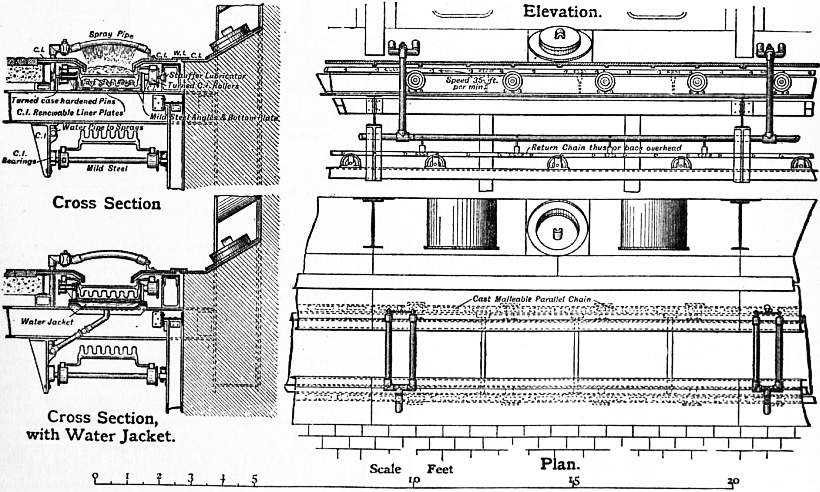
Fig. 13.—Sempster Coke Conveyor.
In Great Britain a hot coke conveyor has been designed on similar lines by Messrs R. Dempster & Sons, Ltd. (fig. 13). The chains are parallel from end to end, and are composed of identical and interchangeable malleable cast links. Instead of the chains carrying the rollers, as is often the case, the chains are themselves carried and guided by flanged rollers supported from the framework. This arrangement has the advantage of decreasing the weight of the chain, as neither the rollers nor the lubricators have to be conveyed, being stationary. The scrapers are of cast steel and have a rake-like shape with a view to minimize the breakage of coke.
The essential features in a hot coke conveyor are strength and simplicity, a minimum of wearing parts, interchangeability of wearing surfaces and of worn and broken parts, protection of wearing and working parts from contact with the hot coke, and facilities for keeping the temperature of the conveyor as even as possible, so as to avoid distortion of parts through sudden changes. To attain these latter conditions, it appears essential to construct conveyors of the pushplate type. In these the hot coke is kept continually moving, and thus the good effect is secured of heating the conveyor from end to end uniformly and gradually. This applies particularly to gas works conveyors.
For the service of coke ovens the plate or tray conveyor might be suitable because more gentle. It must be remembered that coke oven conveyors must be of large capacity, and moreover in this case there is more scope for cooling the coke in front of the oven before it is removed to the conveyor, the work being all effected in the open.
Elevators.—This term is here confined to its proper meaning (in English engineering treatises) of a device for raising material in a vertical or slanting direction by means of buckets attached to endless belts or chains. Lifts for passengers are also sometimes termed elevators (q.v.), and in America the term is also currently applied to the granary or warehouse in which grain is stored (see Granaries).
In the bucket elevator, an endless belt or chain runs over terminal pulleys which are fixed at different levels, the distance from centre to centre of these pulleys beings known as the length of the elevator. The design and construction of the elevator will be varied to suit its purpose. Grain elevators are invariably cased in wooden or iron trunks, and the head and foot are also of wood or iron, iron trunks being particularly used in so-called fire-proof buildings. The trunk of the grain elevator (fig. 14) is almost always vertical whilst the band to which the buckets are attached may consist of leather, cotton, hemp, webbing or other suitable substances. When an elevator is intended for lifting heavy materials, such as coal, coke or cement, it is usually set at a slant (figs. 15 and 16), and the endless belt is replaced by one or two strands of endless chain which support the buckets and run over the terminal sprocket wheels. The buckets are attached to the links of the chains, and to prevent these heavy buckets and chains from sagging in their inclined position, rollers or more often short skidder bars are fixed to each bucket, sliding on well-oiled angle bars on each side of the elevator frame.
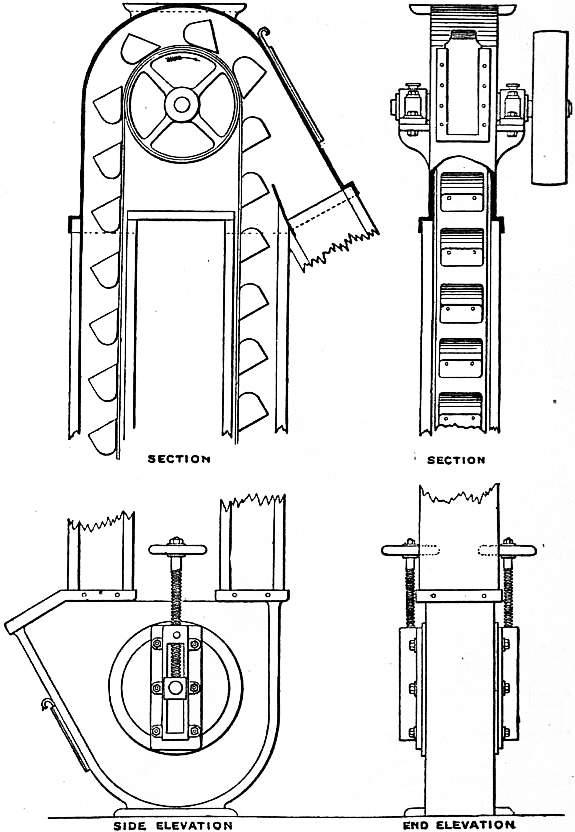
Fig. 14.—Grain Elevator.
Both grain and mineral elevators are usually fitted with tightening gears to keep the belt or chain taut; these are generally placed at the lower or well end so as not to interfere with the position of the upper terminal, which is almost invariably the driven one. The tightening of the band at the bottom terminal in the elevator well necessarily alters the space between the terminal pulley and the bottom of the well. This is of little consequence in grain elevators, but for elevators intended to handle coal or any material of varying size the ordinary tightening gear is unsuitable. In such a case the best plan is to attach the elevator-well to the terminal in such a way as to go up or down with the sprocket wheel when the chain is loosened or tightened, while the foot bracket which supports the well and terminal spindle remains a fixture. In order to tighten elevator chains without interfering with either of the terminals, adjustable jockey pulleys at some suitable point may be used, and the desired effect can thus be attained by pressing against the chains and thereby taking up the slack without any interference with either the feed or delivery end.
Elevator buckets must be proportioned to the size and nature of the material they are intended to carry, and care must be taken to maintain a uniform feed. This may readily be effected by adjustable outlets and spouts for grain and the like, and by certain feeding devices for handling minerals of uneven size. For instance, an oscillating feed shoot making from 30 to 60 oscillations per minute can be installed in such a case, and adjusted to deposit at each backward and forward stroke the exact amount of material adapted to the capacity of the elevator. The speed of the shoot will naturally vary with the size of material to be fed. For small coal 60 oscillations would be about the correct speed; for large coal the speed might be reduced to 30 or less. Speaking generally, care should always be taken to prevent an undue rush of feed, that is, more than the elevator can take up, and if tenacious materials are handled, feeding devices should be employed provided with stirrers or agitators that will effectually keep the material moving and prevent any larger lumps from arching over the feed spout, and thus producing chokes. Elevators should always be fed from that side on which the buckets ascend, that the stream of material may meet the elevator buckets on their upward journey. This will prevent the material from filling up the elevator well and spare the buckets from dredging through an accumulation of feed. Elevators erected at an incline are best fed at a point several feet above the well into the chain of ascending buckets, as under such conditions little will miss the buckets and drop into the well.
The reason why grain elevators are set vertically, whereas elevators intended to carry heavy bodies such as coal and ore are generally inclined at an angle, is that the former can be run at a much greater velocity than the latter. Grain, for instance, would be uninjured by a velocity at the delivery end which would fracture coal and seriously reduce its value, to say nothing of the dust production and the damage which would be done to the receiving spouts and shoots. Elevators carrying a light material can be run at a circumferential velocity of 250 to 350 ft. per minute, and if vertically set, will throw the grain, &c., clear of the elevator into the shoot for its reception. On the other hand, elevators handling heavy material must be set at an angle in order to give a clear delivery at a much lower speed of 50 to 60 ft. per minute; in other words, the elevator is so inclined that the shoot for the reception of the material can be put underneath the delivering buckets which slowly disgorge their load. To obtain good results, without taking up too much space, an elevator carrying heavy material should be set at 40° to 60° to the horizontal. The same results can be obtained if the main portion of the elevator is vertical and only the upper portion inclined, or so curved as to bring the delivery over the shoot. The speed at which vertical elevators should be run will depend on the diameter of the terminal pulley, that is, the pulley over which the buckets and bands pass. The centrifugal force of pulleys revolving at the same speed is in direct proportion to their diameters, and this is twice as much in a 2 ft. as in a 1 ft. pulley. It may be taken that the centrifugal force of a pulley will increase in proportion to the square of its velocity; hence the centrifugal force of a pulley 2 ft. in diameter running at 50 revolutions per minute will be four times the centrifugal force of a pulley of the same diameter making only 25 revolutions per minute. It must not be forgotten that to effect a clean discharge of the buckets of a vertical elevator, the centrifugal force must be sufficient to overcome the gravity of the material, because the material thrown off the delivery pulley in a horizontal direction will be more rapidly deflected into a parabolic curve the higher its specific gravity. It follows that for a specifically heavy material a greater centrifugal force will be required; that is to say, the elevator will have to be higher speeded than in dealing with a lighter material.
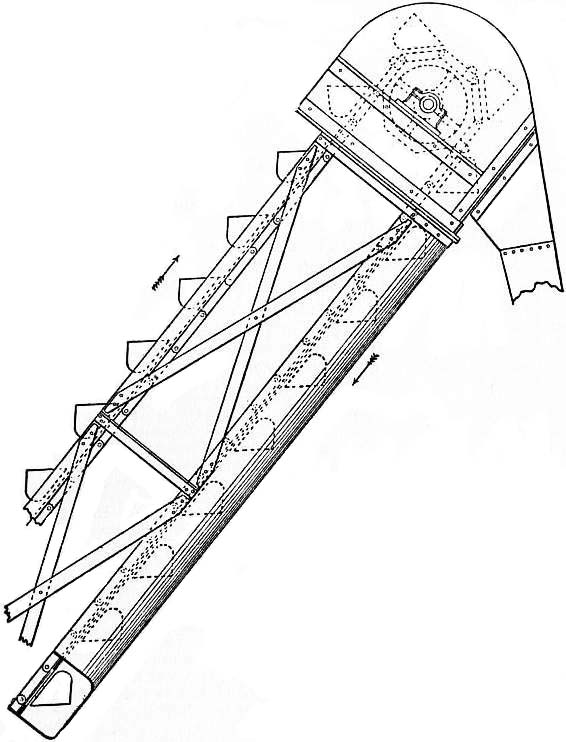
Fig. 15.—Mineral Elevator, upper terminal.
Elevator buckets must be varied according to the nature of the material; for instance, shallow buckets will be found best for a soft and clinging material such as flour, moist sugar, sand, small coal, &c., while for a hard or semi-hard body such as wheat, coal, &c., deeper buckets are preferable. On account of their lower speed, elevators for specifically heavy material require much larger buckets and chains than grain elevators of the same bulk capacity. The most economical form of elevator is fitted with a continuous chain of buckets. Such elevators may be constructed to carry either grain or minerals. The advantages are greater capacity than an ordinary elevator of the same dimensions and a more uniform delivery; moreover, smoother running is secured, since the buckets being close together need not plunge intermittently through the contents of the elevator-well.
Intermittent Conveyors.—The elevators we have been considering, whether used for carrying and distributing coal or grain, have this in common, that they raise material from a lower to a higher level, so to speak, in a continuous stream, the continuity being broken only by the short spaces between the buckets. In the continuous bucket type indeed the stream of material is practically, if not absolutely, continuous. In all these cases the elevator is fed with the material in a continuous stream, and by some mechanical means; whether by band, worm or shoot, is immaterial. Elevators of a somewhat different and more substantial construction may be and are often used for handling filled sacks, barrels, carcases of animals and other bulky objects, which cannot be delivered in a uniform stream, but may have to be conveyed by the elevator intermittently. The ordinary buckets used for grain or coal are replaced by other appliances for gripping and holding the object to be raised from a lower to a higher level, but in principle these appliances are essentially elevators.
Another kind of elevator, known as a lift or hoist, is used in mines and quarries and in serving blast furnaces. This is an elevator with one or two buckets. Essentially a heavy load lifter, it is intended for material of too large a bulk to be handled economically by ordinary elevators, and is employed for lifting in either a vertical or, more often, an inclined direction.
For elevating materials, such as large coal, iron ore, limestone, &c., which are too large to be fed into ordinary elevators, and must therefore be handled intermittently, the single bucket elevator or hoist may be used with advantage. But as the essential use of mechanical appliances for handling material is to save human labour as far as possible, that hoist will prove the most economical the operation of which is as automatic as possible. The Americans seem to have been pioneers in the construction of furnace hoists, which form the principal elevators of this class, but some excellent examples of the modern furnace hoist are now to be found in Great Britain and elsewhere in Europe. Generally speaking, a furnace hoist consists of an inclined iron bridge girder set at an angle to the upright shaft of the furnace. On this incline are laid rails for the ascent and descent of the bucket, which in this case is known as a skip and is provided with suitable wheels, while the hoisting gear manipulating the skips by a steel rope is erected on or near the ground level. The rails when they approach the upper terminus are usually bent in a more or less horizontal position so as automatically to tilt and thereby unload the skip. To attain the same end, the rails supporting the back wheels of the skips may be bent at the terminus, or the back wheels may have additional wheels of a larger diameter on the other side of their flanges, so that during the ascent and descent the skip runs on its four normal wheels, while at the upper terminus the outer and larger back wheels engage with short lengths of extra rails and thus tilt and effect the automatic clearance of the skip. The dead weight of the skip may be balanced by a counter weight, or double tracks may be laid, so that the empty skip descends on one track whilst the loaded skip is being raised on the other. In this case the distributing hopper at the top of the furnace has an elongated shape so as to take the charges alternately from buckets on either track. Again, the two tracks may be laid one above the other, so that one skip runs on the upper rails and the other on the lower. The two buckets will pass each other at about the centre of the framing, where there will be plenty of room for clearance.
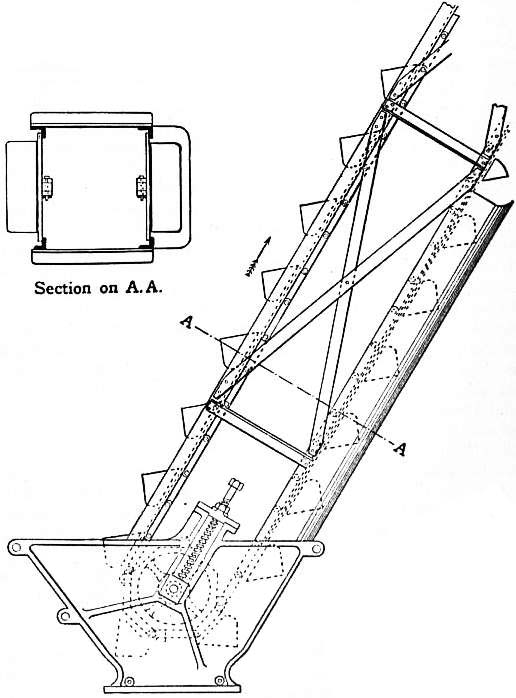
Fig. 16.—Mineral Elevator, lower terminal.
The capacity of the skip will of course depend to some extent on the capacity of the furnace, but an average charge may be put down at 2 tons of ore and lime, or 1 ton of coke. To raise such a charge to a furnace 80 ft. high would require, assuming no counter weight were used, a motor of about 100 h.p. On account of the great speed at which the hoist works, the time taken in raising the charged skip, discharging it, and returning it empty would be only 30 to 40 seconds. The hoist cable runs over guide pulleys placed at the top of the furnace, and the cable is often manipulated by an electrically driven winch in a cabin below. The descent of the empty skip in more modern installations is utilized to effect an even distribution of the feed from the hopper to the furnace by causing the hopper to revolve. To this end the latter is provided with an ingenious mechanism which only comes into operation as the car descends. After every charge shot into the hopper the latter is revolved a few degrees, and this has the effect of giving the delivery of the next load in another direction, so that the charges of the skip are in turn distributed over the whole area of the surface. This is deemed a most essential point in furnace-charging, and it is not one of the least recommendations of this mechanical system of furnace-charging that it can give an even feed without any hand labour whatever. A double hoist has been designed which has the advantage that if one elevator breaks down the work of the furnace is not interrupted. In this system two furnaces are connected at the top by a gantry or bridge, against which, between the furnaces, two inclined elevators are set, so that each can serve either furnace. The skips are on wheels and detachable from the elevator, and are loaded from the ore pockets at the lower terminal and drawn up on a cradle; as this reaches the top where the rails on the gantry correspond with the gauge of the skip or car, the latter is carried by its own weight down a slight incline to either furnace, discharging its contents as it passes over the conical mouth. Another advantage claimed for this system is that the rails of the cradle, when in its lowest position, correspond with the rails which lie parallel to the furnaces and run right under the store bins from which the skip is loaded. The economy to be realized from a furnace hoist will be in direct proportion to the use made of mechanical means of feed conveyance. For instance, the store bins in connexion with such elevators might be economically fed by suitable conveyors, or the material might be brought in self-unloading hoppered trucks into conveniently placed bins, ready to be drawn into the skips.
Ropeways.—A ropeway has been defined as that method of handling material which consists of drawing buckets on ropes, and by means of ropes, such buckets being filled with the material to be handled and being automatically or otherwise discharged. At what period of history ropeways were first used it is impossible to say, but the fact that pulley blocks, and even wire ropes, were known to the ancients, renders a pedigree of 2000 years at least possible. In more modern days, an old engraving shows a single ropeway in working order in 1644 in the city of Danzig. This, the work of Adam Wybe, a Dutch engineer, was a single ropeway in its simplest form, consisting of an endless rope passing over pulleys suspended on posts; to the rope were attached a number of small buckets, which evidently carried earth from a hill outside the city to the rampart inside the moat. The rope was probably of hemp. Modern ropeways worked with wire ropes date from about 1860, when a ropeway was erected in the Harz Mountains. Since then several systems have been evolved, but in the main ropeways may be divided into the single and double rope class.
The ropeway is essentially an intermittent conveyor, the material being carried in buckets or skips, and practice has proved it an economical means of handling heavy material. The prime cost of a ropeway is usually moderate, though of course it varies with the ground and other local conditions. Working expenses should be low, because under the supervision of one competent engineer unskilled labour is quite sufficient. A ropeway may be carried over ground over which rails could only be laid at enormous cost. To a certain extent ropeways are independent of weather conditions, because their working need not be interrupted even by heavy snowfalls. Their construction is very simple, and there is little gear to get out of order. Sound workmanship and good material will ensure a relatively long life. As an instance, a certain rope in a Spanish ropeway tested new to a breaking strain of 29½ tons was shown after carrying 160,000 tons (in two years’ incessant work) still to possess a breaking strain of 27½ tons. The power absorbed by a ropeway is relatively moderate, and under special conditions may be nil. The only demand it makes on the superficial area of the ground traversed is the small emplacements of the standards, which in modern ropeways are few and far between. Wayleaves, or the permission to erect standards and run the line over private land, may of course mean an item in the capital outlay. This circumstance may have checked ropeway construction in Great Britain, but it must also be borne in mind that a large portion of that country is comparatively level and well provided with railways. In building a ropeway it is essential to take as straight a line as possible, because curves generally necessitate angle stations, which mean extra capital and working cost. On the other hand, ground that would be difficult for the railway engineer, such as steep hills, deep valleys and turbulent streams, has no terror for the ropeway erector. There is a case of a ropeway of a total length of 5400 ft. with a total difference in altitude of 2000 ft.; it is claimed this ground could not be covered by a railway with less than 15 m. of line graded at 1 in 40.
Perhaps the simplest type of a single rope system is an endless running rope from which the carriers are suspended, and with which they move by frictional contact. Or the carriers may be fixed to this rope and move with it. The ropeway itself would consist of an endless rope running between two drums, one, known as the driving drum, being provided with power receiving and transmitting gear, while the drum at the opposite terminal would be fitted with tightening gear. The endless rope is carried on suitable pulleys which themselves are supported on standards or trestles spaced at intervals varying with the nature of the ground. The rope runs at an average speed of 4 m. per hour, a speed at which the bucket or skip can automatically unload itself. In the double ropeway the carrier runs on a fixed rope, which takes the place of the rails of a railway. The carrier is fitted with running heads furnished with grooved steel wheels. The load is borne by a hanger pivoted from the carrier, and is conveyed along the rail rope by an endless hauling rope at an average speed of 4 to 6 m. per hour. The hauling is operated by driving gear at one end, and controlled by tightening gear at the other end just as in the single rope system. Double ropeways have been carried in one section over 18 to 20 m., and will transport single loads of 6 cwt. to a ton or more.
Broadly speaking, the single ropeway is not so suitable for heavy loads and long distances as the double, but in this connexion the work of Ropeways Limited should be noted, which favours a single rope system. Their engineer, J. Pearce Roe, introduced multiple sheaves for supporting the rope at each standard. Thus the rope may pass over one, two or four sheaves, which are provided with balance beams that have the advantage of adjusting themselves to the angle caused by the rope passing over the sheaves, thus equalizing the pressure over a number of sheaves. A ropeway erected on this system in Japan spans 4000 yds. of very broken ground; yet only 17 trestles are used, and as each support is placed as high as possible, no one is of great height. An altitude of 1130 ft. is reached in a distance of 1200 yds. The ropeway has a daily carrying capacity of 60 tons in one direction and of 30 tons in the other. Another installation on this system, which serves an iron mine in Spain, spans 6500 yds. of very rough country, so steep that in many places the sure-footed mule cannot keep on the track. This ropeway can deal with 85 tons per hour. The greatest distance covered by this system, on one section, is 7100 yds., or about 4 m., and the carrying capacity is 45 tons per hour.
The motive power required for a ropeway will vary with the conditions. In cases of descending loads the power generated is sometimes so considerable as to render it available for driving other machinery, or it may have to be absorbed by some special brake device. In a ropeway in Japan of 1800 yds., which runs mostly at an incline of 1 in 1½, the force generated is absorbed by a hydraulic brake the revolving fan of which drives the water against fixed vanes which repel and heat it. In this way, 50 h.p. is absorbed and the speed brought under the control of a hand brake.
Aerial Cableways.—The aerial cableway is a development of the ropeway, and is a conveyor capable of hoisting and dumping at any desired point. The load is carried along a trackway consisting of a single span of suspended cable, which covers a comparatively short distance. The trackway may either run in a more or less horizontal direction, i.e. the terminals may be on the same level, or it may be inclined at such an angle that the load will descend by gravity. The trackway or rail rope rests upon saddles of iron or hard wood on the tops of terminal supports, usually known as towers. These towers may be constructed either of wood or iron, and if the exigencies of the work render it desirable, they may be mounted on trolleys and rails, in which case the cableway is rendered portable, and can be moved about, sometimes a great advantage in excavating work. The motive power may be either steam, gas, or electricity. The motor is situated in what is termed the head tower, which is sometimes a little higher than the other or tail tower. Sometimes, but not frequently, the latter is also fitted with a motor. The span between the two towers sometimes extends to 2000 ft., but this is exceptional. Very heavy loads are dealt with, sometimes as much as 8 tons in a single load. The load, which may be carried in a skip or a tray, is borne by an apparatus called the carrier, which is a modification of a running head, consisting of pulleys and blocks and running along the main cable or trackway. The carrier is also fitted with pulleys or guides for the dump line. The carrier is drawn along the main cable by an endless or hauling rope which passes from the carrier over the head tower and is wound several times round the drum of the winding engine to secure frictional hold, then back over the head tower, to the tail tower, returning to the rear end of the carrier. The hoisting rope passes from the engine to the fall block for raising the load. The dump line comes from the other side of the winding engine drum and passes to a smaller block attached to the rear end of the skip or tray. The whole weight of the skip is borne by the hoisting rope, while the dump line comes in slack, but at the same rate of speed. Whenever it is desired to dump the load, the dump line is shifted to a section of the drum having a slightly larger diameter, and being thus drawn in at a higher rate of speed the load is discharged. The engine is then reversed, and the carriage brought back for the next load.
This is in outline the mode of operating all cableways. This appliance has rendered great service as a labour saver in navvying, quarrying and mining work; in placer-mining, for instance, cableways have been found very useful when fitted with a self-filling drag bucket, which will take the place of a great number of hands. Cableways can be worked at a great speed, but a good mean speed would be 500 to 750 ft. for conveying and 200 to 300 ft. for hoisting. A cableway used in excavating work in Chicago was credited with a capacity of 400 to 600 cub. yds. per day at a total cost of 2d. per yard, including labour, coal, oil, waste, &c.
Coaling Ships at Sea.—In the coaling of ships at sea the cableway has rendered great service. The conditions under which this operation has to be carried out present many difficulties, especially in rough water. One of the chief obstacles is the maintenance of the necessary tension on the cable used in conveying the coal from the collier to the ship. The first test in coaling ships at sea, made by the British admiralty, took place in 1890 in the Atlantic at a point 500 m. south of the Azores in water 2000 fathoms deep. Ten ships of war were coaled, each vessel taking enough coal to enable it to steam back to Torbay, 1800 m. away. In this case the collier was lashed alongside the battleship it was feeding, thick fenders being interposed to prevent damage, but nevertheless as the colliers got light they pitched considerably, and one or two sustained dents in their sides. The ships did not roll, being kept bows-on to the swell, which became heavy before the coaling was completed. The coal was taken in by derricks at the main deck ports. It is clear that had the sea been really rough coaling in this fashion would have been impossible.
The most practicable method of coaling at sea yet devised is the marine cableway of Spencer Miller, which has been tried with some success in the American navy. It is intended for use between vessels 350 to 500 ft. apart. The ship being coaled takes the collier in tow, steaming at the rate of 4 to 8 knots; it has been found that a speed of five knots in moderately rough water will keep the cableway taut and maintain a sufficient distance between the crafts. The collier is fitted with an engine having double cylinders and double friction drums, which is placed just abaft the foremast. A steel rope ¾ in. in diameter is led from one drum over a pulley at the mast head and thence to a pulley at the head of shear-poles on the vessel being coaled, and brought back to the other drum. The engine moves in the same direction all the time and keeps on winding in both the strands of the conveying rope. Should the two vessels increase the distance between them during the operation of conveying the coal bags, of which two, weighing 420 ℔ each, may be fastened to the carrier, the extra rope called for is obtained by slipping the upper strand from the drum; this increases the speed of the upper cable. On the other hand should the distance between the vessels be reduced, this operation is reversed, the speed of the upper strand being reduced. To keep the carriage steady on its return empty, a rope, known as the sea-anchor line, is stretched above the two strands of the conveyor line, and under a pulley on the carriage. This cable is attached to the vessel, resting on a saddle on the shear head, whence it leads through the carriage over pulleys at the head of the foremast and mainmast of the collier, running on astern several hundred feet into the sea. A drag or sea-anchor, usually made of canvas and cone-shaped, is attached to the end of this rope. This anchor is used to support the empty carriage on its return to the collier. The diameter of the cone’s base is graduated to the speed of the vessels. Thus in a smooth-water test, with a ship steaming at 6 knots, one 7 ft. in diameter was used, while the same anchor answered its purpose very well with a ship doing 5 knots in rough water.
The results given by this system of coaling at sea are relatively satisfactory. Tests made in the United States navy showed that 20 to 25 tons of coal per hour could be delivered by a collier to a war-vessel during a moderate gale. As the ship was under steam all the time and consumed 3 to 4 tons of coal per hour, the balance of the coal bunkered amounted to between 16 and 20 tons per hour, or say 384 tons in 24 hours. It has been suggested that under service conditions the speed of the towing vessel might be increased to 8 or 10 knots an hour; this would of course increase the coal consumption unless the collier proceeded under her own steam. But in such a case the space between the two crafts might be diminished, which would have the effect of causing the cable to sag and of stopping the work, since the conveyor cable to act properly must be kept taut. In Great Britain the Temperley Transporter Company have taken up this method of coaling at sea, working in collaboration with Spencer Miller, and have introduced several improvements in detail. Their system has been tried by the British admiralty.
The coaling of a large vessel by this appliance has the advantage of economizing hand labour. One man is required to work the hoist on the collier, while 20 men will be in the hold filling the bags and delivering them to the deck, where 15 or so will transfer the bags to the lift. One or two men suffice for the overhead work; their station is in the trestle trees. On board the receiving ship a few men will be stationed at the shear head to empty the bags into a canvas shoot, and then return them, while there will be the usual force of bunker trimmers. A ton of coal per minute has been transferred from the collier to the vessel, but for this capacity the ships must not be too far apart, else the rope would not remain taut under such loads. During the Russo-Japanese War, many of the Russian battleships were coaled by means of aerial cableways. The coaling of vessels in this manner seems a success, but it would be desirable to increase the carrying capacity of the cableway or to duplicate the installations.
Telpherage.—A telpher ropeway or cableway may be defined as a ropeway or cableway worked and controlled electrically, only a rail rope being required besides the live rail or wire from which the electric current is taken. Telpherage was devised by Professor Fleeming Jenkin in 1881, and developed by him in conjunction with Professors W. E. Ayrton and J. Perry. The telpher itself consists of a light two-wheeled truck, carrying the driving motors, which, to avoid gearing or other complicated mechanism, are usually coupled directly to the axles of the telpher. Thus the telpher is a self-propelled electric carrier running on a mono-rail, which, according to the conditions, may be a steel rail or a steel cable. From the telpher are suspended carriers which can be adapted to any kind of material. In many cases the whole load may be suspended from the telpher, or the load, especially if of some length, may be supported at one end by a telpher, and at the other end by what is known as a trailer, or again, two telphers may be installed, one at each end of the load. The telpher carries a small trolley sheave or bow which serves to collect the current from a trolley wire stretched a little above the rail. Frequently the telpher is accompanied by an attendant who manipulates it, but by dividing the trolley wire into sections any system of telpherage may be constructed to work automatically, and by switching off the current from the section in which the telpher is required to stop it can be brought to a standstill at any required point. The speed of the telpher may be readily regulated by the introduction of a resistance between any section of the line and the supply of electricity. The speed may be high, as much as 1500 ft. per minute over the straight portions of the line, but slackened at curves and loading stations, or when approaching a terminus. The required power may be obtained from the mains of an ordinary electric supply with either direct or alternating current, but the former is preferable. The mean expenditure of power in a working day is said to average (including electrical hoisting) 1 H.P. per ton of average load.
The uses of telpherage are many and various. In factories and warehouses, where the buildings are scattered, it has been installed with excellent results. Being essentially an overhead system, there is a saving of floor space, the ground not being obstructed by trucks or trolleys. The same reasons which render ropeways an economical means of handling such material as coal, ore, stone, slate, &c., between the mine or quarry and the rail or barge, may be adduced in favour of telpherage. For the unloading of railway trucks in a crowded goods-yard it is undoubtedly applicable. Any kind of tipping or hoisting operations can be automatically effected by its aid, and any sort of grab may be used in dealing with such materials as sand, clay or gravel. Telpherage is clearly a labour-saving method of handling materials, but of course the exact conditions under which any system is to be used need careful study, while the economy to be effected by the installation of a telpher line must to a great extent depend upon the available supply of electrical energy.
(G. F. Z.)
CONVOCATION (Lat. convocatio, a calling together), an assembly of persons met together in answer to a summons. The term is more usually applied in a restricted sense to assemblies of the clergy or of the graduates of certain universities.
In the American Protestant Episcopal Church a convocation is a voluntary deliberative conference of the clergy; it has no legislative function, and like the convocation of a university, assembles primarily to discuss matters of common interest.
In England the name “convocation” is specifically given to an assembly of the spirituality of the realm of England, which is summoned by the metropolitan archbishops of Canterbury and of York respectively, within their ecclesiastical provinces, pursuant to a royal writ, whenever the parliament of the realm is summoned, and which is also continued or discharged, as the case may be, whenever the parliament is prorogued or dissolved. These assemblies consist of two Houses, an upper and lower. In the upper house sit the archbishops and bishops, and in the lower the deans and archdeacons of every cathedral, the provost of Eton College, with one proctor elected by each cathedral chapter and two by the beneficed clergy in each diocese in the province of Canterbury (in the province of York two proctors are elected by each archdeacon), with a prolocutor at their head. When and how this convocation originated is not historically clear. This much is known from authentic records, that the present constitution of the convocation of the prelates and clergy of the province of Canterbury was recognized as early as in the eleventh year of the reign of Edward I. (1283) as its normal constitution; and that in extorting that recognition from the crown, which the clergy accomplished by refusing to attend unless summoned in lawful manner (debito modo) through their metropolitan, the clergy of the province of Canterbury taught the laity the possibility of maintaining the freedom of the nation against the encroachments of the royal power. It had been a provision of the Anglo-Saxon period, the origin of which is generally referred to the council of Clovesho (747), that the possessions of the church should be exempt from taxation by the secular power, and that it should be left to the benevolence of the clergy to grant such subsidies to the crown from the endowments of their churches as they should agree to in their own assemblies. It may be inferred, however, from the language of the various writs issued by the crown for the collection of the “aids” voted by the Commune Concilium of the realm in the reign of Henry III., that the clergy were unable to maintain the exemption of church property from being taxed to those “aids” during that king’s reign; and it was not until some years had elapsed of the reign of Edward I. that the spirituality succeeded in vindicating their constitutional privilege of voting in their own assemblies their free gifts or “benevolences,” and in insisting on the crown observing the lawful form of convoking those assemblies through the metropolitan of each province.
The form of the royal writ, which it is customary to issue in the present day to the metropolitan of each province, is identical in its purport with the writ issued by the crown in 1283 to the metropolitan of the province of Canterbury, after the clergy of that province had refused to meet at Northampton in the previous year, because they had not been summoned in lawful manner; whilst the mandates issued by the metropolitans in pursuance of the royal writs, and the citations issued by the bishops in pursuance of the mandates of their respective metropolitans, are identical in their purport and form with those used in summoning the convocation of 1283, which met at the New Temple in the city of London, and voted a “benevolence” to the crown, as having been convoked in lawful manner. The existing constitution of the convocation of the province of Canterbury—and the same observation will apply to that of the province of York—in respect of its comprising representatives of the chapters and of the beneficed clergy, in addition to the bishops and other dignitaries of the church, would thus appear to be of even more ancient date than the existing constitution of the parliament of the realm.
From this period down to the eleventh year of the reign of Edward III. there were continual contests between the spirituality of the realm and the crown,—the spirituality contending for their constitutional right to vote their Contest between spirituality and crown. subsidies in their provincial convocations; the crown, on the other hand, insisting on the immediate attendance of the clergy in parliament. The resistance of the clergy to the innovation of the “praemunientes” clause had so far prevailed in the reign of Edward II. that the crown consented to summon the clergy to parliament through their metropolitans, and a special form of provincial writ was for that purpose framed; but the clergy protested against this writ, and the struggle was maintained between the spirituality and the crown until 1337 (11 Edward III.), when the crown reverted to the ancient practice of commanding the metropolitans to call together their clergy in their provincial assemblies, where their subsidies were voted in the manner as accustomed before the “praemunientes” clause was introduced. The “praemunientes” clause, however, was continued in the parliamentary writs issued to the several bishops of both provinces, whilst the bishops were permitted to neglect at their pleasure the execution of the writs.
The history of the convocation of the province of Canterbury, as at present constituted, is full of stirring incidents, and it resolves itself readily into five periods. The first period, by which is meant the first period which dates Five characteristic periods. from an epoch of authentic history, is the period of its greatest freedom, but not of its greatest activity. It extends from the reign of Edward I. (1283) to that of Henry VIII. The second period is the period of its greatest activity and of its greatest usefulness, and it extends from the twenty-fifth year of the reign of Henry VIII. to the reign of Charles II. The third period extends from the fifteenth year of the reign of Charles II. (1664) to the reign of George I. This was a period of turbulent activity and little usefulness, and the anarchy of the lower house of convocation during this period created a strong prejudice against the revival of convocation in the mind of the laity. The fourth period extends from the third year of the reign of George I. (1716) to the fifteenth year of the reign of Queen Victoria. This was a period of torpid inactivity, during which it was customary for convocation to be summoned and to meet pro forma, and to be continued and prorogued indefinitely. The fifth period may be considered to have commenced in the fifteenth year of the reign of Queen Victoria (1852).
During the first of the five periods above mentioned, it would appear from the records preserved at Lambeth and at York that the metropolitans frequently convened congregations (so called) of their clergy without the authority of a First period. royal writ, which were constituted precisely as the convocations were constituted, when the metropolitans were commanded to call their clergy together pursuant to a writ from the crown. As soon, however, as King Henry VIII. had obtained from the clergy their acknowledgment of the supremacy of the crown in all ecclesiastical causes, he constrained the spirituality to declare, by what has been termed the Act of Submission on behalf of the clergy, that the convocation “is, always has been, and ought to be summoned by authority of a royal writ”; and this declaration was embodied in a statute of the realm (25 Henry VIII. c. 19), which further enacted that the convocation “should thenceforth make no provincial canons, constitutions or ordinances without the royal assent and licence.” The spirituality was thus more closely incorporated than heretofore in the body politic of the realm, seeing that no deliberations on its part can take place unless the crown has previously granted its licence for such deliberations. It had been already provided during this period by 8 Henry VI. c. 1, that the prelates and other clergy, with their servants and attendants, when called to the convocation pursuant to the king’s writ, should enjoy the same liberty and defence in coming, tarrying and returning as the magnates and the commons of the realm enjoy when summoned to the king’s parliament.
The second period, which dates from 1533 to 1664, has been distinguished by four important assemblies of the spirituality of the realm in pursuance of a royal writ—the two first of which occurred in the reign of Edward VI., Second period. the third in the reign of Queen Elizabeth, and the fourth in the reign of Charles II. The two earliest of these convocations were summoned to complete the work of the reformation of the Church of England, which had been begun by Henry VIII.; the third was called together to reconstruct that work, which had been marred on the accession of Mary (the consort of Philip II. of Spain), whilst the fourth was summoned to re-establish the Church of England, the framework of which had been demolished during the great rebellion. On all of these occasions the convocations worked hand in hand with the parliament of the realm under a licence and with the assent of the crown. Meanwhile the convocation of 1603 had framed a body of canons for the governance of the clergy. Another convocation requires a passing notice, in which certain canons were drawn up in 1640, but by reason of an irregularity in the proceedings of this convocation (chiefly, on the ground that its sessions were continued for some time after the parliament of the realm had been dissolved), its canons are not held to have any binding obligation on the clergy. The convocations had up to this time maintained their liberty of voting the subsidies of the clergy in the form of “benevolences” separate and apart from the “aids” granted by the laity in parliament, and one of the objections taken to the proceedings of the convocation of 1640 was that it had continued to sit and to vote its subsidies to the crown after the parliament itself had been dissolved. It is not, therefore, surprising on the restoration of the monarchy in 1661 that the spirituality was not anxious to retain the liberty of taxing itself apart from the laity, seeing that its ancient liberty was likely to prove of questionable advantage to it. It voted, however, a benevolence to the crown on the occasion of its first assembling in 1661 after the restoration of King Charles II., and it continued so to do until 1664, when an arrangement was made between Archbishop Sheldon and Lord Chancellor Hyde, under which the spirituality silently waived its long-asserted right of voting its own subsidies to the crown, and submitted itself thenceforth to be assessed to the “aids” directly granted to the Sheldonian compact. crown by parliament. An act was accordingly passed by the parliament in the following year 1665, entitled An act to grant a Royal Aid unto the King’s Majesty, to which aid the clergy were assessed by the commissioners named in the statute without any objection being raised on their part or behalf,1 there being a proviso that in so contributing the clergy should be relieved of the liability to pay two subsidies out of four, which had been voted by them in the convocation of a previous year. In consequence of this practical renunciation of their separate status, as regards their liability to taxation, the clergy have assumed and enjoyed in common with the laity the right of voting at the election of members of the House of Commons, in virtue of their ecclesiastical freeholds.
The most important and the last work of the convocation during this second period of its activity was the revision of the Book of Common Prayer which was completed in the latter part of 1661.
The Revolution in 1688 is the most important epoch in the third period of the history of the synodical proceedings of the spirituality, when the convocation of Canterbury, having met in 1689 in pursuance of a royal writ, Third period. obtained a licence under the great seal, to prepare certain alterations in the liturgy and in the canons, and to deliberate on the reformation of the ecclesiastical courts. A feeling, however, of panic seems to have come over the Lower House, which took up a position of violent antagonism to the Upper House. This circumstance led to the prorogation of the convocation and to its subsequent discharge without any practical fruit resulting from the king’s licence. Ten years elapsed during which the convocation was prorogued from time to time without any meeting of its members for business being allowed. The next convocation which was permitted to meet for business, in 1700, was marked by great turbulence and insubordination on the part of the members of the Lower House, who refused to recognize the authority of the archbishop to prorogue their sessions. This controversy was kept up until the discharge of the convocation took place concurrently with the dissolution of the parliament in the autumn of that year. The proceedings of the Lower House in this convocation were disfigured by excesses which were clearly violations of the constitutional order of the convocation. The Lower House refused to take notice of the archbishop’s schedule of prorogation, and adjourned itself by its own authority, and upon the demise of the crown it disputed the fact of its sessions having expired, and as parliament was to continue for a short time, prayed that its sessions might be continued as a part of the parliament under the “praemunientes” clause. The next convocation was summoned in the first year of Queen Anne, when the Lower House, under the leadership of Dean Aldrich, its prolocutor, Claim of Lower House to sit independently. challenged the right of the archbishop to prorogue it, and presented a petition to the queen, praying her majesty to call the question into her own presence. The question was thereupon examined by the queen’s council, when the right of the president to prorogue both houses of convocation by a schedule of prorogation was held to be proved, and further, that it could not be altered except by an act of parliament. During the remaining years of the reign of Queen Anne the two Houses of convocation were engaged either in internecine strife, or in censuring sermons or books, as teaching latitudinarian or heretical doctrines; and, when it had been assembled concurrently with parliament on the accession of King George I., a great breach was before long created between the two houses by the Bangorian controversy. Dr Hoadly, bishop of Bangor, having preached a sermon before the king, in the Royal Chapel at St James’s Palace in 1717, against the principles and practice of the nonjurors, which had been printed by the king’s command, the Lower House, which was offended by the sermon and had also been offended by a treatise on the Bangorian controversy. same subject published by Dr Hoadly in the previous year, lost no time in representing the sermon to the Upper House, and in calling for its condemnation. A controversy thereupon arose between the two houses which was kept up with untiring energy by the Lower House, until the convocation was prorogued in 1717 in pursuance of a royal writ; from which time until 1861 no licence from the crown was granted to convocation to proceed to business. During this period, which may be regarded as the fourth distinguishing period in the history of the convocations of the Church of England, Fourth period. it was usual for a few members of the convocation to meet when first summoned with every new parliament, in pursuance of the royal writ, for the Lower House to elect a prolocutor, and for both houses to vote an address to the crown, after which the convocation was prorogued from time to time, pursuant to royal writs, and ultimately discharged when the parliament was dissolved. There were, however, several occasions between 1717 and 1741 when the convocation of the province of Canterbury transacted certain matters, by way of consultation, which did not require any licence from the crown, and there was a short period in its session of 1741 when there was a probability of its being allowed to resume its deliberative functions, as the Lower House had consented to obey the president’s schedule of prorogation; but the Lower House having declined to receive a communication from the Upper House, the convocation was forthwith prorogued, from which time until the middle of the 19th century the convocation was not permitted by the crown to enjoy any opportunity even for consultation. The spirituality at last aroused itself from its long repose in 1852, and on this occasion the Upper House took the lead. The active spirit of the movement was Samuel Wilberforce, Fifth period. bishop of Oxford, but the master mind was Henry Phillpotts, bishop of Exeter. On the convocation assembling several petitions were presented to both houses, praying them to take steps to procure from the crown the necessary licence for their meeting for the despatch of business, and an address to the Upper House was brought up from the Lower House, calling the attention of the Upper House to the reasonableness of the prayer of the various petitions. After some discussion the Upper House, influenced mainly by the argument of Henry, bishop of Exeter, consented to receive the address of the Lower House, and the convocation was thereupon prorogued, shortly after which it was discharged concurrently with the dissolution of parliament. On the assembling of the next convocation of the province of Canterbury, no royal writ of exoneration having been sent by the crown to the metropolitan, the sessions of the convocation were continued for several days; and from this time forth convocation may be considered to have resumed its action as a consultative body, whilst it has also been permitted on more than one occasion to exercise its functions as a deliberative body. In 1865, under licence from the crown, the Convocations of Canterbury and York framed new canons in place of the 36th, 37th, 38th and 40th canons of 1603, and amended the 62nd and 102nd canons in 1888. In 1872 convocation was empowered by letters of business from the crown to frame resolutions on the subject of public worship, which resolutions were afterwards incorporated in the Act of Uniformity Amendment Act 1872.
As a deliberative body, convocation has done much useful work, but it suffers considerably from its unrepresentative nature. The non-beneficed clergy still remain without the franchise, but the establishment of Houses of Laymen (see Laymen, Houses of) for both provinces has, to a certain extent, secured the co-operation of the lay element. Several attempts have been made to promote legislation to enable the convocations to reform their constitutions and to enable them to unite for special purposes; in 1905 a bill was introduced into the House of Lords. It did not, however, get beyond a first reading. In 1896 a departure was made in holding joint sessions of both convocations, in conjunction with the two Houses of Laymen, for consultative purposes. This body is now termed the Representative Church Council, and it adopted a Constitution in November 1905. All formal business is transacted in the separate convocations. It is usual for convocation to meet three times a year.
The order of convening the convocation of the province of Canterbury is as follows. A writ issues from the crown, addressed to the metropolitan archbishop of Canterbury, commanding him “by reason of certain difficult and urgent affairs concerning us, the security and defence of our Church of England, and the peace and tranquillity, public good and defence of our kingdom, and our subjects of the same, to call together with all convenient speed, and in lawful manner, the several bishops of the province of Canterbury, and deans of the cathedral churches, and also the archdeacons, chapters and colleges, and the whole clergy of every diocese of the said province, to appear before the said metropolitan in the cathedral church of St Paul, London, on a certain day, or elsewhere, as shall seem most expedient, to treat of, agree to and conclude upon the premises and other things, which to them shall then at the same place be more clearly explained on our behalf.” In case the metropolitical see of Canterbury should be vacant, the writ of the crown is addressed to the dean and chapter of the metropolitical church of Canterbury in similar terms, as being the guardians of the spiritualities of the see during a vacancy. Thereupon the metropolitan, or, as the case may be, the dean and chapter of the metropolitical church, issue a mandate to the bishop of London, as dean of the province, and if the bishopric of London should be vacant, then to the bishop of Winchester as subdean, which embodies the royal writ, and directs the bishop to cause all the bishops of the province to be cited, and through them the deans of the cathedral and collegiate churches, and the archdeacons and other dignitaries of churches, and each chapter by one, and the clergy of each diocese by two sufficient proctors, to appear before the metropolitan or his commissary, or, as the case may be, before the dean and chapter of the metropolitical church or their commissary, in the chapter-house of the cathedral church of St Paul, London, if that place be named in the mandate, or elsewhere, with continuation and prorogation of days next following, if that should be necessary, to treat upon arduous and weighty affairs, which shall concern the state and welfare, public good and defence of this kingdom and the subjects thereof, to be then and there seriously laid before them, and to give their good counsel and assistance on the said affairs, and to consent to such things as shall happen to be wholesomely ordered and appointed by their common advisement, for the honour of God and the good of the church.
The provincial dean, or the subdean, as the case may be, thereupon issues a citation to the several bishops of the province, which embodies the mandate of the metropolitan or of the dean and chapter of the metropolitical church, as the case may be, and admonishes them to appear, and to cite and admonish their clergy, as specified in the metropolitical mandate, to appear at the time and place mentioned in the mandate. The bishops thereupon either summon directly the clergy of their respective dioceses to appear before them or their commissaries to elect two proctors, or they send a citation to their archdeacons, according to the custom of the diocese, directing them to summon the clergy of their respective archdeaconries to elect a proctor. The practice of each diocese in this matter is the law of the convocation, and the practice varies indefinitely as regards the election of proctors to represent the beneficed clergy. As regards the deans, the bishops send special writs to them to appear in person, and to cause their chapters to appear severally by one proctor. Writs also go to every archdeacon, and on the day named in the royal writ, which is always the day next following that named in the writ to summon the parliament, the convocation assembles in the place named in the archbishop’s mandate. Thereupon, after the Litany has been sung or said, and a Latin sermon preached by a preacher appointed by the metropolitan, the clergy are praeconized or summoned by name to appear before the metropolitan or his commissary; after which the clergy of the Lower House are directed to withdraw and elect a prolocutor to be presented to the metropolitan for his approbation. The convocation thus constituted resolves itself at its next meeting into two houses, and it is in a fit state to proceed to business.
The constitution of the convocation of the province of York differs slightly from that of the convocation of the province of Canterbury, as each archdeaconry is represented by two proctors, precisely as in parliament formerly under the Praemunientes clause.
There are some anomalies in the diocesan returns of the two convocations, but in all such matters the consuetudo of the diocese is the governing rule.
Bibliography.—Wilkins, Concilia Magnae Britannia et Hiberniae (4 vols. folio, 1737); Gibson, Codex Juris Ecclesiastici Anglicani (2 vols. folio, 1713); Johnson, A Collection of all the Ecclesiastical Laws, Canons and Constitutions of the English Church (2 vols. 8vo, 1720); Gibson, Synodus Anglicana (8vo, 1702, re-edited by Dr Edward Cardwell, 8vo, 1854); Shower, A Letter to a Convocation Man concerning the Rights, Powers and Privileges of that Body (4to, 1697); Wake, The Authority of Christian Princes over their Ecclesiastical Synods asserted, occasioned by a late Pamphlet intituled A Letter to a Convocation Man (8vo, 1697); Atterbury, The Rights, Powers and Privileges of an English Convocation stated and vindicated in answer to a late book of Dr Wake’s (8vo, 1700); Burnet, Reflections on a Book intituled The Rights, Powers and Privileges of an English Convocation stated and vindicated (4to, 1700); Kennet, Ecclesiastical Synods and Parliamentary Convocations of the Church of England historically stated and justly vindicated from the Misrepresentation of Mr Atterbury (8vo, 1701); Atterbury, The Power of the Lower House of Convocation to adjourn itself (4to, 1701); Gibson, The Right of the Archbishop to continue or prorogue the whole Convocation (4to, 1701); Kennet, The Case of the Praemunientes (4to, 1701); Hooper, The Narrative of the Lower House vindicated from the Exceptions of a Letter, intituled The Right of the Archbishop to continue or prorogue the Convocation (4to, 1702); Atterbury, The Case of the Schedule stated (4to, 1702); Gibson, The Schedule Reviewed, or the Right of the Archbishop to continue or prorogue the whole Convocation, cleared from the Exception of a late Vindication of the Narrative of the Lower House, and of a Book intituled The Case of the Schedule stated (4to, 1702); Hody, A History of the English Councils and Convocation, and of the Clergy’s sitting in Parliament (8vo, 1702); Wake, The State of the Church and Clergy of England in their Councils, Synods, Convocations, Conventions, and other Public Assemblies, occasioned by a book intituled The Rights, Powers and Privileges of an English Convocation (fol., 1703); Burnet, History of His Own Time (2 vols, folio, 1734), re-edited by Dr Martin J. Routh (6 vols. 8vo, 1833); Hallam, Constitutional History of England (3 vols. 8vo, 1832); Cardwell, Documentary Annals of the Reformed Church of England (2 vols., 1839); Cardwell, A History of Conferences and other Proceedings connected with the revision of the Common Prayer (8vo, 1841); Cardwell, Synodalia, a Collection of Articles of Religion, Canon and Proceedings of Convocation in the Province of Canterbury (2 vols. 8vo, 1842); Lathbury, A History of the Convocation of the Church of England (2nd ed., 8vo, 1853); Trevor, The Convocation of the two Provinces (8vo, 1852); Pearce, The Law relating to Convocations of the Clergy (8vo, 1848); Synodalia, a Journal of Convocation, commenced in 1852 (8vo); The Chronicle of Convocation, being a record of the proceedings of the Convocation of Canterbury, commenced in 1863 (8vo).
(T. T.; T. A. I.)
CONVOLVULACEAE, a botanical natural order belonging to the series Tubiflorae of the sympetalous group of Dicotyledons. It contains about 40 genera with more than 1000 species, and is found in all parts of the world except the coldest, but is especially well developed in tropical Asia and tropical America. The most characteristic members of the order are twining plants with generally smooth heart-shaped leaves and large showy white or purple flowers, as, for instance, the greater bindweed of English hedges, Calystegia sepium, and many species of the genus Ipomaea, the largest of the order, including the “convolvulus major” of gardens, and morning glory. The creeping or trailing type is a common one, as in the English bindweed (Convolvulus arvensis), which has also a tendency to climb, and Calystegia Soldanella, the sea-bindweed, the long creeping stem of which forms a sand-binder on English seashores; a widespread and efficient tropical sand-binder is Ipomaea Pes-Caprae. One of the commonest tropical weeds, Evolvulus alsinoides, has slender, long-trailing stems with small leaves and flowers. In hot dry districts such as Arabia and north-east tropical Africa, genera have been developed with a low, much-branched, dense, shrubby habit, with small hairy leaves and very small flowers. An exceptional type in the order is represented by Humbertia, a native of Madagascar, which forms a large tree. The dodder (q.v.) is a genus (Cuscuta) of leafless parasites with slender thread-like twining stems. The flowers stand singly in the leaf-axils or form few or many flowered cymose inflorescences; the flowers are sometimes crowded into small heads. The bracts are usually scale-like, but sometimes foliaceous, as for instance in Calystegia, where they are large and envelop the calyx.
The parts of the flower are in fives in calyx, corolla and stamens, followed by two carpels which unite to form a superior ovary. The sepals, which are generally free, show much variation in size, shape and covering, and afford valuable characters for the distinction of genera or sub-genera. The corolla is generally funnel-shaped, more rarely bell-shaped or tubular; the outer face is often marked out in longitudinal areas, five well-defined areas tapering from base to apex, and marked with longitudinal striae corresponding to the middle of the petals, and alternating with five non-striated weaker triangular areas; in the bud the latter are folded inwards, the stronger areas being exposed and showing a twist to the right. The slender filaments of the stamens vary widely, often in the same flower; the anthers are linear to ovate in shape, attached at the back to the filament, and open lengthwise. Some importance attaches to the form of the pollen grains; the two principal forms are ellipsoidal with longitudinal bands forming the Convolvulus-type, and a spherical form with a spiny surface known as the Ipomaea-type. The ovary is generally two-chambered, with two inverted ovules standing side by side at the inner angle of each chamber. The style is simple or branched, and the stigma is linear, capitate or globose in form; these variations afford means for distinguishing the different genera. The fruit is usually a capsule opening by valves; the seeds, where four are developed, are each shaped like the quadrant of a sphere; the seed-coat is smooth, or sometimes warty or hairy; the embryo is large with generally broad, folded, notched or bilobed cotyledons surrounded by a horny endosperm. Cuscuta has a thread-like, spirally twisted embryo with no trace of cotyledons.
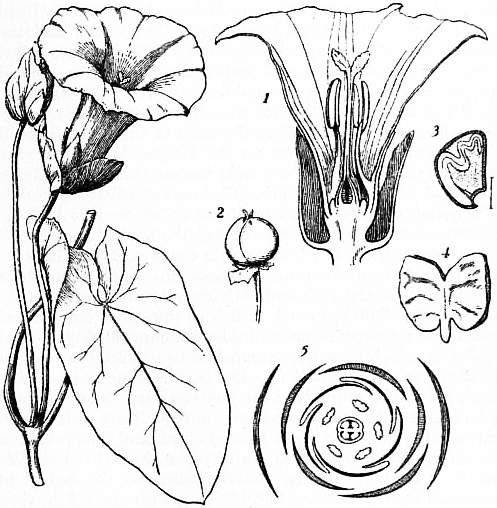
Convolvulus sepium, slightly reduced.
1. Flower cut vertically. 4. Embryo taken out of seed.
2. Fruit, slightly reduced. 5. Horizontal plan of arrangement of flower.
3. Seed cut lengthwise showing embryo.
The large showy flowers are visited by insects for the honey which is secreted by a ring-like disk below the ovary; large-flowered species of Ipomaea with narrow tubes are adapted for the visits of honey-seeking birds.
The largest genus, Ipomaea, has about 400 species distributed throughout the warmer parts of the earth. Convolvulus has about 150 to 200 species, mainly in temperate climates; the genus is principally developed in the Mediterranean area and western Asia. Cuscuta contains nearly 100 species in the warmer and temperate regions; two are native in Britain.
The tubers of Ipomaea Batatas are rich in starch and sugar, and, as the “sweet potato,” form one of the most widely distributed foods in the warmer parts of the earth. Several members of the order are used medicinally for the strong purging properties of the milky juice (latex) which they contain; scammony is the dried latex from the underground stem of Convolvulus Scammonia, a native of the Levant, while jalap is the product of the tubercles of Exogonium Purga, a native of Mexico. Species of Ipomaea (morning glory), Convolvulus and Calystegia are cultivated as ornamental plants. Convolvulus arvensis (bindweed) is a pest in fields and gardens on account of its wide-spreading underground stem, and many of the dodders (Cuscuta) cause damage to crops.
CONVOY (through the Fr. from late Lat. conviare, to go along with, from Lat. cum, with, and via, way; “convey” has the same ultimate origin [see Conveyance], neither word being connected, as has sometimes been supposed, with Lat. convehere, to carry together), a verb and noun now almost exclusively used in military and naval parlance. As a verb it signifies in the first instance to accompany or to escort; and in the 17th century we even hear of cavalry “convoying” infantry, but its meaning was soon complicated by the growing use of the word “convey” in the sense of “to carry,” and as the usual task of an escort was that of accompanying and protecting vehicles containing supplies, the noun “convoy” (Fr. convoi) was introduced and has thenceforward in land warfare meant a train of vehicles containing stores for the use of troops and its guard or escort. Sometimes even the word is found in the meaning of the train of vehicles without implying that there is an escort, so far has the original meaning become obscured; but the idea of military protection is always present, whether this protection is given by a separate escort or provided by the weapons of the drivers themselves.
In naval warfare the term is used to describe a method adopted for defending merchant ships against capture. It was usually applied to the vessels to be protected—as for example “the Baltic convoy,” or “Captain Montray’s convoy.” Until the 17th century the English term was “to waft” and the warship employed to guard the traders on their way was called “a wafter.” The practice of sailing in convoy for mutual protection was common in the middle ages, when all ships were more or less armed and the war vessel was not entirely differentiated from the trader. Thus the ships of the great German confederation of cities known as the Hanseatic League were required to sail in convoy. So were the six trading squadrons which sailed yearly from Venice. The masters of all the vessels were required to obey the authority of an officer who had the general command. In the 16th century the Spanish trade with America was compelled by law to sail in convoys (flotas), in order to avoid the danger of capture by pirates to which single ships were exposed. In the 17th and 18th centuries the use of convoy was universal. Dutch, French or British ships were collected at a rendezvous, and were accompanied by warships till they reached the point at which they were compelled to separate in order to go to their various destinations. The main danger was near the enemy’s ports. An example of the way the duty was discharged may be found in the Newfoundland convoy. They sailed from England under the direction of a naval officer and the protection of his ships, commonly a forty- or fifty-gun ship with a smaller vessel in attendance. The convoy sailed to the banks of Newfoundland. When they had filled up with stock fish, they were escorted across the Atlantic by the same officer. He accompanied those of them bound to the Mediterranean to the port of Leghorn, and, when they had unloaded and reloaded, saw them home. All cases were not so simple. The ships engaged in the East and West India trade, for instance, sailed together. In the Channel they were protected by the main strength of the fleet. When beyond the Scilly Islands they were left to the care of a smaller force, and continued together till in the neighbourhood of Madeira, when they separated. Convoys were subject to attack in two forms, by strong squadrons which overpowered the guard, and by privateers, corsairs and isolated cruisers. This latter peril was much increased in the case of British commerce by the reluctance of the merchant captains to obey the naval officers. They were very much inclined to separate from the convoy as they approached their destination in the hope of forestalling rivals. As a natural consequence they were frequently captured by hostile privateers. French naval officers had authority and large powers of punishment over merchant skippers. The British naval officers had not. In 1803-34, on the renewal of the war with France, the British government saw the necessity for regulating convoy more strictly than had hitherto been the case. It therefore passed “an act for the better protection of the trade of the United Kingdom during the present hostilities with France.” By this act (the 43rd Geo. III. Cap. 57) all vessels not exempted by special licence were required to sail in convoy and to conform to strict regulations, under penalties of £1000 (or, when the goods included government stores, of £1500) and the loss of all claim to insurance in case of capture.
(D. H.)
The object of convoying is to attach an official public character to the convoyed ships, i.e. a sort of assimilation of them to the escorting ship or ships of war. Thus European states and jurists hold that the declaration of the commander of the convoy, that there is no contraband of war on board the convoyed ships, pledges the national good faith, and must be assumed to be correct in the same way as it is assumed that the convoy itself is carrying no contraband of war. Great Britain has never taken this view. Down to 1907 she had maintained that it is materially impossible for any neutral state to exercise the necessary supervision to secure absolute accuracy of the ship’s papers. Number 29, however, of the instructions given by the government to the British plenipotentiaries at the Hague Conference of 1907 stated that “H.M. government would ... be glad to see the right of search limited in every practicable way, e.g. by the adoption of a system of consular certificates declaring the absence of contraband from the cargo....” As the greater includes the smaller, we may assume that, if a consular certificate might suffice to exempt from the exercise of search, the state guarantee of a convoy would certainly suffice. The London Convention on the Laws and Customs of Naval War has laid down the rules as to convoys in the following terms:
Neutral vessels under national convoy are exempt from search. The commander of a convoy gives, in writing, at the request of the commander of a belligerent warship, all information as to the character of the vessels and their cargoes, which could be obtained by search.—Art. 61.
If the commander of the belligerent warship has reason to suspect that the confidence of the commander of the convoy has been abused, he communicates his suspicions to him. In such a case it is for the commander of the convoy alone to investigate the matter. He must record the result of such investigation in a report, of which a copy is handed to the officer of the warship. If, in the opinion of the commander of the convoy, the facts shown in the report justify the capture of one or more vessels, the protection of the convoy must be withdrawn from such vessels.—Art. 62.
(T. Ba.)
CONVULSIONS, the pathological condition of body associated with abnormal, violent and spasmodic contractions and relaxations of the muscles, taking the form of a fit. Convulsions may be a symptom resulting from various diseases, but the term is commonly restricted to the infantile variety, occurring in association with teething, or other causes which upset the child’s nervous system. The treatment (plunging into a hot bath, or administration of chloroform) must be prompt, as convulsions are responsible for a large part of infant mortality.
The name “Convulsionaries” (Fr. Convulsionnaires) was given to certain Jansenist fanatics in France in the 18th century, owing to the convulsions, regarded by them as proofs of divine inspiration, which were the result of their religious ecstasies (see Jansenism). The term “Convulsionists” is sometimes applied to them, as also, more loosely, to other religious enthusiasts who exhibit the same symptoms.
CONWAY, HENRY SEYMOUR (1721-1795), English field marshal and statesman, was the second son of Francis Seymour, of Ragley, Warwickshire, who took the name of Conway on succeeding to the estates of the earl of Conway in 1699 and was created Baron Conway in 1703 (see Seymour or St Maur). Henry Seymour Conway’s elder brother, Francis, 2nd Baron Conway, was created marquess of Hertford in 1793; his mother was a sister of Sir Robert Walpole’s wife, and he was therefore first cousin to Horace Walpole, with whom he was on terms of intimate friendship throughout his life. Having entered the army at an early age, Conway was elected to the Irish parliament in 1741 as member for Antrim, which he continued to represent for twenty years; in the same year he became a member of the English House of Commons, sitting for Higham Ferrers in Northamptonshire, and he remained in parliament, representing successively a number of different constituencies, almost without interruption for more than forty years. Meantime he saw much service in the army abroad, where he served with conspicuous bravery and not without distinction. In 1745 he became aide-de-camp to the duke of Cumberland in Germany, and was present at Fontenoy; in the following year he had command of a regiment at Culloden. In 1755 he went to Ireland as secretary to the lord-lieutenant, a position which he held for one year only; and on his return to England he received a court appointment, having already been promoted major-general. In 1757 he was associated with Sir John Mordaunt in command of an abortive expedition against Rochfort, the complete failure of which brought Conway into discredit and involved him in a pamphlet controversy. In 1759 he became lieutenant-general, and served under Prince Ferdinand of Brunswick in the campaigns of 1761-1763. Returning to England he took part in the debates in parliament on the Wilkes case, in which he opposed the views of the court, speaking strongly against the legality of general warrants. His conduct in this matter highly incensed the king, who insisted on Conway being deprived of his military command as well as of his appointment in the royal household. His dismissal along with other officers was the occasion of another paper controversy in which Conway was defended by Horace Walpole, and gave rise to much constitutional dispute as to the right of the king to remove military officers for their conduct in parliament—a right that was tacitly abandoned by the Crown when the Rockingham ministry of 1765 reinstated the officers who had been removed.
In this ministry Conway took office as secretary of state, with the leadership of the House of Commons. In the dispute with the American colonies his sympathies were with the latter, and in 1766 he carried the repeal of the Stamp Act. When in July of that year Rockingham gave place to Chatham, Conway retained his office; and when Chatham became incapacitated by illness he tamely acquiesced in Townshend’s reversal of the American policy which he himself had so actively furthered in the previous administration. In January 1768, offended by the growing influence of the Bedford faction which joined the government, Conway resigned the seals of office, though he was persuaded by the king to remain a member of the cabinet and “Minister of the House of Commons.” When, however, Lord North became premier in 1770, Conway resigned from the cabinet and was appointed to the command of the royal regiment of horse guards; and in 1772 he became governor of Jersey, the island being twice invaded by the French during his tenure of command. In 1780 and 1781 he took an active part in opposition to Lord North’s American policy, and it was largely as the result of his motion on the 22nd of February in the latter year, demanding the cessation of the war against the colonies, when the ministerial majority was reduced to one, that Lord North resigned office. In the Rockingham government that followed General Conway became commander-in-chief with a seat in the cabinet; and he retained office under Shelburne when Rockingham died a few months later. On Pitt’s elevation to the premiership, Conway supported Fox in opposition; but after the dissolution of parliament in 1784 he retired from political life. He was made field marshal in 1793, and died at Henley-on-Thames on the 9th of July 1795. Conway married in 1747 Caroline, daughter of General Campbell (afterwards duke of Argyll), and widow of the earl of Aylesbury. He had one daughter, Anne, who married John Darner, son of Lord Milton, and who inherited a life interest in Strawberry Hill under the will of Horace Walpole.