VERSE
Reading edition
FROM “THE PHANTOMS OF THE MIND”
[First printed in Bowdoin Portfolio, September, 1839.]
I would not be a fragile flower To languish in a lady’s bower, A silken thing of texture rare That fears to meet God’s blessed air; My life a water, stagnant, low, Without an ebb, without a flow; Chained like a captive to his oar To toil on, on, forevermore! And supplicate with frantic cry For the “poor privilege to die”; A smooth-faced boy, a harmless thing, A kitten playing with a string, A child without, a brute within, Without e’en energy to sin. Not thus, when erst that iron race From whom our birth we proudly trace, No sculptured arras decked the bed Whereon reposed the patriot’s head; Nor proud device or motto wore Those stern-faced men that lived of yore In the good days of “auld lang syne,” When liberty, a feeble vine, Lay bruised and trailing on the ground, Nor yet a single trellis found; Gently they reared its drooping crest, They bade its tendrils twine, And many a traveller since hath blessed The shadow of that vine.
THE DEMON OF THE SEA
[First printed in Bowdoin Portfolio, November, 1839.]
Ah! tell me not of your shady dells, Where the lilies gleam and the fountain wells, Where the reaper rests when his task is o’er, And the lake-wave sobs on the verdant shore, And the rustic maid with a heart all free, Hies to the well-known trysting-tree; For I’m the god of the rolling sea, And the charms of earth are nought to me. O’er the thundering chime of the breaking surge, On the lightning’s wing my course I urge, On the thrones of foam right joyous ride ’Mid the sullen dash of the angry tide. I hear ye tell of music’s power, The rapture of a sigh, When beauty in her wizard bower Unveils her languid eye. Of those who die in rugged fight And battling for their country’s right With the shivered brand in the “red right hand,” And the plaudits of a rescued land. Ye never knew the infernal fire, The withering curse, the scorching ire, That rages, maddens in the breast Of him who rules the billow’s crest. Heard ye that last despairing yell That wailed Creation’s funeral knell, When young and old, the vile, the brave, Were circled in one common grave? While on my ear of driving foam By moaning whirlwinds sped, O’er what was joyous earth I roam, And trample on the dead. This is the music that my ear Thrills with stern ecstasy to hear! I love to view some lonely bark, The sport of storms, the lightning’s mark, Scarce struggling through the fresh’ning wave That foams and yawns to be her grave! I saw a son and father fight For a drifting spar their lives to save; The son he throttled his father gray, And tore the spar from his clutch away, Till he sank beneath the wave; And deemed it were a noble sight. I saw upon a shattered wreck All swinging at the tempest’s beck, A mother lone, whose frenzied eye Wandered in hopeless agony O’er that vast plain where naught was seen, The ocean and the sky between, And there all buried to the breast In the hungry surf that round her prest— With feeble arms, in anguish wild, High o’er her head she raised her child, Endured of winds and waves the strife, To add a unit to its life. I whelmed that infant in the sea To add a pang to her misery, And the wretched mother’s frantic yell Came o’er me like a soothing spell! Are ye so haughty in your pride, To deem of all the earth beside That yours are fields and fragrant flowers, And lute-like voices in your bowers, And gold and gems of priceless worth, And all the glory of the earth? Ah, mean is all your pageantry To that proud, fadeless blazonry, That waves in scathless beauty free Beneath the blue, old rolling sea! For there are flowers that wither not, And leaves that never fall, Immortal forms in each wild grot, Still bright and changeless all. Decay is not on beauty’s bloom, No canker in the rose, No prescience of a future doom To mar the sweet repose— There Proteus’ changeful form is seen, And Triton winds his shell, While through old Ocean’s valleys green, The tuneful echoes swell. But though a Demon rightly named, For terror more than mercy famed,— Yet demons e’en respect the power That nerves the heart in danger’s hour. And when the veteran of a hundred storms, Whom many a wild midnight I’ve girded with a thousand startling forms Of terror and affright,— When tempests roar and hell-fiends scream, The thunders crash, the lightnings gleam, ’Mid biting cold and driving hail Still grasps the helm, still trims the sail, Nor deigns to utter coward cries, But as he lived, so fearless dies,— Mingles his last faint, bubbling sigh With the pealing tempest’s banner-cry;— Then winds are hushed, the billow falls Where storms were wont to be, As I bear him to the untrodden halls Of the deep unfathomed sea! Now Triton sends a mournful strain Through all that vast profound,— At once a bright immortal train Comes thronging at the sound. And on a shining pearly car They place the honored dust, And Ocean’s chargers gently bear Along the sacred trust, While far o’er all the glassy plain By mighty Neptune led, In sadness moves that funeral train,— Thus Ocean wails her dead! And now the watch of life is past, The shattered hulk is moored at last, Nor e’en the tempest’s thrilling breath Can wake “the dull, cold ear of death.” No bitter thoughts of home and loved ones dart Their untold anguish through the seaman’s heart. Peaceful be thy slumbers, brother, There’s no prouder grave for thee, Well may pine for thee a mother, Flower of ocean’s chivalry!
PORTLAND
Still may I love, beloved of thee, My own fair city of the sea! Where moulders back to kindred dust The mother who my childhood nurst, And strove, with ill-requited toil, To till a rough, ungrateful soil; Yet kindly spared by Heaven to know That Faith’s reward is sure, though slow, And see the prophet’s mantle grace The rudest scion of her race. And while around thy seaward shore The Atlantic doth its surges pour, (Those verdant isles, thy bosom-gems) May Temples be thy diadems; Spire after spire in beauty rise, Still pointing upward to the skies, Unwritten sermons, and rebukes of love, To point thy toiling throngs to worlds above.
AN ODE
[Written for the Semi-centennial Celebration at Bowdoin College, August 31, 1852.]
From waves that break to break again, From winds that die to gather might, How pleasant on the stormy main Appears the sailor’s native height. And sweet, I ween, the graceful tears That glisten in the wand’rer’s eye, As haunts and homes of early years Begemmed with morning’s dewdrops lie. Borne on the fragrant breath of morn, His lazy vessel stems the tide Among the fields of waving corn That nestle on the river’s side. His mother’s cottage through the leaves Gleams like a rainbow seen at night, While all the visions fancy weaves Are stirring at the well-known sight. But sweeter memories cluster here Than ever stirred a seaman’s breast, Than e’er provoked his grateful tear, Or wooed the mariner to rest. ’Twas here our life of life began— The spirit felt its dormant power; ’Twas here the child became a man— The opening bud became a flower. And from Niagara’s distant roar And homes beside the heaving sea, Rank upon rank thy children pour, And gather to thy Jubilee. On these old trees each nestling leaf, The murmur of yon flowing stream, Has power to stir a buried grief, Or to recall some youthful dream. Each path that skirts the tangled wood, Or winds amidst its secret maze, Worn by the feet of those we loved, Brings back the forms of other days. Of those whose smile was heaven to thee, Whose voice a richer music made Than brooks that murmur to the sea, Or birds that warble in the shade. Around these ancient altar fires We cluster with a joyous heart, While ardent youth and hoary sires Alike sustain a grateful part.
A HYMN
[Written for the Celebration of the Twenty-eighth Anniversary of the Boston Seaman’s Friend Society, at Music Hall, Boston, May 28, 1856.]
I was not reared where heaves the swell Of surf on coasts remote and drear, But grew with roses, in a dell, And waked with bird-notes in my ear. Glad hours on golden pinions sped, As folded to her throbbing breast, A mother’s lips their fragrance shed, And lulled me with a prayer to rest. The red has faded from my cheek, And bronzed and scarred the boyish face; Affection’s eye might vainly seek One lingering lineament to trace. Shipwrecked, the Sailor’s Home I sought, My raiment gone, my shipmates dead, Through poverty reluctant brought, And there a sober life I led. But when the evening prayer was said, It brought the unaccustomed tear, A mother’s hand was on my head, Her voice was thrilling in mine ear. Old memories waked that long had slept, They forced the spirit’s brazen crust; I wept and prayed, I prayed and wept, Till anguish ripened into trust. Blest be the hands that reared thy dome The wandering seaman’s step to greet; Guiding the homeless to a home, And sinners to a mercy-seat.
TRUE POETRY’S TASK
When first the human clay, instinct with thought, Doth feel the motions of those hidden fires That by a subtle alchemy sublime The crude contexture of its grosser powers, It is not life—rather capacity Of life and power hereafter to be given. Life lies beyond us, as an Orphic tale Of things mysterious and dimly seen, A gorgeous phantom, but a phantom still That ever is, and ever is without. We dwell amid the border flowers that bloom To bless and cheer life’s brier-planted paths, Its dusty turnpikes, and its scorching noons; And thus our primal being is a dream And most mysterious to the dreamer, E’en as the dim and iron forms that frown From the dark walls of some old corridor On which the moonbeams thro’ the crumbling towers Bestow expression and inform with life Delicious but delight indefinite. The finer tissues of that wondrous web That doth so strangely link spirit to sense Matter to mind, are all unwoven yet; Those subtle telegraphs that make report Of outward action to the inward life Still in the secret caves of being sleep. The soul is conscious of no other tie To nature than to love its beauty And with an open sense luxuriate In woods and fields with animal delight. For as the sturdy trunk and massive limbs Of the gigantic oak, lie deftly hid Within the acorn’s small periphery, Till in the pregnant bosom of the earth, Warmed by the sun, moistened with summer dews, It bursts its coffin and leaps forth to light; Thus when the soul is in its progress brought, Led on by nature’s genial processes, To touch reality and outward life, There is a stirring, from its inmost depths, Of yearning thoughts and deathless energies, Seeking the outward vesture that confers A definite existence and a form. Strong roots shoot forth and fibres more minute That by mysterious alchemy impart Substance to shadow, breath to lifeless forms. Life is no more a pageant to admire; Since with a yearning for a higher life, The power to struggle, and the thirst to know, Awakes a bitter principle to sin, Breeding intestine war and conflict fierce, Till powers are marshalled in the mind itself That with itself chaotic warfare wage. Henceforth man’s life is conflict, and his doom By conflict to grow stronger, to contend From the rude cross within some Alpine gorge To the proud blazon of ancestral tombs. In eastern myths and Christian chronicles, In heathen temples, and in holy shrines The same stern truth is graven on them all— That conflict only doth ennoble man. But man is not sufficient to himself In this great conflict, therefore God has given A twofold revelation to his faith. Subjective, one to reason makes appeal; The other to the grosser sense explains Stern truths by most persuasive images, Graving dread mandates on the shifting clouds, Weaving of wild flowers and of foliage green A genial symbol for a genial faith. This is the task to Poetry assigned: Of life divine to be the messenger. As to the sorrow-stricken soul of him Who knelt and prayed in lone Gethsemane The angel choir did gently minister, E’en thus true Poetry doth nerve the soul Upon its Alpine passage to commune With truths that quicken and with thoughts that stir. It is the soul’s sheet-anchor in the strife.
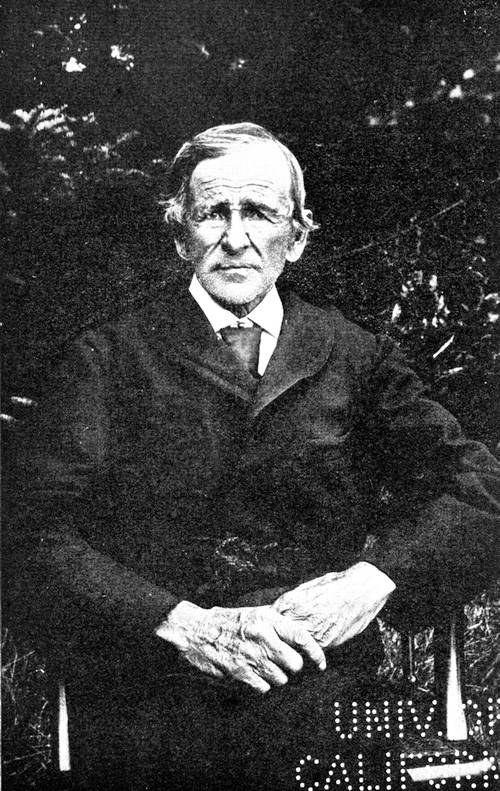
Elijah Kellogg at Eighty-six. 1899.