The "How-to-do-it" Books
Reading edition
ELECTRICITY FOR BOYS
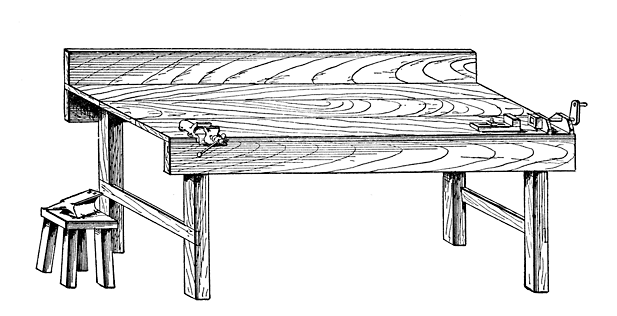
Fig. 1. WORK BENCH
THE "HOW-TO-DO-IT" BOOKS ELECTRICITY FOR BOYS A working guide, in the successive steps of electricity, described in simple terms WITH MANY ORIGINAL ILLUSTRATIONS By J. S. ZERBE, M.E. AUTHOR OF CARPENTRY FOR BOYSPRACTICAL MECHANICS FOR BOYS THE NEW YORK BOOK COMPANY New York
Copyright, 1914, by THE NEW YORK BOOK COMPANY
CONTENTS
Introductory Page 1
I. Electricity Considered. Brief Historical Events Page 5
The Study of Electricity. First Historical Accounts. Bottling Electricity. Discovery of Galvanic Electricity. Electro-motive Force. Measuring Instruments. Rapidity of Modern Progress. How to Acquire the Vast Knowledge. The Means Employed.
II. What Tools and Apparatus are Needed Page 11
Preparing the Workshop. Uses of Our Workshop. What to Build. What to Learn. Uses of the Electrical Devices. Tools. Magnet-winding Reel.
III. Magnets, Coils, Armatures, Etc. Page 18
The Two Kinds of Magnets. Permanent Magnets. Electro-Magnets. Magnetism. Materials for Magnets. Non-magnetic Material. Action of a Second Magnet. What North and South Pole Mean. Repulsion and Attraction. Positives and Negatives. Magnetic Lines of Force. The Earth as a Magnet. Why the Compass Points North and South. Peculiarity of a Magnet. Action of the Electro-Magnet. Exterior Magnetic Influence Around a Wires Carrying a Current. Parallel Wires.
IV. Frictional, Voltaic or Galvanic and Electro-magnetic Electricity Page 29
Three Electrical Sources. Frictional Electricity. Leyden Jar. Voltaic or Galvanic Electricity. Voltaic Pile; How Made. Plus and Minus Signs. The Common Primary Cell. Battery Resistance. Electrolyte and Current. Electro-magnetic Electricity. Magnetic Radiation. Different Kinds of Dynamos. Direct Current Dynamos. Simple Magnet Construction. How to Wind. The Dynamo Fields. The Armature. Armature Windings. Mounting the Armature. The Commutator. Commutator Brushes. Dynamo Windings. The Field. Series-wound Field. Shunt-wound. Compound-wound.
V. How to Detect and Measure Electricity Page 49
Measuring Instruments. The Detector. Direction of Current. Simple Current Detector. How to Place the Detector. Different Ways to Measure a Current. The Sulphuric Acid Voltameter. The Copper Voltameter. The Galvanoscope Electro-magnetic Method. The Calorimeter. The Light Method. The Preferred Method. How to Make a Sulphuric Acid Voltameter. How to Make a Copper Voltameter. Objections to the Calorimeter.
VI. Volts, Amperes, Ohms and Watts Page 60
Understanding Terms. Intensity and Quantity. Voltage. Amperage Meaning of Watts and Kilowatt. A Standard of Measurement. The Ampere Standard. The Voltage Standard. The Ohm. Calculating the Voltage.
VII. Push Buttons, Switches, Annunciators, Bells and Like Apparatus Page 65
Simple Switches. A Two-Pole Switch. Double-Pole Switch. Sliding Switch. Reversing Switch. Push Buttons. Electric Bells. How Made. How Operated. Annunciators. Burglar Alarm. Wire Circuiting. Circuiting System with Two Bells and Push Buttons. The Push Buttons, Annunciators and Bells. Wiring Up a House.
VIII. Accumulators, Storage or Secondary Batteries Page 82
Storing Up Electricity. The Accumulator. Accumulator Plates. The Grid. The Negative Pole. Connecting Up the Plates. Charging the Cells. The Initial Charge. The Charging Current.
IX. The Telegraph Page 90
Mechanism in Telegraph Circuit. The Sending Key. The Sounder. Connecting Up the Key and Sounder. Two Stations in Circuit. The Double Click. Illustrating the Dot and the Dash. The Morse Telegraph Code. Example in Use.
X. High-tension Apparatus, Condensers, Etc. Page 98
Induction. Low and High Tension. Elastic Property of Electricity. The Condenser. Connecting up a Condenser. The Interrupter. Uses of High-tension Coils.
XI. Wireless Telegraphy Page 104
Telegraphing Without Wires. Surging Character of High-tension Currents. The Coherer. How Made. The Decoherer. The Sending Apparatus. The Receiving Apparatus. How the Circuits are Formed.
XII. The Telephone Page 110
Vibrations. The Acoustic Telephone. Sound Waves. Hearing Electricity. The Diaphragm in a Magnetic Field. A Simple Telephone Circuit. How to Make a Telephone. Telephone Connections. Complete Installation. The Microphone. Light Contact Points. How to Make a Microphone. Microphone, the Father of the Transmitter. Automatic Cut-outs for Telephones. Complete Circuiting with Transmitters.
XIII. Electrolysis, Water Purification, Electroplating Page 123
Decomposing Liquids. Making Hydrogen and Oxygen. Purifying Water. Rust. Oxygen as a Purifier. Composition of Water. Common Air Not a Good Purifier. Pure Oxygen a Water Purifier. The Use of Hydrogen in Purification. Aluminum Electrodes. Electric Hand Purifier. Purification and Separation of Metals. Electroplating. Plating Iron with Copper. Direction of Current.
XIV. Electric Heating. Thermo-Electricity Page 135
Generating Heat in a Wire. Resistance of Substances. Signs of Connectors. Comparison of Metals. A Simple Electric Heater. How to Arrange for Quantity of Current Used. An Electric Iron. Thermo-Electricity Converting Heat Directly into Electricity Metals. Electric, Positive, Negative. Thermo-electric Coupler.
XV. Alternating Currents, Choking Coil, Transformer Page 145
Direct Current. Alternating Current. The Magnetic Field. Action of a Magnetized Wire. The Movement of a Current in a Charged Wire. Current Reversing Itself. Self-Induction. Brushes in a Direct Current Dynamo: Alternating, Positive and Negative Poles. How an Alternating Current Dynamo is Made. The Windings. The Armature Wires. Choking Coils. The Transformer. How the Voltage is Determined. Voltage and Amperage in Transformers.
XVI. Electric Lighting Page 161
Early conditions. Fuels. Reversibility of Dynamo. Electric arc. Mechanism to maintain the arc. Resistance coil. Parallel carbons for making arc. Series current. Incandescent system. Multiple circuit. Subdivision of electric light. The filament. The glass bulb. Metallic filaments. Vapor lamps. Directions for improvements. Heat in electric lighting. Curious superstitions concerning electricity. Magnetism. Amber. Discovery of the properties of a magnet. Electricity in mountain regions. Early beliefs as to magnetism and electricity. The lightning rod. Protests against using it. Pliny's explanation of electricity.
XVII. Power, and Various Other Electrical Manifestations Page 175
Early beliefs concerning the dynamo. Experiments with magnets. Physical action of dynamo and motor. Electrical influence in windings. Comparing motor and dynamo. How the current acts in a dynamo. Its force in a motor. Loss in power transmission. The four ways in which power is dissipated. Disadvantages of electric power. Its advantages. Transmission of energy. High voltages. The transformer. Step-down transformers. Electric furnaces. Welding by electricity. Merging the particles of the joined ends.
XVIII. X-Ray, Radium and the Like Page 184
The camera and the eye. Actinic rays. Hertzian waves. High-tension apparatus. Vacuum tubes. Character of the ultra-violet rays. How distinguished. The infra-red rays. Their uses. X-rays not capable of reflection. Not subject to refraction. Transmission through opaque substances. Reducing rates of vibration. Radium. Radio-activity. Radio-active materials. Pitchblende. A new form of energy. Electrical source. Healing power. Problems for scientists.
Glossary of Words Used in the Text Page 189
Index Page 207
LIST OF ILLUSTRATIONS
1. Work bench Frontispiece
PAGE
2. Top of magnet-winding reel 14
3. Side of magnet-winding reel 14
4. Journal block 15
5. Plain magnet bar 19
6. Severed magnet 20
7. Reversed magnets 21
8. Horseshoe magnet 22
9. Earth's magnetic lines 23
10. Two permanent magnets 24
11. Magnets in earth's magnetic field 24
12. Armatures for magnets 25
13. Magnetized field 26
14. Magnetized bar 26
15. Direction of current 27
16. Direction of induction current 28
17. Frictional-electricity machine 30
18. Leyden jar 32
19. Galvanic electricity. Crown of cups 33
20. Voltaic electricity 34
21. Primary battery 36
22. Dynamo field and pole piece 39
23. Base and fields assembled 41
24. Details of the armature, core 42
25. Details of the armature, body 42
26. Armature Journals 43
27. Commutator 43
28. End view of armature, mounted 44
29. Top view of armature on base 45
30. Field winding 47
31. Series-wound 47
32. Shunt-wound 48
33. Compound-wound 48
34. Compass magnet, swing to the right 50
35. Magnetic compass 50
36. Magnet, swing to the left 50
37. Indicating direction of current 51
38. The bridge of the detector 52
39. Details of detector 53
40. Cross-section of detector 54
41. Acid voltameter 56
42. Copper voltameter 56
43. Two-pole switch 66
44. Double-pole switch 66
45. Sliding switch 67
46. Rheostat form of switch 68
47. Reversing switch 69
48. Push button 70
49. Electric bell 71
50. Armature of electric bell 72
51. Vertical section of annunciator 72
52. Front view of annunciator 72
53. Horizontal section of annunciator 72
54. Front plate of annunciator 72
55. Alarm switch on window 76
56. Burglar alarm on window 76
57. Burglar alarm contact 77
58. Neutral position of contact 78
59. Circuiting for electric bell 79
60. Annunciators in circuit 80
61. Wiring system for a house 80
62. Accumulator grids 83
63. Assemblage of accumulator grids 85
64. Connecting up storage battery in series 87
65. Parallel series 88
66. Charging circuit 88
67. Telegraph sending key 91
68. Telegraph sounder 92
69. A telegraph circuit 94
70. Induction coil and circuit 99
71. Illustrating elasticity 100
72. Condenser 101
73. High-tension circuit 102
74. Current interrupter 103
75. Wireless-telegraphy coherer 105
76. Wireless sending-apparatus 107
77. Wireless receiving-apparatus 108
78. Acoustic telephone 111
79. Illustrating vibrations 111
80. The magnetic field 112
81. Section of telephone receiver 114
82. The magnet and receiver head 115
83. Simple telephone connection 116
84. Telephone stations in circuit 117
85. Illustrating light contact points 118
86. The microphone 119
87. The transmitter 119
88. Complete telephone circuit 121
89. Device for making hydrogen and oxygen 124
90. Electric-water purifier 127
91. Portable electric purifier 129
92. Section of positive plate 130
93. Section of negative plate 130
94. Positive and negative in position 130
95. Form of the insulator 130
96. Simple electric heater 137
97. Side view of resistance device 139
98. Top view of resistance device 139
99. Plan view of electric iron 140
100. Section of electric iron 141
101. Thermo-electric couple 143
102. Cutting a magnetic field 146
103. Alternations, first position 148
104. Alternations, second position 148
105. Alternations, third position 148
106. Alternations, fourth position 148
107. Increasing alternations, first view 149
108. Increasing alternations, second view 149
109. Connection of alternating dynamo armature 150
110. Direct current dynamo 151
111. Circuit wires in direct current dynamo 152
112. Alternating polarity lines 154
113. Alternating current dynamo 155
114. Choking coil 157
115. A transformer 158
116. Parallel carbons 164
117. Arc-lighting circuit 165
118. Interrupted conductor 166
119. Incandescent circuit 167
120. Magnetic action in dynamo, 1st 177
121. Magnetic action in dynamo, 2d 177
122. Magnetic action in dynamo, 3d 178
123. Magnetic action in dynamo, 4th 178
124. Magnetic action in motor, 1st 179
125. Magnetic action in motor, 2d 179
126. Magnetic action in motor, 3d 180
127. Magnetic action in motor, 4th 180