SOME DRUG PLANTS SUITABLE FOR CULTIVATION IN THE UNITED STATES.
Reading edition
The number of drug plants which may be grown in the United States is large, although the same plants are not equally adapted to the conditions of soil and climate prevailing in different sections. Often the most suitable plants for a particular locality can not be foretold, especially in those situations where no attempts have yet been made to grow them. In such cases it is well to select for cultivation plants which thrive elsewhere under conditions most closely resembling those of the new situation in which it is proposed to grow them. The success with which ordinary field or garden crops can be grown will in general indicate the possible suitability of a given location for growing many medicinal plants. Since a number of native medicinal plants which in their wild state are restricted to certain localities have been successfully cultivated in situations far beyond their natural range, there are good reasons for believing that many such plants will thrive in sections where they are not now grown. However, good results can scarcely be expected unless the plants are placed under conditions similar to those in which they normally thrive.
In suitable soil and under favorable weather conditions the following drug plants have been found to thrive well under cultivation in numerous places in the Central and Eastern States and will probably be found suitable for cultivation in many other situations if the difference in climatic conditions is not too great:
Anise. Conium. Elecampane. Sage.
Belladonna. Coriander. Fennel. Stramonium.
Camomile. Digitalis. Henbane. Tansy.
Caraway. Dill. Horehound. Thyme.
Some perennials, such as belladonna and digitalis, are only partly hardy and would be subject to winterkilling in the colder sections. Such plants as aconite, arnica, lovage, poppy, seneca, valerian, and wormwood seem to thrive best in the northern half of the United States in situations where the rainfall is well distributed throughout the growing season. On the other hand, cannabis, licorice, and wormseed are better suited to the warmer climate of the southern half of the United States. Aletris, althaea, angelica, calamus, orris, pinkroot, peppermint, serpentaria, and spearmint are adapted generally for situations in which the soil is rich and moist, but lavender and larkspur are partial to well-drained sandy soil. Ginseng and goldenseal occur naturally on rich soil in the partial shade of forest trees and can be cultivated successfully only when planted in woodlands or in specially prepared soil under artificial shade (fig. 1).
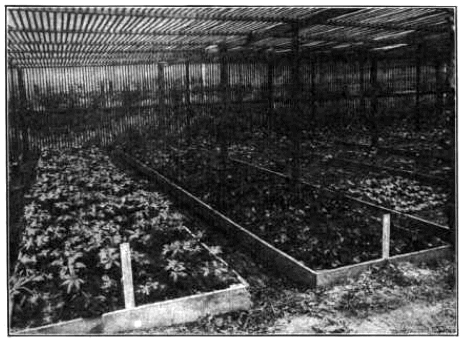
Fig. 1.—Lath shed affording partial shade, especially well suited for growing woodland plants.