Introductory material (continued 4)
Reading edition
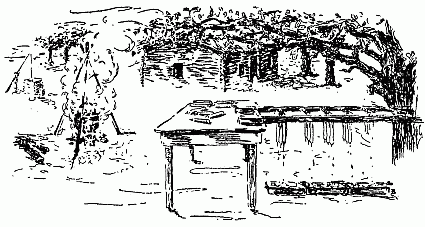
All dances were square—quadrilles and cotillions. The Basket Cotillion was indeed, looked upon as rather daring. You see, at the last, the ring of men linked by hand-hold outside a ring of their partners, lifted locked arms over their partners' heads, and thus interwoven, the circle balanced before breaking up. Other times, other dances—ours is now the day of the trot and the tango. But they lack the life, the verve of the old dances, the old tunes. To this day when I hear them, my feet patter in spite of me. You could not dance to them steadily, with soft airs blowing all about, leaves flittering in sunshine, and water rippling near, without getting an appetite commensurate to the feasts in wait for you.
One basket from a plantation sufficed for bran-dances ending at sundown—those running on past midnight demanded two. It would never do to offer snippets and fragments for supper. Barbecue, if there were barbecue—was merely a concomitant of the feeding, not the whole thing. Part of it was left untouched to help out with supper. So were part of the melons, and much of the fruit. Apples, pears and peaches were plenty in good years—the near plantations sent them by wagon loads—as they also sent ice cream by freezerfuls, and boilers to make coffee. These were dispensed more than generously—but nobody would have helped himself to them uninvited, any more readily than he would have helped himself to money in the pocket. All that was in the baskets was spread on the general tables, but no man thought of eating thereof, until all women and children had been served. Old men came next—the women generally forcing upon them the best of everything.
Such a best! Broiled chicken, fried chicken, in quantity, whole hams simply entreating to be sliced, barbecue, pickle in great variety, drained and sliced for eating, beaten biscuit, soda biscuit, egg bread, salt-rising bread, or rolls raised with hop-yeast—only a few attempted them—every manner of pie, tart, and tartlet that did not drip and mess things, all the cakes in the calendar of good housewifery—with, now and then, new ones specially invented. Even more than a wedding, a bran-dance showed and proved your quality as a cake-maker. Cakes were looked at in broad daylight, eaten not with cloyed finicky appetites, but with true zest. Woe and double woe to you if a loaf of pride showed at cutting a "sad" streak, not quite done. Joy untold if you were a raw young housekeeper, to have your cake acclaimed by eaters and critics.
Mammy, and other Mammies, moved proudly about, each a sort of oracle to the friends of her household. They kept sharp eyes on things returnable—plates, platters, knives, spoons, and tablecloths—in any doubtful case, arising from the fact of similarity in pattern, they were the court of last resort. Spoons and so on are unmistakable—but one sprigged saucer is very like other saucers sprigged the same. It was the Mammies rather than the masters and mistresses, who ordered carriage drivers and horse boys imperiously about. But nobody minded the imperiousness—it was no day for quarrelling or unwisdom. And it would surely have been unwise to fret those who were the Keepers of the Baskets, at the very last.
After dinner one went to the dressing-room, a wide roofless space enclosed with green boughs massed on end, and furnished plentifully with water in buckets, towels, basins, pin cushions, combs and brushes, face powder, even needles and thread. Thence one emerged after half an hour quite fresh—to dance on and on, till the fiddlers played a fast finale, and went to their supper. Then came an interval of talk and laughing, of making new friends or stabbing delicately old enemies. Also and further much primping in the dressing-room. Dancing steadily through a temperature of 98 in the shade plays hob with some sorts of prettiness. But as dew fell and lighted lanterns went up about the arbor and throughout the grove, supper was very welcome. There was hot coffee for everybody, likewise milk, likewise lemonade, with buttered biscuit, chicken, ham, and barbecue. Chicken-loaf was particularly good for such uses. To make it, several plump, tender, full-grown pullets were simmered in water to barely cover them, with a few pepper corns, half a dozen cloves, and a blade of mace, until very, very tender. Then the meat was picked from the bones, cut up while still hot, packed down in something deep, seasoning it to taste with salt, as it was packed, and dusting in more pepper if needed, then the liquor which had been kept at a brisk boil was poured over, and left to cool. No bother about skimming off fat—we liked our loaf rich as well as high-flavored. It came out a fine mottled solid that could be sliced thin, and eaten delicately between the halves of a buttered biscuit. Sandwiches were known—but only in books. Which was well—they would have dried out so badly, for this was before the era of wax paper. Since everything was packed in the baskets whole, there was much work for mothers and Mammies at the unpacking and table-setting.
Tarts, especially if filled with cheesecake or jelly custard, held high place among the sweets. Especially with the men, young and old. One, a manager, who had been here, there, everywhere, since eight o'clock in the morning, asked Mammy at suppertime to: "Please save him one more dozen of them little pies." In truth the little pies made no more than a mouthful for noble appetites. Pies, full-grown, did not go begging—and were seldom cut in less than quarters. Frosted cake—which the lads denominated "white-washed," was commonly saved over for the supper baskets. It kept moist, whereas without the frosting a long summer day might make it hard.
After the supper elderly men drove home—unless they had daughters among the dancers without other chaperons. Generally, some aunt or cousin stood ready with such good offices. The chaperons themselves danced now and then—youths specially anxious for favor with their charges, all but forced them upon the floor. Set it to their credit, they footed it almost as lightly as the youngest. Occasionally you might see, mother and daughter, even a granddaughter of tender years, wheeling and balancing in the same set. And so the fiddles played, the stars shone, the waters babbled, until the lanterns flared and sputtered out, and the banjo-picker held up fingers raw and bleeding. Then with a last final swing and flourish, everybody scattered for homeward ways, glad of the day's pleasure—and tired enough to be glad also it was ended.
The most special of occasions was a dining. Not upon any high day or holiday, such as Christmas, New Year, Jackson's Day—the eighth of January—Easter nor Whit-Monday, but as Mammy said: "A dinin' des, dry so." Commonly pride of housewifery incited to it—therefore it must be a triumph. The hour was two o'clock, but guests came around eleven or twelve—and spent the day. They sat down to tables that well might have groaned, even howled, such was the weight they carried. Twelve was a favorite guest-number—few tables could be stretched to hold more than twelve plates. There were but two courses—dinner and dessert—unless in very cold weather, some person who would nowadays be said to be fond of putting on frills, set before her guests, plates of steaming soup. It had to smell very good, else it was no more than tasted—folk did not care to dull the edge of appetite needlessly, with so much before them. For the table was fully set—a stuffed ham at one end, a chicken or partridge pie at the other, side dishes of smothered rabbit, or broiled chicken, at least four kinds of sweet pickle, as many of jelly and sour pickle, a castor full of catsups, tomato and walnut, plain vinegar, pepper vinegar, red and black pepper, and made mustard, all the vegetables in season—I have seen corn pudding, candied sweet potatoes, Irish potatoes, mashed and baked, black-eyed peas, baked peaches, apples baked in sugar and cloves, cabbage boiled with bacon, okra, stewed tomatoes, sliced raw tomatoes, cucumbers cut up with young onions, beets boiled and buttered, and string beans, otherwise snaps, all at one spread.
Only epicures dressed their lettuce at table. One cranky old family friend had it served to him in a water bucket, set beside him on the floor. He shook it free of water, cut it, without bruising, to wide ribbons, covered them thickly with hard-boiled egg-yolk mashed fine, then poured upon it clear ham gravy, and strong vinegar, added salt and pepper, black and red—then ate his fill. But, of course, he did not do that at dinings. For then, if lettuce appeared, it was cut up, dressed with vinegar, salt, sugar, and pepper, but guiltless of oil, garnished with rings of hard-boiled egg—and very generally, and justly, neglected. Still the hostess had the satisfaction of feeling she had offered it—that she had indeed offered more than could have been reasonably expected.
There was water to drink, also cider in season, also milk, sweet and sour, and the very best of the homemade wine. Decanters of it sat up and down the table—you could fill up and come again at pleasure. The one drawback was—it was hard to eat properly, when you were so interrupted by helpings to something else. If there was a fault in our old-time cooking, it was its lack of selection. I think those who gave dinings felt uneasy if there was unoccupied room for one more dish.
Dessert was likewise an embarrassment of riches. Cakes in variety, two sorts of pie, with ice cream or sherbet, or fresh fruit, did not seem too much to those dear Ladies Bountiful. There was no after-dinner coffee. In cold weather coffee in big cups, with cream and sugar, often went with the main dinner. Hot apple toddies preceded it at such times. In hot weather the precursor was mint julep, ice cold. Yet we were not a company of dyspeptics nor drunkards—by the free and full use of earth's abounding mercies we learned not to abuse them.
Birthday Barbecue: (Dorothy Dix.) As refined gold can be gilded, barbecue, common, or garden variety, can take on extra touches. As thus: Kill and dress quickly a fine yearling wether, in prime condition but not over-fat, sluice out with cool water, wipe dry inside and out with a soft, damp cloth, then while still hot, fill the carcass cram-full of fresh mint, the tenderer and more lush the better, close it, wrap tight in a clean cloth wrung very dry from cold salt water, then pop all into a clean, bright tin lard stand, with a tight-fitting top, put on top securely, and sink the stand head over ears in cold water—a spring if possible. Do this around dusk and leave in water until very early morning. Build fire in trench of hard wood logs before two o'clock. Let it burn to coals—have a log fire some little way off to supply fresh coals at need. Lay a breadth of galvanized chicken-wire—large mesh—over the trench. Take out carcass—split it half down back bone, lay it flesh side down, on the wire grid, taking care coals are so evenly spread there is no scorching. After an hour begin basting with "the sop." It is made thus. Best butter melted, one pound, black pepper ground, quarter pound, red pepper pods, freed of stalk and cut fine to almost a paste, half a pint, strong vinegar, scant pint, brandy, peach if possible though apple or grape will answer, half a pint. Cook all together over very slow heat or in boiling water, for fifteen minutes. The sop must not scorch, but the seasoning must be cooked through it. Apply with a big soft swab made of clean old linen, but not old enough to fray and string. Baste meat constantly. Put over around four in the morning, the barbecue should be done, and well done, by a little after noon. There should be enough sop left to serve as gravy on portions after it is helped. The meat, turned once, has a fine crisped surface, and is flavored all through with the mint, and seasoning.
Soap and Candles
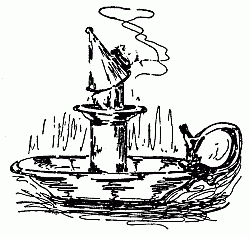
Dip-candles I never saw in common use—but Mammy showed me how they were made back at Ole Marster's, in the days when candle-molds were not to be had. Dipped or molded, the candles were of varying substance. Tallow was the main reliance—mutton tallow as well as that from our beeves. It was tried out fresh, and hardened with alum in the process. The alum was dissolved in a little water, and put with the raw fat as it went over the fire. By and by the water all cooked away, leaving the alum well incorporated through the clear fat. Lacking it, a little clear lye went in—Mammy thought and said, the lye ate up the oil in the tallow, making it firmer and whiter. But lye and alum could not go in at the same time, since being alkaline and acid, they would destroy each other.
Great pains were taken not to scorch the tallow—that meant smelly and ill-colored candles. After straining it clear of cracklings, it was caked in something deep, then turned out and laid on the highest shelf in the lumber house to await molding time. Cakes of beeswax were kept in the Jackson press, so children, white and black, could not take bites for chewing. It ranked next to native sweet gum for such uses—but Mammy felt it had much better be saved to mix with the tallow at melting time. It made the candles much firmer, also bettered their light, and moreover changed the tallow hue to an agreeable very pale yellow. Bee hives, like much else, were to a degree primitive—the wax came from comb crushed in the straining of honey. It was boiled in water to take away the remnant sweetness, then allowed to cool on top the water, taken off, and remelted over clean water, so manipulated as to free it from foreign substances, then molded into cakes. One cake was always set apart for the neighborhood cobbler, who melted it with tallow and rosin to make shoemaker's wax. Another moiety was turned into grafting wax—by help of it one orchard tree bore twelve manners of fruit. And still another, a small, pretty cake from a scalloped patty pan, found place in the family work basket—in sewing by hand with flax thread, unless you waxed it, it lost strength, and quickly pulled to pieces.
We bought our flax thread in skeins, but Mammy loved to tell of spinning it back in the days when she was young, and the best spinner on the old plantation. She still spun shoe-thread for her friend the cobbler, who, however, furnished her the raw flax, which he had grown, rotted and hechtelled, in his bit of bottom land. There were still spinning and weaving in plenty at our house—Mother had made, yearly, jeans, linsey, carpets and so on—but the plantation was not wholly clothed with homespun, as had been the case in her father's house.
Return we to our candle-making. It was work for the very coldest weather—even though we had two sets of molds, needs must the candles harden quickly if the making was to speed well. Molds could be filled at the kitchen hearth, then set outside to cool. For dipping the tallow-pot had to be set over an outside fire, and neighbored by a ladder, laid flat on trestles with smooth boards laid underneath. Mammy spun the candle wicks—from long-staple cotton, drawing it out thick, and twisting it barely enough to hold together. It must not be too coarse, as it had to be doubled over reeds at top, either for molding or dipping.
The molds were of candle-shape, joined in batteries of six or twelve, with a pert handle at one side, and tiny holes at the tips, through which the wick-ends were thrust, by help of a long broom-straw. Well in place they were drawn taut, the reeds so placed as to hold the wicks centrally, then tallow melted with beeswax, in due proportion, was poured around till the molds were brim full—after which they were plunged instantly into a tub of cold water standing outside. This to prevent oozings from the tip—hot grease is the most insidious of all substances. Only in zero weather would the first oozings harden enough to plug the orifice quickly. When the candles had hardened properly, the mold was either held over the fire, or thrust in hot water half a minute, then the candles withdrawn by help of the reeds. They were cooled a bit, to save the softened outside, then nubbed of surplus wick, and laid in a dish outside. Careless or witless molders, by laying candles still soft upon the pile, often made themselves double work.
Tallow for dipping, was kept barely fluid, by setting it over embers a little way off the fire. The pot had to be deep, so the wicks could be sunk in it to full length. They were thus sunk by stickfuls, lifted up quickly, and hung between the ladder rungs to drip. Half the tallow on them dripped away—indeed, after the first dipping they looked little more than clotted ghosts of themselves in their last estate. In very cold weather three drippings sufficed—otherwise there must be four or five. Since the dip was the result of cooled accretions, it was always top-heavy—much bigger at the nose than the base. A quick and skilled worker, though, could dip a hundred candles in the time required to mold two dozen. They burned out so quickly that was a crowning mercy—half a dozen was the average of a long winter evening. Further they ran down, in great masses—hence the importance of saving up drippings. Even molded candles made them plentiful enough to be worth re-molding. This unless discolored with the brass of candlesticks—in that case their last end was soap grease.
Rush lights were dips—this I state on information and belief, since I never saw one. Also on information and belief, it is here set forth, that folk in the back countries where wicking was not easily had, used instead of wicks, splinters of fat pine, known as light wood. In proof, take Candle Wood Mountain, whose name is said to have come from furnishing such fat pine, and of a special excellence. The pine splinters must, I think, have given a better light than real wicks—my father, in Tennessee, never ceased sighing for the lightwood, which had made such cheery illumination back in his boyhood, in a Carolina home.
Every sort of waste fat became at the last, soap grease. Bones even were thrown into kettles of lye, which ate out all their richness, leaving them crumbly, and fit for burying about the grapevines. Hence the appositeness of the darkey saying, to express special contempt of a suitor: "My Lawd! I wouldn't hab dat nigger, not eben for soap grease." Which has always seemed to me, in a way, a classic of condemnation.
Soap making came twice a year—the main event in March, to get free of things left over from hog killing, the supplement in September or October, to use up summer savings. Each was preceded by dripping lye. This necessitated wood ashes, of course—ashes from green wood. Oak or hickory was best. They were kept dry until they went into hoppers, where they were rotted by gentle wetting for a space of several days. Then water was dripped through, coming out a dark brown caustic liquid, clean-smelling, but ill to handle—it would eat a finger-tip carelessly thrust in it to the raw.
But even thus it was not strong enough for proper soapmaking, so it was boiled, boiled, until it would eat a feather, merely drawn quickly through it. Grease was added then, a little at a time, and stirred well through, changing the black-brown lye into a light-brown, bubbly mass. Whatever the lye would not eat of the grease's components, was skimmed out with the big perforated ladle. Even beyond candle-molding, soap-making was an art. Mammy never would touch it, until "the right time of the moon." Also and further, she used a sassafras stick for stirring, put it in the first time with her right hand, and always stirred the kettle the same way. If a left-handed person came near the kettle she was mightily vexed—being sure her soap would go wrong. She kept on the fire beside it a smaller kettle of clear lye, to be added at need, without checking the boiling.
Boiling down lye took one day, boiling in grease another. The third morning, after the fire was well alight, she tested the soap, by making a bit into lather. If the lather were clean and clear, without a film of grease on top, she knew it remained only to cook the soap down thick enough for the barrel, or to make into balls by the addition of salt. But if the film appeared—then indeed there was trouble. First aid to it was more lye, of feather-eating strength—next a fresh sassafras stirring stick, last and most important, walking backwards as she put the stick in the kettle, though she would never admit she did this on purpose. Like the most of her race she was invincibly shy about acknowledging her beliefs in charms and conjuring.
Soap which failed to thicken properly lacked grease. To put in enough, yet not too much, was a matter of nice judgment. Tallow did not mix well with hog fat. Therefore it had commonly its smaller special pot, whose results were molded for hand-soap, being hard and rather light-colored.
Since our washerwomen much preferred soft soap, most of the spring making went straight into the barrel. The barrel had to be very tight—soap has nearly as great a faculty of creeping through seams as even hot lard. One kettleful, however, would have salt stirred through it, then be allowed to cool, and be cut out in long bars, which were laid high and dry to age. Old soap was much better for washing fine prints, lawns, ginghams and so on—in fact whatever needed cleansing without fading.
Sundry other fine soap makers emptied their salted soap, just as it was on the point of hardening, into shallow pans, cloth-lined, and shaped it with bare hands into balls the size of two fists. This they did with the whole batch, holding hard soap so much easier kept, and saying it was no trouble whatever to soften a ball in a little hot water upon wash days. But Mammy would have none of such practices—said give her good soft soap and sand rock, she could scour anything. Sand rock was a variety of limestone, which burning made crumbly, but did not turn to lime. Mammy picked it up wherever she found it, beat it fine and used it on everything—shelves, floors, hollow-ware, milk pans, piggins, cedar water buckets—it made their brass hoops shine like gold. While she scoured she told us tales of the pewter era—when she had gone, a barefoot child, with her mother, to the Rush Branch, to come home with a sheaf of rushes, whereby the pewter was made to shine. It hurts even yet, recalling the last end of that pewter. As glass and crockery grew plenty, the boys—my uncles, there were five of them—melted it down for rifle bullets, when by chance they ran out of lead. Yet—who am I, to reproach them—did not I myself, melt down for a purpose less legitimate a fine Brittania ware teapot, whose only fault was a tiny leak? Now I should prize it beyond silver and gold.
Harking back to candle-making—we had no candle-berries in our wilds, and only a few wax-berries as ornaments of our gardens. But from what I know by observation and experience, the candle-berries or bayberries, can be melted in hot water, the same as honey-comb, and the wax strained away from the seedy residue, then allowed to cool, on top the water, and clarified by a further melting and cooling over water. Mixed with paraffine it can be molded into real bayberry candles, ever so much more odorous than those of commerce. It is well to remember in buying paraffine that there are three qualities of it, differing mainly in the degree of heat at which they melt. Choose that which is hardest to melt for candle-making. One might indeed, experiment with bayberry wax, and the drippings of plain paraffine candles, before undertaking candle-making to any considerable extent.
A last word. If any incline to challenge things here set forth, will they please remember that as one star differs from another in glory, so does one family, one region, differ from all others in its manners of eating, drinking, and cooking. I have written true things, but make no claim that they apply all over. Indeed there may be those to whom they will seem a transversing of wisdom and experience. To all such I say, try them intelligently, with pains and patience, and of the results, hold fast to that you find good.