20 MOTHER AND DAUGHTER
Reading edition
Judy, seated next to her mother, watched as the plane raced along the runway and without a tremor felt it rise skyward. Experience had already dulled the fine edge of wonder.
The girl slumped in her seat, closed her eyes, pretending to sleep. She had to think. Her mother tentatively turned the pages of a book.
Judy’s brows were knitted, her lips moved wordlessly. Think things out—face reality! How often in the months ahead could she see Karl? She knew his demanding schedule: newspaper route ... final year at school ... homework ... violin lessons ... practice ... practice. The lone pupil anxiously retained ... concerts ... people to see ... Mr. Werther ... preparations to leave ... when would there be time for her?
She had recoiled from the thought of the vast Atlantic Ocean dividing them. But what of the hour and a half journey from his home in Washington Heights to hers in Washington Square? No more would there be the casual dropping in as at Aspen. No time for soul-searching talks, their dreams and hopes: books, America, Israel, even religion! No, nor hear him play some new, aborted little tune he’d just composed!
212
She recalled the romantic stories in magazines she affected to despise but frequently enjoyed. “True love never runs smooth!” The magazines, she acknowledged, had cheap, lurid covers but they tell the truth about love! Her shoulders sank even lower nor could she restrain a deep sigh.
Mrs. Lurie let the book slide from her hands. She put an arm around her daughter. Her heart ached for her and she wanted to say something. But what? I can’t tell her she’ll probably get over it like a case of measles! Mrs. Lurie blushed at her own callousness. Her fingers pressed the girl’s shoulders, each finger saying, “I love you. I want to help you. I want you to talk to me.”
Her eyes no longer pretending sleep, Judy responded to the unspoken tenderness. “Mother, did Father tell you that Karl is going away for perhaps years?”
“Yes, he told me last night.”
“And in the months before he goes, how often will I be able to see him? He’s so busy,” she said dejectedly.
“If he wants to see you, he’ll make time somehow. Nothing will stop him.”
“You think so?” A quick smile lighted the girl’s face, only to vanish a moment later.
“He’ll be in a foreign country, meeting students from every part of the world, maybe travel, get to know clever, sophisticated girls like Marian—while I remain a dull schoolgirl. What is there so special to remember about me!”
“You’re far from dull, Judy, and so much humility isn’t exactly becoming to you or in character. Remember all the things you threatened to do! Paint, write—”
213
She patted her affectionately. “Besides, Karl isn’t going on a picnic exactly or touring Europe in the grand manner. He’ll have to work hard, harder than ever. It isn’t only his violin technique, but studying and understanding the great music of the old masters as well as the moderns. He’ll need every ounce of concentrated effort. Since you love him and he loves you, be content with that! Have faith in each other—”
Judy pondered. Faith—that’s what Mrs. Jim has.
Aloud she said, “A week ago, Mother, you spoke very differently. You dismissed me and Karl as if—”
“I know.” Mrs. Lurie hurriedly broke in. “I didn’t believe you were old enough or capable of feeling so deeply about a boy. I’ve done a lot of thinking since then. Besides, you’re not going to sit idly waiting like a lily in a pond, looking pale and wistful. In your way you’ll be as busy as Karl.”
“You mean college?”
“Yes. Major in English as you so often said, or sociology. You seem to have a curious bent in that direction, a heritage, no doubt, from your grandmother. And you said you wanted to take up your music again—now it’s sort of inevitable,” she laughed, “if only to keep pace with Karl.” Mrs. Lurie paused. “Karl will meet young people and,” she added cautiously, “so will you. You’ll have dates, have fun, and live the life of a normal young girl. With work to do and plans to make for yourself and others, the few years of so-called waiting will pass more quickly than you now think possible.”
“I hope you’re right, Mother.” Judy’s spirits lifted.
In a crisp, matter-of-fact voice Mrs. Lurie went on, “Most young people today have to endure separation before they are ready to make a life together. They go to different colleges, are often compelled to take jobs that take them far from their home moorings, like your Cousin Robbie who got his first opportunity at engineering in South America. And, of course, today young men have to serve in the armed forces, usually overseas, even in peacetime. Yet, most of these early loves endure.”
214
“I’m glad you say that, Mother,” Judy’s eyes shone.
Mrs. Lurie pressed the girl’s shoulder lovingly. She smiled a little self-consciously. “It wasn’t only your grandparents whose love, as the novels say, overcame all obstacles—”
“You and Father?”
Mrs. Lurie nodded.
“Funny, I never heard you speak about your romance. Why?”
“I don’t know. You never asked and we’ve been busy being happy and enjoying our work. We never think of the past. Maybe when you’re old, memories are more important. But as I look back, the years of waiting didn’t hurt us. I saw many of my friends marry while still at college, the boy and girl graduating together, sometimes with a baby on the campus. Maybe we would have liked that too, but John was studying and playing the viola in Philadelphia and getting his M.A. at the same time. I had school and was studying voice in New York.” She smiled at the recollection. “It only toughened our resolution to marry as soon as we could.”
“I think it’s exciting to know about you and Father. It makes me happy. If you could do it, so can I.”
“Of course, you can. There’s only one little difference. When your father and I went together, what you youngsters call ‘going steady,’ I was nineteen and your father, twenty-two.”
“Oh, Mother, what difference does a few years make! The main thing is that we love each other. Karl is mature, much older than his years. Why wouldn’t he be with all he’s gone through and endured? He’s not like the boys who only live for a football game or having a good time.” She clasped and unclasped her hands, then said quietly, “I want to be perfect, be all that I know Karl admires. Of course, I won’t be able to, not always. Maybe never. But I’m going to try.”
215
At her mother’s look of slight alarm, Judy laughed. “Don’t worry, I know I can’t live like a hermit. I’ll go places and to parties when I’m invited. But,” and she shook her head emphatically, “every boy will know in advance I’m going steady, at least in spirit!” She laughed gaily at her little joke.
It was now Mrs. Lurie who sighed, but with relief! Judy, for all her acceptance of the role of waiting for her hero to return, would be no princess locked up in her lonely castle. Her self-pity had vanished. She was ready to admit that life wasn’t finished at sixteen.
Mother and daughter leaned back in their seats, relaxed, conscious of a new closeness. Mrs. Lurie was wise enough to know there would not always be clear and easy sailing in the months and years ahead. There would be other storms, other moments of anger or dispute. But the basis for understanding between them was deep and could never be shaken.
DISCOVERY AT ASPEN
By SOPHIE RUSKAY
Illustrated by Janet D’Amato
Judy is a young girl just past her fifteenth year. Her parents are musicians—staff members at the Music School at Aspen—and they are anxious for her to share with them some of the enchantment of the famed music festival in Colorado.
But for Judy other plans and other dreams are more important. A part in the new theatre group? Romance? Adventure? Anything but the dreary routine of piano lessons and practice. In her attempt to escape the discipline of the musician’s life, she explores Aspen and inadvertently finds herself caught up in the lore of the early mining history of that community. Baby Doe, the old Opera House, the ghost town of Ashcroft are mysterious wonders which begin to awaken in her a new interest in her surroundings. Her meeting with Karl, a talented refugee from Nazi Austria, and their adventures together on the snowy mountain cliffs help to fulfill her dreams of romantic love—an experience through which she attains not only the depth and understanding of her parents but her own maturity.
What threatens to be a dismal summer for Judy becomes a time of discovery of herself, of music and of America.
A Wonderful World Book
Teenage
About the Author
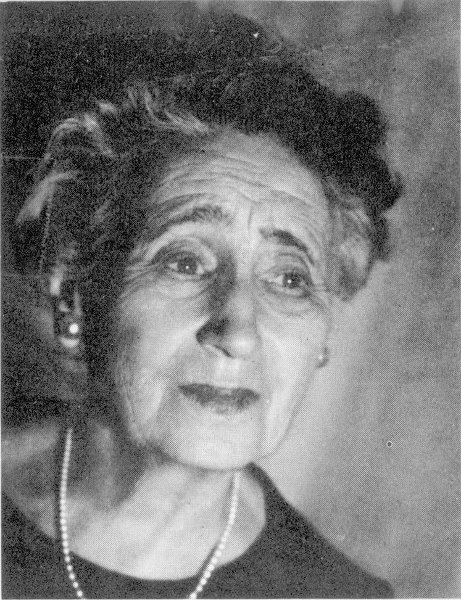
Sophie Ruskay enjoys a family life very much like the one she creates in Discovery at Aspen. Having raised a family of five children, she has now added twelve grandchildren, many of them teenagers who consider her their friend and compassionate advisor. She is the author of Horsecars and Cobblestones, a warmly received novel of immigrant life in New York at the turn of the century. The same understanding which she showed in that work, she now applies to the story of a young teenager whose problems and frustrations she depicts with deep sympathy.
Mrs. Ruskay writes of the world around her with an eager eye and a responsive spirit. The grandeur of Aspen, its natural beauties, its cultural life as well as its historical heritage—all are graphically described. It is in this setting that we see the young generation of today striving for self-realization, often in rebellion against their parents during this trying period of adolescence.
Mrs. Ruskay has been a beloved figure in her community for many years, participating in the cultural, philanthropic and civic activities as a creative and energetic leader. She has written and directed a large number of plays which have been notable for their humor and social awareness. Perhaps the most significant demonstration of Mrs. Ruskay’s life-long devotion to literature and drama is seen in her formation and leadership of a literary class in the Women’s House of Detention in New York City.
Also by Sophie Ruskay: Horsecars and Cobblestones Illustrated by Cecil B. Ruskay
PRINTED IN U.S.A.
Other Wonderful World Books
THE PERSIAN DONKEY BEAD By MARGARET KRAENZEL Illustrated by Peter Fellin
The rich and moving story of a young Iranian boy who leaves his small farm village to search for his father, with help of an Arab girl, in the crowded squares, the apartment houses and slums, and even the great underground bazaar of Tehran.
FOR LIFE AND LIBERTY By JANET NEAVLES Illustrated by Delia Marcel
Nate rides his thoroughbred filly Liberty Maid on a race to save his family’s farm from Joseph Brant’s Indians in this fine historical novel set in upper New York State during the Revolutionary War.
THE SLAVE WHO SAVED THE CITY and Other Hassidic Tales By HARRY M. RABINOWICZ Illustrated by Ahron Gelles
The glowing, miraculous legends grown around Rabbi Israel Baal Shem-Tob, the father of Hassidism, lovingly collected and especially adapted for young readers.
DOUBLOONS By MARISTAN CHAPMAN Illustrated by Carl T. Herrman
A rousing mystery-adventure story in which four Tennessee boys are plunged by a hurricane into the Florida Everglades, are “rescued” by modern pirates and stranded in the Ten Thousand Islands, and discover pirate gold.
New York: A. S. BARNES and COMPANY, INC. London: THOMAS YOSELOFF, LTD.