INSTRUCTIONS FOR COLLECTING AND PRESERVING ARACHNIDS AND MYRIAPODS.
Reading edition
The foregoing portions of this manual have dealt almost exclusively with the subject of the securing and preservation of Hexapods, but it is deemed advisable to include brief instructions for the collection and care of the near allies of the true insect, Spiders and Myriapods, the study of which will in most cases be associated with that of Hexapods.
DIRECTIONS FOR COLLECTING SPIDERS.
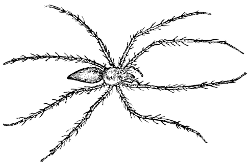
Fig. 129.—A ground Spider (Oxyopes viridans). (After Comstock.)
Apparatus.—Many of the directions and methods given in the foregoing pages for the collection of Hexapods apply also to the animals named above. Little apparatus is necessary in the collection of spiders and other Arachnids. The essentials are vials containing alcohol, an insect net, a sieve, and forceps. Narrow vials without necks are best for collecting purposes, as the corks can be more quickly inserted. They should be of different sizes, from 1 dram to 4 or 6 drams, and the alcohol used should be at least 50 per cent strong and in some cases it is advisable to use it at a strength of 70 or 80 per cent. The net may be of the same construction as that used to collect insects and is used in the same way. Some arachnologists, however, use a net of a somewhat different make, which is much stronger. The iron ring is heavier and larger than in the case of the insect net, resembling in this respect the ring of the Deyrolle net. The bag is short and the handle is fastened to both sides of the ring. This net is used for beating the leaves of trees, bushes, and grass. Dr. Marx uses a net which is already described and figured under the name of the Umbrella Net (see p. 34, Fig. 52). The sieve is the same as that described on p. 35, Fig. 54, and is used to sift the spiders from leaves and rubbish, especially during winter. A mass of leaves and other material is thrown into the sieve and then shaken, the spiders falling through on a piece of white cloth, which is spread under the sieve on the ground. Many hibernating species can be readily secured in this manner. A forceps similar to that described for the collecting of hexapods should be used to capture or pick up specimens, for if handled with the fingers they are apt to be crushed, especially the smaller forms. As soon as the collecting is finished or the vial is filled a label should be placed in this last indicating place and date of collection. Egg sacs and cocoons should be collected in pill boxes and properly labeled, and if possible the adults should be reared. Both sexes should be collected and descriptive notes or drawings made of the webs as found in nature.
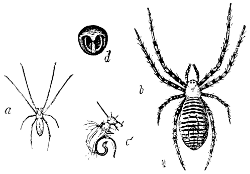
Fig. 130.—An orb-weaver (Argiope argyraspides Walck): a, male; b, female; c and d, enlarged parts.
Time and Locality for Collecting.—The best time to collect spiders is in the early fall, during the months of September and October. The great majority of the species are then mature. Many forms, however, occur in the adult state in late spring and early summer. Numerous species may also be collected during winter, some of these hibernating under stones, the bark of dead trees, etc., and others, more particularly the small forms, under dead leaves and rubbish on the ground in woods. Other species which have hibernated may be found about the earliest flowers in spring. No particular localities can be indicated for the collection of spiders, since they occur in all sorts of places, in wooded or open regions and also in and about dwellings. Many Lycosidæ are found in dry and rocky situations and quite a number in open fields. Thomisidæ may be found on flowers. The Therididæ affect shady places, and many Epeiridæ will be found in similar situations. The Attidæ love the sun and are found very actively engaged in hunting insects on plants and dead leaves. Many species of this family will be found in cases under loose bark in winter. Evergreen trees are also quite good collecting grounds for Attidæ. The Drassidæ are ground spiders and are mostly nocturnal, hiding during the day under leaves and stones; a few forms, however, disport in the hottest sunshine. Some genera are found most frequently near water or in damp places, as Dolomedes and Tetragnatha; others in sandy places, as Micaria, Targalia.
COLLECTING OTHER ARACHNIDS: MITES, TICKS, SCORPIONS, ETC.
Other Arachnids—as mites, ticks, scorpions, daddy longlegs or harvest-men—may be collected in the same way as spiders.
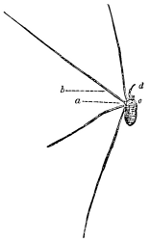
Fig. 131.—A Harvest-man (Phalangium ventricosum). —From Packard.
The Phalangidæ (Harvest-men) somewhat resemble spiders, and are at once recognized by their extremely long legs. They occur about houses, especially in shady places, under the eaves, etc., and in the woods and fields. They are carnivorous and feed on small insects, especially Aphides. They should be pressed a little when captured to extrude the genital apparatus, if possible, and are best collected in the early fall.
The Phrynidæ are very peculiar looking animals, the anterior legs being very long and slender and the maxillary palpi very large. The genus Thelyphonus is not uncommon in the South, and is known by its oblong body, ending usually with a long, slender, many-jointed filament, from which they are called Whip-tailed Scorpions. T. giganteus is the common species. They occur in moist situations, and are carnivorous, feeding on insects and small animals.
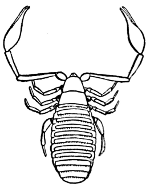
Fig. 132.—False Scorpion (Chelifer cancroides L.). —From Packard.
The false scorpions, Chermetidæ, may at once be recognized by their large maxillary palpi, resembling the maxillæ of the true scorpion. They are small insects, rarely exceeding a quarter of an inch in length, and are found in dark shady places and feed upon mites, Psoci, and other small insects. A common species is represented at figure 132.
The true scorpions, Scorpionidæ, are well-known forms, and are easily recognized by their large, powerful, forceps-like maxillæ, and the long slender tail continuous with the thorax and ending with a sting, which is, in most cases, quite poisonous. They are found mostly in the Western and Southwestern States, and are dangerous in proportion to their size. The poisonous nature of the sting of these animals is, however, generally overrated, and the wounds, even of the larger species, are rarely fatal.
The Acarina or true mites are the lowest representatives of the Arachnida and include many genera and species differing very widely in habit and characters. Some of them are mere sacs, on which the mouth parts or other organs are scarcely discernible. In general they resemble spiders. The young, however, when they leave the egg, almost invariably have but three pairs of feet, resembling in this respect the Hexapods. The fourth pair is added in the later stages. They are parasitic on insects and other animals, and some of them are vegetable feeders or live in decaying vegetable and animal matter.
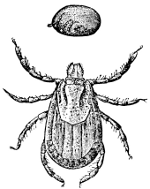
Fig. 134.—The Cattle-tick. (After Packard.)
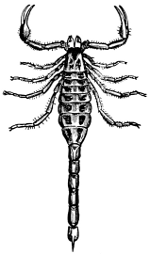
Fig. 133.—A true Scorpion (Buthus carolinianus). —From Packard.
A very interesting group is comprised in the family Phytoptidæ or gall-making mites which occur on the leaves of various trees and shrubs and produce curious galls or abnormal growths. These mites are elongate in form, have rudimentary mouth-parts and but four legs. A common form, Phytoptus quadripes, produces a gall on the leaves of the soft maple. The galls of all species should be collected and pinned and also preserved in alcohol, and specimens of the mites should be mounted in balsam.
The members of the genus Sarcoptes are very minute and are the active source of the itch in the lower animals and man. Another common genus is Tyroglyphus, which includes the common cheese mite, T. siro. Other species of this genus also sometimes occur in enormous numbers in grocers' supplies. Still others are parasitic on insects, and one species, T. phylloxeræ Riley, is very beneficial, since, as its name indicates, it feeds on the Phylloxera of the grapevine.
The Ixodidæ comprise the ticks which attach themselves to cattle, hogs, and man, and are not at all uncommon objects. These insects can be found on the animals they infest, and distinct species will be found to occur on most wild mammals. The common Cattle tick Boophilus bovis Riley, is represented at Fig. 134.
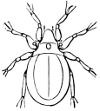
Fig. 135.—Nothrus ovivorus Packard.
The family Orobatidæ includes a number of small terrestrial mites, which occur on the moss on trees and stones. Some species are known to feed on the eggs of insects, and the one shown in the accompanying figure, Nothrus ovivorus has been observed, by Dr. Packard to eat the eggs of the Canker Worm.
The members of the family Gamasidæ are parasitic upon animals, but chiefly upon insects. The Hydrachnidæ are parasitic also upon the aquatic insects, and also affect fish or mussels or occur on fresh-water plants.
One of the most important families of mites is the Trombidiidiæ which includes a large number of species, some of which occur in immense numbers. Most of them are vegetable feeders, but some species feed on the eggs of insects.
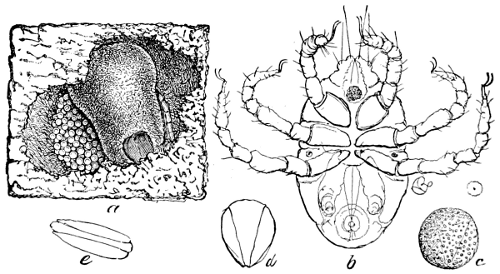
Fig. 136.—Trombidium locustarum: a, female with her batch of eggs; b, newly hatched larva—natural size indicated by the dot within the circle; c, egg; d e, vacated egg-shells.
The genus Trombidium includes a number of the Red Mites which feed on insects in all their stages. The Locust Mite, Trombidium locustarum Riley, is one of the most interesting as well as one of the most important of our locust enemies, and will serve to illustrate the habits of the group. It differs so much in infancy and maturity that it has been referred to different genera and is known under different names. The mature form lives on the ground and feeds on all sorts of animal or decomposing vegetable matter, and wherever the ground is filled with locust eggs these afford an abundance of food and the mites flourish and multiply rapidly. In the spring the female lays 300 or 400 minute spherical orange-red eggs in the ground (Fig. 136a). From these eggs, as shown enlarged at c, d, and e (the two latter being the vacated egg shells) emerge the six-legged larva shown at b. These are mere specks and crawl actively about, fastening themselves to the locusts mostly at the base of the wings or along the upper veins. They subsist on the juices of their host. They firmly attach themselves by the mouth and increase rapidly in size, the legs not growing and becoming mere rudiments. In this form they are shown at Fig. 137a. When fully developed they let go their hold, drop to the ground, and crawl under the shelter afforded by holes in the earth or under sticks. Here, in the course of two or three weeks, they transform within the larval skin to the pupal stage shown at b, and eventually break through the old larval skin and escape in the form shown at c and d. This mature form passes the winter in the ground and is active whenever the temperature is a few degrees above the freezing point. A larger species T. giganteum Riley, also attacks locusts, while a third species attacks the common House-fly. This was formerly known in the larva state only and was referred to the genus Astoma, to which also the larval form of Trombidium was referred. I have described the adult together with the larva and pupa as Trombidium muscarum. An allied mite, Hydrachna belostomæ, attacks the large aquatic water bug, Belostoma, and has a mode of development precisely similar to that of Trombidium.
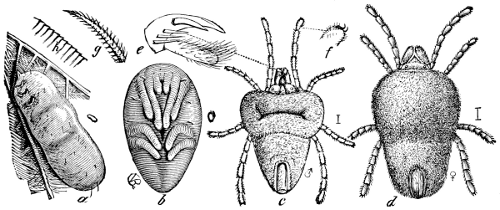
Fig. 137.—Trombidium locustarum. a, mature larva when about to leave the wing of a locust; b, pupa; c, male adult when just from the pupa; d, female—the natural sizes indicated to the right; e, palpal claw and thumb; f, pedal claw; g, one of the barbed hairs; h, the striations on the larval skin.
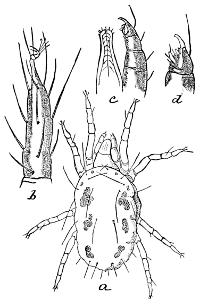
Fig. 138.—The Six-spotted Mite of the Orange (Tetranychus 6-maculatus): a, from above—enlarged; b, tarsus; c, rostrum and palpus—still more enlarged; d, tip of palpus—still more enlarged.
To this family also belong the common greenhouse mite, Tetranychus telarius, and also the Bryobia mite, B. pratensis, which of late years has attracted very considerable attention by its appearance in immense numbers about dwellings, coming from the adjoining fields of clover or grass. Generically allied to the greenhouse mite is the Six-spotted Mite of the Orange (T. 6-maculatus Riley), which is shown in the accompanying figure.
Spiders and mites thus collected may be transferred to alcohol. Dr. Marx, who has had a very considerable experience in the preservation of spiders, recommends the use of the following mixture: Glycerin and Wickersheim's fluid, 1½ ounces of each, and distilled water 3 ounces, the whole to be shaken and thoroughly mixed and added to 30 ounces of 95 per cent alcohol. Alcohol which has previously been used for preserving spiders, and which has therefore dissolved some of the fatty matters from the specimens, he prefers to pure alcohol, using with this, however, somewhat less of the distilled water. The liquid thus composed answers all demands and keeps the specimens flexible and preserves their coloring. Should the stopper become loose and the liquid evaporate, there is always sufficient liquid, water or glycerine, left in the vial to keep the specimens from drying and thus save them from destruction. Dr. Marx also prefers to use cork stoppers rather than the rubber stoppers recommended for other alcoholic material. His objection to the rubber stopper is that, in a collection in which the specimens are often used and the stoppers are frequently removed, he finds that small particles of the rubber stopper come off and settle upon the specimens as a white dust, which it is difficult to remove. This objection applies only to a poor quality of rubber, and in all other respects the rubber is much to be preferred. The colors of spiders are apt to fade somewhat if exposed to light, and the collection should therefore be kept in closed boxes or in the dark.
COLLECTING MYRIAPODA.
Centipedes and Millipedes are collected in the same manner as spiders. They live in damp places, under sticks and stones, and in decaying vegetation. They should be preserved in alcohol, and on account of their usually strong chitinous covering, precautions as to the strength of the alcohol are less necessary here than with softer-bodied specimens.
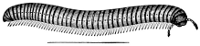
Fig. 139.—A Milliped. (Cambula annulata).
The members of this subclass comprise a number of well-marked groups. The Iulidæ are cylindrical insects and occur in moist places, as do most of the representatives of this subclass. A common form is represented in the accompanying figure. The Chiliopodæ comprise the flattened forms having many-jointed antennæ and but a single pair of limbs to each segment of the body, and are the forms to which the name centipede may properly be applied. They are predaceous in habit, live largely on living animal matter, and are very quick in their movements. Some forms are poisonous, having poison glands at the base of the first pair of legs, but the majority of the species are entirely harmless. A number of common species belong to the genus Geophilus and occur under stones and logs. The genus Scolopendra includes some of the larger species of the order. The largest known species, S. gigantea, occurs in the East Indies and attains a length of from 9 inches to more than a foot. Several species found within the limits of the United States attain a length of 5 inches or more. The family Cermatiidæ includes the very common species Cermatia forceps, which, while abundant in the South and West, occurs somewhat more rarely in the North. It is commonly found in moist situations, in houses or conservatories, and on account of its long legs and agile movements frequently creates considerable consternation. It is, however, an entirely harmless and very beneficial species, since it feeds on various household pests, including flies, roaches, etc.