Ceriocleptes xenurus sp. nov.
Reading edition
Description of type, collector's No. 5628, Congo Exp. A. M. N. H. ♂ ad., Avakubi, Ituri District, Belgian Congo. Apr. 17, 1914.
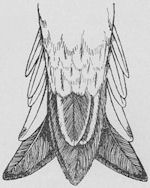
Fig. 1. Tail of Ceriocleptes xenurus, from below. Nat. size.
Feathers of forehead, crown, back, and rump blackish-brown, bordered or washed with yellowish-citrine, those of nape and upper back whitish at the base. Sides of head lighter, shading gradually to olive-buff on throat, breast, and sides; middle of abdomen still lighter, ivory-yellow. Upper wing-coverts and secondaries fuscous-black (freshly molted feathers blacker) narrowly edged with olive-ocher. Primaries similar, but yellowish border almost entirely lacking; both primaries and secondaries fading to pale olive-buff on their inner edges. Under wing-coverts colored like the breast, but with faint dusky shaft-streaks. Feathering of flanks ivory-yellow, with strong blackish median lines. Two middle pairs of rectrices dull blackish, 3rd pair whitish, with a small blackish spot on the outer edge close to the tip, and a larger concealed black spot on the inner web towards the base; the 3 remaining pairs of rectrices white. The long median pair of under tail-coverts blackish, the next pair similar, but margined with whitish, the remainder ivory-yellow with faint shaft-streaks of dark brown. Upper tail-coverts fuscous-black, bordered with amber-yellow. [1]
The bill, nostril, and feet resemble those of Indicator indicator, but the bill is somewhat stouter, while the wings and tail are shorter. The 9th (outer) primary is intermediate in length between the 6th and 5th; the 7th and 8th are longest.
Iris bright brown, naked edges of eyelids grayish-brown; bill dusky-brown; feet dull grayish-green.
Length (skin), 160 mm.; wing, 93.5; tail 56; bill (culmen from base), 13.5; metatarsus, 14.
This unique specimen was shot by the describer from a tall tree in the forest, where it was accompanied by one other of its kind. The sexual organs were somewhat enlarged; the stomach filled with beeswax, mixed with small pieces of insects. Apparently this species is not in the habit of leading men to beehives.