Front matter
Reading edition
Baron von Freytag-Loringhoven
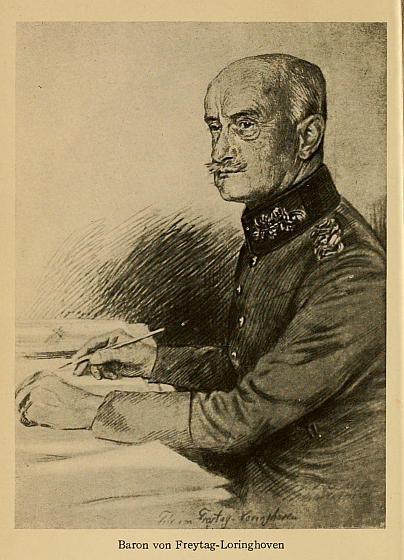
DEDUCTIONS FROM THE WORLD WAR
BY
BARON VON FREYTAG-LORINGHOVEN
LIEUTENANT-GENERAL AND DEPUTY CHIEF OF THE GERMAN IMPERIAL STAFF
G. P. PUTNAM'S SONS NEW YORK AND LONDON The Knickerbocker Press 1918
COPYRIGHT, 1918 BY G. P. PUTNAM'S SONS, NEW YORK
COPYRIGHT BY CONSTABLE & CO., LTD., LONDON
The Knickerbocker Press, New York
INTRODUCTORY NOTE
Baron von Freytag-Loringhoven, the author of this book, is the most distinguished soldier-writer of Prussia. In other words, since none will dispute Prussia her militarism, he is the most distinguished living writer on militarism in theory and practice.
Freytag comes of a Baltic family. He was born in Russia, the son of a Russian diplomatist, and he served in the Russian Army before, at the age of twenty-one, he joined a Prussian Guard Regiment. Before the war he was an influential member of the General Staff in Berlin, and had made a reputation by his writings on the history and science of war. On the outbreak of war he became the German representative on the Austro-Hungarian General Staff. The military weakness of Austria has in recent years been a commonplace in Berlin, and Freytag duly tells us how the "brave troops" of the Dual Monarchy "had to suffer for the sins and omissions of which the Parliaments had been guilty." When Count Moltke, the Chief of the German General Staff, was superseded by Falkenhayn, after the failure of the original German offensive in the West, Freytag became Quartermaster-General in the field, and Moltke became Deputy Chief of the General Staff—that is to say, head of such parts of the General Staff Organization as remain in Berlin, while the main business of the General Staff is conducted from "Great Headquarters" in the field.
At the beginning of August, 1916, Falkenhayn was superseded in his turn by Hindenburg, after the German failure at Verdun. Freytag's post of Quartermaster-General was merged in the larger post which was now created for Ludendorff, and, Moltke having died in June, Freytag was appointed in September, 1916, to the post, which he still holds, of Deputy Chief of the General Staff.
Shortly before his appointment, Freytag's position as chief writer to the Prussian Army was put beyond dispute by his decoration with the Order Pour le Mérite (Peace Class). The Order Pour le Mérite (Military Class) was founded by Frederick the Great, and has now been conferred upon innumerable Prussian officers. Freytag is apparently the only officer who has received during the present war the Order Pour le Mérite (Peace Class), which was founded by Frederick William IV in 1842, and is conferred for distinction in "Science and Arts."
"DEDUCTIONS FROM THE WORLD WAR" was written for German consumption. As soon as a few German newspaper reviews called attention to its contents, and especially to the chapters "The Army in the Future" and "Still Ready for War" with their candid explanation of the way in which Germany proposes, this war finished, to prepare for the next, all comment was restricted or suppressed. Circulation of the book in Germany was promoted, but its export was prohibited, and very few copies have found their way across the frontier.
This book is interesting as an attempt to lay the foundations of "history"; it is comparable with the "popular edition" of Moltke's "History of the Franco-German War of 1870," upon which a whole generation of Germany was brought up, while the real history of the war was being written in France—for posterity. The book is very instructive as a denunciation of international ideals and as a warning of the plans which are being made in Berlin for the cold and reasoned application of the lessons of the war and the development of a still more scientific military system, a still more perfect war-machine, than existed in 1914. Again, we have here, on the best possible authority, the warning that Germany—with all her avowed indignation at the idea of an economic "war after the war"—is determined not only to rebuild her military system, but to build it this time upon an indestructible economic foundation. But above all Freytag's book is a revelation because he says what Germany thinks. "War has its basis in human nature," he writes, "and as long as human nature remains unaltered, war will continue to exist, as it has existed already for thousands of years." That view is universal in Germany, and to the German people Freytag's deductions will seem to be only logic and common sense. In reality, Freytag the soldier says nothing a whit stronger in praise of militarism than is said in his apt quotations from Prince Bülow the civilian. Militarism is not a Prussian invention; militarism is Prussia herself. And so long as Prussia rules Germany, all talk that seeks to distinguish "war parties" from "peace parties," "militarists" from "statesmen" is misleading.
J.E.M.
December, 1917.
AUTHOR'S FOREWORD
It may seem presumptuous to draw conclusions from the World War while it is still in progress. And yet it is imperative that we should be clear in regard to a number of questions which have presented themselves as a result of the War. We must look for their solution in the State and the Army. The War must admonish us to submit our whole national life and our military organisation to an examination in the light of the experiences which we have gained. Such an examination cannot and should not be much longer postponed.
Without clear views and an adequate understanding of the major sequences of the War, not only as regards operations and tactics, but also as regards world-politics and world-economics, without carefully balancing the new experience that it has brought us against all that it has confirmed and that has to be maintained, we shall not be in a position to draw accurate deductions for the future. Towards this the writer hopes to contribute by means of the following arguments. They are addressed equally to the Army and the nation.
CONTENTS
CHAP.
INTRODUCTORY NOTE
AUTHOR'S FOREWORD
I. THE POLITICAL AND ECONOMIC SITUATION OF THE CENTRAL POWERS
II. THE PSYCHOLOGY OF NATIONAL AND MASSED WARFARE
III. THE INFLUENCE OF TECHNICAL SCIENCE
IV. LEADERSHIP
V. THE ARMY IN THE FUTURE
VI. STILL READY FOR WAR
DEDUCTIONS FROM THE WORLD WAR
I THE POLITICAL AND ECONOMIC SITUATION OF THE CENTRAL POWERS
The grouping of the Powers at the beginning and still more during the course of the World War has been extremely unfavourable to the Central Powers. We must go back to the desperate struggle of Frederick the Great in the Seven Years' War to find anything comparable to it. Napoleon, too, found himself at length pitted against all Europe, but the comparative strength of the opposed forces at the beginning of the autumn campaign of 1813 was by no means unfavourable to him. The Allies at that time possessed only an insignificant superiority of numbers. Moreover, our enemies have not had to endure what Field-Marshal Count Schlieffen in 1909 justly deduced from the history of previous coalition wars:
"Even when all objections have been disposed of, every difficulty overcome, even when resolution is ripened, and a powerful advance from all sides is about to be set on foot, yet in the breast of every individual the anxious question will still arise: Will the others come? Will our distant Allies take their stand at the right time?"[1]
Not only did all the Allies take their stand, but, in addition, they were reinforced by our former allies, Italy and Roumania, while America showed herself more and more clearly a secret ally of the Entente Powers, rendering the most valuable services by furnishing them with all manner of requisites of war and pecuniary loans, long before she openly took up her stand against us in February, 1917, by severing diplomatic relations and in April by declaring a state of war. However valuable to Germany and Austria-Hungary has been the alliance of Turkey and later of Bulgaria, an equilibrium of forces could not, of course, be effected by means of these States. England has been successful in keeping the Entente together, and has utilised the fact that the destruction of the Central Powers proved to be far more difficult than had been anticipated in order to strengthen the bond between herself and her Allies. They had involved themselves in a common undertaking, which had not prospered according to expectations. Now there was no alternative but to carry it through, for to give it up would be equivalent to a confession of utter failure and defeat. The ties which bound the Continental Allies to England were constantly reinforced by the promise held out of territorial acquisitions, as well as by monetary aids. In this connection England's favourable position in world-politics and world-economics stood her in noticeably good stead. The more the prospect vanished of inflicting on us a military defeat with the aid of the blockade, the more England strengthened her endeavour to secure that we should at any rate find ourselves after the War in an unfavourable economic position, both geographically and in respect of commercial treaties. England gave expression to her desire for war and victory by creating a strong land-army, finally adopting the system of universal service. In so doing she broke with her traditional custom of waging Continental wars to all intents and purposes by means of the armies of her Allies.
In the wars against Louis XIV England had already raised herself to the position of a great Colonial Power and had won for herself supremacy on the sea. As a result of the Seven Years' War, she became a World-Power. It was not, however, until the American War of Independence that she entered upon a period of world-policy and world-economics. It has justly been said:[2]
"World-trade there had long been, but not world-policy. Not even England possessed the latter, in spite of her world-embracing settlements and dominions. In fact there existed only European policy. World-policy could only come into being when in the other continents, as well as in our own, independent and permanent centres, capable of asserting themselves against the European Great Powers, had shaped for themselves a State existence. This happened in the eighteenth and nineteenth centuries in the case of America, and in the twentieth century in the case of Japan."
In the European Continental wars up to 1870-71, when we were still predominantly an agrarian State, questions of world-policy and world-economics had played a comparatively subordinate role. It has been the development of our trade, combined with the increase of our population, which, in the course of this World War, has thrown into special prominence the significance of these questions in relation to our Fatherland. The import of raw materials, foodstuffs, and manufactured articles, the export of the products of our industries, had become essential conditions of our economic life. In regard to these questions the outbreak of the World War found us insufficiently prepared. Such measures as we had taken were shown to be inadequate. Hence in our conduct of the War we were faced with a difficult problem, which had not arisen in the case of previous wars on the European mainland. We found ourselves not only at such a disadvantage in regard to the general political situation as we had not hitherto experienced, and, as a consequence of this, faced with an overwhelming superiority of numbers, but also we had to grapple with an economic situation as difficult as could possibly be imagined. This is not the place to examine how far, in view of the all too rapid growth of her trade, world-policy and world-economics may have been premature in the case of Germany, inasmuch as our continental position was still by no means sufficiently assured. Here Ranke's words are applicable: "Who can control circumstances, calculate future events, govern the surging of the elements?"[3] Even the power of prevision attributed to great men is after all very limited. Friedjung[4] remarks justly that the real necessity of events and of all which we assert to have taken place in accordance with the laws of history only becomes apparent when the history of the world is considered in large epochs; that, for the rest, history is an ingenious tissue of necessity and chance, and that to estimate future events is consequently hardly possible even for the most clear-sighted contemporary observers. Hence diplomats have often been unjustly accused of furnishing an incorrect report in regard to a foreign country, concerning which they were supposed to possess an exact knowledge. Even the most perfect knowledge of a country does not endow its possessor with the capacity to foresee coming events, although, of course, the gift of exact observation exists in different degrees in different individuals. It might well be imagined that, in this age of extreme publicity, it should be easy enough to form a trustworthy estimate of a foreign country and its armed power. The Press and the proceedings of Parliament furnish a host of details from which to build up a complete picture, but whether this picture will prove accurate in case of war is a matter of doubt, for many unforeseen accidents, notably those resulting from the power of personality, are in such matters peculiarly likely to affect the issue. Thus the abundance of news which we have at our disposal at the present day may easily serve only to obscure and distract.
The consequences of the blockade to which the Central Powers were subjected made themselves felt at once. Although we have succeeded by our own might in developing and carrying on our economic life during the War, none the less the advantages of our economic position in the world have made themselves felt all the time. They alone explain the fact that new opportunities of resistance constantly revealed themselves to our opponents, because the sea was open to them, and that victories which formerly would have been absolutely decisive, and the conquest of whole kingdoms, still brought us no nearer to peace. Thus was Russia able to recover from the severe defeats of the summer of 1915 and to attack once more in the following year with newly-equipped armies.
Though the American Admiral Mahan, in his famous book, The Influence of Sea-Power on History, summed up the result of the Seven Years' War as follows: On the sea, immense success and material gain for England, on land, enormous sacrifice of men, with the sole result that the status quo was maintained; though he asserts, moreover, that the British fleet contributed most towards the overthrow of Napoleon by cutting him off from the most important of all sources for replenishing supplies, namely, the sea, the question of sea-power was not really of decisive importance in those times. Pitt, in his speech in Parliament against the Peace of Paris of 1763, already emphasised the fact that North America had been conquered for England in Germany. Napoleon was defeated on land. The Continental States of that time, pre-eminently France, were still agrarian States, and far better able than now to suffice for their own needs for a long time. In our days of world-policy and world-economics, the views of the famous naval writer are far more in accordance with actuality. The fact that we have resorted to submarine warfare as a means of self-defence is in itself a proof of it. The unsparing application of this new weapon will hasten materially the end of this mighty economic conflict, by means of the economic difficulties which it will create for our opponents and for neutrals. The World War affords incontrovertible proof that Germany must for all time to come maintain her claim to sea-power. We need not at present discuss by what means this aim is to be achieved.
As the result of our geographical situation, it will always remain our task to form a just estimate of the opposing demands of world-economics and national economics in the narrower sense, and of oversea and continental politics. Even in land-warfare, economic considerations have played a very considerable part. The occupation by our troops of Belgium and of the coal and industrial district of Northern France, as well as of Poland, Lithuania, and Kurland, procured us important economic advantages and involved a corresponding loss to our enemies. The main object of the Serbian campaign was to establish a land communication with Turkey, whose obstinate defence of the Dardanelles had rendered us signal service, since it barred the exit from and entry to the harbours of the Black Sea against Russia. At the same time, the operations against Serbia procured us the valuable alliance of Bulgaria. Not only did we acquire by this means an accession of strength against the numerical superiority of our enemies, but also the possibility of trade intercourse with the Balkan States. A year later, the unwelcome hostility of Roumania and her overthrow procured us further economic advantages and secured our position in regard to the whole of the Balkans. Now, as always, it is the sword which decides in war; it is victory on the battle-field that gives the decision, but its effect is far more dependent than it used to be on world-economic factors. These factors are to be traced through the whole of this War.
To be sure, modern times had already witnessed one great economic war. The American Civil War of the sixties of last century arose out of the economic antagonism between the trading and industrial States of the North and the cotton-growing States of the South of the Union. In the latter, cultivation by the aid of slaves formed the basis of the industry, and to this extent the slave question was a factor in the dispute. It was not, however, until later that the demand for the abolition of slavery found wide expression in the North and was utilised as a welcome means of stirring up feeling against the South. The real points at issue were that the Northern States wanted high protective duties, while the Southern States wanted to facilitate export, and that the Northern States had a special interest in utilising the customs revenues for investments which should above all be of advantage to their trade, but which were a matter of indifference to the South. The American War of Secession, like everything else American at that time, attracted little attention with us. Germany was still only a geographical conception; there could be no question of a world-policy for its component States. Moreover, our own wars of 1864, 1866, and 1870-71, claimed all our attention. Yet, different as were the cause, the development, and the other conditions of the American Civil War compared with the present World War, the economic factors which in each case found expression have engendered more than one similar phenomenon. The Northern States endeavoured at the outset, by the aid of their imposing fleet, to cut off the Southern States, which had no battle-fleet worth mentioning, from their sea-borne supplies, and, also, on land, from the Mississippi and the corn-growing States of the South-West, and thus paralyse them economically. The valour of the Southern troops, who were far inferior numerically, as well as of their generals, and, above all, the distinguished leadership of Lee, for four years rendered impossible the accomplishment of this so-called "Anaconda plan," until the Southern States finally succumbed to the blockade.
Things never quite repeat themselves in history. But we may learn from history. Not in order to be more prudent another time, but in order to be wise for all time, as Jacob Burckhardt says. In this sense, the American Civil War might have furnished us many a hint which was left disregarded. But we must confess, as Professor Bernhard Harms said in a lecture, that in August, 1914, we found ourselves confronted with the problem of conducting a war governed by world-economic considerations without immediately comprehending it. To be sure, our opponents too only gradually perceived the true situation. The operations which they had begun extracted only little by little the full advantage of the world-economic situation, which was favourable to them and unfavourable to us; they did so only when they met with an unexpected force of resistance in the Central Powers. But in any case, in our military conduct of the War, we drew the necessary conclusions from the world-situation, and were at pains to turn it to account by means of a far-reaching organisation.
In every domain only the War itself could be the great teacher in regard to these hitherto unknown effects of world-economics upon its range. It was generally taken for granted that a long war was in these days hardly practicable. For England it was "a commercial war with a view to her own enrichment and the annihilation of her chief rival."[5] Nevertheless, even England did not at the outset reckon for a war of such long duration. Only when it became apparent that the forcible annihilation of her "chief rival" by the aid of her Allies was not to be accomplished did England find herself compelled to make considerable additions to her fighting forces, and finally to adopt the system of universal service. Lord Kitchener was prompt in grasping the situation, and, by erecting a strong army, put the country in a position to sustain a long war.
Even Field-Marshal Count Schlieffen, for all his farsightedness, though he insisted that the frontal attack would produce no decisive result, but that the campaign would drag itself out, declared in the article already referred to:
"Such wars are, however, impossible at a time when the existence of the nation is based upon the unbroken continuance of trade and industry, and the machinery which has been brought to a standstill must be set in motion again by a speedy decision. A strategy of exhaustion becomes impossible, when the maintenance of it demands milliards from millions."
This frontal wearing down of forces in entrenched warfare has none the less taken place on most sections of the fronts; but we have reaped positive results only from the war of movement. The present-day world has, contrary to expectation, proved itself capable of enduring a long war, though at the cost of such destruction as humanity has never before experienced. The expenditure of milliards would to be sure have been avoided, if we had succeeded, as Count Schlieffen in the same argument goes on to suggest, in conducting the attack on a large scale against the front and both flanks of the enemy, and in developing it to a sweeping victory. We did, in fact, achieve several local victories of this nature, but we did not achieve such a victory at the Marne with our whole western army at the beginning of the War. It is fruitless to picture to oneself how, if the case had been otherwise, events might have developed in detail, but we may confidently assert that a complete German victory at the Marne in September, 1914, would have given quite another character to the whole War, and would certainly have shortened it very considerably. From this may be seen the full significance of a decisive military success, even in a war so influenced by world-economics as the present.
II THE PSYCHOLOGY OF NATIONAL AND MASSED WARFARE
In the course of the present World War the soul of a war waged by means of great national armies has revealed itself as something special, something hitherto inexperienced. Its origin may be traced back to the time of the French Revolution. The levée en masse of the French Republic is, to be sure, to a great extent legendary. It furnished hardly a quarter of the anticipated man-power. Clausewitz[1] remarks justly:
"If the whole War of the Revolution passed over without all this making itself felt in its full force and becoming quite evident; if the generals of the Revolution did not persistently press on to the final extreme, and did not overthrow the monarchies in Europe; if the German armies now and again had the opportunity of resisting with success and checking for a time the torrent of victory—the cause lay in reality in that technical incompleteness with which the French had to contend, which showed itself first among the common soldiers, then in the generals, lastly, at the time of the Directory, in the Government itself. After all this was perfected by the hand of Buonaparte, this military power, based on the strength of the whole nation, marched over Europe, smashing everything in pieces so surely and certainly that wherever it encountered only the old-fashioned armies, the result was not doubtful for a moment."
Yet Napoleon waged his victorious wars with a prætorian army. Only at the period of his decline did he utilise the national strength to a fuller extent. After the overthrow of his army in Russia, he made what were for those days enormous levies in France, amounting in all to 1,237,000 men. Even at the time when his power was increasing, it was not so much the strength of the armies which he placed in the field that decided the issue as the fact that the other States were not at that time in a position to make good their losses by a continual requisitioning of the national strength.
The French people did not by any means flock enthusiastically to the Imperial flag. After the repulse of the invasion of 1792, their warlike ardour had been more and more extinguished. In the case of the increased levies of the last year of the First Empire, it was necessary to resort to violent measures in order to carry out the conscription. Hence, though the Napoleonic army was supported upon the national strength, it was never a national army in the true sense of the term.
On the other hand, the designation "national army" exactly applies to the Prussian army of the War of Liberation. The population of the diminished and impoverished Prussian State at that time numbered less than five millions, and of this number the Prussian army included in August, 1813, not less than 271,000 men. Moreover, the recourse to the provinces for the organisation of the Landwehr gave the army a special character. By the retention of universal military service even after the war, the Prussian army was differentiated from the armies of other States. In Prussia alone, after the great campaigns of the beginning of the nineteenth century, did a genuine fusion take place between nation and army. But even in 1870-71 the strain upon our national strength for the purposes of war was nothing like as great as in the present World War. We entered upon the Franco-Prussian War with the advantage on our side, and therefore it appeared to many unnecessary to requisition the national strength more extensively than had been done hitherto.
Only reluctantly did Roon accede to Moltke's demand on December 8, 1870, for further supplies of troops, which were rendered necessary by the growing extension of the theatre of war and by the mass-levies of the Republic in the second period of the war; and yet how modest appears this demand compared with the conditions of the present day. It amounted only to the calling up of fifty-seven Landwehr battalions which were employed at home for guarding prisoners or for coast defence, and the transfer to Alsace-Lorraine of a number of reserve battalions. This proposal, emanating from the Chief of the General Staff, was to be sure the result of the increasing difficulties which the national war in France was causing, but although even at that time nation was contending against nation on French soil, yet the armies of the Republic consisted only of masses of men hurriedly scrambled together, who were again and again routed by the onset of the German troops, which, though far inferior in numbers, were vastly superior in fighting efficiency. Thus even the 950,000 men whom France still had under arms at the conclusion of the war could not alter the fate of the country.
"Gambetta believed," writes Arthur Chuquet,[2] "that the legendary marvels of 1792 and 1793 could be repeated. He overlooked the fact that it was the cowardice and lack of discipline of the volunteer forces of the First Republic which were mainly responsible for the defeat of the revolutionary armies, and that the Republic at that time was saved, not by the heroism of its troops, but by dissension within the coalition."
The campaign against the army of the Second Empire had demonstrated the superiority of our own army based upon the principle of universal military service. The campaign against the Republic revealed the hopelessness of the resistance of a completely improvised militia to disciplined troops. Nevertheless, no really new points of view in the realm of war psychology were revealed in this instance. Quite otherwise was it in the case of the American Civil War. Here the Southern States were very soon compelled to resort to universal military service, and the Northern States to raise larger and larger volunteer levies, with a longer term of service. Like every other civil war, this was steeped in the hatred of both parties. In the Southern States the reaction of the national character upon military efficiency was revealed very clearly. They continued their resistance to the utmost limit. But Europe, up to the outbreak of the World War, had not witnessed any such phenomena in war. It was the adoption of universal military service by all the Great Powers, as a result of the German victories of 1870-71, which first introduced a new element into the conduct of war. This inevitably made itself all the more perceptible when the increased facilities of communication of modern times rendered the nations more closely coherent within their own borders and more accessible to the suggestive influence of the Press for good as well as for ill. That men have always been susceptible to suggestion is demonstrated by the spread of religious fanaticism, but the present age has increased this susceptibility still further. Even distinguished minds are subject to mass-suggestion, as is shown in the case of numerous distinguished scholars and artists among our enemies. Neither judgment nor good taste availed to prevent them from joining in the general orgies of hatred directed against everything German.
Among the factors which have contributed in recent times to increase this susceptibility of the masses must be counted the political elections, which have everywhere stirred up passions and prejudiced sound judgment. They alone explain many events which have taken place in America. In the several States there are over twenty offices which have to be filled annually by means of public elections. And in these it is not the personal opinion of the voter that counts, but the party politicians and their whips. It is the ingenuity and unscrupulousness of the latter, as well as their expenditure of large sums of money, that decide the issue. It is, in fact, in the great democratic republics that we find the worst form of moral servitude. The widely-diffused but superficial education of the masses renders them peculiarly open to suggestion. The sense of unity of whole nations has been considerably enhanced by the fact that in present-day warfare the entire population is involved either directly or indirectly. The countries as a whole are implicated economically.
In 1914 for the first time France opposed to our national army an army organised upon the basis of universal military service; an army, moreover, in which hatred against everything German had been kindled by the assiduous fostering through decades of the agitation for a war of revanche. The overwhelming impression of our initial successes, which had by no means been anticipated when Germany was attacked on all sides, inflamed these passions still further. The Swiss writer Stegemann, in his history of this War,[3] suggests that it may have been suspected in foreign countries that the preparedness of Germany's army and navy, which had been achieved during long years by infinite labour and feverish activity, was merely apparent and was associated with a degeneration of nervous force.
"To this suspicion the campaigns of this War have furnished a heroic answer. When the order of mobilisation was published, all trace of nervousness vanished. Even from a distance one could perceive the power and energy of a military organisation which was suddenly called from its tranquil development to perform the most exalted achievements. This gave nourishment to the theory that Germany had intentionally provoked the War. The thoroughness in execution which was really due to the character and constitution of the nation was misconstrued as the deliberate provocation of war."
As a result of the thoughtless adoption of franc-tireur methods of warfare in Belgium, with the support and approval of the authorities, the War acquired from the outset still more of the character of a struggle of nation against nation. The principle that war is directed only against the armed strength of the enemy-State and not against its population could not under these circumstances be upheld by our troops. They found themselves compelled to resort to severe measures of retaliation. Thus the War acquired a character of brutality which is otherwise very alien to the nature of our well-conducted German soldiers.
The self-assurance of the French army, which had already begun to waver, was restored after the Battle of the Marne. Subsequently the French authorities left no stone unturned in order, with the aid of a corrupt and lying Press, to sustain the confidence of the nation in an ultimate victory. The continued augmentation of the allied English army, the alleged inexhaustible reserves of Russia (in spite of all the defeats which she had suffered), the entry into the War of Italy, and, later, of Roumania as Allies, the munitions furnished by America, and finally her open partnership against us—all this had to be utilised again and again to strengthen the tissue of lies which France wove round herself more and more closely, so closely that the French finally lost all sense of truth. Thus the French army is inspired, even if not consciously so in all its members, with the feeling that it is not only a question of freeing the native soil from a hated invader, but also of a struggle for the future world-position of France. The characteristics of the French soldier have always been a product rather of his race than of any military training. They explain the devotion and the contempt of death with which whole divisions have hurled themselves forward again and again in dense masses in hopeless attempts to break through.
The French national character exhibits striking contradictions. High and noble qualities exist side by side with base impulses. The French soldier exhibits heroic courage side by side with the instincts of a "Nettoyeur," and, in the treatment of our prisoners, his conduct has been worthy of an apache. The French officers have completely lost that chivalrous sentiment which as late as 1870 found expression in the words of an old Frenchman: "The person of a prisoner is sacred." The French, both white and black, and their women no less, have not scrupled to jeer at and ill-treat our prisoners in the most flagrant manner, and the Government of the Republic has in general furnished an example of unworthy treatment of prisoners. The naturally amiable and, under ordinary circumstances, good-natured Frenchman easily degenerates, as a result of his excitable temperament, into the very opposite. The history of the wars of religion and of the Revolution affords evidence of the fact. The human beast is always roused in him with surprising suddenness. His characteristic light-heartedness engenders in him a disinclination to think things out to a conclusion. This renders him very susceptible to influence, and prevents him from seeing through the tissue of lies presented to him in the newspapers. While the Frenchman had always displayed military aptitude, his training in time of peace upon the basis of universal military service had only still further developed his good military qualities, and he has never exhibited those failings which formerly and often erroneously have been attributed to French armies, such as lack of endurance in difficult situations, the inability to endure defeats, susceptibility to panic. The effect of universal military service has manifestly been to discipline the whole nation, and to furnish an appropriate vessel for its always very strongly developed sense of unity. Those who judged the French nation by the customary standard of former days have been astonished at their conduct in this War.
As England has developed into a Land Power only in the course of this War, it has been only by degrees that warlike enthusiasm has infected the masses of her people. England, great as have been her feats of organisation, has never been able to make up for the advantage with which France entered the War owing to her possession of universal military service. Since she took her time, and the nature of entrenched warfare made it possible, England was able, however, to furnish her numerous new formations with a training which was lacking in the armies of Gambetta. Nevertheless, the new English divisions could not attain either the coherence of the old troops of the expeditionary army first dispatched to France or the fighting value of the French troops. The English reached a high degree of technical efficiency, but their fighting tactics remained defective. Also, for all that tough courage peculiar to the Englishman, they lacked that spirit which can be engendered only by the consciousness of a lofty national purpose such as that for which the French were fighting. In place of her voluntary army England gradually built up for herself on French soil a national army; but, voluntary army or national army, it served only the ends of English politics and the economic war against Germany. If the purpose of the War played only a minor part in the case of the voluntary army, it played a very considerable part in the case of the national army. If this purpose was not presented clearly and comprehensively to the understanding of every individual, the maximum amount of effort could not be expected from this army. In stirring up and working upon the feelings of the masses, England in fact showed no more scruples than France. Though the Englishman is less excitable by temperament, he is all the more obstinate in clinging to a notion which has once taken root in his mind. This stirring up of hatred has in his case, too, engendered distressing excesses as regards the treatment of German prisoners. In certain cases, even if not as a general rule, the English have shown themselves not behind the French in brutality.
Thus we had to wage war against enemies who were under the influence of a mass-psychosis. This has engendered phenomena such as Europe had not witnessed since the time of the wars of religion. Deeds of horror and senseless rage of destruction, such as are described for us in Simplicissimus have again made themselves manifest. The notion that humanity as a whole had advanced spiritually was proved to be an error. The vast distance between civilisation and Kultur was clearly revealed.
After the Thirty Years' War an effort was made to alleviate, by careful training of the men, the horrors of war due to the outrages of the military rabble. Thus it was asserted in praise of Prince Eugène of Savoy that in the neighbourhood of his camp the peasant could till his field unmolested. Instead of war being made to feed itself, a complicated system of supplies was adopted. The result was that the war strategy of the weak voluntary armies of that time became fixed more and more into a conventional mould, from which Frederick the Great was the first to emancipate it, so far as the limited means available at that time rendered this possible. Subsequently, under Napoleon, war developed more and more into "true war," to use Fichte's expression. This transformation, however, could be fully effected only by means of universal military service. Universal military service holds sway over our age and for generations will not vanish. To it Prussia-Germany owes her advancement, and it was inevitable that, when all the Great Powers adopted it, the violence of war should again be augmented. We must not let the bright side of universal service blind us to its dark side. Henceforth the passion of war infected whole nations, and this passion was constantly inflamed anew by contact with that of the enemy. Therewith many of those barriers were overthrown by means of which the professional soldiery, preserving the chivalrous customs of the Middle Ages, had sought to check the excesses of war. Also the barriers which International Law had sought to oppose to the encroachments of war collapsed in the face of this new violence.
At the same time factors were introduced into the World War which could not fail to react upon the strategical and tactical conditions and which it will be impossible to disregard in the future. They call for a new standard in measuring the efficiency of armies. Thus the efficiency of the German troops far surpasses that which might have been expected according to the standard of earlier times. Even in regard to the operations at the Loire at the turn of the year 1870-71, the late Field-Marshal Freiherr von der Goltz wrote in his Reminiscences[4]:
"With the exception of a few stout hearts, everyone was sick of even the most successful battles. The fire of war still burnt, but with a dim and flickering light. The craving to enjoy at length the longed-for term of tranquillity was very widespread."
In these words is reflected the effect of an exhausting triumphal progress which the second army had pushed into the heart of the enemy country. Here, in fact, the thought might well intrude: Have we not now had victory enough? And yet at that time less than five months of war had elapsed, and the course of the war had been extraordinarily successful. The troops had not undergone anything like such tremendous experiences as they have had in the present World War. In this War the consciousness that our national existence is at stake has raised us above ourselves.
All of us, leaders as well as men, have human weaknesses, and assuredly not all German soldiers are heroes by nature. But it is precisely in this—in the fact that the weak are carried along with the strong—that the educative force of this struggle for the existence of Germany is revealed. The weak could not do otherwise than strive to be heroes. Reverses, such as were occasionally inevitable in this long and tremendous War, have doubtless had a temporarily depressing effect upon the troops, and after efforts and a consumption of nervous force such as have never been experienced in any previous wars, the craving for rest has sometimes made itself felt. But even in the third year of the War, the fire of war did not merely flicker with a dim light, but was constantly rekindled to fresh flame. In Transylvania and Roumania and in Eastern Galicia in 1917 the troops displayed an ardour equal to that of the first days of the War. The magic of victory enabled them to defy all the difficulties of the ground and all the inclemencies of the weather. They would not, of course, have been a national army, linked to the homeland by a thousand ties, if they had felt no desire for the conclusion of a long war, a war demanding ever fresh sacrifices, and if a calmer feeling had not taken the place of the enthusiasm of the first months. But it was just such a feeling that was necessary for the accomplishment of such gigantic achievements in the West and in the East. What was wanted was not enthusiasm, but the living heroic sense of duty on the German soldier. Moreover, there exists in our army a cool contempt for danger, such as elsewhere has only been exhibited in picked professional armies, and yet ours has remained a national army in the best sense of the word.
Clausewitz declares[5]:
"If we look at a wild warlike race, then we find a warlike spirit in individuals much more common than in a civilised people; for in the former almost every warrior possesses it, whilst in the civilised, whole masses are only carried away by it from necessity, never by inclination."
None the less, the inculcated sense of duty, the conscious will of the whole people, when, as in the case of this War, it is a question of safeguarding our most treasured possessions, and when the purpose of the War is clearly manifest, has brought forth even loftier achievements than mere warlike impulse, or, as in the case of the Japanese, the sense of the blessedness of extinction.
In fact, we cannot sufficiently express our joyful recognition of the high sense of duty and the power of resistance which our troops have everywhere displayed in the face of overwhelmingly superior forces, while at the same time we ought not to refuse our respect even for our enemies, above all the French. For they too were prepared and resolved every one to die for his country. On both sides was revealed a nervous force, a capacity of resistance to inclement conditions, with which no one had credited the civilised humanity of the present day, more especially in the face of the increased effectiveness of present-day weapons. Before the War it was looked upon as an understood thing that the efficiency of the older classes of recruits was only limited. Field-Marshal Count Schlieffen, who taught us how to manipulate a massed army, and who, because he was convinced of the great importance of numbers in war, was unwilling to abandon the employment of the older drafts in the front line: none the less declared, "Landwehr and Landsturm, territorial army and territorial army reserves, can only to a very limited extent be reckoned as part of the nation in arms."
If the World War has not confirmed this prediction, it is due to the fact that such imponderable things defy any attempt to assess them. Hence it is not to be wondered at that we encountered surprises in these matters. The improved hygiene and treatment of wounds of the present day have contributed greatly to maintaining the efficiency of the national armies. In the case of Germany, above all, medical art and science have achieved wonders. They have succeeded in preserving our army from those epidemics which have been the scourge of previous armies and in restoring to it almost 90 per cent. of its wounded. Only by their aid has it been possible to maintain continuously the full strength of our troops and to carry on the war for so long.
The Russians have afforded us less cause for surprise than the rest of our enemies. True they brought up their masses earlier than had been anticipated, but these, as was to be expected, proved themselves very unwieldy, so that the superior mobility of our troops helped to restore the balance. Their unshaken resistance to the Russian mass attacks did the rest.
With the introduction of universal military service in the year 1874, the Russian army had acquired quite a new character. In place of the old soldiers with their long term of service, whose regiment had been their home, there were now levies of troops subject first to a six-year and later to a four-year and three-year term of service. Many conditions which had formerly contributed to the efficiency of the Russian troops were now abolished. The subordination of the peasants disappeared more and more, but it could not be replaced by that conscious and enlightened sense of duty which is possible only in an old civilised nation. If the Russian army was found wanting in Eastern Asia, this was due above all to the fact that it proved incapable of adapting itself to the conditions of modern warfare. It afforded no opportunity for the training of the individual soldier to self-reliance in war. In his report to the Tsar upon the Manchurian campaign Kuropatkin said:
"Undoubtedly, universal military service has, from a moral standpoint, improved the mass of our troops, but in view of the low standard of civilisation of the individual men, it is difficult to infuse them with the notion of discipline. Belief in God, devotion to the Tsar, love for the Fatherland, still contribute to keep the soldiers firm in the ranks, and to make them brave and obedient fighters, but these feelings have in recent times been severely shaken and forcibly wrested from the heart of the Russian."
The unpopularity of the war against Japan was, in the opinion of the General, chiefly to blame for the often very defective resistance of the troops in battle. He writes:
"To-day more than ever, the moral strength of an army is governed by public feeling. Therefore, in order to be successful, a war must be popular, the whole people must strive for success in harmony with the Government. But the aims which we pursued in the Far East were understood neither by the Russian soldiers nor their officers."
In 1914, on the other hand, this condition was completely satisfied: at the beginning, the war was extremely popular in Russia. Moreover, the Russian army had learnt much from the Manchurian campaign, both as regards organisation and also as regards strategy and tactics. It had been systematically organised and prepared for the war against Germany and Austria-Hungary. Nevertheless, the defects in the political organism of the Empire and in the national character could not be remedied in a decade. Kuropatkin expressed his conviction that, in a war against Germany and Austria-Hungary, Russia would certainly in the first instance be defeated. Only with time did he hope for a turn of the tide, thanks to the inexhaustibleness of Russia's reserves of men. His respect for the superiority of German training led Kuropatkin, when he was Minister of War, to declare that a war of conquest against Germany would be a calamity for the Russian Empire. The World War, no less than the March revolution of the present year, though in a different sense, has revealed that Russia was not really ripe for universal military service. Had it been otherwise, we and our allies might have been unable to defend ourselves against envelopment by overwhelmingly superior numbers.
More than once did the Austro-Hungarian army threaten to succumb before the far superior numbers of the Russian forces. At the beginning, the Austro-Hungarian army proved not strong enough to defeat the main body of the Russian forces in Galicia. Certainly the troops showed no lack of heroic self-sacrifice, and the engagements of August and September, 1914, furnished signal instances of the splendid courage of the army of the Dual Monarchy, which was in fact filled with glowing enthusiasm for this contest of giants. Naturally, in view of the mixture of races comprised in the Dual Monarchy, it could not be kindled through and through with a common ardour to the same degree as the German army. Such a unity of sentiment as existed with us was impossible in its case. The Austro-Hungarian military leaders had to cope with difficulties arising from the mixture of races comprised in their forces, difficulties which did not exist in the case of ourselves or our opponents. Moreover, these brave troops had to suffer for the sins and omissions of which the Parliaments of the Monarchy had been guilty during past decades. The army was too weak in numbers, and equipped with far too insufficient an artillery, to enable it to resist successfully the Russian hordes and at the same time to cope with the Serbians. The weakness of their regimental cadres in time of peace had rendered impossible the training for actual battle-tactics. This fact was bound to result in a certain lack of unity and cohesion in the larger units.
If the Russians, in spite of their great numerical superiority, did not succeed in smashing the brave Austro-Hungarian army in the autumn of 1914 at Lemberg and on the San, that speaks for the small ability and defective mobility of the Russian army, which, it is true, made progress in these respects in the course of the War. As a result of the reckless expenditure of the Russian troops, whose leaders were always spendthrift of the lives of their men, their army remained, notwithstanding their heavy losses and the defective training of the reserves, a redoubtable adversary.
In spite of all the technical improvements of the present day, the moral element proved to be, now as ever, the decisive factor in war. In the case of the Central Powers, that lofty moral strength, arising from the sense of righteous self-defence in a war which had been thrust upon them, showed its superiority to the zeal which a commercial and predatory war could kindle in our enemies. The following words of Droysen[6] completely apply to the German nation:
"Certainly it is not the fortune of war which decides the question of right and wrong between States, but to succumb in the struggle for existence is evidence of disorders or weakness such as history does not forgive. Wealth and size and abundance of material resources are not sufficient. There are other and ethical factors which ensure and achieve victory: a deeply inculcated docility, an order and subordination such as give shape to the mass, a discipline such as renders it fit for use and self-confident even under failure, an emulation of all the noble passions such as steels and braces the soul, together with a strong will to direct the whole, and power of thought to point the way to the desired goal."
III THE INFLUENCE OF TECHNICAL SCIENCE
Notwithstanding the decisive importance of the moral factor, we must not fail to appreciate the great significance of technical science in the present War as regards the effectiveness of weapons, protection against these weapons, organisation of transport and intelligence services, and also aërial warfare. It could not reveal itself fully until this War. In peace we had rather suspected than actually realised it, for any testing of it on a large scale, let alone on such an enormous scale as the World War has witnessed, was out of the question. The Russo-Japanese War did not reveal it to anything like the same extent; hence the instruction which that war furnished could give but a feeble conception of what might be expected in the sphere of technical science. Moreover, in the decade following upon the Manchurian campaign, technical science underwent an increasingly rapid development.
The importance of railways as an instrument of war was early recognised by Moltke. He always kept an eye on their development. Up to the beginning of the World War, the mobilisation of the German forces by rail in 1870 was looked upon as a phenomenal achievement, and rightly so, when we consider the very meagre development of our railway system at that date. Nevertheless, at that time less than half a million Germans had to be dispatched to the frontier, as compared with something like one-and-a-half millions in the year 1914. Also the transports within the Empire after the mobilisation were more than three times as numerous as those of 1870. Moreover, the transfers of troops during the operations themselves, which in 1870-71 took place on both sides in France, appear insignificant by the side of those effected during the World War. In the separate theatres of war movements of transports have been constantly effected, and at the same time the railways have been utilised for manœuvring purposes. The one-time notion which attributed a certain rigidity to railways as compared with progress on foot, because the latter could be deflected at a moment's notice in any desired direction, has now lost much of its force. In spite of the rigidity of the railway tracks, we have always contrived to dispatch the transports in accordance with the requirements of the military command. Whole armies have been transferred from one theatre of war to another, as was essential for the Central Powers in a war conducted on several fronts. Previous wars have, of course, from time to time, furnished instances of a similar utilisation of railways, for instance the American Civil War, and the War of 1866, in which strong contingents of the Austrian Southern Army were dispatched over the Alps to the Danube and back again to the north of Italy. When in 1866, after Königgrätz, we were threatened with the intervention of France, Moltke contemplated the transport of the Prussian troops in Moravia to the Rhine. Nevertheless, as regards the distances to be traversed and the mass of men and materials to be conveyed, never until the present War have such demands been made on the railways.
The enormous numbers engaged in the War involved a very high degree of dependence on the railways. Even in 1870-71 the German second army (which at that time comprised only three army corps) experienced at the Loire the serious inconvenience of not having adequate railway communications in their rear. At the present day, the unhampered development of operations in the war of movement and a secure maintenance of positions in entrenched warfare are only possible if the bringing up of munitions, stores, and men, and the removal of the wounded, as well as the systematic organisation of the whole sanitary service, are ensured by means of the railways. Only from time to time has it been possible to dispense with them by having recourse to motor wagons; but the latter have never really furnished an adequate substitute for railways.
Moreover, the notion that railways were not to be relied on as an instrument of war, because they could be so easily destroyed, has proved itself untenable. This was entirely applicable in the case of the destruction of railways in 1870, but present-day technology has always found means to remove such difficulties with comparative speed and to make the lines serviceable again. Where special difficulties presented themselves, as for instance in Macedonia in the late autumn of 1915, operations have been unavoidably brought to a standstill.
In his history of the autumn campaign of 1813,[1] Lieutenant-General Friederich attributes the overthrow of Napoleon principally to the fact that the manipulation and the mutual reinforcement at the right moment of the various divisions in Saxony, Silesia, and the Mark, on the Lower Elbe and in Bavaria, of a French army numbering in all more than half a million men could only be possible with the aid of railways and the electric telegraph. The armies of that day had already outgrown the technical resources of their age. If we consider that, after Napoleon himself had returned to Dresden from the pursuit of the main army of the allies which began on the 28th of August, it was not until the 3d of September that he was fully informed of the defeats of Oudinot at Gross-Beeren and of Macdonald at the Katzbach with all their consequences, and was able to form a decision adapted to the circumstances, and this within a circuit of from thirty to sixty miles from Dresden, which was all the area that the disposition of his troops extended over at that time, we perceive the great obstacles which opposed themselves in those days to the joint direction of independent bodies of troops, even when the distance between these was comparatively insignificant.
Even with the introduction of railways and of the electric telegraph, these difficulties were not yet surmounted, owing to the deficiency of the technical organisation and the inadequate equipment of the troops. On the eve of the battle of Königgrätz, there was no telegraphic connection between the main headquarters at Gitschin and the second army of the Crown Prince of Prussia. The command to join battle, dispatched at midnight, was delivered to the headquarters of the second army at Königinhof at four o'clock in the morning of the 3d of July by the aide-de-camp, Lieutenant-Colonel Count Finckenstein, who had thus accomplished the night-ride of twenty-five miles by way of Miletin in four hours. Even the campaign of 1870-71 furnished numerous instances of defective and inadequate telegraphic connections. On the other hand, in this World War, telephones, telegraphy, and wireless telegraphy have placed the transmission of orders and news on a very much more secure footing. The telephone has been able to convey orders and information into the very midst of a battle. Rides like those of Count Finckenstein on the night before Königgrätz have been replaced by journeys in motor-cars, and orders have been thereby transmitted with greater safety and far greater speed. Moreover, by means of motor-cars and railways, verbal consultations between the leaders or their deputies have been rendered possible. The conduct of the operations as a whole has been placed on a far securer footing as compared with former days, as a result of the technical resources of the present day. And this was very necessary in view of the immense numbers and the vast distances which now had to be coped with. If technical science had been still in the same condition in which it was in 1870, the manipulation of armies and troops at the present day would have been a hopeless undertaking. But however valuable as regards the conduct of operations has been the aid furnished by the resources of modern times, it could not completely overcome the very great difficulties which had to be faced. Now as ever, war is the domain of frictions and uncertainty.
The hitherto untried weapon of war furnished by aircraft brought about a number of new phenomena. The dirigible airship, valuable as it has proved for reconnoitring at sea, has given way before the aeroplane in land warfare. The Zeppelins are extraordinarily sensitive. They have to keep at considerable heights, because they provide very large targets. This reduces the accuracy with which they can aim bombs. They also need a large expenditure of labour and materials and they have to be housed in sheds. The brilliant invention of Count Zeppelin provided a weapon which, especially at the beginning of the War, was of great moral importance, and was also of indisputable value, because with the Zeppelin we got over to England; but in this sphere also the large fighting aeroplane has taken its place. The importance of aeroplanes has considerably increased since it has become possible for them to keep at heights of far more than 3000 metres, thereby reducing the danger from gunfire directed against them from the ground. German industry furnished our aviators with such an equipment as enabled them to establish more and more their superiority in the air. Aviation obviously has a great future. Its possibilities of development are many.
The aeroplane proved itself a valuable means of reconnaissance, in connection both with strategy and tactics. In addition, the captive balloon, with its more uninterrupted observation, rendered valuable service. Further, the photographs taken from aeroplanes furnished valuable assistance to the military command, above all in entrenched warfare, where other means of reconnaissance could-not be employed. By their aid, every alteration in the dispositions of the enemy and all the organisation behind their front could be clearly made out. In the war of movement also rapid aeroplanes have been extensively used for reconnaissance. This comprehensive survey of the enemy was something new. Cavalry had never been able to achieve anything comparable to it, even in former times, when their opportunities for reconnaissance were not restricted by the effectiveness of the weapons employed against them to anything like the same extent. Just as formerly cavalry engagements took place at the front of the lines for the purpose of routing the cavalry of the enemy and thereby gaining a view of their positions, so now air engagements take place on both sides with the aim of gaining a view of the enemy or frustrating a similar attempt on his part. Moreover, aircraft render very notable services in direct co-operation with the infantry as well as in the observation of artillery fire. The French at a very early stage accustomed themselves to the use of aircraft for observation, a plan which has since been imitated by us with constantly increasing success.
Not only did aeroplanes make excursions over the enemy lines for purposes of reconnaissance, but also for purposes of bomb-throwing. Not only were the enemy harassed repeatedly by the bombing of their quarters, their camp, their munition dumps and other establishments, but also troops concentrating for an offensive were attacked in this way with satisfactory results. Moreover, by raids into the enemy country carried out by squadrons of aircraft, we were able to inflict damage on fortifications, sources of military supplies, and other military establishments. In the course of these raids some unfortified places without military significance have had to suffer. The bombardment of these places is in itself objectionable, but the limits of what is permissible are in this matter in many ways elastic. A new weapon opens up its own paths, as is shown, for example, by the submarine war. In any case, in this contest of nations with its economic background, the War is turned more and more against the enemy countries, and the principle hitherto accepted that war is made only against the armed power of the enemy is, in this case as in other spheres, relegated to the background.
In regard to the weapons which have proved most effective in the hands of the infantry, this World War, incredible as it may appear, has witnessed to a certain degree a retrograde development. The opposed forces, although equipped with long-distance rifles, were brought so close to one another, that they had recourse to the naked steel, and the hand-grenades of a past age were once again revived, though in an improved form. To be sure, instances occurred in the Russo-Japanese War, where the contending parties were for long periods in very close proximity to one another, and also in the Boer War many of the battles were fought, at any rate in part, at very close range; but the general tendency was to regard these as exceptions and to explain them as the result of local conditions or of the national characteristics of the contending parties, and to reckon the normal range of infantry righting as from 800 to 400 yards. Even with such an imperfect weapon as was the needle-gun compared with the present-day magazine rifle, Moltke in 1865 unconditionally gave to firearms the first place as regards effectiveness. He wrote[2]:
"Attack with the bayonet is the means with which finally to vanquish the enemy; no soldier will wish to abandon its use. The confidence of the men in the naked steel cannot be sufficiently aroused and encouraged, but its application must have been made possible by the previous course of the fight and have been prepared for by means of effective gunfire.... If the bayonet contests so frequently described in French accounts of the Italian campaign of 1859 were stripped of their dramatic glamour, if we could ascertain the simple prosaic truth, it would have to be admitted in reference to by far the greater number of them that the enemy had already been demoralised by more or less considerable losses and shunned a genuine encounter."
Even prior to this date[3] the Field-Marshal wrote:
"General Niel, it is true, ascribes his victory (in the Battle of Solferino) to the bayonet. It may be resorted to whenever the attack has been pushed to a struggle of man against man. As a general rule, this only occurs when it is presupposed that the opponent will not accept battle."
We have already explained the psychological factors which come into play in the World War and embitter it in a manner which had not to be reckoned with in the time of Moltke. The Field-Marshal, moreover, could not foresee when, in the essay we have quoted, he cited a few instances taken from the Wars of Liberation, in which attacks were made with clubs and bayonets "under conditions in which firearms could not be effective," that such conditions would, at a future date, present themselves repeatedly upon fronts extending for miles.
As with hand-grenade fighting, mine-warfare too suffered a kind of resurrection in entrenched warfare. In the siege of Port Arthur it had already once again played an important part. It was only natural that from the moment that the operations took on the nature of a siege all the available weapons should be brought into play, both those which had been utilised previously and improved by the aid of modern technical science, and also those of recent invention. Thus, for warfare at close quarters, flame-throwers, bomb-throwers, the trench-mortars of earlier days in an improved form, trench cannon and muskets came into use, while the machine-guns acquired a growing importance, corresponding with their great increase in numbers. With the introduction of appliances for blowing gas from reservoirs and of gas-grenades, entirely new weapons of war made their appearance. And these in their turn called for special means of defence in the shape of gas-masks. The English and the French sought to prepare the way for their attacking troops by the employment of battle-motors—the so-called tanks. Altogether, this War, as a result of the development of modern technical science, has led to inventions and improvements such as no previous war has ever witnessed. It will always redound to the special glory of German industry, and above all of Germany's chemical industry, that in this sphere it engaged in and carried through a struggle against the industry of the whole world. The supplies of artillery ammunition which had been provided for the War proved in the case of all the belligerent States to be very far below the requirements. Especially in the late autumn of 1914, our troops found themselves more than once in a critical situation as a result of this shortage. None the less, it was impossible that such immense supplies as were actually required should have been stored up in peace time. Our industry, however, succeeded in satisfying to an ever-increasing extent the demands which had to be made upon it; it was able, by its unaided effort, to keep pace with the enormous supplies which poured in to our enemies from America and (in the case of Russia) from Japan.
As a result of the manner in which the positions were more and more adapted to the ground or artificially concealed, high-angle-firing artillery gained in importance. At the beginning we possessed in our numerous mobile heavy high-angle-fire batteries a certain superiority over the French, which, however, they were able in part to make up for by the extremely skilful use and appropriate grouped disposition of their artillery. Later on in the War, the French and the English brought into action guns of very heavy calibre, which hurled immense quantities of shells against our trenches.
These trenches, both with ourselves and with our enemies, and both in West and East, assumed more and more the character of fortifications, fitted with quickly manufactured wire entanglements such as only modern industry could have been equal to supplying in such enormous quantities. This fact, taken together with the astonishing successes which our heaviest high-angle-fire artillery and also the motor-impelled Austro-Hungarian howitzers achieved against the Belgian and later against the Russian fortresses, has given rise to the idea that in future fortified trenches will take the place of fortresses. In any case it is certain that the old-fashioned fortresses are worthless, and, moreover, that the earlier notion, handed down from the Middle Ages, that positions had to be secured by means of fortresses, must finally be discarded. It has long been among the things which have been outgrown. As early as 1809 Napoleon wrote[4]: "Fortresses like cannon are only weapons, which cannot of themselves fulfil their purpose; they must be properly manipulated and applied"; and in 1806 he said[5] that in the construction of fortresses the same principles were applicable as in the disposition of troops. Fortresses are intended to assist operations, and since the course of the latter can never be foreseen with absolute certainty, it might seem to be the best plan to construct them during the war wherever they are required. That, however, would be going too far. It will not be possible to dispense with certain previously prepared fortified points at places where only defensive tactics can be employed. The fortifications on the French eastern frontier, above all Verdun and the fortified Moselle front, have demonstrated how valuable these may be. When the insufficiently-manned and widely-separated fortifications of the French eastern frontier in 1814 were described by those who opposed the notion of an invasion of France by the allies as "the impregnable front of France," this was a very great exaggeration. A century later, however, it became an actual fact. Even the powerful effectiveness of our heavy and heaviest artillery did not avail at Verdun to enable us to take the works everywhere by storm in the further course of the attack, a proof that skilfully constructed sunk fortifications, when they are favoured by the character of the ground, now as ever may be of great value.
On the other hand, the practice of fortifying large towns seems now to have become obsolete. They had long lost their significance as centres of fortifications, and in future they will have such significance only as places of refuge in the midst of fortified zones. Such fortified zones will still be required, in the sense that certain frontier districts will be secured by means of a succession of permanent forts which must be constructed and maintained in time of peace, and to which must be linked certain other works to be taken in hand on the outbreak of war, and for which the necessary materials must be in readiness. It is a question of constructing not a continuous Limites Romani[6] which only affords a mainly immovable defence, such as was several times forced upon us by circumstances during the World War, but a succession of central points of defence, and this not in the shape of fortified towns, but of entrenchments of important areas. The World War has, as we shall explain, on the one hand confirmed anew the old truth that only by means of attack can decisive results be achieved, and that the war of movement and not entrenched warfare is the thing to be aimed at. On the other hand, it has revealed the immense power of a defence based upon well-constructed fortifications, in view of the effectiveness of modern weapons; and this revelation—more especially in view of our central geographical position—is of great value.
IV LEADERSHIP
In view of the development of modern technical science, it was inevitable that the World War should exhibit many characteristics different from those of earlier wars. None the less, it would be a great error to declare all the experience gained from previous wars to be out of date. The human intelligence attaches itself involuntarily to what lies nearest. Those who turned to account the experiences of the Boer War and of the Manchurian campaign would have benefited by a warning against one-sidedness. We have already drawn attention to the fact that, notwithstanding the power and effectiveness of modern weapons, now as ever it is the moral element that is finally decisive in war. The same is true of the intellectual element, of leadership. If the leaders were unwilling to consult the experiences of earlier wars, they would fall into a hopeless one-sidedness. As in every department of practical life, it is a question of finding the true relation between knowledge and capacity. Clausewitz expresses it exactly when he says[1]:
"He who intends to move in such an element as war must bring with him nothing at all gained from books save the education of his mind; if he brings with him ready-made ideas which have not been inspired in him by the shock of the moment, which he has not generated out of his own flesh and blood, the rush of events will overthrow his building before it is completed. He will never be understood by natural men and will enjoy least confidence precisely among the most distinguished of them, that is to say, those who know themselves what they want."
Thus the instruction gained from the past must be further developed and adapted to present-day conditions. This was done for his age by Moltke in exemplary fashion. When he became the Chief of the General Staff he was already advanced in years, and although he possessed abundant practical experience and a comprehensive technical training, he had had no experience of European wars on a large scale. Hence he derived his opinions inevitably from the Napoleonic wars, and he could do so without detriment. The masses of troops which he had subsequently to command were no larger than the armies of the last wars of the First Empire. The army corps of 1866 and 1870 still corresponded to some extent to what to-day has already reached the dimensions of an army or army-group. Moreover, the difference between the military weapons of Moltke's day and those of the previous Napoleonic era was less than the difference between those of our day and those of 1870, though the introduction of breechloaders and rifled barrels had even at that day marked an important advance in the technique of arms, and Moltke did in fact form a just estimate of their influence upon tactics.
The war of 1870-71, like every other war, was not without its surprises. The importance of massed rifle-fire was only revealed by the effect of the chassepots of 1870. Indeed, Moltke himself, in his orders to the commanding officers of 1869, recommended that the lines of sharpshooters should not fire till they were at a distance of 300 paces from the enemy, with the exception of the troops especially designed for long-distance firing. On the morning of the 18th of August, 1870, the leader of the third army corps, Lieutenant-General von Alvensleben, expressed himself as follows to the commander of the first division of the foot-guards, Major-General von Pape:
"The chassepot fire has been underestimated, and also to some extent the mitrailleuses. It is impossible for us to make any progress as the result of tactics practised on the drilling-ground; we must have more manœuvring; we must develop and make use of even the most insignificant cover in the open country; above all we must employ our artillery long and continuously."[2]
The fire of the breechloaders of small calibre proved very much more effective still against the English in the South African war. When they had been repulsed at Paardeburg on the 18th of February, 1900, with heavy losses, Lord Kitchener said the next day: "If I had known yesterday what I know to-day, I should not have attacked the Boers in the river-valley; it is impossible in the face of the modern rifle."
The fact that exercise in time of peace does not afford any real test of the effectiveness of the enemy's fire will play an important part at the opening of every campaign. Even the most perfect military training cannot protect us against the element of incalculability which confronts us in this field. It can only satisfy to a limited extent the demands of the case.
In the sphere of instruction, Field-Marshal Count Schlieffen, no less than Moltke before him, even if, like the latter, he could not foresee the phenomena which the present War has engendered down to their every detail, none the less was always at pains to discipline and prepare the mind of the nation with a view to the demands of present-day war. For instance, in 1909, when he had already retired from office, he wrote:
"One direct consequence of the improvement of firearms is a greater extension of the fighting-front. Thus it has come about that while, in the battles of the last two centuries, all weapons and reserves included, on an average ten to fifteen men were reckoned to a metre of battle-line, and even forty years ago ten men to the pace was the ordinary reckoning, in the war in Eastern Asia of 1904-5 three men to the metre, or in case of need even less, was the ordinary rule. Neither of the contending parties entered the war with a fixed theory as to the extension of the fighting-fronts, or endeavoured to apply the notions which he had formed in time of peace. The long fighting-fronts have been the result of the force of circumstances and of the natural desire to take cover and at the same time to secure the full effectiveness of first-rate weapons. Beyond doubt, therefore, the phenomena which made their appearance in the Far East will be repeated in a European war. The battlefields of the future, therefore, will and must be of quite a different extent from those which we know from past experience. Armies of the same strength as those of Königgrätz and Gravelotte-St. Privat will occupy more than four times the space that they occupied at that day. But what will the 220,000 men of Königgrätz and the 186,000 men of Gravelotte signify, as compared with the masses which will certainly take the field in a future war!"
The tendency in the direction of vast numbers was in fact exhibited on all sides in the World War to a very striking degree. Count Schlieffen recognised at an early date that this was bound to happen. Our successes in the World War have been to a large extent due to his untiring efforts to train the General Staff and our higher command for a war of masses. His successor, Colonel-General von Moltke, adhered to the fundamental ideas of Schlieffen. Thus the beginning of the campaign in the West in August, 1914, developed in the main in accordance with Schlieffen's views. If at that time no decisive victory fell to our share, and our strength proved insufficient to vanquish France, we must none the less consider that up to the Marne we had achieved enormous things.
"In the very moment of accomplishment the completion of the battle was abandoned for far-reaching general reasons.... The battle was broken off by the German Supreme Command, and, in view of the general situation, a strategic retreat to a new line was ordered."
This is the judgment of a neutral writer[3] on the Battle of the Marne, and certainly it would have taken very little to turn the scale so that the victory might have fallen to us and a retreat been avoided. But the really decisive factor was that the German offensive was no longer strong enough to break through in the face of an enemy country bristling with armaments. The withdrawal of the German armies after the dazzling successes which had been achieved at the beginning could not but in the nature of things cause bitter disappointment at home. It ought, however, to be borne in mind that, if Moltke was able to achieve a Metz and a Sedan, he none the less had at his disposal forces considerably superior in numbers to those of the enemy, since, at the beginning of the war of 1870, the numbers of the German forces as compared to the French were in the ratio of 5 to 3. At the beginning of the War of 1914, on the other hand, the armed force of France alone was slightly in excess of the whole mobilised strength of Germany, while if we deduct the German forces employed in the East and those which were in the first instance kept at home for coast defence, the French, English, and Belgians possessed a numerical superiority of something like three-quarters of a million men. In addition to this, when the German Western army engaged in the Battle of the Marne, its original first-line troops had been reduced not only by two army corps which had been sent to the East, but also by two further army corps which it had been necessary to leave behind at Antwerp and Maubeuge.
It is the old phenomenon of the wearing down of forces in the course of an offensive which we here encounter anew. In the autumn of 1805 Napoleon crossed the Rhine and the Main with more than 200,000 men; at Austerlitz he engaged with only 75,000. At Eylau, out of the 200,000 men which he had at his disposal after the arrival of the contingent of the Rhenish Confederation in North Germany, he could send into action only 60,000 men, not to speak of the rapid dwindling away of his great army in Russia in 1812. In spite of the considerable superiority which we possessed in 1870-71 at the beginning of the war, and of the fact that the total strength of the German troops which gradually crossed the French frontier, amounted, all told, to 1,147,000 men; in spite of the enormous successes which we achieved at that time; none the less, owing to the unexpectedly long resistance which France with the aid of her new formations opposed to us, we found ourselves more than once, during the second period of the war, faced with a very serious and critical situation. A powerful offensive, aiming at the overthrow of the enemy, has almost always led up to a situation in which it was proved to lack the necessary troops in order to pursue its purpose to the end with complete security. Clausewitz expresses this when he says: "Every attack must lead to defence."[4]
Napoleon, when he was still General Buonaparte, insisted once to General Moreau, on the importance of numbers as a decisive factor in war.[5] He said: "Victory falls in the final event to the biggest battalions." Moreau is said to have retorted that this was quite correct in itself, but that in point of fact Napoleon himself had just proved in Italy that superiority of numbers does not always decide. "Does it not often happen that numerical superiority is compensated for by bravery, experience, discipline, and, above all, by the talent of the leader?" To which Buonaparte replied: "In a battle, certainly, but in a whole war seldom." Victories used up armies slowly but just as surely as defeats.
Thus the German offensive at the beginning of September, 1914, was not powerful enough to effect the overthrow of the enemy. The intention was to effect an envelopment from two sides. The envelopment by the left wing of the army, was, however, brought to a standstill before the fortifications of the French eastern frontier, which, in view of the prompt successes achieved against the Belgian fortifications, it had been hoped to overcome. The envelopment of the French left wing was successful up to in front of Paris and across the Marne, but here the German troops found their frontal advance arrested, while they in their turn were threatened with an envelopment. The defensive tactics of the leaders of the French army were rendered very much easier owing to the strong support which the fortifications on the eastern frontier gave to their wing, and also the possibility of effecting rapid transfers of troops afforded by a very convenient network of railways and a very numerous supply of motor wagons upon good roads. Moreover, they commanded the inner, shorter line. At the same time, even apart from this, it was proved on the Marne that the age of armies numbering millions, with their improved armament and the widely extended fronts which they necessitate, engenders very special conditions. On the Vistula and in Galicia in October, 1914, at Lodz and after the winter battle at the Masurian Lakes, as well as in the autumn of 1915 at Vilna, the same phenomena always made their appearance, even though the conditions of extent and character of the ground, as well as the main course of events, were in each case completely different. Forces which suffice to achieve victory and even to destroy strong sections of the enemy's forces prove inadequate for the attainment of the complete success which is desired. The individual armies of the enemy may be enveloped—as happened at Tannenburg and later at Hermannstadt, where the "Cannae" of Schlieffen was realised, but the envelopment of the whole host of the enemy is a very difficult matter. In order to accomplish it at the Marne, we should have required yet another army, disposed in echelon behind the right German wing, while on the East the possibility of any effective enveloping movement was very much restricted. The vast extent of their territory always made it possible for the Russians to effect a withdrawal. Their railway network, though of wide mesh, was extraordinarily favourable from a strategic point of view, and by its aid they were generally able to bring up reinforcements at the right time to any wing that was threatened, while, in the case of ourselves and our allies, our railway communications were not only very circuitous, but, when it came to a further advance, ceased altogether. In addition to this, with the extension of the Eastern theatre of war, a blow inflicted on one wing of the Russians could not have the same effect on the other sectors of their long front as would have been the case if it had been of less extent.
Hence break-through tactics, which Napoleon attempted several times on the restricted battlefields of his age, supported by powerful heavy artillery, once again asserted their importance. Instances of this were furnished at Gorlice, in the later battles in Galicia, as well as between the Bug and the Vistula, in the breaking of the Russian Narew front in the summer of 1915, and in the break-through at Tarnopol in 1917. Also the Serbian and above all the Roumanian campaigns furnished several similar instances. The preliminary condition of success was always a moral and tactical superiority on the side of the attacker, and a corresponding violence of mass effect. The fact that we did not possess this moral and tactical superiority in sufficient measure in the West has always relegated to the background the idea of breaking through the enemy front. What has to be done is not only on a comparatively limited front to break in upon the enemy with concentrated masses—these masses will immediately be exposed to outflanking on both sides—but to force in a more or less considerable part of the enemy front, and then to develop strategically the break-through which has succeeded tactically. The extent of the success will in every case depend upon the local conditions and the strategic situation.
The importance of envelopment, both strategic envelopment and tactical envelopment, of course remains very great. Clausewitz says[6]: "A complete victory requires an enveloping attack on a battle with an oblique front, for these two forms always give the result a decisive character." Moltke furnished proof of this at Königgrätz, Metz, and Sedan. Schlieffen, who made it his chief object to keep the desire for the annihilation of the enemy alive in the German army through the long period of peace, developed in his "Cannae" the conditions for a battle of annihilation on classical lines. Even if, as the World War has shown, his doctrines frequently have to be modified, when they are applied to conditions of very large scale, none the less this War too has furnished instances where the envelopment of a whole host might have been effected and would have had very far-reaching consequences. Such an opportunity was presented to our opponents on the Western front after the Battle of the Marne. By making use of their convenient and efficient railway network and their numerous columns of motor wagons, they might have hurled at the proper moment powerful forces against the right flank of the German army and thereby prevented us from establishing our positions on the Aisne and to the west of the Belgian frontier. Since, however, they had not achieved a tactical success at the Marne at all, they lacked the strength and the capacity for such an undertaking. They pressed their attack only in a frontal direction. The German forces at once resumed in part an offensive attitude, and by this means arrested the progress of the enemy forces opposed to them. They strengthened the right wing of their army, and were always able to oppose adequate forces to the striking movement of the French pursuing army when the latter at length (but too late) set itself in motion, and this even though the railway network in Belgium and North France had not yet been restored to anything like full efficiency.
After the Battle of the Marne, the War in the West assumed on the German side first of all the character of a defence accompanied by offensive tactics, and subsequently, after the attack at the Yser had proved unsuccessful and when further troops had to be conveyed to the East, was completely transformed at the end of November, 1914, into an entrenched war. It ought, however, to be realised that though in the World War entrenched fighting has gained such prevalence and importance, this is not necessarily a result of the highly developed technical science of our age, but first and foremost the result of the inability of our enemies to break through the German fronts in the East and the West. If the armies of the two contending parties had been equally efficient, it would have been impossible for us to maintain our positions for any length of time, in view of the overwhelming numerical superiority of the forces which were directed against ourselves and Austria-Hungary from all sides. It lay with our opponents with their vast numbers, when they had forced us to retreat, to give to the War once again the character of a war of movement. They did not succeed in doing so. On the other hand, the forces of the Central Powers were insufficient to enable them to push the offensive to any considerable extent beyond the permanent positions taken up on the Western front at the end of 1914 and on the Eastern front in the autumn of 1915, and on their side to pass once more to the war of movement. This was reserved in the further course of events for the Serbian and (a year later) the Roumanian theatres of war. In view of our central position, we were obliged, since we had not succeeded in breaking through at the Marne, to content ourselves with an "offensive with a limited goal," to use the words of Clausewitz. He says further: "A defence which is organised on conquered territory has a much more irritating character than one upon our own soil: The offensive principle is engrafted on it in a certain measure."[7] The course of the World War has quite confirmed this. But at the same time this view involves the admission that the maintenance of such a defence ought in itself to be considered as an important success. Apart from this offensive defensive, the only possibility for the Central Powers could be to anticipate the enemy's actions in particular cases, as was done by our army at Verdun and by the Austro-Hungarian army in the Venetian Alps; the initiative as a whole we were obliged to leave to the enemy. Consequently, we were driven to the tenacious, to a large extent passive, retention of our entrenched lines, and to their consolidation with the aid of every means furnished by the art of field-fortification.
According to the notions that prevailed up to that time, the possibility might have been considered, where our troops were suffering heavy losses as a result of holding on under exposure to the fire of the enemy's heaviest artillery and bomb-throwers, and where the latter had done destruction to our trenches, of allowing the enemy to break through, and then driving him back again by means of the reserves at the back of our lines. This procedure was, in fact, from the beginning employed several times with success at various sections of the front against bodies of the enemy forces which had broken through. To extend it systematically to larger sections of the front, and thereby on our side to resort to a certain extent to the methods of the war of movement, seemed to the Supreme Command for a long time inadvisable, in view of the limited forces and artillery at their disposition. Experience had, moreover, shown how difficult it is to straighten out salients which have once been formed on an entrenched front. Even when salients have been enveloped, they have, by the very nature of modern methods of fighting and effectiveness of weapons in entrenched warfare, been held both by ourselves and by our enemies, in so far as the nature of the ground made this possible.