Part 1 — COMMUNISM: THE NATURALISTIC THIS-WORLDLY GOSPEL FOR THE COMING AGE OF CLASSLESS EQUALITY AND ECONOMIC FREEDOM. (continued 2)
Reading edition
8. Marxian socialism is essentially non-sectarian. The consistent socialist says: All the world is my home and the desire and effort to render service to men, women and children is my religion. The consistent Christian says: Only Christendom is my home and the desire and effort to serve a God is my religion.
9. Marxian socialism is, as to the source of knowledge and the means of attaining it, essentially scientific. Orthodox Christianism is essentially traditional. The consistent socialist says: The salvation of the world is dependent upon what is learned by natural experience, observation and investigation about the doings of a matter-force-law, nature. The consistent Christian says: This salvation depends upon what is learned by revelation, tradition and inspiration about the willings of a father-son-spirit, God.
10. Marxian socialism explains the history of mankind on the naturalistic theory that it has been determined during every period by the existing system for supplying the materialistic necessities of life. Orthodox Christianism explains this history on the supernaturalistic theory that it is determined by the providential directions of a triune divinity. The consistent socialist says: If you will tell me of the economic system by which a people have fed, clothed and housed themselves, I will tell you, at least in general outline, what has been their history. The consistent Christian says: If you will tell me what the providences of my God have been towards a people, I will tell you their history.
11. Marxian socialism has inscribed on one of its banners: Liberty. Orthodox Christianism has this inscription on its corresponding banner: Obedience. The consistent socialist says: This Liberty-banner is the symbol of my freedom as a son of man to be progressively learning, living and teaching the unfolding revelations of nature—to know and to live which is to have life, terrestrial life in an ever increasing measure, all the life there is here and now or elsewhere and elsewhen, if there is to be a conscious, personal life anywhere or anywhen else. The consistent Christian says: This Obedience-banner is a symbol of my slavery as a son of God by which I am bound to receive, live and teach the faith once for all delivered to the saints in the Old and New Testaments or else lose the permanent life in the sky which is to follow this temporary one on the earth.
12. Marxian socialism has inscribed on another of its banners: Justice to Man. Orthodox Christianism has on its corresponding banner: Love to God. The consistent socialist says: It is my aim to do unto others as I would have them do unto me if our circumstances were reversed. The consistent Christian says: It is my aim to love God with all my heart, mind and soul.
And if there be any further contrast between this Christianism and Socialism, it is briefly comprehended in these three statements,—in themselves sufficient to show how absolutely impossible it is for a consistent Jesuine Christian to be a consistent Marxian Socialist:
1. Marx seeks to save by doing away with both the master and slave classes—Jesus by exalting the slave class above the master class.
2. Marx exhorts the slave class to look to itself for deliverance—Jesus taught it to look to a God for this.
3. Marx promises salvation for this world here and now, a world about which everybody knows much—Jesus promised it for another world elsewhere and elsewhen, a world about which nobody knows anything.
The world has never had a gospel which is at all comparable in its excellency to that of Marxian Socialism. The gospel of Jesuine Christianism, according to the orthodox interpretation of it, is no exception; for, granting it to be superior to the Mosaic, Buddhistic, Mohammedan and other gospels, it is, nevertheless, almost infinitely inferior to the Marxian gospel. Gospels are for the purpose of saving the world from its suffering. The Jesuine and Marxian gospels are alike in having for their object the salvation of the proletarian world.
V.
About three years ago I discovered that I had spent a long, strenuous and open-handed ministry in preaching lies to the permanent ruin of my health and the temporary embarrassment of my purse; therefore I had the unhappy experience of being forced to see that all this part of my life, its prime, had been mostly, if not wholly wasted and worse. What was to be done?
My friends told me as plainly as they could, and some succeeded in making it brutally plain, that in losing my faith in the supernaturalistic dogmas of traditional Christianism, as they are literally interpreted in the doctrinal standards of the orthodox churches, I had lost the pearl of great price.
My soul told me that I had never possessed this jewel, but that, even with the little time and enfeebled strength that remained to me, I might yet find it, if only I should cease looking for it in the field of supernaturalism, under the direction of divine authority, and begin looking for it in the field of naturalism, under the direction of human reason.
Happily, where faith went out courage came in, and it increased with my desperation until (though standing on the shore of death where the deep and unknown stream lies darkly between the present and future) I could and I did undertake the supreme task of my life—the breaking of the chains by which I was bound as a slave to the degrading superstition that I was, both by an inherited and cultivated disposition, a doomed man, and by an inherent weakness, a helpless one with no power to emancipate myself.
Of such enslaving chains I mention three among the strongest, the severed parts of which, with those of all the rest, now lie scattered about me: (1) the chain of the fear of God; (2) the chain of the fear of the devil, and (3) the chain of the fear of man.
Hitherto I had been a child, thinking as a child, understanding as a child and speaking as a child.
Henceforth I was to be a man, the greatest, conscious, personal being who has anything to do with this world; and as a man, I put away the things of a child, especially the most childish of all things, fear, the fear of God, the fear of devil and the fear of man.
Preachers of the supernaturalistic interpretations of religion say that the fear of God is salvation. It is damnation. No one who has fear of any conscious, personal master whomsoever or wheresoever, God in heaven, devil in hell or man on earth, is free or other than a slave. Nor has any such attained to the full stature of manhood.
There is only one fear which saves and that is the fear of ignorance. The world's destroyer-god is ignorance. There is no other devil on earth or in hell below it, and this one lives, moves and has his being in the fear of knowledge.
The world's saviour-god is knowledge. There is no other Christ on earth or in any heaven above it, and this one lives, moves and has his being in the fear of ignorance.
Happily, I listened to my soul and I have found the pearl of great price, yes, a whole bed of them, so that I am now in position to substitute in my preaching a truth for every lie I used to preach, and thus save myself; but woe unto me unless I make the substitution by ringing out the lie and ringing in the truth.
Within the last three years I have learned that, as I have not been, since the beginning of my Christian ministry, more than a generation ago, a producer, I have nothing of my own to give to charity, and what is true of me is true of Mrs. Brown.
No one is a producer who does not grow things on the farm, make things in a shop, discover things in a laboratory or render some necessary or helpful service to those who do such things. I have done nothing of the kind. If I had been preaching truths I might have rendered such service, but I preached lies.
Every possession rightfully belongs to the productive worker and nothing to the unproductive idler. This is one of the two greatest and most salutary among all the truths known to mankind. Recently I made acknowledgment of it on the pledges to a good cause, that of the Red Cross, by writing on their upper left hand corners: "The gift of Unknown Laborers through Bishop and Mrs. Brown, whose possessions are the fruits of their enforced toil and sacrifices."
By this acknowledgment I rang out a great lie—the lie which makes the salvation of the world depend upon the capitalists with their servants, the preachers on the right and the politicians on the left hand.
Salvation or, what is the same reality, civilization, always has been and always will be dependent upon the producer. It will never be attained until the laboring class has done away with the capitalist class. The ideal civilization (which is the salvation of the world from its unnecessary sufferings, especially the overwhelming ones due to the great trinity of evils, war, poverty and slavery) is in the very nature of things an impossibility on the basis of class sectarianism, such as we have even in our Anglo-American Christianity, the best interpretation of traditional religion, and in our American democracy, the best interpretation of traditional politics.
Among the pathetic things about war, there is this, the laboring class makes by far the greater sacrifices, not only of life and limb, but also of money.
Quite contrary to the general impression, capitalists, as such, pay no part of the enormous and ruinous pecuniary cost of war. When Mr. Rockefeller pays out three million dollars in war taxes he is disposing of what rightfully belongs to laborers, because they, not he, earned it. Capitalists, as such, neither earn nor pay anything, in time of either war or peace.
So much for one of the two great truths. The other, which is the greater because it includes its companion, is this: Man has within himself all the potentialities of his own life. This is true of the universe as a whole, and, therefore, necessarily so of all that therein is.
The sum of both truths is that the salvation of the world is wholly dependent upon productive laborers and that they must look individually only to the exertion of their own mental and physical powers and collectively to co-operation with each other for the accomplishment of their mission.
Through the whole of my past ministry in the field I rang out these great truths and rang a great lie in by representing that the salvation of the world depends upon a potentiality which is in the sky and not in man, that heaven is above the earth and hell below it, not on it.
When I commenced my present ministry in the study,
I sent my Soul through the Invisible, Some letter of that After-life to spell; And by and by my Soul return'd to me, And answer'd 'I Myself am Heaven and Hell!'
Omar, the poetic astronomer, might have added a stanza which would have closed. "I myself am God." This is, in effect, what Jesus did say: "I and my Father are one." This is as true of you and me and of every man, woman and child as it was of Jesus.
And Jesus represented that God, both as Father and Son, dwells in the hearts of believers. But every relevant fact which has been scientifically established as such (and there is a whole mountain of such facts) points to the conclusion that Christians are no more divine than other people, and that, as to his essential nature, no man would be less divine than he is if Jesus had never been born.
Gods in the skies (Jesus, Jehovah, Allah, Buddha) are all right as subjective symbols of human potentialities and attributes and of natural laws, even as the Stars and Stripes on a pole, Uncle Sam in the capitol and Santa Claus in a sleigh are all right as such symbols; but such gods are all wrong, if regarded as objective realities existing independently of those who created them as divinities and placed them in celestial habitations.
What is true of the gods is equally so of all the supernaturalistic dogmas of the several traditional interpretations of religion. Insofar as they are not pure superstitions they are symbols of imaginary events which people think should or must have occurred in the past or should or must occur in the future; not statements of historical events which have occurred or are to occur.
So far I have not found it necessary to renounce the Christian God or any of the things which go with him and I have no idea of doing this, any more than I have of renouncing the American Uncle Sam and the things which go with him, but I place the Brother Jesus of the Christian religion and the Uncle Sam of the American politics on the same footing with each other and with others of their kind as subjective realities. I could be a Jew and an Englishman as conscientiously as a Christian and an American. Many of the early Christians were also Pagans, worshippers of other Gods than Jesus.
Nor is this all or even much more than half of my religious and political levelism.
On the one hand as a religionist I can be any and everything but an orthodox sectarian. This orthodoxy is a libel against humanity. The world owes to it a great part of all its unnecessary troubles—those which are brought about by the triune devil of persecution, ignorance and superstition.
On the other hand as a politician I can be any and everything but a nationalistic sectarian. This nationalism is a libel against humanity. The world owes to it a great part of all its unnecessary troubles—those which are brought upon it by the triune devil of war, poverty and slavery.
Hoping that you will abandon Jesuine socialism for Marxian communism and join me in an effort to banish the fictitious, superstitious gods from the skies and the lying, robbing capitalists from the earth, I am with every good wish,
Very cordially yours, WM. M. BROWN.
Brownella Cottage, Galion, Ohio.
THE GRAND MARCH
By Helen Keller
The hour has struck for the Grand March! Onward, Comrades, all together! Fall in line! Start the New Year with a cheer! Let us join the world's procession marching toward a glad tomorrow. Strong of hope and brave in heart the West shall meet the East! March with us, brothers every one! March with us to all things new! Climb with us the hills of God to a wider, holier life. Onward, Comrades, all together, onward to meet the Dawn!
Leave behind you doubts and fears! What need have we for "ifs" and "buts"? Away with parties, schools and leagues! Get together, keep in step, shoulder to shoulder, hearts throbbing as one! Face the future, out-daring all you have dared! March on, O Comrades, strong and free, out of darkness, out of silence, out of hate and custom's deadening sway! Onward, Comrades, all together, onward to the wind-blown Dawn!
With us shall go the New Day, shining behind the dark. With us shall go Power, Knowledge, Justice, Truth. The time is full! A new world awaits us. Its fruits, its joys, its opportunities are ours for the taking! Fear not the hardships of the road—the storm, the parching heat or winter's cold, hunger or thirst or ambushed foe! There are bright lights ahead of us, leave the shadows behind! In the East a new star is risen! With pain and anguish the Old Order has given birth to the New, and behold, in the East a man-child is born! Onward, Comrades, all together! Onward to the camp-fires of Russia! Onward to the coming Dawn!
Through the night of our despair rings the keen call of the New Day. All the powers of darkness could not still that shout of joy in far-away Moscow! Meteor-like through the heavens flashed the golden words of light, "Soviet Republic of Russia". Words sun-like piercing the dark, joyous radiant love-words banishing hate, bidding the teeming world of men to wake and live! Onward, Comrades, all together, onward to the bright, redeeming Dawn!
With peace and brotherhood make sweet the bitter way of men! Today, and all the days to come, repeat the Word of Him who said, "Thou shall not kill". Send on psalming winds the angel-chorus, "Peace on earth, good-will to men". Onward march, and keep on marching until His Will on earth is done! Onward, Comrades, all together, onward to the life-giving fountain of Dawn!
All along the road beside us throng the peoples sad and broken, weeping women, children hungry, homeless like little birds cast out of their nest. With their hearts aflame, untamed, glorying in martyrdom they hail us passing quickly, "Halt not, O Comrades, yonder glimmers the star of our hope, the red-centered dawn in the East! Halt not, lest you perish ere you reach the Land of Promise". Onward, Comrades, all together, onward to the sun-red Dawn!
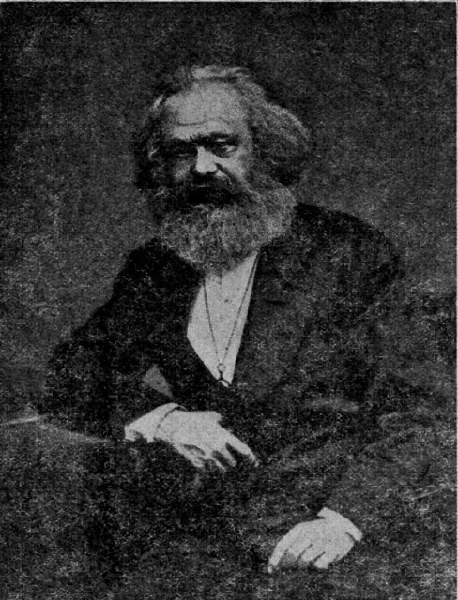
KARL MARX
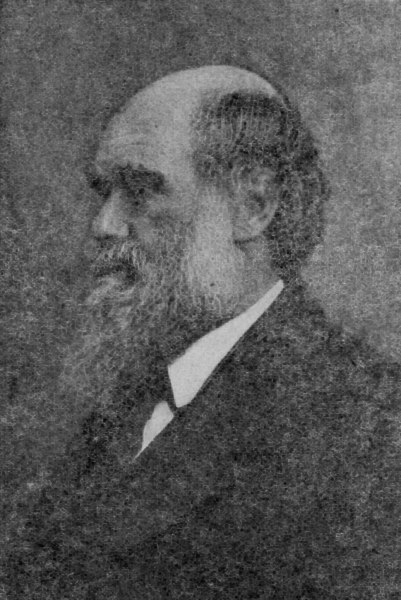
CHARLES DARWIN