Front matter (continued 4)
Reading edition
As will be seen when we discuss the mentality of the girls, they are not as a class given to introspection or self-analysis. They are as a rule, incapable of this even if they try. It appeared to us worth while, however, to ask them what they thought were the reasons that led them into an immoral life. It is a very rare thing for a girl to admit that she would be willing to have a younger sister enter the life and this often can be used as a key to secure their willingness to discuss the situation. Two hundred and seventy-nine girls gave 671 reasons. We have grouped them as well as we can. The surprising thing is that very few directly economic reasons are given. It might be supposed that in friendly conversation, a girl would wish to make the greatest possible excuse for herself, and that the one most ready to hand would be the inability to earn a living. But in only 19 cases was this given as an excuse; and by referring to a similar table for street cases, it will be noticed that only 139 out of 1,106 gave a directly economic reason. It will be noted that only 7 out of 671 gave previous use of drink and drugs. As a result of experience, I should say that drink is a consequence rather than a cause of a life of prostitution, although a good many girls have admitted to me that their first wrong-doing occurred after taking an unaccustomed drink. In this connection our medical records at Bedford with regard to the use of alcoholic drinks, drugs and cigarettes, show that at entrance 112 individuals, or 17 percent of the 647 women studied were suffering from one or the other alone, or from combinations, as shown in the following table:
EXCESSIVE USE OF ALCOHOLIC DRINKS, DRUGS AND CIGARETTES
Alcohol45
Drugs23
Cigarettes7
Alcohol and cigarettes18
Alcohol and drugs8
Drugs and cigarettes5
Alcohol, drugs and cigarettes6
Total112 17.3%
Not suffering at entrance from effects of above 535 82.6
647
Five hundred and thirty-five showed no injurious effects so far as was evident from a physical examination. We cannot give figures as to the exact number who used alcohol or cigarettes in moderation. We believe the number to be high.
Sixteen of the 647 were tubercular and were transferred to institutions for tuberculosis. No examination of the sputum was made except in cases of suspects. Seven others were epileptic and there was one case of chorea (St. Vitus Dance).
Mentality:—Of peculiar value, in view of the public interest in the question of mental defect as a cause of delinquency, is a study of the mentality of our 647 women. Twenty have been pronounced insane by commissions in lunacy and have been transferred to asylums for the insane. Three others will probably have to be transferred; 107 were unhesitatingly pronounced distinctly feeble-minded. Not all of our 647 cases have been examined by our psychologist. One hundred and sixteen, however, have had laboratory tests of various sorts. Among these tests, all have been given the Binet test. The result has been as follows:
MENTALITY BY BINET TEST
Showing mentality of 5 year old child 2
""" 6 """ 1
""" 7 """ 6
""" 8 """ 6
""" 9 """ 29
""" 10 """ 44
""" 11 """ 26
""" 12 """ 2
116
The 44 who have the mentality of a ten year old child and under were unhesitatingly pronounced mentally defective. The 72 showing mentality from ten to twelve years may possibly not be so-called. The 67 others included among the 107 are those so mentally defective that there can be no question as a matter of observation. Fifty-two others are distinctly border line cases. This is the group which gives the most trouble in all reformatory institutions. It is safe to say that 90 percent of all disciplinary difficulties come from cases of this sort. They can be easily divided into at least two groups. Thus divided, 26 are girls who can be taught very little in school, whose general intelligence is low, but who may perhaps be able to learn a certain amount of manual labor; these cannot “stay good” any length of time. The other 26 are those who do well in school, are capable of mastering even such subjects as algebra and bookkeeping, but who have no moral sense or continuity of purpose. Eleven others are also properly in this class but differ from the two preceding groups in the character of their instability. If they were boys they would be tramps. They are all girls who have run away from home, sometimes a number of times, as well as from any place where they are put to service.
The foregoing figures mean that 193 individuals, or 29.8 percent, of the number studied are decidedly mentally defective. This is an extremely conservative estimate.
With the facilities which we are to have in the Laboratory of Social Hygiene under the auspices of the Bureau of Social Hygiene, we expect to get much more definite results not only as to the mentality but also as to the physical condition and the social relations of the young women under our care.
Venereal Disease:—The records of the Bedford Reformatory for girls show that 20.56 percent of the 647 inmates have clinical manifestations of venereal disease. The facts are summarized in the following table:
Total number of inmates 647
Number free from clinical manifestations of disease 514
Number showing clinical manifestations of disease 133
Of the last named:
Number with syphilis 61
"" gonorrhœa 54
"" syphilis and gonorrhœa 9
"" disease unnamed 8
"" chancre 1
Total 133(20.56%)
A series of complement fixation tests on blood specimens from 466 of the inmates show, however, that a very much larger number are infected with either syphilis or gonorrhœa or both of these diseases.[307] With the Wassermann test 176, or 37.7 percent gave positive reactions; 273, or 58.6 percent gave negative reactions, and 17, or 3.6 percent gave doubtful reactions. With a modification of the Wassermann technique where the tests were allowed to stand for four hours at ice box temperature to fix complement, instead of the usual one hour at 37°C. in the incubator, 224, or 48 percent gave positive reactions, 212, or 45.4 percent gave negative reactions and 30, or 6.4 percent gave doubtful reactions, showing an increase of 10.3 percent of positive reactions for syphilis over the method of fixing complement at 37°C. The same sera were tested by the complement fixation test for gonorrheal infection with the result that 134 or 29 percent gave positive reactions; 234, or 50 percent gave negative reactions and 98, or 21 percent gave doubtful reactions, fixing complement at 37°C. for one hour. When the ice box method of fixation was used, 306 or 65.6 percent gave positive reactions; 101, or 21.7 percent gave negative reactions and 59, or 12.6 percent gave doubtful reactions, showing an increase of 36.9 percent of positive results over the method of fixing complement at 37°C. in the incubator.
Vaginal smears from the same persons were examined but it was possible to demonstrate the presence of the gonococcus in but five of them, although many of them show the presence of numerous pus corpuscles.[308]
The full significance of the results above stated does not appear until the statistics are summarized. Of the 466 girls tested, only 50, that is, 10.7 percent, are found to be free from venereal infection. Practically 90 percent showed infection; 170, or 36.4 percent gave positive reactions for both syphilis and gonorrhœa; 27, or 5.79 percent were positive for syphilis only, and 117, or 25.1 percent were positive for gonorrhœa only.[309]
Offenses:—Not all of the 647 cases studied were committed to Bedford for prostitution; but all were leading the lives of prostitutes in New York City at the time of their commitment and the specific offense which they committed was an incident in the life of prostitution.[310] Table XXIV shows that 105 women or 16.22 percent were convicted of felonies, while 450, or 69.55 percent were convicted of offenses directly connected with prostitution. The 25 cases committed as disorderly children were girls under eighteen years of age whose parents or relatives caused their arrest and brought them into court as the only means of taking them from the life. The 38 commitments for vagrancy were under Subdivision 3 and 4 of Section 887 of the Code of Criminal Procedure, which defines a vagrant as “a person who has contracted an infectious or other disease, in the practise of drunkenness or debauchery, requiring charitable aid to restore him to health” or “a common prostitute who has no lawful employment whereby to maintain herself.”
The stories of the following girls will illustrate the relation between prostitution and crime in the cases of women sent to us for felonies or misdemeanors:
A. B. was a girl of eighteen, convicted of manslaughter in the second degree. She was not only leading a life of prostitution but was supporting her lover by it. As is so often the case, she was very fond of the man and intensely jealous when another girl won him away. She bought a sharp knife and carried it for a month before she met the girl, who had tried to avoid her. When at last they met, our girl stabbed her rival so seriously that she died from the effects.
C. D. was also only eighteen years of age. She was convicted of shooting her lover. The time had come when they were no longer happy together. A quarrel arose on the street over a trivial matter. She wished to go to one place and he to another. Neither would yield. He started across the street to go his own way. She drew a pistol and shot him dead. Asked how she happened to have a loaded pistol in her possession, she said that she has always carried one ever since she came to New York. She thought it necessary for self-protection.
The story of E. F., convicted of grand larceny in the first degree, was as follows: She came north from a southern city thirteen years ago with her mother, who died soon after. She had had a lover before her mother’s death. By him she had an illegitimate child. After the child was born he married her but they were not happy together. Another man coaxed her away from her husband. She claims he put her on the street, that she was violently in love with him and supported him by prostitution. Finally she was with a man whose watch she admired and coveted for her lover. She stole it and gave it to her lover in whose possession it was found. Both were convicted.
G. H. was a woman of twenty-four convicted of robbery. She had a husband and two children. The husband was entirely able and willing to support her. She became addicted to the use of opium. She claims it was first prescribed by a physician during an illness. As the habit grew, she stole money from the till in her husband’s shop to supply herself with the drug. The resulting friction between herself and her husband finally caused her to leave home and enter a life of prostitution. She had been living the life for two years at the time of her arrest for robbing a man of a diamond pin.
Three women, sentenced for corrupting the morals of a minor, had young girls with them whom they had brought to the city for immoral purposes.
The cases of assault were for the most part girls who had engaged in fist fights, usually on account of rivalry.
The attempted suicide was a girl who had tired of the life which she had led since she was fourteen years old and saw no other way out of it. She had made three unsuccessful attempts before she was sentenced to Bedford.
Previous Records:—The law prohibits the sentencing of women to the reformatory who have previously served a term in a state prison. With this limitation the judge has the power of sending those who have served numberless previous sentences for minor offenses if in his judgment there is hope of reform in the particular case. Contrary to the impression of many people, it is a very rare thing for a girl or woman to be sentenced to an institution for what is really a first offense. Never in our experience has a previously innocent girl been so sentenced.
Throwing light on the history of the prostitutes committed to Bedford, Table XXV gives us some information as to the various institutions in which they spent time previous to the Bedford commitment. The first section of the table shows that 305, or 47.1 percent have had previous institution experiences. In cases where these girls have been in more than one institution, this first portion of the table gives the institution in which she has spent the most time. Out of 647 cases, 255, or 39.4 percent only, are not known to have been at least previously arrested. These figures give the data that we know. The probabilities are that the tables understate the facts. The latter half of the table shows the variegated experience of a number of the women. We have no comparable data for the cases from other institutions.
Conclusion:—As this is a statistical study, we have not touched upon various phases of the lives of prostitutes which are of general public interest. This is because we had not sufficiently accurate data to warrant giving figures or percentages. For example, the relation of the women to the men whom they support is a matter where verifiable data are very hard to get. An increasingly large percentage of the women under our care state that they were turning over the whole or a part of their wages to their lovers. In other cases we were pretty well assured that this was the case although it was denied by the girl.
As a result of our twelve years’ experience we believe that there is an increasing number of young women who live in furnished rooms and take their patrons to hotels. A larger proportion of prostitutes in our early days lived in houses of ill fame. Now in many instances, even if their work is in these houses, they live outside and go to the houses only for business purposes. A case in point is that of a girl only sixteen years of age who worked in one of the houses conducted by the so-called “syndicate.” She was living with a young Italian who had lured her from her home. He conducted her to this house every afternoon at four o’clock, calling for her at five or six next morning and receiving her earnings from the woman who ran the house.
A number of the young women included in this study have figured in white slave cases. These commercialized phases of the social evil are dealt with elsewhere in this report.
STATISTICAL TABLES
ACCOMPANYING CHAPTER VIII
These tables comprise (1) Analysis of histories of cases at Bedford; the histories in question were carefully compiled from the records and from personal conferences and in so far as possible they were revised and verified in the light of experience, outside inquiry, etc. (2) Similar analysis of cases from seven institutions in New York State and city other than Bedford; this material was gathered in different ways. In some institutions two trained investigators interrogated the girls, checking up their replies by the records of the institution wherever possible; in two institutions, information was obtained from the records alone; in one, from the girls alone. (3) Analysis of histories of street, hotel, and other cases; these data were obtained by an experienced woman investigator who interviewed the girls under conditions as favorable as possible to her object.
In the matter of earnings, etc., where corroboration was in the nature of things impossible, no responsibility for the accuracy of the statements made by the girls is assumed.
Table I BEDFORD CASES BIRTHPLACE—ANALYSIS OF 647 CASES
Foreign Born Native Born White Native Born Colored
Austria 15 New York City 263 New York City 27
Canada 1 Other parts N. Y. State 39 Other parts N. Y. State 3
Cuba 2 Colorado 1 Alabama 1
England 14 Connecticut 5 Connecticut 1
France 8 District of Columbia 1 District of Columbia 2
Finland 2 Florida 1 Florida 1
Germany 26 Illinois 5 Georgia 2
Holland 2 Iowa 2 Kentucky 1
Hungary 12 Kansas 1 Louisiana 2
India 1 Maine 2 Maryland 2
Ireland 17 Maryland 4 Massachusetts 3
Italy 7 Massachusetts 16 Minnesota 1
Mexico 1 New Jersey 23 New Jersey 2
Norway 1 Michigan 2 North Carolina 10
Nova Scotia 1 Minnesota 1 Pennsylvania 5
Poland 5 Missouri 1 South Carolina 1
Roumania 3 North Carolina 2 Tennessee 1
Russia 32 Ohio 4 Virginia 18
Scotland 2 Oregon 1 Washington 1
Sweden 1 Pennsylvania 22 Unknown 1
Switzerland 2 Texas 1
Wales 1 Vermont 1
Virginia 5
West Virginia 2
Unknown 1
Total 156 = 24.11% Total 406 = 62.75% Total 85 = 13.14%
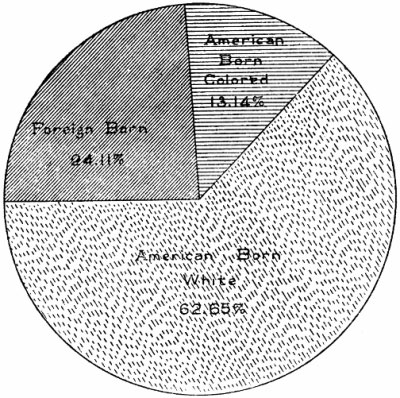
GRAPH ILLUSTRATING TABLE I
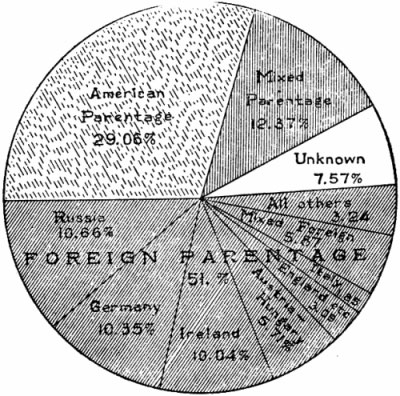
GRAPH ILLUSTRATING TABLE II
Table II BEDFORD CASES
NATIONALITY OF PARENTS IN DETAIL
A. White
I.Both parents foreign, born in the same country
Austria (18 Jews) 22
Bohemia 3
Canada 2
Denmark 2
England 11
Finland 3
France 9
Germany (11 Jews) 67
Holland 3
Hungary 12
India 1
Ireland 65
Italy 12
Norway 1
Nova Scotia 2
Poland 6
Roumania (1 Jew) 2
Russia (57 Jews) 60
Scotland 3
Sweden 2
Switzerland 1
Wales 1 290
II.Both parents foreign, born in different countries
Birthplace of fatherBirthplace of mother
Australia England 1
Austria Germany 1
Canada England 1
Cuba Spain 1
Denmark England 1
England Denmark 1
England Germany 1
England Ireland 4
England Wales 1
France England 1
France Germany 1
France Irish 1
Germany Bohemia 1
" Denmark 1
" France 1
" (Jew) Hungary (Jew) 3
" Russia 1
" Switzerland 1
Hungary German 1
Ireland England 3
" Scotland 1
" Wales 1
Italy Roumania 1
Norway Ireland 1
Roumania Russia 1
Russia Austria 1
Scotland England 1
" Ireland 1
Spain Portugal 1
Wales Mexico 1 37 327
III.Father of foreign birth, mother, United States
Belgium United States 1
Canada "" 4
England "" 6
Finland "" 1
Germany "" 10
Ireland "" 10
Scotland "" 2 34
IV.Father born in U. S., mother, foreign
United States Bohemia 1
"" Canada 2
"" England 3
"" Germany 4
"" Ireland 15
"" Italy 1
"" Norway 1
"" Roumania 1 28
V.Father of foreign birth, mother unknown
Austria 1
Germany 3
Ireland 2
Scotland 1 7
VI.Father unknown, mother of foreign birth
England 2
France 2
Germany 2
Ireland 1 7
Total Number with One Foreign Parent Known76
VII.Both parents born in the U. S. 120
VIII.Father born in the U. S., mother unknown 5
IX.Father unknown, mother born in U. S. 5
X.Both parents unknown 25
Total White 558
B. Colored
I.Both parents of foreign birth
Father’s birthplaceMother’s birthplace
Jamaica Jamaica 1
Cuba Cuba 1
West Indies South America 1
II.One parent of foreign birth
Ireland United States 1
West Indies "" 1
United States England 1
"" Ireland 1
III.Both parents born in U. S. 68
IV.Father unknown, mother born in U. S. 4
V.Birthplaces of both parents unknown 10
Total Colored 89
Total Number of Cases 647
Table III BEDFORD CASES
NATIONALITY OF PARENTS
Summary
Both parents foreign Born in the same country White290 292 330 51. %
Colored2
Born in different countries White37 38
Colored1
One parent foreign Mother U. S. White34 36
Colored2
Father U. S. White28 30 80 12.37%
Colored2
Mother unknown White 7
Father unknownWhite 7
Both parents born in the U. S. White120 18.54% 188 29.06%
Colored68 10.52
One parent born in the U. S., the other unknown Mother U. S. White5 9 2.30%
Colored4
Father U. S. White 5 14
Both parents unknown White25 5.27% 7.57%
Colored10 35
Total 647
Table IV COMPARISON AS TO PARENTAGE OF NATIVE POPULATION IN NEW YORK CITY AND AMONG PROSTITUTES AT BEDFORD
Population of New York City[311] in 1912 No. of Individuals Percentage of Total Pop. Bedford Cases 647 No. of Individuals Percentage of Total Cases
Native white of native parents 921,130 19.3% Native white of known native parentage 120 18.5
Native white of foreign parents 1,820,374 38.2 Native white of known foreign parentage (both parents) 327 50.5
Negro—parentage unspecified 91,702 1.92 Negro—total number 89 13.64
Table V BEDFORD CASES
OCCUPATIONS OF THE FATHERS
Professions
Architect 2
Civil engineer 1
Colored preacher 1
Lawyer 1
Minister 1
Music teacher 1
Musician 2
Physician 2
Surveyor 2
Trained nurse 1
Veterinary surgeon 1
Total 15
Own their own Business
Brewer 1
Contractor 5
Fruit dealer 2
Horse dealer 4
Hotel keeper 2
Livery stable keeper 1
Peddler 8
Saloonkeeper 11
Shopkeeper 29
Total 63
Business Positions
Insurance agent 2
Milkman 1
Real estate agent 4
Salesman 21
Total 28
Mechanical Trades
Blacksmith 6
Bricklayer 3
Brickmaker 1
Builder 5
Cabinet-maker 2
Carpenter 13
Carriage-maker 1
Cooper 1
Electrician 2
Engineer (railroad) 4
Engineer (stationary) 15
Gas fitter 1
Glazier 1
Hardwood polisher 1
Iron worker 8
Machinist 7
Mechanic 3
Painter 14
Plasterer 1
Plumber 3
Printer 6
Slate roofer 1
Stone cutter 2
Stone mason 9
Terra cotta worker 1
Tinsmith 2
Walking delegate 1
Total 114
Clothing Trades
Cap maker 4
Cloak maker 2
Designer 2
Finisher on corsets 1
Presser 6
Tailor 22
Total 37
Other Trades
Baker 2
Barber 8
Bartender 2
Basket maker 1
Butcher 10
Carpet layer 1
Cigar maker 10
Draughtsman 1
Mat maker 1
Photographer 1
Reed and rattan worker 1
Shoemaker 10
Watchmaker 1
Weaver 2
Total 51
Clerical Positions
Bookkeeper 3
Clerk of Court 1
Excise officer 1
Total 5
Laborers
Derrick rigger 1
Electric light trimmer 1
Employed on boats 11
Employed on railroad 12
Farmers and farm hands 34
Hod carrier 3
Laborer 40
Miner 3
Stableman 3
Street sweeper 2
Teamster 18
Watchman 4
Total 132
Mill and Factory Positions
Factory 13
Mill hand 7
Total 20
Domestic Positions
Coachman 7
Cook 9
Elevator man 1
Gardener 3
Janitor 5
Porter 3
Waiter 7
Total 35
Foreman 7
Asst. Supt. Life Insurance Co. 1
Conductor 2
Sea captain 5
Total 15
In Public Service
Fireman 5
Lighthouse keeper 1
Mail carrier 1
Policeman 5
Soldier 5
Total 17
Miscellaneous
Collector 1
Gambler 1
Sandwich man 1
Telegraph operator 1
Ticket speculator 1
Undertaker 3
Total 8
“Does not work on account of kidney trouble and fainting fits”1
Unknown 7
No statistics 99
Total 107
Total Number 647
Table VI BEDFORD CASES
NUMBER OF CHILDREN IN THE FAMILIES FROM WHICH THE GIRLS COME
No. of ChildrenCases
1 78
2 95
3 126
4 110
5 95
6 50
7 44
8 22
9 11
10 5
11 5
12 0
13 1
Unknown 5
Total Number of Cases 647
Average size of family 3.99
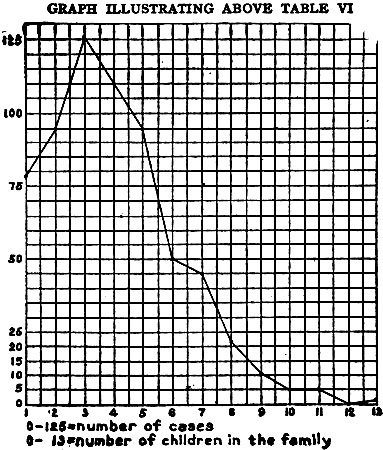
GRAPH ILLUSTRATING ABOVE TABLE VI
Table VII BEDFORD CASES
OCCUPATION OF MOTHER
Actress 1
Canvasser 2
Charge of Hotel Linen Room 1
Cook (6 colored) 10
Day’s work 46
Domestic—General housework (6 colored) 9
Dressmaker 4
Factory Operatives 11
Housekeeper 4
Janitress 13
Laundress 17
Midwife 6
Milliner 1
Market Woman 1
Nurse 9
Peddler 2
Small Shopkeepers 7
Tailoress 1
Total 145
Total number of cases, 647
Percentage of occupied mothers, 22.4
Table VIII BEDFORD CASES
EDUCATION
Cannot read or write any language—15 American born 50 7.72%
Reads and writes a foreign language—5 read a little Eng. 32 4.83%
Read and write a little, no further education 192 29.67%
Did not finish primary grades 70 10.82%
Reached but did not finish grammar grades 257 39.72%
Graduated from grammar grades 25 3.86%
Entered, but did not finish high school 13 2.00%
Graduated from high school 4 .77%
One year in normal school 3 .46%
Eight months at college 1 .15%
Total Number of Cases 647 100.00%
GRAPH ILLUSTRATING TABLE VIII
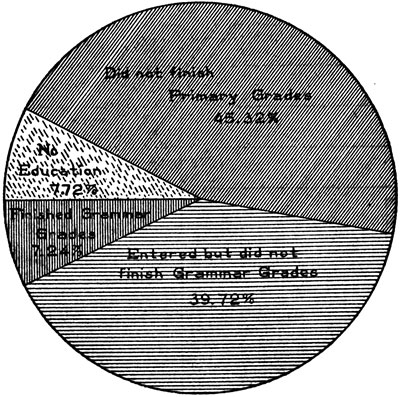
Table IX BEDFORD CASES
Earnings
I Wages before entering prostitution
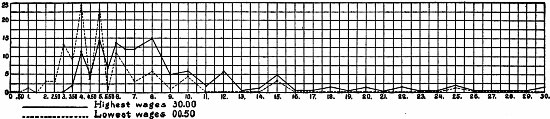
$.50 .75 1.00 1.25 1.50 2.00 2.50 3.00 3.50 4.00 4.50 5.00 5.50 6.00 7.00 8.00 9.00 10
Wages of trades excluding Domestic Service { High 110 cases . . . . . . . . 2 11 5 14 7 13 12 15 5 6
Low 110 cases . . 1 . . 3 3 13 9 24 4 23 1 11 3 6 1 4
7.50
Wages of Domestic Service { High 52 cases . . . . . . 4 4 5 5 13 9 5 6 1 . . .
Low 52 cases . . . 1 1 6 8 13 9 10 3 1 . . . . . .
I Wages before entering prostitution. (Continued)
$11 12 13 14 15 18 20 22 25 30 Highest Wage Lowest Wage Average Mode
Wages of trades excluding Domestic Service { High 110 cases 2 6 . 1 5 1 1 1 2 1 $30.00 $3.50 $8.11 $8.00
Low 110 cases . . . . 3 . . . 1 . 25.00 1.00 5.21 4.00
Wages of Domestic Service { High 52 cases . . . . . . . . . . 7.50 2.50 4.30 4.50
Low 52 cases . . . . . . . . . . 5.00 1.25 3.14 3.00
GRAPHS ILLUSTRATING TABLE IX
Wages in Trades excluding Domestic Service—110 Cases
Larger Image
Wages in Domestic Service—52 Cases
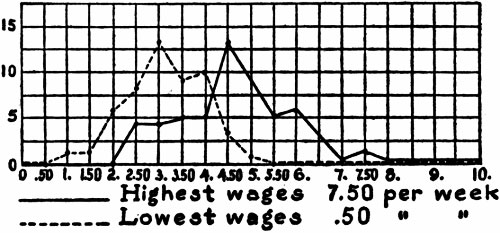
Table X BEDFORD CASES
OCCUPATIONS
Before entering prostitution No. of Cases Percentages
Book-binding 7 1.08
Clerk in small shop 8 1.23
Clerk in department store 40 6.18
Domestic (general housework) 243 37.56
Errand girl 3 .46
Factory operative 127 19.62
Janitress 1 .15
Laundry employee 14 2.16
Manicure 2 .30
Millinery 13 2.00
Office work (not stenographers) 13 2.00
Sewing (handwork) 25 3.86
Steel engraver 1 .15
Telephone operator 9 1.39
Theatrical work (chorus or vaudeville) 18 2.78
Nurse (not graduate) 3 .46
Waitress (in restaurants) 28 4.32
No work 92 14.27
Total 647
Table XI BEDFORD CASES
RESIDENCE OF GIRL BEFORE ENTERING PROSTITUTION
Living at home { Giving all they made 53
Giving part 16
Supported by parents or husband 32
No statistics as to money paid 23 124
Living with relatives { Giving all 15
Giving part 9 24
Boarding $1.50 2.00 3.00 4.00 5.00 5.40 6.00 13.50 No amount given
1 1 1 3 2 1 1 1 9 20
Domestics living where they worked26
Total 194
Table XII BEDFORD CASES
SOCIAL RELATIONS
Married 193 29.8
Single 454 70.1
Total 647
STATEMENT OF 219 WOMEN WITH REGARD TO NUMBER OF CHILDREN
Married women Pregnant on entering 1
Miscarriage previous to entering Bedford 18
Legitimate children { One 66
Two 19
Three 7
Eight 1 93
Single women Pregnant on entering 16
Miscarriage previous to entering Bedford 18
Illegitimate children { One 63
Two 10 73
Total Number of Cases 219
No children, or no record of them 428
Total 647
Table XIII BEDFORD CASES
RELIGION
Catholic 266 41.1%
Jewish 123 19.0%
Protestant 252 38.9%
No record 6 .9%
Total Number of Cases 647
GRAPH ILLUSTRATING TABLE XIII
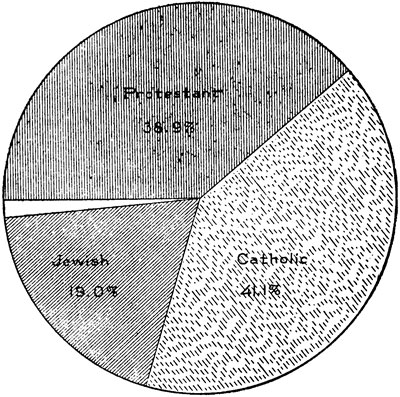
Table XIV BEDFORD CASES
AGE
I II III
Years of age Number entering Bedford First sexual offense Number entering prostitution
7 .. ...... 1 .33⅓% .. .....
9 .. ...... 1 .33⅓% .. .....
10 .. ...... 1 .33⅓% .. .....
11 .. ...... 1 .33⅓% .. .....
12 .. ...... 4 1.33⅓% .. .....
13 .. ...... 12 4. % 1 .37%
14 .. ...... 29 9.66⅔% 3 1.12%
15 12 1.86% 43 14.33⅓% 11 4.08%
16 41 6.34% 61 20.33⅓% 19 7.06%
17 65 10.05% 40 13.33⅓% 40 14.87%
18 47 7.26% 31 10.33⅓% 35 13.01%
19 65 10.05% 28 9.33⅓% 32 11.90%
20 50 7.71% 19 6.33⅓% 28 10.41%
21 61 9.43% 15 5.00 % 31 11.52%
22 73 11.28% 3 1. % 22 8.18%
23 48 7.42% 6 2. % 17 6.32%
24 53 8.19% 3 1. % 9 3.35%
25 40 6.18% .. ........ 10 3.72%
26 22 3.40% .. ........ 3 1.12%
27 20 3.09% 1 .33⅓% 6 2.23%
28 22 3.40% 1 .33⅓% 2 .74%
29 24 3.71% .. ........ .. .....
30 2 .31% .. ........ .. .....
31 1 .15% .. ........ .. .....
32 1 .15% .. ........ .. .....
Total No. cases 647 99.98% 300 100% 269 100%
Average age 20 yr. 11.06 mos. 17 yrs. 16 days 18 yrs. 9.18 mos.
Highest 32 Highest 28 Highest 28
Lowest 15 Lowest 7 Lowest 13
Average 20.09 Average 17 Average 18.7
Mode 22 Mode 16 Mode 17
Mean 23.5 Mean 17.5 Mean 18.5
No. of cases 647 No. of cases 300 No. of cases 269
GRAPH ILLUSTRATING TABLE XIV
(Made from Table of Percentages)]
Larger Image
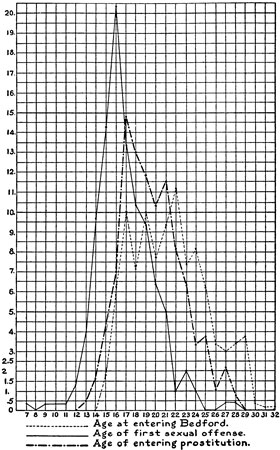
Table XV BEDFORD CASES
DISTRIBUTION OF AMERICAN BORN
City born[312] { White 341 404 82.48%
Colored 63
Country born { White 63 85 17.47%
Colored 22
Unknown 2 0.05%
Total 491
GRAPH ILLUSTRATING TABLE XV
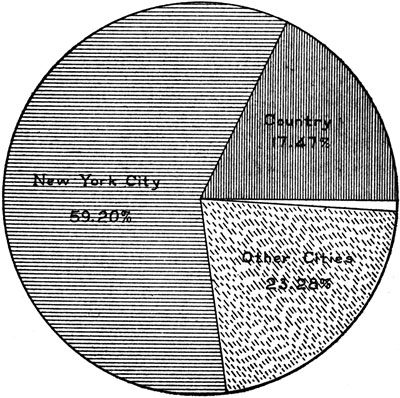
Table XVI BEDFORD CASES
REASONS FOR COMING TO NEW YORK, OF THOSE BORN OUTSIDE NEW YORK CITY
Ran away to escape home conditions 11
To live with family 78
To obtain work or easier work 26
To practice prostitution 9
To see New York 10
With lover 1
Unknown 4
Total 139
Table XVII BEDFORD CASES
PROSTITUTION: PRACTICED CONTINUOUSLY OR INTERRUPTEDLY
Continuously 166 59.50%
Not continuously { Married 19
Living with parents 4
Stealing 3
Working 32 58 20.79%
No statistics 55 19.71%
Total Number of Cases Considered 279
Table XVIII BEDFORD CASES
TRADES COMBINED WITH PROSTITUTION
Trade No. of Cases Per cent.
Demonstrator 1
Clerk in department store 4
Domestic 22
Factory operative 17
Laundry employees 4
Manicure 1
Office work 2
Sewing 2
Theatrical work 6
Waitress 8
Stealing 6
Received money from husband 2
Prostitution only 204 73.11
Total 279
Table XIX BEDFORD CASES
WEEKLY EARNINGS FROM PROSTITUTION
Support Partial Support $3 $5 $6 $10 $12 $14 $15 $18 $19 $20 $25 $30 $35 $38 $40 $45 $50
High 2 9 . 2 . 4 . 1 7 . 1 8 3 10 3 1 4 2 24
Low 1 . 1 4 1 7 4 . 8 2 . 5 13 6 3 . 3 . 14
$55 $59 $60 $63 $70 $75 $90 $100 $110 $120 $125 $150 $200 $240 $250 $300 $400 Total Average No. cases
High . 1 12 . 7 7 . 15 1 1 2 5 7 1 2 3 1 146 $71.09
Low 1 . 4 1 2 2 1 6 . . 1 4 . . . 1 . 95 46.02
Table XX BEDFORD CASES
EARNED AT THE SAME TIME WITH PROSTITUTION
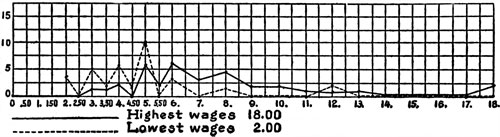
Weekly Wages For Board $.50 $1.00 $2.00 $2.50 $3.00 $3.50 $3.75 $4.00 $4.50 $4.60 $5.00 $5.50 $6.00 $7.00 $8.00 $9.00
Wages of occupations excluding Domestic Service High 34 cases . . . . . 1 1 . 2 . . 6 2 6 3 4 2
Low 34 cases . . . 3 . 5 2 . 6 2 . 10 . 3 . . .
Domestic Service High 23 cases . . 1 1 1 . 1 1 7 2 . 6 2 . . . .
Low 23 cases 1 1 . 5 3 7 2 . 1 1 1 . . 1 . . . .
Weekly Wages $10.00 $11.00 $12.00 $13.00 $14.00 $15.00 $16.00 $17.00 $18.00 Maximum Minimum Average Mode
Wages of occupations excluding Domestic Service High 34 cases 2 1 1 1 . . . . 2 $18.00 $3.00 $6.42 $5.00 to $6
Low 34 cases . . 2 . . . . . . 12.00 2.00 4.68 5.00
Domestic Service High 23 cases . . . . . 1 . . . 15.00 1.00 4.60 4.00
Low 23 cases . . . . . . . . . 6.00 .. 2.86 3.00
GRAPHS ILLUSTRATING TABLE XX
Wages in Trades excluding Domestic Service—34 cases
Wages in Domestic Service—23 Cases
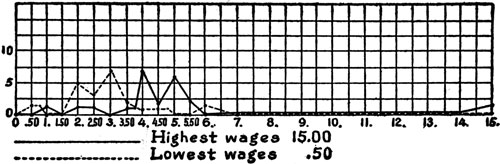
Table XXI BEDFORD CASES
CAUSE OF FIRST SEXUAL OFFENSE
Love 108 38.71%
Pay { Married { Living with husband 1 11
Separated from " 10
Single { Lover 17 57 20.43%
Playmate 4
Stranger 25 46
Force { Relative 7
Lover 27
Playmate 3
Stranger 25 62 22.22%
Weakness 23 8.24%
Physical predisposition 2 .71%
Unknown 27 9.64%
Total Number of Cases 279
Table XXII BEDFORD CASES
MENTAL CONDITION
Insane—Transferred to asylums 20
Insane tendencies 3
Feeble-minded (distinctly so) 107
Border-line—neurotic 26
Weak-willed—“No moral sense” 26
“Wild”—truants—run-a-ways 11 193 29.8%
Table XXIII BEDFORD CASES
CAUSES. REASONS GIVEN BY THE GIRL
A.In connection with her family
1. Immorality of the parents 15
2. Incompatibility 39
3. Neglect and abuse 26
4. No mother or father or neither 166
5. Over indulgence 10
6. Over strictness 35
7. Poverty 9
8. Turned out 6 306
B.In connection with married life
1. Death of husband 5
2. Desertion by husband 8
3. Immorality (includes cruelty or criminality) 14
4. Incompatibility 26
5. Husband put girl on street 2 55
C.Personal reasons
1. Bad company 75
2. No sex instruction 10
3. Idle or lonely 5
4. Sick, needed the money 4
5. Ruined anyway 10
6. Lover put girl on the street 10
7. Previous use of drink or drugs 7
8. White slave 2
9. Tired of drudgery 4
10. “Easy money” 17
11. Dances 13
12. Lazy, hated work 20
13. Stage environment 9
14. Love of the life 15
15. Desertion by lover 3
16. Desire for pleasure (theatre, food, clothes) 48
17. Desire for money 38
18. Ashamed to go home after first escapade 1 291
D.Economic reasons
1. Can’t support herself 5
2. Can’t support herself and children 1
3. Couldn’t find work 13 19
Total 671
Table XXIV BEDFORD CASES
OFFENSES
No. Cases, 647
Misdemeanor
Assault 3rd degree 9
Attempted suicide 1
Concealing birth of child 1
Corrupting morals of a minor 3
Indecent exposure 1
Keeping a disorderly house 3
Maintaining a place for smoking opium 1
Petit larceny 71
Unlawfully injuring propt’y 1
Using vulgar and indecent language in public 1
Total, 92or 14.21%
Felonies
Assault 2nd degree 4
Attempted grand larceny 13
Burglary 3rd degree 3
Felonously selling cocaine 1
Grand larceny, 1st degree 12
Grand larceny, 2nd degree 63
Manslaughter, 2nd degree 3
Receiving stolen goods 4
Robbery 2
Total, 105or 16.22%
Other Offenses
Associating with dissolute persons and in danger of becoming morally deprav’d 50
Common prostitute 272
Disorderly child 25
Disorderly conduct 44
Frequenting disorderly houses 6
Intercourse with boys 1
Public intoxication or habitual drunkard 14
Vagrancy 38
Total, 450or 69.55%
Table XXV BEDFORD CASES
PREVIOUS RECORDS, SO FAR AS CAN BE ASCERTAINED
Bedford State Reformatory for women 13
Catholic Protectory 4
County jails 6
Florence Crittenton Home 7
Gerry Society 4
House of Good Shepherd, Brooklyn 20
House of Good Shepherd, New York 34
House of Mercy, Inwood 23
House of Refuge, Randall’s Island 15
Insane Asylums 2
Magdalen Asylum 16
Massachusetts State Industrial School, Lancaster 3
New York Juvenile Asylum 5
New York State Industrial School, Rochester 3
New York State Training School for Girls, Hudson 6
Orphan Asylum 20
Penitentiaries 7
Sherbourne Prison 1
Washington Square Home 3
Waverly House 4
Wayside Home 13
Workhouse 65
Various other homes for Wayward Girls 31 305 47.1
Say never in institution and never arrested previously 255
Admit one or more previous arrests, but got off with fine, suspended sentence or discharge, and claim never to have been committed 66
Admit having been on probation 21
Total Number of Cases 647
OF THE ABOVE
Arrested twice, once fined, once on probation 1
In one institution, twice arrested and once on probation 3
In one institution, three arrests and on probation 1
In one institution, several other arrests 3
In one institution, workhouse eight times, six months each 1
In two institutions 30
In two institutions, several other arrests 6
In three institutions 5
In three institutions, several other arrests 2
In four institutions 1
In four institutions, several times Raymond St. Jail 1
Six months in workhouse, four times arrested, twice fined 1
Workhouse once, six times arrested and fined 1
Workhouse once, seven times arrested 1
In two institutions, workhouse once, fined three times, and on probation 1
In Madgalen, twice; Good Shepherd, once; 10 days in workhouse; three times arrested; on probation once 1
In workhouse twice; arrested six times; on probation once 1
In one home; workhouse twice; twice fined, and once discharged 1
Workhouse, three terms 1
Workhouse, three terms, six months each; four times fined. 1
In three institutions; workhouse, three times; seven other arrests 1
Arrested about 30 times; City prison, 10 weeks; workhouse, 6 terms; fined over 20 times 1
Three times on the Island; arrested over 30 times 1
Twice at Good Shepherd, workhouse two terms and arrested nine times 1
Two and one-half years House of Refuge, arrested five times; on Island four times 1
Two terms at Hudson; three arrests; workhouse, three months; Bedford for third time 1
House of Refuge, four years; Juvenile Asylum, one year; more than 40 times at the workhouse, once on probation 1
GRAPH ILLUSTRATING TABLE XXVI
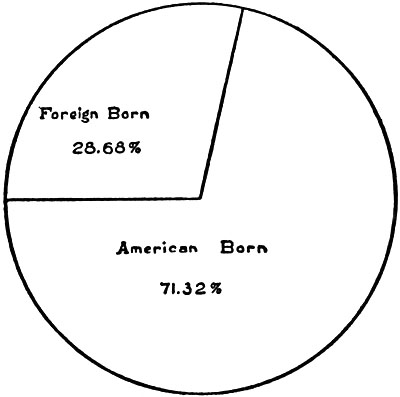
Table XXVI CASES IN INSTITUTIONS, OTHER THAN BEDFORD
BIRTHPLACE
American Born Foreign Born
New York City 210 Austro-Hungary 34
Other parts of N. Y. State 53 Canada 11
Alabama 2 England-Scotland 9
Arizona 1 Finland 0
Arkansas 1 France 4
California 6 Galacia 2
Colorado 1 Germany 24
Connecticut 4 Holland 0
Delaware 2 India 0
District Columbia 3 Ireland 12
Florida 3 Italy 6
Georgia 3 Mexico 1
Illinois 4 Poland 9
Indiana 2 Roumania 2
Iowa 0 Russia 46
Kansas 1 Sweden 5
Kentucky 2 Switzerland 2
Louisiana 0 Venezuela 1
Maine 0 West Indies 7
Maryland 5 Total No. foreign born 175 28.68%
Massachusetts 24 Total No. American born 435 71.31%
Michigan 1 Total 610
Minnesota 1
Mississippi 1
Missouri 0
New Hampshire 1
New Jersey 17
North Carolina 6
Ohio 3
Oregon 0
Pennsylvania 23
Rhode Island 2
South Carolina 7
Tennessee 0
Texas 3
Virginia 8
Vermont 0
West Virginia 0
Wisconsin 2
Unknown 33
Total 435
Table XXVII CASES IN INSTITUTIONS, OTHER THAN BEDFORD
DISTRIBUTION BETWEEN CITY AND COUNTRY OF 147 CASES, BORN IN THE UNITED STATES
City born 85 57.82%
Country born 62 42.18%
Total 147
Born in cities of New York 52
Born in cities of other states 33
Total 85
Born in country, New York State 1
Born in country, other states 61
Total 62
147
Table XXVIII CASES IN INSTITUTIONS, OTHER THAN BEDFORD
REASONS FOR COMING TO NEW YORK OF 400 CASES BORN OUTSIDE THE CITY, AMERICAN AND FOREIGN
Ran away to escape home conditions 4
To live with family or husband 63
To obtain work, or easier work 57
To practice prostitution 42
To see New York 10
With lover 11
Unknown or not given 213
Total Number Cases 400
Table XXIX CASES IN INSTITUTIONS, OTHER THAN BEDFORD
EDUCATION
Does not read or write in any language 68 11.15%
Reads and writes a foreign language 20 3.28%
Reads and writes English, no further education 335 54.92%
Finished fifth grade 34 5.57%
Finished Grammar grades 74 12.13%
Entered High School or Business courses 36 5.90%
Unknown 43 7.05%
Total Number of Cases 610 100%
Table XXX CASES IN INSTITUTIONS, OTHER THAN BEDFORD
OCCUPATIONS
Before entering prostitution 662 cases used After entering prostitution 497 cases used
Artist .. 1
Book-binding 1 ..
Canvasser 2 ..
Chambermaid 34 5
Clerk in small store 9 ..
Companion 1 ..
Department store 70 10.57% 10
Errand girl 1 1
Factory 215 32.46% 24
Domestic service 117 17.67% 20
Laundry 16 1
Librarian 1 ..
Manicure 4 2
Massage 1 ..
Millinery 12 2
Nurse girl 34 1
Office work 20 0
Palmist 1 ..
Salvation Army worker 1 ..
Sewing 16 4
Steel Engraver 1 ..
Stenographer 8 ..
Teacher 1 ..
Telephone operator 13 ..
Theatrical work 20 3
Waitress 53 6
No work 10 Supported by prostitution only 353
Total 662 Supported by husband or parents 23
Stealing 11
Unknown 30
Total 497
Table XXXI CASES IN INSTITUTIONS, OTHER THAN BEDFORD
Age
Years of age Number entering Institution First sexual offense Number entering prostitution
6 .. 1 ..
7 .. 1 ..
8 .. .. ..
9 .. 1 ..
10 .. 2 ..
11 2 5 3
12 2 9 1
13 .. 7 ..
14 7 33 7
15 7 67 32
16 20 59 45
17 28 83 67
18 43 77 73
19 54 56 59
20 51 35 66
21 31 31 37
22 54 32 35
23 41 12 25
24 54 10 24
25 31 7 13
26 31 11 9
27 20 3 8
28 28 6 6
29 15 1 1
30 23 5 4
31 14 2 2
32 14 1 2
33 6 .. ..
34 7 .. ..
35 1 .. 1
36 5 3 1
37 2 .. ..
38 1 .. ..
39 2 .. ..
40 4 1 1
Total 598 561 522
Highest Age 40 40 40
Lowest Age 11 6 11
Average 22.66 years 17.95 19.60
GRAPH ILLUSTRATING TABLE XXXI
Larger Image
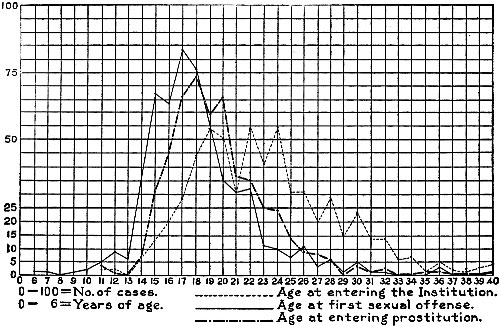
Table XXXII CASES IN INSTITUTIONS, OTHER THAN BEDFORD
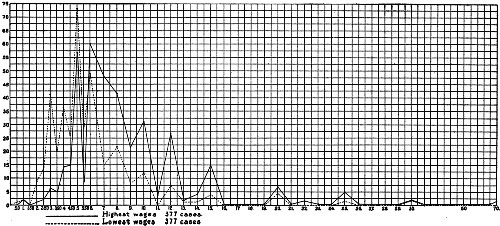
WEEKLY EARNINGS—BEFORE ENTERING PROSTITUTION
Living $.50 $1.00 $1.50 $2.00 $2.50 $3.00 $3.50 $4.00 $4.50 $5.00 $5.50 $6.00 $7.00 $8.00 $9.00 $10.00
Wages of Trades excluding Domestic Service High 377 cases .. .. 2 .. 1 2 6 5 14 15 57 9 60 48 42 22 28
Low 377 cases .. 1 2 .. 9 13 41 20 36 26 73 29 48 15 22 8 12
Wages of Domestic Service High 156 cases .. 2 .. 4 14 14 20 14 17 25 33 2 6 2 1 1 ..
Low 156 cases 4 .. 2 7 11 22 15 17 19 26 22 7 2 .. 1 .. ..
$11.00 $12.00 $13.00 $14.00 $15.00 $18.00 $20.00 $22.00 $25.00 $30.00 $50.00 $70.00 Highest wage Lowest wage Mode, wage of greatest frequency Average wage Mode
4 27 2 4 14 .. 7 1 5 1 .. 1 $70 $1.00 $6.00 $8.10 $6.00
.. 10 1 1 4 .. 4 .. 1 1 .. .. 30 .50 5.00 5.53 5.00
.. .. .. .. .. .. 1 .. .. .. .. .. 20 .50 5.00 3.99 5.00
.. .. .. 1 .. .. .. .. .. .. .. .. 14 Liv’g 4.50 3.63 4.50
COMBINED WITH PROSTITUTION
Living $.50 $1.00 $1.50 $2.00 $2.50 $3.00 $3.50 $4.00 $4.50 $5.00 $5.50 $6.00 $7.00 $8.00 $9.00 $10.00
Wages of Trades excluding Domestic Service High 63 cases .. .. .. .. .. .. 2 .. .. 2 8 .. 12 10 6 3 3
Low 63 cases .. .. .. .. .. .. 2 2 5 5 14 .. 12 3 8 2 6
Wages of Domestic Service High 15 cases .. .. .. .. 1 2 3 .. .. 1 3 .. 2 2 .. .. ..
Low 15 cases .. 1 .. .. .. 5 2 .. 2 .. 4 .. .. .. .. .. 1
$11.00 $12.00 $13.00 $14.00 $15.00 $18.00 $20.00 $22.00 $25.00 $30.00 $50.00 $70.00 Highest wage Lowest wage Mode, wage of greatest frequency Average wage Mode
.. 6 .. .. 6 .. 2 .. 1 1 .. 1 $70 $3.00 $6.00 $9.98 $6.00
.. .. .. .. 3 .. .. .. 1 .. .. .. 25 3.00 5.00 6.83 5.00
.. .. .. .. 1 .. .. .. .. .. .. .. 15 2.00 ... 5.10 ...
.. .. .. .. .. .. .. .. .. .. .. .. 10 .50 2.50 3.70 2.50
GRAPH ILLUSTRATING TABLE XXXII
Earnings in Trades excluding Domestic Service
Larger Image
GRAPH ILLUSTRATING TABLE XXXII
Wages in Domestic Service
Larger Image
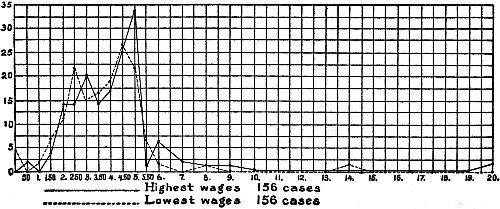
Table XXXIII CASES IN INSTITUTIONS, OTHER THAN BEDFORD
SOCIAL RELATIONS
No children 214
Miscarriages and abortions 36
Legitimate children One 28
Two 7
Three 5
Four 1
Five 2
Eight 1 44
Illegitimate children One 66
Two ..
Three 2 68
Unknown 135
Total Number of Cases Where Statistics Are Given 497
Table XXXIV CASES IN INSTITUTIONS, OTHER THAN BEDFORD
RESIDENCE OF GIRL BEFORE ENTERING PROSTITUTION
Living at home{ Giving all they made 66
Giving part 62 128
Living with relatives{ Giving all they made 0
Giving part 22 22
BOARDING AMOUNT PAID PER WEEK
$1.00 $1.50 $2.00 $2.50 $3.00 $3.50 $4.00
2 4 4 6 31 12 12
$4.50 $6.00 $5.00 $7.00 $8.00 $10.00
9 17 1 3 .. 3 104
Total number cases, where statistics are given 254
Table XXXV CASES IN INSTITUTIONS, OTHER THAN BEDFORD
CAUSE OF FIRST SEXUAL OFFENSE
Love 231 37.86%
Pay { Married { Living with husband 6
Separated from husband 10
Widow 51
Put on street by husband 10 77 12.78%
Single 48 125 20.49%
Force { Relative 11
Lover 5
Playmate 3
Stranger 43 62 10.16%
Weakness 26 4.26%
Physical predisposition 41 6.72%
Unknown 125 20.49%
Total Number of Cases 610
Table XXXVI INSTITUTION CASES, OTHER THAN BEDFORD
PROSTITUTION, PRACTICED CONTINUOUSLY OR OCCASIONALLY
No. cases Percent.
Continuously 445 72.95
Occasionally { Working girls 48
Married women 27 75 12.29
Unknown 14 2.30
Cases omitted, first offenders, etc. 76 12.46
Total Number of Cases 610
Table XXXVII CASES IN INSTITUTIONS, OTHER THAN BEDFORD
WEEKLY EARNINGS FROM PROSTITUTION
Partial Support Support 0-2 $5 $10 $15 $20 $25 $30 $35 $40 $45 $50 $55 $60
High . . . 2 1 10 6 20 11 5 5 1 36 . 5
Low 4 77 3 8 18 21 20 35 11 3 9 . 28 . 4
$65 $70 $75 $80 $90 $100 $120 $125 $150 $200 $250 $400 $500 Total No. Average
High . 4 18 5 2 41 4 3 20 6 3 2 1 211 $81.91
Low . 2 17 10 4 43 . 4 10 1 2 . . 334 53.06
Table XXXVIII CASES IN INSTITUTIONS, OTHER THAN BEDFORD
DISPOSITION OF EARNINGS FROM PROSTITUTION
To lover or any one acting as pimp, except husband{ All given 138
Part given 9 147
To husband 31
To parents or children 45
To self 216
Unknown 171
Total 610
Table XXXIX CASES IN INSTITUTIONS, OTHER THAN BEDFORD
DISEASES INCIDENTAL TO PROSTITUTION
(Clinically Determined)
Cases Percent.
No disease 75 47.4
Syphilis 25
Gonorrhea 49
Syphilis and gonorrhea 9 52.5
Total Number of Cases158
Only institution cases are counted in which a physical examination has been given. All are taken from the records of Waverly House and the Church Mission of Help. But all of their cases were not examined. That is, out of 158 cases where they deemed an examination desirable 52.5 per cent were found to be diseased.
Table XL CASES IN INSTITUTIONS, OTHER THAN BEDFORD
CAUSES. REASONS GIVEN BY THE GIRL
A.In connection with her family
1.Neglect or abuse 41
2.Immorality of parents 25
3.Over strictness 21
4.Over indulgence 3
5.Poverty 27
6.Incompatibility (quarrels, nagging, etc.) 27
7.Father, mother or near relative put girl in life 6
8.Turned out of the house 18——168
B.In connection with married life
1.Incompatibility 8
2.Non-support 24
3.Immorality (including cruelty or criminality) 29
4.Desertion 12
5.Death 16
6.Husband put girl in the life 26——115
C.Personal reasons
1.“Ruined anyway” 15
2.Lover put girl in the life 80
3.Desertion by lover 33
4.White slave (put into life by force) 21
5.Bad company 108
6.Dances and shows 23
7.Love of excitement or a good time 58
8.Lazy, won’t work 12
9.Love of money (a business enterprise) 3
10.Idle or lonely 0
11.No sex instruction 6
12.Ashamed to go home after first escapade 23
13.Not satisfied with one man 7
14.“Born bad”—enjoys the life 2
15.Previous use of drugs or drink 11
16.Stage environment 9
17.Tired of drudgery (usually housework) 16
18.“Easy money” 58
19.Love of clothes 7——492
D.Economic reasons
1.Can’t support herself 67
2.Can’t support herself and children or parents 37
3.Can’t live according to her standards 17
4.Out of work, can’t get work (often because of) 60
5.Ill health or defect 53
6.Not trained for skilled work and above the unskilled 2 236
Total 1011
GRAPH ILLUSTRATING TABLE XLI
Wages in Domestic Service
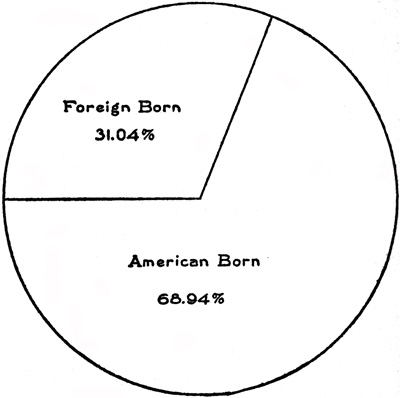
Table XLI STREET CASES
BIRTHPLACE
American Born Foreign Born
New York City 234 Austria-Hungary 35
Brooklyn 20 Belgium 1
Staten Island 1 Bohemia 1
Other cities in New York 36 Canada 13
New York State (country) 53 Denmark 1
California 8 England-Scotland 32
Colorado 5 France 13
Connecticut 26 Galacia 12
Delaware 2 Germany 72
District of Columbia 1 Ireland 29
Florida 2 Italy 8
Georgia 2 Holland 1
Illinois 14 Poland 4
Indiana 1 Russia 107
Iowa 1 Roumania 7
Kansas 2 Sweden 5
Kentucky 10 Switzerland 3
Louisiana 5 Total
Maryland 8 Foreign born 334 31.04%
Maine 3 American born 762 68.94%
Massachusetts 25 Grand Total, 1106
Michigan 13
Mississippi 1
Missouri 10
Nebraska 1
New Hampshire 2
New Jersey 63
Ohio 35
Pennsylvania 95
Rhode Island 6
South Carolina 3
Tennessee 2
Texas 4
Vermont 7
Virginia 20
Washington 1
West Virginia 6
Wisconsin 3
Unknown 31
Total American Born, 762
Table XLII STREET CASES
EDUCATION
No. Girls
Does not read or write in any language 127
Reads and writes a foreign language 10
Reads and writes English, no further education 687
Reads and writes, how much more not given 222
Graduated from grammar grades, at least 46
Some special education{ 4 stenographers
2 translators 7
1 linguist
Total Number Cases 1099[313]
Table XLIII STREET CASES
PROSTITUTION, PRACTICED CONTINUOUSLY OR OCCASIONALLY
No. cases Percent.
Continuously 1049 94.84+
Occasionally { Working girls 26
Married women 7 33 2.98+
Unknown 24 2.17+
Total Number Cases 1106
Table XLIV STREET CASES
AGE
Years of age Number at present age First sexual offense Number entering prostitution
6 ... 2 1
8 ... 2 ...
10 ... 2 ...
12 ... 11 ...
13 ... 3 ...
14 ... 71 6
15 ... 85 26
16 ... 167 114
17 1 189 176
18 12 147 223
19 40 94 123
20 66 61 110
21 88 38 72
22 131 29 44
23 137 15 22
24 205 15 30
25 57 15 21
26 98 15 23
27 46 8 11
28 74 5 10
29 44 ... ...
30 36 3 2
31 3 ... ...
32 15 1 3
33 7 1 1
34 13 ... ...
35 8 1 1
36 3 ... ...
37 ... 1 1
38 2 1 1
40 11 ... ...
42 1 ... ...
44 3 ... ...
49 2 ... ...
50 3 ... ...
Not given ... 124 81
Total 1106 1106 1106
Highest Age 50 38 38
Lowest Age 17 6 14
Average 25.62+ yrs. 17.87+ yrs. 19.44 yrs.
Mode 24 11 18
Mean 33.5 22 25
Table XLV STREET CASES
WEEKLY EARNINGS FROM PROSTITUTION
Partial Support Support 0-$3 $5-$7 $10 $15 $20 $25 $30 $35 $40 $45 $50 $55 $60 $65 $70 $75 $80
Highest .. 3 .. .. 2 5 22 23 25 12 73 34 90 38 80 21 39 76 61
Lowest .. 19 23 59 85 58 103 75 80 64 53 24 81 12 23 7 6 17 10
$85 $90 $95 $100 $110 $120 $125 $150 $175 $200 $250 $300 $400 $500 $1000 No. Cases Used Average
Highest 23 22 2 103 22 .. 22 84 9 86 20 15 3 6 1 1022 97.725
Lowest .. 4 .. 43 .. .. 4 10 .. 1 2 .. .. .. .. 863 35.80
Table XLVI STREET CASES
OCCUPATIONS
Before Entering Prostitution After Entering Prostitution
Artist 4 4
Artists’ model 2 3
Canvasser 5 4
Chambermaid 9 1
Clerk in small store 28 16
Companion 1 1
Department store 117 68
Errand girl 1 ...
Factory 72 21
Domestic service 27 20
Laundry 2 ...
Librarian 1 ...
Manicure 6 4
Massage 2 2
Millinery 13 2
Nurse girl 8 1
Office work 25 18
Palmist 2 2
Sewing 17 5
Stenographer 31 27
Storekeeper 1 2
Teacher 9 6
Telephone operator 9 5
Theatrical work 72 88
Trained nurse 4 3
Translator 1 1
Waitress 18 8
No work 518 ...
Unknown 101 33
Supported by prostitution only ... 677
Supported by husband or family ... 83
Stealing ... 1
Total Number Cases 1106 1106
Table XLVII STREET CASES
CAUSES OF FIRST SEXUAL OFFENSE
Love 441 39.87%
Pay { Married { Living with husband 51
Separated from husband 41
Widow 33
Put on street by husband 28 153 13.84%
Single 116 269 10.49%
Force by { Relative 26 2.35%
Lover 1 .09%
Playmate 2 .18%
Stranger 32 2.89%
Weakness (yielded to importunities) 34 3.07%
Physical predisposition 84 7.60%
Unknown 217 19.62%
Total Number Cases 1106
Table XLVIII STREET CASES
CAUSES. REASONS GIVEN BY THE GIRL
A.In connection with her family
1.Neglect or abuse 20
2.Immorality of parents 36
3.Over strictness 52
4.Over indulgence 11
5.Poverty 36
6.Incompatibility (quarrels, nagging, etc.) 20
7.No mother or no father, or neither 12
8.Father, mother or near relative put girl in the life 10
9.Turned out of the house 21 218
B.In connection with married life
1.Incompatibility 31
2.Non-support 34
3.Immorality (including cruelty or criminality) 39
4.Desertion 34
5.Death 14
6.Put girl in the life 61 213
C.Personal reasons
1.Ruined anyway 32
2.Lover put girl in the life 144
3.Desertion by lover 40
4.White slave (put in life by force) 6
5.Bad company 61
6.Dances and shows 1
7.Love of excitement or a good time 103
8.Lazy, won’t work 49
9.Love of money (a business enterprise) 50
10.Idle or lonely 19
11.Ashamed to go home after first escapade 13
12.“Born bad”—enjoys the life 116
13.Previous use of drugs or drink 1
14.Stage environment 36
15.Tired of drudgery (usually housework) 42
16.“Easy money” 58
17.Love of clothes 85 866
D.Economic reasons
1.Can’t support herself 33
2.Can’t support herself and children or parents 55
3.Out of work 42
4.Ill health or defect 9 139
Total 1436
In many cases, more than one reason was given, which explains the large total.
Table XLIX
RANK NUMERICALLY OF DIFFERENT COUNTRIES CONTRIBUTING TO POPULATION OF NEW YORK CITY COMPARED WITH THEIR CONTRIBUTIONS TOWARD 2363 PROSTITUTES
I II III IV V
Foreign born population of New York City Bedford Other Institutions Street Prostitutes Combined
647 cases 610 cases 1106 cases 2363 cases
156 foreign 175 foreign born 344 foreign born 664 foreign born
1.Russia Russia Russia Russia Russia
2.Italy Austria-Hungary Austria-Hungary Germany Germany
3.Germany Germany Germany Austria-Hungary Austria-Hungary
4.Austria-Hungary Ireland Ireland England-Scotland Ireland
5.Ireland England-Scotland England-Scotland Ireland England-Scotland
6.England-Scotland France Canada France-Canada (equal) France-Canada (equal)
7.France Italy Italy Italy Italy
8. France
Table L
COMPOSITION OF THE POPULATION OF NEW YORK CITY AS TO BIRTHPLACE COMPARED WITH BIRTHPLACE OF 2363 PROSTITUTES
I II III IV
Population of New York City 1910[314] 4,766,883 Percentage of Population Prostitutes 2363 cases Percentage of prostitutes
Native White 2,741,504 57.3% 1586 67.1
Foreign White 1,927,720 40.43 664 28.0
Negro 91,702 1.92 113 4.78
All other 5,957 .12 ... ...
Of the foreign born Percent. entire pop.
Russia 485,600 10.18 197 8.33
Italy 340,400 7.14 21 .88
Germany 279,200 5.85 122 5.12
Austria-Hungary 265,500 5.57 110 4.65
Ireland 252,500 5.29 58 2.45
England-Scotland 104,100 2.18 57 2.41
France 18,200 .38 25 1.05
Canada ... ... 25 1.05
Table LI
COMPARISON OF EARNINGS AT PREVIOUS OCCUPATIONS OF BEDFORD CASES WITH THOSE OF OTHER INSTITUTIONS AND WITH THE STREET CASES
Average
Bedford { Domestic service { High $4.50 } with board 52 cases
Low 3.00 52 "
Other occupations { High 8.00 110 "
Low 4.00 100 "
Other Institutions { Domestic service { High 5.00 } with board 156 "
Low 4.50 156 "
Other occupations { High 6.00 377 "
Low 5.00 377 "
Street Cases { Domestic service { High 5.43 } with board 30 "
Low 4.29 27 "
Other occupations { High 13.92 420 "
Low 9.88 332 "
Total Cases Considered:
Domestic service 238
Other occupations 907—1145
CHAPTER IX
PREVENTIVE, REFORMATIVE, AND CORRECTIONAL AGENCIES IN NEW YORK CITY
The agencies working to meet the need of wayward and professional delinquent women and girls in New York City are both private and public, direct and indirect. Work in this field can rarely be strictly characterized as either preventive, reformative or correctional. Almost all the agencies in question do both a preventive and a reformative work, though, in the main, the tendency toward preventive work is stronger than that toward rescue work. The following account is not exhaustive, but aims to deal with the representative institutions in each field.
(a) THE WORK OF PREVENTION
Preventive agencies cover a very wide range, beginning of course with the home and family, the school and the church; but important as these and similar institutions are, they are too general to come within the scope of this chapter. There are, however, certain societies and institutions which exert a potent though indirect influence,—among them the New York Society for the Suppression of Vice, the Society for the Prevention of Crime and the New York Society for the Prevention of Cruelty to Children. A few institutions render more direct service,—the Association for Befriending Children and Young Girls and the Children’s Aid Society, for example. These, with the Home for the Friendless, the Sheltering Arms, the girls’ departments of the Catholic Protectorate, the Juvenile Asylum, and other organizations maintain homes for the young. There are, moreover, numerous settlements with a hold on the young through kindergartens, clubs, and friendly services, doing a quiet but constantly effective preventive work; independent girls’ clubs, thirty special ones in New York, providing opportunities for friendship, recreation and training; some societies, such as the Girls’ Friendly, offering attractions to girls who have few advantages in their homes. The work of the Committee on Amusements and Vacation Resources of Working Girls has been active in the difficult dance hall problem, previously shown to be an important factor in the exploitation of prostitution. The Travelers’ Aid Society, which assists incoming women of all classes at railway stations and docks, is a valuable safeguard. This society definitely helped 18,562 persons in the year 1912. Of these, 5,161 were from seventeen to twenty-five years of age, and nearly all women. Similar work for traveling colored girls is done by a department of the National League on Urban Conditions among Negroes. The Big Sisters assist girls who have already come to the point of grave danger. Working along the lines already marked out by the Big Brothers’ Movement, women of devoted abilities are taking little girls who have already yielded to temptation and endeavoring to win them to useful lives.
Homes for working girls and women, though touching this need indirectly, touch it strongly. There are many of these homes, maintained by philanthropic and religious boards of women; seventeen hundred women are accommodated in them. Their economic value has long been realized; their moral and social importance is beginning to be appreciated. Their usefulness as preventive agencies probably varies with the degree of experience, resourcefulness, and sympathy possessed by those who are directly in charge.
Among the more definitely preventive agencies may be mentioned, first, societies of a national scope which aim to create healthy sentiment by emphasizing the grave dangers of the social evil. Such are the American Federation of Sex Hygiene and the Society of Sanitary and Moral Prophylaxis, operating through meetings, lectures and printed matter; the American Vigilance Association, which, originally organized to secure legislation and law enforcement as respects the white slave traffic, has now extended its operations so that it is actively engaged in a propaganda that touches the entire field of commercialized vice; it publishes a monthly periodical, Vigilance.
Prominent among local organizations is the Committee of Fourteen, originally organized for the suppression of the Raines Law Hotels, now occupied in combating all manifestations of commercialized sexual vice in New York. It endeavors to secure more vigorous and effective action by all departments of state and city government having power to suppress vice; and it also strives to improve conditions in saloons and hotels through the influence and control over such places exercised by brewers and surety companies.
Two societies doing important work in other lines are strongly interested in educational preventive work—the New York Probation Association and the Church Mission of Help. Both make special appeal to churches, to societies, and to clubs of women. The Probation Association organizes among working girls protective leagues, fourteen of which leagues have been started. Their main purpose is to secure the help of girls in protecting other girls. They endeavor to raise the tone of conversation in places where girls assemble and work. Lectures on sex hygiene are given, wholesome recreation is encouraged, and higher ideals of life cultivated. The Church Mission of Help organizes bands of women, principally in Episcopal churches, to study the needs of wayward girls and to give help as they are able. Both of these societies encourage parents, guardians, and girls in need to come to them for advice and help, thus making their work more personal.
The foregoing direct agencies mainly exert their preventive influence on the public en masse. The more definite and concrete examples of preventive work appear in the work of homes which concern themselves with individuals in distress. They take girls, some of them very young girls, who are subject to bad influences, who are incorrigible, or who for various reasons find difficulty in their home life. Of such homes there are several. Those reaching the larger numbers are represented by the Children’s Department of the House of Mercy and the House of the Good Shepherd. For colored girls the work on the larger scale is done by the Howard Orphan Asylum, which maintains a house at Kings Park, Long Island. The smaller homes, of which there are at least six in New York, deal more personally with the individual girl. Their capacity ranges from 25 to 75. Of this type is the Free Home for Young Girls, managed by an incorporated association of church women. The inmates, mostly sent by guardians and friends, are from eleven to seventeen years of age. A real home life is maintained. Most of the girls attend the public schools. All are taught sewing, simple cooking, laundry work, and housework. They remain two or three years and are sent out to friends or to situations with approved surroundings. In Brooklyn the Training School and Home for Young Girls cares for and trains girls by a method similar to that of the Free Home. Two of these homes are partly preventive and partly reformative—the House of the Holy Family and the Washington Square Home. The first named is conducted by the Association for Befriending Young Girls, under the immediate charge of the Sisters of the Divine Compassion, and cares for 75 young girls, mostly Roman Catholics. Instruction in ordinary school branches is given. Physical exercises, manual training, and domestic science are taught. Special attention is given to the matter of amusements; religious as well as friendly care is provided. Provision is made for all girls leaving the home. Correspondence with Sisters and visits to the home are encouraged. This home cared for 177 girls in 1912.
The Washington Square Home is a non-sectarian institution. It provides a home for indefinite periods for girls who have erred or who are in danger of so doing. They come voluntarily to the home. Twenty-seven can be accommodated and the home is usually full. Of the 64 received in 1912, fifty were Protestants, 12 Roman Catholics, and 2 Hebrews. The average age of the girls is 18. Instruction in housework, laundry, and plain sewing is given. Girls are kept as long as necessary to train for self-support.
All these homes maintain good discipline and friendly relations. The girls usually go out equipped to live and with a strong appreciation of what has been done for them. Unfortunately their facilities are very limited in consequence of the meager resources. Usually from three to eight girls occupy a room when, as a matter of principle, each girl should be given her own cubicle. Moreover, the capacity is far below what is required.[315] Even as it is, valuable preventive results have been accomplished in case of those girls who have been reached.
(b) REFORMATIVE WORK
The border line between preventive and reformative work is in theory definite and clear; in practice, as illustrated by institutions, it is rather hazy. These institutions and homes endeavor to help women who have actually yielded to temptation or to force of circumstances.
They are susceptible of division along several lines. Some are small, under religious or private control, and for the most part reach the less demoralized class. There are also larger establishments, which receive both girls committed by the court and girls who enter voluntarily. Among the former may be mentioned the Margaret Strachan Home, the Midnight Mission and St. Michael’s Home, and the New Shelter for Young Women, quite recently opened.
The Margaret Strachan Home cares for 24 girls temporarily. They come voluntarily, through doctors and mission friends, remain from one to six months, receive certain training under religious influences, and are sent out to maternity hospitals or to friends. There were 80 girls in the home in 1911, most of them under twenty years of age. For twenty-nine years this home has been conducted under the management of an association of religious women. The Wayside Home in Brooklyn provides a home for friendless girls and serves as a reformatory for Protestant young girls in Kings County. It emphasizes home care and practical training.
The St. Michael’s Home is at Mamaroneck. It is operated under the Protestant Episcopal Church by the Sisters of St. John the Baptist. It cares for 60 girls at a time, most of them for the space of two years. Instruction in school branches and in housework and home-making is given. Girls come through parents and guardians, a few by commitment. Many of them are discovered by the missionary visitor. They go out to proper places equipped for usefulness.
Of the larger institutions there are four,—the House of the Good Shepherd, the House of Mercy, the New York Magdalen Benevolent Society and the Ozanam Home for Friendless Women. All of these receive wayward women of all kinds, and the House of the Good Shepherd and the House of Mercy receive little girls from dangerous surroundings. While they do not seek for committed cases, such are accepted. The Magdalen Society is the oldest home of this kind, having been founded in 1833.
The Ozanam Home in Brooklyn under the leadership of Roman Catholic women offers shelter and help to those who wish to reform. The work is of a temporary nature in that inmates do not as a rule remain in the home over three weeks. In the year 1912, six hundred and sixty-seven were cared for at public charges and 198 at private charges.
The House of the Good Shepherd can care for 500 women and girls, making it the largest institution of the kind. No account is taken of race, color, or creed, although probably the majority of its wards are Catholic. The girls are divided into classes according to their condition and purpose of entering the institution. Some look forward to giving their lives to religious service; others are to be trained for useful work and to be discharged when it is best. Volunteers leave at any time. The training covers usual school work, laundry, cooking, embroidery and lace making. Physical and recreational needs are cared for.
The House of Mercy does a similar work under the guidance of the Protestant Episcopal Church. The capacity of this house is 110. At the close of 1910 there were 107 inmates. These come, some of free will, others by commitment. The department for women is entirely separate from that for young girls, which, conducted as the work of St. Agnes Guild, is referred to above. The women are given practical training in domestic service and do the work of the large laundry which is a source of income. Attention is given to recreation, religious training and to the life after leaving the institution.
The Magdalen Benevolent Society Home cares for about 100 women, the larger part of whom are committed by magistrates. Erring women under 30 years of age also come voluntarily into the home for six months or more. Suitable school and practical training is given, physical and recreational wants are met, moral influences are exerted, and women go out to situations approved by the management. Unmarried mothers with babies are received and trained. This home is non-sectarian in its management and in its work.
All institutions dealing with erring women have to receive in larger or smaller numbers unmarried girls expecting to become mothers. There are, however, certain homes specially devoted to this class of women. The Heartsease Work for Friendless Women in this city, the St. Faith’s Home at Tarrytown, and Lakeview House at Arrochar, Staten Island, are perhaps the best examples. To these the girls come voluntarily or are directed by relatives, friends and charitable workers. St. Faith’s Home, though smallest in capacity and in total numbers cared for during the year, is representative in respect to the policy pursued. From 15 to 17 can be accommodated, and 39 girls were cared for in 1912, twenty-four of whom were received during that year. Mothers with their children are kept for two years in most cases. They are taught all kinds of home work and especially nursery work. Instruction in the fundamental branches of school work is given as well as lessons in hygiene, in dress, and in the expenditure of and accounting for money. Safe places are provided for all leaving the home. The home is managed by a board of women and an advisory board of men. It is largely supported by Episcopalians and the work is done by members of that church.
Lakeview Home, operated under the direction of the Council of Jewish Women, does a similar work for Hebrew girls. It emphasizes industrial training and personal work. It cares for 25 women and girls and 24 infants at a time. The total number cared for in 1912 was 60 girls and 45 infants.
The Heartsease Work is undenominational, though definitely religious. In addition to the care of women with babies, it provides a temporary home for erring women and endeavors to fit women for work. It cared for 204 cases in the year 1911-12. Forty were mothers with infants, 61 were girls becoming mothers, 14 girls were convalescing, and 20 girls were seeking employment. There were 9 infants without mothers. The home provides classes for instruction, social entertainments, and religious services.
Definite work to reform this class of women done by three religious organizations may be mentioned here,—that of the Chinatown Settlement, the Rescue Mission in Doyers Street, and of the Salvation Army. These organizations are in a position to touch those more deeply involved in vice; but the majority of the girls they reach are not prostitutes.
The Chinatown Settlement offers a home and friendly relations to girls drawn into Chinatown. It affords entertainments, religious teaching, and practical training. It brings to the home an average of 75 different girls per month. Two thousand calls on girls were made in 1912. It has a small country place for summer use.
The Rescue Society reaches girls through mission services, clubs, and classes. Two thousand, seven hundred and forty-eight women were touched by the services in 1911.
The Salvation Army maintains rescue and industrial homes in Manhattan and Brooklyn, as it does in all the chief cities of the land. The home in Manhattan cares for 50 women and is always full. Some midnight rescue work is done; but the girls actually taken from the streets are few. This work, which formerly depended largely upon religious results in meetings, now accomplishes more by personal influence of workers. The girls are of all nationalities, their average age, 25. So far as possible, the different classes are separated in the home. Of 115 inmates in one year 60 were betrayal cases, 19 were cases of prostitution, and 27 girls were under serious temptation. Capable girls are trained and sent out to service. The leaders state that perhaps 80 percent are reformed. The Army also maintains a home at Tappan on the Hudson for young girls about to become mothers. This work was formerly the Door of Hope and is still in charge of Mrs. Whittemore. The Army also does a preventive work for young girls on its farm in Spring Valley.
The two homes that probably touch the problem of the prostitute and commercialized traffic in women more closely than any others are Waverly House and the Florence Crittenton Home. The leaders in these homes are in close relation to the magistrate’s courts and both take care of witnesses in white slave cases pending in the Federal Court.
Waverly House is under the management of the New York Probation Association. It accommodates 18 girls, who come through the courts, as above mentioned, and through philanthropic and religious organizations. Two hundred and nine were cared for in the house in 1912. They remained from one day to three months, for Waverly House is a temporary home and not a reformatory. Most of the girls are young, the largest group between sixteen and eighteen. With the exception of the court witnesses, girls are placed in such permanent institutions or positions as will meet their needs. Personal attention and careful study are most prominent in this house. Classes in the useful arts, English, and music are provided. One night each week is “play night,” and entertainments of all kinds are provided. The higher spiritual truths are brought to the girls through a Sunshine Circle. Through the Employment Bureau the girls of the house, as well as many who have been arrested, those in moral danger, and many difficult and incorrigible girls, find situations.
The Florence Crittenton Mission in this city is one of many homes of the same name situated in the larger cities of this country. It formerly engaged in a rescue mission work for both men and women. Its work is now limited to the care of erring women. The home contains 16 rooms, each occupied by two or more persons. The girls are probationers, girls released on suspended sentences, witnesses in white slave cases, and women discharged by the courts; a few come from cafés and from the streets. During an entire year, 501 girls passed through the home, some staying but a few hours, others remaining for the year. They range in age from fourteen to twenty-five years. A night school is maintained, as well as classes in physical culture and the useful arts. A Helping Hand Class makes scrap books and small articles for sick children. The pleasure side of life is met by entertainments, and religious services are regularly held. The disposition of the 501 girls above mentioned was as follows:
Situations 183
Sent home 185
Deported 17
In care of organizations 58
Committed to institutions 19
Left against wishes 17
In Home 22
501
The work is financed and managed by the National Florence Crittenton Mission.
Though not placed strictly under the reformative heading, certain fundamental phases of the work of the Probation Association and the Church Mission of Help may here be presented. As stated above, the sphere of these societies is largely that of clearing houses. They study carefully the girls who come to them and make of them the disposition best suited to their needs. The time of study allows opportunities for personal helpfulness and it is well improved.
The Church Mission of Help began its work by a prolonged study of 229 cases of wayward girls who were more or less connected with the Episcopal Church. Parental and good home conditions were sadly lacking in most cases. On the basis of this study the society began its work of information to the church and of helpfulness to the girls. During the year 1912 it was in touch with 352 girls, of whom 148 were under its direct care, 58 were cared for on leaving institutions, and 103 were in institutions. Two hundred and six of these girls were connected with the Episcopal Church. Twelve other religious bodies were represented, while a small number of the girls had no religious affiliations. All cases are referred, where possible, to the churches with which they are or were connected. The work of this society is largely personal. Besides locating girls in homes and institutions, employment is found for those fitted for it. Some court work is done. In addition to paid workers, an increasing number of trained volunteers are being used. Besides the care of the church girl and the work of education and prevention done by this society, its service of visitation in institutions is most valuable. The visits of sympathetic women to girls in institutions pave the way for a useful service in their social reinstatement later.
The wider work of the New York Probation Association, which deserves mention here, is in the form of a careful study of all the cases with which it has to do. A thorough physical examination is given each girl by a physician. A mental examination follows and cases are placed under the direct supervision of a skilled neurologist and psychologist. Careful records of all facts are kept. The discovery of physical and mental weakness, often after prolonged study, leads to a definite course of action. Such scientific results are not only valuable in the practical treatment of the individual girl, but furnish a basis on which the courts act, and are of wide usefulness to the student of the conditions which lead to moral delinquency.
(c) CORRECTIONAL WORK
There are three main correctional agencies in New York City: the New York State Training School for Girls at Hudson, the State Reformatory for Women at Bedford and the Workhouse. A real work of correction is also accomplished in the case of those committed to the House of the Good Shepherd, the House of Mercy, and the Magdalen Benevolent Society Home. The State Farm for Women, to be situated at Valatie, is not yet established, and the House of Detention, in connection with the Night Court for women, which would serve as an intermediary to correctional agencies, is not yet available.
The New York State Reformatory for Women at Bedford Hills, New York, was opened for commitment in May, 1901. It is supported entirely by state appropriations. It receives women between the ages of sixteen and thirty years from the First, Second, Third and Ninth Judicial District, i. e., Greater New York, Long Island and the tier of counties on each side of the Hudson River as far north as Albany. Over 80 percent of its inmates come from Greater New York. A woman of suitable age may be committed by any judge or magistrate for any offense over which he has jurisdiction, except murder in the first and second degrees, provided, however, that the woman has not previously been convicted of a felony.
The institution is situated in the heart of Westchester County—39 miles north of New York City. Here the State owns 192 acres of land and leases an additional 57 acres. It has at the present time a capacity for 340 inmates, with a population of 505; the expenditure for maintenance last year was $4.06 per week per capita. It is built on the cottage plan. This permits of classification, whereby the younger girls are separated from the older women and the less innocent from the more hardened offenders.
The idea of the institution is that of a good industrial school. There are book schools in which the inmates receive instruction in reading, writing, arithmetic, nature study, etc. Physiology and sex hygiene are taught by the resident physician. All the work of the farm, including the care of the cattle, pigs and other live stock, is performed by the inmates, with the exception of the plowing. Much out-door work of a constructive character is carried on, both for its physical effects and for mental and moral results. In this constructive work is included a milk house, silo, stairways and sidewalks made of concrete. Industrial training in laundry work, various branches of needle work, cooking and other branches of domestic science is given. The inmates have musical and dramatic clubs. Their religious needs are met by services conducted by clergymen of their respective denominations.
The Board of Managers constitute a Board of Parole and while the inmates are all committed for a maximum of three years, they may be paroled at any time, if in the judgment of the Board of Managers, such action is considered to be for their best interest. Parole officers find suitable homes and suitable work for the paroled women and follow them up carefully until the expiration of the parole period.
The New York State Training School receives girls under sixteen years of age from the entire state. Those from New York City come through the Children’s Court. The equipment of the school is very good, the chief need being for more room. The cottage system used accommodates 385 girls, in separate sleeping rooms. It is, however, necessary to use other buildings and parts of buildings for housing purposes. The households are practically independent of each other, thereby offering, as far as is possible, the conditions and spirit of a real home.
The methods of work and the life in the school are most commendable. A personal and individual interest in each girl is manifest from the time of commitment through the school life and for years after the school is left. By careful study each one is placed in the cottage and environment where she will receive the most help and the best training. Changes to insure development are made, as necessary. A girl’s grading depends on her conduct and proficiency. Discipline is varied, with the principle always in mind that the individual and not the offense is to be treated. Humiliation and loss of self-respect are avoided, if possible. The living conditions and training seem excellent. The girls do the cottage work, changes being so arranged as to give all a thorough experience in housework. School sessions of fifteen hours weekly in the morning and eight weekly in the afternoon prevail. The morning session is the book school, the afternoon the industrial school. Cooking, plain sewing, dressmaking, physical culture, gardening, and vocal music are carefully taught. Religious instruction is given by representatives of various churches under direction of the state. Amusements are afforded at proper times, are well arranged and heartily indulged in. That there is a spirit of pride and enthusiasm in work and a feeling of happiness in the life is quite believable when one realizes that so many old girls wish to visit the school that they cannot be accommodated. The records show that the delinquent girl of normal mind can be and is cured. Girls of sub-normal mind are still to some extent cared for in this school; but they should be in a special institution.
The Workhouse receives about 75 percent of all women prisoners convicted of offenses related to prostitution in the magistrates’ courts in this city. In the year 1912, three thousand, five hundred and thirteen women charged with soliciting and loitering were committed to the Workhouse for periods up to six months. About 50 percent of these, as shown by the fingerprint process, are repeaters, each of whom had been arrested from two to eight times. The life in the Workhouse is generally conceded to be not only useless but actually harmful. The Chief Magistrate of the city has stated in print the following: “The present Workhouse, through no fault of the Commissioner or its officers, is a poor place for these women. The building does not meet the requirements for these cases. A new institution should be provided; not a lounging, unsanitary place, but a real workhouse, looking to reformation as well as punishment.”
The reformatories in 1912 received through the courts 286 women. To Bedford were committed, 108; to the House of Mercy, 4; to the House of the Good Shepherd, 100; to the Magdalen Home, 74. Most, though not all these cases, were strictly related to prostitution. Through the Children’s Court of the city, of the 120 cases charged with tendency to moral depravity and convicted in the year 1912, sixty-two were committed to institutions and 58 were placed on probation. Girls under sixteen committed to the House of the Good Shepherd numbered 64, to the House of Mercy, 57, and to the Training School at Hudson, 32; but not all of these cases involved immorality.
The following table summarizes the institutions for friendless and wayward girls, in so far as they are described in the text; though numerous, their capacity and resources are obviously quite inadequate to the need:
Name Object Capacity Total Cared for 1 Year Sources of Support Expenses
Heartsease Work Prevention and reformation 25 204 Contributions $ 3,300
House of the Holy Family Prevention and reformation 75 177 City grant, contributions, sewing-room, etc. 13,850
Washington Square Home for Friendless Girls Prevention and reformation 27 85 Investments, city grant, contributions 6,160
Margaret Strachan Home Reformation of first cases. Training 24 80 Investments, contributions 3,238
House of the Good Shepherd Protection and reformation 500 880 County grants, industrial dept. 100,690
House of Mercy Protection and reformation 110 183 Investments, city grant, laundry, etc., contributions 22,247
New York Magdalen Benevolent Society Reformation 106 237 City grants, laundry, etc., contributions 27,690
St. Michael’s Home Reformation and training 60 88 Investments, contributions 8,000
Waverley House Temporary care 26 209 Contributions, investments, fees 22,371
Salvation Army Rescue Home Reformation and training 50 115 Sewing room, etc., contributions 7,652
Door of Hope Shelter and reformation 25 56 Contributions, sewing 3,451
Chinatown and Bowery Settlement Care and reformation 6 84 Contributions 3,059
Florence Crittenton Mission Reformation 36 967 Contributions 9,319
New Shelter Reformation 20 140 Private patron ...
St. Faith’s Home Shelter and reformation 17 31 Contributions 7,404
Lakeview Home Care for first offenders 25 60 (plus 45 infants) Subscriptions, contributions 8,476
St. Katherine’s Homes Shelter and reformation 13 13 (plus 13 infants) Subscriptions and contributions 3,531
Ozanam Home for Friendless Women Care and reformation 100 865 City grants, industrial dept., contributions 8,957
Wayside Home Reformation and training 21 67 City grants, contributions ...
Free Home for Young Girls Care and prevention 30 53 Invests funds, contribt’s 5,402
Brooklyn School and Home for Young Girls Care and prevention 30 94 City grants, contributions 8,000
New York State Training School for Girls Correction and reformation 335 440 State grants 99,278
State Reformatory for Women Correction and reformation 340 763 State grants 89,721
Daily average, 422.
Appendices
APPENDIX I
SUMMARY OF PLACES IN MANHATTAN WHERE PROSTITUTION WAS FOUND TO EXIST DURING PERIOD OF INVESTIGATION (JANUARY 24TH TO NOVEMBER 15TH, 1912)
Places Number of Buildings Different Vice Resorts in Them Number of Investigations Made
Parlor Houses 142 142 441
Massage Parlors 70 75 78
Tenements 578 1172 1245
Furnished Rooms 112 112 148
Hotels 105 105 560
Totals 1007 1606 2472
APPENDIX II
SUMMARY OF PLACES IN MANHATTAN CATERING TO PROSTITUTION—INVESTIGATED JANUARY 24TH TO NOVEMBER 15TH, 1912
Places Number of Different Number of Prostitutes Counted
Addresses of Buildings Investigations Made
Saloons, cafes and concert halls 308 1304 2689
Miscellaneous places allied with prostitution 71 145 385
Semi-public places used by prostitutes 20 35 150
Totals 399 1484 3224
APPENDIX III
SUMMARY OF INMATES COUNTED AND ESTIMATED AT PLACES IN MANHATTAN WHERE PROSTITUTION WAS REPORTED DURING PERIOD OF INVESTIGATION FROM JANUARY 24TH TO NOVEMBER 15TH, 1912
Places Number of Inmates Counted Inmates Estimated but not seen Total Including those Counted and Estimated
Parlor Houses 1686 2609 2609
Massage Parlors 153 .. 153
Tenements 2294 2976 2976
Furnished Rooms 227 .. 227
Hotels 583 .. 583
4943 5585 6548
APPENDIX IV
MONTHLY EXPENSES OF THIRTY ONE-DOLLAR PARLOR HOUSES
Address Mmes. or Housekeepers Maids Cooks Butcher & Grocer Lighthouse Gas & Electricity Telephone Rent Entertainment Tickets Total
No. — W. 18th $140 $104 $40 $160 $120 $35 $15 $150 $50 $814
No. — W. 24th 132 80 40 160 100 20 8 175 20 735
No. — W. 25th 48 78 34 140 60 18 8 200 20 606
No. — W. 25th 148 148 40 200 40 25 10 208 20 839
No. — W. 25th 65 88 47 148 82 32 . 208 35 705
No. — W. 25th 160 76 32 120 . 25 8 125 25 571
No. — W. 28th 136 116 32 140 100 30 15 110 50 729
No. — W. 28th 248 88 40 140 120 25 . 110 50 821
No. — W. 31st . 80 40 120 . 35 8 208 25 516
No. — W. 35th 192 78 34 200 84 30 10 150 20 798
No. — W. 40th . 52 32 48 . 12 6 125 . 275
No. — W. 40th . 56 40 60 . 12 . 125 . 293
No. — W. 40th 128 80 36 120 72 35 12 125 20 628
No. — W. 56th 172 112 48 180 60 35 15 175 . 797
No. — 6th Ave. 72 60 44 140 100 25 . 200 50 691
No. — 6th Ave. 108 100 48 120 60 15 10 208 20 680
No. — 6th Ave. 128 80 40 120 120 30 . 175 40 733
No. — 6th Ave. 60 64 48 200 . 20 10 166 25 593
No. — 6th Ave. 120 60 32 140 . 25 8 150 20 555
No. — 6th Ave. 64 48 32 48 80 15 . 150 . 437
No. — 6th Ave. 128 54 40 140 60 25 10 175 35 667
No. — 6th Ave. 128 120 44 180 100 35 15 175 50 847
No. — 6th Ave. 60 44 . 180 72 20 6 225 20 627
No. — W. 24th 72 96 36 80 160 20 10 175 25 674
No. — W. 26th 168 120 36 180 60 40 15 150 50 819
No. — W. 27th 60 52 40 100 80 25 8 175 30 570
No. — W. 28th 60 76 40 160 120 25 10 200 50 741
No. — W. 28th 60 56 48 140 . 12 . 125 . 441
No. — W. 36th 160 88 40 140 80 30 10 150 50 748
No. — W. 36th 180 80 36 120 80 25 10 150 25 706
Monthly Totals $3197 2434 1139 4124 2010 746 237 4943 825 19665
Year’s Total $41561 31642 14807 53612 26130 8952 2844 59316 9900 248764
APPENDIX V
MONTHLY EXPENSES OF TEN DISORDERLY APARTMENTS IN TENEMENT BUILDINGS
Address Maids Lighthouse, bell boys, etc. Butcher & Grocer Gas & Electricity Telephone Rent Total
No. — W. 43rd St. $36 $ . $60 $10 $8 $ 75 $ 189
No. — W. 45th St. 32 . 60 10 8 125 235
No. — W. 49th St. 64 . 75 12 8 100 259
No. — W. 50th St. 64 10 80 10 . 100 264
No. — W. 55th St. 64 . 60 12 15 110 261
No. — W. 58th St. 44 . 55 8 . 36 143
No. — W. 58th St. 52 . 60 8 5 50 175
No. — W. 58th St. 44 230 100 10 6 50 440
No. — W. 60th St. 60 . 60 8 5 75 208
No. — W. 65th St. 32 . 40 7 5 60 144
Monthly Totals $492 240 650 95 60 781 2318
Year’s Totals $6396 3120 8450 1140 720 9372 29198
APPENDIX VI
MONTHLY EXPENSES OF EIGHT FIVE-DOLLAR PARLOR HOUSES
Address Housekeepers Maids Cooks Butcher & Grocer Piano Player Cab Boy Gas & Electricity Telephone Rent Total
No. — W. 38th $152 $112 $40 $200 $88 $56 $45 $12 $166 $871
No. — W. 41st 152 104 48 250 100 . 45 15 210 924
No. — W. 46th 140 96 44 240 80 48 45 15 230 938
No. — W. 46th 136 144 44 200 80 48 60 15 225 952
No. — W. 46th 80 128 40 200 80 . 45 12 175 760
No. — W. 47th 144 88 44 240 . 40 45 20 250 871
No. — W. 49th 200 88 40 240 . . 40 20 200 828
No. — W. 52nd 140 112 48 240 80 60 40 15 150 885
Monthly Totals $1144 872 348 1810 508 252 365 124 1606 7029
Year’s Total $14872 11336 4524 23530 6604 3276 4380 1488 19272 89282
APPENDIX VII
CONDITIONS ON THE STREETS OF MANHATTAN IN MONTHLY PERIODS FROM JANUARY 24TH TO NOVEMBER 15TH, 1912, SHOWING STREET WALKERS COUNTED, AND NUMBER WHO SOLICITED MEN INVESTIGATORS
Period All Streets in Manhattan Broadway
Street Walkers Counted Street Walkers who Solicited Investigators Number of Reports Street Walkers Counted Street Walkers who Solicited Investigators Number of Reports
Jan. 24th to Feb. 24th 482 104 157 38 8 9
Feb. 24th to Mar. 24th 492 133 149 105 25 22
Mar. 24th to Apr. 24th 490 104 129 195 25 28
Apr. 24th to May 24th 883 117 214 435 46 74
May 24th to June 24th 1203 118 259 562 40 69
June 24th to July 24th 696 72 245 479 25 114
July 24th to Sept. 1st 1048 52 201 593 20 87
Sept. 1st to Oct. 1st 451 45 69 209 18 22
Oct. 1st to Nov. 1st 738 34 134 352 16 55
Nov. 1st to Nov. 15th 276 14 39 207 12 12
Totals 6759 793 1596 3175 235 492
Of the total number of street walkers counted, over 47% were on Broadway.
Of the total number of street walkers who solicited investigators, nearly 30% were on Broadway.
Of the total number of reports on streets, about 31% related to Broadway.
APPENDIX VIII
NUMBER OF REPORTS ON STREET WALKING IN MANHATTAN, DURING PERIOD OF INVESTIGATION FROM JANUARY 24th TO NOVEMBER 15th, 1912, ACCORDING TO POLICE PRECINCTS
Precincts Jan. 24 to Feb. 24 Feb. 24 to Mar. 24 Mar. 24 to Apr. 24 Apr. 24 to May 24 May 24 to June 24 June 24 to July 24 July 24 to Sept. 1 Sept. 1 to Oct. 1 Oct. 1 to Nov. 1 Nov. 1 to Nov. 15 Total Six Months Percentage
1 . . . . . 7 3 . 2 . 12 .75
2 . . . . . 7 2 . 3 . 12 .75
5 . . . . . . . . 1 . 1 .07
6 . . 1 1 3 1 1 . . . 7 .45
7 . . . . . . . . . . . .
8 . . . . . . . . . . . .
10 . . . . . 2 . . . . 2 .13
12 . . 1 4 . 3 . . . . 8 .50
13 . . 2 4 . 1 . 1 . . 8 .50
14 1 . . . . 1 4 . . . 6 .38
15 22 7 18 14 26 14 8 1 6 1 117 7.33
16 3 . 1 . . 1 4 . 1 1 11 .70
17 . . 2 . . . 1 . . . 3 .20
18 18 10 8 16 4 16 15 4 13 8 112 7.02