COLOMBINE
Reading edition
An old man and a boy are seen talking; both are labourers. The old man, who is seated, speaks:
Dan’l. Well, Nathan’l. Nathan’l. Well, Dan’l. Dan’l. There’s little use in stopping here much longer. Nathan’l. Not as I can see. Dan’l. Like my old eyes, the sun don’t grow no stronger. Nathan’l. And I wants my tea. Dan’l. Do ee, lad? Nathan’l. Ah, main bad. Dan’l. Which means ’tis time to go, I reckons. Nathan’l. That’s a proposition as I seconds. Dan’l. Come on then, let’s be moving. Tip us yer daddle. Nathan’l. All of a sudden you be in a mortal caddle. I wants to hear the finish of that yarn As you was spinning down at Tranter’s Barn. A peck of troubles it was all about. I wants to know how everything turned out. Dan’l. You wants your tea, that’s what you wants, my son. Nathan’l. There’s time enough for tea when you be done. Dan’l. Well, though ’tis little enough I read, I sid in a story-book years ago, (Though mind, Nathan’l, there beant no need To be letting on as I told ee so) That all the troubles as worrits a man Was locked in a box when the world began. And there no doubt they’d ha’ bid till now, If the dummel soul as had got the key, Hadn’t got mixed up with a maid somehow And gone and handed it over to she. And what do ee fancy the maiden did? Darn me, Nathan’l, ur lifted the lid.
And all they troubles come trooping out, Like hens from a chicken-run might have done. For the maiden fancied without a doubt, They’d go back in the evening like, one by one. But time’s got to settle a few more clocks, Afore they troubles goes back to their box. Straight, Nathan’l, ’tis near enough To make a methody parson swear. And every time as I reads such stuff, I goes so red as yon moon up there. To think of the trouble ur brought on we— I reckon I owes my old gal to she. Nathan’l. Is it true, do ee think, Dan’l? Dan’l. Mebbe, mebbe not, Nathan’l. Nathan’l. Do ee think, Dan’l—she let out the lot? Dan’l. Mebbe, Nathan’l, mebbe not. Nathan’l. Sounds like a fairy story to me. Dan’l. Mebbe, Nathan’l, mebbe, mebbe. Nathan’l. Do ee believe in fairies, Dan’l? Dan’l. Can’t be sure as I do, Nathan’l. Nathan’l. Well, I don’t anyway, and that’s a fact. Enter Colombine. Dan’l. Lawks-a-mussey, Nathan’l, be I dreaming or be I cracked? Nathan’l. My goodness, Dan’l, I do believe as she’s a fairy.... Dan’l. Here, come into the shadow of these trees, And give that clacking tongue of yourn a rest. Nathan’l. Oh, this be more wonderful than all the things I ever guessed. Dan’l. And it means summat that you may depend. Nathan’l. See, where she walks, the grass don’t even bend Beneath her feet. She be a fairy, Dan’l. Dan’l. I wish you’d hold your clacking tongue, Nathan’l. [Colombine, hearing a noise, pauses to listen. Colombine. Who’s there? The daylight fades. I cannot see. Dan’l. You go. Nathan’l. No, you. Dan’l. So please you, Miss, ’tis we. Colombine. Good evening, Sirs. Dan’l. Our best respects to ee. A goodish evening to be sure, but getting dark and cold. Time gals like you was safe abed, if I might make so bold. Colombine. Old man, the night has but begun. Dan’l. The day be done. Colombine. The moon has scarcely risen yet. Dan’l. The sun have set. Colombine. The sun his wandering footsteps stays to greet the crescent moon. The nightjar and the nightingale will both be singing soon.
Dan’l. Us don’t set much store by nightingales in these parts, and as for nightjars! Oh lor, us shoots they.
Give I a linnet now, A-sitting on a bough; As sings his message to the sun, And goes to sleep when day be done, Respectable like! Nathan’l. [Coming forward.] Queer things, These here rings You sees in the grass When you pass. They say ’tis where Pharisees dances at night! Be that right? Colombine. Quite right; yet once the circle that you see, Saw war and tumult. Dan’l. Lawks-a-mussey me! Colombine. The Roman legions camped on yonder brow, And built the road you stand on. Nathan’l. Did they now! Colombine. The sun would sink out yonder in the west, And shine upon their helmets. Dan’l. Well I’m blest! Colombine. The very spot where Julius Caesar sat, Lies just behind those beeches. Nathan’l. Think of that! Colombine. In yonder barrow treasures rare lie hid. Dig deep to find them. Dan’l. Well I never did! Nathan’l. But when did all this Happen, Miss? How many years ago, I’d like to know? Colombine. Roughly two thousand, on this very spot. Dan’l. Lor! What a memory you must have got. Colombine. [To Nathan’l.] But tell me please; Beneath these trees, What travellers come, and whither bound? Do still these ancient heights resound With martial music and the tramp of men? Nathan’l. Us gets a hurdy-gurdy now and then, And once a clown on stilts went through the wood; And oh! he could catch pennies, that he could. Colombine. But in what fashion do you pass your days? Nathan’l. I kill the time in various sorts of ways. Scaring the rooks as settles on the corn; Helping the shepherd when the lambs be born. Talking to Dan’l about these here rings, And wondering about a power of things. As don’t concern nobody, I suppose. But then, you must do summat, goodness knows. Colombine. Of course. ’Tis lonely here without a doubt. What are the things you’re wondering about To-day?
Nathan’l. Such things as surely never was. Such things as surely no one ever does. And yet, of nothing, for they moves so fast, You finds as you’ve forgotten them at last. Just like a dream they passes and be gone. Just like a dream they passes.... Colombine. Yes, go on. Nathan’l. Just like a dream, for though I thinks a lot, Before they’re rightly thought they’re clean forgot. Though somehow, now I sits and talks to you, I keeps remembering things I never knew. Just like as though somebody slammed a door, When you was going where you’d been before; Leaving you standing on the further side, Wondering at what was happening inside. Whether the folk you knew was there or not; Whether you really knew, and had forgot; Whether you’d been there once when you was small, Or whether you was never there at all. ’Tis plaguey awkerd, wondering, that it be. And now I must be off, I wants my tea. [Exit. Colombine. Good-bye. And think sometimes of me.
[Rousing herself from the brown study into which this revelation has thrown her, and addressing Dan’l.
Are you fond of a fight? Dan’l. [Startled.] Eh? Colombine. Are you fond of a fight? Dan’l. It all depends. Why? Colombine. There’s going to be a fight. Dan’l. When? Where? Colombine. Very soon. By the light of the moon. On the very stroke of nine. All for love of Colombine. Dan’l. Shall I fetch a policeman? Colombine. A policeman! Dear me, no. Dan’l. Who’s going to fight. Colombine. Don’t you know? Harlequin and Pierrot. Dan’l. Never heard of they. Colombine. Won’t it be fun? Dan’l. Good fun For the one as gets killed.
Colombine. But they won’t kill each other. They never do. They’re most dependable.
Dan’l. Have um fought before?
Colombine. Of course. Hundreds of times.
Dan’l. Silly young chaps.
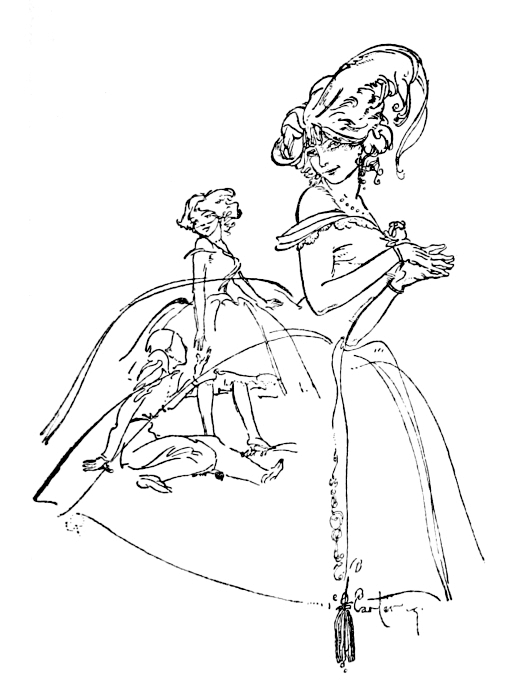
Colombine. They’re not silly. They’re fighting for me. Don’t you understand?
Dan’l. I fought about a girl once. But only once. It was a long time ago.
Colombine. You’re not romantic. Romance would die if it wasn’t for fighting. Romance is fighting.
Dan’l. Then I’ve had quite enough romance to please me.
Colombine. All properly constituted love affairs should include a fight. Love without fighting is insipid.
Dan’l. You don’t have to do the fighting. Which of ’em loves you the most?
Colombine. Why, Pierrot, of course.
Dan’l. Then why don’t you marry him?
Colombine. And disappoint Harlequin? I couldn’t do that.
Dan’l. When are you going to decide?
Colombine. I don’t know. [On her fingers.] This year, next year, some time, never. To-night perhaps.
Dan’l. One day they’ll get tired of fighting. What then?
Colombine. Never!
Dan’l. You’re sure of that?
Colombine. Oh, yes. Quite sure.
Dan’l. One of them may get killed.
Colombine. They wouldn’t be so careless.
Dan’l. What should you do if one of ’em got killed by accident?
Colombine. I should be very angry. But you’re very horrid to suggest such things. Why don’t you go away?
Dan’l. Good-bye.
Colombine. No, stay.
Dan’l. Well, I’m fond of a fight, I must say.
Colombine. Hush! They are coming. Quick, behind this tree.
Dan’l. Anywhere in the background’s good enough for me.
Colombine. A fight, a fight! And all for love of me.
[The orchestra plays quietly the Soldiers’ Chorus and snatches of other martial refrains. The two watchers betray tense excitement. Harlequin and Pierrot enter arm in arm. Any differences they may have had are evidently settled. Colombine looks on in astonishment.
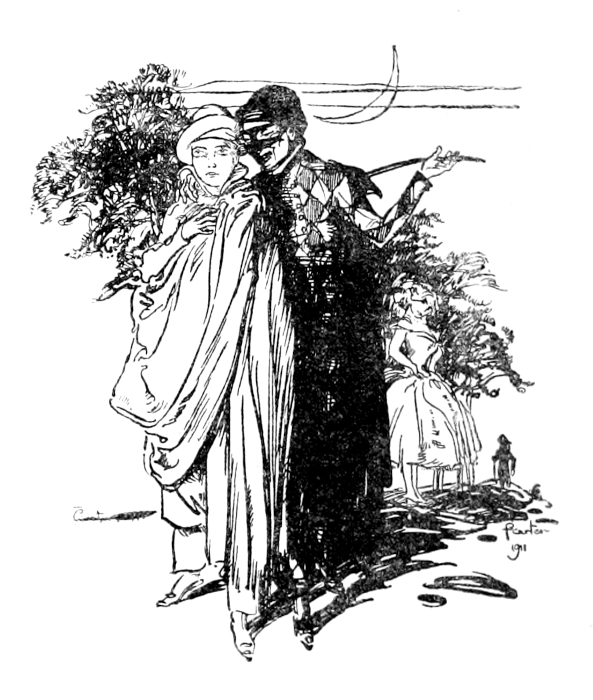
Harlequin. Mind you, as girls go, Colombine’s one of the best.
Pierrot. Ah yes.
Harlequin. But nothing to fight about.
Pierrot. [Without conviction.] No.
Harlequin. And fighting’s going out of fashion. There’s no doubt about that.
Pierrot. Yes.
Harlequin. The whole trend of modern thought is opposed to it.
Pierrot. Yes.
Harlequin. None of the best people do it.
Pierrot. I suppose not.
Harlequin. And one must be in the movement.
Pierrot. Of course.
Harlequin. Arbitration’s the thing nowadays.
Pierrot. What’s that?
Harlequin. Why, you each talk until you’re out of breath, and the one with most breath wins.
Pierrot. [Taking a deep breath.] That seems a good idea.
Harlequin. It is.
Pierrot. But what will Colombine say if we don’t fight? She loves to watch us fight.
Harlequin. My dear chap, we must be firm. Adopt your point of view, and stick to it in the face of all opposition.
Colombine. [Advancing.] Aren’t you going to fight? Pierrot. [Kindly.] Not to-night. Colombine. Oh! Why not? Harlequin. Well, we’ve got Other fish to fry, That’s why. Colombine. Oh! do fight! Pierrot. Not to-night.
Harlequin. Now, my dear girl, do listen to reason. You will admit, I suppose, that the most elementary point about a duel is to spit your opponent through the gizzard.
Colombine. Yes.
Harlequin. Well, I haven’t got a gizzard, and what’s the use of trying to spit a man’s gizzard, if he hasn’t got a gizzard to spit? You must be reasonable.
Colombine. How do you know you haven’t got a gizzard?
Harlequin. We don’t know for certain, we assume.
Pierrot. You’ve only to look at him to see there isn’t room.
Colombine. But why the gizzard? What does it matter where you spit him so long as you do spit him?
Harlequin. For heaven’s sake, my dear girl, don’t preach such revolutionary doctrines. There is a certain etiquette to be observed, even in a battle.
Colombine. [After a pause.] But it’s quite simple. You spit Pierrot. He’s got a gizzard, I suppose.
Harlequin. Now, listen. Pierrot consulted a phrenologist....
Pierrot. Soothsayer!
Harlequin. Sorry—soothsayer, who said he was born to be hung....
Pierrot. Hanged!
Harlequin. Hanged, and so of course, he doesn’t want to run the risk of disappointing him.
Colombine. Very considerate, I’m sure. I think you’re absolutely horrid, there. [Cries. Harlequin. [To Pierrot.] Don’t waver, both together. Harlequin and Pierrot. We don’t care Tuppence what you think or say, We talked the matter over, here to-day; And arbitration is the only way. Colombine. You’re frightened. Harlequin. Don’t be silly. Frightened! Me! Colombine. Well, who’s your arbitrator going to be? Harlequin. [Taken aback.] Why yes, we must have someone, I suppose. But who’s to do it? Pierrot. Goodness only knows! There’s not a single person within call. Colombine. [Clapping her hands.] Hurrah! You’ll have to fight, then, after all.
[There is a pause, during which Pierrot and Harlequin look at each other in dismay. Colombine on the other hand claps her hands and pirouettes round the stage. Then Harlequin sees Dan’l and drags him forward at the same time speaking in asides.
Harlequin. What’s your name? Dan’l. Much the same As it’s always bin, Week out, week in, This seventy year and more. Harlequin. Good! We want you to arbitrate. You’re the very man. Dan’l. Lawks-a-mussey. I’ll do it if I can. Harlequin. There’s much gold. Wealth untold! If you only do As I tell you to. Dan’l. Fire away!
Harlequin. Until to-day, Pierrot and I have been in the habit of engaging in mortal combat for the hand of Colombine. Owing to the fact that up to the present neither has had the decency to get killed, and as a result of the wave of anti-militarism that has swept over the country, we have decided to fall back on arbitration. And you are the arbitrator. You understand?
Dan’l. No! Harlequin. Then you’re very thick. Dan’l. You speaks too quick And the way you keeps hopping about makes me fair mazed. Harlequin. Now, listen. One of us is to marry Colombine, and you’ve to decide which it’s to be. Do you see? Dan’l. No. Harlequin. But it’s quite simple. Dan’l. Maybe. But how do I know which it’s to be? Harlequin. I’ll let you into a secret. It’s me! Dan’l. Oh! And if I goes and sez ’tis you, What’s yon chap in the white trousers going to do? Harlequin. Never mind him. He’s a fool. Dan’l. It seems it don’t much matter what I say; I’m bound to upset one of ye either way. Oh! very well. Harlequin. Colombine! Pierrot! Gather round.
[They sit in a semicircle; Colombine and Dan’l in the centre.
Dan’l. I shall catch my death of cold, sitting on this damp ground.
[There is silence, each waiting for the other to speak.
Colombine. You don’t seem very anxious, either of you.
Dan’l. Who goes first?
Harlequin. If I don’t say something, and quickly, I shall burst.
Dan’l. Then you’d best get started. [Aside.] How long will it take?
Harlequin. Until it’s ended.
Dan’l. Cut it short for goodness’ sake.
Harlequin. Colombine! Let me take you away
Colombine. No, Harlequin. The road to your Land of Yesterday is longer than you know, and there is no going back. Let us still take from the past our memories and our dreams, but do not ask for more, lest even these be denied.
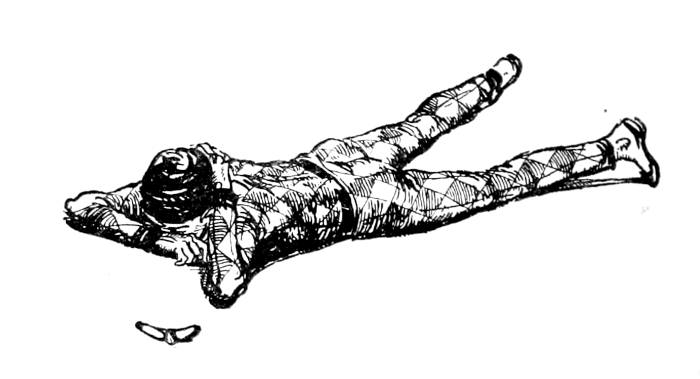
THE GATEWAY OF HAPPINESS
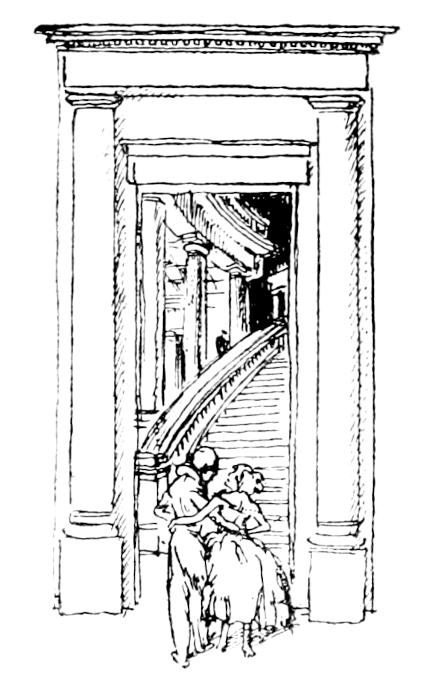
Harlequin. As you will. Then it is to the future that we must turn. Colombine, far from here, set in a desert of hot sand, is a crystal, so large, that all the giants of Africa could not stir it the thickness of a hair. Peering into its depths, you may read your future to
Colombine. You promise much, Harlequin. It may well be that in some spot remote from the haunts of men, the Mirror of Fate yet lies hid. And you may find it. Who knows! But this, at least, is certain; the path will be difficult and the journey long. Would you not tire by the way, Harlequin? I think you would. [Pause.] And, it is not in distant deserts I would seek. In the woods of home, hearts may thrill to the eloquent silences of the night. [Harlequin rises.] All the secrets of the world might be ours, did we but care to learn the simple language of the nightingale. Across the moonlight, the shadows of the branches trace unforgettable things. Great secrets tremble on the lips of the leaves, and mortals grope vainly in the daylight for things seen most plainly in the dark.
Dan’l. [Coughing to draw attention to himself.] I’ve allus noticed, in whatever parts I med ha’ bin, A maid in love have allus got a fairish yarn to spin. And in whatever parts I’ve bin, I’ve allus noticed too, The foolish lads do take it all for gospel, that um do. But though I’ve kept good notice in whatever parts I was, I’ve never heard a maid to spin a yarn like this un does. Ur be a marvel, that ur be; I hope as ur won’t try When ur’s tired of you two fellows here, to spin no yarns to I; For fools be mostly biggest fools when um be old and grey. And if I went along o’ she, what ud my missus say. Next man?
Colombine. Come, Pierrot!
Pierrot. [With an effort.] Colombine!
Colombine. Yes, Pierrot.
Harlequin. Go on!
Dan’l. Let’s hear what you’ve got to say, young fellow.
Pierrot. There is nothing to say.
Colombine. Nothing to say!
Pierrot. Save that I love you, Colombine.
Colombine. And is that so small a thing, Pierrot?
Pierrot. But I have nothing to offer you, nothing.
Colombine. [Softly.] Save yourself.
Harlequin. I have always said that Pierrot was master of sounding silences. The sweetest singer of unsung songs, his eloquent nothings go shrieking through the void. He scorns to desecrate the virgin purity of his foolscap with the written word. What love is that which dare not tell its love? Come, Colombine.
Colombine. See, Harlequin, here is a beech nut. You shake it, yet there is no sound. Is it full? Is it empty?
Harlequin. Who can say?
Dan’l. Likewise, young Nathan’l he picks up a match-box last week, and throws it away because there was no sound when he rattles en [To Harlequin.] And what do you think?
Harlequin. I couldn’t say.
Dan’l. It was so full all the time as not to rattle at all.
Harlequin. [Scornfully.] Matches! ye gods! Let’s talk of cucumbers, Or shame the glory of this summer night With tales of warming-pans. Has no one here a button-hook, With which to probe the vast unsounded deeps [To Dan’l.] Of thy poor addled brain. It yet may be, In some uncharted corner of the void That passes for thy mind, We find a collar-stud. Farewell! [Exit. Dan’l. Well, he won’t come back again, that I will be bound, And as I be catching my death of cold, sitting on this damp ground, I’d best be moving. [Rises.] Ugh! Good-night to ee. Pierrot. Good-night! Colombine. [Aside to Dan’l.] And, Mr. Arbitrator, if you see Your friend Nathan’l, say that Pierrot Owes more to him than he will ever know. [Exit Dan’l. Colombine. They have gone! Pierrot. Ah! Colombine. And the night draws on. Pierrot. Yes. Colombine. You are sad. Why are you sad, Pierrot? Pierrot. I cannot tell. Colombine. And you are cold. Is it the night air? Pierrot. The wind-swept wold Is a street of gold, So my lady be walking there.
Colombine. Yet you are sad. See, they have gone and will not come again.
Pierrot. So love may vanish too, And of his chain no link remain To tell the way he flew. Colombine. Love, as the skylark, soars into that Heaven where’t fain would be.
Pierrot. And singing still, returns. Time was when you, with Harlequin, would revel till the cold grey dawn came in.
Colombine. Light loves sometime were pleasant, but to-night the face of love seems changed. No more will stray this wandering heart of mine.
Pierrot. Are you not sorry, Colombine?
Colombine. Sorry for what, Pierrot?
Pierrot. For loss of Harlequin.
Colombine. Harlequin is very clever but he talks of what he does not know, and promises what is not
The heart is a little house, With windows facing southerly; By which a pathway winds. And there, behind the blinds, We sit and wait, Watching, waiting for what? We know not.
The garden is a pleasant place in summer, but when it is winter, we seek the fireside of the little house.
Pierrot. Yet you are fond of gardens and pretty flowers, Colombine?
Colombine. What flowers grow In your garden, Pierrot? Pierrot. My garden is full of the flowers, My mother planted for me; Curious, old-world flowers, Thyme, lavender, rosemary. Planted in days gone by. And, though no gardener I, As the shadows fall, I tend them all; Watering, pruning there. Am I happy in my lot? I know not.
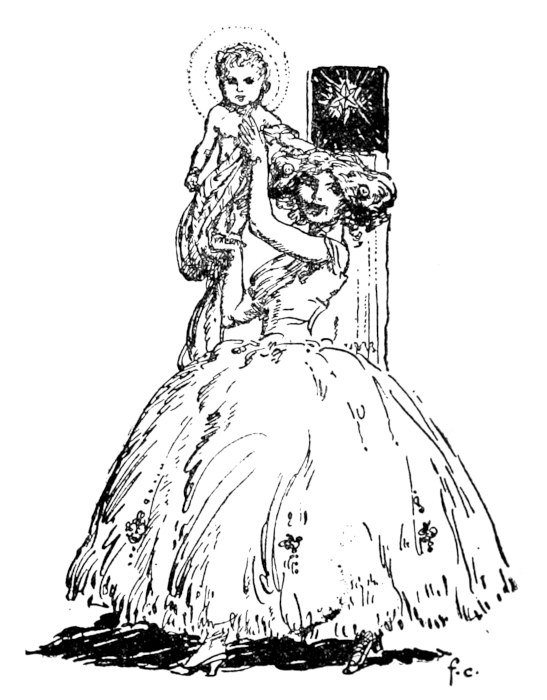
Colombine. And there is the little house, Pierrot. Pierrot. Ah, yes there is the little house. Do you remember when You peeped through the pane, and then Went on your way again? Out of my sight, although, I beckoned you as you passed, And sat at my window mournfully. But you came again at last. And, seeing you come, I said; “The flowers in my garden are dead, So will she have no more of me.” Colombine. I am knocking at the door, Pierrot. Knocking and waiting there, For the sound of a step on the stair. Will you open to me, Pierrot?
[Pierrot’s answer may be taken in the affirmative. As they sit together, it grows dark.
Pierrot. [Rising.] Come dear, and let us go, Together, hand in hand, Into that sun-lit land, Where life and love are things inseparable. Where, beneath cloudless skies, The happy are the wise, And none reprove the glory of a love they may not understand. [Exit together.
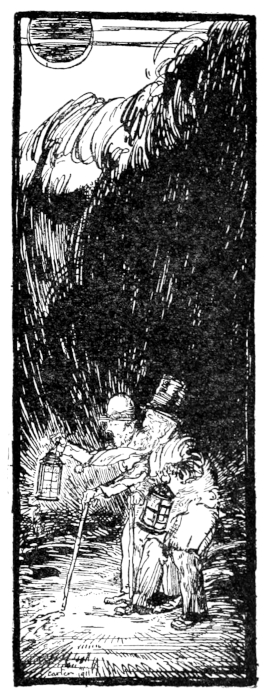
[It becomes quite dark: Dan’l and an Old Man pass slowly across the stage, carrying lanterns, and peering cautiously into the blackness of the night.
The Old Man. You was dreaming, Dan’l. That’s about the size of it.
Dan’l. And I tells ee I wur as wide awake as you be. Us had been sitting over-long by the clump, and all of a sudden I looks up and sees a fairy. “Lawks-a-mussey, Nathan’l,” I sez, “be I dreaming or be I cracked?”
[They pass off, and the curtain falls.
FINIS