POEMS
Reading edition
Si Gidders (1902)
There’s an old man named Si Gidders lives on Uncle Henry’s place, Jest a common farmer feller, that is all; Tall, an’ lean, an’ lank in figger, with an awful homely face, But as much as you could estimate of gall. Gidders has one wretched failin’, that of wonderin’ at things, An’ it takes most all his time to humor that, For it’s wonder, wonder, wonder till yer ear jest fairly rings, With the how, an’ who, an’ which, an’ where, an’ what. He will wonder why the sun don’t shine by night as well as day, An’ why all the leaves ain’t red instid o’ green; Why them brindled kind o’ chickens air the ones that allers lay, An’ why Johnny Smith ain’t fat instid o’ lean. He will wonder why the sky is blue an’ why it isn’t brown, An’ why twelve o’clock don’t come at early morn; He will wonder why things don’t fall up instid o’ fallin’ down, An’ why Seckel pears don’t grow on stalks of corn. He will wonder why Jim Perry’s hair ain’t black instid o’ red, An’ why summer don’t start in at Christmas time; Why it is that folks can’t never go to heaven till they’re dead, An’ why three times three ain’t ten instid o’ nine; Why don’t daisies bloom in winter, an’ why don’t we have no snow When the temperature’s a hundred in the shade; Why don’t tomcats never whistle, en why does a rooster crow When his mate has just informed him that she’s laid. So Si Gidders’ tongue is runnin’ an’ each new thing he may see Allers sets a wonder workin’ in his head, He will wonder what it is an’ how it ever came to be, An’ why it ain’t painted black instid o’ red. An’ I ’spect that when he dies an’ comes to heaven’s pearly gates That he won’t find time to step inside at all, For he’ll want to stop an’ wonder why they hain’t all made of tin, An’ nailed up with old shoeleather to the wall.
Hagar’s Song (1906)
Thou God of mercy, Thou who art To Abraham a sword and shield, Must I myself, an infant, yield Unto the desert’s burning heart? Have I been so undutiful That this death be my recompense, That Ishmael in his innocence Should die so young and beautiful? Is he so worthless in Thy sight, Is all that he might do and be So insignificant to Thee Who lovest justice, truth, and right? But though I crave Thy tenderness, No longer will I plead with Thee Whate’er Thy will so let it be. For even death can bring but rest. So not unto the burning sands Do I commend my dearest joy, My innocent, my precious boy, But into Thy most gracious hands. But I am like a wreck at sea; My throat is parched, my heart is sore; I sigh for rest, not that of yore. Do to me, Lord, as pleaseth Thee.
The Cry of a Human (1906)
When the cares of life are heavy and the world looks dark to me, When board is high and funds are running low, I can look back at the faces that I used to love to see— The faces of the balmy long ago. I can wander back along the brooks I loved when but a boy, When I didn’t have to mend my shirts and sew The buttons on I busted off, ah! those were days of Joy, When I lived, a careless laddie, in the happy long ago. Somehow, when my dinner’s heavy, then my heart gets heavy, too. And I long to see the cooky jar again. It isn’t any wonder that the world looks black and blue, When you owe at least a half dozen men. I am longing for the good old days when I could live care free, And when I was hungry I could just tiptoe Into the dark old pantry, and eat all that I could see, And only get my britches fanned in the happy long ago. Give me back the nice hot biscuit, give me back the fresh clean clothes, Give me back the swimmin’ hole and all its joys, Give me back the tenderness that a mother only knows Makes the very life and soul of sturdy boys. Give me back the apple-butter, and I’ll stir it till I die. Give me back the places that I used to know. Give me back the fresh fried sausage and the yellow pumpkin pie That I used to do the chores for in the happy long ago. The joy of being grown up has lost all its charm for me, Since my clothes are growing threadbare down the seams, And my Sunday hat needs darning, and my necktie seems to be Drawing near the murmur of Elysian streams. I am longing for the good old days, when life was new to me, And the parties where I used to love to go, The old-time apple cuttin’ and the jolly huskin’ bee, Where I used to swing the lassies in the happy long ago.
Child’s Prayer (1907)
Now I lay me down to sleep ’Mid the twilight’s gentle gloom, Soothing me to slumbers deep In my angel-guarded room, While the stars look tenderly Down upon the world and me. I pray the Lord my soul to keep While the shadows hover near. O, may angel pinions sweep Where an evil would appear, Angel footsteps softly press ’Round my bed in watchfulness. If I should die before I wake, And lightly leave my snowy bed, And wander out, my way to take Unto the side of Him who said Beside the lake of Galilee: “Forbid them not to come to me.” I pray the Lord my soul to take To walk with him ‘neath clearer skies Where only joyful souls awake, Where grander, sweeter songs arise, Through all the years to come, the same I humbly pray in Jesus’ name.
My Father’s House (1908)
Some times I see in quiet, thoughtful hours Adown the winding journey of the years, Beyond a valley full of faded flowers Whose petals still are wet with human tears, An open door that looms beside the way, And many weary pilgrims entering where A glad face waits to welcome them alway, And then I know my Father’s house is there. I care not whether it be built of gold, With pearly gates and shining sapphire walls, Or whether it be humble, low, and old, With footworn thresholds and with homely halls. I only ask that when my feet have pressed The journey through, and I have come alone Unto my Father’s house, that I may rest Among the loved and lost, and feel at home.
Hope (1909)
When every flower has shed its bloom Afar upon life’s changing ground, And in the chilling autumn gloom Their leaves are drifted all around. One blossom still will lift its eyes Unto the changeless summer skies. When life’s poor lyre has ceased to play, When faith and love no longer sing, Still through the shades of closing day Will tremble one unbroken string To make life’s music still ascend In harmony unto the end. Oh, flower of hope with deathless hue, Oh, song of hope, unsilenced still, Beyond the vast, eternal blue Ye shine and echo on until The journey’s ended and the way Leads into God’s eternal day.
The King (1909)
When the King came He was so like His own, they knew Him not; And cast in ways of poverty His lot. There was no blazoned heraldry of fame When the King came. When the King died Not many wept. The memory of His years Did not bring many blossoms dewed with tears Unto the new tomb in the mountainside, When the King died. When the King rose ’Twas not to go to some far distant land, Nor yet to dwell within a palace grand, ’Twas to the palace of the hearts of men He rose again.
Battle Hymn (1914)
The world has seen from age to age Two marshaled hosts upon the plain Each other in a war engage, And strew the years with heroes slain; And though they seem at times to fail, The hosts of God shall still prevail. Between the hosts of right and wrong The conflict long has raged afield. It still must rage, however long, Till one shall see the other yield. But, though a countless horde assail, The hosts of God shall still prevail. The days of blood are in the past, And gone the conflict of the sword. Unseen the lines of war are cast Against the armies of the Lord. But, though their words be fiery hail, The hosts of God shall still prevail. By night and day the conflict goes, Unheard, unseen, but great and real; And back and forth God’s friends and foes Contend for this world’s woe or weal. Fear not their weapons nor their mail, For we shall see God’s hosts prevail. Hearts, lose not courage. Brains, take fire, And grow not listless in the fight. The arms of God shall never tire, And nothing can withstand His might. What though at times our banners trail In dust, our God shall still prevail. The world shall know the ways of God. The nations all shall walk in peace. Wherever human foot has trod, The sway of selfishness shall cease. No more shall horse and rider pale Go forth, when God’s hosts shall prevail. Beneath serene and peaceful skies, And from an earth without a stain, Redemption’s anthem shall arise Throughout the years, for God shall reign. His cause shall not forever fail, For, soon or late, He shall prevail.
Song of the Dove (1914)
ODOVE, whom do you woo With your soft and gentle coo In the freshness of the morning ’mid the sunlight and the dew? When the first Spring flow’rs are fair And your voice floats everywhere On the bosom of the palpitating air? O dove, how glad the note That echoes from your throat When the lazy clouds like castles of the sunny islands float In the azure Summer sky, Ah, let your joy run high, For the dreary Winter’s coming by and by. O dove, how sad the tone As you sit and grieve alone In the gathering of the twilight, in your sad, sweet monotone, With the Autumn hillsides gray Stretching far—so far away, But the joys of Spring and Summer gone for aye.
The Gateway of the Kingdom (1915)
THE gateway of the Kingdom It bendeth very low, Within the reach of every place Where common people go. ’Tis grand, but grandly simple. ’Tis great, yet very small, Though wide enough that ever There’s passage-way for all. The gateway of the Kingdom Is not of common gold. Its pearl is far more precious Than earthly realm can hold. It has no rusty hinges. No marble steps are piled. The gateway of the Kingdom Is the spirit of a child.
Magi and Shepherd (1915)
There’s a Babe within the manger. Humble men are on the hills. Where the sheep are safely folded, there the silver moonlight spills. There’s a rift across the heavens. There’s a light along the sky. There’s a glory in the valley. There’s an angel song on high. There’s a Babe within the manger. On the hills are humble men. “Peace on earth,” rings forth the chorus, and their hearts respond, “Amen!” There’s a Babe within the manger. There’s a star that shines above. ’Tis a star of age-long promise. ’Tis the morning star of love. There are wise men. They are kneeling. They have brought their tribute there— Gold, and frankincense, and myrrh. Behold the majesty they wear. There are wise men. They are kneeling. Wisdom comes upon its knees. In its simple recognition of the birth and reign of peace. Humble men are on the hillsides, men of wisdom in the stall Where the new-born King of Glory deigns to find His earthly all. High and low have met together. There before a common shrine Rich and poor, unlearned and lettered, each has found the King Divine. Christ is Lord of humble peasant. He is Lord of royal son. At His feet all men are equal. In His way all men are one.
The Open Tomb (1915)
A thousand gates Lead to the grave; and through the weary years The race of men, through bitter, blinding tears, Have seen the forms they loved most enter there Where ever waits An open road on which all feet must fare. One only gate Leads from the grave; one portal outward swings. ’Tis one alike for peasants and for kings. Beside it lies a stone that’s rolled away; And, soon or late, God’s people shall fare forth into the day. O, Mighty One, We praise thee that when we have finished all The day’s full hours will hold, and night shall fall That we may see, although we die upon A bed of stone, One door that opens outward on the dawn.
A Price Unpaid (1915)
Upon one battlefield is writ in blood The story of more woe than all the years Can wash away, e’en with the cleansing flood Of centuries of peace. Blind, sickening tears Are caused to flow that never mailed hand Will seek to dry. There glassy grows the eye Of him who looked with joy upon the land, Rich now with death’s ripe harvest. One weak sigh, Then fades the sky, the fields, and all—and then The awful silence which alone will say To those at home, he died, but how or when Remains a secret of the bloody day. What logic is there that can justify The wasting harvest field, the empty home, The blank despair that comes at last to lie On faces left to fare their way alone, Widowed and orphaned—and for naught but this— To keep a royal throne from tottering down, To hold a mile of boundary where it is, To save a scepter, or preserve a crown?
Two Princes (1915)
The War Lord dwells within his palace walls In all the bright insignia of power; He gives the word by which a city falls, Or ships go thundering through Death’s awful hour. The Prince of Peace knew not an earthly throne, Had not one resting place to call his own. The War Lord in the pomp of place doth ride Across the borders of the blood-drenched land. On splendid charger, strong and fiery-eyed In every place he keeps a presence grand. The Prince of Peace knew but a humble seat And walked the earth with weary, dusty feet. The War Lord hears the plaudits of the crowd. Unnumbered men would perish for his name. To keep his royal robes they wear a shroud, And bleed to save him from an hour of shame. The Prince of Peace with thorns upon his head, Unfriended, through the hard-eyed crowd was led. The while the War Lord speaks the myriad waits, And at his word it cannot choose but die. His armored hand is laid upon the gates Of life and death. What matter reasons why? In one dark hour of loving agony The Prince of Peace expired upon a tree.
The Voices of God (1915)
A thousand voices speak of God. The gayest flower, the meanest clod, The highest hill, the deepest sea Proclaim his messages to me. I read his story in the Book. I hear it in the babbling brook; ’Tis written all across the sky, And in the silent majesty Of mountains, lifting from the land. A note of his undying word Is in the song of every bird, And but to-day my Saviour smiled From out the features of a child.
The Wealth of Cheer (1915)
What’s the use of weeping When the day goes wrong? Better to be keeping Pace with mirth and song. December is December, But May is always May, And shine and shade, remember, Will each come in its day. Gloom’s an old, old story, As ancient as the earth. And men with heads now hoary Have measured out its worth. They speak with one opinion That, not in gloom and mists, But in sunshine’s dominion The wealth of men consists.
True Values (1916)
One day an angel came and asked a king, Sated with power, with love of pomp and gold, Four things that God must dearly love, to bring And set them in his presence, so ’tis told. The king went forth and came again ere night, And set before the angel in that hour A jewelled crown, a scepter gleaming bright, A battle weapon, and a throne of power. The angel’s face grew shaded as he gazed Upon the king’s poor playthings gathered there. At last again his countenance was raised. He said: “These are the trappings pride may wear, But God’s great kingdom knows a richer worth: A truer value is its high concern.” “Go”, pled the king, “and from the mighty earth Bring me those things. I wait for thy return.” “Nay, come with me”, the angel said, “and I, Though I may lead a long and weary way, Will show you what is best beneath the sky.” These are the things he showed the king that day: A kindly life that served unselfishly, A flower that grew in sweetness undefiled, A fireside where were love and purity, The unspoiled spirit of a little child.
Pictures (1918)
The days are pictures, and they pass As comes and goes some mirage sheen, As fireflies in the tangled grass, Or shadows thrown upon the screen. Pictures they are of love and care; Pictures of toil and happiness; Of mighty men, of ladies fair— Incarnate strength and gentleness; Pictures of battle and the night That touches woe with cooling breath; Of calm years following the fight, When blossoms deck the fields of death; Pictures of paths that wind, and meet Where Fate’s decrees have willed it so, Or where erstwhile companion feet Are led in separate ways to go. The days are pictures, and they run Their hastening course of smiles and tears. As shadows flit ’twixt sun and sun, So pass the ever-dying years.
When the Curtain Falls (1918)
When the end is reached, and the curtain falls, And the echoes die from the voiceless walls, This is the thing that alone will tell: The actor’s part—has he played it well? A few swift scenes and the course is run; A few brief facts and the play is done. May it be well when the far voice calls, And the lights go out, and the curtain falls.
The World’s Drama (1918)
The world’s a screen. Across it flit the shadows Of all the multitudes that come and go. They move in dusty lanes, o’er sunny meadows, And where the hand of toil moves to and fro. There is the mourner and the long procession; There is the maid with joy of which to sing; There is the warrior, with his blood-possession; There is the shade of some forgotten king. Soon is each gone. Soon yonder in the distance Each comes amid the mists to disappear, Where dying light falls on his face or glistens For one brief moment on his helm or spear. Yet as each goes another is approaching. A multitude is shadowed on ahead; So moves the line, forevermore encroaching Upon the borders of the silent dead. Thus goes the drama, each his fond part playing, For what he plays to him is all in all— Striving, pursuing, loving, toiling, praying, Until the darkness overshadows all.

Jim (1919)
A chicken-hearted boy was Jim, A lad with a gentle face and eye. The boys all joined in a laugh at him Whenever he chanced to be passing by. He wouldn’t set foot on a helpless thing. For a crawling worm he’d turn aside. He was always making a splint or sling For some wounded creature that else had died. Well, Jim grew up, and the war came on. Justice and right in the dust lay low. One day they noticed that Jim was gone, And wondered if he could face the foe. It was said that no braver soldier fought In all the marshaled ranks than Jim; From many battles he finally brought The name of a hero home with him. We looked to see a steely eye And a hardened face from his soldier ways, But the same old lad came marching by With the gentle eyes of his boyhood days. He had heard the voices of battle ring; He had faced the peril from death’s grim shore; But to-day he treads on no helpless thing, Though they call him chicken-heart no more.
Let Us Be Right (1919)
Let us be right, though all the world may follow The broken fabric of some failing dream. As sounds upon our ears its outcry hollow, And men lose all for some deceiving scheme, Let us forsake the gold and tinsel masking, And live for things enduring and secure. Whate’er the prize the idle crowd is asking, Let us be right. The path of truth is sure. Let us be right, whatever seem our losing, Some day the tide will turn, and men will know The thing abiding. Then the common choosing Will be the substance, not the empty show. Let us be right. When self’s poor plans are shattered And all the castles lifted mountain high By evil hand, are broken down and shattered, The right shall stand beneath the mighty sky.
Light and Shadow (1919)
ABIT of sunshine and a bit of shadow, And each succeeds the other on the screen. They chase each other over hill and meadow, Alternate triumph through each act and scene. The smile and tear has each in turn its season, The right and wrong their coronation day, And foolishness contends for place with reason —such is a play. A bit of gladness and a bit of sighing, A warm sun’s beaming and the cloudland’s chill Each comes and goes the while the day is dying From western hill to farther western hill. So runs the tale as passing years grow hoary; So will it be forever and for aye. A bit of sorrow and a touch of glory —such is a day.
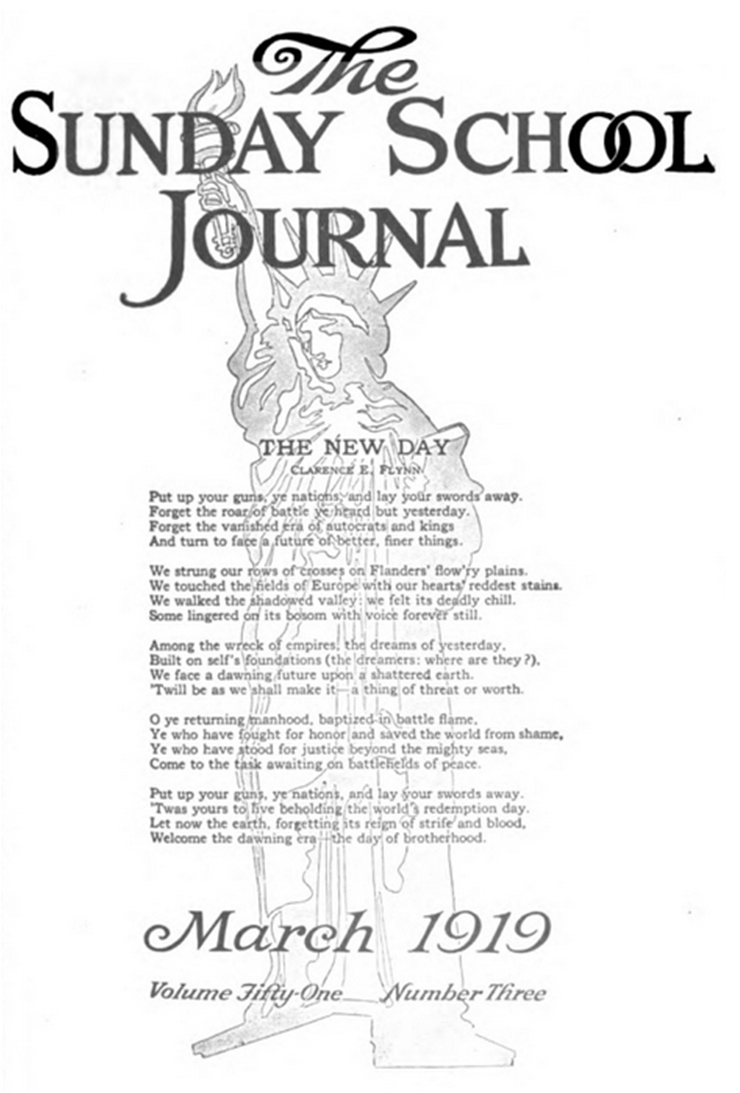
The New Day (1919)
Put up your guns, ye nations, and lay your swords away. Forget the roar of battle ye heard but yesterday. Forget the vanished era of autocrats and kings And turn to face a future of better, finer things. We strung our rows of crosses on Flanders’ flow’ry plains. We touched the fields of Europe with our hearts’ reddest stains. We walked the shadowed valley: we felt its deadly chill. Some lingered on its bosom with voice forever still. Among the wreck of empires, the dreams of yesterday. Built on self’s foundations (the dreamers: where are they?). We face a dawning future upon a shattered earth. ’Twill be as we shall make it—a thing of threat or worth. O ye returning manhood, baptized in battle flame, Ye who have fought for honor and saved the world from shame, Ye who have stood for justice beyond the mighty seas, Come to the task awaiting on battlefields of peace. Put up your guns, ye nations, and lay your swords away. ’Twas yours to live beholding the world’s redemption day. Let now the earth, forgetting its reign of strife and blood, Welcome the dawning era—the day of brotherhood.
The New Year (1919)
Each New Year day Time cuts the thread That binds us to the vanished past. Its tears, and cares, and pangs are fled. Its woes are gone, its troubles dead, And we are free at last. It is the road ahead we scan Whene’er the year is new. Again we gird our hearts, and plan For better days. We hope again In things secure and true. Thanks for the hand that steals away The cares of moments sped. Thanks for the years we leave today, But more for all that seems to say: “’Tis better on ahead.”
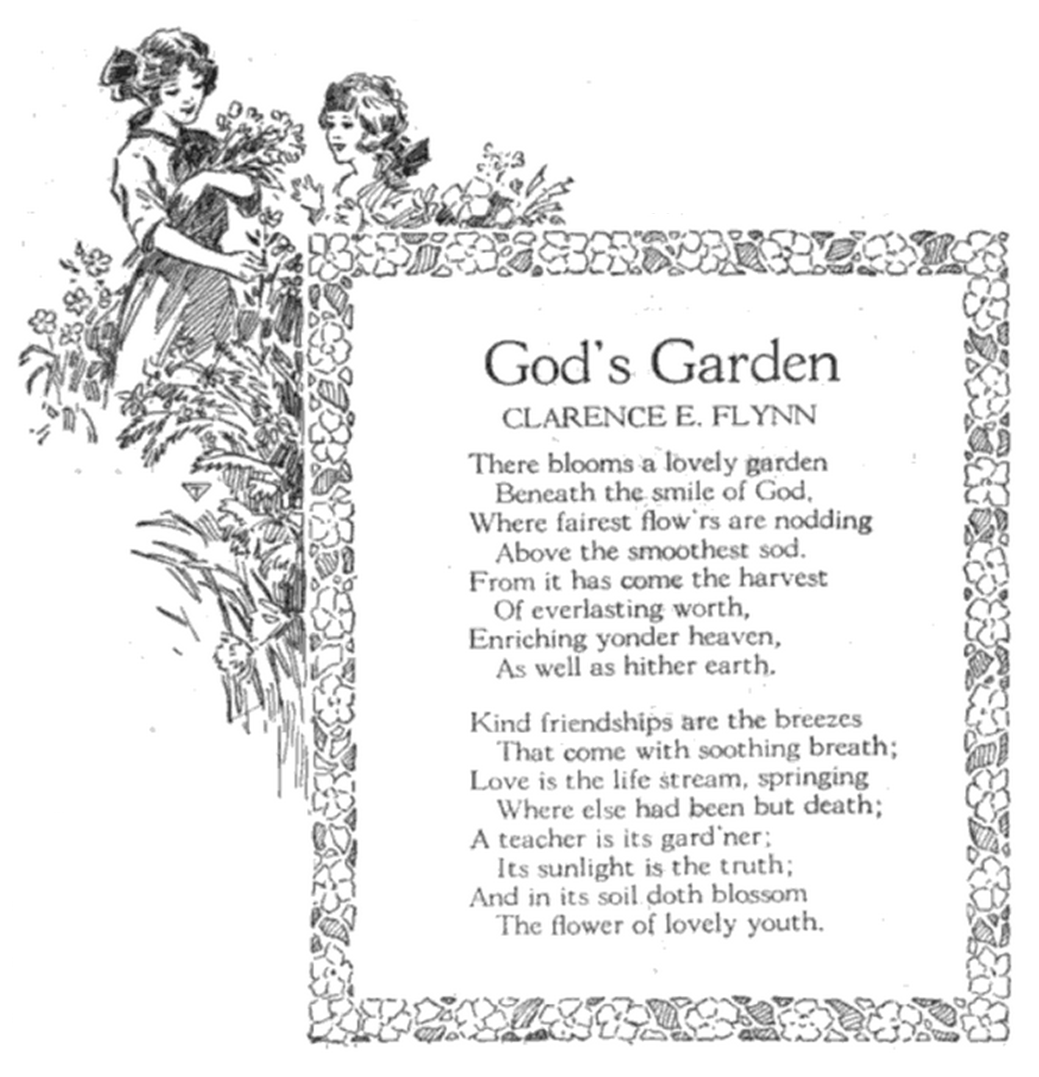
God’s Garden (1920)
There blooms a lovely garden Beneath the smile of God, Where fairest flow’rs are nodding Above the smoothest sod. From it has come the harvest Of everlasting worth, Enriching yonder heaven, As well as hither earth. Kind friendships are the breezes That come with soothing breath; Love is the life stream, springing Where else had been but death; A teacher is its gard’ner; Its sunlight is the truth; And in its soil doth blossom The flower of lovely youth.
The Open Soul (1920)
There is a way That leads to some rich joy in every day, To where through immemorial ages gone Calm Peace has sat upon her regal throne. There is a road to joy’s supremest goal, But pilgrims say It is discerned but by the open soul. There is a song That has the power to scatter courage strong Through all the moments of the busy day, And blunt the thorns along the weary way. Its music always lessens sorrow’s toll, Though suffered long. It is no secret to the open soul. There is a gleam That lights with loveliness the hill and stream, Blesses the days with hours supremely rare, And threads a line of gladness through each care. Before it all the shadows swiftly roll From fettered beam. It breaks like morning on the open soul.
The Outcome (1920)
Life’s always at its best upon the screen. It is not perfect. Life is never so. There runs a struggle thru each shifting scene, And shadows often come, their pall to throw Across the landscape. Things go wrong a while. But always comes at last the shine’s glow, And gloom is followed by the song and smile. In every drama wrong must have its reign, In every tale the villain has his day; Gladness we see, contrasting it with pain, And truth is valued but by error’s sway. The right and wrong are alternate in power, The scene is now in sun, now shadow cast, But tho the wrong may triumph for an hour, The right is seated on the throne at last.
The Silent Drama (1920)
Out of the silence often comes A voice that breaks the stillness deep, And with an eloquence unheard Calls hidden mem’ries from their sleep. It carries power unknown to speech; It speaks directly to the heart, Grown thoughtful in the silences. Such is the screen’s appealing art. It calls the strong to lost resolve. It thrills the weak to better things, It touches sleeping hopes to life And in the songless heart it sings. It opens scenes of loveliness For eyes long used to barren spot, This sacred silence that is heard Where thought is all and voice is not.
A Trouble Making World (1920)
There’s a word that keeps us from the best of things, Making some men peasants, making others kings, Making all to sorrow, forcing some to die, For uncounted sorrows the one reason why. There’s a word begetting bitterness and strife, Evermore beclouding all the sky of life, Driving men to battle when they ought to be Linked in soul together by fraternity. There’s a word that enters in the holy place, Writes its tale of trouble on the fairest face; Makes of life a struggle, fraught with grasping greed, When its years were given for high thought and deed. There’s a word that robs us of the happy song; Makes the earth a treadmill, elevates the strong; Drives the weak from justice; grinds the poor and worn; Fills the years with hatred; seeds the world with scorn. There’s a word absorbing manhood’s fruitful hour, Careless of life’s meaning, prodigal of power, Making regal spirits satisfied with pelf, It is short but powerful, and its name is self.
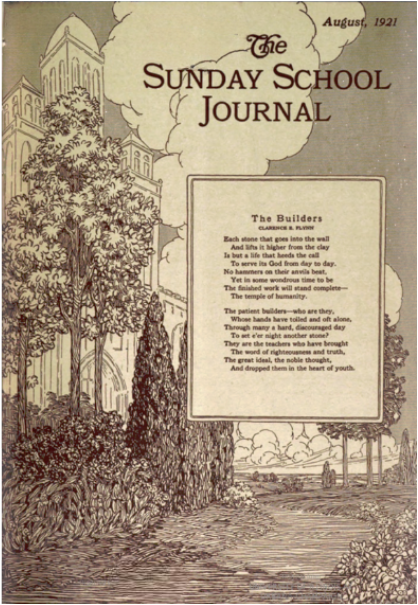
The Builders (1921)
Each stone that goes into the wall And lifts it higher from the clay Is but a life that heeds the call To serve its God from day to day. No hammers on their anvils beat, Yet in some wondrous time to be The finished work will stand complete— The temple of humanity. The patient builders—who are they, Whose hands have toiled and oft alone, Through many a hard, discouraged day To set e’er night another stone? They are the teachers who have brought The word of righteousness and truth, The great ideal, the noble thought, And dropped them in the heart of youth.
The Children v1921
WHEN two gray-haired old parents meet In quiet home or busy street, The talk will run in formal style On formal things a little while. Then, following a silent spell: “The children, are they doing well?” Then faded eyes grow quickly bright. Worn features take a sudden light, As they recount with pride and joy The story of each girl and boy. How these old parents love to tell That every child is doing well! The great All-Father up above, I often think, in words of love Recounts each vict’ry and success, Joys in His children’s happiness. I think He, too, delights to tell That all His own are doing well.
Climaxes v1921
One climax comes in every play, And only one; And after it has had its day The struggle’s won. Untangled is each vagrant thread; Sad hearts to happiness are led; And, with the days all fair ahead, The play is done. One climax comes in every life, And only one— The apex of our human strife, The race we run. Then woes are banished; tears are dried; Our answered questions put aside; Life’s dearest hope is satisfied; Then life is done.
Home v1921
The joy that some hearts treasure, the hope that others prize; The wistful wish that, buried deep, sometimes in others lies; A word so dear that men will die with gladness for its sake; The forge at which are welded strong the ties that naught can break; A garden in the wildest waste of this world’s desert life; A spot where dwell both peace and calm amid the fiercest strife; A refuge from each storm that beats; the place in all the land Where there are souls who sympathize and hearts that understand; The rock whereon the anchors hold that keep us safe and fast When else would perish all we are and have amid the blast; The shrine before whose holy light does fondest worship come; The choicest ideal of the heart—its sacred name is HOME.
The Magic Gateway (1921)
I turned the cover of a book, And found it was a gate Into a field where one might look, Unwearied, soon and late. The dreams of every land and sea Were all about me there. Kind spirits came and talked with me, And flowers bloomed everywhere. I saw the years that long had sped, The wondrous scenes of yore. The mighty past gave up its dead, They lived and spoke once more. The greatest minds that ever thought, And hearts that ever beat, Came, and their richest treasures brought To lay them at my feet.
Shadows v1921
We are moving shadows cast On the world’s great picture screen; Shadows in a drama vast, Filled with varied act and scene. Shadows flitting in the sun Like the bees among the flowers; Shadows hast’ning one by one Down the course of passing hours. Shadows in the sunny space; Shadows on the tangled grass; Shadows on the river’s face; Shadows in the winds that pass. Shadows playing in the lane; Shadows fighting battles brave; Shadows walking ways of pain; Shadows falling in the grave. Shadows moving in the grove, Falling on the summer lawn. On and off the screen they move, But the play goes ever on.
The Sunbeam and the Shadow (1921)
The sunbeam and the shadow Are met upon the screen. Each mingles in the making Of yonder lovely scene. If all were only shadow, A leaden cloud would pall. If it were only sunshine, ’Twould be no scene at all. In life are intermingled The sunshine and the rain. In each day strangely blended Are happiness and pain. Where’er is told life’s story, However grave or fair, The sunshine and the shadow Succeed each other there.
The Teacher v1921
WHO shapes a mind doth shape the years That are to be, the joys and tears Of those unborn. He lays his hand Upon the future of the land And turns by thought’s resistless force The stream of hist’ry in its course. Who shapes a life, its hopes, its worth, Doth shape the future of the earth. His is a sculptor hand, to mold The periods as they unfold. His hand is laid upon the rod That speeds the purposes of God.
After-Images (1922)
The lights go low, the organ swells, And pours its rhythm everywhere— Now thunder, now the ring of bells, Sounding at twilight o’er the dells, Now but a whisper in the air. The whisper and the thunder loud Are both reflected on the crowd. The pictures come, and pass away, As morn departs or evening stills. Ambition fights its fevered fray. The wrong and right have each their day. Love walks with love upon the hills Life’s long procession there appears. And hurries onward thru the years. The music dies. The crowds depart. Each goes his way, pursues his aim; But something in the thing of art Has left a mark upon his heart. Somehow the world is not the same. The music and the scenes so fair Have left their after-imagine there.
Almost (1922)
The fish we almost captured, The race we almost won, The task we almost finished Before the day was done. The plan almost accomplished, The dream almost come true— These bring but little comfort Or help to me and you. Near heroes win no laurels; Near victories are cheap; And near achievements bring us No crowns we care to keep. To come but near is failure. A miss is like a mile. The word “almost” can rob us Of all that is worth while.
Along the Road (1922)
The folks we meet along the road, They are a varied throng— A pilgrim struggling with his load; The singer of the song; A youth with bright, expectant gaze, His face with hope alight; An old man bowed with many days, And stumbling toward the night. The rich, the poor, the high, the low; The faithless and the true; The face of joy, the form of woe, All pass in grand review We meet, and see their forms no more; But when the eve is gray The sweetest thought we ponder o’er Is whom we’ve helped today.
Compensation (1922)
For everything that happens wrong A dozen things go right. For every tear a flood of song Rings out across the night. For every dark and stormy day A week of days are fair. However chill the clouds and gray, ’Tis always bright somewhere. For every heart of bitterness A host of hearts are light. For every hour of deep distress A whole long day is bright. For every faithless friend we find That many friends are true. So, after all, God’s mighty kind To such as me and you.
A Creed (1922)
IDO believe That, while in this old world few things are sure, Right, truth, and love forevermore endure; That these are ’mongst the things most worth our while —A song, a smile, The wiping of a tear from eyes that grieve. I do believe That in the day of famine or of feast That one is richest who has sought the least; That, spite of all earth’s woes, and tears, and pains, Love is, and reigns; And sunshine through the ages Time doth weave. I do believe God plants some seeds of gladness in each day, And smiles on children happy at their play; That living men, though paupers, churls, or slaves, Are more than graves To which the grass and mosses damply cleave.
The Engineer (1922)
IMUST not be a minute late, Nor yet too hasty be. I have a load of human freight Depending upon me. I know that loving eyes tonight Are all along the line, Waiting to see them each alight— These passengers of mine. When at the finish of my run I reach the hour of rest I want to think on what I’ve done, And know it was my best. Of hearts that never felt a fear I want to dream tonight, Hearts that were sure the engineer Would bring them through all right.
The Flag at Sea (1922)
Have you ever felt a craving On the vastness of the sea, To behold the silken waving Of the banner of the free? Have you searched with tired precision, Far from where the land unbars, For a passing moment’s vision Of the flag of stripes and stars? Does it thrill you to remember When it stood against the sky, How your heart was like an ember And a tear was in your eye? How the old flag thrilled your spirit, How it made you feel at home, When your ship that day sailed near it On the wideness of the foam?
The Gift of the Farm (1922)
We thank you, old farm, forever For the gift you have freely made To the world and its hard endeavor, Of the boys and the girls who played On your beautiful hills and meadows, Who digged in your kindly soil And who learned in your sun and shadows The lesson of honest toil. We thank you for hands so ready Their manifold tasks to do, For minds that are keen and steady, For hearts that are strong and true, For people of lowly station, For those who have won renown, For the best who have served the nation In the country and the town.
The Gifts of the Church (1922)
The dearest friends that life has known In any time or place Were made before the wondrous throne Of mercy and of grace. The bonds of brotherhood were wrought In high communion there Where we have walked with God in thought, And bowed in common prayer. The sweetest mem’ries of the years, The joys most keen and true, The kindest words that blessed our ears The sanctuary knew. The highest peaks our hearts have scaled, The fairest roads we trod, The hours by which all others paled Were in the house of God.
God of To-Day (1922)
OUR THANKS are thine, O Mighty One, that thou has safely led Our fathers through the grim and trying past And made a way for us in days now dead. Our gratitude before thy throne we cast, That hands divine Have kept our feet and ordered all our ways, God of the yesterdays. We thank thee, too, For that blest hope we treasure fond and deep— The hope our worn hearts lean so heavy on— That somewhere in time’s mighty onward sweep The day of God and righteousness shall dawn Serene and true. For all of this we bring our thanks to thee, God of the years to be. But most of all We thank thee for the golden fruitfulness Of fields now rich with grain or bright with flowers, For grace and pardon, joy and blessedness, And every good that even now is ours. And so we call In confidence that thou dost bless our way, God of this present day.
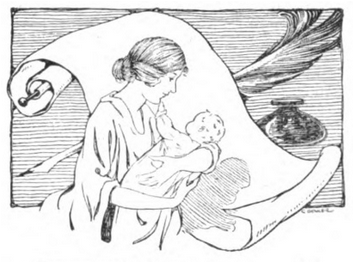
The Heart of a Child Is a Scroll (1922)
THE HEART of a child is a scroll, A page that is lovely and white; And to it, as fleeting years roll, Come hands with a story to write— A story of laughter and mirth, A story of sorrow and tears, Of love that encircles the earth, Or sin that embitters the years. Be ever so careful, O hand; Write thou with a sanctified pen. Thy story shall live in the land For years in the doings of men. It shall echo in circles of light, Or lead to the death of a soul. Grave here but a message of right, For the heart of a child is a scroll.
His Epitaph (1922)
HE wasn’t rich; he wasn’t great, His place was lowly and obscure. His clothing was not up-to-date, His house was tumble-down and poor. No honor did he claim. He never walked with lords and kings. No glory has illumed his name, But he was kind to helpless things. He won no victories to boast. He made no conquests, waged no strife. He never led a conquering host; He lived an unpretentious life. But, when is writ the judgment scroll, And Time its final verdict brings, This will be said of him: his soul Was rich in love for helpless things.
The Lens (1922)
Here is a little piece of glass Set in a tube of shining brass. Through it had passed in grand review All that the world’s heart ever knew Of joy, hope, sorrow, love and fears, The ceaseless struggle of the years, The darkest schemes the evil know, The noblest service men can show. Through it the risen dead have walked, The spectres of the past have stalked. Hope realized has lingered there, Likewise the shape of dark despair. This bit of glass is seasoned well, For human tongue could never tell The half it knows of peace and strife, And all that makes the old world’s life.
The Magic of the Screen (1922)
WE look down summer lanes on winter days, We see the snow amid the summer’s heat. Far lands are brought and laid before our gaze. The woodland stream runs by the city street. The light of noonday breaks the shades of night, And then is softened to the starlight’s sheen. The dawn and twilight mingle in our sight, Such is the fairy magic of the screen. THE heavy-hearted slip away from tears And find the gladness of a fleeting hour In fairer spaces and more peaceful years, Where is no dearth of laughter, sun, and flower. Youth sees the future. Age with faded eye Looks back in joy on many a vanished scene, And walks again among the days gone by. Such is the fairy magic of the Screen.
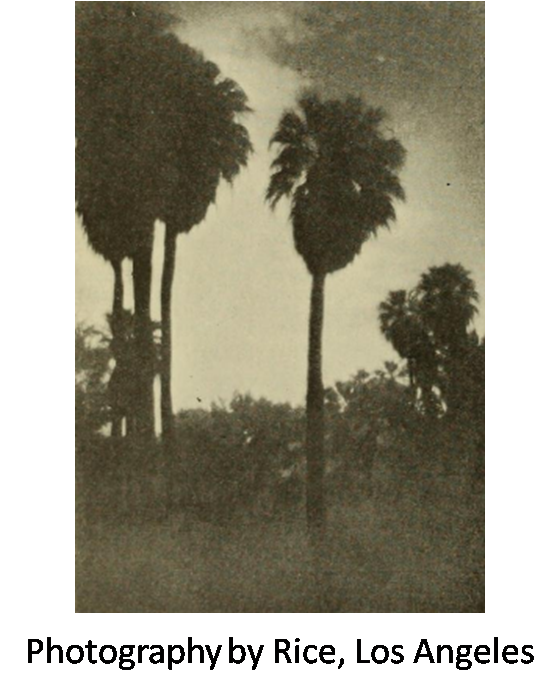
The Making of Heaven (1922)
GOD took the paths we longed in vain to go, And built a golden street beside a river. He took the gates Time closed to us below, And built a portal that shall stand forever. He took the longings that were vague and dim, And hedged about by human limitation; And built a world without a scar or rim To be our everlasting habitation. He took the bitter pangs that life has cost; Transformed them into joy, and song, and wonder. He took the treasured blessings we have lost, And planted them beside the waters yonder. He took our thoughts of hills, and woods, and streams; And made them real, with added beauty given. He took the shattered fragments of our dreams, And built a city fair, and called it Heaven.
The Man Who Knows (1922)
We owe our debt to the man who thinks, For he leads our minds afar Till they stand and tremble on the brinks Of the strangest things that are. We owe our debt to the man who hopes, For he keeps our courage strong. He speaks his cheer to the soul that gropes, And it wakens into song. And here’s to the man whose soul believes, In whose heart convictions burn Through the day of life, and who dying leaves Them to others in their turn. But the old world’s mighty tasks are planned And done, as it onward goes, By the balanced mind and the steady hand That belong to the man who knows.
The Marine (1922)
He has made a hundred harbors. He has sailed the seven seas. He has trod the Arctic ice fields. He has felt the tropic breeze. He has dwelt in peaceful cities. He has taken shade and sun— He has never hunted trouble Nor from trouble ever run. Grim and rugged are his features, Brown his arms and hard his hands; Yet his eyes are frank and winsome, With a boyish air he stands. Readiest of all our fighters, True his aim, and dread his gun— He has never hunted trouble Nor from trouble ever run.
The Measure of Life (1922)
Not what I get, but what I give As days go fleeting past. Not how I feel, but how I live Must tell the tale at last. Not what I have, but what I do, The loads I bear, the paths I hew Through forests no man ever knew, The highways that I cast. Not the advantage that I take But give amid the strife. The service for some others’ sake Where selfishness is rife. The effort that I make to bless My time and fellows with success, And brotherhood, and happiness, Measures this little life.
Monuments (1922)
Sometimes the angels go searching For the graves of the sons of God. They traverse the reaching mountains, The sea, and the rolling sod. They never on earth would find them By the marks we so long have known, For they never stop to decipher Our records in bronze and stone. They find the graves of God’s children By the monuments builded fair Through years of struggle and toiling By the hands that are buried there Or words that were fitly spoken, Of service devoted, true. We mortals may never see them, But God’s messengers always do.
My Riches (1922)
In no triumphal line I ride, No praise falls on my ears; But I’ve a flag that waves in pride, Above me through the years. A flag whose folds are dear to me, Whose glory I confess— The symbol of my liberty, And peace, and happiness. Little of riches have I known, Little perhaps deserve; But I’ve a land to call my own, A people I can serve. A country that’s as broad and fair, As any on the ball; With happy people everywhere— An equal chance for all.
A Parents’ Prayer v1922
God bless our little ones tonight, Our little ones—and thine. Protect their slumber by thy might. Grant them thy peace divine. Help us no duty to forget We owe to them or thee, And leave us nothing to regret In years that are to be. God, bless our little ones tonight, Our little ones—and thine. Help us to rear them true, and right, And clean, and strong, and fine. Lead them in ways more beautiful Than we have ever seen, And make them each more dutiful Than we have ever been.
Patchwork (1922)
A bit of cloud and a bit of blue Make the wide and mighty sky. A touch of drought with the rain and dew Make the seasons passing by. A bit of black and a bit of white On the canvas make the scene. A bit of shade and a gleam of light Make the drama on the screen. A bit of toil and a bit of rest Make our winding human way. The rosy East and the flaming West Make the glory of a day. A bit of hope and a bit of fear Make the heart’s eternal strife. A song of joy and a falling tear Make the daily round of life.
A Perfect Day (1922)
A perfect day is made of perfect hours, And perfect hours of perfect moments run. Of blessings realized and gathered flowers Between the rising and the set of sun. Soon they are gone. Swiftly the light that played On crests of gladness all has passed away. Dawn turns to Noon. Noon dies to Evening’s shade. Each at its best helps make a perfect day. A perfect day is in the reach of all Who will but fill each moment to the full With joy, and meaning, thought, and dream, and all That makes life deep, and rich, and wonderful. It is within the reach of all who hold The will to serve, and laugh, and sing, an play Until the sunset covers all with gold, And darkness falls upon a perfect day.
Picture Books (1922)
THEY are long gone, those pleasant hours, When we as girls and boys Turned from our play among the flowers, From all our painted toys, To turn the leaves of picture books, To live with lords, and kings, Swineherds, and chimney sweeps, and cooks, Soldiers, and such like things. How still they stood! From day to day No figure ever stirred. The armies never marched away, Nor ever spoke a word. Now soldiers march with fife and drum. Men move in every scene. The picture books of old have come To life upon the screen.
Picture Writing (1922)
Of old our fathers wrote in pictures. ’Twas in an age of savage men. The years have rolled a mighty cycle, And we’ve got round to it again. They carved their story on the mountain Where it for ages might be seen. We write ours on a filmy ribbon, And throw it on a silver screen. If they who carved on cliff and hillside Might but return today and see The picture writing of the present, Big with surprise their eyes would be. We learned their message from the pictures, Tho tiresome was the task and slow; But we shall pass along a story That all the world may read and know.
A Prayer for Thanksgiving (1922)
While we are seated at our board In comfort here today, With happy face, and kindly word, Let us not fail to pray For all who do not have their share Of comfort and of gain, For troubled people everywhere In hunger or in pain. Where weary mothers toil unfed In places foul and dim, Where little children cry for bread And none is given them, Lord, let Thy mercy have its way. Sow plenty in the land, And teach us in our joy today To lend a helping hand.
A Psalm of the Movies (1922)
(With all due apologies.)
Tell me not in sturdy measure What it says upon the screen. It does damage to my pleasure, And the words are plainly seen. I am really in earnest, As the titles onward roll; And so, when to me thou turnest, Do not read aloud their scroll. Many peevish eyes remind us, Tho each passage be sublime, Folks before and folks behind us All can read both prose and rhyme. In the scene of love and battle, As the swift film pictures life, If you do not cease your prattle, There most surely will be strife. Let us watch and see what’s doing Till the hast’ning drama ends, And not work the play’s undoing, Reading titles to our friends.
The Radio Neighborhood (1922)
While we have struggled patiently Toward the larger good, Friendship on every land and sea, A world-wide neighborhood, Space set its limits everywhere, Its hedging curtains swirled; But now we speed o’er land, through air, And talk around the world. Who is our neighbor? Yesterday It was the man whose home Was down the road or o’er the way Where we might often come. Today the golden tie that binds Men’s souls in joy or care, The word uniting hearts and minds, Is vibrant everywhere.
The Section Foreman (1922)
“I LIKE to have my section here The cleanest on the line. I tell the men to keep it clear Of every weed and vine. The ties are new. The rails are bright. The ballast’s firm and strong. The road’s a shining groove of light The trains may slip along.” “And on the road we all must take, The journey all pursue, Though ’tis not marked by line or stake, I have a section, too. ’Twill be inspected some bright day By the Great Judge divine, And how I’d like to hear Him say: ‛The cleanest on the line’!”
The Shadow World (1922)
There is a world of shadows; We see it on the screen —A world of grassy meadows, With sunlit streams between, Streams flowing to the ocean. They come from everywhere. Love, hope, despair, devotion, Joy, sorrow—all are there. This world of wondrous seeming Is not a distant place. ’Tis a new way of dreaming To walk in it a space, To tread its flow’ring meadows, To sit beside its streams. It is a world of shadows, And yet how real it seems!
The Stars and Stripes for Me (1922)
I bare my head to banners That others know and love, But one I hold the fairest That decks the blue above. Whatever be their emblems, Wherever they may be, Stand, if you will, beneath them— But the Stars and Stripes for me. It stands for all I covet, It leads in all I seek; Its folds afford protection And succor to the weak; It stands for right and justice, And peace and liberty. To others you are welcome— But the Stars and Stripes for me. No flag shall wave above it On any purpose bent, Nor snatch its honor from it— At least with my consent. It speaks of proud traditions, High hopes for years to be. No other scheme or banner But the Stars and Stripes for me.
The Station (1922)
THIS is a place of endings and of startings, Of journeys finished, journeys just begun. It is a place of meetings and of partings, Of heart-ties welded and of struggles done. It is a place of laughter and of sighing, And both commingled in some heart that swells; A place of whispered questions, low replying, Lost in the clanging din of engine bells. It is a place of partings and of meetings, A place of hoping and a place of fear, A place of farewells and a place of greetings. The mountain crests of life are rounded here. Here does the world pass by in long procession. Here do the heart’s tides ebb, and flow, and surge. Earth’s best and worst are mingled in the station. Here do the paths of all the world converge.
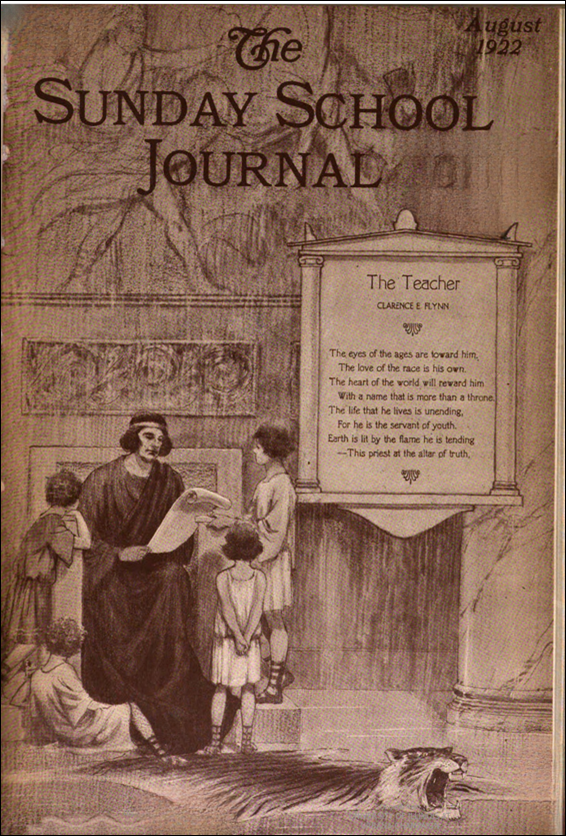
The Teacher v1922
The eyes of the ages are toward him. The love of the race is his own. The heart of the world will reward him With a name that is more than a throne. The life that he lives is unending, For he is the servant of youth. Earth is lit by the flame he is tending —This priest at the altar of truth.
The Temple (1922)
When each home is a temple, Its every room a shrine, Its hearth a sacred altar Inscribed to things divine; When each eye in the circle Reflects that altar flame, Each mealtime sacramental Unto the Wondrous Name; When each morn is a prayer-time Each evening hour is blessed With all the grace of kindness And all the peace of rest; When each task is a service, Each word a psalm of praise, The world will swing in sunshine Through all the golden days.
Voices of the Dawn (1922)
Soft breaths of wind that gently pass, Sigh in the branches of a tree, And whisper in the tangled grass; The early droning of a bee, Shaking the dew from dripping wings Among the blossoms on the lawn; The sprightly chirp of waking things. These are the voices of the dawn. The falling of a loosened leaf, That seems loud where all is so still; A field-mouse rustling in a sheaf; The low of kine around the hill; A little tinkling waterfall, Whose bubbles gurgle and are gone; A skylark’s song; a robin’s call. These are the voices of the dawn.
The Watchdog of the Sea (1922)
Her silent body, slim and gray, Hangs grimly off the bar, Then, like a wraith, she slips away, Through mist to ports afar. She tells not where her course may lie, Nor cares what perils be, She goes, nor ever questions why— The watchdog of the sea. She plows alike through light and dark, She scents the far wind’s breath; Only at foemen does she bark, And then her bark is death. She keeps our coasts from every threat, Guards home and liberty; Her courage has not failed us yet— The watchdog of the sea.
Where Is Heaven? (1922)
WHO has not heaven in his soul May seek o’er land and main, From East to West, from Pole to Pole; But he will seek in vain. He may traverse the mighty sky, Ascend through spaces dim; But heaven with all its ecstacy Will not exist for him. Who carries heaven in his heart, Its sunshine in his breast, Need never seek a place apart, For every place is blest —The hill, the vale, the sea, the air, The stream, the forest dim. The light of God from portals fair Shines everywhere for him.
Climaxes v1923
We live thru drab, prosaic days That slowly come and go; We tread a thousand weary ways, And heavy burdens know; We toil in patience thru the years, Alike in sun and shower, Paying the price of blood and tears For one climactic hour. We tread the boards thru action long, Face conflict grim and hard, To gain one triumph over wrong, One moment of reward. We move upon the mighty screen From dawn to set of sun To make one little perfect scene Before our part is done.
The Creator (1923)
I looked in the face of a rose As it nodded in springtime and smiled. I saw where eternity glows In the sweet, tender eyes of a child. I looked in a sunbeam in air. They each bore an image divine. The Creator was everywhere. I looked at the set of the sun, And the crag that reflected its light. I thought on the day that was done, And I pondered the stars of the night. And I looked in the eyes of a man Who had stumbled through sinning to prayer. God’s fingerprints there I could scan. He awaited me everywhere.
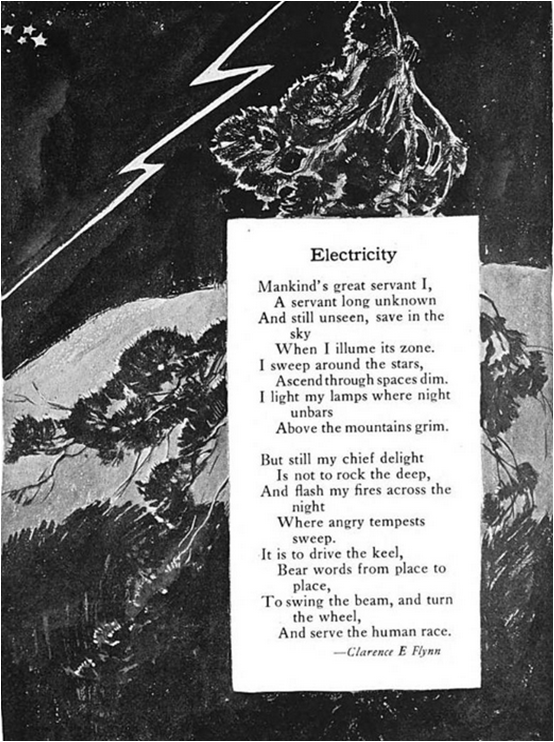
Electricity (1923)
Mankind’s great servant I, A servant long unknown And still unseen, save in the sky When I illume its zone. I sweep around the stars, Ascend through spaces dim. I light my lamps where night unbars Above the mountains grim. But still my chief delight Is not to rock the deep, And flash my fires across the night Where angry tempests sweep. It is to drive the keel, Bear words from place to place, To swing the beam, and turn the wheel, And serve the human race.
An Electric Personality (1923)
A most electric gentleman He was his whole life through. Down busy ways his current ran, As all his friends well knew. He was live wire, so to say, He liked to see things go, Magnetic in most every way —A human dynamo. One day a blue coat collared him When on some mischief bent, And in a jail cell dark and dim His next few days were spent. What was the charge against him? Yes ’Twas natural, you see, So much so you could really guess —Assault and Battery.
The End of the Trail (1923)
I must travel the miles till the journey is done, Whatsoever the turn of the way. I shall bring up at last at the set of the sun, And shall rest at the close of the day. Let me deal as I journey with foeman and friends In a way that no man can assail, And find nothing but peace at the roadway’s last bend, When I come to the end of the trail. We are brothers who travel a great, common road, And the journey is easy for none. We must succor the weary and lift on the load Of the pilgrim whose courage is done. Let me deal with them each on my way to the West With a mercy that never shall fail, And lie down to my dreams with a conscience at rest When I come to the end of the trail.
If Christ Is Not Divine (1923)
If Christ is not divine, Then lay the Book away, And every blessed faith resign That has so long been yours and mine, Through many a trying day; Forget the place of bended knee; And dream no more of worlds to be. If Christ is not divine, Go seal again the tomb; Take down the Cross, Redemption’s sign; Quench all the stars of hope that shine; Forget the upper room; And let us turn and travel on Across the night that knows no dawn.
The Making of Home (1923)
God took a hearth-fire, warm and bright, And planted love beside it; Spun happy laughter through its light, So gay no gloom could hide it. He wove a golden thread of song Among the flick’ring shadows, Like that where days are bright and long Upon the summer meadows. He made a sanctuary fair With His own presence gifted. He built a holy altar there Where hearts should oft be lifted. With His watch-care perennial He wrapped it ’round and framed it. He flung a roof above it all, And Home was what He named it.
No Room in the Inn (1923)
The stars in the heavens were gleaming On mountains, and meadows, and rills. The song of the angels was streaming While shepherds kept watch on the hills. The wise men bent low by a manger, Apart from Earth’s striving and din, To welcome the Heavenly Stranger, For there was no room in the inn. The years have not halted their sweeping, It is Christmas again on the earth. Again the glad season we’re keeping, Recounting the tale of His birth. Let not our hearts be, as He sees us, So crowded with pleasure and sin They can offer no welcome to Jesus. Lord, let there be room in the inn.
Our Hearts Forget (1923)
Our hearts forget, Amid the daily round of toil and fret. They are so weak, so prone to lose their hold On dreams of yesterday, and treasures old. The thoughts that thrilled them in a vanished day, Forgotten now, are cold in ashes gray. Life brings us wondrous days and hours, but yet Our hearts forget. Our hearts forget The times of joy and vision we have met, The binding vows we once so bravely made, The fond petitions that we trembling laid Before the Great, White, Shining Throne above, The tender, wistful, clinging bonds of love, Contrition’s anguished and tear-washed regret Our hearts forget.
A Prayer (1923)
We thank Thee, Father, for the care That did not come to try us, The burden that we did not bear, The trouble that passed by us, The task we did not fail to do, The hurt we did not cherish, The friend who did not prove untrue, The joy that did not perish. We thank Thee for the blinding storm That did not loose its swelling, And for the sudden blight of harm That came not nigh our dwelling. We thank Thee for the dart unsped, The bitter word unspoken, The grave unmade, the tear unshed, The heart-tie still unbroken.
The Second Wind (1923)
When “Lizzie” starts to climb a hill Too hard to make “on high,” She goes it very well until Her power begins to die. Then, shifting to another gear, She leaves the slope behind, And hustles on without a fear Upon her second wind. I notice it is so with men. They start out with a will, They go it well awhile, and then, Slow down midway the hill. But, seeing that their strength is run, They change their gear, and find The world’s best work is often done On people’s second wind.
The Serving Giant (1923)
The mighty giant of the air, More ancient than the sun Whose power is vibrant everywhere That restless force may run Shakes the foundation of the hill, Or rends the ground in twain, Or blasts the forest at his will And levels all again. And yet he stoops to hold the light That aged eyes may see. He warms the baby’s feet at night, And cooks for company. He does a thousand little things To help the world along. He who the most of service brings Is strongest of the strong.
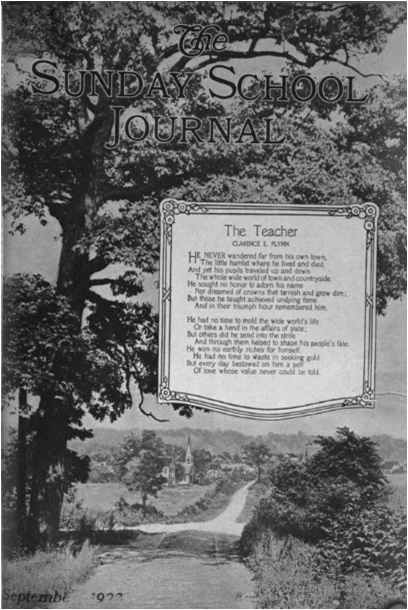
The Teacher v1923
HE NEVER wandered far from his own town, The little hamlet where he lived and died, And yet his pupils traveled up and down The whole wide world of town and countryside. He sought no honor to adorn his name Nor dreamed of crowns that tarnish and grow dim; But those he taught achieved undying fame And in their triumph hour remembered him. He had no time to mold the wide world’s life Or take a hand in the affairs of state; But others did he send into the strife And through them helped to shape his people’s fate. He won no earthly riches for himself. He had no time to waste in seeking gold But every day bestowed on him a pelf Of love whose value never could be told.
Transforming Love (1923)
Love transforms all things. Lone days are touched with light, And trying moments lose their stings, And vexing things come right. Love’s ointment to our eyes applied, We see with vision glorified. Love transforms all things— Worn faces, hardened hands. To the poor hovel glory clings, For Love’s heart understands. Whatever it beholds is fair; It sees each hidden beauty there.
The Window of Dreams (1923)
There is a little window. ’Tis called, I think, a screen. Thru it the strangest people And fairest things are seen. Calm valleys, silent woodlands, Tall summits, shining streams, Long roads and busy cities Are in this world of dreams. There weary hearts may travel, Each to its wonted place; And lonely ones may revel In pictured act and face. There to our hidden longings The waiting answer gleams The while our thoughts inhabit This pictured world of dreams.
Brotherhood (1924)
Let black be black and white be white, As they were meant to be; But let the hearts of men be right On every land and sea. Let brown and yellow boast their race, Their blood no taint e’er tell; But let them each possess the grace To wish a neighbor well. Let us forget our foolish strife, And all our groundless hate. We needs must live a common life, And share a common fate. Whatever troubles we must stem, Whate’er our place or name, Beneath the crust that covers them Our hearts are all the same.
The Builder v1924
The builder of the future Is not the trader keen, The driver of the turbine, Nor any swift machine; Not he who rides in triumph Through the admiring town, Fawning for public praises And seeking for renown. The builder of the future Sits not upon a throne. He toils among the shadows, His struggles oft unknown. He is the one who kindles And keeps the fires of truth, The teacher who is molding The plastic heart of youth.
Childhood on the Farm (1924)
In many a crowded city Where moves the human tide, Eyes look with eager longing To some old countryside. Hearts that have long been sated With earth recall the charm Of life’s morning splendor In childhood on the farm. From many a path of glory And many a throne of power Is still recalled the wonder Of some dear, distant hour. Men look through years of toiling, Of sorrow, strife, and harm, And treasures unforgotten Their childhood on the farm.
The Clock (1924)
WHAT is the matter with our clock I cannot understand. It sounds its steady old tick-tock With mien and manner grand. To look at its great open face You’d think it truthful quite. I’m sorry such is not the case. It’s hardly ever right. Just yesterday when I was blue Because Tom didn’t call To play with me when work was through, Its hands scarce moved at all. When I went to his house today To spend an hour or so, We’d scarce got started at our play Till it was time to go.
The Dream (1924)
I had a dream the other night, Too sweet for word of tongue, Of days when, beautiful and bright, The children all were young. I saw them playing on the floor And ’mongst the dooryard flowers. Soft baby voices came once more From unforgotten hours. I came from work when eve was late And all the sky was gold. They ran to meet me at the gate With greetings as of old. I helped to tuck them in at night With prayers of happiness, But my arms ached when dawn was bright With a great emptiness.
An Easter Vision (1924)
Whene’er I hear the Easter Bells Ring out their carols gay, The graves from all the hills and dells Dissolve from sight away. I see the mighty planet left Without a marble stone To tell of death, or one bereft Who comes to weep alone. Dear hands, long folded to their rest, Return to touch my own, And voices memory has blessed In each familiar tone Speak as in other days to me; While on the springtime’s breath Is borne to every land and sea The news: “There is no death.”
The Electric Spark (1924)
SEE this snappy little spark Flashing pertly in the dark; Coming with its sudden gleam Out from nowhere, it would seem; Glowing here against the shade, Fire unkindled, light unmade, Brother to the bolt’s fierce blow And the driving dynamo. Here is hid the mystery, Mayhap, of the land and sea. All creation’s story may Hide within this flashing ray. Light, and heat, and force it holds; Boundless energy unfolds; Tells the secret, if we find it, Of the God who stands behind it.
Fade-Outs (1924)
Faces, like stars, rise on our little ken; Shine on our souls with warm and cheering ray. Then, like the stars, they pass from us again, Leaving the dreary world of yesterday. Friends slip into our little world awhile. Joys come to thrill us with their rapture keen. The friends go trudging on their winding mile The joys fade as a picture on the screen. Altho unseen, they are not wholly gone. A friendship once established cannot die. A joy once tasted sweetly lingers on, A perfumed presence never seen but nigh. In the great drama of the fleeting years They come upon the stage and play their part. Then, tho each wondrous vision disappears, It leaves its deathless image on the heart.
Film Judgment (1924)
The man who reads the titles, The man who tramps our toes, The man who holds the end seat Whatever comes and goes, The man who laughs so loudly That all the house can hear, The man who with his snoring Outrages every ear. All died, and took their journey Where the unseen begins, And stood before the judgment To answer for their sins. They got a common sentence. Each one was ordered flat To sit and fume forever Behind a picture hat.
Finding God (1924)
I found Him in the whisp’ring pines, And in the beauty of the rose; I found Him where the first star shines, Above the Summer day’s soft close; I found Him where the storms grew wild; I found Him in the happy face And manner of a little child, Revealing loveliness and grace. I found Him in the swinging suns That wheel their way through endless space, And in the humblest path that runs To love’s sequestered dwelling place; I found Him where the violets dwell, And where the bluebirds wheel and dart; But never really knew Him well Until I found Him in my heart.
The Firefly (1924)
We’ve never gotten to it, With all our learning keen. We simply cannot do it With any fine machine. Old Nature’s lanterns greet us When dusk succeeds the sun. A thousand miles they beat us On all we’ve ever done. In spite of shining crescent And starbeam’s boasted light, The firefly’s incandescent Most glorifies the night. Across the meadows flying Cold light it generates. We, too, have long been trying, But Time still stands and waits.
The God of the Beginning (1924)
IN the beginning was God. Beyond Time’s threshold he hovered, Back of the earliest dawn or the flush of the first fair spring. Farther than eye has disclosed or the keenest thought has discovered, Moved in the silences vast the Maker of everything. Back of the first heart-ties and the first warm heart-fires lighted, Back of gleaming sky, the sea, and the shining sod, Back of the first fond dream that a hopeful heart e’er sighted, Lingered the Soul Divine and brooded the Love of God. IN the beginning was God. O’er struggle and strife diurnal, The void, and the mist, and the darkness, the mire, and the slime, and the clay, Through the long course of the ages has watched the Spirit Eternal Seeking for men the dawn of a better and kindlier day. Brooding, watching, and hoping—but, withal, ever beseeching, Over the track of time a saving shade it has cast, And into the distant future as far as the years are reaching. In the beginning was God, and God shall be at the last.
Jove’s Plaint (1924)
The good old days have vanished, And I suppose forever. My thunderbolt once quivered O’er mountain, plain and river. But now they have it captured, These humans so audacious. They dole it out through cables, To serve their plans rapacious. They sell it through a meter, Howe’er the gods may scoff it. They send a monthly statement, And make a profit off it. Alas, my bolt of thunder (And what worse could befall it?) Is hopelessly commercialized. “Juice” now I think they call it.
The Land of Heart’s Desire (1924)
There is a land of wonder With fields and towers agleam. I often see it yonder Beyond the Hills of Dream, Touched by the glow of morning, Lit by the sunset’s fire, Or with starbeams adorning— The Land of Heart’s Desire. Along the road of duty We daily struggle on; But e’er we touch its beauty, Eluding us, ’tis gone. Yet through the clinging shadows, The brambles, and the mire, It lures us toward its meadows— The Land of Heart’s Desire.
Minds (1924)
SOME minds are flaming rockets That flit among the stars; And some are gaily nickeled And painted motor cars; And some are lumbering wagons That slowly make their way, With nothing keen to offer And nothing fine to say. THE swiftly flaming rocket Loses its brilliancy. The fine car is supplanted By one more fair to see. But the slow-moving wagon That lumbers down the road Is certain of arrival And bears the heavy load.
Miracle (1924)
Whoever saw a garden grow, Or watched a robin build her nest, Or lingered in the flaming glow Of sunset blazing in the West; Whoever walked the fruitful plain, And saw the green stalks reach, and swell, And ripen to a field of grain Knows earth is full of miracle. Whoever wandered in the wood, And rambled down its aisle of dreams, Or sought the orchard path, or stood Where falls the murmur of a stream; Whoever watched a cloudland wild, Or sensed the twilight’s gentle spell, Or prattled with a little child Knows life is full of miracle.
The Picture’s Lament (1924)
They take great liberties with me, Nor ever ask me yea or nay. I’m just as weary as can be From prancing on a screen all day. I’ve dug, and climbed, and laughed, and wept, Loitered, and danced to make a show; And not a moment have I slept. They keep me always on the go. No choice is mine. I needs must move, Swiftly, obedient, silently. No fields of freedom do I rove. My course is parceled out for me. But this I cannot quite forget —If I can wake some old refrain Or still a rush of wild regret, I shall not then have toiled in vain.
Prayer for Normal Men (1924)
For every poor, defective soul that wanders In the dark shades of subjectivity, For each deluded mind that glibly flounders In the foul mire of abnormality, Give us a host who cheerful laughter scatter, Whose willing hands toil on in love’s sweet right, Who plant the roses, guide the feet that patter Around the hearth of happiness at night. Give us, O God, a race of normal people Who walk no paths of morbidness apart; Who dwell not in the bog, nor yet the steeple, But in the dusty way, the busy mart; Who like their work, care for the folks about them, And make each day a thing of joy and song. This world of our’s could never do without them. They are the men who make it move along.
The Railroad (1924)
WHERE do they go, these shining rails That ramble so far away That seem to reach where the twilight pales At the beautiful gates of day?” “They run to the wider world, my boy, Of dreaming, and strife, and again, With its mingling of weariness and joy, To the city—and back again. Out of the valley and o’er the hill Where childhood has had its day, Out of the hamlet so small and still And into the far away, On, on to the world of toil, my lad, With its struggle of brawn and brain, Some of it good and some of it bad, To the city—and back again.
Shadows on the Wall (1924)
Coming, going, thru the play, Flashing on the screen, Do the actors take their way. Briefly each is seen. What are they—these shapes that move, Forms that rise and fall, Urged by hope, or fear, or love? Shadows on the wall. In the daily strain and strife Shift and change appear. On the larger stage of life Mingle smile and tear. Here our little race we run, Then are vanished all. What are we when all is done? Shadows on the wall.
Sorrow (1924)
God sometimes drops the shadows o’er us, And leaves them for a space, That we may clearly see before us The image of the love he bore us Reflected on his face. He sometimes sends us hours of grieving, That we may slip away From sounds and voices so deceiving, And once again in faith believing Kneel at his throne and pray. He sometimes leaves us to our weeping, Though bitter seem our tears, That briny drops from we eyes creeping May wake some happiness long sleeping For gladder, sweeter years.
The Things That I Believe (1924)
The things that I believe —These things are life to me. Some all the senses might deceive, For some I cannot see; But in the tempest fierce and old I feel their strong truth grip and hold. The things that I believe —I cannot let them go; And empty-hearted grope and grieve In darkness and in woe. So, God, I thank my every star They are no fewer than they are.
Today and Tomorrow (1924)
Could something only make today As lovely as tomorrow, As free from care and shadows gray, As void of tears and sorrow, The world would be a perfect place, Without a woe to blight it. Earth would be rich in every grace, With happiness to light it. Yet day is day, and life is life. Time e’er repeats its story. Each morning brings its toil and strife, Likewise its gleam of glory. Each brings its mingled shine and shade, Its mingled joy and sorrow, For each today God ever made Was wrought from a tomorrow.
The Tree (1924)
It stood upon a meadow fair, A green and leafy tree. Gaily it met the breezes there, Lovely it was to see. One night a storm of wind and rain Rent it from earth apart. The reason then was very plain. Decay was at its heart. He was a youth of promise fine, The strongest of the crowd. His features wore the stamp divine, His eye was clear and proud. He could have lived to purpose high And played a noble part. But no, he fell. The reason why? Decay was at his heart.
The Unknown Soldier (1924)
The guns are silent in the valley now. The river creeps serenely on its way. Still clings the ivy to the rugged brow; Of yonder hill, and roses grace the day. No grave was heaped. No word of prayer was said. No stone was reared against the pitying sky. None ever knew where rests the silent dead As unrevealing years go drifting by. And yet he is not lost. This quiet sod; Can rest him quite as well as anywhere, Beneath the gentle, sleepless eye of God, Whose robins sing for him when Spring is fair. His life is wrought into the victory. Glory is his. He need not urge his claim. He lives on in the better age to be, Though sleeping in a grave without a name.
What Does It Matter? (1924)
What does it matter if here or there Is a strand of joy or a thread of care, If when the web has been finished all The final pattern is beautiful? The One who weaves on the world’s great loom Must make His fabric of shine and gloom. It takes the gold and the somber hue To make it lovely when He is through. What does it matter if there or here Is a song of joy or a falling tear, If at the hour of the setting sun A lovely product is held forth done? The One who orders the passing hours With ceaseless cycle of sun and showers Fashions the color and rare design Of a growing tapestry divine.
Why We Are Here (1924)
Our minds were made to search the deeps Of Truth’s clear-flowing stream; Our feet to scale the rugged steeps Of faith and hope and dream; Our hands to toil and serve and lift, To help and heal and bless; Our hearts to bring the priceless gift Of love and tenderness. Our lives were made to struggle on, The upward path to plod; Our souls to catch the glint of dawn From the white throne of God; Our lips the helpful word to speak, The tender song to sing; Our eyes to search the world and seek The good in everything.
The Age of a Heart (1925)
SO LONG as stars are bright and fair And skies are blue and clear; So long as joy is in the air And Dreamland hovers near; So long as roses blossom gay And song is on the tongue— Tho brow be lined and hair be gray That long the heart is young. But when the sky grows dull and sere And roses fade and die; When song no longer holds the ear Nor Dreamland hovers nigh; When passing days no wonder bring, No great adventure hold— In spite of time or anything [Transcriber’s note: Last line is missing from source.]
The Children v1925
The dear little children that climb on the knee, The promise and hope of the morrows to be —Their song is unfailing; their spirits are bright; Their hearts are courageous from morning till night, How helpless they are! On our mercy they wait. The hands of their elders must fashion their fate. They are frail little barks to be launched on the sea —These dear little children that climb on the knee. Oh guide them with hands that are tender and true. The voyage is long and the lighthouses few. What struggles await them! What conflicts and fears! What dream castles shattered! What heartaches and tears! Their skies will have clouds, and the clouds will bring rain. Then all will give way to the sunshine again. Bound upon their souls are the ages to be —These dear little children that climb on the knee.
Credo (1925)
Lord, I believe That thou hast made the earth, the sky, the sea, And all the members of immensity, The rose that blooms beside the traveled way; That thou didst weave The fabric of the dawn and close of day. Lord, I believe That thou hast fashioned me to be thine own, Hast made my human heart to be thy throne, Hast made this voice of mine that it should sing From morn till eve, These hands the precious gift of love to bring. Lord, I believe That yonder, past the valley’s shaded rim, The lifting crest that seems so cold and dim Is but the outlines of another shore That doth receive The loved and lost of earth forevermore.
The Fabulous City (1925)
There rises in the distance Across the Vale of Dreams A fair and lovely city, Built on get-rich-quick schemes. Its towers are bright and shining. Its streets are paved with gold, Paid for by mine promotions And stock sales bad and bold. Wondrous that shining city Before our vision stands, But when we come to touch it It crumbles ’neath our hands. Ethereal its fabric, Intangible its soil. ’Twas builded with the fortunes We never made in oil.
Home v1925
Standing beside a quiet path they found it. A humble little house it was, and low. With patient hands they planted flowers around it, And flung its windows to the sun’s warm glow. They laid an open book upon the table, And hung a simple picture on the wall. They trained a vining rose around the gable. They built a throne and crowned love Lord of all. They kindled on the hearth a fair flame gleaming, And set a row of chairs before its light Where happy eyes should cast their cheerful beaming With rest and song that come with falling night. They reared with loving hands a fireside altar Where hungry hearts in reverence might come, Where trembling lips might their petitions falter Before the Throne of Grace, and lo, ’twas HOME.
Palm Sunday v1925
Adown the ringing street he came, The Lord of all the years. A thousand voices of acclaim Were ringing in his ears. Silent was he who knew his way Of mingled joy and loss Began where Bartimaeus lay, And ended at a cross. And ever it has been as then. The path of triumph trod Amid the loud acclaim of men, Beneath the smile of God, Begins where need holds forth its hands, And pleads with weary eyes, And ends where, grim and silent, stands The Hill of Sacrifice.
Roads v1925
There is a road to happiness; There is a road to pain; A road to failure and success; A road to loss and gain; A road to meadows gay with flowers; A road to evenfall; A road to bright and shadowed hours— God lets me tread them all. There is a quiet road that finds The little singing streams; A road that reaches till it winds Along the Hills of Dreams; A road to hope, to duty done, And to that last clear call Across the gates of setting sun— God lets me tread them all.
The Teacher’s Reward (1925)
Who dwells with everlasting truth And lets that truth possess his soul; Who has companionship with youth To keep him young as swift years roll; Who writes his story on the page Of history by labor hard; And builds his life into his age, Has his reward. Who opens eyes that else were blind Till they behold the earth and sky; Who wakens interest in the mind That else were barren, dead, and dry; Who gently takes a weary hand And lays it in the Palm that’s scarred; Though others own the gold and land, Has his reward.
Via Dolorosa (1925)
Out the Damascus Gate it ran, A weary, cheerless road Along which stumbled once a Man, A cross-tree for His load. The street was teeming with the throng. The air was chill and gray, The hour when Jesus passed along That Dolorosa Way. It wound a slope that flung its height Against a sullen sky. Upon a summit—tragic sight— Three crosses lifted high. But lo, beyond them, manifold The lifting glow of day. It ended at the gates of gold, That Dolorosa Way.
The Chameleon (1926)
Upon a green leaf he is green, Upon a red one ruddy. He suits his color to the scene— Blue, brown, or grey, or muddy. Wherever he may chance to go He meets the crowd’s demanding. In Rome he does as Romans do, And so he keeps his standing. I know not his philosophy— Platonic or Aurelian. No matter. Who would want to be Reputed a chameleon?
The City’s Nerves (1926)
Somewhere is closed a circuit, And miles and miles away A filament is lighted; A wheel goes into play; A thought is carried quickly, In clearest tones expressed, Because an impulse flashes North, South, or East, or West. And how? Beneath the pavement, Away from human gaze, Across the humid darkness Wires run in countless ways. In cables, ever-reaching Through subterranean curves, They carry thought and action. They are the city’s nerves.
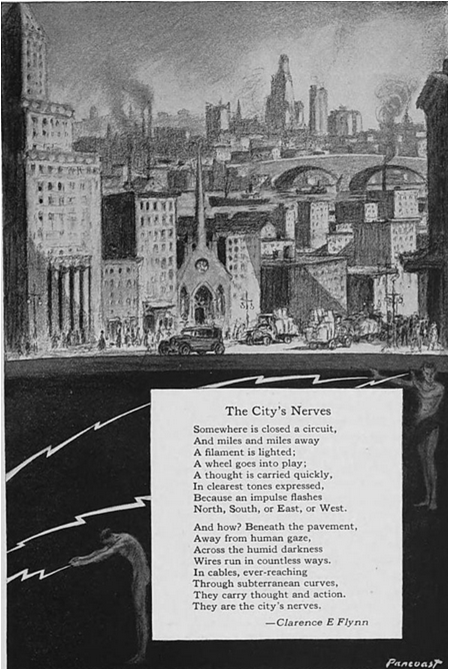
Doing It Well (1926)
I saw him do his act before a large and motley throng That sought relief and laughter in the house of dreams and song. Just who he was or whence he came of course I cannot tell. He only played a banjo, but he played the banjo well. I saw her washing dishes in a simple little cot. Her life was spent in toiling there upon the selfsame spot. Her face was furrowed, and each line a story had to tell. She only kept a household, but she kept the household well. I saw him fire an engine in a vast and grimy room, Though it was hard to see him in the still and dusty gloom. He watched each motion keenly as the pistons rose and fell. He only fired an engine, but he fired the engine well. I saw him digging ditches with the mud upon his hands, And with that steady motion that a digger understands. He claimed no fame nor fortune; only brawn he had to sell. He was but digging ditches, but he dug the ditches well. It matters rather little what task one may choose to do, So long as it is honest and his purposes are true. The years will ring his story far upon their golden bell, If he will only do the thing he may be doing well.
Enslaved Lightning (1926)
A nature worshipper, long dead, Came back in ghostly form, To visit where, in ages sped, He bowed before the storm. The city streets with radiance burned Through every darkened hour, And every busy wheel was turned By harnessed lightning power. “Ah me,” he said, “The times do change. This is a different ball. So altered everything, so strange, I’m not at home at all. These moderns have audacious wills; The gods we served aright, They’ve put to work to turn their mills And light their streets at night.”
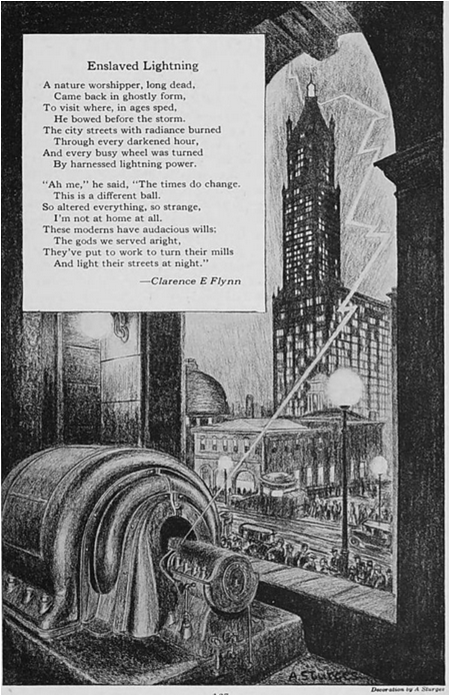
Flowers Are Thoughts of God (1926)
The flowers are the thoughts of God. They bloom in sun and shadow, By traveled path, or virgin sod, In every lovely meadow; In dooryards where the children play, And hours are swiftly winging; And Love comes at the close of day, Its selfless tribute bringing. Silent they grow, each in its place, With cheer for all who love them, Breathing their perfume in the face Of all who bend above them. They blossom where the weary plod Their ways of toil and duty. The flowers are the thoughts of God; His love speaks in their beauty.