THE STORY OF TSEN-TSZE, A PUPIL OF CONFUCIUS
Reading edition
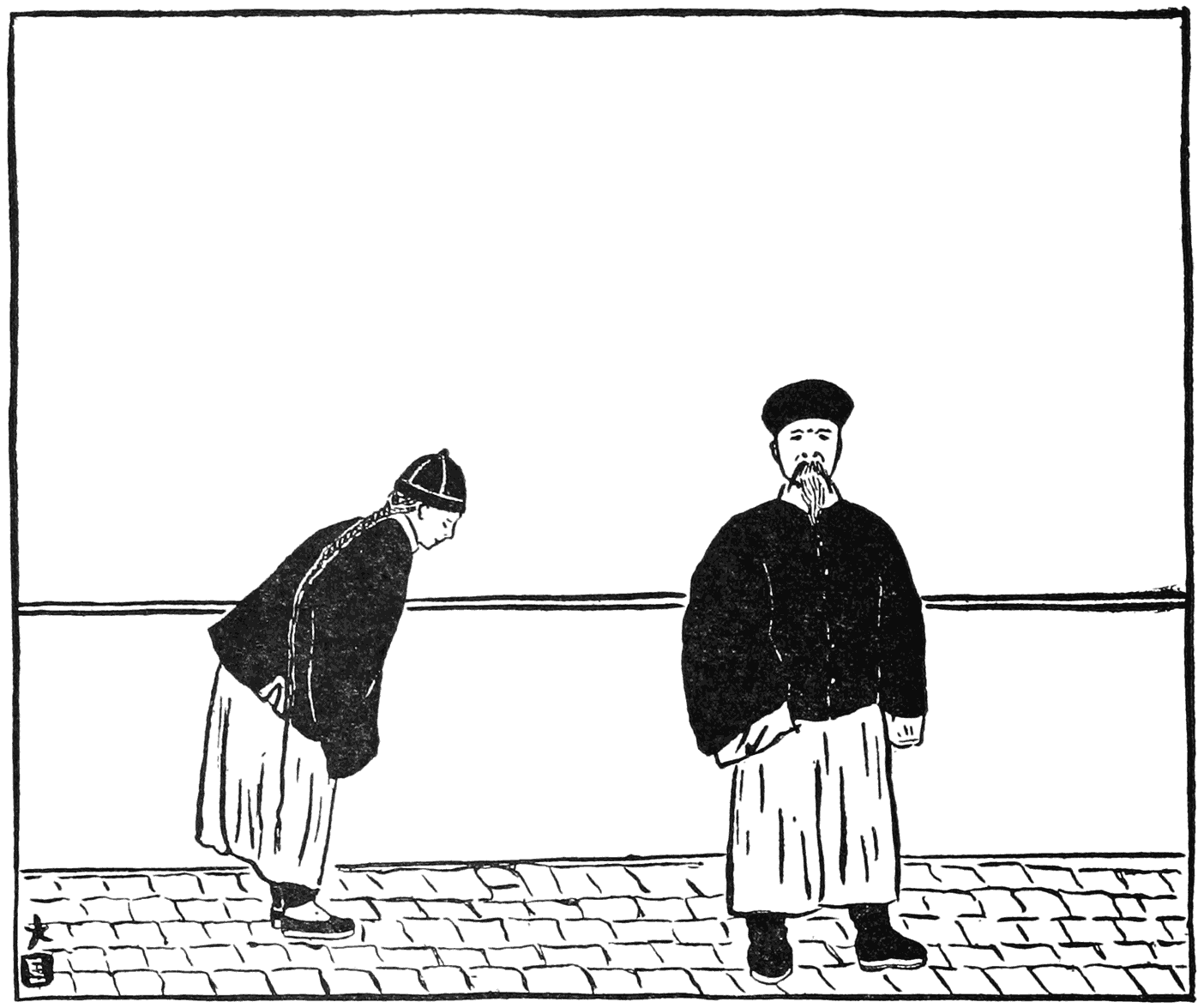
In earliest childhood, he always loved and reverenced his father and mother. In the morning when he arose he went to see his parents before he would have the morning meal.
The evening came and she did not return, and Tsen-Tsze could not eat food or sleep that night from anxiety for his mother. And when the maid servant called him for the morning meal, he said, “No; I can not eat food until I see my mother’s face.” But his father said, “You must eat and go to school.”
“I can not eat food or study books until my mother comes,” said Tsen-Tsze, and word was sent his teacher who said, “You are not quite wise, Tsen-Tsze. If your mother should die, would you then no longer study? I hope to see you soon at school.”
At midday his mother came. Then he had food, and went to school and studied his lessons.
When he came home from school, he always went to see where his parents were before going to play. At meal time he would not take food until his father and mother began eating. When he met an old person on the street, he uncovered his head and stood aside respectfully to let him pass before he went on.
These and all other customs of courtesy were observed and honored by Tsen-Tsze. At school he studied his lessons faithfully, and never left tasks unfinished. Every day he asked his teacher, “Have I done any wrong to-day?”—so great was his desire to know the right and to do all that he knew.
Tsen-Tsze went out to the schoolroom and took his music box and came again before his father’s face, and sat down on the floor and played and sang to him. He sang,
“Every father loves his son,
Of this all men are sure.
Each child will need the stick sometimes,
To keep his nature pure.”
And he said, “I read in history about many famous men who were great because they were gentle. I hope I shall be like them. History says their fathers gave them the stick when young.” But the anger had not all left his father’s face, and he brought him a cup of tea and said, “Father, are you thirsty?”
Then he took his father’s hand and went to the garden where the birds were singing. He put a flower on his father’s breast and asked, “Father, do you like that? I do.”
All this caused Tsen-Tsze’s father to think, and in his heart he said, “This boy is not like other children of his age.” And so long as he had life, he never beat his son again.
Tsen-Tsze became a great scholar and finished all his studies when he was only twenty-five years old. And he was a wise and good man.
His own generation and all the generations of man that have come after him have studied about him, and have wished to be as he was.