Chapter III · DEVELOPMENT OF THE CHEMICAL WARFARE SERVICE
Reading edition
Modern chemical warfare dates from April 22, 1915. Really, however, it may be said to have started somewhat earlier, for Germany undoubtedly had spent several months in perfecting a successful gas cylinder and a method of attack. The Allies, surprised by such a method of warfare, were forced to develop, under pressure, a method of defense, and then, when it was finally decided to retaliate, a method of gas warfare. “Offensive organizations were enrolled in the Engineer Corps of the two armies and trained for the purpose of using poisonous gases; the first operation of this kind was carried out by the British at the battle of Loos in September, 1915.
“Shortly after this the British Army in the field amalgamated all the offensive, defensive, advisory and supply activities connected with gas warfare and formed a ‘Gas Service’ with a Brigadier General as Director. This step was taken almost as a matter of necessity, and because of the continually increasing importance of the use of gas in the war (Auld).”
At once the accumulation of valuable information and experience was started. Later this was very willingly and freely placed at the disposal of American workers. Too much cannot be said about the hearty co-operation of England and France. Without it and the later exchange of information on all matters regarding gas warfare, the progress of gas research in all the allied countries would have been very much retarded.
While many branches of the American Army were engaged in following the progress of the war during 1915-1916, the growing importance of gas warfare was far from being appreciated. When the United States declared war on Germany April 6, 1917, there were a few scattered observations on gas warfare in various offices of the different branches, but there was no attempt at an organized survey of the field, while absolutely no effort had been made by the War Department to inaugurate research in a field that later had 2,000 men alone in pure research work. Equally important was the fact that no branch of the Service had any idea of the practical methods of gas warfare.
The only man who seemed to have the vision and the courage of his convictions was Van H. Manning, Director of the Bureau of Mines. Since the establishment of the Bureau in 1908 it had maintained a staff of investigators studying poisonous and explosive gases in mines, the use of self-contained breathing apparatus for exploring mines filled with noxious gases, the treatment of men overcome by gas, and similar problems. At a conference of the Director of the Bureau with his Division Chiefs, on February 7, 1917, the matter of national preparedness was discussed, and especially the manner in which the Bureau could be of most immediate assistance with its personnel and equipment. On February 8, the Director wrote C. D. Walcott, Chairman of the Military Committee of the National Research Council, pointing out that the Bureau of Mines could immediately assist the Navy and the Army in developing, for naval or military use, special oxygen breathing apparatus similar to that used in mining. He also stated that the Bureau could be of aid in testing types of gas masks used on the fighting lines, and had available testing galleries at the Pittsburgh experiment station and an experienced staff. Dr. Walcott replied on February 12 that he was bringing the matter to the attention of the Military Committee.
A meeting was arranged between the Bureau and the War College, the latter organization being represented by Brigadier General Kuhn and Major L. P. Williamson. At this conference the War Department enthusiastically accepted the offer of the Bureau of Mines and agreed to support the work in every way possible.
The supervision of the research on gases was offered to Dr. G. A. Burrell, for a number of years in charge of the chemical work done by the Bureau in connection with the investigation of mine gases and natural gas. He accepted the offer on April 7, 1917. The smoothness with which the work progressed under his direction and the importance of the results obtained were the result of Colonel Burrell’s great tact, his knowledge of every branch of research under investigation and his imagination and general broad-mindedness.
Once, however, that the importance of gas warfare had been brought to the attention of the chemists of the country, the response was very eager and soon many of the best men of the university and industrial plants were associated with Burrell in all the phases of gas research. The staff grew very rapidly and laboratories were started at various points in the East and Middle West.
It was immediately evident that there should be a central laboratory in Washington to co-ordinate the various activities and also to considerably enlarge those activities under the joint direction of the Army, the Navy and the Bureau of Mines. Fortunately a site was available for such a laboratory at the American University, the use of the buildings and grounds having been tendered President Wilson on April 30, 1917. Thus originated the American University Experiment Station, later to become the Research Division of the Chemical Warfare Service.
Meanwhile other organizations were getting under way. The procurement of toxic gases and the filling of shell was assigned to the Trench Warfare Section of the Ordnance Department. In June, 1917, General Crozier, then Chief of the Ordnance Department, approved the general proposition of building a suitable plant for filling shell with toxic gas. In November, 1917, it was decided to establish such a plant at Gunpowder Neck, Maryland. Owing to the inability of the chemical manufacturers to supply the necessary toxic gases, it was further decided, in December, 1917, to erect at the same place such chemical plants as would be necessary to supply these gases. In January, 1918, the name was changed to Edgewood Arsenal, and the project was made a separate Bureau of the Ordnance Department, Col. William H. Walker, of the Massachusetts Institute of Technology, being soon afterwards put in command.
While, during the latter part of the War, gas shell were handled by the regular artillery, special troops were needed for cylinder attacks, Stokes’ mortars, Livens’ projectors and for other forms of gas warfare. General Pershing early cabled, asking for the organization and training of such troops, and recommended that they be placed, as in the English Army, under the jurisdiction of the Engineer Corps. On August 15, 1917, the General Staff authorized one regiment of Gas and Flame troops, which was designated the “30th Engineers,” and was commanded by Major (later Colonel) E. J. Atkisson. This later became the First Gas Regiment, of the Chemical Warfare Service.
About this time (September, 1917) the need of gas training was recognized by the organization of a Field Training Section, under the direction of the Sanitary Corps, Medical Department. Later it was recognized that neither the Training Section nor the Divisional Gas Officers should be under the Medical Department, and, in January, 1918, the organization was transferred to the Engineer Corps.
All of these, with the exception of the Gas and Flame regiment, were for service on this side. The need for an Overseas force was recognized and definitely stated in a letter, dated August 4, 1917. On September 3, 1917, an order was issued establishing the Gas Service, under the command of Lt. Col. (later Brigadier General) A. A. Fries, as a separate Department of the A. E. F. in France. In spite of a cable on September 26th, in which General Pershing had said
“Send at once chemical laboratory, complete equipment and personnel, including physiological and pathological sections, for extensive investigation of gases and powders....”
it was not until the first of January, 1918, that Colonel R. F. Bacon of the Mellon Institute sailed for France with about fifty men and a complete laboratory equipment.
Meantime a Chemical Service Section had been organized in the United States. This holds the distinction of being the first recognition of chemistry as a separate branch of the military service in any country or any war. This was authorized October 16, 1917, and was to consist of an officer of the Engineers, not above the rank of colonel, who was to be Director of Gas Service, with assistants, not above the rank of lieutenant colonel from the Ordnance Department, Medical Department and Chemical Service Section. The Section itself was to consist of 47 commissioned and 95 non-commissioned officers and privates. Colonel C. L. Potter, Corps of Engineers, was appointed Director and Professor W. H. Walker was commissioned Lieutenant Colonel and made Assistant Director of the Gas Service and Chief of the Chemical Service Section. This was increased on Feb. 15, 1918 to 227 commissioned and 625 enlisted men, and on May 6, 1918 to 393 commissioned and 920 enlisted men. Meanwhile Lt. Col. Walker had been transferred to the Ordnance and Lt. Col. Bogert had been appointed in his place.
At this time practically every branch of the Army had some connection with Gas Warfare. The Medical Corps directed the Gas Defense production. Offense production was in the hands of the Ordnance Department. Alarm devices, etc., were made by the Signal Corps. The Engineers contributed their 30th Regiment (Gas and Flame) and the Field Training Section. The Research Section was still in charge of the Bureau of Mines, in spite of repeated attempts to militarize it. And in addition, the Chemical Service Section had been formed primarily to deal with overseas work. While the Director of the Gas Service was expected to co-ordinate all these activities, he was given no authority to control policy, research or production.
In order to improve these conditions Major General Wm. L. Sibert, a distinguished Engineer Officer who built the Gatun Locks and Dam of the Panama Canal and who had commanded the First Division in France, was appointed Director of the Chemical Warfare Service on May 11, 1918. Under his direction the Chemical Warfare Service was organized with the following Divisions:
Overseas Brigadier General Amos A. Fries
Research Colonel G. A. Burrell
Development Colonel F. M. Dorsey
Gas Defense Production Colonel Bradley Dewey
Gas Offense Production Colonel Wm. H. Walker
Medical Colonel W. J. Lyster
Proving Lt. Col. W. S. Bacon
Administration Brigadier General H. C. Newcomer
Gas and Flame Colonel E. J. Atkisson
The final personnel authorized, though never reached owing to the signing of the Armistice, was 4,066 commissioned officers and 44,615 enlisted men; this was including three gas regiments of eighteen companies each.
General Sibert brought with him not only an extended experience in organizing and conducting big business, but a strong sympathy for the work and an appreciation of the problem that the American Army was facing in France. He very quickly welded the great organization of the Chemical Warfare Service into a whole, and saw to it that each department not only carried on its own duties but co-operated with the others in carrying out the larger program, which, had the war continued, would have beaten the German at his own game.
More detailed accounts will now be given of the various Divisions of the Chemical Warfare Service.
Administration Division
The Administration Division was the result of the development which has been sketched in the preceding pages. It is not necessary to review that, but the organization as of October 19, 1918 will be given:
Director Major General Wm. L. Sibert
Staff:
Medical Officer Colonel W. J. Lyster
Ordnance Officer Lt. Col. C. B. Thummel
British Military Mission Major J. H. Brightman
Assistant Director Colonel H. C. Newcomer
Office Administration Major W. W. Parker
Relations Section Colonel M. T. Bogert
Personnel Section Major F. E. Breithut
Contracts and Patents Section Captain W. K. Jackson
Finance Section Major C. C. Coombs
Requirements and Progress Section Capt. S. M. Cadwell
Confidential Information Section Major S. P. Mullikin
Transportation Section Captain H. B. Sharkey
Training Section Lt. Col. G. N. Lewis
Procurement Section Lt. Col. W. J. Noonan
The administrative offices were located in the Medical Department Building. The function of most of the sections is indicated by their names.
The Industrial Relations Section was created to care for the interests of the industrial plants which were considered as essential war industries. Through its activity many vitally important industries were enabled to retain, on deferred classification or on indefinite furlough, those skilled chemists without which they could not have maintained a maximum output of war munitions.
In the same way the University Relations Section cared for the educational and research institutions. In this way our recruiting stations for chemists were kept in as active operation as war conditions permitted.
Another important achievement of the Administration Section was to secure the order from The Adjutant General, dated May 28, 1918, that read:
“Owing to the needs of the military service for a great many men trained in chemistry, it is considered most important that all enlisted men who are graduate chemists should be assigned to duty where their special knowledge and training can be fully utilized.
“Enlisted men who are graduate chemists will not be sent overseas unless they are to be employed on chemical duties....”
While this undoubtedly created a great deal of feeling among the men who naturally were anxious to see actual fighting in France, it was very important that this order be carried out in order to conserve our chemical strength. The following clipping from the September, 1918, issue of The Journal of Industrial and Engineering Chemistry shows the result of this order.
“Chemists in Camp
“As the result of the letter from The Adjutant General of the Army, dated May 28, 1918, 1,749 chemists have been reported on. Of these the report of action to August 1, 1918, shows that 281 were ordered to remain with their military organization because they were already performing chemical duties, 34 were requested to remain with their military organization because they were more useful in the military work which they were doing, 12 were furloughed back to industry, 165 were not chemists in the true sense of the word and were, therefore, ordered back to the line, and 1,294 now placed in actual chemical work. There were being held for further investigation of their qualifications on August 1, 1918, 432 men. The remaining 23 men were unavailable for transfer, because they had already received their overseas orders.
“The 1,294 men, who would otherwise be serving in a purely military capacity and whose chemical training is now being utilized in chemical work, have, therefore, been saved from waste.
“Each case has been considered individually, the man’s qualifications and experience have been studied with care, the needs of the Government plants and bureaus have been considered with equal care, and each man has been assigned to the position for which his training and qualifications seem to fit him best.
“Undoubtedly, there have been some cases in which square pegs have been fitted into round holes, but, on the whole, it is felt that the adjustments have been as well as could be expected under the circumstances.”
Research Division
The American University Experiment Station, established by the Bureau of Mines in April, 1917, became July 1, 1918 the Research Division of the Chemical Warfare Service. For the first five months work was carried out in various laboratories, scattered over the country. In September, 1917, the buildings of the American University became available; a little later portions of the new chemical laboratory of the Catholic University, Washington, were taken over. Branch laboratories were established in many of the laboratories of the Universities and industrial plants, of which Johns Hopkins, Princeton, Yale, Ohio State, Massachusetts Institute of Technology, Harvard, Michigan, Columbia, Cornell, Wisconsin, Clark, Bryn Mawr, Nela Park and the National Carbon Company were active all through the war.
At the time of the signing of the armistice the organization of the Research Division was as follows:
Col. G. A. Burrell Chief of Research Division
Dr. W. K. Lewis In Charge of Defense Problems
Dr. E. P. Kohler[5] In Charge of Offense Problems
Dr. Reid Hunt Advisor on Pharmacological Problems
Lt. Col. W. D. Bancroft In Charge of Editorial Work and Catalytic Research
Lt. Col. A. B. Lamb[6] In Charge of Defense Chemical Research
Dr. L. W. Jones[7] In Charge of Offense Chemical Research
Major A. C. Fieldner In Charge of Gas Mask Research
Major G. A. Richter In Charge of Pyrotechnic Research
Capt. E. K. Marshall[8] In Charge of Pharmacological Research
Dr. A. S. Loevenhart[9] In Charge of Toxicological Research
Major R. C. Tolman In Charge of Dispersoid Research
Major W. S. Rowland[10] In Charge of Small Scale Manufacture
Major B. B. Fogler[11] In Charge of Mechanical Research and Development
Captain G. A. Rankin In Charge of Explosive Research
Major Richmond Levering In Charge of Administration Section
The chief functions of the Research Division were:
1. To prepare and test compounds which might be of value in gas warfare, determining the properties of these substances and the conditions under which they might be effective in warfare.
2. To develop satisfactory methods of making such compounds as seemed promising (Small Scale).
3. To develop the best methods of utilizing these compounds.
4. To develop materials which should absorb or destroy war gases, studying their properties and determining the conditions under which they might be effective.
5. To develop satisfactory methods of making such absorbents as might seem promising.
6. To develop masks, canisters, protective clothing, etc.
7. To develop incendiaries, smokes, signals, etc., and the best methods of using the same.
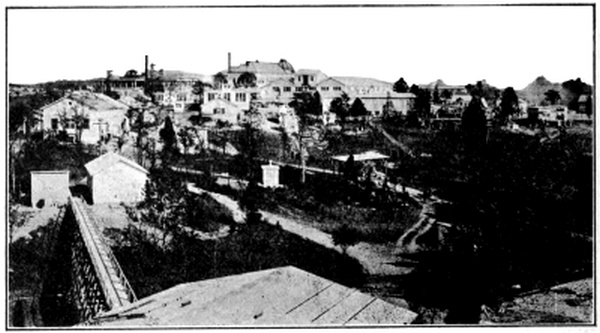
Fig. 4.—American University Experiment Station, showing Small Scale Plants.
8. To co-operate with the manufacturing divisions in regard to difficulties arising during the operations of manufacturing war gases, absorbents, etc.
9. To co-operate with other branches of the Government, civil and military, in regard to war problems.
10. To collect and make available to the Director of the Chemical Warfare Service all information in regard to the chemistry of gas warfare.
The relation of the various sections may best be shown by outlining the general procedure used when a new toxic substance was developed.
The substance in question may have been used by the Germans or the Allies; it may have been suggested by someone outside the station; or the staff may have thought of it from a search of the literature, from analogy or from pure inspiration. The Offense Research Section made the substance. If it was a solid it was sent to the Dispersoid Section, where methods of dispersing it were worked out. When this had been done, or, at once, if the compound was a liquid or vapor, it was sent to the Toxicological Section to be tested for toxicity, lachrymatory power, vesicant action, or other special properties. If these tests proved the compound to have a high toxicity or a peculiar physiological behavior, it was then turned over to a number of different sections.
The Offense Research Section tried to improve the method of preparation. When a satisfactory method had been found, the Chemical Production or Small Scale Manufacturing Section endeavored to make it on a large scale (50 pounds to a ton) and worked out the manufacturing difficulties. If further tests showed that the substance was valuable, the manufacture was then given to the Development Division or the Gas Offense Production Division for large scale production.
Meanwhile the Analytical Section had been working on a method for testing the purity of the material and for analyzing air mixtures, and the Gas Mask Section had run tests against it with the standard canisters. If the protection afforded did not seem sufficient, the Defense Chemical Section studied changes in the ingredients of the canister or even developed a new absorbent or mixture of absorbents to meet the emergency. If a change in the mechanical construction of the canister was necessary, this was referred to the Mechanical Research Section; this work was especially important in case the material was to be used as a toxic smoke.
The compound was also sent to the Pyrotechnic Section, which studied its behavior when fired from a shell, or, if suitable, when used in a cylinder. If it proved stable on detonation, large field tests were then made by the Proving Division, in connection with the Pyrotechnic and Toxicological Sections of the Research Division, to learn the effect when shell loaded with the compound were fired from guns on a range, with animals placed suitably in or near the trenches. The Analytical Section worked out methods of detecting the gas in the field, wherever possible.
The Medical Division, working with the Toxicological and Pharmacological Sections, studied pathological details, methods of treating gassed cases, the effect of the gas on the body, and in some cases even considered other questions, such as the susceptibility of different men.
If the question of an ointment or clothing entered into the matter of protection, these were usually attacked by several Sections from different points of view.
Out of the 250 gases prepared by the Offense Chemical Research Section, very few were sufficiently valuable to pass all of these tests and thus the number of gases actually put into large scale production were less than a dozen. This had its advantages, for it made unnecessary a large number of factories and the training of men in the manufacturing details of many gases. As one British report stated, “The ultimate object of chemical warfare should be to produce two substances only; one persistent and the other non-persistent; both should be lethal and both should be penetrants.” They might well have added that both should be instantly and powerfully lachrymatory.
Since most of the work of the Research Division will be covered in detail in later chapters, only a brief summary of the principal problems will be given here.
The first and most important problem was the development of a gas mask. This was before Sections had been organized and was the work of the entire Division. After comparing the existing types of masks it was decided that the Standard Box Respirator of the British was the best one to copy. Because we were entirely new at the game that meant work on charcoal, soda-lime, and the various mechanical parts of the mask, such as the facepiece, elastics, eyepieces, mouthpiece, noseclip, hose, can, valves, etc. The story of the “first twenty thousand” is very well told by Colonel Burrell.[12]
“The First Twenty Thousand
“About the first of May, 1917, Major L. P. Williamson, acting as liaison officer between the Bureau of Mines and the War Department, put the last ounce of ‘pep’ into the organization by asking us to build 20,000 gas masks for shipment overseas. 20,000 masks did not seem like a very large order. We did not fully appreciate all the conditions which a war gas mask had to encounter, so we readily and willingly accepted the order. Then began a struggle with can manufacturers, buckle makers, manufacturers of straps, rubber facepieces, eyepieces, knapsacks, etc. The country was canvassed from the Atlantic Coast to the Mississippi River for manufacturers who could turn out the different parts acceptably and in a hurry.
“Charcoal was made from red cedar by the Day Chemical Co. of Westline, Pennsylvania; soda-lime permanganate was manufactured by the General Chemical Company; knapsacks by the Simmons Hardware Company in St. Louis; facepieces by the Goodrich and Goodyear Rubber Companies at Akron; canisters by the American Can Company; and the assembly made at one of the plants of the American Can Company in Long Island City.
“The writer cannot recall all the doubts, fears, optimism, and enthusiasm felt in turn by different members of the organization during the fabrication of those first 20,000 masks. We were performing an important task for the War Department. Night became day. Dewey, Lewis, Henderson, Gibbs, and others stepped from one train to another, and we used the telephone between Washington and St. Louis or Boston as freely as we used the local Washington telephone.
“We thought we could improve on the English box respirator on various points. We made the canister larger, and have been glad ever since that we did. We thought the English mouthpiece was too flexible and too small, and made ours stiff and larger, and were sorry we made the change. We tested the fillings against chlorine, phosgene, prussic acid, etc., and had a canister that was all that was desired for absorbing these gases. But, alas, we did not know that chloropicrin was destined to be one of the most important war gases used by the various belligerents. Further, it was not fully appreciated that the rubberized cloth used in making the facepiece had to be highly impermeable against gases, that hardness as much as anything else was desired in the make-up of the soda-lime granules in order to withstand rough jolting so that the fines would not clog the canister, and raise the resistance to breathing to a prohibitive figure. Neither was it appreciated at that time by any of the allies, that the gas mask really should be a be a fighting instrument, one that men could work hard in, run in, and wear for hours, without too serious discomfort.
“The first 20,000 masks sent over to England were completed by the Research Division in record time. As compared with the French masks, they were far superior, giving greater protection against chlorine, phosgene, superpalite, prussic acid, xylyl bromide, etc. The French mask was of the cloth type, conforming to the face, and consisting of twenty layers of cheesecloth impregnated with sodium phenate and hexamethylenetetramine. Chloropicrin went through this like a shot. Just before the masks were sent abroad, we received disturbing rumors of the contemplated use of large quantities of chloropicrin. The French, apparently, had no intention of changing the design of their mask, and did not do so for months to come. We therefore released the masks, they were sent abroad, and an anxious research group on this side of the water waited expectantly for the verdict. It came. A brief cablegram told us what our English cousins thought of us. It was a subject they had been wrestling with for two years and a half. They had had battlefield experience; they had gone through the grief of developing poor masks into better ones, knew the story better than we did, and after a thorough test ‘hammered’ the American design unmercifully.
“This experience put the Research Division on its mettle. Our first attempt had given us the necessary preliminary experience; cablegrams and reports traveled back and forth; an expert or two eventually came to this country from England in response to previous appeals for assistance, and we turned with adequate information to the development of a real mask.”
The story of mustard gas is given later. It probably occupied more time and thought on the part of the Research Division, as well as that of Edgewood Arsenal and the Development Division, than any other gas.
Diphenylchloroarsine led to the preparation of a series of arsenic compounds, some more easily prepared and more or less effective.
Cyanogen chloride and cyanogen bromide, reported by the Italians as having been used by the Germans, were extensively studied.
The Inorganic Section was early interested in special incendiary materials which were developed for bombs, shells, darts and grenades, and which were later taken over by the Pyrotechnic Section, and finally adopted by the Ordnance Department.
In discussing the work one can very well start with the Offense Section. This Section had two aims in view always, to develop methods of making the gases used by the Germans more economically than they were making them, and to develop better gases if possible. When we entered the war, chlorine, phosgene and chloropicrin were the lethal gases used, while bromoacetone and xylyl bromide were the lachrymators. It was not a difficult matter to prepare these. But the introduction of mustard gas in the summer of 1917 and of diphenylchloroarsine in the autumn of the same year, not only made our chemists ponder over a manufacturing method, but also so revised our notions of warfare that the possibility of using other substances created the need for extensive research. The development of bromobenzylcyanide by the French likewise opened a new field among lachrymatory substances.
Colored rockets and smokes were developed for the Navy and Army. The smoke box was also studied but the work was taken over by the Pyrotechnic Section.
A large amount of pure inorganic research on arsine and arsenides, fluorine, hydrofluoric acid and fluorides, cyanides, cyanogen sulfide and nitrogen tetroxide was carried out, sometimes successfully and at other times with little or no success.
The Analytical Section not only carried out all routine analyses but developed methods for many new gases.
The Offense Section worked in very close contact with the Small Scale Manufacturing Section (Chemical Production Section). Often it happened that a method, apparently successful in the laboratory, was of no value in the plant. Small scale plants were developed for mustard gas, hydrocyanic acid, cyanogen chloride, arsenic trichloride, arsenic trifluoride, magnesium arsenide, superpalite and bromobenzylcyanide.
The Chemical Defense Section, organized January, 1918, was occupied with problems relating to protection, such as charcoal, soda-lime, and special absorbents, eyepieces, smoke filters, efficiency of absorbents, and special work with mustard gas.
Charcoal demanded extensive research. Raw materials required a world-wide search, carbonizing methods had to be developed, and impregnating agents were thoroughly studied. This story is told in Chapter XIII.
Soda-lime was likewise a difficult problem. Starting with the British formula, the influence of the various factors was studied and a balance between a number of desirable qualities, absorptive activity, capacity, hardness, resistance to abrasion, chemical stability, etc., obtained. The final product consisted of a mixture of lime, cement, kieselguhr, sodium permanganate and sodium hydroxide.
Equally valuable work was performed in the perfection of two carbon monoxide absorbents for the Navy. The better of these consisted of a mixture of suitably prepared oxides which acts catalytically under certain conditions, and causes the carbon monoxide to react with the oxygen of the air. Since there are color changes connected with the iodine pentoxide reaction (the first absorbent) it has been possible to develop this so as to serve as a very sensitive detector for the presence of carbon monoxide in air.
While the question of smoke filters was so important that it occupied the attention of several Sections, the Defense Section developed, as a part of its work, a standard method of testing and comparing filters, and did a great deal of work on the preparation of paper for this purpose.
Various problems related to mustard gas were also studied. The question of a protective ointment was solved as successfully as possible under the circumstances, but was dropped when it appeared doubtful if under battlefield conditions of concentration and length of exposure, any ointment offered sufficient protection to pay for the trouble of applying it. The removal of mustard gas from clothing was investigated, especially by the accelerating effect of turkey red oil. Another phase of the work concerned the destruction of mustard gas on the ground, while a fourth phase related to the persistency of mustard (and other gases) on the field of battle.
The Gas Mask Research Section concerned itself largely with developing methods of testing canisters and with routine tests. When one considers the number of gases studied experimentally, the large number of experimental canisters developed, all of which were tested against two or more gases, and further that the Section assisted in the control of the production at Long Island City, it is seen that this was no small job. In addition, the effect of various conditions, such as temperature, humidity, ageing, size of particles, were studied in their relation to the life of absorbents and canisters. Man tests and mechanical tests will be discussed in a later chapter. Other studies were concerned with weathering tests of gas mask fabrics, mustard gas detector, and covering for dugout entrances (dugout blankets), which were impregnated with a mixture of mineral and vegetable oils. In studying the course of gases through a canister the “wave front” method was of great value in detecting defects in canister design and filling.
The Pyrotechnic Section was composed of a number of units, each with its own problem. The gas shell was studied, with special reference to the stability of gases and toxic solids, both on storage and on detonation. Extensive work was carried out on smoke screens—a Navy funnel, an Army portable smoke apparatus, using silicon tetrachloride, a grenade, a Livens, and various shell being developed for that purpose. The smoke screen was adapted to the tank and the airplane as well as to the funnel of a ship. Several types of incendiary bombs and darts were perfected. The liquid fire gun was studied but the results were never utilized because of the abandonment as useless of that form of warfare. Various forms of signal lights, flares, rockets and colored smokes were studied and in most cases specifications were written. Extensive studies were also carried out on gas shell linings, from which a lead and an enamel lining were evolved. Many physical properties of war gases and their mixtures were determined.
The Dispersoid Section studied the production of smokes or mists from various solid and liquid substances. Apparatus were developed to study the concentration of smoke clouds and their rate of settling. The efficiency of various filters and canisters was determined, and among other things, a new smoke candle was perfected.
Mechanical research at first was related to design and construction of a canister and mask, based on the English type. During the latter part of 1917 the Tissot type of mask was studied and then turned over to the Gas Defense Division. A Navy Head Mask and canister was perfected. The horse mask was developed along the lines of the British type, and also a dog mask of the same general nature. Horse boots were also constructed, though they never were used at the front. Many Ordnance and Pyrotechnic problems were also successfully completed, not the least of which was a noiseless gas cylinder. This section developed the first special poison gas suit, composed of an oilcloth suit, a mask and helmet and a special canister.
The Manufacturing Development Section had general charge of the defense problems, and really acted as an emergency section, filling in as occasion demanded. They developed mustard gas clothing and a horse mask. They constructed a hydrogen plant at Langley Field, assisted in solving the difficulties relating to Batchite charcoal at Springfield, Mass., and co-operated in the study of paper and felt as filtering materials for smokes. Towards the close of the war the Section was interested in the application of the gas mask to the industries.
The Physiological work is discussed under the Medical Division.
The Editorial Section received reports from all the other Sections, from which a semi-monthly report was written, and distributed to authorized representatives of the Army and Navy and to our Allies. Reports were also received from abroad and the information thus received was made available to the Research Division. As the number of reports increased the work was collected together into monographs on the various war gases, absorbents, smokes, etc. After the signing of the armistice these were revised and increased in number, so that about fifty were finally turned over to the Director of the Chemical Warfare Service.
Gas Defense Division
The story of the Gas Defense Division is largely the story of the gas mask. Colonel (then Mr.) Bradley Dewey was in charge of the “first twenty thousand.” Soon after that work was undertaken, he was commissioned Major in the Gas Defense Division of the Sanitary Corps and was placed in charge of the entire manufacturing program. The work of the Division included the development and manufacture as well as the testing and inspection of gas masks, and other defense equipment. The magnitude of the work is seen from the following record of production: 5,692,000 completed gas masks, 3,614,925 of which were produced at the Long Island City Plant, while the remainder were assembled at the Hero Manufacturing Company’s Plant at Philadelphia, 377,881 horse masks, 191,388 dugout blankets, 2,450 protective suits and 1,773 pairs of gloves, 1,246 tons of protective ointment, 45,906 gas warning signals (largely hand horns), 50,549 trench fans and many oxygen inhalators.
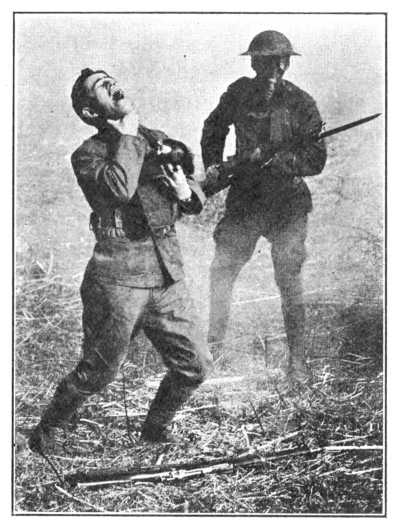
Fig. 5.—The Defective Gas Mask.
Successfully used by the Gas Defense Division to stimulate care in every part of the operation of the manufacture of Gas Masks.]
The story of the “first twenty thousand” has already been told on page 43. That these masks were far from satisfactory is no reflection upon the men who made them. Even with the standard design of the British as a pattern, it was impossible to attain all the knowledge concerning gas masks in two months. The experience gained in this struggle enabled the Army to take up the manufacture of gas masks, in July, 1917, with a more complete realization of the seriousness of the task. The masks were not lost, either, for they were sent to the various camps as training masks and served a very useful purpose.
The first order after this was for 1,100,000 masks, to be completed within a year from date. For this production there was authorized one major, two captains, and ten lieutenants. How little the problem was understood is evident when we realize that in the end there were 12,000 employees in the Gas Defense Plant at Long Island City, N. Y. The first attempts were to secure these through existing concerns. The Hero Manufacturing Company of Philadelphia undertook the work and carried on certain portions of it all through the War. Experience soon showed, however, that because of the necessity for extreme care in the manufacture and inspection of the mask, the ordinary commercial organization was not adapted to carry on their manufacture on the scale necessitated by the Army program. Consequently, on Nov. 21, 1917, the Secretary of War authorized the establishment of a government operated plant, and experienced officials were drawn from New York, Chicago, Boston and other manufacturing centers to carry on the work. Buildings in Long Island City, not far from the chemical plant (charcoal and soda lime) at Astoria, were taken over by the officers of the Gas Defense Service, until in July, 1918, five large buildings were occupied, having a total floor space of 1,000,000 square feet (23 acres). The organization grew from the original thirteen officers until it included some 12,000 employees of whom about 8,500 were women. Because of the care required in all the work, attempt was made to secure, as far as possible, those who had relatives with the A. E. F. The thought was that their personal interest in the work would result in greater care in manufacture and inspection. The personnel was unique in that the authority was apparently divided between civilian and military, but there was no friction because of this. The efficiency of the entire organization is shown by the fact that the masks manufactured at Long Island City cost fifty cents less per mask than those manufactured under contract.
The first actual shipment (overseas) of box respirators was made from the Gas Defense Plant on March 4, 1918. From this date the production increased by leaps and bounds. As mentioned above, between this date and November 26, when the last mask was manufactured, 3,146,413 masks of the box respirator type were passed through final inspection in the plant. The greatest daily production, 43,926 masks, was reached on October 26, 1918. The process of manufacture will be discussed under the chapter on the Gas Mask.
During the last half of 1918 the Kops Tissot mask was manufactured. This mask had been perfected during the months preceding August, 1918, when its manufacture was started. Considerable difficulty was encountered in its production, but the first mask was completed on September 14, and between that time and the Armistice, 189,603 masks of this type had been manufactured.
Along with this manufacturing development went the building up of an elaborate procurement force charged with the responsibility of providing parts to be assembled at the Gas Defense Plant and at the Hero Manufacturing Company. This Section faced a hard and intricate task, but, though there were instances where the shortage of parts temporarily caused a slowing down of production, these were remarkably rare. Not only had the parts to be standardized, and specifications written, but a field inspection force had to be trained in order that the finished parts might be suitable for the final assembly plant. The problem was further complicated by the fact that the design was constantly changing, as improvement followed improvement. Officers, trained in inspection in a day, were sent out to train inspectors in the industrial centers.
In February, 1918, shortly before the German drive commenced, requisitions were received for sample lots of oiled mittens and oiled union suits as protection against mustard gas. These were prepared in quantity and sent to the front, as was also a considerable amount of chloride of lime for neutralizing the mustard gas in the field.
Another phase of the work consisted of the Field Testing Section, which was organized to provide field testing conditions for the regular product and for the development organization. Later there were added a preliminary course of training for officers for overseas duty in chemical warfare, the military training of the Gas Defense officers located in and near New York and the training of boat crews engaged in carrying offensive gas supplies. The Field Testing Section rendered valuable service in pointing out weaknesses of designs as developments took place and especially those uncomfortable features of the masks which were apparent only through long wear. During the course of this work the section built a complete trench system in the Pennsylvania Railroad yards with an elaborate dugout, the equal of any of the famous German quarters on the Western front.
The chapters on Charcoal, Soda-Lime and the Gas Mask must be read in this connection to gain an idea of the work carried out by this Division. It is summed up in the statement that American soldiers were provided with equipment which neutralized the best effects of German chemical knowledge as evidenced by the offensive methods and materials employed.
The organization of the Gas Defense Division, as of Nov. 11, 1918, was as follows:
Colonel Bradley Dewey Officer in Charge
Lieut. Col. A. L. Besse Asst. Officer in Charge
Major M. L. Emerson Administration Section
Major H. P. Schuit Comptrolling Section
Mr. R. Skemp Procurement Section
Major C. R. Johnson Technical Director
Capt. K. Atterbury Field Testing Section
Major J. C. Woodruff Chemical Manufacturing and
Development
Mr. R. R. Richardson Manager, Gas Defense Plant
Capt. H. P. Scott Officer in Charge,
Hero Manufacturing Co.
Major L. W. Cottman Engineering Branch
Major T. L. Wheeler Chemical Development
Major I. W. Wilson Astoria Branch
Capt. W. E. Brophy San Francisco Branch
Lt. E. J. Noble Cleveland Branch
Lt. L. Merrill Springfield Branch
Edgewood Arsenal
The Ordnance Department, in making plans for a shell filling plant, thought to interest existing chemical firms in the manufacture of the required toxic materials. As plans developed, however, difficulties arose in carrying out this program. The manufacture of such material at private plants necessitated its shipment to the filling plant at Edgewood. The transportation of large quantities of highly toxic gases seemed attended with great danger. The Director General of Railroads ruled that all such shipments must be made by special train, a very expensive method of transportation. Still more serious objections were encountered in the attempt to enlist the co-operation of existing firms. They recognized that the manufacture of such material would be attended by very great danger; that the work would be limited to the duration of the war; and that the processes involved, as well as the plants necessary for carrying out their processes, would have little post-war value. Moreover, such firms as had the personnel and equipment were already over-worked. With a few exceptions (notably the American Synthetic Color Company, the Oldbury Electro-Chemical Co., Zinsser & Co., and the Dow Chemical Company) they were unwilling to undertake work of this character on any terms whatever.
Early in December, 1917, therefore, it was decided to erect, on the site of the shell filling plant, such chemical plants as would be necessary to furnish the toxic materials required for filling the shell. The Arsenal is situated in an isolated district, twenty miles east of Baltimore, Maryland, on the Pennsylvania Railroad, and comprises 3,400 acres. Since the main line of the Pennsylvania Railroad runs on one side of the tract, while on another is the Bush River, only a few miles from its mouth in Chesapeake Bay, the tract was ideally situated for shipping. This site was referred to, at first, as “Gunpowder Reservation,” but on May 4, 1918, the name was officially changed to “Edgewood Arsenal.”
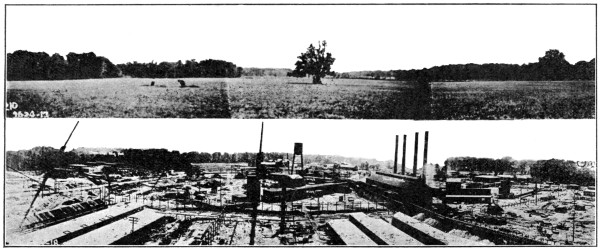
Fig. 6.—Edgewood Arsenal.
The upper view shows the site as it appeared Oct. 24, 1917. The lower view shows the same as it appeared nine months later.
Some idea of the extent of the work may be gained from the following facts. On October 1, 1918, there were 233 officers, 6,948 enlisted men and 3,066 civilians engaged in work at Edgewood. 86 cantonments were built, accommodating about 8,500 men, while the five officers’ barracks provided accommodations for 290. The completed hospital unit consisted of 34 buildings, accommodating 420 patients under ordinary conditions. The total number of buildings erected on the Arsenal grounds was 550. 14.8 miles of improved roads were built, and 21 miles of standard gauge and 15 miles of narrow gauge railway. A system furnishing 9.5 million gallons of salt water and another furnishing two millions of fresh water daily were successfully installed. Large power plants were built in connection with the shell filling plants and the chlorine plant.
Plants for phosgene, chloropicrin, mustard gas, chlorine and sulfur chloride were built and placed in successful operation. Most of the raw materials, with the exception of sulfur chloride, were obtained from commercial firms. The other gases and manufactured materials used, such as phosphorus, tin and silicon tetrachlorides, bromobenzylcyanide and arsenic derivatives were supplied by various plants scattered through the East and Middle West States.
The raw materials used by the Arsenal in 1918 were as follows:
Salt 17,358,000 pounds
Bleach 42,384,000 “
Picric acid 3,718,000 “
Alcohol 3,718,000 “
Sulfur 24,912,000 “
Sulfur chloride 6,624,000 “
Bromine 238,000 “
Benzyl chloride 26,000 “
The production of toxic materials and the amount shipped overseas in bulk follow:
Production, Pounds Shipped in Bulk, Pounds
Chlorine:
Liquid 5,446,000 2,976,000
Gaseous 2,208,000
Chloropicrin 5,552,000 3,806,000
Phosgene 3,233,070 840,000
Mustard gas 1,422,000 380,000
Bromobenzyl cyanide 10,000
White phosphorus 2,012,000 342,000
Tin tetrachloride 2,012,000 212,000
Titanium tetrachloride 362,000
For nearly a month previous to the signing of the Armistice, the various plants at the Arsenal had shut down or were operated only to an extent sufficient to maintain the machinery and equipment in good working order, on account of the lack of shell into which to fill the gas, so that the above figures do not at all represent maximum productive capacity.
These plants will be described in the appropriate chapters.
The shell filling plant was really composed of several small plants, each of which was made up of units radiating from a central refrigeration plant which would serve all the units. Each unit could then be fitted with machinery adapted for filling shell of a different size, and for a particular gas. Moreover, an accident in one of the units would in no way impair the working of the remainder.
The problem involved in the filling of a shell with toxic material (which is always a liquid or a solid and never a gas under the conditions in which it is loaded in the shell) is similar in a way to that of filling bottles with carbonated water. In the development of plans for the filling plant, many suggestions were obtained from a study of the apparatus used in commercial bottling plants. It was necessary to keep in mind not only the large number of shell to be filled, but also the highly toxic character of the filling material to be used. It was essential that the work of filling and closing the shell should be done by machinery in so far as that was possible, and that the operation should be carried out in a thoroughly ventilated room or tunnel, arranged so that the machinery contained in the tunnel could be operated from the outside. Special care was taken in closing the shell, the closing being accomplished by motors actuated by compressed air, which, in the closing process were driven until they stalled. In this way a uniform closing torque was obtained. The final results secured were admirable, as is evidenced by the fact, reported by the Quartermaster Officer at Vincennes on November 15, 1918, that not a single leaky shell had been found among the 200,000 shell received up to that date.
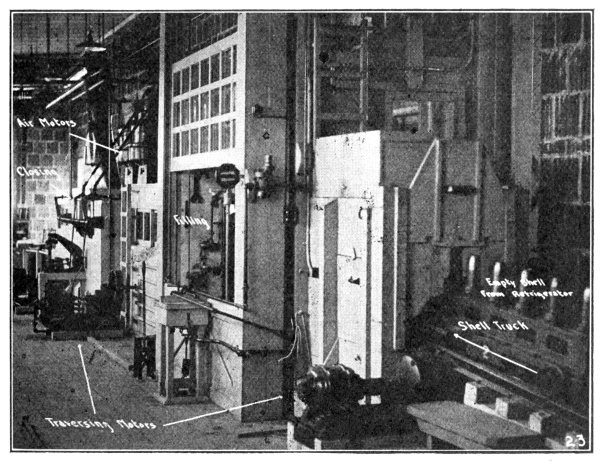
Fig. 7.—A Typical Shell filling Plant at Edgewood Arsenal.
Details of the filling process will be found in the chapter on Phosgene.
Besides the ordinary gas filling plants (of which one was completed and two were 80 per cent completed) there was a plant for stannic chloride grenades, one for white phosphorus grenades, and one for smoke shell also filled with phosphorus and a plant for filling incendiary bombs.
Shell are designated by their diameter in inches or millimeters. The approximate amount of toxic gas required for filling each type of shell (10.5 per cent void) is as follows:
Shell Phosgene, Pounds N. C.,[13] Pounds Mustard Gas, Pounds
75 mm 1.32 1.75 1.35
4.7 inch 4.27 6.20 4.20
155 mm 11.00 15.40 10.35
8 inch 22.00 30.30 21.60
Livens 30.00
The gas grenades held 0.446 pound of stannic chloride, and the smoke grenades held 0.67 pound of white phosphorus.
The only type of shell filled was the 75 mm. variety, because either the shell of the other sizes or the accompanying boosters (bursting charges) were not available.
The work done by the filling plant is shown by the following figures, representing the number of shell, grenades, etc.
75 mm. Shell
Filled Shipped Overseas
Phosgene 2,009
N. C. 427,771 300,000
Mustard gas 155,025 150,000
Livens Drum
Phosgene 25,689 18,600
Grenades
White phosphorus 440,153 224,984
Tin tetrachloride 363,776 175,080
Incendiary Drop Bomb
Mark I. 542
Mark II. 2,104
The total monthly capacity of the filling plants at the date of the Armistice was as follows:
Pounds
75 mm. shell 2,400,000
4.7 inch shell 450,000
155 mm. shell 540,000
6 inch shell 180,000
Gas grenade 750,000
Smoke grenade 480,000
Livens drum 30,000
One point relating to the casualties resulting from the work should perhaps be mentioned here. The number of casualties should change the mind of anyone who feels that men chose this work as being “safe” instead of going to France. During the six months from June to December there were 925 casualties, of which three were fatal, two being due to phosgene and one to mustard gas. These were divided among the different gases as follows:
Mustard gas 674
Stannic chloride 50
Phosgene 50
Chloropicrin 44
Chlorine 62
Other material 45
Of these 279 occurred during August, 197 during September and 293 during October. Since production stopped early in November, there were only 14 during that month and three during December.
The Staff at Edgewood Arsenal at the signing of the Armistice was as follows:
Commanding Officer Colonel Wm. H. Walker
Administrative Officers Lt. Colonel George Cahoon, Jr.

Lt. Col. Edward M. Ellicott
Lt. Col. Wm. C. Gallowhur
In Charge of Outside Plants Lt. Col. Wm. McPherson

Major Adrian Nagelvoort
Major Charles R. Wraith
Captain John D. Rue
Shell Filling Plant Lt. Col. Edwin M. Chance
Chlorine Plant Lt. Col. Charles Vaughn
Chemical Plants Major Dana J. Demorest
Chemical Laboratory Major William L. Evans
As the work of the Arsenal expanded it was necessary to manufacture certain of the chemicals at outside plants. The men in charge of these plants were:
Bound Brook, N. J. Lt. William R. Chappell
Stamford, Conn. Lt. V. E. Fishburn
Hastings-on-Hudson, N. Y. Major F. G. Zinnsser
Niagara Falls, N. Y. Major A. Nagelvoort
Buffalo, N. Y. Lt. A. W. Davison
Kingsport, Tenn. Lt. E. M. Hayden
Charleston, W. Va. Lt. M. R. Hoyt
Midland, Mich. Major M. G. Donk
Croyland, Pa. Capt. A. S. Hulburt
After the Armistice, Edgewood Arsenal was selected as the logical home of the Chemical Warfare Service, and all the outside activities of the Service were gradually closed up and the physical property and files moved to Edgewood. At first the command of the Arsenal was in the hands of Lt. Col. Fries, but when he was appointed Chief of the Service, Major E. J. Atkisson, who had so successfully commanded the First Gas Regiment, A. E. F., was happily chosen his successor. At the present time (July 1, 1921), the organization of Edgewood Arsenal is as follows:
Commanding Officer Major E. J. Atkisson
Executive Officer Major R. C. Ditto
Technical Director Dr. J. E. Mills
Chemical Division Mr. D. B. Bradner
Mechanical Division Mr. S. P. Johnson
Plant Division Capt. E. G. Thompson
Chemical Warfare School Major O. R. Meredith
Property Major A. M. Heritage
First Gas Regiment Major C. W. Mason
Mask Production Division Lt. L. A. Elliott
Medical Department Major T. L. Gore
Pathological Division Lt. H. A. Kuhn
Quartermaster Department Capt. H. L. Hudson
Finance Department Capt. C. R. Insley
Development Division
The Development Division had its origin in the research laboratories of the National Carbon Company and of the National Lamp Works of the General Electric Company. Both of these companies knew charcoal, and they were asked to produce a satisfactory absorbent charcoal. The success of this undertaking will be seen in the chapter on Absorbents. After a short time all the laboratory work was taken over by the National Carbon Co., while the developmental work was assigned to the National Lamp Works. When the final organization of the Chemical Warfare Service took place, the National Carbon Laboratory became part of the Research Division, while the National Lamp Works became the Defense Section of the Development Division.
The Development Division may be considered as having been composed of the following sections:
1. Defense
2. Offense
3. Midland
4. Willoughby
5. Special Investigation.
The work of the Defense Section consisted of the development of a charcoal suitable for use in gas masks, and its manufacture. While the details will be given later, it may be mentioned here that three weeks after the organization of the Section (April 28, 1917) the furnaces of the National Carbon Company were turning out cedar charcoal, using a straight distillation procedure. Cedar was selected from a large variety of materials as giving the highest absorptive value against chlorine. But phosgene and chloropicrin were also being used, and it was found that the cedar charcoal was not effective against either. Proceeding on a definite hypothesis, fifty materials were investigated to find the charcoal with the highest density. Cocoanut hulls furnished the raw material, which yielded the most active charcoal. By a process of air activation a charcoal was obtained which possessed high absorptive power for such gases as chloropicrin and phosgene. Later this air process was changed to one in which steam is used; the cocoanut shell charcoal activated with steam was given the name “Dorsite.”
Complete apparatus for this air process was installed at the plant of the Astoria Light, Heat & Power Company, Long Island City, and the first charcoal was prepared during September, 1917. This was followed by a large amount of experimental work, relating to the raw material, the method of activation, and the type of furnace used. Because of the shortage of cocoanut hulls, it later became necessary to use a mixture of cocoanuts with cohune nuts, apricot and peach pits, cherry pits and vegetable ivory. Another substitute for cocoanut charcoal was found in a steam activated product from high grade anthracite coal, called “Batchite.”
The Offense Section and the Midland Section were concerned with the manufacture of mustard gas. This work was greatly delayed because of the unsatisfactory nature of the so-called chlorohydrin process. Another difficulty was the development of a satisfactory ethylene furnace. Finally in February, 1918, Pope in England discovered the sulfur chloride method of making mustard gas. At once all the energies of the Research Division were concentrated on this process, and in March steps were taken to put this process into production. An experimental plant was established at Cleveland; no attempt was made to manufacture mustard gas on a large scale, but the results obtained in the experimental studies were immediately transmitted to the manufacturing plants at Edgewood Arsenal, the Hastings-on-Hudson plant, the National Aniline & Chemical Company (Buffalo) plant, and the Dow Chemical Company (Midland) plant. The details of the work on mustard gas will be given in a later chapter.
Special investigations were undertaken to develop a booster casing and adapter for 75 mm. gas shell, and to duplicate the French process of lining gas shell with glass.
The organization of the Development Division at the signing of the Armistice was as follows:
Colonel F. M. Dorsey Chief of the Division
Major L. J. Willien Supt., Offense Section
Capt. O. L. Barnebey Supt., Defense Section
Lt. Col. W. G. Wilcox Supt., Experimental Station
Capt. Duncan MacRae Special Investigation Section
Dr. A. W. Smith Midland Section
Capt. J. R. Duff Administrative Section
Proving Division
The Proving Division had its origin in the decision to build an Experimental Ground for gas warfare under the direction of the Trench Warfare Section of the Ordnance Department. While this decision was reached about September, 1917, actual work on the final location (Lakehurst, N. J.) was not started until March 26, 1918, and the construction work was not completed until August 1, 1918. However, firing trials were started on April 25, 1918, and in all 82 were carried out.
The Proving Division was created to do two things: To experiment with gas shell before they reached the point where they could be manufactured safely in large numbers for shipment overseas; and to prove gas shell, presumably perfect and ready for shipment, to guard against any mechanical inaccuracies in manufacture or filling. It is evident that the second proposition is dependent upon the first. Shell can not be proved to ascertain the effect of gases under various conditions and concentrations until the mechanical details of the shell itself, purely an Ordnance matter, have been standardized. Unfortunately many of the tests carried out had to do with this very question of testing Ordnance.
For field concentration work two complete and separate lines of trenches were used and also several impact grounds. The trenches were built to simulate the trenches actually used in warfare. Each line of trench contained several concrete shell-proof dugouts and was also equipped with shelves into which boxes could be placed for holding the sample bottles. At intervals of one yard throughout the trenches there were electrical connections available for electrical sampling purposes. The various impact grounds were used for cloud gas attacks, and experiments with mustard gas or in many cases for static trials. The samples were collected by means of an automatic sampling apparatus.
The work of the Division consisted in the first instance of determining the proper bursting charge. While a great deal of this work had been carried out in Europe, American gas shell were enough different to require that tests be carried out on them. The importance of this work is obvious, since phosgene, a substance with a low boiling point, would require a smaller bursting charge to open the shell and allow the substance to vaporize than would mustard gas, where the bursting charge must be not only sufficient to fragment the shell but also to scatter the liquid so that it would be atomized over the largest possible area. In the case of low boiling liquids it was necessary that the charge be worked out very carefully as a difference of one or two grams would seriously affect the concentration. Too small a charge would allow a cup to be formed by the base of the shell which would carry some of the liquid into the ground, while too great an amount of explosive tended to throw the gas too high into the air.
After the bursting charge had been determined a large number of shell were repeatedly fired into the trenches, wooded areas, rolling and level ground, and the concentration of gas produced and the effect upon animals placed within the area ascertained. From the results of these experiments the Proving Division was able to furnish the artillery with data regarding how many shell of given caliber should be used, with corrections for ranges, wind velocities, temperatures, ground conditions, etc. Trials were also held to determine how many high explosive (H.E.) shell could be fired with gas shell on the same area without unduly affecting the concentration. This was important, because H.E. shell were useful in disguising gas bombardments. Gas shell can usually be distinguished by the small detonation on bursting.
Experiments were performed to determine the decomposition of various gases on detonation. The shell were fired at a large wooden screen and burst on impact. Samples of gas were taken immediately and analyzed.
Co-operative tests were carried out with the Gas Defense Division to determine the value of given masks under field conditions. Companies of infantry, fully equipped for the field, would wear masks for hours at a time digging trenches, cutting timber, drilling, etc., and imitating in every way, as far as possible, actual field conditions. During these activities tons of gas in cylinders were released in such a way that the men were enveloped in a far higher concentration than would probably ever be the case in actual battle. These tests gave valuable data for criticizing gas mask construction.
Another line of activity consisted of a study of the persistency and relative effectiveness of various samples of mustard gas, in which the liquid was distributed uniformly upon the surface of grassy zones one to three feet in width, which formed the periphery of circular areas 14 to 21 feet in diameter, the central part of each circle being occupied by animals.
The work of the Proving Division was brought to an end (by the Armistice) just at the time when it had reached its greatest usefulness. Not only were the physical properties and personnel of the Division developed to the maximum degree, but the production of gas shell in this country for shipment to France had just reached the stage where the Proving Ground could have been used to its fullest extent in their proving.
Training Division
From the standpoint of the man at the front the Training Division is one of the most important. To him gas warfare is an ever present titanic struggle between poisonous vapors that kill on one side, and the gas mask and a knowledge of how and when to wear it, on the other. Because of this it is rather surprising that we did not hear more about this branch of the Service. It did exist, however, and credit must be given to those camp gas officers who remained in the United States performing an inconspicuous and arduous duty in the face of many local obstacles.
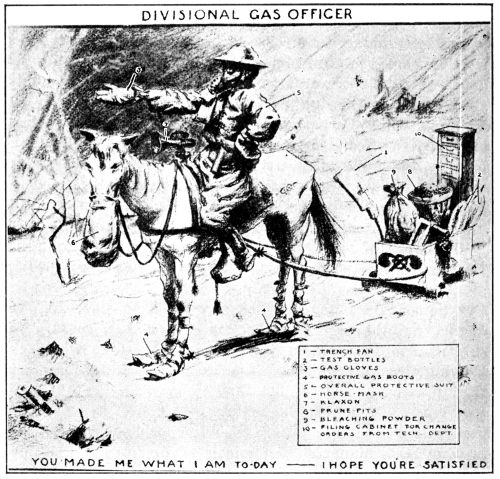
Fig. 8.
The Field Training Division of the Gas Defense Service in the United States was organized in September, 1917, and consisted of Major J. H. Walton and 45 first lieutenants, all chemists. These men were given a three months’ military training at the American University. The arrival of Major (now Colonel) Auld during this time was very helpful, as he was able to give the Section first-hand knowledge. About 12 of the 45 men wore sent to France, while the remainder, together with British Gas Officers, were assigned to various Divisions still in training. There was little idea at that time as to what constituted real gas training. No one knew how much gas training would be received in France, and since little was often received due to lack of time, many men went into action with no idea of what this training really meant. Moreover, an order that the gas officers should not go to France with their Divisions had, as was only natural, a discouraging effect upon the men and upon gas training and discipline generally.
In January, 1918, the gas officers were transferred to the Engineers, and designated as the 473d Engineers. Later an Army Gas School was established at Camp Humphreys. Because of the rapidly changing personnel, owing to overseas assignments, the policy was adopted of sending specialized gas officers only to Divisional Camps and the larger training centers. The need of a larger unit and increased authority was recognized by all intimately associated with the work, but little was accomplished until the transfer to the Chemical Warfare Service. Upon the appointment of Brigadier General H. C. Newcomer as Assistant Director of the Chemical Warfare Service, he was placed in charge of all military affairs of the Service, and the administrative officers of the Training Section became his “military assistants.” A few weeks later the Training Section of the Administration Division, C.W.S. was formed.
At this time new duties fell to the lot of this Section, among the more important being:
(1) The organization of gas troops and casual detachments for overseas duty;
(2) The establishment of a Chemical Warfare Training Camp;
(3) The procurement and training of officers for overseas duty.
For this purpose a training camp was established near the Proving Ground (Camp Kendrick) to hold 1300 officers and men. Line officers were sent from the larger camps for training, the best of whom might later be transferred to the Chemical Warfare Service for duty as Gas Officers.
The work of the Section eventually grew to such proportions that it was recognized as the Training Division of the Chemical Warfare Service. It differed from other Divisions in that all administrative routine was carried on through the offices of the Director, and with the assistance and co-operation of its various Sections.
Because of the formation of the Chemical Warfare Service and the apparent need for officers, the office was soon flooded with applications for commissions. These were carefully examined and the men were sent first, by courtesy of the Chief of Engineers, to Camp Humphreys for a month’s course of military training. At the end of this period they were sent to Camp Kendrick as students of the Army Gas School. Toward the last of October all the officers and enlisted men were transferred to Camp Kendrick where an Officers’ Training Battalion was organized.
It is obvious that the gas training of troops was the most responsible duty of the Training Division. There was constantly in mind an ideal of supervised and standardized training for all troops in the United States, and the Division, at the time of the Armistice, for the first time found itself with a nearly adequate corps of officers through whom this ideal could be realized.
Medical Division
Dr. Yandell Henderson of Yale University was the logical man to inaugurate the medical work of the Bureau of Mines, because of his experience with oxygen rescue apparatus. A member of the first committee of the Bureau, he secured, in July, 1917, an appropriation for the study of toxic gases at Yale. This was in charge of Doctors Underhill, therapy; Marshall, pharmacology; and Winternitz, pathology. When the American University Station was opened Marshall was given charge of the pharmacology. About the same time a factory protection unit was organized under the direction of Doctors Bradley, Eyster and Loevenhart. At first this committee reported to the Ordnance Department, but later the work was transferred to the Gas Defense Service.
In December, 1917, the Medical Advisory Board was organized. This included all the men who were carrying on experimental work of a medical nature. This board had as its object the correlation of all medical work; new work was outlined and attempts were made to secure the co-operation of scientific men throughout the country. The following groups of workers assisted in this effort: At Yale, Underhill studied therapy, turning his animals over to Winternitz for pathological study. Henderson was specially interested in the physiology of aviation. At the American University Marshall carried on pharmacological research, specially as regards mustard gas, the toxicology being covered by Loevenhart. A pathological laboratory was also started, under Winternitz, where many valuable studies were made.[14] At Cleveland Sollmann was busy with mustard gas and protective agents. Pearce, working in co-operation with Dr. Geer of the Goodrich Rubber Company, perfected the Goodrich Lakeside Mask. His study was very valuable as concerning the physiology of the gas mask. At Ann Arbor Warthin and Weller[15] were studying the physiology and pathology of mustard gas. Wells, Amberg, Helmholz and Austin of the Otho Sprague Memorial Institute were interested in protective clothing, while at Madison, Eyster, Loevenhart and Meek were engaged in a study of the chronic effect of long exposures to low concentrations, and later expanded their work to protective ointments and certain problems in pathology.
In the spring of 1918 many of these men were commissioned into the Gas Defense Service of the Sanitary Corps, and were later transferred to the Chemical Warfare Service as the Medical Division, with Colonel W. J. Lyster, M.C., in charge.
One of the most important functions of this Division was the daily testing of a large number of compounds for toxicity, lachrymatory or vesicant properties. The accuracy of these tests might and probably did save a large amount of unnecessary experimental work on the part of the Research Division. These tests are described in a later chapter.
Very interesting and likewise valuable was the study of mustard gas by Marshall, Lynch and Smith. They were able to work out the mechanism of its action and the varying degrees of susceptibility in individuals (see page 171).
Another interesting point was the fact that in the case of certain gases there is a cumulative effect. With superpalite and mustard gas the lethal concentration (that concentration which is fatal after a given exposure) is lower on longer exposures. On the other hand there is no cumulative effect with hydrocyanic acid. Whether the action is cumulative or not depends on the rate at which the system destroys or eliminates the poison.
Liaison Officers
This chapter should not be closed without reference to the Liaison Service that was established between the United States and her Allies, especially England.
During the early days no one in the States was familiar with the details of gas warfare. At the request of the Medical Corps, upon the urgent representations of the Gas Service, A.E.F., Captain (now Major) H. W. Dudley was sent to this country (Sept., 1917) to assist in the development and manufacture of gas masks. For some time he was the Court of Appeal on nearly all technical points regarding matters of defense. Dudley’s continual insistence on the need for maintaining the highest possible standard of factory inspection was one of the factors resulting in the excellent construction of the American Mask. In March, 1918, Lieut. Col. Dewey and Captain Dudley made a trip to England and France, during which the idea of a liaison between the defense organizations of the two countries originated. Dudley was transferred to the Engineers, promoted and placed in charge of the Liaison service. While the time until the Armistice was too short to really test the idea, enough was accomplished to show the extreme desirability of some such arrangement.
Probably the best known liaison officer from the British was Colonel S. J. M. Auld, also sent upon the urgent representations of the Gas Service, A.E.F. He arrived in this country about the middle of October, 1917, in charge of 28 officers and 28 non-commissioned officers, who were to act as advisers in training and many other military subjects besides gas warfare. Since Auld had had personal experience with gas warfare as then practiced at the front, his advice was welcomed most heartily by all the different branches of the Army then handling gas warfare. On questions of general policy Auld was practically the sole foreign adviser. The matter of gas training was transferred from the Medical Corps to the Engineers, and was greatly assisted by four pamphlets on Gas Warfare issued by the War College, which were prepared by Major Auld with the assistance of Captain Walton and Lieut. Bohnson. Later Auld gave the American public a very clear idea of gas warfare in his series of articles appearing in the Saturday Evening Post, and re-written as “Gas and Flame.”
Major H. R. LeSueur, who was at Porton previous to his arrival in this country in December, 1917, rendered valuable aid in establishing the Experimental Proving Ground and in its later operations.
Towards the close of the war the British War Office had drawn up a scheme for a Gas Mission, which was to correlate all the gas activities of England and America. This was never carried through because of the signing of the Armistice.
The French representatives, M. Grignard, Capt. Hanker and Lt. Engel furnished valuable information as to French methods, but they were handicapped by the fact that French manufacturers did not disclose their trade secrets even to their own Government.
About August, 1918, Lieut. Col. James F. Norris opened an office in London. His duties were to establish cordial and intimate relations not only with the various agencies of the British Government which were connected with gas warfare, but also with the various laboratories where experiments were being conducted, that important changes might be transmitted to America with the least possible delay. The English made Colonel Norris a member of the British Chemical Warfare Committee. Here again the signing of the Armistice prevented a full realization of the importance of this work.