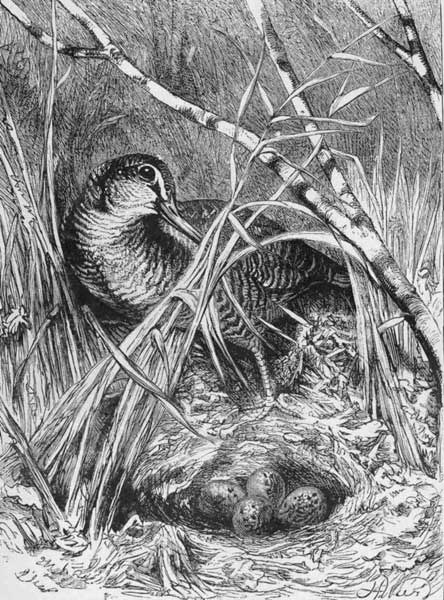
THE COMMON SNIPE.
Reading edition
T
HESE birds frequent swampy woods, marshes, morasses, and the borders of rivers. Their usual time for seeking their food is early in the morning and during the twilight of the evening. They subsist principally upon insects and worms; for these they search among the decayed leaves, and probe the mud and ooze with their lengthened bills. When alarmed, they generally lie close to the ground, or among the grass, or, suddenly starting on the wing, escape by flight, which is short but elevated, rapid, and irregular. The eggs, which are four in number, are deposited on the ground. In the snipe, and all its immediate allies, the bill is thickened, soft, and very tender at its extremity; so that this part, which is richly supplied with nerves, serves as a delicate organ of touch, and is used for searching in the soft ground for the insects and worms that constitute the food of these birds.
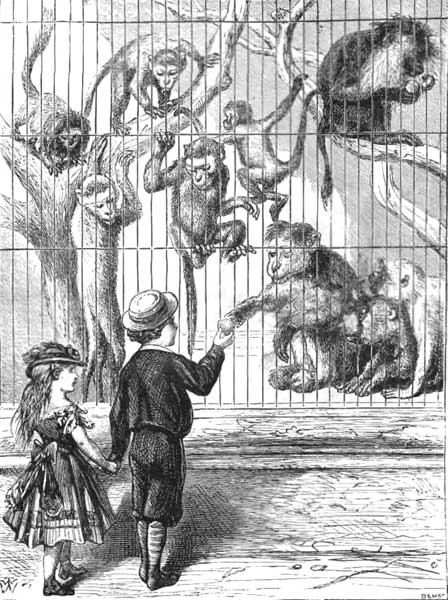
A VISIT TO THE MONKEYS.
D—THE DOE

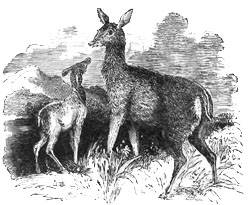
GRACEFULL and gentle is the Doe; Its tawny coat how sleek! How bright yet tender are its eyes! Its glance how softly meek!
E—THE EAGLE.

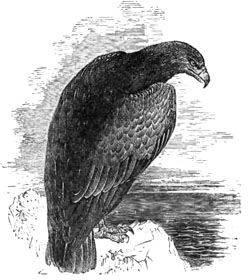
UPON the lonely mountain peak The eagle builds her nest, And there, when weary of the chase, In silence takes her rest.
F—THE FOX.

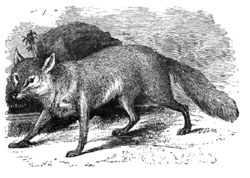
THE Fox will skulk in ferny brake, Yet loves the haunts of men; And prowls around the farm, to pounce On capon, goose, or hen.