Part 2 Visiting Charlestown Navy Yard
Reading edition
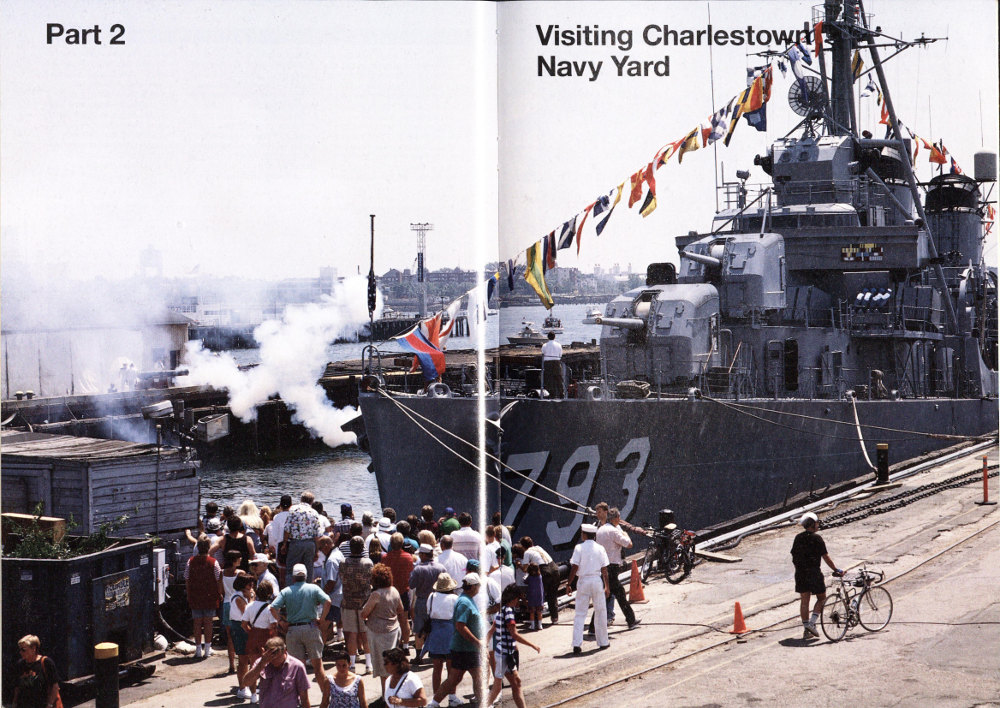
U.S.S. Cassin Young at Pier 1.
80
The Yard Today
The yard offers the visitor a captivating glimpse into the activities that for nearly two centuries supported the United States Navy. Here on the home front, thousands of civilian workers and navy personnel built, repaired, and supplied warships from the majestic sailing vessels of the early 19th century to the powerful steel navy of the 20th century. In 1974, the year of its closing, 30 acres of the historic yard were set aside for the National Park Service as a living museum of the Navy’s activities here. The remaining 100 acres continue to be developed as part of the revitalization of Boston’s waterfront.
Nineteenth-century buildings, docks, and piers reflect the yard’s 174-year history. The commandant’s 1805 hilltop mansion overlooked the activities below. Within view are Dry Dock 1, used by U.S.S. Constitution as early as 1833 and as late as 1995, the 1842 Carpenter Shop, the 1852 Pitch House (Building 10) for caulking wooden vessels, the 1833 Officers’ Quarters, the 1813 Navy Stores (Building 5), and the 1811 Marine Barracks.
Two venerable warships, the 1797 frigate U.S.S. Constitution and the powerful 1943 destroyer, U.S.S. Cassin Young, float alongside the working piers, illustrating the changing United States Navy. Both the Constitution, an active duty Navy warship, and Cassin Young, maintained by National Park Service rangers and volunteers, offer free tours daily.
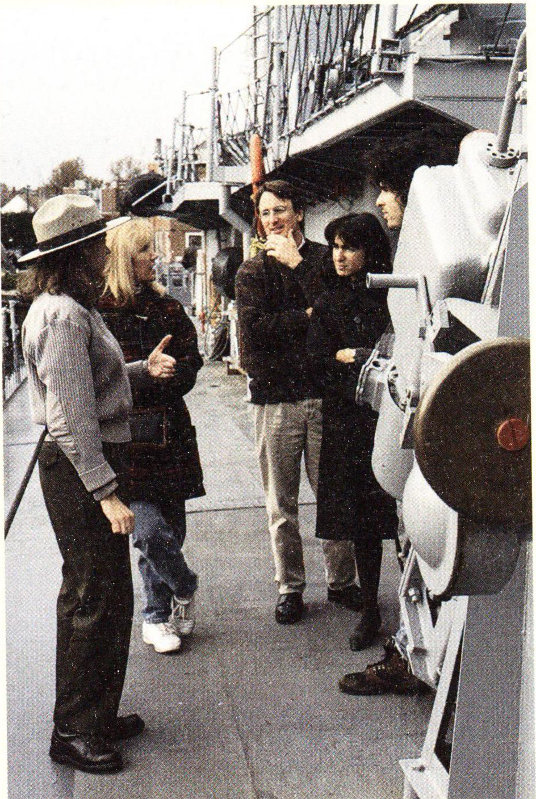
A National Park Service exhibit, “Serving the Fleet,” and tours of the yard (above) provide visitors with opportunities to explore the history of the site. The USS Constitution Museum offers a rich collection of artifacts, paintings, and models relating to the history of “Old Ironsides.” The museum, located inside the Dry Dock 1 Pumphouse, is open daily to visitors.
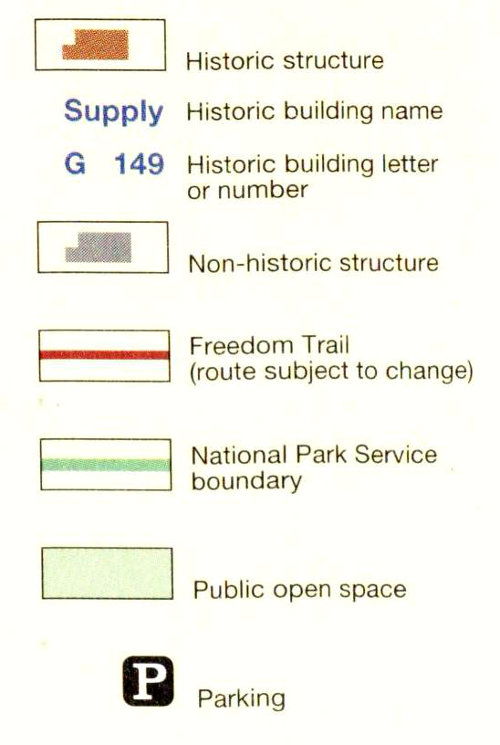
Historic structure
Historic building name
Historic building letter or number
Non-historic structure
Freedom Trail (route subject to change)
National Park Service boundary
Public open space
Parking
81
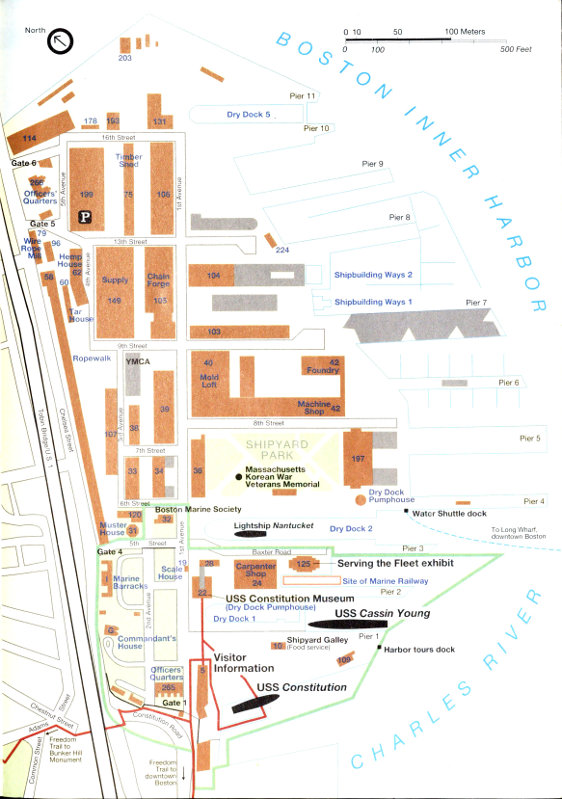
CHARLESTOWN NAVY YARD High-resolution Map
82
Charlestown Navy Yard’s buildings reflect the range of architectural styles employed over its long history. These structures served a variety of functions within the working yard, which was home to naval officers and their families as well as an industrial work place.
Beginning in 1853, the civilian shipyard workers living in surrounding communities, primarily Charlestown, assembled each morning to the ringing of the bell atop the octagonal Muster House. For most of the 19th century, the workers mustered there three times daily, in the morning at sunrise, at lunch, and once more in the evening before retiring to their homes at sunset.
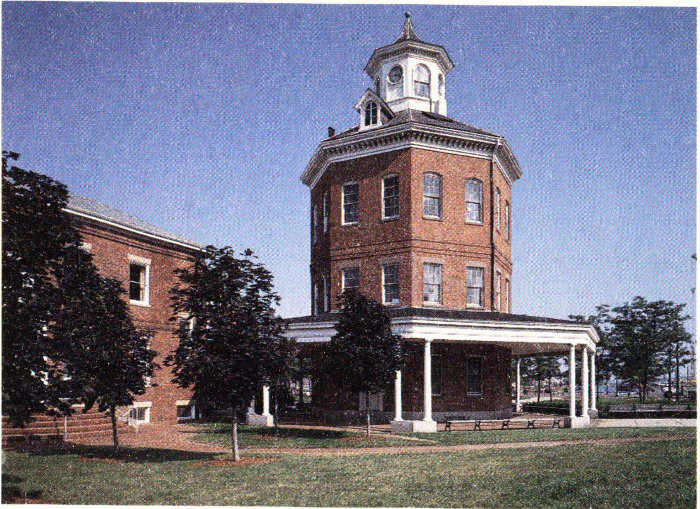
Muster House
Directing the activities was the shipyard commandant, who lived with his family and personal staff in the impressive mansion constructed in 1805. Built on the yard’s high ground, the Commandant’s House provided a bird’s-eye view of the construction and repair activities going on below.
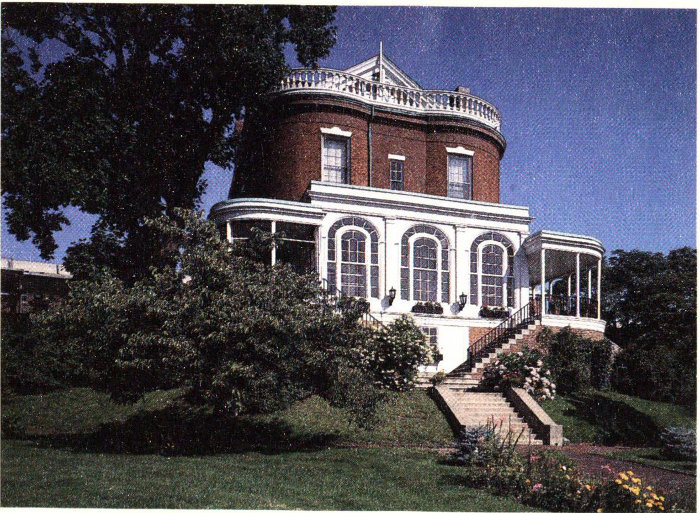
Commandant’s House
Today the house is open to the public for special tours, and numerous activities, such as historical military encampments, take place on the expansive lawn through the summer months.
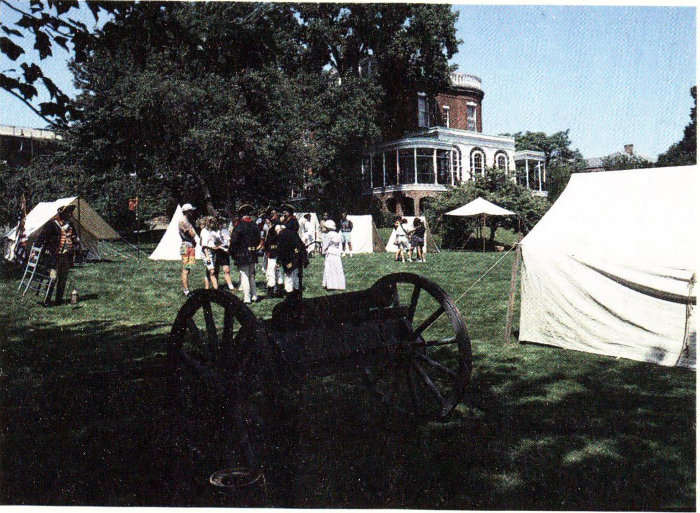
Historical military encampments
83
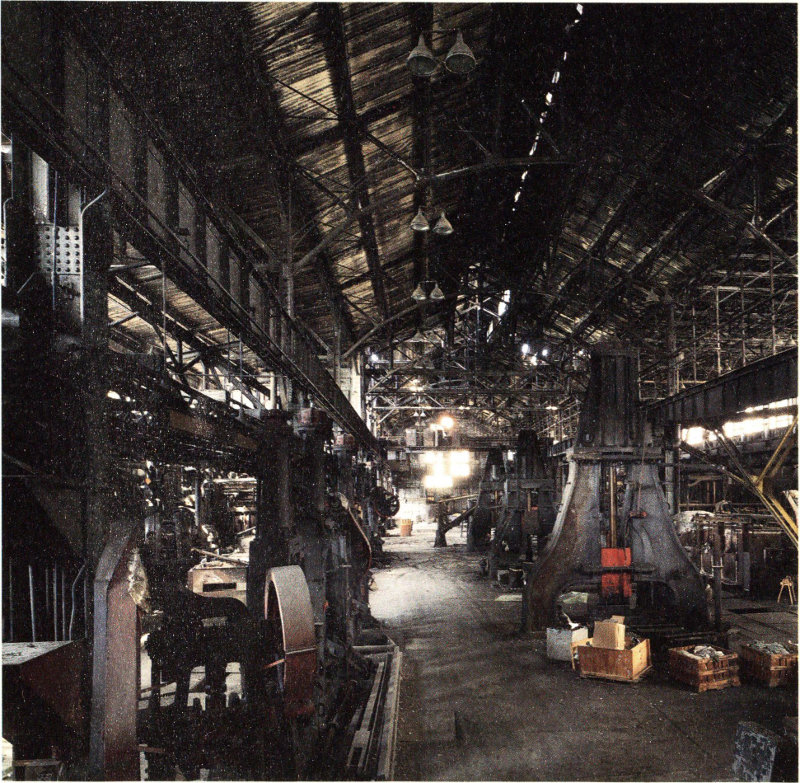
The Chain Forge houses the massive hammers once used to forge die-lock chain, a unique process developed here in 1926.
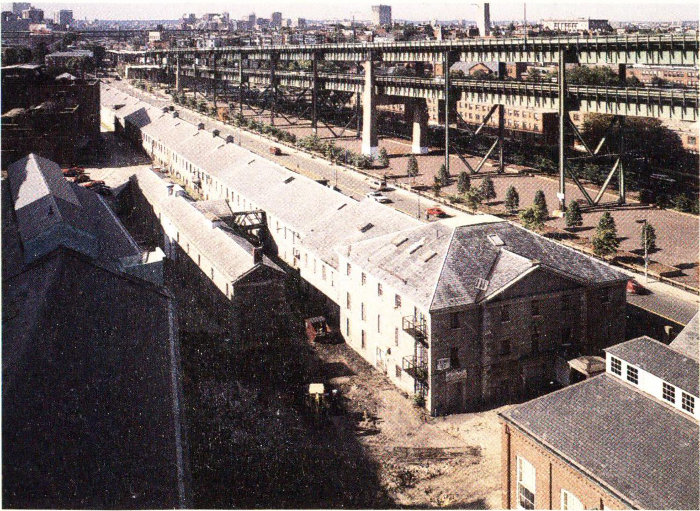
The country’s only remaining full-length ropewalk was for more than 130 years the sole facility in the Navy manufacturing rope for U.S. warships. Both buildings (not open to the public) await restoration and preservation work as part of the National Park Service’s ongoing efforts to preserve the significant industrial heritage of the Charlestown Navy Yard.
84
The Ships at Charlestown
The Navy’s oldest commissioned warship, United States Ship Constitution and the Charlestown Navy Yard share a long history. Constructed in Boston between 1794 and 1797, “Old Ironsides” was repaired and supplied here many times during its active career. U.S.S. Constitution was permanently berthed in Charlestown in 1897 and has since been open to the public for tours. Like all wooden vessels, Constitution needs constant attention. In the 1920s, a major overhaul was capped with a nationwide tour. Between 1992 and 1995, Constitution underwent the most significant restoration to date in the yard’s Dry Dock 1. Newly discovered drawings and descriptions were used to help skilled naval shipwrights restore the vessel to its original appearance.
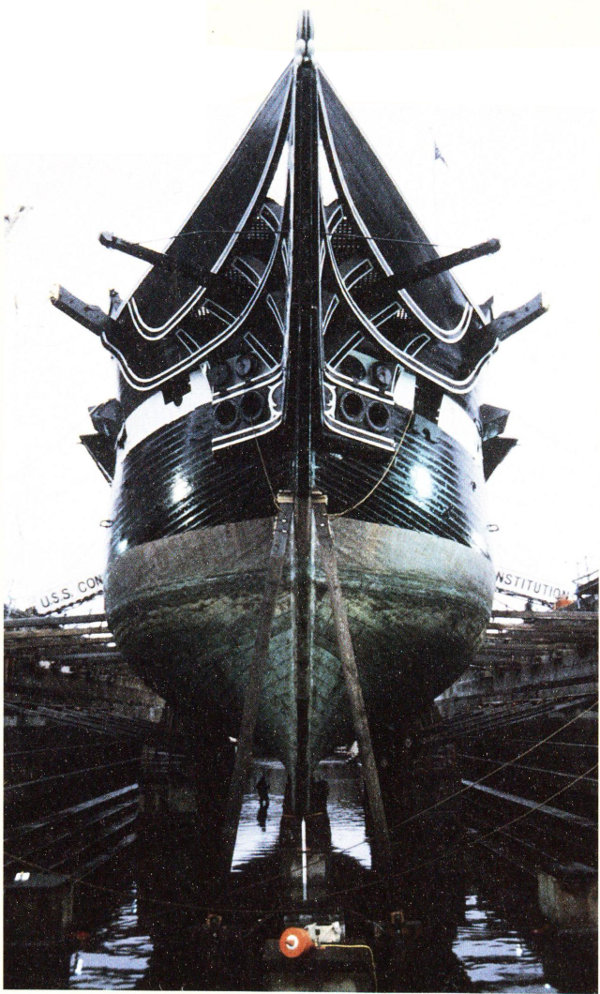
Constitution settles on dry dock blocks in preparation for its 1990s restoration.
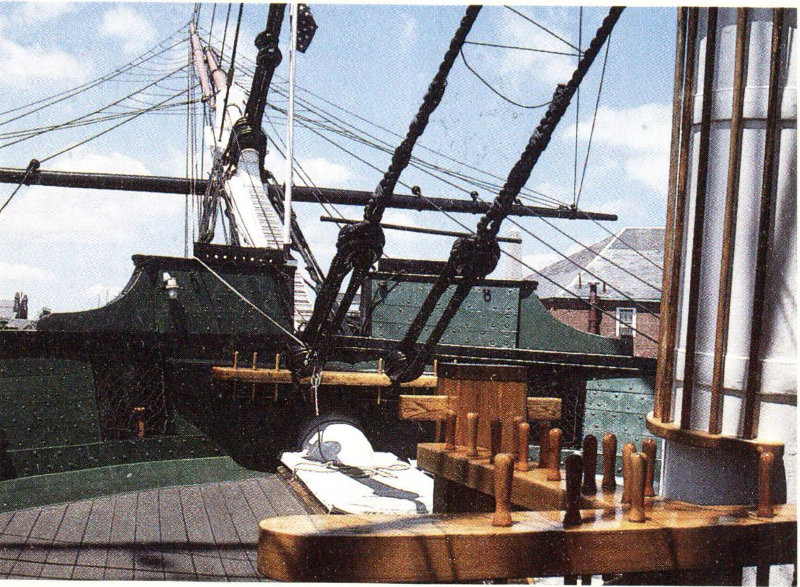
A view off the bow of the venerable warship.
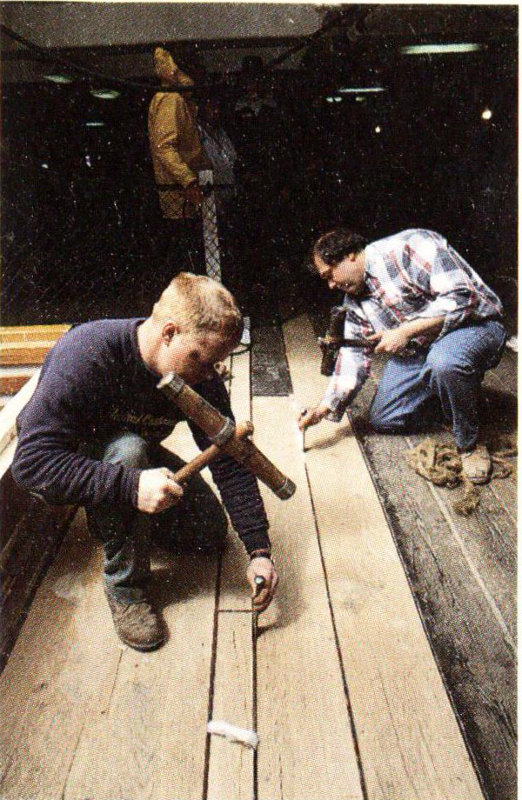
Caulkers use traditional caulking hammers to seal the gun decks.
85
The World War II destroyer U.S.S. Cassin Young (DD-793) reflects a very different kind of sea power than does Constitution. Yet both warships, constructed 150 years apart, served much the same purpose. Like frigates, destroyers (known as the workhorses of the modern navy) are smaller and less powerful than the heaviest warships, but they are fast and remarkably versatile. Boasting five 5-inch guns and made of steel, Cassin Young was built on the West Coast in 1943 and took part in major Pacific engagements, including the Saipan landing and the Battle of Leyte Gulf, where its crew rescued over 100 sailors from the attack on U.S.S. Princeton.
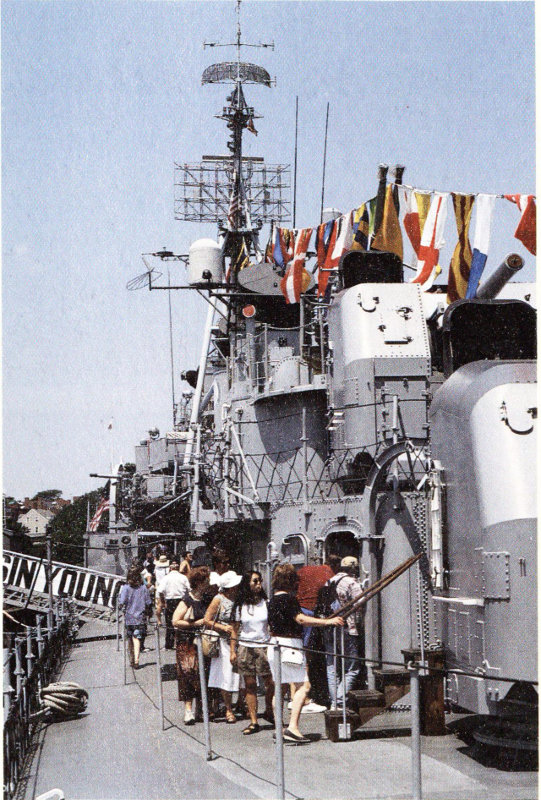
Free tours let visitors see where the “tin can sailors” lived during their long months at sea.
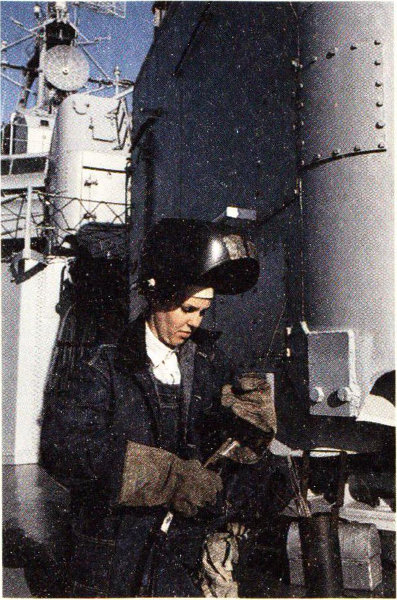
Aboard Cassin Young, “Rosie the Riveter” programs introduce visitors to the work and lives of the women who wielded rivet guns and welding rods during World War II.
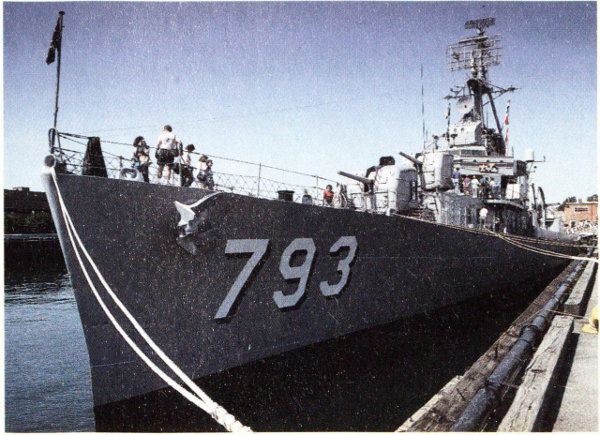
Cassin Young’s bow offers views of the historic yard and harbor.
86
The Exhibits
Today, exhibits and educational activities help bring alive the navy yard and Boston’s maritime history. At the USS Constitution Museum, located in the historic Dry Dock 1 Pumphouse and adjacent buildings, hands-on activities help visitors to appreciate the skills of a 19th-century seaman and get a sense of his life aboard a sailing warship. Load and fire a replica cannon, try out a sailor’s sleeping quarters, take a turn at the great wheel of a square-rigger, or command U.S.S. Constitution in battle on a computer screen.
The museum houses the frigate’s logs, weapons, documents, charts, journals, decorative arts, and other items illustrating the epic role of “Old Ironsides” in U.S. history. Skilled craftsmen demonstrate ship model building, while films and special programs provide greater insight into the ship’s story. A museum store offers other items relating to Constitution’s history and to the nation’s maritime heritage.
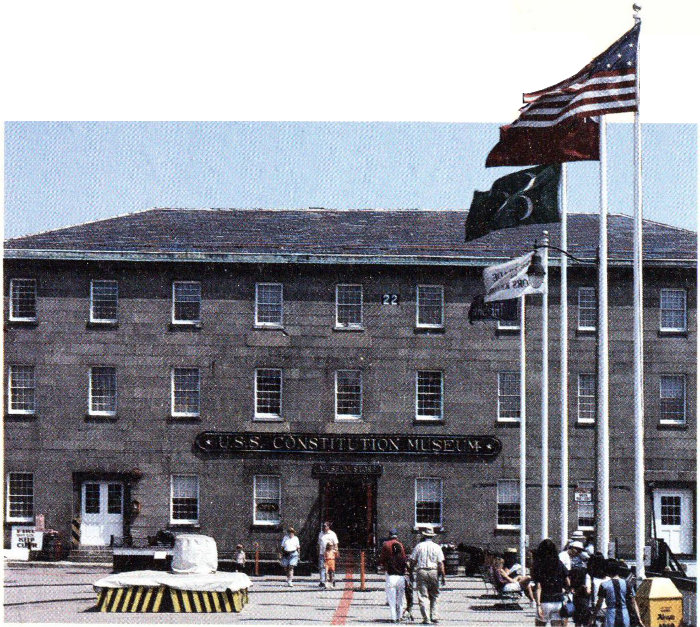
USS Constitution Museum
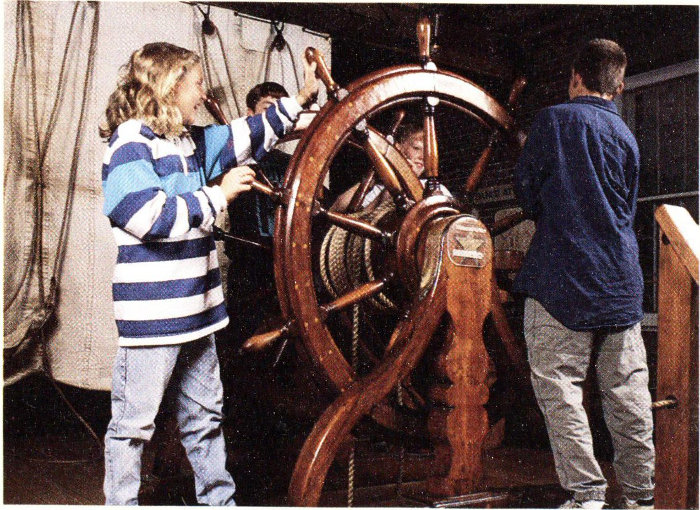
USS Constitution Museum
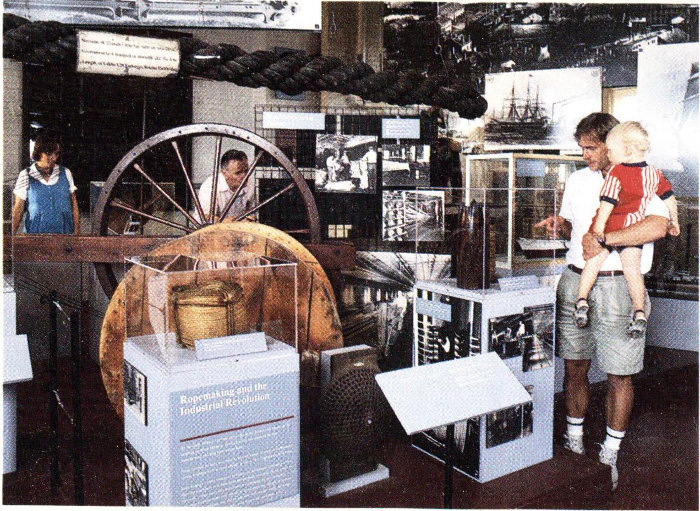
A permanent exhibit, “Serving the Fleet,” which focuses on the history of the navy yard, is open to the public on a seasonal basis in the navy yard’s Paint Shop (Building 125).
87
Index
Numbers in italics refer to photographs, illustrations, or maps.
A B C D E F G H I J K L M N O P Q R S T U V W X Y Z
A
“ABCD ships” 50, 54
Aircraft carrier 51, 60, 66, 72
B
Bainbridge, William 11, 12, 13, 15, 17
Barbary States 9, 14, 15-16
Battleship 11, 47, 49, 51, 57
Brig-of-war 14
British Navy 11, 13, 15, 16
Burroughs, George W. 46
C
Chain 50, 60-61, 70, 83
Charlestown Navy Yard: annexes 64;
and Boston Harbor 4-5, 13, 15, 16, 64;
and NPS 78-79, 80-86;
Civil War 28-29, 29-31, 34, 36-37;
founding 16;
improvements 17, 34, 46-47;
map 64, 81;
mission 16, 45, 47, 50, 63;
post-Civil War 37, 39;
post-WW I 57;
post-WW II 71-72, 76-77;
Spanish-American War 46, 49, 51;
South Boston Annex 57, 65, 70;
view back cover;
War of 1812 11-15, 16;
WW I 46-49, 57;
WW II 62, 63-71, 73, 74-75
Coaling plant 47
C.S.S. (Confederate States Ship): Virginia 28, 29-31, 34, 36, 43, 73
Conversion, ship 72, 76-77
Cruiser 47, 50, 51, 66
D
Dahlgren, John 36
Daniels, Josephus 49
Decatur, Stephen 15
Destroyer escort 70, 72, 75
Destroyer 47, 51, 57, 63, 65, 67, 72, 73, 74-75
Dry dock: #1 4, 17, 23, 34, 39, 40-41, 45, 50, 56, 63, 64;
#2 47, 51, 57, 63, 64, 65, 67
E
Ericsson, John 36
F
Farragut, David G. 34
Five-Power Treaty 57
FRAM (Fleet Rehabilitation and Modernization) 72
Frigate 14, 16, 17, 26-27. See also U.S.S. ship names
Fuel 31, 37, 47, 51, 54, 57, 64
H
Hartt, Edmund 13
Hartt, Edward 13
H.M.S. (His Majesty’s Ship): Dreadnought 51, 54;
Java 11
Hull, Isaac 15, 18
Hull: iron 37, 39;
steel 37, 49-54, 58-59;
wooden 24-25, 34, 37, 39, 49
I
Ironclad 28-29, 30-31, 34, 36, 42-43
L
Launching 13, 15, 18, 32-33, 63, 67, 73
LCM (Landing Craft Mechanized) 70
LST (Landing Ship Tank) 64, 70, 71, 72, 75;
Suffolk County 72
M
Machinery 34, 52-53, 54
Machine shop 30, 34, 52-53
Mahan, Alfred Thayer 50
Manufacturing 39, 45, 50, 51, 60-61
Marine railway 57, 64-65, 72
Monitor 36, 42-43, 46
“Mosquito fleet” 51
O
“ordinary [in ...]” 2, 4, 17-18
P
Propeller 31, 34, 35, 37
R
Radar 72, 77
Railway, yard 47
Receiving ship 2, 4, 14, 37
Repair, ship 16, 23, 39, 50, 51, 57, 63, 66, 70
Roosevelt, Franklin D. 55, 57, 64, 67
Roosevelt, Theodore 46, 50
Ropewalk 17, 20-21, 45, 49, 50, 67, 69, 72, 83
S
Sail power 17, 18, 19, 26-27, 31, 34, 37, 50, 54
Shipbuilding 24-25, 36, 54, 58-59, 63
Shipbuilding ways 24-25, 39, 46, 56, 57, 58-59, 64, 67
Shiphouse 13, 18, 32-33, 39, 45, 46, back cover
Ship-of-the-line 11, 14, 16-17, 18, 34. See also U.S.S. ship names
Shipyards, naval 8-9
Sidewheeler 17, 31, 34, 35
Sloop-of-war 14, 16, 23, 28, 29, 34. See also U.S.S. ship names
Sonar 71-72, 76-77
Steam propulsion 17, 31, 34, 35, 37
Stoddert, Benjamin 16
Submarine 47, 51, 70, 71, 74
T
Tar house 17, 20
Taylor, Frederick W. 55
Taylorism 55, 57
Technology, naval 31, 34, 37, 51, 54, 63, 72, 76-77
Torpedo 51
Trade shops 17, 30, 34, 47, 49, 50
U
U.S. Marines 13, 38
U.S. Navy 15-16, 18, 22, 31, 34, 36, 37, 39, 55;
policy 16, 37, 49-50, 65, 72
U.S.S. (United States Ship): Adams 39;
Atlanta 50;
Boston 50;
Brazos 47, 57;
Bridge 57;
Cassin Young 66, 85;
Chesapeake 12, 13;
Chicago 50;
Congress 30-31, 34;
Constellation 16;
Constitution 6-7, 11, 12, 13, 15, 16, 17, 26-27, 72, 84;
Cumberland 16, 18, 28, 29-31, 34, 73;
Dolphin 50;
Forrest 73;
Fulton II 17;
Guest 73;
Gyatt 72, 77;
Hartford 31, 34, 39;
Independence 10, 12, 13, 14, 15, 17, 18, 37;
Intrepid 39;
MacDonough 63, 64;
Macon 66;
Maine 44, 46;
Merrimack 29-31, 32-33, 35, 59, 73 (See also C.S.S. Virginia);
Monadnock 36, 42-43;
Monaghan 63;
Monitor 36, 42, 43;
New Hampshire 18;
New Ironsides 36;
Pentucket 54;
Princeton 31, 34, 35;
Talapoosa 45;
United States 16;
Vandalia 39, 63;
Vermont 17, 18;
Virginia 17, 18, 45, 46;
Wasp 66;
Whitney 54, 56, 57
V
Von Meyer, George 65
W
Workforce: African Americans 67;
management 55, 57;
size 18, 25, 46, 51, 57, 64, 65, 67;
skills 18, 34, 36, 39, 47, 58;
women 47, 48, 67, 68-69;
work conditions 18, 22, 37, 65, 67, 71;
workers 19-21, 23, 38, 46, 48, 52-53, 54, 56, 60-61, 62-63, 77
88