Front matter (continued 5)
Reading edition
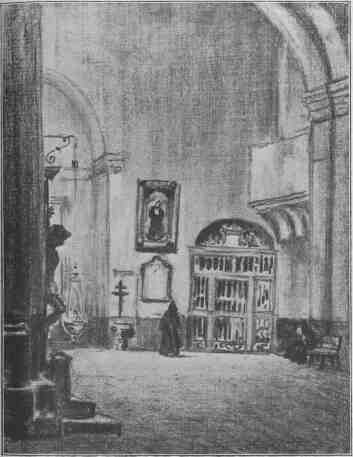
THE BAPTISMAL FONT OF CERVANTES, ALCALÁ
CERVANTES 313
of penitents at the altar, the wailing of breaking hearts bowed on the pavement through many years, are all recorded mysteriously, in these rocky walls. This church is the illegible history of the parish. But of all its ringing of bells, and swinging of censers, and droning of psalms, and putting on and off of goodly raiment, the only show that consecrates it for the world's pilgrimage is that humble procession that came on the gth day of October, in the year of Grace 1547, to baptize Roderick Cervantes's youngest child. There could not be an humbler christening. Juan Pardo--John Gray--was the sponsor, and the witnesses were "Bal-tazar Vázquez, the sacristan, and I who baptized him and signed with my name," says Mr. Bachelor Serrano, who never dreamed he was stumbling into fame when he touched that pink face with the holy water and called the child Miguel. It is my profound conviction that Juan Pardo brought the baby himself to the church and took it home again, screaming wrathfully; Neighbor' Pardo feeling a little sheepish and mentally resolving never to do another good-natured action as long as he lived.
As for the neophyte, he could not be blamed
314 CASTILIAN DAYS
for screaming and kicking against the new existence he was entering, if the instinct of genius gave him any hint of it. Between the font of St. Mary's and the bier at St. Ildefonso's there was scarcely an hour of joy waiting him in his long life, except that which comes from noble and earnest work.
His youth was passed in the shabby privation of a poor gentleman's house; his early talents attracted the attention of my Lord Aquaviva, the papal legate, who took him back to Rome in his service; but the high-spirited youth soon left the inglorious ease of the cardinal's house to enlist as a private soldier in the sea-war against the Turk. He fought bravely at Lepanto, where he was three times wounded and his left hand crippled. Going home for promotion, loaded with praise and kind letters from the generous bastard, Don Juan of Austria, the true son of the Emperor Charles and pretty Barbara Blumberg, he was captured with his brother by the Moors, and passed five miserable years in slavery, never for one instant submitting to his lot, but wearying his hostile fate with constant struggles. He headed a dozen attempts at flight or insurrection, and yet his thrifty owners
CERVANTES 315
would not kill him. They thought a man who bore letters from a prince, and who continued cock of his walk through years of servitude, would one day bring a round ransom. At last the tardy day of his redemption came, but not from the cold-hearted tyrant he had so nobly served. The matter was presented to him by Cervantes's comrades, but he would do nothing. So that Don Roderick sold his estate and his sisters sacrificed their dowry to buy the freedom of the captive brothers.
They came back to Spain still young enough to be fond of glory, and simple-hearted enough to believe in the justice of the great. They immediately joined the army and served in the war with Portugal. The elder brother made his way and got some little promotion, but Miguel got married and discharged, and wrote verses and plays, and took a small office in Seville, and moved with the Court to Valladolid; and kept his accounts badly, and was too honest to steal, and so got into jail, and grew every year poorer and wittier and better; he was a public amanuensis, a business agent, a sub-tax-gatherer,--anything to keep his lean larder garnished with scant ammunition against the wolf hunger. In these few lines you have the pitiful
316 CASTILIAN DAYS
story of the life of the greatest of Spaniards, up to his return to Madrid in 1606, when he was nearly sixty years old.
From this point his history becomes clearer and more connected up to the time of his death. He lived in the new-built suburb, erected on the site of the gardens of the Duke of Lerma, first minister and favorite of Philip III. It was a quarter much affected by artists and men of letters, and equally so by ecclesiastics. The names of the streets indicate the traditions of piety and art that still hallow the neighborhood. Jesus Street leads you into the street of Lope de Vega. Quevedo and Saint Augustine run side by side. In the same neighborhood are the streets called Cervantes, Saint Mary, and Saint Joseph, and just round the corner are the Magdalen and the Love-of-God. The actors and artists of that day were pious and devout madcaps. They did not abound in morality, but they had of religion enough and to spare. Many of them were members of religious orders, and it is this fact which has procured us such accurate records of their history. All the events in the daily life of the religious establishments were carefully recorded, and the manuscript archives of the
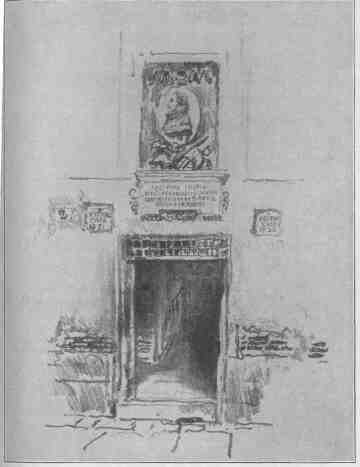
HOUSE OF CERVANTES, MADRID
CERVANTES
317
convents and brotherhoods of that period are rich in materials for the biographer.
There was a special reason for the sudden rise of religious brotherhoods among the laity. The great schism of England had been fully completed under Elizabeth. The devout heart of Spain was bursting under this wrong, and they could think of no way to avenge it. They would fain have roasted the whole heretical island, but the memory of the Armada was fresh in men's minds, and the great Philip was dead. There were not enough heretics in Spain to make it worth while to waste time in hunting them. Philip could say as Narvaez, on his death-bed, said to his confessor who urged him to forgive his enemies, "Bless your heart, I have none. I have killed them all." To ease their pious hearts, they formed confraternities all over Spain, for the worship of the Host. They called themselves "Unworthy Slaves of the Most Holy Sacrament." These grew at once very popular in all classes. Artisans rushed in, and wasted half their working days in processions and meetings. The severe Suarez de Figueroa speaks savagely of the crowd of Narcissuses and petits maitres (a word which is delicious in its Spanish dress of peti-
CASTILIAN DAYS
metres) who entered the congregations simply to flutter about the processions in brave raiment, to be admired of the multitude. But there were other more serious members,--the politicians who joined to stand well with the bigot court, and the devout believers who found comfort and edification in worship. Of this latter class was Miguel de Cervantes Saavedra, who joined the brotherhood in the street of the Olivar in 1609. He was now sixty-two years old, and somewhat infirm,--a time, as he said, when a man's salvation is no joke. From this period to the day of his death he seemed to be laboring, after the fashion of the age, to fortify his standing in the other world. He adopted the habit of the Franciscans in Alcalá in 1613, and formally professed in the Third Order in 1616, three weeks before his death.
There are those who find the mirth and fun of his later works so inconsistent with these ascetic professions, that they have been led to believe Cervantes a bit of a hypocrite. But we cannot agree with such. Literature was at that time a diversion of the great, and the chief aim of the writer was to amuse. The best opinion of scholars
CERVANTES 319
now is that Rabelais, whose genius illustrated the preceding century, was a man of serious and severe life, whose gaulish crudeness of style and brilliant wit have been the cause of all the fables that distort his personal history.
No one can read attentively even the Quixote without seeing how powerful an influence was exerted by his religion even upon the noble and kindly soul of Cervantes. He was a blind bigot and a devoted royalist, like all the rest. The mean neglect of the Court never caused his stanch loyalty to swerve. The expulsion of the Moors, the crowning crime and madness of the reign of Philip III., found in him a hearty advocate and defender. Non facit monachum cucullus,--it was not his hood and girdle that made him a monk; he was thoroughly saturated with their spirit before he put them on. But he was the noblest courtier and the kindliest bigot that ever flattered or persecuted.
In 1610, the Count of Lemos, who had in his grand and distant way patronized the poet, was appointed Viceroy of Naples, and took with him to his kingdom a brilliant following of Spanish
320 CASTILIAN DAYS
wits and scholars. He refused the petition of the greatest of them all, however, and to soften the blow gave him a small pension, which he continued during the rest of Cervantes's life. It was a mere pittance, a bone thrown to an old hound, but he took it and gnawed it with a gratitude more generous than the gift. From this time forth all his works were dedicated to the Lord of Lemos, and they form a garland more brilliant and enduring than the crown of the Spains. Only kind words to disguised fairies have ever been so munificently repaid, as this young noble's pension to the old genius.
It certainly eased somewhat his declining years. Relieving him from the necessity of earning his daily crust, it gave him leisure to complete and bring out in rapid succession the works which have made him immortal. He had published the first part of Don Quixote in the midst of his hungry poverty at Valladolid in 1605. He was then fifty-eight, and all his works that survive are posterior to that date. He built his monument from the ground up, in his old age. The Persiles and Sigis-munda, the Exemplary Novels, and that most masterly and perfect work, the Second Part of Quix-
CERVANTES
321
ote, were written by the flickering glimmer of a life burnt out.
It would be incorrect to infer that the scanty dole of his patron sustained him in comfort. Nothing more clearly proves his straitened circumstances than his frequent change of lodgings. Old men do not move for the love of variety. We have traced him through six streets in the last four years of his life. But a touching fact is that they are all in the same quarter. It is understood that his natural daughter and only child, Isabel de Saavedra, entered the Convent of the Trinitarian nuns in the street of Cantarranas--Singing Frogs--at some date unknown. All the shifting and changing which Cervantes made in these embarrassed years are within a small half-circle, whose centre is his grave and the cell of his child. He fluttered about that little convent like a gaunt old eagle about the cage that guards his callow young.
Like Albert Duerer, like Raphael and Van Dyck, he painted his own portrait at this time with a force and vigor of touch which leaves little to the imagination. As few people ever read the Exemplary Novels,--more is the pity,--I will translate this passage from the Prologue:--

322 CASTILIAN DAYS
"He whom you see there with the aquiline face, chestnut hair, a smooth and open brow, merry eyes, a nose curved but well proportioned, a beard of silver which twenty years ago was of gold, long mustaches, a small mouth, not too full of teeth, seeing he has but six, and these in bad condition, a form of middle height, a lively color, rather fair than brown, somewhat round-shouldered and not too light on his feet; this is the face of the author of Galatea and of Don Quixote de la Mancha, of him who made the Voyage to Parnassus, and other works which are straying about without the name of the owner: he is commonly called Miguel de Cervantes Saavedra."
There were, after all, compensations in this evening of life. As long as his dropsy would let him, he climbed the hilly street of the Olivar to say his prayers in the little oratory. He passed many a cheerful hour of gossip with Mother Francisca Romero, the independent superior of the Trinitarian Convent, until the time when the Supreme Council, jealous of the freedom of the good lady's life, walled up the door which led from her house to her convent and cut her off from her nuns. He sometimes dropped into the studios of Carducho
CERVANTES 323
and Caxes, and one of them made a sketch of him one fortunate day. He was friends with many of the easy-going Bohemians who swarmed in the quarter,--Cristóbal de Mesa, Quevedo, and Mendoza, whose writings, Don Miguel says, are distinguished by the absence of all that would bring a "blush to the cheek of a young person,"--
"Por graves, puros, castos y excelentes."
In the same street where Cervantes lived and died,the great Lope de Vega passed his edifying old age. This phenomenon of incredible fecundity is one of the mysteries of that time. Few men of letters have ever won so marvellous a success in their own lives, few have been so little read after death. The inscription on Lope's house records that he is the author of two thousand comedies and twenty-one million of verses. Making all possible deductions for Spanish exaggeration, it must still be admitted that his activity and fertility of genius were prodigious. In those days a play was rarely acted more than two or three times, and he wrote nearly all that were produced in Spain. He had driven all competitors from the scene. Cervantes, when he published his collection of plays, admitted the impossibility of getting a hearing in the theatre
324 CASTILIAN DAYS
while this "monster of nature" existed. There was a courteous acquaintance between the two great poets. They sometimes wrote sonnets to each other, and often met in the same oratories. But a grand seigneur like Frey Lope could not afford to be intimate with a shabby genius like brother Miguel. In his inmost heart he thought Don Quixote rather low, and wondered what people could see in it. Cervantes, recognizing the great gifts of De Vega, and, generously giving him his full meed of praise, saw with clearer insight than any man of his time that this deluge of prodigal and facile genius would desolate rather than fructify the drama of Spain. What a contrast in character and destiny between our dilapidated poet and his brilliant neighbor across the way! The one rich, magnificent, the poet of princes and a prince among poets, the "Phoenix of Spanish Genius," in whose ashes there is no flame of resurrection; the other, hounded through life by unmerciful disaster, and using the brief respite of age to achieve an enduring renown; the one, with his twenty millions of verses, has a great name in the history of literature; but the other, with his volume you can carry in your pocket, has caused the world to call the
CERVANTES
325
Castilian tongue the language of Cervantes. We will not decide which lot is the more enviable. But it seems a poet must choose. We have the high authority of Sancho for saying,--
"Para dar y tener Seso ha menester."
He is a bright boy who can eat his cake and have it.
In some incidents of the closing scenes of these memorable lives there is a curious parallelism. Lope de Vega and Cervantes lived and died in the same street, now called the Calle de Cervantes, and were buried in the same convent of the street now called Calle de Lope de Vega. In this convent each had placed a beloved daughter, the fruit of an early and unlawful passion. Isabel de Saavedra, the child of sin and poverty, was so ignorant she could not sign her name; while Lope's daughter, the lovely and gifted Marcela de Carpió, was rich in the genius of her father and the beauty of her mother, the high-born Maria de Lujan. Cervantes's child glided from obscurity to oblivion no one knew when, and the name she assumed with her spiritual vows is lost to tradition. But the mystic espousals of the sister Marcela de San Felix to the eldest son
326
CASTILIAN DAYS
of God--the audacious phrase is of the father and priest Frey Lope--were celebrated with princely pomp and luxury; grandees of Spain were her sponsors; the streets were invaded with carriages from the palace, the verses of the dramatist were sung in the service by the Court tenor Florian, called the "Canary of Heaven;" and the event celebrated in endless rhymes by the genteel poets of the period.
Rarely has a lovelier sacrifice been offered on the altar of superstition. The father, who had been married twice before he entered the priesthood, and who had seen the folly of errant loves without number, twitters in the most innocent way about the beauty and the charm of his child, without one thought of the crime of quenching in the gloom of the cloister the light of that rich young life. After the lapse of more than two centuries we know better than he what the world lost by that lifelong imprisonment. The Marquis of Mo-lins, director of the Spanish Academy, was shown by the ladies of the convent in this year of 1870 a volume of manuscript poems from the hand of Sor Marcela, which prove her to have been one of the most vigorous and original poets of the time. They
CERVANTES 327
are chiefly mystical and ecstatic, and full of the refined and spiritual voluptuousness of a devout young heart whose pulsations had never learned to beat for earthly objects. M. de Molins is preparing a volume of these manuscripts; but I am glad to present one of the seguidillas here, as an illustration of the tender and ardent fantasies of virginal passion this Christian Sappho embroidered upon the theme of her wasted prayers:--
Let them say to my Lover That here I lie! The thing of his pleasure, His slave am I. Say that I seek him Only for love, And welcome are tortures My passion to prove. Love giving gifts Is suspicious and cold; I have all, my Beloved, When thee I hold. Hope and devotion The good may gain, I am but worthy Of passion and pain. So noble a Lord None serves in vain,--
328 CASTILIAN DAYS
For the pay of my love Is my love's sweet pain. I love thee, to love thee, No more I desire, By faith is nourished My love's strong fire. I kiss thy hands When I feel their blows, In the place of caresses Thou givest me woes. But in thy chastising Is joy and peace, O Master and Love, Let thy blows not cease! Thy beauty, Beloved, With scorn is rife! But I know that thou lovest me, Better than life. And because thou lovest me, Lover of mine, Death can but make me Utterly thine! I die with longing Thy face to see; Ah! sweet is the anguish Of death to me!
CERVANTES
329
This is a long digression, but it will be forgiven by those who feel how much of beautiful and pathetic there is in the memory of this mute nightingale dying with her passionate music all unheard in the silence and shadows. It is to me the most purely poetic association that clings about the grave of Cervantes.
This vein of mysticism in religion has been made popular by the recent canonization of Saint Theresa, the ecstatic nun of Avila. In the ceremonies that celebrated this event there were three prizes awarded for odes to the new saint. Lope de Vega was chairman of the committee of award, and Cervantes was one of the competitors. The prizes it must be admitted were very tempting: first, a silver pitcher; second, eight yards of camlet; and third, a pair of silk stockings. We hope Cervantes's poem was not the best. We would rather see him carry home the stuff for a new cloak and pourpoint, or even those very attractive silk stockings for his shrunk shank, than that silver pitcher which he was too Castilian ever to turn to any sensible use. The poems are published in a compendium of the time, without indicating the
330
CASTILIAN DAYS
successful ones; and that of Cervantes contained these lines, which would seem hazardous in this colder age, but which then were greatly admired:--
"Breaking all bolts and bars, Comes the Divine One, sailing from the stars,
Full in thy sight to dwell: And those who seek him, shortening the road,
Come to thy blest abode, And find him in thy heart or in thy cell."
The anti-climax is the poet's, and not mine.
He knew he was nearing his end, but worked desperately to retrieve the lost years of his youth, and leave the world some testimony of his powers. He was able to finish and publish the Second Part of Quixote, and to give the last touches of the file to his favorite work, the long pondered and cherished Persiles. This, he assures Count Lemos, will be either the best or the worst work ever produced by mortal man, and he quickly adds that it will not be the worst. The terrible disease gains upon him, laying its cold hand on his heart. He feels the pulsations growing slower, but bates no jot of his cheerful philosophy. "With one foot in the stirrup," he writes a last farewell of noble gratitude to the viceroy of Naples. He makes his
CERVANTES 331
will, commanding that his body be laid in the Convent of the Trinitarians. He had fixed his departure for Sunday, the 17th of April, but waited six days for Shakespeare, and the two greatest souls of that age went into the unknown together, on the 23d of April, 1616.
The burial of Cervantes was as humble as his christening. His bier was borne on the shoulders of four brethren of his order. The upper half of the coffin-lid was open and displayed the sharpened features to the few who cared to see them: his right hand grasped a crucifix with the grip of a soldier. Behind the grating was a sobbing nun whose name in the world was Isabel de Saavedra. But there was no scenic effort or display, such as a few years later in that same spot witnessed the laying away of the mortal part of Vega-Carpio. This is the last of Cervantes upon earth. He had fought a good fight. A long life had been devoted to his country's service. In his youth he had poured out his blood, and dragged the chains of captivity. In his age he had accomplished a work which folds in with Spanish fame the orb of the world. But he was laid in his grave like a pauper, and the spot where he lay was quickly forgotten. At that very
332
CASTILIAN DAYS
hour a vast multitude was assisting at what the polished academician calls a "more solemn ceremony," the bearing of the Virgin of the Atocha to the Convent of San Domingo el Real, to see if peradventure pleased by the airing, she would send rain to the parching fields.
The world speedily did justice to his name. Even before his death it had begun. The gentlemen of the French embassy who came to Madrid in 1615 to arrange the royal marriages asked the chaplain of the Archbishop of Toledo in his first visit many questions of Miguel Cervantes. The chaplain happened to be a friend of the poet, and so replied, "I know him. He is old, a soldier, a gentleman, and poor." At which they wondered greatly. But after a while, when the whole civilized world had trans-lated and knew the Quixote by heart, the Spaniards began to be proud of the genius they had neglected and despised. They quote with a certain fatuity the eulogy of Montesquieu, who says it is the only book they have; "a proposition" which Navarrete considers "inexact," and we agree with Navarrete. He has written a good book himself. The Spaniards have very frankly accepted the judgment of the world, and although they do not read Cervantes
CERVANTES
333
much, they admire him greatly, and talk about him more than is amusing. The Spanish Academy has set up a pretty mural tablet on the facade of the convent which shelters the tired bones of the unlucky immortal, enjoying now their first and only repose. In the Plaza of the Cortes a fine bronze statue stands facing the Prado, catching on his chiselled curls and forehead the first rays of morning that leap over the hill of the Retiro. It is a well-poised, energetic, chivalrous figure, and Mr. Ger-mond de Lavigne has criticised it as having more of the sabreur than the savant. The objection does not seem well founded. It is not pleasant for the world to be continually reminded of its meannesses. We do not want to see Cervantes's days of poverty and struggle eternized in statues. We know that he always looked back with fondness on his campaigning days, and even in his decrepit age he called himself a soldier. If there were any period in that troubled history that could be called happy, surely it was the time when he had youth and valor and hope as the companions of his toil. It would have been a precious consolation to his cheerless age to dream that he could stand in bronze, as we hope he may stand for centuries, in the un-
334
CASTILIAN DAYS
changing bloom of manhood, with the cloak and sword of a gentleman and soldier, bathing his Olympian brow forever in the light of all the mornings, and gazing, at evening, at the rosy reflex flushing the east,--the memory of the day and the promise of the dawn.
INDEX
INDEX
Adoration of the Shepherds, Murillo's, 168.
Alcalá de Henares, birthplace of Cervantes, 298; appearance of, 299, 300; garrison of, 301; people of, 302; university of, 302-307; church of Santa Maria la Mayor, 312.
Alcázar, Toledo, vicissitudes of, 248, 249.
Alguaciles, part of, in bull-fights, 97, 98.
Alonso VI., uniformity of worship demanded by, 228; wall built by, around Toledo, 245; Moorish mosque used by, 246.
Alonso VIII., statue of, at Toledo,
122.
America, effect of discovery of, 75;
Spanish emigration to, 147. American element, prominence of, in
Madrid, 17.
Andalusians, in Madrid, 8. Andrew, St., Murillo's painting of the
martyrdom of, 165.
Anglo-Saxons, religious forms outgrown by, 126.
Annunciation, Murillo's, 168. Aranda, Count, debt of Madrid to, 6,
20.
Aranjuez, royal palace of, 217, 218. Arjona, famous bull-fighter, no. Arrieros, origin of name, 196. Art, development of, in Spain, 145;
Spanish students of, in Italy, 148;
foreign students of, in Spain, 148;
various schools and masters of, in
Spain, 149; decline of, 151. Ash Wednesday, a popular ceremony
of, 140. Austria, House of, influence of, in
Spain, 145; portraits of Spanish
kings of, 158-160; profligacy of
Spanish kings of, 268, 269.
Baciocchi, anecdote of, 43.
Banderilleros, part of, in bull-fights, 103.
Bathing, dislike of, 66, 67; discouraged by Isabella the Catholic, 91.
Beggars, 117, 192, 211, 213, 234, 300.
Berruguete, carvings of, 148.
Boisel, anecdote of Segovia by, 207.
Borbon, Louisa Carlota de, 200-202.
Borrachos, painting of the, by Velazquez, 172, 173.
Bouillon,----de, pension of, 278.
Breda, Surrender of, painting by Velazquez, 169.
Bull-fights, vain ettort to transplant, 90; royal attempts to abolish, 91; two famous, 92; sacrifices made to attend, 93; danger from cowardly bulls in, 102; play-bills of, 111,112; statistics of, 112; defense of, 113; decadence of, 114; former splendors of, 115, 116. See also Alguaciles, Banderilleros, Chulos, Matadors, Picadors.
Burial, lack of ceremony attending, 55; heathen rites attending, 86; right of, denied to Protestants, 273.
Burial of the Sardine, an Ash Wednesday ceremony, 140.
Caballero, Fernán, illiteracy of Spanish women approved by, 41.
Calderón, decline of interest in masterpieces of, io.
Calomarde, Minister of Ferdinand VII., 201, 202.
Capa, use of, 27, 28.
Capital cities, reasons for choice of,
3» 4-Carlos V., Don, son of Philip II.,
portrait of, 159; character of, 268. Carlos VII., Don, portrait of, on
cigarette boxes, 25.
338
INDEX
Carnival, survival of the true, in Madrid, 136; costumes of, 137, 138; outgrown by the rest of the continent, 139; renewal of, in Lent, 140.
Carpió, Marcela de, daughter of Lope de Vega, 325; gifts of, 326; poem by, 327, 328.
Carreño, portrait of Charles the Bewitched by, 160.
Castelar, Emilio, portrait of, on cigarette boxes, 25; idea of liberty of, 88; comments of, on Toledo, 216.
Castellana, winter promenades in the,
21.
Catalans, in Madrid, 8.
Catholic unity, method of attaining, 229, 295-297.
Celts, in Ireland and in Iberia, 124.
Cemeteries, desolation of, in Spain, 131, '32.
Cervantes, birth-place of, 298, 309-311; burial-place cf, 299, 331; sketch of life of, 314-316; religious life of, 318; bigotry of, 319; pension of, 320; late works of, 320, 330; poverty of, 321; daughter of, 321, 325; description of himself, 322; friends of, 322, 323; relations of, with Lope de Vega, 324; memorials to, 333-
Chapels, in the bull-rings, 105.
Charity, proceeds of Spanish carnival for, 137.
Charles I., of England, famous bullfight in honor of, 92.
Charles III., of Spain, debt of Madrid to, 6; establishment of the Prado by, 20; growing importance of work done by, 32.
Charles V. of Germany, I. of Spain, art encouraged by, 146, 150; portrait of, by Titian, 158; opening of coffin of, 265.
Charles the Bewitched, portrait of, 160.
Chicago, compared with Madrid, 7.
Christine, Queen of Ferdinand VII., 201; meeting of, as Regent, with revolutionists, 202.
Christmas, celebration of, by the proletariat, 132-135.
Church. See Priesthood.
Church and State, identified interests of, 69, 73, 75, 79, 84; movement favoring separation of, 274.
Chulos, part of, in bull-fights, 104.
Cicer, modern use of the Roman, 37.
Cigarettes. See Tobacco.
Claret, Padre, 46.
Claude, paintings by, at Madrid, 182, 183.
Clergy. See Priesthood.
Coello, Claudio, altar-picture by, in Escorial, 262.
Competition, for public employment, 39- _
Constitution of 1812, movement in favor of, 202; proclaimed by Christine, as Regent, 203.
Corpus Christi, festival of, 124, 125.
Costillares, famous bull-fighter, 114.
Courbet, refusal of, to be decorated, 172.
Courtesy, invariable forms of, 49, 50.
Creoles, of the Antilles, characteristics of, 16, 17.
Cuchares, famous bull-fighter, m.
Daunoy, Madame, observations of, 67; anecdote of Philip IV., told by, 268.
Dead, ceremonies in memory of the, 131, 132.
Devil's Bridge, Segovian legend of, 210.
Domesticity, strong feature of Spanish life, 33, 34-
Drama, French influence on, in Madrid, 10.
Dream of the Roman Gentleman, 168.
Diirer, Albert, paintings by, at Madrid, 182.
Dyck, Sir Anthony van, paintings by, at Madrid, 185, 186.
Egas, Enrique de, work of, in Toledo,
247. Elizabeth Farnese, wife of Philip V.,
200. Elizabeth, St., ol Hungary, Murillo's,
168, 169. Epiphany, farce performed by the
lowest orders on eve of the, 135;
celebration in burgher society, 136.
INDEX
339
Escorial, reasons for building, 5, 255; situation of, 257; form of, 258; church of, 259-265; reliquary of, 261; miraculous wafer of, 262; pictures of, 263; crypt of, 264, 265; library of, 269; schools of, 271; teachings of, 276.
Escovedo, Juan, aqueduct of Segovia repaired by, 210.
Españolismo, 64, 118.
Eugene, St., first cathedral of Toledo built by, 222.
Eugenic, empress of the French, belief of, in relics, 43.
Fairs, street, 129-131.
Family life. See Domesticity; Parental discipline.
Family names. See Names, family.
Fede, Lucrezia, portrait of, 178.
Ferdinand VII., famous bull-fight given by, 92; establishment of Madrid gallery by, 152; decree in favor of Don Carlos revoked by, 201.
Festival of Bulls, 92.
Feudal taxes, continued payment of, 63, 64.
Forestallers. See Speculators.
Forman, Helen, wife of Rubens, 184.
Frascuelo, bull-fighter, 104, 115.
Freedom of the press, 273, 274.
Freedom of worship, 85.
French language, the missionary of mental equality, 12.
Fritters, consumption of, during Verbena of St. John, 127, 128.
Frugality of the Spaniards, 38.
Gallicians, in Madrid, 7, 26.
Garbanzos, great use of, 37.
Giordano, Luca, imitation of Raphael and Rubens by, 162; vast number of pictures by, 163; frescoes by, in church of the Escorial, 260, 262.
Gloria, Titian's, at Madrid, 129, 180.
Golden Key, the manual of confession, 46.
Good Friday, observance of, 141.
Goths, wall built by, around Toledo, 245.
Government positions, competition for, 39.
Grain, manner of threshing, 193.
Granja, La, castle of Philip V., 6; situation of, 189; approach to, 197, 198; gardens of, 199; history of, 200-202; fountains of, 204, 205; interior of, 206.
Graveyards. See Cemeteries.
Gutiérrez, Miss, Spanish actress, 281.
Gypsy fortune-tellers, Murillo's, 167,
Henry of Trastamara (Henry II., of
Castile), 211. Holidays, frequency of, 117; political,
118. See also Corpus Christi;
Fairs; St. John, Verbena of; San
Isidro.
Holofernes, paintings of death of, 162. Holy Family, Giordano's painting of,
162; Murillo's, 166. Holy Thursday, observance of, 141. Honor, Spanish idea of, 71; effect of,
81, 83. Horses, use of, in bull-fights, 94, 99-
103.
Hospitality, Moorish origin of Spanish, 50.
Ildefonso, San, visit of the Virgin to, 225, 226; visit of Santa Leocadia to, 227; burial-place of, 244.
Illo, Pepe, famous bull-fighter, 90, "4-
Imperialism, Spanish expectation of, in America, 191.
Individuality, intense feeling of, 34; expression of, 73.
Inquisition, old palace of the, Madrid, 31.
Isabella I., the Catholic, opposed to bathing and bull-fights, 91; chapel to San Isidro built by, 121; church of San Juan de los Reyes finished by, 237-
Isabella II. of Bourbon, expulsion of, 85; bull-fight in honor of, 92; recognition of rights of, to the throne, 201.
Isidro, San, festival of, 120, 122-124 i miracles of, 121; statue of, at Toledo, 122.
Italy, Spanish emigration to, 147.
340
INDEX
Jacob, Ribera's painting of Ladder-Dream of, 174.
Jews, Spanish hatred of, 229, 288; mediaeval synagogues built by, in Toledo, 236.
John, St., Verbena of, 127.
Jordaens, painting by, in the Belvedere, 172.
Juanes, Juan de, paintings by, 164.
Juni, Juan de, painting by, at Segovia,
212.
King, divine attributes of Spanish, 74, 77, 80.
Laboring classes, in Madrid, 37; revels of, at Christmas, 134; at Epiphany, 135.
Lagartijo, inscription on sword of, no.
Language, democracy of, 256.
Last Supper, by Juanes, 164; by Titian, 179.
Latin races, demand of outward religious forms by, 125.
La Torre, Duchess of, of Cuban origin, 17-
Lemos, Count of, Cervantes pensioned by, 320-
Lent, former ceremonies of, 140, 141; present observances of, 141.
Leocadia, Santa, visit of, to San Ildefonso, 227; burial-place of, 244.
Leonardo, Mona Lisa of, at Madrid, 178.
Lepanto, Titian's picture of the Battle of, 181.
Lerma, Duke of, power of, 77.
Liberti, Van Dyck's portrait of, 185.
Lisbon, superiority of, over Madrid as a capital, 5.
London, only possible capital for England, 3.
Lorraine, Claude. See Claude.
Luna, Alvaro de, burial-place of, 225.
Machinery, Spanish scorn for improved, 193, 194.
Madrid, choice of, as capital of Spain, 3-5; natural characteristics of, 5; debt of, to Charles III., 6; inferior natural attractions of, 6, 7; best
point to study Spanish life, 7; for-eign population of, 8; foreign influence on music and drama of, 9, 10; on manners of, 11; on language of,
12; characteristics of best society of,
13: social schisms in, 14; social life of Tertulias of, 15, 16; Creoles of, 16 > American element in, 17; unattractive environs of, 17; satisfaction of inhabitants with, 19; Prado of, 20; winter promenades in the Castellana of, 2i; summer evenings in the Salon of, 21, 22; differing effect of climate of, on men and women, 23, 24, 27; vagabonds of, 24; match-venders of, 25; water-venders of, 26; Moors' quarter, 29; Plaza Mayor, 29, 30; Puerta del Sol. 37; picture-gallery of, 145, 150, 152-154; names of streets of, 316.
Magdalen, a possible painting by Tobar, 161.
Maria del Salto, legend of, 213.
Maria Louisa, wife of Charles IV., anecdote of, 262.
Mario, Spanish comedian, 282.
Market-place, Madrid, 29.
Marriage, prudence governing, 39, 40.
Mary of the Conception, Murillo's, 166, 167.
Masses, for the dead, 56.
Matadors, part of, in bull-fights, 104, 107, 108; rewards of, 109, in; improvidence of, in.
Match-venders, prevalence of, in Madrid, 25.
Medical science, ban upon, 53.
Medina Celi, Dukes of, periodical claims to throne by, 65.
Mendicancy. See Beggars.
Mendoza, Cardinal, Military College of Santa Cruz, Toledo, built by, 247.
Meninas, Las, by Velazquez, 170-172.
Military College of Santa Cruz, Toledo, 247.
Mining, effect of tradition on, 62.
Miracle-plays, account of one, 278-293; staging of, 280, 282, 284, 290, 292; appearance of Christ in, 286; horrible realism in, 287, 291; introduction of the Wandering Jew into, 289; absence of Apostles from, 293; per-
INDEX
341
formance of, in country towns, 294; character of audience, 294.
Miracles, 53.
Missionaries, Anglo-Saxon, in Spain, 272.
Molina, Rafael, bull-fighter, 115.
Mona Lisa, Leonardo's, at Madrid, 178.
Monarchs, modern, love of, for solitude, 187.
Monarchy, perfect form of, in Spain,
71
Montes, Paco, famous matador, 105, 114, 116.
Moors, expulsion of (1609), 79; streets laid out by, in Toledo, 221; toleration of, 228; banishment of, 229.
Moors' quarter, Madrid, 29.
Morales, paintings by, 164.
Muleteers, profanity of, 195-197.
Murat, commemorations of slaughter by, 118-120.
Murillo, paintings by, in Madrid Museum, 165-168; in Academy of San Fernando, 168, 169; character of, 174, 175; kindness of Velazquez to, 176.
Music, French influence on, in Madrid, 9.
Names, Christian, 44; family, 48.
Olivares, Count-duke of, 80. Ontañon, Gil de, Cathedral of Segovia
built by, 212. Oxford, Lady, Van Dyck's portrait of.
185.
Padilla, John of, fate of, 221. Palma, the Klder, Titian's Descent
from the Cross finished by, 181. Panaderia, Madrid, 30. Pantoja, portrait of Philip II. by,
159-
Parental discipline, among Spaniards, 35, 36.
Paris, logical capital of France, 3; influence of, on Spanish music and drama, 9, 10.
Peñaranda, Duchess of, Salon of, 14.
Pérez, architect of Cathedral of Toledo, 222.
Perla, La, history of Raphael's, 177.
Peter of Champagne, paintings of, in Seville, 148.
Peter the Great, choice of capital by, 4.
Philip II., court established at Madrid by, 4, 5; brutalities of, 76; protection of art by, 150; portraits of, 159; part of, in Battle of St. Quen-tin, 253; marriage of, to Elizabeth of France, 254; building of Escorial by, 255, 256; relics collected by, 261; manner of death of, 266; powerful personality of, 267.
Philip III., statue of, at Madrid, 30; portraits of, 157, 158, 159.
Philip IV., Festival of Bulls given by, 92; portrait of, 159, 160; decoration of Velazquez by, 172; last true king of the old school, 268.
Philip V., building undertaken by, 6; bull-fights abolished by, 91; building of La Granja by, 189; burial-place of, 200; debts of, 206.
Philip of Burgundy, carvings of, 148.
Phoenix, John, quoted, 22.
Picadors, part of, in bull-fights, 99, 100: anxiety of, 101.
Plaza de Toros, Madrid, 94, et seq.
Plaza del Oriente, Madrid, palace of Philip V. in, 6.
Plaza Mayor, Madrid, present character of, 29; used as Christmas marketplace, 133.
Political science, small progress in, 82, 83-
Prado, appearance of the word in other languages, 20; scene of Verbena of St. John, 127-129.
Priesthood, respect shown to, 46; power of, 69,70, 77, 85; methods of, 296.
Prim, General, wife of, 17; signatures used by, 49.
Profanity, commonness of, 41, 195, 196.
Protestants, Spanish hatred of, 230, 231, growing toleration for, 272,
273-Puerta del Sol, Madrid, 31.
Rabelais, opinion of scholars regarding, 319.
342
INDEX
Raphael, pain tings by, in Madrid, 176, 177.
Rebecca, Murillo's painting of, 165.
Reformation, Spain not penetrated by, 75
Relics, declining virtue of, 54.
Religious forms, regard for, 42, 82;
necessity of, for Latin mind, 125; outgrown by Anglo-Saxons, 126.
Religious orders, reason for sudden rise of, 317.
Religious wars, result of, in Spain, 68, 75
Republican party, in Spain, 87.
Retiro Garden, music in the, 22,
Retz, Cardinal de, 54.
Ribera, the Prometheus of, 156; Ladder-Dream of Jacob by, 174; characteristics of, 174; early life of,
174, 175-
Romans, relics of, in Toledo, 244, 245.
Rome, predestined capital of Italy, 3.
Romero, famous bull-fighter, 114, 116. Rubens, paintings by, at Madrid, 183-185.
Rubrica, importance of, 66, 190.
Saavedra, Isabel de, daughter of Cervantes, 321, 325.
Sacred words, common use of, 45. St. Andrew's, parish church of, Madrid, 29. St. Quentin, part of Philip II. in the Battle of, 253, 254. Salamanca, better fitted for capital than Madrid, 5.
Salome, Titian's, at Madrid, 180.
Salon del Prado, summer evening walks in the, 21,22. Samuel Ben Levi, synagogue built by, in Toledo, 236.
San Cervantes, castle of, Toledo, 250. San Cristo de la Luz, church of, Toledo, 246.
San Cristo de la Vega, church of, Toledo, 244, 245.
San Fernando, Academy of, Murillo's paintings in, 168.
San Gines, Lenten scourges in church of, 140.
San Ildefonso, royal palace of. See Granja, La.
San Juan de los Reyes, church of, Toledo, 237-241.
San Lorenzo el Real, monastery of. See Escorial.
Santa Maria la Mayor, church of, Alcalá, 312.
Sanzio, Raffaello. See Raphael.
Sarto, Andrea del, paintings by, in Madrid, 178.
Segovia, historic interest of, 206; present poverty of, 207; monuments of, 208; aqueduct of, 208-211; Moorish Alcázar of, 211; cathedral of, 212, 213.
Sereno, duties of the, 61.
Servants, Spanish, 50.
Seville, superior fitness for a capital, 5.
Shrines, virtues of, 54.
Smoking. See Tobacco.
Solitude, love of modern monarchs for, 187.
Spain, growth of, 74; decline of, 77, 79; intellectual life of, in the 17th century, 78; loss of American Colonies by, 81; small progress of political science in, 82, 83; freedom of worship in, 85, 86; spirit of religious inquiry in, 87; Republican party in, 87; development of art in, 145-149.
Spaniards, domesticity of, 33, 34; intense individuality of, 34, 73; family quarrels among, 34, 35; parental discipline, 35; life of middle and lower classes, 36, 37; frugality of, 38; competition for government positions among, 39; outward forms of religion observed by, 42, 82; use of sacred words by, 45; little illness among lower classes of, 52; domination of the Church over, 69, 70; idea of honor among, 71, 72, 81-83; emigration of, 147, 148. See also Women.
Spanish Academy, plays produced by members of, 10, 11.
Spasimo di Sicilia, history of Raphael's, 177.
Speculators in theatre tickets, 279, 280.
Stephen, St., pictures illustrating martyrdom of, by Juanes, 164.
Street-cleaning, objections to, 66.
INDEX
343
Suburbs, value of, to great cities, 17, 18.
Superlatives, Spanish use of, 144.
Superstitions, ruling, of the Spanish mind, 68, 81.
Synagogues, of Toledo, 236.
Tandem driving, a survival, 66.
Tato, El, famous bull-fighter, 110, 111.
Taxes, feudal, continued payment of, 63, 64.
Tertulias, social life among, 15, 16.
Theotocopouli, George, chapel built by, 148, 223.
Threshing, manner of, 193.
Tintoret, paintings by, in Madrid gallery, 162; sketch of the Paradise of, 181; paintings by, in Escorial, 263.
Titian, protected by Charles V., 146; portrait of Charles V. by, 158; of Philip II., 159; paintings by, in Madrid, 179-181; in the Escorial, 263.
Titles, slight use of, 48.
Tobacco, effect of, on men of Madrid, 23, 47; constant use of, 26.
Tobar, possible painting by, 161.
Toledo, better fitted than Madrid for capital, 5; Castelar's comment on, 216; approach to, 218; streets of, 219; former population of, 220; Cathedral of, 221-229; Mozarabic Chapel of, 228; architectural beauties of, 231, 232; beggars of, 234; synagogues of, 236; church of San Juan de los Reyes, 237-241; other churches of, 244-246; old walls of, 245; Military College of Santa Cruz, 247; Alcázar of, 248, 249; castle of San Cervantes, 250.
Toleration, growth of, in Spain, 272-274.
Topete, Admiral, of Mexican origin,
17-
Torrigiani, fate of, 148, 149.
Trajan, aqueduct of Segovia built by, 209.
Travel, disinclination of the Madrileños to, 19,
Trinitarians, Convent of the, present use of, 31; visits of Cervantes to 321, 322.
Jnited States, foreign discussion of constitutional system of, 191.
Vagabonds, halcyon days of, in Madrid, 24.
Valentians, in Madrid, 8, 26.
Van Dyck. See Dyck, Sir Anthony van.
Vega, Lope de, decline of interest in masterpieces of, 10; marvellous industry of, 323; relations of, with Cervantes, 324; daughter of, 325, 326.
Velazquez, paintings by, in Madrid gallery, 156, 157, 160, 169-173; character of, 174, 175; kindness of, to Murillo, 176; painting by, in Escorial, 263.
Venus, two pictures of, by Titian, at Madrid, 180.
Veronese, paintings by, at Madrid, 182.
Vervain, former hunting of, 127.
Vesalius, persecution of, 53.
Vienna, natural capital of Austria, 3.
Villalba, 192.
Vinci, Leonardo da. See Leonardo.
Virgen del Pez, La, Raphael's, 177.
Wandering Jew, introduction of, into Spanish miracle-play, 289.
Washington, not a natural capital, 4.
Water-venders, in Madrid, 26.
Wheelbarrows, Spanish use of, 63.
Wien. See Vienna.
Women, Spanish, Asturiano in Madrid, 7, 8; charms of, 13, 14; physical characteristics of, 23; small education of, 40; coarseness of expression among, 41; penances performed by, 42; Christian names of, 44; piety of, 45; natural superiority of, 47; retention of maiden name by, after marriage, 48.
Ximenes, Cardinal, Moorish baths destroyed by, 67; portrait of, in University of Alcalá, 305; founder of the university, 306.
Yankee, the, of the Spanish carnival, 137-
Zurbaran, painting by, 156.