California Missions
Reading edition
San Diego was first visited by Juan Rodriguez Cabrillo in 1542, but it was not until two hundred and twenty-seven years later that the fear that Russia or England might take possession of California induced King Carlos III of Spain to organize an expedition to colonize the land. It was in 1769 that a band of about two hundred men set out by land and sea to settle in Alta California. In the last company to come overland was Padre Junípero Serra, who, although already advanced in age, had been appointed Padre Presidente of the missions. This extraordinary man entered into a life of utmost hardship with a fiery enthusiasm that was never dampened throughout his life, and to him we owe the chain of historic missions that provide the only link to connect us with the early life of California and Spain. Twenty-one of these were established in California, forming an irregular line reaching from San Diego to Sonoma, and connected by El Camino Real (The Royal Road). Today the modern highway along the coast, U. S. 101, follows so closely the course of this road established by the pioneers one hundred and seventy years ago that one can easily say one is following in the footsteps of Father Serra and his companions.
14
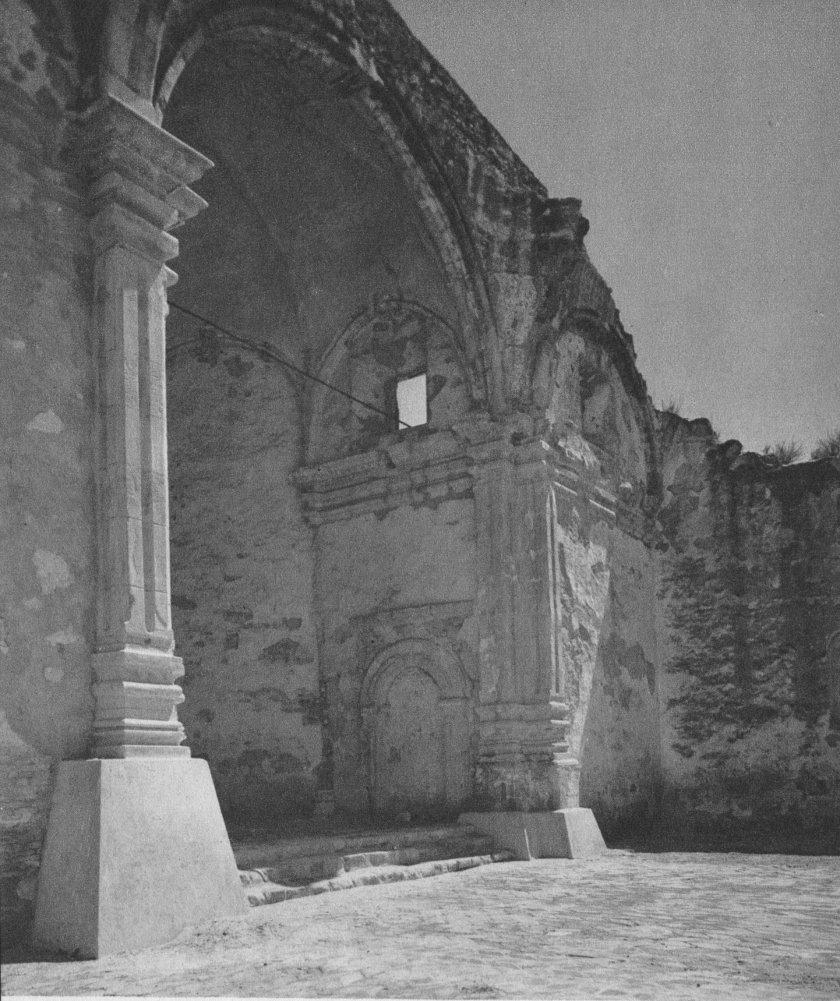
Ruins of Chapel, San Juan Capistrano
15
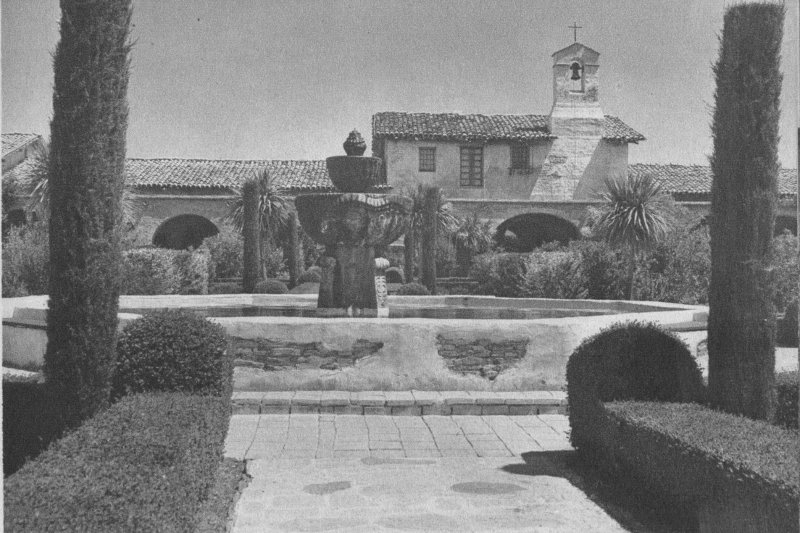
Inner Court, San Juan Capistrano
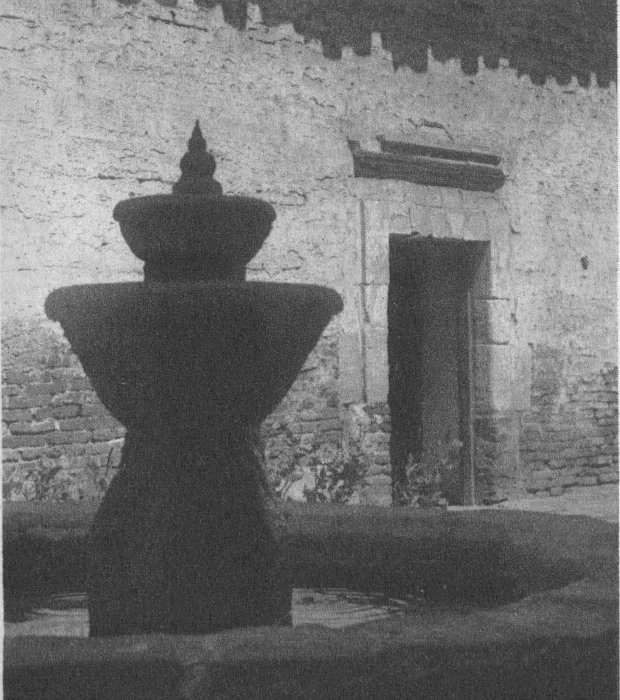
Bell Court Fountain
16
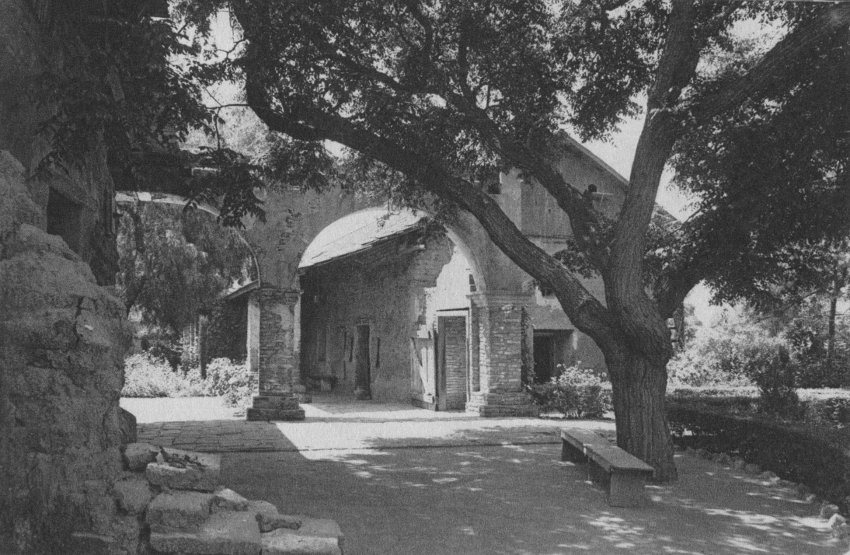
Mission Shops, San Juan Capistrano
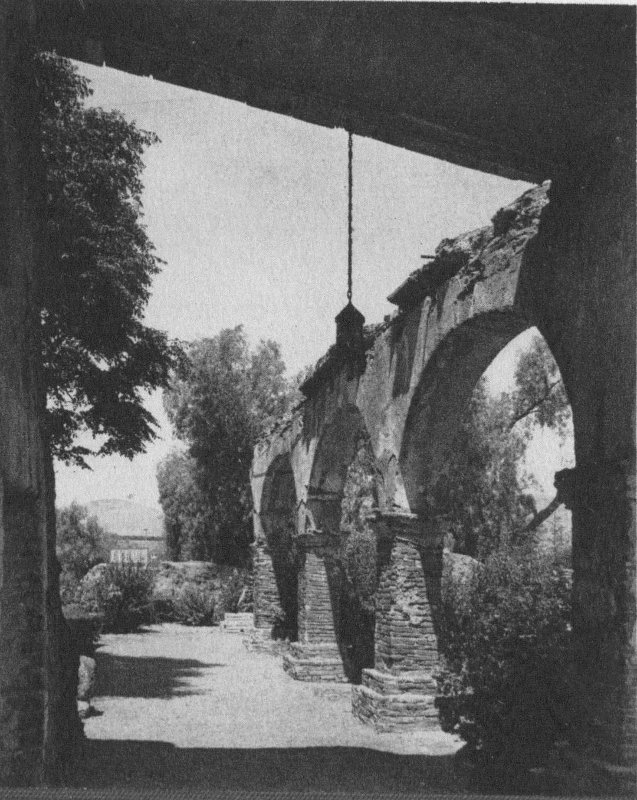
Ruins of Cloister
17
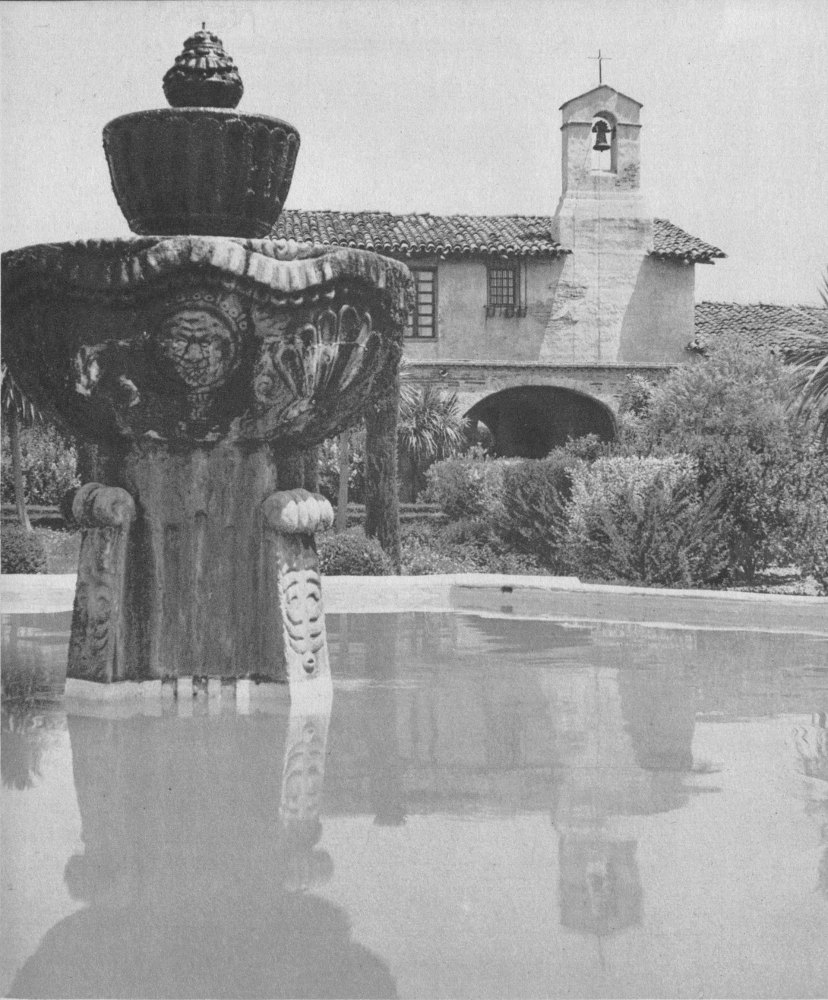
Fountain Inner Court, San Juan Capistrano
18
On July 16th, 1769, sixteen days after his arrival in San Diego, Father Serra established the first mission in California—the Mission San Diego de Alcalá. The original site was unsatisfactory so a spot was later chosen six miles back from the ocean in Mission Valley where the present buildings now stand. San Diego was one of the wealthiest of the missions. It had extensive orchards and vineyards, irrigated by an aqueduct which brought water from the valley. Parts of the old mission dam which was twelve feet thick, may still be seen. The olive trees around the Mission form the mother orchard of all California mission olives. The whole Mission has been restored in every detail. Its belfry, one of the most magnificent of all the missions, is a three-story wall pierced by five arches in which hang the old bells.
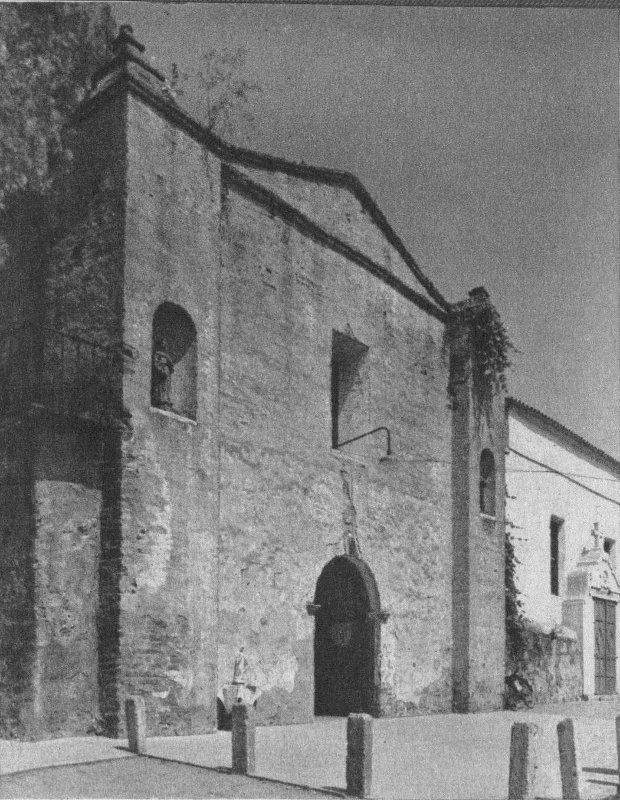
Entrance to Church, San Gabriel
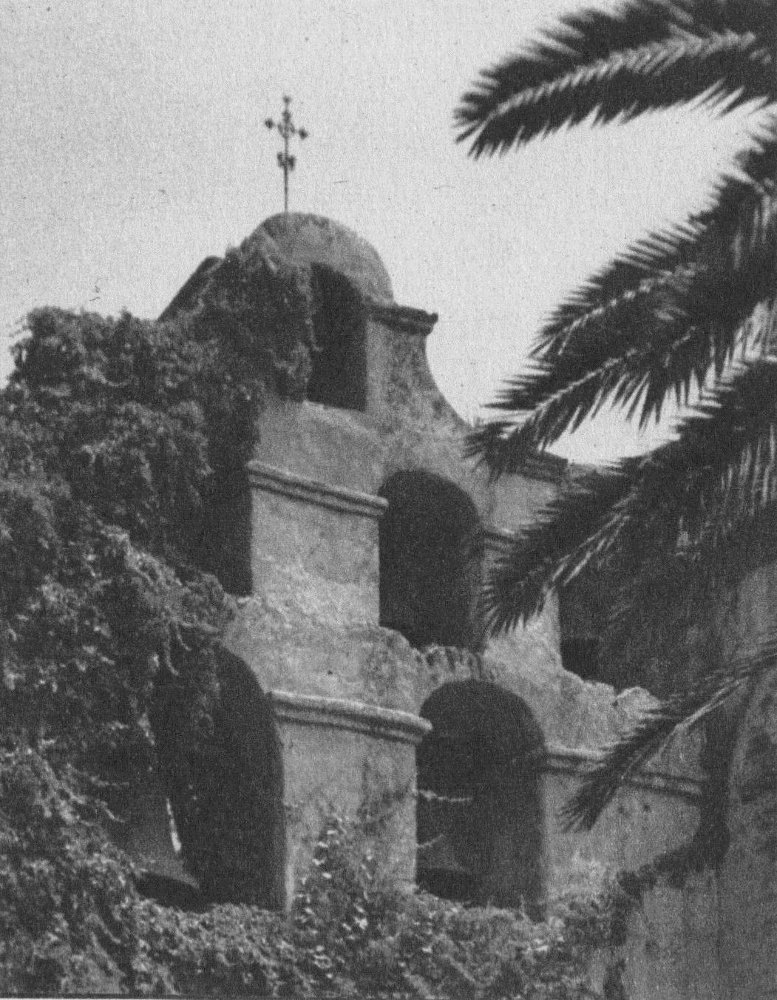
Bell Tower, San Gabriel
Four miles inland from Oceanside, in a beautiful valley, stands Mission San Luis Rey de Francia. The present buildings were started in 1811 by Father Peyri, who managed the Mission for thirty years. It is now used as a church and a Franciscan college. A feature not found in any other mission is the mortuary chapel, a small octagonal shaped room off the main chapel. San Luis Rey is typically Spanish in its architecture and while not one of the most beautiful, it has a stately magnificence that none of the other missions possesses.
19
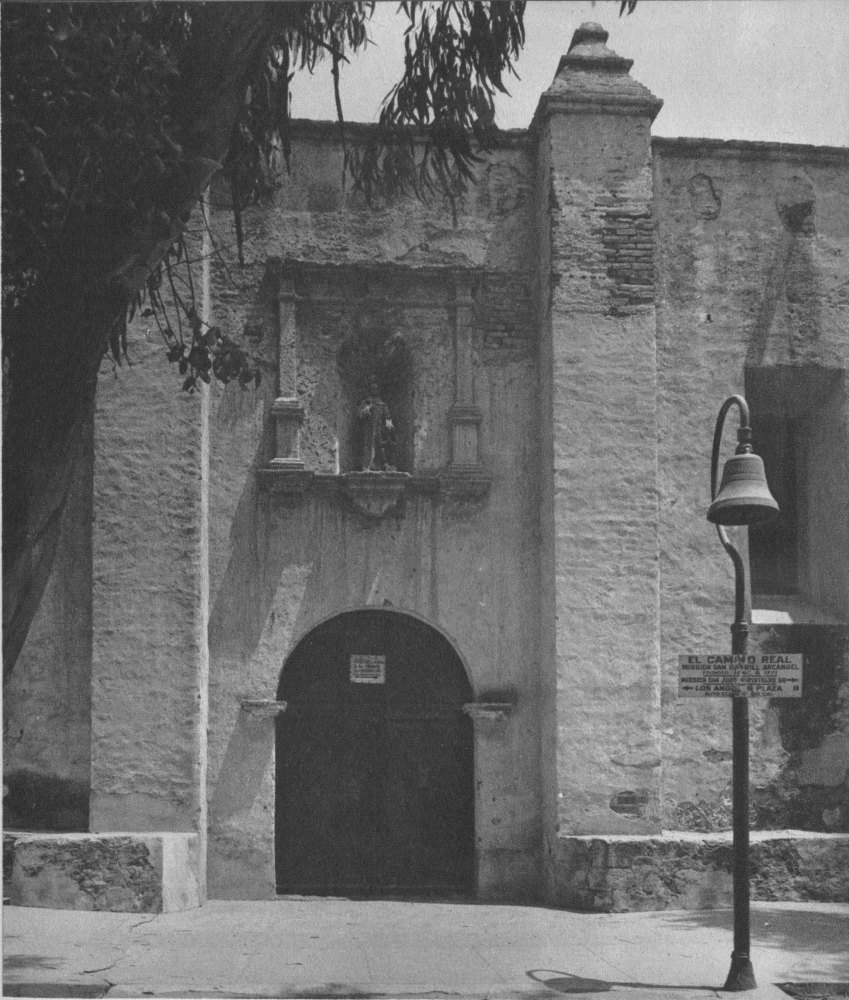
Side Entrance to Chapel, San Gabriel
20
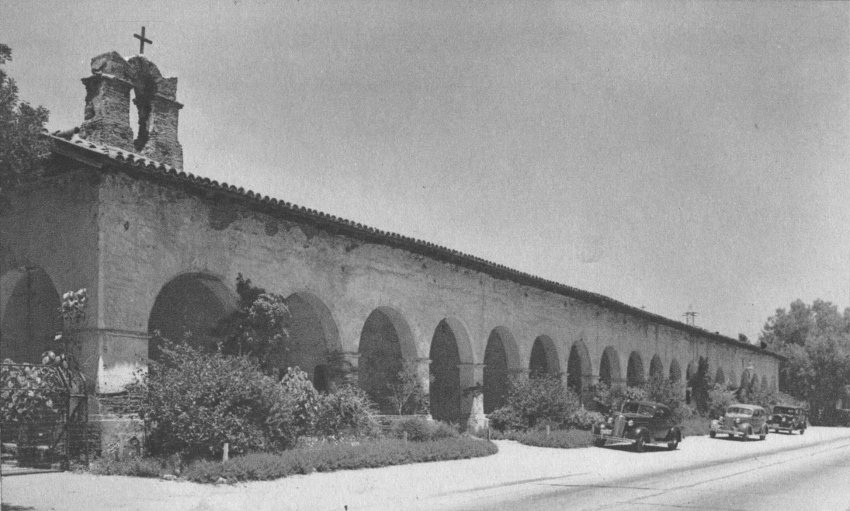
Façade, San Fernando Rey
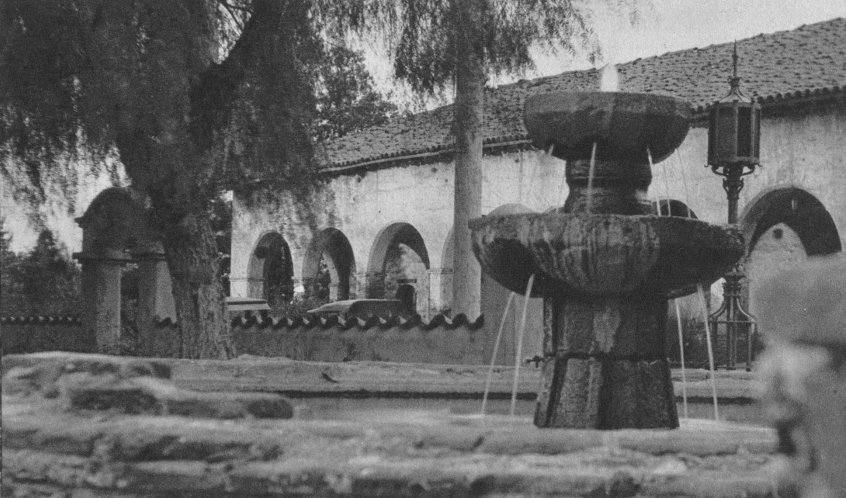
Fountain, San Fernando Rey
21
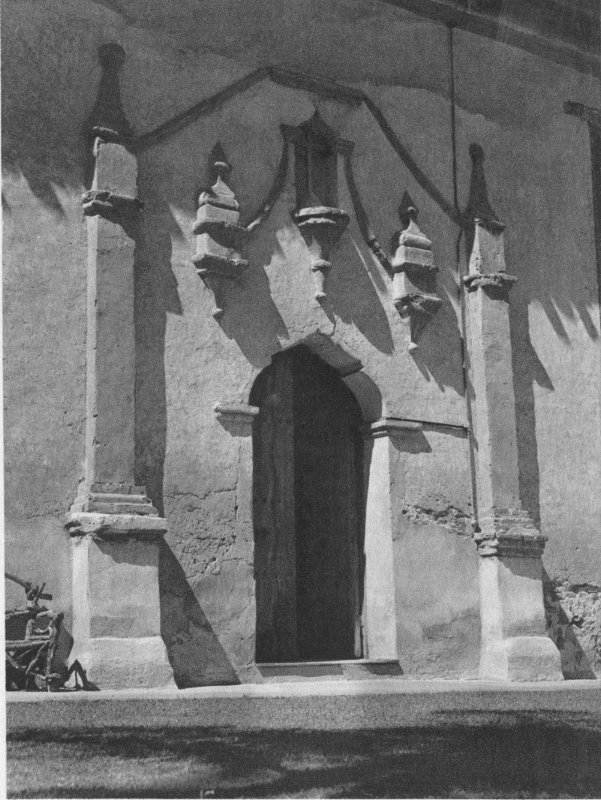
Façade, Ventura
Twenty miles inland from Mission San Luis Rey stands San Antonio de Pala, founded as an asistencia. In its chapel are Indian frescoes covered for many years with a coat of whitewash given the wall by a well-meaning padre. Its campanile, in which hang the original bells, stands in the old cemetery. Pala, nestling at the base of the Palomar Mountains, is a spot of enchanting beauty.
22
Side Door, Ventura
23
Chapel, Santa Barbara
The first attempt to found San Juan Capistrano was in 1775, but due to an Indian uprising Father Lasuén was forced to return to San Diego. The next year Father Serra came and established the Mission. It took nine years to build and was the largest and most beautiful of all. In 1812 there was an earthquake that destroyed the buildings and killed forty Indians who were worshiping in the chapel. All of the buildings have been rebuilt except the chapel, of which one of the seven large domes still stands in its lonely grandeur, a delight to the artist. Capistrano, elaborately decorated and artistically constructed, is sometimes called “Jewel of the Missions.”
24
Façade, Santa Barbara
25
General View, Santa Barbara
San Gabriel Arcángel was a welcomed pause in the long journey from Mexico to Monterey; it was the first stop after crossing the desert and mountains. It is distinctively Moorish in its architecture. Its high buttressed walls are stone to the windows and brick above and have an outside stairway to the choir loft and campanile. In the courtyard is one of the largest and oldest grape vines in California.
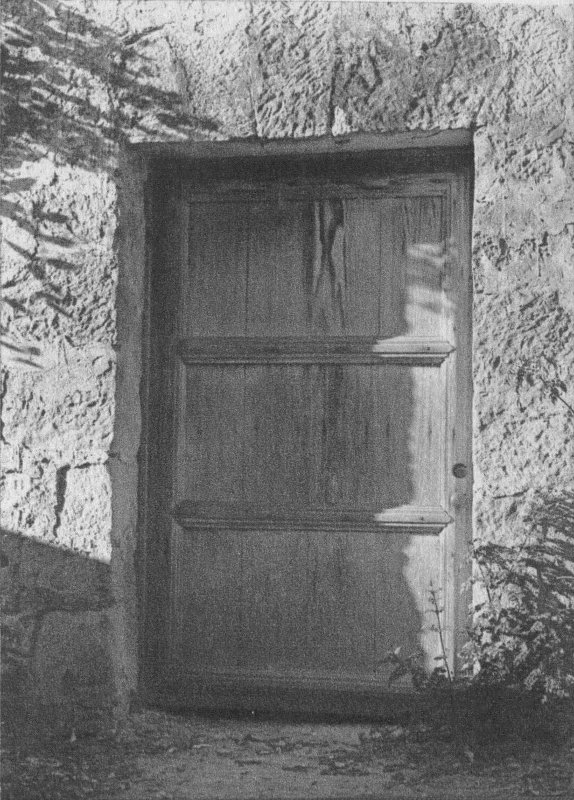
Doorway
26
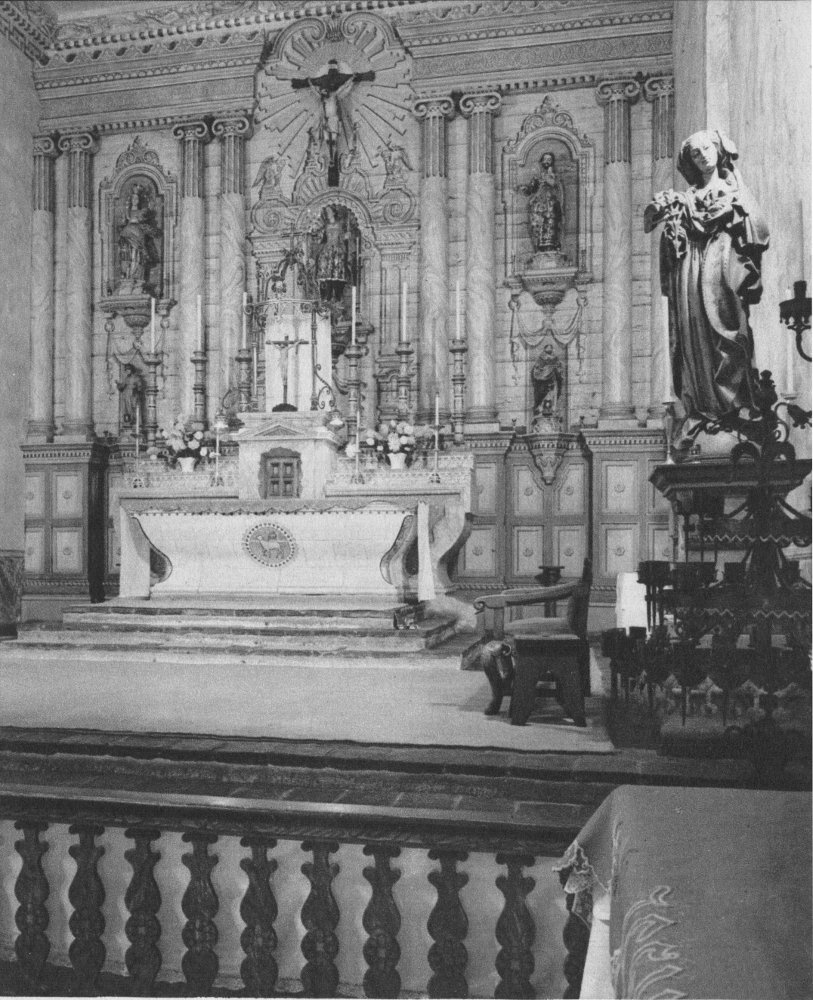
Altar, Santa Barbara
27
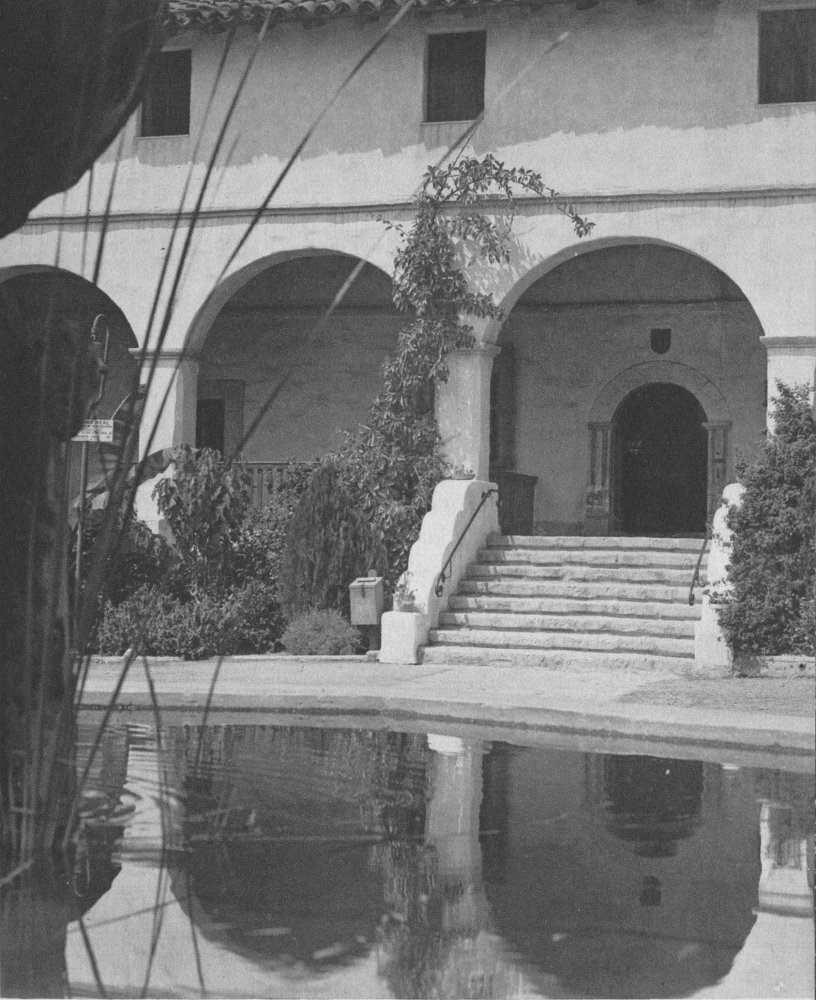
Detail of Cloister
28
At one time Mission San Fernando Rey de España had an Indian population of eleven hundred. Today nothing remains of the Mission but one large building. In it one can see the wine cellar and the large copper brandy still. Across the street is a large star-shaped fountain copied from one in Cordova, Spain, a monument to the artistic work of the Indians.
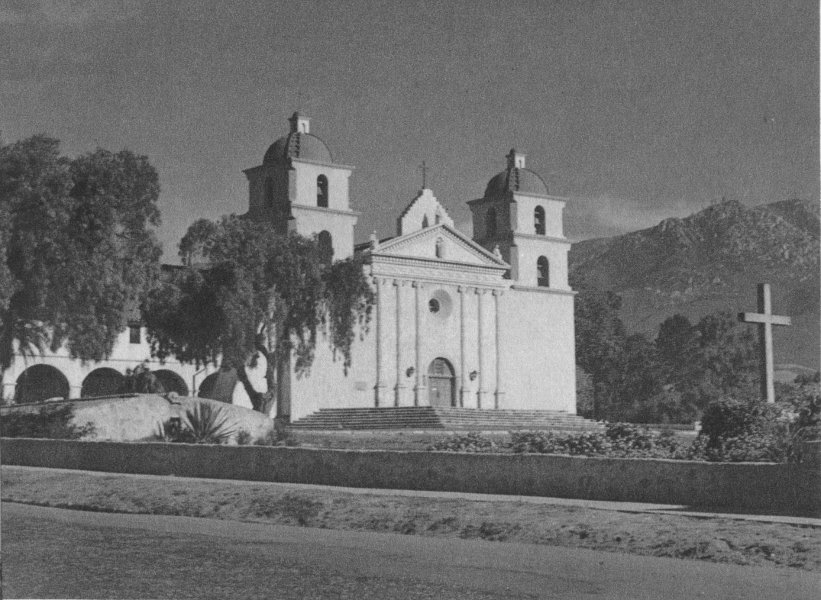
Detail of Façade, Santa Barbara
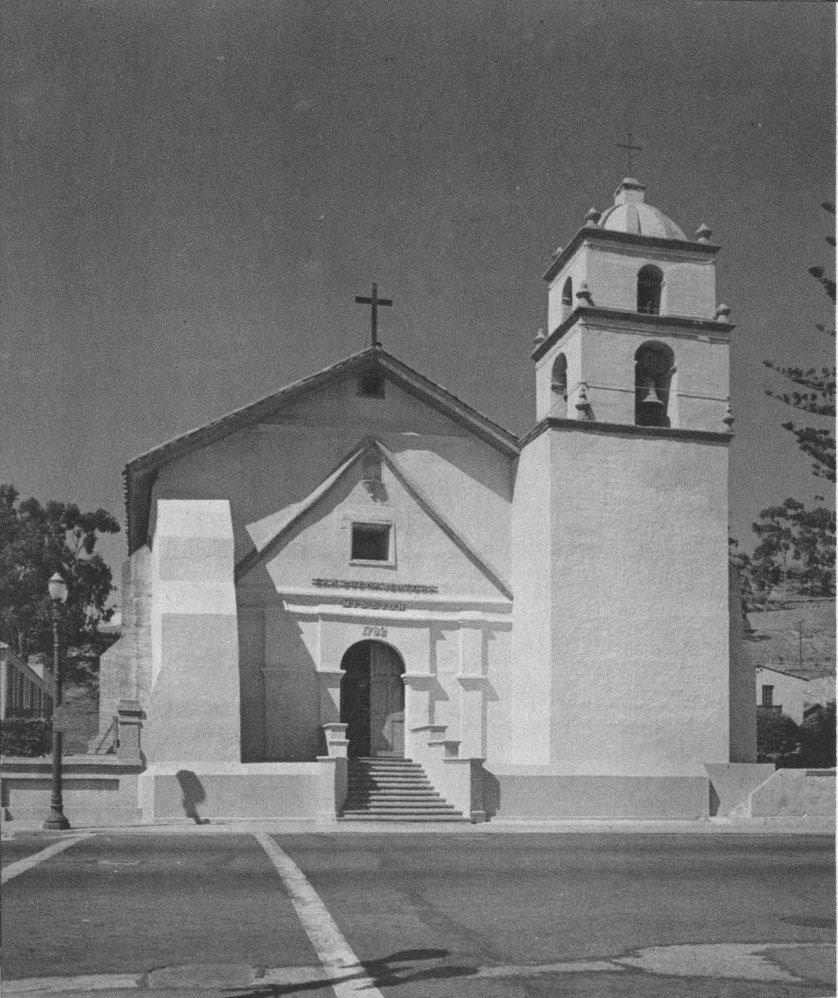
Half-way between San Diego and Monterey, Father Serra founded the Mission Buenaventura. It was the last founded by him. On a hill above the mission he planted a cross that could be seen from both land and sea. Today, a replica of the cross stands in the same place. Ventura was noted for its beautiful gardens but of these nothing remains except two tall palms. The chapel has been restored and is used daily as a place of worship.
29
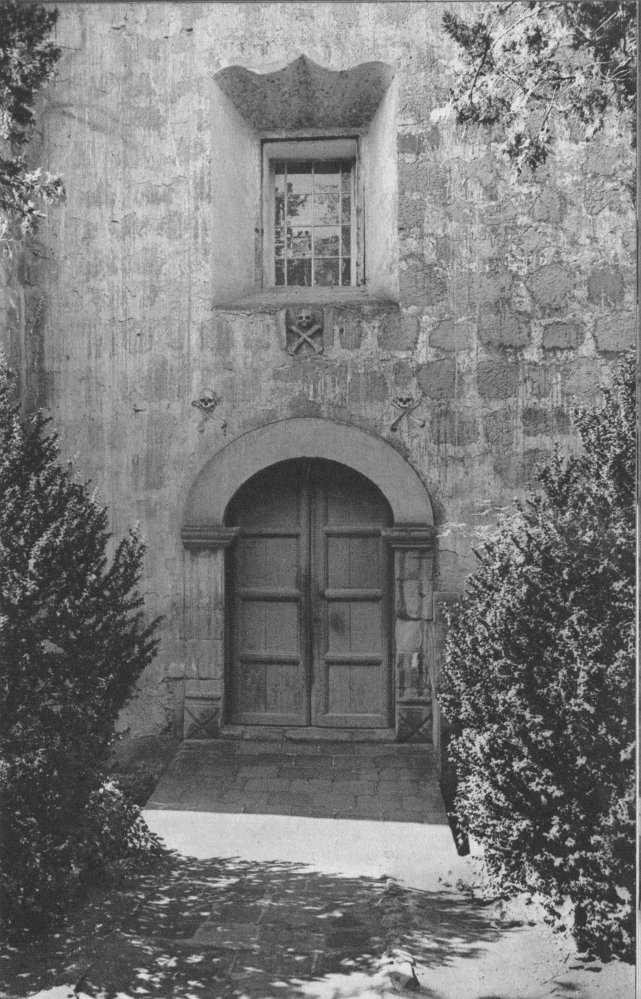
Side Door Detail
30
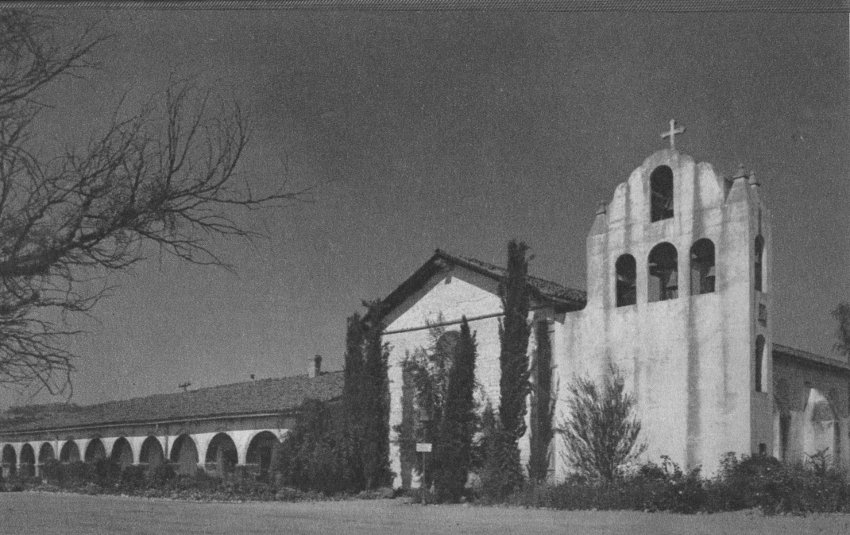
Cloister, Santa Inez
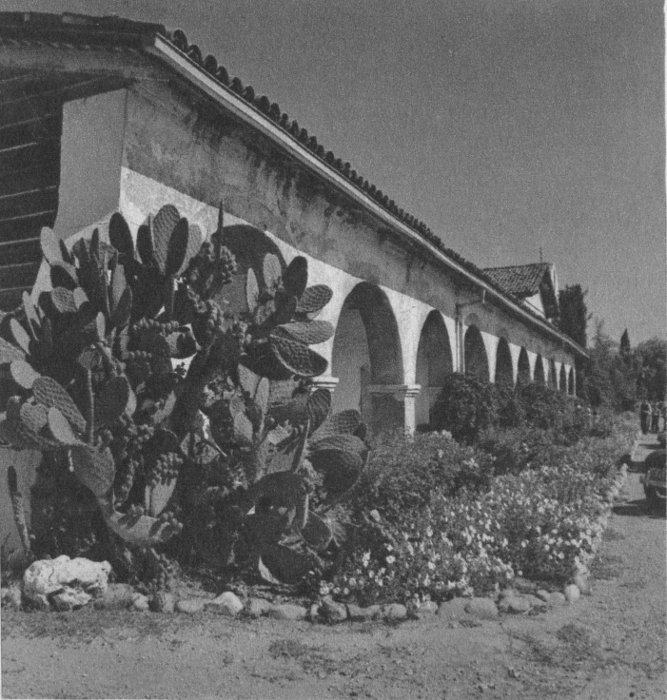
Detail of Façade
31
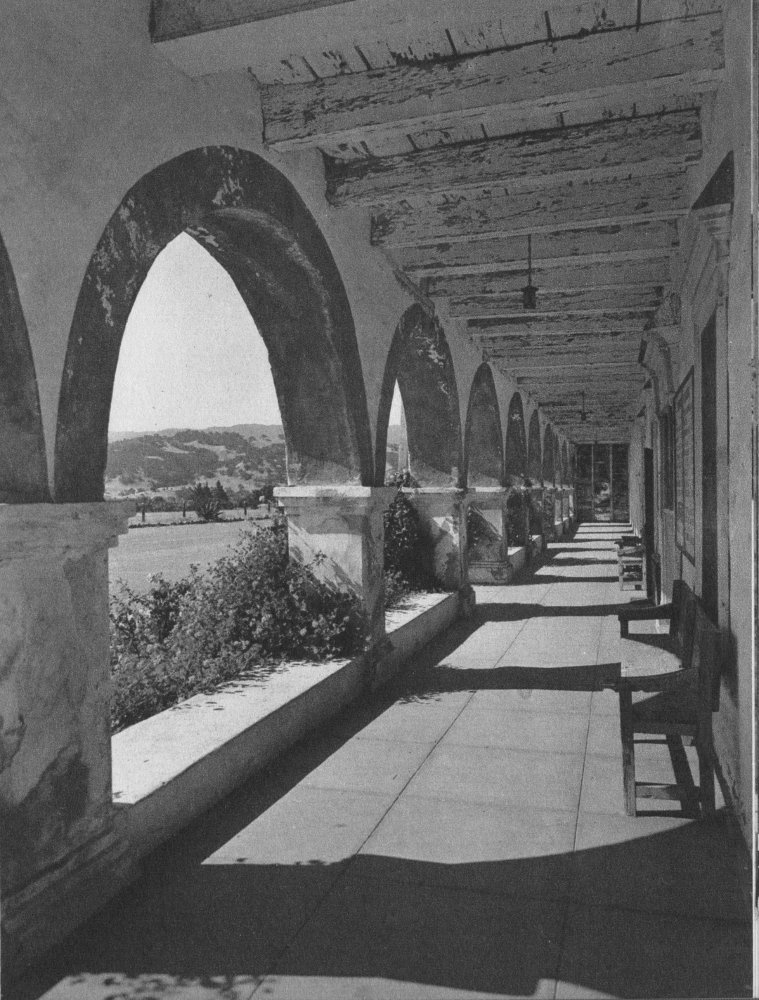
Detail of Cloister
32
Chapel, Santa Inez
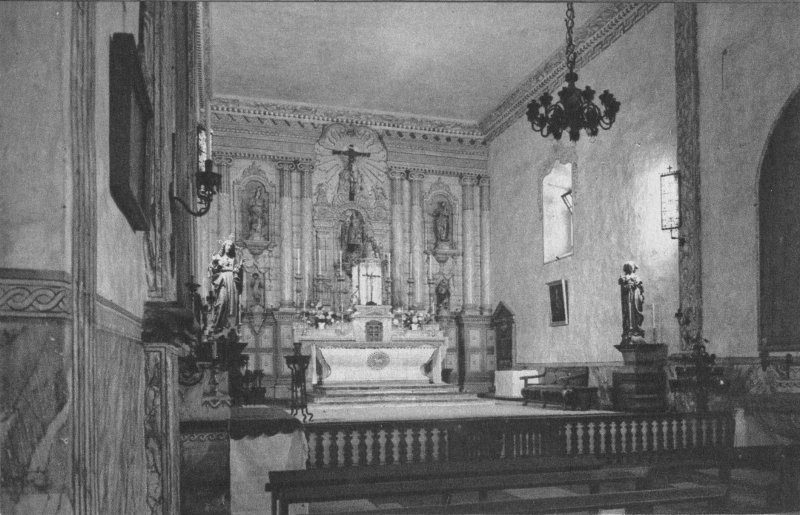
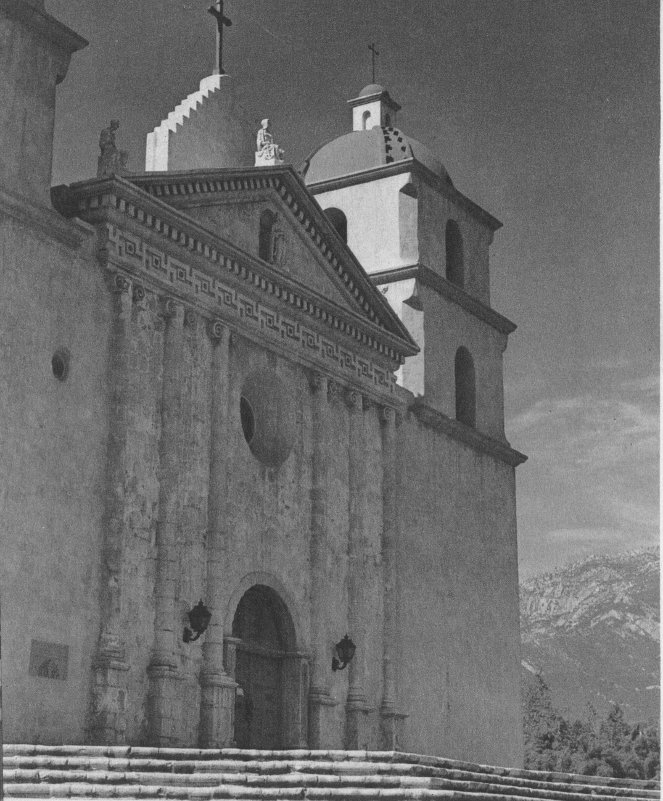
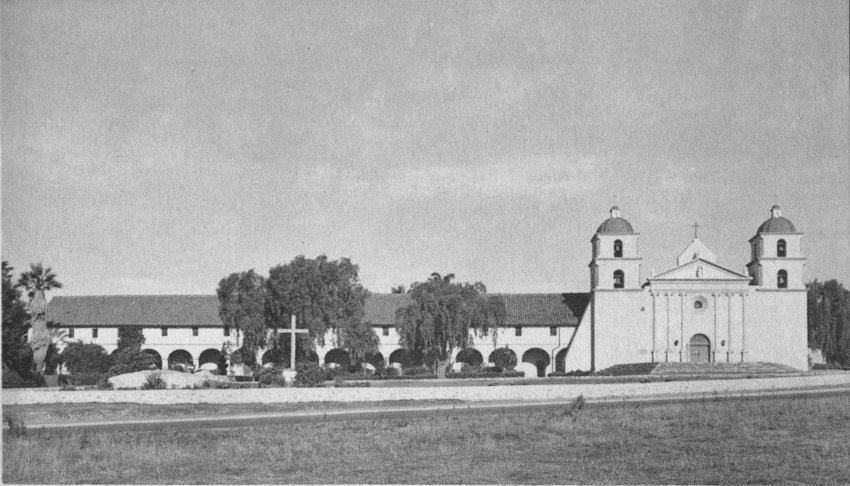
Mission Santa Bárbara has never fallen into a state of decay like its less fortunate sister missions, as it has always been in the hands of its founders, the Franciscans. Although damaged by numerous earthquakes, the last in 1925, it has always been faithfully restored. The light above the altar has never gone out, the old bells have faithfully rung the call to Mass. Its walls, six feet thick and mellowed by time, impart a lasting beauty. The bodies of over four thousand Indians lie in its tree-shadowed cemetery. In front of the Mission the trickling water from an old fountain gives one the restful feeling of the old Spanish siesta. It was at this mission that the great historian, Father Engelhardt, 33 wrote his great book, “Missions and Missionaries of California.”
La Purisima
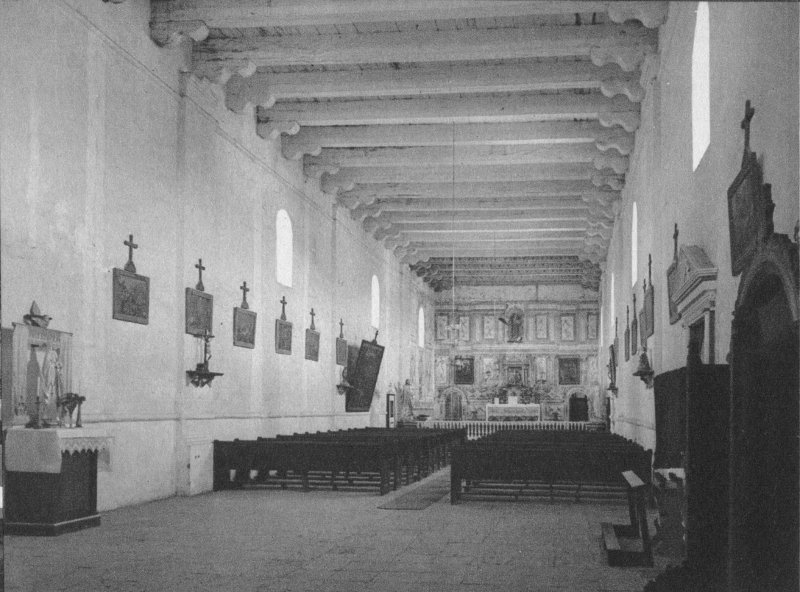
Mission Santa Inéz was founded to convert the Indians who lived east of the Coast Range. The Mission not only suffered from earthquakes but also from an Indian uprising. Today it has been restored to its former grandeur. Its campanile with its three bells reminds one of Mission San Gabriel. In its museum is a collection of old vestments and books.
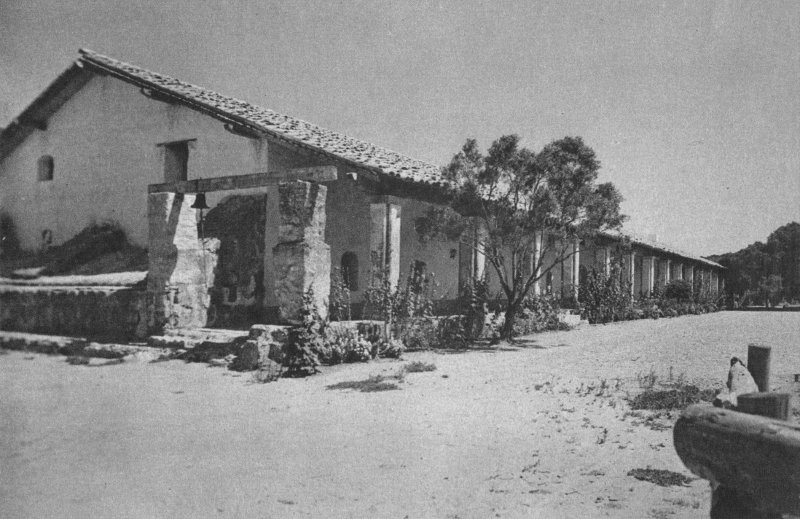
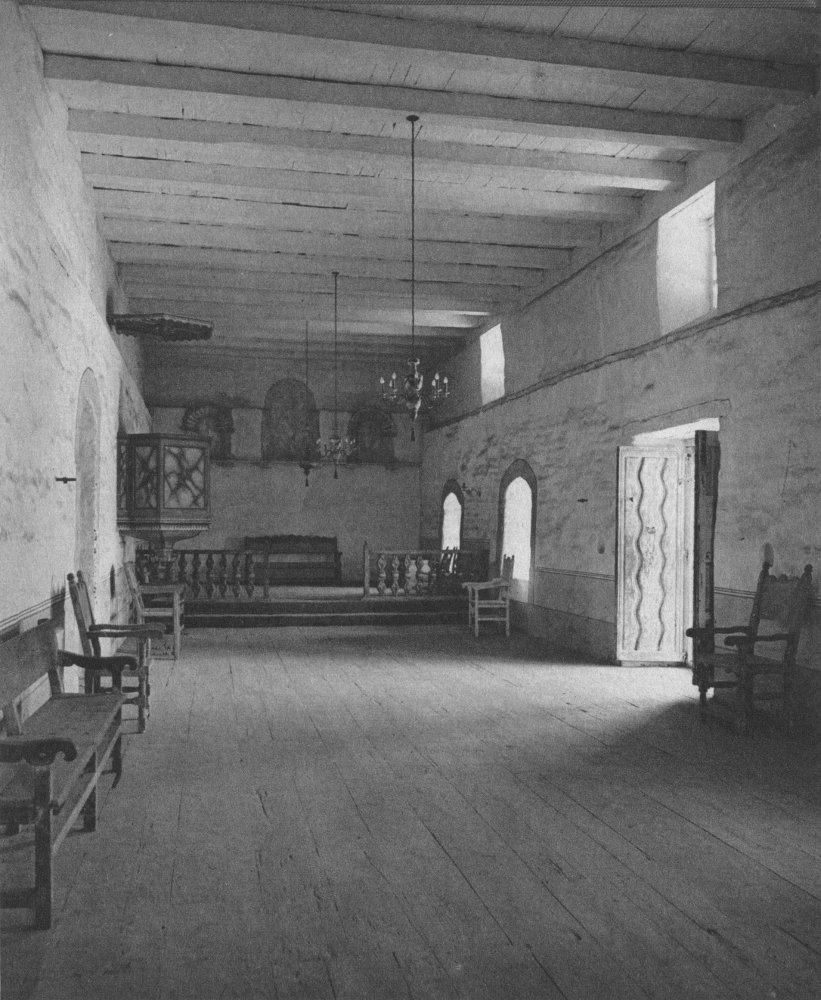
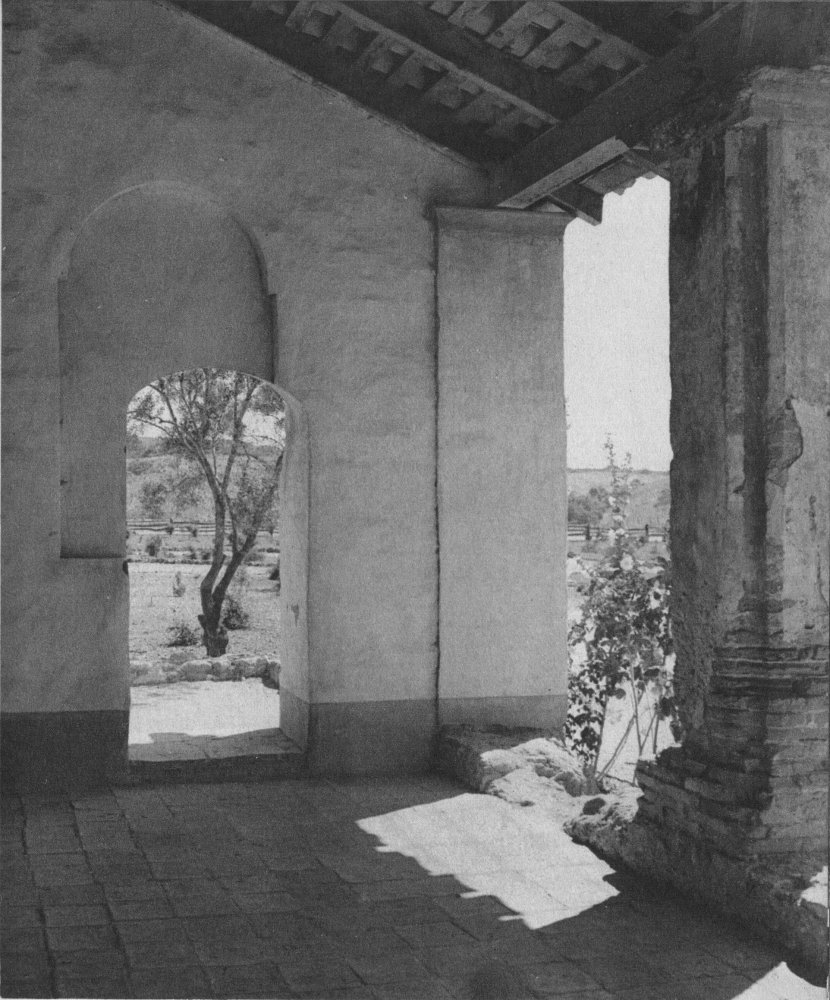
Nothing remained of Mission La Purísima Conceptión but a few crumbling arches, till it was taken over by the state. Today it stands in all its former glory, faithfully restored in every detail. The Mission site was made a State park and the restoration carried out by the Civilian Conservation Corps. Purísima stands as a monument to a nation’s industry, but lacks the peaceful state of religious tranquility found in the other missions.
34
Restored Interior, La Purisima
35
Detail at end of Cloister La Purisima
36
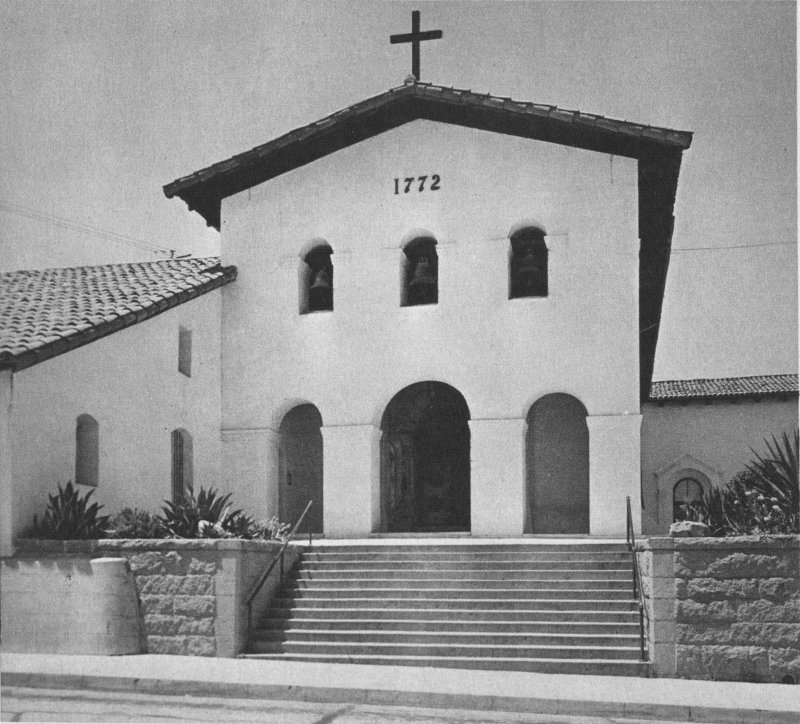
San Luis Obispo
It was at Mission San Luis Obispo de Tolosa that tile was first manufactured. The buildings have lost much of their Spanish atmosphere, but the interior is in a fair state of restoration. It is now the active Catholic Church of the city which was named after it. A few miles from San Luis Obispo is the Asistencia of Santa Margarita, unique in that the entire ruins have been covered over by a large hay barn. Horses and cattle quietly munch their hay through the arched window openings.
37
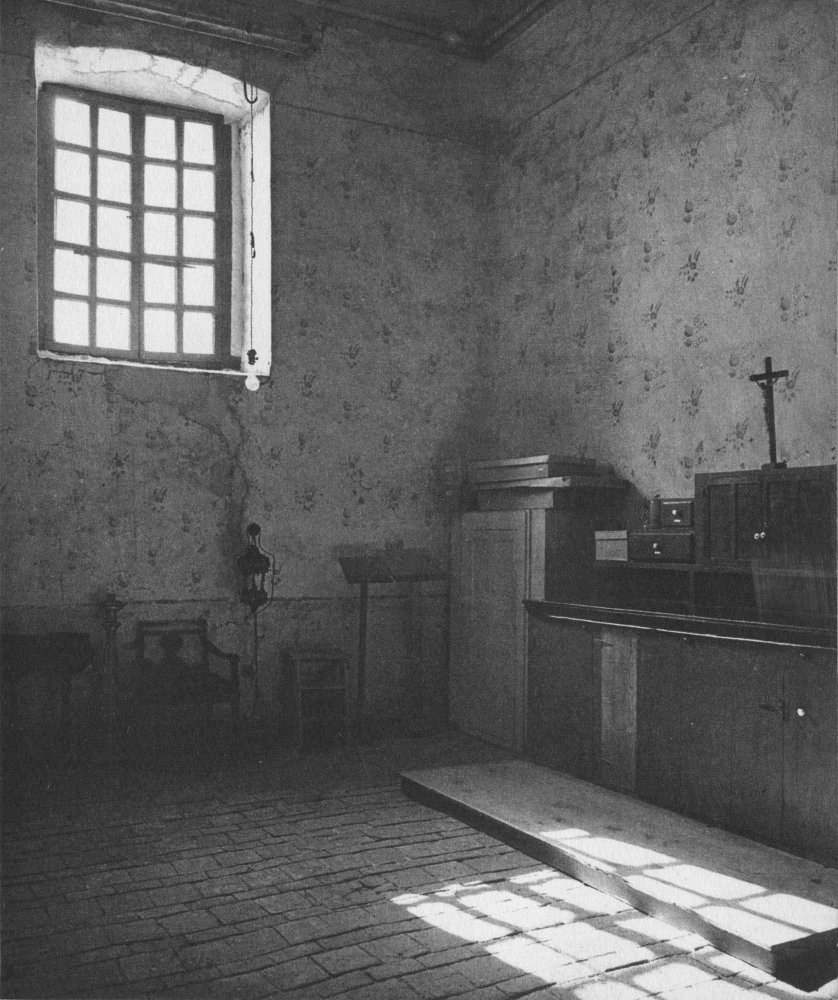
Sacristy, San Miguel
38
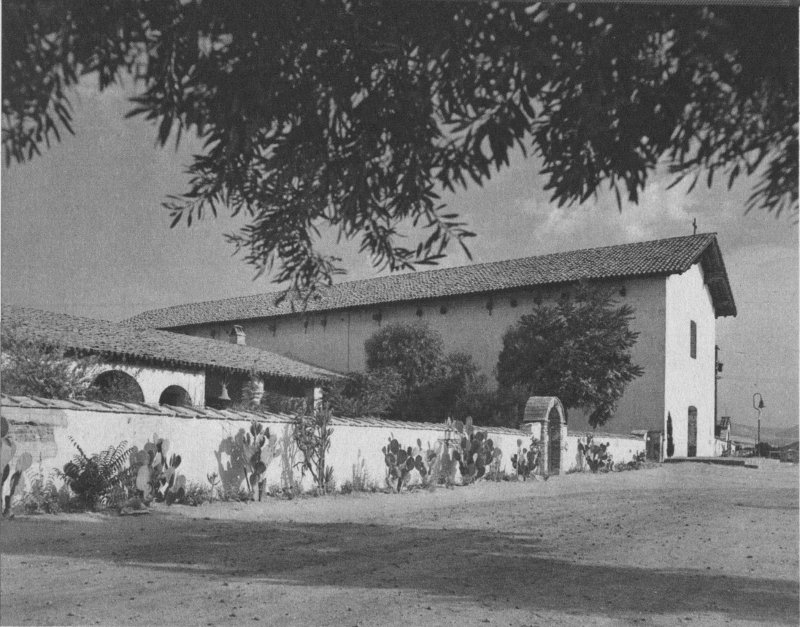
San Miguel
The very walls of San Miguel Arcángel, due to its sympathetic restoration, seem to echo the footsteps of the old padres. Inside the chapel the huge rafters, crudely hewn from logs, are painted in bright colors. The design painted on the walls by the Indians show large fluted pillars with a balcony and railing above. The floor is of burned brick, worn smooth by the tread of bare feet. Its crudely decorated pulpit and confessional are the same as the day they were built. The Mission did not have a bell-tower so the bell was mounted on a wooden scaffold. To enter the ancient edifice is to enter directly into the past.
39
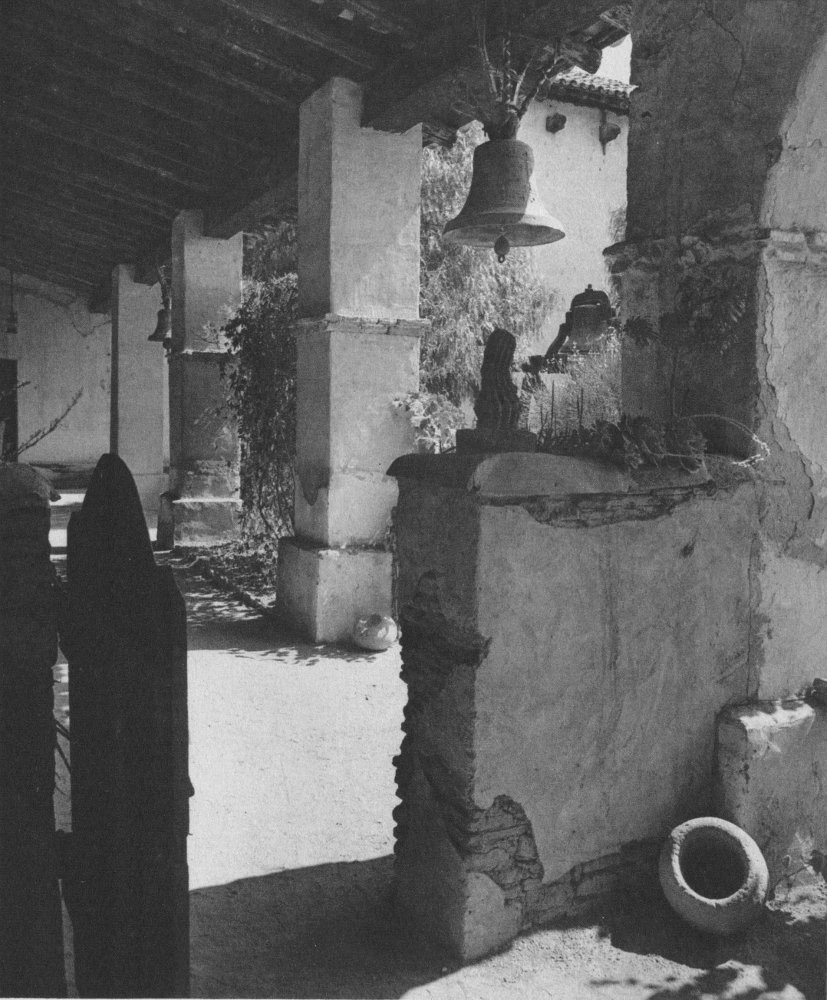
Detail of Cloister, San Miguel
40
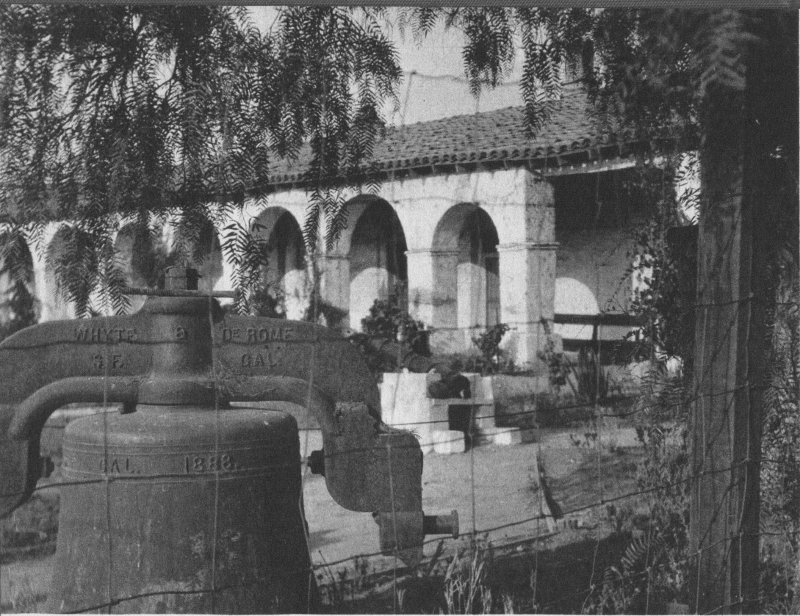
Forecourt, San Miguel
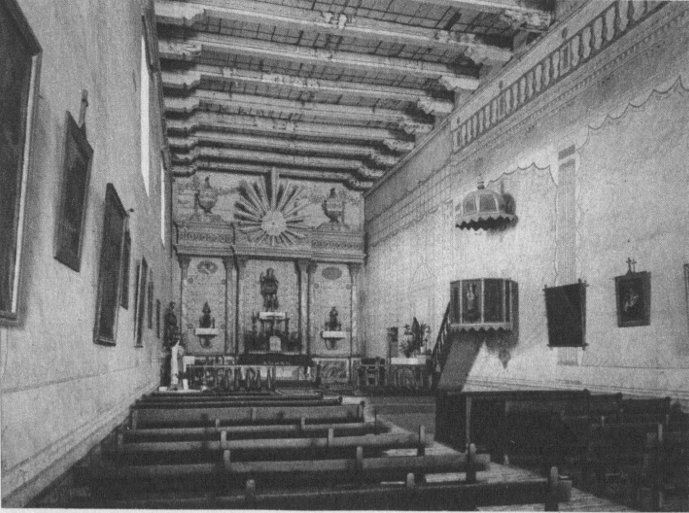
Chapel
41
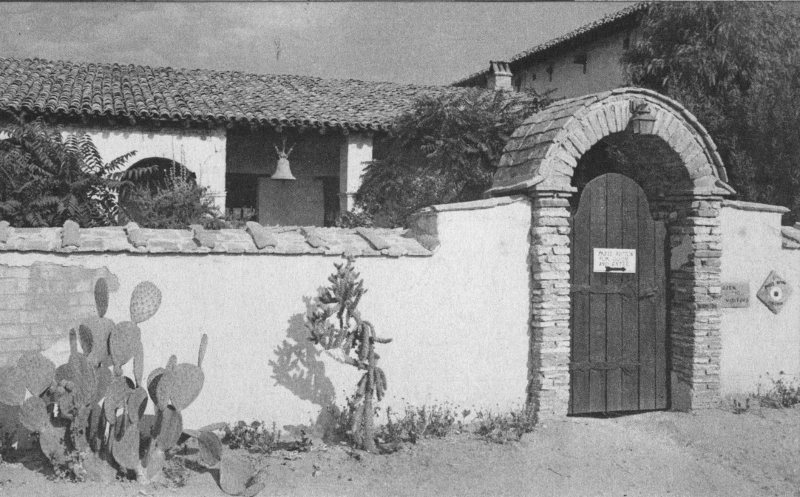
Gate to Forecourt
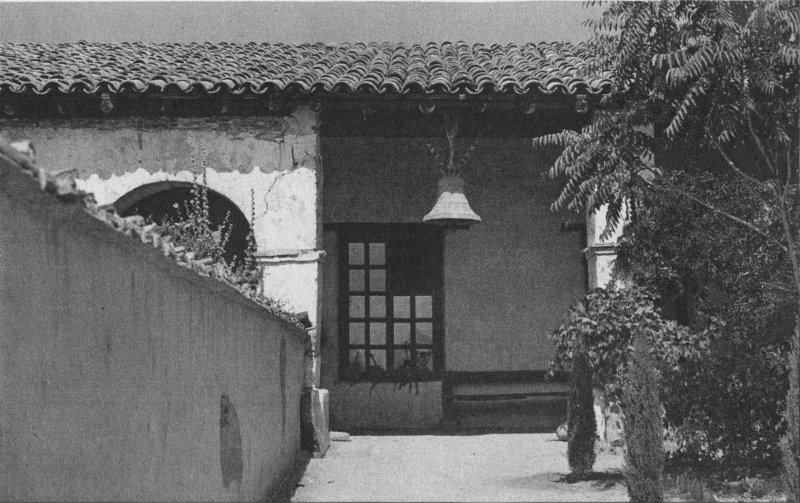
Entrance to Cloister
42
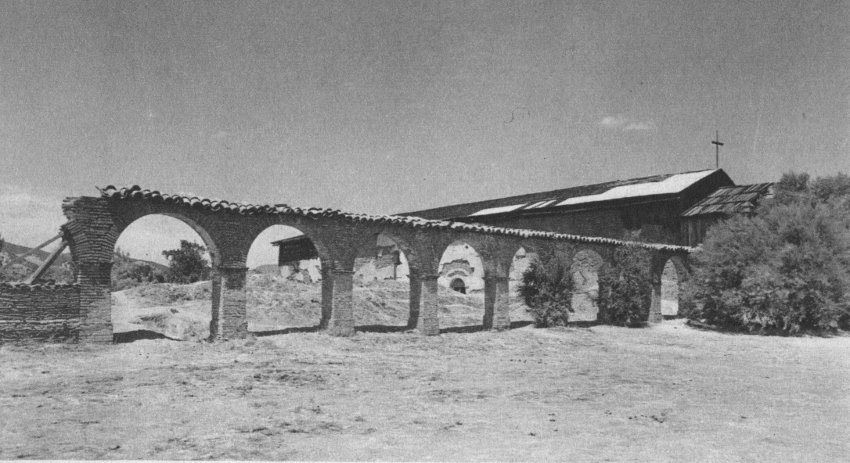
Ruins of Arches, San Antonio De Padua
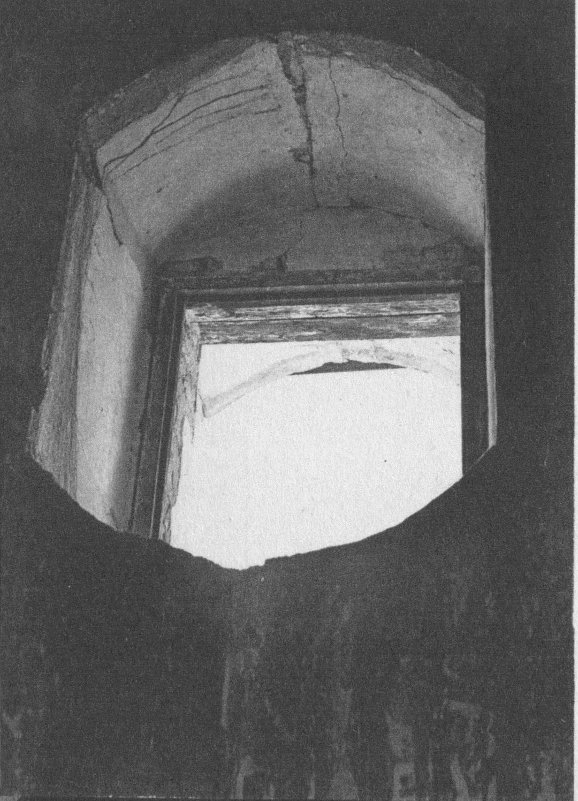
Double Arched Window
A few rain-washed adobe walls around which the wind blows constantly is all that is left of Mission Nuestra Señora Dolorissima de la Soledad. A picture of dreary desolation and aptly named, Our Lady of Solitude.
43
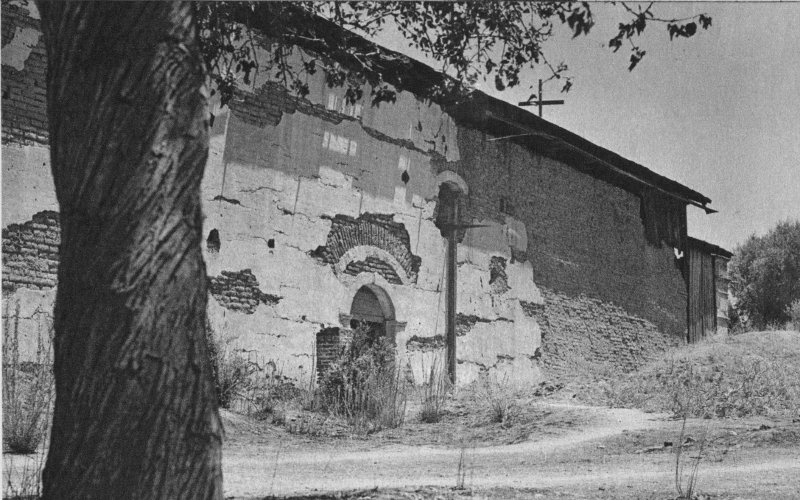
Side View
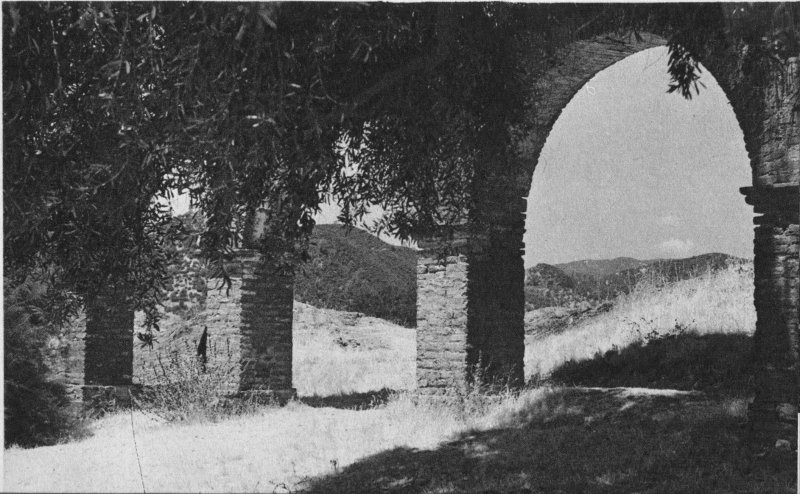
Arches
44
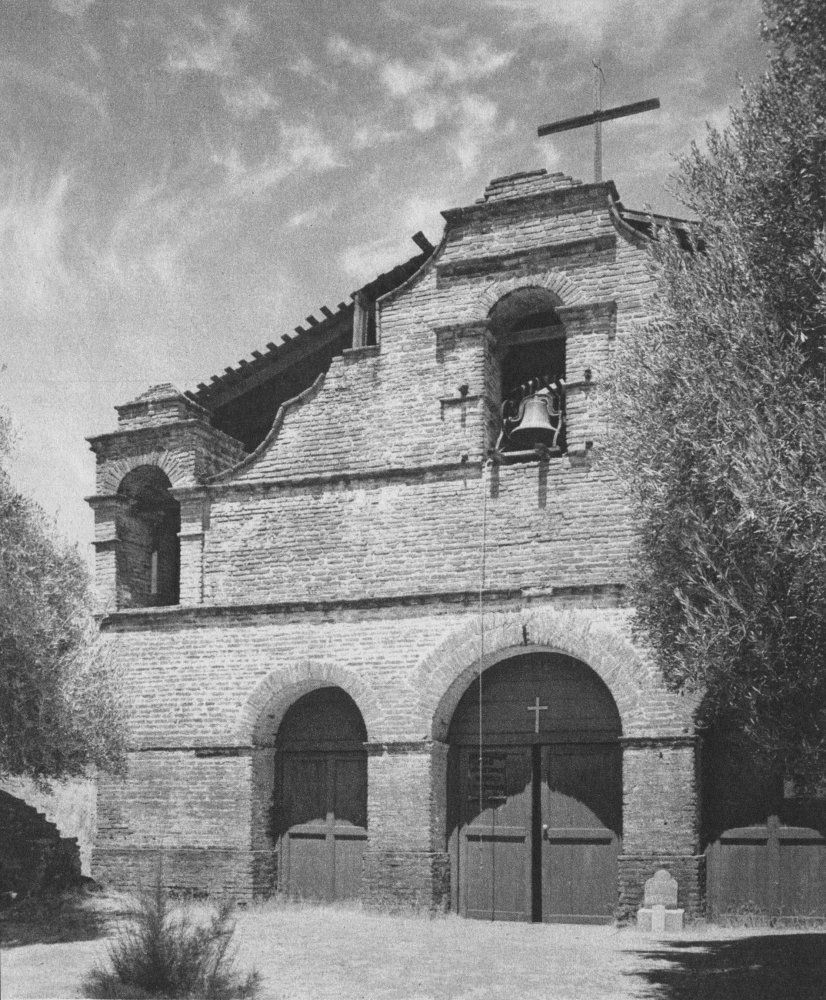
Façade, San Antonio De Padua
45
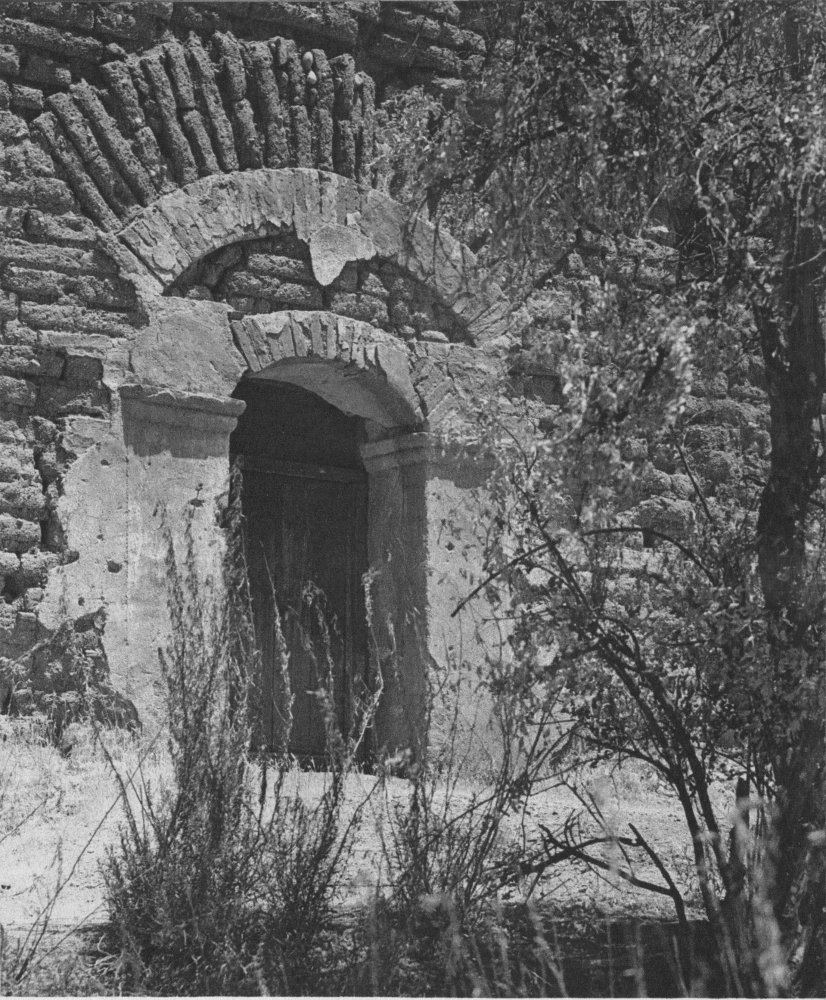
Doorway to Sacristy, San Antonio De Padua
46
Father Serra founded his third Mission, San Antonio de Padua, in a well wooded valley. When the bells rang in celebration an Indian appeared out of the trees, and for the first time a native was present at the founding of a mission. Its quiet surroundings are very much as they were in the past. The buildings were constructed of brick instead of adobe. Parts of a stone-walled irrigation ditch which brought water for many miles still stand near at hand.
Monterey was used as a mission for but one year and then became the Presidio Chapel. Behind the Mission is the tree under which the first Mass in California was offered. Many of the old relics of the early Church are preserved here. It is now the San Carlos Parish Church.
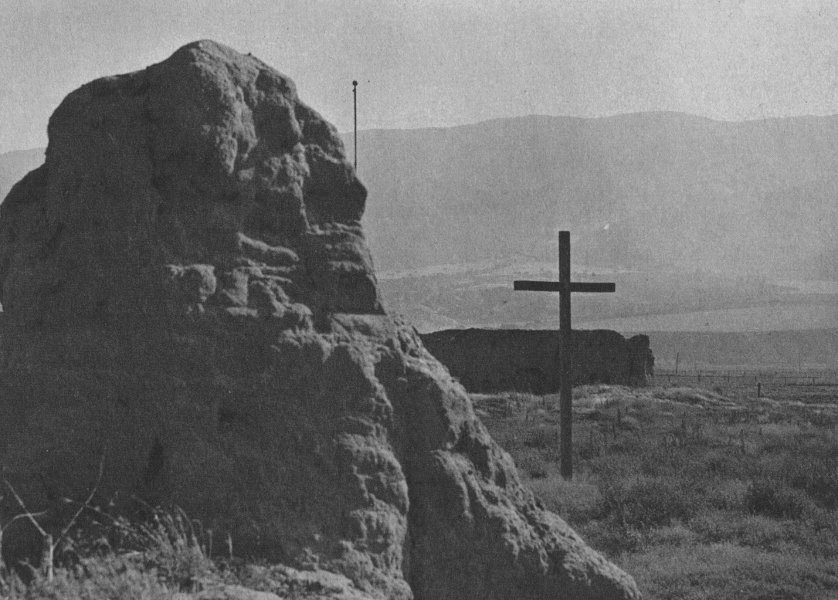
Soledad
47
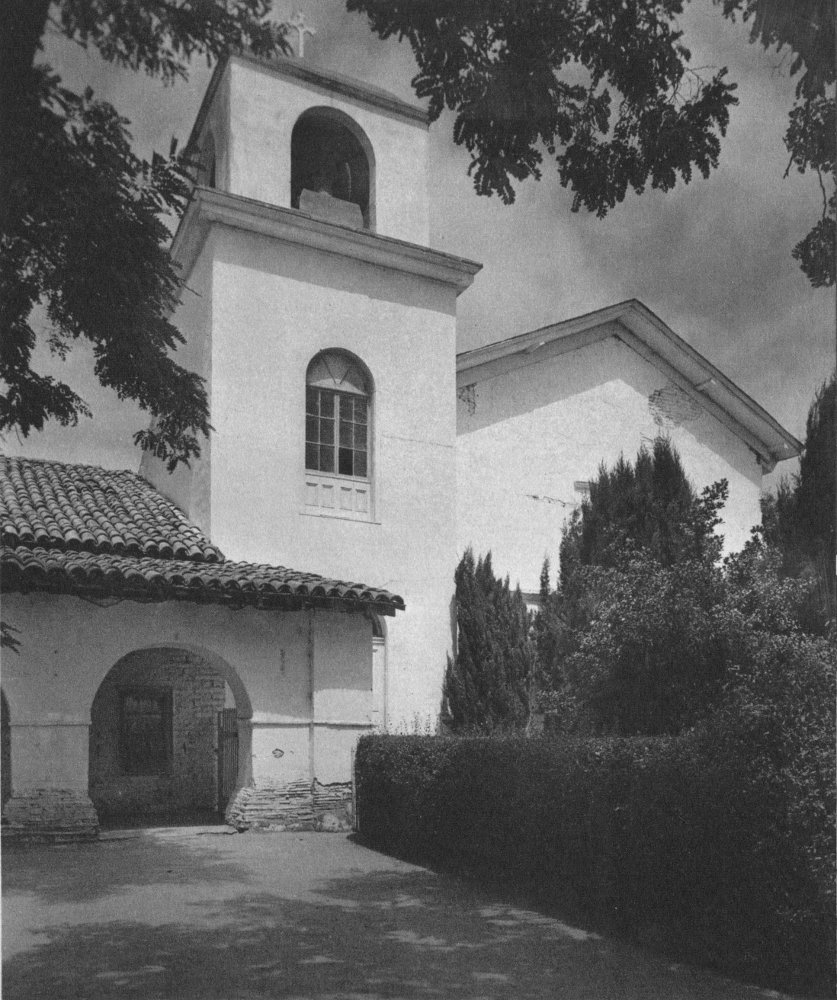
Tower at San Juan Bautista
48
When Father Serra decided to move the Mission from Monterey he chose a site about five miles away where the Rio Carmelo enters the sea. Here he founded Mission San Carlos Borromeo, which became the headquarters of the Padre Presidentes of the California missions. In its quiet sanctuary are the graves of Father Serra, Lasuén, Crespi and López, names famous in the history of the missions. Father Serra spent most of his life at San Carlos. His cell, measuring about eleven feet square, has been restored. The building is Moorish in style.
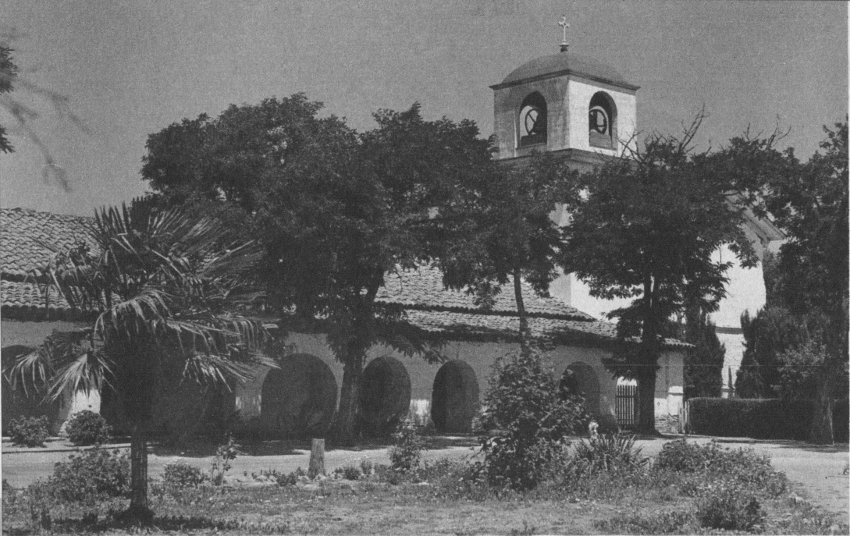
San Juan Bautista
A replica in concrete has been built of Mission Santa Cruz. It is about half the size of the original and stands on the old Mission grounds.
Mission San Juan Bautista stands facing the plaza in the old pueblo of San Juan. It was here that Helen Hunt Jackson began her famous story, “Ramona” and Joaquin Murrietta, the famous Mexican bandit, worshipped. San Juan saw great activity during the gold rush as it was a stage stop on the road to the mines. The long arcade that extends the whole length of the building, contains twenty arches. In the garden is a sundial, placed there by the padres. Its old cemetery is in an olive grove whose trees cast fantastic shadows on the time worn headstones.
49
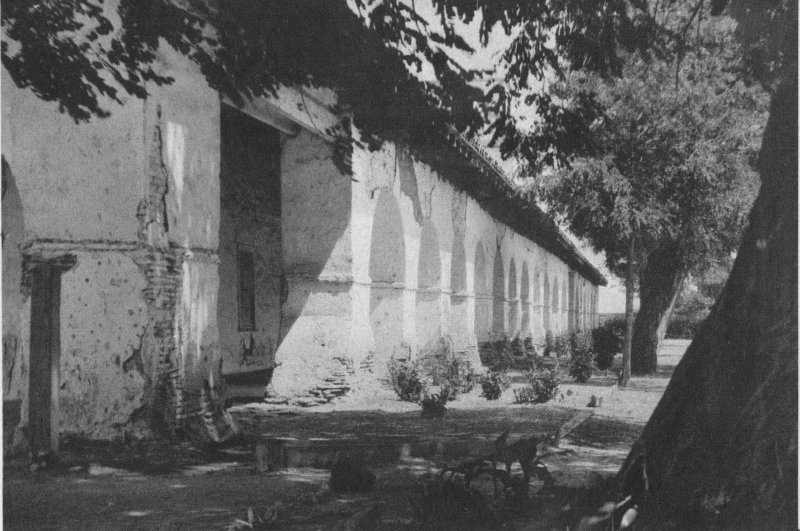
Cloister
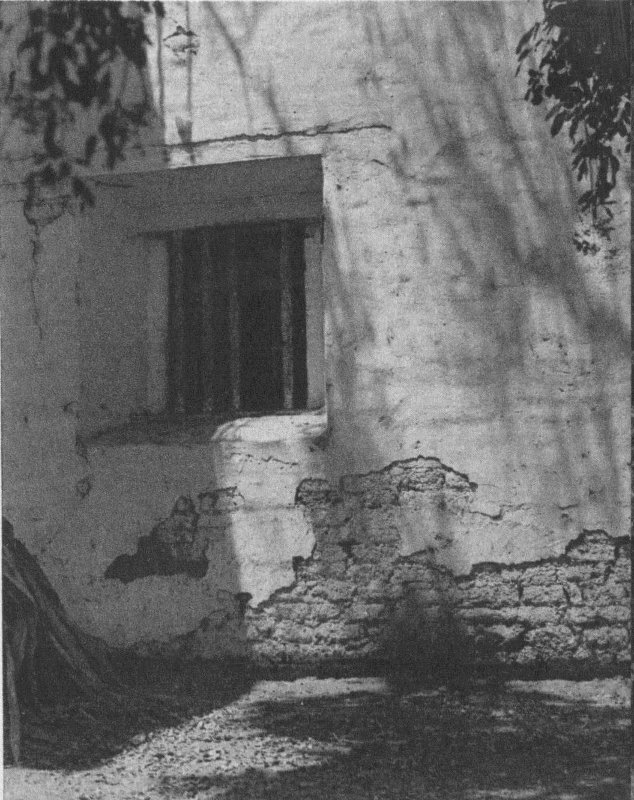
Window
50
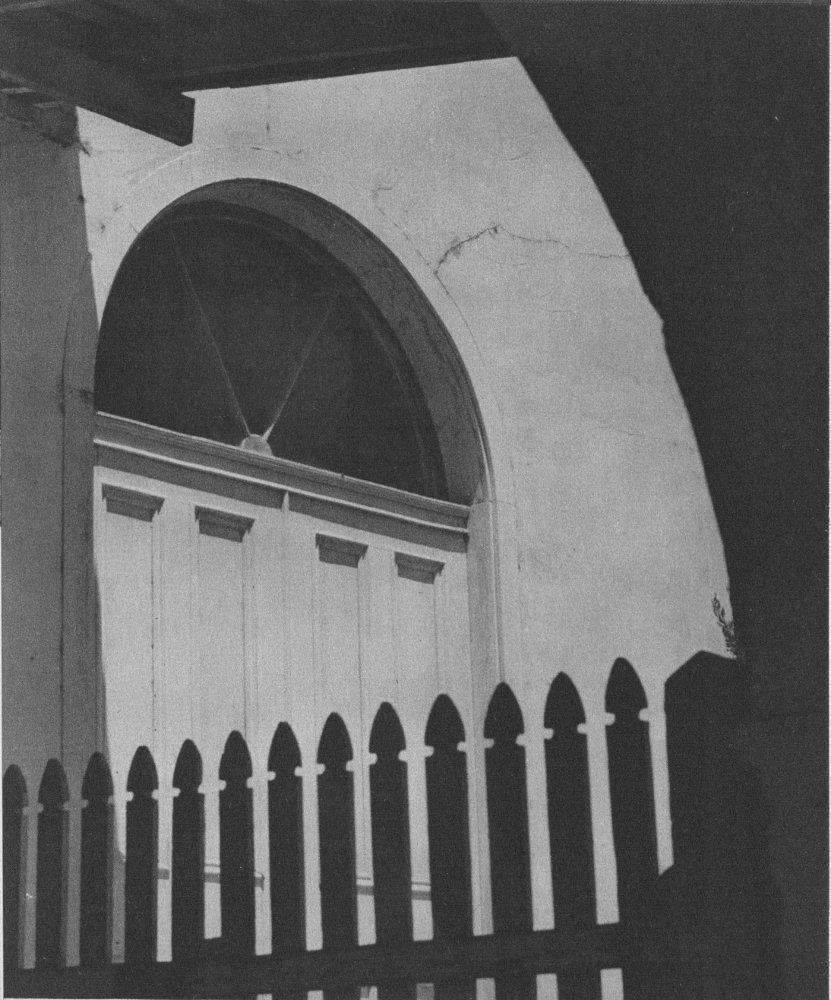
Doorway at San Juan Bautista
51
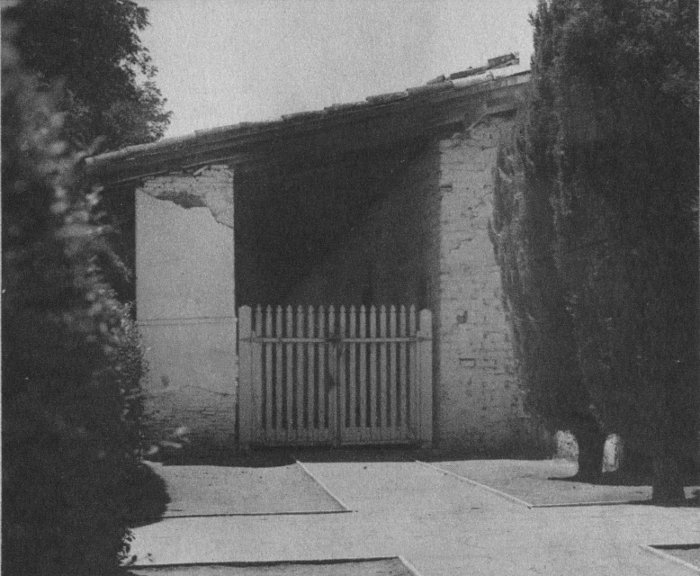
End of Cloister
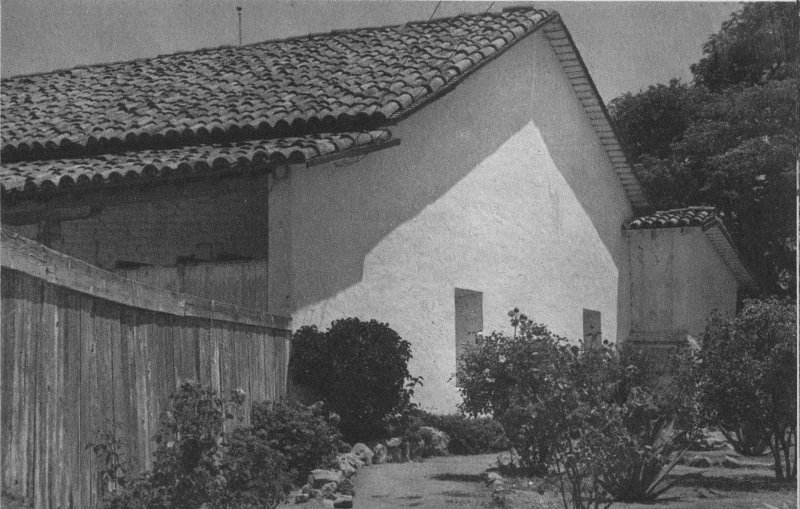
Garden, San Juan Bautista
52
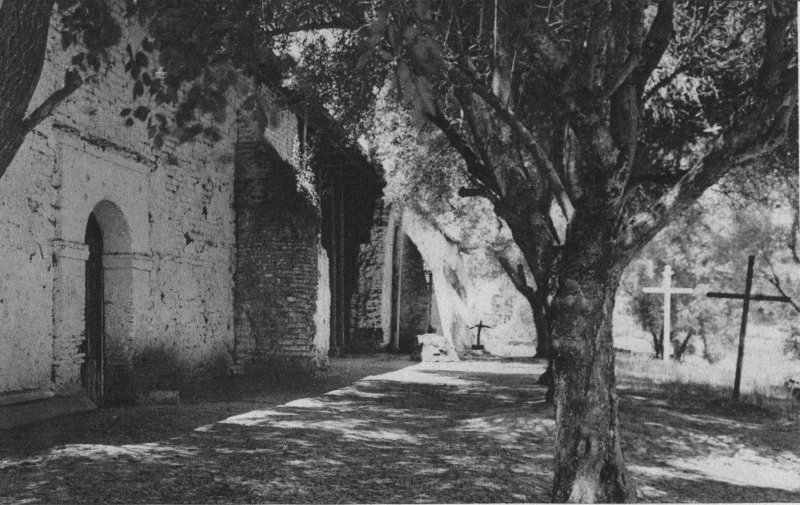
Cemetery at San Juan Bautista
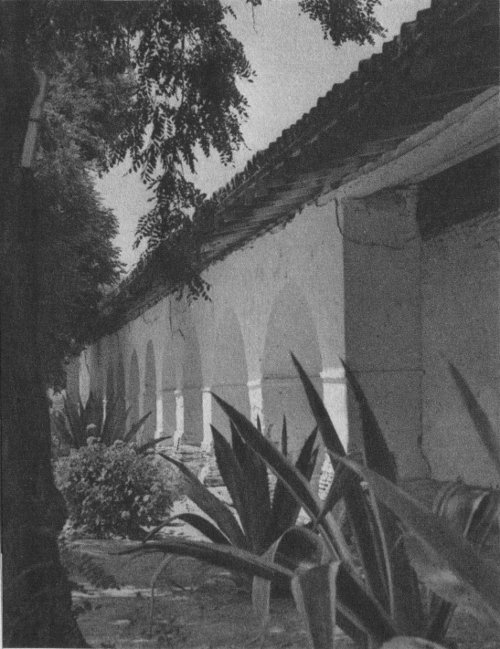
Arches
On the site of Mission Santa Clara de Asís stands a concrete structure, the chapel of the University of Santa Clara. All that remains of the old buildings are a few tiles in the roof, and a part of the garden wall. In front of the Church stands the old 53 redwood cross, raised in 1777. It is now encased in a sheathing of pine.
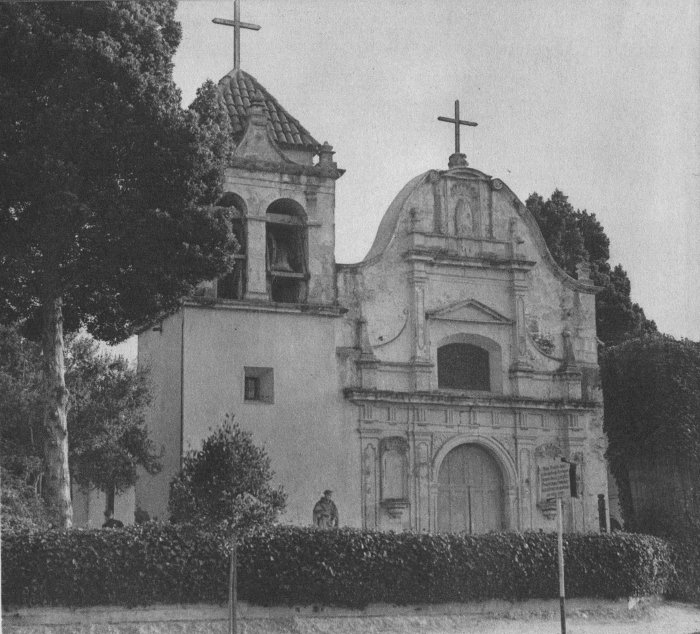
Parish Church, Monterey
Mission San José de Guadalupe was at one time the most prosperous of all the missions. In livestock alone it had 12,000 cattle, 13,000 horses and 13,000 sheep. It was the centre of social life for the surrounding ranches and the stopping place for the Forty-niners who used the Mission Pass between San Francisco and the mines. Only a part of the living quarters remains today. Beside this building is the old cemetery, back of which is the Mission garden.
54
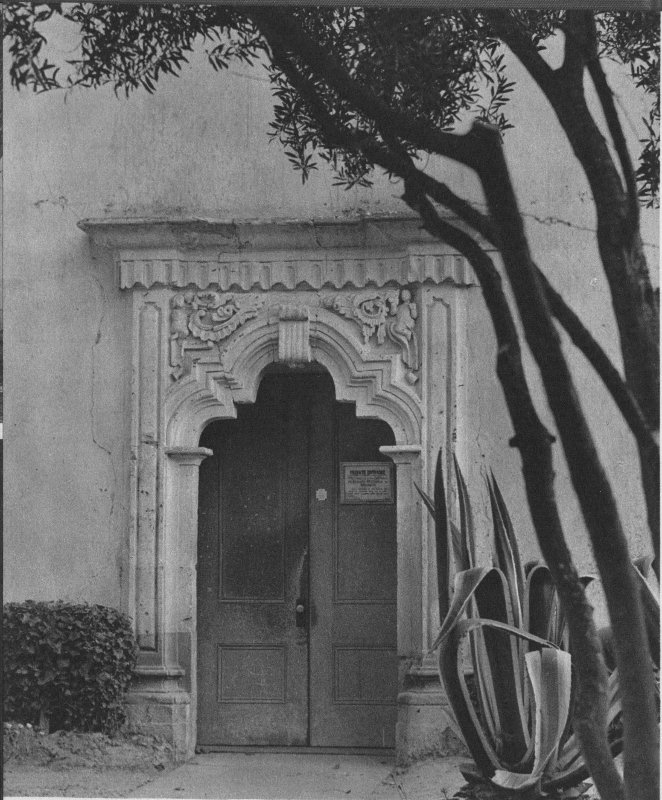
Doorway, Monterey
55
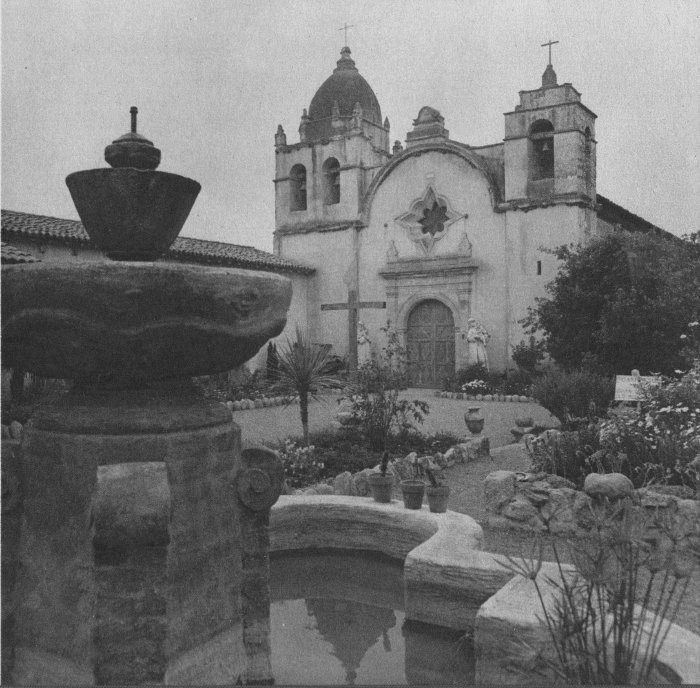
San Carlos De Borromeo
56
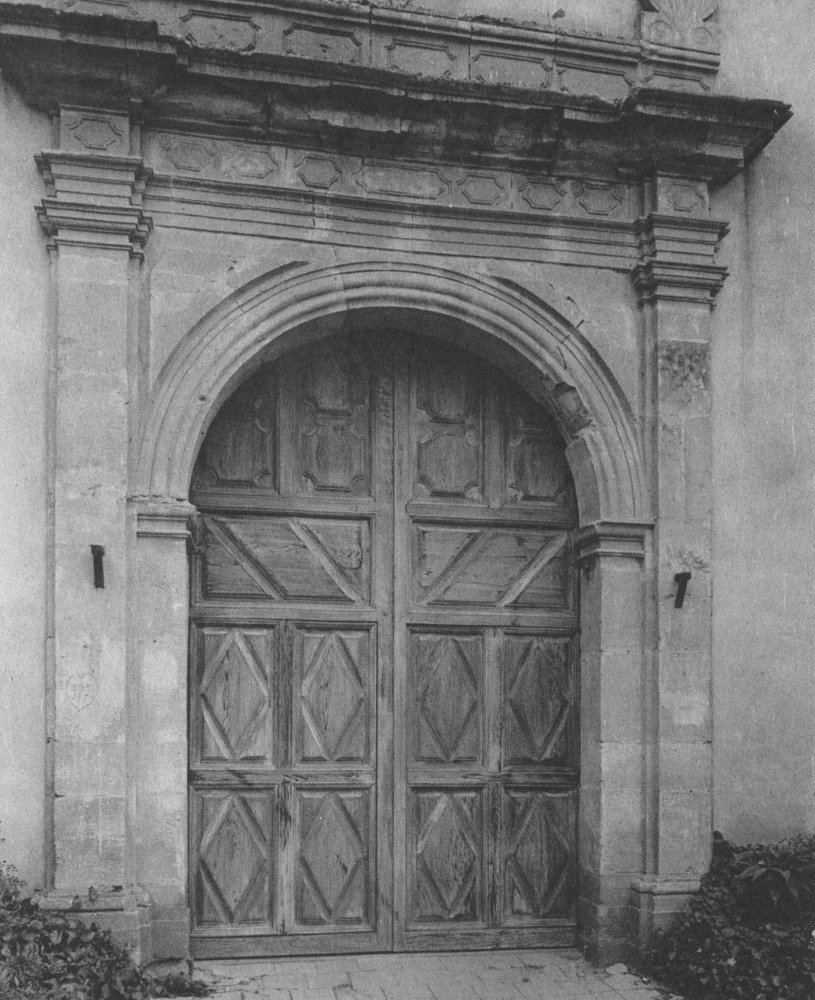
Doorway, San Carlos De Borromeo
57
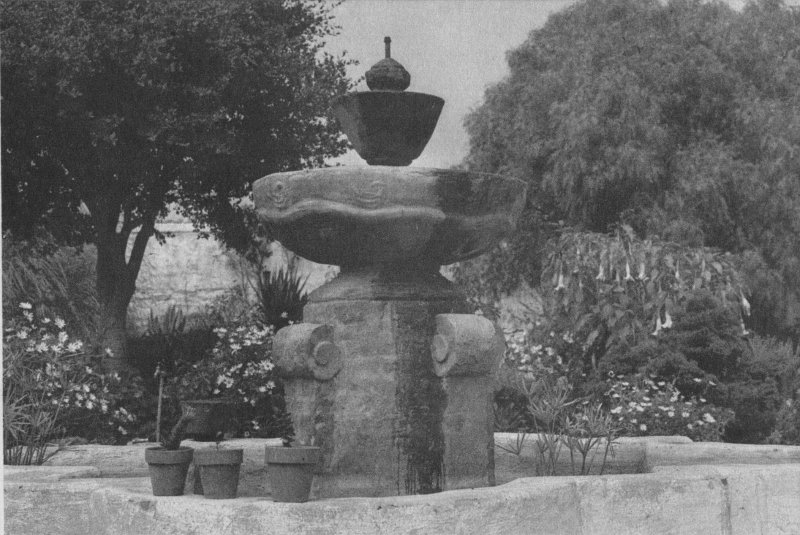
Fountain Detail
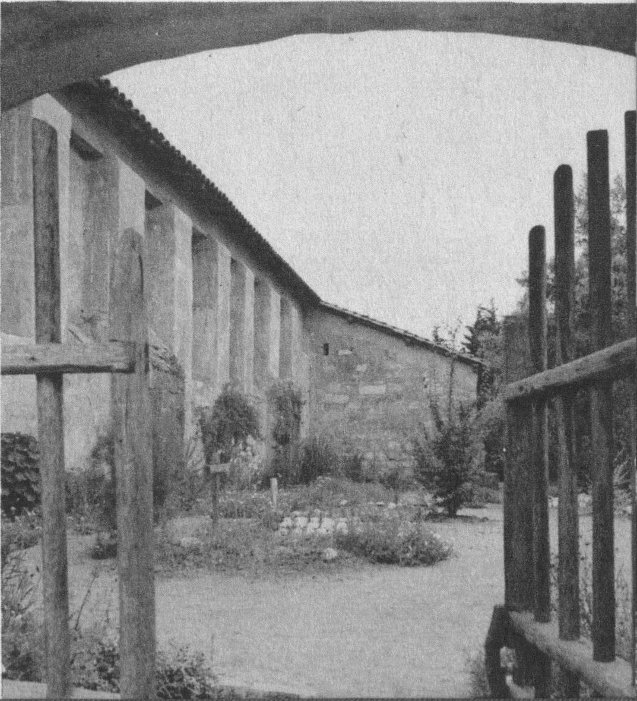
Gateway to Cemetery
There was nothing in the original plans of the missions to name one after St. Francis, the founder of the Franciscan Order. The Mexican Visitador said, “If Saint Francis wishes a mission, let him show you a good port, and let it bear his name.” When Portolá discovered San Francisco Bay he decided that it was the place the Visitador meant, but it was not until seven years later that the Mission San Francisco de Asís was founded. It was commonly called Dolores after a small river that flowed through the Mission grounds. It is quite different in its architecture from the other missions. It has neither archway nor towers but a massive façade. Today it stands in quiet simplicity, surrounded on all sides by modern buildings of the Catholic Church.
58
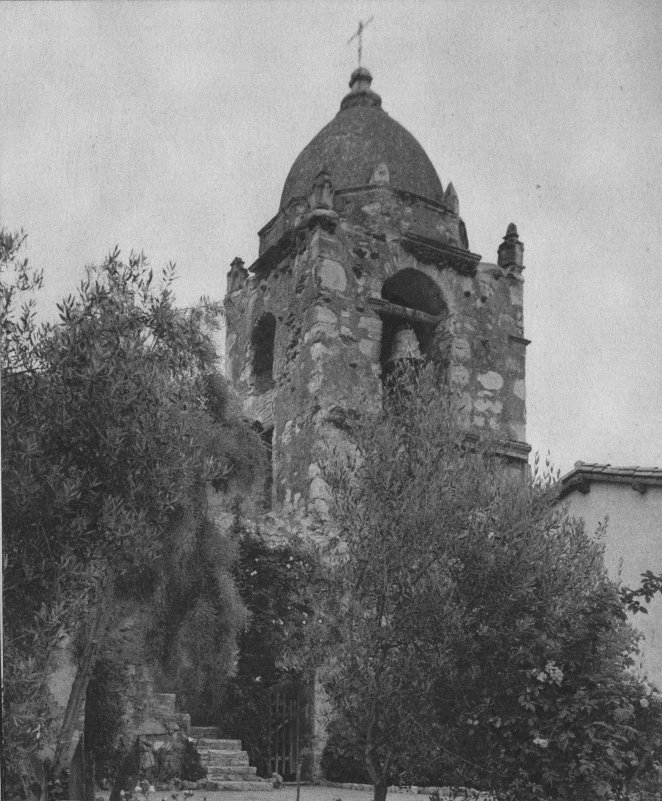
Bell Tower, San Carlos De Borromeo
59
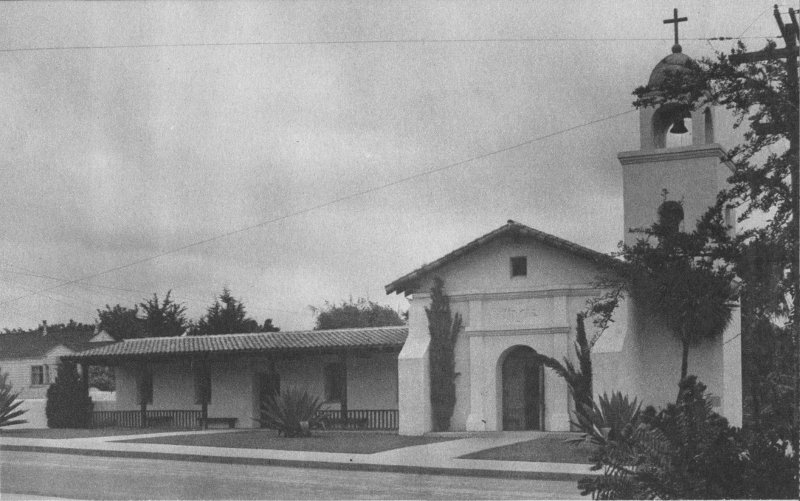
Santa Cruz
In the city of San Rafael stands a mission bell guidepost, marking the site of Mission San Rafael Arcángel.
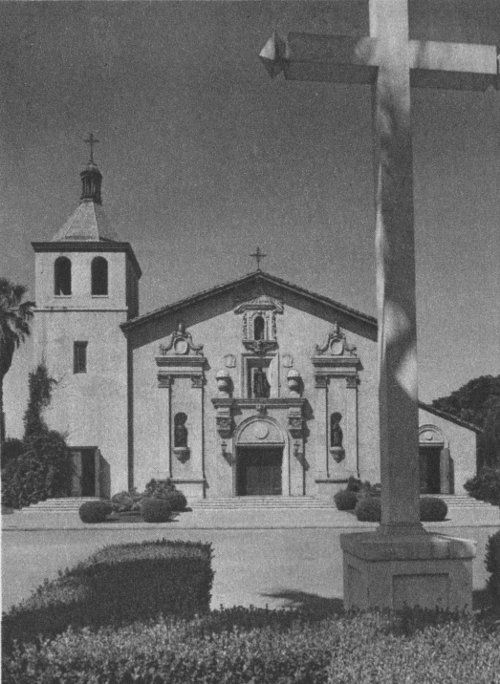
Santa Clara
60
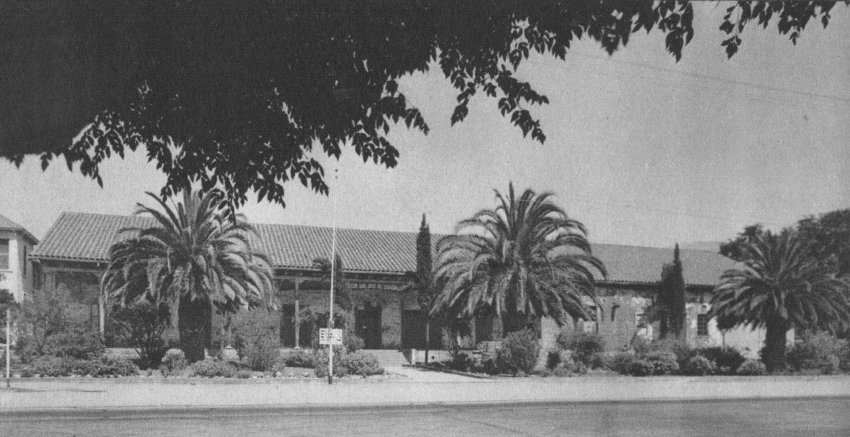
San José De Guadalupe
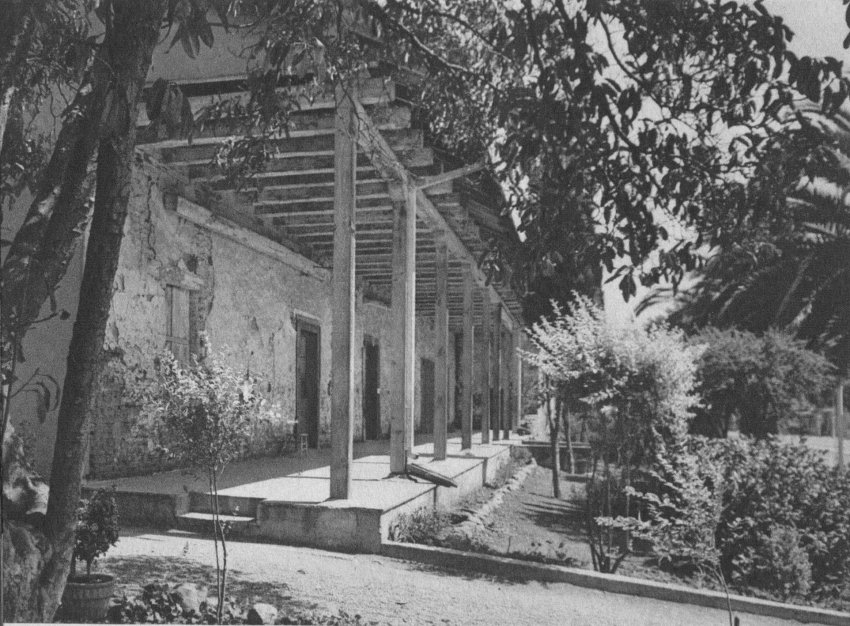
Porch
61
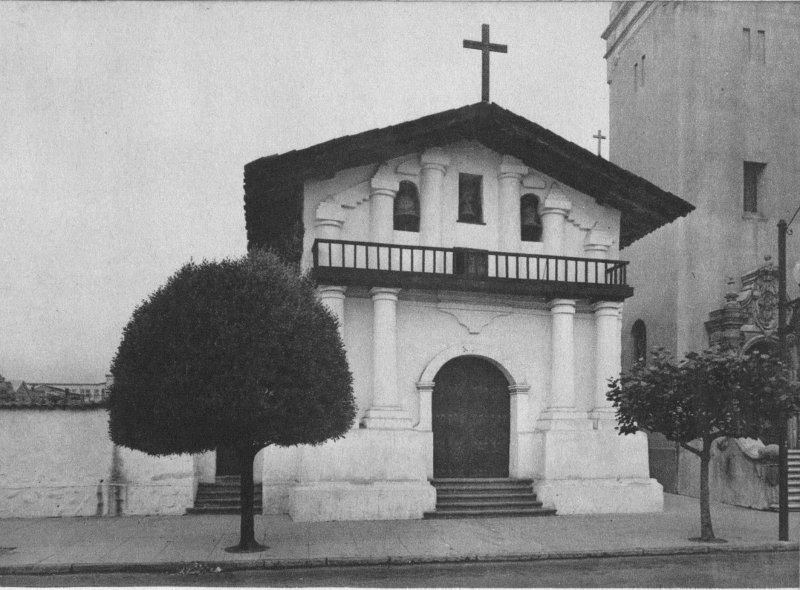
San Francisco De Asís
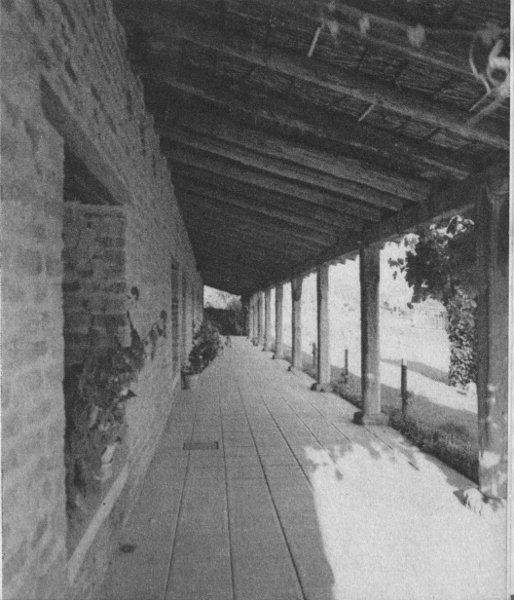
Entrance to Cloister
62
Fear of the Russians caused the Governor to ask Father Altimira to establish a mission at Sonoma. He did this without the sanction of the Church authorities. Mission San Francisco Solano was the last and the most northerly of the twenty-one missions. It is a plain low building, facing the plaza.
Of the twenty-one missions originally built one is completely gone, another a crumbling wall of adobe, and the remainder in only partial restoration. May they all some day be restored to their original grandeur, and the romance and history of Old California again be found in their splendid old walls.
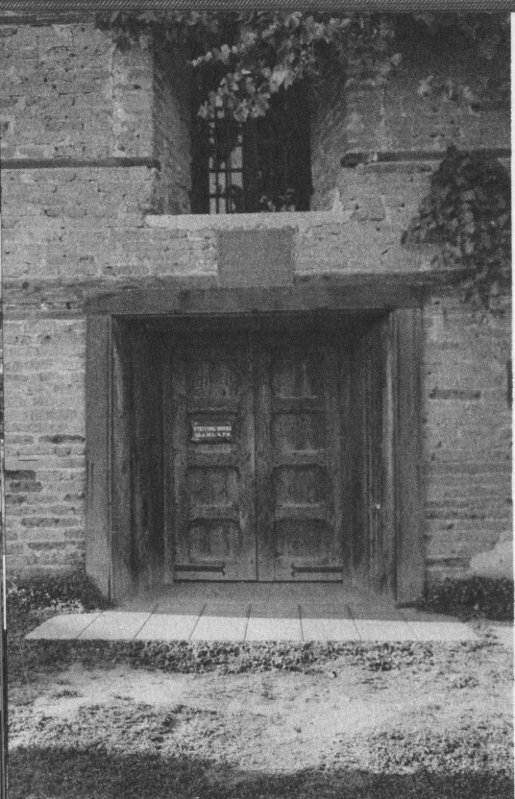
Entrance to Chapel
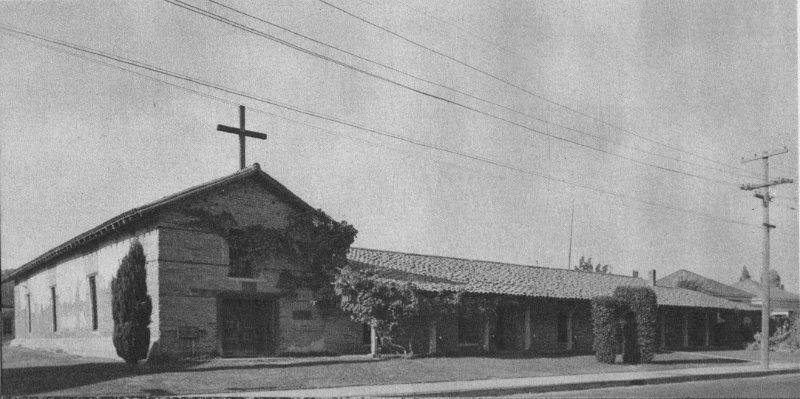
Cloister, San Francisco De Solano
63