PICTURES OF POMPEII
Reading edition
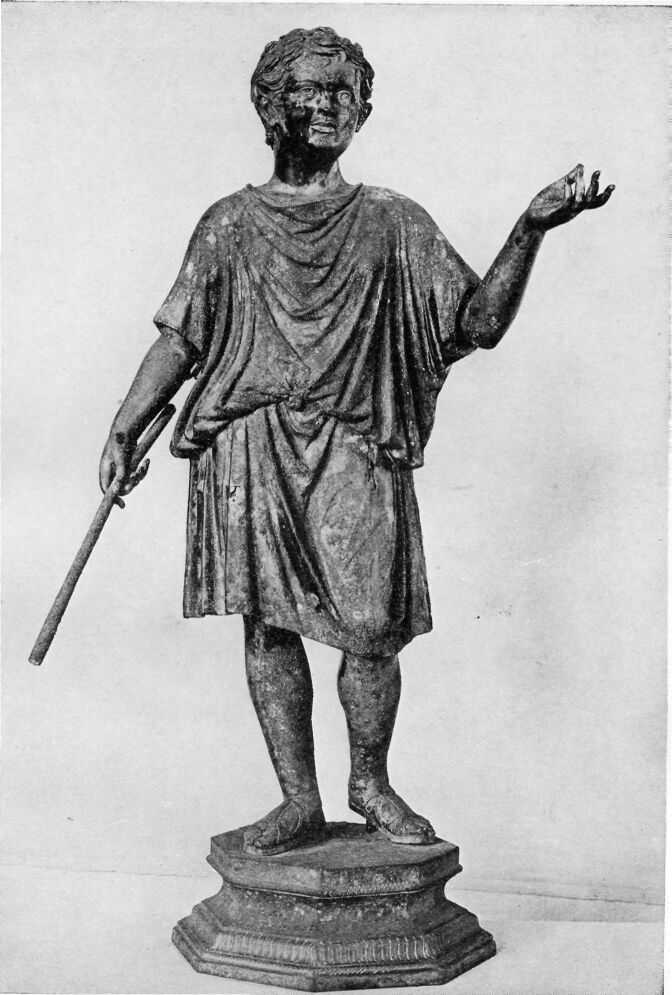
A ROMAN BOY.
This statue, now in the Metropolitan Museum, was found at Pompeii. Probably Caius was dressed just like this, and carried such a stick when he played in his father's courtyard.
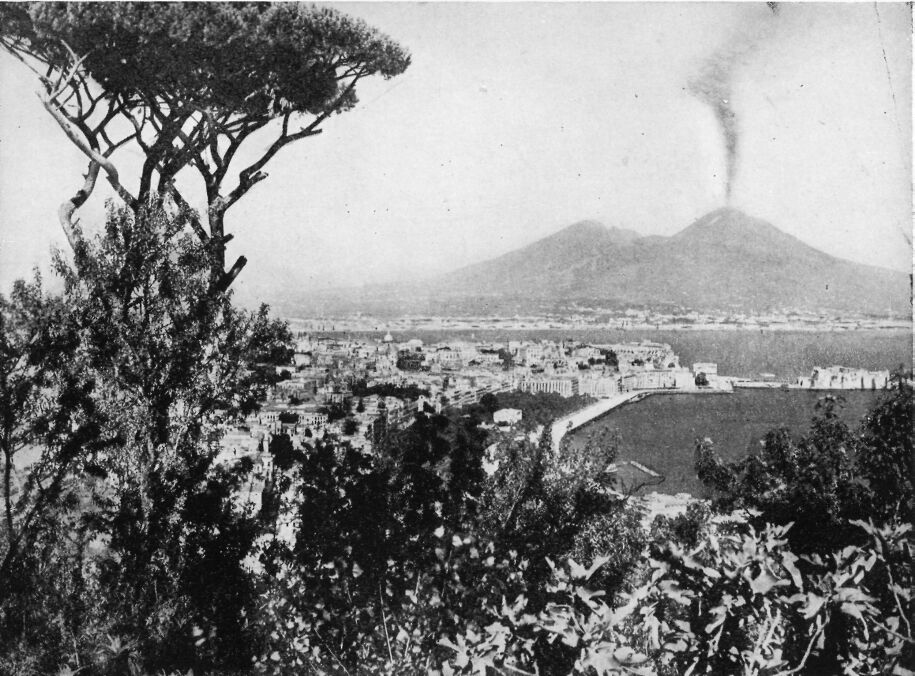
THE CITY OF NAPLES, WITH MOUNT VESUVIUS ACROSS THE BAY.
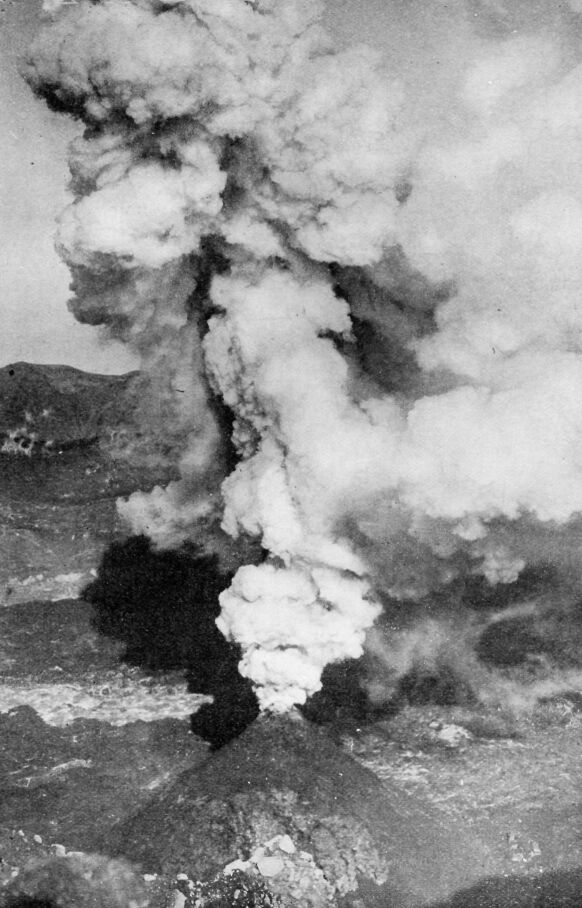
VESUVIUS IN ERUPTION, FROM AN AIRPLANE.
Nowadays men know from history what may happen when Vesuvius wakes. But in 79 A.D., when Pompeii was buried, the mountain had slept for hundreds of years, and no man knew that an eruption might bury a city.
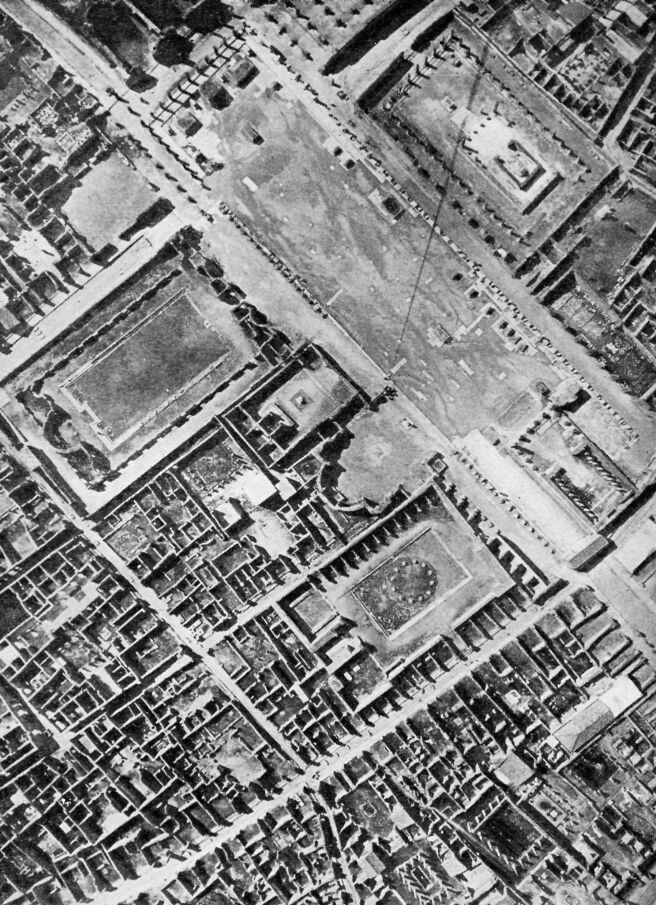
POMPEII FROM AN AIRPLANE.
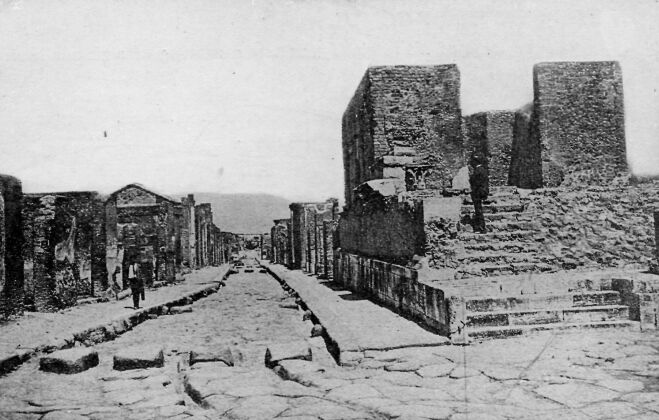
The roofs are all gone and all the partitions inside the houses show. That is why it all looks so crowded and confused. But if you study it carefully you can see some interesting things. The big open space is the forum. It is about five hundred feet long, running northeast and southwest. South of it is the temple of Apollo. North of it, where you see the bases of columns in a circle, was the market. Next to the market is the place where the gods of the city were worshipped. The broad street beside the forum running southeast is the one down which Ariston fled. Then he turned into the forum, ran out the gate near the lower end into the steep street that runs southwest and ends at a city gate near the sea. NOLA STREET AND THE TEMPLE OF FORTUNE.
You must imagine this temple with an altar in front, a broad flight of steps, and a portico of beautiful columns. You can see the street paved with blocks of lava, the deep wheel ruts, and the stepping stones for rainy weather.
THE STABIAN GATE.
Pompeii was surrounded by two high walls fifteen feet apart, with earth between. An embankment of earth was piled up inside also. This is one of the eight gates in the wall.
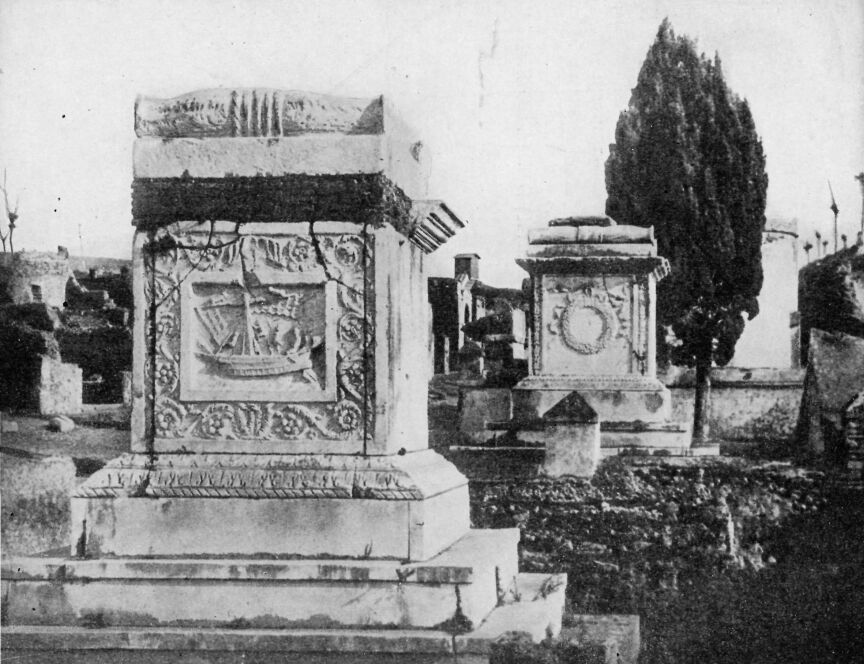
IN THE STREET OF TOMBS.
On the tomb of Nævoleia Tyche was a carving of a ship gliding into port, the sailors furling the sails. Within this tomb is a chamber where funeral urns stand, containing the ashes of Tyche and her husband, and of the slaves they had freed. Pompeians always burned the bodies of the dead.
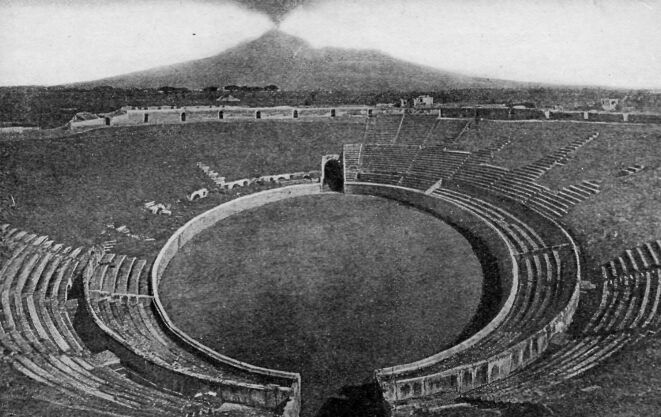
THE AMPHITHEATER.
Like other Roman towns, Pompeii had an amphitheater. Here twenty thousand people could come and watch the gladiators fight in pairs till one was killed. Then the dead body was dragged off, and another pair appeared and fought. Sometimes the gladiators were prisoners captured in war, like the famous Spartacus; sometimes they were slaves; sometimes criminals condemned to death. Sometimes a man was pitted against a wild beast; sometimes two wild beasts fought each other. The amphitheater had no roof. Vesuvius, with its column of smoke, was in plain view from the seats. There was a great awning to protect the spectators. The lower seats were for officials and distinguished people; for the middle rows there was an admission fee; all the upper seats were free.
RUINS OF THE GREAT STABIAN BATHS.
A few large houses had baths of their own, but most people went every day to a great public bath which was a very gay place. This open court which you see, was for games.
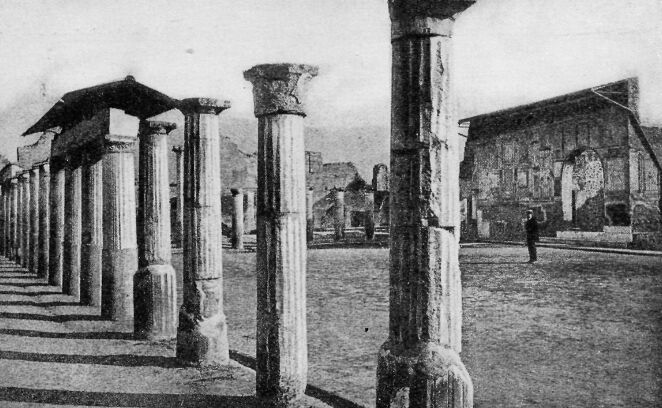
THE RUINED TEMPLE OF APOLLO.
The temple was built on a high foundation. A broad flight of steps led up to it, with an altar at the foot. There was a porch all round it held up by a row of columns. Some of the columns have stood up through all the earthquakes and eruptions of two thousand years. Inside the porch was a small room for the statue of Apollo. In the paved court around this temple were many altars and statues of the gods. This was at one time the most important temple in Pompeii.
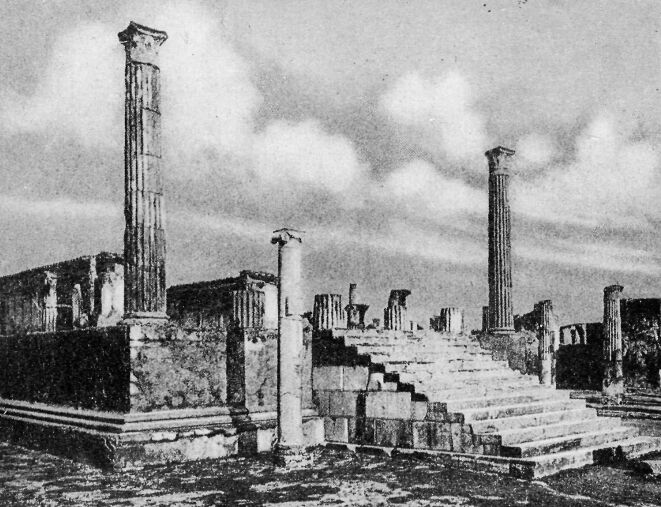
THE SCHOOL OF THE GLADIATORS.
In this large open court the gladiators had their training and practice. In small cells around the court they lived. They were kept under close guard, for they were dangerous men. Sixty-three skeletons were found here, many of them in irons.
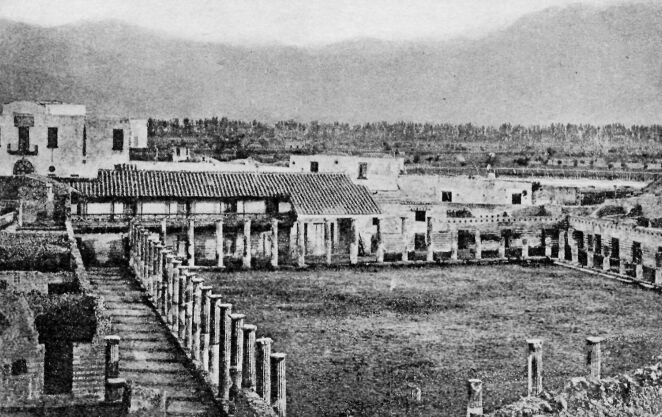
THE SMALLER THEATER.
Pompeii had two theaters for plays and music, besides the amphitheater where the gladiators fought. The smaller theater, unlike the others, had a roof. It seated fifteen hundred people. We think perhaps contests in music were held here.
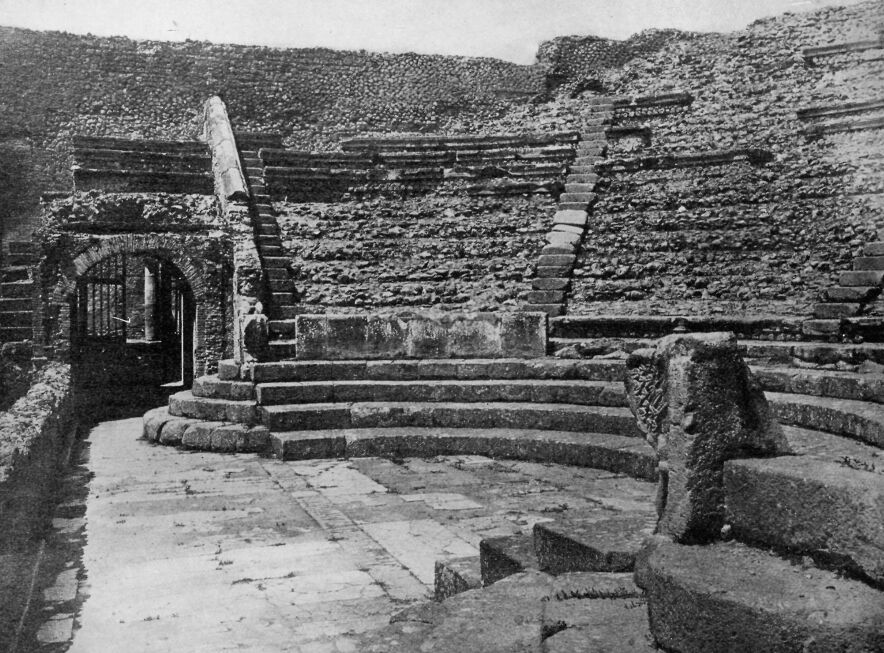
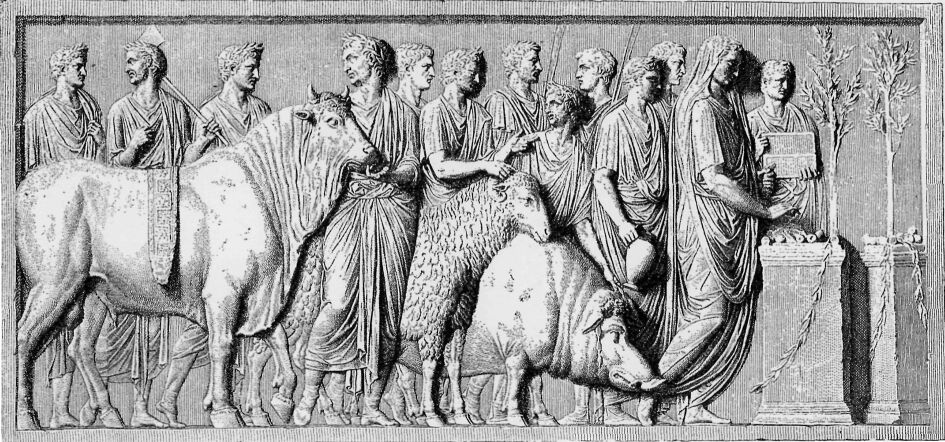
A SACRIFICE.
A boar, a ram, and a bull are to be killed, and a part of the flesh is to be burned on the altar to please the gods.