"A Boy's Book of Nomadic Adventures" (continued 2)
Reading edition
“Suddenly our ship’s bell rang out clear enough, ting-ting, ting-ting, ting-ting, ting. It was seven bells, and all the mermaids and fairies melted away before me, the music died away as if drowned, the surging of water returned to my ears, and next moment my head was above the sea, and I could see the stars shining down, and looking so large and near and clear, as they always do in those northern seas. In a minute I had caught the chains, and swung myself on board. I went to bed. In the morning I awoke, and laughed to myself as I thought of my dream, but my laughing was changed to wonder when I found every stitch of my clothing wringing with salt water, and when the spectioneer told me that he had seen me with his own eyes come on deck at two bells and go below at seven. Then I told him and the rest the story, and we all agreed that it was something far more than a dream.”
Effie sat looking into the fire for some time in silence; then she said,—
“Were there no mermen in that lovely hall, and were they very noble-looking and gallant, like my dear papa in uniform?”
“No,” said old Grindlay, “I don’t think mermen would have been admitted into such a place any more than the great sea-serpent would.”
“Why not?”
“Because, missie, they are such ugly old customers. I’ve never seen one, that I know of, but a mate that sailed with me said he had, and that it was uglier than the faces we sometimes see on door-knockers, and uglier than any baboon that ever grinned and gibbered in an African forest.”
“How terrible!” said Effie.
“Oh, I should like to meet one of those!” said Leonard. “And I’ve been told that the mermaids wouldn’t live anywhere near where these mermen are, and that instead of dwelling down in coral caves and marble halls at the bottom of the green sea, where the sunbeams flash by day, and the moon shines all the way down at night, these mermen live at the bottom of the darkest, deepest pits of the ocean, where there is nothing but mud and slime, and where the young sea-serpents and the devil-fish grow. No, the beautiful mermaids I don’t think ever do any harm, but the mermen are bad—bad!”
“Granny,” said Effie to Mrs Grindlay, after a pause, “tell us a pretty story to dream upon.”
“Did I ever tell you the story of But—but—but?”
“No, never. Do tell us about ‘But—But—But,’ and begin, ‘Once upon a time.’”
“Well, then, once upon a time there lived, far away up on the top of a mountain, a little old, old woman, and this little old woman had a very lovely young daughter, who lived with her in a cave on the mountain top. And one day her mother said,—
“‘Dear love, all the provisions are done. I must go away down to the plains and buy some. I have no money, but shall take a small bagful of precious stones.’
“So away she went, leaning on her stick and carrying a basket. She looked very feeble, her old cloak was ragged and worn, and, as she crept along, she kept saying to herself, ‘but—but—but.’
“Well, at last she got down to the village, and entered a grocer’s shop.
“‘What can I get for you, ma’am?’ said the grocer.
“‘I want some nice ham, and some nice eggs, and some fresh butter. I have no money—but—but—but—’
“‘Oh! get out of here with your “buts,”’ cried the man. ‘Who would trust the like of you, with your old age and your rags?’
“So he chased her away.
“Then the old woman crept away to the fishmonger’s.
“‘I want,’ she said, ‘some nice fresh salmon, and some nice prawns, and a delicious lobster. I’ve no money—but—but—but—’
“‘Oh, get out of here!’ cried the fishmonger, ‘with your “buts.” Who would trust you with your old age and your rags?’
“And he chased her down the street.
“Then she entered the butcher’s.
“‘Give me a tender joint of mutton,’ she said. ‘I’ve no money—but—but—but—’
“‘Oh!’ cried the butcher, ‘get out of here, with your “buts.” Who would trust you with your old age and your rags?’
“And he called his dogs, and they chased away the poor old woman, and tore her cloak worse than before.
“Then she went into the baker’s.
“‘I want a loaf or two of bread,’ she said. ‘I’ve no money, but—but—but—’
“‘Don’t say another word,’ said the baker. ‘Here are two nice new ones, and some new-laid eggs. Don’t thank me. I respect old age, and I pity rags.’
“So the old, old woman crept back to the mountain top, and she and her beautiful daughter had a nice supper.
“And now the strangest part of the story begins, for although the baker’s trade increased every day, his store of flour appeared never to diminish. He got richer and richer every month, and was soon in a position to buy a pretty little cottage and furnish it in the prettiest style imaginable; and when he had done so he went and laid his fortune at the feet of Mary the Maid of the Mill. In other words, he went wooing the miller’s daughter.
“After a modest pause for thought and consideration she consented, saying as she did so,—
“‘I don’t marry you for sake of your money, John, because I have quite a deal of gold and silver.’
“‘What! you?’ said John.
“‘Yes, me,’ said Mary.
“‘But—but—but—’ said John.
“‘But, how did I get it? Well, I’ll tell you. A poor old woman, crawling on a stick and all in rags, called the other night, when the wind blew high and the snow was falling fast, and because I took her in, and sheltered her—just only what anybody would do, John—she left me a bagful of pretty stones. She said she didn’t want them, as she knew a hill where they grew, and I took them to the jeweller’s, and they paid me so much for them that I am quite wealthy, and I’m going to marry for love.’
“So John was indeed a happy man.
“But that same evening, first the butcher called, and then the fishmonger, and then the grocer, all dressed up in their Sunday clothes.
“So John hid behind a curtain, and as soon as they came into the room, all three proposed to marry Mary the Maid of the Mill.
“Then Mary looked down at them, and laughed and said,—
“‘Really, gentlemen, you do me too much honour, but—but—but—’
“‘But I’m the happy man,’ cried John suddenly, popping out from behind the curtain.
“‘You!’ they all shouted in disdain.
“‘Yes, I. I’m very sorry for you, but—but—but—’
“‘But what?’ they all cried.
“‘But I’m going to kick you all out,’ said John; ‘that’s the “but.”’
“Then Mary ran and opened the door, and as they ran out John kicked the grocer, then the fishmonger, and last of all the butcher, and they all fell in a heap on the pavement.
“Well, Mary and John got married, and a merrier wedding never was in the village, and when it was all over a gilded coach drove up to the door and took them away to spend the honeymoon in a beautiful seaside village.
“And the old lady was in the carriage and her pretty daughter, but the ragged old cloak was gone, and in its place a robe of ermine and scarlet.
“And Mary and John lived happy together ever after.”
“Of course,” said Effie, “the old lady was a good fairy.”
“Oh yes!” said Mrs Grindlay, “but—but—but—”
“But what, Mrs Grindlay?”
“But it’s time for bed.”
What a terrible night it was. The wind blew and roared around the building till the whole island seemed to shake, the waves beat and dashed against the rocks, and the spray flew far over the lighthouse itself, and every now and then, high over the howling of the storm and the boom of the seas, rose that strange, eerie scream, like the cry of the sea-bird, but it sounded far more plaintive and pitiful, like—
“The drowning cry Of some strong swimmer in his agony.”
And one sentence was mingled with the prayers of Leonard and Effie before they sought their couch—
“God save all at sea to-night.”
Book One—Chapter Eight.
“The Wreck! The Wreck!”
“The breakers were right beneath her bows, She drifted a dreary wreck, And a whooping billow swept the crew Like icicles from her deck. “She struck where the white and fleecy waves Looked soft as carded wool; But the cruel rocks, they gored her sides Like the horns of an angry bull.” Longfellow.
Scene: The lighthouse island on the morning after the storm. The sea all around it, still covered with foam-capped waves. The wind dying away, but rising every now and then in uncertain gusts. No vessels in sight, but a long, low, rakish craft wedged in the rocks beneath the lighthouse, and fast breaking up. The whole scene bleak and desolate in the extreme.
“It is the lugger, sure enough,” said old Grindlay. “Heigho! what an awful affair, to be sure! And there can’t be a living soul on board. Captain Bland and all must have gone to their account.”
“And she is breaking up,” said his wife. “Goodness grant she may disappear entirely before the young ones see her.”
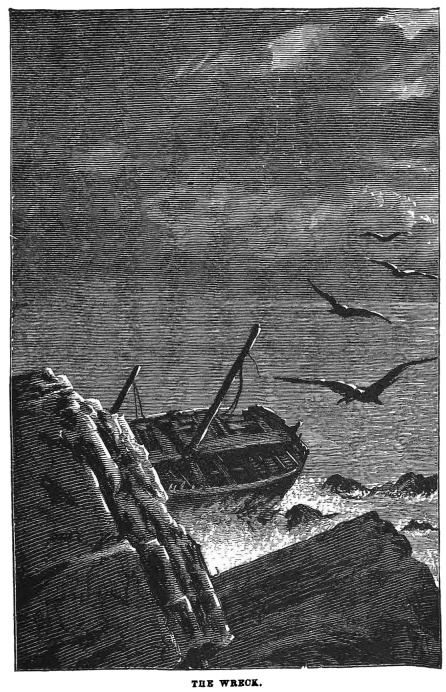
“Oh!” cried Leonard, rushing into the kitchen; “the wreck! the wreck! It is the lugger. Oh the poor robber chief!”
“He is dead, my dear,” said Mrs Grindlay solemnly. “No, no; I can see him from our window, where Effie is crying. He is under the wreck of the masts amidships and alive, for he waved his hand to us. Oh, save him, Mr Grindlay, if you can!”
“Ah, lad, I fear nothing can be done!”
“I’ll go, I’ll go! Effie is not afraid; she says I may go. I’ve gone over worse rocks than that with a rope. He is alive, and I will save him. Quick, bring the rope, and an axe and saw.”
“The boy is a hero,” exclaimed Mrs Grindlay. “Do as he bids you, old man; the lad is in God’s own hands.”
“I am no hero. I only want to save the captain. He could not help kidnapping us, and he was so kind to Effie.”
The forepart of the lugger was wedged into a cave, close under a black beetling cliff, fully fifty feet in height. It was over here Leonard was going. There was no denying him. He had already thrown down the axe and saw to the wreck, and now, both Mr and Mrs Grindlay assisting, the rope was wound twice round an iron stanchion at the cliff top, which might have been used before for a similar purpose, or by men in search of eggs. Leonard’s legs were through the bight, and next minute he had disappeared over the cliff, and was gradually lowered down, and though half drowned with the driving spray speedily reached the deck.
Effie stood in tears at her window, praying. It was all the child could do.
Leonard staggered aft and knelt by the side of Captain Bland, and poured some brandy from a flask into his mouth.
“Heaven bless you, boy!” he muttered, “and if the prayer of such as I am can avail, Heaven will.”
Leonard hardly heard him, but he knew his meaning, and now set to work with axe and saw. It was a long and tedious job, but it was finished at last, and the smuggler chief was clear, and sprang to his feet, but staggered and almost fell again.
After a while, however, his numbed legs gathered fresh strength, and, helped by the boy, he settled himself in the bight of the rope, and was drawn to bank safe and sound.
The rope was again lowered, and Leonard mounted next, and not a minute too soon.
“Look, look, look!” cried Bland, pointing away to windward. “Run for our lives!”
A strange sight it was, that awful coming squall. Right away in the wind’s eye was a long dark cloud, fringed beneath with a line of white. Forked lightning played incessantly across it, or fell through it like streams of blood or fire. It grew higher and higher as it came nearer and nearer; then with a rush and a roar it swept upon the island, and the very lighthouse seemed to rock in the awful embrace.
It was the last effort of one of the most terrible gales of wind that ever strewed our coast with wreckage, and with the bodies of unfortunate men. When it disappeared at length, and went howling away over the mountains, the sun shone out. It shone down upon the place where the lugger had lain, but not a timber of her was now to be seen.
How the Rescue was Effected.
Just three weeks after their arrival in London, Captain and Mrs Lyle were back once more at Grayling House. They had only received one letter from Leonard, though he had written several, but mails in those days took long to reach their destination, and often arrived only after many strange adventures.
As the carriage drove up through the long avenue with its tall trees of drooping birch, wonder was expressed by the parents that Leonard and Effie did not come bounding to meet them, as was their wont.
“Surely, dear,” said Mrs Lyle, “something must be very much wrong. Hurry up, coachman.”
Old Peter did not hide his grief. He met his master and mistress wringing his hands, with the tears flowing fast over his wrinkled face, and word by word they had to worm out of him his pitiful story.
Captain Lyle did all he could to comfort his wife, and pretended to laugh at the whole affair. It was only a boy’s freak, he said, and only a brave boy like Leonard would have done or dared so much. He loved the lad all the better for it. No doubt the little caravan and the truants would return in a day or two.
But though he spoke thus his mind was ill at ease, and he determined at once to start a search party, and this was all ready in less than two hours. No less than a dozen horsemen were told off to scour the country, and get news at all hazards. But, lo! just as they were starting off, what should be seen coming along up the avenue but the caravan itself, driven by a bare-armed, wild-looking gipsy girl?
Captain Lyle hurried her along into his study, and there she told her story.
The search party was instantly disbanded; a different kind of action was needed now, and needed at once. He told his wife the whole truth. He thought this the better course, and she bore it bravely.
That same evening, as fast as horses could go, Captain Lyle was speeding along on his way to Berwick, where he had heard that a Government sloop-of-war was lying.
He posted on all night, and next morning Berwick was in sight, that romantic old town in which so many battles have been fought and won in the olden times, that its walls, now only mounds, are lined with human bones.
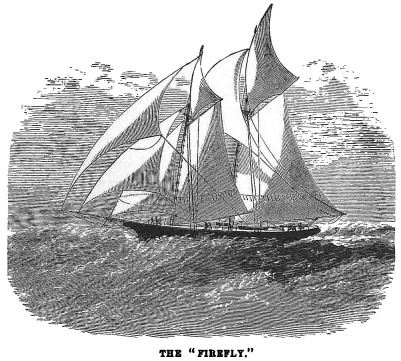
There was no sloop-of-war in sight in the beautiful bay. Fishing-boats there were in scores, some just sailing in, others still far out in the bay. But at the custom-house Lyle learned that the Firefly had just recently departed on a cruise in search of the very lugger which had sailed away from near St. Abb’s with Leonard and Effie on board, and if the captain of the sloop came across her he would no doubt give an excellent account of her.
Meanwhile the customs officials told him that everything that possibly could be done would be done, and as soon as anything happened, he, Captain Lyle, should be communicated with post haste.
So there was nothing for it but to return at once to Glen Lyle.
On the very night of his arrival another strange thing happened. A visitor called, who turned out to be an emissary of Captain Bland’s.
This man, who was pleasant and even gentlemanly in address, begged to assure Captain Lyle, first and foremost, that unless he gave his word of honour that no attempt would be made to detain him, he would not deliver the smuggler chief’s message.
Lyle gave his word of honour.
Secondly, that unless the sum of two thousand pounds was paid as ransom, the children would never more be seen at Grayling House; but if, on the other hand, the money was sent, they would be restored in less than a fortnight.
Captain Lyle consulted with his wife. They were on the horns of a dilemma, for of late years the estate of Glen Lyle had sunk in value, and although they were willing to pay the ransom, it was, sad to think, an utter impossibility.
The matter was put fairly and honestly before the smuggler’s emissary.
Could the half be raised?
Captain Lyle considered, and allowed it could.
Well, the emissary said he would communicate with Captain Bland, and return again and inform him of that worthy gentleman’s decision, but no attempt must be made to follow him, or all communication would cease between them.
And Captain Lyle was fain to assent.
Then the emissary mounted his fleet horse, stuck the spurs into his sides, and disappeared like a flash.
The man tore along the road, determined to put the greatest distance in the least possible time betwixt himself and Grayling House.
Little recked he of a coming event.
About a mile from the house the road crossed a stream by a steep old-fashioned Gothic bridge. He was just entering one end of this, when up at the other sprang, as if from the earth, a tiny half-clad gipsy girl. She waved a shawl and shrieked aloud. The horse swerved, but could not stop in time, and next moment the animal and its rider had gone headlong over the parapet, and lay dead—to all appearance—near the stream below.
The girl dashed down after them, wrenched open the man’s coat, tore out some papers, and waving them aloft, went shouting along the avenue back to Grayling House.
“My dear child,” said Lyle, as soon as he had scanned the papers, “how ever can I reward you?”
“You were good to granny,” was all the girl said.
Lyle at once sent off to the relief of the wounded man, but made him prisoner, for the letter he held was the emissary’s instructions.
He was back again next day at Berwick. There he heard that the Firefly was in harbour, but had discovered no trace of the smuggling lugger, though she had been south as far as the Humber.
“No,” cried Lyle, exultingly showing the papers, “because the villain Bland has gone north, and my children are captive on an island on the west coast of Scotland.”
A council of war was held that evening, and it was determined that the sloop-of-war should sail in search of the smuggler on the very next day.
“She may not be there yet,” said the bold, outspoken commander of the Firefly. “We may overhaul her, or meet her on her way back. And it will be best, I think, for you to come with us.”
And so it was agreed.
The capture or destruction of the smuggler and Bland had for years defied both custom and cruisers in his fleet lugger, but if Captain Pim of His Majesty’s sloop-of-war was to be believed, the Sea-horse lugger’s days were numbered, and those of her captain as well.
Away went the Firefly, but long before she had ever left harbour the smuggler had left his prizes—viz, Leonard and Effie, on Lighthouse Island, and gone on a cruise on his own account, his object being to complete his cargo from among the western islands, where smuggling was rife in those days, and at once make sail for France, going round by Cape Wrath for safety’s sake, as was his wont.
As for the result of the visit of his emissary to Grayling House he had not the slightest fear.
The Firefly encountered fearful weather. Summer though it was, she took nearly a fortnight to reach Wick, and then had to lie in for repairs for days. After sailing she was overtaken by a gale of wind from the south, which blew her far into the North Sea.
Now it was the custom of Captain Bland, in making his voyages, to keep a long way off the coast, and out of the way of shipping. Had it not been for the gale of wind that blew the Firefly out of sight of land, this ruse would once again have served his purpose aright. As it was, early one morning his outlook descried the sloop-of-war on the weather bow. Well did Bland know her. He had been often chased by her in days gone by. It was evident enough to the smuggler now that his emissary had been captured or turned traitor; so his mind was made up at once.
“Ready about!” was the order.
The Sea-horse, in a few minutes, was cracking on all sail, on her way back to the island, Bland having determined to remove his little prisoners therefrom, and sail south with them to France, in spite of every risk and danger.
Both vessels were fleet and fast, but if anything, the lugger could sail closer to the wind.
Several times during the long chase, which lasted for days, the Firefly got near enough to try her guns, but not near enough for deadly aim. The shots fell short, or passed harmlessly over the smuggler.
The last day of the chase was drawing to a close. The island was already visible, when suddenly Bland altered his plans and tactics, seeing that the Firefly would be on him before he could cast anchor, and effect a shipment of the little hostages. He put about, and bore bravely down upon the cruiser, and despite her activity crossed her stern, and poured a broadside of six guns into her. Down went a mast, and the wheel was smashed to atoms.
Bland waited no longer. He had done enough to hang him, and night was coming on.
Night and storm!
Yonder was the gleam of the lighthouse, however, and he did not despair.
It grew darker and darker, and just as he was abreast of the lighthouse, and bearing down towards it, the storm came on in all its fury, and twenty minutes afterwards the Sea-horse was a wreck. His hands took to the boats, or were swept from the decks, leaving him to lie buried under the wreck just as Leonard found him.
On the arrival of the Firefly, the little wanderers were so overjoyed to see their father, and he to have them safe once more, that the wild escapade of which they had been guilty was entirely forgotten between them.
The old lighthouse-keeper and his wife detailed the circumstances of the wreck of the lugger, but singularly enough they forgot to mention the saving of the life of Bland himself. He was therefore supposed by Captain Pim to be drowned.
So ended the wonderful adventures of Leonard and Effie as amateur gipsies.
But about a week after they arrived at home, to the inexpressible joy of old Peter, to say nothing of the poodle dog, the cat, and all their pets at the Castle Beautiful, after binding papa down to keep a secret, Leonard told him all the rest about Captain Bland, who, Effie assured him with tears in her eyes, had been so, so kind to them both.
But long before this Bland was safe in France, and for a time he sailed no more on British coasts. The seas around them being, as he expressed it, too hot to hold him, he determined to let them cool down a bit, so he took his talents to far-off lands, where we may hear of him again.
Book Two—Chapter One.
In Distant Lands.
On Moorland and Mountain.
“Yon wild mossy mountains sae lofty and wide, That nurse in their bosom the youth of the Clyde, Where the grouse lead their coveys thro’ the heather to feed, And the shepherd tends his flocks as he pipes on his reed. Not Gowrie’s rich valley, nor Forth’s sunny shores, To me hae the charm o’ yon wild mossy moors.” Burns.
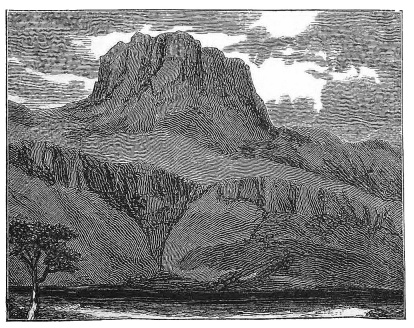
Scene: The parlour of an old-fashioned hotel in the Scottish Highlands. It is the afternoon of an autumn day; a great round-topped mountain, though some distance off, quite overshadows the window. This window is open, and the cool evening breeze is stealing in, laden with the perfume of the honeysuckle which almost covers a solitary pine tree close by. There is the drowsy hum of bees in the air, and now and then the melancholy lilt of the yellow-hammer—last songster of the season. Two gentlemen seated at dessert. For a time both are silent. They are thinking.
“Say, Lyle,” says one at last, “you have been staring unremittingly at the purple heather on yon hill-top for the last ten minutes, during which time, my friend, you haven’t spoken one word.”
Lyle laughed quietly, and cracked a walnut.
“Do you see,” he said, “two figures going on and on upwards through the heather yonder?”
“I see what I take to be a couple of blue-bottle flies creeping up a patch of crimson.”
“Those blue-bottles are our boys.”
“How small they seem!”
“Yet how plucky! That hill, Fitzroy, is precious nearly a mile in height above the sea-level, and it is a good ten miles’ climb to the top of it. They have the worst of it before them, and they haven’t eaten a morsel since morning, but I’ll wager the leg of the gauger they won’t give in.”
“Well, Lyle, our boys are chips of the old blocks, so I won’t take your bet. Besides, you know, I am an Englishman, and though I know the gauger is a kind of Scottish divinity, I was unaware you could take such liberties with his anatomy as to wager one of his legs.”
“Seriously talking now, Fitzroy, we are here all alone by our two selves, though our sons are in sight; has the question ever occurred to you what we are to do with our boys?”
“No,” said Fitzroy, “I haven’t given it a thought. Have you?”
“Well, I have, one or two; for my lad, you know, is big enough to make his father look old. He is fifteen, and yours is a year or two more.”
“They’ve had a good education,” said Fitzroy, reflectively.
“True, true; but how to turn it to account?”
“Send them into the army or navy. Honour and glory, you know!”
Lyle laughed.
“Honour and glory! Eh? Why, you and I, Fitzroy, have had a lot of that. Much good it has done us. I have a hook for a hand.”
“And I have a wooden leg,” said Fitzroy, “and that is about all I have to leave my lad, for I don’t suppose they bury a fellow with his wooden leg on. Well, anyhow, that is my boy’s legacy; he can hang it behind the door in the library, and when he has company he can point to it sadly, and say, ‘Heigho, that’s all that is left of poor father!’”
“Yes,” said Lyle; “and he can also tell the story of the forlorn hope you led when you won that wooden toe. No, Fitzroy, honour and glory won’t do, now that the war is over. It was all very well when you and I were boys.”
“Well, there is medicine, the law, and the church, and business, and farming, and what-not.”
“Now, my dear friend, which of those on your list do you think your boy would adopt?”
“Well,” replied Fitzroy, with a smile, “I fear it would be the ‘what-not.’”
“And mine, too. Our lads have too much spirit for anything very tame. There is the blood of the old fighting Fitzroys in your boy’s veins, and the blood of the restless, busy Lyles in Leonard’s. If you hadn’t lost nearly all your estates, and if I were rich, it would be different, wouldn’t it, my friend?”
“Yes, Lyle, yes.”
Fitzroy jumped up immediately afterwards, and stumped round the room several times, a way he had when thinking.
Then he stopped in front of his friend.
“Bother it all, Lyle,” he said; “I think I have it.”
“Well,” quoth Lyle, “let us hear it.”
Then Fitzroy sat down and drew his chair close to Lyle’s.
“We love our boys, don’t we?”
“Rather!”
“And we have only one each?”
“No more.”
“Well, your estate is encumbered?”
“It’s all in a heap.”
“So is mine, but in a few years both may be clear.”
“Yes, please God, unless, you know, my old pike turns his sides up—ha! ha!”
“Well, what I propose is this. Let our lads have their fling for a bit.”
“What! appoint a tutor to each of them, and let them make the grand tour, see a bit of Europe, and then settle down?”
“Bother tutors and your grand tour! How would we have liked at their age to have had tutors hung on to us?”
“Well, Lyle, we might have had tutors, but I’ll be bound we would have been masters.”
“Yes. Well, boys will be boys, and I know nothing would please our lads better than seeing the world; so suppose we say to them, We can afford you a hundred or two a year if you care to go and see a bit of life, and don’t lose yourselves, what do you think they would reply?”
“I don’t know exactly what they would reply, but I know they would jump at the offer, and put us down as model parents. But then, we have their mothers to consult.”
“Well, consult them, but put the matter very straight and clear before their eyes. Explain to our worthy wives that boys cannot always be in leading strings, that the only kind of education a gentleman can have to fit him for the battle of life, is that which he gains from his experience in roughing it and in rubbing shoulders with the wide world.”
“Good; that ought to fetch them.”
“Yes; and we may add that after a young man has seen the world, he is more likely to settle down, and lead a quiet respectable life at home.”
“As a country squire!”
“Oh yes; country squire will do, and we might throw Parliament in, eh? Member for the county—how does that sound?”
Major Lyle laughed.
And Captain Fitzroy laughed.
Then they both rubbed their hands and looked pleased.
“I think,” said Fitzroy, “we have it all cut and dry.”
“There isn’t a doubt of it.”
“Well, then, we’ll order the lads’ dinner in—say in three hours’ time, and you and I will meanwhile have a stroll.”
In about three hours both Leonard and his friend Douglas Fitzroy returned to the inn, as hungry as Highland hunters, and were glad to see the table groaning with good things.
“We’ve had such a day of it, dad,” said Leonard; “though we had no idea of the distance when we started, but I’ve found some of the rarest ferns and mountain flora, and some of the rarest coleoptera in all creation. Haven’t we, Doug?”
“Yes, Leon. Your sister will be delighted.”
“Dear Eff!” said Leonard; “I wish she’d been with us.”
It was a grand walking expedition the two young gentleman and their fathers were on, and it is wonderful how Captain Fitzroy did swing along with that wooden leg of his. He was always in front, whether it was going up hill or down dell. There really seems some advantage, after all, in having a wooden leg, for once an angry adder struck the gallant captain on the “timber toe,” as he called it; and once a bulldog flew at him, and though it rent some portion of his clothing, it could make no impression to signify on that wooden leg, and finally received a kick on the jaw that made it retire to its kennel in astonishment.
After they had dined Captain Fitzroy explained the travelling scheme to the lads, and recommended them to think seriously about it after they had retired to their bedroom, and give their answer in the morning.
I do not think there is any occasion to say what that answer was when the morning came.
Book Two—Chapter Two.
At Sea in the “Fairy Queen.”
“Oh! who can tell save he whose heart hath tried, And danced in triumph o’er the waters wide, The exalting sense—the pulse’s maddening play, That thrills the wanderer of that trackless way?” Byron. “The moon is up; it is a lovely eve; Long streams of light o’er dancing waves expand.” Idem.
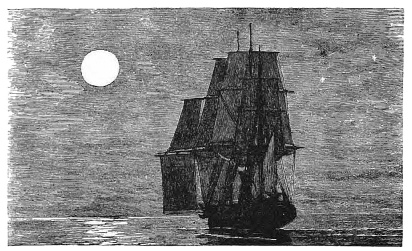
Scene: The deck of the Fairy Queen. Douglas and Leonard walking slowly up and down the quarter-deck arm-in-arm. Hardly a cloud in the sky, stars very bright, and a round moon rising in the east and gilding the waters.
Three years have elapsed since the conversation related in the last chapter took place—years that have not been thrown away, for our heroes—by that title we ought now to know them—have been sensible and apt pupils in the world’s great school.
It must be admitted that it was both a strange and an unusual thing for two fathers, to each make his only son an allowance, and tell him to go and enjoy himself in any way he pleased. After all, it was only treating boys as men, and this, in my opinion, ought to be done more often than it is.
They drew their first half-year’s income in London, then went quietly away to their hotel to consider what they should do.
“A couple of hundred a year, Doug,” said Leonard, “isn’t a vast fortune.”
“No,” replied Douglas, “it isn’t unspendable.”
“That is what I was thinking. But you see, by making us this grant—and it is all they can afford, and very handsome of them—we are positively on parole, aren’t we?”
“Yes, we are bound not to exceed. To do so would be most unkind and ungentlemanly.”
“Well, if we go on the continent it won’t last long, will it?”
“No; besides, I don’t hanker after the continent. My French is shocking bad, Leon, and I should be sure to quarrel with somebody, and get run through the body. No; the continent is out of the question.”
“Yes; although a fellow could pick up some nice specimens there. But let us go farther afield. We can’t go abroad far as passengers—suppose we go as sailors? We both have been to Norway in a ship, and we went together to Archangel, so there isn’t much about a ship we don’t know. Let us, I say, offer our services as—”
“As what?”
“Why, as apprentices. We’re not much too old.”
“No.”
“Well, is it agreed?”
“Yes, I’m ready for anything, Leon. I want to see the world at any price.”
So the very next day off they had gone to see an old friend of Captain Fitzroy’s who lived down Greenwich way, and who was a city merchant in a big way of business.
They explained their wishes and ambitions to him.
“Well,” he replied, “come and dine with me to-morrow, and I’ll introduce you to one of the jolliest old salts that ever crossed the ocean. I’ll do no more than introduce you, mind that.”
Nor did he.
But after dinner Captain Blunt, a thorough seaman every inch of him, with a face as rosy and round as the rising moon, began spinning yarns, or telling his experiences. He had ready listeners in Leonard and Douglas, and when the former opened out, as he phrased it, and introduced and expatiated on the subject next his heart and the heart of his friend, it was Captain Blunt’s turn to listen.
“Bother me, boys!” he exclaimed at last, pitching away the end of a big cigar, “but I think you are good-hearted ones, through and through, and if I thought it was something more than a passing fancy I’d take you along with me.”
“Take us and try us. We want no wages till we can earn them, nor will we live aft till we are fit to keep a watch. Our station on deck must be before the mast, our place below a seat before the galley fire, and a bunk or hammock amidships. We want to learn to set a sail, to splice a rope, to heave the lead, box the compass, turn the capstan, reef and steer—in fact, all a sailor’s duties.”
“Bravo!” cried Captain Blunt, “I’m but a plain man, and a plain outspoken sailor, but I’ll have you; and if there isn’t some life and go in you, blame me, but I’m no reader of character.”
That is the way—an unusual one, I grant—in which our heroes joined the merchant service, and here—after three years all spent in Captain Blunt’s ship—here, I say, on this lovely night, we find them both on deck, one keeping his watch, the other keeping him company, for they are having a talk about bygone times.
They have seen a bit of life even in that time, for the good ship Fairy Queen was seldom long out of active service.
They kept strictly to the terms of their engagement, and have been till now before the mast, refusing even to mess in the cabin, although invited to do so by kindly old Captain Blunt.
Both Douglas Fitzroy and Leonard Lyle were, as mere children, fond of the sea. What British boy is not? A ship had always had a strange fascination for each of them. When much younger they had often been taken by their parents to Glasgow, and they preferred a stroll among the shipping at the Broomielaw to even a saunter in the park itself. Beautiful in summer though the park might have been in those days—and there was but one—it was in Leonard’s eyes too artificial. The lad loved Nature, but he liked to meet her and to woo her in the woods and wilds.
At school in Edinburgh both boys were what are called inseparables. They just suited each other. It was not a case of extremes meet, however, for the tastes of both were identical. Although their books and lessons had by no means been neglected, still, task duty over, and off their minds for the day, they were free to follow the bent of their own wills. More beautiful or more romantic scenery than that close around Scotland’s capital there is hardly to be found anywhere. Our heroes knew every nook and corner of it, every hill and dell, every dingle, rock, and glen, and all the creatures that dwelt therein, whether clad in fur or feather. But for all that, they were as well known on the pier of Leith as “Mutchkin Jock,” the gigantic shore-porter, himself was. Never a ship worth the name of ship had entered, while they were at school, that they did not visit, scan, and criticise. They coolly invited themselves on board, too. Now this might have been resented at times had they not been gentlemanly lads. Gentlemanly in address, I mean. So, though they might often and often have been found “yarning” with sailors forward, whose hearts they well knew how to win, they were just as often invited down below to the cabin, and hobnobbed with the captain himself.
It would have pleased the surliest old ship captain who ever peeped over a binnacle edge, to have two such listeners as young Leon and Doug. How their bright eyes had sparkled, to be sure, as some skipper newly or lately arrived from foreign lands sat telling them of all the wonders he had seen! And how they had longed to sail away to summer seas, and behold for themselves wonders on a larger scale than any they could meet with among the mountains of their own country!
It was thus perhaps that a taste for wandering and a fondness for the sea had been engendered early in the breast of each of the boys.
It was this, I’m sure, that caused them once to write home to their respective parents, informing them that the 250-ton brig, Highland Donald, was to sail in a fortnight for Norway and the Baltic, and that the skipper had offered to take them if they could obtain permission.
Permission had been granted, and having been provided with suits of rough warm clothing, they had embarked one fine spring morning, and sailed away for the cold north.
Now, if any young reader thinks he would like to be a sailor, and has been led to believe, from books or otherwise, that a seaman’s life is one of unmitigated pleasure and general jollity, let him induce his father or guardian to place him on a grain, tar, or timber ship bound for Norway or the Baltic. If, after a month or two of such a life, he still believes in the joys of a seaman’s existence, let him join the merchant service forthwith, but I fear there are few lads who would come up smiling after so severe a test.
Our heroes, however, had stood this test, though they had roughed it in no ordinary way. True, they had been all but shipwrecked on an iron-bound coast, where no boat could have lived a minute; they had been in gale of wind after gale of wind; their provisions and fare had been of the coarsest; their beds were always wet or damp, and sometimes the cold had been intense, depressing, benumbing to both mind and body.
But their long voyage north had made sailors of them for all that, and that is saying a very great deal. It had proved of what mettle they were made, and given them confidence in themselves.
This is the first voyage, then, in which Leonard and Douglas have trod the deck as officers, and I do not deny that both are just a trifle proud of their position, although they feel fully the weight of responsibility the buttons have brought. They certainly took but little pride in the uniform which they wore, as some weak-minded lads would have done, albeit handsome they both had looked, as they sat at table on that last night at Grayling House. So, at all events, Leonard’s mother and poor Effie thought. The latter had done little else but cry all the day, that is, whenever she could get a chance of doing so unseen. This was the second time only that her brother and brother’s friend had been home since they went to sea for good. They had stayed at home for a whole month, and now were bound on a perilous cruise indeed, sailing far away to Arctic seas, Captain Blunt’s ship having been chosen to take stores and provisions out to Greenland for vessels employed in finding out the North-West Passage.
Something had seemed to whisper to Effie that she would never see her darling brother again. So no wonder her heart had been sad, and her eyes red with weeping, as our heroes left; or that a gloom, like the gloom of the grave, had fallen on Grayling House, as soon as they were gone.
Great old Ossian had come and put his head on her lap, and gazing up into her face with those brown speaking eyes of his, and his loving looks of pity, almost broke her heart. The tears had come fast enough then.
The Fairy Queen had sailed from Leith. Both parents had accompanied their sons thus far, and blessed them and given them Bibles each (it is a way they have in Scotland on such occasions), and bade them a hearty good-bye.
Yes, it was a hearty good-bye to all outward appearance, but there was a lump in Leonard’s throat all the same that he had a good deal of difficulty in swallowing; and as soon as the Fairy Queen was out of sight, the two fathers had left the pier—not side by side, remark we, but one in front of the other, Indian-file fashion. Why not side by side? Well, for this reason. There was a moisture in Major Fitzroy’s eyes, that, being a man, he was somewhat ashamed of, so he stumped on ahead, that Captain Lyle might not notice his weakness; and between you and me, reader, Captain Lyle, for some similar reason, was not sorry. I hope you quite understand it.
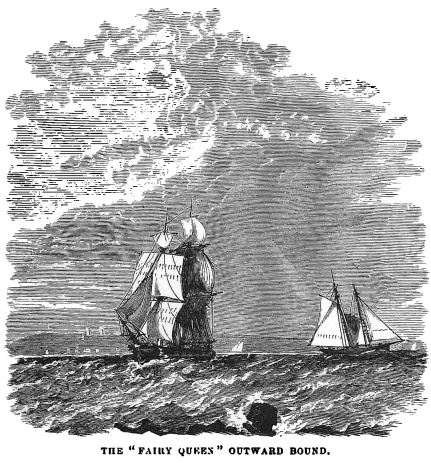
However, here on this beautiful summer’s night, with a gentle beam wind blowing from the westward, we find our friends on deck. There is a crowd of sail on her, and the ship lies away to the west of the Shetland Islands. They do not mean to touch there, so give the rocks a good offing.
Save for the occasional flapping of the sails or a footstep on deck, there is not a sound to break the solemn stillness.
They did encounter a gale of wind, however, shortly after leaving Leith, but the good ship stood it well, and it had not lasted long.
“I say, old fellow,” said Leonard, “hadn’t you better turn in? I think I would if I had a chance.”
“No, I don’t feel sleepy; I’m more inclined to continue our pleasant chat. Pleasant chat on a pleasant night, with every prospect of a pleasant voyage, eh?”
“I think so. Of course good weather cannot last for ever.”
“No, and then there is the ice.”
“Well, now, I’m not afraid of that. Remember, I superintended the fortifying of the ship, and you could hardly believe how solid we are. But of course ice will go through anything.”
“So I’ve heard, and we saw some bergs while coming round the Horn—didn’t we?—that I wouldn’t care to be embraced between.”
“Not unless the ship were made of indiarubber, and everybody in it.”
“I wonder how all are at Grayling House to-night. Poor sister Effie! Didn’t she cry! I’m afraid old Peter was croaking a bit. He is quite one of the family, you know, but very old-wifeish and crotchety, and thinks himself quite an old relation of father’s. Then there is that ridiculous superstition about the pike.”
“Yes, do you know the story?”
“Yes, and I may relate it some evening, perhaps, what little story there is; though it is only ridiculous nonsense. But look! what is that?”
“Why, a shoal of porpoises, but they are just like fishes of fire.”
“Phosphorescence. These seas on some summer nights are all alive with it. What a lovely sight! Strange life the creatures lead! I wonder do they ever sleep? Heigho! talking of sleep makes me think of my hammock. I believe I will turn in now, though it is really a pity to go below on so lovely a night. Ta, ta. Take care of us all.
“A Dios, Leonard.”
Yes, it was indeed a lovely night; but, ah! quickly indeed do scene and weather change at sea.
Book Two—Chapter Three.
On the Wings of a Westerly Gale.
“And now the storm-blast came, and he Was tyrannous and strong; He struck with his o’ertaking wings And chased us north along. And the ship drove fast, loud roared the blast, And northward ay we flew.” Coleridge.
Scene: A ship on her beam ends, not far off the coast of Norway, the seas all around her houses high; their tops cut short off by the force of the wind, and the spray driven over the seemingly doomed ship, like the drift in a moorland snowstorm. The sky is clear, there is a yellow glare in the west where the sun went down. A full moon riding high in a yellow haze.
A gale of wind got out of its cave—for according to the ancients the winds do live in a cave. It was a gale from the west, with something southerly in it, and I feel nearly sure, from the rampancy with which it roared, from the vigour with which it blew, and the capers it cut, that this gale of wind must have taken French leave of its cave.
It seemed to rejoice in its freedom, nevertheless. No schoolboy just escaped from his tasks was ever more full of freaks and mischief.
It came hallooing over the Atlantic Ocean, and every ship it met had to do honour to it on the spot, by furling sails, or even laying to under bare poles.
If these sails were quickly taken in by men who moved in a pretty and sprightly fashion, all right—the gale went on. But if lubbers went to work aloft, or the wheel was badly handled—then “Pah!” the wind would cry, “I’ll shorten sail for you,” and away would go the sails in ribbons, cracking like half a million cart-whips, and perhaps a stick at the same time, a topmast or yard, and if a man or two were lost, the wind took neither blame nor further notice.
The gale came tearing up Channel, and roaring across the Irish Sea, and lucky indeed were those ships that managed to put back and get safely into harbour, where the storm could only scream vindictively through the empty rigging.
The gale went raging over towns and cities, doing rare damage among stalks and spires, ripping and rolling lead off roofs, and tossing the tiles about as one deals cards at whist. It swept along the thoroughfares, too, having fine fun with the unfortunate passengers who happened to be abroad, rending top coats and skirts, running off with the hats of old fogies, and turning umbrellas inside out.
The gale came shrieking over the country, changing a point or two more to the south’ard, so as to shake the British Islands from aft to fore. It picked up great clouds as it went northwards ho! and mixed them all together, so that when it descended on the vale of the Tweed, it came with thunderclap and lightning’s flash, and a darkness that could almost be felt. It tore through the woods and forests, overturning vast rocks, and uprooting mighty trees, that had grown green summer after summer for a hundred years.
In the avenue of Grayling House it spent an extra dose of its fury, it bedded the ground with dead wood, and wrenched off many a lordly limb from elm and chestnut.
Effie heard the voice of the roaring wind, and saw the destruction it was doing, and prayed for her brother and brother’s friend, who were far away at sea.
She stood by the parlour window beside her father, who was gazing outwards across the lawn, and her hands were clasped, as if in fear, around his left arm. Mrs Lyle herself had retired to her room.
Suddenly a flash shot athwart the trees, so dazzling and blinding that Effie was almost deprived of sight. The peal of thunder that followed was terrific.
About ten minutes after this, while the wind still roared, while the rain and hail beat the leaves ground-wards, and the grass was covered as deep almost in white as if it were mid-winter, old Peter—he is looking very old and grey now—staggered into the room. He had not waited even to knock. “Sir, sir, sir!” he cried.
“Well, Peter, what is it? Speak, man! You frighten the child.”
“Oh, sir, sir! Joe, sir, Joe!”
“Is dead?”
“Ay, as dead as a mawk. The great rock that o’erhung the water is rent in pieces, tons upon tons have fallen into the loch, the palin’ is washed away, Joe is dead, and there is an end to Glen Lyle. You mind the gipsy’s rhyme—
“‘When dead yon lordly pike shall float, While loud and hoarse the ravens call, Then grief and woe shall be thy lot, Glen Lyle’s brave house must fall.’”
“Hush, hush, hush, man!” cried Captain Lyle; “everything that lives must die; all things on earth must have an end. Why bother yourself about the death of a poor pike, man? Come, Peter; I fear that you are positively getting old.”
“By the way, Effie,” he added, turning to his daughter, “run and see how your mother is.”
Effie went away. She was used to obey. Dearly loved though she was by both her parents, she had many lonely sad hours now that her brother had become a wanderer, only to appear now and then at Glen Lyle to stay for a short time, he and Douglas, then disappear, and leave such a gloom behind that she hardly cared to live.
But she had never felt so sad as she did now. What was going to happen to her father or to her brother? She did not go to her mother’s room. She did not wish to show her tears. But she went to her own, threw herself on her bed, and cried and prayed till she fell asleep.
“Effie, child, are you here?”
It was her mother’s voice, and she started up. The moon was throwing a flood of light into the room.
Next moment she was in her mother’s arms, who was soothing her, and laughingly trying to banish her fears.
We leave them there and follow the gale.
It had gone careering on, over mountain, moorland, and lake, seeming to gather force as it went. It must have been at its height when it swept over the bleak, bare islands of Shetland, and made madly off for the Norwegian coast. Old, old, white-haired men, who had lived their lives in this ultima Thule, never remembered a fiercer storm. On one of the most barren and bleakest islands, next morning, the beach was found bestrewn with wreckage from some gallant ship, and the merciless waves had thrown up more than one dead body, and there they lay as if asleep, with dishevelled hair, in which were sand and weeds, hands half clenched, as if, in the agony of death, they had tried to grasp at something, and cold, hard, wet faces upturned to the morning sun.
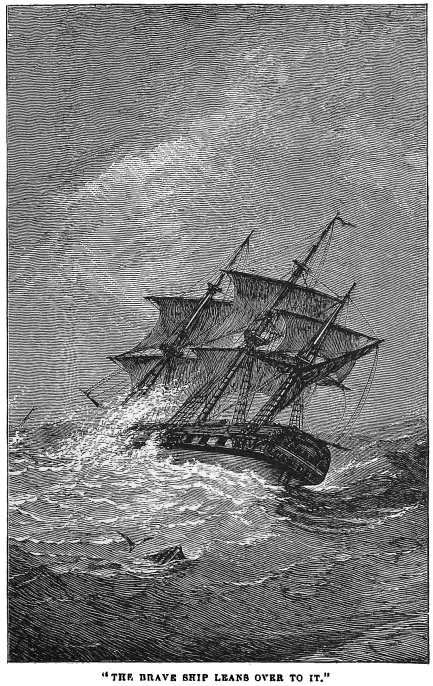
The Fairy Queen was trying to round a rocky cape when the white horses of that gale of wind first appeared on the horizon, heading straight for them. Once round the point they would be comparatively safe.
“Look!” cried Leonard to Douglas, whose watch it was. The sun was going down behind the western waves. Wild and red he looked, and shorn of his beams, and tinging all the water ’twixt the barque and the horizon a bright blood-red.
On came the white horses. It was a race between the barque and the gale of wind. Before her loomed the rocky promontory. The cliffs rose straight up out of the sea, and their heads were buried in haze. Close to the wind sailed the barque, as close as ever could be.
On and on she speeds, but the white horses are almost close aboard of her.
“Hands, shorten sail!”
The wind is on her. To shorten sail now were madness. The wind is on her, the brave ship leans over to it, till the water rushes in through the lee scuppers.
The wind increases in force every moment.
The great black rocks are close above her lee bow. Looking upwards, the wild flowers can be seen hanging to the banks and cliffs—saxifrages, heath, broom, and golden gorse. So close is the barque that the sea-birds that have alighted on the cliffs as the sun kissed the waves, startled by the flapping canvas, soar off again and go screaming skywards.
The sun is down now altogether, and the gale has rushed at the vessel like a wild beast seeking its lawful prey; the seas are dashing over her, the spray flying high over the bending masts.
The gale has leapt upon them, too, from a pillar of cloud, and with forked and flashing lightning.
Are they round the point? No one on that deck can tell as yet. The roar and the surge is deafening. The gloom is appalling, men can hardly breathe, the words the captain tries to shout to those at the wheel are carried away on the wind. The crew clutch at the rigging, and feel choking, drowning.
“Keep her away now!” It was Leonard’s voice in a wheelman’s ear. They were round the point!
The barque is flying. The topsails are rent in ribbons. What matters it? The open sea is before them. Yes, but like a tiger baulked of its prey, the squall suddenly increases to the force of a hurricane, and next moment the good ship is helpless on her beam ends.
Had the force of the gale been kept up many minutes the ship would have foundered, none would have been left alive to tell the tale. In some sandy bay in through those rocks and cliffs other dead swollen bodies would have been cast up like those on the Shetland shores, to lie with lustreless eyes in the morning’s sunshine.
The squall abated, the sky cleared, the gale itself has spent its fury, and goes growling away to leeward.
With hatchet and knife in hardy hands the wreck is cleared away at last, and the Fairy Queen rides in the moonlight on an even keel.
The captain shakes hands with Leonard and Douglas. “You saved her,” he said. “My boys, you saved her! It was excellent seamanship. Had you shortened sail when the wind got stiff we never would have rounded that point, and the sharks would have had what was left of us.”
“Captain Blunt,” said Douglas, “take credit to yourself as well, for you superintended the ballasting of the barque. Had that shifted, then—”
“Davy Jones, eh?” said the skipper, laughing.
He could afford to laugh now.
There was much still to be done, so no more was said. All hands were called to make the barque as snug as could be for the night.
When morning broke in a grey uncertain haze over the sea, and the rocky shore began to loom out to leeward and astern, the extent of the damage was more apparent, but after all the ship had come out of it fairly well. The fore topmast was gone, the mizzen damaged, the bulwarks broken, and more like sheep hurdles than anything else, but there was little other damage worth entering in the log-book.
The sky cleared when the sun rose, and after breakfast the men were set to work repairing damages.
The Fairy Queen had little business on the Norwegian coast at all, but she had been driven far out of her course by adverse winds.
In a few more days the breeze was fair, and the ship was making good way westwards, albeit she was jury-rigged. It was sincerely hoped by all on board that the terrible gale they had just encountered was the worst they would meet. The ship had borne it wonderfully well, and leaked not in the least; for many a day, therefore, everything went as merry as marriage bells on board.
Captain Blunt was happy, so were our heroes, and so, for the matter of that, was every one fore and aft. The crew of the Fairy Queen were all picked men. They were not feather-bed sailors; most of them had been in the Arctic regions before, and knew them well. But albeit a good seaman is not afraid to face danger in every shape and form, he is nevertheless happiest when things are going well.
So now, every night, around the galley fire, songs were sung and stories told, and by day many a jocund laugh around the fo’c’s’le mingling with the scream of the circling sea-birds told of light hearts and minds that were free from care.
Everything in these seas was new to young Douglas and Leonard. They passed the strange-looking Faroe group of islands to the north, and in good time Iceland to the south, and bore up, straight as a bird could fly, for Cape Farewell, the southernmost point of Greenland.
Those Faroe Isles, as seen from the sea, are indescribably fantastic and picturesque. Let me see if I cannot find a simile. Yes, here it is: take a number of pebbles and stones, with a few good-sized smithy cinders. Let these be of all sizes. Next take a broad, shallow basin, which partly fill with water stained dark blue with indigo; now place your stones, etc, in this water, with one end of each sticking up. Paint these ends and tip them and streak them with green, with white, and with crimson, and lo and behold! you have a model of the Faroe Islands.
The Fairy Queen called at Reykjavik, and the good people of that quaint wee “city” came trooping on board. Even the Danish parson came, carrying in his own hands—for he was not proud—a string of firm, delicious-looking rock cod as a present for the captain.
Almost every boat brought a gift of some kind. Well, I daresay they did expect some presents in return, and it is needless to say they got them. This was, after all, only a very pleasant and very justifiable way of doing a barter; much better, in my opinion, than if they had lain on their oars and said,—
“We have fresh fish, and mountain mutton, and eggs and game for sale; how much tobacco, biscuits, knives, hatches, and cooking utensils have you to spare?”
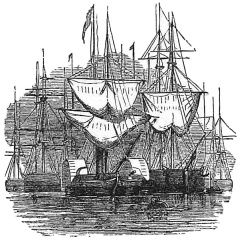
The good little clergyman innocently inquired whether the war betwixt England and France was still going on, and was astonished to be told it was over years ago.
But nothing could exceed the kindness and hospitality of these people to our young heroes when they went on shore. Had they eaten and drunk a hundredth part of what they were pressed to partake of, they would have been cleverer far than the Welsh giant I used to read of in my boyhood in “The Wonderful Adventures of Jack the Giant-killer.”
The Fairy Queen lay at Reykjavik—having to take in water—for three days, and then sailed away. But would it be believed that in this short time Leonard and Douglas won so many hearts among old and young, that there was hardly a dry eye in the village the morning they left, so primitive and simple were those people then?
Note 1. Mawk, Scottice—a hare.
Book Two—Chapter Four.
On Silent Seas.
“And now there came both mist and snow, And it grew wondrous cold, And ice, mast high, came floating by, As green as emerald. “And through the drifts the snowy clilts Did send a dismal sheen, Nor shapes of men nor beast we ken— The ice was all between.” Coleridge.
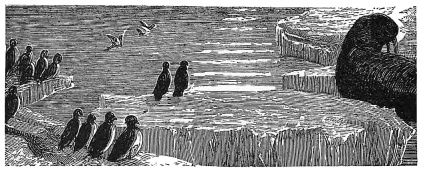
Scene: The Arctic Ocean. One solitary ship in sight. Ice all about, against which, in contrast, the water looks black as ink.
Yes, everything they saw in this voyage and in these seas was indeed very new to Leonard and Douglas. They certainly were pleased they had come. It was like being in a new world.
They saw so many icebergs before they reached Cape Farewell that they ceased to fear them. Nothing very tremendous, though, but of all sizes, mostly covered with snow, and of shapes the most fantastic. Everything on earth seemed to be mimicked in shape by these bergs. Churches and houses, or halls with domes and minarets, were common objects. Furniture of all kinds came next in order of frequency; then came animals of all sorts, pigs, sheep, lions, bears, giraffes, geese, swans, horses, cattle, cocks, and hens. And the most amusing part of the business was this: as the ship sailed past them, or through the midst of them, they kept altering their shapes or forms with the greatest coolness, so to speak.
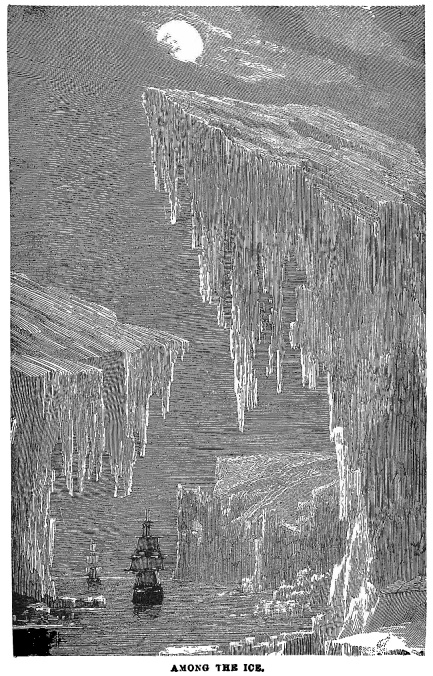
A giraffe, for instance, developed into a ginger-beer bottle, a cow turned into a cab, a church into a chair, a pig became a pigeon, and a hen a horse, while, perhaps, a monster lion or couchant bear became a daft-looking old wife with a flap-cap on. It was funny.
Some of the smaller of these icebergs were tenanted by seals.
What a delightfully easy life those lovely creatures seemed to lead! There goes one, for instance, basking on a bit of ice just like a sofa, pillow and all complete; and his snowy couch is floating quietly away through that blue and sunny summer sea, rising and falling gently on the waves in a way that must be quite delightful. He just raises his head as the ship sails past, and gazes after the Fairy Queen with a kind of dreamy interest, then lets it drop again, and recommences his study of the birds that go wheeling and screaming round in the sky.
Yonder a walrus pops a monster tusked head and goggle eyes out of the water, looking at the ship as fiercely as an angry bull.
“What are you?” he seems to ask, “or why are you disturbing the placid waters of my ocean home?”
Then he disappears, and presently is seen far away to the north.
Yonder, ploughing his lonely way through the silence of the dark sea, is a monster narwhal. He makes no remark. If a boat were to attack him, he might lose his temper, and try to stave her with his mighty ivory horn; but the Fairy Queen is nothing to him, so he looks not to right or to left, but goes on and on and away.
Here comes a shoal of dancing porpoises, all going south. How they dance, and how they plunge, and how they caper, to be sure! They take little heed of the ship, do not even go out of their way to avoid her. Perhaps they are going on a summer holiday, and are so full of their own happiness and joy that they have little time to think of anything else. Bless the innocent creatures! I’ve often and often felt pleasure in beholding their gambols; and thanked God from the bottom of my heart, because He has made them, made the earth and its fulness, the sea and all it contains, so full of life and love and beauty.
But look away down yonder, and you will perceive—for the ship is now becalmed—a triangular, fan-like thing above the water, and a dark line close by it. It is the back of the huge and awful Greenland shark. And look! there is a sea-bird perched on it, just as a starling might be on the back of a sheep. I do not like to think about sharks nor see them, and I could tell you many an ugly story about them—awful enough to make your blood run cold, but that would be a digression; besides, I feel sure the reader does not want his blood to run cold. But there is a more terrible-looking monster far than the Greenland shark in these seas. I allude to the gigantic hammer-head, who is more ugly than any nightmare.
But lo! here comes an honest whale. I do like these great monsters; I have seen quite a deal of their ways and manners. I am sure they have far more sagacity than they get credit for. I should like to own a little private sea of my own, and have it enclosed, with a notice board up, “Trespassers will be prosecuted,” and keep a full-sized whale or two. I feel sure I could teach them quite a host of little tricks. Stay, though—they would not be little tricks. Never mind, I and my whales would get on very well together. But if one did get angry with me, and did open his mouth, why—but it will not bear thinking about.
The whales our heroes saw in the Greenland ocean were leviathans. Leonard could not have believed such monsters existed anywhere in the world, and they had a thorough business air about them, too. Some came near enough the ship to show their eyes. Good-natured, twinkling little eyes, that seemed to say,—
“We know you are not a whaler, so pass on, and molest us not, else with one stroke of our tails we will send you all to Davy Jones.”
Then they would blow, and great fountains of steam would rise into the air, with a roar like that which an engine emits, only louder far. This is not water, as is generally supposed, but the breath of the vast leviathan of the ocean.
A Whale’s Garden Party.
This is no joke of mine, because I have been at one, and Leonard and Douglas on this memorable voyage had also the good luck to witness an entertainment of the sort.
It only takes place at certain seasons of the year, always pretty far south of the main ice pack, and always in a spot unfrequented by ships. There is another sine quâ non connected with this garden party—namely, plenty to eat, and whales do not require anything to drink, you know. So the sea where the party is held is so full of a tiny shrimplet that it is tinged in colour. But why do I call it a garden party you may ask; are there any flowers? Does not the sun shimmering on the small icebergs already described, and on the clear ice itself, bring forth a hundred various tints and colours, more gorgeously, more radiantly beautiful than any flowers that ever bloomed and grew? Are there not, too, at the sea bottom flowers of the deep—
“Many a flower that’s born to blush unseen—”
Lovelier far than those that bloom on land? Yes, I am right in calling it a garden party. But what do the whales do at this garden party of theirs? Sail quietly round and look at each other? Discuss the possibility of uniting in a body, and driving all the whaling fleet to the bottom of the sea? Consider the prospects of the shrimp harvest, or debate upon the best methods of extracting a harpoon from fin or tail, and the easiest method of capsizing a boat? No; nothing of the sort. They have met together to enjoy themselves, and in their own exceedingly cumbersome way they do enjoy themselves. They enjoy themselves with a force and a vengeance that is terrible to witness. The noise and explosions of their wonderful gambols can be heard ten miles away on a still night. To see a porpoise leap high out of the water like a salmon is a fine sight, but to see two or three whales at one and the same time thus disporting themselves, while some lie in the water beating time with their terrible tails, others playing at leap frog, and the sea for acres round them churned into froth and meerschaum, is a sight that once seen can never be forgotten. The boldest harpooner that ever drew breath would not venture near those gambolling whales, and I verily believe that the biggest line-of-battle ships that ever floated would be staved and sunk in the midst of that funny but fearful maelstrom.
This gives you, reader, but the very faintest notion of a whale’s garden party. It is one of the wonders of the world, and one which few have ever seen and lived to tell of, for there is no surety of the huge monsters not shifting ground at any moment, and sweeping down like a whirlwind on some devoted ship.
The Fairy Queen sailed on, and in due time sighted and passed Cape Farewell, then northward ho! through Davis Straits to Baffin’s Sea, and here they had the great good luck to fall in with the vessels they had come to succour.
Some delay was caused in unloading, and as the summer was now far advanced, and Captain Blunt had no desire to winter in these dismal regions, he was naturally anxious to get away south as soon as possible.
They were cleared at last, however, and bidding the research vessels farewell, with three-times-three ringing cheers, all sail was set that the ship could stagger under, and on she rushed through an open sea, although there were plenty of icebergs about.
For a whole week everything went favourably and well. Then, alas! the tide turned with a vengeance. One of those dense fogs so common in these regions came down upon them like a wall, and so enveloped the ship that it was impossible, standing at the windlass, to see the jibboom end; and at the same time.
“Down dropt the wind, the sails dropt down, ’Twas sad as sad could be; And we did speak only to break The silence of the sea.”
But worse was to come.
For now, up-looming through the dismal fog, came great green-ribbed icebergs, the waves lapping at their feet and the spray washing their dripping sides.
In the midst of so great a danger Captain Blunt felt powerless. There was absolutely nothing to be done but wait and wait, and pray the good Father to send a breeze.
When we pray earnestly for anything we should never forget to add the words of Him Who spake as never man spake, and say, “Thy will be done.” No prayer is complete without that beautiful line; and yet, though easy to say it, it is—oh! so hard sometimes to pray it. But then we poor mortals do not know what is best for us.
In the present instance our heroes’ prayers were not heard, and days and weeks flew by; then the sky cleared, and they saw the sun once more, but only to find themselves so surrounded by ice on all quarters that escape was impossible. Besides, the season was now far gone, autumn was wearing through, the sun was far south, and the nights getting long and cold and dreary.
Frost now set in, and snow began to fall.
They were safe from all dangers for six months to come, at the least.
“Never mind,” said Blunt cheerily to Leonard, “we have provisions enough to last us for a year at the very least. So we must do the best to make ourselves comfortable.”
“That we will,” replied Leonard, “though I fear our friends at home will think we are lost.”
“That is the only drawback—my dear wife and child, and your parents, boys. Well, we are in the hands of Providence. God is here in these solitudes, and just as easily found as if we were in the cathedral of old St. Giles’.”
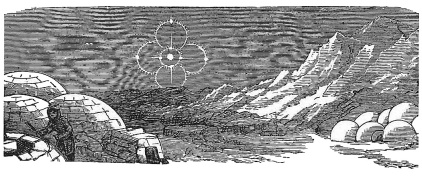
It was indeed a dreary winter they passed in the midst of that frozen sea. No sun, no light save moon or stars and the lovely aurora. Silence deep as the grave, except—which was rare—when a storm came howling over the pack, raising the snow in whirlwinds, and often hurling off the peaked and jagged tops of the weird-looking icebergs.
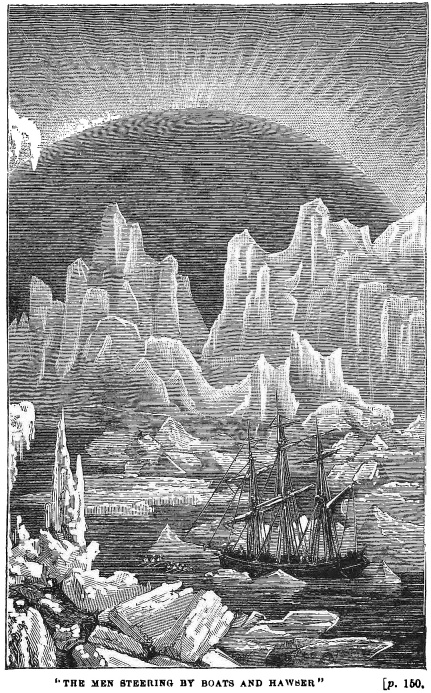
But the sun appeared at last, and in due time. With a noise and confusion that is indescribable the ice broke up, and the Fairy Queen began to move slowly—oh, so slowly!—through the ice on her way southwards, with danger on every quarter, danger ahead, and danger astern. She sailed for many, many miles without a rudder; for lest it should get smashed it had been unshipped, the men steering ahead by means of boat and hawser, and the ship often being so close to an iceberg that the tips of the yard arms touched, and when the berg moved over with a wave it threw the vessel upwards from the bottom. On these occasions poles were used to edge her off.
It was tedious work all this, but it came to an end at last, and the water being now more open, the rudder was re-shipped, and more sail clapped on, so that much better way was made.
Another week passed by. They were well south now in Davis Straits, albeit the wind had been somewhat fickle.
They had high hopes of soon seeing the last of the ice, and both Douglas and Leonard began to think of home, and talk of it also.
It was spring time once more. The larches, at all events, would be green and tasselled with crimson in the woods around Glen Lyle, primroses would be peeping out in cosy corners in moss-bedded copses, and birds would be busy building, and the trees alive with the voice of song.
“In three weeks more,” said Douglas, “we ought to be stretching away across the blue Atlantic, and within a measurable distance of dear old Scotland.”
“Ay, lad!” replied Leonard, “my heart jumps to my mouth with very joy to think of it.”
In this great chart that lies before me, a chart of the Polar regions, I can point out the very place, or near it, where the Fairy Queen was crushed in the ice as a strong man might crush a walnut, and sank like a stone in the water, dragging down with her, so quickly did she go at last, more than one of her brave crew, whose bones may lie in the black depths of that inhospitable ocean,—
“Till the sea gives up its dead.”
Midway ’twixt Nipzet Sound and Cape Mercy, just a little to the nor’ard of Cumberland Gulf, I mark the point with a plus.
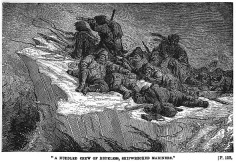
It was in a gale of wind, and at the dead of night, when she was surrounded by an immense shoal of flat bergs, of giant proportions, and staved irremediably. The water came roaring in below. Pumping was of no avail. She must founder, and that very soon. So every effort consonant with safety was made to embark upon the very icebergs that had caused the grief. Stores and water were speedily got out, therefore, and long ere the break of day the end came, the ship was engulphed. There was no longer any Fairy Queen to glide over the seas like a thing of life—only two wave-washed bergs, each with a huddled crew of hopeless shipwrecked mariners.
And these were already separating. They had bade each other adieu.
They were gliding away, or south or north or east or west, they knew not whither.
Book Two—Chapter Five.
Afloat on an Iceberg.
“Midnight soft and fair above, Midnight fierce and dark beneath, All on high the smile of love, All below the frown of death: “Waves that whirl in angry spite With a phosphorescent light, Gleaming ghastly in the night, Like the pallid sneer of Doom.” Tupper.
Scene: In Baffin’s Sea. Shipwrecked mariners afloat on an iceberg, which rises and falls on the smooth-rolling waves.
Morning broke grey and hazily; the wind, as if it had done its worst and spent its fury, went down, but the sea still ran very high, dashing in cold spray over the bergs on which the shipwrecked mariners were huddled together for warmth, and leaving a thick coating of ice on top of the sail that covered them.
Captain Blunt had gone on board one berg with half the crew, about ten all told, and Leonard, with Douglas, on board the other, along with the remainder, the two friends determining to be together to the bitter end, if indeed the end were to come.
The sea itself went down at last, as far as broken water was concerned; only a big round heaving swell continued, on which the icebergs rose and fell with a strange kind of motion that made all on board them drowsy.
When Leonard looked about him in the morning sunlight never a sign could be seen of the other berg. Nor all that day was it seen or on any other. It was gone. Other icebergs there were in dozens, but none with men on them.
Leonard heaved a sigh, and wished that he only had the wings of one of those happy sea-birds, that went wheeling and screaming round in the air, sometimes coming nearer and nearer, tack and half-tack, so close, out of mere curiosity, that they could have been knocked down with a boat-hook. All that day and all the next and next the berg floated silently on,—
“As idle as a painted ship Upon a painted ocean.”
Almost every day strange, wondering creatures came up out of the water to gaze at them. The tusked walrus, the gazelle-eyed seal—yes, even the narwhal must have spied them, and felt curiosity, for he shifted his course, and ploughed down towards the berg to have a look; then, as if satisfied that his mind could not fathom so great a mystery, went on his silent, solitary way once more.
Happily for the poor sailors, they had provisions. Had the ship gone down at once when struck, as vessels do sometimes go, they would now have been in a pitiful plight indeed.
But the cold was intense. There was no keeping it out by day hardly; only by constant exercise, which, thanks to the magnitude of the iceberg, they were able to maintain.
But at night it was intense, chilling every one to the bone and spinal marrow.
They lay there pressed together; not a corner of the sail was left open to admit a breath of the frost-laden air, but even then they were not warm. It was impossible to sleep for hours and hours after lying down, and when at last they did drop off, the cold, the bitter, bitter cold, was with them still—with them in their dreams, with them in their hearts, and on their very brains.
When morning light came they would stagger up, looking wonderingly at each other’s pale, pinched faces. To stand for a time was an impossibility. They managed to light a little fire of wood on an iron slab, morning, noon, and evening, to make a little coffee; this, with biscuit and raw pork, was their only diet, and right thankful they were to have such fare.
It was on a Tuesday the Fairy Queen went down, and five long weary days rolled slowly on their course. For five weary nights they suffered and shivered, and when the Sabbath morning came round they were, to all appearance, as far from help as ever.
Hope itself began to fade in their hearts, especially when two of their number sank and died before their eyes.
They committed their bodies to the deep, and, horrible to relate, saw them devoured; for till now they had no idea that the sea around them was swarming with sharks. Some they had seen, it is true, but nothing like the number that now came up to the ghastly feast.
It was the Sabbath, and although every morning and evening they had prayed and sung hymns, after the fashion common in Scotland on this day—His day—many chapters of the Book of books were read, and first Douglas and then Leonard gave the men some earnest exhortations. Leonard never knew his friend Douglas could speak so feelingly before, or that his heart was such a well—now bubbling over—of religious feeling and fervour.
“Ah, my dear fellows!” he ended with these words, “we never really feel our need of a Saviour until the prospect of death stares us in the face. Then we feel the need of a friend, and, looking around, as it were, we find Him by our side, and right willing are we to take Him then, to grasp His hand, and trust our all in all to Him.”
“Amen!” said the sailors fervently.
Then some verses of that bonnie hymn-psalm were sung, commencing:—
“The Lord’s my Shepherd, I’ll not want, He makes me down to lie By pastures green; He leadeth me The quiet waters by.”
A strange sight on that clear, still, dark ocean, the white iceberg with its living freight drifting aimlessly about. Strange sound, this song of praise, rising from their cold, blue lips, and from hearts that hardly dared to hope.
Another day and another went by, and on the Wednesday an accident happened that had well-nigh proved fatal to nearly all on board the berg. More than one-third part of their ice-ship parted and fell away. Luckily it first gave voice, and showed the rent before finally dropping off.
There was no denying it, the danger was now extreme. They had been drifting slowly southwards, and the iceberg was being influenced by warmer currents, and slowly wearing away.
It might, moreover, topple over at any moment. Things came to their very worst that same evening when another piece of the berg plunged into the sea, and when morning broke, there was barely room for the men to huddle together, looking fearfully around them, and down into the still black water, and at those hungry sharks, who now seemed to gambol about as if in momentary expectation of their prey.
“Look!” cried Douglas about noon that day, “what is that dark object yonder on that immense iceberg that we have been skirting these last two hours?”
“Seals, I think,” said Leonard, in a feeble, hopeless voice.
“I think not, Leon. Oh, lad! I think they are men.”
“Let us signal, anyhow.”
A jacket was waved and—answered.
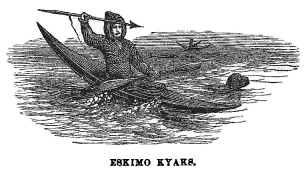
Next moment half-a-dozen swift kayaks or Eskimo boats were dashing from the shore to their rescue.
“Thank God!” said every man, and the tears rolled down the cheeks of many now, and half-choked them as they tried to speak.
But they clasped each other’s thin, cold hands, and looked the joy they could not utter.
They were Eskimos who had come to the rescue, and it was from the mainland they had come, and not from any iceberg, or even island.
Their joy was redoubled when they drew near and found Captain Blunt and their old shipmates waving their hands and hats to them from the snow-clad shore.
So happy a reunion no one can fully understand or appreciate except those who have been in the same sad plight, and saved as if by a miracle.
Longfellow, in his beautiful poem “The Secret of the Sea,” tells us how Count Arnaldos—
“Saw a fair and stately galley Steering onward to the land. “How he heard the ancient helmsman Chant a song so wild and clear, That the sailing sea-bird slowly Poised upon the mast to hear,— “Till his soul was filled with longing, And he cried with impulse strong, ‘Helmsman! for the love of Heaven, Teach me, too, that wondrous song.’ “‘Would’st thou so,’ the helmsman answered, ‘Learn the secrets of the sea? Only those who brave its dangers Comprehend its mystery.’”
Yes, reader, the sea hath many, many secrets. We may never know them all. Not even those who have been down to the sea in ships may fathom half the mysteries that everywhere surround them, or can ever hope to explain to those who dwell on land a tithe of what they know and feel.
What says the poet?
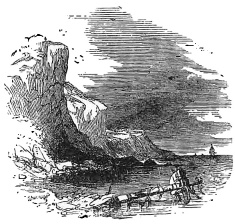
“Ah! what pleasant visions haunt me As I gaze upon the sea! All the old romantic visions, All my dreams come back to me,— “Till my soul is filled with longing For the secret of the sea, And the heart of the great ocean Sends a thrilling pulse through me.”
Book Two—Chapter Six.
The Far North Land.
“O! the auld hoose, the auld hoose, Deserted though you be, There ne’er can be a new hoose Seem half sae dear to me.” Lady Nairne. “Beside a weird-like Arctic bay, Where wild and angry billows play, And seldom meet the night and day.” Symington.
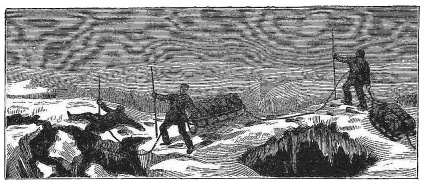
Scene One: A cottage not far from St. Abb’s Head, a garden before the door, and a porch, around which summer roses and honeysuckle are entwined. The occupants are three. They are out of doors now, seated on the lawn which stretches down to the shingly beach on which the waves are lisping and rippling.
Captain Lyle (speaks). “Well, Ethel dear, and you, Effie, you are both very silent. Are you breaking your hearts because we have had to give up Grayling House for a time, and come to live in this tiny cottage by the sea?”
Mrs Lyle, looking up from her sewing, and smiling kindly but somewhat sadly: “No, Arnold, I was thinking about our dear boy.”
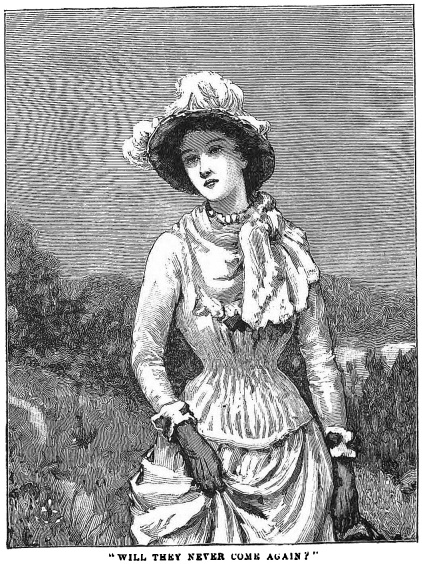
Effie, dropping her book in her lap. “So was I, mother. I was thinking of Leonard and—and poor Douglas. It is now the second summer since they went away. It is wearing through, too. See how the roses fall and scatter their petals when you touch them. Oh! do you think, papa, they will ever, ever come again?”
Captain Lyle, smiling. “Yes, love, I do. Here, come and sit by me. That is right. Now you know the country they went away to is a very, very strange one.”
Effie. “A very, very terrible one.”
Captain Lyle. “No, I think not, dear, else those who have been there would not always wish to return to it. It is wild and lonely, and silent and cold, Effie, and there are no letter-carriers about, you know, not even a pigeon-post, so Leonard can’t very well write. The fact is, they’ve got frozen in, and it may be even another summer yet before we see them.”
Effie. “Another summer? Oh, papa!”
Captain Lyle. “Yes, dear, because he and honest Douglas are in the regions of thick-ribbed ice, you know; and once it embraces a ship, it is difficult to get clear. But cheer up, lass; I won’t have you fretting, there! Now, promise me you—ha! here comes dear old Fitzroy, swinging away on his wooden leg. Good-afternoon, my friend; there is need of you here. My wife and daughter are doing nothing but fretting.”
Captain Fitzroy. “Oh! come, Effie, come, Mrs Lyle. Look at me; I don’t fret. The boys will return as sure as the sun will rise to-morrow.”
Effie, smiling through her tears. “Thank you, Captain; you always give us hope.”
Captain Fitzroy. “And I suppose you mourn because you’ve had to leave bonnie Glen Lyle—eh!”
Mrs Lyle. “Oh yes. We dearly love the old house.”
Captain Fitzroy. “Well, then, let me prophesy. First, the boys will return safe and sound, red and rosy; secondly, you’ll get over your difficulties, and return to Glen Lyle; thirdly, we’ll live together happy ever afterwards.”
Effie laughs now in spite of herself, for the old Captain always looks so cheery and so comical.
Captain Lyle. “Hear that, darling! Now, bustle about, Effie, and get us some nice brown tea and brown toast, while we sit here and chat.”
Captain Fitzroy, looking seaward. The ocean is a sheet of blue, with patches of green here and there, where cloud shadows fall, and sails like sea-birds far away towards the horizon.
“What a heavenly day, to be sure! Why, there is health in every breath one inhales on this delightful coast. Don’t you feel cosy now and happy in this sweet little cottage? Nothing to do. Nothing to think about except the absent ones. No care, no worry except that of making war upon the weeds in your little garden. I declare to you, Lyle, my lad, I consider such a life as you now lead in a manner quite idyllic.”
Lyle, looking thoughtfully for a moment or two on the ground, then up at his friend’s cheerful face.
“One of the chief pleasures of my present existence, dear Fitzroy, lies in the fact that I have you for a neighbour. But to tell you the truth, I do feel happier since I let the lauds of Glen Lyle and got rid of an incubus. I feel, and know now, I am retrenching, and that in a few years I shall recover myself.”
Fitzroy. “And don’t you think you ought to have let the house as well?”
Lyle. “No, no, no; I could not bear to think of a footstep crossing my father’s hall. Old Peter will see to the gardens with the help of a lad, and the ancient cook, who is indeed one of the family, and whom I could not have dismissed, will keep on peat fires enough to defy the damp.”
Fitzroy. “And how does your little gipsy lass Zella suit as a housekeeper?”
Lyle. “Excellently well. There she comes with the tea; judge for yourself.”
Zella, tall, handsome, and neatly attired, comes upon the scene to place a little table near the two friends and lay the tea. What a change from the wild waif! We last saw her springing up at the end of the Gothic bridge, and startling the horse of Bland’s emissary. She is still a gipsy, but a very civilised one.
Captain Lyle. “I am expecting old Peter every minute.”
Fitzroy. “Talk of angels, and they appear. Lo! yonder comes your Peter, or your Peter’s ghost.”
Old Peter opens the gate at the sea-beach as he speaks, and comes slowly up the walk.
Lyle. “Come away, Peter. Why, you pant. Sit down and have a cup of tea. How goes all at the dear old house?”
Peter, smoothing the head of Ossian the old deerhound, who has arisen from his corner to bid him welcome. “Bravely, sir, bravely and well. But would you believe it, though it’s no a month since you left, they will have it that the hoose is haunted? Heard you ever the like?”
Lyle. “No, Peter, it is strange.”
Peter. “And they will have it, sir, that the pike wasna canny, and they say that, dead though he be, his ghost still haunts the auld loch.”
Fitzroy, laughing. “The ghost of a pike, Peter? Well, well, well; we live to learn.”
Peter. “And what for no, sir?”
Fitzroy. “Did you bury him, Peter?”
Peter. “No, sir, no, on land. I put him cannily back into the loch again. He lay on his side for a whole day, then sank to the bottom afore ma ain een. Dead as a door nail.”
Fitzroy. “I doubt it, Peter.”
Peter. “Sir?”
Fitzroy. “Nothing, Peter, nothing. By the way, Lyle, how came this uncanny fish, that seems so strangely connected with the fortunes of Glen Lyle, into your possession.”
Lyle. “Peter can tell you better than I. He is old, and remembers.”
Peter. “When the auld laird lived, nane kenned o’ the whereabouts o’ that bonnie fish except himsel’ and me and the gipsy Faas. They gipsies, sir, were part and parcel o’ the estate; they would have died for the auld laird, or for ony o’ his folk or kin. Goodness only kens how auld the fish was himsel’. He was, they say, as big as a grilse when first ta’en in the Tweed and brought up to the river that runs through bonnie Glen Lyle. And woe is me, they tell me that was an awfu’ day, for bonnie Prince Charlie was in full retreat from England. He stayed and slept a night at Glen Lyle, and next week but one the foremost o’ Cumberland’s rievers were there. The old Lyles were out. They were wi’ Charlie, but not a thing living, my father told me, did they leave about the place, and they would have fired the hoose itself had they not been obleeged to hurry on, for Charlie’s men were ahead. But things settled down after that; Cumberland’s rievers were quieter coming back. The beasts they were killed or gone, so they left the auld hoose of Glen Lyle alone. The laird was pardoned, and peace and plenty reigned ance mair in the land.