Dimensions for Various Houses
Reading edition
Following are specifications and remarks on the housing requirements of the birds by species. For related forms not included in the table see text.
Table I
Diameter of interior (inches) Depth from entrance (inches) Diameter of entrance (inches) Distance from ground to entrance (feet)
House Wren 4¼-5½ 7-9 1 8-18
Black-capped Chickadee 3¼-4 7-9 1⅛ 8-15
White-breasted Nuthatch, Tufted Titmouse 3¾-4½ 8-10 1½ 12-25
Tree Swallow 4-5½ 6-8 1⅜ 8-30
Eastern Bluebird 4-5 8-10 1⅝ 8-20
Crested Flycatcher 5½-6½ 9-12 2⅛ 15-40
Flicker 6½-7½ 12-16 2½ 10-35
Purple Martin 6-7½ 6-8 2⅛-2½ 12-14
Wood Duck, Hooded Merganser 7½ 12-15 4 10-20
Sparrow Hawk 6½-7 14-16 3 20-50
Saw-whet Owl 6-7½ 14-16 2⅞ 15-45
Screech Owl 7-8 14-16 3¼ 15-30
Nesting Box
Common House Finch 4½-6 Open 10-30
Nesting Shelves
Width (inches) Length (inches) Height from ground (feet)
Robin 5-6 8 or more 8-30
Phoebe 3½-4½ 7 or more 8-20
17
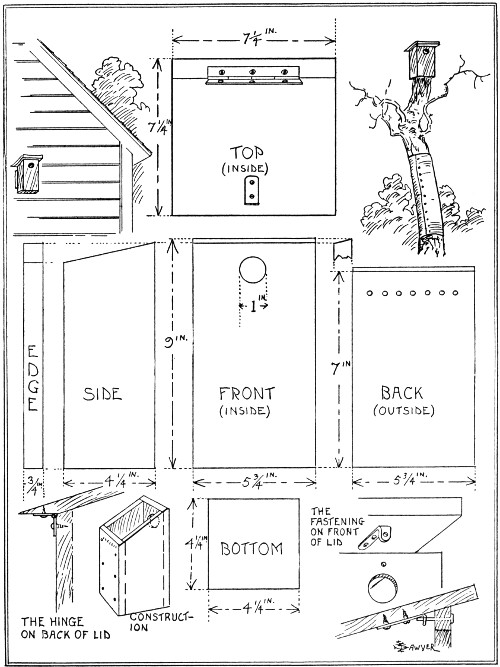
Plate III. A Simple and Effective Box Bird House
For House Wrens, Bluebirds, and Tree Swallows, especially. For these the house may be of weathered fence-boards or even, if need be, of new lumber stained some dull tint. For chickadees, nuthatches, and Tufted Titmice, rough “slab” material is preferable. Dimensions given are for the House Wren. For other species, see Table I.
TOP (INSIDE): 7¼IN. × 7¼IN.
EDGE: ¾IN. × 9IN.
SIDE: × 4¼IN.
FRONT (INSIDE): × 5¾IN.
{HOLE DIAMETER}: ¾IN.
BACK (OUTSIDE): 7IN. × 5¾IN.
BOTTOM: 4¼IN. × 4¼IN.
CONSTRUCTION
THE FASTENING ON FRONT OF LID
THE HINGE ON BACK OF LID
18