Introductory material (continued 2)
Reading edition
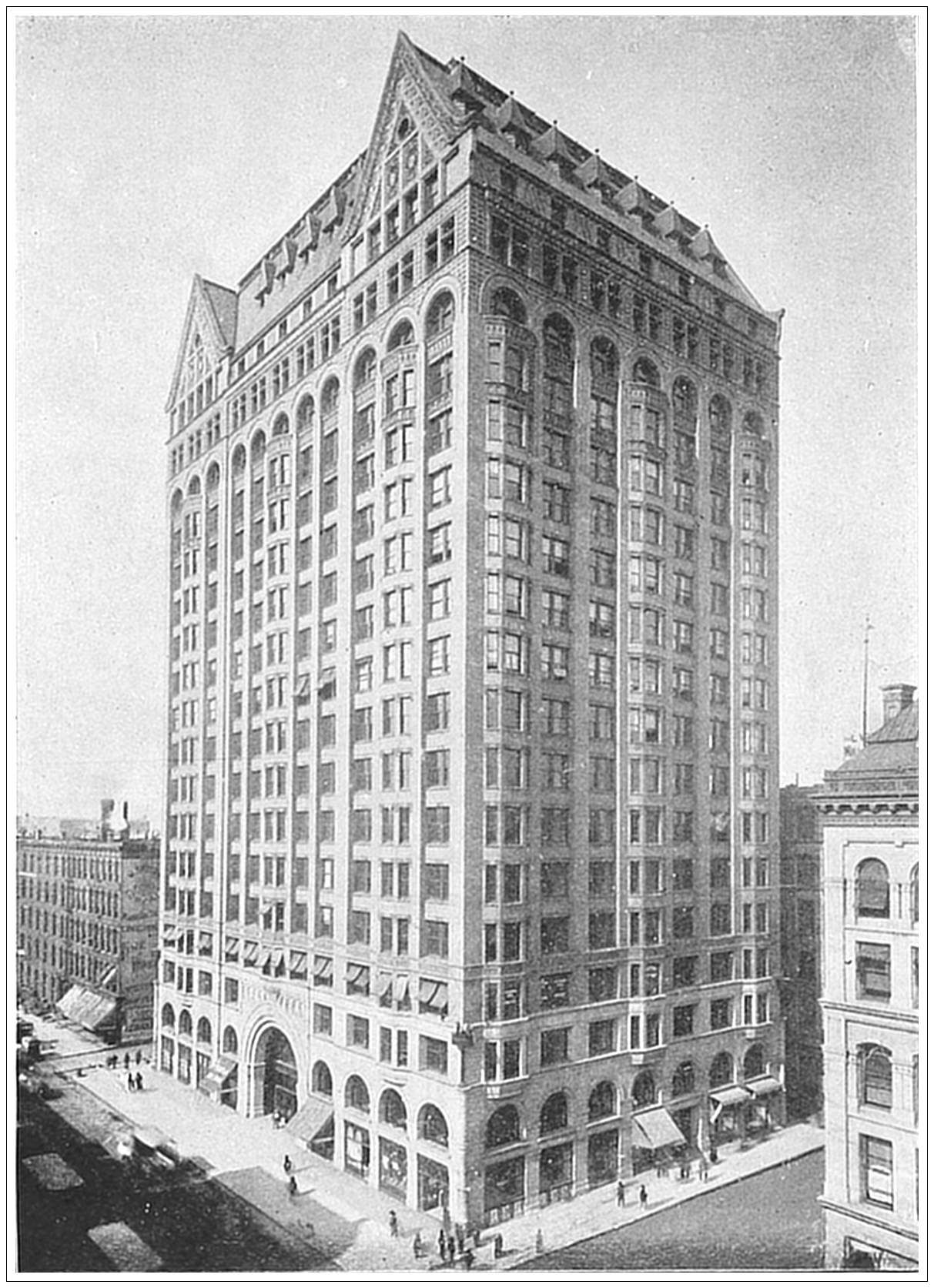
MASONIC TEMPLE, CHICAGO. For a long time it was held that Philadelphia had the finest Masonic Temple in the world. Now that honor belongs to Chicago. But it has only belonged to it since 1890, when the gorgeous new building was begun at the corner of State and Randolph Streets. The site measures one hundred and seventy feet on State Street and by one hundred and fourteen on Randolph. Every inch of this space is covered by the building, whose twenty stories tower up to the height of two hundred and sixty-five feet. It rests on cement and iron foundations, and its superstructure is of steel. The first three stories are faced with red granite from Wisconsin, the remainder with gray brick that is indistinguishable from the granite. An immense granite arch in the centre of the State Street front forms the entrance, and opens into an interior court, faced from bottom to top with different colored marble. The first eleven stories are fitted up for shops, from the eleventh to the sixteenth inclusive are business offices, while above the sixteenth floor everything is devoted to Masonry.
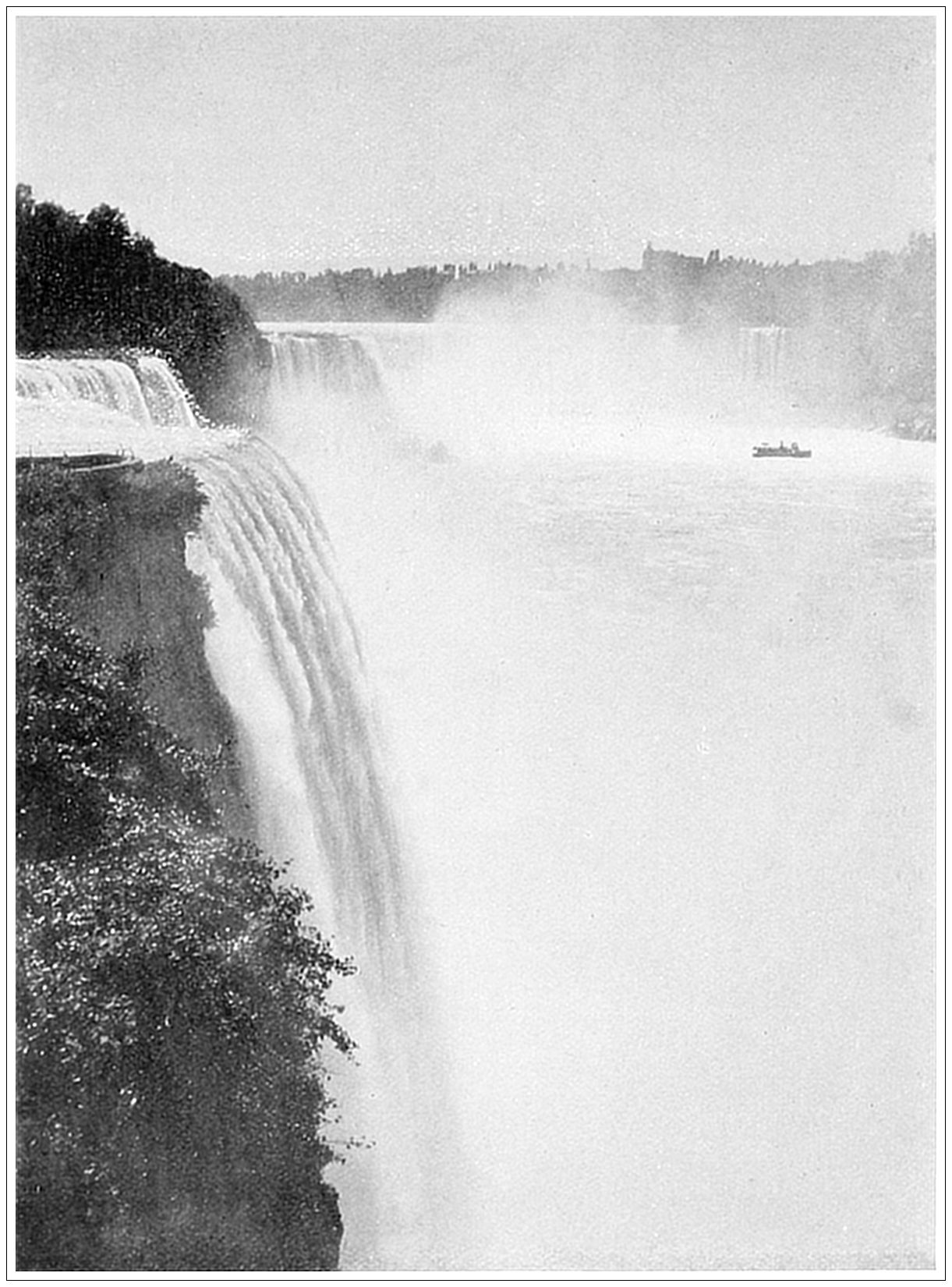
NIAGARA FALLS. The most stupendous cataract in the world is that formed in the Niagara River, four miles below Grand Island. Here the current begins to grow narrow and develops into rapids, which continue for about a mile, with a descent of fifty-two feet, until the river plunges over a mighty chasm. Goat Island, at the very verge of the cataract, divides it into two sheets of water—the Horse-shoe, or Canadian fall, with a descent of one hundred and fifty-eight feet, and a width of about twenty-six hundred and forty; and the American fall, one hundred and sixty-two to one hundred and sixty-nine feet deep, and about one thousand wide. The volume of water thus precipitated is about fifteen million cubic feet a minute. Nearly nine-tenths of this passes over the Canadian fall. For some distance below the Falls there is still water, the mass which has hurled itself into the abyss sinking and only reappearing two miles below, where the whirlpool rapids begin.
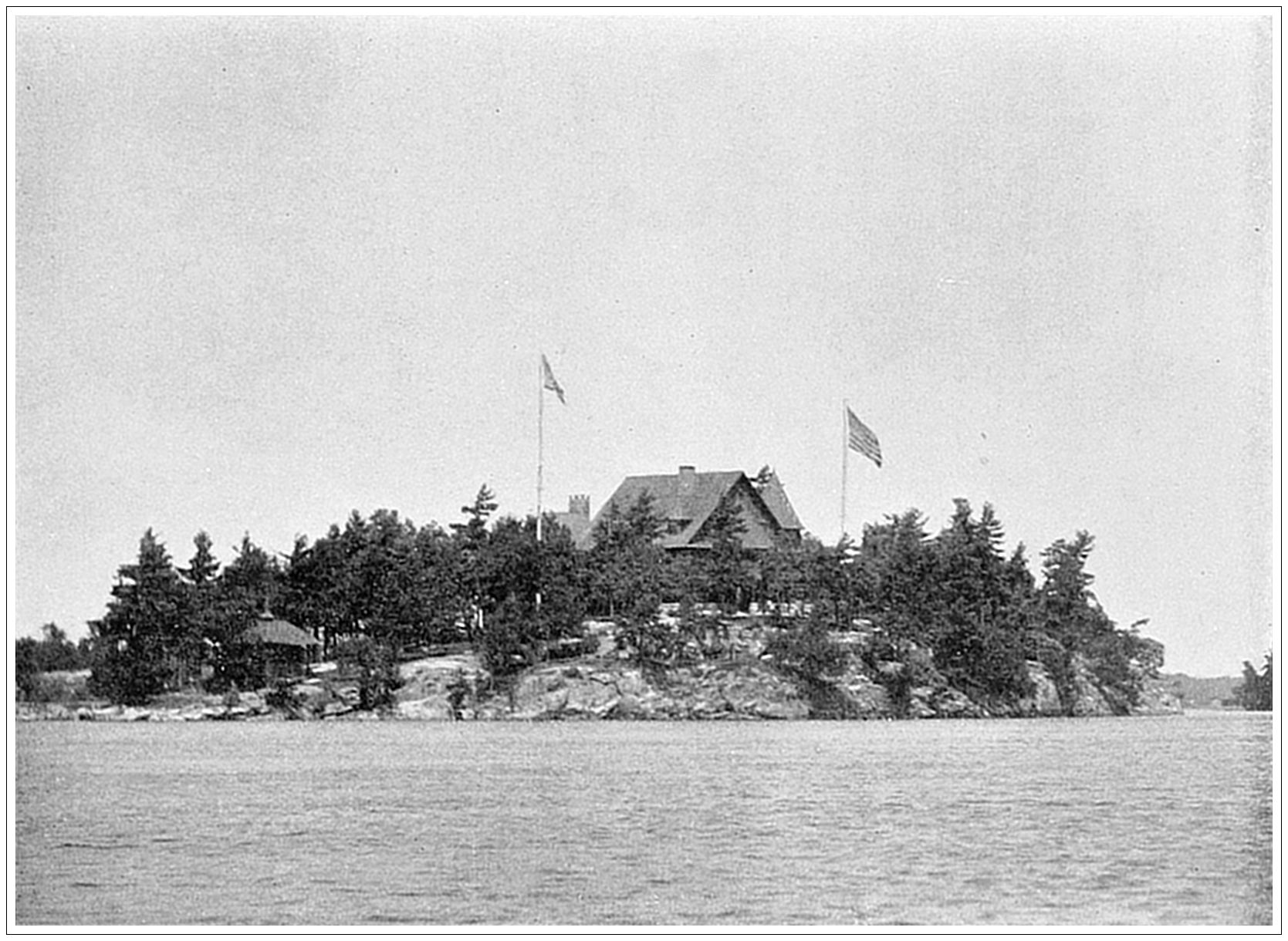
THE THOUSAND ISLANDS, CANADA. This, the largest group of river islands in the world, lies in an expansion of the River St. Lawrence at its emergence from Lake Ontario. New York State is on one side and the Province of Ontario, Canada, on the other. The name is not an exaggeration. On the contrary, the group consists of about fifteen hundred rocky islands, remarkable for their great and varied beauty. They are of all shapes and sizes, some just peeping above the surface of the waters, others extending several miles in length, some wild and bare and rocky, others covered with the most luxuriant foliage. Hence, a trip through the St. Lawrence River at this point is full of the most bewildering yet enchanting surprises.
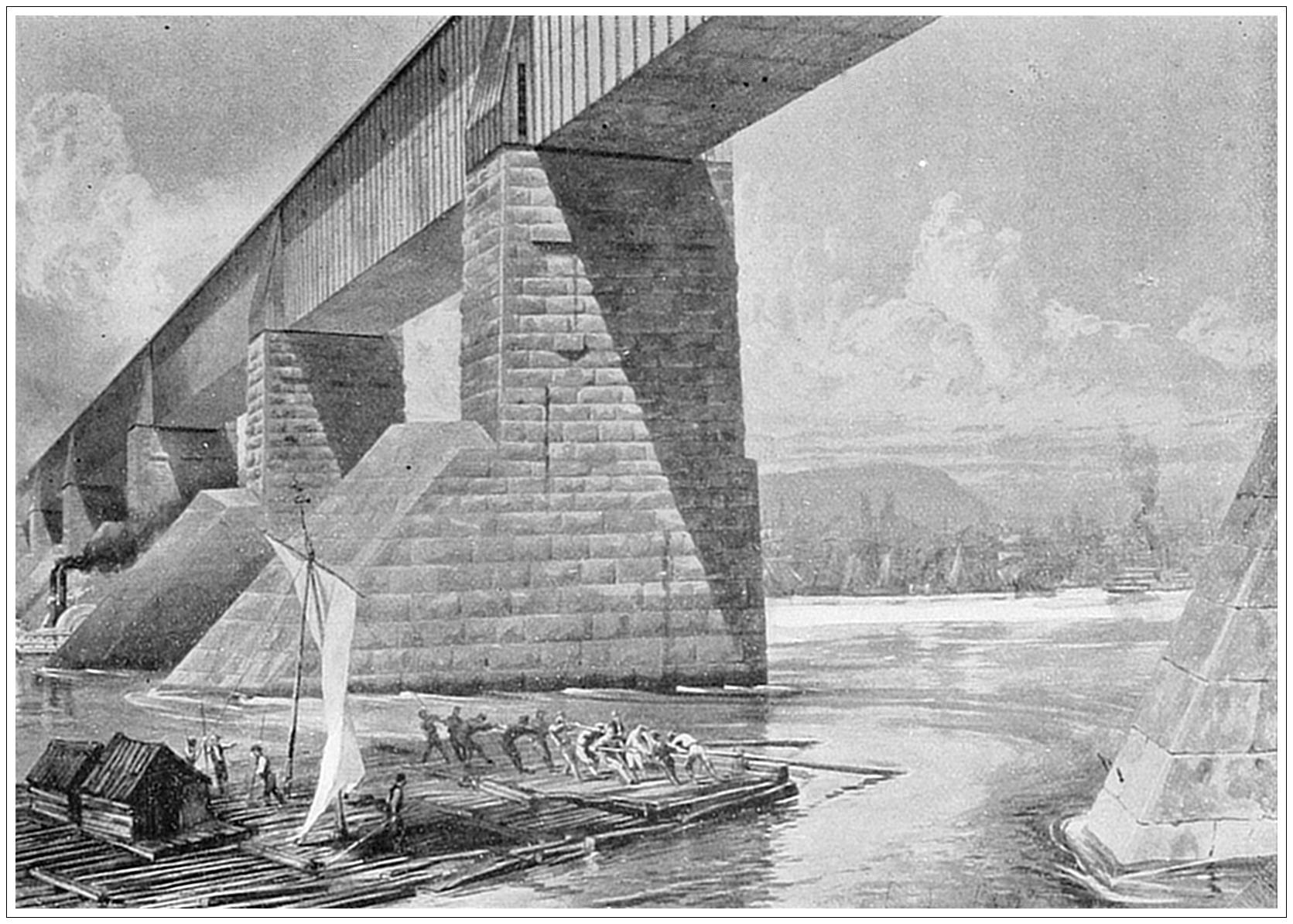
VICTORIA BRIDGE, MONTREAL, CANADA. Montreal is situated on the south side of the island of the same name, at the confluence of the Ottawa and the St. Lawrence Rivers. To connect it with the mainland the Victoria Bridge was thrown across the St. Lawrence. Work was begun in 1854. In 1860 the bridge was formally opened by the Prince of Wales during his tour through Canada and the United States. This is one of the greatest triumphs of engineering and architectural skill. The total length is nearly two miles, or, to be exact, nine thousand one hundred and ninety-four feet. It rests upon twenty-four piers and two abutments of solid masonry. The central span is three hundred and thirty feet long.
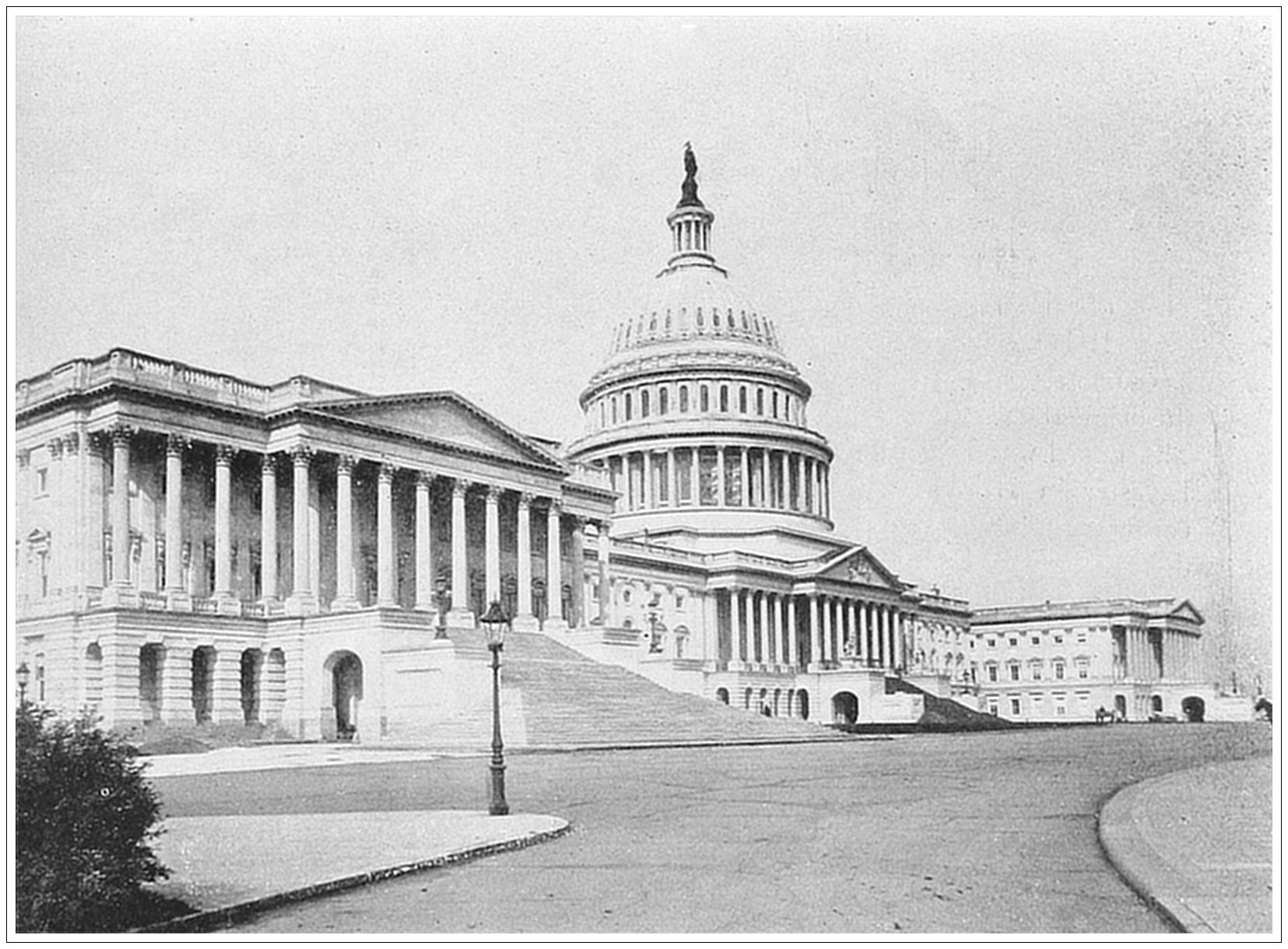
THE CAPITOL, WASHINGTON, D. C. A stately and magnificent building devoted to both branches of Congress—the Senate and the House of Representatives—as well as to the United States Supreme Court and the Library of Congress. It stands upon an eminence commanding a beautiful view of the city, and itself forms the most impressive feature in the landscape. The centre building of freestone is flanked by two wings, mainly of marble, and crowned by an iron dome, painted white. From the ground to the top of the nineteen-foot Statue of Liberty, which surmounts the dome, is three hundred and seven and a half feet; the diameter of the dome is one hundred and thirty-five and a half feet. Thus only four domes in Europe can surpass it: St. Peter’s at Rome, St. Paul’s in London, St. Isaac’s in St. Petersburg, and the Invalides in Paris. The building covers an area of about three and a half acres. Its total cost has been over $13,000,000. The corner-stone was laid by Washington in 1792. The marble extensions were begun in 1851.
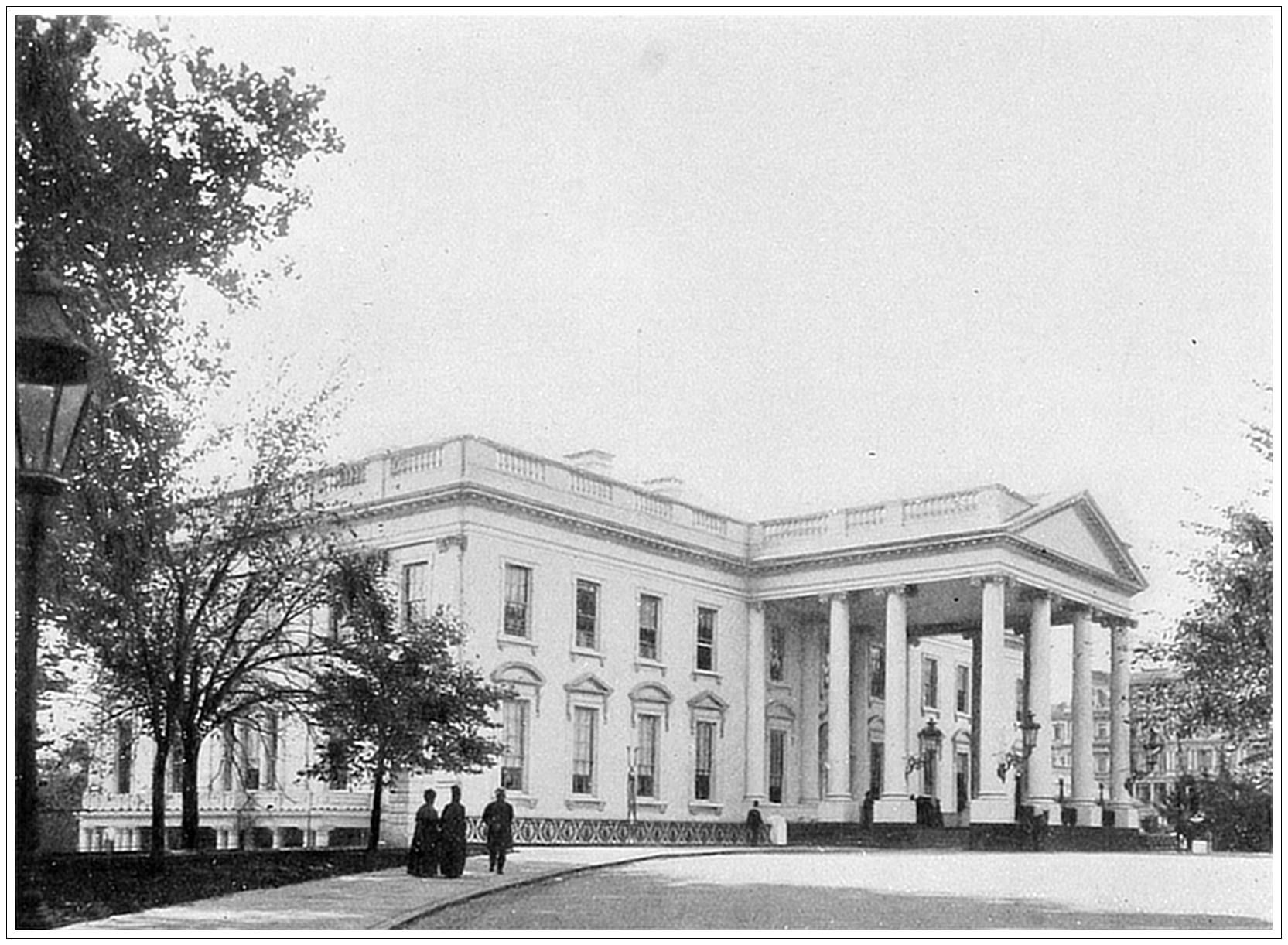
THE WHITE HOUSE, WASHINGTON, D. C. As the official residence of the President of the United States, this mansion has a unique interest. It is not in itself, however, a pretentious or imposing structure. Yet it has some elegance in its very democratic simplicity. Built of freestone, like the original Capitol, and painted white like that, its color has given it its name. The model which the architect had in view was the Palace of the Duke of Leinster in London, and he has followed his prototype very closely. The corner-stone was laid in 1792; the building was first occupied by President John Adams in 1800; it was burned by the British in 1814, and restored and re-occupied in 1818. Since that time there have been staccato clamors for a more magnificent entourage for the chief executive officer of the United States, but nothing further has been accomplished.
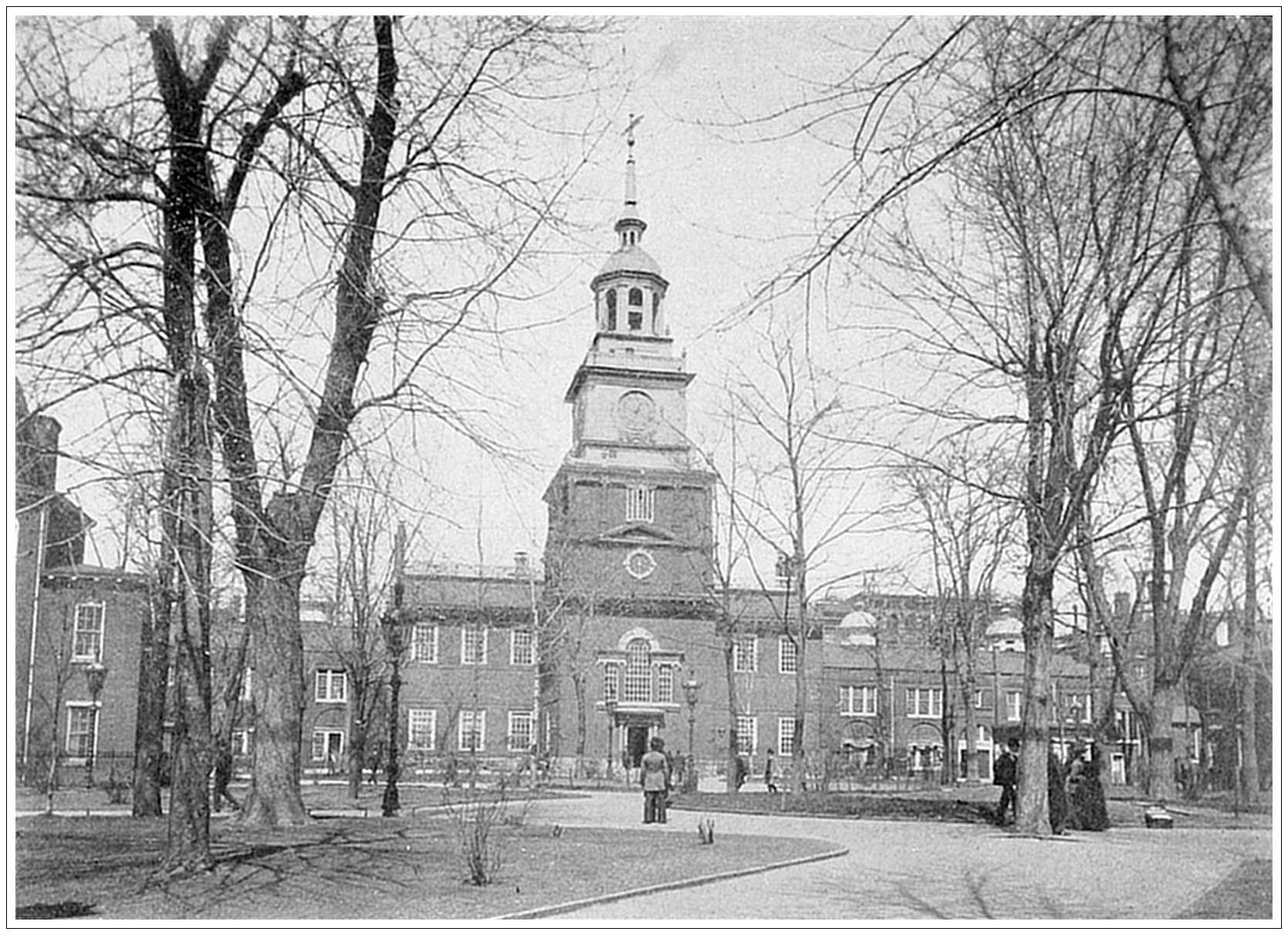
INDEPENDENCE HALL, PHILADELPHIA. This plain, but substantial brick building, which stands on Chestnut Street, Philadelphia, is ever memorable as the birthplace of the American republic. Here the General Assembly of Pennsylvania gave way to the Continental Congress. Here George Washington was elected commander of the American forces (June, 1775). And here, on July 4th, 1776, the Declaration of Independence was adopted by Congress. Four days later it was read from before the building to an excited and exultant multitude. The halls have been restored as far as possible to their original condition; the east room, where the Declaration was signed, is ornamented with portraits of the signers and the west room is a museum of revolutionary and other relics. The famous Liberty Bell, which was rung as a signal to the people that the Declaration had been adopted, is now suspended under the tower in full view of the public. The building dates from 1729–34.
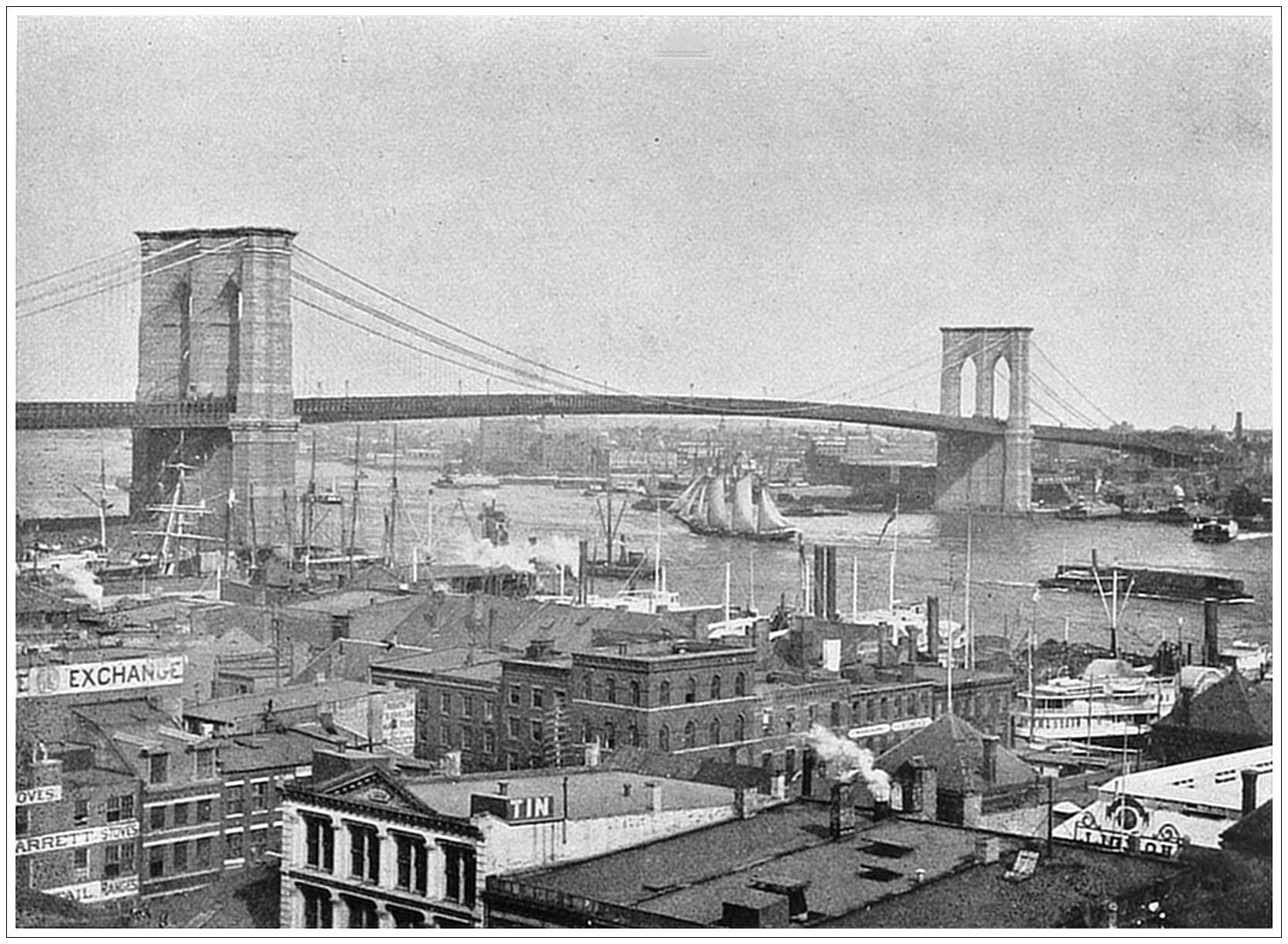
THE EAST RIVER BRIDGE, between New York City and Brooklyn, more familiarly known as the Brooklyn Bridge, is a massive suspension bridge, the largest in the world, which connects New York with Brooklyn. Its colossal towers and ponderous cables loom up conspicuously before the stranger who approaches New York from the riverside. Begun in 1870, it was opened for traffic May 24th, 1883, at a total cost of $15,000,000. The whole length of the bridge is five thousand nine hundred and eighty-nine feet. From high water mark to the floor of the bridge is one hundred and thirty-five feet. The central span (itself measuring one thousand five hundred and ninety-five and a half feet) is suspended to four cables of steel wire, each fifteen and three-quarter inches in diameter. The width of the structure is eighty-five feet, which includes a promenade for foot passengers, two roadways for vehicles, and two railway tracks on which run passenger cars propelled by a stationary engine from the Brooklyn side.