List of Illustrations
Reading edition
A ceremonial act of the kula Frontispiece
Plate Facing page
I The ethnographer’s tent on the beach of Nu’agasi 6
II The chief’s lisiga (personal hut) in Omarakana 6
III Street of Kasana’i (in Kiriwina, Trobriand Island) 7
IV Scene in Yourawotu (Trobriands) 7
V Scenes on the beach of Silosilo (Southern Massim district) 33
VI Village scenes during a so’i feast 37
VII In the Amphletts 46
VIII Group of natives in the village of Tukwa’ukwa 48
IX Men of rank from Kiriwina 49
X Fishermen from Teyava 49
XI A typical nakubukwabuya (unmarried woman) 52
XII Boyowan girls 53
XIII Kaydebu dance 56
XIV Dancers in full decoration 57
XV A family group 72
XVI Armshells 80
XVII Two men wearing armshells 81
XVIII Two necklaces, made of red spondylus discs 88
XIX Two women adorned with necklaces 89
XX A Kula gathering on the beach of Sinaketa 98
XXI A masawa canoe 106
XXII Putting a canoe into its hangar 106
XXIII Canoe under sail 107
XXIV The fishing canoe (kalipoulo) 112
XXV The dug-out in the village 124
XXVI Carving a tabuyo 125
XXVII Construction of a waga 138
XXVIII Sail making 139
XXIX Rolls of dried pandanus leaf 139
XXX Launching of a canoe 148
XXXI The tasasoria on the beach of Kaulukuba 148
XXXII A chief’s yam-house in Kasana’i 149
XXXIII Filling a yam-house in Yalumugwa 149
XXIV Display of pigs and yams at a distribution (sagali) 170
XXXV Communal cooking of mona (taro dumplings) 170
XXXVI Scene in the wasi (ceremonial exchange of vegetables for fish) 171
XXXVII Vava, direct barter of vegetables for fish 171
XXXVIII Koutau’ya, one of the chiefs of Sinaketa 196
XXXIX A loaded canoe 197
XL A waga sailing on a Kula expedition 224
XLI The rigging of a canoe 225
XLII Scenery in the Amphletts 268
XLIII Landing in the main village of Gumasila 269
XLIV Technology of pot-making (I) 284
XLV Technology of pot-making (II) 285
XLVI Fine specimens of Amphlett pots 288
XLVII A canoe in Gumasila loading pots 289
XLVIII A Kula fleet halting to perform the final rites of mwasila 334
XLIX The beauty magic of the mwasila 335
L (A) Working the kaloma shell (I) 370
L (B) working the kaloma shell (II) 371
LI Working the kaloma shell (III) 372
LII Working the kaloma shell (IV) 373
LIII On the beach of Nabwageta 376
LIV The Dobuan canoes pulled up on Sinaketa beach 388
LV Some canoes moored on the shallow lagoon near the shore 388
LVI Dobuan visitors in Sinaketa 389
LVII A magical spell associated with pregnancy 406
LVIII A rite of war magic 406
LIX A rite of garden magic 407
LX Armshells brought from Kitava 470
LXI Bringing in a soulava 471
LXII Offering the soulava 471
LXIII Ceremonial destruction during a so’i feast 486
LXIV Nagega canoe 496
LXV A corpse covered with valuables 512
Maps
I Eastern New Guinea xxxiii
II Racial distribution in Eastern New Guinea 26
III The Kula district 30
IV The Trobriand archipelago 50
V The Kula ring 82
Tables
I Chronological list of Kula events witnessed by the writer 16
II Time-table of the uvalaku expedition, Dobu to Sinaketa, 1918 381
III Table of Kula magic and of the corresponding activities 415–418
Figures in text
I Diagram of canoe stability and construction 109
II Diagrammatic sections of canoes 111
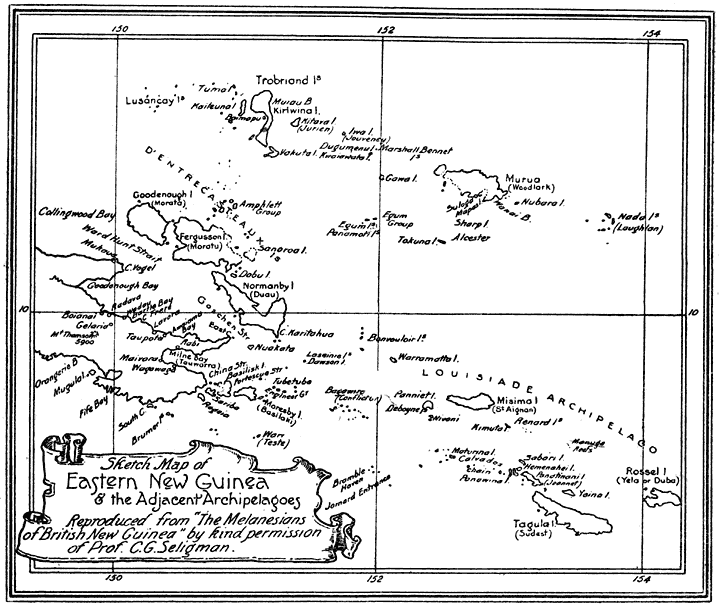
Map I—The native names and their spelling on this and the following map conform to the traditional nomenclature to be found on charts and old maps. Maps III–V show, the native names as ascertained by myself and phonetically spelled.