Index
Reading edition
PAGE
Anæsthesia, Dawn of 7
Anæsthesia, Chloroform for 69
Anæsthesia in Romance 23
Anæsthesia in Roman Times 17
Anæsthesia in the Antient Poets 25
Anæsthesia, Local, in Antient Times 27
Anæsthetic, an Antient Chinese 18
Anæsthetics, Early Egyptian 7
Anæsthetic, an Early Irish 19
Anæsthetic, Freezing as an 27
Anæsthetic, Mesmerism as an 34
Anæsthetics used by the Hindus 18
Anæsthetics, Chemical Era of 30
Anæsthetics in the Middle Ages 19
Anæsthetics, Local 67
Anæsthetics of Antient Greece 11
Carbon Tetrachloride 67
Chloric Ether 58
Chloroform, Discovery of 58
Chronology 73
Cocaine 68
Colton, Dr. G. Q. 41
Davy, Sir Humphry 33
Ether Epoch 44
Ether, Sulphuric 33
Ethyl Bromide 67
Eucaine 68
Faraday, Michael 33
Holmes, Dr. Oliver Wendell 52
Hypnotism 37
Indian Hemp 9
Jackson, Charles T. 50
“Letheon” 52
Lycoperdon 19
Mandragora 11
Methyl Chloride 66
Morphine 29
Morton, W. T. G. 54
Nitrous Oxide Era 41
Novocaine 69
Opium 27
Oxygen 30
Priestley, Joseph 32
Simpson, Sir James Young 63
Stovaine 69
Sulphuric Ether 33
Wells, Horace 42
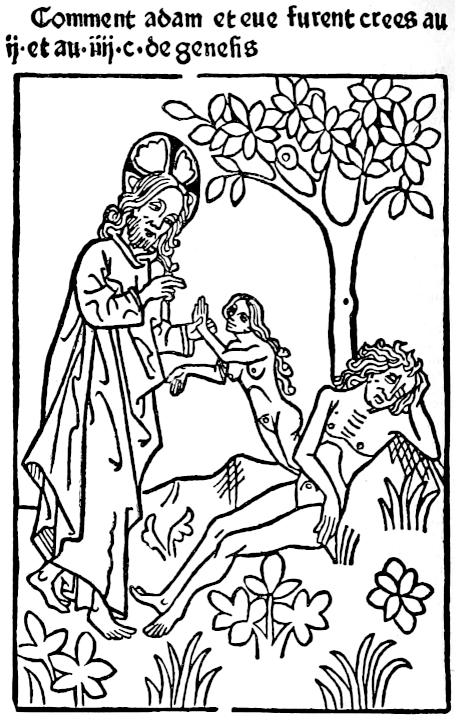
From a woodcut of the XV century
“And the Lord God caused a deep sleep to fall upon Adam, and he slept: and He took one of his ribs, and closed up the flesh instead thereof.” Genesis, chap. ii, verse 21
Anæsthetics, Antient and Modern An Historical Sketch of Anæsthesia
“So God empal’d our Grandsire’s (Adam’s) lively look, Through all his bones a deadly chilness strook, Siel’d up his sparkling eyes with Iron bands, Led down his feet (almost) to Lethe’s sands; In briefe so numm’d his Soule’s and Bodie’s sense, That (without pain) opening his side from thence He took a rib, which rarely He refin’d, And thereof made the mother of Mankind.”
The Dawn of Anæsthesia
Thus a sixteenth century poet quaintly describes, and draws an impression of, from sacred records, the first operation tempered by anæsthesia. It has been claimed that in the “deep sleep” that the Creator “caused to fall upon Adam” is the germ of the idea of anæsthesia that has come down to us from the dim ages of the past. It is probable that primitive man employed digital compression of the carotid arteries to produce anæsthesia, as the aboriginal inhabitants of some countries do to-day. According to Caspar Hoffmann, this method was practised by the antient Assyrians before performing the operation of circumcision. Curiously enough the literal translation of the Greek and Russian terms for the carotid is “the artery of sleep.”
Early Egyptian anæsthetics
The antient Egyptians are believed to have used Indian hemp and the juice of the poppy to cause a patient to become drowsy before a surgical operation. Pliny relates that they applied to painful wounds a species of rock brought from Memphis, powdered, and moistened with sour wine, which is the first record we have of local anæsthesia with carbonic acid gas.
The “Wine of the Condemned”
The “sorrow-easing drug” which, as we are told in the fourth book of the “Odyssey,” was given by Helen to Ulysses and his comrades, probably consisted of poppy juice and Indian hemp. It is indeed actually stated that she learned the composition from Polydamnia, the wife of Thone, in Egypt. It is possible also that the “wine of the condemned,” mentioned by the prophet Amos, may have been a preparation of these drugs.
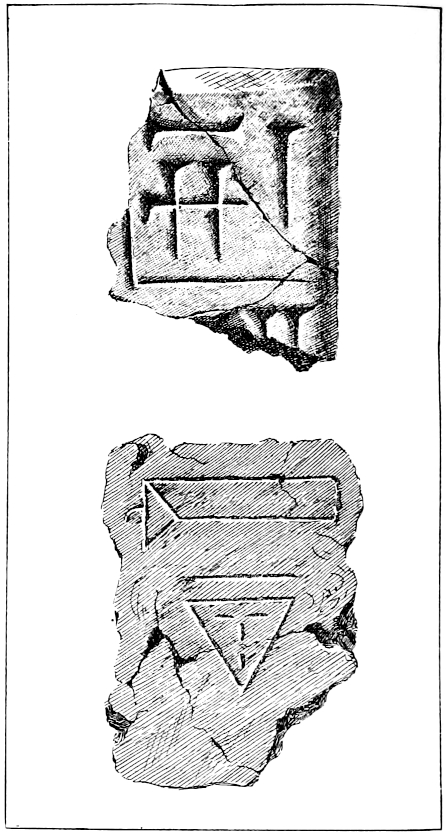
Mandragora (the Phallus of the Field)
Inscribed in cuneiform characters and in Egyptian hieroglyphics ca. 3000 B.C.
There are several passages in the Talmud which point to the fact that the practice of easing the pain of torture and death, by stupefying the sufferers, was a very antient one.
Thus it is stated: “If a man is led forth to death, he is given a cup of spiced wine to drink, whereby his soul is wrapped in night”; and again, “Give a stupefying drink to him that loseth his life, and wine to those that carry bitterness in their heart.”
In connection with crucifixion, which was a common punishment for malefactors among the Jews before the Christian era, with the sanction of the Sanhedrin, the women were wont to ease the terrible death agony of the sufferers by giving them something in the nature of a “wine of the condemned” upon a sponge. It is probable that the “wine mingled with myrrh” which, according to St. Mark, was offered to Christ before nailing Him upon the Cross, was indeed a narcotic draught, given with the object of lessening His sensibility to the agony.
The earliest reference to anæsthesia by inhalation is contained in the works of Herodotus, who states that the Scythians were accustomed to produce intoxication by inhaling the vapour of a certain kind of hemp, which they threw upon the fire or upon stones heated for the purpose. This was probably Cannabis indica, or Indian hemp, which was employed by Oriental races as an anæsthetic from very early times.
Anodyne poultices to deaden pain
At the siege of Troy the Greek army surgeons employed anodyne and astringent poultices to assuage the pain of the wounded. Thus Patroclus, when his dagger from the thigh of Euryphylus—
Cut out the biting shaft; and from the wound With tepid water cleansed the clotted blood; Then, pounded in his hands, the root applied Astringent, anodyne, which all his pain Allay’d; the wound was dried, and stanched the blood. Iliad.
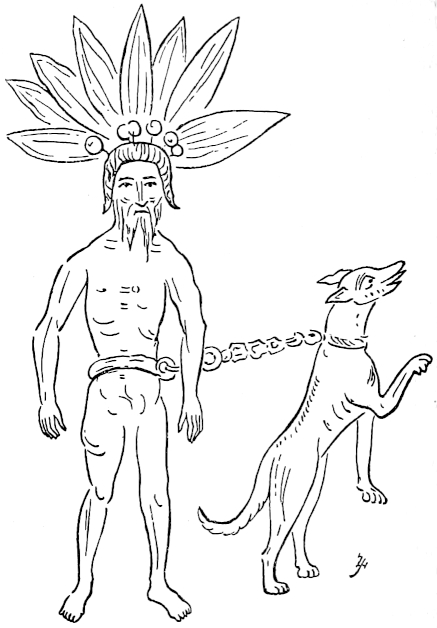
Gathering Mandragora
From an MS. of the XII century
From this interesting description of the manner in which the early Greek surgeons treated a wound, it is evident that, although they had no actual knowledge of anæsthetics, they had found from experience the advantage of cleansing the wound and applying an astringent and anodyne dressing to deaden sensibility to pain, which probably, unknown to them, also possessed antiseptic qualities.