The War for the Union Takes on a New Purpose
Reading edition
After Antietam there was no serious threat of foreign recognition or intervention on behalf of the Confederacy. And the repulse inflicted on Lee’s Army of Northern Virginia gave Abraham Lincoln the opportunity he had sought: On September 22—just 5 days after the battle—the President issued the preliminary Emancipation Proclamation. It declared that upon the first day of January next all slaves within any State or district then in rebellion against the United States “... shall be then, thenceforward, and forever free.”
48
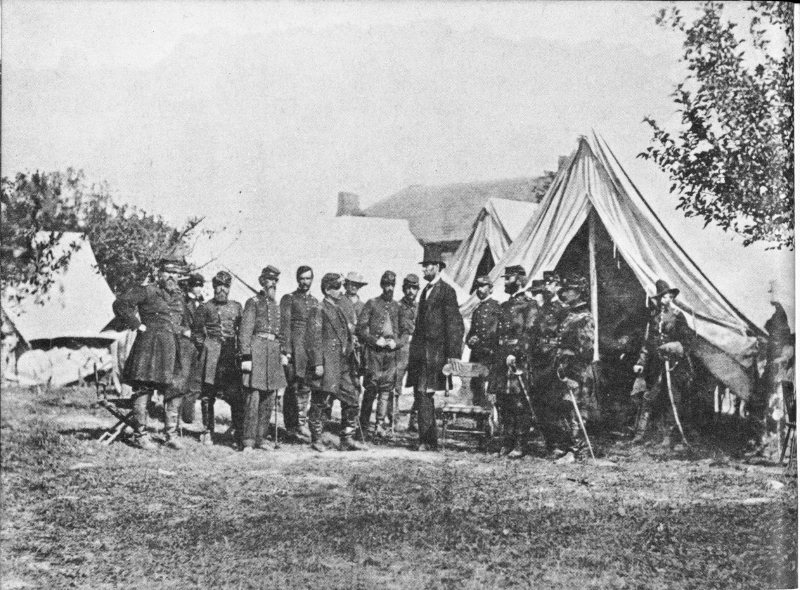
Lincoln visits McClellan and his staff after the battle. McClellan is the fourth man to the left from the President. Courtesy, National Archives.
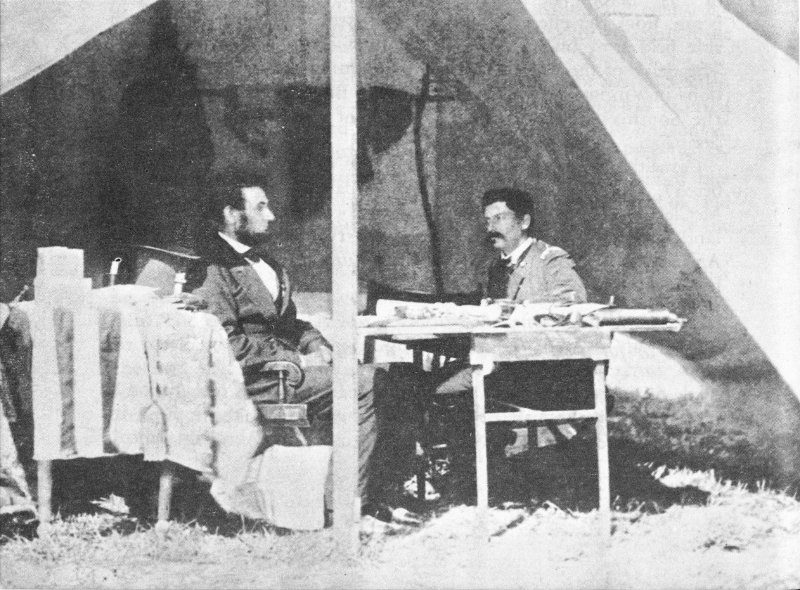
Lincoln and McClellan confer on the field of Antietam.
49
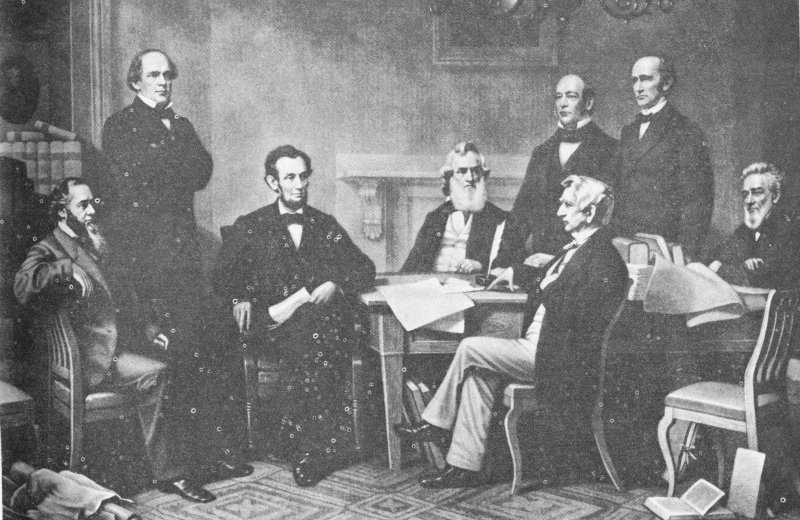
The President reads the Emancipation Proclamation to his cabinet. From an engraving based on the painting by Francis Bicknell Carpenter. Courtesy, Library of Congress.
With the formal Emancipation Proclamation of January 1, 1863, the war took on new purpose. In the North, and in many foreign lands, the cause of American Union had become one with that of human liberty.