ANNALS OF THE BODLEIAN LIBRARY. (continued 6)
Reading edition
The Convocation for the election of Dr. Bandinel's successor was held on November 6, when, with unanimous consent, the Rev. H. O. Coxe, M.A., Sub-librarian since 1837, was appointed to the office.
A most seasonable and valuable enlargement of the Library was effected, by an addition which henceforth marks an æra in our Annals. On June 12, Convocation thankfully accepted an offer from the Radcliffe Trustees (which had been first mooted by Dr. Acland in 1856), of the use, as a Bodleian reading-room, of the noble building hitherto under their control, the existing contents of which had (for the most part) been removed to the New Museum. Dr. Radcliffe's own original intention had been the building an additional wing to the Bodleian rather than the erecting a library of his own; and subsequently the idea had been entertained of devoting his structure to the exclusive reception of manuscripts[359]. Its appropriation, therefore, to the Bodleian upon the removal of the library of medicine and natural history, was, in some sort, a return to the founder's first design. And the return came most seasonably, when the old walls of the Schools' quadrangle were well-nigh bursting from a plethora of books, and still the cry 'They come' daily caused fresh bewilderment as to whither those that came should go. It was resolved that the new reading-room thus opportunely gained should be appropriated to new books (arranged under a system of classification) and magazines; that it should be called the 'Camera Radcliviana;' and that it should be open from ten A.M. to ten P.M., thus affording the facilities for evening use of the Bodleian which had often been desired for those who were occupied in college work during the day. It was at the close of the year 1861 that the building began to be filled by its new occupants, and on Jan. 27, 1862, (the necessary alterations and preparations having been completed in the short space of the Christmas vacation) it was announced by the Vice-Chancellor to be open as a Reading Room in connection with the Bodleian. A grant of £200 per annum towards the expense of management was made by Convocation on Nov. 28, 1861, which was increased to £300 in 1865, the remainder of the charge, consisting of the incidental expenses, being defrayed from the general funds of the Library.
A large additional space for the reception of books was gained by the closing up the open ground-floor (through which was the former entrance to the reading-room), converting the spaces between the outer arches into windows, and lining the walls within with book-shelves, thus affording accommodation, according to the present reckoning, for about 50,000 volumes. The whole building may probably be reckoned as capable of containing altogether about 75,000 volumes[360].
The terms on which the Radcliffe Trustees made their offer, and which were accepted by the University, were these:—1. That the Radcliffe Building should be a reading-room to the Bodleian, or be used for any other purpose of the Bodleian Library. 2. That it should remain the property of the Trustees, being esteemed a loan to the University. 3. That no alteration should be made in the building without consent of the Trustees or a Representative approved by them. 4. That the expense of maintaining the building should be borne by the Trustees.
The transfer of this magnificent room afforded a rare opportunity for developing the usefulness of the Library to which it is now attached, and all who frequent it will acknowledge that that opportunity has been well and worthily improved under the direction of the present Librarian.
On Oct. 25, leave was granted by Convocation for the lending two Laud Manuscripts, 561 and 563, being copies of the Historia Hierosoylmitana, by Albert of Aix, to the French Government.
At the sale of the library of Dr. Wellesley, Principal of New Inn Hall, a copy of Boccaccio's Corbaccio, 1569, was purchased, on account of its possessing the autograph of Sir Thomas Bodley, to whom it had been given by the editor, J. Corbinelli.
A rare Salisbury Primer, printed at Rouen by Rob. Valentin in 1556, was purchased for £22. Its title affords an amusing specimen of a foreigner's mode of printing English; it runs thus—This prymer of Salisbury vse is se tout along with houtonyser chyng, with many prayers & goodly pyctures. It is intended hereby to be conveyed to the English reader that, without any searching, he will find his prayers and psalms set out in their proper order.
A.D. 1861.
One hundred and four volumes of Tamil MSS. were purchased; as well as four Samaritan MSS. of the Pentateuch, of the twelfth century, which had been brought to England by a native of Samaria.
The Syriac MSS. of the well-known Orientalist, Dr. Bernstein, were purchased by the Delegates of the Press, with a view to assisting in the great work of a Syriac Lexicon, upon which Mr. (now Dr.) Payne Smith was (and still is) engaged.
The printing of the Annual Catalogues of purchases was discontinued, after the issue of the Catalogue for this year. Written registers are now kept in the Library of all the books bought in the course of each year; and only a list of benefactors, with the statement of accounts, is annually printed for circulation in the University and amongst donors.
A.D. 1862.
A large collection of British Essayists and Periodicals was presented by the late Rev. F. W. Hope, D.C.L., the munificent benefactor to the University Museum, the founder of the Professorship of Zoology, and the donor also of a large collection of engraved portraits and other prints[361]. The collection was one which had been formed by John Thomas Hope, Esq., the donor's father. It contains some 760 specimens of its class of literature, belonging chiefly to the eighteenth century. Special thanks for the gift were returned by Convocation, on Feb. 20. A catalogue, which had been drawn up for Mr. Hope by Mr. Jacob Henry Burn, containing notices in detail of the various publications, was printed at the University Press, in 1865, in an octavo volume.
A Hebrew MS. of the Pentateuch, probably of the thirteenth century, was bought for £32 10s. Some tracts relating to the period of the Great Rebellion were bought at the sale of Dr. Bandinel's extensive Caroline collection.
On March 4, the Curators accepted the gift of a bust of Rev. F. W. Robertson, late incumbent of Trinity Chapel, Brighton, which had been purchased by subscription. It is now placed in the Picture Gallery.
A large number of purchase-duplicates, which had accumulated during the course of many years, were removed from the Library and sold by auction, in London, by Messrs. Sotheby and Wilkinson, in May. Among them were some of great rarity. The sale, which lasted five days, produced £766 2s. 6d.; of which £110 5s. were given for a specimen of the St. Alban's press, the Rhetorica Nova of Gul. de Saona, printed in 1489. A second and smaller sale, containing many English works of the sixteenth and seventeenth centuries, took place on April 12, 1865, at which a copy of Chettle's Kind-Harts Dreame (1593), produced £101, and Decker's Guls Horne-Booke, 1609, £81. The proceeds of the whole sale amounted to £750 18s. 6d.
The Rev. Alfred Hackman, M.A., Chaplain and Precentor of Ch. Ch., and P. C. of St. Paul's, Oxford, and an Assistant in the Library of twenty-five years' standing, was approved by Convocation, on April 12, as Mr. Coxe's successor in the Sub-librarianship; after a discussion, which led to the abrogation by Convocation, in February, of a provision in the Statutes forbidding the holding cure of souls in connection with that office or that of Head-librarian without special licence from the Curators.
A.D. 1863.
Among the purchases made in this year were the following: Card. Ximenes' rare treatise entitled Crestia, printed at Valentia in 1483 (£25); Court-Rolls of Tamworth, Solihull, and other neighbouring places, obtained from Mr. Halliwell; and a collection, in three thick folio volumes, of placards, hand-bills, &c., relating to the town of Coventry, formed by Mr. W. Reader, a printer in that place.
Capt. Montagu Montagu, R.N., who died at Bath, on July 3 in this year, bequeathed a collection of about 700 volumes, in various branches of literature, which was received at the Library about the beginning of 1864. There are about ninety editions and versions of the Psalter, with works on Psalmody, including a metrical version by Capt. Montagu himself; a large number of editions of Anacreon, Horace, Juvenal, Phædrus, Petrarch, Boileau, and Fontaine's Fables; a few MSS. of Juvenal, Petrarch, &c. with a large series of autograph letters, chiefly obtained at Upcott's sale. There are, besides, a number of topographical and biographical works illustrated, more Sutherlandico, with additional engravings, together with many parcels of separate prints arranged for the same purpose. One item of particular interest which accompanied the collection is a small sketch of Napoleon I, in profile, admirably executed by the well-known Italian artist, Giuseppe Longhi. It now hangs, framed and glazed, in the Library, together with a letter from Longhi himself, in French, dated at Milan, June 4, 1828, in which he narrates the occasion on which it was taken. He attended, in 1801, at Lyons, as a member of the 'Consulte Cisàlpine,' for the settling the affairs of the Republic of Italy, under the presidency of the First Consul. It happened that during the delivery of a long harangue, full of tedious flattery, Napoleon sat vis-à-vis with the orator; and Longhi saw that an opportunity for exercising the cunning of his pencil had come. The light, which streamed in through the great window of the Church (!) where they were assembled, brought out the profile very clearly; there was little fear of being cut short by the speaker's suddenly ceasing his declamation, or of being interrupted by movement on the part of the unconscious subject of the operation, for the latter sat immersed in thought upon matters far away, while regarding the speaker with a pensive air; and so, while Napoleon sat pondering, Longhi sat sketching. And everybody, he declares with a pardonable pride, at Lyons and Paris, pronounced the likeness to be excellent. A small bust of Napoleon, now placed in the great window, came to the Library at the same time. A catalogue of Capt. Montagu's books, comprising forty octavo pages, was printed and circulated with the Annual Statement for 1864.
A.D. 1864.
The chief acquisitions in manuscript books were various Hebrew volumes (for £159), and a series of letters to Malone from Dr. Johnson, Mrs. Siddons, and others; and in printed books, a perfect copy of Cromwell's Great Bible, printed by Grafton in 1539, which was bought of Mr. Fry, the well-known collector, for £100.
A sixth part of the general catalogue of MSS. was issued, containing the Syriac, Carshunic and Mendean MSS., in number 205, which had been drawn up by Rev. R. Payne Smith, M.A., and to which several facsimiles were appended. And the eighth part, containing the Sanscrit MSS., in number 854, appeared under the editorship of Theodore Aufrecht, M.A., now Professor of Sanscrit in the University of Edinburgh. A first fasciculus of this had been issued in 1859.
A.D. 1865.
At the beginning of January, a sale was held in London by Messrs. Sotheby and Wilkinson, of the stock of the late Mr. William Henry Elkins, a bookseller, of 41, Lombard Street. At this sale, the Library was the fortunate purchaser of what appears to be a genuine Shakespeare Autograph. The book is Ovid's Metamorphoses, printed by Aldus, at Venice, in October, 1502, in octavo; and on the title is the signature 'Wm. Shr.' in a hand bearing no resemblance whatever to that of the Ireland forgeries, but not unlike that of the signature attached to Shakespeare's will. Opposite to the title, on a leaf pasted down on the original binding of the book, is the note, most certainly a genuine memorandum of the date to which it professedly belongs, of which a faithful facsimile is given with that of the autograph itself, in the accompanying lithograph[362]. That the note itself is no forgery is admitted by all who have examined it; the volume, therefore, is certainly, by tradition, one which belonged to the poet. The only question is, whether the name may not have been forged in consequence of the existence of this note. To this, which is the opinion of some, it may fairly be replied, that, seeing no contracted form of Shakespeare's signature is known to exist, a forger would hardly have invented one for the occasion, but would have given the name in full; while, on the other hand, if the signature be real, what more natural than that a subsequent owner should record the tradition that the indefinite 'Shr.' of this unimportant title-page was no other than the very definite 'Shakspere' himself? The names mentioned in the note are names, as every one knows, connected with the poet's history. Hall was the marriage name of his daughter Susannah, to whom he left his house in Henley Street; and one William Hall, a glover, appears from the Stratford Records printed by Mr. Halliwell, to have had a house in that street in 1660. He, doubtless, was the donor of the volume. Susannah Hall's daughter, Elizabeth, was married to a Thomas Nash, who died in 1647; but though he died without issue, the initials 'T. N.' may well stand for some member of the family who bore the same names. That, therefore, a Hall should possess the book, and subsequently give it to (most probably) a Nash, goes far to establish its genuineness as a Shakespeare relic. In a full account of the volume, supporting its pretensions, which appeared in the Athenæum for Jan. 28, 1865 (p. 126), it was pointed out that the two references to the story of Baucis and Philemon, which are found in Shakespeare's Plays, show that he was not unacquainted with the Metamorphoses. To this may be added a better proof of his knowledge of Ovid's writings in the fact that two lines from the Amores (I. xv. 35, 36) form the motto to the Venus and Adonis. As the volume is somewhat dirty, and has a well-worn air, it may possibly have been used by Shakespeare during those school-keeping experiences of which Aubrey tells us; possibly, however, the wear and tear may be due to an older owner, who has plentifully interspersed his MS. notes in, apparently, a foreign hand, on many of the pages. Owing to a generally-entertained suspicion throughout the auction-room on the occasion of the sale of the volume, that the autograph must be a forgery, the Library became its possessor for the small sum of £9[363]!
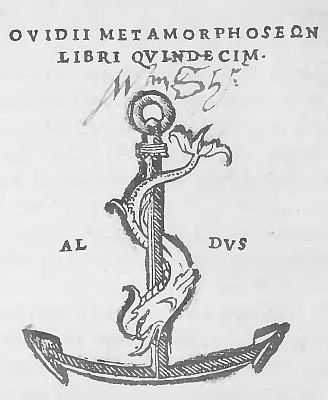
[see text alternative]
A small volume, containing several papers in the handwriting of Luther, was bought for £45. The first edition of Coverdale's New Testament, printed at Antwerp, by Matthew Crom, in 1538, was added to the Biblical collection. Two interesting and important series of newspapers were obtained; the one, a set (not quite perfect) of the London Gazette, from 1669 to 1859, bought for £200[364]; and the other, a collection of London newspapers, from 1672 to 1737, arranged in chronological order in ninety-six volumes, obtained also for £200. This very curious collection had been formed by Mr. John Nichols; its escape from destruction by the disastrous fire at his printing-office in 1808, is mentioned at p. 99 of the Gentleman's Magazine for that year. It is accompanied by a MS. index, drawn up by Mr. Nichols himself. Many unknown contributions by Defoe to the journals of his time, have recently been traced in this series by a gentleman who has made a special study of the Defoe literature, Mr. W. Lee.
Considerable assistance in completing the Library sets of the Public and Private Acts of Parliament was afforded, in this year, by the late Mr. W. Salt.
Specimens of the first books printed in the Dyak language, which were issued at Singapore in 1862, were given by Rev. J. Rigaud, B.D., of Magdalene College.
On the appointment of Dr. Jacobson to the See of Chester, Mr. R. Payne Smith became his successor in the office of Regius Professor of Divinity. Professor Max Müller, M.A., was thereupon nominated to take Mr. Smith's place as the Sub-librarian in special charge of the Oriental department, and the nomination was confirmed in Convocation on Nov. 7.
A.D. 1866.
There is not much to notice under this year, save that the Vulgaria quedam abs Terencio in Anglicam linguam traducta, printed at Oxford before 1483, was obtained, in a volume containing also two tracts printed by J. de Westphalia, at the sale of the library of Mr. Thomas Thomson, of Edinburgh, for £36. Although complete in itself, it appears to have formed a part of a larger work, as the signatures run from n. to q., in eights.
A.D. 1867.
The closing year of these memorials is distinguished by the acquisition of a volume described by Archdeacon Cotton, in his Typographical Gazetteer, as being 'of the very highest rarity.' It is a fine copy of the Breviarium Illerdense, printed at Lerida, in Spain, in 1479, by Henry Botel. Besides being remarkable from its rarity, there is special interest attaching to the volume from the fact that it was printed at the sole expense of the bell-ringer of the cathedral! The colophon states that 'Antonius Palares, campanarum ejusdem ecclesiæ pulsator, propriis expensis fieri fecit.' The volume was bought from Mr. Boone for £36.
A somewhat imperfect copy of the rare Bible printed at Edinburgh by Arbuthnot and Bassandyne in 1579, being the first edition printed in Scotland, was another purchase of the year; as were also two thick volumes of recent transcripts of the Stuart correspondence, preserved in the Imperial Library at Paris.
Within the last few years considerable attention has been paid by the Librarian to the formation of a series of editions of the English Bible. The number now collected is very large, and approaches very nearly to a complete gathering of every edition before 1800, which has any claim to regard either from date, imprint, variety of size, correctness, or incorrectness. Early Quaker tracts have also been largely collected, together with editions of Cotton Mather's works and those of John Bunyan.
A portrait of the Prince of Wales, in academic dress, painted by Sir J. Watson Gordon, was presented towards the close of the year to the University by the Prince, in memory of his academic days, and now hangs conspicuously at the entrance of the Picture Gallery, to which it forms the latest addition.
Prof. Max Müller having resigned his Sub-librarianship on account of health, the Rev. J. W. Nutt, M.A., Fellow of All Souls' College, was approved by Convocation, on June 25, as his successor in the charge of the Oriental department.
The number of printed volumes at present in the Library may be estimated at nearly 350,000. It was returned to Parliament, in 1848, as about 220,000; and with a view to this return a calculation as nearly accurate as possible was then made. An estimate has now been made of the additions received since that date; and from this it appears that some 79,500 volumes have been placed in the old Library and 45,000 in the Camera Radcliviana, making a total for the whole collection of about 345,000 volumes. Within the same period about 5000 additional manuscripts have been obtained, making a total of nearly 25,000. The number was returned in 1848 as being about 21,000, but this appears to have been somewhat in excess of the fact. The proportion was singularly overestimated in 1819, for Clarke, in his Repertorium Bibliographicum published in that year (p. 68), states that the Library contains upwards of 160,000 volumes, of which 30,000 are manuscripts! The annual rate of ordinary increase of printed books at present, apart, of course, from the accession of any entire collection or special purchase, may be reckoned at about 3000 volumes, exclusive of magazines, of which two-thirds come from Stationers' Hall under the provisions of the Copyright Act.
Floreat Bibliotheca.