Chapter IX · (continued 2)
Reading edition
The trichinæ, which are now completely known in the minutest details of organization and manner of life, have a distinct mouth, and they have a complete digestive tube with an orifice at each end of the body, like all worms in the form of a thread, which, for this reason, are called by naturalists Nematodes as opposed to Cestodes (in the form of a ribbon or tape). Besides this nutritive apparatus, trichinæ, like nematodes in general, have the sexes divided into two distinct individuals, so that there are males and females, which can be easily distinguished from each other by the size and form of the body.
Trichinæ are found in the flesh of almost all the mammals. If we eat this trichinous flesh, the worms become free in the stomach as digestion goes on, and they are developed with extreme rapidity. Each female lays a prodigious number of eggs; from each of these comes a microscopic worm, which bores through the walls of the stomach or the intestines, and thousands of trichinæ lodge themselves in the flesh, where they hide till they are again introduced into another stomach. When the number is great, their presence may cause disorders or even death. Leuckart’s experiments on animals aroused the attention of physicians, and then it was found that patients who had shewn exceptional symptoms, had fallen victims to the invasion of these parasites. Leuckart counted 700,000 trichinæ in a pound of the flesh of a man, and Zeuker speaks of even five millions found in a similar quantity of human flesh.
The Trichina spiralis produces about a hundred young worms at the end of a week (viviparous); and a pig which had swallowed a pound of flesh (5,000,000 trichinæ) might contain after some days 250 millions, reckoning that only half the worms hatched were females, which is not the case, for there are more females than males. It appears that trichinæ can become sexual in all warm-blooded animals, but the number in which they can become encysted is not so great. It appears that they are not encysted in birds.
In the month of December, 1863, R. Leuckart wrote to me from Giessen; “The Trichinæ are playing a great part at present in Germany (with the exception of Schleswig-Holstein). Two epidemics have made their appearance within a few months, and have produced a veritable panic, so that no person will any longer eat pork. The authorities everywhere are obliged to subject the flesh of these animals to microscopic examination.”
We owe to Leuckart (1856 and 1857) and to Virchow (1858) the knowledge of the principal facts of the history of these worms. Virchow ascertained by experiment that they become sexual in the alimentary canals at the end of three days; and these two naturalists discovered, after many researches, that trichinæ are neither strongyli nor trichocephali, but a different kind of nematode, which are hatched in the stomach of those whom they infest, and that their embryos, instead of migrating, establish themselves in the host himself. The embryos of parasites do not usually remain in the animal which gives them lodging; they are evacuated, as well as the eggs, and are conveyed to another animal. The trichinæ are sexually developed in the same animal in which they have been engendered.
Worms which produce eggs do not usually hatch them in the same animal; they are evacuated with the feces. The trichinæ are an exception. These agamous worms, when introduced into the stomach, rapidly pass through their evolutions there, become sexual, lay eggs, and the germs which are produced from them pierce the tissues, and become encysted in the muscles or other closed organs. It appears that the Ollulanus tricuspis, a nematode of the cat, presents the same phenomena. It is a species of trichina, which lives at first in the muscles of the mouse which serves it as a vehicle, then in the stomach of the cat, where it becomes sexual and complete.
The Spiroptera obtusa is a worm remarkable for its peregrinations. It passes with the excrements of the mouse into the larva of Tenebrio molitor, which is very fond of it. At the end of a month it is encysted in this insect, and after five or six weeks it becomes sexual in the mouse. The Spiroptera obtusa of the mouse lays eggs which are evacuated with the feces; and these become, with the eggs which they enclose, the prey of meal worms, the larvæ of the Tenebrio molitor, a coleopterous insect. These germs come forth in the intestine of the larva, they perforate the intestine and become encysted in the folds of fat which surround it. Some fine day the insect is swallowed by the mouse, and the Spiroptera, set at liberty in the intestine, will be gradually matured until its sexual development is complete.
The ordinary crab of our coasts, Carcinus mænas, is the vehicle of a nematode which becomes a Coronilla robusta in the stomach of a ray.
The Heteroura androphora is another nematode which lives in the stomach of tritons. The male is always rolled round the body of its female. The two sexes are always free, contrary to that which is observed in the syngami. The Blattæ, coleopterous insects, also harbour sexual nematodes. Radkewisch saw two species of anguillulæ, the Anguillula macroura and appendiculata, in the Blatta orientalis, and an Oxyuris brachyura in the Blatta germanica. These eggs leave the body with the feces, and resist the action of deleterious agents.
Heterodera Schachtii is the name given to a nematode which Mons. Schacht discovered on beet-root. This is also a dimorphous worm; the male has the usual form, the female resembles a lemon. The Leptodera appendiculata inhabits the foot of the Arion empiricorum, in the larva state, and becomes sexual (male and female) in the decomposed body of the snail. The next generation has the sexes united, and lives in damp earth. The Leptodera pellio lives in the same way in the bodies of lumbrici; another Leptodera inhabits the intestine of the snail, and a third the salivary glands. The nematode so generally known under the name of Ascaris nigro-venosa also belongs to this genus. It lives in the lungs of the frog. There is one also in the lungs of the toad, but it differs from the preceding.
Leuckart looks upon these worms as females, and their reproduction as parthenogenetic. Schneider considers that the male exists by the side of the female sex, and that they are consequently hermaphrodites. These worms in the lungs are viviparous, and embryos are found in the midst of the intestine of the same animal which gives lodging to the female. These same worms, proceeding from an hermaphrodite parent, or from parthogenetic females, live at liberty, and not parasitically in damp earth or in a decomposed body, and differ from their parents in size as well as in sexual organs. They all become either male or female, and consequently their fecundity is dependent upon copulation. Their parents could all multiply without it, but they cannot. The females alone produce a new generation.
A worm known by the name of Vibrio anguillula lives in grains of corn while still green, and multiplies there to a prodigious extent; it is this which causes the disease known by the name of smut. The grains grow hard, and enclose nothing but little dried worms, which remain thus without apparent life, yet without dying, until they are moistened, when they become damp, the tissues swell, the organs resume their natural appearance, and the functions are restored at the end of a few hours.
In a grain of corn affected by smut, anguillulæ without distinct organs are found, which may be dried and revived eighteen times in succession, according to Mons. Duvaine, who thinks that these anguillulæ, leaving an infected grain, come out of their envelopes in a field of corn, cling to the young stalks, and rise with them. They begin to develop themselves in the rudimentary flower of the corn, and acquire genital organs like nematodes. Males and females are always found separately in a grain of corn.
The ermine lodges in its lungs and tracheal artery a long worm, to which I have given the name of Filaroides mustelarum. It usually forms a little sac, which resembles a tubercle. Many individuals of different sexes, wound round each other, are so closely tied together that they can with difficulty be separated. They resemble a ball of cotton. This filaroid sometimes gets into the frontal sinus, and mechanically destroys a part of its osseous walls, so that the skull is pierced by a hole above the frontal sinus. Dr. Weyenberg made this observation.
It is probable that other species of Mustela will present the same phenomena, for the skulls of this animal are often to be found perforated above the orbital cavity.
The Ollulanus tricuspis is a worm which lives in the walls of the stomach of cats; it is viviparous, and the young ones sometimes wander into the muscles of their host. But the natural course of things is that the young are evacuated with the feces, and that these dejecta, according to all probability, form part of the food of mice, and pass with them into the cat. It is to be hoped that Leuckart will soon put this migration out of doubt by a decisive experiment, and will prove that the mouse serves as a vehicle for three different worms, the Cysticercus, the Spiroptera obtusa, and the Ollulanus tricuspis.
Many nematodes lodge in the substance of the walls of the gizzard of birds. In the large goosander we have found one which has round its head four blades, crossing each other, toothed on the concave side. We have given the name of Ascaracantha tenuis to this worm. It has very small eggs. The Trichosomum crassicauda is a nematode of the rat; the female is 2·5 millimètres in length, and the male ·17 millimètres, and it lives in the uterus of its female. Five males are occasionally found in one female. This observation made by Leuckart has been confirmed by Bütschli. The male has its digestive tube incomplete; its female feeds for it.
The bat of the high mountains of Bavaria, known under the name of Vespertilio mystacinus, harbours a nematode, the Rictularia plagiostoma, the same which is found in Egypt in the hedgehog (Erinaceus auritus). The bat on the banks of the Rhine has not this remarkable worm. We must therefore conclude that the bat of Bavaria finds and eats the same insect as the hedgehog in Egypt, and that this insect does not live on the banks of the Rhine. We have never met with this nematode in the mystacines of Belgium, and yet we have opened them by hundreds.
A bird found in Florida, the Anhinga, has in its brain a nematode whose presence in that organ is not accidental.
The Echinorhynchi form a very remarkable group of parasites. They migrate from one host to another; but the vehicle by which the greater part of them is conveyed is not known. We represent in Fig. 72 a species which is very common in the intestine of the sprat.
It is known that these worms migrate when young, and undergo metamorphoses when they change their host. The Asellus aquaticus of fresh water, harbours besides other worms, the Echinorhynchus hœruca; the Gammarus pulex, another fresh-water crustacean, lodges the larva of the Echinorhynchus proteus (Fig. 72). We commonly find this beautiful species of the Echinorhynchus in the alimentary cavity of the sprat, and it is easily distinguished by its peculiar form and its orange colour.
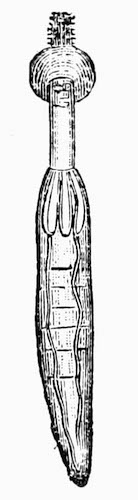
Fig. 72.—Echinorhynchus proteus of the Sprat.
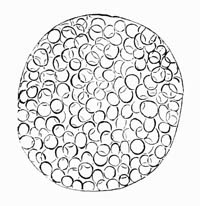
Fig. 73.—Sac with psorospermiæ, in the Sepia officinalis.
The Asellus aquaticus seems also to serve as the vehicle of the Echinorhynchus angustatus. The hooks of the embryos differ from those of the adults, as the six hooks of the cestodes differ from the crown of the adults. Leuckart has described those of the envelope of the Echinorhynchus proteus and the Echinorhynchus angustatus. The embryo of the Echinorhynchus has only two large hooks on each side, but several smaller ones. The two species mentioned above have on each side five or six hooks placed at right angles with the median line, but they are not all of the same size.
The animals are allied to the Gordii in their development. In fact, their development is like that of the echinodermata; the larva is the Pluteus, in which the true echinorhynchus develops itself, borrowing the skin of the pluteus. According to the experiments made by Schneider, the larvæ of cockchafers must be the vehicles of the Echinorhynchus gigas. Pigs disseminate the eggs, and the embryos infest these larvæ, in the bodies of which they pass through their principal changes.
The Gregarinæ are microscopic beings, with an extremely simple organization, the nature and the genealogy of which have only lately been known. They live at first encysted by thousands together, under the name of Psorospermiæ; they are afterwards hatched in the form of Amœbæ, and then transformed into Gregarinæ. They migrate from one animal to another, or from one organ to another, to settle in the intestine, where they assume their adult form. In this state they are monocellular, and do not at any time possess organs which resemble the sexual organs of other classes. The disease of silk worms, known by the name of “pebrine,” has been attributed to the development of psorospermiæ.
We give the representation (Fig. 74) of gregarinæ which we have found abundantly on the Nemertes; and (Fig. 75) a peculiar species which lives in the larva of an agrion.
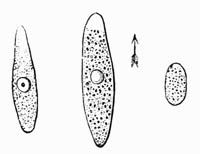
Fig. 74.—Gregarinæ of Nemertes Gesseriensis.
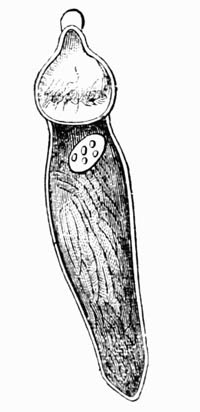
Fig. 75.—Stylorhynchus oligacanthus, from the larva of the Agrion.
We also give a sketch (Fig. 76) of some very remarkable parasites, whose affinities are still problematical, and which only inhabit spongy bodies, such as the kidneys of cephalopods. The name of Dicyema has been given to them.
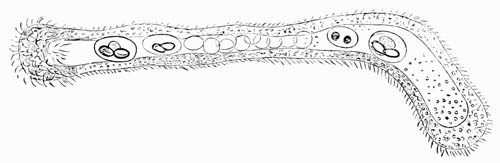
Fig. 76.—Dicyema Krohnii, from Sepia officinalis.
Prof. Ray Lankester has quite recently made some very interesting observations, at Naples, on these problematical beings; and my son has just devoted a part of his vacation, with two of his pupils, to elucidate the points of their organization and development, which are still obscure. He went to reside at Villefranche, near Nice, in order to obtain fresh cephalopods every day. His observations have led him to a result quite different from that which I expected.