KNOWLEDGE OF TROPICAL ANIMALS BY MOUND-BUILDERS.
Reading edition
The supposed evidence of a knowledge of tropical animals possessed by the ancient dwellers of the Mississippi Valley which has just been discussed seems to have powerfully impressed Wilson, and in his Prehistoric Man he devotes much space to the consideration of the matter. His ideas on the subject will be understood from the following quotation:
By the fidelity of the representations of so great a variety of subjects copied from animal life, they furnish evidence of a knowledge in the Mississippi Valley, of the fauna peculiar not only to southern, but to tropical latitudes, extending beyond the Isthmus into the southern continent; and suggestive either of arts derived from a foreign source, and of an intimate intercourse maintained with the central regions where the civilization of ancient America attained its highest development: or else indicative of migration, and an intrusion into the northern continent, of the race of the ancient graves of Central and Southern America, bringing with them the arts of the tropics, and models derived from the animals familiar to their fathers in the parent-land of the race. (Vol. 1, p. 475.)
The author subsequently shows his preference for the theory of a migration of the race of the Mound-Builders from southern regions as being on the whole more probable. Wilson does not, however, content himself with the evidence afforded by the birds and animals which have just been discussed, but strengthens his argument by extending the list of supposed exotic forms known to the Mound-Builders in the following words (vol. 1, p. 477):
But we must account by other means for the discovery of accurate miniature representations of it (i.e. the Manatee) among the sculptures of the far-inland mounds of Ohio; and the same remark equally applies to the jaguar or panther, the cougar, the toucan; to the buzzard possibly, and also to the paroquet. The majority of these animals are not known in the United States; some of them are totally unknown to within any part of the North American continent. (Italics of the present writer.) Others may be classed with the paroquet, which, though essentially a southern bird, and common in the Gulf, does occasionally make its appearance inland; and might possibly become known to the untraveled Mound-Builder among the fauna of his own northern home.
The information contained in the above paragraph relative to the range of some of the animals mentioned may well be viewed with surprise by naturalists. To begin with, the jaguar or panther, by which vernacular names the Felis onca is presumably meant, is not only found in Northern Mexico, but extends its range into the United States and appears as far north as the Red River of Louisiana. (See Baird's Mammals of North America.) Hence a sculptured representation of this animal in the mounds, although by no means likely, is not entirely out of the question. However, among the several carvings of the cat family that have been exhumed from the mounds and made known there is not one which can, with even a fair degree of probability, be identified as this species in distinction from the next animal named, the cougar.
The cougar, to which several of the carvings can with but little doubt be referred, was at the time of the discovery of America and is to-day, where not exterminated by man, a common resident of the whole of North America, including of course the whole of the Mississippi Valley. It would be surprising, therefore, if an animal so striking, and one that has figured so largely in Indian totemism and folk-lore, should not have received attention at the hands of the Mound-Builders.
Nothing resembling the toucan, as has been seen, has been found in the mounds; but, as stated, this bird is found in Southern Mexico.
The buzzard is to-day common over almost the entire United States, and is especially common throughout most of the Mississippi Valley.
As to the paroquet, there seems to be no evidence in the way of carvings to show that it was known to the Mound-Builders, although that such was the case is rendered highly probable from the fact that it lived at their very doors.
It therefore appears that of the five animals of which Wilson states "the majority are not known in the United States," and "some of them are totally unknown, within any part of the North American continent," every one is found in North America, and all but one within the limits of the United States, while three were common residents of the Mississippi Valley.
As a further illustration of the inaccurate zoological knowledge to which may be ascribed no small share of the theories advanced respecting the origin of the Mound-Builders, the following illustration may be taken from Wilson, this author, however, being but one of the many who are equally in fault. The error is in regard to the habitat of the conch shell, Pyrula (now Busycon) perversa.
After exposing the blunder of Mr. John Delafield, who describes this shell as unknown on the coasts of North and South America, but as abundant on the coast of Hindostan, from which supposed fact, coupled with its presence in the mounds, he assumes a migration on the part of the Mound-Builders from Southern Asia (Prehistoric Man, vol. 1, p. 219, ibid., p. 272), Wilson states.
No question can exist as to the tropical and marine origin of the large shells exhumed not only in the inland regions of Kentucky and Tennessee, but in the northern peninsula lying between the Ontario and Huron Lakes, or on the still remoter shores and islands of Georgian Bay, at a distance of upwards of three thousand miles from the coast of Yucatan, on the mainland, the nearest point where the Pyrula perversa is found in its native locality. (Italics of the present writer.)
Now the plain facts on the authority of Mr. Dall are that the Busycon (Pyrula) perversa is not only found in the United States, but extends along the coast up to Charleston, S.C., with rare specimens as far north as Beaufort, N.C. Moreover, archæologists have usually confounded this species with the Busycon carica, which is of common occurrence in the mounds. The latter is found as far north as Cape Cod. The facts cited put a very different complexion on the presence of these shells in the mounds.
OTHER ERRORS OF IDENTIFICATION.
The erroneous identification of the manatee, the toucan, and of several other animals having been pointed out, it may be well to glance at certain others of the sculptured animal forms, the identification of which
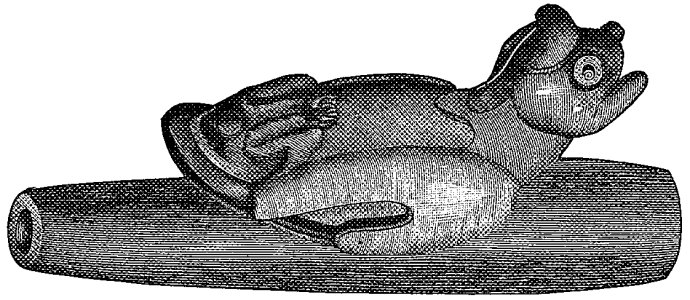
Fig. 20.—"Owl," from Squier and Davis.
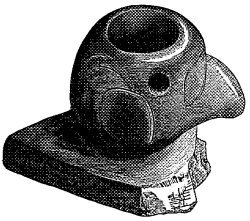
Fig. 21.—"Grouse," from Squier and Davis.
by Squier and Davis has passed without dispute, with a view to determining how far the accuracy of these authors in this particular line is to be trusted, and how successful they have been in interpreting the much lauded "fidelity to nature" of the mound sculptures.
Fig. 20 (Squier and Davis, Ancient Monuments of the Mississippi Valley, p. 225, Fig. 123) represents a tube of steatite, upon which is carved, as is stated, "in high relief this figure of an owl, attached with its back to the tube." This carving, the authors state, is "remarkably bold and spirited, and represents the bird with its claws contracted and drawn up, and head and beak elevated as if in an attitude of defense and defiance."
This carving differs markedly from any of the avian sculptures, and probably was not intended to represent a bird at all. The absence of feather etchings and the peculiar shape of the wing are especially noticeable. It more nearly resembles, if it can be said to resemble anything, a bat, with the features very much distorted.
Fig. 21 (Fig. 170 from Squier and Davis) it is stated, "will readily be recognized as intended to represent the head of the grouse."
The cere and plainly notched bill of this carving clearly indicate a hawk, of what species it would be impossible to say.
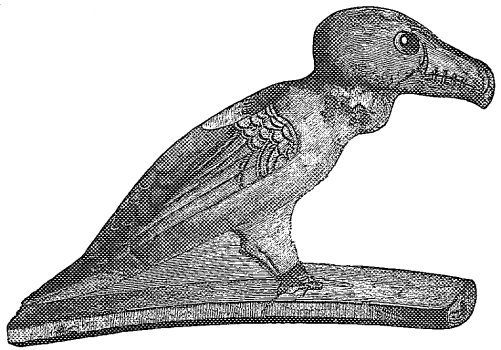
Fig. 22.—"Turkey Buzzard," from Squier and Davis.
Fig. 22 (Fig. 171 from Squier and Davis) was, it is said, "probably intended to represent a turkey buzzard." If so, the suggestion is a very vague one. The notches cut in the mandibles, as in the case of the carving of the wood duck (Fig. 168, Ancient Monuments), are perhaps meant for serrations, of which there is no trace in the bill of the buzzard. As suggested by Mr. Ridgway, it is perhaps nearer the cormorant than anything else, although not executed with the detail necessary for its satisfactory recognition.
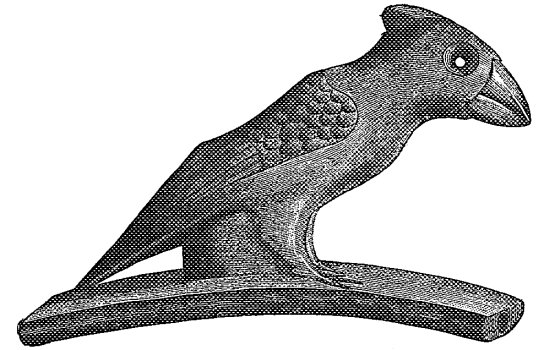
Fig. 23.—"Cherry-bird," from Squier and Davis.
Fig. 23 (Fig. 173 from Squier and Davis) it is claimed "much resembles the tufted cherry-bird," which is by no means the case, as the bill bears witness. It may pass, however, as a badly executed likeness of the tufted cardinal grosbeak or red-bird. The same is true of Figs. 174 and 175, which are also said to be "cherry-birds."
Fig. 24 (Fig. 179 from Squier and Davis), of which Squier and Davis say it is uncertain what bird it is intended to represent, is an unmistakable likeness of a woodpecker, and is one of the best executed of the series of bird carvings. To undertake to name the species would be the merest guess-work.
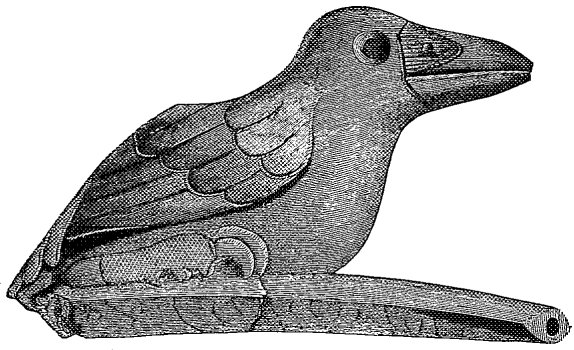
Fig. 24.—Woodpecker, from Squier and Davis.
The heads shown in Fig. 25, which the authors assert "was probably intended to represent the eagle" and "are far superior in point of finish, spirit, and truthfulness to any miniature carving, ancient or modern, which have fallen under the notice of the authors," cannot be identified further than to say they are raptorial birds of some sort, probably not eagles but hawks.
Fig. 26 (Fig. 180 from Squier and Davis), according to the authors, "certainly represents the rattlesnake." It certainly represents a snake, but there is no hint in it of the peculiarities of the rattlesnake; which, indeed, it would be difficult to portray in a rude carving like this without showing the rattle. This is done in another carving, Fig. 196.
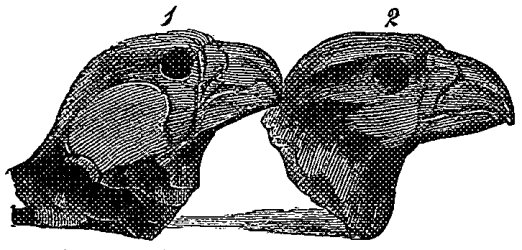
Fig. 25.--"Eagle," from Squier and Davis.
The extraordinary terms of praise bestowed by the authors on the heads of the hawks just alluded to, as well as on many other of the sculptured animals, suggest the question whether the illustrations given in the Ancient Monuments afford any adequate idea of the beauty and artistic excellence asserted for the carvings, and so whether they are fair objects for criticism. While of course for the purpose of this paper an examination of the originals would have been preferable, yet, in as much as the Smithsonian Institution contains casts which attest the general accuracy of the drawings given, and, as the illustrations by other authors afford no higher idea of their artistic execution, it would seem that any criticism applicable to these illustrations must in the main apply to the originals. With reference to the casts in the Smithsonian collection it may be stated that Dr. Rau, who had abundant opportunity to acquaint himself with the originals while in the possession of Mr. Davis, informs the writer that they accurately represent the carvings, and for purposes of study are practically as good as the originals. The latter are, as is well known, in the Blackmore Museum, England.
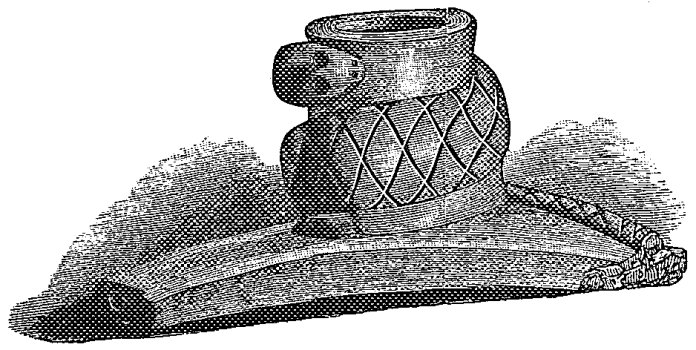
Fig. 26.—"Rattlesnake," from Squier and Davis.
Without going into further detail the matter may be summed up as follows: Of forty-five of the animal carvings, including a few of clay, which are figured in Squier and Davis's work, eleven are left unnamed by the authors as not being recognizable; nineteen are identified correctly, in a general way, as of a wolf, bear, heron, toad, &c.; sixteen are demonstrably wrongly identified, leaving but five of which the species is correctly given.
From this showing it appears that either the above authors' zoological knowledge was faulty in the extreme, or else the mound sculptors' ability in animal carving has been amazingly overestimated. However just the first supposition may be, the last is certainly true.