Louise Vescelius-Sheldon (continued 2)
Reading edition
“Come to see bout dat big, white diamond.”
“Ah, yes; now how much shall I give you for it? It has a flaw in it, you know.”
“Let Fingo boy see. Kafir want see hole in diamond.”
“I haven’t it about me. It isn’t safe to have such a stone around. I may never have a chance to sell it,” said Laure, firmly, looking at the Kafir.
“Dat good stone, Ba-a-as. Bring big money. Mus’ have money fo’ dat.”
“What have you done with all the money I have given you, Fingo?”
“Me save him. Me buy cows, pony.”
“It won’t do for you to have so much gold about you. Detectives will get you and put you in the chain-gang.”
“Me hide it—way off. Nobody find it!”
“Well how much shall I give you for it?”
“Hunder pound.”
“Too much. It isn’t worth it. I’ll give you eighty, or you may come to-morrow and I’ll give it back to you,” said Laure, who was pretty certain that the Kafir would hardly dare hunt for a buyer, as many a buyer, though an illicit one, would bring him before the authorities and compel him to disgorge, simply to throw the detectives off the scent in regard to himself. The Fingo hesitated for a moment or two, and then accepted the offer.
“Going back to work to-day?” asked Laure.
“No! Me go way soon as me sell ’nother big white diamond me hab. Me buy wife, get big Kraal. Hab plenty ox, cow, pony.”
“You have a wife now, haven’t you?”
“Me hab two, three, four wife bime bye,” replied the Kafir as he held up four fingers. “Me know pretty Kafir girl: hoe corn; pound mealies—cook. Me work no more. Hunt blesse-bok; ride pony; smoke dagga; hab good time!”
“Yes, that is right, Fingo, you must leave the Fields. I will have the money for you, and will meet you at—or, stay. I will put it under the rock where you got the last. But mind, don’t stay round here much longer, or the police will get you—do you hear?”
“Kafir no fool, Ba-a-as Laure. He jes’ go home to his Kraal. No work more,” and the Kafir left the room.
That evening Laure and Schwatka were sitting talking in the library, when Dainty unexpectedly approached the room. A fragment of their conversation reached her, and as the full meaning of the words she heard burst upon her, she stood speechless, half hidden in the folds of the curtained doorway.
“Laure, how dare you carry on this illicit trade of buying diamonds of the Kafirs? Don’t you fear that they will give you away to the detectives?” Schwatka was saying.
“I suppose I am in danger of being trapped, but I am pretty sure of the Fingo who sells me the blazers.”
“You know you are safe, as far as I am concerned,” replied Schwatka. “I am thinking what your wife would do, if you should be caught, through the treachery of this Fingo. You can never tell what they will not do for money.”
“That’s true, but I rather think my luck won’t go back on me. I don’t mind telling you, that I happen to know that this Fingo has a big diamond that I want, but he asks too much money for it—I tell you it’s a beauty. These Kafirs are getting too knowing for us fellows; they are too well aware of the exact value of the diamonds, and we have to go slow with them.”
“There are too many risks in that trade to attract me. I say, Laure, how do you expect to sell that diamond if you get it?”
“I shall probably keep it, until I go to Europe. The idea that an illicit or stolen diamond sells there for half its value, is nonsense. In Amsterdam, the great European market, a diamond sells according to its weight and purity. Its intrinsic worth is all that the buyer or seller thinks of. Look at this gem.”
As Donald said this, he turned and caught sight of Dainty standing in the doorway. She looked from one to the other. Donald cast his eyes guiltily down, unable to meet the glances of the woman he loved; while Schwatka sat looking up into her face with his own all aglow, and in an attitude that suggested the ardent lover eager to shield her from trouble.
As her eyes at last rested on Herr Schwatka, in a dazed sort of way, her heart gave one bound and went out to him.
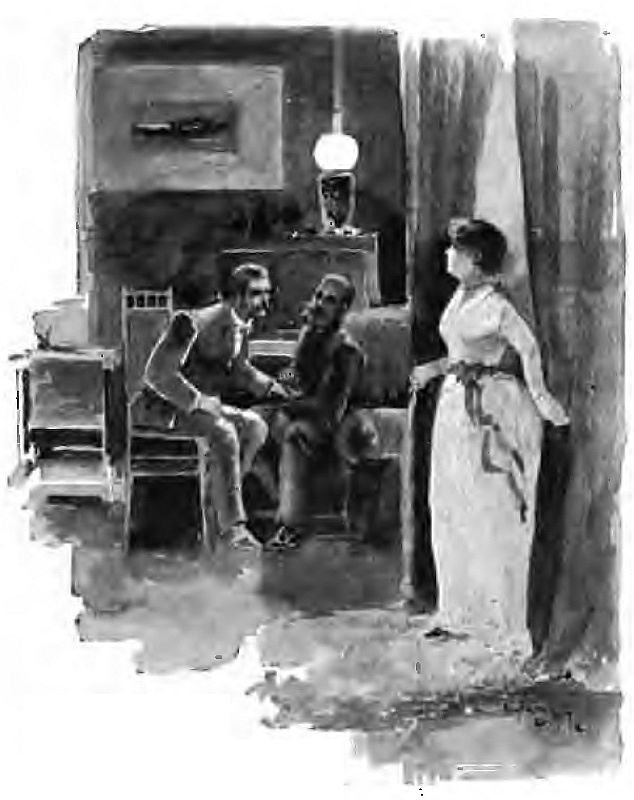
Though daily she had met the Austrian who had so often sought for opportunities to be near her, though daily her interest had become greater, and her pleasure in his presence increased, though sometimes she had felt dissatisfaction as she compared her husband with him whom she called her friend—yet, not until this sudden revelation terrified her, as a sense of its danger came over her, did she realise her actual feelings.
Silently turning, in a half-blinded way, she left the room. For a moment she was dazed. Then the peril of the situation flashed through her mind. Her alert, savage blood was roused at last, and from that moment she lost her indolent, indifferent manner. Never for one moment was she forgetful of the situation.
At any moment the officers of the law might be on their track. Both she and Donald were henceforth bound to Herr Schwatka. One by love—the other by fear. Even the generosity of Schwatka, should he conceal Donald’s felony, made her sick at heart—for discovered, each was a partner in the other’s guilt.
Her sleep, once so peaceful, was fitful and disturbed. She asked of neither an explanation.
What to do, to whom to turn, between her love, her duty, and her fears, was like an ever-present nightmare.
She had awakened to a new life; her eyes, that until now were soft, blazed with a fire that had never before been kindled in them. Emotions new to her had taken possession of her mind. Herr Schwatka came frequently, as before, and, with more eagerness than she had ever looked for Donald, she looked for him.
Strange were the mental experiences of Herr Schwatka. He saw what he desired to see, that her heart was his. But not with the triumph he would have known had he not fallen into his own trap.
Schwatka, who had coolly won more hearts than he ever took pains to count, was enthralled by the power of Dainty.
He felt he could not harm her, though he felt he could not lose her. By the power of his love he read every passing thought as it flitted over her face; and he would willingly have risked all his hope and happiness in other things, could he but possess the life of this woman—like a lamb in her helplessness, like a young lioness in her love of freedom, and in her rebellion against the chafing of distasteful bonds.
As the days passed, her restlessness of spirit increased. At last the fire began to consume the material body. She grew thin, a hectic flush tinged her cheek. Her eyes, like great burning lamps, looked out upon the world with an unsatisfied expression pitiful to behold. For a time these new emotions escaped the notice of Donald, but when she began to droop, and he perceived what he feared might be some malady, he resorted to Dr Fox with real anxiety.
Chapter Sixteen.
The Family Physician.
On entering the doctor’s office, Laure found him examining Bela’s eye, or rather the part of the face that once contained that valuable organ.
“How do, Doctor,” said Laure; “how are you, Bela? Now that you are well, why do you not return to your mistress?”
“Missy don’t want see Bela now he got only one eye.”
“We’ll see about that,” said Dr Fox. “Glad you came in, Laure. I was about experimenting on the boy’s eye. We’ll see if we can’t send you back to your mistress with a new optic!”
As he said this he lifted Bela’s eyelid, and in another second the boy stood before the men with two eyes in his head, though one was but a glass eye.
“Hello!” said Laure, “what hinders you now from going home to your mistress? You are nearly as good-looking as you ever were! By the way, Doctor I wish you would drop in and see Mrs Laure. She does not look well.”
“Sorry to hear that,” said the doctor. “I will call there this morning and take Bela with me.” The two men exchanged a few more words and then parted. Some hours later Bela, accompanied by the doctor, entered his old home dressed in a most fantastic costume, and expressed, in his peculiar way, the greatest joy at seeing his mistress, who was well pleased to receive him again. She greeted the doctor cordially, and was curious about this new eye of Bela’s.
“How did you ever do it?” she asked.
Pleased to see her interested, the doctor slipped the shell that so skilfully simulated the destroyed organ of sight, and showed her how it was inserted.
“It is easy enough. You could do it yourself,” said he.
Dainty felt a childish desire to try. She had none of that horror of mutilation that most delicate women have, for her life had made her familiar with the sight of physical afflictions. The doctor, though he secretly wondered at her curiosity, was willing to indulge it, and Dainty soon found that she could actually adjust a glass eye herself.
Bela was dismissed, and her look of interest gave place to one of weariness. “Well, Mrs Laure, what is the reason I have not seen you riding of late?”
The blood flew to her cheeks, for she felt that the doctor was reading her heart. With the desire that every woman has to guard her dearest secret, she said:
“Donald imagines I am threatened with fever. It is nothing but a feeling of homesickness. To be sure my heart beats so at times that it nearly chokes me, but I think it will soon pass away. I have been coaxing Mr Laure to take me away from the Fields. I think if I were near the old ocean once more my health would return.”
The doctor listened to her voice, but he only heard her mental words. The words she framed with her lips did not conceal the cause of her distress. We think to deceive the world when we talk to cover our feelings, but how rarely do we succeed with the good and true. The soul sits in the silence. Its influences are silent influences, and its voice soft and gentle. So, as it is attuned to stillness, it hears other soul voices when in harmony with it, and it discerns the truth with unerring judgment.
Dr Fox had diagnosed mental struggles until it had become second nature to him to read the thoughts of his patients. He had also been keenly alive to the infatuation of Herr Schwatka for Mrs Laure, and when she alluded to a weakness of the heart, he asked:
“Have you anything on your mind that worries you?” She caught her breath for a second, and the doctor read in her hesitancy the true answer, though she replied:
“Oh, no.”
“I will leave you a few powders, though a change of scene would do you more good than any medicine I might prescribe. You need to get out and away from accustomed places. You are stagnating. Your mind is travelling in a circle, and your thoughts dwell too much on yourself, which always produces an unsatisfactory mental, as well as physical condition. I sometimes advise my lady patients, when they are the subject of their own thoughts, to think of me. A crusty old bachelor is so radical a change, and so hard a subject that it has succeeded admirably in curing some of them, who only needed variety.” This last remark brought a smile to Dainty’s face.
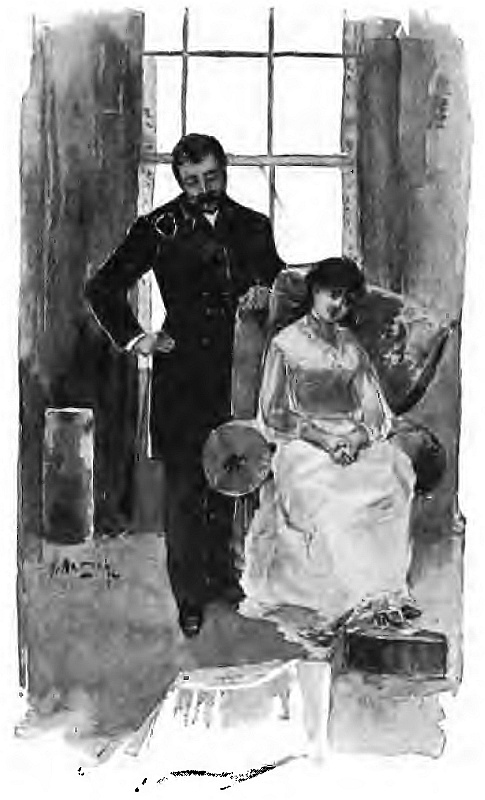
“Yet I advise them not to overdo the remedy lest they think too much of me. I am extremely cautious, Mrs Laure.”
Dainty smiled again. Sentiment and the doctor seemed so absurd a combination to her. He was kind-hearted, but to think of him as an awakener of love—Ah! love brought to her mind another. She blushed, stopped, and thought of the doctor. It was a good remedy. He was looking at her. She felt a mixture of discomfort and a desire to tell him how great was her heartache. Had he asked her her secret, she would have told him. He divined her confidential mood, but asked nothing. It is sometimes wise to be ignorant. If the family physician should divulge the secrets of the inner life of the social sphere in which he moves, what a shattered world would we live in! The life of a hermit would at once hold irresistible charms for many.
What an innocent and ignorant violator of social and marital laws was Dainty! But ignorance and innocence are not as beautiful qualities as knowledge and purity. With the former, life is but drifting; with the latter, it is anchored to a rock.
The doctor realised that Dainty was drifting. He had seen many another woman drift, only to be broken against the rocks on bleak unknown shores; later he had seen the wreck washed up lying on the sands of life, exposed to the gaze of the gaping curiosity-seeker, and to his careless comments. Would this beautiful creature, wounded almost to death, be another wreck noted by pitying angels, and filling a sorrowful page in the book of Time? Not if he could help guide her. Ah! if our impulses are in the direction of the good, we know not how soon we may be given the opportunity to guide a frail bark clear of some threatening rock, into smiling waters, and under summer skies! The doctor’s opportunity came sooner than he anticipated.
“I will call in again, Mrs Laure,” said he, rising. “I have to see a patient a few hours’ ride from here, and on my return, will tell Mr Laure that he must take you to England. I am expecting to go home for a short trip this summer, I need a change, too. One gets rusty living in Africa without a sight of other lands.”
He took her little hand in his, gave it a quick, firm, friendly grasp, that seemed to say: “I know all about your trouble. Everything will come out all right.” Aloud he said: “You must stop thinking about yourself,” and left the house.
Chapter Seventeen.
“You have made me your Prisoner.”
Dainty, left alone, smiled in mockery. “Stop thinking!” As if she could!
She was innocent of any intentional wrong toward her husband, but oh! that world, that real world of hers—her thoughts.
Even in the midst of her self-upbraiding, her rebel thoughts would break loose, and reach out toward the man she loved. It was the ecstasy of a Heaven, blended with the agony of a Hell.
The shuttle of love that winds and weaves an unseen thread, had bound her heart in bond so firm, that to break it seemed like breaking the thread of life. Would that she could see how near the fate stood that would cut that thread! She felt that the new love which had sprung to a giant’s strength within her heart, was doing cruel injustice to the loyal heart of her husband. She wished to be true to herself, and that meant true to Donald. Was he not truth itself to her? But she had no strength to fight against the power which Schwatka exerted over her, and thoughts of him held her prisoner as she lay on her divan moaning like a helpless wounded doe.
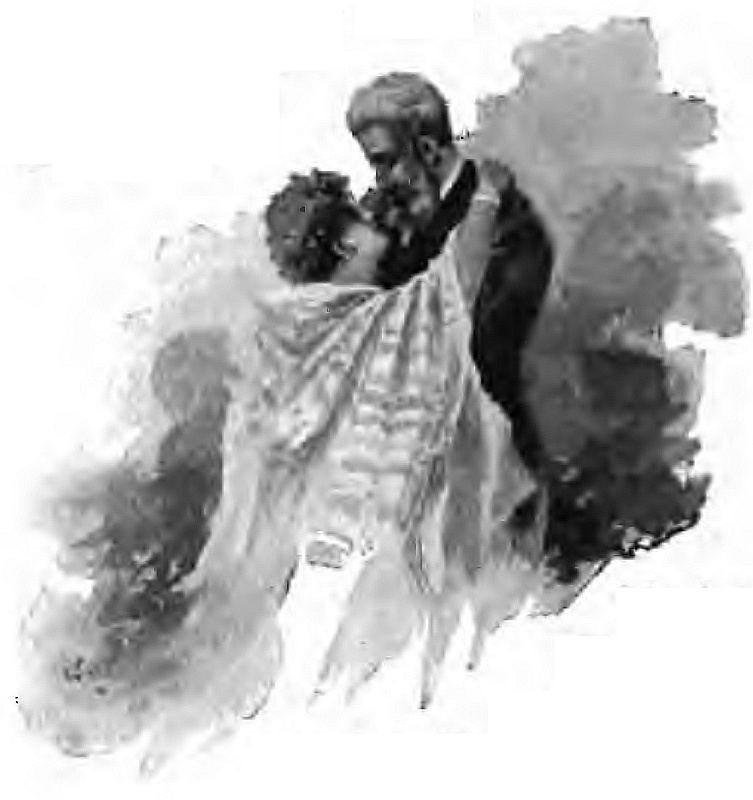
At this moment Herr Schwatka entered the room. As he approached, their eyes met in one long look, and as if mesmerised, their lips met in a kiss that annihilated time and space, and that for Dainty rent asunder all other bonds. Centuries of time were lived in that one kiss. She had been long married, but not until now was she mated.
At last time began again to beat out to the lovers those seconds and moments of which they had been too oblivious.
“Dainty,” said he, “I can no longer endure to see you bear toward another the relation of—wife. I came to-day to tell you that I leave Kimberley within twenty-four hours. I know that I have been a coward to remain here and see you suffer for my sake, but the strength of love has been my weakness, and has chained me to your side. My beloved, life without you is worth to me not a puff of smoke; if I remain here longer I shall become a dangerous enemy to your husband. He stands between you and me; therefore I go away. Absence sometimes brings forgetfulness. The memory of your dearly beautiful face, of your soulful eyes—ah! What shall I do!—I cannot, I cannot tear myself from you!”
He sank on his knees by her side, and laid his head on her shoulder, a man given over to the longings of a great love, without hope therein.
She was now the stronger of the two. How often do we see the dumb animal side, in the strongest nature, assert itself when it lays its head on the heart of a frail woman for comfort.
What is that power which enchains men and women for a season when death itself would be preferable to the bitter sweetness which fills the soul. The heart never entirely recovers, though by and by the pain is a dull heavy sorrow as for a loved one buried long ago? We pity ourselves then, to think that it is possible for us to so change.
Dainty could not move hand or foot, her eyes looked as if tears lay behind in the veiled depths, in sacred sympathy with the soul, in the throes of an agony which few are capable of understanding.
Great beads of perspiration stood on her brow; she tried to speak, but ended in an incoherent whisper. Her lover recognised the suffering of her soul, akin to his own, and wiped the cold dews away with a holy touch. There was no flaming consuming passion in his touch. How strange was this in a nature like Herr Schwatka’s! It was one of the marvels of love that it could purify the impulses and purposes of such a man, not used to live above the moral plane of the careless man of the world. He might easily have wrought ruin in the life of this unsophisticated woman, who could not, in one remove from savage ancestry, grow away from the tendency of love to follow its own, regardless of consequences. So had her mother done. Raising herself, and looking him steadfastly in the eyes, she slowly said, in an earnest whisper: “If you go, I go with you.”
“No, no, Dainty, I love you too truly to let you live to repent anything for my sake. Donald will not return to you until evening. I must go while I have any manliness left, or we will both live to repent it.”
There was silence for a few moments, and then he hesitatingly said:
“I want to make a confession, sweetheart, that will help to ease my pain.” He stopped and his bosom heaved with emotion. “It is that—I was fascinated by you, and your untamed ways, so different from what I had ever known, and I thought you would be a pastime to me. See what misery my wrong has wrought to both. You are the one woman in the world stronger than I, who thought myself invincible. You have made me your prisoner.”
Anger against her fate began to rise within her heart, and strange thoughts surged and swelled through her throbbing brain. She spoke with wild determination:
“Listen. Donald is keeping some great secret from me, and although he has no suspicion of the love existing between you and me, his life is as separated from mine as if we were living in different continents. My life is my own, and if you leave me, I follow.”
“No, no, my beloved,” cried Schwatka.
Dainty continued in the same voice:
“You cannot change me now. Bela,” calling to her servant, “have the horses harnessed to the cart at once, I am going for a drive. Now,” turning to Schwatka, “leave me. I have not the strength to bear your presence longer. I shall be at the meeting of the roads,” naming a spot about five hours distant, “and will meet you there.”
“No, no,” said he, mournfully but firmly. “Here I bid you farewell.” He laid his hand on her shoulder. “When you cease to think of me as a lover, hold my memory kindly as your saviour.”
His hand fell from her shoulder slowly down her beautiful arm, till it reached the little firmly-knit hand, which he held a prisoner for a few seconds, then tenderly raised to his lips. In another moment he had gone.
Chapter Eighteen.
A Friend in Deed.
Not for a moment was Dainty’s determination shaken by the action of Schwatka. So full of magnetic fire she had never been disciplined to control; had love been sooner enkindled, she would but sooner have leaped into its flame, whether it meant warmth or destruction. Many women of her nature, live and die ignorant of love. Are they more blest for the ignorance?
Turning to her dressing-case, in which were her diamonds and costly jewels, she looked at them, and in another moment she replaced the casket. She rapidly dressed for the journey, and ordered Bela to pack a small trunk with necessary and sufficient apparel, and take it to the Cape cart waiting at the door. These things were quickly done by the silent, swiftly-moving Bushman.
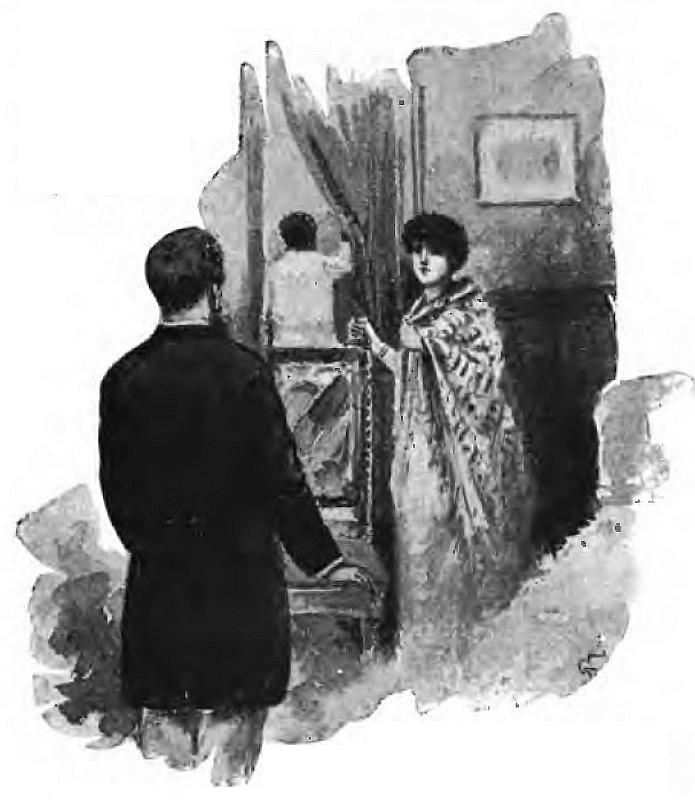
Trembling with excitement she followed the Bushman, and got into the cart. As they drove away, she gave one backward glance at the home where she had lived so peacefully with Donald. Nerving herself, she bade Bela hasten. When they had reached the edge of the town, she seized the reins, and with a strength born of excitement, urged the horses on with a frenzy that caused Bela to give his mistress a look of wonder.
Her thoughts had been too long busy with her work to think of anything further, until now, with the motion of the revolving wheels, and the speeding horses, a sense of liberty took possession of her.
She was free! Away over the veldt she flew, the horses seeming to become imbued with the spirit of their mistress, which gave impulse to their fast-flying feet. This sense of freedom was a reaction from the sense of captivity, of late so strongly upon her.
Two hours or more flew by, before she gave a thought to the scenes through which she was passing. A weary waste of sandy, desert road; a treeless veldt covered sparsely with a coarse grass; a dreary farmhouse in the distance surrounded by a few trees, was a joyless picture to look upon.
Bela sat silent, watching the horses and the flying cart, but immovable as a statue. When the native becomes attached to his mistress, he accepts everything from the “Inkosa” whom he regards as a queen. Dainty’s strength was ebbing fast, but with superhuman effort she rallied all her energies, and, when she saw a horseman in the distance, called to her aid her most languorous and indifferent manner, reined in her rapid steeds and handed the reins to Bela. As the man drew near, to her dismay she recognised Dr Fox, who was returning from his patient. As he rode up to the cart, an expression of amazement spread over his face. When he stopped his horse to speak to her, she ordered Bela to stop, also.
“Good afternoon, Mrs Laure. You have greatly improved since I saw you this morning. I scarcely thought you well enough to venture so long a drive. Is it health or pleasure you seek?”
Dainty was as white as the dead are. She trembled before this man’s honest way of asking questions. Her strength, until now fed by excitement, left her, and her tongue refused to move, though her lips parted in the effort.
The agony that convulsed her frame was depicted on her face, and she shook like one with ague. What should she say? The doctor perceived that here was some awful crisis. He rose to the occasion.
“Do not speak. Try to calm yourself,” said he. Dismounting, he took Bela’s place in the cart, and putting his horse in the Bushman’s keeping, told him to follow them to town. He then gathered up the reins and wheeled the horses homeward. They were no sooner turned, than Dainty, unable to support herself, dropped her head on the doctor’s shoulder.
“Mrs Laure, I see that you are in distress. I ask you nothing, every woman in trouble is my sister. That’s right, let those wells in your eyes run dry. It would have done you good if they had run over many days earlier.” To himself the doctor continued:
“We men have a great deal to answer for. Will we never learn to spare the beautiful butterflies whose lives we so wantonly break? If women only knew men, as men know each other, there would be more missionary work done before marriage. In fact home missionaries do not appreciate their opportunities, for most of us are heathens!”
The doctor slackened the reins, and the horses their pace, as they were ascending a hill, at the summit of which he saw a cart driven by Schwatka rapidly approaching. The doctor’s grey eyes shot fire, his mouth set firmly under his brown moustache, and giving the horse a sharp cut with the whip, he passed Schwatka with a jovial, “How are you?” that had a ring in it that sounded like “Check!”
Dainty half rose, gave one little heartbroken moan, and sunk back into the corner of the seat. The doctor drove home as quickly as possible, and they were soon at the house, which Dainty had but lately left, expecting never to return. He gently lifted her out of the cart and carried her into the house. His presence was soothing to her spirit, and before he left the house she was wrapped in a sound sleep. She needed rest, for her day was not ended.
Chapter Nineteen.
Detectives.
At dinner that evening, Donald’s mind was fortunately too preoccupied to note the haggard face of the little woman sitting opposite. They were scarcely seated, when from the window she saw two men come into the yard and enter the kitchen. Turning she whispered one word:
“Detectives!”
Dainty had no suspicion of his having diamonds on his person, until he dropped his knife, and sat pale and nerveless. Leaping from her seat, she flew to his side, thrust her hand into one pocket and another, until she drew forth a large diamond. In another second she was standing in the middle of the room. What should she do with it? Where should she hide it, from those sharp-eyed hunters? There was no spot in the room that would not be searched.
There was a rent in the wall paper through which she felt tempted to slip it! The seconds were flying. In another moment those men would open that door and all would be lost! She could almost have annihilated time and space, so greatly was her mentality strained and quickened. In turning to look once more, with a sickening despair striking her vitals, her glance fell on Bela, standing perfectly rigid with terror.
Quick as thought she flew to the Bushman, and placing her finger on his eye, lifted the lid, took out that glass eye, slipped the diamond in, and returned the eye to its place. Then turning to her husband, panting, she whispered:
“Where did you get that diamond?” He collected his scattered senses and feebly answered:
“The Fingo boy.” She sank on her chair a seemingly indifferent, indolent houri, as the door flew open and the detectives entered.
“Good afternoon, gentlemen,” said Dainty in a steady voice, but with a questioning look, as if she wondered at the strange hour and abrupt entrance of visitors.
“Sorry to disturb your dinner, madam,” said one of the men, “but we have traced a marked diamond here; and must search for it.”
“Why do you search here?” said Donald, haughtily.
“Hush, Donald! I suppose nothing we could say would hinder them,” said Dainty, calmly.
Her coolness and her smile won the evident admiration of the men for a moment; but yet brusquely spoke one of them:
“Nothing, madam,” and immediately the search began. Again Donald spoke:
“Gentlemen, I have no diamonds about me.”
“Perhaps not, sir! But it is our business to make sure of it,” said one detective as he deftly began a personal search.
Nothing coming to light, they seemed puzzled, for they had bribed the Fingo boy that day to sell the diamond to Donald, and knowing he had bought it within the hour, thought to find it on him. Then they ransacked the house. Carpets were torn up and furniture ripped open.
They even thrust their hands through the rent in the wall paper and felt on the ground below; but their search was fruitless.
They next closely inspected Dainty, her hair was combed, and her clothing handled unceremoniously by one man, while the other took Donald into custody. So sure were they that he had the diamond, that when the gem could not be found on the man or the premises, they had no hesitation in arresting him, and stationing the police to watch the house. But it was not so well watched, as to prevent that keen bright woman from eluding their vigilance.
Bela stood like a stone image with his one eye fastened on his mistress, and the other eye holding the honour or disgrace of her husband. Nothing could have made him disclose the secret.
As the officers left the house with Donald, her every sense was alert, and ready to spring to action.
What to do next? The diamond was safe. She must find that Fingo boy who had sold Donald the diamond, and put him out of the way. With the keener sense which she possessed as a birth right, with that black blood in her veins, her woman’s wit came to her assistance, and she resolved to foil the bloodhounds of the law.
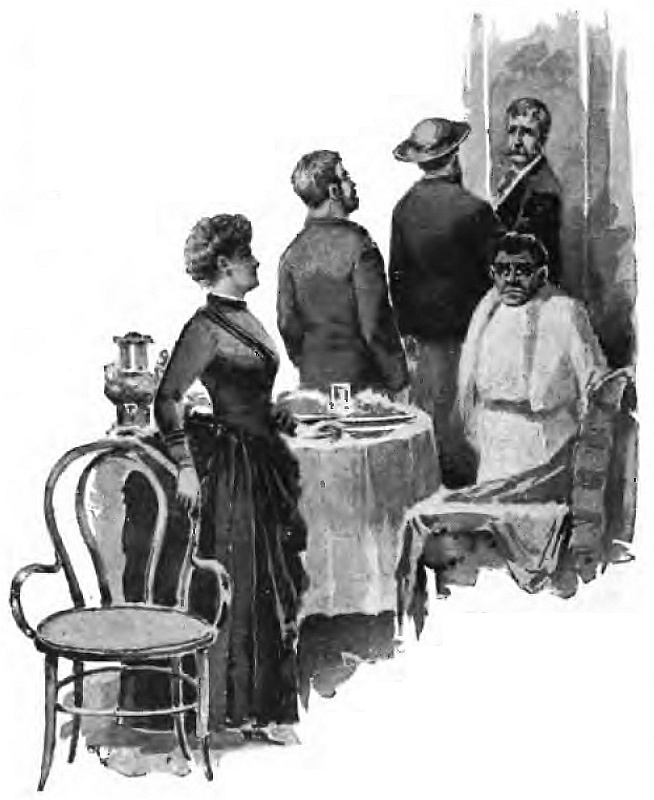
She remembered a suit she had prepared as a gift to a favourite Malay boy. It hung in her closet, not yet bestowed upon its future owner. With feverish haste she secured it, and dressed herself in it. The soft gay handkerchief she tied around her head, and over this placed the hat. She had smiled at the odd costume when she had first made it ready, but she did not smile now, nor at her appearance in it. She only felt joy in the disguise.
Now—how to pass the guards!
It was desperate business. She called Bela—trusty fellow! He must help. The Bushman started at sight of her, and only the voice assured him it was really she.
“Bela,” said she, “I must get away for a while and you must help me. Do you go out to the gate, and when the guards stop you, keep them as long as you can. I will run another way and try to get out of sight. They will send you back, of course.”
The Bushman started on his mission. Dainty watched him concealed in the shadow of the house. The guards stopped him as she had thought. It was growing rapidly dark. She heard the authoritative voices of the guards, and the stupid answers of Bela. Dashing at right angles from the scene, she scaled the fence unobserved, and rapidly left the unsuspecting guards trying to convince Bela that it would not do. When he finally submitted, the outwitted officers congratulated themselves on their vigilance. So was the first step accomplished!
Now to find her stalwart driver and order her cart and horses. She had gone scarce one hundred yards when, to her unspeakable joy and surprise, she found the servant going toward home. It was with difficulty she made him know his mistress; ordering him to meet her at a particular spot, she hurried on.
Rapidly passing to the Kafir location, where she felt she should find the Fingo, she walked fearlessly into the first hut. Hut after hut was visited, and inquiries, made of one and another inmate in her awakened savage mood, and in the native language, as to where the boy lay.
As she shook each sleeping body, the very manner of her action, and the tone of frenzy in which she addressed them, so impressed them, that they answered whether they would or not. She walked on and on, until the last hut, the farthest from probable detection was reached, and there, lying between two other Kafirs, she found him.
With superhuman strength she dragged him out. By this time her fury had reached such a pitch that, to be rid of her clutch was like shaking off the claws of a wild cat.
Hurrying him forward in breathless haste, she reached the place where the cart stood waiting. Hustling him into it, she held him with her woman’s hands while the driver tied him securely down. Then, seizing the reins, she ordered her servant to wait her return, and drove swiftly away.
She pierced the dark with savage instinct for there was no road to guide her. The dangerous holes with which the veldt is studded did not lie in her path.
Her anger rose as the horses sped along. To her excited nerves their rapid pace was too slow, and she whipped them into a wild galop all the way, for she must be home before sun up.
Her fury was intense, and she would turn to the Fingo cowering in the corner of the seat, in a sort of mad way, that made him shrink with terror. Every time she looked at him she would urge her horses to additional speed by lashings of the whip, until they were nearly as mad as their mistress.
Chapter Twenty.
One of Eve’s Daughters.
At last, in the dead of night, she reached the house of an Afrikander whom she had once befriended, and on whom she could rely. Him she awakened by blowing a bugle which had lain at her feet.—He came out to her, and listened to the strange tale which she hastily repeated, with the usual unmoved countenance of the Afrikander. He was ready enough to help her to dispose of her terror-stricken prisoner. These Cape people have a way of their own of disposing of anything disagreeable, which strikes the stranger as peculiar, but effective.
Obeying her orders, he took him to a lonely hut, and chained him fast. It was the Fingo’s fate to remain there until danger to Donald was past. When she saw that the captive was where he could do her husband no harm, she handed a purse to the Afrikander and turned her horses’ heads homeward, with a sense of relief.
Her fury had abated, but not her courage. Alone, and fearless, she returned over the veldt, until, exhausted, she arrived on the outskirts of the town, just as the day was dawning, and descended from her cart, leaving it in the hands of her tireless waiting servant. She then turned homeward, now on foot. The fatigue of the watch had relaxed the vigilance of the guard, and they expected nothing from beyond the premises. So by care she was able to regain the shadow of the house and to make safe entrance.
Closing the door, the graceful Malay became transformed into a tearful, trembling, exhausted woman. She doffed her male attire, donned a soft, silken, clinging robe, and sunk on a couch with a feeling of utter weakness. Fate, she thought, had overtaken her, and she felt herself hopelessly entangled in the intricacies of Donald’s possible disaster. But she had shown her devotion as a wife, in her wild and dangerous midnight ride. Why had she ever met Donald? Why had she not been left to live her uneventful life? “Oh,” she sighed, “to hide in the depths of some great forest and there lie down in peace to die.” Then her thoughts reverted to Schwatka, who was seldom out of her mind. Donald with his hidden secret had estranged her. When we are no longer worthy of confidence, we lose confidence in others.
A remnant of the old self that had been Donald’s—her pride in his good name was still left. In secreting the diamond, she sought to shield her husband’s name from disgrace. Beyond this pride, the rest was indifference, and nothing henceforth could kindle any warmer flame, while the new fires of another love burned at such a white heat, that they threatened to consume the temple in which their altars stood.
The mental strain of the last twenty-four hours had completely prostrated her. Soon all became a blank, and she lay for hours unconscious; when she awoke her brain slowly resumed its action. She passed her hand wearily over her head. Where was she? What was it? Ah, yes. She remembered, and rang for Bela. He did not answer the call. Calling a second time, and receiving no response, she sat up, lost in thought.
What was the immediate work before her? To find Bela must be her first act, for he had the diamond! She ran out of the room into the next and searched everywhere, thinking he must be in hiding. Calling again, and receiving no answer, she realised that there was not a servant on the place.
Action was now a luxury. Real danger was in the air. If nothing could be proved against her husband, when would he return?
With all these thoughts surging through her brain, it seemed as if her head would burst. As she tottered back toward the bedroom, the door opened, and she swooned in Donald’s arms.
Donald saw that she had been passing through some terrible agony. He groaned and covered her face with kisses, as he laid her gently on the couch and applied restoratives. When she regained consciousness, her eyes fell on Donald. She turned her head away from him with a weary motion. Here were two people chained to each other by the bond of marriage, but whose ways lay far apart. Love held Donald captive, while fate bound Dainty to Donald.
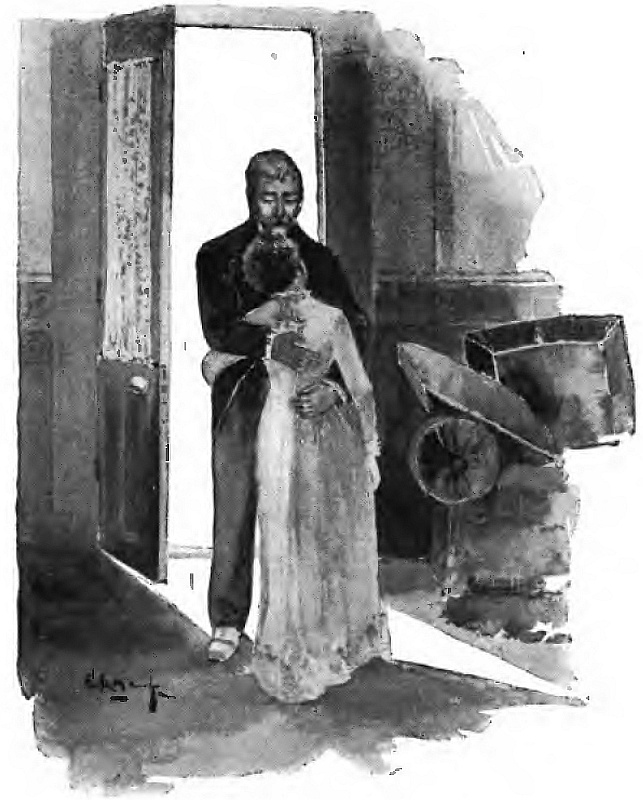
Suddenly she rose from her couch, and began to tell him of her night ride. As she continued, he looked at her in amazement. Her self sufficiency, her fearlessness, under the utterly listless manner in which she told it all, made her seem like a new being to him.
Woman needs but to taste the fruit of the tree of knowledge, to become an epicure. Dainty had been wandering in the fields of Paradise with an Adam who was not Donald, and Donald would no more be her companion, though he might stay by her side.
“If Bela does not return to-day, we must leave the country, unless you are willing to work in convict dress.”
He sank lower in his chair, before replying in a scarce audible voice:
“Where shall we go?”
She looked at him in amazement as she said:
“To England, of course. Where else should you go?” He kept his hand over his eyes as he replied:
“I had thought we might wish to go to Australia.”
“Australia! Why there, instead of England? Do you not care to see your native land?”
“Oh, yes,” said Donald, hurriedly, “only I did not know as you—you cared to go to England in winter.”
This seemed to satisfy Dainty, who wearily closed her eyes and said:
“It matters little to me whether it is summer or winter, so long as I get away from here.” She said no more, but lay unmoved with eyes closed. Donald moodily watched her. Presently he saw that she slept the sleep of exhaustion.
Chapter Twenty One.
On the Heights.
Bloemfontein, the beautiful. Have you seen Bloemfontein? No? Well you must do so before you leave Africa. In this lovely place, its streets shaded by trees, whose luxurious foliage is kept in perennial verdure by purling streams, had Kate Darcy chosen a resting-place. What a change from the dirty, dusty, noisy Fields, with streets filled with hungry worshippers of Mammon, to this crystallised mirage, for one would scarcely realise that so beautiful a garden could rise out of a desert, except in imagination.
Here in the midst of a garden of roses, encircled by a hedge of cactus, stood the house in which Kate Darcy had chosen to make her home for the nonce. Its owner, a wealthy Hollander, who had come out as a missionary, and availed himself of the opportunities of trade with great success, was now visiting Europe with his family. The house was luxuriously furnished, and a Scotchwoman, as housekeeper, watched over all the barbaric creatures—servants on the place.
One morning, a few weeks after her arrival, Kate was listlessly swinging in a hammock shaded by a fig-tree, when Margaret appeared, saying:
“A gentleman to see you, Miss Darcy.”
“Who is it, Margaret?”
“Here is his card.”
As Kate read the name of C.A. Fox—Kimberley, she said:
“Show him the way to the garden, Margaret. I will receive him here.”
When the doctor reached the veranda that overlooked this charming spot, he stood lost in admiration. Before him was the woman he had dreamed of, thought of, loved—since the hour he first met her. Never before had he seen so beautiful, so idyllic a picture. She looked sweet and restful under the trees, with the sunlight striking the trembling leaves which threw playful shadows over her face.
At his approach, she rose from her hammock to greet him. Taking both her hands in his, and looking into her eyes, as if he would read her inmost thoughts, he said: “I hope that you are glad to see me?”
“Indeed I am,” said Kate, heartily. “I was beginning to feel a little secret restlessness, and a desire for the society of a congenial soul. What good angel has brought you to Bloemfontein? Ah, I know,” she continued, for the doctor seemed for once in his life at a loss for words; “the angel of mercy. Some poor stricken sufferer has heard of your skill and sent for you. Is it a case for the surgeon, or physician?”
“I have not fully diagnosed the case.”
“It is not a hopeless one, I trust?” said Kate.
“I fear it is.”
“Let us hope that with your skill, aided by kind Providence, all will be well.”
“I will say Amen, to that, but, as it is a case for the metaphysician, I fear I shall lose the patient.”
“Ah, Doctor! and you whose happy cures are so frequently the result of mental action. By the way, is the patient one of your own sex?”
“Yes; and therein lies the danger.”
With one accord they began to walk slowly over the grounds. As they walked, they talked, and in the midst of their talk, they would cease to walk; standing still to enjoy some thought of the moment, and then begin to pace over the green sward.
“I thought, Miss Darcy, that I would leave the Fields during the hot Christmas season, and visit you.”
“You have done quite right. We will try to entertain you as best we know how. Instead of the usual Christmas turkey with its accompanying cranberry sauce, we will serve up to you some of those delightful dishes our Coolie cook knows so well how to prepare, with a feast of rare fruit, such as I think you have never tasted.”
“I see you think of the inner man?”
“Why, certainly! You, like the rest of your brothers, love to be well fed. You see that I wish you to be amiable while you are here. Experience has taught me that a good dinner makes a man much better company than he would be without it.”
“Miss Darcy, I think your presence would always make a man feel at his best.”
“Tut! Tut! what nonsense. I am more of a philosopher than you. There is nothing equal to a good dinner to make a man feel at peace with all the world.”
“How are you off for servants?”
“I have not the slightest idea how many Margaret has on her staff. When meal time comes around, there will be a quorum or more Kafirs around the kitchen door. Always enough to come to a decision on the merits of the cook, cuisine, and condiments. They are an amusing study. They come in all sorts of garbs: in blankets, old military jackets once owned by some brave Englishman, and a variety of garments too absurd to mention. One Kafir came with a stovepipe hat turned upside down, so that he could have carried all his worldly possessions in it if he had wished to do so. The hat was held on his head by fastening a string to each side of the rim, and tying them under his chin. In addition to that he had on a paper collar, and a pair of old pantaloons half way up to his knees. He had a knob-kerrie in his hand, and walked much as a Broadway dandy would walk.”
“Miss Darcy,” said the doctor, laughingly, “you should fill a sketch-book with all these strange characters you see. Your powers of observation are so developed that you perceive things which others would pass blindly over.”
“I have not the slightest talent for sketching. These scenes will have to remain imprinted on the photographic tablet of my memory.”
“I trust your housekeeper suits you?”
“Margaret is all one could ask for, and such an honest body. I know she doesn’t ‘pretty much’!”
“One could not truthfully say that she is handsome! You are perfectly safe while she is your body-guard. Has she raised that moustache since you met her?”
Kate laughed merrily, for Margaret always reminded her of an old mouser. It seemed as if she never could have been young, and her clothes had a home-made-in-a-hurry sort of look about them. But Margaret filled her niche in the world.
“Let us take a drive before dinner,” said Kate, “and let me show you through this beautiful little town of ours, which we think compares favourably with those havens of rest around Cape Town. You must have seen at the hotel the Englishmen, who are enjoying poor health, and losing their old dreaded belief in consumption.”
“I did, and found them agreeable company. You have pleasant neighbours?”
“I don’t know. I should be sorry to find that I have not, so I do not try to gratify any curiosity I may have on the subject.”
They had reached the house, and Kate, having given orders for the horses to be harnessed to the Victoria, excused herself for a few moments. When she returned she wore a plain cream-coloured cashmere dress. A wide-brimmed Leghorn hat, with drooping feathers, sat gracefully on her head.
After driving through the miniature city, with its imposing banks, churches, House of Parliament, and handsome residences, they struck the road leading along the edge of a line of hills that overshadowed the town, passing several neatly-kept vineyards. For an hour they kept up a running fire of conversation on every topic except the one nearest their hearts; then the doctor turned the horses, and the spirited creatures put their noses down and enjoyed the run home over the hard, smooth road, as much as did the occupants of the carriage behind them. Dinner was ready when they reached the house, and they sat a long time chatting over the viands before them, unmindful of everything outside those four walls. After dinner the garden was again visited, and Kate swung idly in her hammock, while the doctor sat near by and told her the news of the Kimberley world. A cool breeze sprang up at sunset, and the moon rose in all her silvery glory.
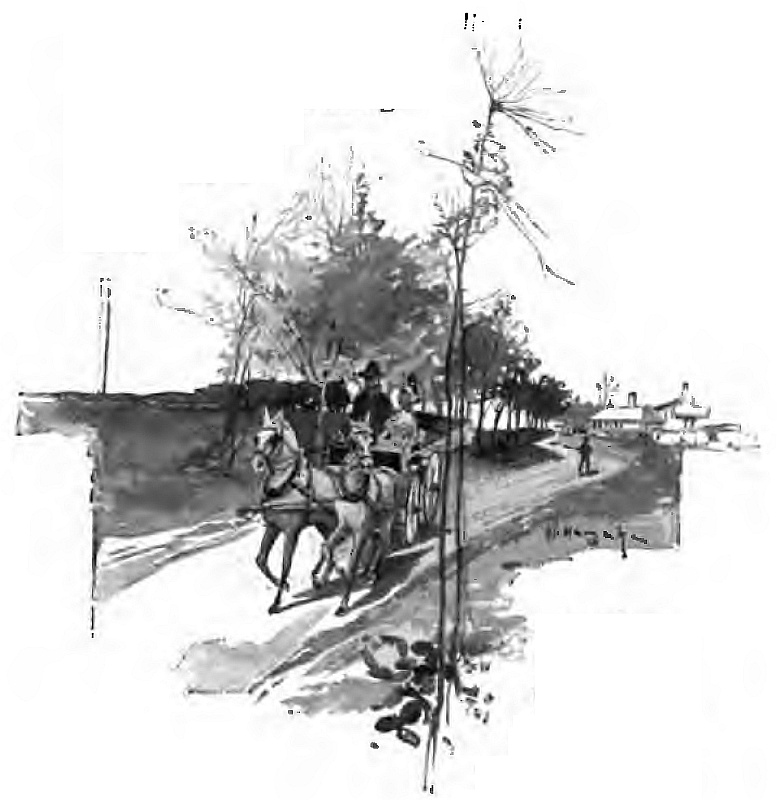
They were both content. The day had brought its full amount of happiness, and was one to be kept in memory.
Chapter Twenty Two.
Pinning Leaves Together.
“I have been thinking that you have found that home of loveliness and utter delight, which you so charmingly described during our last ride together in Kimberley.”
“And have you not forgotten what I said?” asked Kate, looking up at the sky.
“I remember every word I ever heard you utter.”
“I shall be very careful what I say after this.”
“Not on my account, I beg? I like to hear you think aloud as you do, for your words have so stirred my own thoughts, Miss Darcy, that I have been anxious to hear you talk again.”
Kate swung more and more slowly with eyes half closed, like one indulging in a dream.
“Tell me,” continued the doctor, looking down into her face, “are you perfectly happy within yourself. Have you no longing for the society of others, and is this idle life of yours all that you wish for?”
Kate could not answer this man lightly, she felt that if she were false to him in the slightest degree, she would become less womanly in her own, as well as his eyes. Avoiding his glance, she answered:
“The idle life I am leading is a life full of thought. My mind is constantly absorbing everything I see. All these strange creatures around me are a study. I have not been as idle as you think during my stay in Bloemfontein. I have been pinning some leaves together.”
“Pinning leaves together! Am I among those leaves?”
“Yes, but I have turned your particular leaf, with a few others, down for future reference.”
“What will you do with the remaining leaves?”
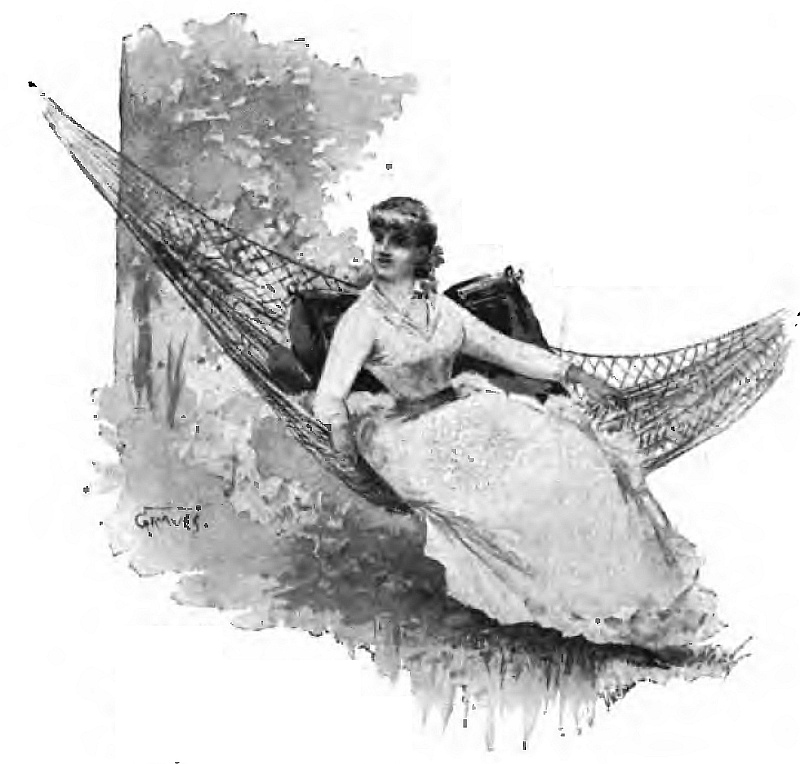
“They will be left pinned. I do not wish to re-read the past. I need all my strength and thought for the ever-present now.”
“Do you mean to say, that you do not intend giving any backward glances?”
“All that is not pleasant I have shut away in those leaves.”
“Then I may infer that the leaf you have turned down for reference, has something agreeable written there?”
Kate made no reply.
“To be but a leaf in your book, brings a sense of delight to me. Pray let me know if I am fast in the binding, or whether I am liable to become lost, strayed, or stolen. Sometimes I feel as if I were all three,” said the doctor, with an earnestness in his voice, that made the blood fly to Kate’s cheeks. Yet evading his real meaning, she said, with mock pity:
“Poor fellow! That is homesickness. Homesickness is a very unpleasant feeling.”
“Especially if you have no home, but are merely existing?”
“Don’t you call Kimberley home?”
“Did you ever meet anyone there who did?” asked the doctor.
“Now that I think of it I never did. Why is it?”
“Because to live simply to make money, is only existence. I do not think I shall remain there much longer. I expect to sail for England shortly.”
“To remain there?”
“That depends!” and the doctor watched her face with its varying expression. Kate covered her face with her hand, for a few moments. When she looked up again the doctor asked:
“Of what were you thinking?”
“Of something in the past. Of course it was a pleasant thought.”
“I wish that I were woven in that past life of yours.”
“I don’t think we would have been as good friends as we are now.”
“Why do you think that?”
“Well,” said Kate, slowly, “I glided over the surface of life then, and did not appreciate half there was to be found in it. I realise now, that it is a great, a grand thing to live.”
“And you make others think the same thought when they come near you.”
“Ah! if I could have that power, what a rich woman I would be. What knowledge I would have, and what good I could do.”
“Don’t say ‘if,’” Kate felt the doctor’s eyes looking down upon her, as he spoke, and knew that he was deeply moved as he continued:
“I think I am a nobler man since I first met you. Your thoughts have been a refreshing draught to my thirsty soul. The divine womanhood in you has at last awakened my true self.”
“Then my coming has done some good; I am content.”
The doctor stood with his hand behind him. Attitude and form expressing the nobility of manhood, as he looked at this queen of his heart. Drawing a long breath he said: “I am not in a mood to talk platitudes, for my life has now become an earnest endeavour. I would rather you would wound me, than to endure another day of suspense such as I have passed through since you left me. Words are but clumsy vehicles to bear the expression of my feelings for you. You seem to be a part of myself—my spirit-mate. Kate, my beloved, come to me; let me call you—wife!”
As he said this he made a step forward, and grasped the hammock, trembling from head to foot. Kate remained silent, while the doctor stood with his hand still on the hammock patiently waiting her reply.
Kate was pale to her lips, as she replied: “My friend, I will be as truthful to you, as one soul can be to another; and I think you will understand me. I am happier now than I have ever been, in my life. I am at peace with myself. To say that I am perfectly happy, would be to say what no one yet has said truly; but it is a question, a very serious one with me, whether marriage would bring me greater happiness than I now know.”
“Would not this love I bear for you make you happier? God did not place you in my pathway without a purpose.”
“That is true. But let us be sure that this love is not a fancy!”
“A fancy! Have you no feeling for me deeper than you give to a mere friend?”
“Yes.”
“Thank God!” and the doctor raised his eyes, then let them fall upon her face with an adoring look.
“But I cannot make you understand, that I would spare you suffering later on. Let me tell you. Love, to me, means perfect trust. I could never stoop to find out if you ever deceived me. If I did, love would die out of me that instant, and then how dreary my life would be. I don’t want to be wretched through any mistaken fancy. When I surrender, it must bring me what I long for—Contentment.”
“Come to me, Kate, and trust me! I am not here without being certain that our lives can be made of use and joy to each other, for I love you. I love you. I have been smothering my feelings so long, that it is now a relief to tell you of it,” and the doctor took one of her hands in his, and held it firmly.
“Tell me, Kate, is marriage distasteful to you?”
“Not my ideal of the true married state. When I look at my married friends, and see among them so many lovely women wretched, and unable to solve the problem of happiness, I pray that my life may escape like miserable failure.”
Chapter Twenty Three.
What shall They do with It?
“Explain to me your ideal of married life?”
“It is one of joy and happiness and of usefulness to our neighbours as well as ourselves. I have come to the conclusion that the restlessness in married people, which leads to divorces, springs entirely from selfishness. As for me, I want henceforth to make my life one of use to every one that comes near me. Every one is given at least one talent for use; not to hide and hoard away. Except for its new duties and relations, married life has no higher ideals than single life. The same earnest unselfish principles should actuate us in whatever sphere we are called. We must shut our eyes to everything but the good in those who seek us, and so call out the best there is in them. That is the great secret of happiness. Encourage a soul to grow, and it will soar far beyond its highest fancies.”
“Kate! you voice the feelings of my best nature. The life of a conscientious physician is only one of use to his neighbour. How might we, equally devoted to humanity and usefulness, work together. If you could but trust yourself to me, we could surely do much good in our lives, one in heart and purpose. Do not fear to trust yourself in my keeping. I know the responsibility of holding a woman’s happiness in keeping, and I would hardly let my first betrayal of any trust be a treachery to the wife of my choice.”
Kate looked long and earnestly at the brilliant stars, that hung from the blue curtain of night. She seemed to drink of an inspiring force, and her eyes matched the brilliancy of the heavenly orbs, as she looked into his, that were so strong and true. In a clear voice she said:
“I am yours in trust.”
The next instant she was gathered in his arms, and held there, while his lips pressed her brow. It would have seemed like mockery to have spoken at such a moment. Words are needless when Love sits enthroned. Then it is that heart speaks to heart.
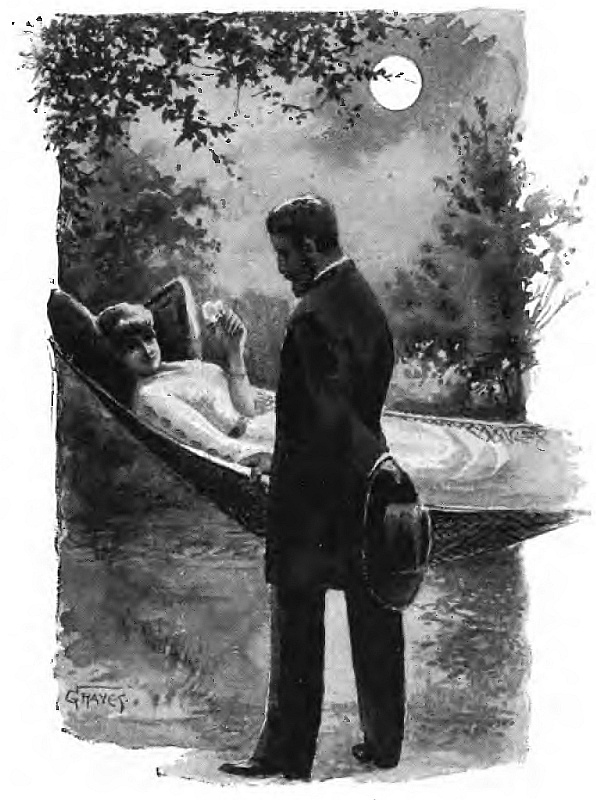
“Miss Darcy?”
“Yes, Margaret.”
“May I speak with you a moment?”
“Well, what is it?” and Kate approached Margaret, who stood a little distance from the lovers.
“A strange creature is here who wishes to see you.”
“See me? Is it a man or woman?”
“He looks like a Bushman.”
“What can a Bushman want of me?” said Kate, walking toward the house. In the still night air, the doctor had heard every word, and now followed her. He found Bela talking rapidly to her in clicks and vowel sounds, with his hand held over his eyes.
When Kate saw the doctor she laughingly said:
“He sounds like a cricket! Can you understand the jargon?”
At sight of the doctor, Bela acted like one insane with delight. He clapped his hands and kept time with his feet, while his body swayed in strange undulating motions.
“Let us go into the house, Miss Darcy,” and making a motion to the Bushman to follow, they entered the salon. The doctor sat down, and Bela stood and told his story. As he proceeded the doctor’s face was a study to Kate, who knew from its expression that something very strange had occurred.
In a few moments putting his fingers to Bela’s eyes, he lifted the lid and slipped the glass eye from under it. As he did so, the concealed diamond fell into his hand.
“Great Scott!” exclaimed the doctor.
Bela chuckled, and began to clap his hands and express delight in his usual way. Kate gave one look, and sank into a chair. They sat for a moment looking at each other, in stupefaction. Then Kate asked:
“What does it all mean?”
“It means that Donald Laure has been arrested on suspicion of being an I.D.B. and this creature has been a faithful servant to Mrs Laure. You may go outside and wait for me, Bela.” When the Bushman had gone, the doctor continued: “Knowing you were a friend to his mistress, he has run from the Fields to you, without stopping, carrying the diamond in his eye! These natives are wonderfully astute, and Bela knowing that as you were living in the Orange Free State out of the pale of the law of Griqua Land West, the land of diamonds, if he could deliver this diamond into your keeping, he would be safe, and every one else connected with it.”
“What would I have done with the diamond? Mercy! how glad I am that you are here.”
“Already, Kate, I am of use to you? I am very glad indeed, for your sake, that I am here.”
“What will you do with it?”
“Well, I shall consider the matter. It is late, and I must now go to my hotel. I will think it over and tell you my decision in the morning. This has been a memorable day in my existence, but it must end, more’s the pity.
“Good night, good night! parting is such sweet sorrow, That I shall say good night, ’till it be morrow,”
quoted the doctor, as he left her alone.
The next morning they were eager to see each other, for this was the dawn of their new life, and their faces reflected the radiance of the glory of the light on their horizon. Yet their talk was not of themselves but of Bela and the diamond.
“I have been busy this morning attending to this matter. Bela has disappeared! I find he was last seen at sunrise, on the road leading up into the interior of the country. He must have been nearly frightened to death over the scene with the detectives and his mistress, and afterwards by a little encounter with the guards at the gate. He probably fears even me at present, thinking that I may hand him over to the authorities, and so injure Laure. These natives have some of the wisdom supposed to be bestowed only upon their masters.”
“What will you do with the gem?”
“I have telegraphed to Kimberley to find if Donald Laure is there. The disappearance of Bela with the diamond may cause Donald to change his plans.”
As they sat talking a telegram was brought in by Margaret. Its contents follow:
“Donald Laure and wife have left Kimberley for England.”
The doctor sat thinking with a puzzled expression on his countenance.
“Surprises multiply, Kate. What shall we now do with the diamond? I do not know to whom it belongs, and do not wish to do anybody an injury by sending it to the authorities. They would at once telegraph to England and have Donald Laure seized on his arrival in that country.”
“What do men do with their diamonds, when they want to get them out of their way?”
“Oh, they bury them, or send them to England by mail.”
“Why don’t you do that?”
“Do what?”
“Send it by mail to your banker in England, addressed to Donald Laure, care of yourself, so it will be in safe hands, then you can give him an order for it when you find out his address.”
“Well, Kate! That is good Yankee invention. You will be as good as a lawyer in adjusting all weighty matters that may arise in our lives. It is just the thing to do. Who says a woman’s quick invention isn’t worth more than the step-ladder man uses when he tries to climb to the heights of success through his reason?”
“Then you will do that?”
“It is the only thing to do. I will send it off before I leave to-day. We have only a few hours to ourselves before I start on my journey down the country to the sea, where I will take the steamer which will carry me to England in twenty days. I am a happier man, Kate, than I expected to be on that journey. When I came to Bloemfontein it did not seem as if I were worthy to approach and ask you to give yourself into my keeping.”
“Love makes one feel unworthy of the object upon which it sets its affections. But our recompense for this personal sense of unfitness is the glory we gain in the eyes of our beloved. Perhaps an average struck between the humility of love on one side and the exaggeration of love on the other, will give a fair estimate of the reality.”
The doctor smiled at Kate’s grave conclusion, and taking both her hands in his, laid them over his heart which beat so truly, and on which she knew she could rest and gather to herself strength. In another hour he was on his way to the coast.
Chapter Twenty Four.
“How will it End?”
What a civiliser is the railroad, preceded by the missionary, and followed by the speculator!
How changed is the country, since the time when the journey from Kimberley to the coast was made by ox-wagon, by stagecoach, or Cape cart, with its Malay driver and Hottentot guard, with a possible passenger hurrying to the sea to catch the English steamer.
Here the Kafir, with his coating of blue clay, once wound his way over the path worn by his ancestors, through the Karoo, across the sluit, the swamp, over the Kopje, telegraphing his approach by that soft, melodious, far-reaching cry peculiar to himself, on his pilgrimage to the great ocean, his goal. Not until certain sacred rites were carried into effect and he was cleansed in the great waters, was he considered a man by his tribe, and his approach to a kraal was but the signal for the younger women to hide themselves.
Strange creatures, and stranger customs, that are as strictly adhered to, as were the Mosaic laws of old, which in some respects they resemble. The scientist in the country finds the native life a weird, never-ending mystery, and the iron horse seems a trespasser.
In these days the traveller lounges in a luxurious Pullman coach, which in thirty hours hurries to the coast at Port Elizabeth, across sandy plains, and treeless mountains, passing slowly and gracefully over the “Good Hope” bridge, over a thousand feet in length, built upon nine arches that span the Orange River, a treacherous stream fifty-five feet below the rail, rushing onward to that omnivorous mouth, the Sea. During a few months of the year the upland rivers come rolling down like cataracts, over huge boulders, and dragging great gnarled trees with them, as if they were no more than a feather’s weight; thus leaving the riverbeds dry during the remaining months of the year, or with a mere brooklet trickling along between wide yawning walls of clay.
On reaching Port Elizabeth, that enterprising city of Cape Colony, Dr Fox proceeded immediately to the long jetty, built well out into the sea, and there boarded a tug that lay alongside, and was soon steaming out to the “Arab,” riding at anchor in Algoa Bay.
Many passengers were aboard, a number having come from Natal, and their faces expressed satisfaction at the prospect of a visit home to England.
Soon the heart of the great “Arab” began to beat, and the pulsations could be heard and felt by the passengers sitting on its deck watching the sunlight reflected on the wooded shores of the African coast, that seemed to glide by, while the “Arab” stood still.
A few days at sea seems a very long time, and social reserve drops off with the taking of the log. The seats arranged at table, the constant personal association in the confines of the ship, together with the hundred of incidents that arise during a long voyage, soon reveal the characters of fellow passengers. If there is congeniality the voyage comes to an end almost too soon.
There is no life that can tell of its romances and its heart-burnings like the life at sea.
A man’s soul must be living indeed in a cold atmosphere, that can be so gently rocked in such a richly carved and gilded cradle as one of those Southern steamers, and not find sentiment growing in his soul. Especially if he is fortunate to meet there what may appear to be an affinity.
On reaching Cape Town the following day, and entering the stone dock, the doctor disembarked to pay a flying visit to the Eden-like suburbs, where the houses, covered with passion-flowers, growing in wild profusion and surrounded by orchids, peep out, overlooking the beautiful waters of Table Bay. With the mauve-tinted, golden-rimmed mountains lying in the distance, it is a veritable paradise in which to hide one’s self away from the world.
Taking a hansom and returning to the steamer, the doctor stood on deck watching the sailors depositing the luggage in the hold, and thinking what that voyage might mean in the lives of many of the passengers.
As this thought sprang up, he looked toward the dock, and saw three persons in tourist garb, hastily approaching the gangplank, then in course of being hauled on deck.
Their faces were familiar. They were Donald and Dainty Laure, with Herr Schwatka, and they came hastily on board, and disappeared in the deck cabins allotted to them.
This was the beginning of a new act, not anticipated by the doctor, in the drama of which, so far, he had been a spectator.
“What will be the end of it?” was his mental query.
Here in the Southern hemisphere, with the clearly defined outline of majestic scenery, the great “Arab” again began slowly to swing away from her moorings out into the boundless ocean, soon to glide over its bosom, as swiftly as a swan in its native lake.
Hardly a ripple disturbed the waters, and the air kissed the cheek like the touch of an angel’s wing.
Here, where “The heavens are telling the glory of God,” and the Southern Cross and the eye of night throw out a light unequalled in our Northern hemisphere, to simply live is a delight.
That great deck seemed unnecessary for those quiet waters, but there are times when the sea changes its moods with a suddenness like that of Southern storms in the upland regions of Africa, where the whirlwinds of dust come with unexpected fury. Those tropical winds, on both land and sea, are treacherous and capricious.
To attempt to describe a sea-voyage from Africa to England, through the summer voyage of the world, is like attempting to describe a dream that had been one long, sweet draught of perfect happiness, where the spirit seemed to go wherever it willed, and was in company with people with whom it felt in harmony.
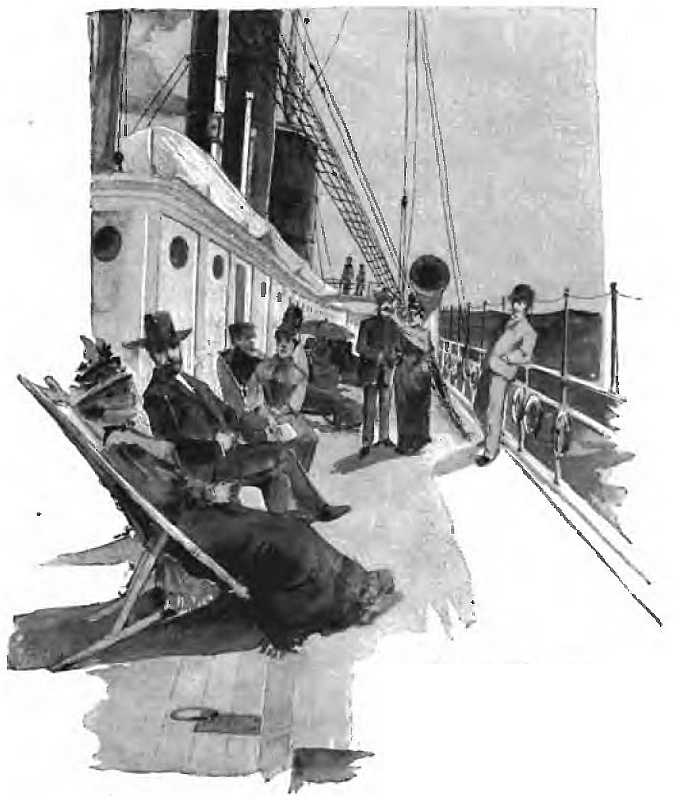
There are usually musicians, or accomplished people aboard, who have no thought of hiding their light under a bushel, but who cheerfully contribute to the entertainment of their fellow passengers.
To Dainty Laure what would not this experience have been, had her heart been at rest. But she looked at the new world with strange experiences distracting her soul, and the unwonted surroundings made her condition but more pitiful.
Unable to control the harassing conditions of her life, she was like a sick, suffering creature denied the quiet and rest needed for recovery. In her full strength, and with her former capacity for enjoyment, she would have taken a child’s delight in change.
But now, removed from her accustomed places, kept by circumstances from putting her trust for the future where her heart prompted, and unable to feel toward Donald the reliance of love, she was never at rest.
Often she would sit long by the side of the doctor, not saying a word. He was the one man she knew well whose presence satisfied her. The doctor never questioned her, for the agony of her spirit was written on her face, which grew sadder day by day. She knew not how to wear a mask.
Chapter Twenty Five.
The End of the Voyage.
But Dainty was not the only uneasy passenger among our acquaintances; Donald was no less discomfited. The knowledge of his past embittered even his love for Dainty—a love to which he was true. And yet, when in any way we wrong the loved, are we true? No—rather false. For real love will deny itself for the sake of the beloved.
He had no suspicion of the tender feelings that existed between his friend and the woman he called wife. The hidden entanglements of his own life blinded him to all other convictions. What solitary lives were these two living! Watched and harassed, they were not as happy as the hard-worked, gasping stoker, who came up from below, like a Vulcan from his fiery forge, to get a breath of the stifling equatorial air.
One hot, lazy afternoon, just after tiffin, Donald and Herr Schwatka were walking on deck, when the latter asked:
“What has become of Kildare?”
“Oh, he has set his scheme afloat, and is sailing along. The great gold mining company is now in popular favour. By the by, he compliments the doctor on being the best Poker player, but one, on the Fields.”
“And what may be the name of his superior?”
“Why, Major Kildare, of course. He thinks Doctor Fox the best fellow in the country. I suppose you know that the Major accepted his invitation to call and take his revenge, and won back all his money, and immediately went out on the market and bought the finest tiger skin he could find, and hung it in his office. So that is why there is one man in Africa better than the doctor in playing the little game of Poker.”
“That is a matter of opinion,” said Schwatka, sarcastically; as he strolled away, Donald joined the doctor, who was sitting on deck by Dainty’s side, and offered him a cigar. The day was lovely. Not a ripple disturbed the surface of the ocean.
“Laure,” said the doctor, “do you know what became of that diamond which the detectives couldn’t find, and which was hidden in the Bushman’s eye?”
Donald’s cigar fell from his mouth, and he seemed to shrivel up in his chair. “If you don’t,” continued the doctor, as coolly as if he had asked the time of day, “I do.”
“You!” gasped Donald.
“Yes. I believe it is in a mail bag on board this very steamer.”
“Impossible!” ejaculated Donald.
“Not at all. In fact, quite probable,” said the doctor, showing him the postal order, and then related his interview with Bela.
Donald was stunned, and when the doctor handed him the order for recovery of the package on his arrival in London, the circumstance did not tend to restore calm.
Donald hesitated at first, but his fingers finally closed over the bit of paper that made him again owner of the diamond. After looking it over, he turned to Dainty and said:
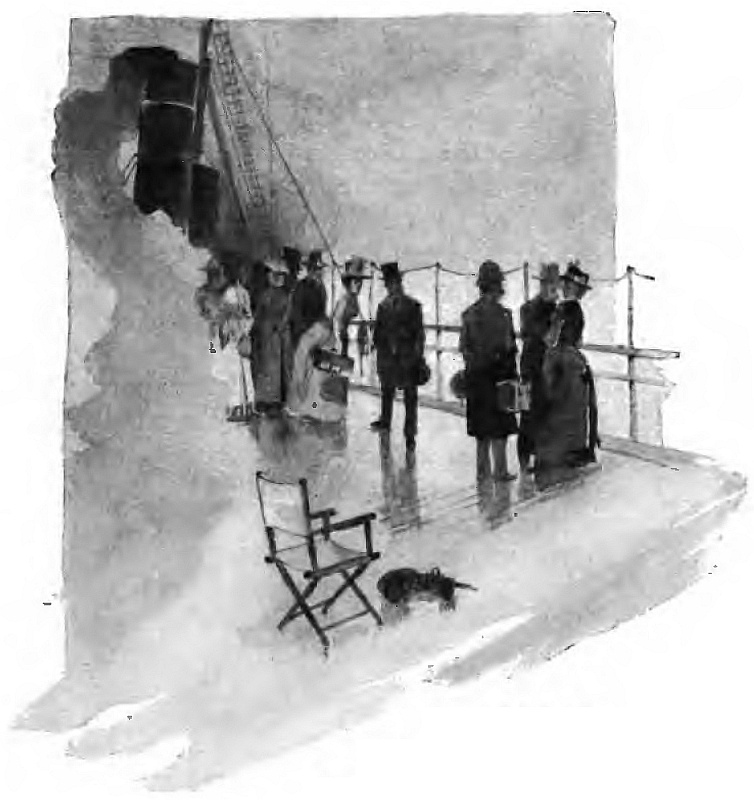
“I think the diamond belongs to you. If it were not now on its way to England through your influence, I would not be sitting here. I will endorse this order, so that you will own the diamond.”
He did so, and eventually the gem came into the possession of Dainty.
Late in the afternoon of the nineteenth day out, the steamer anchored in the bay of Plymouth. A tender, with relatives and friends of the passengers aboard, came out to meet and take them ashore.
In the gathering gloom the faces of those on board the “Arab” were not discernible, but the outline of the forms of three people could be seen, standing silently apart from the crowd at the gangway. Names were called out, and greeted with hearty, joyous words of recognition. Many stood waiting to disembark as soon as the signal was given. Suddenly a voice called out:
“If Mr Donald Laure is on board, he will please land here, as his wife, from Scotland, is waiting to receive him!”
Not a sound was heard from those on deck. All stood as silent as ghosts in the gathering mist.
On hearing those words, Herr Schwatka looked at Dainty, who stood rooted to the spot, and putting his arm around her supported her firmly and tenderly, as he uttered three words:
“Mine at last!”
Donald turned to Dainty with a face like death, but only to see her led away from him upheld by the arm of Herr Schwatka. With a slow step, like that of a man walking to his doom, he disappeared down the gangplank to meet the “wife from Scotland!”
We know not for what race we are preparing. Fate holds the leading horses in her hands. But sooner or later we must drive.
In a certain copy of the “Bloemfontein Gazette” is the following notice.
Married.
Fox-Darcy.—At the residence of the bride’s brother, Kimberley, South Africa, May 22, 18—Miss Kate Darcy and C.A. Fox, M.D. New York City papers please copy.
|
Chapter 1
| |
Chapter 2
| |
Chapter 3
| |
Chapter 4
| |
Chapter 5
| |
Chapter 6
| |
Chapter 7
| |
Chapter 8
| |
Chapter 9
| |
Chapter 10
| |
Chapter 11
| |
Chapter 12
| |
Chapter 13
| |
Chapter 14
| |
Chapter 15
| |
Chapter 16
| |
Chapter 17
| |
Chapter 18
| |
Chapter 19
| |
Chapter 20
| |
Chapter 21
| |
Chapter 22
| |
Chapter 23
| |
Chapter 24
| |
Chapter 25
|