Chapter V · ToC
Reading edition
CHAPTER VToC
AN ASSESSMENT OF THE SOCIAL IMPACTS
Often, it is assumed that disasters leave masses of the population in the impacted areas dazed and helpless and unable to cope with the new conditions, or that those not so immobilized panic or display antisocial behavior. Another common assumption is that local communities and organizations are rendered ineffective to handle the many problems, leading to further disorganization, loss of morale, and requiring the quick assertion of "strong" outside leadership and control.
Practical experience and field studies of disasters indicate that these assumptions are not necessarily correct. The widespread sharing of danger, loss, and deprivation produces an intimate cooperativeness among the survivors, which overcomes social isolation and provides a channel for very close communication and expression and a major source of physical and emotional support and reassurance. This capacity seems to account for the resiliency of personality and social organization in dealing with threat and danger. It is also at the base of the ability of social life to regenerate.
In addition, a good case can be made in that community systems experiencing impact may be more efficient and rational than they are in "normal" circumstances. Normal (pre-disaster) community life traditionally operates at a low level of effectiveness and efficiency. Activities are directed toward a very diffuse set of goals, just as human resources within the community are inadequately utilized. Upon disaster impact, certain community goals—care for victims and the restoration of essential services—develop a high priority while others are ignored or held in abeyance. Thus, the entire range of community resources, even taking into account "losses," can be allocated to the accomplishment of the more critical goals. Also, human resources are better utilized. Many women, older persons, younger persons, and members of minorities now become "productive;" the "labor" market after impact is open to those underutilized resources. In effect, then, disasters create the conditions for the more efficient utilization of material resources and the more effective mobilization of human resources.
To accomplish this, certain modifications have to occur in the normal community structure, since the usual decision-making structures are designed for a different range and type of problem. Outsiders see this restructuring process as disorganized, chaotic, and creating the necessity for the imposition of some strong outside authority. On the contrary, this restructuring process is functional and adaptive. Its consequences are seen in communities and societies that rebound dramatically from the disruption and destruction to levels of integration, productivity, and growth capacity far beyond the pre-disaster state.
In summary, the picture drawn points to the capacity of individuals and institutions to deal with difficult problems created by disaster impact. It also points to the adaptive capacity of social organization within communities to deal with unique and dramatic problems. These findings are not an argument against planning nor against "outside" assistance, but they should condition both the nature of planning and the direction of assistance.
ANNEX 1ToC
LETTERS OF CORRESPONDENCE
THE WHITE HOUSE
WASHINGTON
September 19, 1980
To Governor Jerry Brown
As you know, following my trip to view the destructive impacts of the volcanic eruption of Mt. St. Helens in the State of Washington, I directed that an assessment be undertaken of the consequences and state of preparedness for a major earthquake in California. This review, chaired by my Science and Technology Advisor, Frank Press, is now complete. We are grateful for the assistance provided by your staff and the other State, and local officials in this effort.
Although current response plans are generally adequate for moderate earthquakes, Federal, State, and local officials agree that additional preparation is required to cope with a major earthquake. Prudence requires, therefore, that we take steps to improve our preparedness.
While the primary responsibility for preparedness rests with the State of California, its local governments and its people, the magnitude of human suffering and loss of life that might occur and the importance of California to the rest of the Nation require increased Federal attention to this important issue. Accordingly, I have directed that the Federal government increase its work with you to supplement your efforts. The Federal efforts will be led by the Federal Emergency Management Agency and include the Department of Defense and other Departments and agencies as appropriate.
As a Nation, we must reduce the adverse impacts of a catastrophic earthquake to the extent humanly possible by increasing our preparedness for this potential eventuality.
Sincerely,

The Honorable Edmund G. Brown, Jr. Governor of California Sacramento, California 95814
September 26, 1980
The Honorable Jimmy Carter The President The White House Washington, D.C. 20500
Dear Mr. President:
Let me take this opportunity to review our conversations over the last few months regarding increased seismic activity in California.
When we met in Oakland on July 4 I raised the issue of seismic hazards. I was concerned then with the steady increase in seismic activity in California since 1978. Sharing my concern, you directed that the National Security Council join with my staff and certain local experts to conduct a quick study on the potential for a great earthquake in California.
As you know, significant theoretical and public policy research had already been completed by our Seismic Safety Commission, State Geologist, Earthquake Prediction Evaluation Council and the Office of Emergency Services. Together with the U.S. Geological Survey and the Federal Emergency Management Agency (FEMA), they had clearly been keeping abreast of the state of the art of earthquake prediction. Indeed, combined state and federal efforts, founded on major theoretical advances in American, Russian and Chinese seismic and geological theory since the early 1970s, had shifted the language of earthquake prediction in California from "if" to "when"!
In light of my personal interest in this subject, I have signed into law Assemblyman Frank Vicencia's AB 2202, a jointly funded state-federal project to design a comprehensive earthquake prediction-response plan. It is the state's intention to prepare a plan for the greater Los Angeles area as quickly as feasible. In my view, such a fullscale prediction-response program had become possible only after the research findings of both physical and policy scientists during the past five years. It is my conviction that such a plan is now timely—neither too early nor too late.
In this context, your recognition of this issue in our conversation of September 22 in Los Angeles was a welcome personal reinforcement of our state and local efforts. I am also grateful for the September 3 briefing in Sacramento by Mr. John Macy, Director of FEMA, regarding the latest U.S. Geological Survey interpretations of anomalies around California's system of geological faults. As soon as we have received the final FEMA report on the details of those anomalies, I will ask the state geologist to evaluate the report, confer with colleagues in the Geological Survey and have all state and local officials fully briefed.
At that time, I would be grateful for an early opportunity to meet with you and explore next steps. I am confident that a heightened state of awareness among my fellow Californians will so deploy the resources of the state, plus available federal supplementary assistance, as to minimize the loss of life and property in the event of a great earthquake.
Sincerely,
/s/
Edmund G. Brown, Jr. Governor
ANNEX 2ToC
CURRENT CALIFORNIA AND FEDERAL EARTHQUAKE RESPONSE PLANNING
A. NATURE OF EMERGENCY PLANNING
An emergency, as used in this report, is defined as an unexpected, sudden or out-of-the-ordinary event or series of events adversely affecting lives and property which, because of its magnitude, cannot be handled by normal governmental processes. Emergency response planning is the process that addresses preparedness for and response to an emergency.
Emergency response planning is an evolutionary, ongoing process and is prerequisite to all other emergency readiness activities. It is a comprehensive process that identifies the potential hazardous events, and the vulnerability to such hazards, estimates expected losses, and assesses impacts of such events. The development of written plans is followed by placement of capabilities to implement the response plan and by the conduct of periodic tests and exercises. The most difficult task in the development of an emergency plan is to anticipate as many of the problems and complications resulting from a given disaster situation as possible and to provide a basis for response to those not anticipated.
The objective of emergency planning is to create the capacity for government to:
Save the maximum number of lives in the event of an emergency
Minimize injuries and protect property
Preserve the functions of civil government
Maintain and support economic and social activities essential for response and the eventual long-term recovery from the disaster
Emergency planning is a logical and necessary pre-emergency activity for governmental (and other organizational) entities likely to be affected by a disaster's occurrence. To be successful, such planning must be accomplished within the framework of the day-to-day governmental structure and activity but at the same time provide for response to the extraordinary circumstances and requirements inherent in disaster situations.
Emergency plans include the preparation of guidelines, policy directives, and procedures to be utilized in preparing for and conducting disaster operations, training, and test exercises. They should also contain clear statements of authorities, responsibilities, organizational relationships, and operating procedures necessary for the accomplishment of disaster response and recovery activities. Further, they should address the four elements of mitigation, preparedness, response, and recovery (immediate and long-term).
Once plans are established they must be periodically updated as conditions change. Updating may become necessary for a number of reasons: increased scientific, technical, and managerial knowledge; feedback from evaluation of exercises; better understanding of vulnerability; shifts in population and economic activities; construction of new critical facilities; and changes in personnel, organization, and legislation.
Emergency planning is a shared responsibility at all levels—in this case from the Federal through the State and local jurisdictional levels. It should include business, industry, research and scientific institutions, practicing professions, and the individuals. By involving all functions of government, the planning process enhances the capability for implementing the plans through the realistic consideration of available capabilities and elimination of conflicts and inconsistencies of roles and task assignments.
Further, by being a part of the planning decision-making process and having identified the needs and areas of consideration, individuals, organizations, and officials responsible for emergency operations are better able to relate to the expected impact and the operational environment. The written plans also serve valuable purposes for training and familiarization of new organizations, individuals, and public officials. Experience has shown repeatedly that when emergency operations are conducted in accordance with existing plans, reaction time is reduced and coordination improved, with fewer casualties, less property damage, and a higher surviving socioeconomic capability to undertake recovery. Other benefits that accrue from planning include the enhancement of hazard awareness.
B. CALIFORNIA EMERGENCY PLANNING RESPONSE
The State of California emergency response planning is a series of related documents, each of which serve a specific purpose. (See figures 1 and 2.)
The basic plan of a jurisdiction (item (1) in figures 1 and 2) is the foundation of this planning process. It is an essential administrative (rather than operational) document, and as such it:
Provides the basis (including legal authority) for and the objectives of emergency planning and operations
Outlines contingencies (emergency situations) to be planned and prepared for and establishes the general principles and policies (concepts of operations) to be applied to each
Describes the emergency organization in terms of who is responsible for what actions
Defines interjurisdictional and interservice relationships and the direction and control structure to make assignments and resolve conflicts
Contains or refers to information of common interest about supporting facilities, such as the Emergency Operations Center and warning and communications systems
Provides the planning basis for other supporting documents which are more operationally oriented
The basic plan is supported by a Direction and Control annex and by functional annexes (see (2) and (3) respectively in figures 1 and 2). The Direction and Control annex details how overall responses to an emergency will be managed and coordinated. Functional annexes (for both staff and services) are designed to address the extraordinary requirements created by emergencies. They identify the specific needs, the organizational resources available to meet those needs, and the scheme or "concept of operations" for their application. It should be noted that, because of unique requirements, annexes often do not reflect normal departmental structure. An annex becomes a departmental plan only when an agency represents the sole resource for meeting the stated need and when satisfying that need is the only task assigned to that agency by the basic plan.
The second major portion of the California State planning structure consists of specific contingency plans (see (4) in figures 1 and 2). One such plan is prepared for each extraordinary emergency or disaster, likely to occur, detailing the probable effects of the emergency on the jurisdiction and the actions to be taken in offsetting these effects. It is also called a "response plan" since it describes the operations to be undertaken to deal with catastrophic situations. Contingency plans include service support plans and checklists (see (5) and (6) respectively in figures 1 and 2). Each involved element of the emergency organization details its response actions in Service Support Plans and itemizes functions appropriate to the specific contingency. The contingency plans, service support plans, and related checklists and standard operating procedures constitute the "operational" portions of the overall emergency plan. They address internal procedures to accomplish stated objectives and document, in advance, the specific organizational elements that will respond to each type of disaster or "need," with identification of procedures and resources.
The third major part of California's overall State plan is a compendium of information and resources needed to cope with emergencies (see (7) in figures 1 and 2). This includes references describing the control structure (Emergency Operations Center locations, communications, key facilities, personnel lists, and equipment source listings).
C. FEDERAL EARTHQUAKE RESPONSE PLANNING
Most Federal agencies operating within the State have a generic emergency response plan that establishes their internal procedures for responding to disasters. Certain agencies such as the Corps of Engineers and the Federal Highway Administration, which provide services and support that are used on a regular and fairly extensive basis in disaster, tend to have more highly developed disaster response plans. Some of them even have rather basic earthquake response segments included in their basic plans. Thus, for moderate earthquakes these plans are relatively effective and the Federal response can be expected to be at least adequate. Few Federal agencies, however, have developed any specific plan that is adequate to respond to the demands of a catastrophic event causing property damage exceeding the $2 billion range. Of 24 Federal agencies whose earthquake planning status were recently evaluated by FEMA Region IX, only the Sixth U.S. Army was determined to have developed a comprehensive capability that is in acceptable detail, has been exercised, and appears to be operationally adequate and reliable. Other Federal agencies are now beginning to perceive the need to improve their planning and response capability following the expected event, and are gradually responding to this need.
Providing impetus to this expanded planning activity has been the emergence of the FEMA Region IX Earthquake Response Plan for the San Francisco Bay Area. This is a site-specific FEMA plan based on a 1974 draft that provided for a full range of Federal assistance during the emergency lifesaving phase following the earthquake. Although this plan never proceeded beyond the draft stage (because of evolving FEMA disaster field operations policy), it served as the basic guide for the development of the Sixth U.S. Army Plan, and has remained a core document for identifying expected Federal agency activities for earthquake recovery in the San Francisco Bay area. In 1979, the emergency response portion of the 1974 FEMA Region IX draft was restructured. The conduct of the post-event response program was shifted from being a centrally directed FEMA activity under the operational control of the Regional Director to a decentralized operation which provides for functional disaster support activities to be assigned by the Regional Director to certain Federal agencies by Mission Assignment Letters. Table 1 indicates functional task assignment areas. Those with the designation "Emergency Support Function (ESF)," have been assigned to other Federal agencies. Table 2 reviews the principal and support agency assignments for each of the ESF functions.
On the basis of these anticipated mission assignments, the tasked Federal agencies participated in the development of operational annexes in the 1979 version of the San Francisco Earthquake Response Plan. Upon completion of the annexes, all agencies were then required to develop the necessary agency support plans and standard operating procedures for accomplishing the mission assignment tasks. Additionally, those Federal agencies designated in the plan as principal agencies were tasked with the responsibility of organizing and coordinating the activities of Federal agencies designated as support.
The rationale for this approach was to identify the various functional areas of disaster response for which a Federal activity could reasonably be expected to maintain after the occurrence of the event. With the functional areas identified, the range of Federal agency talent was evaluated and Federal response capabilities matched to expected functional demands. By the development of a matrix (figure 2), a total of 16 functional response areas (such as transportation, mass care, and debris removal) were identified, and 20 Federal agencies, plus volunteer organizations such as the American National Red Cross, were designated as having appropriate disaster response capabilities. Subsequently, all agencies were rated on their capability for functioning in a principal or a support capacity. These agencies were then provided specific FEMA Region IX Mission Assignments or tasking statements which, when triggered by a Presidential disaster declaration, provide the legal basis for delivering the authorized assistance in response to State and local government needs.
The end result of this approach has been to create a much more effective and reliable capability to respond to the needs of an earthquake disaster by those Federal agencies from which a significant response would be required.
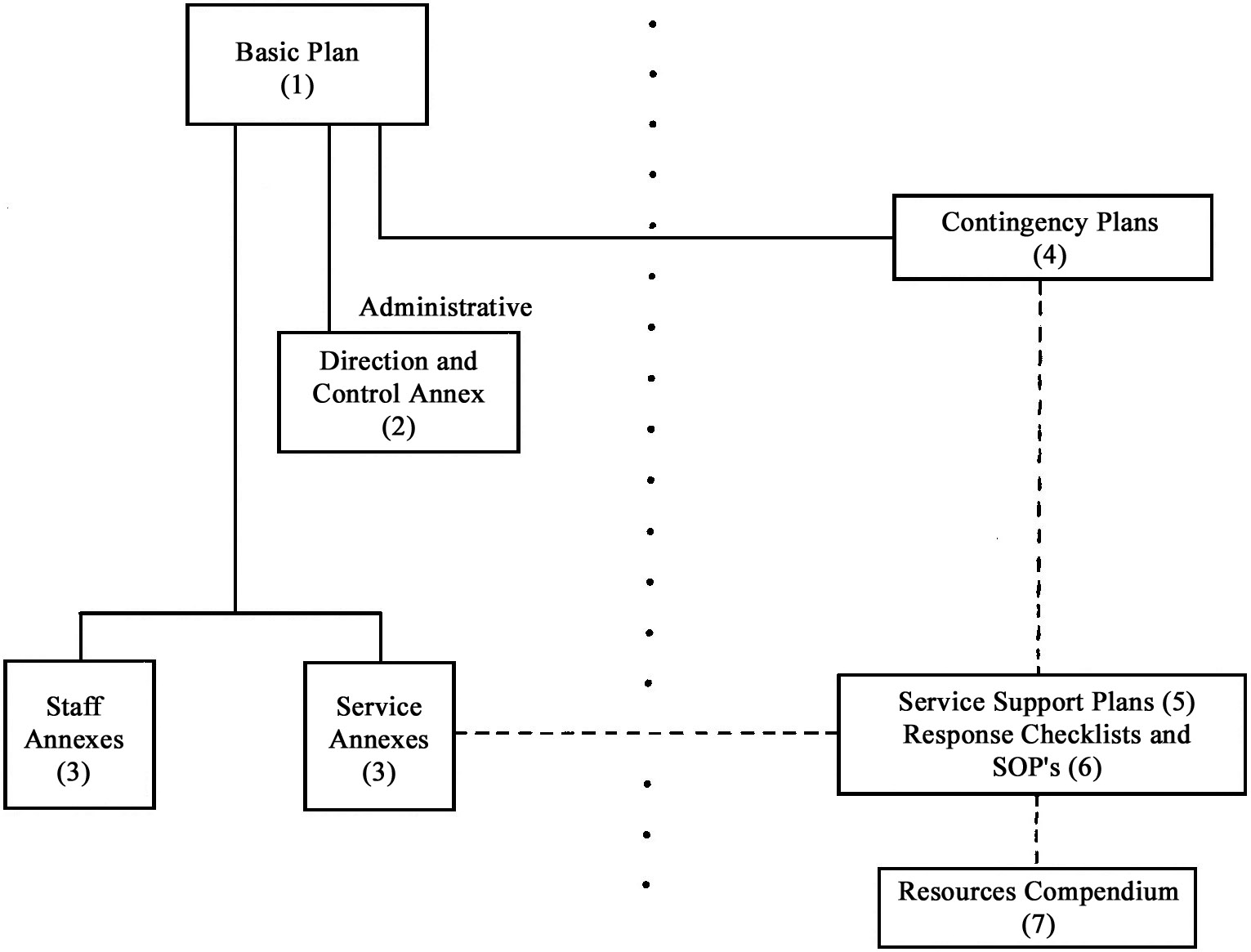
Figure 1: Emergency Plans (Description of and Relationship Between Plan Components)
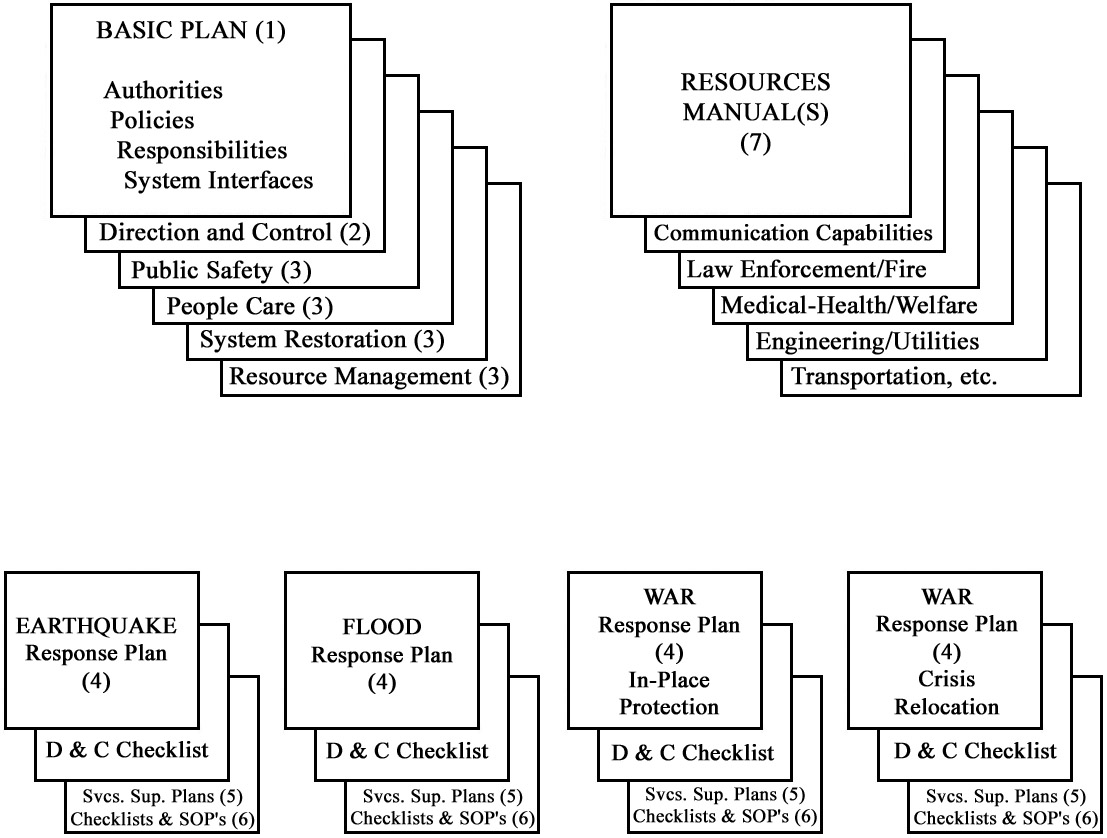
Figure 2: Emergency Planning Format (A Partial Illustration of the Component Parts of a Jurisdictional Emergency Plan)
TABLE 1
FEDERAL EMERGENCY MANAGEMENT AGENCY REGION IX EARTHQUAKE RESPONSE AND ASSISTANCE TASKS
(San Francisco Bay Area)
ANNEXES TO BASIC PLAN
Disaster Field Activities Disaster Field Location Mission Assignments Emergency Transportation (ESF-1)[1] Communication (ESF-2) Emergency Debris Clearance (ESF-3) Fire Fighting (ESF-4) Emergency Roads, Airfields, and Bridges (ESF-5) Emergency Demolition (ESF-6) Administrative Logistical Support (ESF-7) Emergency Medical Care (ESF-8) Search and Rescue (ESF-9) Identification and Disposal of Dead (ESF-10) Warnings of Risks and Hazards (ESF-11) Emergency Distribution of Medicine (ESF-12) Emergency Distribution of Food (ESF-13) Emergency Distribution of Consumable Supplies (ESF-14) Emergency Shelter & Mass Care (ESF-15) Damage Reconnaissance (ESF-16) Isoseismal Analysis Authorities Referral Administration
TABLE 2
EMERGENCY SUPPORT FUNCTIONS
KEY to Federal Agencies:
a: Emergency Transportation i: Search and Rescue
b: Emergency Communications j: Identif. & Disposal of Dead
c: Emergency Debris Clearance k: Warnings of Risks & Hazards
d: Fire Fighting l: Emergency Dist. of Medicine
e: Emerg. Roads, Air Fields & Bridges m: Emergency Dist. of Food
f: Emergency Demolition n: Emergency Dist. of Consum. Supplies
g: Logistical Support o: Emerg. Shelter, Feed, & Mass Care
h: Emergency Medical Care p: Damage Reconnaissance
ESF 1 2 3 4 5 6 7 8 9 10 11 12 13 14 15 16
ANNEX (D) (E) (F) (G) (H) (I) (J) (K) (L) (M) (N) (O) (P) (Q) (R) (S)
FEDERAL AGENCIES a b c d e f g h i j k l m n o p
DOT - FAA S S S
DOT - FHWA S S S
DOT - FRA S S
DOT - RETCO-9 P
DOT - UMTA S S
DOT - USCC S S S S S S
DOD - 6th USA S S S S S S S P P P S S S S P
DOD - COE S P S P P
ICC S S S
DA - USFS S P S S S S
DA - FNS P
DOC - MARAD S S S
NCS P
AYRC S S P
Volunteer Agencies (Various) S
HEW S P S
US ATTY S
DOL - OSHA S
USPS S
FBI S
VA S S S S S
GSA S S S P S P
P - Principal Agencies S - Support Agencies
ANNEX 3ToC
ASSEMBLY BILL NO. 2202
The Governor of California signed into law Assembly Bill 2202 on September 25, 1980, which, among others, provides for State participation in a joint Federal, State, and local program to prepare a comprehensive program for responding to a major earthquake prediction. This action was initiated in January 1980 through the actions of the Assembly Committee on Government Organization, Frank Vicencia, Chairman. Inclusions of specific funds for preparedness was included following a subcommittee on Emergency Planning and Disaster Relief hearing on possible earthquake prediction on April 22, 1980. The text of the Law follows:
Assembly Bill No. 2202
CHAPTER 1046
An act to amend Section 8897 of, to amend and renumber Section 8898 of, and to add Section 8895.1 to, the Government Code, relating to the Seismic Safety Commission, making an appropriation therefor, and declaring the urgency thereof, to take effect immediately.
[Approved by Governor September 25, 1980. Filed with Secretary of State September 26, 1980.]
LEGISLATIVE COUNSEL'S DIGEST
AB 2202, Vicencia. Seismic Safety Commission.
The Seismic Safety Commission Act, which will self-repeal, effective January 1, 1986, establishes the Seismic Safety Commission, and confers upon it various powers and duties relating to earthquake hazard reduction. The California Emergency Services Act confers various related powers and duties upon the Governor, the Director and the Department of Emergency Services, and the California Emergency Council.
This bill would amend the Seismic Safety Commission Act by: changing the basic subject of the powers and duties of the commission to earthquake hazard mitigation and making certain corresponding changes in its powers and duties; including within commission responsibilities, scheduling on its agenda as required, a report on disaster mitigation issues from the Office of Emergency Services and defining, for such purposes, "disaster" as all natural hazards which could have an impact on public safety; and authorizing the commission to exercise various specified powers in relation to other disasters, as so defined, in connection with issues or items reported or discussed with the Office of Emergency Services at any commission meeting.
This bill would also require the commission to initiate, as specified, a comprehensive program to prepare the state for responding to a major earthquake prediction, as specified.
This bill would appropriate $750,000 for the purposes of this act.
This act would take effect immediately as an urgency statute.
Appropriation: yes.
The people of the State of California do enact as follows:
SECTION 1. Section 8895.1 is added to the Government Code, to read:
8895.1. The commission shall initiate, with the assistance and participation of other state, federal, and local government agencies, a comprehensive program to prepare the state for responding to a major earthquake prediction. The program should be implemented in order to result in specific tools or products to be used by governments in responding to an earthquake prediction, such as educational materials for citizens. This program may be implemented on a prototypical basis in one area of the state affected by earthquake predictions, provided that it is useful for application in other areas of the state upon its completion.
SEC. 2. Section 8897 of the Government Code is amended to read:
8897. The commission is responsible for all of the following in connection with earthquake hazard mitigation:
(a) Setting goals and priorities in the public and private sectors.
(b) Requesting appropriate state agencies to devise criteria to promote earthquake and disaster safety.
(c) Scheduling a report on disaster mitigation issues from the Office of Emergency Services, on the commission agenda as required. For the purposes of this subdivision, the term disaster refers to all natural hazards which could have impact on public safety.
(d) Recommending program changes to state agencies, local agencies, and the private sector where such changes would improve earthquake hazards and reduction.
(e) Reviewing the recovery and reconstruction efforts after damaging earthquakes.
(f) Gathering, analyzing, and disseminating information.
(g) Encouraging research.
(h) Sponsoring training to help improve the competence of specialized enforcement and other technical personnel.
(i) Helping to coordinate the earthquake safety activities of government at all levels.
(j) Establishing and maintaining necessary working relationships with any boards, commissions, departments, and agencies, or other public or private organizations.
SEC. 3. Section 8898 of the Government Code is amended and renumbered to read:
8897.1. To implement the foregoing responsibilities, the commission may do any of the following:
(a) Review state budgets and review grant proposals, other than those grant proposals submitted by institutions of postsecondary education to the federal government, for earthquake related activities and to advise the Governor and Legislature thereon.
(b) Review legislative proposals, related to earthquake safety to advise the Governor and Legislature concerning such proposals, and to propose needed legislation.
(c) Recommend the addition, deletion, or changing of state agency standards when, in the commission's view, the existing situation creates undue hazards or when new developments would promote earthquake hazard mitigation, and conduct public hearings as deemed necessary on the subjects.
(d) In the conduct of any hearing, investigation, inquiry, or study which is ordered or undertaken in any part of the state, to administer oaths and issue subpoenas for the attendance of witnesses and the production of papers, records, reports, books, maps, accounts, documents, and testimony.
(e) In addition, the commission may perform any of the functions contained in subdivisions (a) to (d), inclusive, in relation to other disasters, as defined in subdivision (c) of Section 8897, in connection with issues or items reported or discussed with the Office of Emergency Services at any commission meeting.
SEC. 4. The sum of seven hundred fifty thousand dollars ($750,000) is hereby appropriated from the General Fund to the Seismic Safety Commission for carrying out the provisions of Section 8895.1 of the Government Code as added by this act, contingent upon receipt of matching federal funds.
SEC. 5. This act is an urgency statute necessary for the immediate preservation of the public peace, health, or safety within the meaning of Article IV of the Constitution and shall go into immediate effect. The facts constituting such necessity are:
In order to protect the public safety against earthquakes, including the imminent possibility of major earthquake predictions being made within the next 12 months, it is necessary that this act take effect immediately.
ACKNOWLEDGEMENTS
National Security Council Ad Hoc Committee on Assessment of Consequences and Preparation for a Major California Earthquake
Dr. Frank Press, Chairperson, President's Science Advisor
Clifton Alexander, Jr., Secretary of the Army
Roderick Renick, Department of Defense
Cecil Andres, Secretary of the Department of Interior
H.W. Menard, Department of Interior (USGS)
W. Bowman Cutter, Executive Associate Director for Budget, Office of Management and Budget
Lynn Daft, Associate Director for Domestic Policy Staff, White House
Peter Hamilton, Special Assistant to the Secretary of the Department of Defense
Ted Hodkowski, Intergovernmental Assistant to the President, White House
John W. Macy, Jr., Director, Federal Emergency Management Agency
Richard Green, Federal Emergency Management Agency
Frank Camm, Federal Emergency Management Agency
William Odom, Military Assistant, National Security Council, White House
Robert P. Pirie, Jr., Assistant Secretary for Manpower, Reserve Affairs and Logistics, Department of Defense
Working Group Members
Philip Smith, Chairperson, Office of Science and Technology Policy
Clarence G. Collins, Department of Transportation
Richard DiConti, National Communications System
Joseph Mullinix, Office of Management and Budget
Chris Shoemaker, National Security Council
Charles C. Thiel, Federal Emergency Management Agency
Stephen Travis, Domestic Policy Staff
Robert L. Wesson, Office of Science and Technology Policy
Selected Contributors
Richard E. Adams, State of California, OES Region V
James Alexander, State of California, OES Region I
William Anderson, National Science Foundation
Ralph Archuleta, United States Geological Survey
Roger D. Borcherdt, United States Geological Survey
Robert D. Brown, Jr., United States Geological Survey
James Brown, George Washington University
Richard J. Buzka, United States Geological Survey
Maria D. Castain, United States Geological Survey
Lloyd Cluff, Woodward-Clyde Consultants
John Crawford, Federal Emergency Management Agency
Alex Cunningham, State of California, OES
Donna Darling, State of California, OES Region II
Gardner Davis, State of California, OES Region VI
Henry Degenkolb, H.J. Degenkolb & Associates
Joseph Domingues, Federal Emergency Management Agency, Region IX
Russell Dynes, American Sociological Association
Raymond R. Eis, United States Geological Survey
Susan Elkins, Federal Emergency Management Agency, Region IX
Jack F. Evernden, United States Geological Survey
Charles Fritz, National Academy of Sciences
Thomas E. Fumal, United States Geological Survey
James T. Haigwood, State of California, OES Region I
Jane Victoria Hindmarsh, State of California, OES
Connie E. Hooper, Federal Emergency Management Agency
William B. Joyner, United States Geological Survey
Harry King, State of California, OES Region II
Henry Lagorio, University of California
Richard P. Liechti, United States Geological Survey
Terry Meade, Federal Emergency Management Agency, Region IX
Ugo Morelli, Federal Emergency Management Agency
William Myers, Federal Emergency Management Agency
Robert A. Page, United States Geological Survey
Daniel J. Ponti, United States Geological Survey
H. Roger Pulley, State of California, OES
F. Joseph Russo, Federal Emergency Management Agency
Louis Schwalb, Federal Emergency Management Agency
Wanda H. Seiders, United States Geological Survey
Paul A. Spudich, United States Geological Survey
Frank Steindl, Oklahoma State University
Karl Steinbrugge, Private Consultant
Christopher Stephens, United States Geological Survey
Robert Stevens, Federal Emergency Management Agency, Region IX
John Sucich, Federal Emergency Management Agency
Hurst Sutton, Private Consultant
Richard Traub, State of California, OES Region I
Monica L. Turner, United States Geological Survey
Robert E. Wallace, United States Geological Survey
Kay M. Walz, United States Geological Survey
William W. Ward, State of California, OES Region II
Robert R. Wilson, Federal Emergency Management Agency
Robert P. Yerkes, United States Geological Survey
Mark D. Zoback, United States Geological Survey