Chapter IX · MARY BEATRICE OF MODENA, QUEEN-CONSORT OF JAMES II.
Reading edition
(A.D. 1659-1718.)
The city of Modena in Italy was the birthplace of some of the greatest poets and painters of that land of artists, and it was there that the heroine of this narrative was born. Her father, the Duke of Modena, was a learned man, and would probably have made his mark in the world if he had lived long enough; but he died young, and left his Duchess Laura to rule in his stead.
This lady had two little children, a boy, who later became Francis II. of Modena, and Mary Beatrice. Prince Rinaldo d'Esté, afterwards a cardinal, was appointed guardian of the children, and assisted their mother in educating them.
Francisco, as the boy was called during his minority, was two years younger than his sister, consequently when his father died the duchess ruled the state many years before he was fit to do so.
She was rather a stern mother,—her fear, lest overindulgence might spoil her little ones, making her notice trifling faults that in some instances it would have been wiser to have overlooked. She insisted upon hard study several hours every day, and never allowed any of the fasts imposed by the church to be omitted, though both the children were delicate. When Mary Beatrice was frightened at seeing a chimney-sweep descend into her nursery through the fireplace, her mother made the man remain until she had shown the child who he was, and explained
Original
Why he looked so black and dirty. On one occasion the attention of the duchess-regent was drawn to the fact that hard study was wearing upon the young duke's health. "Better that I should have no son, than a son without wit and merit," replied the parent.
A.D. 1666. Mary's first real sorrow was when her governess, of whom she was very fond, entered a convent, and she grieved so sorely that she was sent to the same institution to finish her education. There she spent several happy years; for the discipline was much less rigid than it had been at the palace, and she had the companionship of girls of her own age. The books that were placed in her hands, and the influence by which Mary was surrounded at the convent, filled her youthful mind with mystic romance, and gave her a desire to imitate the female saints whose lives had been devoted to the service of God. Besides, she had an aunt in the convent, scarcely fifteen years older than herself, who was preparing to take the veil, and Mary Beatrice loved her so much that she desired to follow her example. But she was not to lead a life of peace and repose: a different destiny awaited her, as we shall see.
James, Duke of York, was brother to Charles II., and the second son of Henrietta Maria and Charles I. of Great Britain. He was a gifted engineer, and for many years occupied the post of Lord Admiral of England, when he established colonies in different parts of the world, and advanced trade with foreign countries. After being a prisoner in his native land for many months, during the struggles of his father's reign, the duke made his escape to Holland and shared his brother's exile, never returning to England until the time of the restoration. While his mother was living in France he entered the army of that country as a volunteer, and fought so valiantly for the royalist cause that the French commander said: "If any man in the world was born without fear it was the Duke of York."
There is a portrait of this prince in the royal gallery at Versailles, painted when he was about twenty-two years old, which represents him as one of the handsomest men of his time. His brown hair is brushed from his brow and falls in ringlets at the back; his eyes are large, dark, and expressive, lips full and red, complexion warm and healthful. This picture was painted before he had the small-pox, for that dreadful disease made a sad alteration in his appearance later in life.
The Duke of York distinguished himself on the battlefields of Spain after he was driven from France, where he had served in four campaigns, and was offered a very high position. He would not accept, because he was always expecting affairs to take such a shape in his native land as to permit his return..
A.D. 1660. Shortly after that important change did occur,—the restoration of Charles II.,—the duke fell in love with Anne Hyde, daughter of Clarendon, and married her in spite of a great deal of opposition on all sides.
A.D. 1667. By the time he was thirty-four years of age his wife and several of his children were dead. Two daughters were spared, who caused their father much bitter sorrow, as we shall see in the course of this biography. About seven years after the death of his wife the Duke of York fell in love with a lady of humble birth; but his brother, the king, put a stop to any thought of marriage with her, and sent the Earl of Peterborough to visit the different princesses of Europe and select for James a wife whose station in life would be equal to his own.
A.D. 1673. The ambassador's choice fell on Marv Beatrice of Modena, whom he was enabled to see through the convent grating by the good offices of a priest. The duke had secretly charged Peterborough to be very careful in his selection, and to give him a faithful description of the lady he preferred before settling anything.
Now, it must not be supposed that the ambassador made his choice without a great many annoyances, for he had to visit several courts, and as the object of his trip was suspected, he was placed in very embarrassing positions when the particular princess he was considering did not possess the requirements he deemed indispensable. And even after he had decided that Mary Beatrice of Modena should have the honor of becoming Queen of England, his trouble was not at an end by any means; for the young lady had planned a different sort of life for herself, and objected very decidedly to the lofty position now offered to her.
The Earl of Peterborough intended to proceed very cautiously, and not to make known his errand until he was quite sure of success. He therefore lodged himself at an inn like an ordinary traveller; but the second morning after his arrival a man named Nardi presented himself with a letter from the duchess-regent. The earl's surprise at being so honored was increased when he read what the lady wrote. It was, that having heard the object of his journey to Italy, she deemed it her duty to inform him that her daughter had resolved to become a nun, but added that there were other princesses in her family, to one of whom, if the duke, his master, thought fit, he might be permitted to address himself. She sent also a cordial invitation for the ambassador to come to court "where she should deem it an honor to welcome him." The earl was not flattered at the anxiety displayed by the duchess to refuse him her daughter before he had made his offer, so he pretended that his visit had no special object, but that he was a private traveller, with no desire to interfere with anybody's plans. This was only a little stratagem on the part of the duchess; for she was dazzled with the thought of her daughter becoming the wife of the heir presumptive to the throne of England, but thought it best not to appear overanxious. However, she took the precaution to speak to Mary Beatrice on the subject at a very early stage of the proceedings.
Mary Beatrice was less than fifteen, but she was tall, womanly, and very beautiful, with hair, eyes and eyebrows black as jet, and a clear olive complexion. She read and wrote Latin and French, painted well, and was an excellent musician, but of history and geography she was thoroughly ignorant. When her mother announced that the Duke of York desired to marry her, she asked: "Who is the Duke of York?" and upon being told that he was brother to the King of England, whom he would succeed to the crown, she replied: "That she had never heard of such a place as England, nor of such a person as the Duke of York." The duchess explained more fully, and casually mentioned that the duke was in his fortieth year; then Mary Beatrice burst into tears and implored her aunt to marry him instead, saying "that as she was thirty years of age she was more fit to become the wife of a man of forty than she herself was, being only fifteen." No amount of persuasion could reconcile her to the thought of marrying a man twenty-five years her senior, and she declared her determination to become a nun. So eloquently did she plead her own cause that her uncle and her mother's prime minister were won over, and encouraged the princess in her refusal to marry.
Meanwhile a messenger arrived from England to inform the earl that the Marquis of Dangeau had been despatched from France to assist in concluding the matrimonial alliance between England and Modena, adding that it was suspected that an aunt was to be substituted for the young princess, but that she was quite unsuitable to the Duke of York, therefore no such exchange was to be permitted.
A week later the marquis arrived and had an interview with the duchess. He pointed out to her the advantages of such a powerful ally as England, and assured her that the King of France had requested him to use his utmost influence to forward the marriage. His eloquence prevailed with the duchess, the court, and council; but the prime minister, Father Garimbert, remained firm, and continued to espouse the side of the young princess.
The duchess then sent for the Earl of Peterborough, and informed him of the change in her determination. The next consideration was, to obtain a dispensation from the pope, because the Duke of York had not openly avowed himself a Catholic. The Abbé Dangeau, brother to the marquis, was sent to Rome for that purpose, and while he was gone the duchess sent for the Earl of Peterborough, and after making profuse apologies, explained why she had regarded the proposed alliance with so much disfavor at first, her principal reason being the desire of the princess to enter a convent. The earl expressed a wish to see Mary Beatrice that evening, and was conducted to the palace at the appointed hour for that purpose.
He approached the young girl with great formality, and told her that he must ask her pardon for desiring her to leave her peaceful retreat; but as soon as he saw her portrait he knew that she was the woman, of all others, to make his prince happy, and that since he had seen her he was more convinced of it than before. She answered crossly, "that she was obliged to the King of England and the Duke of York for their good opinion of her, but she had vowed herself for another sort of life than marriage;" then with tears in her eyes she desired his excellency, "if he had any influence with his master, to oblige her by endeavoring to avert any further persecutions of a maid who did not wish to marry." She added: "That there were other princesses in Italy, even in her own family, who would not be unworthy of so great an honor, and who deserved it much better than she did."
She referred to her aunt, but the earl pretended not to understand, and continued to urge his suit. Mary Beatrice spoke her mind as a petulant girl of fifteen is apt to do, and then left the room with her mother.
The ambassador complained of her behavior to one of the ministers, who told him that the ladies of Italy had no will but that of their friends, therefore he need give himself no concern about the matter. Acting upon this hint, the earl reminded the minister that everything must be settled before the next meeting of parliament, because they would object to the marriage of the duke with a Catholic princess.
The dispensation had been refused at Rome, but in spite of that and of the tears and lamentations of Mary Beatrice the marriage treaty was soon completed. The Bishop of Modena refused to perform the ceremony; but White, a poor English minister, who had no fear of excommunication, undertook it.
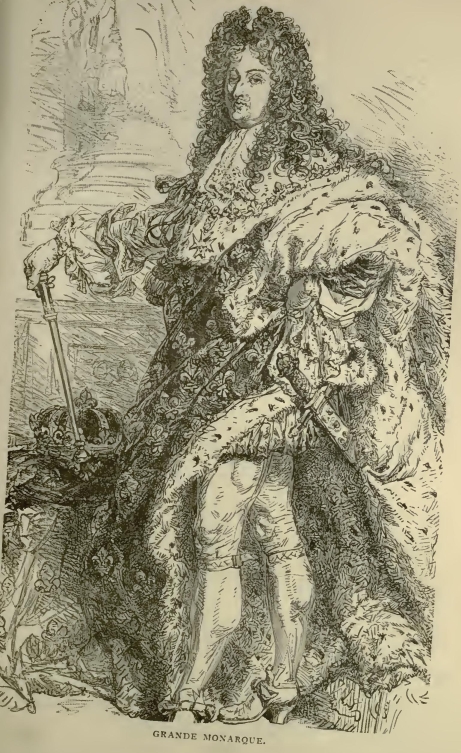
The marriage portion amounted to eighty thousand pounds, to be paid at different periods, part of it being furnished by Louis IV., who had always treated Mary Beatrice as his adopted daughter.
A.D. 1674. The ceremony was performed on the thirtieth of September, the Earl of Peterborough, who acted as proxy for the Duke of York, placing a valuable diamond ring on the bride's finger. Afterwards there was a grand banquet, and the earl sat under a canopy at the head of the table with the bride, now called her royal highness the Duchess of York. In the evening there was
Original
dancing, and everybody seemed happy excepting the bride, whose heart was very heavy at the thought of so soon leaving the home and companions of her childhood. She had struggled with all her might against destiny, and had made the most determined efforts to preserve her freedom, all of no avail. She had been led to the altar like a lamb to the sacrifice, and her lips had pronounced the vows from which her soul had shrunken.
When the news reached the Duke of York that the ceremony had been performed, he was talking to a circle of friends in the drawing-room. "Then I am a married man!" he exclaimed, and that night sent word to his daughter, Mary "that he had provided a playfellow for her."
The duke had given his ambassador instructions to bring his bride to England with as little parade and as few foreign attendants as possible; but she screamed and cried in such a way when preparations for her journey were being made that her mother was obliged to promise to accompany her to England, and her brother to go part of the way. Three Italian ladies of the highest rank were permitted among her bed-chamber appointments. They were Madame Molza, Madame Montecuculi, and her daughter, Anna, a young girl of seventeen. A lady named Turenie, who had been governess to the princess from her infancy, was added to the list also. These four ladies proved devoted friends, and followed Mary Beatrice throughout her life.
It had been a trial for the young Duchess of York to bid farewell to her native place; but when, two days later, she had to part with the brother who shared her joys and sympathized with her sorrows almost from her cradle, her burden of grief seemed greater than she could bear. Forgetting the dignity that her station demanded, or the presence of the formidable array of English and Italian nobles, she remembered only that she was losing, perhaps forever, the little brother whom she loved better than any one in the world. She pressed him to her heart again and again, and burst into an agony of tears when the youthful prince was led away. It was a consolation, at least, that her mother was to continue with her, and her mind was soon diverted by the welcome she received at the hands of the several princes of Italy, through whose dominions she passed with her attendants.
On arriving at the French border the bridal train was met by officers of Louis XIV., who defrayed all the expenses, and conducted them to Paris. They were lodged at the Arsenal, and magnificently entertained.
All that remains of this building shows what a splendid one it must have been, but the storms of revolution have passed over it and left it almost in ruins.
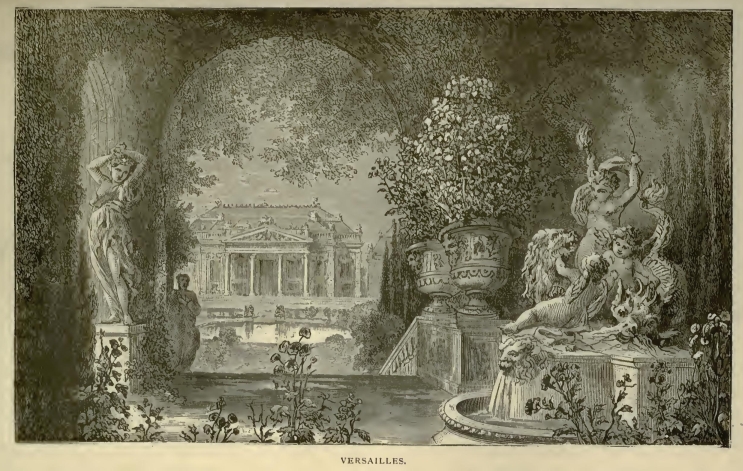
The Earl of Peterborough was anxious to get to England with his charge as quickly as possible, but Mary Beatrice became so ill that she was unfit to travel for several weeks. Her disease was a low fever, occasioned by the mental anxiety she had endured for so many weeks. After her recovery the young duchess visited Versailles, where she was received with the highest consideration, and entertained with all the splendor of that court. It was a dreadful ordeal for so young and inexperienced a girl to know just what degree of attention to accord each person without too much condescension on her own part, but particularly so for one who had no taste for the formalities of royalty, and greatly preferred the seclusion of a cloister. But Mary Beatrice excited admiration for her beauty and charming manners, of which the king showed his appreciation by making her some costly presents. She had already received jewels valued at twenty thousand pounds from her unknown husband, which she wore on state occasions while in France.
Original
Meanwhile a strong party in England had leagued itself, under the leadership of the Earl of Shaftesbury, for the purpose of destroying the Duke of York, and of getting the reins of the government in their own hands. This was no easy matter, because his services in his country's cause, his energy, and his high sense of honor, had rendered him one of the most popular of princes; but the party opposed to him were ready to resort to any measures, no matter how vile, to gain their end.
Knowing this, the duke had managed his marriage with the utmost secrecy and despatch, because the strongest avowed point of opposition was his adherence to Catholicism, which his alliance with a Catholic princess would naturally strengthen. So when parliament met, on the twentieth of October, they were perfectly astonished and highly indignant to hear from the king's lips that the duke was already married to the Princess of Modena, who was even then on her way to England. The infuriated Commons petitioned their sovereign "to appoint a day of general fasting, that God might avert the dangers with which the nation was threatened."
Charles told them that they might fast as much as they pleased, though he knew that by so doing they merely desired to show their contempt for what they called the "popish marriage," though the pope had positively withheld his consent to it. The members of the king's own cabinet became alarmed at the threatened storm, and urged his majesty either to forbid the princess to leave Paris or to dismiss his brother from court, and insist upon his leading the life of a country gentleman. Charles indignantly refused both propositions.
The day after parliament met Mary Beatrice landed at Dover, where her husband awaited her on the beach, and all the citizens had collected to get a sight of her. The duke received her in his arms, and was charmed with her at the outset, as well he might have been; but she, poor child, was not so favorably impressed with a man old enough to be her father, and showed her aversion plainly. This did not discourage the groom, who treated her with courtly attention, feeling convinced that he should win her heart in time.
In the presence of his suite and the bride's, besides a large number of Dover people, the Duke of York was married to Mary Beatrice according to the church of England rites, and the little ruby ring placed on her finger that day was more highly valued to the end of her life than any jewel the princess possessed.
The second day after the marriage the bride and groom, attended by the Duchess of Modena, and her brother-inlaw, the Prince Rinaldo d'Esté, besides the members of their court, set out for London. King Charles went down the river with his court, in the royal barges, to meet the bridal suite, and received his new sister-in-law with every mark of affection; then he conducted the party to Whitehall, where his queen vied with him in her acts of loving attention to the bride.
Even her enemies were for the time being disarmed when they gazed on the lovely, innocent countenance of the young bride; and at King Charles's court she was much admired and esteemed.
The Duke and Duchess of York established themselves at St. James's Palace, where all the foreign ambassadors called to congratulate them, and where they held their courtly receptions as regularly as the king and queen did theirs at Whitehall, though on different days. King Charles was devoted to his brother, and soon became warmly attached to his wife, but a little coolness was early established between Queen Catharine and the Duchess of York in
this way: It had been stipulated in the marriage treaty that the duchess was to have the use of the Catholic chapel at St. James's which had been fitted up by the queen-mother, Henrietta, for herself and her household. But King Charles, knowing how unpopular any display of her religion at that time would make his brother's wife, influenced Catharine to claim it as one of her chapels, and had a private apartment in the palace fitted up for the devotions of the young duchess and her suite. This was a piece of friendship on the part of the king that was not appreciated by his sister-in-law, who laid the blame on the queen, with whom she felt quite offended.
At the end of the year the Duchess of Modena was called home by some intrigues that had been begun during her absence; but although Mary Beatrice was sorry to part with her, she had by that time begun to love her husband so much that the parting was not so great a trial as it would otherwise have been, and the love that was implanted in her heart developed into a devotion that lasted to the day of her death.
The first years of her married life were passed by the young duchess in a succession of gayeties. She was often annoyed because her husband treated her like a child, but as she was little older than his daughter this is not surprising. In later years circumstances developed the force of her character, and won the respect and admiration that she truly merited.
She had the good sense to study English, and soon became a perfect mistress of the language.
A..D. 1675. Mary Beatrice had a little daughter born about a year after her marriage. This was a great pleasure, but it was soon marred by the duke's refusal to have the baby baptized a Catholic. He did not object himself, but explained to his wife that their children belonged to the nation and would be taken from them if not brought up according to the established church, adding that is was besides the king's pleasure, to which they must submit. The youthful mother appeared to yield, but sent for her confessor, Father Gallis, and had the child baptized on her own bed according to the rites of the church of Rome.
When the king came a day or two later to make arrangements with her and the duke for the christening of their child, Mary Beatrice told him that "her daughter was already baptized." Without paying the slightest attention to this assertion, his majesty ordered the little princess to be borne to the royal chapel, where she was christened by a Protestant bishop, her half-sisters, Mary and Anne, acting as sponsors. The baby was named Catharine Laura after the queen and the Duchess of Modena, and the Catholic baptism was kept a profound secret, though it must have been a subject of annoyance to the king.
A fortnight later some very severe laws were made against the Catholics. One of them forbade any British subject from officiating as a Romish priest, either in the queen's chapel or elsewhere; another prohibited any adherent of the Catholic, church to set foot in Whitehall or St. James's Palace, the penalty for such an offence being imprisonment. This law of course kept the Duchess of York and the Catholic ladies of her household from the king's palace, but the young mother was so wrapt up in her baby that she was indifferent to almost anything besides. She was happy with her husband also, and lived on terms of close friendship with her step-daughters, who never accused her of the slightest unkindness to them, even in later years, when they would have been pleased to bring any unfavorable accusation against her. But the young mother was soon to be deprived of the infant she loved so fondly, for it died of a convulsion before it was ten months old.
This was, of course, a great sorrow to Mary Beatrice, but she was not permitted to indulge it very long, for before the close of the year she had to attend a feast given by the lord mayor, and a ball at her own palace.
A.D. 1676. Another princess was born the next year, and this time there was no secret baptism. That ceremony was performed by Dr. North, Master of Trinity College, and the child was named Isabella. She lived to the age of five years.
A.D. 1677 The following year the marriage between the Princess Mary and the Prince of Orange was solemnized; and it was this union that proved so disastrous to the fortunes of the Duchess of York, her husband, her children.
There was much rejoicing in the household of the Duke when a little prince made his appearance. He was christened with great pomp by the Bishop of Durham, and no less a person than the king himself, assisted by the Prince of Orange, acted as sponsor. Charles bestowed his own name on his nephew, and created him Duke of Cambridge. The little fellow died the following month, and was interred, as his sister had been, in the vault of Mary Queen of Scots, at Westminster Abbey.
The duke grieved more for the death of this boy than he had for any of his children. The Prince of Orange wrote a letter of condolence; but, as he was then plotting against his royal father-in-law, and as the death of the little prince opened the way to the throne for his wife, it is not probable that he was sincere in his expressions of sympathy. But Mary Beatrice was ignorant of this, and when she heard that the Princess of Orange was ill she planned a visit to her, which, after obtaining the king's consent, she undertook, in company with Princess Anne and her lord chamberlain, the Earl of Ossory. As it was her desire to ascertain the true state of Princess Mary's health, and to afford her comfort, the duchess travelled incognito, and sent a man on before to hire for her a small house not far from the palace. This was done to secure free intercourse among the three ladies without any of the formality required by court etiquette.
A.D. 1678. Although the visit was a flying one, the duchess found a storm gathering around her husband on her return which soon compelled him to give up his seat among the state councillors. His friends advised him to retire to the continent with his family; but his proud spirit revolted from any move that would have the appearance of guilt or cowardice. The king urged him to baffle his enemies by returning to the church of England, but he refused to act in opposition to his conscience. Then for the sake of peace, which the "merry monarch" would have purchased at any cost, Charles advised his brother to go abroad before the next session of parliament. James consented, providing the king would command it in writing, but he scorned the idea of running away. The order was given in the form of an affectionate letter, and on the fourth of March the Duke and Duchess of York embarked for Holland. They were not permitted to take their little daughter Isabella to share their exile, which was a great deprivation to both parents.
A.D. 1679. The king called on the day of their departure to bid farewell, and was much affected at parting with the brother whom he loved so well. The weather was very stormy, and wiping the tears from his eyes Charles said: "The wind is contrary; you cannot go on board at present."
Mary Beatrice, who considered that her husband was being sacrificed to secure his brother's peace of mind, replied with spirit, "What, sir, are you grieved?—you who
Original
send us into exile! Of course we must go, since you have ordained it." She regretted this speech later, because she knew that Charles had only yielded to the clamor of her enemies.
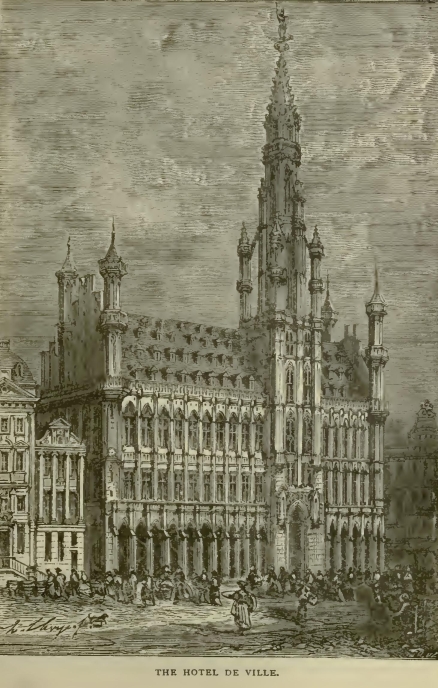
The duke and his wife arrived at the Hague a week later, and were received by the Prince of Orange with every demonstration of respect. Later they removed to Brussels, where they occupied the house Charles II. had lived in before the restoration.
In July the Duchess of Modena joined her daughter, from whom she had been separated for five years, and the two ladies were rejoiced to meet again. But the Duke and Duchess of York could not rest contented so long as their children were away from them, so they wrote to the king entreating him to send them to. Brussels. He consented, and Princess Anne, with the infant Princess Isabella, left England on the nineteenth of August. They had not been with their parents many days when a messenger, sent by the Earl of Sunderland, arrived in Brussels to inform the duke of the king's serious illness. James set out at once to visit his brother without mentioning his intention to any one but Mary Beatrice, and travelled so privately and so quickly that his presence in England was not suspected until he presented himself at Windsor at seven o'clock in the morning. Charles was so much better that he was up and partly dressed. Fearing that it might injure his brother if it were known that he had sent for him, the Duke of York knelt and begged his majesty's pardon for coming before he was recalled. Then all the courtiers flocked around the traveller and paid their compliments, for James was really a favorite, and his presence always commanded respect. The king was so delighted to see him that he declared "nothing should part them again." However, by the end of a fortnight Charles was convinced that his brother could no longer remain with him in safety, but he gave permission for him to remove his family from Brussels to Scotland. Then the duke went back to the continent, and was making a farewell visit to the Prince and Princess of Orange, in company with his wife, his children, and the Duchess of Modena, when a message arrived from King Charles recalling them all, but directing the duke to embark for the Downs and remain there till further orders. Everybody was delighted but the Prince of Orange, who had his own reasons for objecting to the duke's return; however, he had no voice in the matter at that time. Two days later Mary Beatrice bade farewell to her mother, who had passed two months with her, and embarked with her family for England. The voyage was very stormy, and the duchess suffered excessively from seasickness. Party excitement ran so high, and the king's power was so diminished, that by the time the duke arrived at the Downs a messenger informed him that the king had changed his mind about his coming to London, and that two frigates were in readiness to convey him and his family to Leith, in Scotland, where the Duke of Lauderdale had been ordered to make arrangements for their reception.
The duchess was too ill to proceed further by sea, and her husband did not dare to take her ashore without a written permission from the king, so there she lay tossing about in the Downs while an express was sent to London. Charles was sorry to hear of her miserable condition, and ordered his brother to bring her to St. James's Palace forthwith. They were delighted to find themselves safe on terra firma after all they had suffered; but they were not yet at their journey's end, for the very night of their arrival the king assured his brother that he had no power to protect him if he persisted in remaining in England.
A week later two of his friends informed the duke that his majesty desired him to withdraw to Scotland for a short period, but that his wife and children might remain under his care at St. James's Palace. But Mary Beatrice was too devoted a wife to permit her husband to go into exile alone; so, although it necessitated separation from her little daughter and a weary journey over roads that were almost impassable, she went with him.
Every action of the duke's had been so perverted that his great naval victories were attributed to cowardice, and every other, no matter how great a benefit it had proved to the nation, to a desire for the advancement of popery. This being the case, no marks of favor were shown him as he advanced towards the North, and the discourtesy of the towns that thirteen years before had lavished attentions on him pained him excessively.
No sooner did the royal couple reach the Scottish border than everything was changed, and they were met with every mark of affection and respect. Three miles from Berwick the Scotch guards, under the Marquis of Montrose, were drawn up to welcome them, and a little further on two thousand gentlemen on horseback awaited them. The duke alighted from his carriage to receive the compliments of the lord chancellor, who headed the procession; then several of the nobles kissed his hand, and paid the same respect to the duchess, who sat in her coach. With this numerous escort their royal, highnesses were attended to the house of Lauderdale at Lethington, where, with their whole retinue, they were splendidly entertained until they made their public entry into Edinburgh.
The people of Scotland were so pleased to have the royal family represented in their country that they were unwilling to believe any of the calumnies against the duke, and looked forward to great prosperity from the establishment of a court among them. But James desired to live as privately as possible to avoid creating jealousy among his enemies in England.
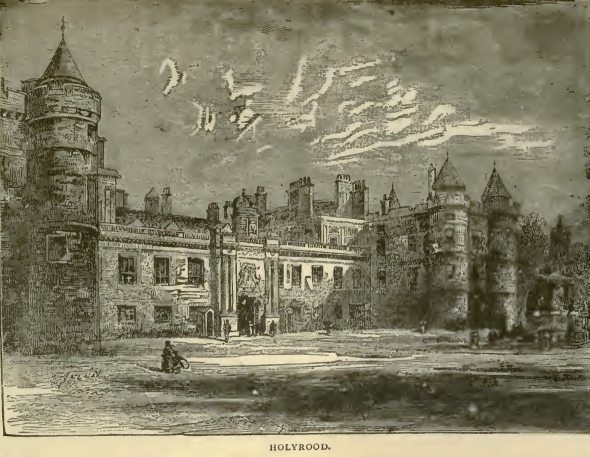
The Countesses of Peterborough and Roscommon, as several other ladies of high rank who had been with Mary Beatrice since her marriage, attended her to Scotland. They found Holyrood Abbey, where they made their home, far less luxurious than any former palace they had inhabited; but the duchess made no complaint, and always tried to be cheerful for her husband's sake.
A.D. 1680. King Charles had promised his brother that he should not remain long in exile, and he was as good as his word. At the beginning of the new year his majesty entered the council chamber and made the astounding announcement that, as he had derived no benefit from the absence of his brother, whose lights he knew would be disputed at the next meeting of parliament, he had ordered him back to London to give him an opportunity of defending himself.
A great many people were much pleased at this action on the part of the king, and even offered thanks for it; but the powerful party who were opposed to everything he did, and objected to the Duke of York as successor to the crown, were very angry. Their leader, Shaftesbury, and several other members of the house of lords, resigned on the spot. Charles declared that "he accepted their resignation with all his heart."
The Duke and Duchess of York were rejoiced at their recall to England, but they had gained so many friends in Scotland that their departure from there caused a great deal of regret. The lords of the council wrote a letter of thanks to King Charles for the honor he had done them in sending the duke to their country, and praised his wise and prudent conduct with much warmth.
The royal couple returned by water, and were saluted by the guns from the ships and tower as they ascended the river to Whitehall, where the king stood at the gate to receive them. They were immediately conducted to the queen's apartment, and then to their own, where they once more embraced the little daughter whom they had not seen for four months. That night the city was illuminated, and two days later the city officers called in a body to congratulate the duke and his wife on their return. A grand supper was given by the lord mayor in honor of the royal brothers, and the aldermen drank the king's health on their knees, and grew so loyal as the wine was swallowed that they "wished every one hanged and consigned to perdition who would not serve his majesty with his life and fortune."
The duke and duchess established their court at St. James's Palace, and gave a series of brilliant balls and feasts that increased their popularity considerably. Mary Beatrice was so highly respected that even her bitterest enemies could find no excuse for mixing her name with the popish plot, of which we gave an account in the last reign.
But Shaftesbury and his colleagues were not to be baffled; they had determined on the ruin of the Duke of York, and never rested until they had forced the king to agree to his banishment once more. They wanted the sea to separate him from England, but Charles compromised in his usual way, and notified his royal highness that he was to return to Scotland. The duke was sorely grieved, for he believed that even his brother had turned against him; and that his banishment to Scotland would be followed up by something worse. He was the more convinced of this when, in order to protect himself against the machinations of his powerful enemies, he demanded of the king a general pardon, under the great seal, for any offence that might be charged against him, and his majesty refused. He gave as his reason that it would be injurious to a man of the duke's exalted rank to have such a document drawn up; but James became so enraged that he swore "that if he were pushed to extremity, and saw himself likely to be entirely ruined by his enemies, he would throw himself into the arms of Louis XIV. for protection." Of course such a threat was treasonable, and only to be excused on account of excessive indignation, for the duke was burning under the sense of wrong and ingratitude from a king and a country in whose service he had risked his life so often. Poor Mary Beatrice was called upon to part with her little Isabel again, and this separation was the last, for the mother never more beheld her only child.
The following beautiful lines by the poet Dryden were written to commemorate the embarkation of the Duke and Duchess of York, which occurred on the eighteenth of October:—
"Go, injured hero! while propitious gales,
Soft as thy consort's breath, inspire thy sails;
Well may she trust her beauties on a flood
Where thy triumphant fleets so oft have rode.
Safe on thy breast reclined, her rest be deep,
Rocked like a Nereid by the waves asleep;
While happiest dreams her fancy entertain,
And to Elysian fields convert the main.
Go, injured hero! while the shores of Tyre
At thy approach, so silent shall admire;
Who on thy thunder shall their thoughts employ,
And greet thy landing with a troubling joy."
After a stormy voyage of a week, the Duke and Duchess of York arrived on the shores of Scotland, and when they observed the joy manifested by every class of inhabitants at their return, their sad hearts warmed towards the nation that were so eager to prove their gratitude and loyalty.
They travelled through Scotland attended by an ever-increasing train of devoted followers, and received at every
Original
stopping place the most unbounded hospitality. At Leith they were met by a grand procession, headed by the Earl of Linlithgow, colonel of his majesty's guards, and a regiment of soldiers, besides nobility and gentry on horseback, and a long train of coaches filled with councillors and noble ladies and gentlemen. As they advanced guns fired, bells rang, bonfires were lighted, and crowds assembled with shouts of welcome. The city authorities of Edinburgh met their royal highnesses at the gate of Holy-rood Palace, and the lord provost on his knees presented the silver keys of the city to the duke, at the same time offering a welcome in the name of all the citizens.
Holyrood Palace had been repaired and the royal apartments refitted for the accommodation of the duke and duchess, with their retinue; so their home was by no means as comfortless as it had been on their former sojourn there.
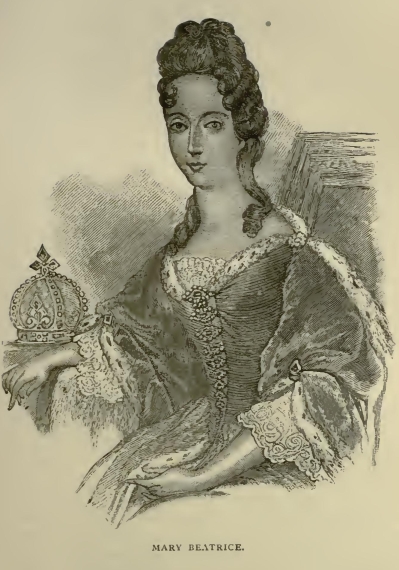
The portrait of Mary Beatrice had been painted by Lely just before her departure from London; and it was the last work of that great artist, who died before the end of the year.
The duchess was not quite twenty, and at the height of her beauty. She is represented with her hair falling around her head in luxuriant curls; her dress is scarlet velvet, embroidered and fringed with gold, cut low at the neck and filled in with soft cambric, of which material the flowing sleeves are also made. A full rich scarf, of royal blue fringed with gold and pearls, crosses one shoulder, and falls in graceful folds over the lap to the ground. The lady is sitting in a garden, and a tree in the background is entwined with honey-suckles and roses; her left hand rests on the neck of a beautiful white Italian greyhound.
A brilliant court was established at Holyrood, and Mary Beatrice succeeded in winning all hearts by her kind and gracious manners. Her religion was unpopular, but she intruded it upon no one, and her conduct was admirable.
Behind the Abbey of Holyrood there was along avenue shaded with stately oaks, where James was in the habit of taking his daily exercise. The green strip at the foot of the hill is called "the duke's walk" to this very day, though all the beautiful trees have been removed.
Mary Beatrice introduced tea-drinking among the Scotch ladies, and the fashion soon became general, for she was so much admired that it became a pleasure to imitate her. She was loved because she tried to please, and the duke was not behind-hand in this respect. His royal highness established a bond of good fellowship between the nobles and the mechanics which added greatly to his popularity. It was done in this way: Tennis and golf, both games played with clubs and balls, were the favorite amusements among the gentry of Scotland in those days. The duke enjoyed them also, and always selected a mechanic or tradesman for his partner. Of course this example was imitated by the courtiers, and thus high and low were brought into pleasant contact. His royal highness generally played against the Duke of Lauderdale, who was an excellent golfer as well as himself. One day they agreed to stake an unusually large sum of money on the game. James called a shoemaker named John Paterson to assist him, and after a very hard contest defeated his opponent. When Lauderdale paid the three or four hundred gold pieces that he had forfeited, his royal highness handed them to Paterson, saying: "Through your skill I have won the game, and you are, therefore, entitled to the reward of the victory." The bonnie Scot was more pleased with the delicate compliment than with the gold. It was many such acts that endeared James to the people amongst whom his lot was cast. When Lochiel, a brave Highlander, was presented at court, the duke received him with marked courtesy, and questioned him about his adventures. During the conversation he asked to see the chieftain's sword, which was delivered into his hands without hesitation. The duke tried to draw it from the scabbard, but as it was merely a dress-sword, not meant for use, it had become rusty. After a second attempt he handed it back to the owner, saying: "That his sword was never so difficult to draw when the crown wanted its service." Lochiel was so embarrassed that he did not know what reply to make, but drew the sword and handed it to his royal highness, who turning to the courtiers present, said: "You see, my lords, Lochiel's sword gives obedience to no hand but his own!" and thereupon knighted the Highlander on the spot.
The duke arrived in Scotland just after an insurrection, when many people lost their lives and property; but he exerted such an excellent influence that peace was soon restored, and prisoners liberated whenever they promised to cry "God save the King!" He governed Scotland well for his brother, and won the love of the populace by always resorting to the mildest of punishments in opposition to the barbarities practiced by Lauderdale.
During the winter the duchess met with an accident that nearly cost her life. She was thrown from her horse, and her long riding-habit becoming entangled in the saddle, she was dragged some distance and received several kicks from the terrified animal before she could be rescued. Fortunately this occurred on a sandy plain, otherwise she must have been killed. As it was, she was taken up covered with blood and perfectly insensible. She recovered in time, having received no serious injury, but was obliged to give up her favorite amusement; for her husband, who always considered horseback riding dangerous for women, exacted a promise that she would never so imperil her life again.
[A.D. 1681.] The spring brought bad news, for King Charles sent a messenger to inform his brother and sister that their little daughter, Isabel, had died at St. James's Palace. This cruel blow only made the banishment and persecution of the duke and duchess harder to bear, and James wrote to his brother for permission to take his wife to some watering-place in England, saying that she needed the change, and that the climate of Scotland did not agree with her.
Charles could not grant the request, because he feared that the duke's return would be the signal for rebellion; but after three or four months' deliberation the favor of Princess Anne's company was granted to her parents, and she went to Scotland to join them.
Shortly after her arrival the Duke of York rode in state from Holyrood, and opened parliament as lord high commissioner from his brother, the king. The duchess, Princess Anne, and all their ladies were present on that occasion, and this was such an unusual sight that some of the old fogies considered it highly indecorous. The Scottish lords and chieftains had always settled their debates with dagger and sword, and it was in order to avoid such stormy scenes that the Duke of York introduced the refining influence of women's presence, and the effect was highly satisfactory. After the meeting James gave a banquet to the whole parliament, separate tables being laid for the lords and commons.
The city of Edinburgh returned the compliment with an entertainment to the Court of Scotland that cost more than fourteen hundred pounds sterling.
After their royal highnesses recovered from the shock occasioned by the death of their little daughter, life at Holyrood became one long scene of gayety and brilliancy. There were balls, plays, and masquerades night after night,
Original
and musical dramas, similar to the opera of the present day, in which the Princess Anne and other ladies of quality took part. So long as the plays were moral, Mary Beatrice honored them with her presence; for she believed that the stage ought to be a medium for giving wholesome instruction to the public, but she would countenance nothing coarse or vulgar.
A.D. 1682. Affairs took such a favorable turn for James enuring the following year that he was recalled to England. He arrived with the Duchess and Princess Anne at Whitehall on the twenty-sixth of May, having been escorted up the river by a procession of barges, among which was the one containing the king and queen, who had gone to welcome them. In the evening the city of London was illuminated, and the rejoicing on account of the banished duke's return was universal.
A.D. 1684. St. James's Palace again became the home of the royal pair, where they had a little daughter born in August, but it died within a few weeks. Two years later, so firm had the duke's position become, that he was once more offered the post of lord admiral, which he eagerly accepted. During the period of peace and national prosperity that preceded the death of Charles II., Princess Anne married Prince George of Denmark, but remained with her parents for awhile.
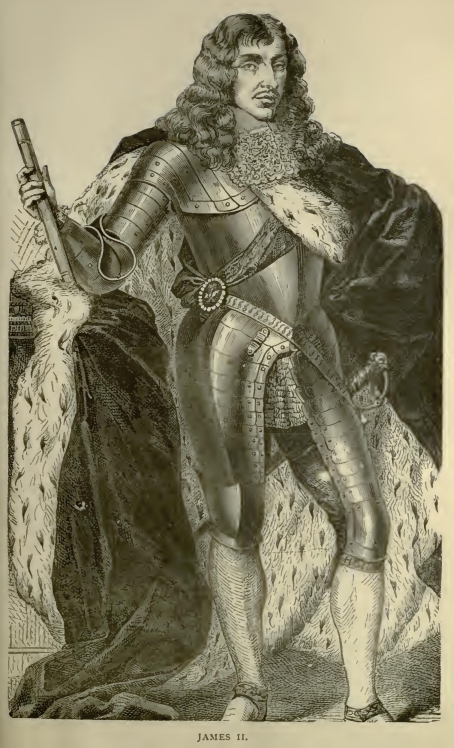
A.D. 1685. A plan to banish the Duke of York once more had just been set on foot when King Charles died, and made way for him to mount the throne as James II. Mary Beatrice felt so grieved at the death of her brother-in-law that she could not rejoice at her own advancement; for Charles had been uniformly kind and amiable towards her, and she knew that she had lost a friend when he died.
Compliments and congratulations were showered upon the new king from all sides, and on the first Sunday after his accession he was prayed for from every pulpit in the metropolis. King James began his reign with some very necessary reforms; he forbade drinking and swearing among others, and expressed his entire disapprobation of duelling, which he declared was no mark of courage.
The queen's health was not good at this time, and she became so pale that in spite of her religious scruples her husband advised her to rouge, as other court ladies did, and she complied. The first time Father Seraphin, a monk, saw her so disfigured he expressed his surprise, and she explained that she had resorted to paint to conceal her palor, whereupon the monk replied, bluntly: "Madame, I would rather see your majesty yellow or even green than rouged."
The twenty-third of April, St. George's day, was appointed for the coronation of the king and queen. The crown jewels had all been stolen by the Roundheads during the civil wars, so everything had to be supplied for the new queen, and the crown that was made specially for her was valued at one hundred and eleven thousand nine hundred pounds.
On the Thursday previous to the coronation, the king washed the feet of fifty-two poor men, that number corresponding with his age. On the appointed day the queen, who had slept at St. James's Palace, performed her devotions as usual, and was then attired by her women in a royal robe of purple velvet, bordered with ermine, and looped with cords and tassels of pearls. Her tight-fitting frock underneath was of rich white and silver brocade, ornamented with pearls and precious stones. On her head was a cap of purple velvet, turned up with ermine and edged with a band of gold, set with large diamonds. As soon as her toilet was completed, the queen was carried in her chair to Westminster, where she rested in a private room until the king and all those who were to take part in the ceremony had assembled.
When everything was ready, her majesty entered Westminster Hall, attended by her lord chamberlain, her other officers and ladies; the king entered at the same time by another door with his attendants, and the royal pair took their seats under separate canopies at the upper end of the hall.
After the king's regalia had been delivered to him with the usual formalities, each article was placed on a table covered with rich tapestry. Then the queen received the crown, sceptre, and ivory rod with the dove, which were likewise deposited on the table, and subsequently distributed by the lord great chamberlain to the noblemen appointed to carry them. These noblemen walked first in the procession, then followed the queen, between the Bishops of London and Winchester, under a rich canopy, supported by sixteen barons. Four noble ladies carried her majesty's train, and eight bed-chamber women followed. The king's procession came next, and all proceeded in solemn state through a passage made by a double line of horse and foot guards to the abbey. The path was thickly strewn with fresh flowers by six young ladies, dressed in pointed bodices, with full brocaded skirts, looped back over rich petticoats. They wore hoods, gloves, and deep ruffles falling from the elbow. Trumpets were blown, drums beat a march, and the choir sang the well-known anthem, "O Lord, grant the king a long life!" etc., all the way to the church.
It required several hours for all the ceremonies of the coronation to be performed, and the devotion of the queen in following the prayers and making the responses was observed by all present. King James had bestowed a great deal of pains on his wife's regalia, but none on his own, so the crown that had been made for Charles II. was used for him, though it did not fit at all. The heads of the two brothers were as different as their characters, and it was regarded as an ominous sign that the crown could not be made to stay on James's head.
The queen performed a noble deed of charity on that day that brought the blessings of thousands upon her head. She released all prisoners who were in jail for small debts, and herself paid every sum not exceeding five pounds. No wonder that the air rang with cries of "Long live Queen Mary!"
When the ceremonies at the abbey were concluded, the procession returned to Westminster Hall, and their majesties rested in private rooms until all the company had taken their places at seven long tables which were laid for the banquet. Then the king, preceded by his great state officers, entered with the crown on his head, and the sceptre and orb in either hand, and seated himself in his chair of state at the head of the royal table. The queen did the same, her place being at the king's left hand. Most of the ancient ceremonies of coronation banquets were revived that day, and some of them are so curious that they will bear recounting. Certain lords went to the kitchen to receive the dishes and present them to their majesties, which was done in this way: The master of the horse called for a dish of meat, wiped the cover and the dish carefully, tasted the contents, and then ordered it to be conveyed to the royal table, he preceding the first course on horseback the full length of the hall, followed by a train of the principal officers of the household. Thirty-two dishes were brought up by the Knights of the Bath, and a number of others by private gentlemen. When the dinner was placed on the table, the lord chamberlain, carvers, cupbearers, and assistants went to the king's cupboard and washed; then the great basin was brought for the king to wash his hands. Before doing so he delivered his sceptre to a nobleman appointed to hold it, and the orb to the Bishop of Bath. The queen washed also, but she used only a wet napkin presented by the Earl of Devonshire on his knees. Grace was said, and their majesties sat down to the dinner, which consisted of a thousand dishes; among them were many Scotch dainties which reminded the king and queen of the hospitalities they had received in the North.
Before the second course Sir Charles Dymoke rode into the hall on a splendid white horse, preceded by trumpeters, and attended by two gentlemen, one bearing his lance, the other his target. He was dressed in white armor, and wore a red, white, and blue plume in his helmet. He was brought up to the royal table, where the herald proclaimed his challenge, and the champion threw down the gauntlet. This was repeated three times, when the king drank from a gold cup which he presented to his champion, who then rode out of the hall. Several lords presented wine to the king on their knees, each one receiving the silver or gold cup his majesty drank out of for a present.
When the dinner was ended grace was said, the washing of hands was repeated with the same ceremony as before, and their majesties withdrew. In the retiring-room they delivered their regalia to the Dean of Westminster, whose duty it was to keep such valuables under lock and key.
One of King James's first acts after he ascended the throne was to release several thousand Roman Catholics and members of other churches who had been imprisoned for refusing to worship according to the prescribed laws of England. He also put a stop to the practice that had been permitted for many years of people informing against one another about their religious beliefs. As this was often resorted to merely to gratify some personal spite, and had been the means of bringing many an innocent person to the stake, King James did well to abolish it; but he was fighting the prejudices of the people, and could more easily have taken an impregnable fortress, as he soon found to his cost. Many of his subjects were offended at the display James made of his own religion, particularly when he opened a Catholic chapel at Whitehall, and insisted on going there in state with his wife, attended by the high officers of their household, to receive the sacrament. His lord treasurer, the Earl of Rochester, pretended to be ill as an excuse for absenting himself. The Dukes of Norfolk and Somerset openly refused to attend. It was the duty of Lord Godolphin, the queen's chamberlain, to lead her majesty by the hand to her place in the chapel, and to the altar when she chose to receive the sacrament. Although a Protestant, the chamberlain was so charmed with her majesty's beauty and graceful manners that he would not forego his privilege.
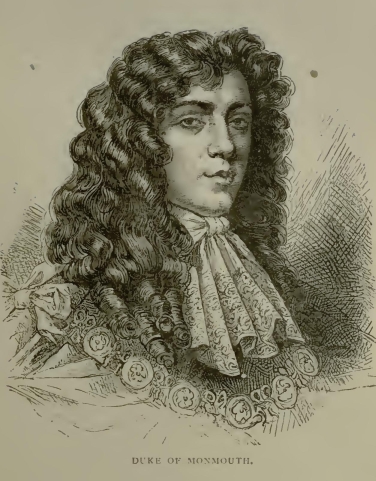
King James summoned parliament in June because the Duke of Argyle raised a rebellion in Scotland, while Monmouth did the same in England, and funds were required to suppress both. Monmouth had always been one of James's bitterest and most dangerous enemies, because he thought he had a claim to the throne; he therefore issued a proclamation, denouncing the king "as a usurper, a murderer, a traitor, and a tyrant." He accused James of burning the city of London, of murdering Godfrey,—both events are treated of in the last reign,—of cutting the throat of Essex, and of poisoning his brother, Charles II. He raised an army of ten thousand men, and received so much encouragement at Taunton that he proclaimed himself king, and set a price on the head of "the usurper, James, Duke of York."
Original
Such prompt and active measures were taken by the royal party that both Argyle and Monmouth were defeated and captured. The latter implored the king for mercy, and succeeded in obtaining a private interview. James had forgiven this bold man for many personal offences when he was Duke of York, but now his position was altered. He was King of England, and could not find it in his conscience to pardon an offender who had plunged his realm into civil war, and sacrificed the lives of three thousand of his subjects. Story, the orator, was taken prisoner for assisting Monmouth with his exciting speeches, that went far towards raising the popular indignation against the sovereign.
When summoned to appear before the council he looked so haggard, neglected, and dirty that King James exclaimed, "Is that a man, or what is it?" On being informed that it was the rebel Story, his majesty replied: "Oh, Story; I remember him—a rare fellow, indeed." Then turning towards him, the king asked: "Pray, Story, you were in Monmouth's army in the west, were you not?"
"Yes, an't please your majesty."
"Pray, you were a commissary there, were you not?" asked the king.
"Yes, an't please your majesty."
"And you made a speech before great crowds of people, did you not?" was the next question,
"Yes, an't please your majesty," answered Story.
"Pray, if you have not forgot what you said, let us have a taste of your fine speech, some specimen of the flowers of your rhetoric."
"I told them, an't please your majesty, that it was you who fired the city of London," boldly answered Story.
"A rare rogue, upon my word," exclaimed James; "and, pray, what else did you tell them?"
"I told them, an't please your majesty, that you poisoned your brother."
"Impudence in the utmost height of it!" said the king. "Pray, let us have something further, if your memory serves you."
"I further told them," continued Story, "that your majesty appeared to be fully determined to make the nation both papists and slaves."
The king had heard enough, and no doubt wondered at the audacity of a man who dared to accuse him to his face of crimes that his very soul would have revolted at. But with remarkable clemency his majesty added: "To all this I doubt not but a thousand other villanous things were added. But what would you say, Story, if after all this I were to grant your life?"
He answered, "That he would pray for his majesty as long as he lived."
Thereupon he was freely pardoned, but Monmouth and Argyle were executed.
This victory of King James's would have increased his popularity and made him extremely powerful, had it not been for the cruel deeds that resulted from it. But Colonel Kirke and Chief-Justice Jeffreys were two barbarians, who caused the execution of thousands, whether innocent or guilty; going from one town to another whence Monmouth had gathered his forces, and committing most unheard-of cruelties.
Such deeds, added to the mistake James made in attempting to have everything his own way, regardless of the will of parliament, led to his ruin and downfall. Popular indignation was aroused against all Roman Catholics, King James included, when Louis XIV. revoked the edict of Nantes. This was a law that had been made by Henry IV., granting the free exercise of religion to all Protestants, and when it was withdrawn, of course, persecutions followed. The result was that nearly fifty thousand Protestants sought refuge in England, and King James treated them with a great deal of consideration.
A.D. 1687. The queen spent part of the spring of 1687 at Richmond Palace, while James visited his camp at Hounslow; but her health was so poor that she was ordered by her physicians to take a course of treatment at Bath, and while there news of her mother's death reached her. This was a sad bereavement, and one from which Mary Beatrice did not soon recover. It opened a correspondence between her and the Prince of Orange, who, while expressing affectionate sympathy, was secretly plotting for the overthrow of his royal father-in-law. The king was very much under the influence of Sunderland, and of the Jesuit, Father Petre, both bad advisers; but he was also on terms of intimacy with William Penn, the founder of the State of Pennsylvania. This high-minded Quaker entered the king's presence one day, shortly after he ascended the throne, with his hat on his head. James immediately removed his, whereupon Penn said: "Friend James, why dost thou uncover thy head?" The king replied with a smile: "Because it is the fashion here for only one man to wear his hat.".
Penn was sent to Holland to persuade William, Prince of Orange, to concur with the king in trying to do away with those laws that interfered with religious privileges in England, but met with no success, either with him or his wife, Mary.
A.D. 1688. Queen Mary Beatrice had a little son born at St. James's Palace in 1688, and there was great rejoicing among the king's friends when the infant prince appeared, which was echoed in Edinburgh.
The royal father felt so happy at the birth of his son that, in an evil hour, he granted forgiveness to Nathaniel Hook, who had been the Duke of Monmouth's chaplain. This man became one of the tools of William of Orange, and acted as a spy on the actions of the sovereign who had shown him such mercy.
A grand display of fireworks took place in honor of the prince's birth when he was a few weeks old, and the royal couple were present at the palace window to witness it. Mary Beatrice was gratified by a letter of congratulation sent by the pope on the birth of her son, because his holiness had never been friendly since she married without his consent, nor was he now, as we shall see.
The persons who were anything but pleased at the little fellow's appearance in the world were William of Orange and his wife, because both felt that he was in their way as heir to the crown.
One of William's agents was discovered at Rome in secret correspondence with the pope's secretary, Count Cassoni. He was disguised as a peddler of artificial fruit, which, on being opened, were found to contain slips of paper, written in cypher, that disclosed a plan for the destruction of the king and the little prince. William of Orange was at the bottom of the conspiracy, and intended to carry out his purpose in this way: The pope was to supply funds to be used by the Prince of Orange for the invasion of England, which coming from such a source would not be suspected. All this was disclosed by the slips of paper contained in the fruit, and reached the ears of King James himself.
The royal infant was so very ill when he was about two months old that it was thought each moment would be his last; however, he was provided with a good healthy nurse and got well, much to the delight of his parents, and the disgust of those whose interest it was to wish him out of the way. Then the king and queen with their household removed to Whitehall, and soon after her majesty's birthday was observed with the usual ceremonies and rejoicings.
Mary Beatrice kept up a regular correspondence with the Prince of Orange, with whom she had always been on the most loving terms, and did not know what to make of the news that came to her about this time. It was that the Dutch fleet was hovering off the coast of England, ready at a moment's notice to make an attack. The queen could not believe such horrible tidings, and wrote her daughter: "That it was reported the Prince of Orange was coming over with an army, and that her highness would accompany him; but she never would believe her capable of turning against a good father, who, she believed, had always loved her the best of all his children." It was, nevertheless, true, and the storm that was to drive King James from the throne was gathering darkly and surely. James had committed some grave mistakes as a ruler, as a politician, as a theologian, and gladly would he have made amends, but it was too late. The King of France offered assistance, but with all his faults James loved his country too well to allow a foreign army to come to his rescue. He preferred other measures, whereby he hoped and fondly expected to avert the horrors of civil war. But his enemies were in his very household, and treachery surrounded him on all sides. The men who breakfasted with him in the morning, and pretended to be most loyal, deserted him before night. When he ought to have gone in person to repel the attacks of the Dutch fleet, he was persuaded by traitors to stay and defend the metropolis. When at last he did go he was so ill, so broken down, both in mind and body as to be utterly unfit for exertion of any kind. His confidential councillors went over to the enemy, and as the Prince of Orange advanced with his forces, James retreated towards London, paralyzed by the treachery that was daily brought to light. But the most heartrending blow of all awaited him on his return to the metropolis, for the first news he heard was that Princess Anne had deserted him. "God help me!" he exclaimed, bursting into tears, "My own children have forsaken me in my distress." When he entered the palace he added in the bitterness of his grief, "Oh, if mine enemies only had cursed me, I could have borne it!"
Now, the unfortunate king's anxiety was for the faithful wife who had awaited his return in fear and trembling, and the innocent baby whose life the fond father feared was in danger. The valiant James Stuart of former years no longer existed; for he would not have submitted to the advance of a foe without offering desperate resistance, nor would he have abandoned his country at a moment when she needed his services.
The heart-broken King James summoned his council, asked their advice, and appealed to their loyalty. They told him "he had no one to blame but himself," but offered no comfort or assistance. Indignation at the base treatment of those who ought to have stood by him in his adversity and grief, at the thought of the strait to which his own bad management had brought himself and his dear ones, had turned poor King James's mind; he could no longer protect his realm, for he was not in a condition to decide clearly on any subject. His entire attention was now turned towards the only two beings who were left him in the world,—his wife and baby; and those he was determined to save though he should forfeit his own life.
It so happened that two Frenchmen, named Count de Lauzun and his friend St. Victor, had become so interested in King James and the state of affairs in England that they had offered their services to the distressed sovereign. To these two gentlemen James resolved to intrust the care of his wife and child, and they eagerly consented to undertake the dangerous task of conveying them to France. They met the king and decided upon a plan so secretly that it was not suspected by any one. St. Victor went to Gravesend and hired two yachts,—one in the name of an Italian lady about to return to her own country, the other in that of Count Lauzun.
December 9 was the day appointed for the queen to leave London. It was Sunday, but some of the advanced troops of the prince's army, who had dispersed in different parts of the city, began the day by burning Catholic houses and chapels, and creating a tumult that terrified the peaceful citizens, while tidings of other dreadful occurrences came from all parts of the kingdom. When night approached the queen implored her husband to allow her to remain and share his peril, but he assured her that he would follow her within twenty-four hours, and that it was necessary for the safety of their child that she should precede him. At ten o'clock their majesties went to bed, and when all was dark and quiet in the palace they got up and began preparations for departure. Shortly after midnight St. Victor ascended a secret staircase to the king's apartment. He was dressed like a common sailor, though he was well-armed underneath his coarse attire, and brought a disguise for the queen. Lady Strickland was in waiting that night, and assisted her majesty until two o'clock, when all who were to share the journey met in the apartment of Madame Labadie, where the prince had been carried secretly some time before.
Turning to the count, King James said: "I confide my queen and son to your care; all must be hazarded to convey them with the utmost speed to France." Reserving a silence that was more eloquent than words, the queen gave her husband a parting look, then crossed the grand hall, and stole softly down the back-stairs with St. Victor, who had possessed himself of the keys. The two nurses followed close behind with the sleeping infant. A coach that St. Victor had borrowed from an Italian friend, without telling him to what use it was to be employed, stood at the gate. The queen, Count de Lauzun, and the two nurses with the baby entered, while St. Victor took his seat beside the coachman, and Mary Beatrice left Whitehall never to return. The coach had to pass six sentinels, who called out, "Who goes there?" Each time St. Victor replied boldly, "A friend," and, showing the keys, was permitted to pass without opposition. At Westminster the fugitives entered a boat in which St. Victor had crossed on several previous nights with his gun and a basket of cold provisions to make believe that he was a sportsman and thus avoid suspicion. But this particular night was so stormy, and the rain poured in such torrents, that the boatman must have known no unimportant errand would tempt a woman with an infant six months old to make so dangerous a trip, for the river had swollen, and the wind was blowing violently. When the travellers reached the opposite bank, which was at last accomplished after a great deal of difficulty, St. Victor looked anxiously around for the carriage that ought to have stood in waiting as he had arranged; but Monsieur Dusions, one of her majesty's pages, appeared promptly at a call, and said that it was still at the inn. St. Victor ran to fetch it, leaving De Lauzun to protect the queen, who stood for shelter under the walls of the old church at Lambeth, with her infant clasped close to her breast, dreading lest he should wake and betray her presence by his cries. But the little prince behaved well throughout the journey, happily unconscious of the danger to which he was exposed. Meanwhile St. Victor, at the inn-yard had excited some curiosity by his agitated manner, and his foreign accent, which prompted a man on watch to start out with his lantern to reconnoitre. Seeing that he directed his steps straight to where the queen was waiting, St. Victor hastened with all speed to the other side of the way, and then put himself in the man's path as though by accident, awkwardly pretended to be trying to clear the road, when the two came in contact and went rolling over in the mud together. The Frenchman was profuse in his apologies, which mollified the other man, who returned to the inn to relight his lantern and wash off the mud. This gave the queen and her party time to proceed, and before they had cleared three miles they were met by one of her majesty's equerries, who, by the king's thoughtfulness, had been sent with a fresh horse and a pair of boots for St. Victor, of which he was sorely in need by that time. When the queen reached Gravesend a little boat conveyed her to the yacht, that was filled with friends who had preceded her from London, and were determined to share her exile. Among them were Lord and Lady Powis, Anna Montecuculi, who had gone to England with Mary Beatrice when she married; Father Giverlai, the queen's confessor; William Walgrave, her physician; Marquis Montecuculi, Lord and Lady O'Brien Clare, Mesdames Labadie and Strickland, and two pages. These had gone down the Thames, consequently had made the passage in less time than the royal party had required.
The captain of the yacht had not the-slightest suspicion of the rank of the Italian washerwoman, so anxiously awaited, who embarked with a bundle of clothes under her arm, in which her little prince was safely ensconced. The queen was always ill at sea, but heretofore she had been provided with all the comforts her husband could devise, as well as the pleasure of his presence. It was very different now, when not daring to encounter the Dutch men-of-war, she was forced to cross the channel in an ordinary packet, deprived of common necessaries; for none of the functionaries thought it necessary to pay attention to a poor washerwoman.
As soon as she boarded the vessel the queen went below to avoid observation, while Madame Labadie, who knew Grey, the captain, engaged him in conversation until the sails were hoisted and the yacht well under way. King James had ordered De Lauzun, in case the captain discovered the fugitives or betrayed any intention to put his wife and son into the hands of the Dutch, to shoot him dead. The count stationed himself in a position to keep strict watch over every motion of the captain's, determined to act promptly in case of need; but that officer steered his course safely through a fleet of fifty Dutch ships, and landed his passengers at Calais, as ignorant of the queen's presence as when he left the English coast.
Sixteen years before Mary of Modena had embarked on a royal yacht attended by her mother and a train of noblemen desirous of doing her honor; now she landed at the same port, a forlorn fugitive, disguised as a peasant, to seek refuge from the storm that had driven her from a throne. It would be hard to decide at which period' she was more an object of sympathy, if we recall the reluctance with which she left her convent home to unite her destinies with those of a man whom she had never seen, and behold her now, deprived of her regal state, it is true, but possessing a husband who has won her heart, and a dear little baby, who is her idol and his.
The governor of Calais wished to show Mary Beatrice the honors due a queen of Great Britain, but she declined, and took up her residence at a private house to await the arrival of her husband, whom she expected to follow her in a few hours. But the governor sent everything to her house that the queen needed for comfort, and fired a royal salute at her departure. Soon after landing at Calais, Mary Beatrice wrote a pathetic letter to Louis XIV., asking his protection for herself and son. He replied by sending his first equerry with the royal carriages to attend the queen and her suite to Paris, and ordered that every honor due her rank should be shown the royal lady en route.
The king did not join his wife as he had promised, and she could receive no reliable intelligence as to his fate. Her heart was torn with conflicting rumors, and she spent her days in tears at a convent at Boulogne, to which place she had removed.
A.D. 1689. It was not until the nineteenth of January that the queen knew the sad truth. Then she heard from the vice-admiral of England, who had arrived at Calais, that the king had set out on his journey, when he was arrested by order of the Prince of Orange and taken back under strict guard. Overcome with despair, the queen decided to send her son on to Paris, and return to London to share her husband's peril. But her faithful attendants dissuaded her from a course that could only have increased the king's trouble without rendering him the least service, and urged her to be guided by the directions he had given her at parting. That very day King Louis's equerry arrived with letters and messages from his majesty and a noble escort to convey the queen, with her attendants, to the Castle of St. Germain, which had been put in readiness for their reception. So anxious were the faithful followers of Mary Beatrice to remove her from the coast, where she might at any moment be tempted by some favorable opportunity to return to England, that they entreated her to accept the invitation of the King of France at once.
She yielded, and left Boulogne the next day. On arriving at Montrieul a report reached the royal party that King James was still at Whitehall. Now we must go back and see what really happened to James after his wife's departure. He wandered about in a state of nervous agitation until St. Victor returned from Gravesend with the announcement that the queen had embarked safely, and he had seen the yacht well on her course. Then his majesty brightened up, although there was not an hour but news reached him of the advance of his enemy's troops. Having summoned his council to meet at ten the next morning, the king went to bed as usual, without any intention of being present.
At midnight he arose, disguised himself in a black wig, and shabby, plain clothes, and attended by Sir Edward Hales, descended by a private staircase to the garden and proceeded as the queen had done two nights before. He crossed the Thames in a little row-boat to Vauxhall, and when in the middle of the river threw in the great seal that he had taken from Whitehall. This is an unaccountable proceeding, because he evidently meant to make use of the seal after he got to France, and he must have changed his mind very suddenly. On arriving at Fever-sham after travelling all night, Sir Edward Hales sent his servant to the post-office, and as his residence was in that neighborhood, his livery was immediately known. A gang of ruffians who had formed themselves into an association to prevent the flight of Roman Catholics to France, dogged the man's footsteps to the river side, where they discovered that Sir Edward had taken refuge on a custom-house boat. At eleven o'clock that night fifty of the gang, armed with swords and pistols, boarded the boat, rushed into the cabin? seized the king and his companion. Perceiving that his majesty was not recognized, Sir Edward took Ames, the leader of the ruffians aside, put fifty guineas in his hand and promised a hundred more if he would allow them to escape. The man took the money and said he would go ashore to make arrangements for them, but advised them to hand over all their valuables to his keeping, because he could not answer for the conduct of his men while he was gone. The king gave him three hundred guineas and his watch, but contrived to conceal his coronation ring and three diamond pins that belonged to the queen. As soon as the tide rose in the morning the gang, who had mistaken James for Father Petre, rowed the boat to shore, and putting their two prisoners in a carriage, drove them to an inn amidst the shouts and yells of a mob that had assembled there. Suddenly a seaman in the crowd who had served under James recognized him, and bursting out into tears, knelt and begged to kiss his hand. The king was touched at this proof of devotion and wept, while the ruffians who had robbed and insulted him fell on their knees and sued for pardon. Then returning his majesty's sword and jewels, the seamen who were present declared "that not a hair of his head should be touched." Even then, had the king been in a proper state of mind, something might have been done for his cause, surrounded as he was at that instant by a band of loyal subjects; but he was mentally exhausted, and he began to talk in a wild, incoherent manner, until an alarming fit of nose-bleed left him in a helpless condition. For two whole days nobody in London knew of King James's whereabouts, until a Kentish peasant presented himself at the council chamber with a letter from his, majesty, stating his condition and demanding assistance. Some of the lords were for treating the letter with silent contempt, but they were overruled, and an escort was despatched to bring his majesty back to Whitehall. He was received with every demonstration of loyalty, and might have raised a powerful army to repel his foes, but his day had gone by; he could only weep and bemoan his sad fate, constantly repeating: "God help me, whom can I trust? My own children have forsaken me!" The king had been in London less than a week when he was rudely awakened at two o'clock one cold, stormy morning by three lords, who had openly avowed themselves his enemies. They came with an order from the Prince of Orange for him to leave Whitehall before ten o'clock and proceed to Rochester. He made the journey attended by a Dutch guard, who had orders from their prince to give their prisoner a chance to escape.
Accordingly the back door of the house at Rochester was purposely left unguarded, and between twelve and one on the morning of December 23, the king attended by two faithful companions, made his way to the river and was rowed down to Sheerness, where, boarding a fishing-boat, he was landed on Christmas day at a village near Boulogne.
The queen was at Beauvais when she heard of her husband's arrival on French soil, and forgetting all her misfortunes in this welcome news she raised her eyes to Heaven and exclaimed: "Then I am happy," and prayed aloud in the fulness of her heart.
It was on the twenty-eighth of December that Mary Beatrice approached St. Germain. King Louis XIV. had advanced with his son and brother to a village at the foot of the hill on which stood the castle to await his royal guests. His cavalcade consisted of a hundred coaches, and all the noble ladies and gentlemen who attended him were dressed in magnificent attire. When the queen drew near with her party, Louis left his coach and went forward to greet her. His officers stopped the first carriage, supposing it to contain her majesty, but the occupants proved to be the little prince with his governess and his nurses. All alighted out of respect to the king, who took the baby in his arms, hugged and kissed him tenderly, and promised to cherish and protect the unconscious child.
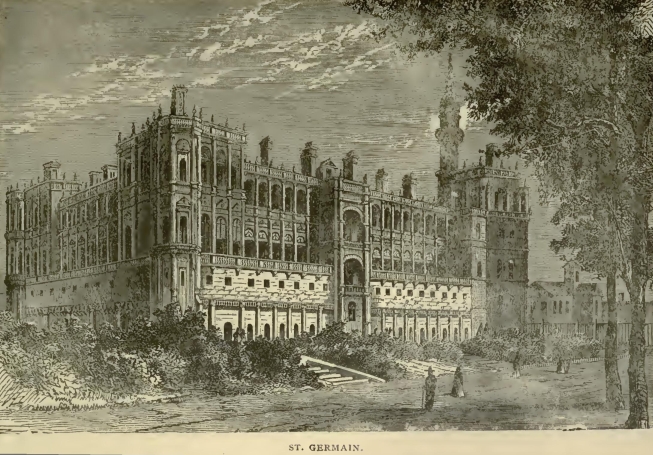
Original
Meanwhile Mary Beatrice had left her carriage and walked towards his majesty, who saluted her affectionately. After a great many complimentary speeches on both sides, the king presented the dauphin, as his son was styled, and monsieur his brother, then the four royal personages got into his majesty's coach and were driven to the Palace of St. Germain, which was to be the future home of Mary Beatrice. They alighted at the inner court, where, after placing everything at the queen's command, Louis led her to the apartments that had been newly-fitted up for the Prince of Wales. Such an affectionate welcome brought tears to the eyes of Mary Beatrice, who began to feel that she now needed nothing but the arrival of her beloved husband to fill her heart with peace.
St. Germain Palace had been gorgeously fitted up for Queen Mary Beatrice, and contained every article of luxury that she could possibly desire. On her toilet table stood a casket of exquisite workmanship, of which Tourolle, the king's upholsterer presented her the key with rather a significent air. This she observed; but her mind was so occupied that she did not remember to open the casket until the next day, when she beheld six thousand bright, shining louis d'ors which the generous King Louis had placed there for her use.
In the morning Louis and the dauphin sent to make inquiries about their guests, and at six in the evening they paid her majesty a visit, attended by Monsieur and the Duc de Chartres. She was in bed, feeling ill from the anxiety and fatigue she had undergone, but that did not prevent her receiving the royal guests. Queens were not allowed any privacy in those days, sick or well, and her majesty's chamber was soon crowded with the courtiers who had followed their sovereign, while he and the dauphin sat on the bed and chatted quite merrily. In about half an hour King James's arrival was announced, and Louis went out to meet him. James bowed low as his kinsman advanced, but Louis took him in his arms and embraced him warmly three our four times. Then the two kings conversed in a low tone for fifteen minutes, after which monsieur and the dauphin were presented to James, who was then conducted to his wife's room. As they entered, Louis said, playfully: "Madame, I bring a gentleman of your acquaintance, whom you will be very glad to see." The queen uttered a cry of joy, and the royal couple surprised the French courtiers by hugging and kissing each other right before them all. James was then led to the royal nursery, where it gladdened his heart to see the comforts that surrounded his darling boy. Louis was scrupulously mindful of every act of courtesy towards his unfortunate kinsman, and sent him a present of ten thousand pounds in such a delicate manner as not to wound his pride.
St. Germain was familiar to King James, for it was there that he lived with his mother and the royal family of France during the troublous times that preceded his father's death. After a lapse of twenty-eight years he returned, again a fugitive, the last survivor of those who had shared his first adversity. Mother, brothers, sisters, all were dead, his two daughters had deserted him; the son of his best beloved sister, who had become his son-in-law, had driven him from his throne, and his wife and little son were deprived of their rights because of his fall. An appalling list of calamities; yet James bore them with a calmness that astonished his French friends. Both he and his wife felt their dependence, and desired to live as much in private as possible; but it was not permitted. The court of St. Germain was formed on the model of King Louis's, but the French officers were soon replaced by those members of the queen's household who followed her, though their property was confiscated and they forfeited the rights of citizenship by so doing. Mary Beatrice's old coachman, who had formerly served Oliver Cromwell, followed his royal mistress to St. Germain, and continued to drive her state coach until he died of old age.
A.D. 1689. At first the etiquette of the French court was very irksome to Mary Beatrice, for it was much more formidable than in England, and she would have made many mistakes had she not had the good sense to refer all matters of precedency to Louis XIV. himself, and in every case to abide by his decision. The wife of the dauphin refused to call because the size and position of the chair she was to occupy in the presence of the Queen of England was not according to her fancy, so Mary Beatrice waived ceremony and made the first call, and in course of time it was arranged who was to sit, who was to stand, which noble lady or gentleman was to be placed to the right or the left of one of the royal personages, who was to go first, the size, shape, and height of the chair, besides many other matters that appear trivial to us; then all went smoothly. Mary Beatrice became the fashion; Louis XIV., the Grande Monarque, had held her up as a model for his daughter-inlaw, and said: "See what a queen should be," and that was enough to bring the whole court to her feet. Every one admired her ready wit, her grace, her beauty, but above all, her charming manners and her devotion to her husband. One day when King Louis was caressing her baby she said: "I had envied the happiness of my son in being unconscious of his misfortunes, but now I regret the unconsciousness which prevents him from being sensible of your majesty's goodness to him."
The exiled king and queen were invited to St. Cyr to witness a new tragedy by Racine, and Mary Beatrice sat between her husband and Louis XIV. during the performance. Next day Louis entertained them at his palace at the Trianon, where the two kings had a long private conference, while the queen played cards with some ladies and gentlemen.
Meanwhile affairs in England were going badly for the royal cause, and on the sixth of February a very small majority in parliament decided that the Prince and Princess of Orange should be proclaimed king and queen.
James was still undisputed King of Ireland, and his subjects there urged him to visit their country; so, with a force consisting of a hundred noble French gentlemen, Lauzun being of the number, besides twenty-five hundred English and Scotch emigrants, he decided to go. King Louis supplied him with vessels and money, and offered troops, but James replied: "I will recover my own dominions with my own subjects or perish in the attempt." After his departure the queen left St. Germain and went with her little son to the convent of Poissy, intending to pass her time in prayers for the safety of her lord. From Poissy she went for awhile to the convent of Chaillot, several of the nuns of that community being among her best friends.
A.D. 1690. King James was received with joy in Ireland, where his viceroy, Tyrconnel, met him with an army of forty thousand men, but they were composed of half-clad peasants, who were willing to fight, but had neither arms nor military discipline. With such forces little could be expected, and though the king met with a few trifling victories at first he really gained nothing. Mary Beatrice pawned or sold her jewels to keep him supplied with more money than she could manage to borrow from the French government, but all to no avail; one defeat came close upon the heels of another, until the battle of the Boyne convinced James that his cause was hopeless.
Fortunately the queen had not heard of this dreadful
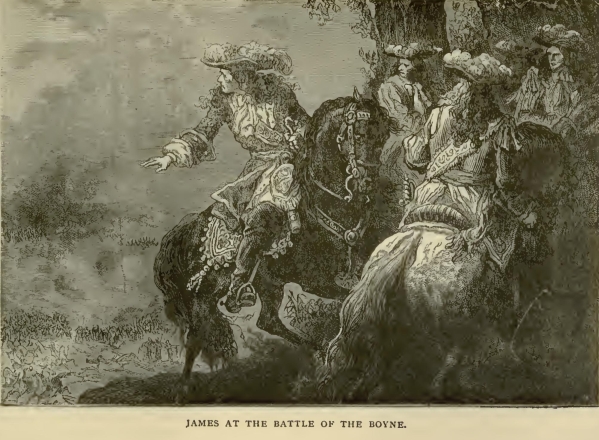
Original
defeat until news reached her that her husband was safe in France, and all misfortunes sank into insignificance compared with the anxiety she had suffered on his account. In October the royal pair were invited to Fontainebleau, one of King Louis's most splendid palaces, to spend a few days, during which they were entertained with most generous magnificence. King Louis always sat at the queen's left hand, and showed her marked attention on every occasion. When it rained the guests remained indoors, and played a game of cards called loo in England, paume in France, that had been introduced by the Dutch. They were treated to a stag roast in the park by moonlight, and enjoyed seeing the animal that had been killed by the two kings in the morning roasted whole in the evening.