Front matter (continued 2)
Thomas Becon translation
The thirde thinge is / that the princes and rulers which do suffer these vnfaithfull mẽ to dwell ĩ their dominions sholde prouide that they mighte be taughte the truithe: and in this behalfe they muste not neglect them: for as the princes do declare their gẽtilnes in suffering thẽ to dwell in their dominions so this their pacience muste be directed to the glorie of God: And howe can that be soughte in theis vnbeleauers / if they be suffered to abyde in their noughtie opinion without teachinge: Surely by thys meanes in processe of tyme they be made no whit the better / but a greate deale worse then they were before.
The fourth is / that these princes take Godd hede / that by this dwellinge and cõuersation which they fv vnbeleauers / but after sufficient teachinge do compell them to embrace true religion. I say that when they haue prouided that these vnfaithfull haue bene taught a good whyle and truly instructed / they must then enforce and compell them vnto those holye and pure rytes and worshippinges of Godd which are commaunded in the scriptures: for princes and rulers must not alwayes / nor yet to longe suffer theyr cytyzens and subiectes / to lyue without exercise of godlynes and vertue. The ende of policall gouernemente is / that the subiecte both sholde lyue in felycytie / ãd also in the practyse of godlynes / because that godlines and the true worshipp of God is the chefest of all vertues.
But some man will obiecte against me / and say / yf so be that the vnfaithfull be not yet persuaded / they shall then embrace truthe against theyr conscience / which thinge yf the prince compell them to do / then he compelleth them to synne. Here must we make a difference betwene the thinge that of it selfe is synne / and that which is so by chaunce / by some fortune / or some other thinge that happeneth / per accidens, as the Logicians do saye: for whẽ the vsque ad Aras, that is vntill they do come to matters of Religion / and vntill they do commaunde in Religion thinges contrarie to Goddes worde and truthe. For when they shall commaunde that which is against Godd / and is hurtefull to the conscience of mã / these magistrates must not obey thẽ. For these vnder Rulars are called into a parte of the cure and charge of the goode gouernemente of the countrie / by the force of theyr dignitie and office: The Lacedemonians / when they whiche hadd ouercomme them / did demaunde of them such thinges as were against the ciuile lawes and libertie of their citie / They answered / If ye do commaunde vs to do thinges which ar more weightie and greuous then death / we wyll rather dye then do them: Thus ought these vnder Rulars answer theyr higher Lordes / when they do commaunde them to do thinges which are to the defacing of Godds glorie ãd truth / and to the wounding and vnquieting of the consciences of the subiectes / whiche thinges are more weyghtie and greuous then death indeede. In Cyuile thinges they may gyue place to the vniust commaundementes and decrees of theyr hygher Lordes / but that ought they not to do in the cause of Godd / and pure Religion. The Machabees at such tyme as the Iues were vnder the rule of the Macedonians (Antiochus / Demetrius / and Alexander / I meane) which princes did leade the people awaye from the true worship of God / and from the seruice taught in hys worde / wolde not obeye them. But that house and tribe of the prestes called Asmonei, whiche in dignitie were nexte vnto the house and stocke of the Kinges / and bare the chief Rule nexte vnto it / les that the true worshippe of Godd commaunded and taught in the lawe / and which hadd bene retayned and vsed in theyr countrye / shulde 4. Reg. 11. She hadd by violence obtayned the kingdomme / ãd so was she the supreame ordinarie poure: But yet he sturred vpp a commotion agaynst her / And he brought the Sonne of Asa / Kinge Ioas / I meane (who was saued by hym frõ her bluddy sworde) into the kingdome: For he knew that by Goddes worde the kingdome was gyuen to the house of Iuda / He perceyued also that she went about to haue all good Religiõ / and true godlynes / vtterly ouerthrowen. Therfor as she had vniustly shedd innocẽt bludd / euen so he most iustlye commaunded that she shuld be slayne. 4. Reg. 18. Kinge Ezechias also / was in subiection to the King of the Assyriãs / for Achaz his father hadd submitted hym selfe vnto hym / and did not only paye hym tribute / but also for his pleasure did chaunge Godds Religion: for whẽ he wente to Damasco to meete this Kinge / he commaunded that an altar shuld be made at Hierusalẽ / after the patrone and fashion of that which he hadd seene at Damasco. This Kinge Achaz his sonne / godly Ezechias / perceyuinge that these thinges whiche his father hadd done / were repugnant and contrarye vnto Godds worde / hurtefull also to the consciences of his subiects / he (I say) did fall away G Rom. 13. It is true indeede that the holy scriptures do commaunde / that euerye soule shulde obeye the hygher poures / but so farr as by Godds word it is lawfull to obey / and no further. For the holy scriptures do likewyse say / that the Rular is not any feare to them that doth good / but to them that do euell. Wherfor seying these princes / in this case by theyr endeuour and laboure / do promote that which is goode / they do well and not euell: and so ought they for this doinge to be without fear of the hygher poure / because that herin they do not resiste agaynst them / with that Resistaunce which is forbidden. Wilt thou (saith he) be without Gij Giij
Now when I on this maner do entreate of these thinges / I do not make or shewe an easye waye to sturre vp sedicions. But this onlye I do seke / and care for / Matt. 22. That those thinges which do belonge vnto Godd / shuld be gyuen vnto Godd: and those thinges which are belonging vnto Cesar / shulde be gyuen vnto Cesar. If the worldly substaũce and ritches of men were required and asked by the hygher poures / I wold councell to gyue thẽ. But in those thinges which do belonge vnto the worshipp of Godd / I say / that thei must not yealde to the wicked requestes of theyr hygher Rulars and lordes: here is no place to be gyuen to thẽ / but in our owne ciuile matters we must yealde / yf to yealde in them be not agaynst Goddes lawe. 3. Reg 21. In which case Naboth is to be excused / which wolde not graunte hys vyneyard to the Kinge: He dyd it not of couetousnes / or of to great a desyre which he dyd beare to the thinges of the world / but because he dyd knowe that in gyuing awaye of his vineyarde so / Goddes lawe shulde be broken / by which he hadd appointed / that the feeldes Num. 33. shuld remayn in theyr tribes and kindreds / as they were iustly distributed at the beginning. This lawe of God wolde Kinge Achab haue broken / and therto required he the cõsent of Naboth / which he with a good and a safe conscience could not do / and therfor wold not. But halas / sorow it is to behold / how that there are many Dukes / Earles / and such princes / from whome yf an Emperour or a Kinge wold take their dominions / landes / lordshipps and inheritaunce / they wold leaue nothing vndone / yea they wold do all that they could do / to defend their own / and do resiste their vnrighteous doinge: But when the kingdom of God is assaulted by tyrauntes, and the gospell and bequest of the bludd of Christe taken violently and wretchedly away from them / and frõ the children of Godd which are committed to theyr tuition and defence / they will do nothing at all. Yea when they are required of theyr hygher poures / as ministers of theyr furie / to destroye and ouerthrow the gospell / then they neyther sturre nor speake anye thing at all / but do as they are biddẽ. In theyr own cause they can fight / and rebell / but in Goddes cause / they are as it were no princes nor Rulers. Wherby we can not thincke any other thing of them / then this / That they do not at the hart esteme the gospell of Christe.
A confutation of the places alledged. Nowe this is remayning / that I sholde answer vnto those reasons which were put forthe at the begynning to proue that the dwelling together of the Giiij
The seconde place is / 1. Cor. 7. Paule wolde not that the faithfull maried vnto an vnbeleuer sholde departe / yf the vnbeleuer will dwell together with the other. This I do also acknowledge / as befor I haue said: for vnto thẽ / al necessary businesses / especially those which are ordeyned of God / are to be done. And yet in that place which is here alledged / Paule is not so to be vnderstanded without exception / as these mẽ do iudge: for yf the vnbeleuĩg maried parson / shold cõtinually moue the faithfull to Idolatrie / or sholde not cease to blaspheme Christ / and prouoke the other to cõmit like blasphemie / so lõg as thei did liue together / this ioynt life in mariadge were not to be cõtinued: for this were not to dwell together / but to conspire together against Christ: Paule therfor speaketh
An other sentence of Paule is broughte which he writeth to the Corinthians / 1. Cor. 5. where he teacheth that all couetous parsons / euill speakers / dronckardes / whoremũgars / and such lyke are not to be auoided / for then sholde they haue gone out of the worlde. But he wold / that we sholde kepe our selues frõ thẽ / which being called brethren / are infected with these vices. As concerninge this place / we must consider the mynde and purpose of Paule. Firste he dyd perceyue that for the necessitie of lyfe it coulde not be that the faithfull shulde auoyde the companie of all which at that tyme were vnbeleuers / for the greater part of men at that ceason was without Christ / and they beinge auoided of our men / coulde not therby haue bene made the better / But into thẽ which before were bretheren / bothe sorowe and shame was dryuen / when they dyd see that they wer now shonned of the godlye / to whome as they were before righte deare / so with them they were familiar. And by this meanes the church was not euill reported / neither for clokinge of euill among themselues / nor for to seuere separatinge themselues from them which were not yet conuerted: seing that they lyued with the vnbeleuers / partly for the necessitie of lyfe / partlye to turne them to the gospell of Christ: wherfore this sentence doth make nothing at all agaynst those thinges which we haue alreadye spoken.
Moche lesse maketh that for them which they do Gv Gene. 12. that Abraham did becomme a straungier amõg the heathẽ and Idolatours: first that which Abraham dyd / euen by the callinge and commaundmente of God he dyd it. Againe he was of suche knowledge and constãcie in the truithe that he coulde be conuersaũte whith the vnbeleauers with out hurtinge of him selfe / and wyth moche profyting of thẽ. For he caryed aboute with him the name of god ãd his holy ãd true worship / whither so euer he wẽt. And the very same thing / maie we answer of Lot.
5 Gene. 13. For if Lot went to Sodome / with a Good mynde to teache thẽ true faithe and godlie life / he owght not to be accused therfore / for it was well done / yea it was the prouidence of God towards the Sodomyts / that they mighte be better taughte / and ernestly caled vnto repẽtance. So dothe God admonishe before he destroieth. So Abraham was sent amonge the Cananites. On this sorte to go amõge the wicked / and vnbeleuers is lawfull and laudable. But if Lot went to Sodõ only because the pleasaunte commodytie of the place pleased him / he dyd not wel. Neither indede dyd his going thither happen luckelie / for he was led awaye captiue / so that he was in nede to be rescued again by Abraham. Gene. 14. And likewise when God burned the Cytie / he was compelled euen against his will to forsake it.
Of Naaman I shall not nede to speake nowe / 6 for of him I haue spokẽ inough before. 7 I suppose lykewise that the cause is opẽ and plaine inoughe / wherfore manye of them which were healed of Christe
Of the Iues As concerninge the Iues / there be certayn reasons why they are to be borne withall and suffered. Of which Augustine / amonge others / doth make mencion in many places. Furste / they aboue all other sortes and nations of men hadde the promise made vnto them. Neither are they all yet vtterly to be despayred of / for the roote remaynethe into the which they maye be ingrafted agayne / and nowe and thẽ some of them / thoughe not many in Nombre / do come vnto Christe. Paule saithe to the Romains / Rom. 11. that partly blindnes is happened is Israel / as if he wolde saie / not vpon all / not for euer. And afterwarde he saieth / when the fulnes of the gentyles ys comme / thẽ all Israell shalbe saued: vnto that ende therfore the lorde saueth / and preseruith them vnto this daye. And that thou sholdest not thincke that this place is to be vnderstanded allegorically of the spirituall Israel / Paule teacheth it as a mysterie / ãd dothe recite the prophecie of Esaie / Esa. 59. in which it is sayd: That then all the iniquite of Iacob shal be taken awaie. Besids this they are called ennemies / but yet beloued for the fathers. Quest. Euãg. lib. 2. quest. 33. And Augustine expoundinge the historie of the prodigall sonne / saieth / that he dothe represent the gentiles / Luc 15. for as he went Lib. de fide rerũ inuisib. cap. 6. And alwaies Augustine bringith this sentence to persuade men to suffer the Iues / which is writẽ in the 58. psal. Psal. 59 as he nõbred the Psalmes. Sley them not / lest my poeple do forget / but scater thẽ abroade. &c. The sonne of God praieth the father / that the Iues mighte not be vtterlie slayne and destroyed but scatered abroad throughe the worlde. Other countries and nacyõs / being subdued of the Romaynes receyued their lawes and rytes / and so became Romains / but the Iues although that they also were ouercomme of the Romaines / yet were they neuer made Romaĩs / neither ĩ ordinaũces / lawes / nor religiõ. They do kepe their own lawe (so farre as they cã) euẽ vnto this daye: They wander aboute dispersed and scattered abrode / neither do they forget the lawe of Godd / the haue it / not to obserue it indeede / but only they do reade yt / ãd they do also reteyne certeyn signes / as Circũcisiõ and other ordinaũces /
Neither is this their dispersion amonge all the nacions of the worlde vnprofitable for vs. They are braunches brokẽ of / and we are grafted in their place / which thinge whilest we do beholde / we must acknowledg the iustice of God towards them / and his grace towards vs: And we muste take hede / that we be not lykwise cutt of through vnbelefe / for the which they were broken awaie. Ther is another cõmoditie besydes this that commith of this their dispersiõ which is / that they do kepe our bokes / the holy byble I do meane. These they do carye aboute with them / they reade them / and thoughe they beleue not / because they are blinded / yet do they cõfesse that these wrytinges are true. And so though they be our enemies in their mynde / yet the bokes which they haue and do reuerẽce / are our witnesses. wherfore I cã not maruayle ynoughe at those mẽ which do persequute and hate the tonge of the Hebrewes / and the Hebrewe bibels / and do burne them / whẽ as Augustine in his boke / De doctrina Christiana, dothe bidde / Lib. 2. ca. 11. that we sholde go to the truithe of the Hebrue tonge / if we do doubte in any place of our translations. The selfe same thinge dothe Hierome teache in manye places. But they saie that these bokes are corrupted of the Iues. Heare I thinke good mighte H
This worde Hæresis, is deriued of the Greke worde / αιρεῖν, which signifieth to chose / to pick / or to cull out. For heretikes do chose out / vnto thẽselues sum doctrine which is contrarye to the holy scriptures / and do obstinatly defend the same. Vnto this euell they are brought / either bicause they do not know the holy scripture / either bicause that though they do knowe them yet they do contemne and despise them either els bicause they do applye thẽselues to get sum honor or riches by this meane. Wherfor Augustine saith. Lib. de vtilit. credẽ. He is an heretike which either enuentith / or folowith fals and new opinions for ony worldly commoditie / and cheifly to gett himself glorie ãd autorite. But of Heresie I will make this definicion. Vvhat heresie is. Heresie / is a choise and obstinate defence / of certeyn doctrynes which are contrary vntto Godds worde / springinge / either of the ignoraunce / or of the contempt of the holy scriptures / to gett therby aduaũtag / or honors. There are foure kyndes of causes in this definicion. The formall cause is / chosinge and defending of picked doctrynes. The materiall parte or cause is picked doctryns contrary to Godds worde. For he that beleauith no doctryne at all / is godles / and not an Heretike. The cause efficient by which they are moued to Heresie is / ignoraunce and contempt of the holy scripture / and lust or couetus desire. The end whi men fall to Heresie Phil. 3. Theyr belly / is their god. Augustine hath also this diuisiõ. Quest. in Matth. quest. 11. Euell catholiques are they / which do lyue otherwise thẽ they saie that they do beleaue. Schismatiques are they / which for diuersitie in opiniõ do diuide and separat the church / for σχιζειν, is to deuide. Heretikes are they / which perseuere / and cõtinue in that schisme. Lib. 2. contra Cresco. cap. 7. But in an other place he saith. That Heresie / doth differ frõ schisme. For a Schisme / is a stryfe which risith vppon diuersitie of sentẽces. Neither can a dyuiding or a schisme be / onles they which do make it do thinke and holde cõtrarie thinges. But Heresie is / an inueterat schisme. 1. Cor. 11. Saint Paule obseruith no such diuersitie / for he vsith theise too wordes for one thinge. Nowe that ye se what Heresie is / consider well wether that the papistes be heretikes / or no? They themselues do stoutly saye that they be none. Yea ãd sum other ther are / which dare affirme / that the papistes do differ from vs only in certayn abuses of ceremonies / and not in the doctrine of faith. But how farr theise mẽ do err from the truithe / it shall forthwithe appeare. For I will playnly proue / that the papists are Heretikes / and do mayntayne Heresie againste certayn principall doctrines of our faithe.
1 The Papistes are heretiques. Furst in the Article of Iustification / the papistes do picke out vnto themselues this doctrine: That a man is not iustified by faithe only / but by goode Hij Rom. 3. We holde that a mã is Iustified by faithe / without the deedes of the Lawe. Agayn he saith. Gal. 2. We do knowe that a man is not Iustified by the deedes of the lawe / but by the faithe of Iesu Christe. And Peter / whom Paule did thẽ withstõd / did not speake agaynst this doctrine. Of the Iues / also he writith thus. Rom. 10. For being ignorant of Gods righteousnes / and goinge about to establishe their own righteousnes / they were not obediẽt to the righteousnes of God. In which place he settith theise two righteousnesses / the one / against the other / the righteousnes of faith / against the righteousnes of worckes / so that the one excludith the other. The same thinge he doth where speaking of Iustificatiõ he saith. Rom. 11. If it be of grace / thẽ is it not of worcks / if it be of worcks / thẽ is it no more grace. To the Philippians he playnly saith / Phil. 3. that the worcks which are wrought before Regeneracion / can not iustifie / for he doth counte them to be but losse and dunge / which truly he wold not haue done / if they hadd such poure and vertue / that they could iustifie. This is most playne / that men before regeneraciõ are euell / and then must this sentẽce of Christes stõde true. Mat. 7. An euell tree cã not bringe forth goode fruite. For how can it be / that they wich are deade as cõcerning righteousne / can of thẽ selues go ony thinge forward vnto their new birhte: Ephes. 2. And we all wer such / euẽ deade throughe synne / and the Hebre. 11. That without faith it is impossible to please God: And to the Romayns Paule saith. Rom. 14. That what soeuer is not of faith is Synne. This is the doctrine of the scripture cõcerning this matier. The papistes (as I sayde) so teache cleane contrarie doctrine / and do obstinatly defẽd it / notwithstõding that they be admonished of their error by the holy scriptures / by the aunciente fathers / as Hierom / Augustin / and others / by the godly Coũcels / as Africanum / Mileuitanum / Arausicanum / And now also being admonished therof by vs / yet will they not leaue their errour: Wherfor by the former definitiõ of Heresie / they are proued heretikes.
An other doctryne also they do hold which is this. That the worcks which men do after regeneracion / are meritorius of their own worthines vnto euerlasting lyfe / And that they do fulfill the lawe of God. Yea they be not content to saye this only / but they adde. That men can do more goode worcks thẽ the lawe of Godd requirirth. For (saye they) to lyue a syngle lyfe / to preache the gospell frely / mẽ are not commaunded by ony expres cõmaundement of Godd. This they do teache / and obstinatly defend. But we do lern out of the holy scriptures / that Rom. 8. The afflictiõs of this lyfe / are not worthie of the glorie / which shalbe shewed vppon vs. He speakith heare of the best kind of worcks / euen of sufferinge martyrdom. Besides this eiche man dothe fele him selfe bounde betwene / and giltie of the breaking of theis two comaundementes. Hiij Deut. 5. Thou shalt loue the lorde thy God whith all thy harte / with all thy soule / and with all they mighte: lykewise of the same other commaundemente. Exod. 20. Thou shalte not luste / Ther is none amõg mortall mẽ / that dyd euer fulfill those commaundementes. For the prophet saythe: Esa. 64. that our rightuousnesses / are as the clothe stayned withe the floures of a woman. And Christe wolde haue vs all / yea euen the blessed virgin / and the Apostles themselues to praye / Mat. 6. forgyue vs our trespasses. Iacob. 3. Iames addeth / in many thinges we all do synne. Ioan. 1. Iohn saythe. And if we saie we haue no synne / we do deceyue our selues. 2 This do we learne in the holie scripture / of our continuall synnynge: they teache not then that we can do any thing more then we sholde. But here the papistes do seke startinge hooles / and saie that they which liue a sole life / they which do preach the gospell frelie / do more thẽ the law cõmaundeth / as I sayde: But this is not true / for they which haue the powre to liue a sole and chaste lyfe / ãd do know that in this kinde of lyfe they shall more paynfully and profitably labor in the preachinge of the gospell of Christe thẽ otherwise. They are bownde to take it on thẽ ãd to lyue in it. For if they do yt not / it is certeyne that they loue not God with all their harte / bycause they sholde then leaue vndone somewhat that they mighte do / to the glorie of his name / and wolde not. Like is to be saide of thẽ / which mighte preache the gospell frelye / and do se that it shalbe for the increase of the kingdõ of Godd / and do it not. Wherfore
3 They do chose vnto them selues also an other doctrine / which is / that they which be regenerat / muste alwaies doubte of their saluatiõ. But Christ / the Apostles / and the whole scripture / do teache cleane contrarie / Ioan. 6. he that beleuithe in me (saith Christe) hathe euerlasting life. If he hath it / howe cã he doubte of yt then? Act. 10. And it is writen in the Actes. To him giue all the Prophetes witnesse / that all they which beleue throughe his name / shall receyue remissiõ of synnes. Rom. 8. And to the Romains / whõ he hath called / them also be iustified / whom he iustified / thẽ he also glorified: But here the papistes haue this shifte / A mã muste not doubte of Gods promises (they saye) but he muste doubte of the infirmitie of his fleshe / that he can not do those thinges which are to be done / to obtayne the promises of Godd. Rom. 4. Butt we be admonished by Abrahãs example / that we sholde not in beholding of our imbecyllitie / fainte in faith / nor fall from beleauinge certainly the truithe of the promises: he considered not the barren wombe of Sara / nor his own old and effoebled bodie / he stackered not at the promise of God through vnbelefe / but became strõge in faithe / and dyd giue glory vnto God / knowinge that he was sufficientlie able to performe those thĩges which he promised. &c. Rom. 4. Therfor by faithe is the enheritaunce gyuẽ that it might Hiiij Rom. 5. to be suche / that it dothe not make a man ashamed: if then we do certaynlye hope and loke for life euerlastinge / we shall not be deceyued: and seing it is the holye ghoste that bearithe witnes vnto our spret / Rom. 8. that we are the children of Godd / surly his witnes we may not reiect / without cõmitting gret offence. Exod. 20. I am sayth Godd / The lorde thy Godd / this will he haue them that be his to beleaue: Roma. 5. And whosoeuer beleauith this / hath the quiet peace of a iustified consciẽce / and knowith hymself to be in safetie / for Godd is his iustifier / and who shall condẽne hym / whom Godd doth iustifie. Roma. 8. Against al theise manifest testimonies of the holy scriptures / theise men do teache their contrary doctrine / and do obstinatly defend it / wherfor they are heretiques.
Moreouer they do teache that euery mã must satisfice for hys synnes in this lyfe / which if he do not / then must he go to purgatorie: And that by the poure of the Keyes committed vnto them / they can turn the euerlastinge punishment in to a temporall. Psal. 32. If therfor satisfaction be not made whilest a man is in this lyfe / he shall do it / when he is goone out Rom. 4. Blessed are they whose vnrighteousnesses are forgyen / and whos synnes are couered. What blessednes / I praye you shuld this be / if they which be reconciled vnto Godd / shuld be bownde to sustayne such paynes and punishmentes. When a Synner doth repent (saith Godd by the prophet) Ezech. 18. The synnes that he hath done / shall not be thought vppon. But Godd will thincke vppon them / if it be true that either a man must satisfice / or go to pugatorie / if Godd wil so sharply punishe them by such paynes as they saye are in purgatorie. It is writon in the reuelacion. Apoc. 14. Blessed are the deade which do dye in the lorde / euẽ so saieth the spret / that they rest from their labours. They which do dye in the lorde / that is the beleauers / how do they rest frõ their labours / if it be so that they must yeat be vexed in purgatorie? Christe our Sauiour when he did forgyue synnes sayed. Luc. 7. Thy faithe hath made the safe: go thy wayes / synne no more. Ioan. 5. Luc. 23. To the theif he saied. This daye thow shalt be with me in paradise. Phil. 1. Paule desired to be loosed / and to be with Christ. How chauncith it that there is no mencion made of purgatorie? In the old lawe / ther wer sacrifices ordeigned / for princes / prests / for the Nazarites / for the lepars / for gelousie / for the synne of ignoraũce / and many such lyke. How happened it that ther was no sacrifice appoĩted for the dead? The church truly (as we also do graunte) hath keyes cõmitted vnto it. And theise are / the preachinge of the gospell / Mar. 16. that is the forgyuenes Hv
They do teache furthermore / that it is lawfull in the congregacion to do the holy seruice / in a tongue that is not vnderstõded. And this they do indeede / and defende theyr misdoinge / neither being admonished will they amende it. 1. Cor. 14 Paule doth forbidde the christians the vse of those tongues in the congregacions / which euen by miracle were bestowed vpon them / except they did interpretate and expoũde that which they shuld speake in them. And all Paules reasons are grounded vpon the edifying of the cõgregacion / whiche aboue all thinges we ought to seeke in the holy meetinges and cõgregacions. But there shalbe no edificacion at all / when that thing which is spoken / is not vnderstonded of the people. Paule saith. My brethren yf I do come vnto you speaking with tongues / what shall I profite you / excepte I speake to you / eyther by reuelaciõ / or by knowledge / or by prophecying / or by doctryne. But these sacrificers / lyke men that can do mutch more then Paule / they do come with a straunge tong / which the congregacion vnderstondeth not / and yet neuertheles they bragge that they do muche profite the congregaciõ. Paule will rather speake fyue wordes / to the enformacion of others / then ten thousand wordes In nouel. Constitu] Iustiniane the Emprour determineth / that all thinges shulde be spoken openlye and plainlye in the Temples / that they mighte bothe be hearde and vnderstonded / But this the papistes regarde not. Wherfor seing they cã not / nor will not / be moued from this their opinion / which is so absurde and repugnant to the holye scriptures / to the order of the catholique churche / to the lawes of the Emproure / without all doubt they are heretiques.
They do teache that the sacrament of the Lordes body and bludd / shuld be ministred in one kinde only 1. Cor. 11. (who writinge to the hole churche of the Corinthians / which were not prestes only (as the papistes call them) but a cõgregacion bothe of men and women) dothe delyuer the holy supper vnto them in bothe kindes / as he receyued it of the Lorde / heere haue they nothing to saye. And vnto this madnes some of these masters do come at lenghth / That they saye that the holy communion is not to be called the Lordes supper / for wher is it (saye they) called the supper of the Lorde? Dotor VVeston. Forsothe Paule / the scoler of the holy ghost / calleth it so. 1. Cor. 11. Yea they aske farther / where the scripture teacheth / that this holy sacrament shulde be gyuen vnto women / Lyberall to Women as thoughe they wolde be counted of fauour and of their liberalitie / to gyue a communiõ vnto women / 1. Cor. 11. and not because Godd in his worde hath appointed the sacramẽt of hys bodye and blud ἀνηρ which signifieth the mankinde only: Maister Latymers answer therfor is true. Thys Doctor lyeth lowdly / for the greke worde / in that place is ἄνθρωπος / which signifieth bothe man and woman. The scriptures also do teache / 1 Cor. 10. that the holy communion doth partayne vnto all them / which ar one breade / and one cupp: wherfor except they wyll exclude women out of the bodye of Christ / and shew that they be not of the churche of Christe / how shall / or can this papist / depryue them of the holy communion? Especially seinge it is playnly taught / that in Christe there is neyther man / nor woman / neyther bonde / nor fre / but all are one in Christe. Gal. 3. But to returne to their sacriledge / in which thei do take away one parte of the sacrament. Of this thefte the institution of the Lorde / the Epistle of Paule / the custome ãd manier of the primatiue churche / which was to mynister this holy supper in both kindes / dothe accuse them / which dyd continue euen vntill the tyme of Thomas Aquinas / and vnto this daye it continueth in all the Easte church / wherfore seing tht in this thinge also they are so obstinate / they can be none otherwyse estemed but as heretykes.
They haue also another most pernicious and hurtefull doctryne / of the calling vpon the dead sainctes / and worshippe / and adoration / to be gyuen to theyr Images. Deut. 6. The holy scripture sayth / Thou shalt Acto. 4. Again it is writẽ in the holye scripture: That ther is none other name vnder heauen / but the name of Christe onlye / wherin we muste be saued. 1. Ioan. 2. And Iohn doth saie: If we synne / we haue an aduocate wyth the father / Iesus Christe the rightuous / and he is the propiciation for our synnes. But theis heretikes make many aduocates. Esa. 63. Abraham hathe not knowen vs / And Israel hathe forgotten vs. And therfore (saith he) these are not to be called vpon / we must not truste in them / but in God onlye / and that vnto him wee muste flye. We are commaũded also in moste plain wordes / that what so euer we aske / we sholde aske it in the name of Iesus Christe / Ioan. 16. and not in the name of other sainctes / as theise men do. But contrary to this true doctryne they do stifflie maynteyne their wicked error / therfor are they verylye heretikes. Here I do let passe their masse / in which they make their mishapen Godd of breade / throughe their art of transubstantiation. They sett vpp their sacrifice for the quicke and deade / the verie abhomination and God Maozim: which thinges they do defẽde wyth moste peruerse obstinacie. But howe contrarie they are to the worde of Godd is not nowe again to be repeted / seinge that a lytell before / in this matter I haue sayde sufficiẽtlie. But if I wolde spẽde more tyme here / I mighte reherce many other doctrines of the papistes in which they do shãfully swarue frõ the truithe of Godds worde. And of their errours they will not chaũg any thing at all which prouith them to be obstinate heretikes. But this that I haue writõ is inough / and inough againe to proue that thei are heritikes. Now let thẽ saie that we dissent but in ceremonies. But I saie that we dissẽt in doctrines. Let the papistes saie that we shold not haue departed frõ thẽ / but I saie / they shoulde not then haue departed frõ the truithe. Augustine Aduersus Crescon. lib. 21. that the controuersie betwene the Catholikes and the donatistes / was a lighte and small contention / and schisme: But he saieth that they defended an heresie / and that moste horrible / euen this that they did rebaptize. And yet baptisme reiterated dothe nomore differ from the worde of God / then these errours of the papistes / which I haue repeted.
Wherfore Christian princes / whilest they do suffer them in their dominions / they owghte no otherwise to suffer them / then vpon suche condicyons as are aboue rehersed. That is / that they do compell no man to partake their wicked Idolatries. That they do not permitt them to haue their rites and supersticious ceremonies. That they take hede / that they do not corrupte others which do beleaue truly / and be of good iudgemẽte. And last of al / after that they haue bene cõpetentlie taughte / to enforce them outwardly to embrace sownde / and holye rites / and ceremonies agreinge with Godds worde. Thou wilte saie happelie / if it shoulde be so / their condition sholde be more miserable then the condicion of the Iewes / and Turckes / whom we do not compell to receyue our Religiõ. I graunte / but yet this sholde be iustlie done. And that for theis causes. Firste bycause the Iewes are not Citizens in our common welthes / but receyued vnder this condicion / that it is lawfull for them to vse their owne lawes / so lõge as they will: wherfore if they do not behaue thẽselues well / or they do not please vs / they be turned I Cõtra donat. lib. 5. cap. 23. againste the donatistes / sayeth that when they retorne / the hãdes only are to be layde on them: and that les is sholde apeare / that they were before without fault. Also that the holye ghost maye by praier be begged to cõme vpõ them / whose singular gifte the vnitie of the true churche is. This ceremonie trulye is laudable / but yet seinge it is not appointed to this purpose in the holye scripture / it maie be omitted: because we do se that the cheifest vse of it (as the apostles vsed it) was in the institution of the ministers of the churche. Suche of them as haue bene byshopps / and elders / maie be receyued into their degrees / and offices / if they do returne vnto the truithe: but this must be done / so as shall seme moste profitable to the flocke / and churche of the lorde. If they haue suche giftes as maie serue for the edyfying of the churche / And if by their ministerie / the truithe of the gospell and the saluation of the people which was committed vnto them maye be propmoted more then by the ministerie of other / and aptelie / and as profitable. They maie be restored to their place / ãd degree. The order of which matter is lefte vnto the iudgement of the churche of God. But if they remayne obstinate in their euill / and do continue peruerters of the godlye doinges of the magistrates / and pestilent corruptors of the people: Then the magistrates maie / and owghte to vse the sworde againste thẽ: for he bearith the sworde to take vengeaunce on them that do euill / and therto is he minister of God.
Iij
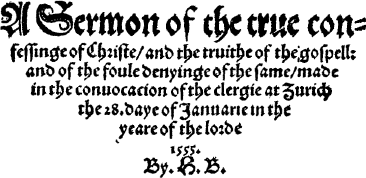
Sermon Title Text
Vr lorde Iesus Christ hath forsayed that ther shuld be persequutions / and cheifly in the later tymes / through which sum shuld be despolied of their goodes / sum also thrown out of their dwellinges / and other shuld be shut vpp in prisõ / agayn that other shuld be fried in the fire and put to other punishmentes / and executed with infamus deathes / And that for the lord Christe himself / and for the doctrine / and confessiõ of the truith of the gospell. The same lord did then also forsaye / that not a few shuld fall from the truithe known. All which thinges truly we haue herd and seene fulfilled / not in this tyme only / but in tymes long passed. For ther are sum which at this daye do openly / and that without shame / curs and bydd adew to the truith of the gospell / which with demas do embrace this present worlde. There are other / and not afew / which do themselues also denie the truith known / and yet wyll not be accompted to be forsakers of it. Thy do stayne themselues with dyuers Iiij The argument and matter. then of the true cõfessing of Christe and the truithe of the gospell / and of the foule denyinge of the same. This matier truly is copius / and most ãple / wherthrough I doubt nothing at all but sum of you be all redy made afraide with the largenes of it / which do consider the end of the sermon by the begynning / and of the mater it self: But I will at this present touche but certayn pointes of this matier hauing cõsideraciõ of the tyme / and especially of you / reuerend fathers and beloued Brethern in Christ. The lord gyue me grace omitting thinges not necessarie / to prosequute only all thos thinges which be necessarie. Thos shameles men / which affirme (without doubt against their own consciẽce) The cloke of them that deny true religion. that ther is no neade at all of the outward and daũgerus confession among the aduersaries of the religion of the gospell / they do wrast the ordinaunces 1. Timo. 5. That if ony prouide not for his and specially for theim of his houshold / the same hathe denied the faith / ãd is worse than an infidell. Wherfor les I shuld be constrayned Iiiij

Confession is necessarie But against all theis we do sett the sentẽce of our lord and Sauiour Iesus Christe / which is neither darcke nor doutfull / that by it all the subtilties of theise mene maye at ones be confuted / and vanishe awaye. In the gospell of Mathewe he confirming the mynds of his disciples against the thretts and terrors of this wicked world / amõg other thinges / Matth. 10. Are not (sayth he) two lytle sparowes solde for a farthinge. And one of them shall not lyghte on the grownd withe out your father: yea euen all the heares of your heade are nombred. feare ye not therfor: ye are if more value then many sparowes. Euery one therfor that shall knowledge me before men hym wyll I knowledge also before my father which is in heauen. But whosoeuer shall denye me before men / hym wyll I also denye before my father which is in heauen: the same lord in the gospell of Marcke / Marc. 8. Whosoeuer (saythe he) shall lose hys lyfe for my sake and the gospell He same shall saue it. For what shall it profyte a man / if he wynne al the worlde and lose his owne soule? or what shall a mã gyue to redeme hys soule wythall agayn? Whosoeuer therfor shalbe ashamed of me ãd of my wordes / Examples of true confession, Mat. 16. We read that Peter did confes Christ the lorde sincerely and with a true cõfession when he answered vnto the lorde / which asked and sayed. But whõ saye ye that I am / he answered. Thow art Christe the sonne of the lyuinge Godd. Ioan. 6. Agayn whẽ many did fall from the lorde for that sermon in which he declared in the Synagoge of the Capernaites / that he only was the foade of lyfe / and for that cause the lorde saide to his disciples: Wyll ye also go awaye? Peter answered / and cõfessing the lorde with a notable cõfession he said / lorde to whom shall we go? Thow hast the wordes of eternal lyfe / And we beleue and are sure / that thow art Christe the sonne of the lyuinge Godd. Such like cõfession absolute and true doth the blessed apostle and Euangelist Iohn commẽd vnto vs sayinge. 1. Ioan. 4. Dearly beloued / beleue not euery sprit / but Iv Ioan. 10. I am the dore / by me if any mã entre in / he shall be safe and shall go in and oute / and finde pasture. A thefe cõmith not but for to steale / kyll / and to destroye: I am come that they might haue lyfe / and that they might haue it more abũdantly: I am the goode shepeherd / a goode shepeherd gyueth his lyfe for the shepe. Yet was he not Ioan. 14. I am the waye (saithe he) the truthe and the lyfe: Yet he not being content wyth this so playn a doctryne doth adde agayne the exclusyue and saithe / No mã commith to the father but by me. Wherfor Peter thought it not inoughe that he sayde in that full senate of Hierusalem / That Christe is that Rocke which doth by his dethe and resurrection establishe and preserue the beleauers / Act. 4. onles moreouer he had Vindicated to Christ alone all thinges that concerne saluaciõ / and taken the same awaye from others / saying. Neither is there saluacion in ony other: For among men vnder heauen ther is gyuen none other name wherin we must be saued. After which manier likewise saĩt Paul doth proue that Roma. 3. faith in Christ through grace doth iustifie / neither doth he saye this only / Ephe. 2. but he doth also remoue all that which might seeme to gyue iustice vnto men / the lawe I meane and worckes / sayinge. We knowe that a man is not iustified Gala. 2. but by the faith of Iesus Christe. And we haue beleued on Iesus Christ that we might be iustified by the faythe of Christe / and not by the dedes of the lawe / bicause that by the dedes of the lawe no fleshe shalbe iustified. And in an other place the same Paule: Behold (saith he) I Paul saye vnto yowe / Gala 5. that if ye be circũcised / Christe shall profite yow nothing at all. I testifie agayn to euery man which is circumcised / that he is bownd to keape the whole lawe. Christe is become but in vayn to yowe / as many of yow as are iustified by the lawe are fallen from grace / we loke for and hope in the spirite to be iustified thorow faithe. Theis cleare examples of Christ and the apostles / and doctrine of the sincere and sounde confession of Christe do suffice to yow reuerend and godly hearers. Out of which we do gather / that their cõfessions are neither full / nor sincere / which do confes that indeede Christe is thier saluaciõ and rightuisnes / their preist and sacrifice / their aduocate and mediator / Imperfaite confessiõs. yet so that it notwithstõding they do gyue the very same / and cõmunicate them to synneful men / to thinges also and meanes which are in no place instituted nor approued of Godd. And no les corrupt is their confession also / which do confes wyth the mouthe that Godd alone is to be adored and worshipped / that Christe is the only preiste and true aduocate with the father / but yet in their deedes they do denye that same confession of their mouthe / bowinge their knees to Images / worshippinge creatures / The hole doctryne of Christe is to be confessed. But the Apostles did not only confes Christe himself / but also all Christes doctrine / all Christes wordes / the whole gospell (I saye) of saluacion: of which Christe is the only Marcke. And therfor when the preistes and senators of Hierusalem did forbidd the apostles that they shuld nomore preache the gospell / they ãswered hartily and playnly: whether it be right in the sight of Godd to herken vnto yow more thẽ vnto Godd / iudge ye. Act. 4. For we can not but speke that which we haue seene and herde. And when they were shutt vp in prison for free preching of the gospell / and wer in daũger of their lyues / they are delyuered of the angell / of whõ by the cõmaundement of Godd they do heare. Act. 5. Go and stande and speake in the temple to the poeple all the wordes of this lyfe. Therfor all thos thinges which are cõtayned in the holy gospell / and holy scriptures / must be confessed of them which are faithfull indeede: for all thos are the wordds of Godd / and the wordds of saluacion / And all thos do sauer of Christe and do bringe vnto Christe. Ioan. 1. In whom only it hath pleased God the father that all fulnes shuld dwell / in whõ (as Paule doth witnes) Colos. 1. 2. we are made perfite so that we want nothinge / as agayn the lorde himself doth testifie: Ioã. 4. 5. 7. he that eateth or drincketh me shall not be hungry or thrustie for euer / but he shall haue in hym self the healthefull waters of euerlastinge lyfe. Yf we do knowe / beleaue / and vnderstonde theise thinges A. Neuter. For in this case it is lawfull for no man to be a / neuter / as they call it. In the most auncient lawes of Solon which were at Athens grauen in postes of woode / the which also ons made by hym the Athenienses ordeygned vnder great religiõ and punishmẽt that they shuld contynue for euer: one lawe Aristotle doth report to be writon in this sence. That if throughe discorde the poeple shuld be deuided into too partes / and eich partie shuld take armour / then he which did not ioyne himself to the one partie / but Math. 26. For Christe and his truithe is denyed either by dissemblinge: as when Peter was charged by the mayde that he was one of the nũber of the disciples / ãd he answered I wote not what thow sayest. He knew verily what she sayed / but being bewitched with a certayne feare / he fayned that he knewe not the thĩg which he did know very well. Euen so truly at this daye many do saye that they are more simple then that they can vnderstond the dissension in religion and gyue answer of all controuersies: But they do vnderstond so mutch as sufficith: yet for the ieoperdies which be at hand / or for sum vayne feare / they do fayne that they do not vnderstonde. Neither wer it necessarie for euery one to answer to all darcke or hard thĩges / which thing they which are well exercised can not do / it sufficith to confesse thos thinges which be opẽ and playne. Ther is also a coloured denyinge Glorie is to be gyuẽ to Godd. In making of it Godd / and not Man were to be considered. Man maye be deceyued / but no man cã deceyue Godd. And also we are commaunde to render vnto God his glorie franckly before men. But I do not see how thow haste glorified Godd before men / when thow dost so temper thy confession that it sumwhat sauerith indeede of the truithe of the gospell / and yet they which be superstitius shall not see their supersticions vtterly reiecrted / nor their errors condemned by thy confession / but maye iudge that thou dost yet holde on their syde. Agayn many do confes Christe in wordes and his gospell frely / and openly inoughe / but euẽ they themselues do forthwith defile and ouerthrow this Christiã and gospellike cõfession with vngospellike deedes. I do speake nothing heere of thos synnes and wickednesses by which they do vnhallow the doctrine of our Sauiour / but of thos supersticius ceremonies and wicked cõgregacions with which they do cõmunicate / by which communiõ or partakinge indeede they do denye that which they did cõfes before. For he which doth cõfes by mouthe that they which do depart out of this lyfe in true faithe do not (throughe the mediacion of Christe) comme K 3. Reg. 18. howe longe (saithe he) halte ye betwene two opinions. If the lorde be Godde folowe hym: but if Baal be he / then go after hym. Euen so truly our lorde hymself doth saye in the gospell / that no man can serue two masters. Let vs therfor forsake all other Godds and religions / and cleaue only to our Godde / which is the father of our lorde Iesus Christ / and let vs sticke faste in the only Christen religiõ / which is delyuered vnto vs in the holy scriptures. For it is euerlasting and most certayne. It sufficith not to confes Christe amonge the brethern. Mat. 10. But if it be sufficient to confes Christe and his gospell amonge our felows and brethern in religion / wherto I praye you will theis our men refer thos wordes which do go before this place of confession in the gospell? Behold I send you forthe as shepe amõge wolues. &c. They shall delyuer yow vp to the cowncelles and shall scourge yow for me. &c. But Marc. 8. Whosoeuer therfor shalbe ashamed of me and of my wordes in this aduoutrus and synefull generacion / of hym also shall the sonne of man be ashamed. He requirith therfor a confession of the truithe not only in the companye of the godly / but also in the companye of the vngodly and persequutours / howsoeuer it be ioyned with the ieoperdie of lyfe and of all the substaunce. The lord speaking in the boke of the reuelacion with the church of pergamos / Apocal. 2. I knowe (saith he) where thow dwellest / euẽ where Sathans seate is / and thow keapest my name / and haste not denyed my faythe: And in thos dayes in which Antipas was a faythfull witnes of myn / which was slayne amõge yow where Sathã dwellithe. In which wordes truly the confession made in persequution is allowed / made I saye in that place / wher Sathan did beare rule / wher euen very then Antypas thaty notable Martir of Christe was slayn for confessinge of religion. Otherwise when all thinges are quiet it is not so harde a thing to confes the name of Godde. For if so be that the lord will not haue vs be ĩ ieoperdie of bodie goodes and lyfe / if it seme to be euill and a synne for a man / Kii Marc. 8. Whosoeuer will folow me / let hym forsake hymselfe / and take vp his crosse / and folowe me. For whosoeuer will saue his lyfe shal lose it. But whosoeuer shall lose his lyfe for my sake / and the gospelles the same shall saue it. He addith forthwithe wordes which do make for the contempt of thos thinges / for which theis men do thincke that in religion silence maye be kept and dissimulacion vsed / sainge. What shall it profite a mã / yf he wynne al the worlde / and lose his owne sowle. Therwith also doth he adde through what thinge we do lose our soules / that is through Shame. For he saithe. Whosoeuer therfor shalbe ashamed of me and of my wordes / in this aduowtrus and synefull generacion / of hym also shall the sonne of man be ashamed when he commithe in the glorie of his father withe the holy Angelles. Therfor Paule that chosen vesell of Christe / and a most faithfull teacher of the churche / who gyueth euell councell to no mã / neither leadith he ony man from the true waye / it is (saith he) a true sayinge: 2. Tim. 2. for if we be deade with hym / we shall also lyue with hym: if we be pacient / we shal also raigne with hym. If we denye hym / he shall also denye vs. The same Paul to the Hebrues / Heb. 10. Call to remẽberaunce (saithe he) the dayes that are The deathe ãd persequution of the sainctes doth glorifie Godd. Therfor whils theise men do replie / what shuld come to the encrease of glorie of Godd / or what commoditie shuld comme to Christe of thos my labors and daungers which I shuld sustayne for religion? wittingly and willingly they do disproue the doctrine of the apostle / which doth playnly witnes / not in theis places only which we haue Kiij Psal. 116. Righte deere (saithe he) in the fighte of the lorde / is the dathe of his sainctes. And sainct Peter saith Dearly beloued / 1. Pet. 4. maruayle not that ye are proued by fyre / which thynge is to trye yow as though sum straũge thinge happened vnto yow / but reioyce / in as mutch as ye are partakers of Christes passions / that when his glorie appearith / ye maye be mery and gladd. If ye be rayled vpon / for the name of Christe / happie are ye / for the glorie and the sprite of Godd restith vpon you. On ther parte he is euill spoken of / but on your parte he is glorified / and so furthe. And sainct Paule dothe pronounce that it is a most greuus synne of ony mã do offend the weake by his euell example. Thy brother doth perish (saithe he) for whom Christe died. When ye synne so against the brethern / and wounde thier weake conscience / ye synne againste Christ. Again we are saied in the scriptures to haue saued hym whom we haue by sounde doctrine and our goode example / either reteyned in the waye of the lorde / or haue brought hym backe that wẽt astraye. But if a greater regarde vs to be had of wife / childrẽ and houshold then of pure religion / so that for that Mat. 10. Thincke not that I am come to sende peace vnto the earthe. I came not to send paeace but a swearde. For I am come to sett a man at variance against his father / and the doughter against her mother / and the doughter in lawe against her mother in lawe. And a mãnes foes shalbe they that are of his own housholde. For frõ hence forthe ther shalbe fyue in one howse deuyded / thre against two / and two against thre. Luc. 12. The father shalbe deuided against the sonne / and the sonne against the father. This not spokẽ as though that dissension in itself did pleas Godd the autor of all peace / but bicause he will haue that peace which stondithe vppon euell and wicked thinges broken / and haue vs all conioyned in that which is holy and goode. And therfore we do not allowe whẽ mariages frẽdshippes and leagues are broken without necessitie / and vnder an vntrue pretence of religion. Agayn we do dissalowe thos which are kept againste the cõmaundement of Godd with playne hurte of true religion / and open denyinge of the faithe. All persons must bende themselues to peace and concorde so far as they maye / with retayninge of sowndnes in religiõ: But whẽ it can not be retayned / let none thincke that to keape peace with them he must Kiiij 1. Cor. 7. And therfor the Apostle of Christ saith: If any brother haue a wyfe / whiche beleauith not / if she be contẽt to dwell with hym / let hym not putt her awaye. &c. But if the vnbeleauinge do departe let hym depart. A brother or a Syster is not in subiectiõ to such. But Godd hathe called vs in peace. Euen so truly it is an vnnatural thinge not to norishe the children / or to neglect the aged parẽtes / or to forsake frendes and familiars. Godds worde doth euery wheare commaũde that we shuld do reuerence and dutie to them to whom by the lawe of Godd / and man / we owe it. In which sense we do willingly admitte that sayinge of the Apostle. That he which doth not prouide for them which be of his howshold / both denieth the faith / and is wors thẽ an infidele. We do acknowledg that they are deuels and not men whosoeuer they be / which do wickedly disturbe wel ordered policies / ãd howsholdes. But yet in all theis we do also acknowledge this / ãd we se it taughte in the whole scripture as for an vndoubted truithe / that the lord Godd is better thẽ all theise / that the couenant and bonde of religiõ doth excede all other bondes in the world. And that the lord doth both so will and cõmaũde / that we shuld esteame him aboue all thĩges / ãd loue hym aboue al thinges / and that when he speakith we all shuld holde our peace / that there we shuld not thincke at all of coloured expositions and excuses / but only of symple and playne obedience / such / as we reade that Abraham shewed vnto Godd / whõ Godd Gen. 12. Heb. 11. Gen. 22. Heb. 11. commaunding hym / did go out of his countrie into a straunge lande / and when he did not refuse to sacrifice vnto the lorde his only Sõne / withough suspicion of crueltie. Truly in the hold gospell the lord dothe saye. Luc. 14. If a man come to me / and hate not his father / and mother / and wyfe / and childrẽ / and brethern / and systers / yea and his own lyfe also / he can not be my disciple. And whosoeuer doth not beare his crosse and comme after me / can not be my disciple. They truly which haue beene content to beare this ioke of the lords / haue neither lost themselues / yea thoughe they haue beene slayne of persequatours / nor yet their familie / which they dyd leaue in trobles and penurie of thinges. For by teachinge of experience and witnessing of histories / we haue lerned / that Godd by such miracles as haue beene done at the graues of martirs hathe witnessed / that they which wer killed / wer not loste but saued, that they wer not deade but lyuing. Furthermore we cã not say nay but that Godd hathe blessed the families of such slayne martirs / and that he hath moued the hartes of goode men which haue receyued thos abiects and miserable persõs into their custodie / so that they wanted nothinge. Besids this the godly do knowe that in this world they must honger / and that they must be exercised with diuers aduersities / that they may be made like vnto the image of Christ who was himself in all pointes tempted for vs / Heb. 4. lyke as we are / but yet without synne. But now this remaynith as yet to be discussed / which theis men do Kv Wether it sufficith to kepe faith in the harte, and not confesse it with mouthe. That it is sufficient if a mã do keape the true faithe in his harte / and that ther is no farther neade of outward confession / through which thow shuldest be drowned in the deape of afflictions. Yf it doth suffice to beleaue in harte / and the confession with the mowthe seme not necessarie / wherfor I praye you Hath the lorde sayed? Euery one which confessithe me before Men. &c. Beholde he saythe before Men. But faith which stickith still in the harte is not brought forth before men. Yea it is not to be called a confession / when faith doth lurcke in the hart. For Confession doth properly bringe forth that which dyd lye hidden wythin. The Apostle therfor taking from vs all doubt in this controuersie. Rom. 10. The worde (sayth he) is nyghe the / euen in thy mouthe / and in thy harte. This same is the worde of faythe / whiche we preache. For if thow knowledg with thy mouth that Iesus is the lorde / and beleaue in thy harte that God raysed hym vpp from deathe thow shalt be safe. For to beleaue with the harte iustifieth / and to knowledge with the mowthe maketh a man safe. what canst thow desire to be more playnly and euidently spokẽ in this matier? Thow dost clearely heare that thow takest awaye saluacion if thow dost cut of the confession of the mouthe from the beleif of the hart. Yea and the beleif of the harte is that nature that it cã not lye hydd / but must of necessite breake forth to be confessed with the mouthe. Yf the confession of the mouthe neadith not / neyther then shall ther 1. Reg. 19. That same gret prophet of Godd Helias was ones of that mynde that he only of all the true worshippers of Godd was lefte alyue vppon the earthe. But he hearith euẽ of the lord hymself / which sayeth / I haue lefte me seuen thousand in Israel / of which neuer mã bowed his knee vnto Baal nor Kyssed hym with his mouthe. Heere is nothinge spoken of the secret faithe of the harte / but of the outward fruites of true faithe. For theis wer outward thinges / to bowe the knees vnto Baal / and to kisse his Image with their mouth. It is saied that they did not theis thinges / and therfor are they taken for true and veray worshippers of Godd. The lorde / if he hadd
Dan. 3. Yf ony other in the whole world / thos the princes (of whom mencion is made in Daniell) might haue coloured ther Idolatrie / but they chose rather to submitt themselues to cruel punishment / then to bowe their knee before that Image which the kinge did sett vpp to be worshipped. Their men of ours wold haue sayed. It shalbe better to kepe faithe in the harte for the profitinge of many / then rashly to poore it furthe to the hurte of an infinite number. For so longe as we are safe / the miserable captiues shall receyue gret and many benefites: Yea and also we priuely may promote the truithe in the princes courte. But by this same vnceasonable confession / confusion of all thinges shall euen at ons ouerwhelme all theise thinges. And with out doubt they wold haue added Dan. 3. and though they did knowe the kinges mynd well inough in this matier / yet they do playnly saye to the kinge. Be this known vnto the (o kynge) that we wil not serue they goddes / nor do reuerẽce vnto that Image which thow hast sett vpp. Neither did they only vse this libertie of speache before the kyng / but willingly they offered ther bodies to all daungers / yea euẽ to most fearfull fires. Dan. 6. Daniel also did not thĩcke that Godd was religiusly inough worshipped and serued with the inwarde faithe of the harte / except he had added the outward confession also. For when thos hethen princes did laye snares for hym / of which he was not ignorant / and therfor might peaceably haue prayed to the lorde within his walles at home / yet wold he not dissemble in this matier. For what doth the scripture saye? This / that when Daniel perceyued what the kinge hadd cõmaunded / he wẽte into his howse / and the windows of his wall towardes Hierusalẽ stode open. There kneled he down vpon his knees thre times a Ecclesiast. hist. lib. 6. cap. 28. This we will do out of the Ecclesiasticall historie. Eusebius entreating of such things as Origen did / makith mencion that Origen did mightily oppugn a new heresie which did springe vpp in his tyme / it was called the heresie of Helchesaites / and at lẽghth he did happily extinguishe it. He shewith that they amõg many other things did holde this heresie / that if a man did denie in persequution he synned not at all / forbicause that he which is stable and confirmed in his harte / although he doth denie with the mouthe for necessitie / yet as touching the harte he abidith in faithe. By which wordes truly euery man may perceyue that the same pestilent errour is brought agayn as it wer out of hell / in our age / and se that he ought cheifly to beware of it as of an heresie condemned. The same Eusebius in the
Of ceremonies. It remaynith now right Reuerend fathers / and most deare brethern in Christe that I shuld breifly touche also theis mens reasoninges of popishe Ceremonies / which I said at the begynning they do wittyly handle to persuade thẽselues / and others / that no man by the partakinge of them doth either defile himself / or by it denie the religion of the gospell. And surly it is well known that the name of Ceremonies not being narowly weyed / hath bewitched the eyes of many / not only in this but in other controuersies of religion. It is therfor to be known that Ceremonies are nothinge els but holy rites. And of Ceremonies sum are called diuine which are instituted (I saye) of Godd himself / sum other are Diuine ceremonies. But of the dyuine or ceremonies of God / sum belonged to the olde poeple / of which the writinges of the prophetes and apostles do beare witnes that they wer abrogate in Christe. Sum do belonge to the new poeple that is to Christiãs / which were delyuered vnto them of Christe by the Apostles / and thos truly very fewe / as of holy assemblees / of sacramentes / and certayn ecclesiasticall obseruaciõs / which are declared in the writĩges of the Apostles. Humaine ceremonies. Of ceremonies enuented by man ther is almost neither measure nor end. For they wer enuẽted and established at dyuerse tymes / ãd that by diuers and sundry autors / and they were so delyuered and instituted of them / that they do not only not consent with the holy scriptures but they be contrary to thẽ / insomutch that they do deface and corrupt the ordinaunces which Godd hath instituted / and do put them out of place. Of this kinde is that churche deckinge and dressinge / in which Images haue the cheif place. Of the same sorte also is Massinge / straunge apparell / synging / and feastes appointed to saintes which be in heauen / and other innumerable of this sorte. All which truly the papistes do adorne with the title of ceremonies / which whẽ the simple and such as haue litill knowledge do heare / they do Imagine sum holy thinge as thoughe that all theis thinges were sent down out of heauẽ from the lord Godd hymself to be kept. But heere we do admonishe men that they must stey sumwhat / and L Mat. 15. They do serue me in vaine / teachinge the doctrines and preceptes of men. Tit. 1. Again that which Paule doth affirme that they be commaundements of men that tourn awaye the truthe? And that the holy Martir of Christe propownced? Cypriani epist. lib. 1. epist. 8. It is adulterus / it is wicked / it is sacrilegus / whatsoeuer is instituted by mans furie to violate the ordinance of Godd. And for this cause the godly will not call theis ordinãces ony lõger / ceremonies / simply / but rather mans institutions / and supersticions / which are reiected and forbidden of Godd. Wherfor howsoeuer theis men do beautifully set furth and adorn theise thinges / yet shall they neuer bringe this to passe / that the goddly will beleaue that it is lawful for thẽ to cõmunicate with supersticiõs / and such institucions as are forbiddẽ of God: Neither will the godly beleaue but that theis thinges are forbiddẽ / Paul circũcised Timothee. and that the prophetes of Godd did reproue the sacrifices / which they neuertheles did partake without synne. And if we do graunte thẽ this altogether / how can they (I praye yow) helpe or sett furth their cause? We reade that Paule vsed ceremonies instituted of Godd / circumcision and sacrifices / but theis men do contend for ceremonies instituted by men. Paul did ons circũcise his Timothie / Actu. 16. 18. 21. and did ons ore twis take on him a vowe / and that for certayn and weightie causes. But theise men couet to waxe old in their supersticions / and haue no lawfull causes to do so / except thow wilt call that lawfull which cõmith of the affectiõs of the fleshe. Without doubt Paule wold not haue one ore two of his actes to be sett against his whole doctrine. But whi do they not rather folow Paule in that / Gal. 2. when he refused to circũcise Titus? seing like causes are ministred vnto them by thos which go about to spoile thẽ of their libertie / ãd brĩg thẽ into bõdage. Hovv the prophetes reproued Sacrifices and vver also partakers of thẽ. We do saye that ther were two sortes of the Sacrifices amõg the old poeple of Israel. Sum of them are redd to be instituted of Godd / which the poeple sum tyme abused / or els did not vse them with true faithe / which thing the prophetes Lij
Hovv sum do thincke that they may be at Masses, ãd hovv thei vnderstõd the masse. Forthewith thẽ they saye / what is it to me though papistes do abuse the Masse? In their abuse I do call to mynd the true vse / and I cõme vnto it with an other mynde and vnderstondinge then they do saye it. For when I see the breade and cupp / I do not thincke vppon the transubstãciation which the pope hath fayned / but on the sacrament of Christe. And therfor when I am at masse I do not regarde what ceremonies be ther / ore what the minister is / but I do remember the very institution of Christe and I do spitiually receyue that / wich he doth saye that he doth corporally offer and receyue / for the lyuinge and the deade. and seinge I know that the vertue of the sacramẽt is not of les force for the varietie of ceremonies / ore the vnworthines of the ministers / I do suppose that I / which do well vse an Liij
I will not now reason how that the Masse doth Liiij
Ther were in the tyme of the Apostles certayn witty disputars which reasoned that it was lawful for Christians to eate meates offered vnto Idols. Meates offered to Idolls / were sacrifices vsed in the temples of Idolls / to be offered vnto Idols. Therfor thos faithfull men did contend / that it was lauful indifferently to communicate with the holy seruice of the Christians / and also to sytte down in the Idols feaste. They did add plausible expositiõs / that an Idoll was nothinge / bycause Godd was Apocal. 2. In the furst he saithe: But I haue a few thinges againste the / bicause thow hast there them that maintaine the doctrine of Balaam which taughte in balacke to put occaciõ of synne before the childrẽ of Israel / that they shuld Lv
The Conclusiõ and adhortation to fre confessiõ. All they which be godly do both see and perceyue that they which do desire to lyue euerlastingly haue neade to make a simple cleare and playne cõfession / they see that Christes name must be confessed / and that no man must communicate with Antichriste / how great so euer daungers do hange ouer them / and how gret so euer the aduaũtages be which are offered vnto them. They see that they must treade down the feare and desire of the fleshe. The most holy Apostle of Christe writith of Moses. Heb. 11. By faith Moses when he was greate / refused to be called the sonne of Pharaos daughter / and chose rather to suffer aduersitie with the people of Godd / then to enioye the pleasures of synne for a ceason / and esteamed the rebuke of Christ greater riches / thẽ the treasures of Egypt. For he hadd respect vnto the rewarde. Whos example (most goodely indeede) that we Mat. 10. Euery one that shall knowledge me before men / hym wyll I knowledge also before my father which is in heauen. But whosoeuer shall denie me before men / hym will I also denie before my father which is in heauen. Luc. 9. For who so is ashamed of me and my wordes / of hym shall the sonne of man be ashamed when he commith ĩ his maiestie / ãd in the maiestie of his father / and of the holy Aungels. And therfor ther are in all places of the scripture most large promises sett furthe to them which do fely confes Christe / and deny Antichriste with a goode corage. Iohn in the boke of the Reuelacion / Apocal. 6. I sawe (saithe he) the sowles of them which wer filled for the name of Iesu and the word of God. And wher as in this furst place he hadd writõ / them which wer filled / he added. Apoc. 13. 19. 20. And as many as worshipped not the image of the beast / nor did take the marcke in their foreheade / or in their hande / all which / whom he did se in the very same place / he couplith together and saythe. And they lyued and reigned with Christe. He saith that they lyued and reigned with Christe / not only they which were filled / but they which abiding in the constaũtnes and confession of true faithe / did not worshipp the image of the beaste / nor receyued ony markes of it. The blessed Apostle Paule doth proue that we Rom. 8. saying: for I suppose that the afflictiõs of this lyfe / are not worthie of the glorie which shal be shewed vpõ vs. Who is it thẽ that will not labor with all his poure to come vnto so greate an excellẽcie / that he may become the frend of Godd / and forthwith ioye with Christ? that after famin and banishemẽt or tormẽtes and punishemẽtes / which are but earthely / he may attayn vnto heauenly rewardes? Yf it be a glorius thinge for worldly souldiours to returne in to ther coũtrie triũphing after they haue vanquished their enemie / how mutch more worthi a thĩg is it for vs / after our fleshe the world and deuell beinge ouercõme / to go again with triũphe into paradise? And to offer vnto Godd a gifte most acceptable / faith incorrupte / the sownd vertue of mynd / and sincere cõfession of faithe / a notable praise of deuotion. To cõme in his cõpanye when he cõmith to take vengeaunce of his enemies / To stond by his syde when he shall sytte down to iudge / to be made the felow heire of Christe / to be made equall with the angels / to reioyce in the possession of the heauenly kingdom with the patriarches / with thapostles / with the prophetes / and all confessours and martirs. What persequution can vanquishe theis thoughtes / which are not uain / but of force / and of poure / ĩ the holy ghoste? what tormentes can ouercome them? The mynd ons grownded in theis godly meditaciõs doth endure stronge and stable / and that mynd abydeth
Title Page
A Treatise of the Cohabitacyon of the faithfull with the vnfaithfull.
Wherunto is added.
A Sermon made of the confessing of Christe and his gospell / and of the denyinge of the same.
Anno M.D.LV.
Apocal. 18.
Come awaye from her my poeple / that ye be not partakers of her synnes / that ye receyue not of her plagues.
Sermon Title
A Sermon of the true confessinge of Christe / and the truithe of the gospell: and of the foule denyinge of the same / made in the conuocacion of the clergie at Zurich the 28. daye of Ianuarie in the yeare of the lorde 1555.
By H. B.